53 Amazing Alphabet Coloring Pages With Fun ABC Words
Disclosure: Some of the links in this post are affiliate links. This means if you click on the link and purchase an item, I will receive an affiliate commission at no extra cost to you.
What makes an alphabet page memorable? Sometimes, it is the word that comes with the letter.
A child may remember A more easily after coloring an ant, or connect K with a kangaroo. This collection uses that simple idea throughout the alphabet.
Each letter introduces a word and an illustration that children can explore with their favorite colors.
The set also gives children a second chance to enjoy the featured pictures. Separate pages ask them to color the ant, butterfly, cat, dinosaur, ghost, hen, ice cream, llama, mushroom, owl, snowman, train, umbrella, wheel, and other illustrations.
So, instead of moving from one letter to the next without stopping, children can spend more time with the words and pictures they find interesting.
You can let them choose a favorite letter first, then explore the picture connected to it. Some children may enjoy coloring the animals, while others may prefer objects like trains or ice cream.
Either way, the pages create plenty of room for personal choices and creative coloring.
53 Amazing Alphabet Coloring Pages With Fun ABC Words
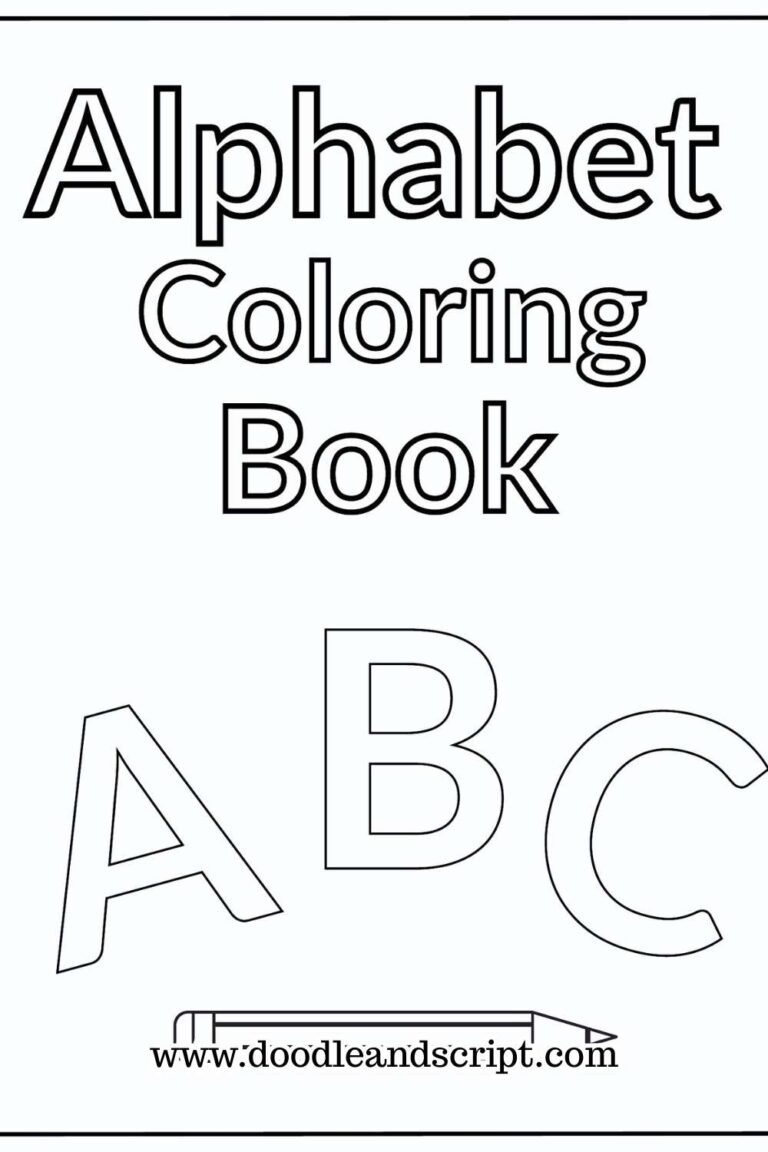
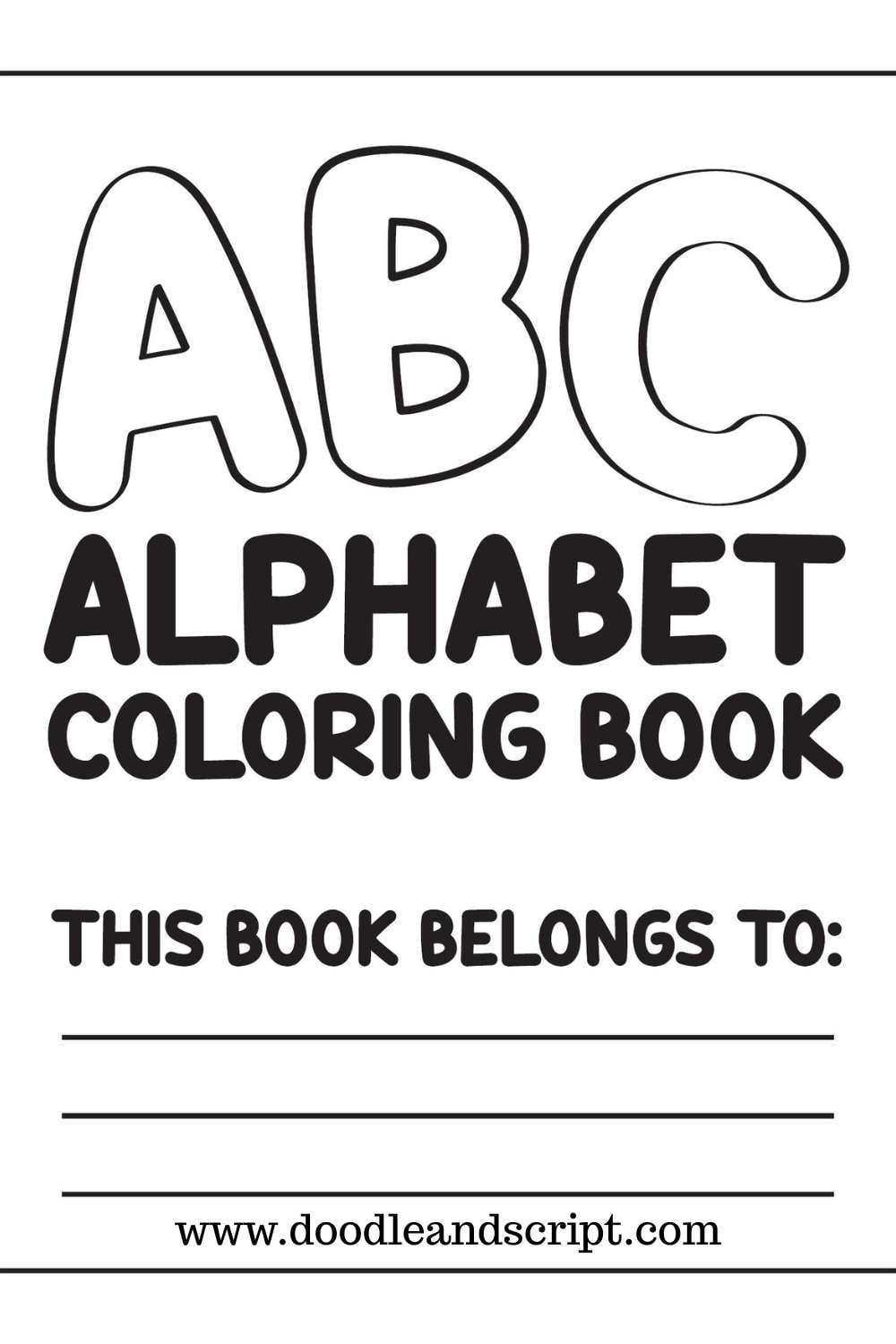
1. Alphabet Coloring Book Cover
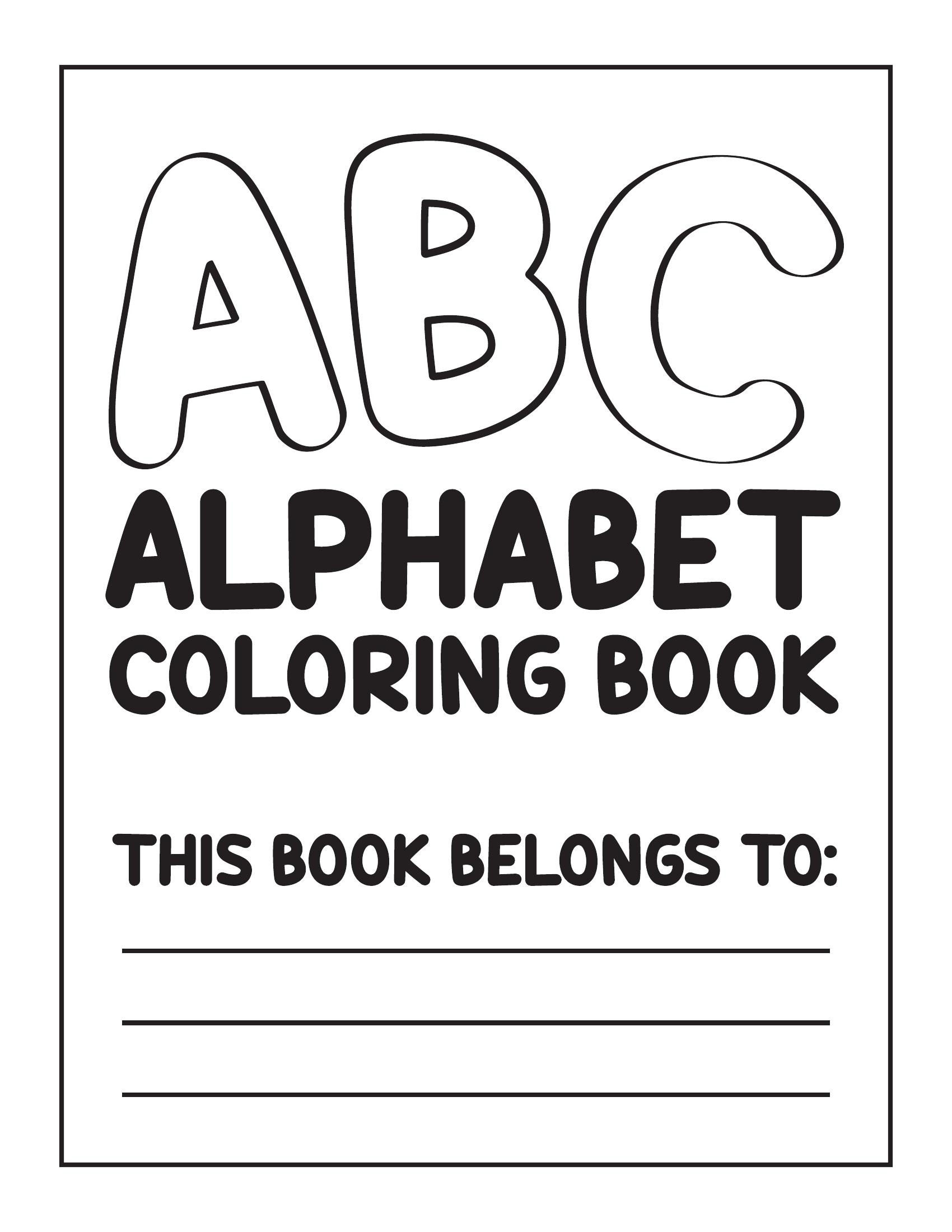
The first design introduces the alphabet coloring collection with a cheerful, kid-friendly look. It gives children a quick idea of what they will find throughout the book.
You can use it as the opening page before starting the letter activities. Let your child decorate it freely if you want a little extra coloring time.
2. A Is for Ant
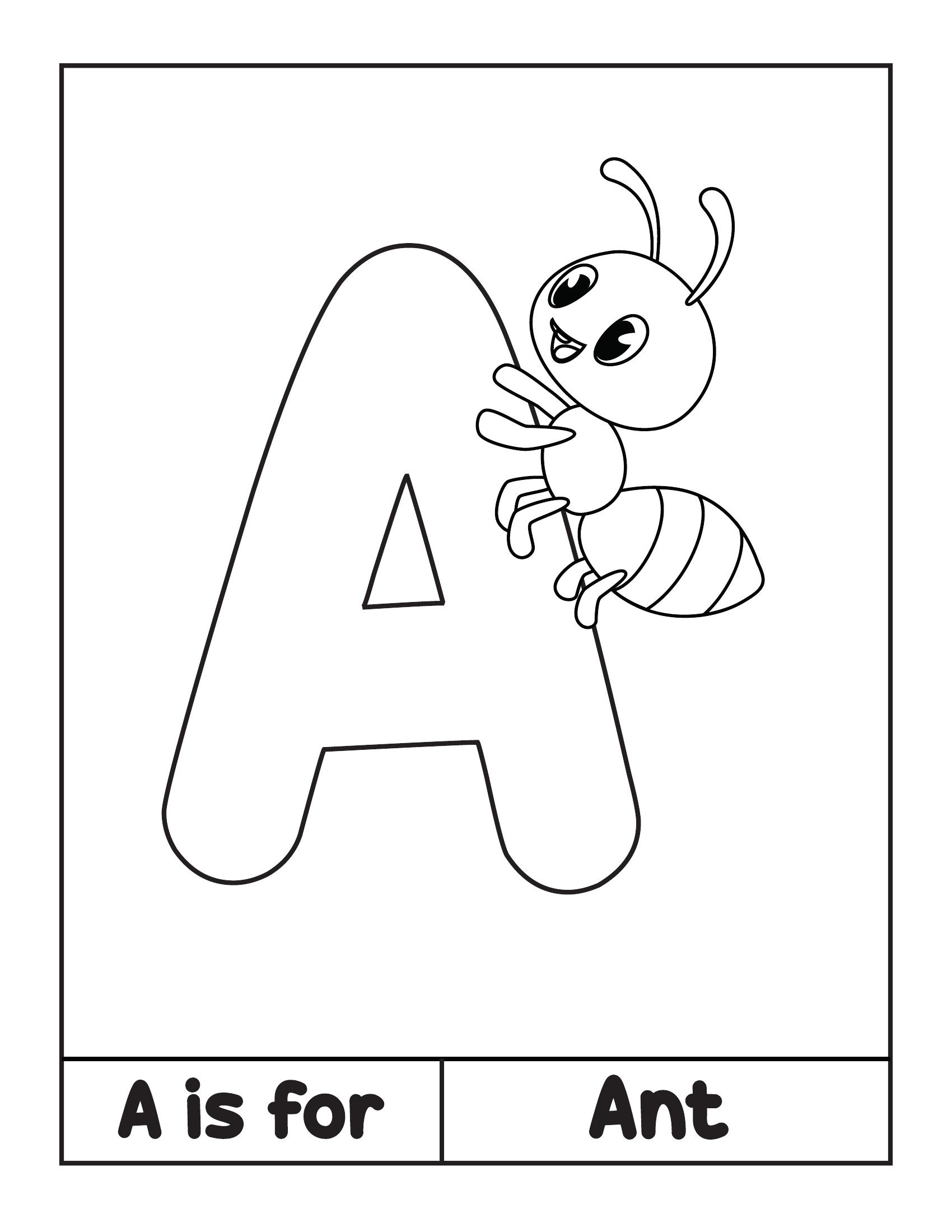
The second design introduces A with a playful ant climbing across the letter. The large outline gives children plenty of room to add their favorite colors.
Ask your child to say “A is for Ant” before coloring. They can also choose different shades for the ant and the letter.
3. Color the Ant
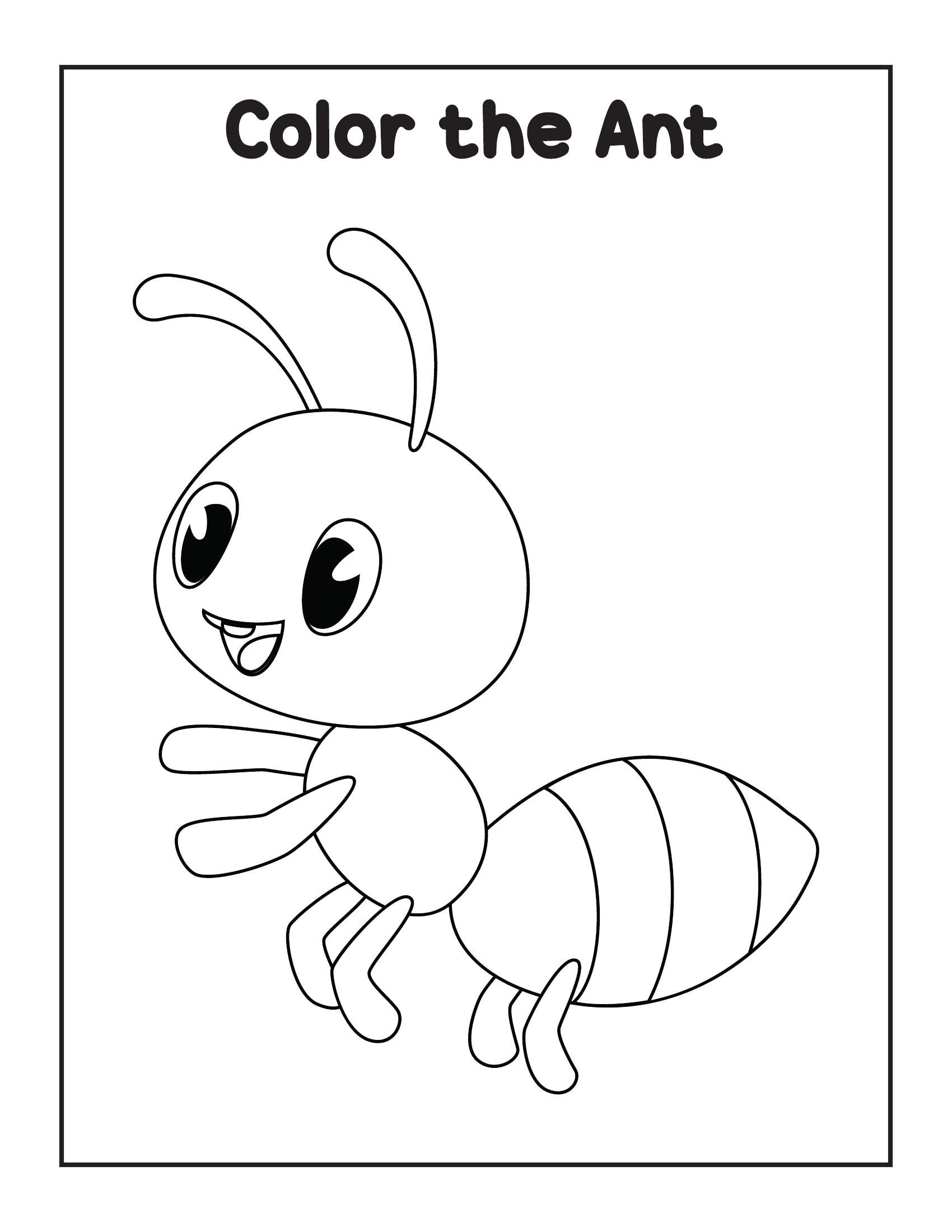
The next activity gives the ant its own coloring space. Children can focus on the insect without the large alphabet letter taking up most of the design.
They can color its body, legs, and other small details however they like. Ask them what color they would give their ant. This also gives you another chance to repeat the letter A.
4. B Is for Butterfly
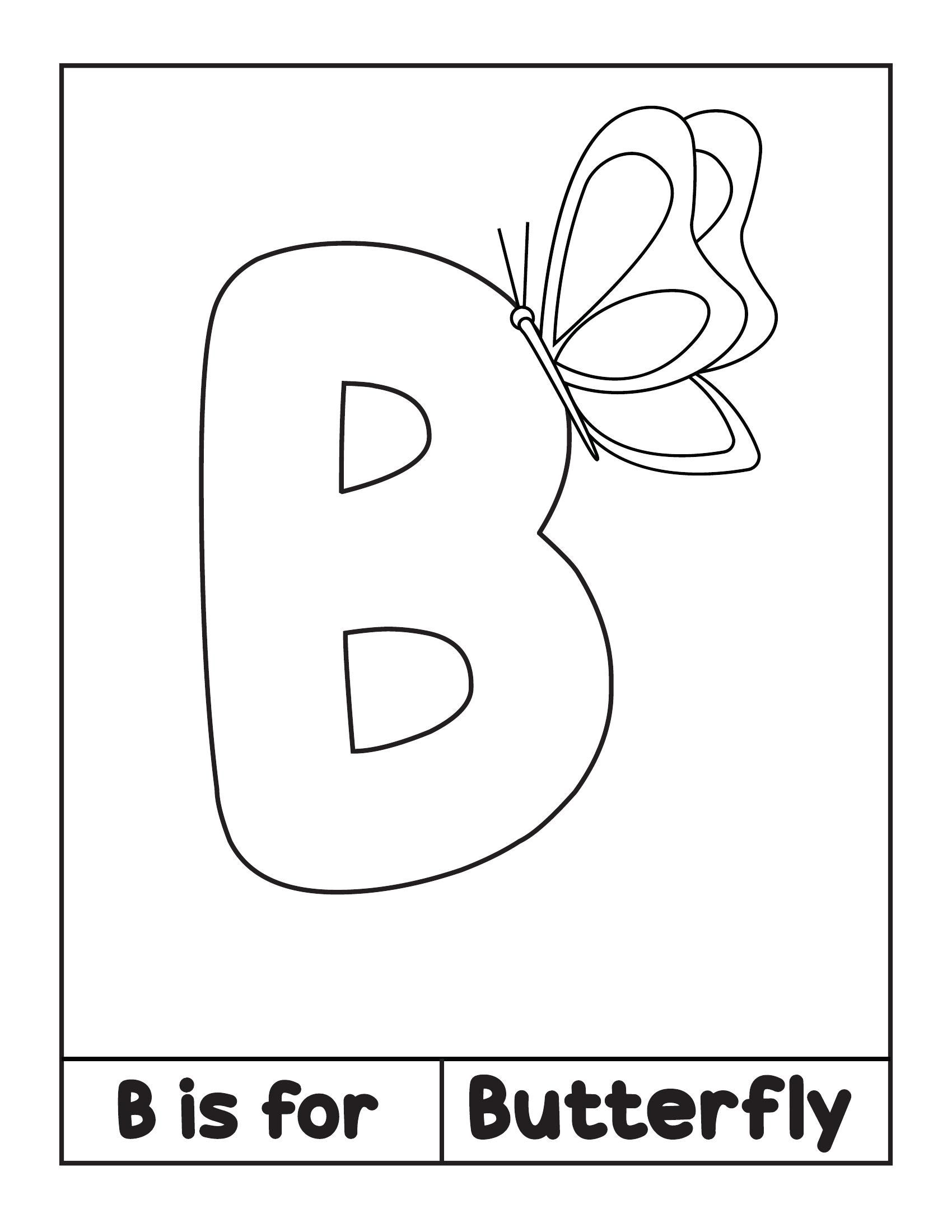
The B activity pairs B with a large butterfly. The butterfly rests beside the letter, creating an easy connection between the picture and the word.
Children can give each wing a different color or create matching patterns. Ask them to repeat “B is for Butterfly” while they color.
5. Color the Butterfly
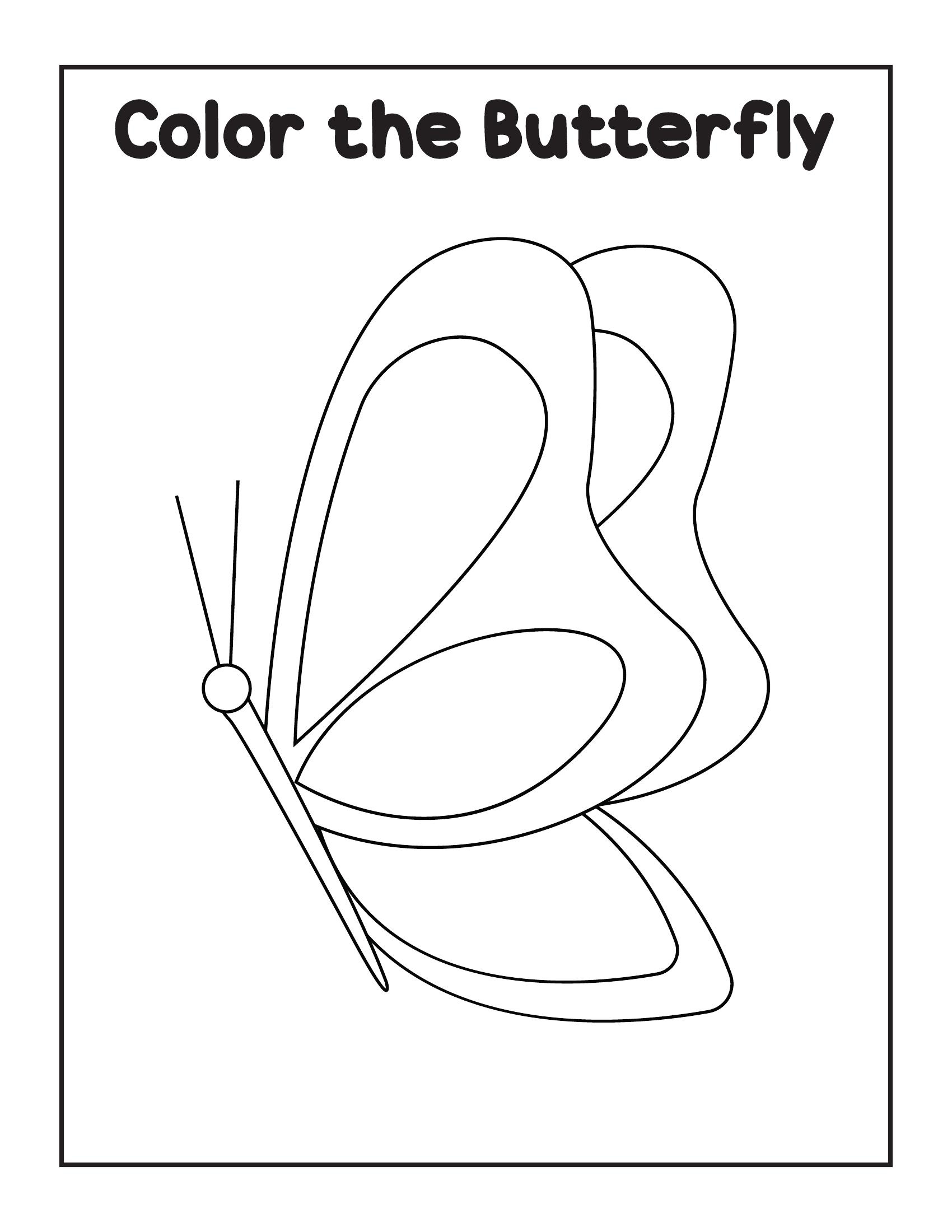
This page focuses on the butterfly alone, giving children more room to explore its wing design. They can use bright colors, soft shades, or a completely imaginary combination.
Encourage them to create their own wing pattern instead of copying one. You can also ask them to name the letter connected with butterfly. The activity works nicely as a second round of B practice.
6. C Is for Cat
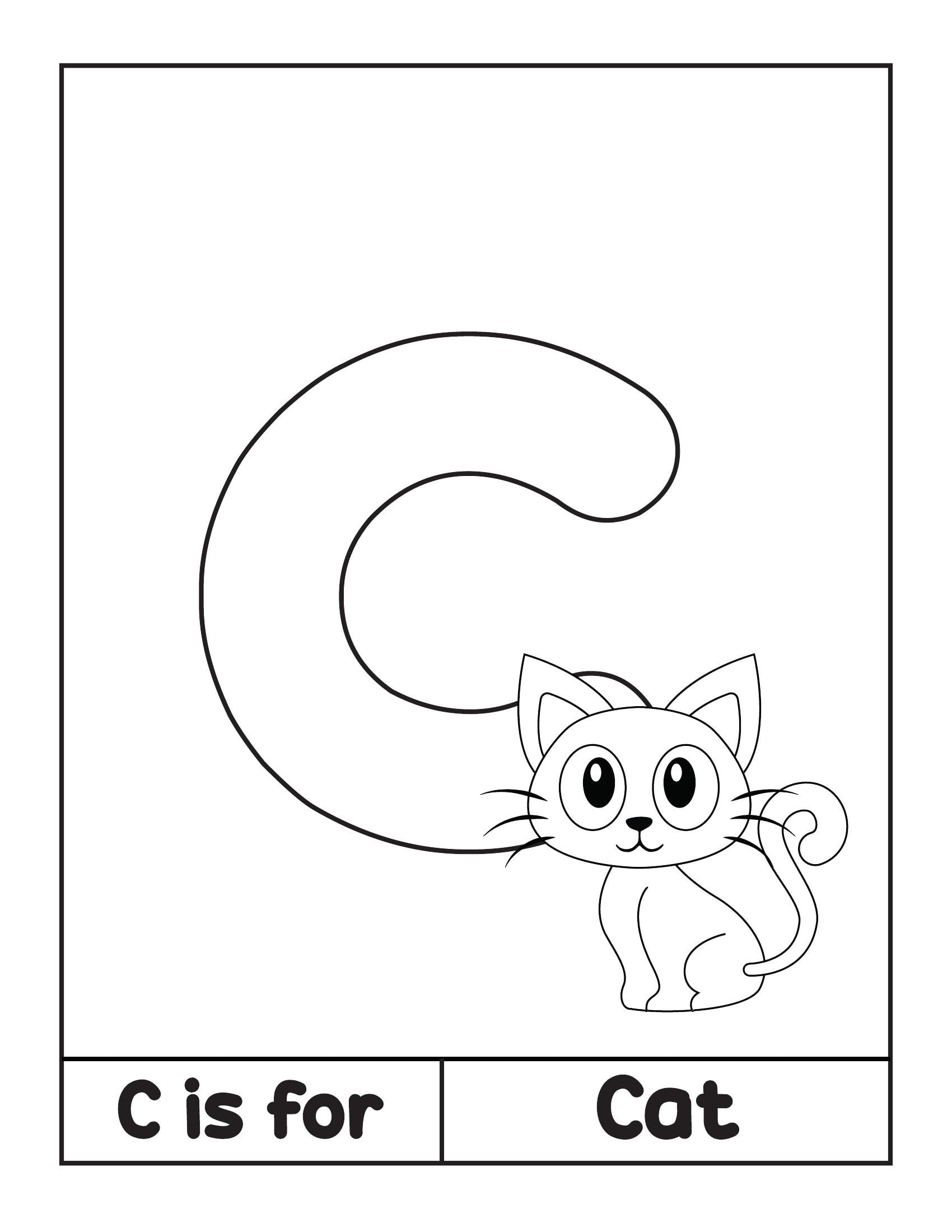
The C activity features C alongside a cute cat. The large curved letter makes the alphabet connection easy to spot.
Children can choose separate colors for the letter and cat. Ask them to name another word that begins with C after coloring.
7. Color the Cat
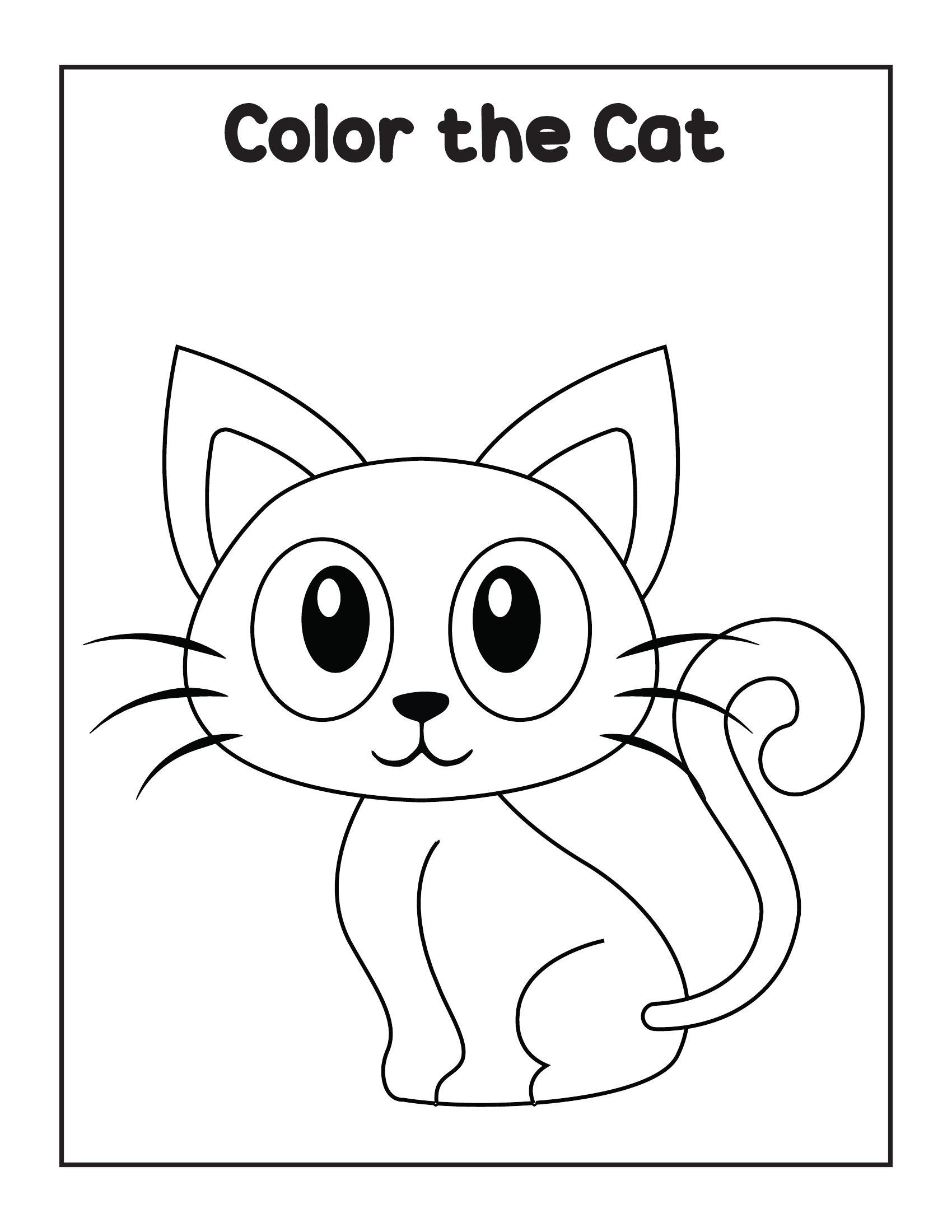
The cat gets its own coloring activity next. Children can experiment with colors for its fur, ears, eyes, and tail.
They can create a realistic cat or invent a completely unusual one. Ask your child what they would name their finished cat. This makes the activity feel more personal.
8. D Is for Dinosaur
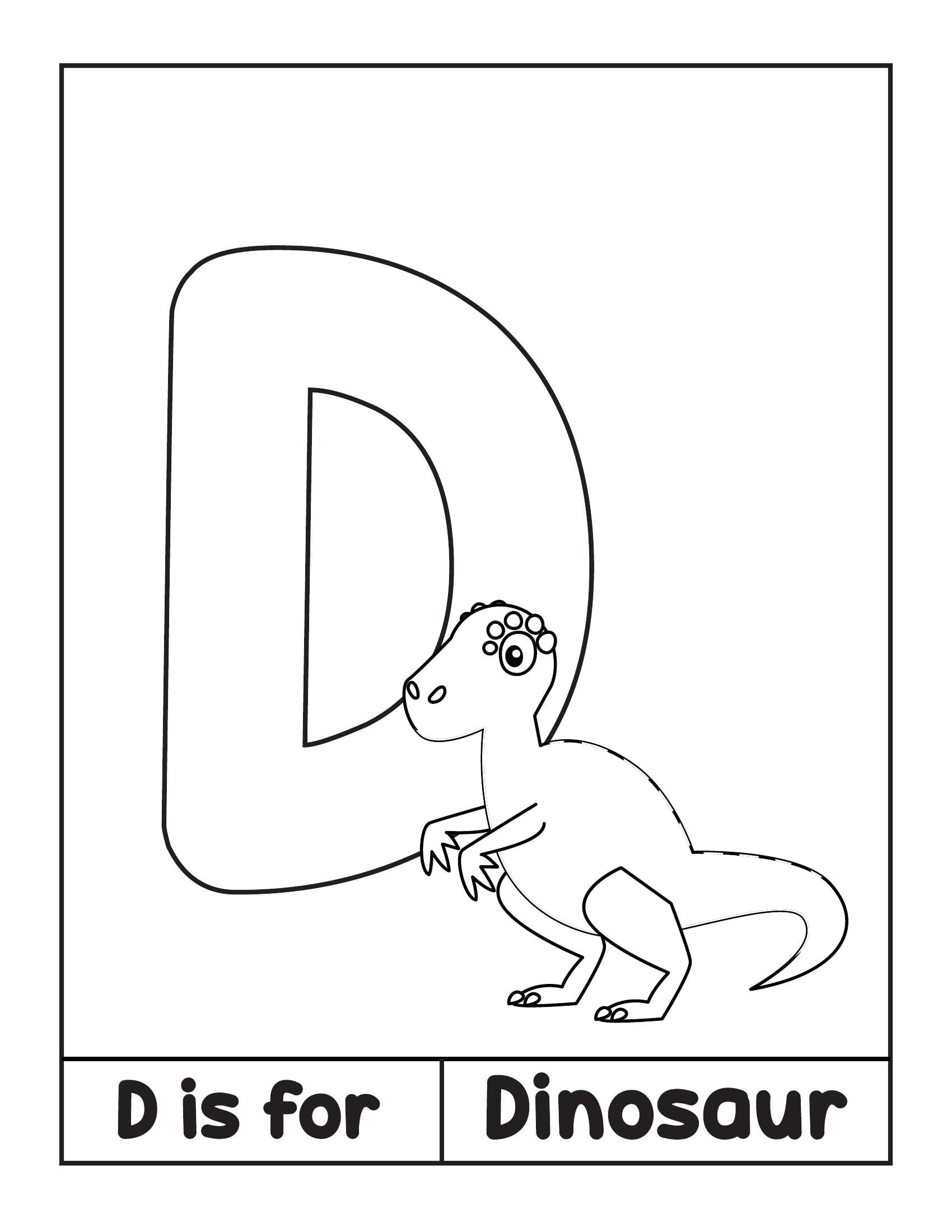
The D activity introduces D with a dinosaur standing beside the letter. The dinosaur adds an exciting element that can immediately catch a child’s attention.
Children can choose any colors they want for their dinosaur. You can also ask them to make up a fun name for it.
9. Color the Dinosaur
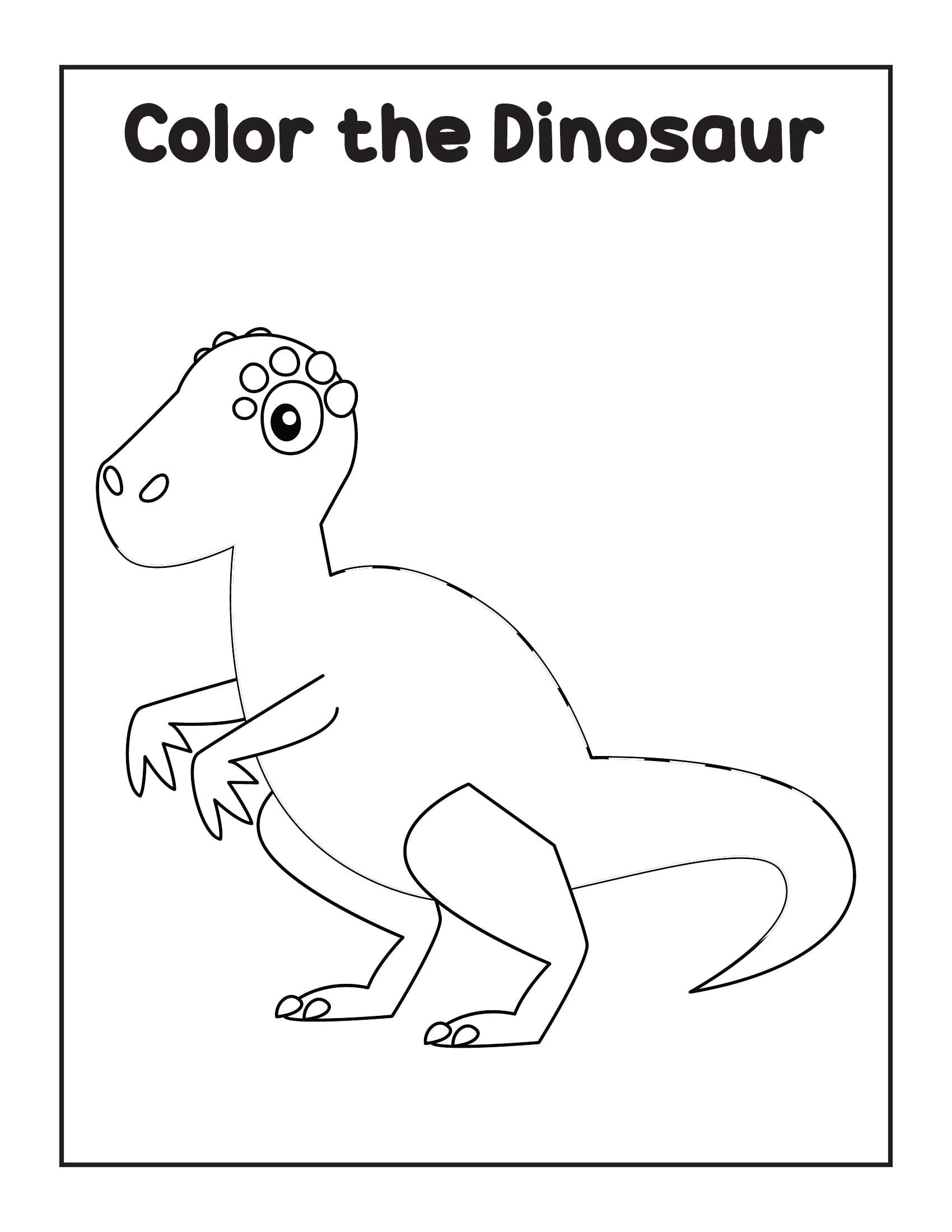
This page gives the dinosaur a larger space for coloring. Children can work on its body, legs, tail, and smaller features.
They might create a green dinosaur or choose colors that dinosaurs do not usually have. Letting them make unusual choices can keep the activity exciting. You can finish by asking which letter starts the word dinosaur.
10. E Is for Eagle
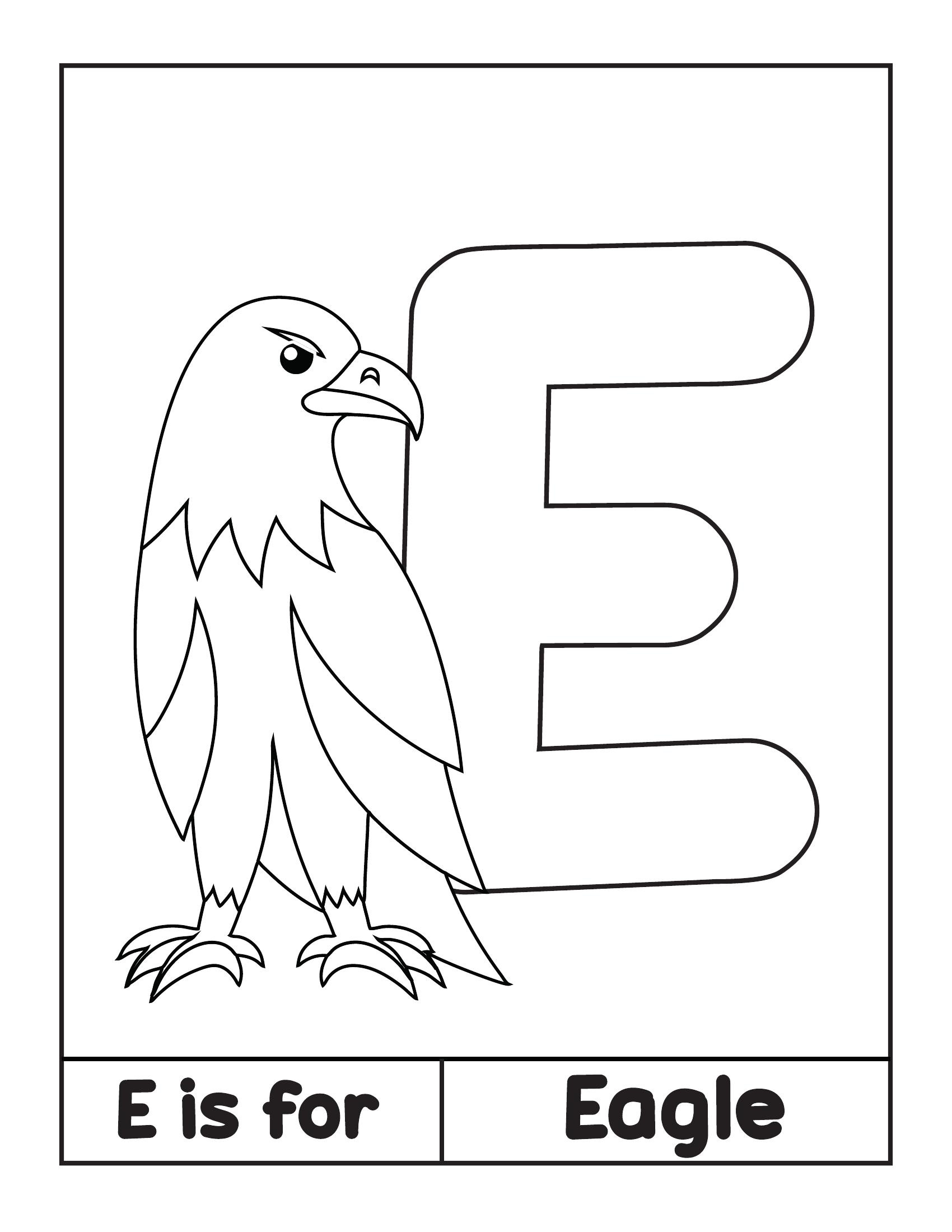
The E activity pairs E with an eagle. The large letter sits beside the bird, giving children a clear visual link between the letter and word.
Children can color the eagle’s feathers, beak, and other details. Ask them to repeat “E is for Eagle” before they begin.
11. Color the Eagle
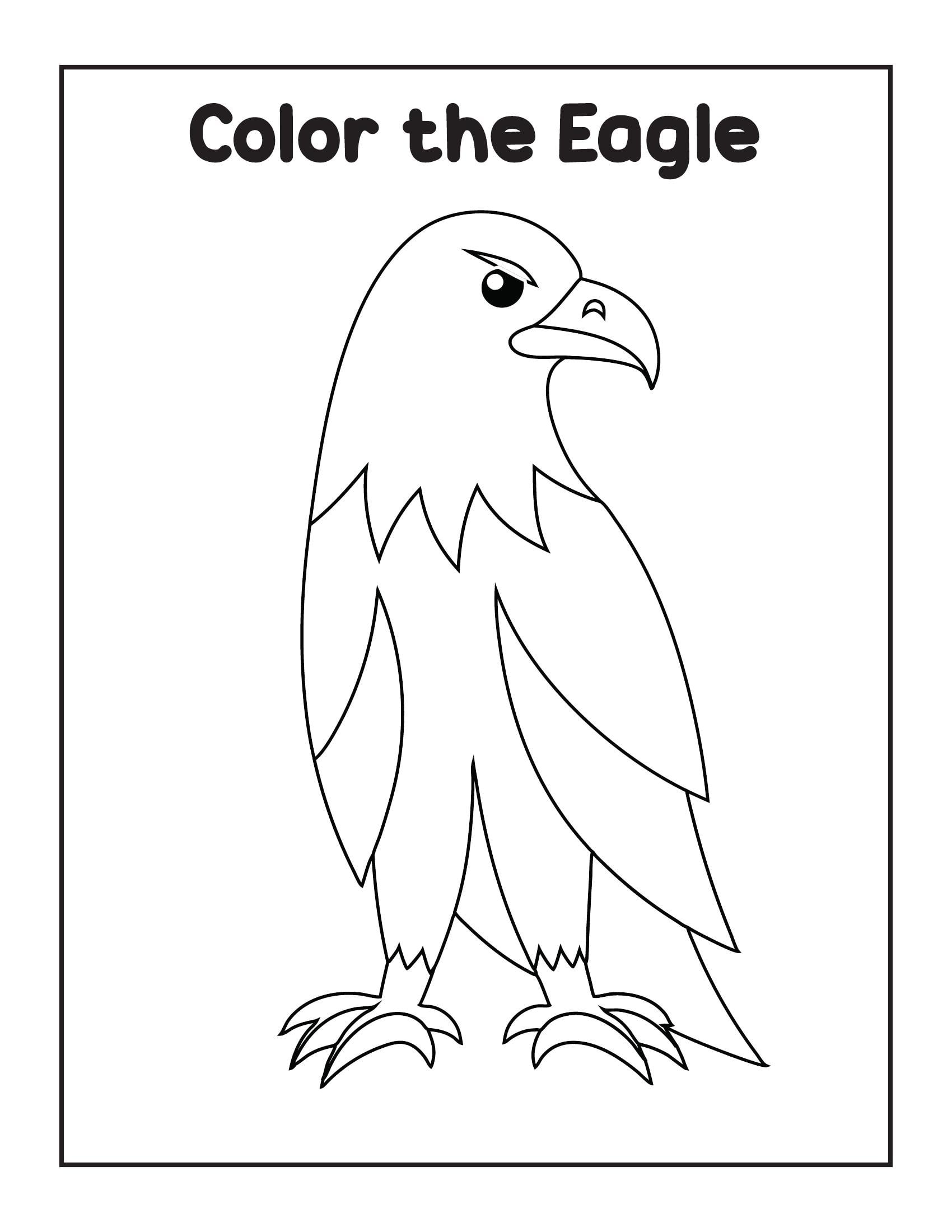
The eagle gets a separate page where children can focus entirely on the bird. They can color its feathers, beak, and wings with their own ideas.
This page gives them more freedom after working with the letter E. You can ask them to name the picture before they start. It also makes a nice opportunity to revisit the E sound.
12. F Is for Frog
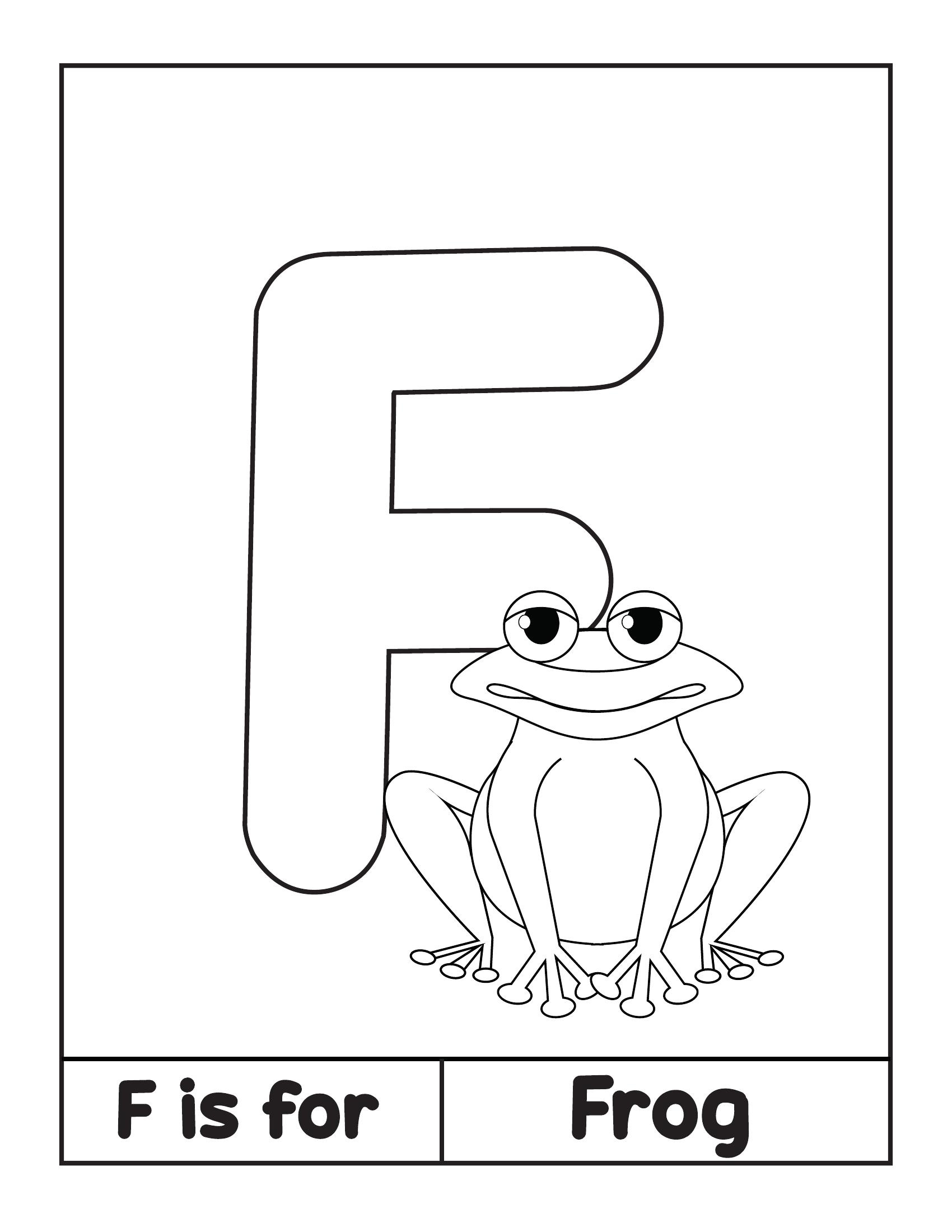
The F page introduces F with a friendly frog sitting beside the letter. The large F gives children an obvious place to begin coloring.
They can make the frog green or choose something more imaginative. Ask them to say “F is for Frog” as they color.
13. Color the Frog
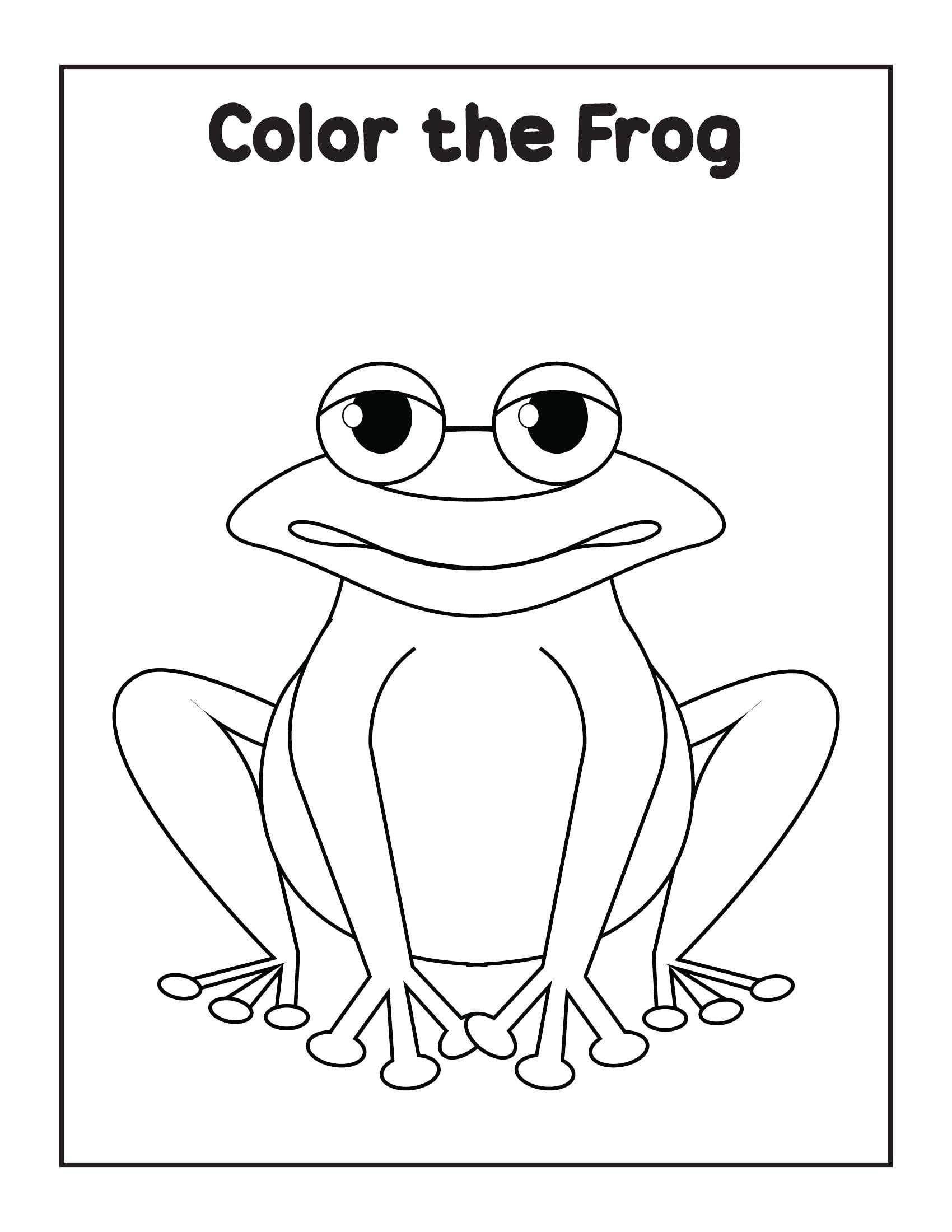
This activity removes the large letter and lets the frog become the main focus. Children can color its body, eyes, feet, and other details.
They can also experiment with colors that frogs do not usually have. Ask them to describe their finished frog afterward. It is a simple way to keep the F connection fresh.
14. G Is for Ghost
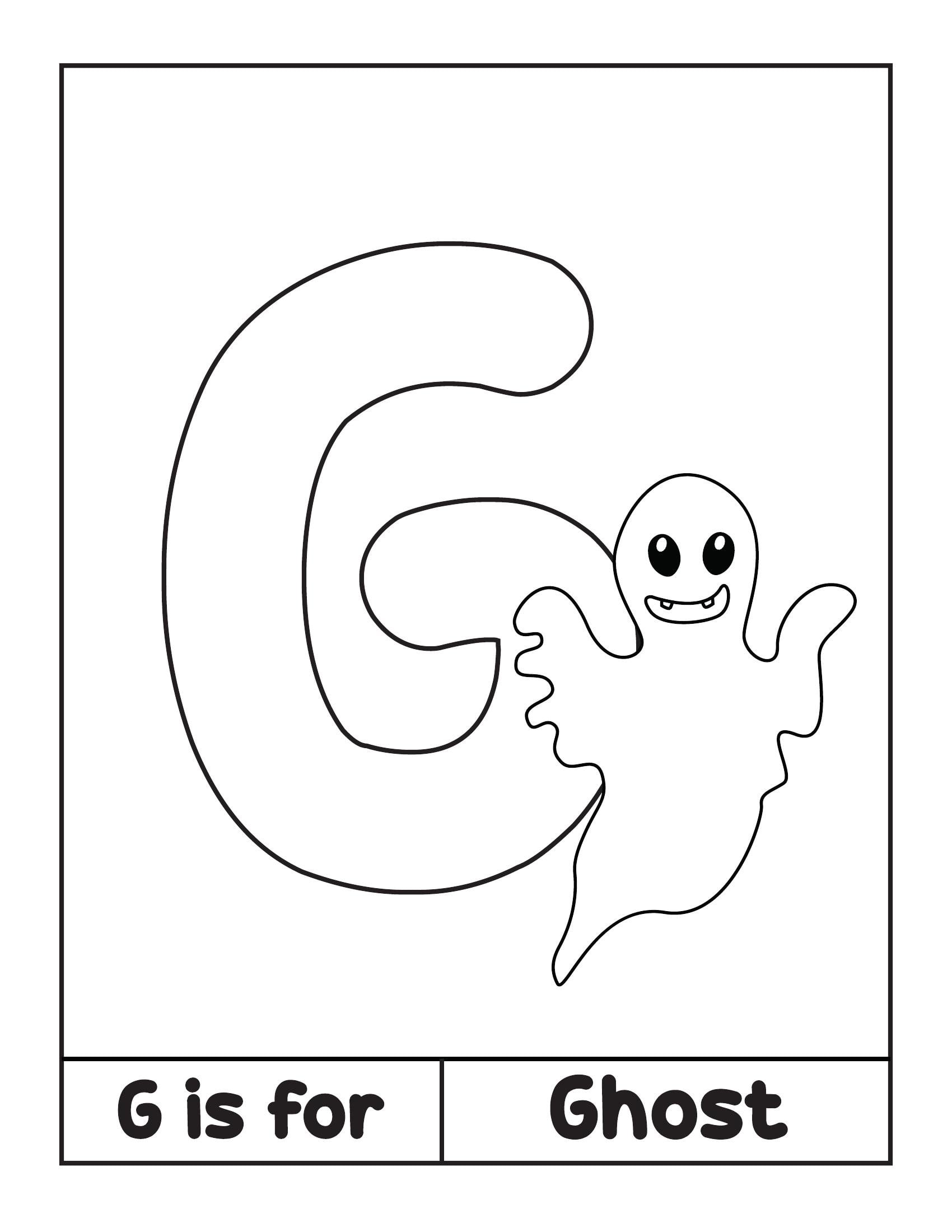
The G page features a friendly ghost beside a large G. The character gives children a playful picture to color rather than a plain letter.
They can choose any colors for the ghost and surrounding details. A quick “G is for Ghost” makes the letter association easy to remember.
15. Color the Ghost
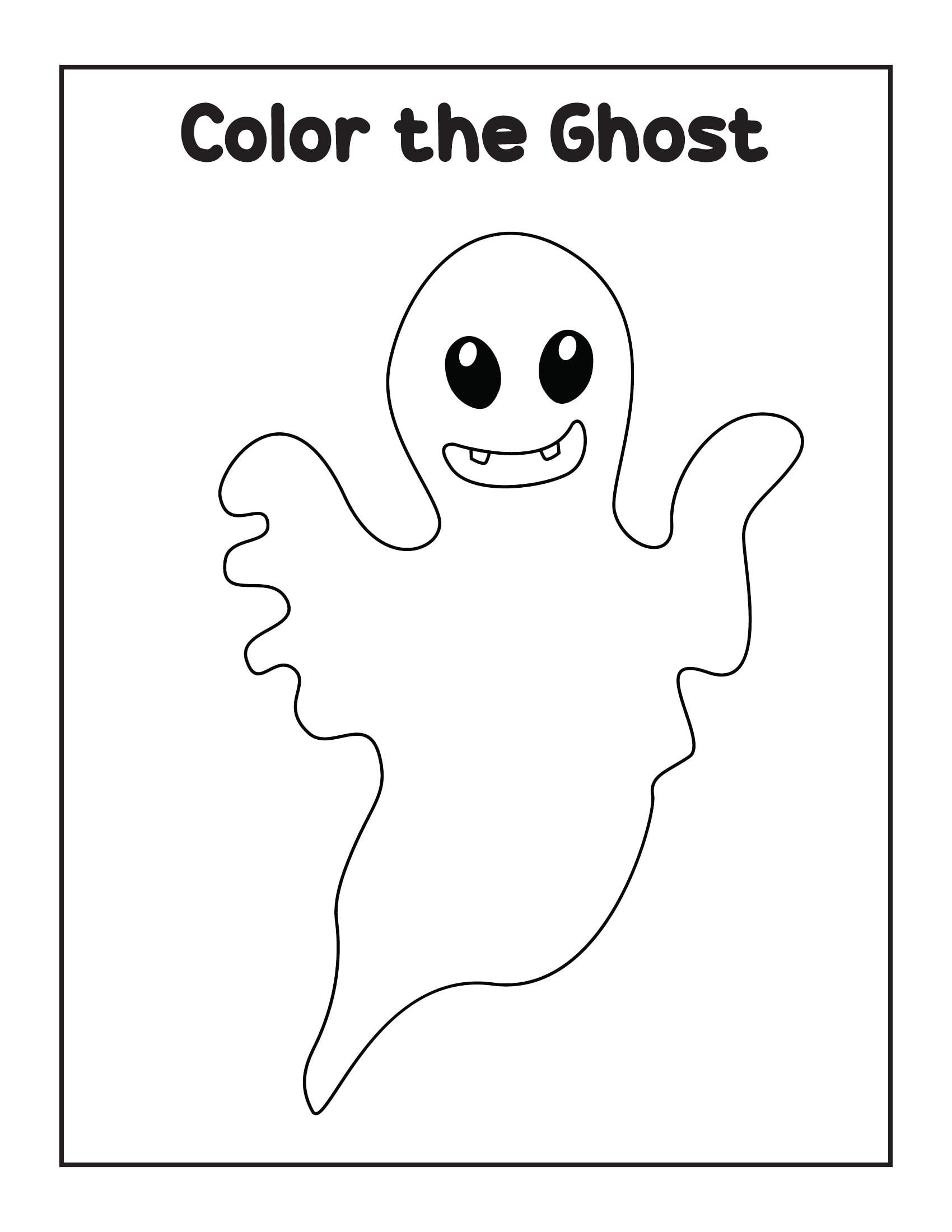
The ghost gets its own page for children to decorate. Its simple outline leaves plenty of space for different coloring ideas.
Children can create a spooky ghost or a cheerful one. You can also turn this page into a fun Halloween activity.
16. H Is for Hen
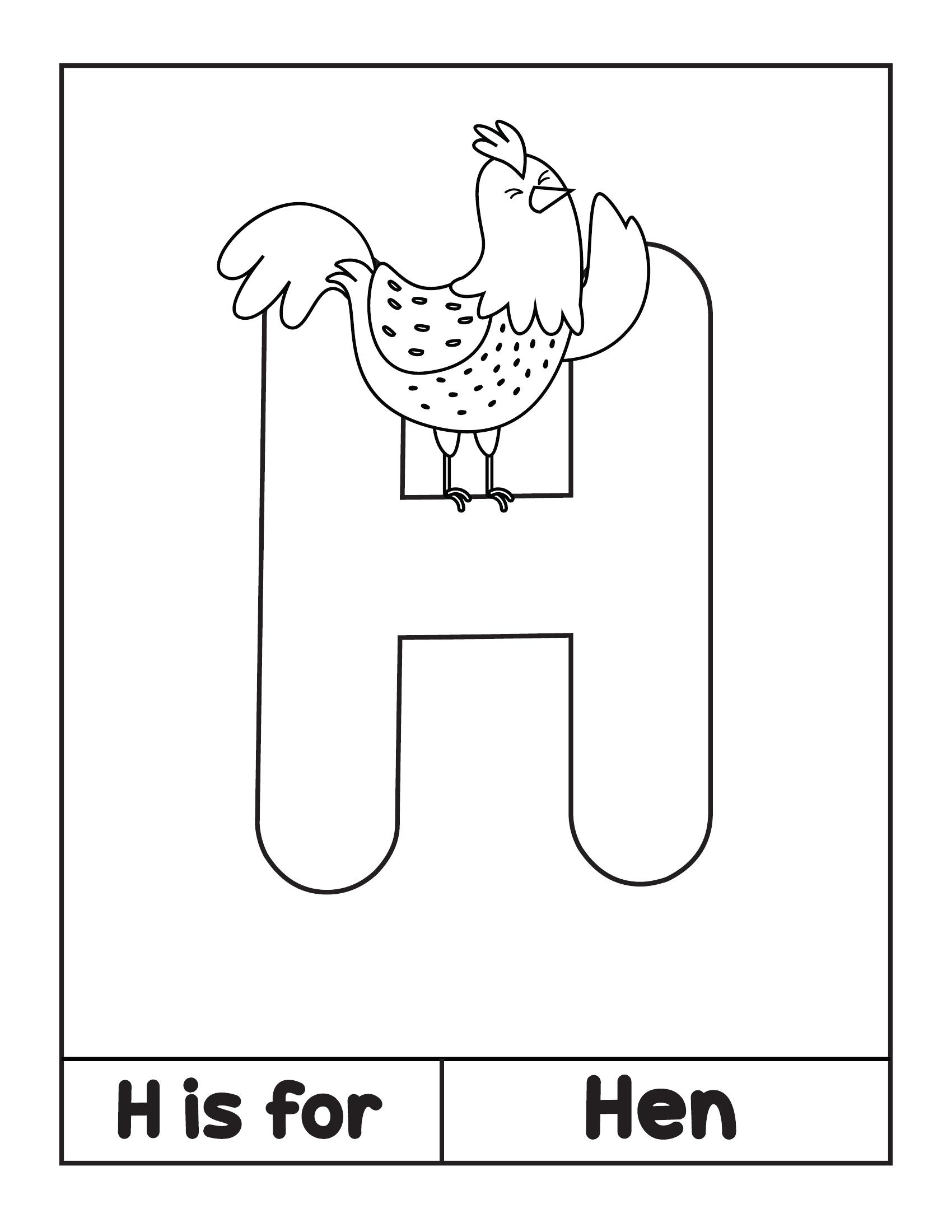
The H page features a hen standing across a large H. The bird includes several small details that children can explore while coloring.
They can choose different shades for its body, wings, and tail. Ask them to repeat “H is for Hen” before they begin.
17. Color the Hen
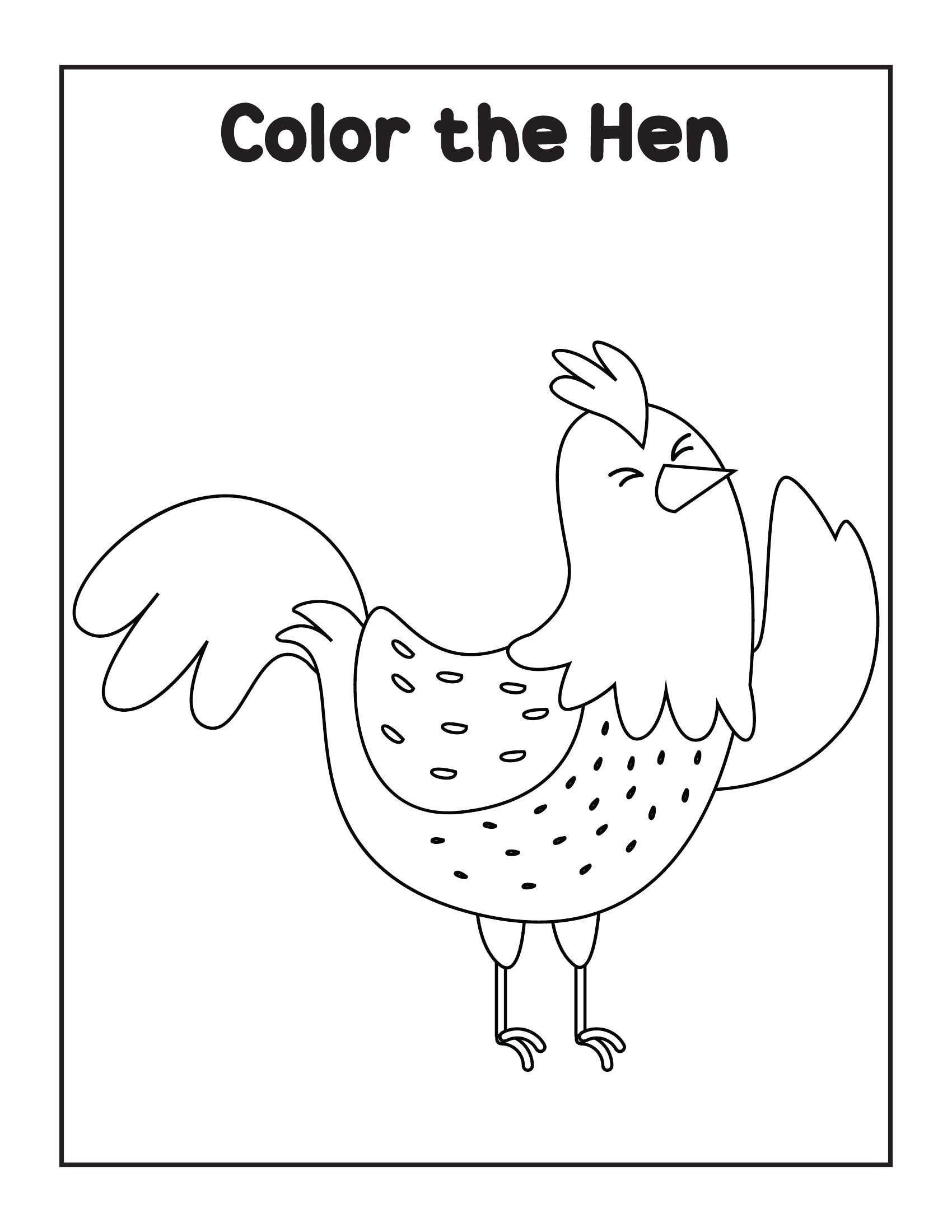
This page gives the hen plenty of room to become the center of attention. Children can color its feathers, wings, tail, and feet.
They can use familiar farm-animal colors or create something completely different. Afterward, ask them which part they enjoyed coloring most.
18. I Is for Ice Cream
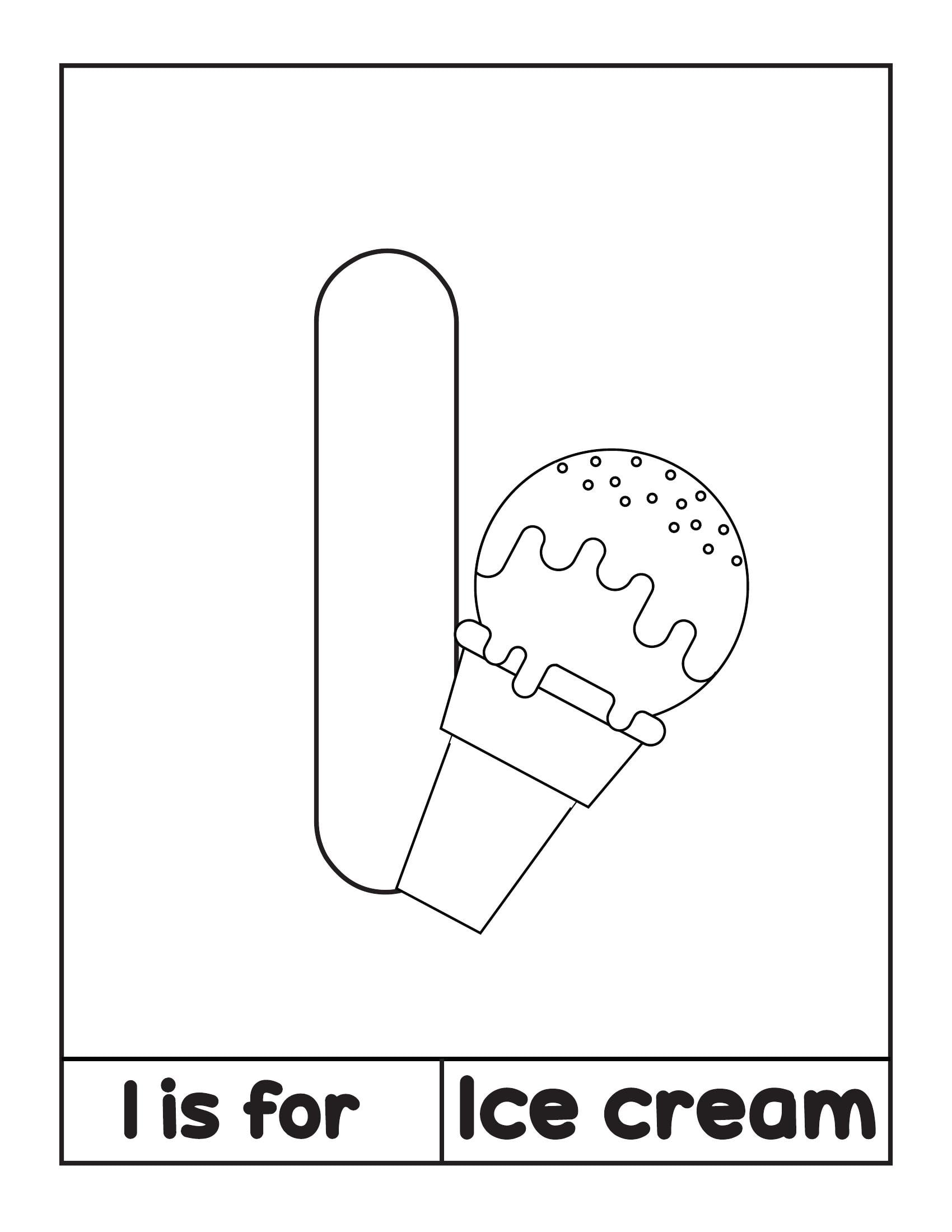
The I page pairs I with an ice cream cone. The picture creates an easy connection between the letter and a familiar treat.
Children can choose their favorite flavor colors for the scoop. You can ask them what flavor they would invent.
19. Color the Ice Cream
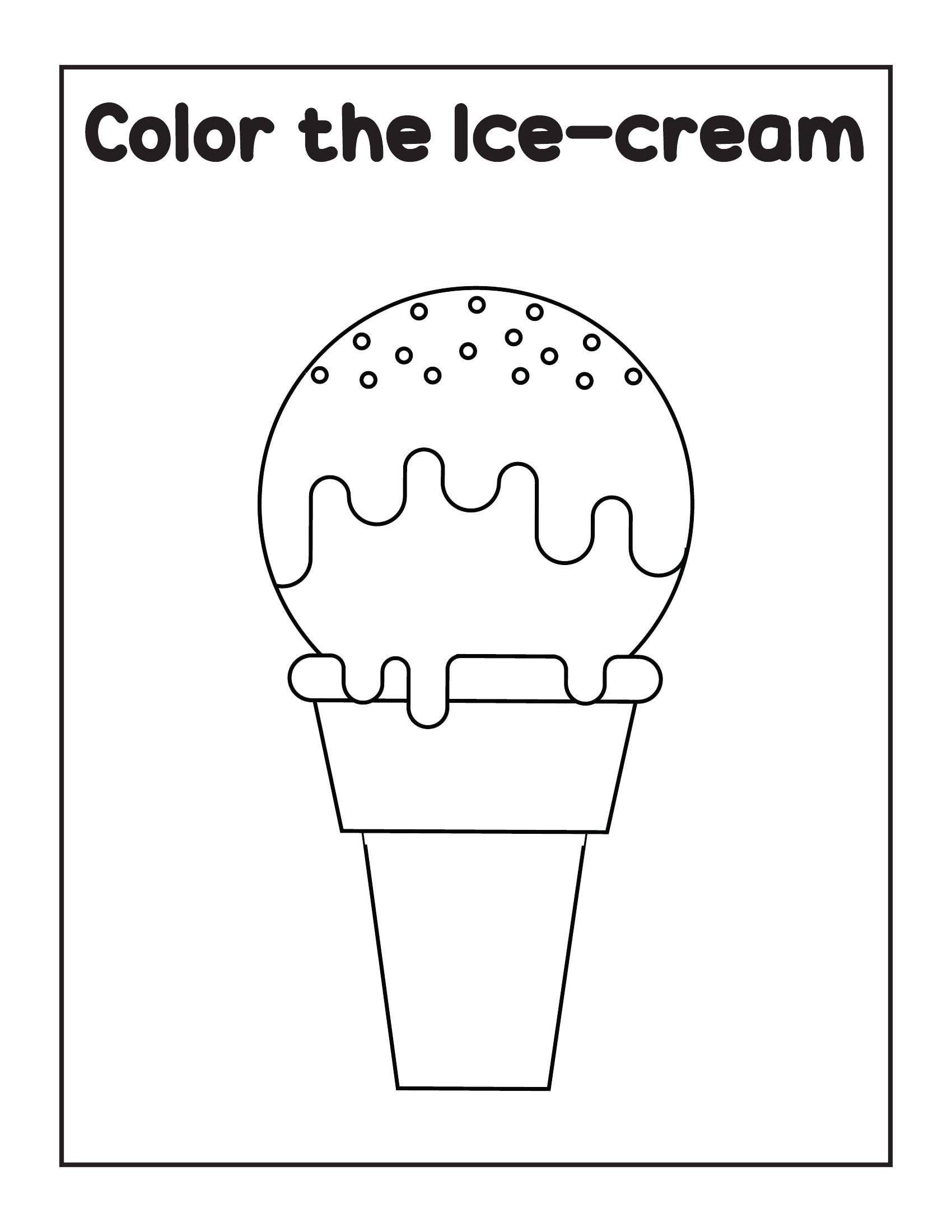
The separate ice cream page gives children more space to decorate the treat. They can color the scoop, toppings, and cone in any combination.
Let them create an unusual flavor if they want to get creative. This page can also lead to a short conversation about favorite desserts.
20. J Is for Jellyfish
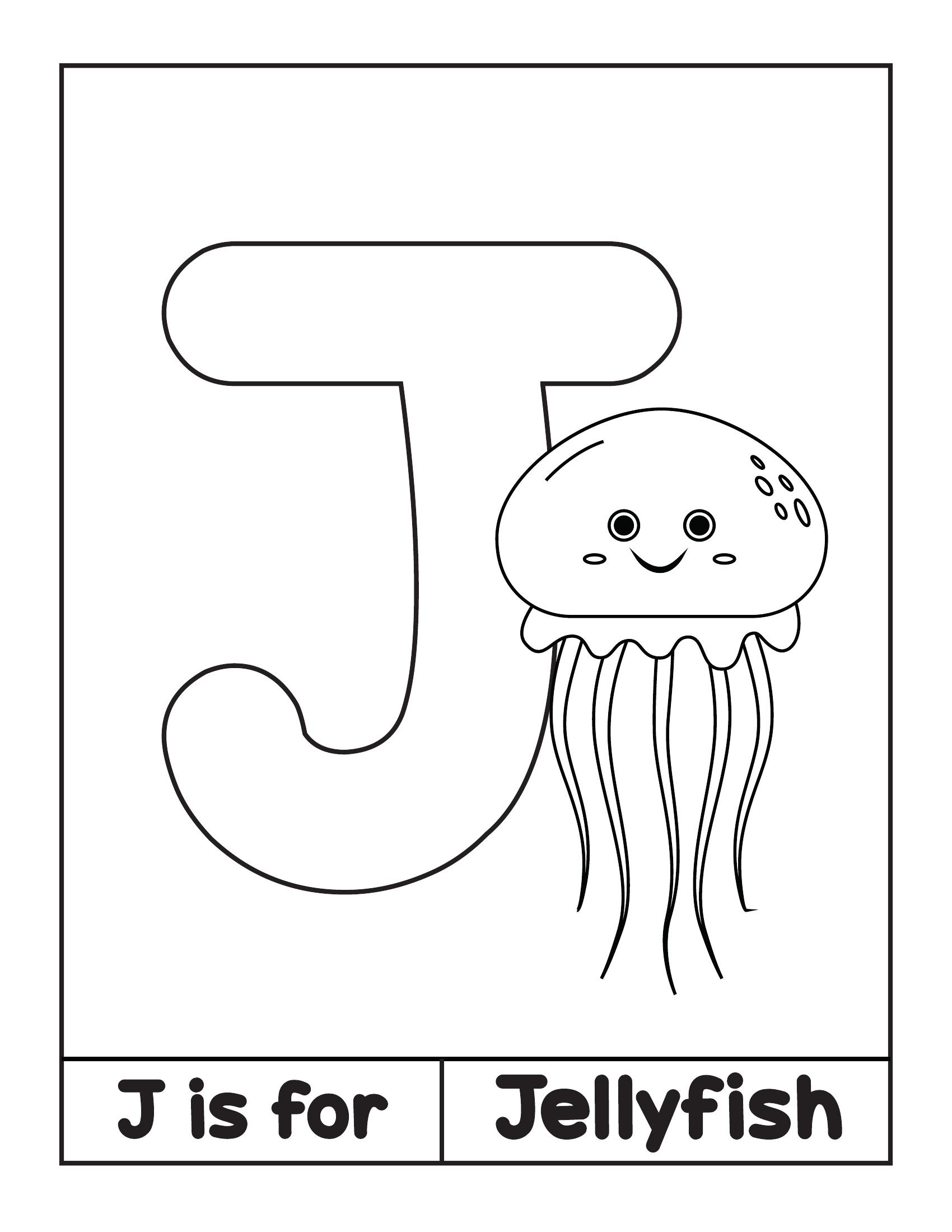
The J page features J with a cute jellyfish. Its long tentacles add interesting sections for children to color. Children can use several colors to make their jellyfish look lively. Ask them to repeat “J is for Jellyfish” as they work.
21. Color the Jellyfish
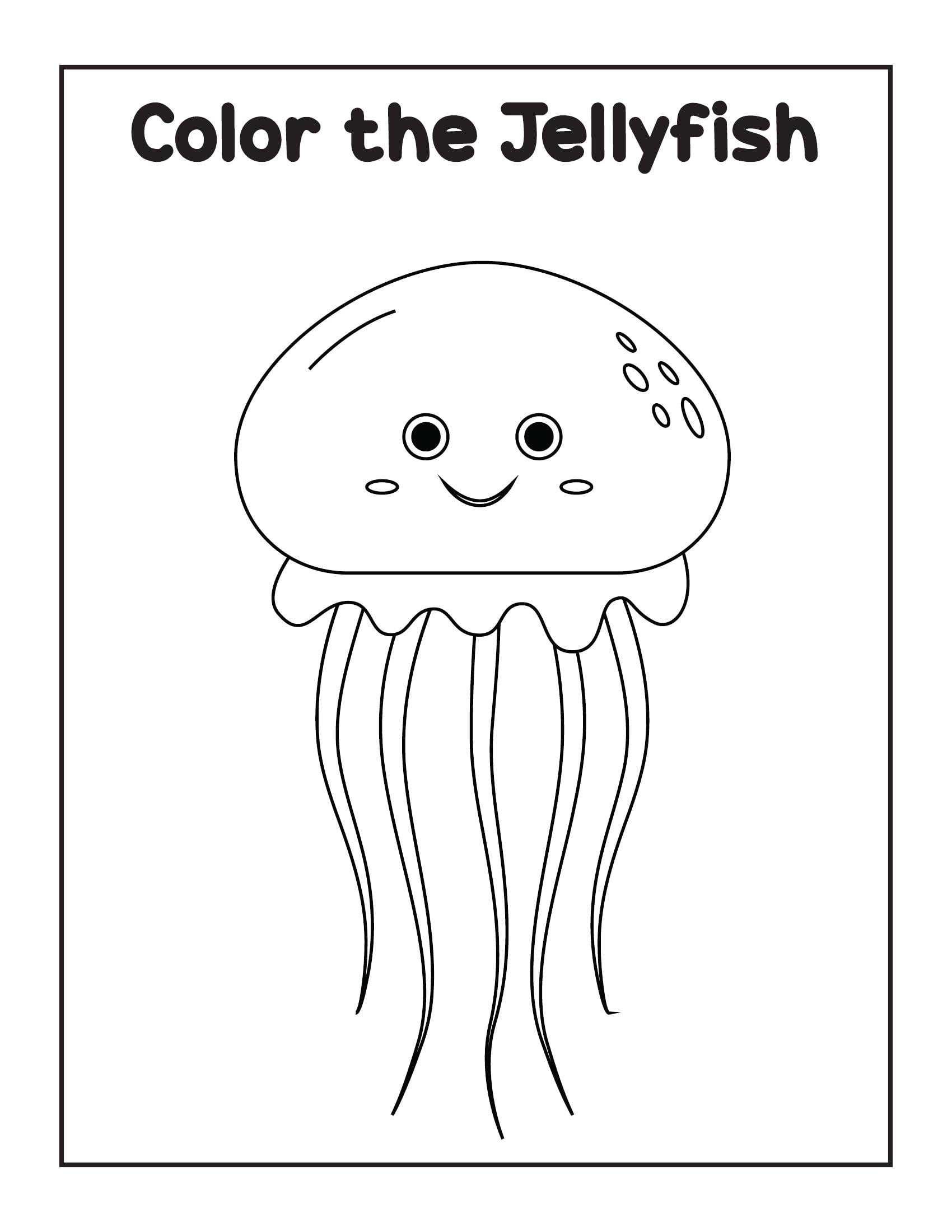
The jellyfish receives its own page for a closer coloring activity. Children can choose different colors for its body and flowing tentacles.
The simple design makes it easy to experiment without feeling restricted. Ask your child to imagine where their jellyfish might live. That small prompt can make the activity more engaging.
22. K Is for Kangaroo
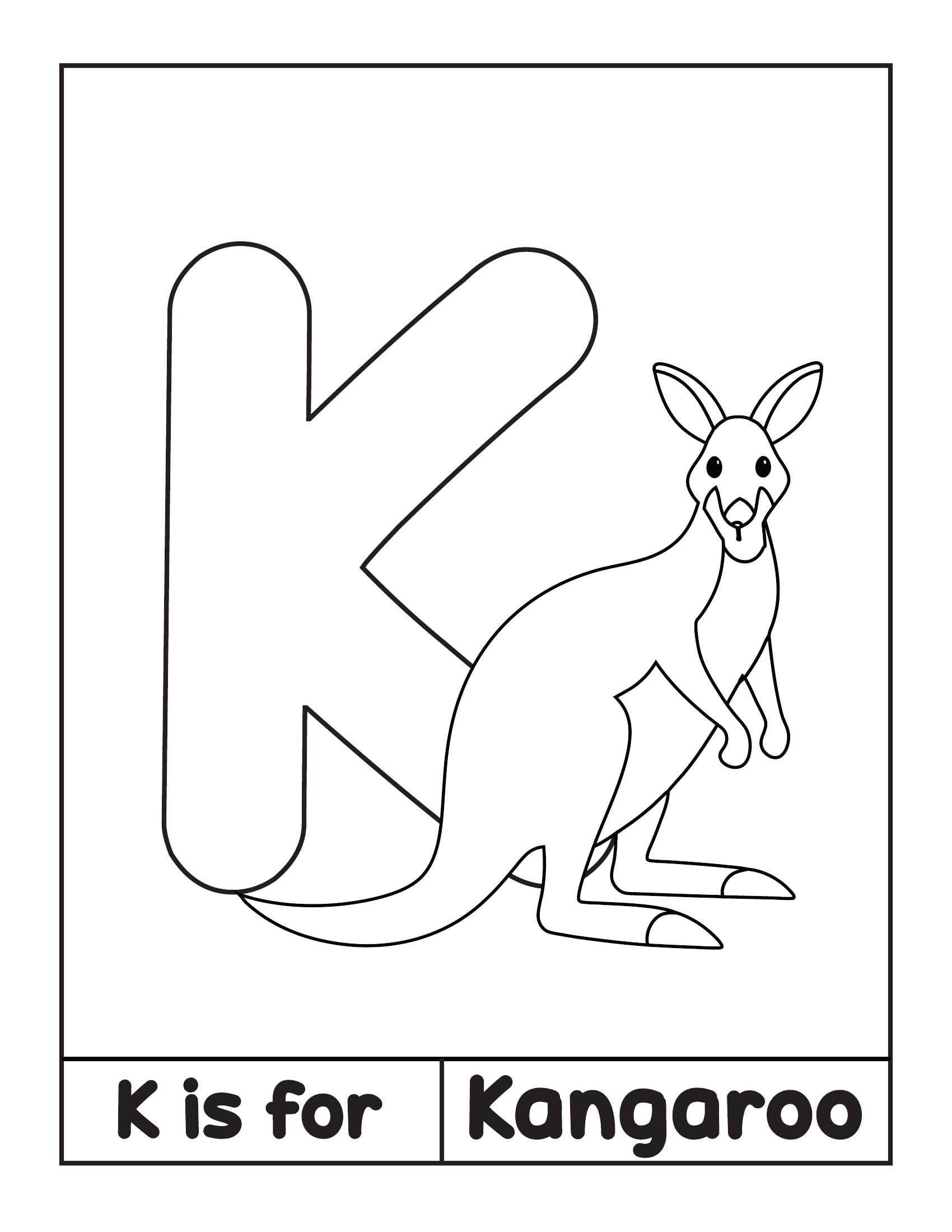
The K page pairs K with a kangaroo. The animal stands beside the large letter, creating a clear visual connection.
Children can color the kangaroo in natural shades or create their own version. Ask them to say “K is for Kangaroo” before coloring.
23. Color the Kangaroo
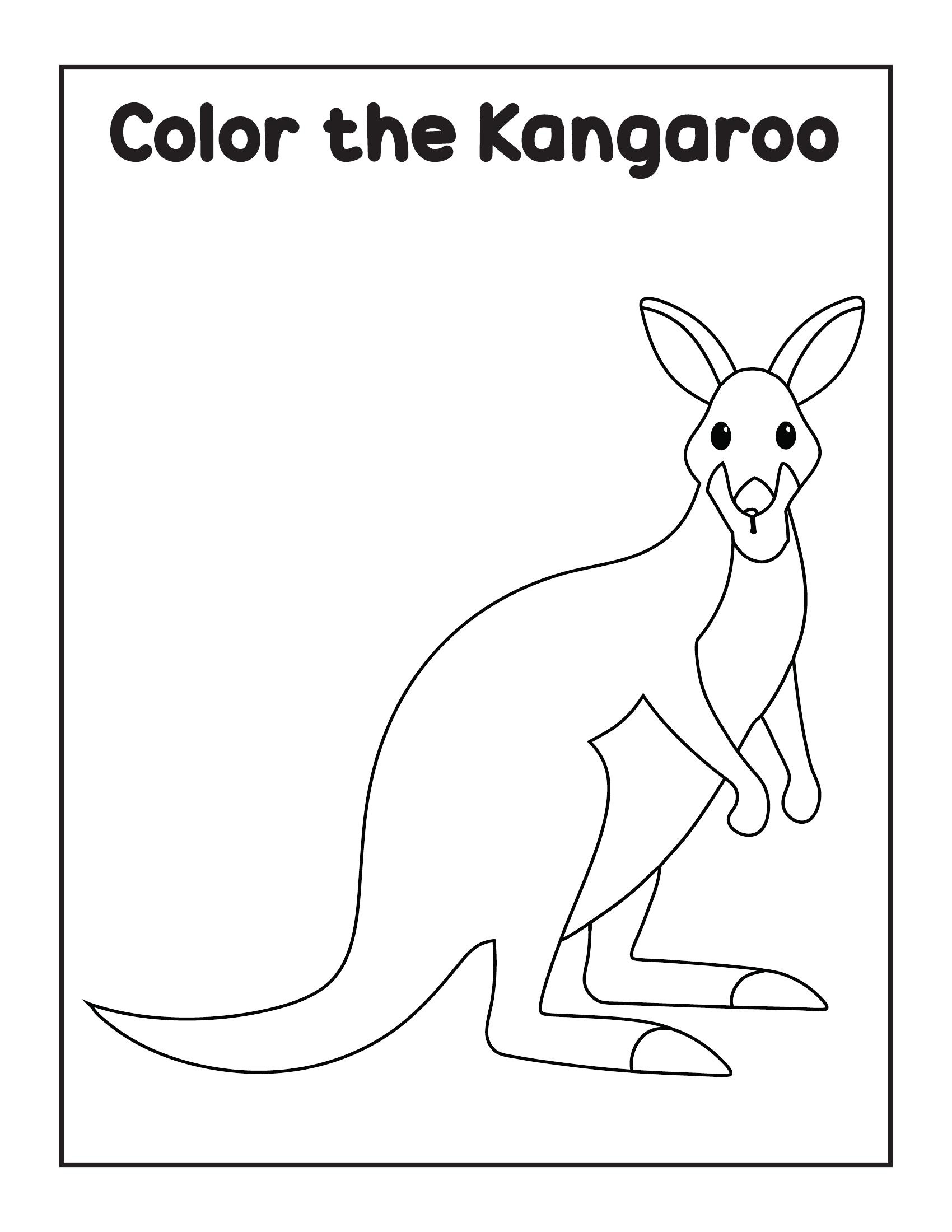
The separate kangaroo page lets children focus on the animal itself. They can color its ears, body, legs, tail, and other features.
This page also gives them room to create their own color scheme. Ask them where they think their kangaroo would like to hop. It can become a small storytelling prompt after coloring.
24. L Is for Llama
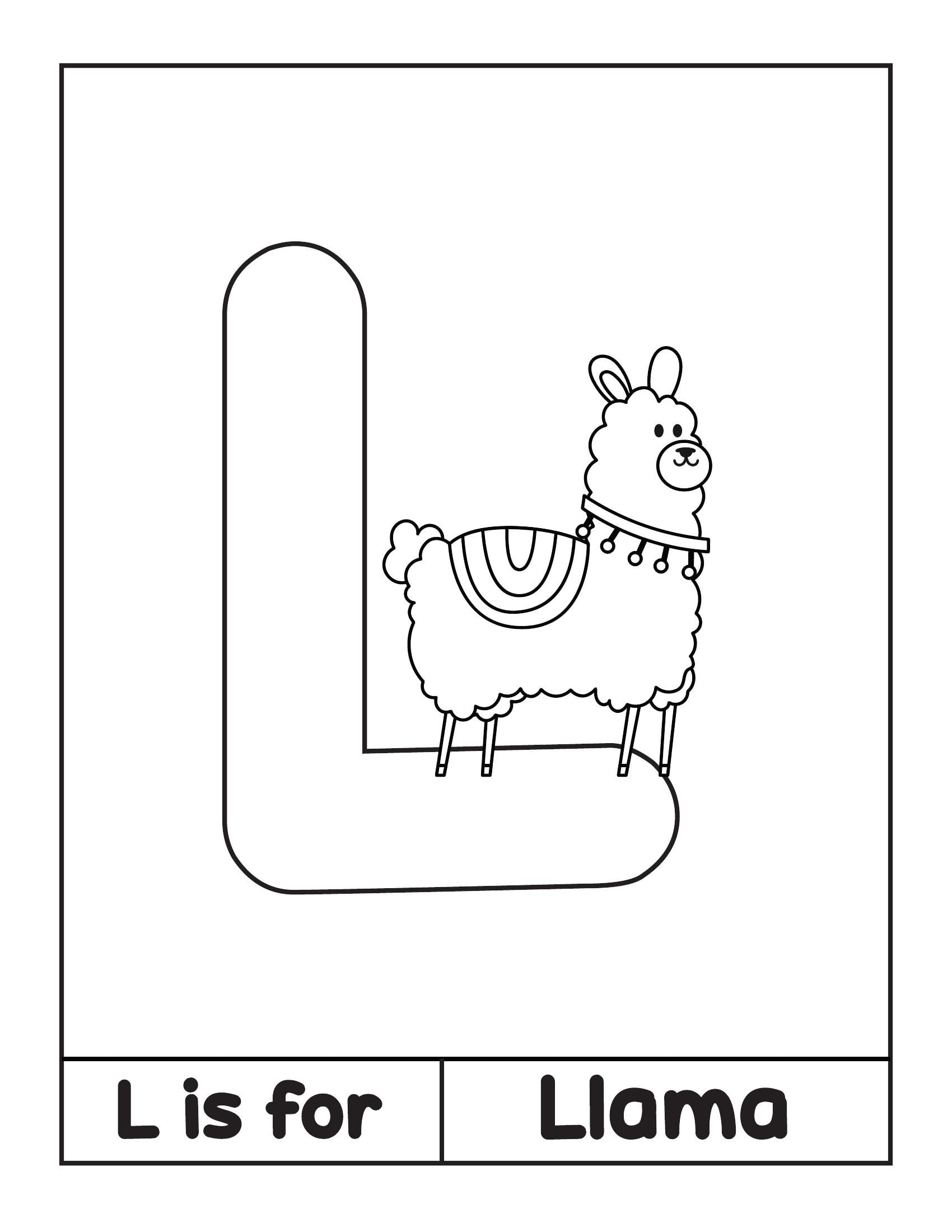
The L page introduces L with a decorated llama. The llama sits across the large letter and includes details around its neck and back.
Children can have fun choosing colors for its fluffy body. Ask them to repeat “L is for Llama” while they work.
25. Color the Llama
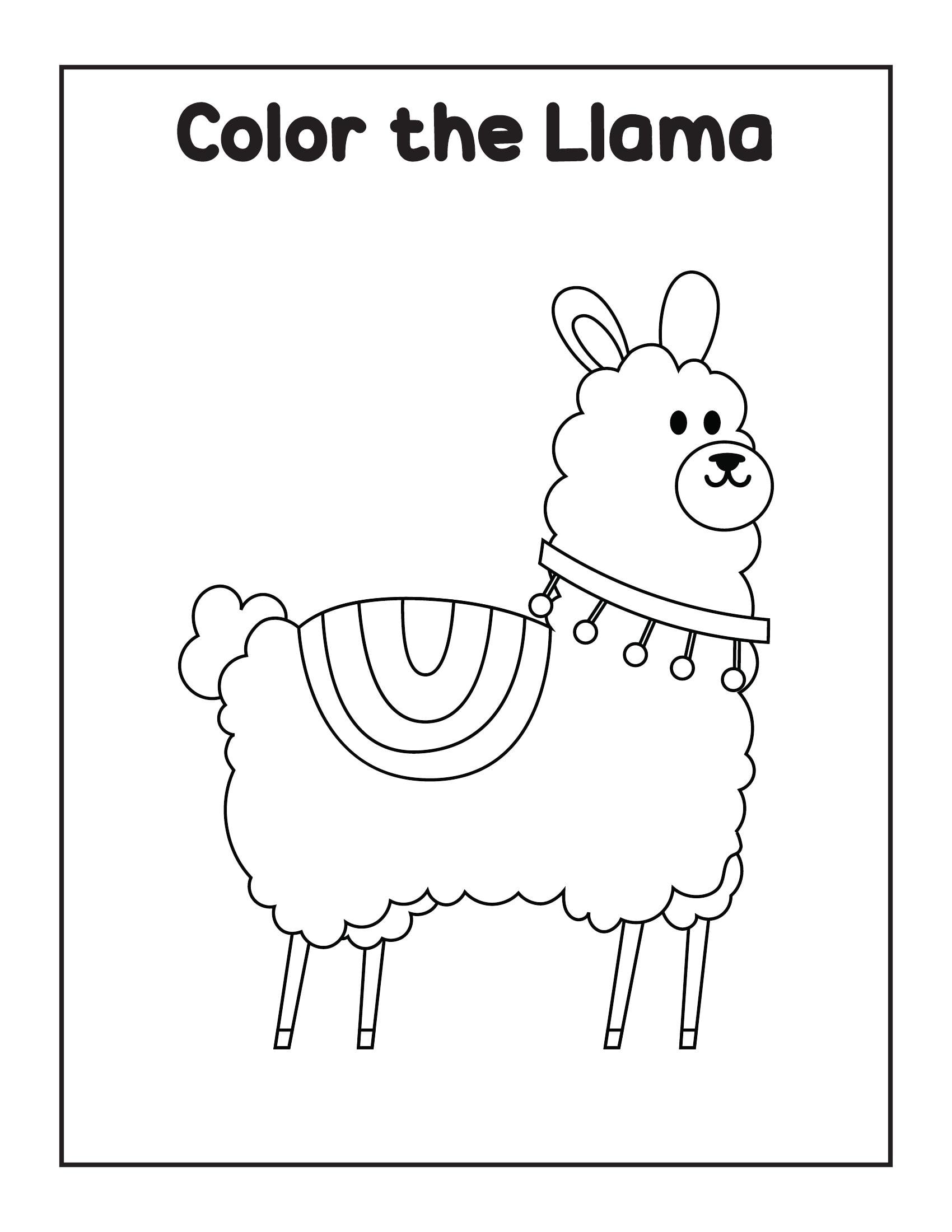
This page gives the llama a larger space for coloring. Children can experiment with its fluffy coat, saddle, and decorative details.
They can create a simple design or use several bright colors. Ask them which color they would choose for the llama’s saddle.
26. M Is for Mushroom
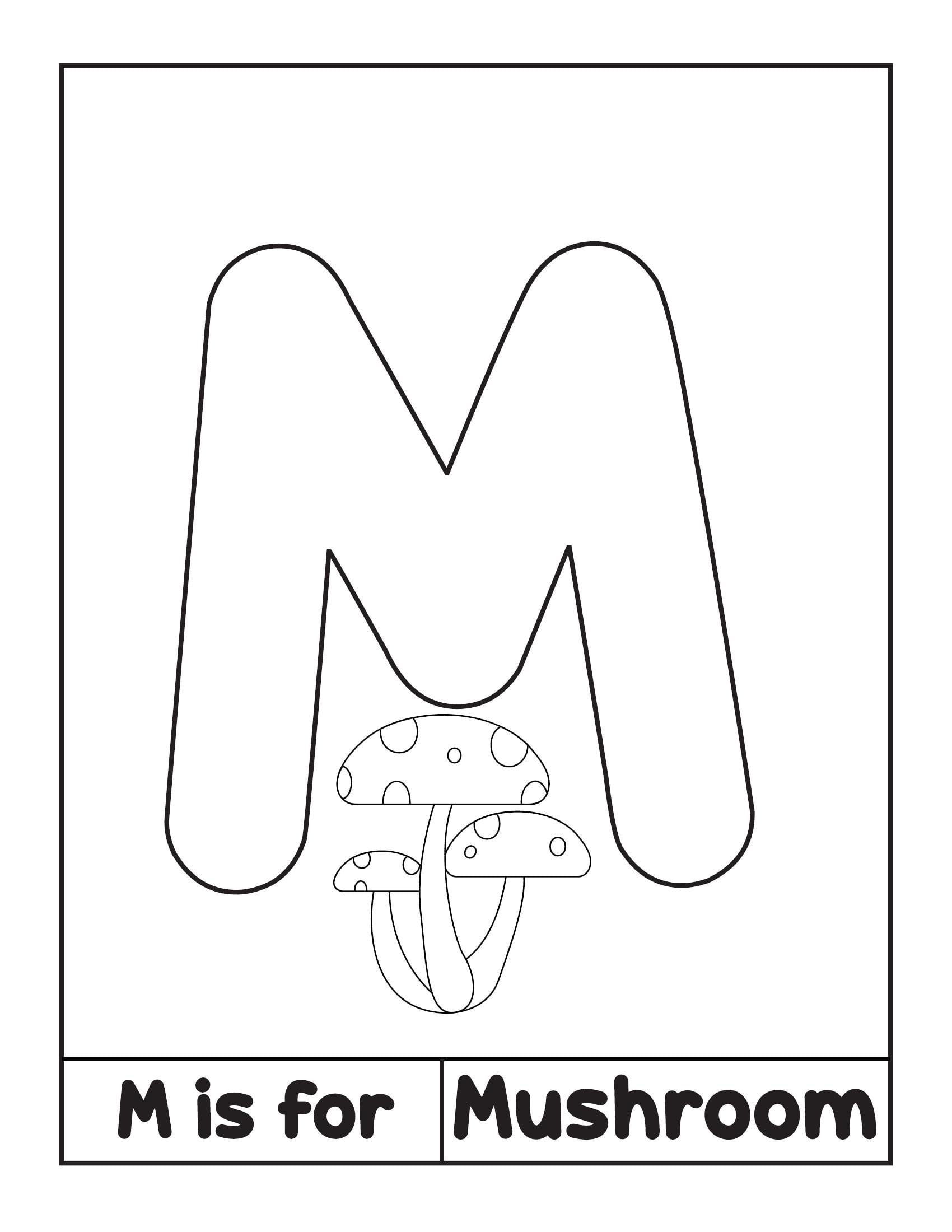
The M page features M with several mushrooms. The picture gives children multiple shapes to color around the large letter.
They can make each mushroom different from the others. You can also ask them what colors they would expect to find in a forest.
27. Color the Mushroom
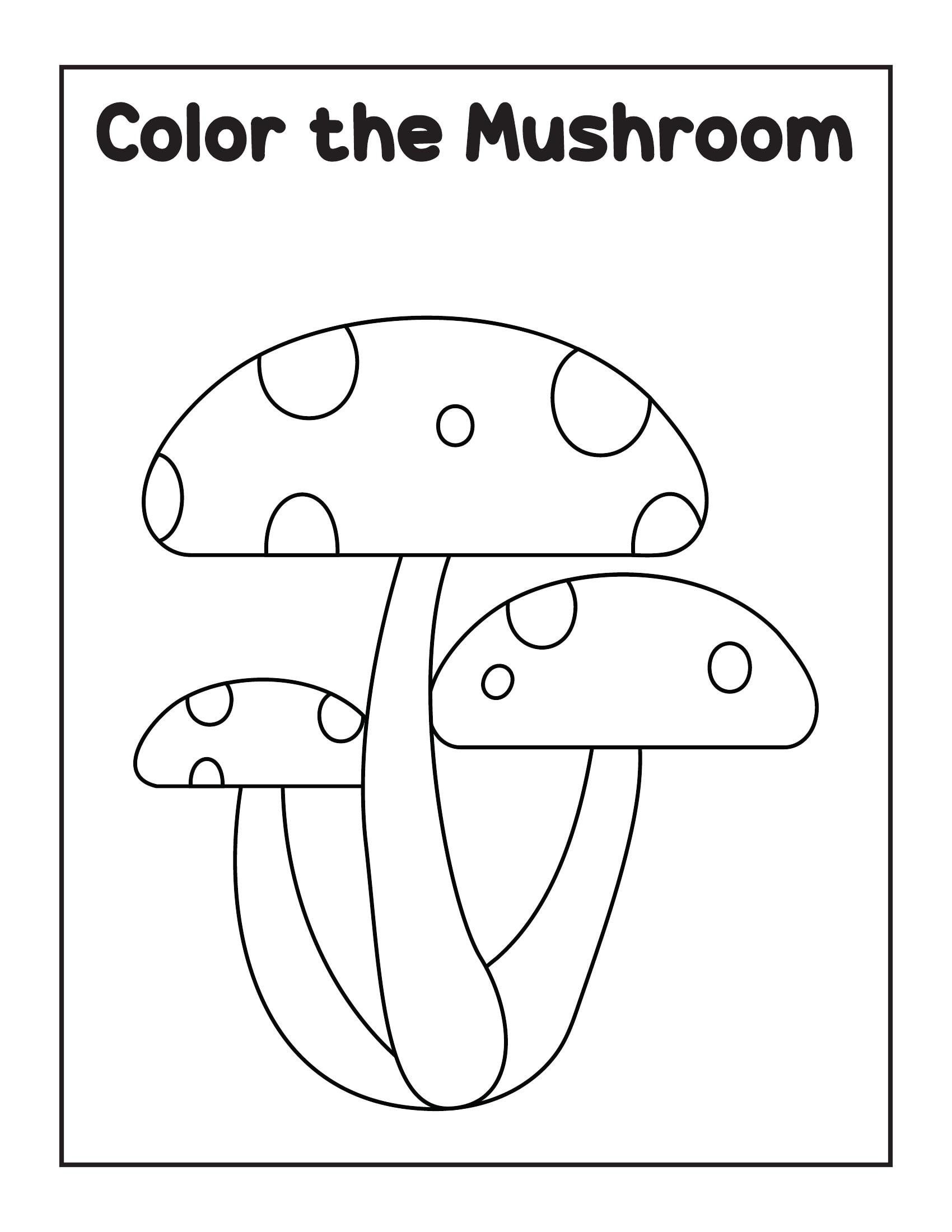
The separate mushroom page provides a larger picture with several mushroom shapes. Children can use different colors for the caps and stems.
They can also create their own unusual mushroom patterns. This makes the page a fun choice for children who enjoy nature-themed pictures.
28. N Is for Narwhal
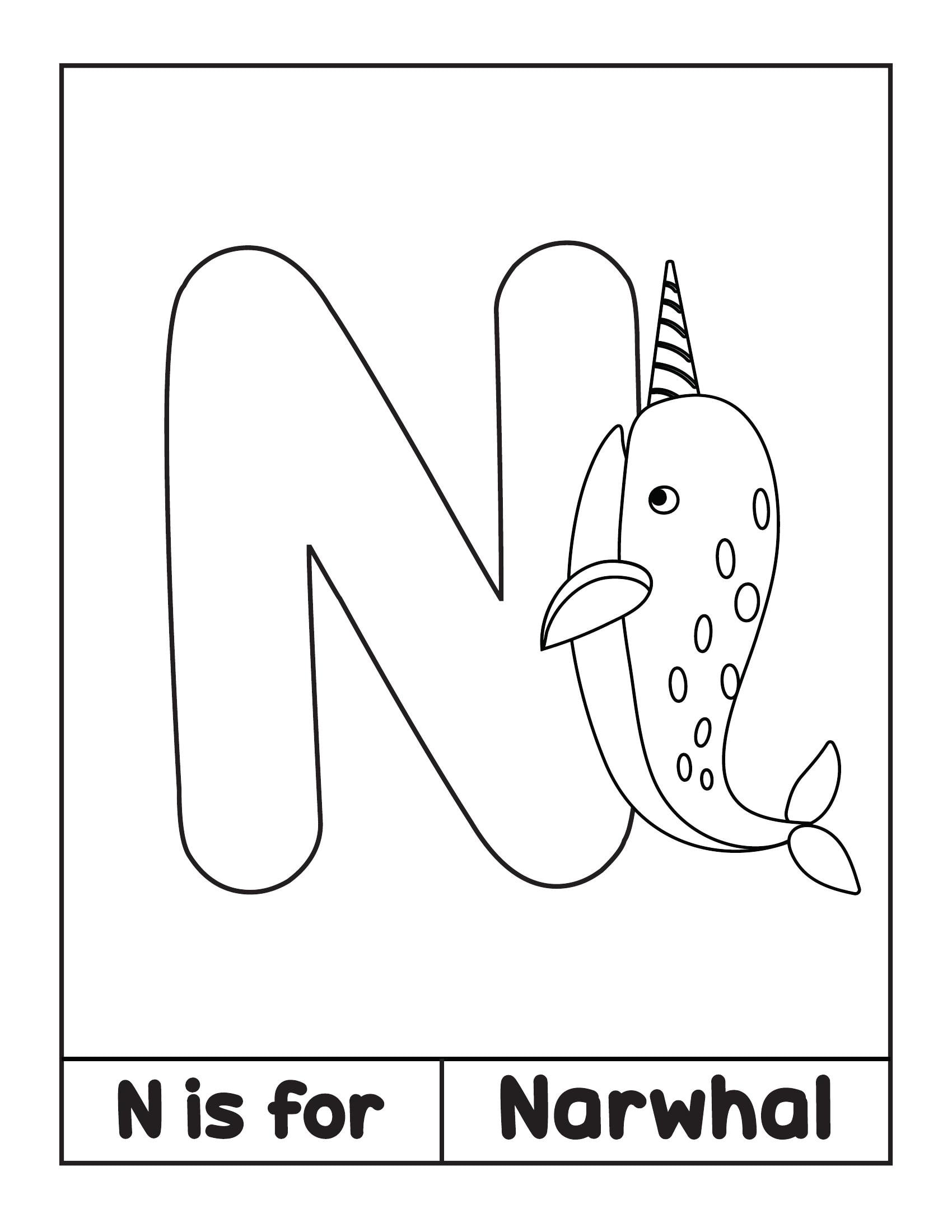
The N page introduces N with a playful narwhal. The sea creature includes a long horn and small decorative details.
Children can choose ocean-inspired colors or create a colorful fantasy narwhal. Ask them to say “N is for Narwhal” before starting.
29. Color the Narwhal
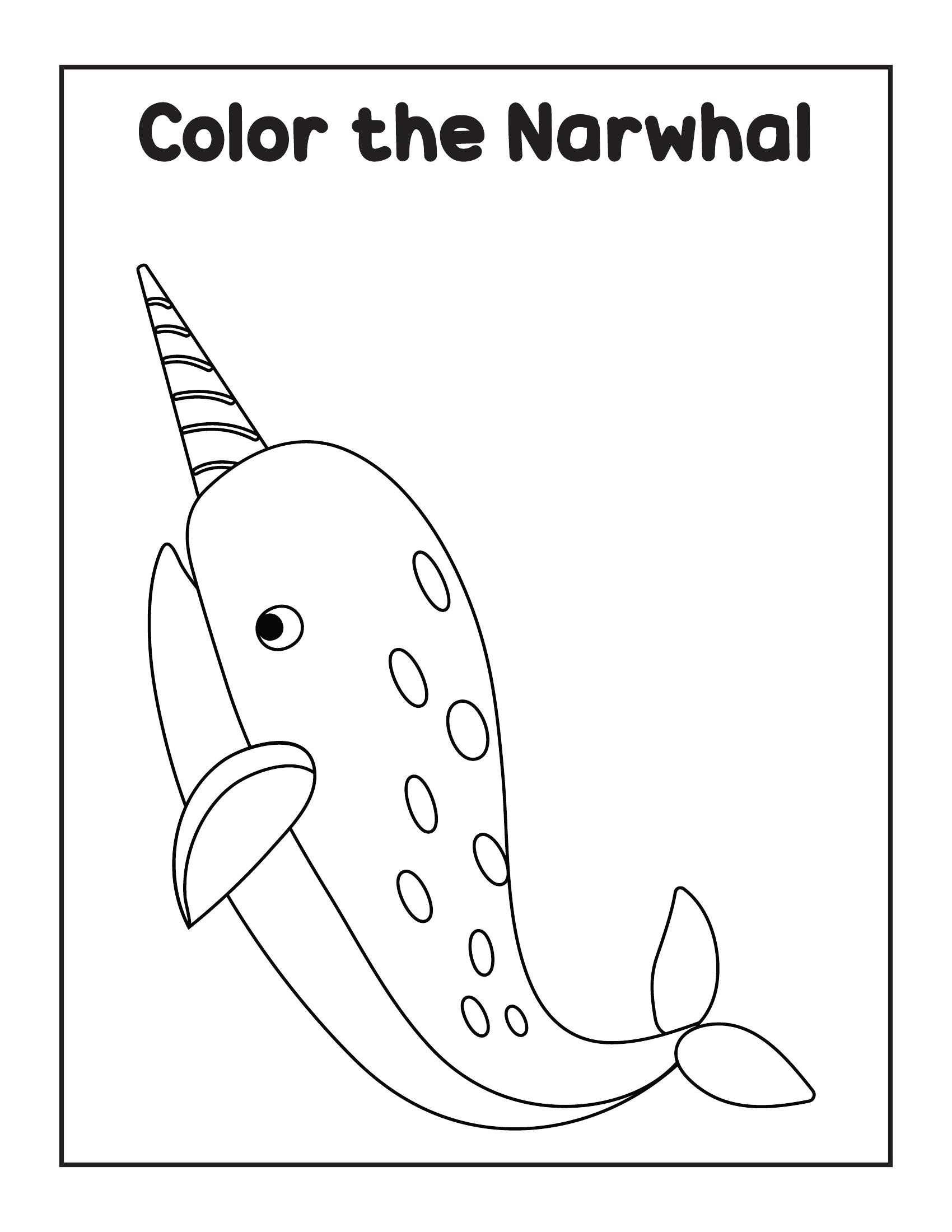
The narwhal gets its own page for a more focused coloring session. Children can decorate its body, horn, fins, and tail.
They can also imagine an underwater setting around it. Ask them what other creatures might live near their narwhal. This adds a little storytelling to the coloring activity.
30. O Is for Owl
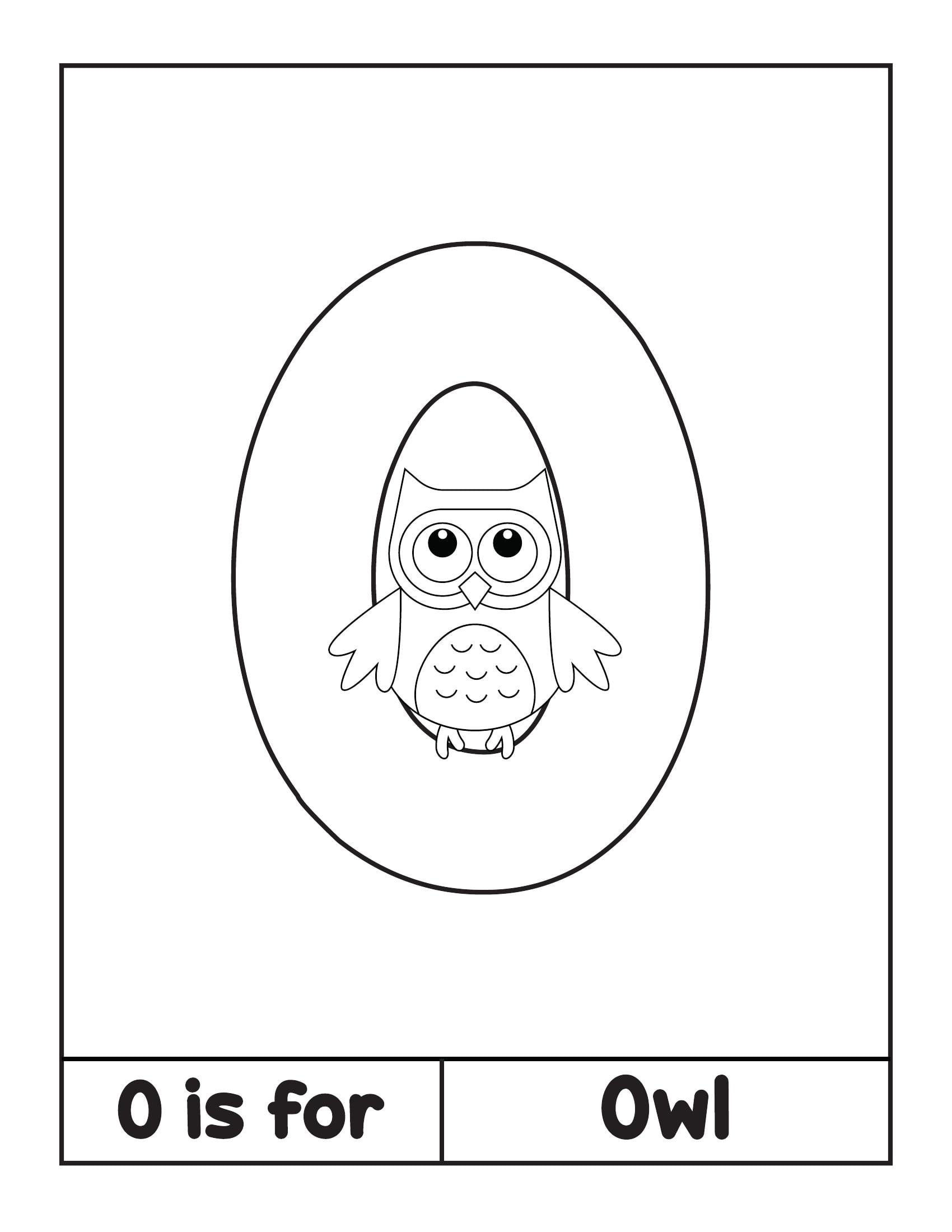
The O page features O with a small owl inside the letter. The rounded design makes the letter easy to recognize.
Children can choose different colors for the owl and the large O. Ask them to repeat “O is for Owl” before they begin.
31. Color the Owl
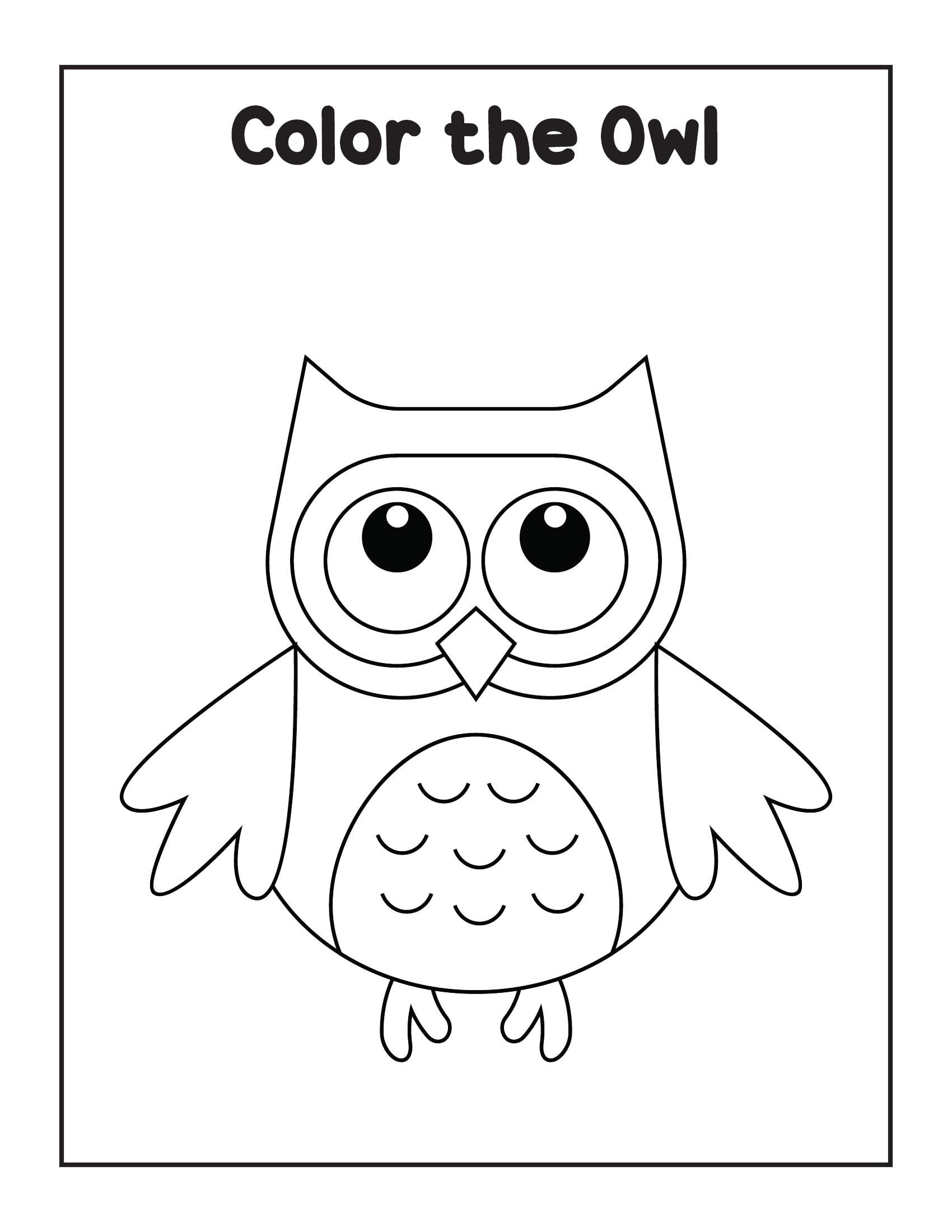
The owl gets its own page with a larger, detailed design. Children can color its wings, eyes, belly, and other features.
They can make the owl realistic or use imaginative colors. You can also ask them what name they would give their owl.
32. P Is for Penguin
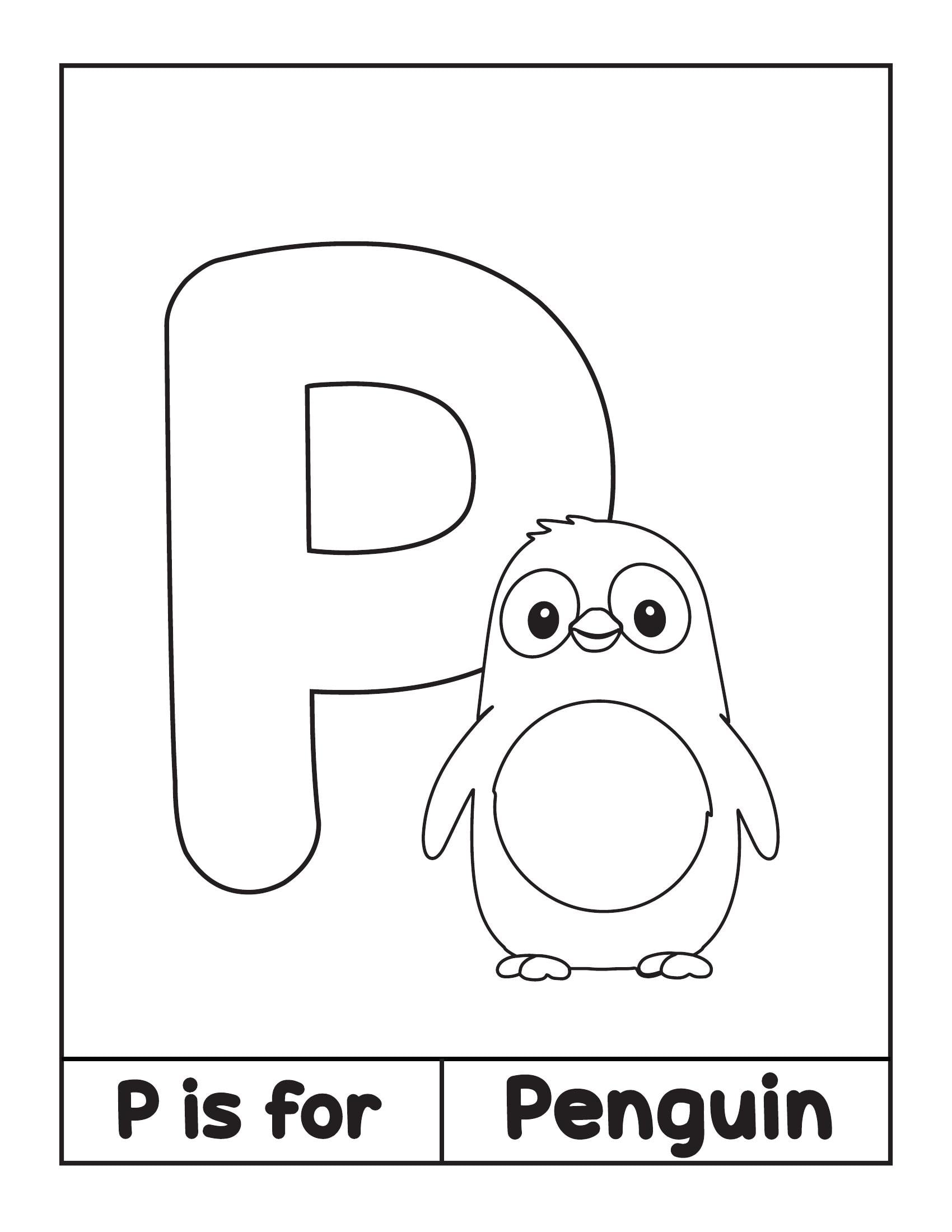
The P page introduces P with a cute penguin. The large letter gives children a clear shape to work around.
Children can choose familiar black and white shades or try something different. Ask them to repeat “P is for Penguin” as they color.
33. Color the Penguin
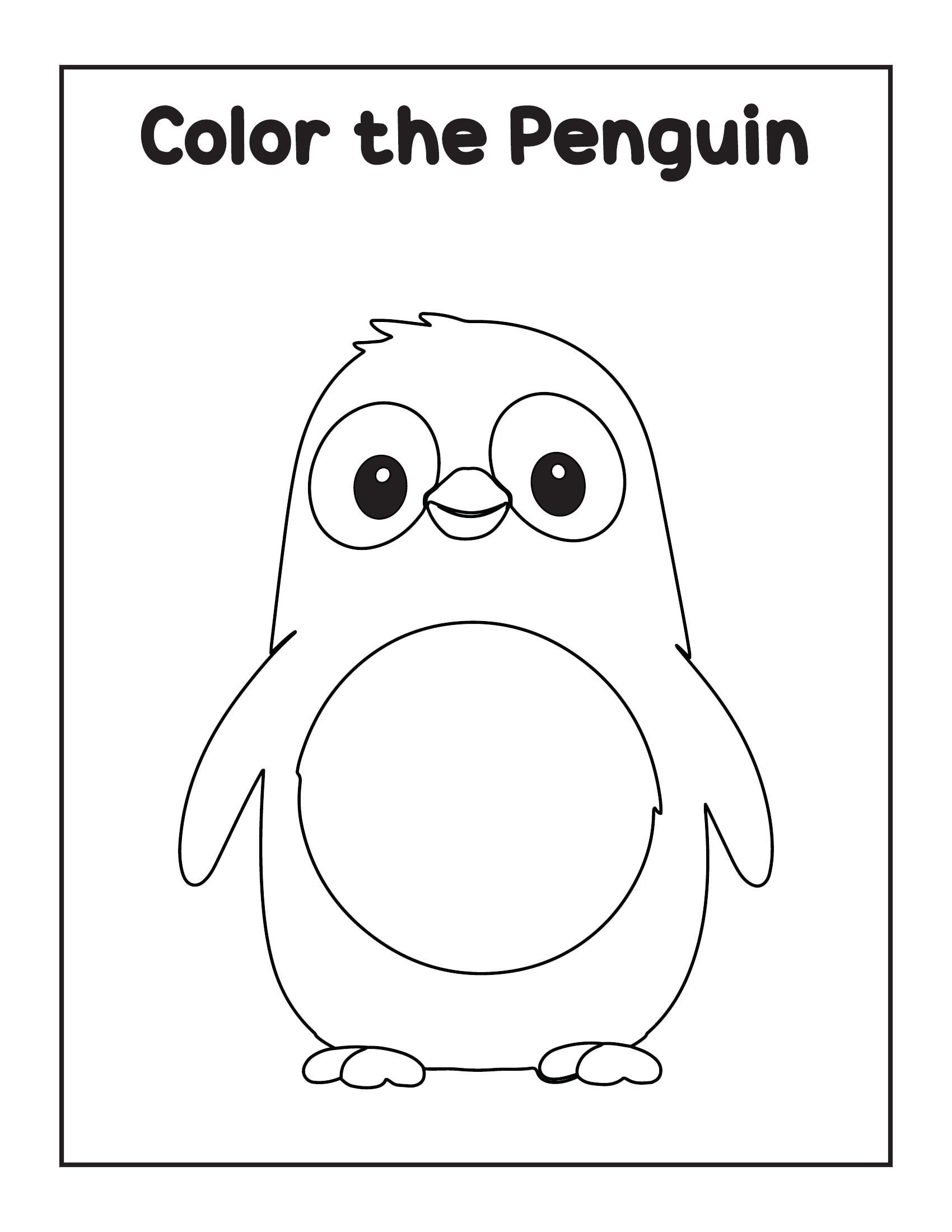
The penguin receives a separate page for more coloring fun. Children can work on its body, belly, beak, and feet.
They can also create a colorful penguin that looks completely unique. Ask them where they think their penguin would like to travel. This keeps the conversation connected to the picture.
34. Q Is for Quail
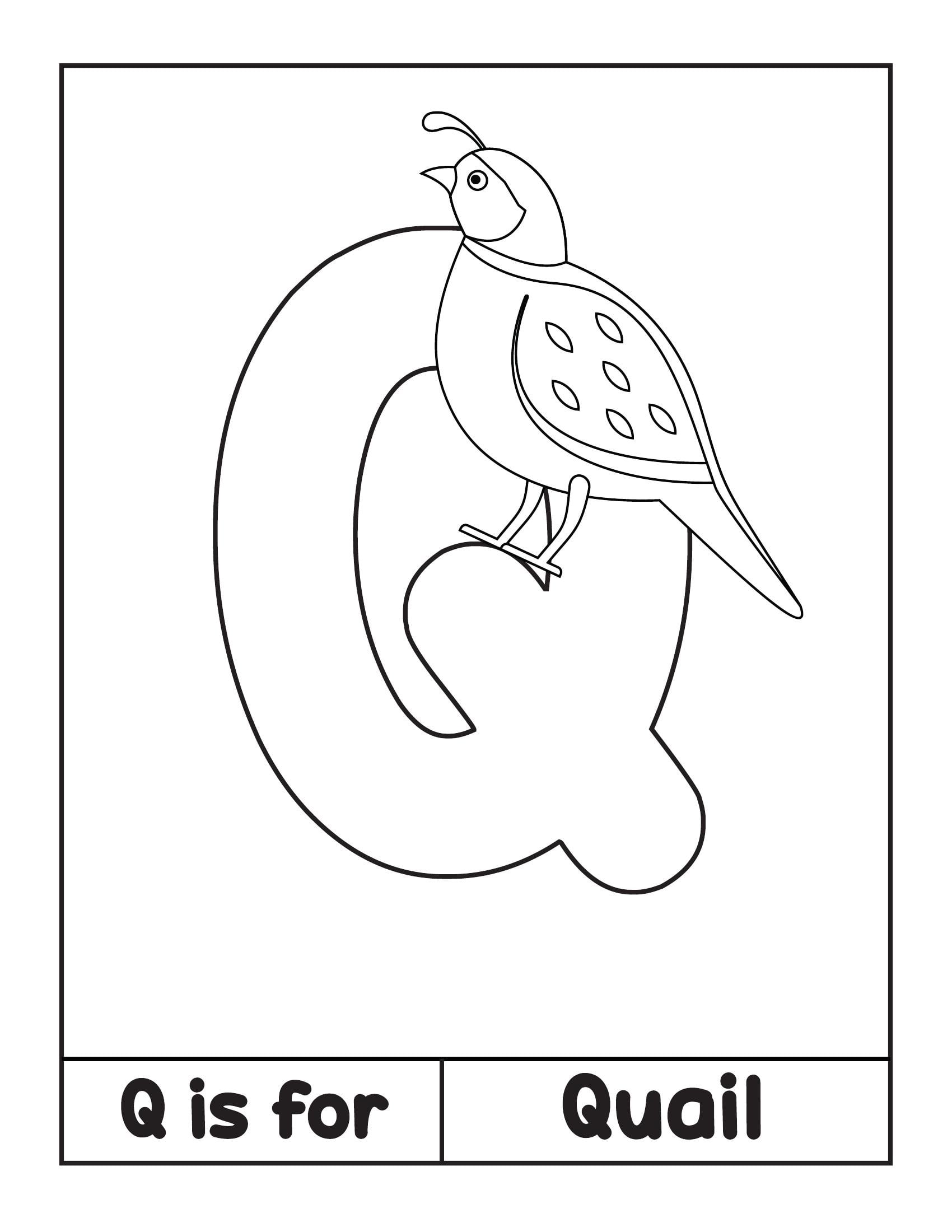
The Q page pairs Q with a quail perched across the letter. Its feathers provide several smaller sections for children to color.
You can introduce the word before they start coloring. Ask them to repeat “Q is for Quail” to make the connection easier.
35. Color the Quail
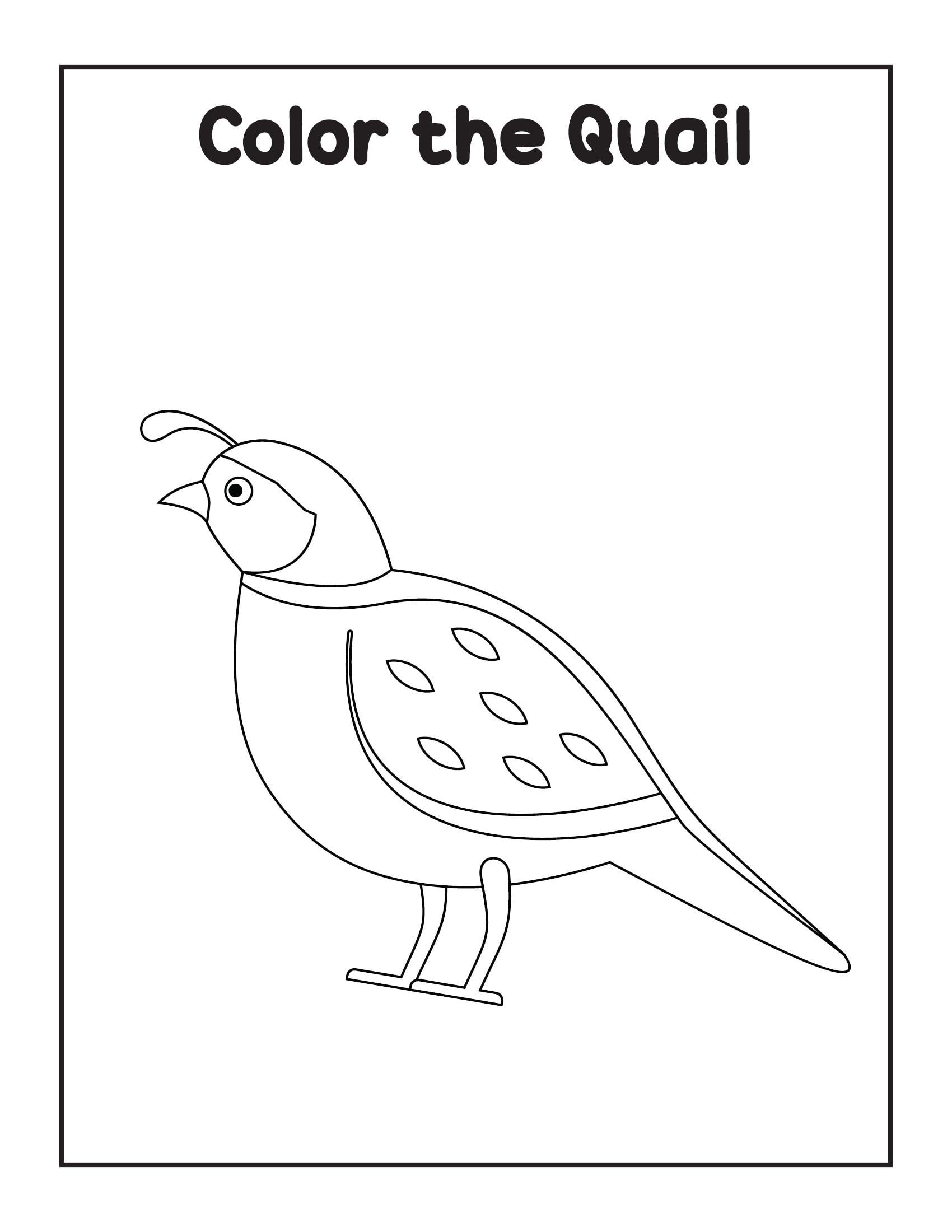
This page gives children a larger quail illustration to color. They can experiment with different shades across its feathers and body.
The design gives them enough detail without becoming overwhelming. Ask your child which colors look best together. It is also a chance to revisit the less familiar word “quail.”
36. R Is for Rocket
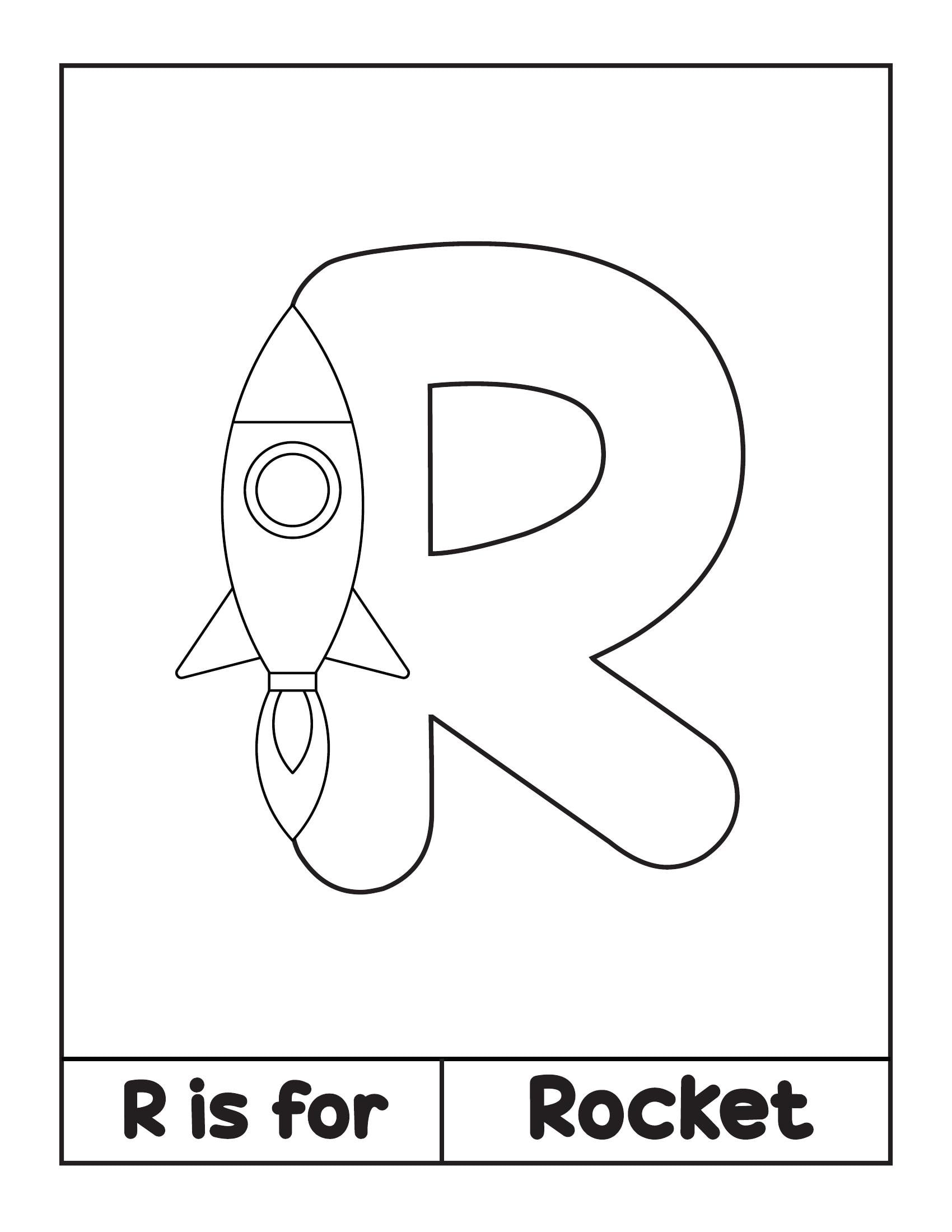
The R page features R beside a rocket. The design introduces a fun space-themed picture for children to color. Children can choose colors for the rocket, windows, and flames. Ask them where their rocket might travel.
37. Color the Rocket
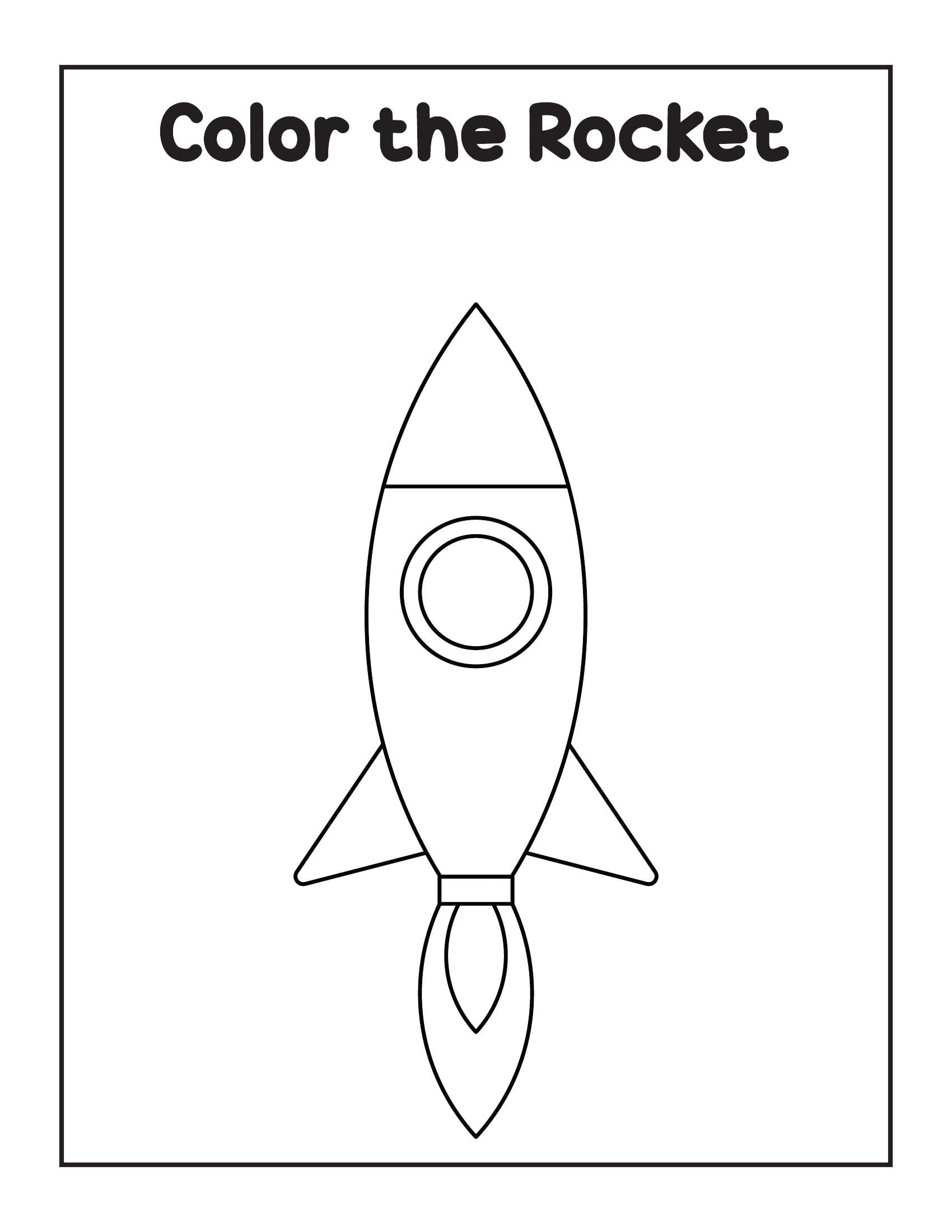
The separate rocket page gives children more space to decorate their spacecraft. They can create a simple rocket or design one with unusual colors.
You can ask them to imagine who might be traveling inside it. This adds a playful storytelling element to the coloring session. It also gives R another memorable picture connection.
38. S Is for Snowman
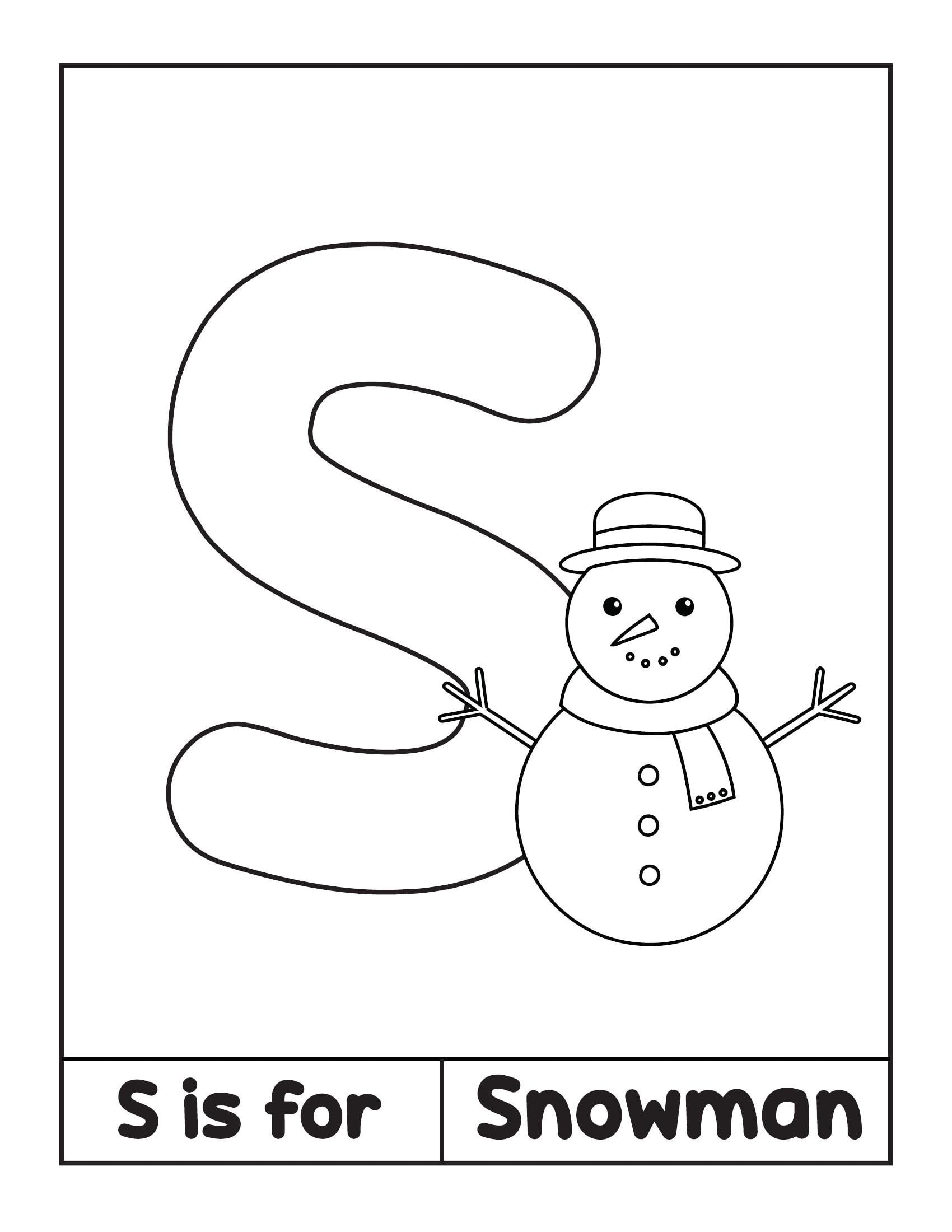
The S page introduces S with a snowman. The large letter sits behind the winter character, creating a fun seasonal design.
Children can color the snowman’s hat, scarf, buttons, and other details. Ask them to say “S is for Snowman” before they begin.
39. Color the Snowman
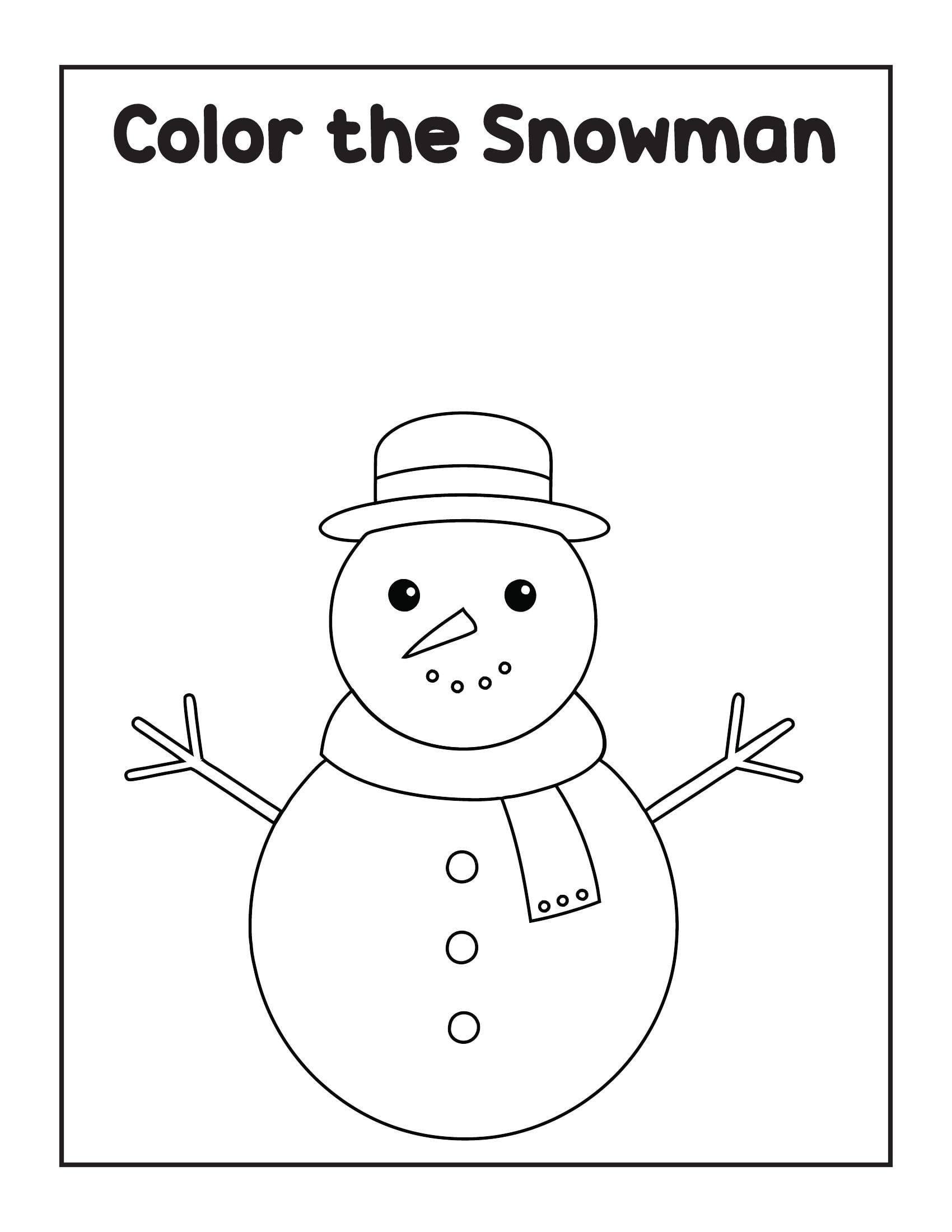
The snowman gets a full page for children to decorate. Its hat, scarf, carrot nose, and buttons give them several details to explore.
They can create a traditional winter look or choose completely different colors. This page can work especially well during a winter-themed activity.
40. T Is for Train
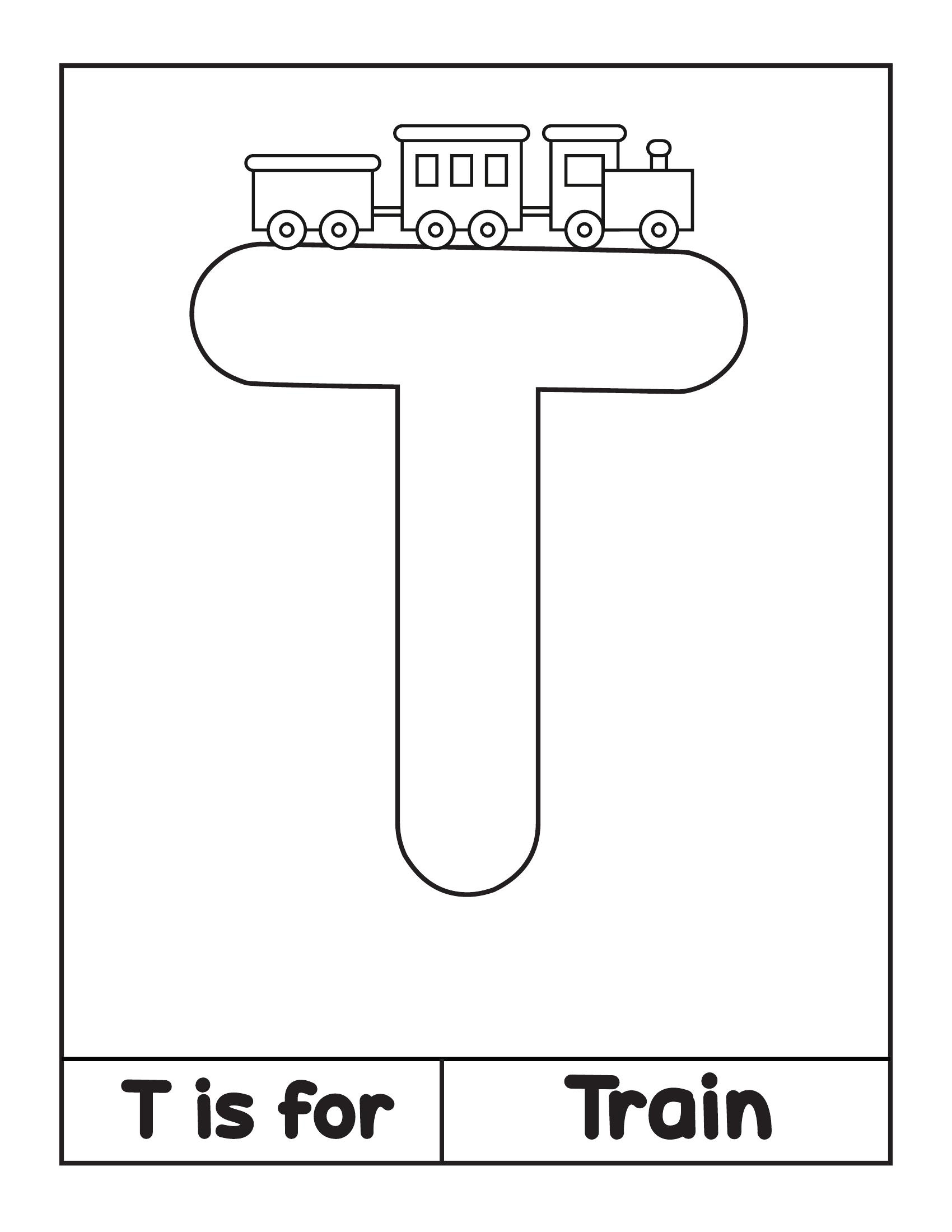
The T page features a small train sitting across the large letter. The design gives children several train sections to color.
They can make each carriage a different color. Ask them where their imaginary train might be heading.
41. Color the Train
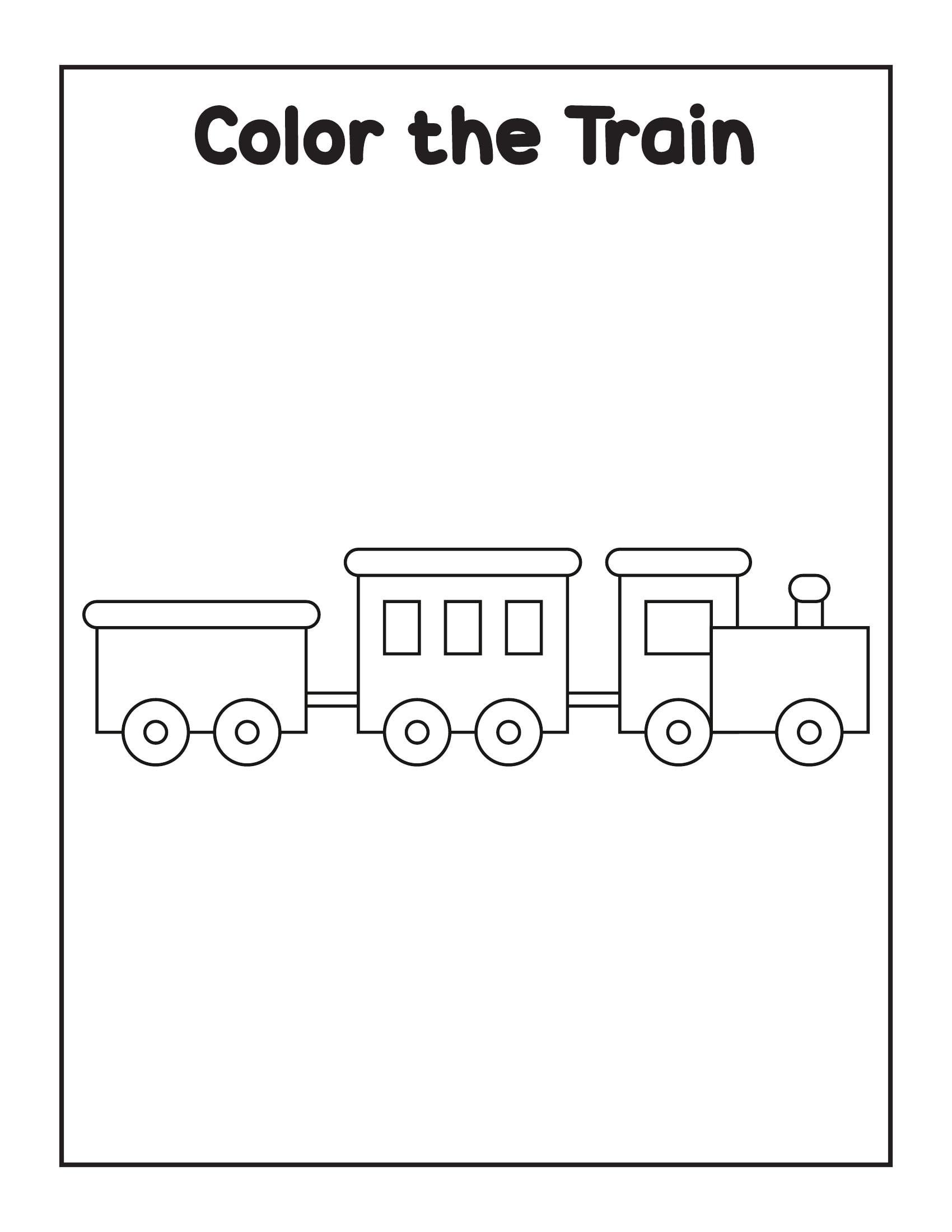
The separate train page gives children a larger version of the vehicle. They can color the engine, carriages, wheels, and windows.
Encourage them to create a train with their own color scheme. You can also invite them to invent a destination for their colorful train.
42. U Is for Umbrella
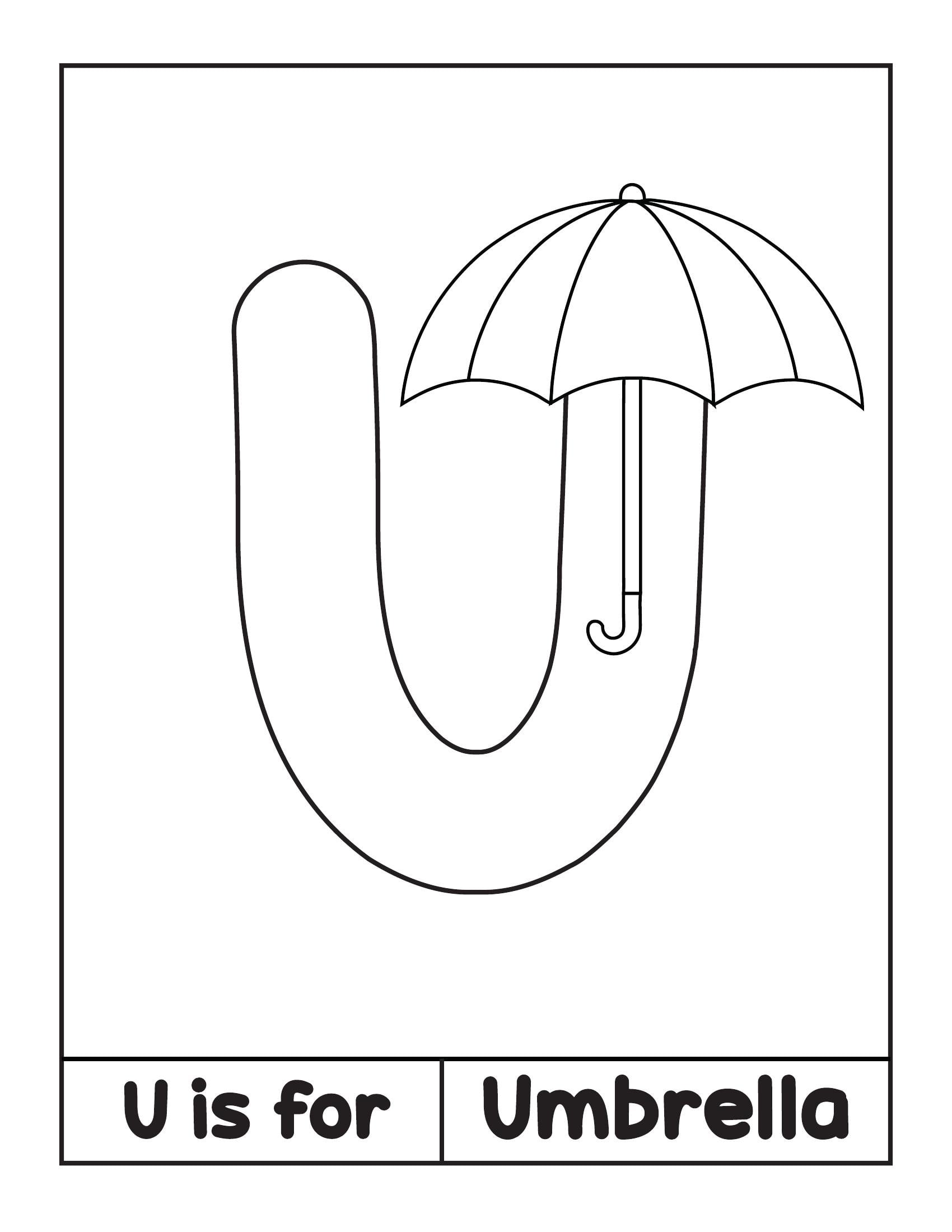
The U page pairs U with an umbrella. The curved shape of the letter works neatly with the umbrella illustration.
Children can give each umbrella section a different color. Ask them what kind of weather makes them want to use an umbrella.
43. Color the Umbrella
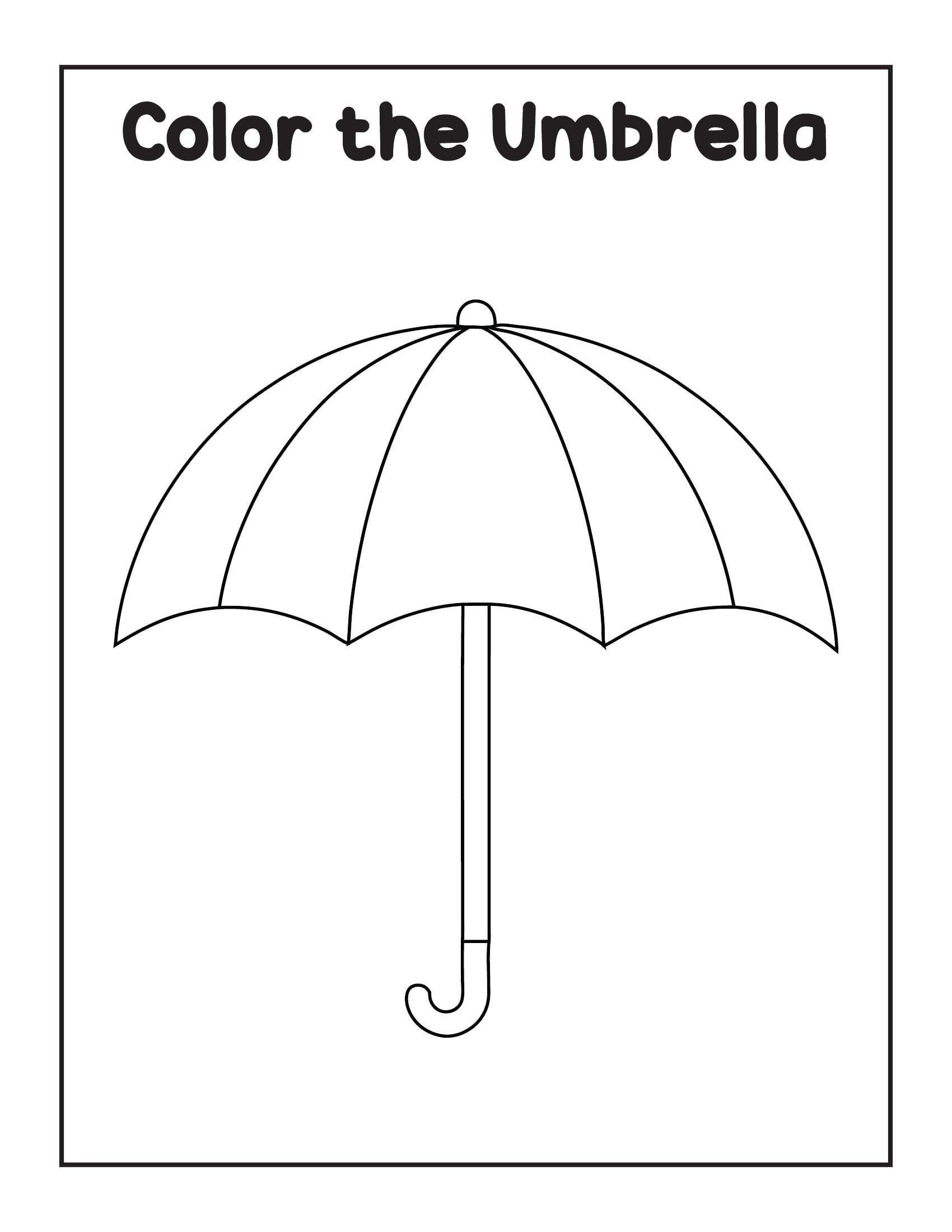
The umbrella gets its own page with several sections ready for coloring. Children can create stripes, patterns, or simple blocks of color.
They can make a bright umbrella for a rainy-day scene. You can also ask them to imagine what they would wear underneath it.
44. V Is for Volcano
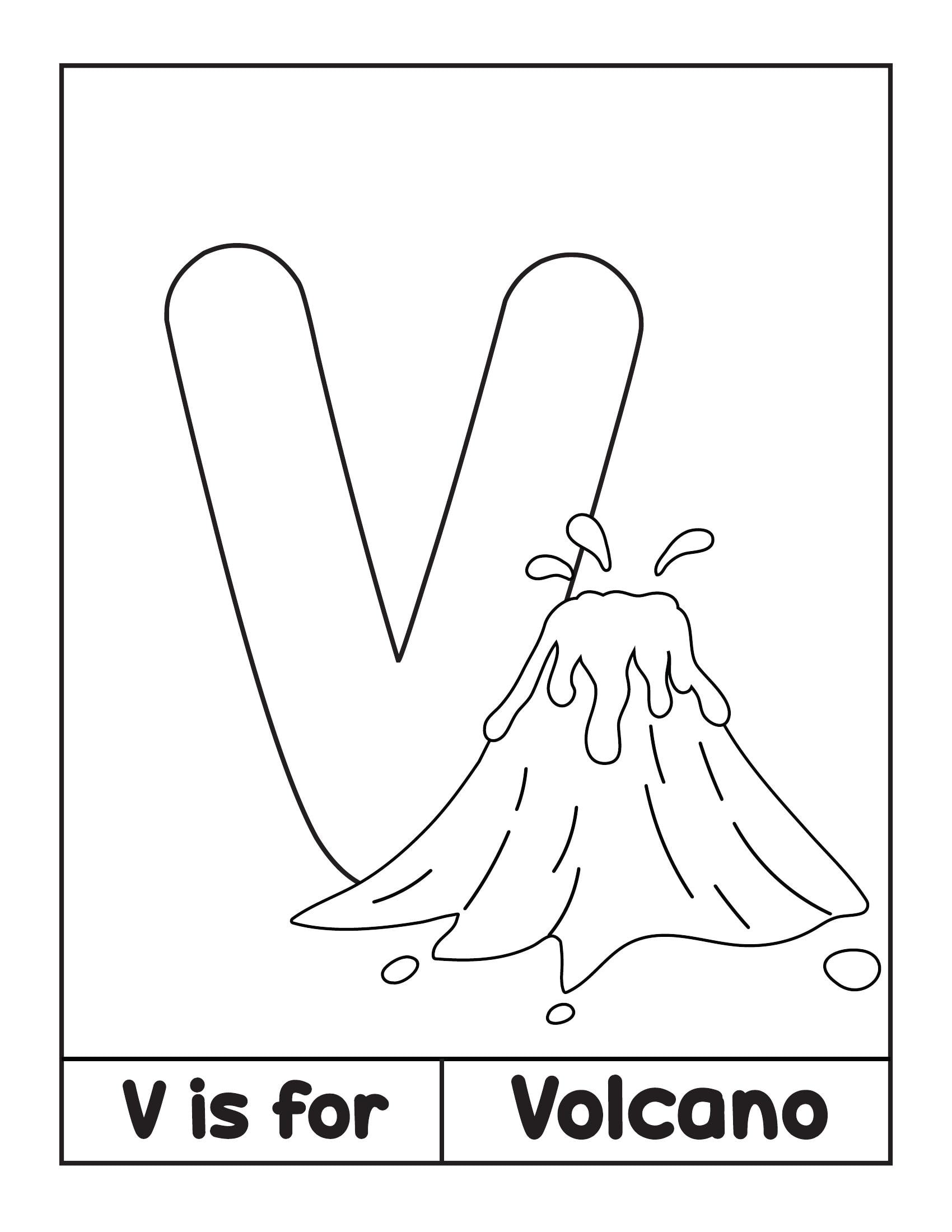
The V page introduces V with an erupting volcano. The flowing lava creates interesting areas for children to fill with color.
They can use traditional lava colors or invent their own volcano. Ask them to repeat “V is for Volcano” before they begin.
45. Color the Volcano
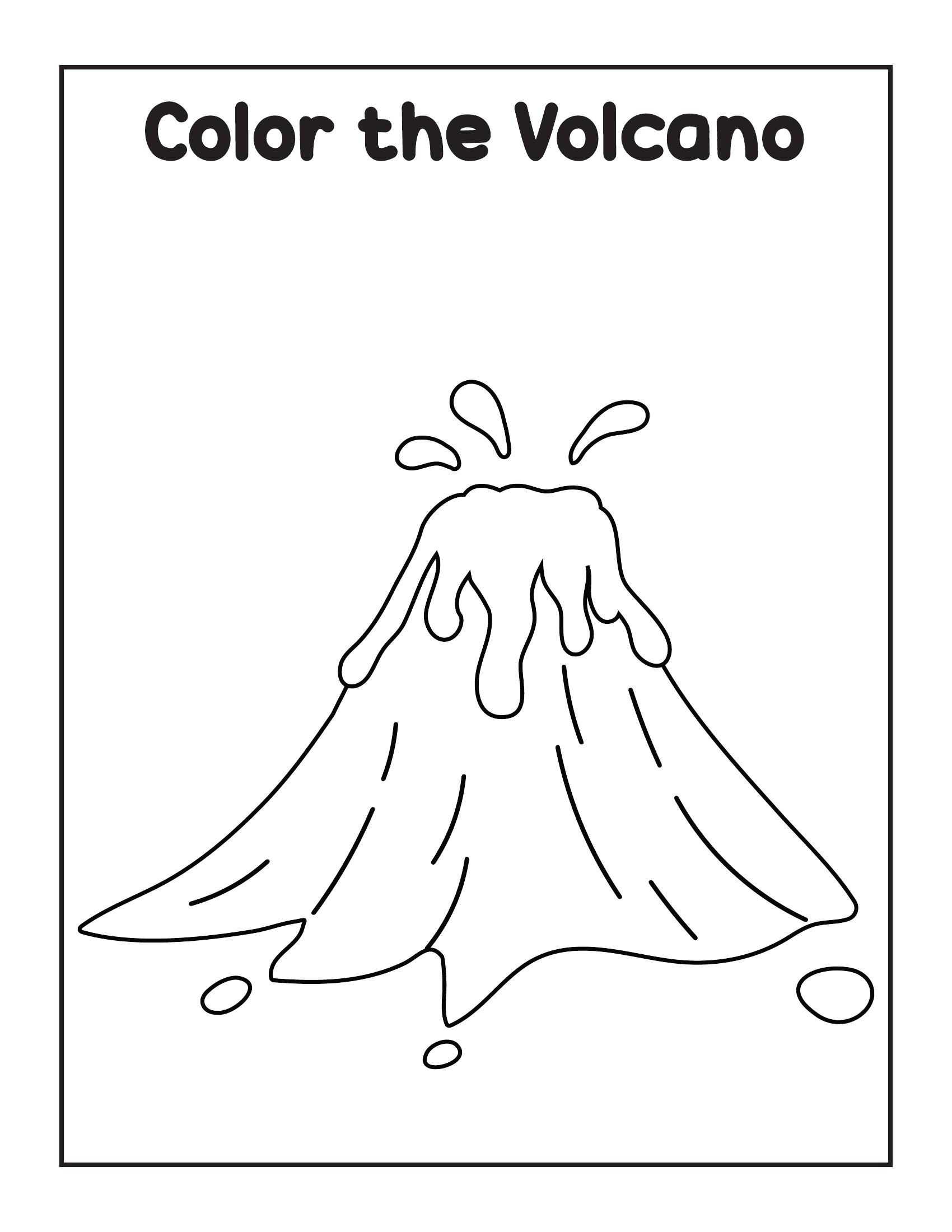
The volcano receives a separate page for a more detailed coloring activity. Children can work on the mountain, lava, smoke, and surrounding details.
They can also create their own dramatic eruption scene. Ask them what they think might happen next. This can turn the page into a small imaginative story.
46. W Is for Wheel
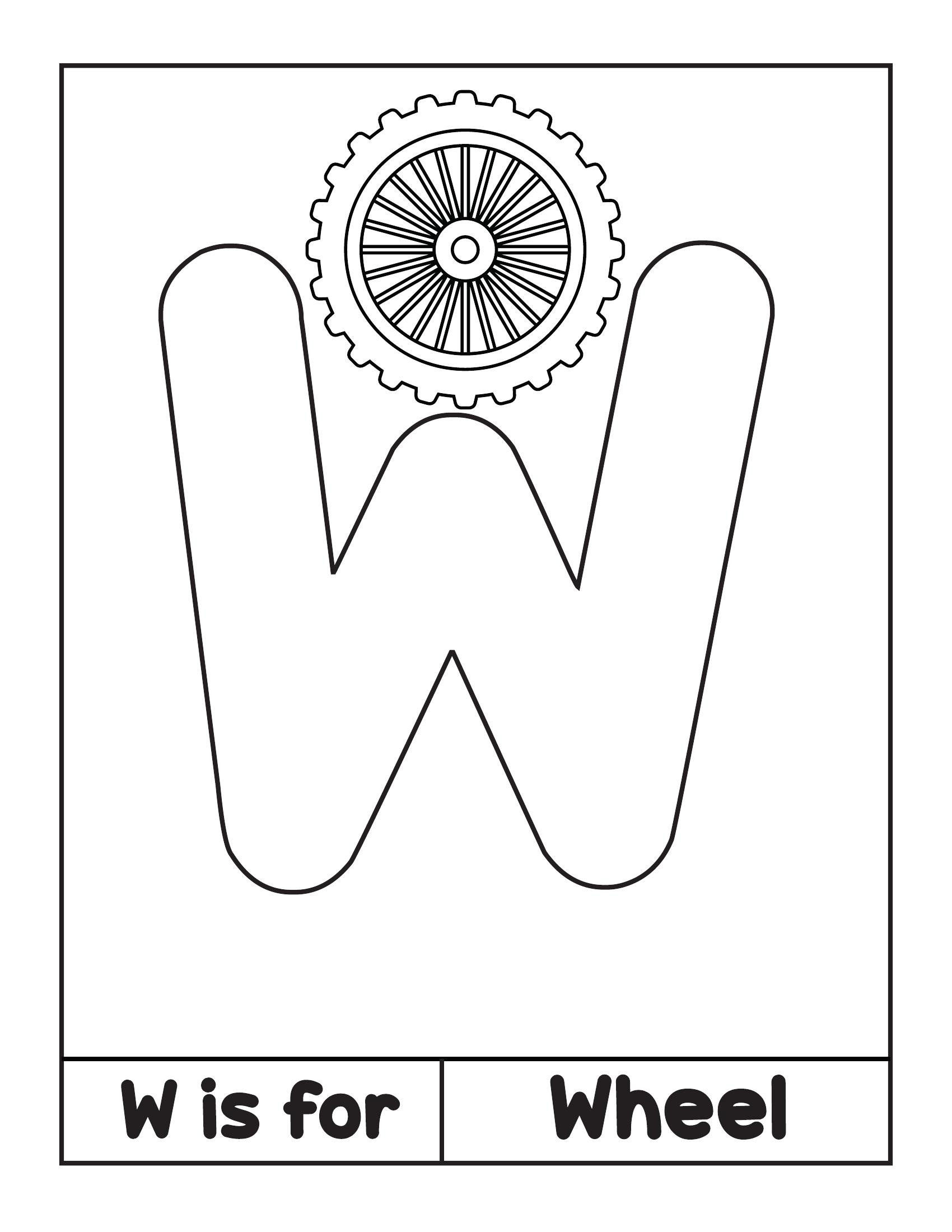
The W page features W with a detailed wheel resting above it. The wheel includes many spokes that give children plenty of small sections to color.
They can use one color or create a patterned design. Ask them to repeat “W is for Wheel” before coloring.
47. Color the Wheel
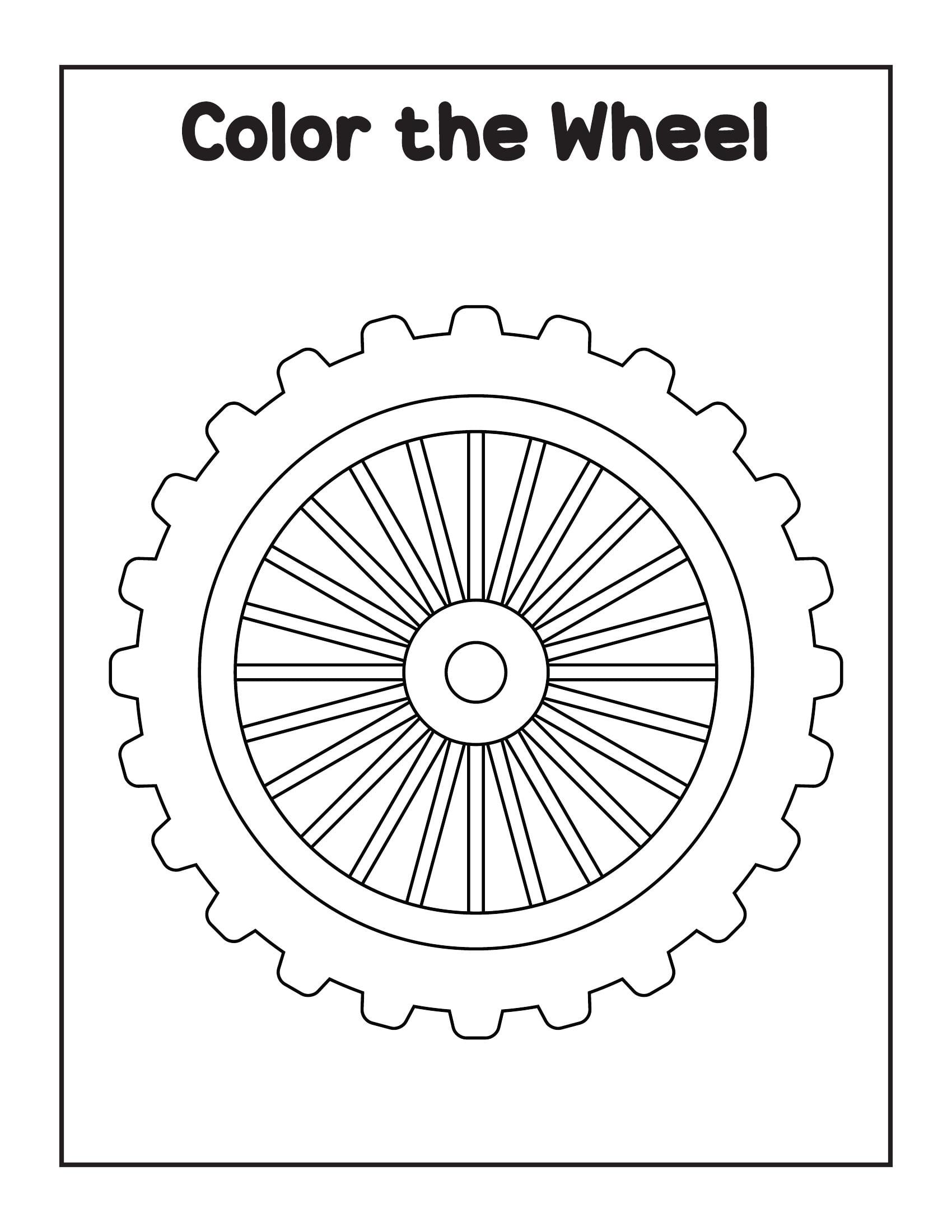
The wheel gets its own page with a large, detailed outline. Children can work through the spokes, rim, and center at their own pace.
Different colors can make each section stand out. You can also ask where they might find a wheel in everyday life.
48. X Is for X-ray
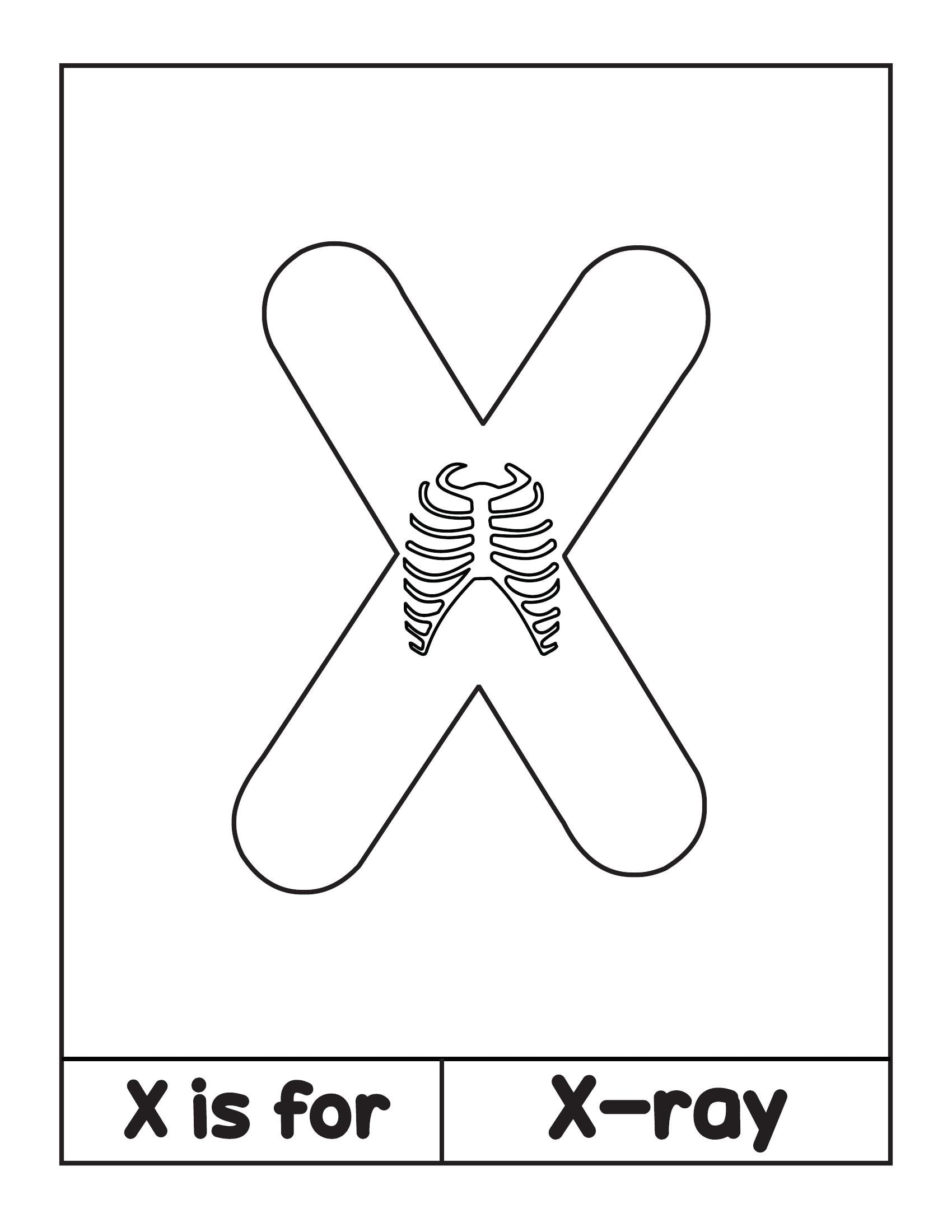
The X page connects X with an X-ray. The large letter includes a simple ribcage illustration inside it.
This gives children an unusual picture association for a less common letter. You can explain the word in simple terms before they color.
49. Color the X-ray
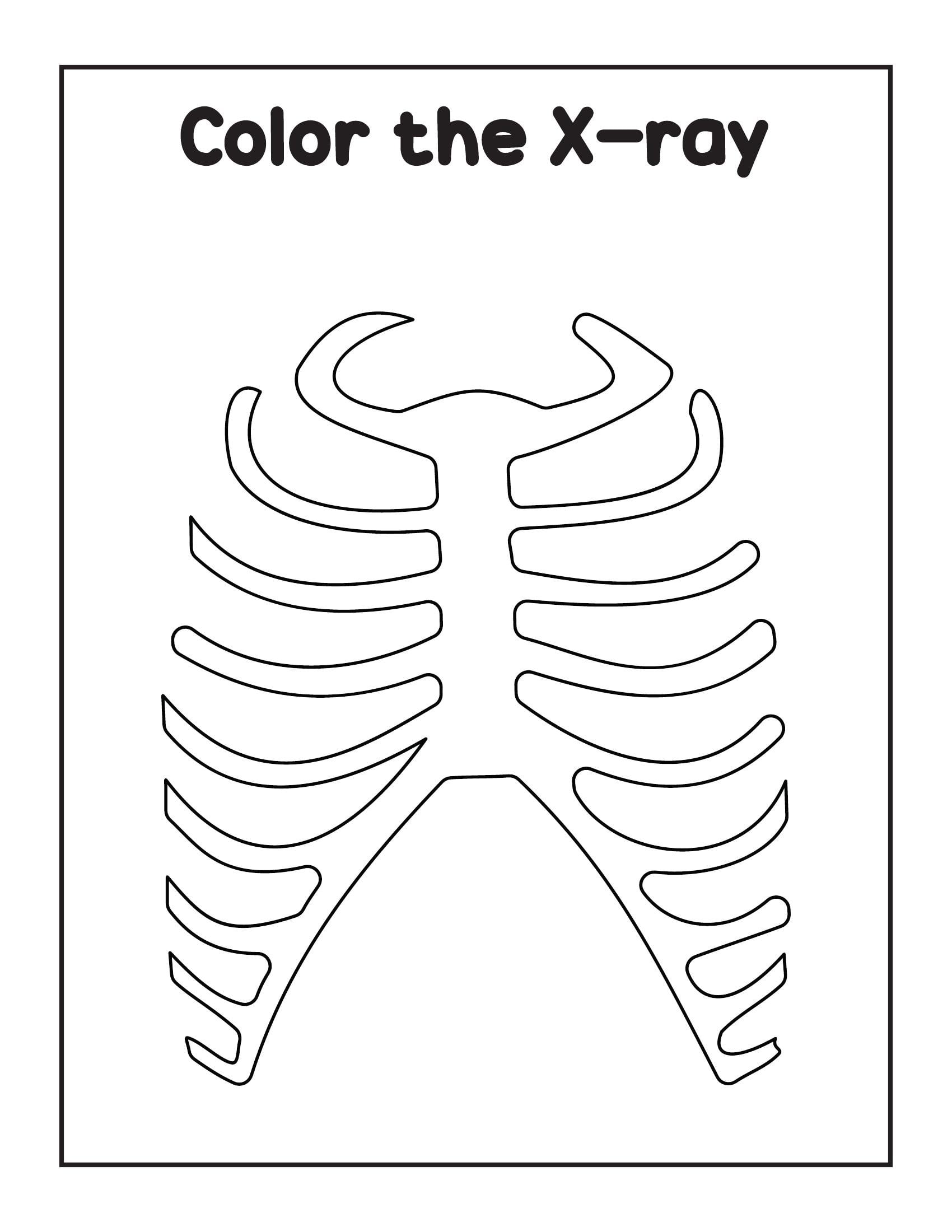
The X-ray receives a separate page with the ribcage as the main image. Children can explore the simple outline while choosing their own colors.
This page gives you an opportunity to revisit the letter X. Ask them to say the word slowly after finishing. It can also introduce a new everyday word.
50. Y Is for Yak
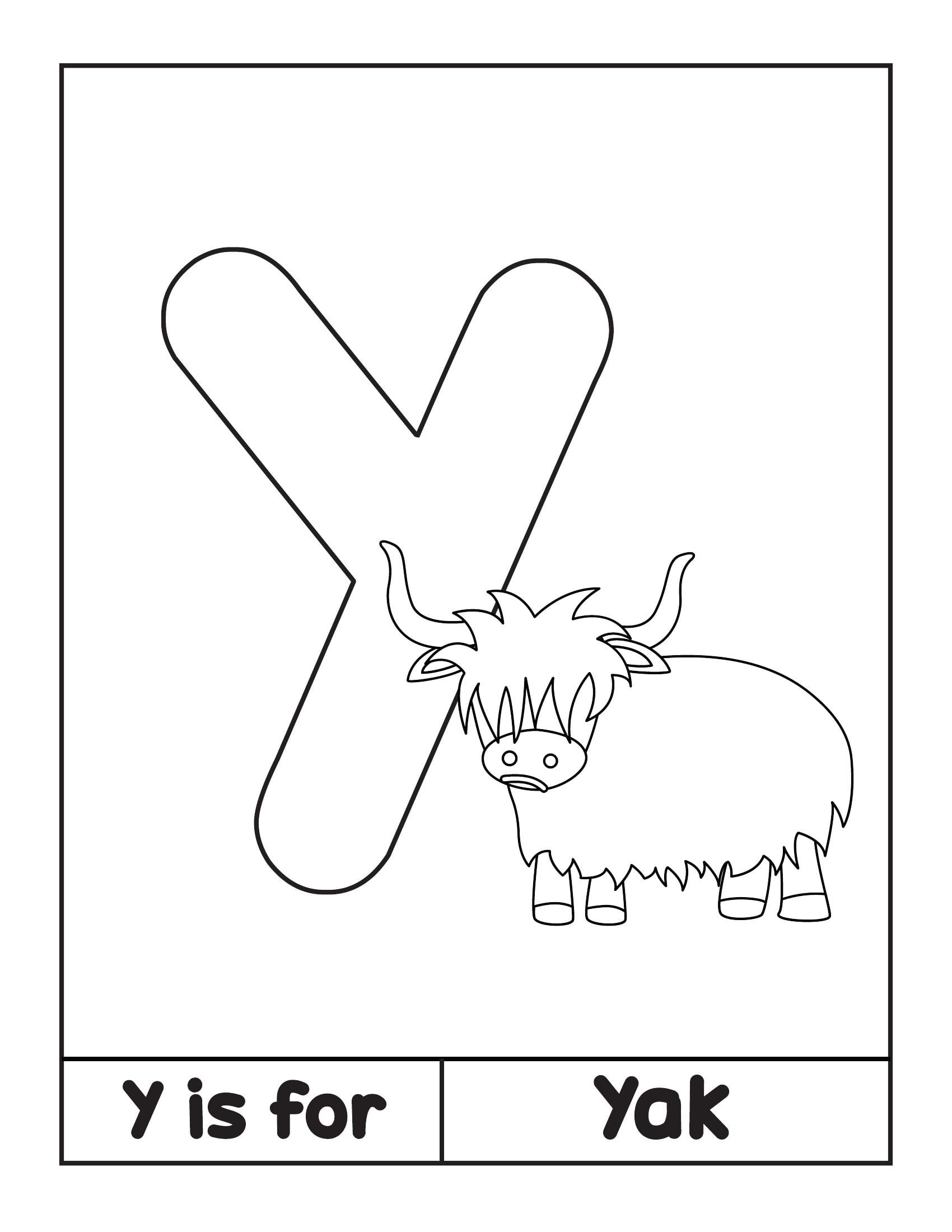
The Y page features Y alongside a yak. The animal has large horns and a furry-looking body. Children can choose colors for its coat, horns, and other details. Ask them to repeat “Y is for Yak” before they start.
51. Color the Yak
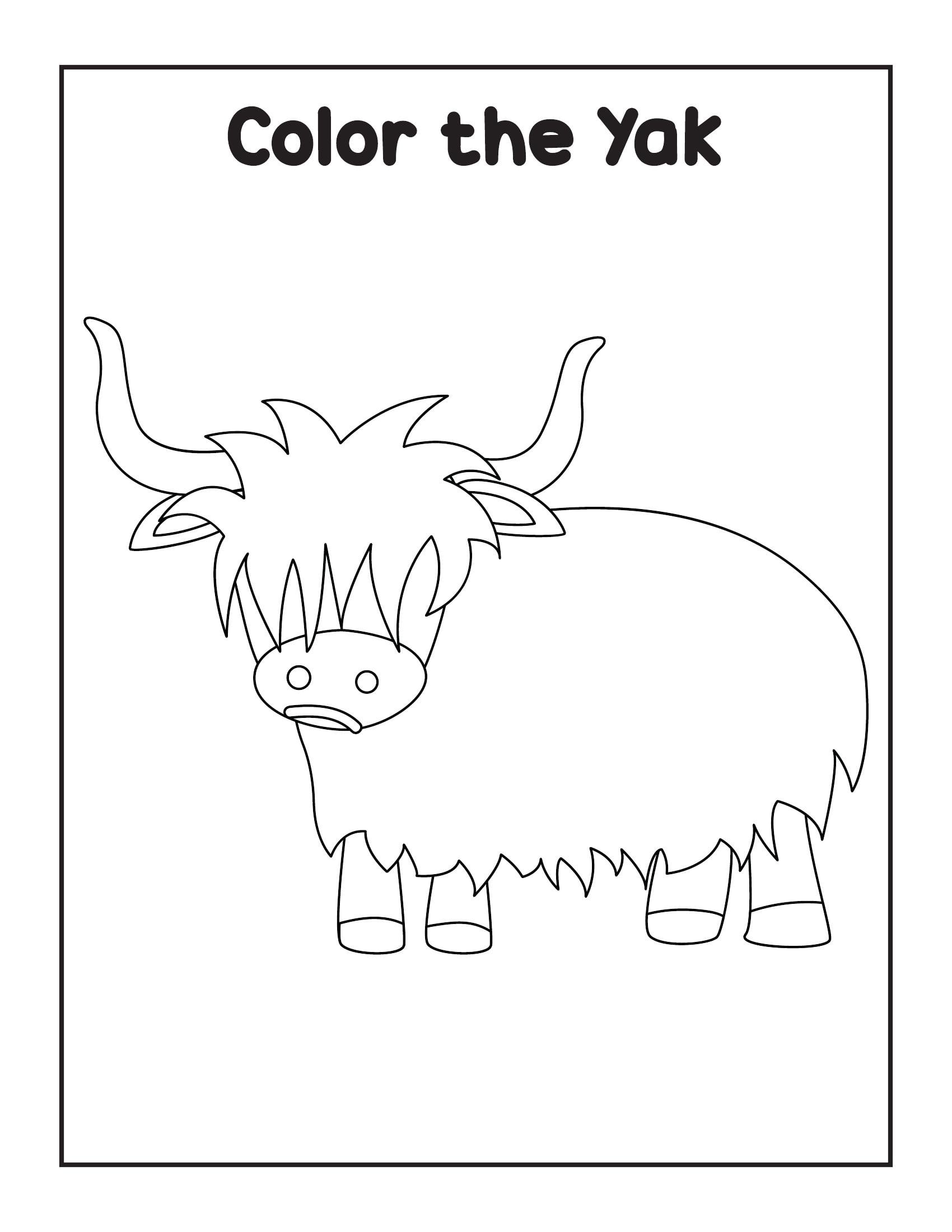
The yak gets its own page for children to color and personalize. They can experiment with shades for its thick coat and horns.
Children can also create a completely imaginary yak with bright colors. Ask them to give their finished animal a name. This makes the final few pages feel more creative.
52. Z Is for Zeppelin
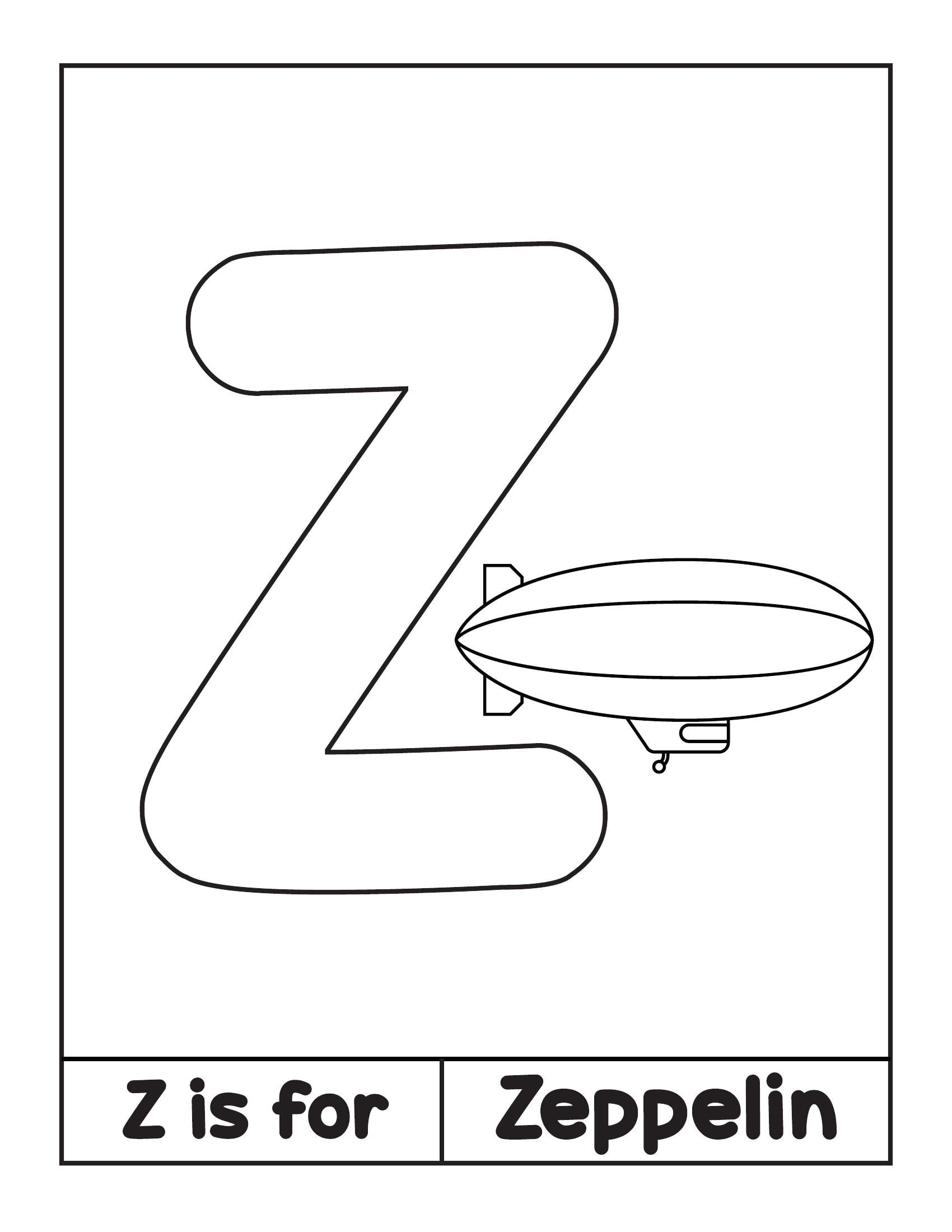
The final letter page introduces Z with a large zeppelin. The airship sits beside the letter and gives children an unusual word to discover.
Children can choose any colors for the airship and its smaller details. Ask them to repeat “Z is for Zeppelin” before coloring.
53. Color the Zeppelin
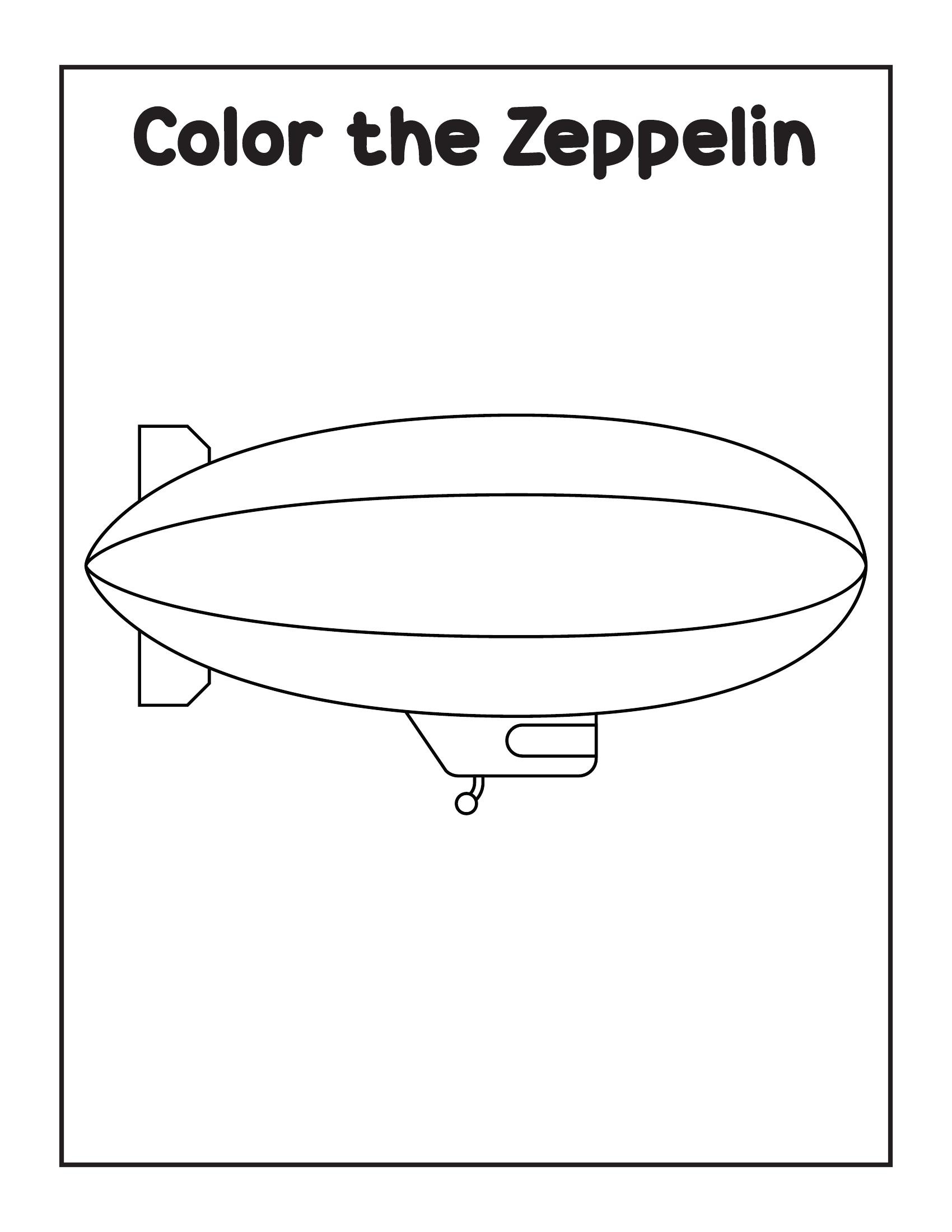
The final activity gives the zeppelin its own full coloring page. Its long shape leaves plenty of room for children to experiment with different colors.
They can create a simple airship or decorate it with their own patterns. Once finished, the collection gives them a complete A-to-Z coloring journey.

Final Thoughts
A full alphabet can feel much more interesting when every letter comes with its own picture.
This collection gives children familiar animals, foods, objects, and playful ideas to color from A to Z. Each pairing creates a simple way to spend more time with individual letters.
You can use the pages in order or choose pictures based on your child’s interests.
Some children may rush toward the dinosaur, while others may prefer the butterfly, ice cream, or train. Let their choices guide the activity and keep the experience relaxed.
With 53 pages in the collection, there is plenty to explore beyond the first alphabet activity.
Children can color the letter and its matching picture, then enjoy a larger version of the picture separately. These Alphabet Coloring pages can make a simple coloring session feel more varied, creative, and enjoyable.