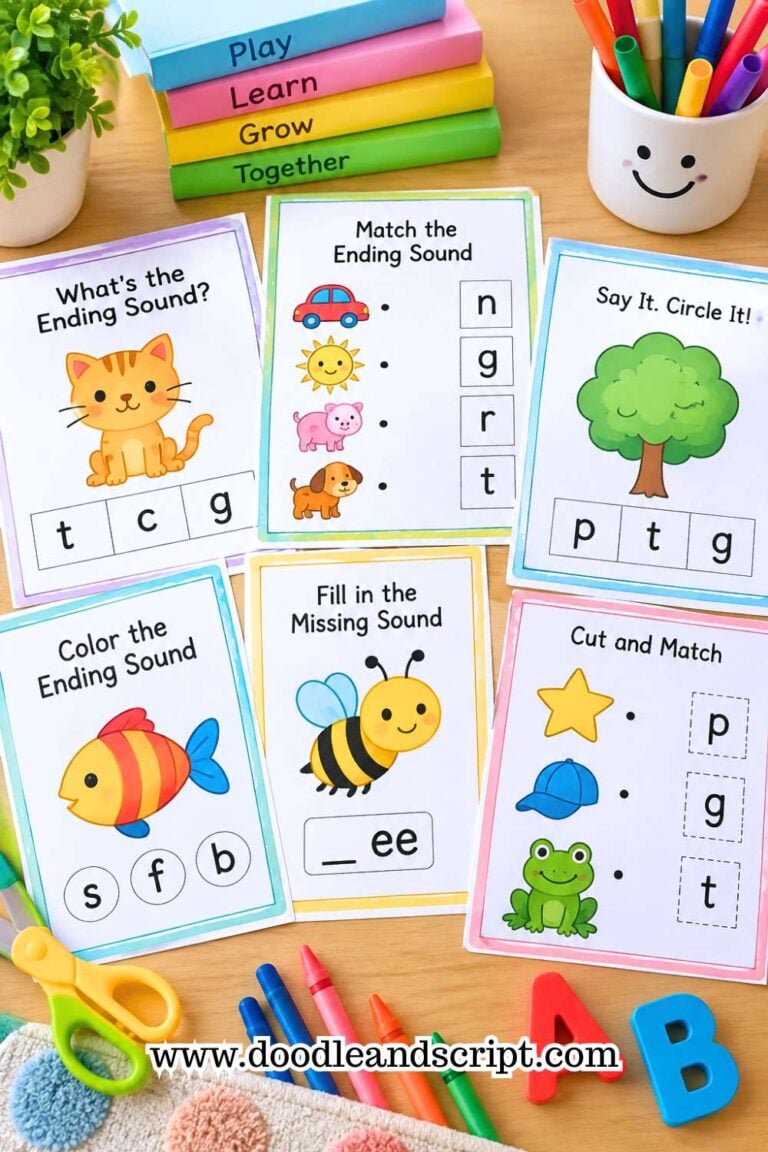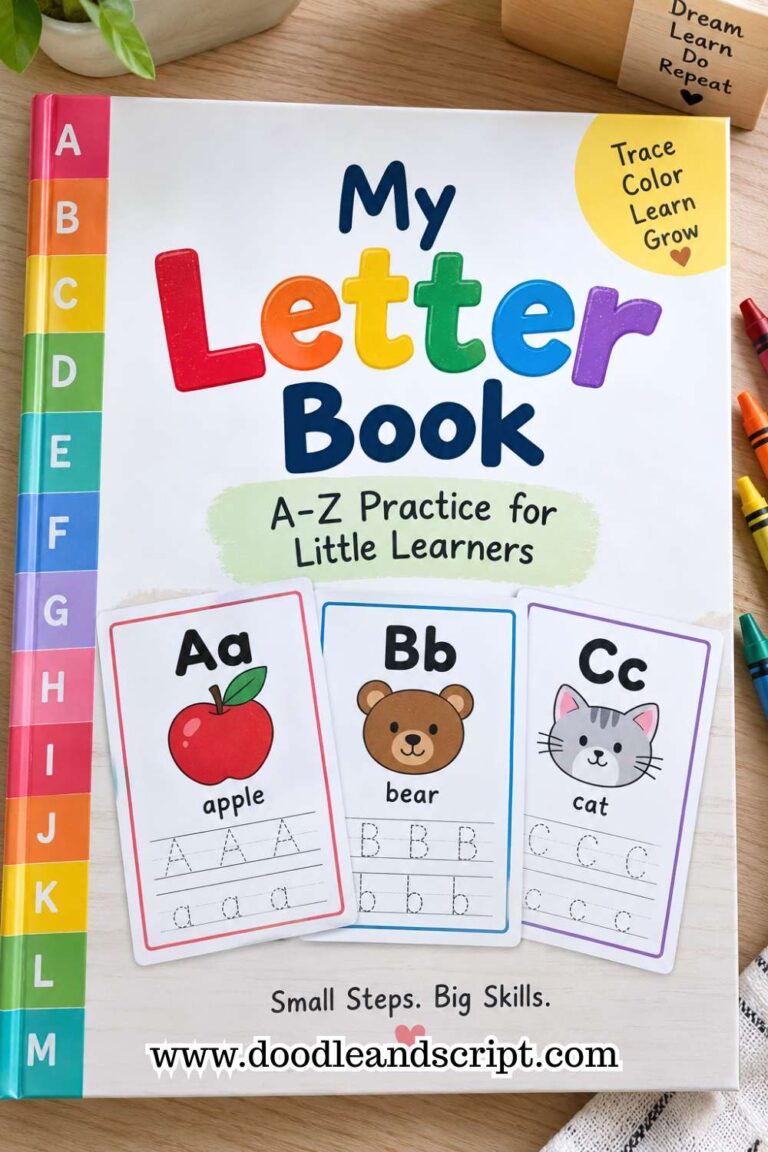
26 Fun Color and Trace Alphabet Worksheets for Kids
Disclosure: Some of the links in this post are affiliate links. This means if you click on the link and purchase an item, I will receive an affiliate commission at no extra cost to you.
Learning the alphabet becomes more enjoyable when children can trace letters and color pictures.
These Color and Trace Worksheets give kids a simple way to practice uppercase and lowercase letters.
They also help children connect each letter with familiar pictures. This makes alphabet practice feel more like a fun activity than a regular writing lesson.
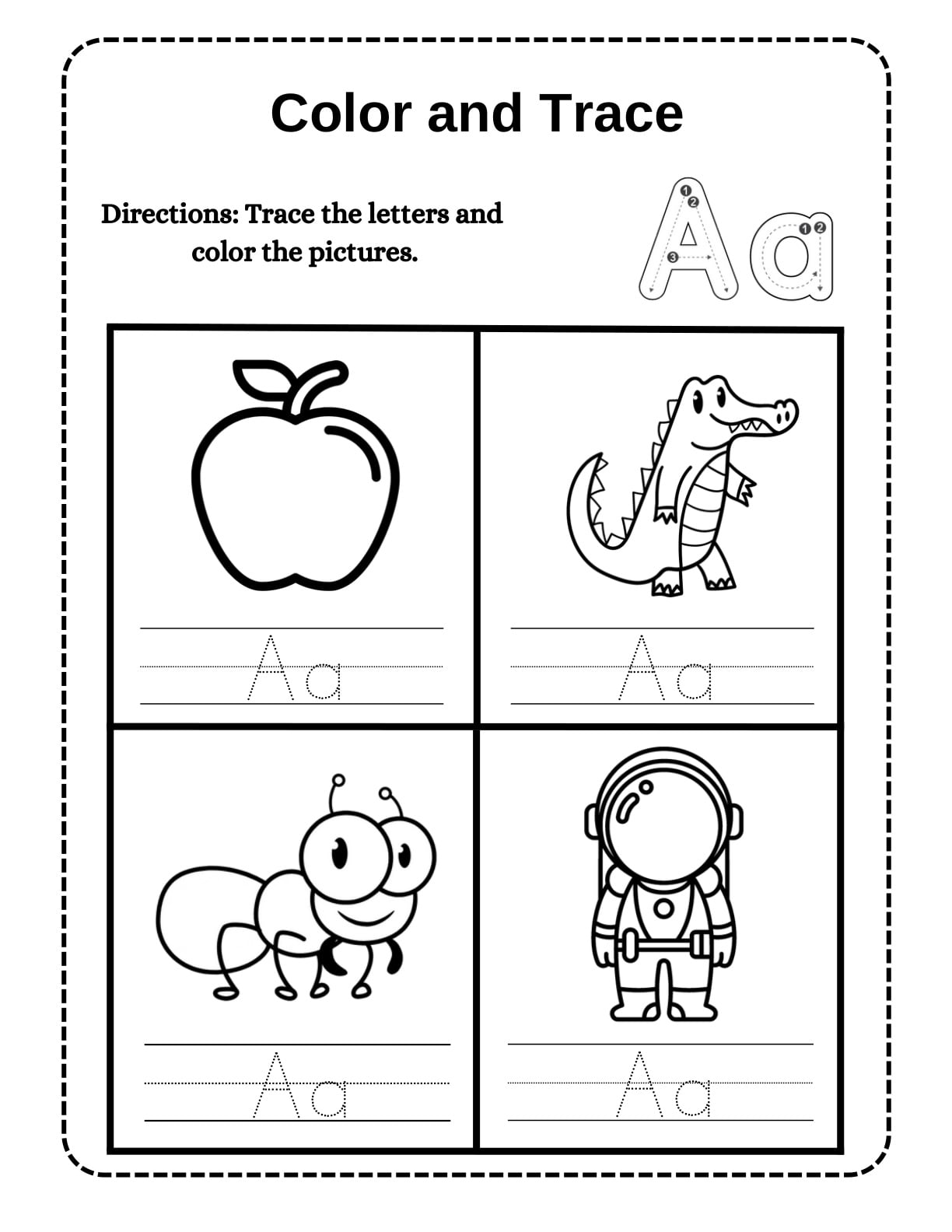
This printable collection contains 26 worksheets, covering every letter from A to Z. Each page features four pictures and tracing lines for practicing the featured letter.
Children can trace the letters, practice writing them, and color the pictures on each worksheet. The pages include familiar objects, animals, food, and other interesting things.
Parents and teachers can use these Color and Trace Worksheets during preschool lessons, kindergarten activities, or quiet learning time at home.
Start by saying the letter aloud and naming each picture together. Then, encourage your child to trace the letter before coloring the pictures. If a letter feels difficult, offer a little guidance and let your child try again.
26 Fun Color and Trace Alphabet Worksheets for Kids
1. Letter A: Apple, Alligator, Ant, and Astronaut
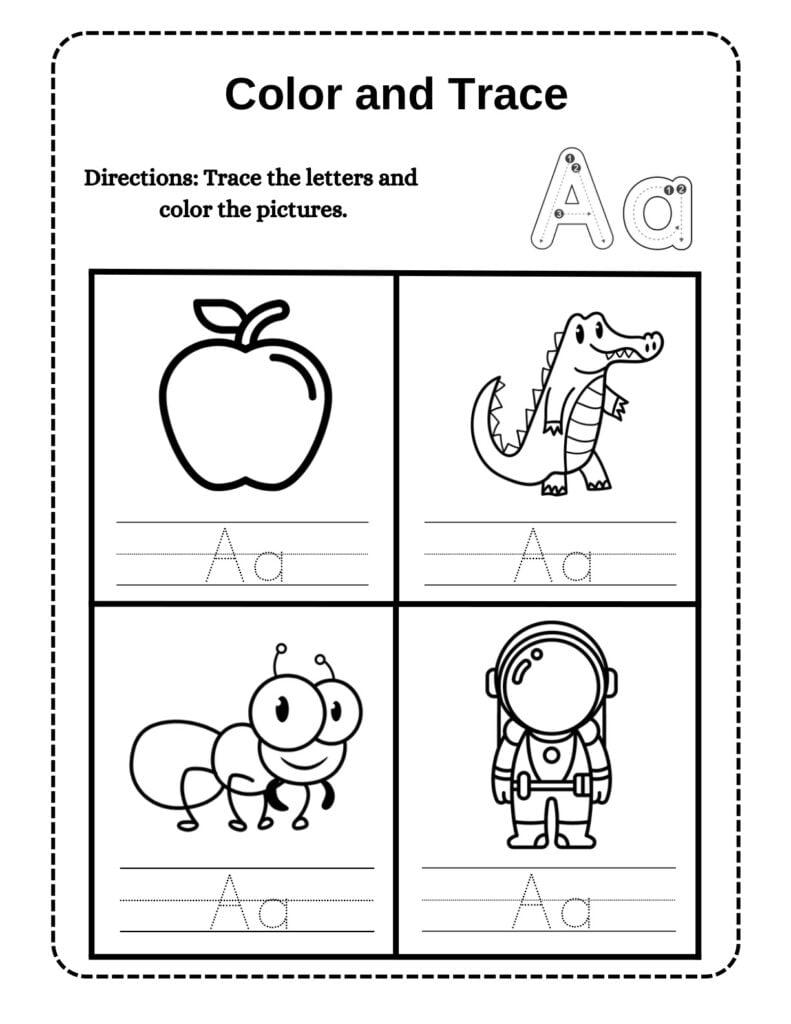
The first worksheet introduces children to uppercase A and lowercase a. It features an apple, an alligator, an ant, and an astronaut.
These pictures give children four different ways to connect the letter with familiar and interesting words. Ask your child to name each picture before starting the activity.
Then, trace the letter carefully and color each picture. This is a simple way to begin the Color and Trace Worksheets collection.
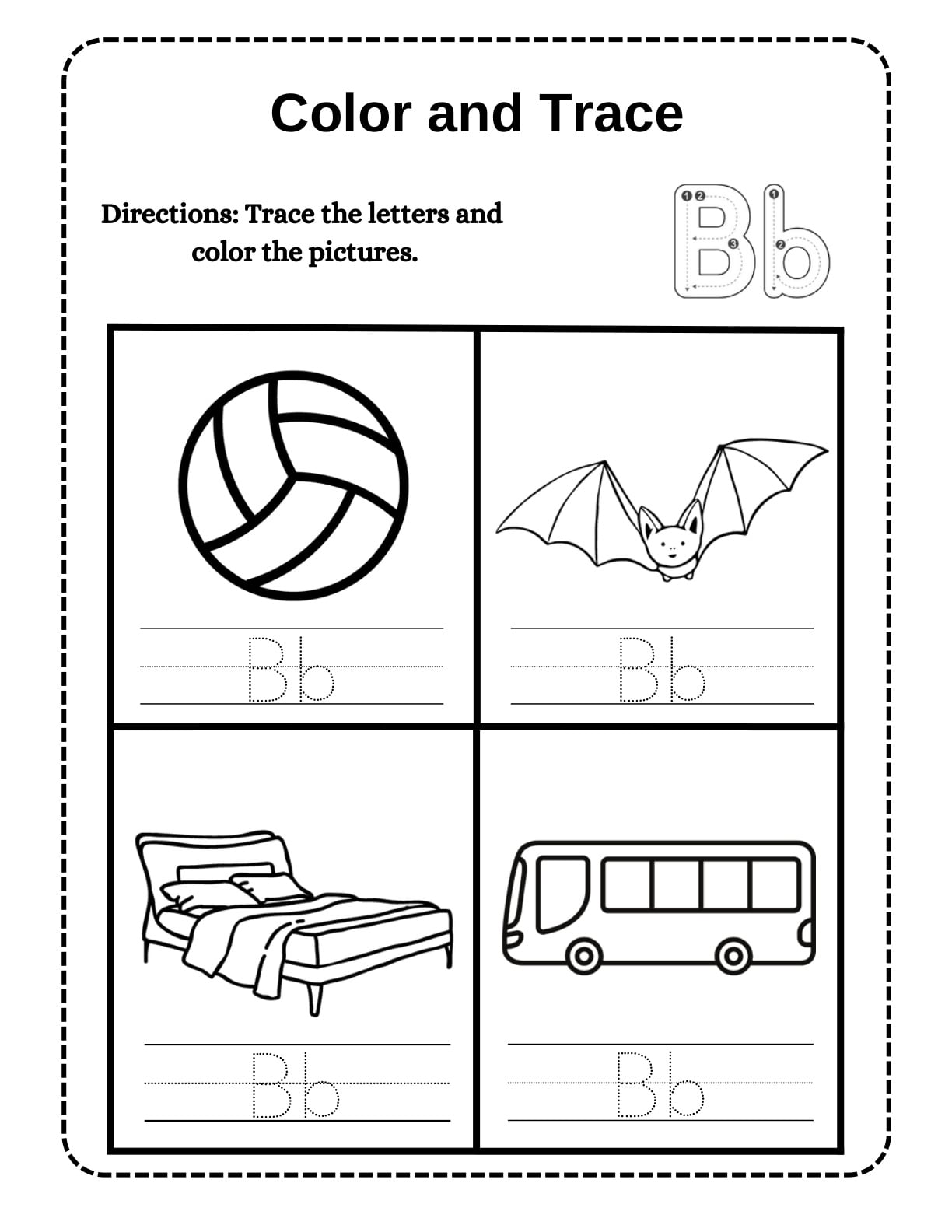
2. Letter B: Ball, Bat, Bed, and Bus
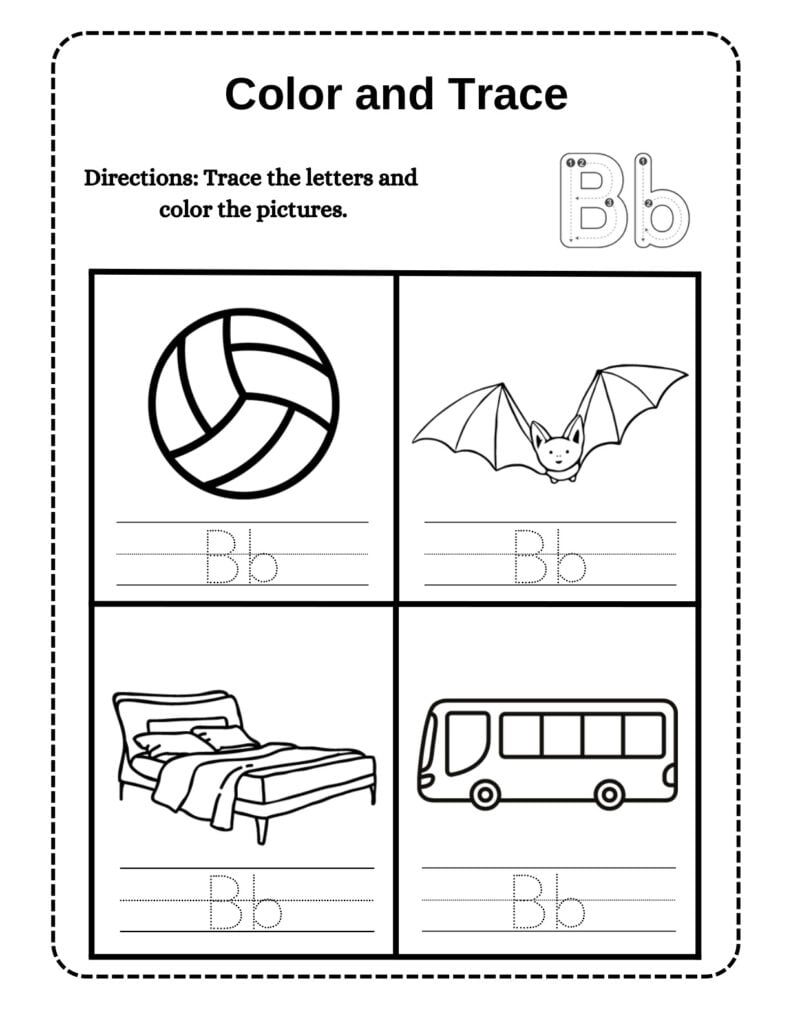
This page focuses on uppercase B and lowercase b. Children will find a ball, a bat, a bed, and a bus on the worksheet.
Start by saying each word slowly and listening for its beginning sound. Next, encourage your child to trace both letter forms along the dotted lines.
Coloring the pictures adds a little creativity to the writing practice. You can also ask your child to name other words that begin with B.
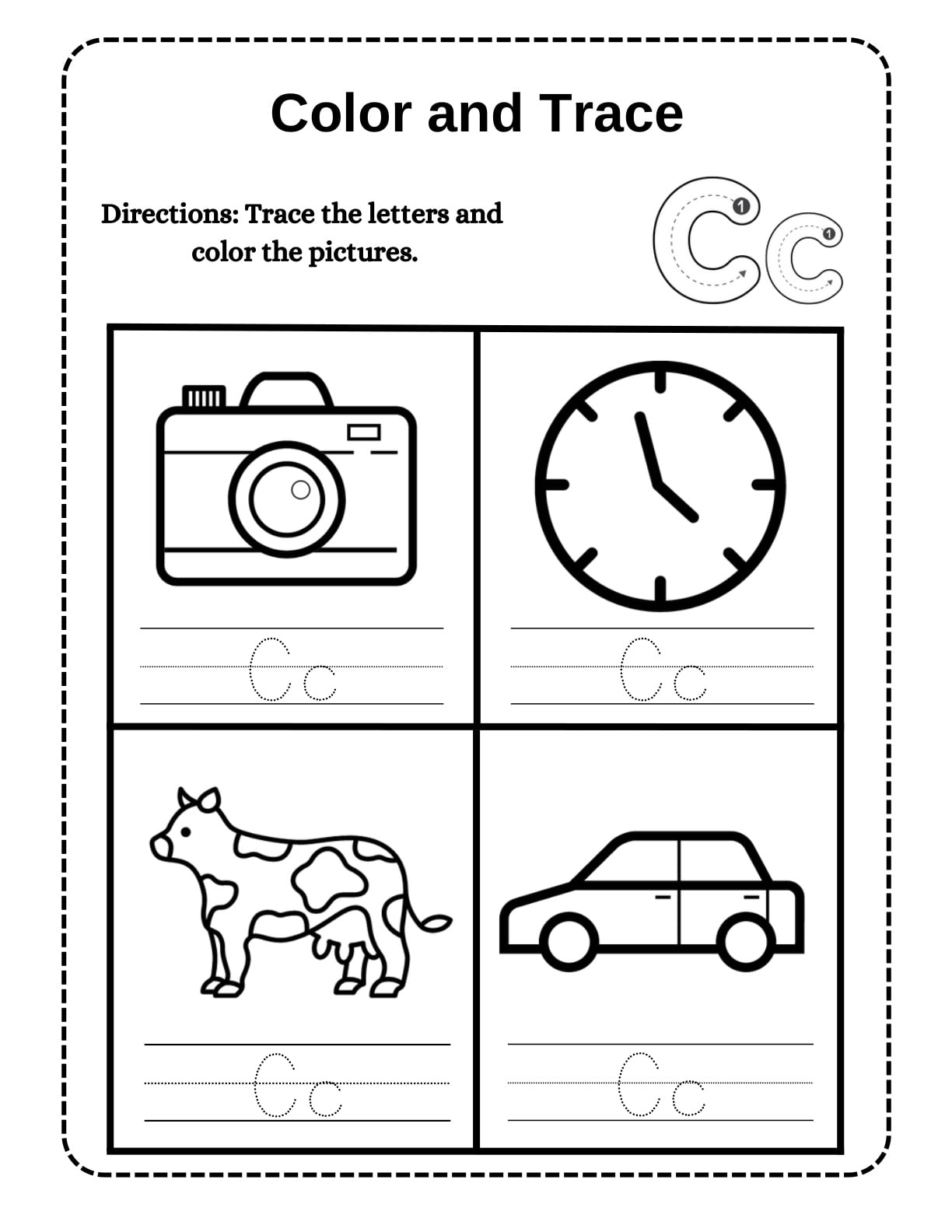
3. Letter C: Camera, Clock, Cow, and Car
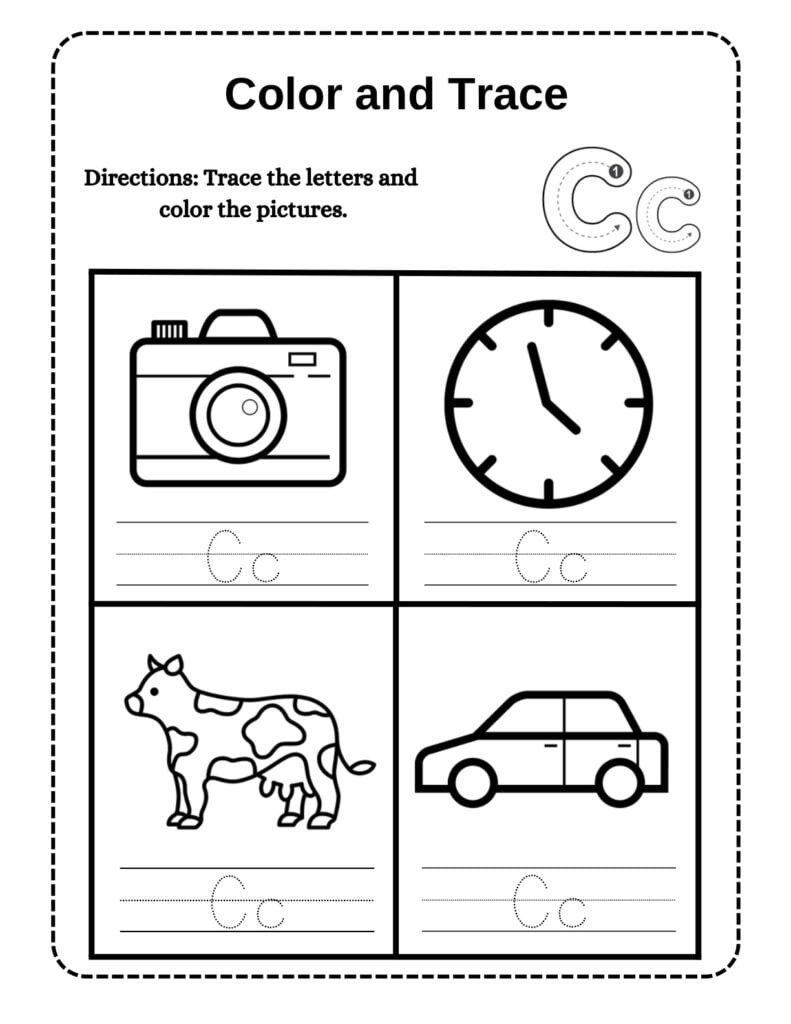
The third worksheet gives children a chance to practice C and c. Its pictures include a camera, a clock, a cow, and a car.
These everyday examples can help children remember the letter more easily. Before tracing, let your child point to each picture and say its name.
Afterward, trace the letters and color the pictures together. This page combines letter practice with simple picture recognition.
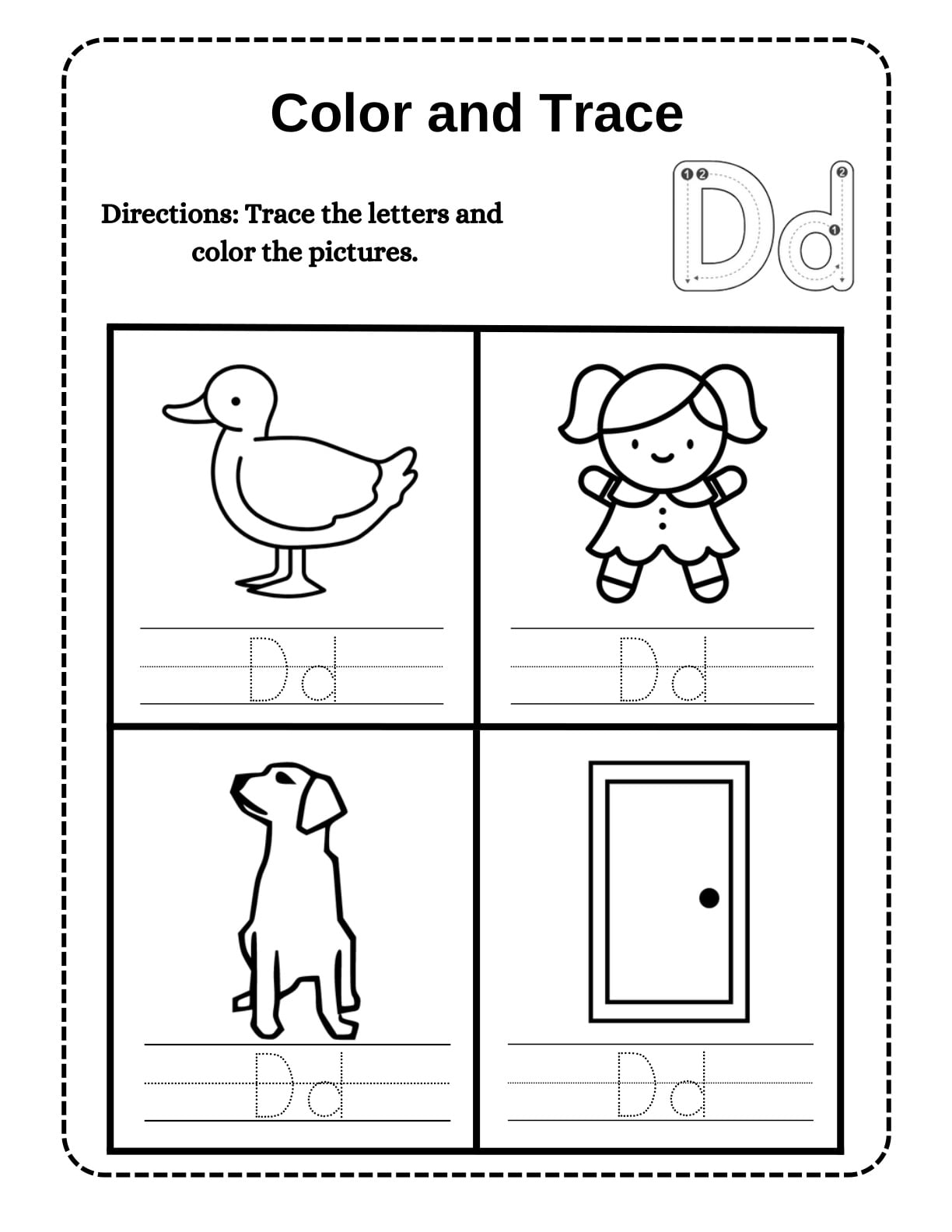
4. Letter D: Duck, Doll, Dog, and Door
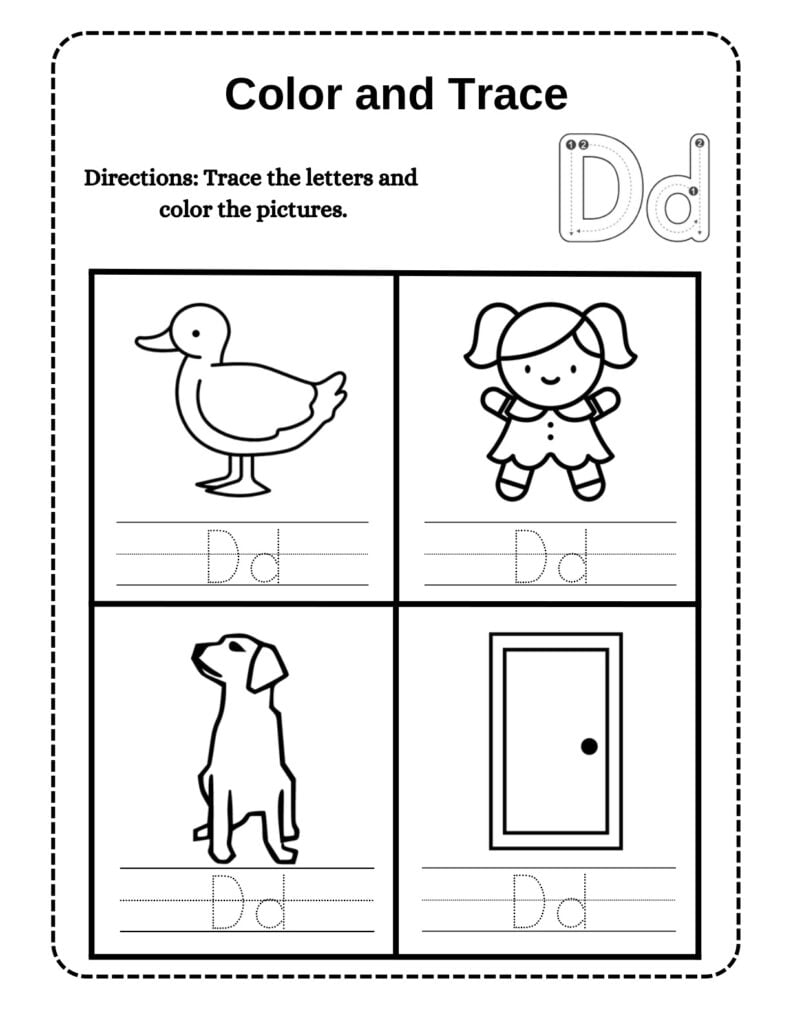
This worksheet introduces uppercase D and lowercase d. The four pictures show a duck, a doll, a dog, and a door.
Ask your child to identify each picture before picking up a pencil or crayon. Then, guide them as they follow the dotted letter shapes.
Encourage slow, careful tracing instead of rushing through the lines. Finally, let them color the pictures using their favorite colors.
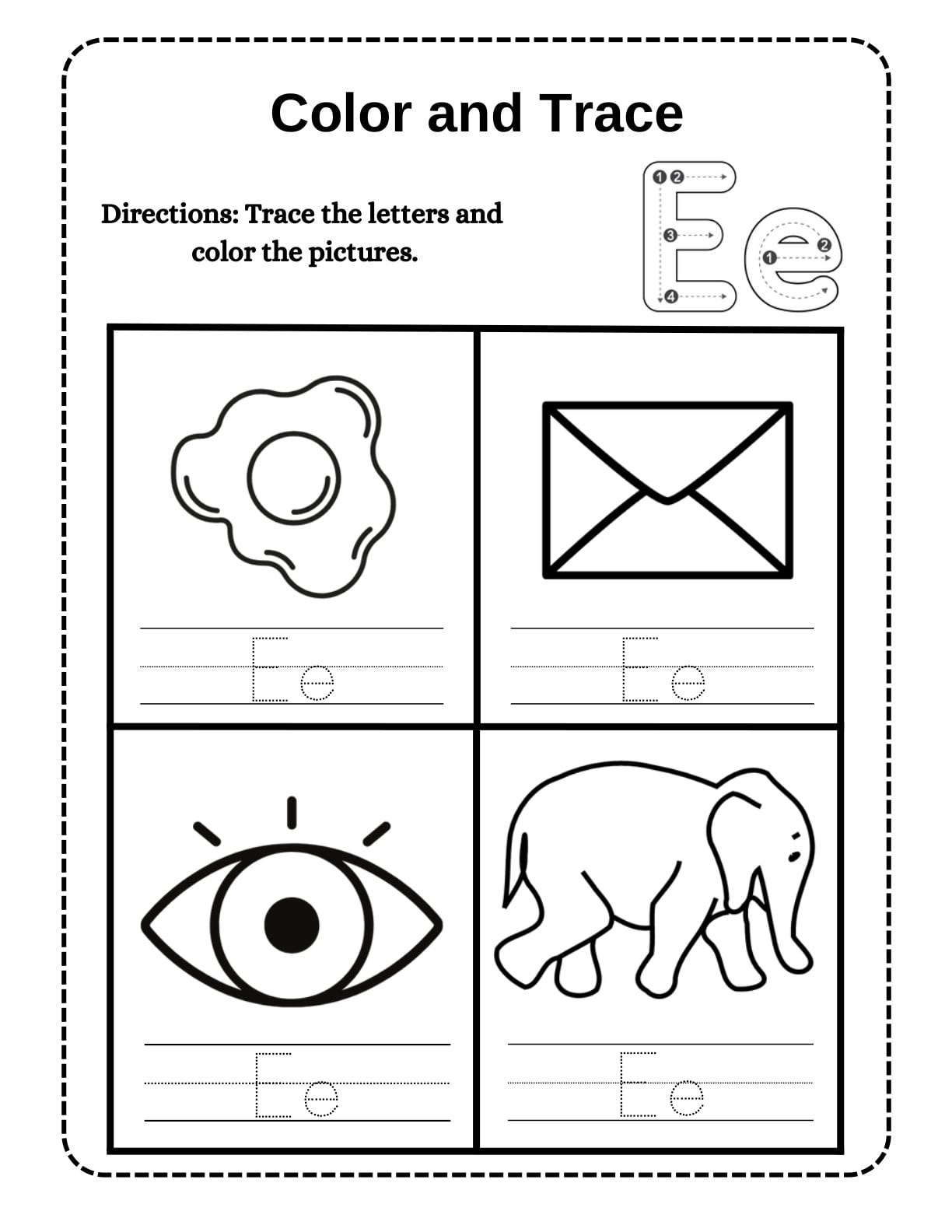
5. Letter E: Egg, Envelope, Eye, and Elephant
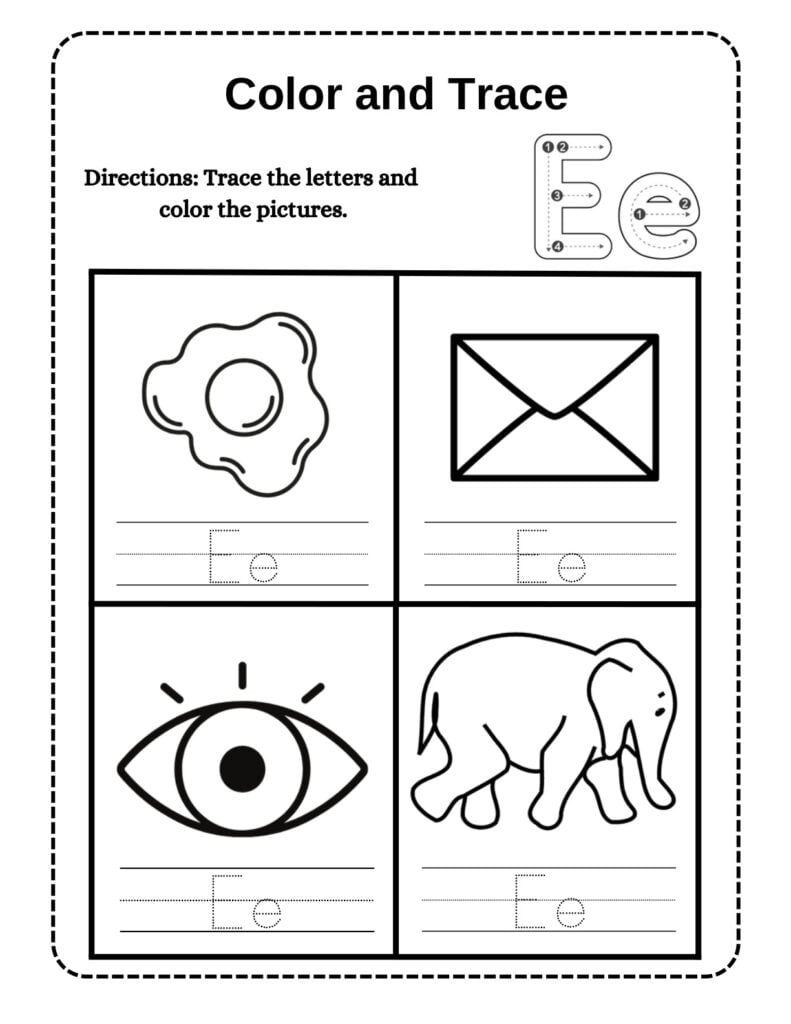
The fifth page focuses on the letters E and e. Children can trace the letters while looking at an egg, an envelope, an eye, and an elephant.
Some pictures may be easier to recognize than others, so take a moment to name them together. You can also explain unfamiliar words using simple descriptions.
Once your child understands the pictures, move on to tracing and coloring. These Color and Trace Worksheets make it easy to combine several small learning tasks.
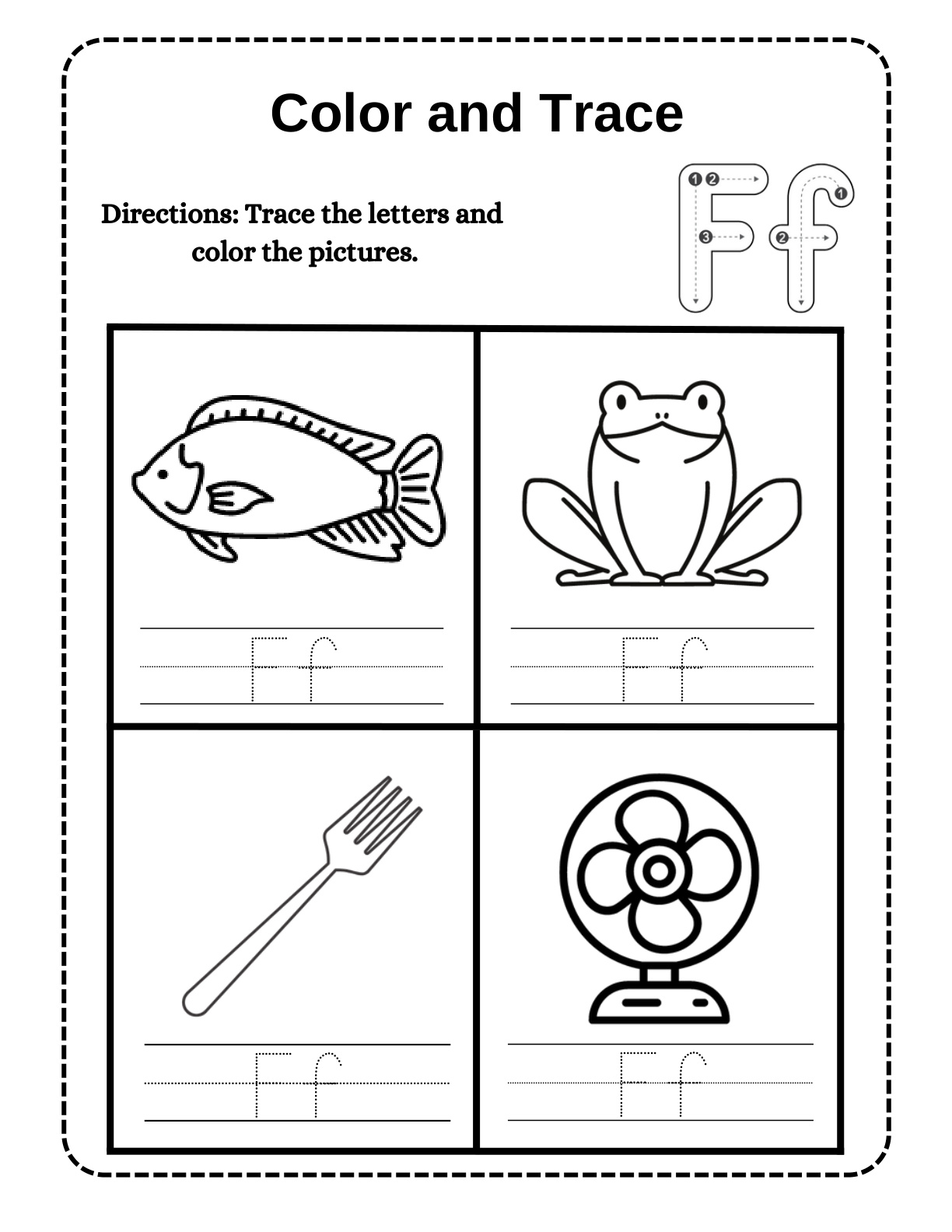
6. Letter F: Fish, Frog, Fork, and Fan
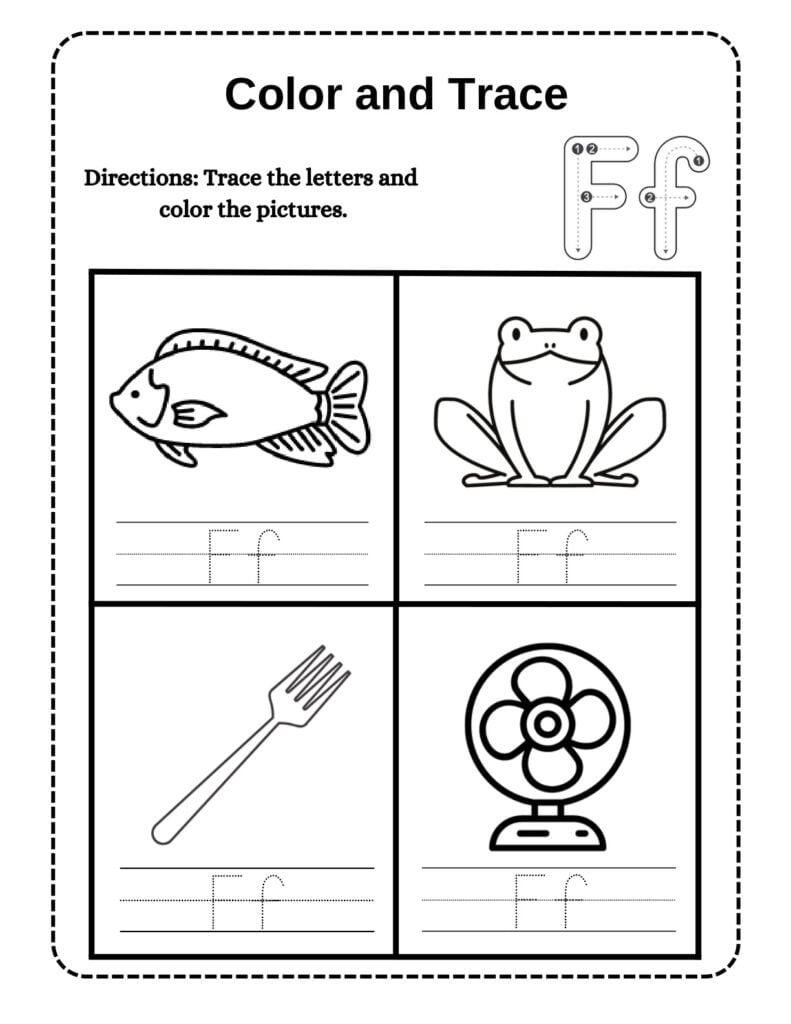
This page helps children practice uppercase F and lowercase f. The pictures include a fish, a frog, a fork, and a fan.
Start by asking your child to repeat each word and listen for its first sound. Then, let them trace the letter forms on the writing lines.
Encourage them to stay close to the dotted shapes as they practice. Coloring the four pictures gives children a fun activity after their writing work.
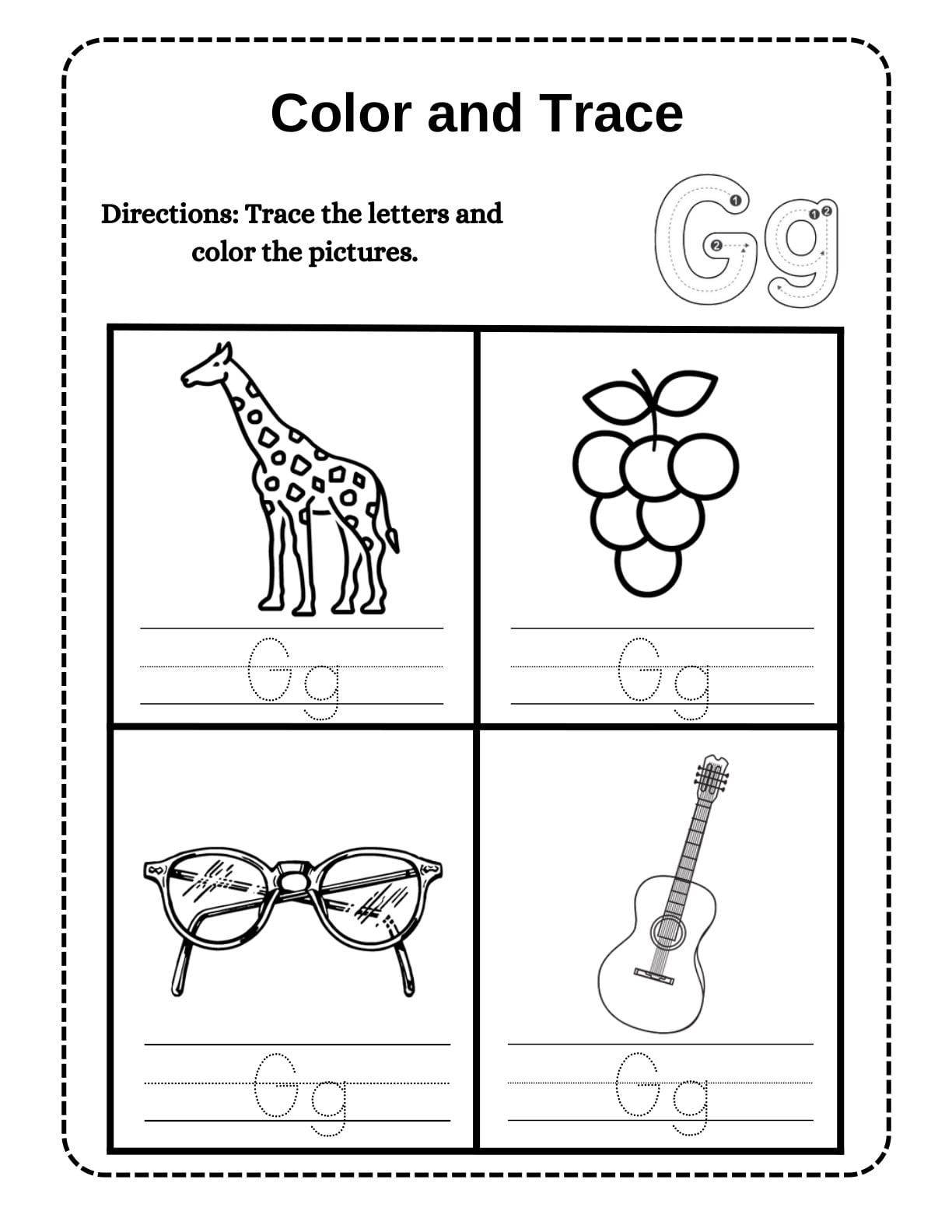
7. Letter G: Giraffe, Grapes, Glasses, and Guitar
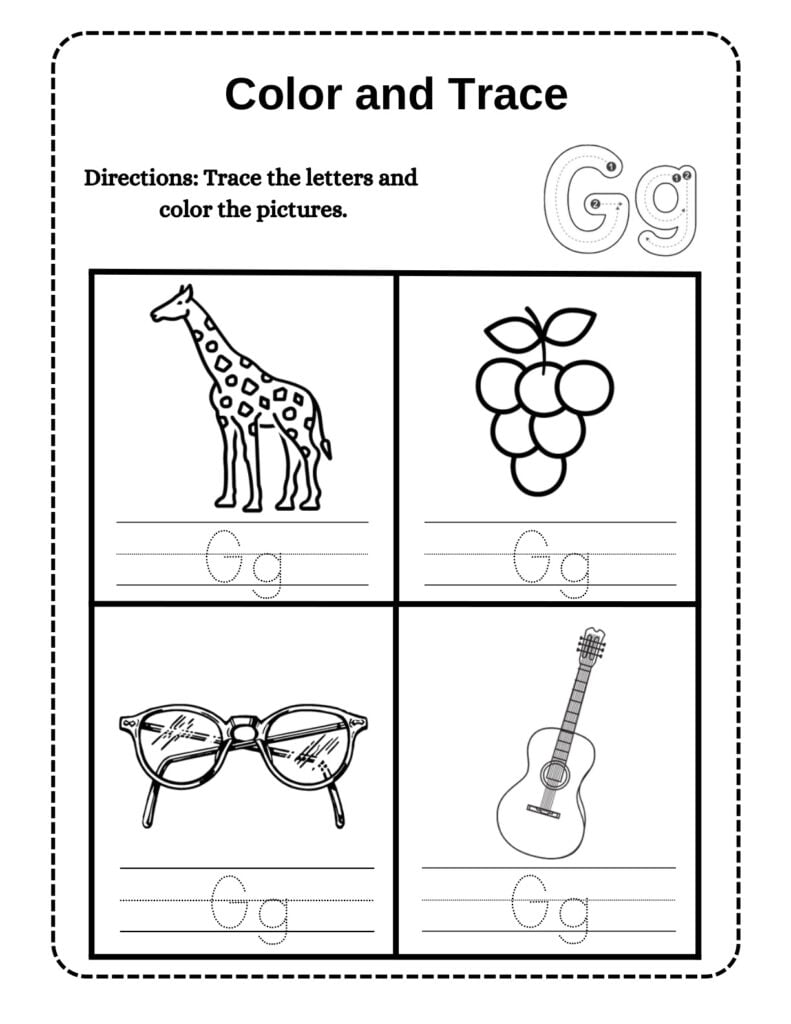
The seventh worksheet introduces G and g through four different pictures. Children will see a giraffe, grapes, glasses, and a guitar.
These examples include an animal, a fruit, an everyday item, and a musical instrument. Ask your child to name each picture and repeat the word clearly.
Next, practice tracing uppercase G and lowercase g. Finish by coloring the pictures and talking about the ones your child recognizes.
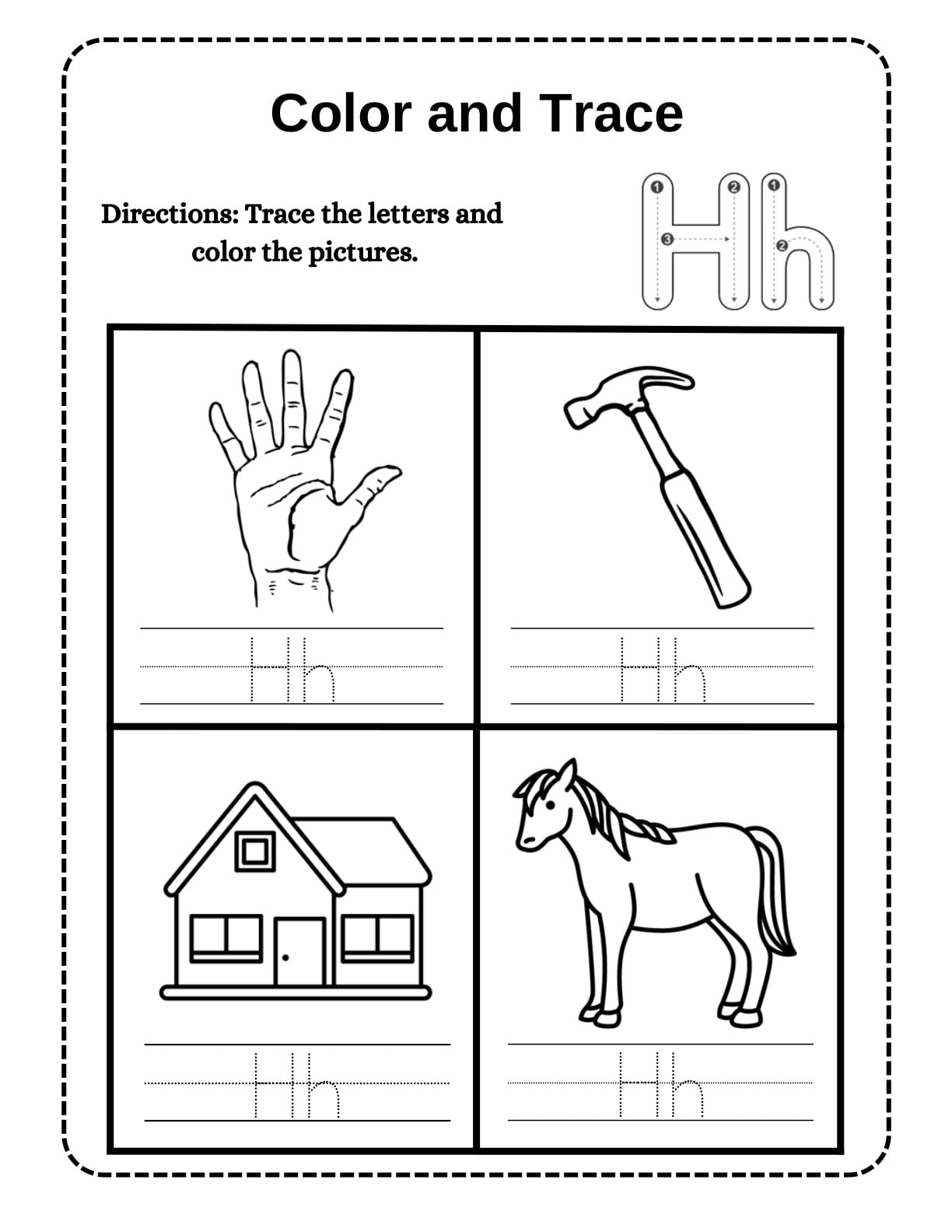
8. Letter H: Hand, Hammer, House, and Horse
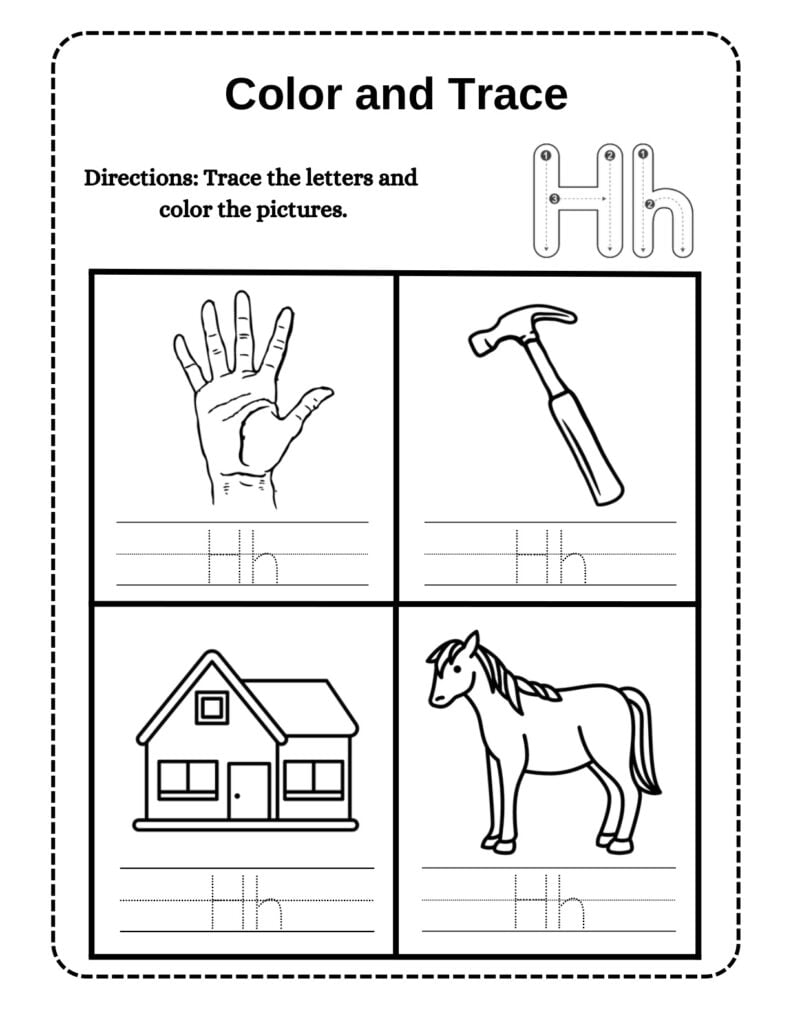
This worksheet gives children practice with uppercase H and lowercase h. Its pictures show a hand, a hammer, a house, and a horse.
Before tracing, ask your child to point to each picture and name it. You can explain the hammer’s purpose if your child has not seen one before.
Then, guide them through tracing both letter forms. Let them color the pictures when the writing practice is complete.
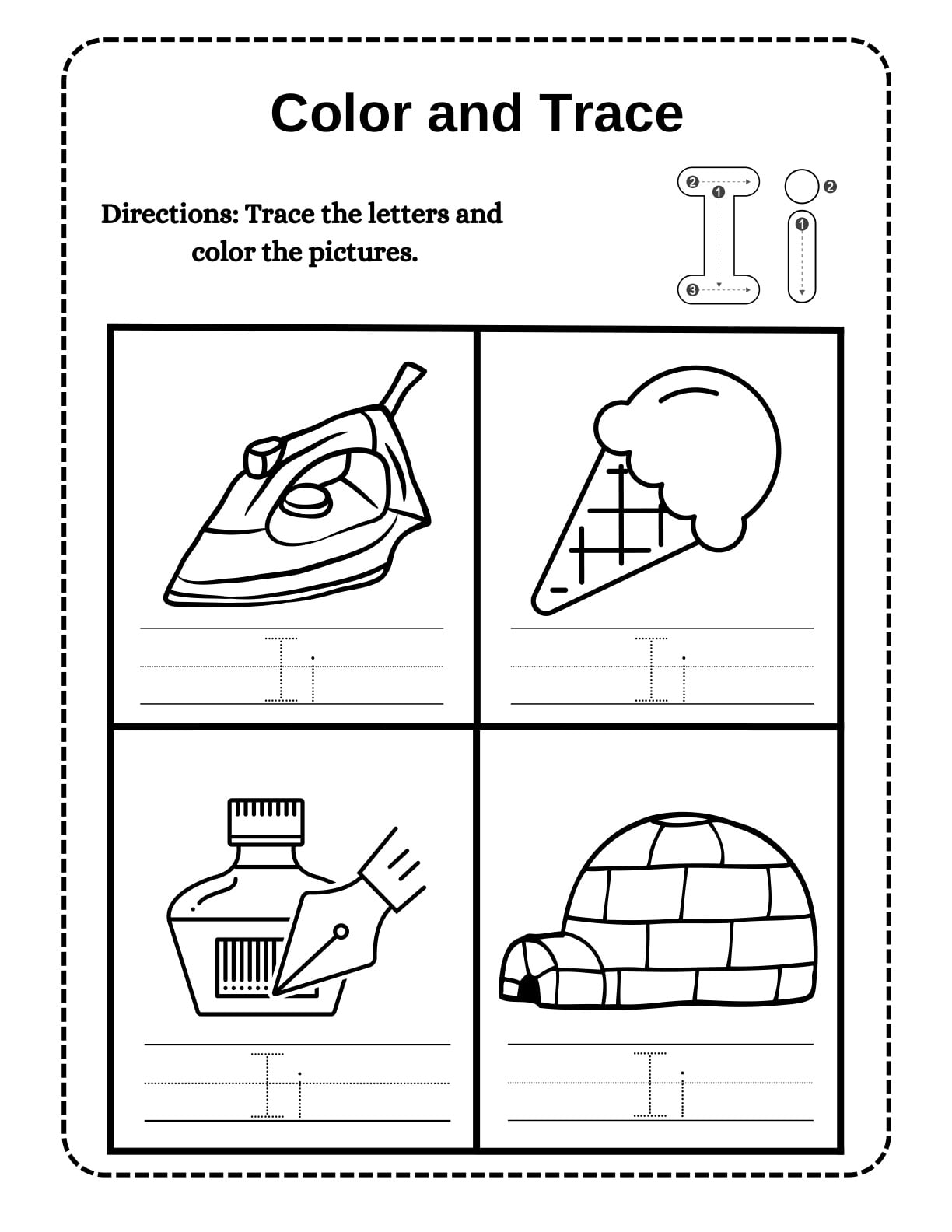
9. Letter I: Iron, Ice Cream, Ink, and Igloo
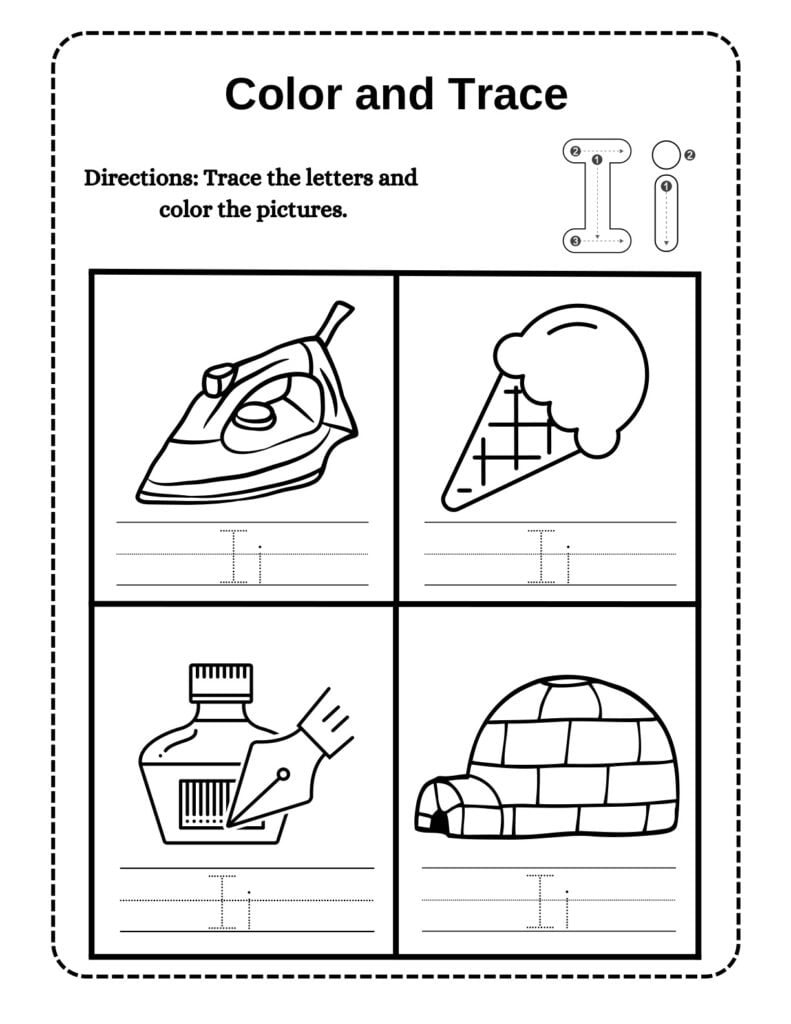
The ninth page focuses on I and i. Children can identify an iron, an ice cream cone, an ink bottle, and an igloo.
Some of these pictures may introduce new vocabulary, especially the igloo. Explain each item in simple words before starting the activity.
After that, let your child trace the letters and color the pictures. This page offers a useful chance to practice the letter while learning new words.
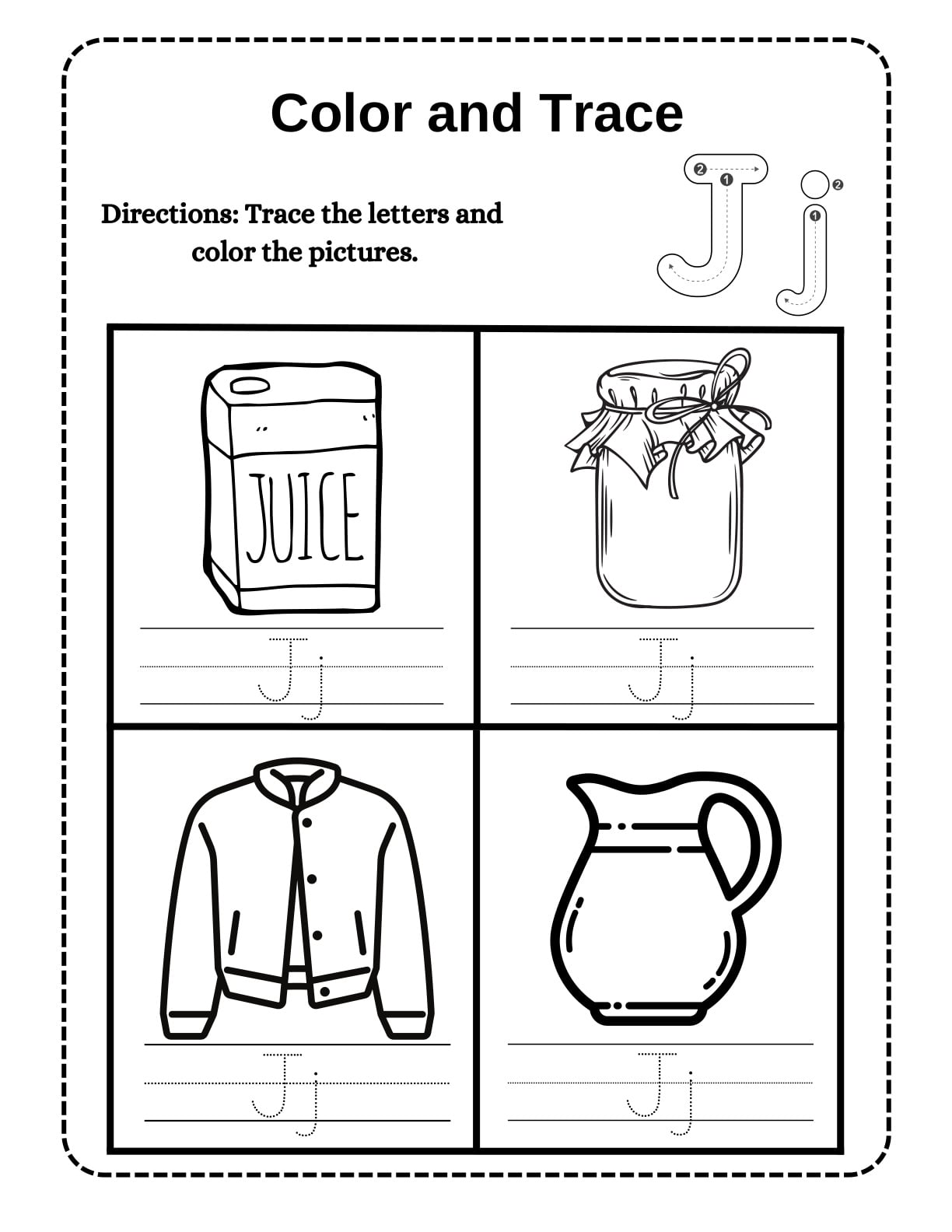
10. Letter J: Juice, Jam, Jacket, and Jug
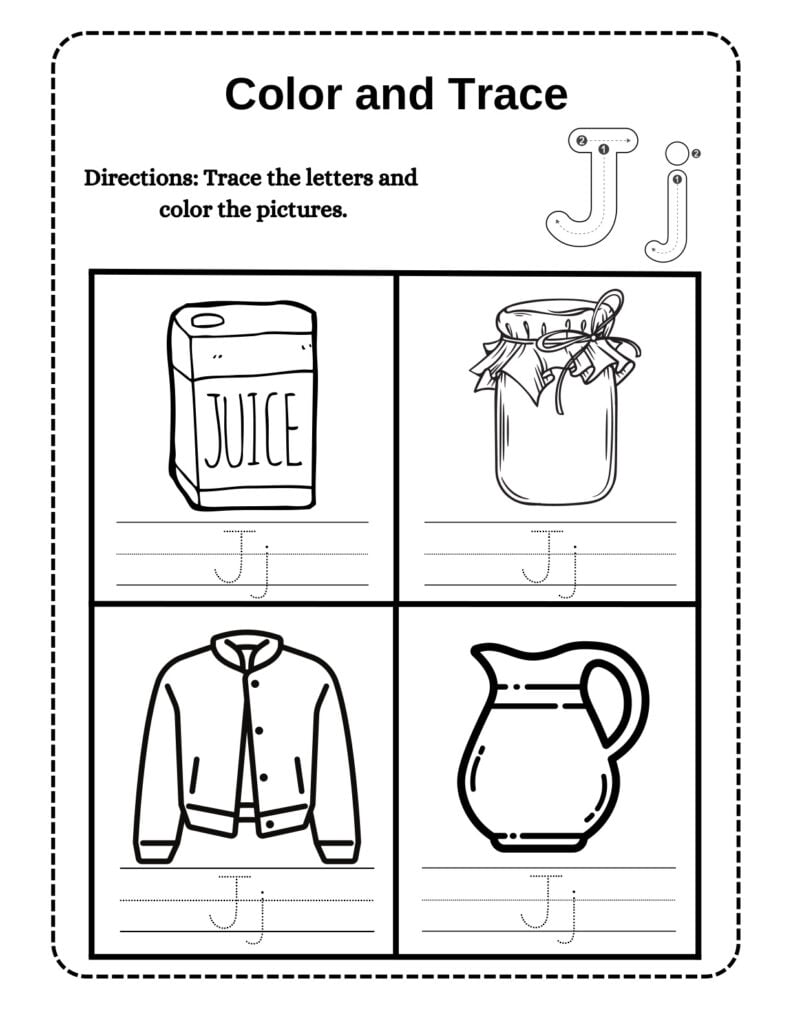
This worksheet introduces uppercase J and lowercase j. The pictures feature a juice carton, a jar of jam, a jacket, and a jug.
Ask your child to say each word and notice its beginning sound. Then, encourage them to trace the letters slowly along the dotted lines.
You can also ask which items they have seen or used at home. Finish the page by coloring all four pictures.
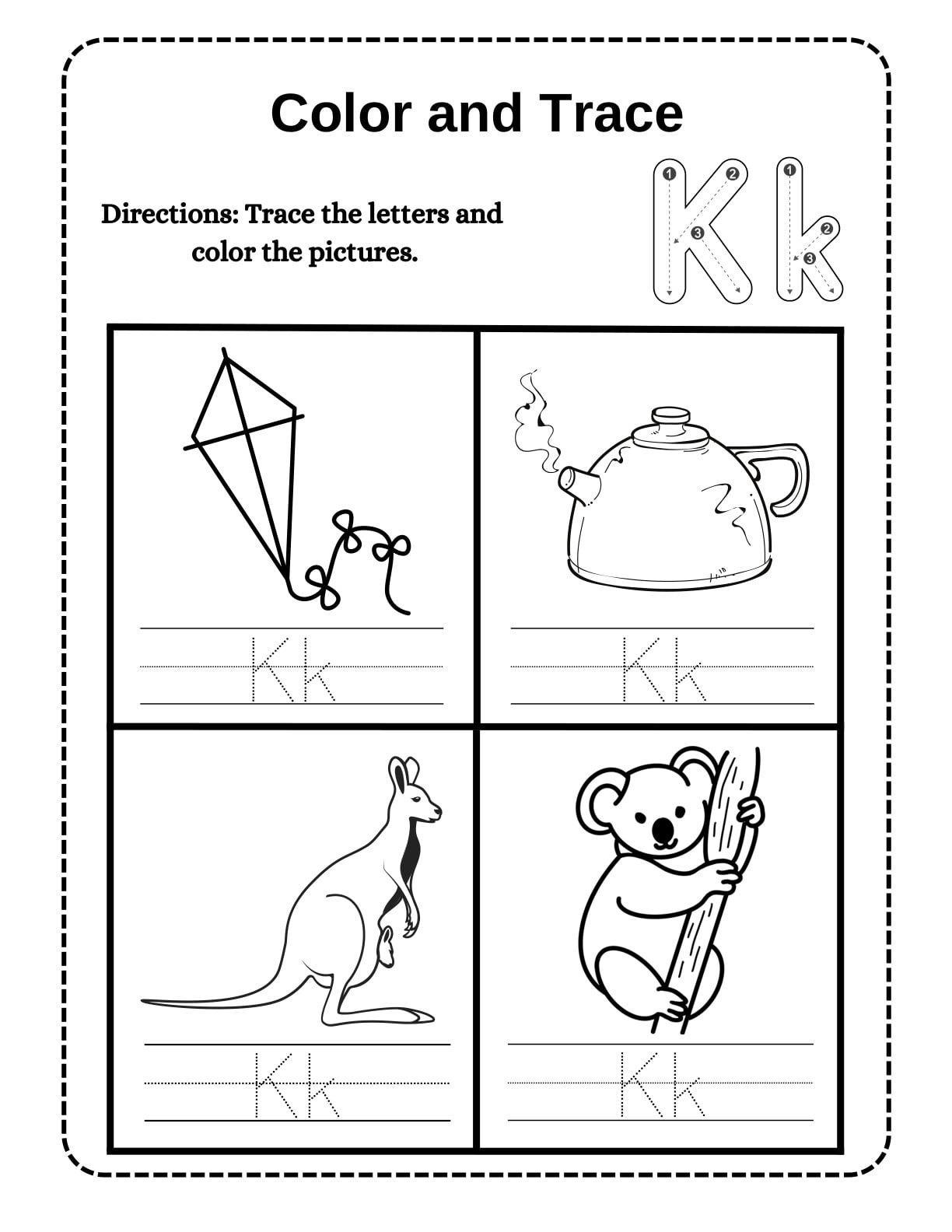
11. Letter K: Kite, Kettle, Kangaroo, and Koala
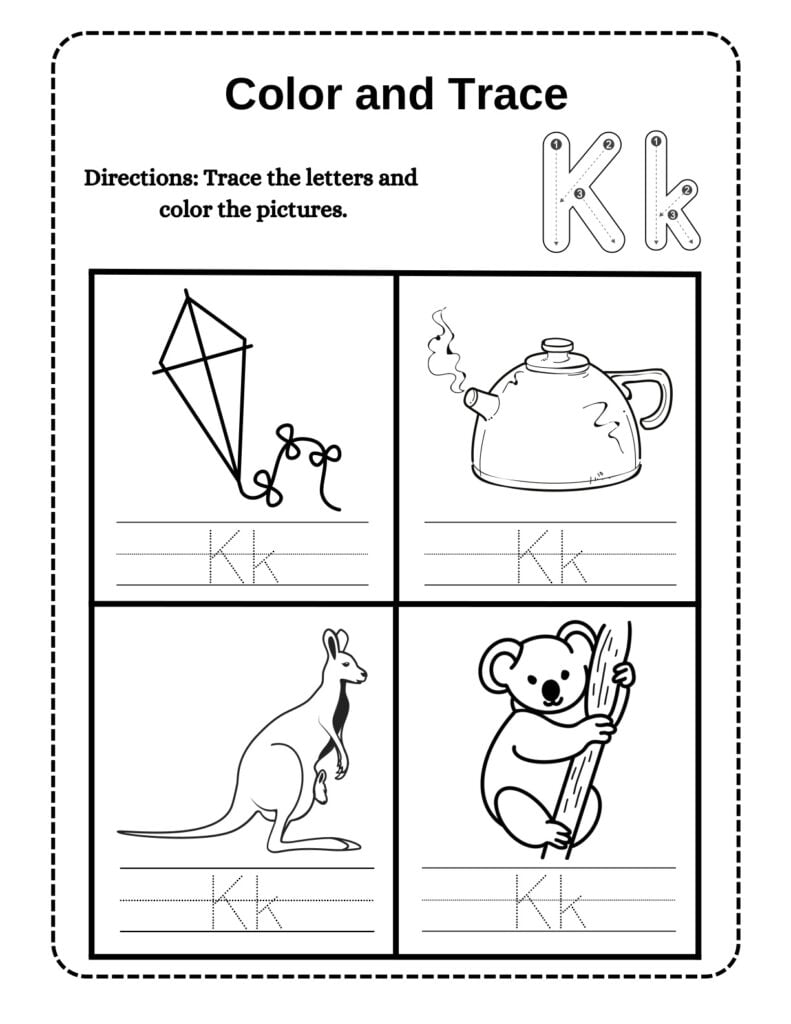
The eleventh worksheet focuses on K and k. Children will trace the letters alongside pictures of a kite, a kettle, a kangaroo, and a koala.
The two animals can make this page especially interesting for young learners. Help your child name the pictures before beginning the tracing task.
Next, practice writing both uppercase and lowercase K. Finally, color the pictures and talk about the different objects and animals.
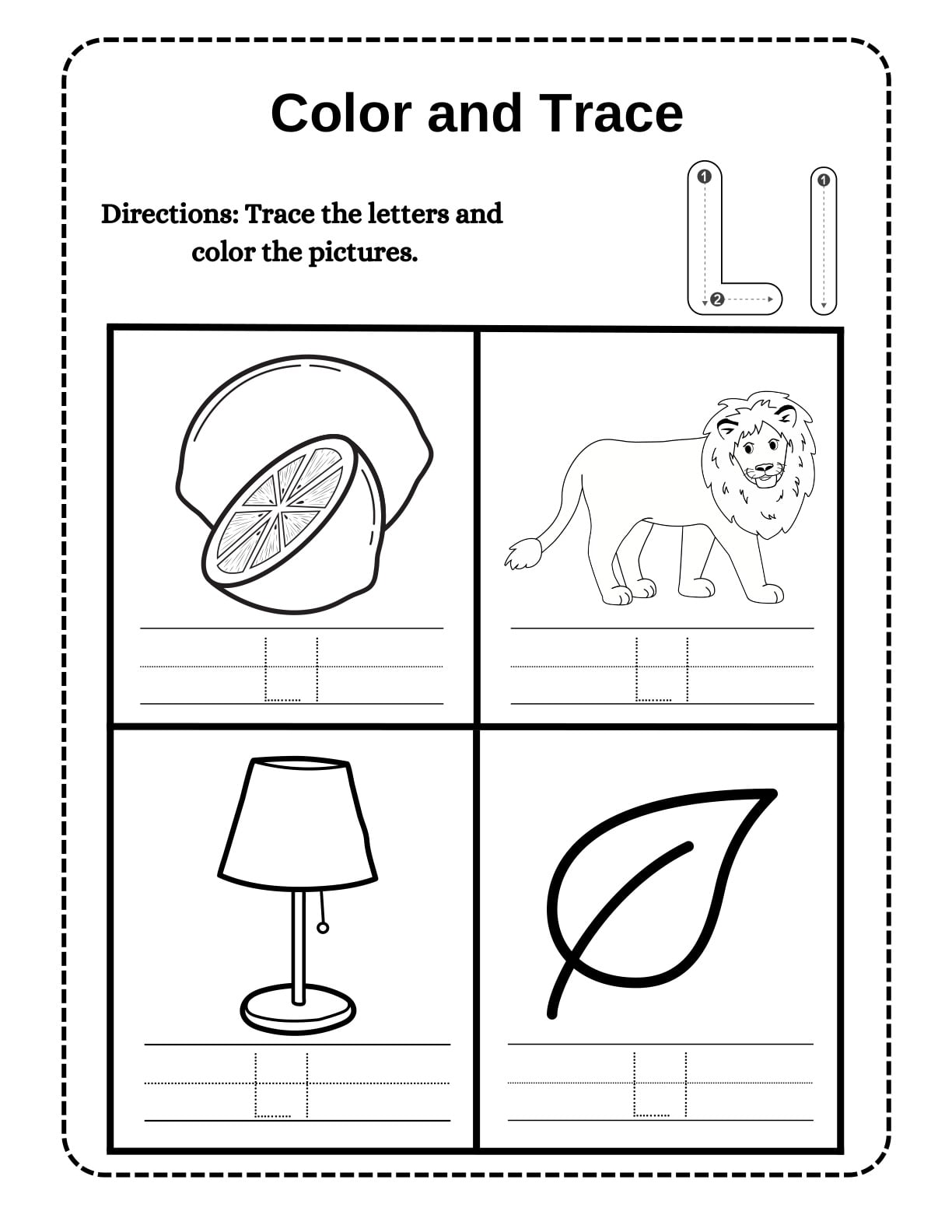
12. Letter L: Lemon, Lion, Lamp, and Leaf
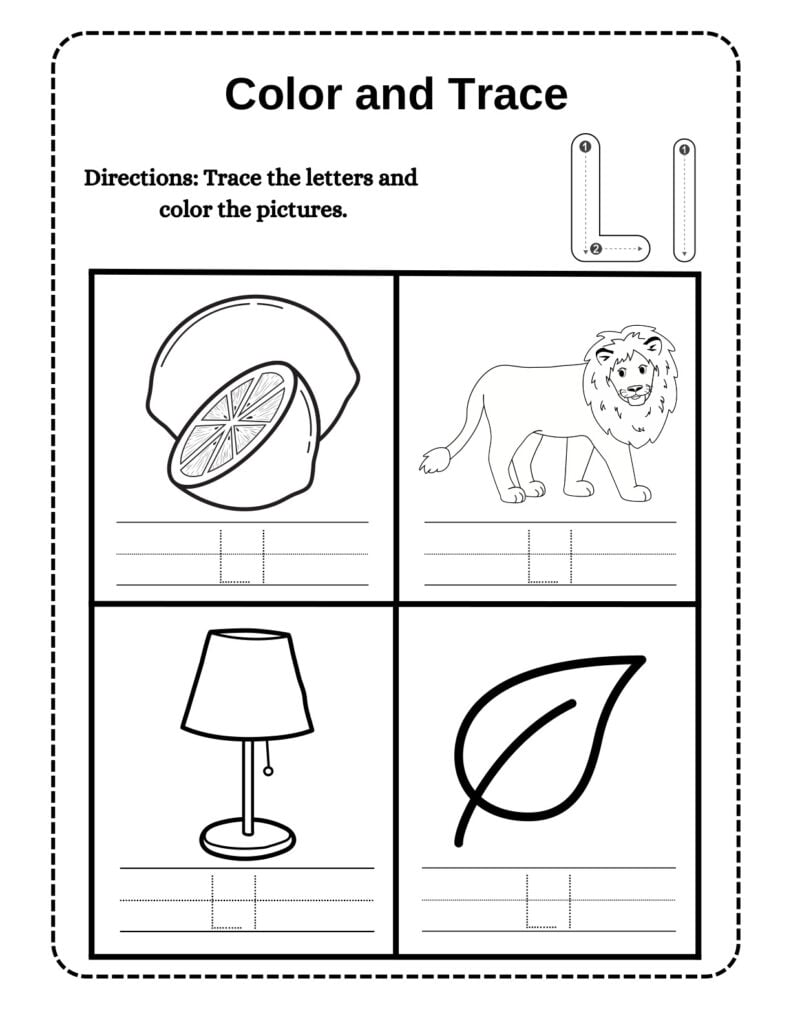
This page introduces uppercase L and lowercase l. Its four pictures include a lemon, a lion, a lamp, and a leaf. Ask your child to identify each picture and repeat its name.
Then, show them how to follow the tracing lines carefully. Since lowercase l has a simple shape, it can provide a helpful starting point for letter practice. Let your child color the pictures to complete the activity.
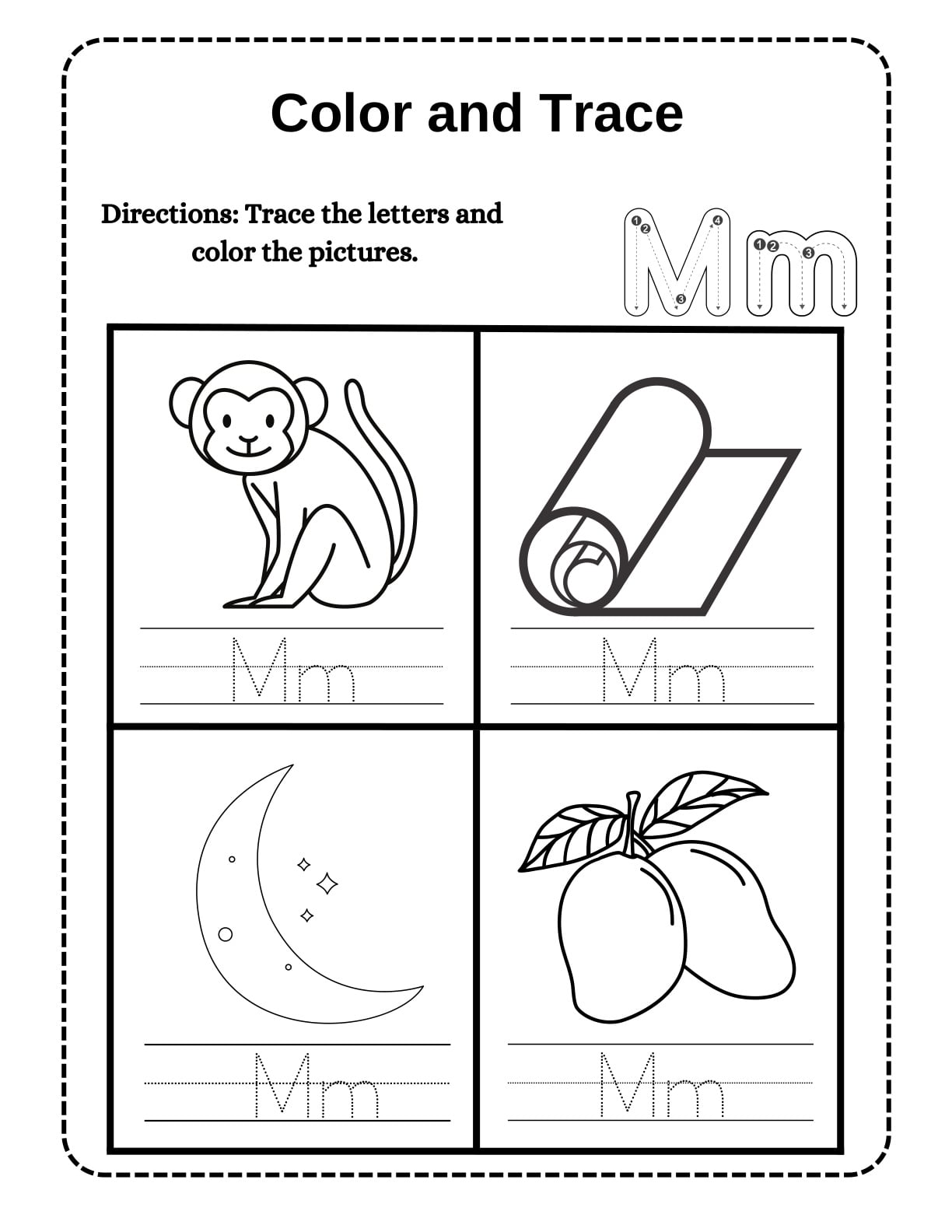
13. Letter M: Monkey, Paper, Moon, and Mango
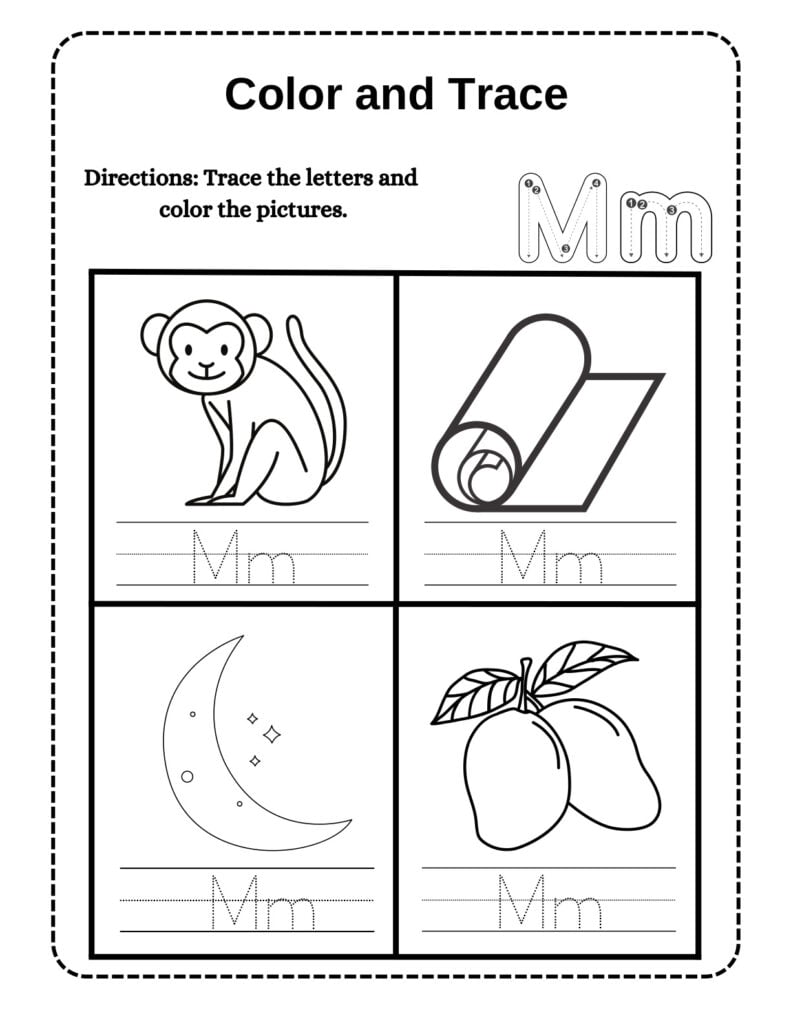
The thirteenth worksheet gives children practice with M and m. It features a monkey, a rolled sheet of paper, a moon, and a mango.
Ask your child to name each picture and describe anything they already know about it. You can explain that paper is used for drawing, writing, and making crafts.
Then, let your child trace the letters and color the pictures. This page offers a nice mix of nature, food, and everyday objects.
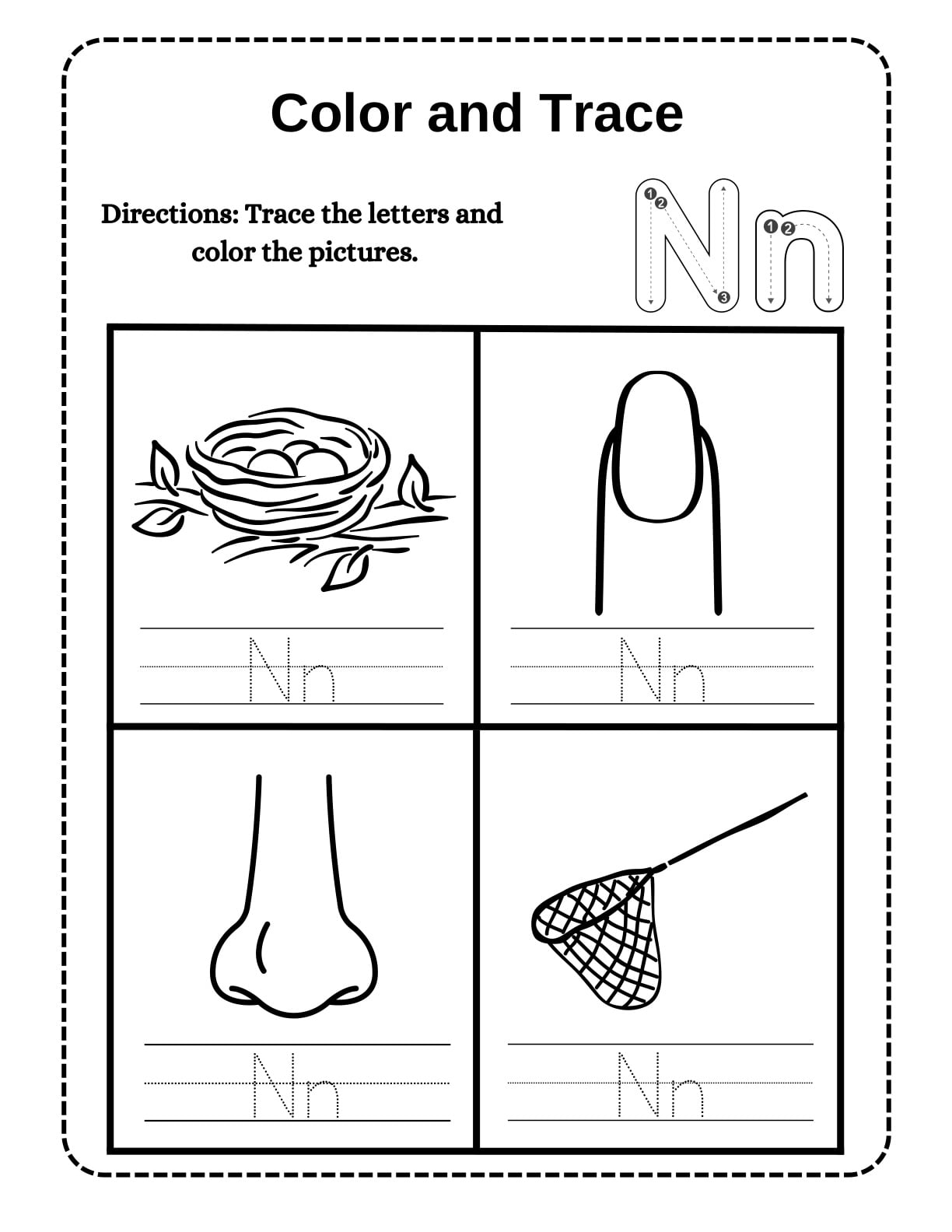
14. Letter N: Nest, Nail, Nose, and Net
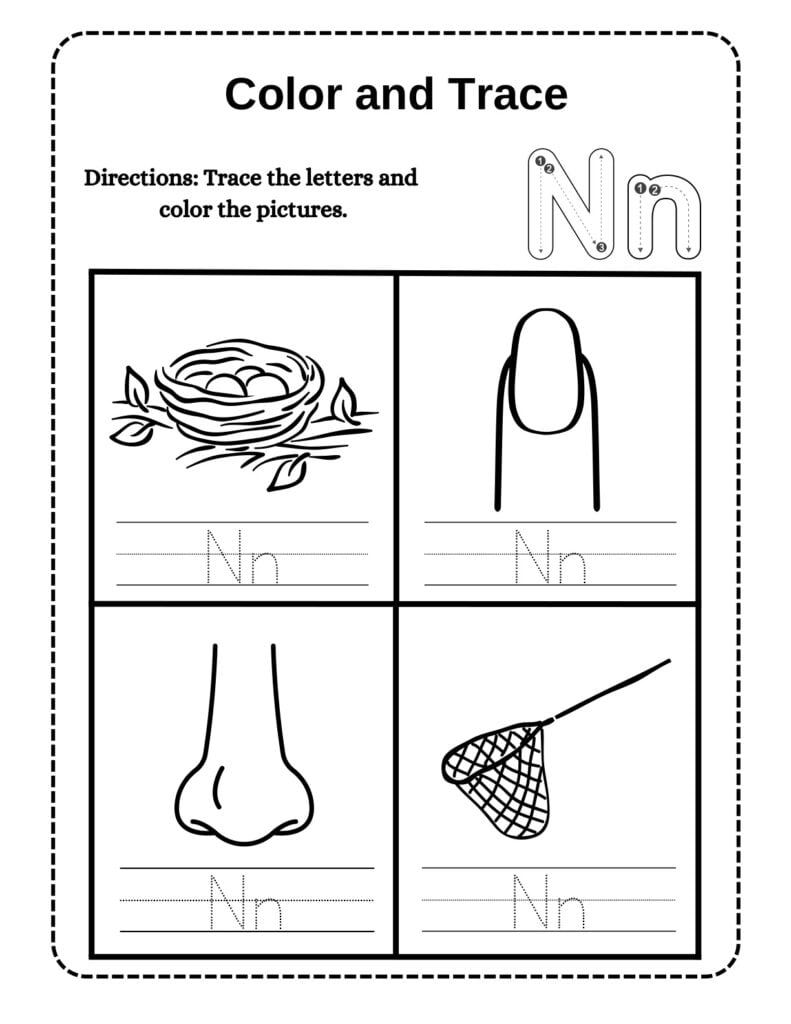
This worksheet focuses on uppercase N and lowercase n. The pictures show a nest, a nail, a nose, and a net.
Some children may need help identifying the nail or net, so explain these items before tracing.
Ask your child to say each word and listen for the first sound. Next, trace both letter forms using the dotted examples. Finish with coloring and a quick review of the four words.
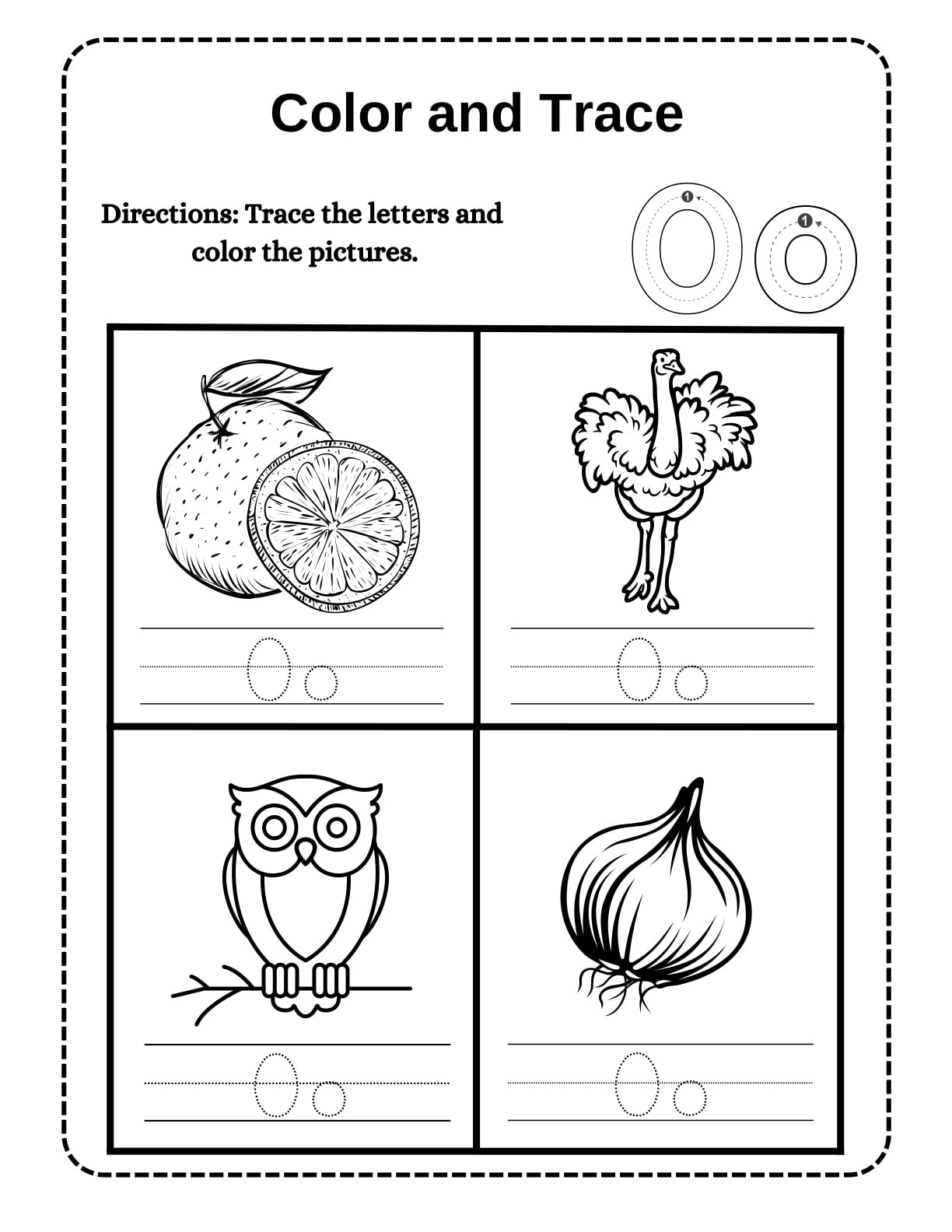
15. Letter O: Orange, Ostrich, Owl, and Onion
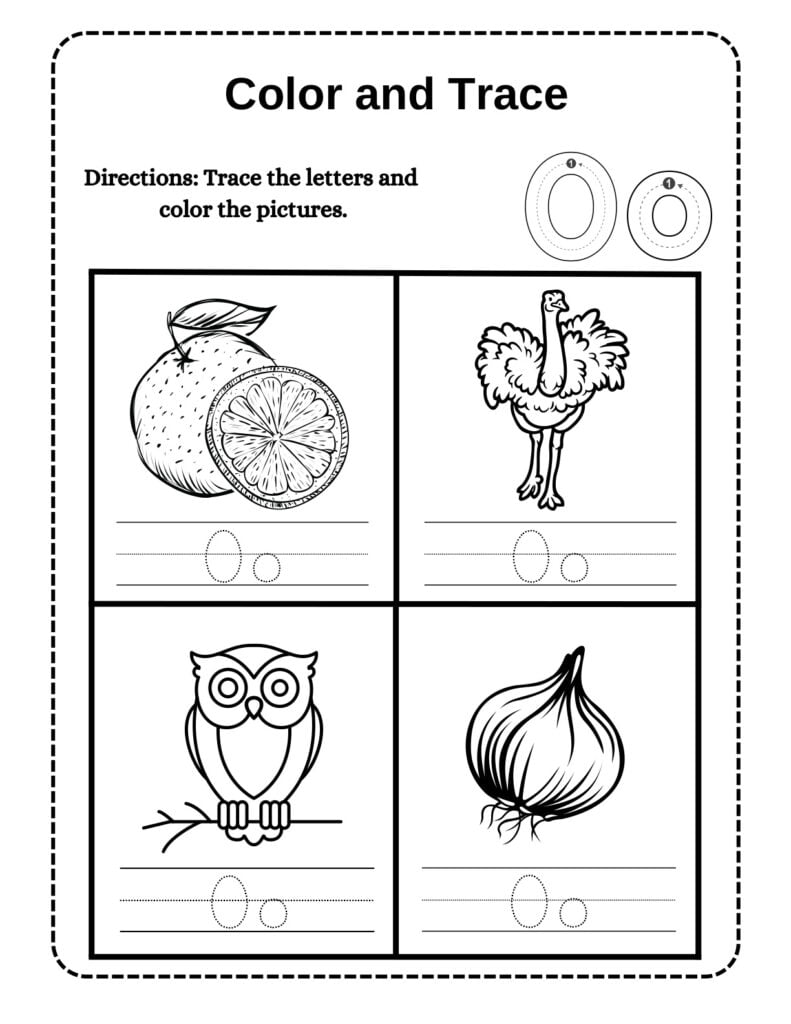
The fifteenth page introduces O and o. Children can color pictures of an orange, an ostrich, an owl, and an onion.
This selection includes both familiar food items and interesting birds. Before writing, ask your child to name the pictures and repeat each word.
Then, trace uppercase O and lowercase o along the guide lines. The rounded letter shapes offer useful practice for children learning to control their pencil movements.
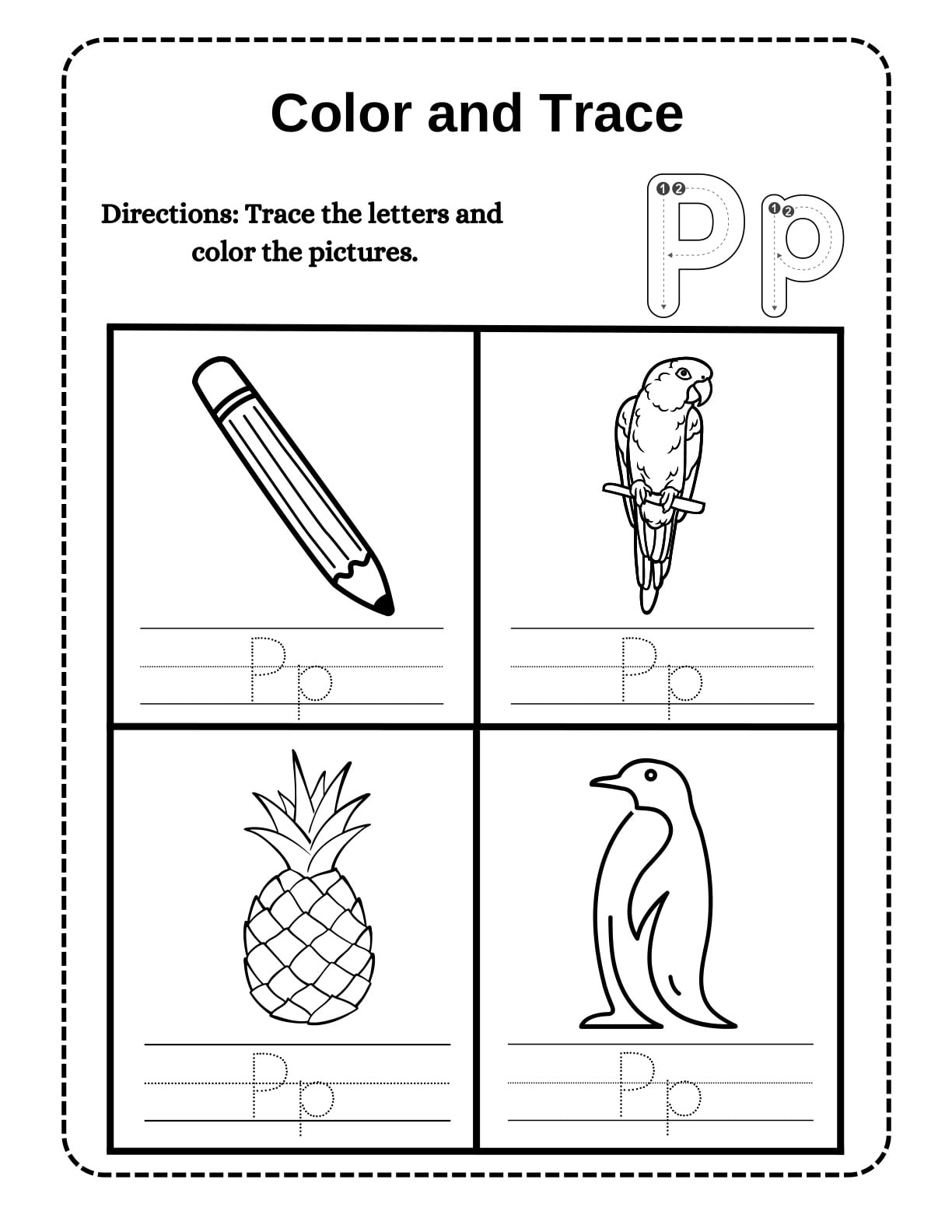
16. Letter P: Pencil, Parrot, Pineapple, and Penguin
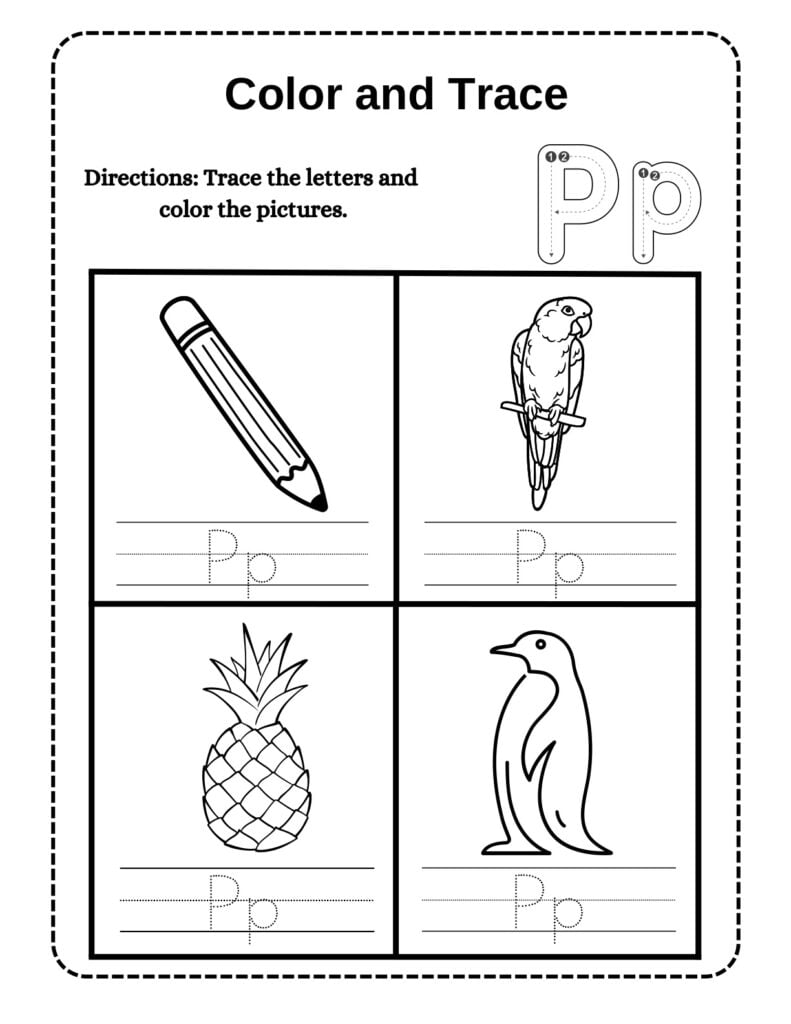
This worksheet helps children practice uppercase P and lowercase p. The pictures include a pencil, a parrot, a pineapple, and a penguin.
Ask your child which picture they recognize first, then name the remaining ones together. Next, trace the letters while paying attention to their shapes.
You can also invite your child to say a short sentence about one picture. Once tracing is finished, color each picture to complete the page.
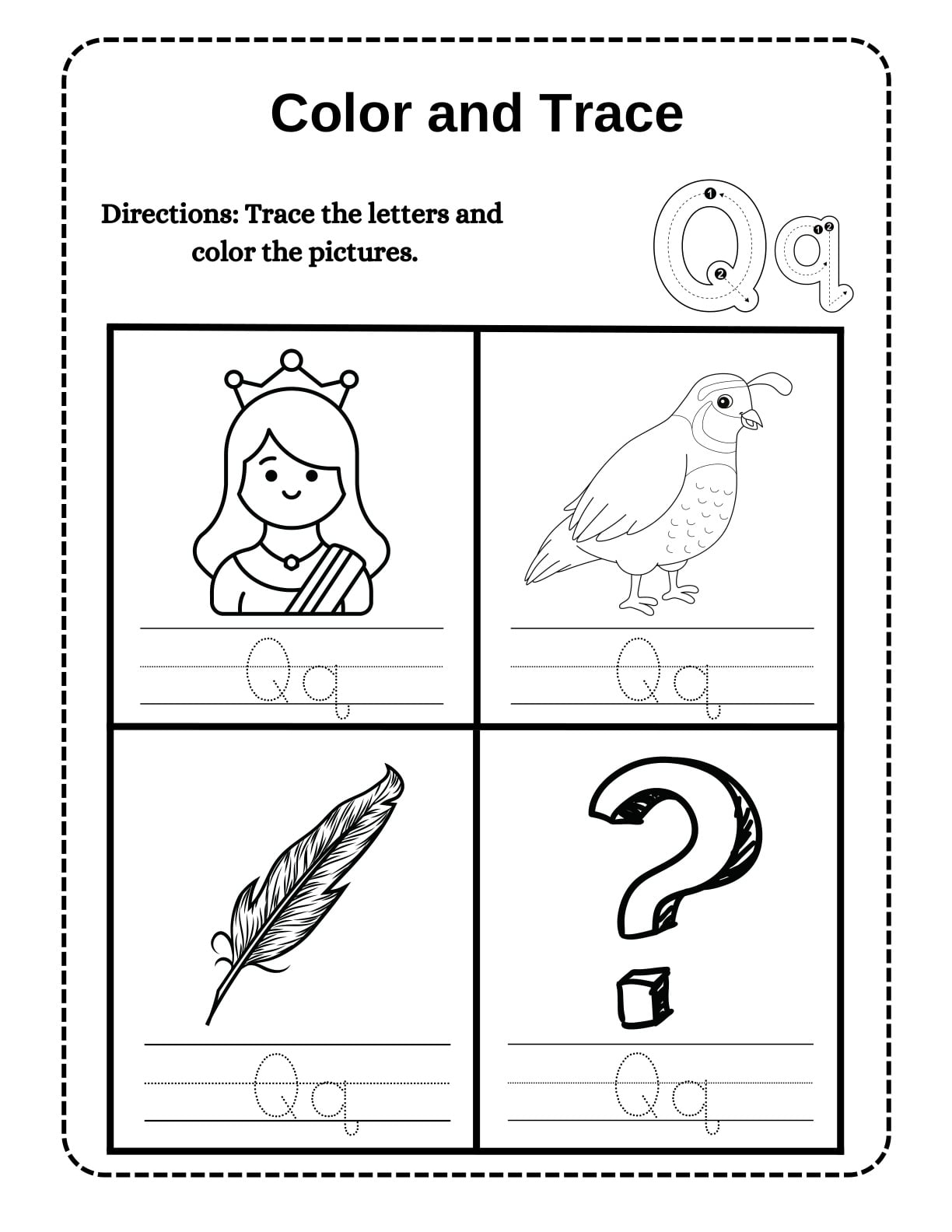
17. Letter Q: Queen, Quail, Feather, and Question Mark
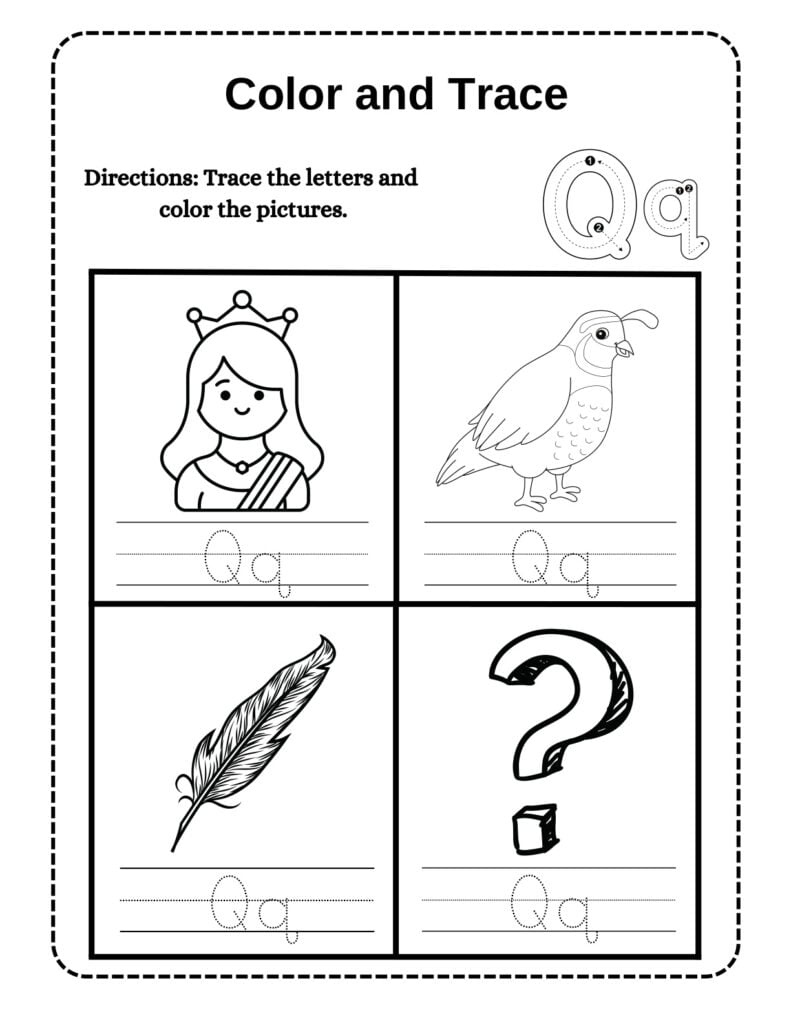
The seventeenth worksheet focuses on Q and q. Its pictures show a queen, a quail, a feather, and a question mark.
The letter Q can be less familiar than many other letters, so spend extra time saying its name. Explain any unfamiliar pictures before your child begins.
Then, trace the uppercase and lowercase forms carefully. Coloring the pictures provides a relaxed finish to this letter activity.
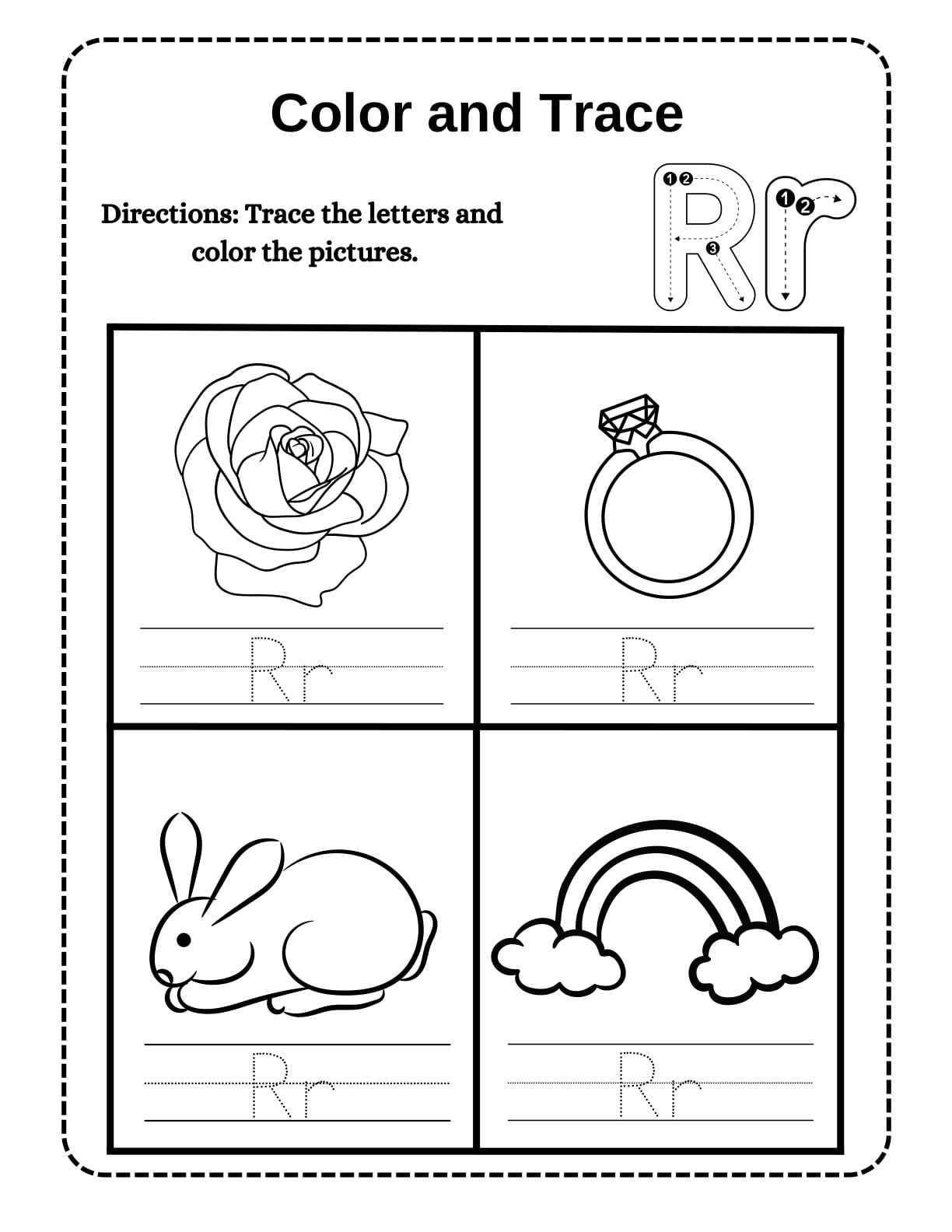
18. Letter R: Rose, Ring, Rabbit, and Rainbow
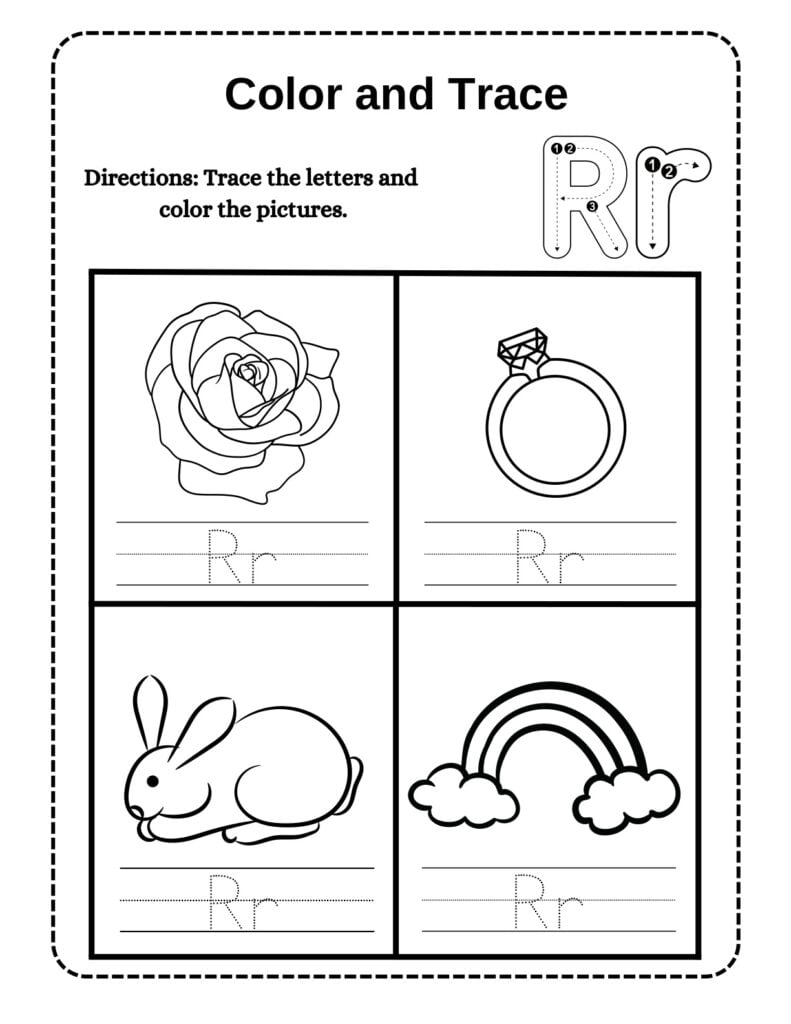
This page introduces uppercase R and lowercase r. Children will find a rose, a ring, a rabbit, and a rainbow.
These pictures provide familiar words that are easy to discuss during practice. Ask your child to name each item before tracing the letters.
Then, encourage them to follow the dotted lines without rushing. Finally, color the pictures and talk about which one they like best.
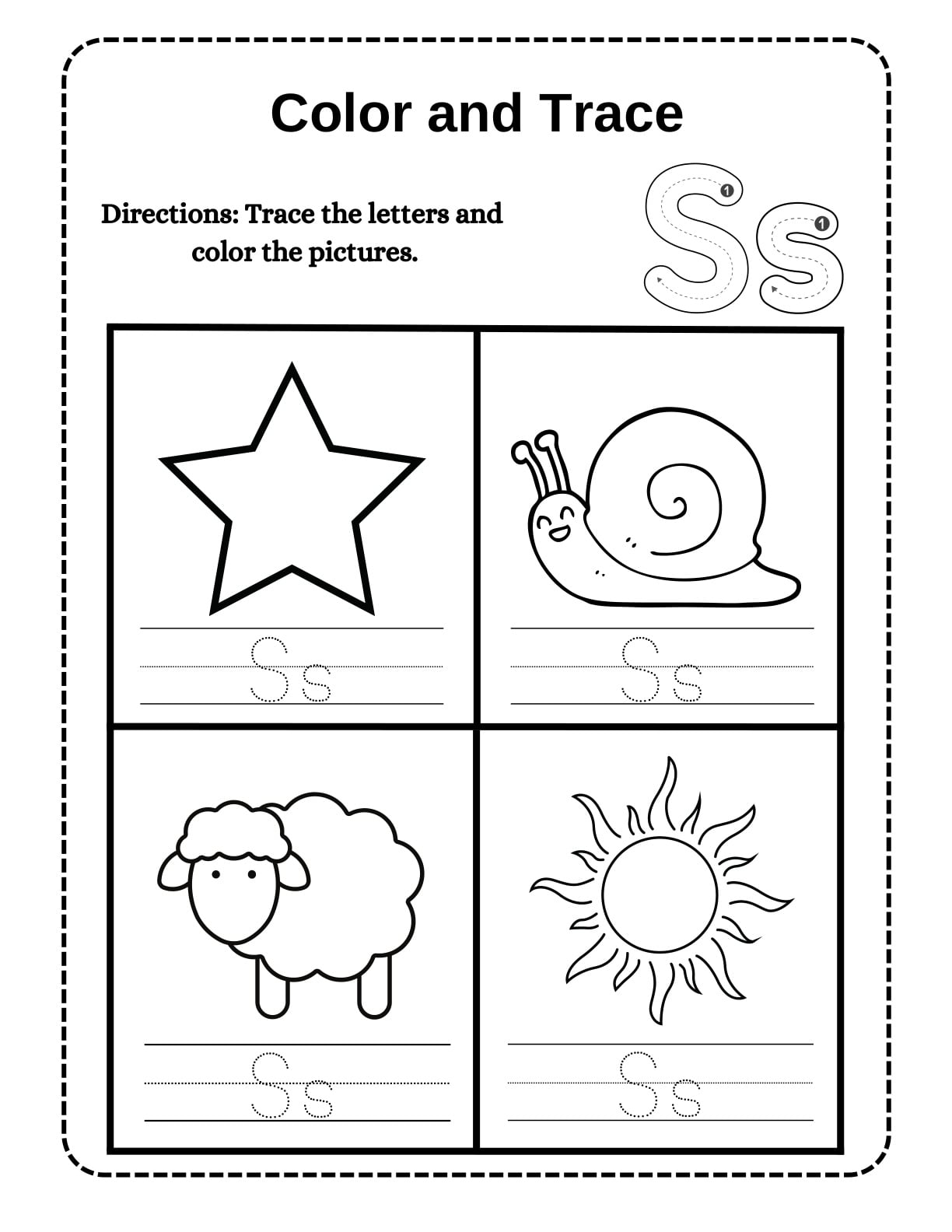
19. Letter S: Star, Snail, Sheep, and Sun
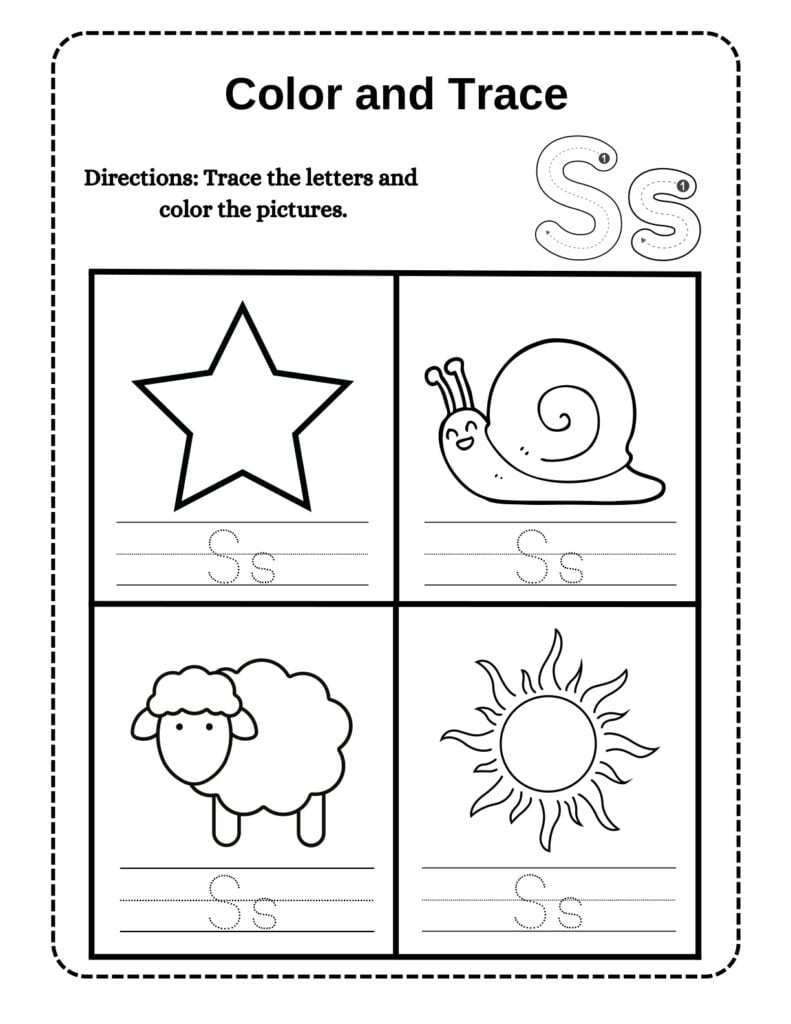
The nineteenth worksheet focuses on S and s. Its pictures include a star, a snail, a sheep, and a sun.
Ask your child to say each word clearly and notice the sound at the beginning. Next, trace the uppercase and lowercase letters along the guide lines.
If your child needs support, demonstrate the letter shape first. Finish by coloring the pictures and reviewing their names together.
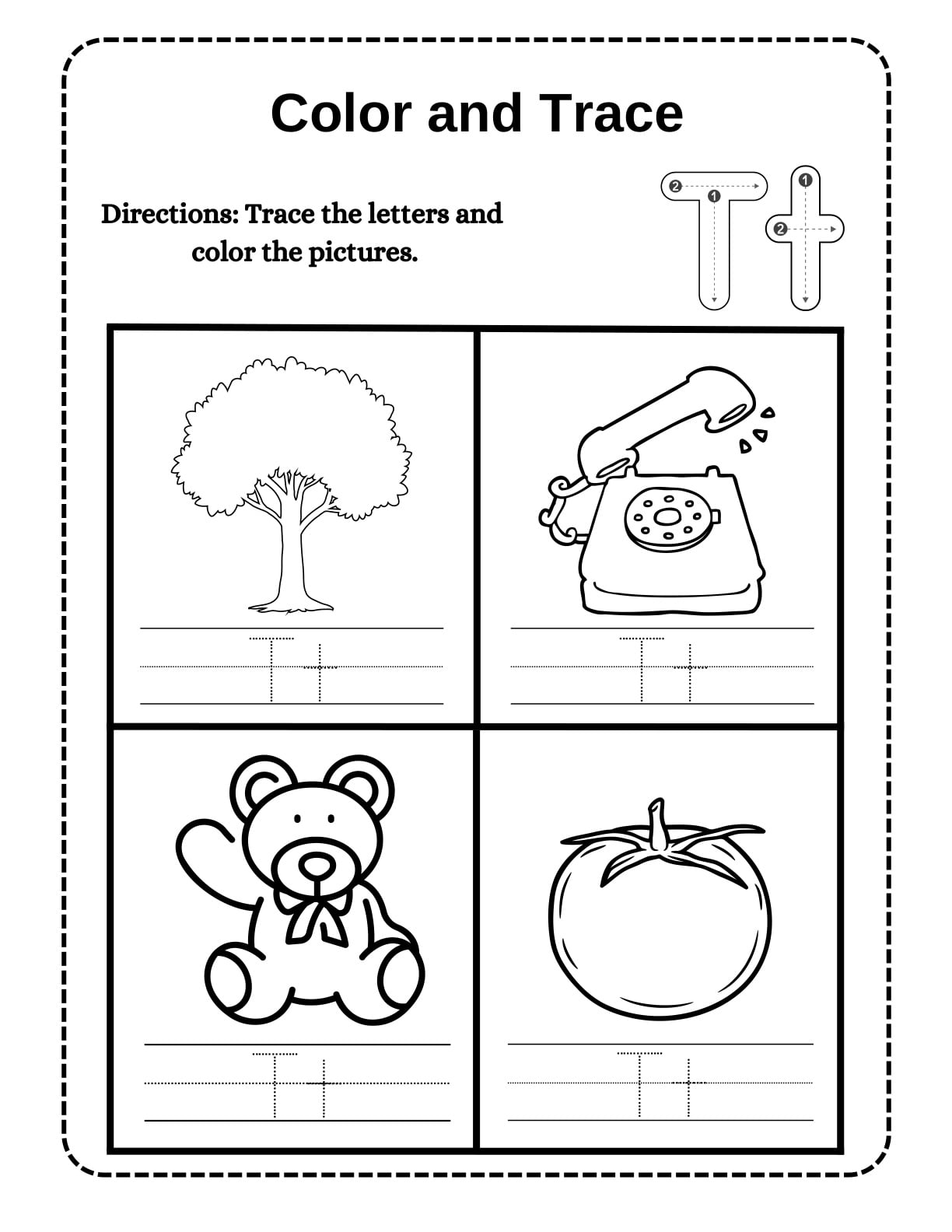
20. Letter T: Tree, Telephone, Teddy Bear, and Tomato
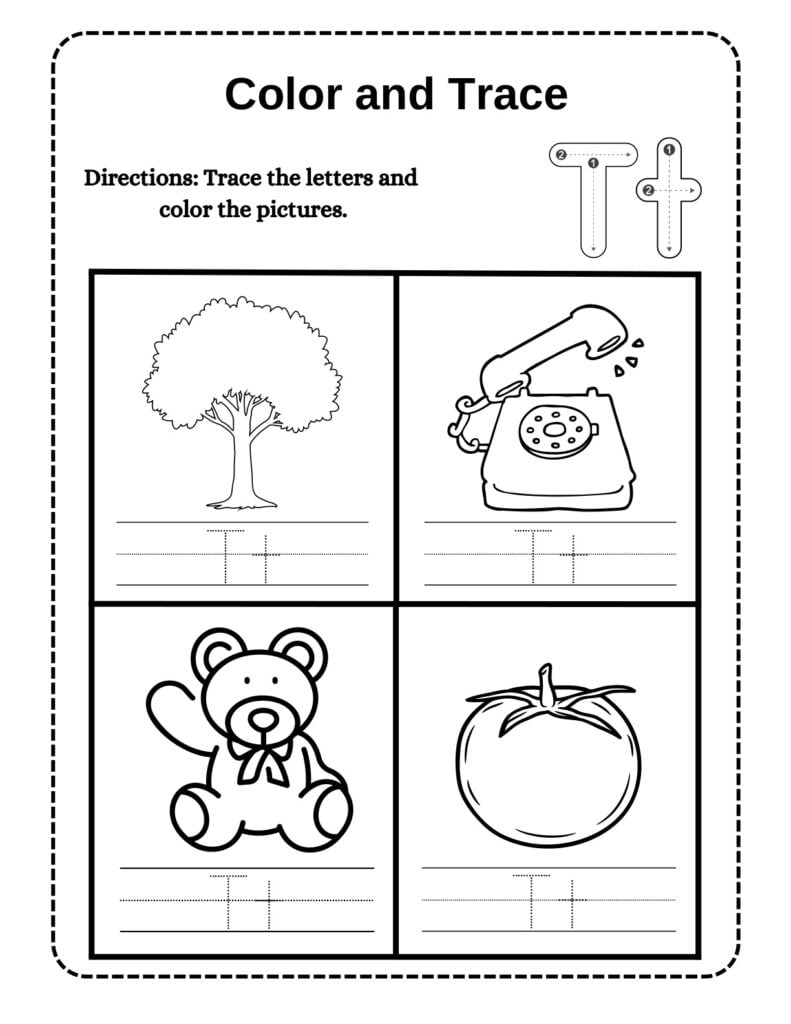
This worksheet introduces uppercase T and lowercase t. Children can practice with a tree, a telephone, a teddy bear, and a tomato.
Talk about each picture before moving to the writing lines. Then, help your child trace the letters with steady pencil movements.
You can ask them to name another item that begins with T. Coloring the four pictures makes the activity feel complete.
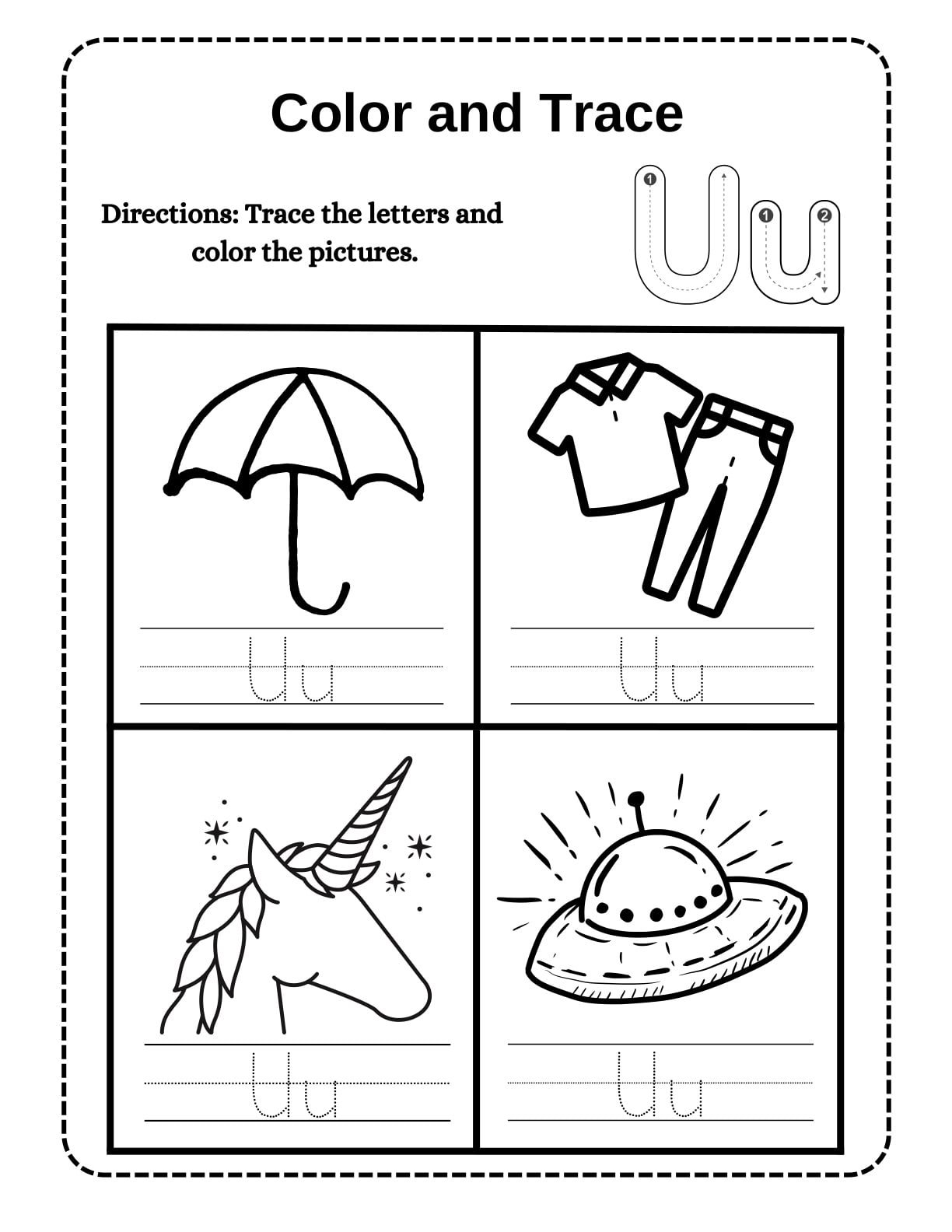
21. Letter U: Umbrella, Uniform, Unicorn, and UFO
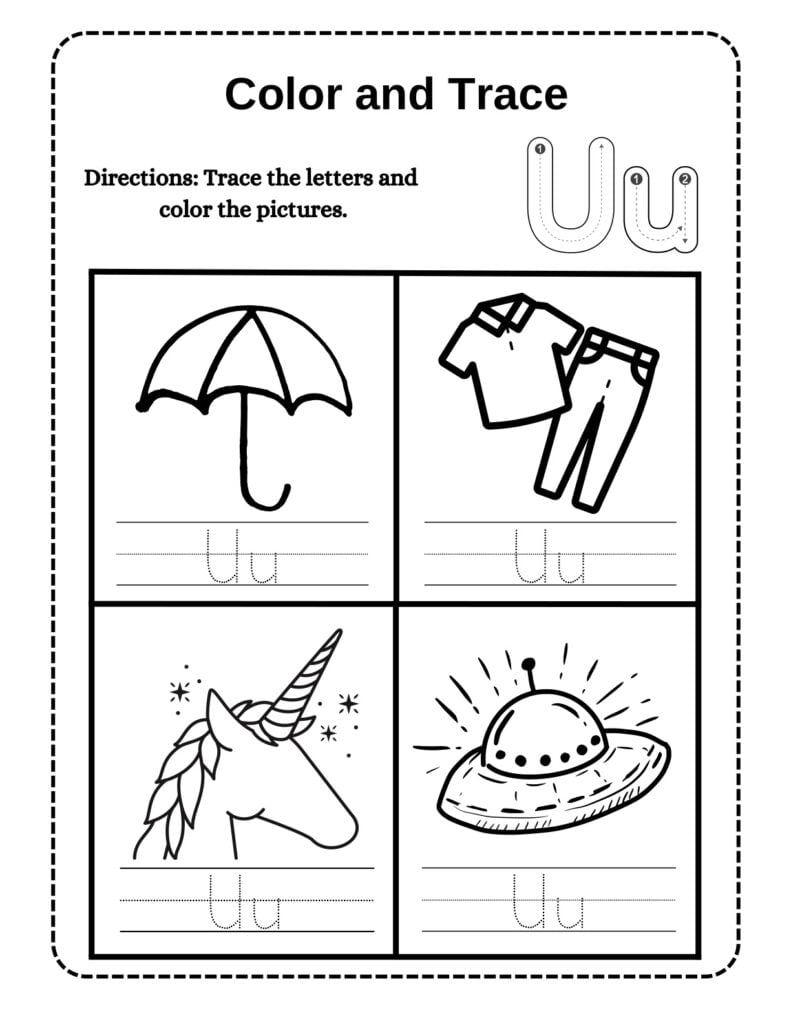
The twenty-first page gives children practice with U and u. The pictures show an umbrella, a uniform, a unicorn, and a UFO.
The unicorn and UFO can make this page especially fun for children who enjoy imaginative topics. Explain that a UFO is an unidentified flying object, often shown in stories and drawings.
Then, guide your child through tracing both letters. Let them choose colors for each picture when they finish.
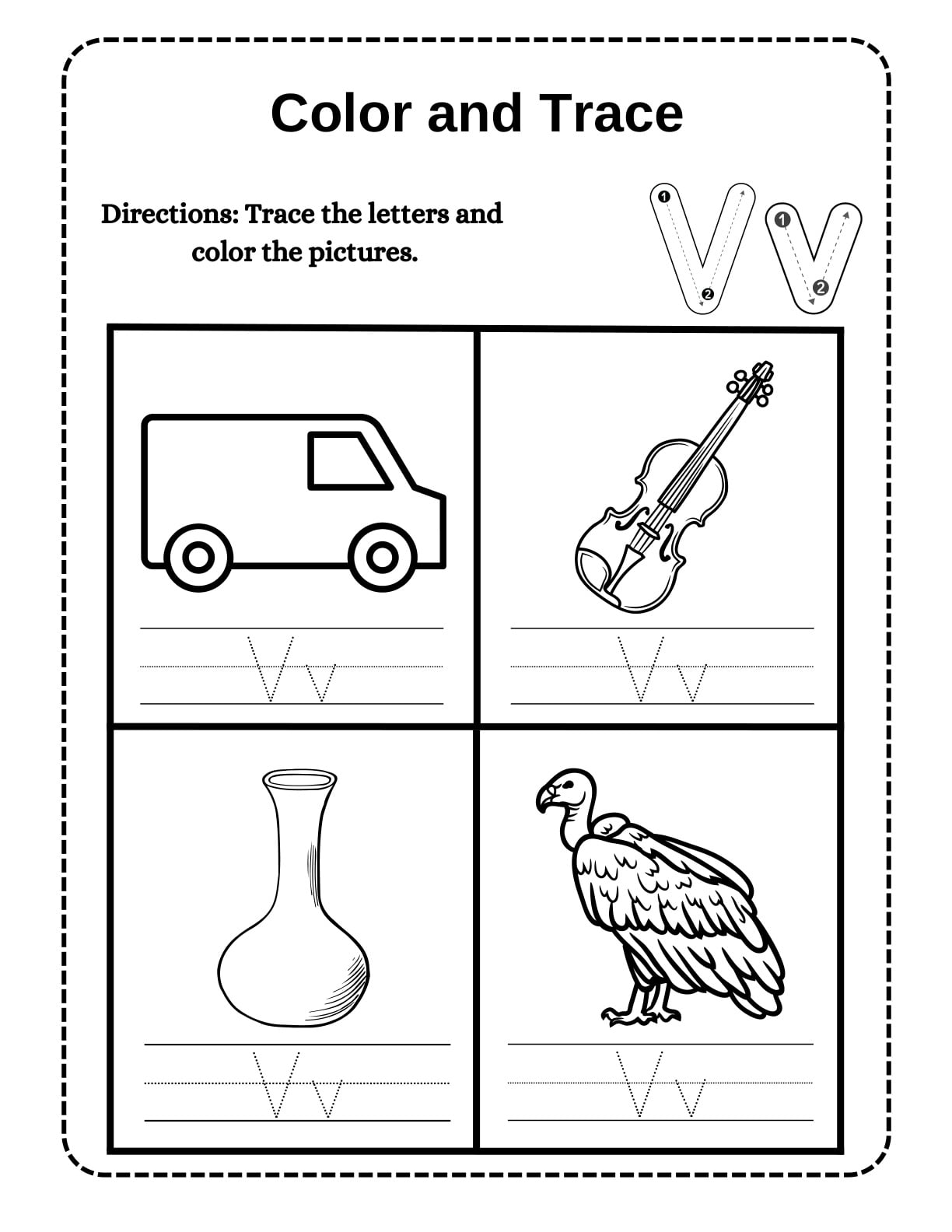
22. Letter V: Van, Violin, Vase, and Vulture
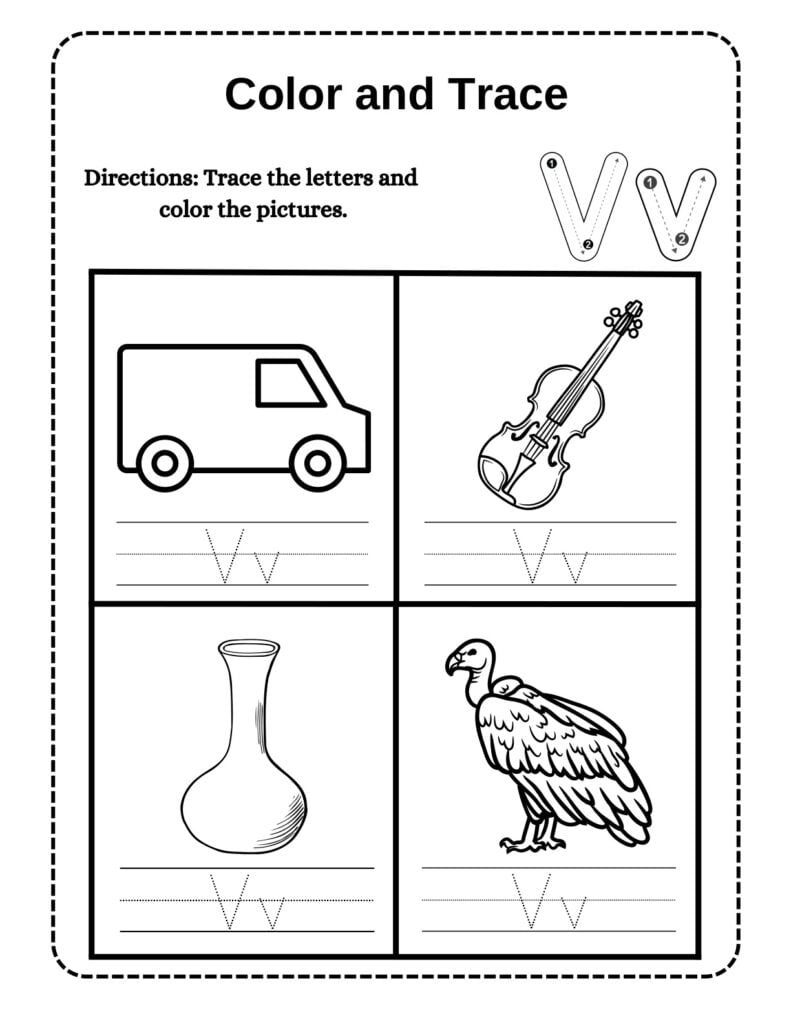
This worksheet focuses on uppercase V and lowercase v. Children will see a van, a violin, a vase, and a vulture. Some pictures may need a short explanation, especially the violin and vulture.
Ask your child to repeat each word before tracing the letter shapes. Next, encourage careful writing along the dotted lines. Finish by coloring the pictures and reviewing their names.
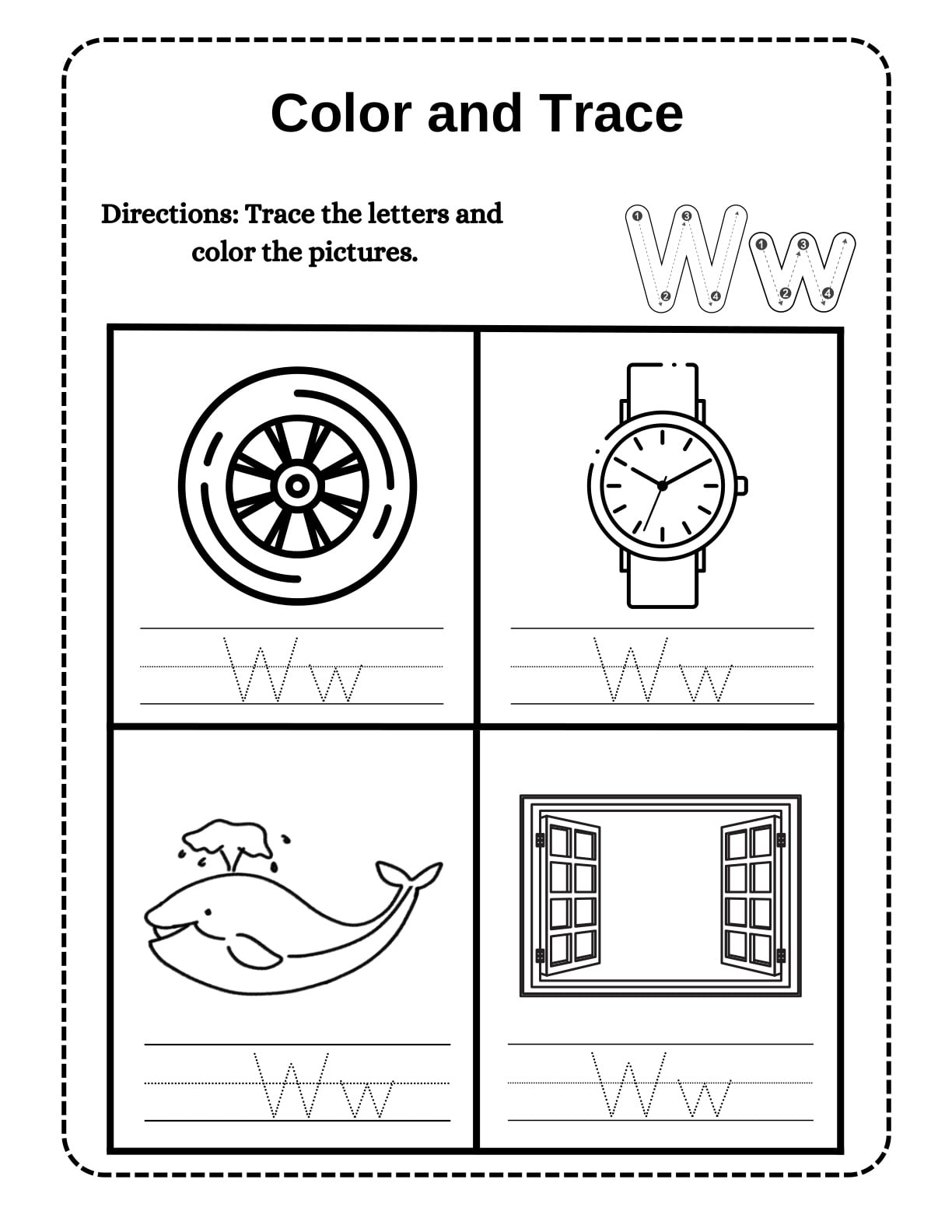
23. Letter W: Wheel, Watch, Whale, and Window
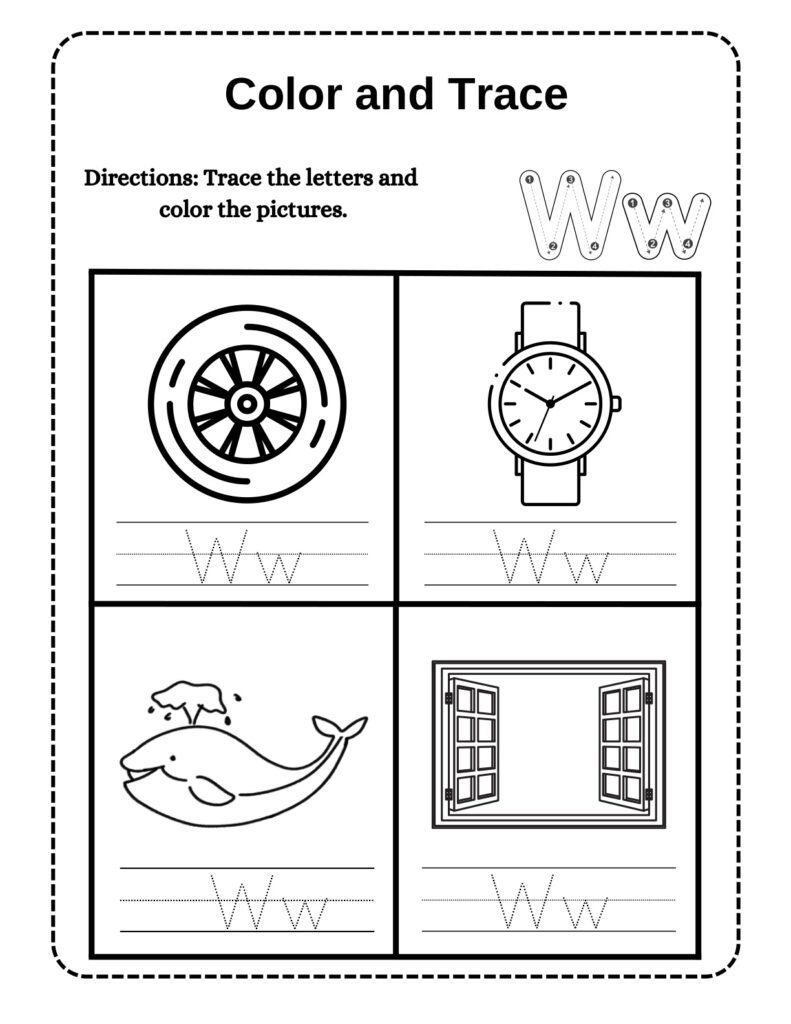
The twenty-third worksheet introduces W and w. Its pictures include a wheel, a watch, a whale, and a window.
These examples give children a mix of everyday objects and an animal. Ask your child to identify each picture and say its name aloud.
Then, trace uppercase W and lowercase w using the worksheet’s guide lines. Afterward, color the pictures and ask which one they found most interesting.
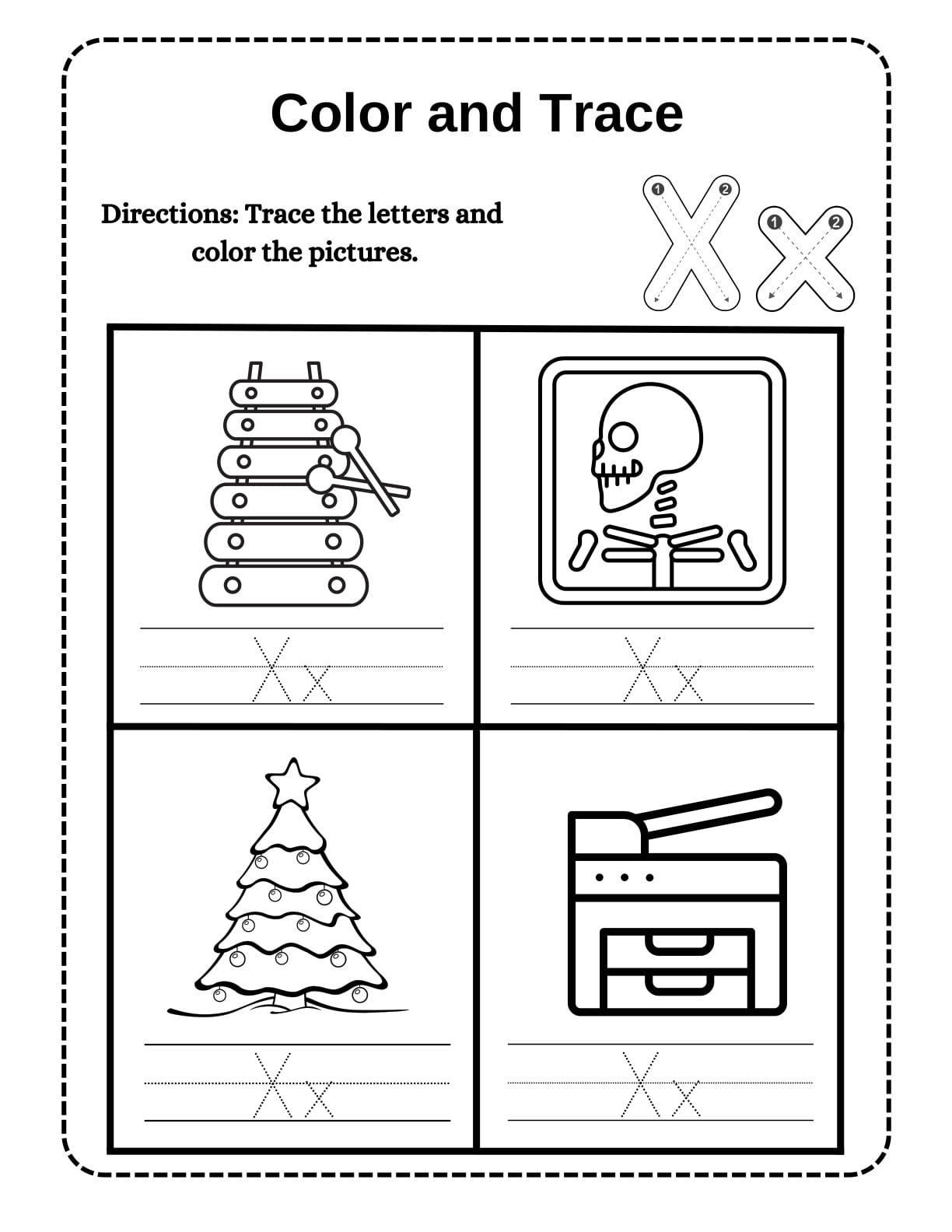
24. Letter X: Xylophone, X-Ray, Christmas Tree, and a Box
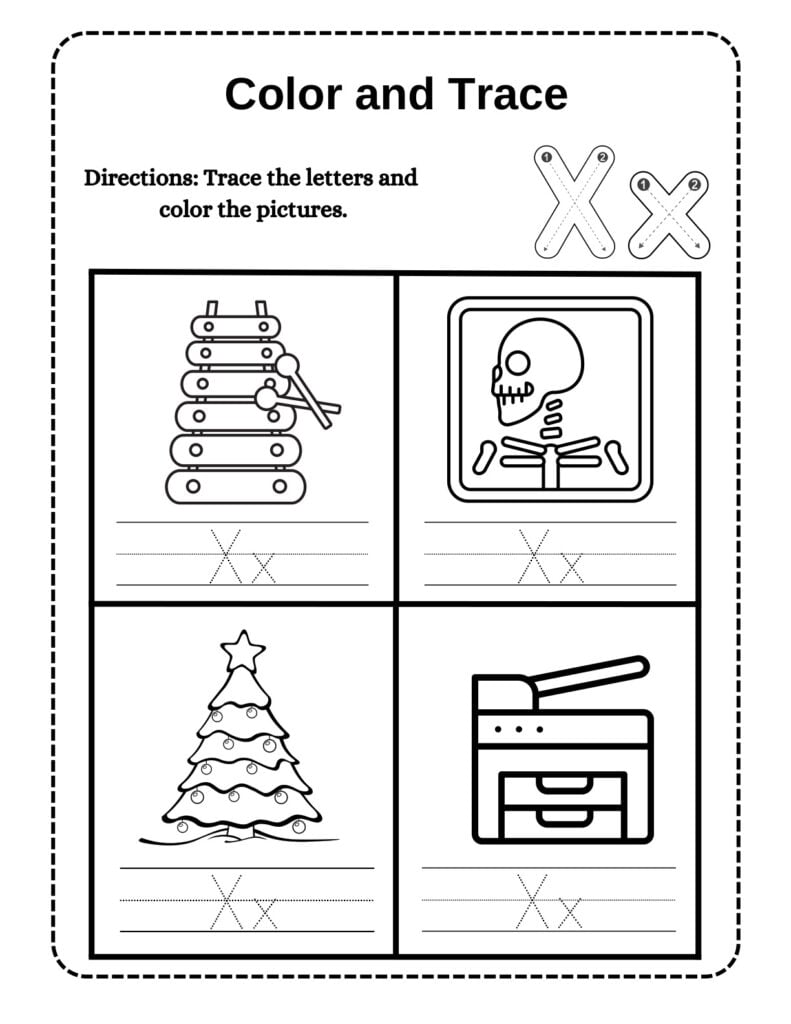
This page gives children practice with uppercase X and lowercase x. The pictures include a xylophone, an X-ray image, a decorated Christmas tree, and a box-like object.
The first two pictures help introduce words associated with the letter X. Explain each picture briefly before starting the writing task.
Then, encourage your child to trace both letter forms and color the images. Since X can be a tricky letter, a little extra practice may be helpful.
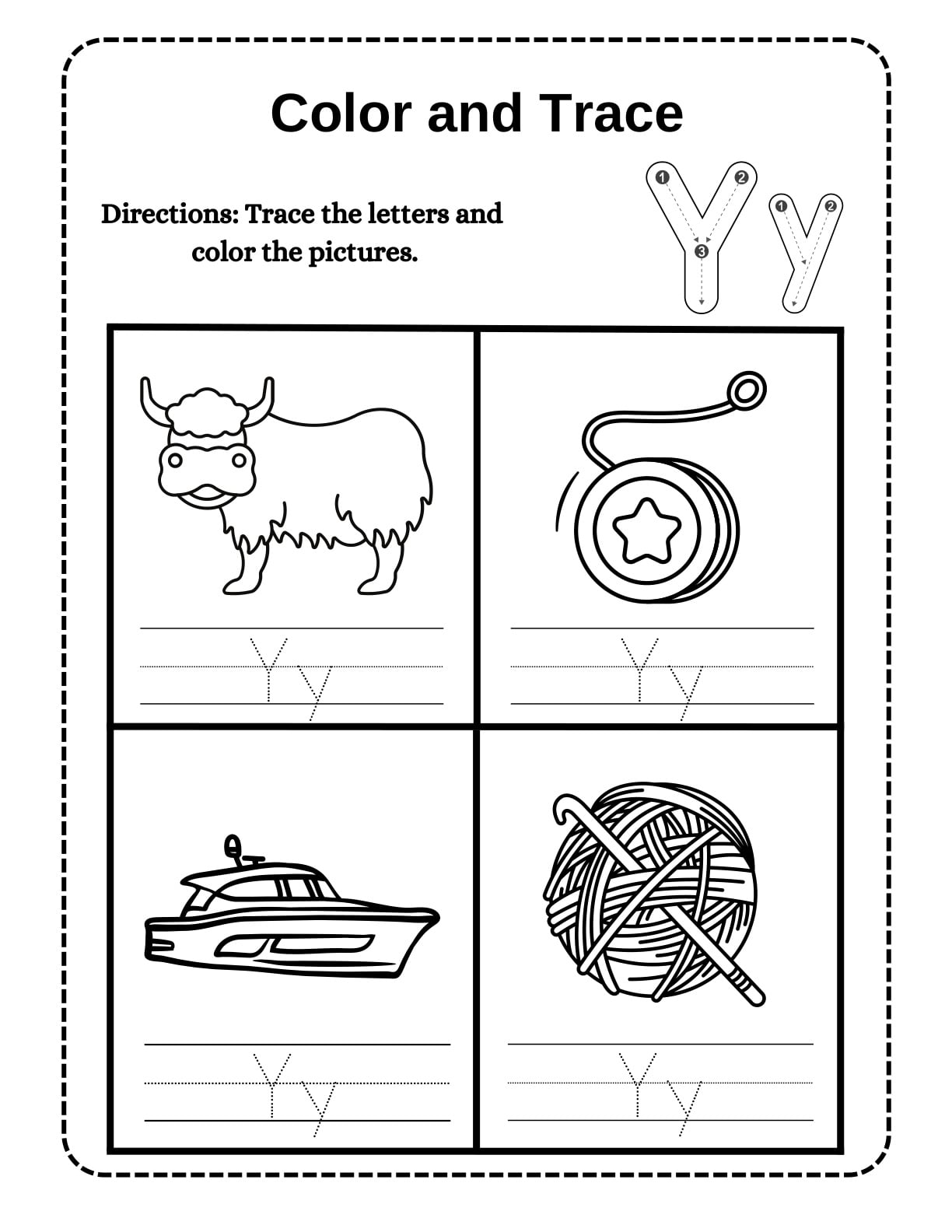
25. Letter Y: Yak, Yo-Yo, Yacht, and Yarn
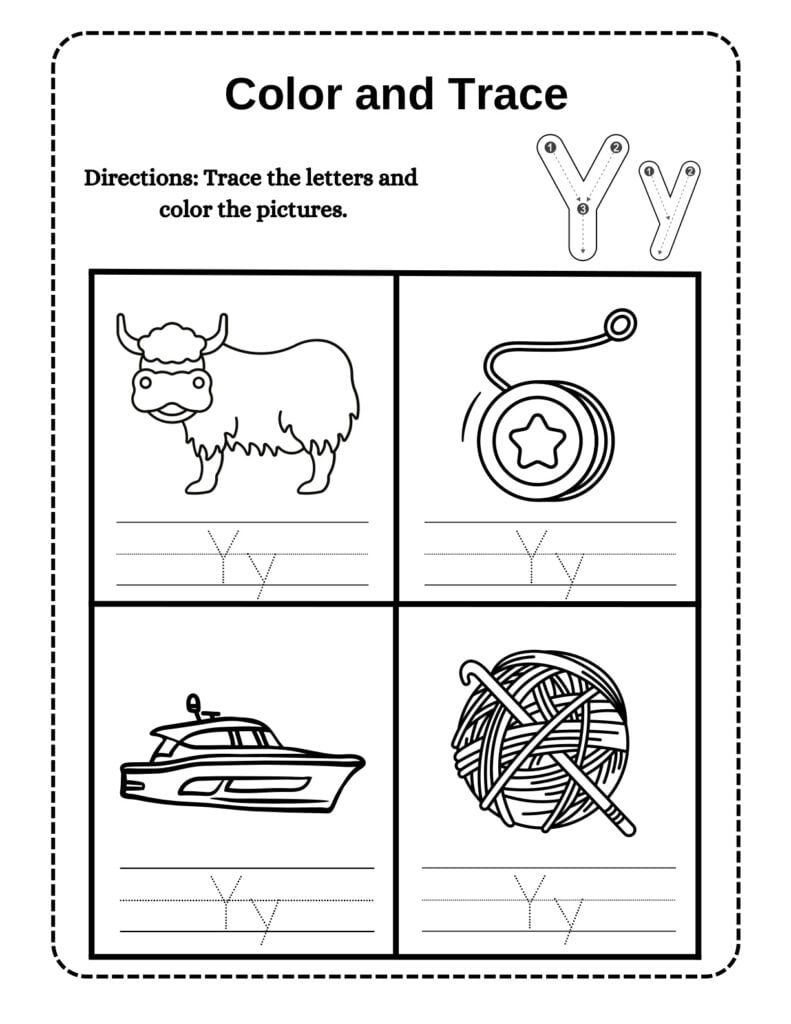
The twenty-fifth worksheet focuses on Y and y. Children can trace the letters while looking at a yak, a yo-yo, a yacht, and yarn.
Ask your child to name the pictures and explain any unfamiliar words. You can describe a yacht as a type of boat and yarn as a material used for knitting or crafts.
Next, let your child trace the letters carefully. Coloring the pictures provides a fun way to finish the page.
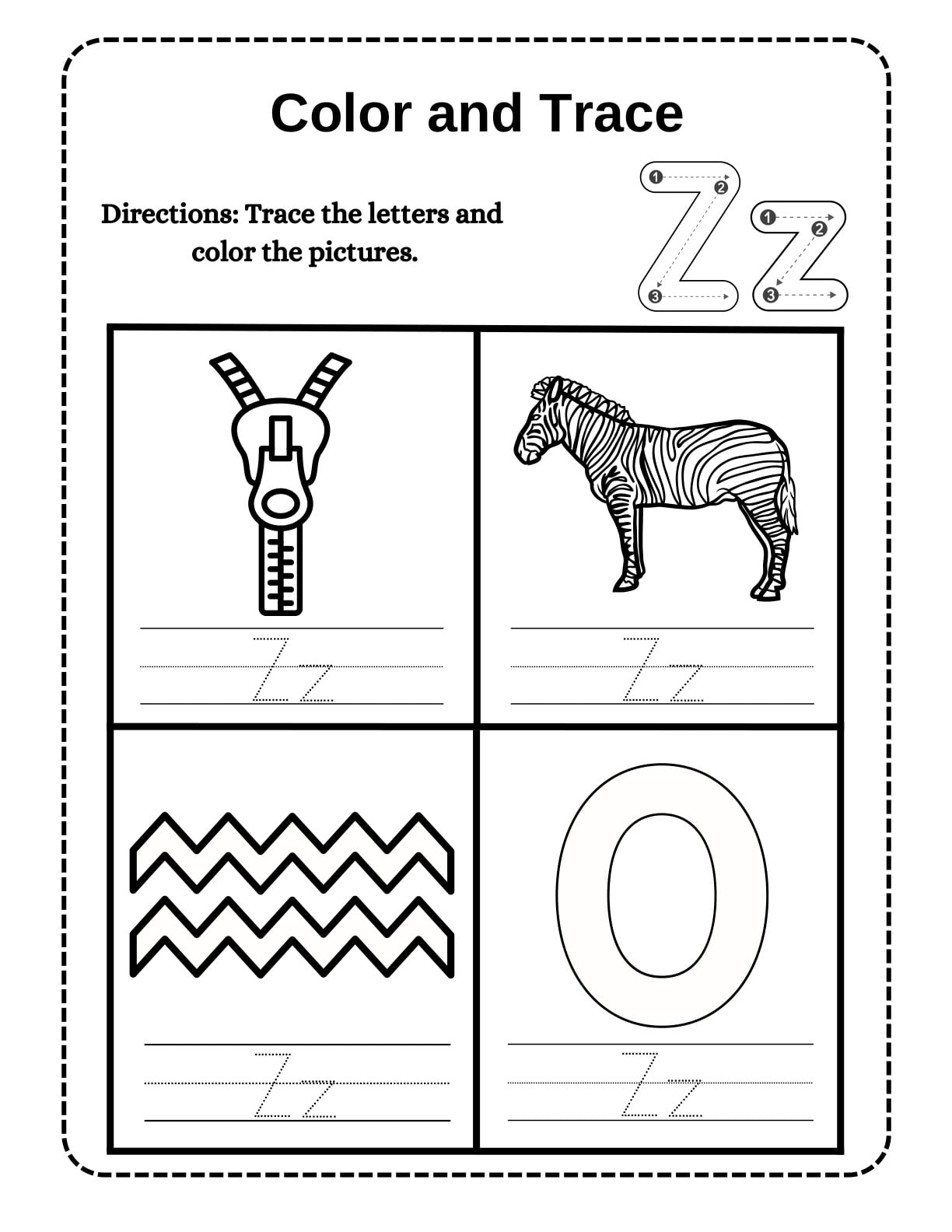
26. Letter Z: Zipper, Zebra, Zigzag Lines, and an Oval Shape
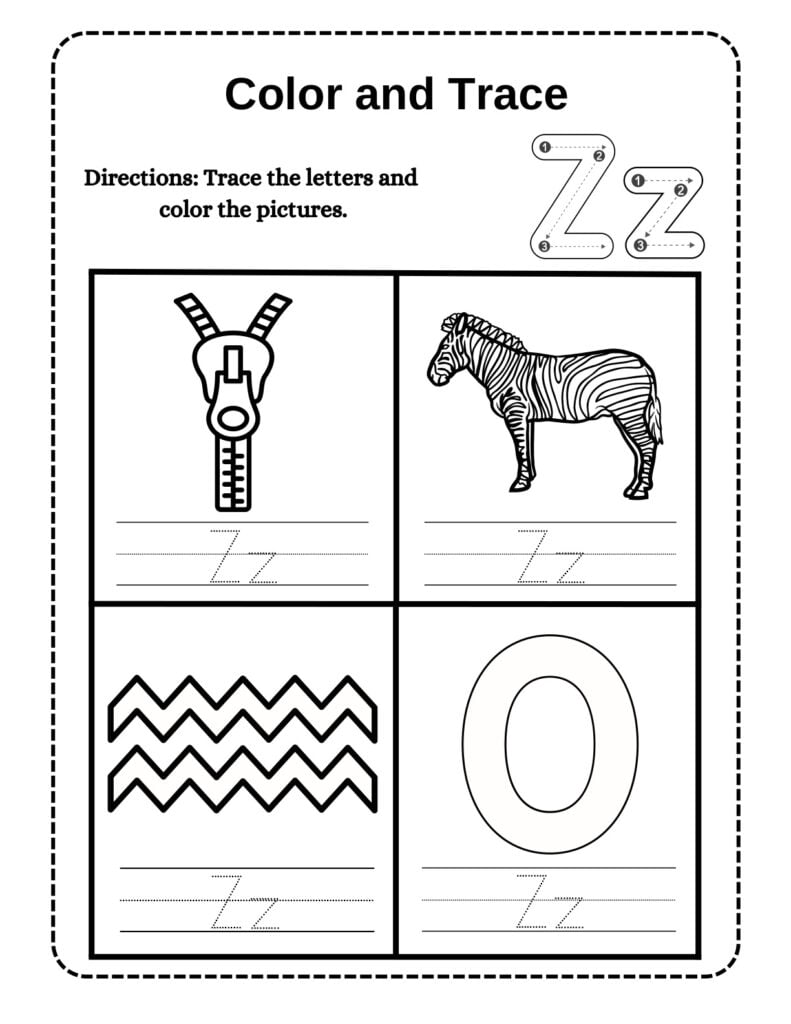
The final worksheet introduces uppercase Z and lowercase z. Its pictures include a zipper, a zebra, zigzag lines, and an oval shape.
Ask your child to identify the zipper and zebra before moving on to the other images. You can point out the sharp turns in the zigzag lines and the rounded shape of the oval.
Then, encourage your child to trace both Z and z along the dotted guides. Finish by coloring the pictures and celebrating the completion of the alphabet collection.
Final Thoughts
Practicing the alphabet can feel easier when children have pictures to trace and color. These Color and Trace Worksheets cover all 26 letters, from A to Z.
Each page gives children a chance to practice uppercase and lowercase letters while exploring four pictures. The activities are simple enough to use during short learning sessions.
Parents can make each worksheet more useful by naming the pictures with their children. Encourage your child to trace slowly and hold the pencil comfortably.
If a letter feels difficult, demonstrate it and let them try again. Remember to praise their effort instead of expecting perfect handwriting every time.
You can spread the worksheets across several days rather than completing them all at once. Start with familiar letters, then move on to less familiar ones as your child gains confidence.
Keep crayons or colored pencils nearby to make each session more enjoyable. With regular practice, children can build early handwriting skills while having fun with the alphabet.