26 Engaging Alphabet Writing Worksheets for Kids
Disclosure: Some of the links in this post are affiliate links. This means if you click on the link and purchase an item, I will receive an affiliate commission at no extra cost to you.
Learning to write the alphabet takes practice, especially when children are just beginning their handwriting journey.
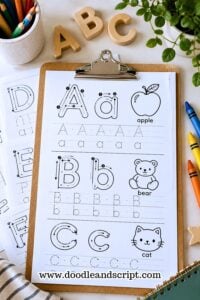
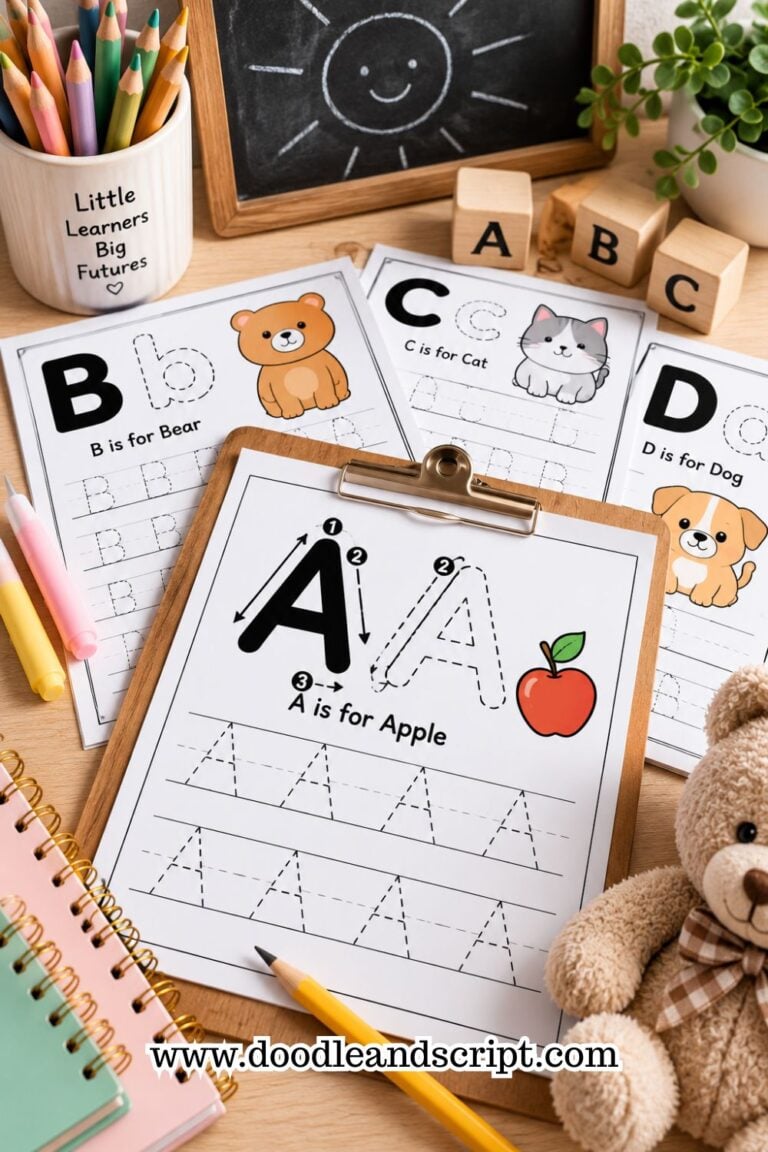
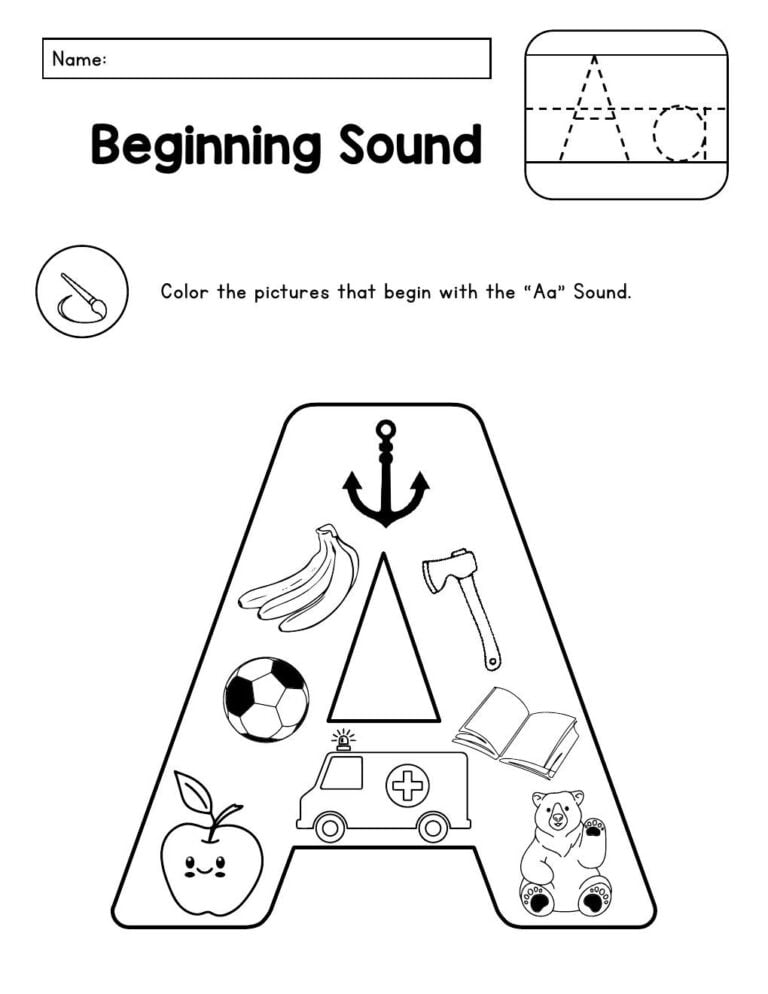
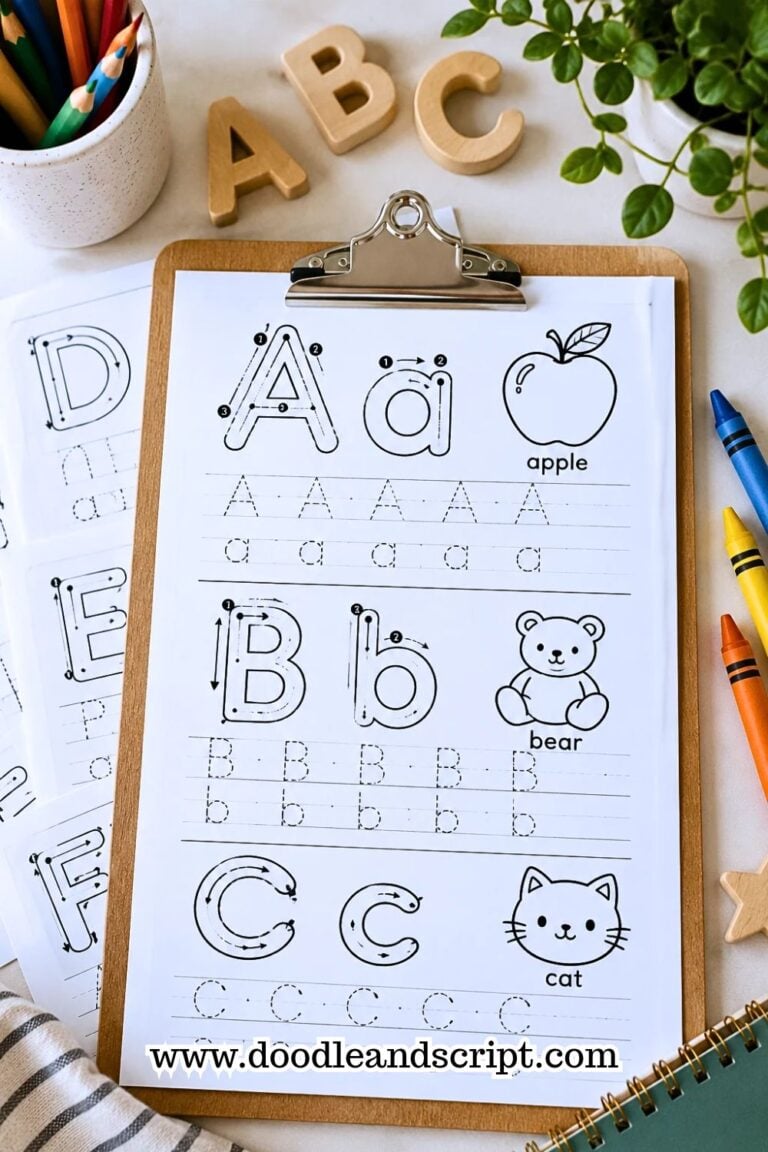
These Alphabet Writing Worksheets help children recognize letters, trace their shapes, and practice writing independently. They also include simple pictures that make each letter easier to remember.
This printable collection contains 26 worksheets, covering every letter from A to Z. Each page features three pictures connected to the featured letter, along with uppercase and lowercase letter practice.
Children can trace the letters, write them independently, and color the pictures.
Parents and teachers can use these Alphabet Writing Worksheets during preschool lessons, kindergarten activities, or handwriting practice at home.
Begin by saying the letter name and identifying the pictures together. Then, guide your child through the tracing lines before allowing independent practice. Keep the sessions relaxed and encourage children as they improve.
A–Z Alphabet Writing Worksheets
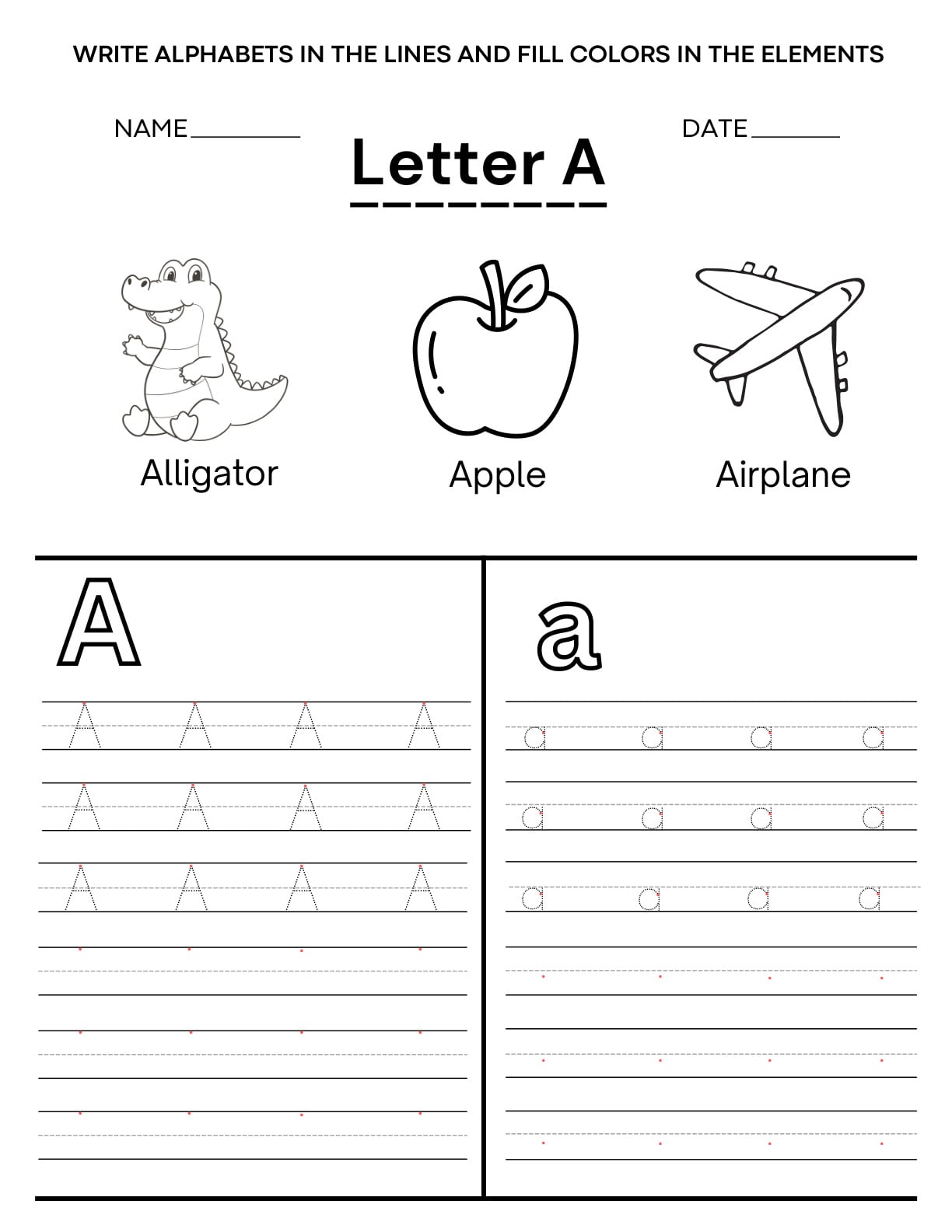
1. Letter A: Alligator, Apple, and Airplane
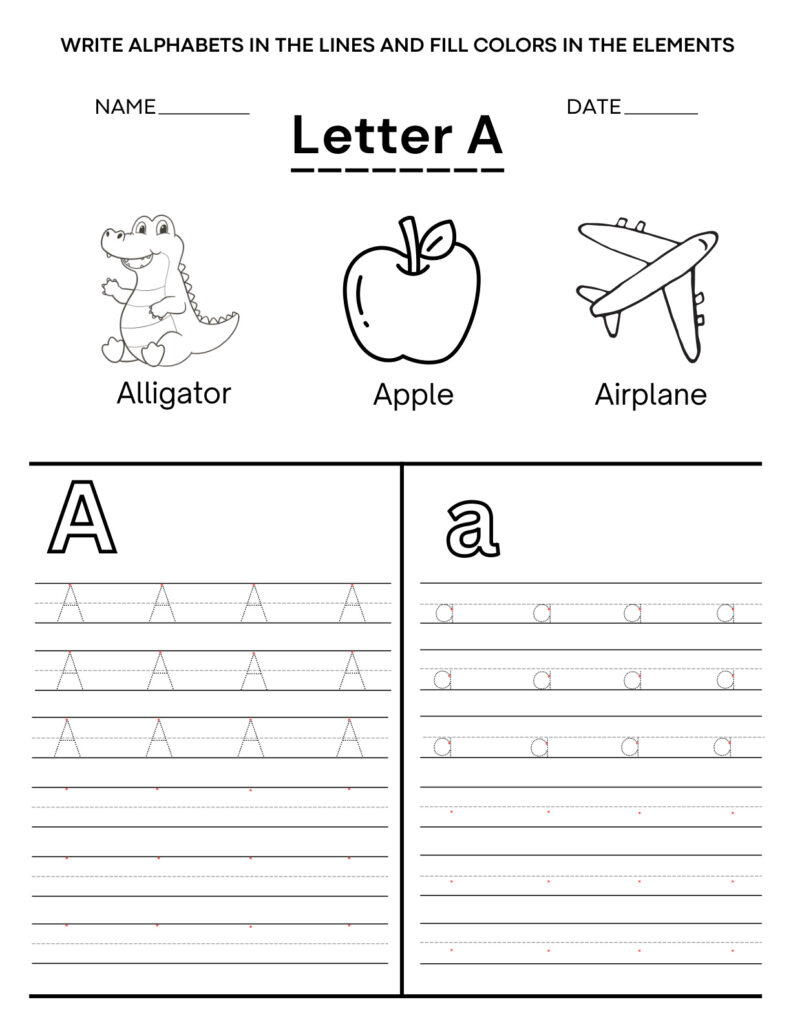
The first worksheet introduces children to the letter A. It features an alligator, an apple, and an airplane. Ask your child to name each picture and repeat the beginning sound.
Next, practice writing uppercase A and lowercase a by following the tracing examples. Children can also color the three pictures and complete the remaining writing lines.
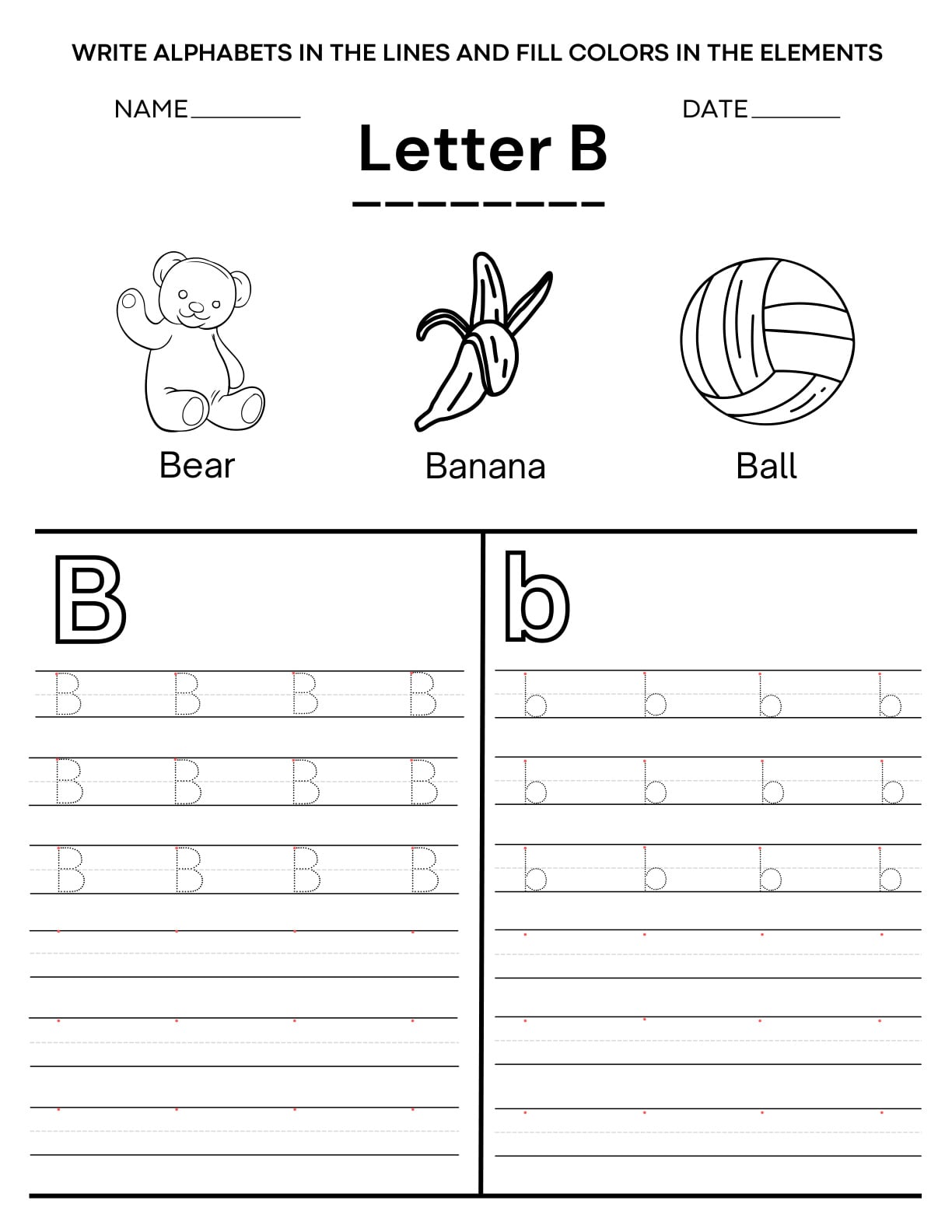
2. Letter B: Bear, Banana, and Ball
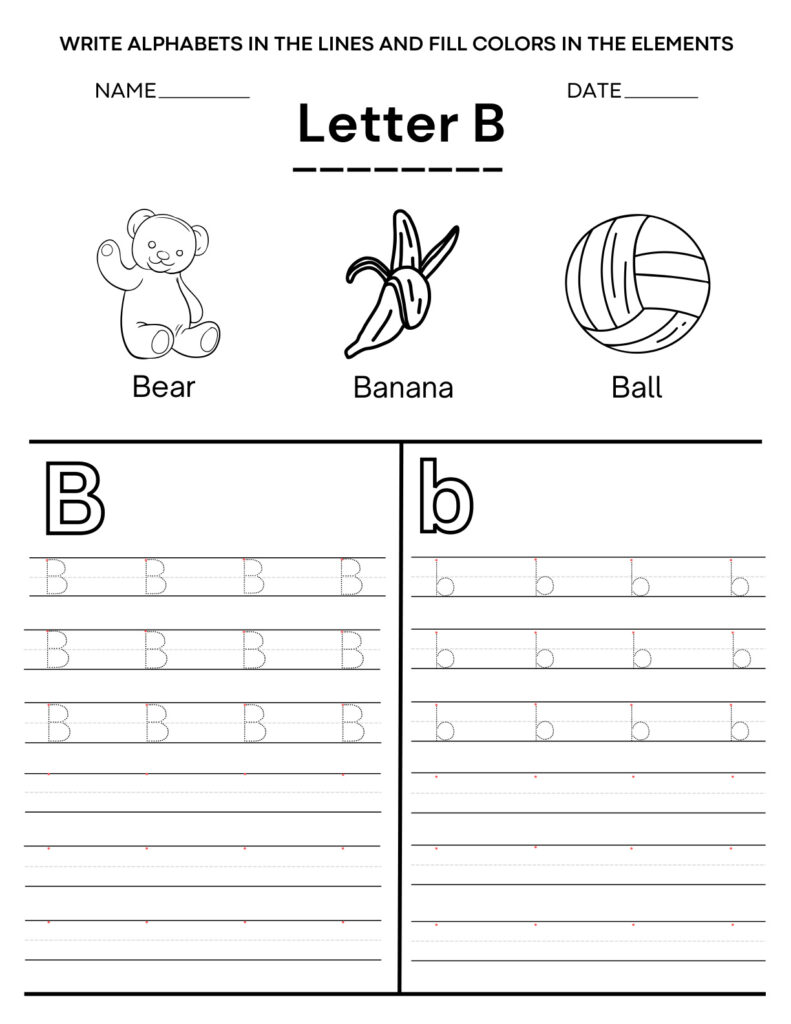
This page focuses on the letter B through three familiar pictures. Children will find a bear, a banana, and a ball. Encourage your child to say each word aloud before starting the writing activity.
Then, trace uppercase B and lowercase b along the guided lines. Afterward, let your child color the pictures and practice writing both letters independently.
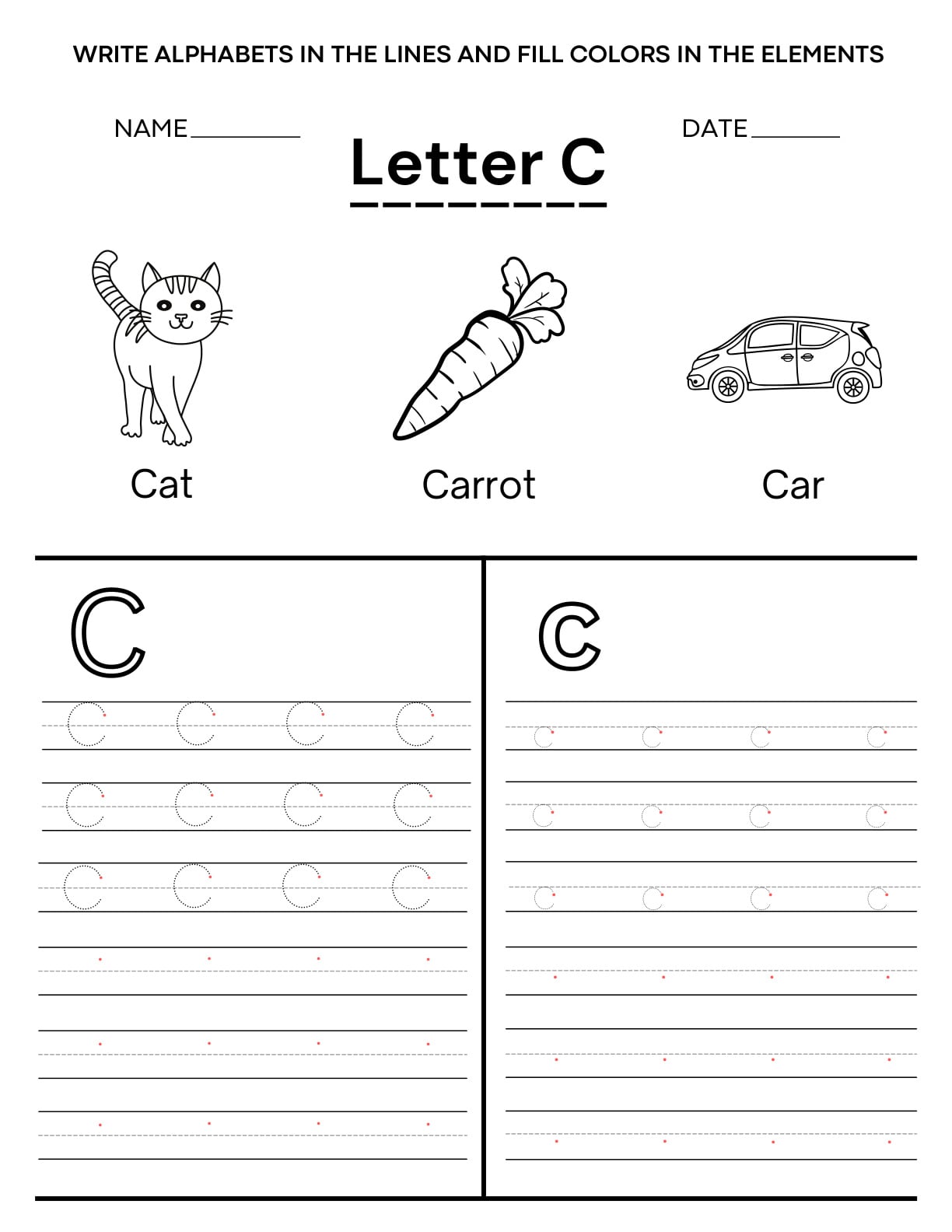
3. Letter C: Cat, Carrot, and Car
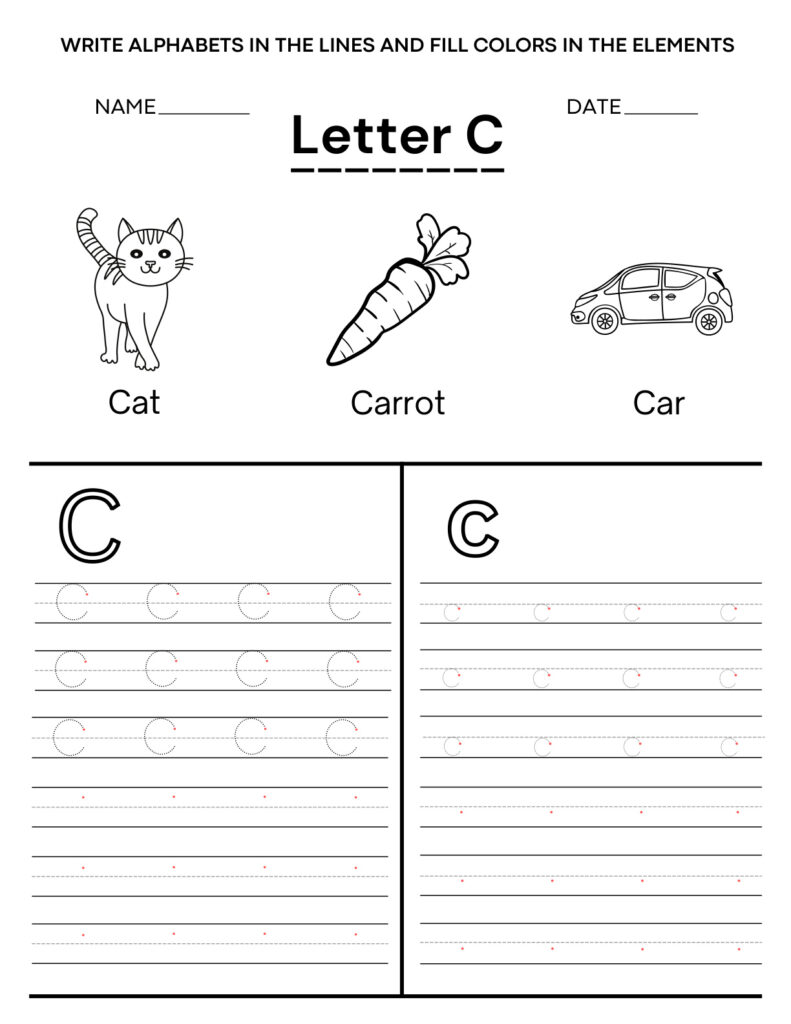
The third worksheet introduces the letter C with a cat, a carrot, and a car. These familiar pictures make it easier to connect the letter with everyday words.
Ask your child to identify each picture and say its name clearly. Next, practice tracing the uppercase and lowercase letter forms shown on the page. Finish by coloring the pictures and writing C and c on the empty lines.
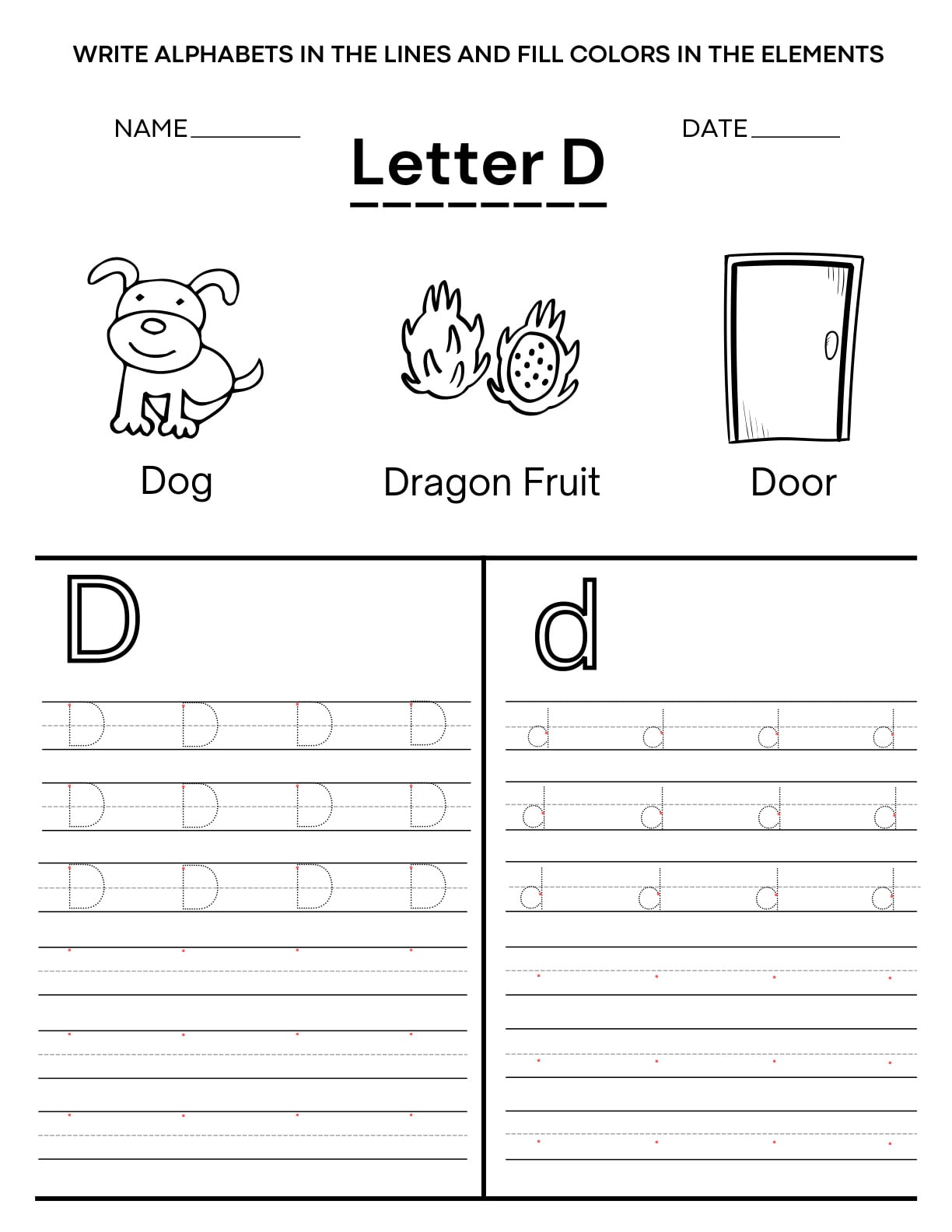
4. Letter D: Dog, Dragon Fruit, and Door
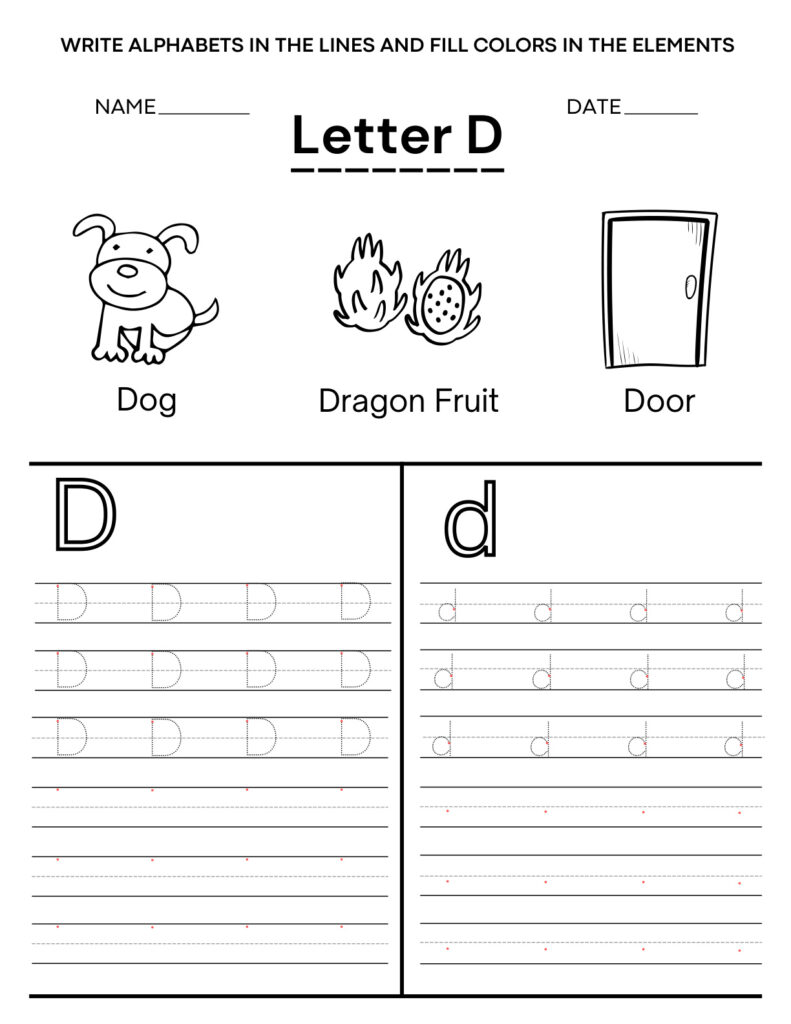
This worksheet helps children practice the letter D. Its pictures include a dog, dragon fruit, and a door. Take a moment to explain dragon fruit if your child does not recognize it.
Then, encourage your child to trace uppercase D and lowercase d carefully. Coloring the pictures adds a creative activity after the handwriting practice.
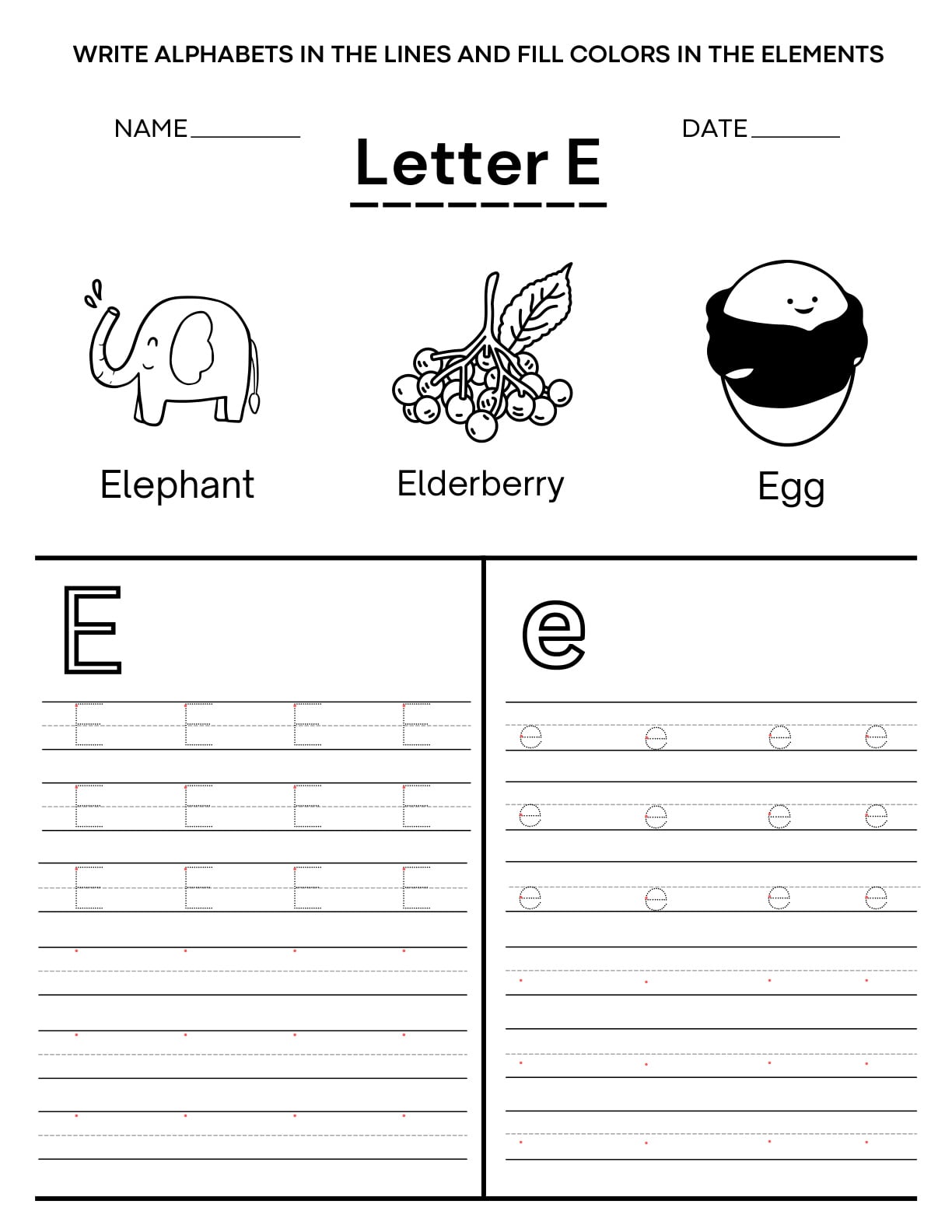
5. Letter E: Elephant, Elderberry, and Egg
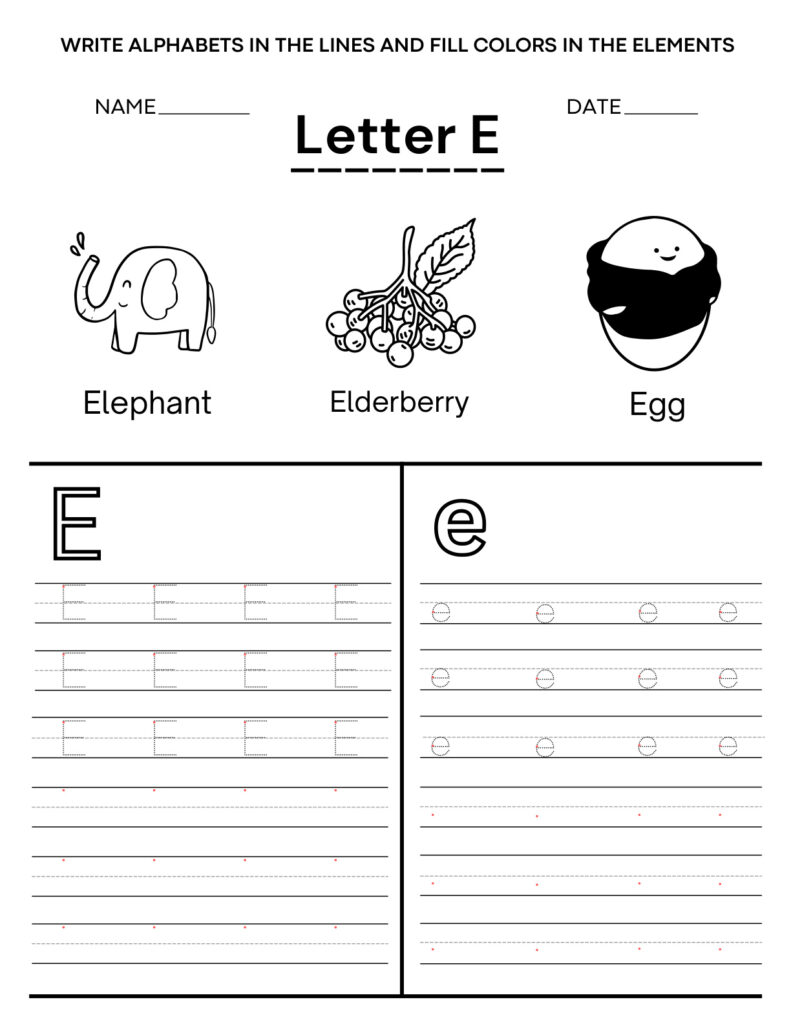
The fifth page focuses on the letter E. Children can explore pictures of an elephant, elderberry, and an egg. Some children may need help recognizing elderberries, so name the picture together first.
Next, guide them through tracing uppercase E and lowercase e. Let them color the pictures before practicing the letters on the remaining lines.
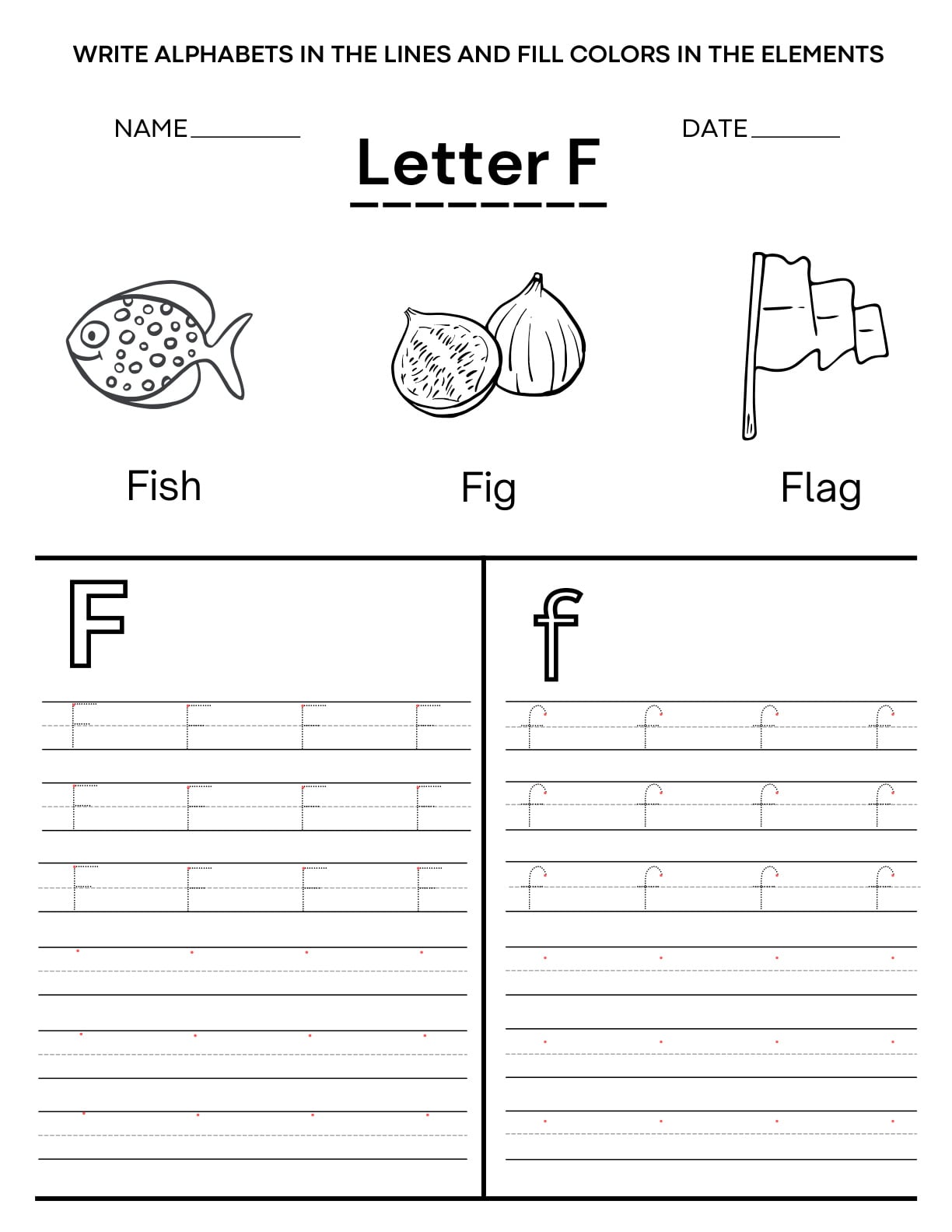
6. Letter F: Fish, Fig, and Flag
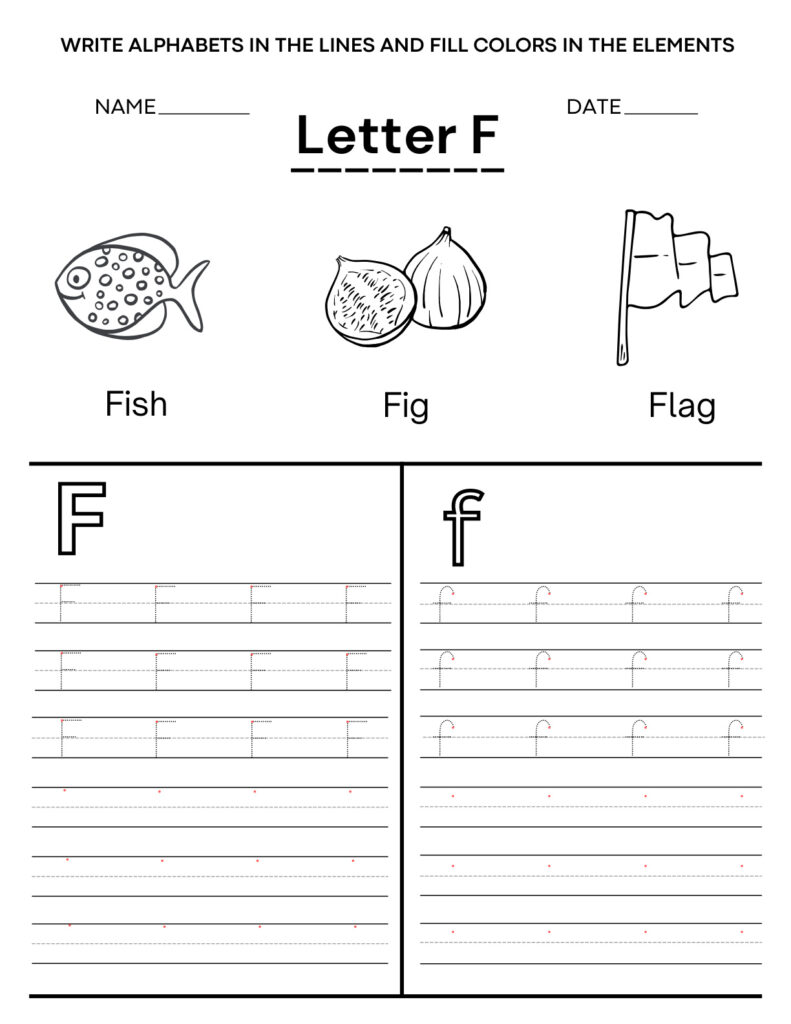
This page introduces the letter F through three pictures. Children will see a fish, a fig, and a flag. Ask your child to name each picture and listen for the beginning sound.
Then, practice writing uppercase F and lowercase f using the tracing guides. Finally, color the pictures and encourage a little independent letter writing.
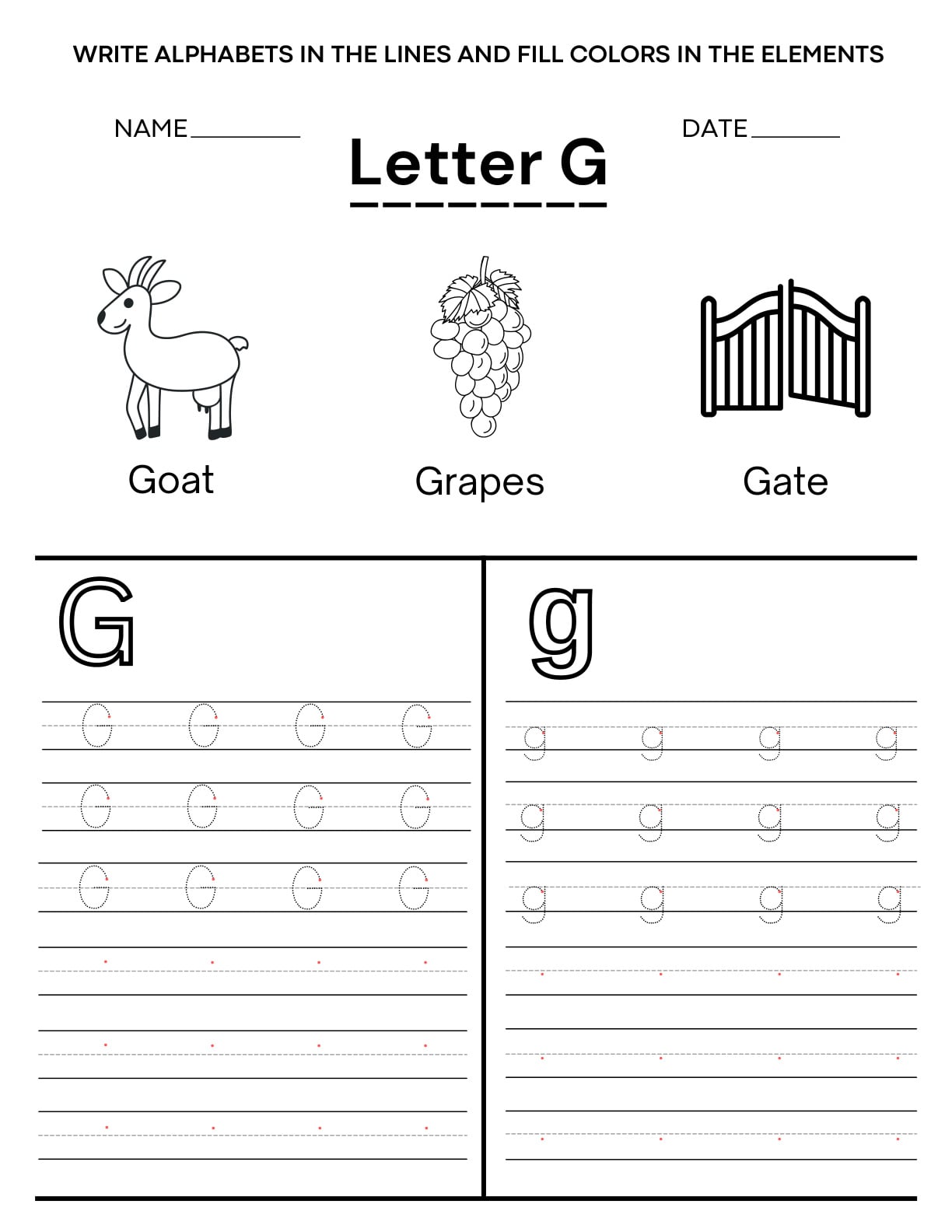
7. Letter G: Goat, Grapes, and Gate
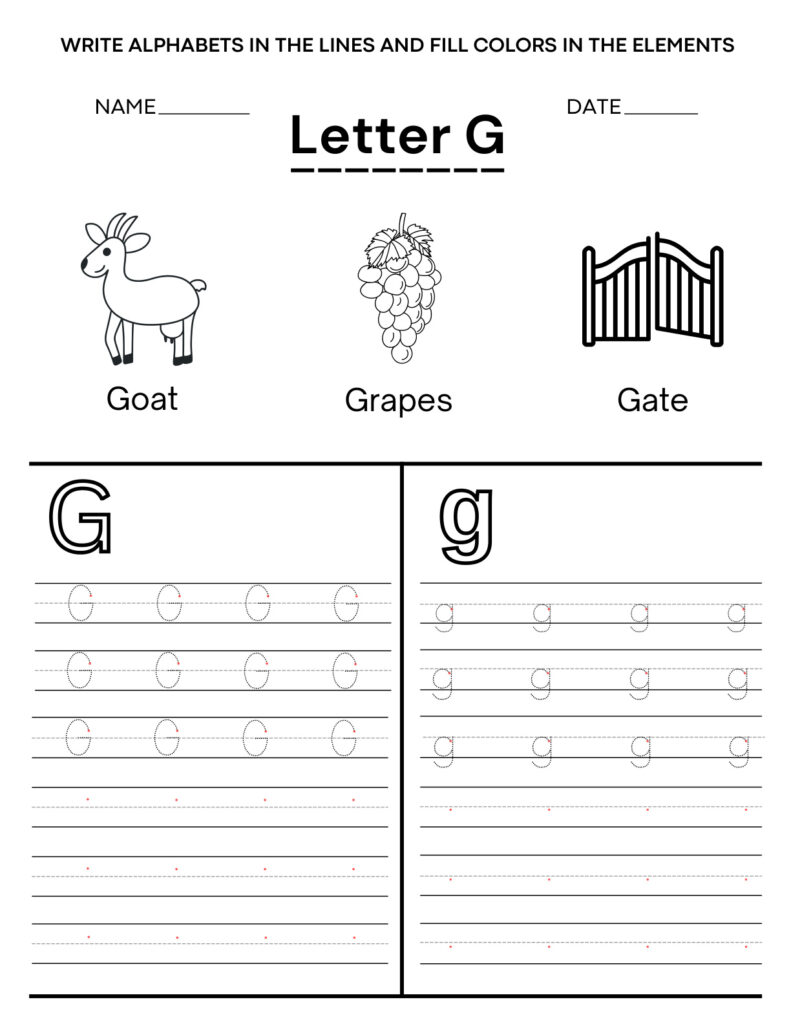
The seventh worksheet gives children practice with the letter G. It features a goat, grapes, and a gate. Talk about each picture before moving to the writing activity.
Then, let your child trace uppercase G and lowercase g along the lines. Coloring the pictures can make this alphabet lesson more enjoyable.
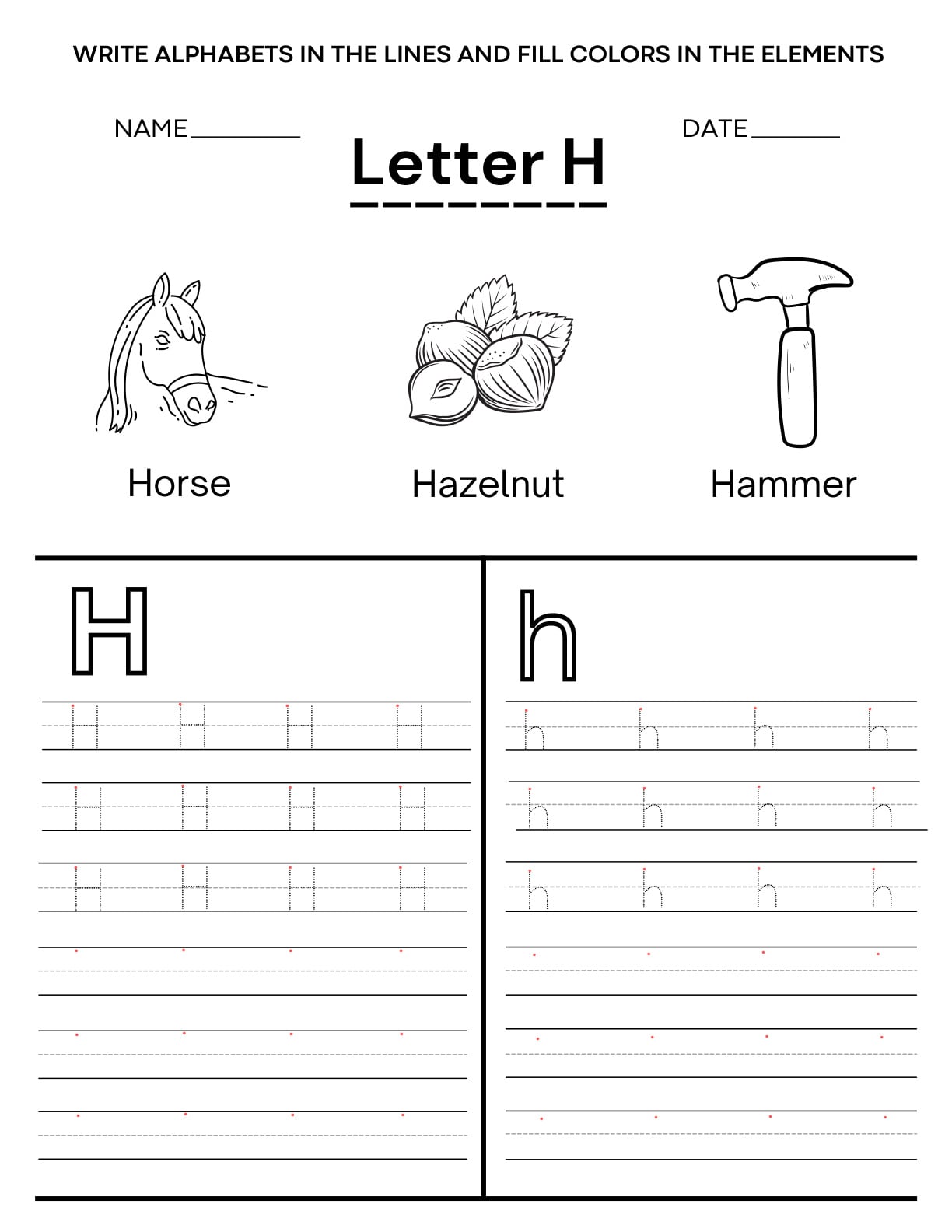
8. Letter H: Horse, Hazelnut, and Hammer
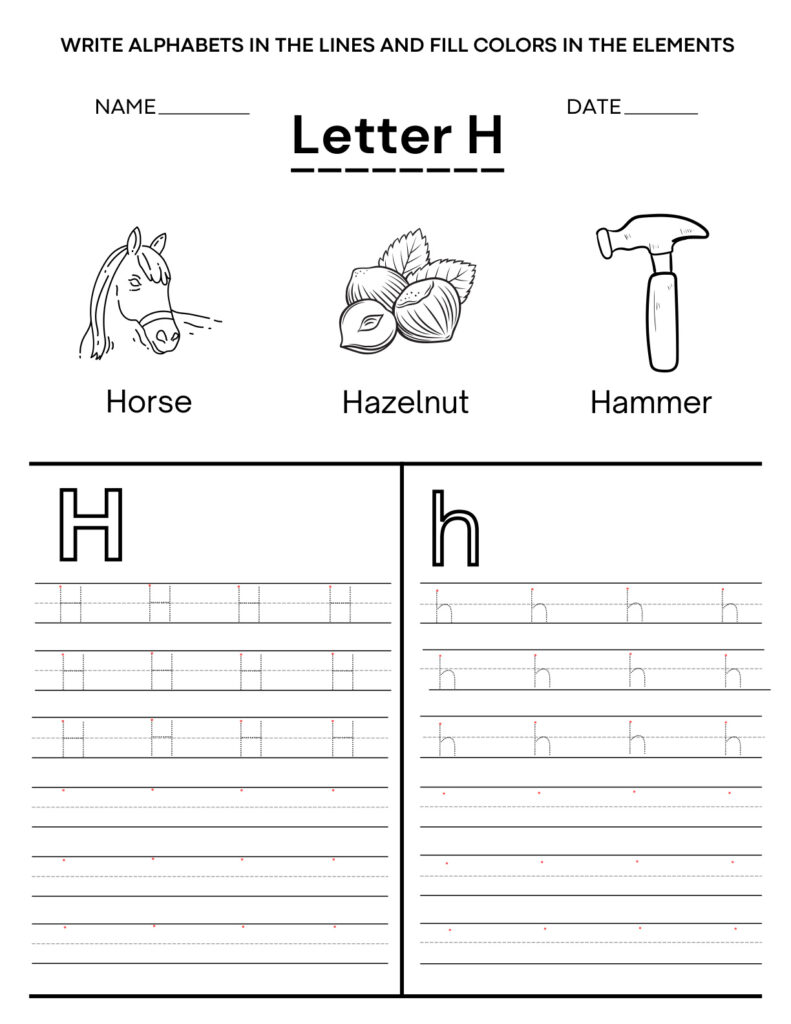
This worksheet focuses on the letter H. Its pictures show a horse, hazelnut, and hammer. Ask your child to identify each object and repeat its name.
You can explain that hazelnuts are edible nuts if the word feels unfamiliar. Next, trace uppercase H and lowercase h before coloring the pictures.
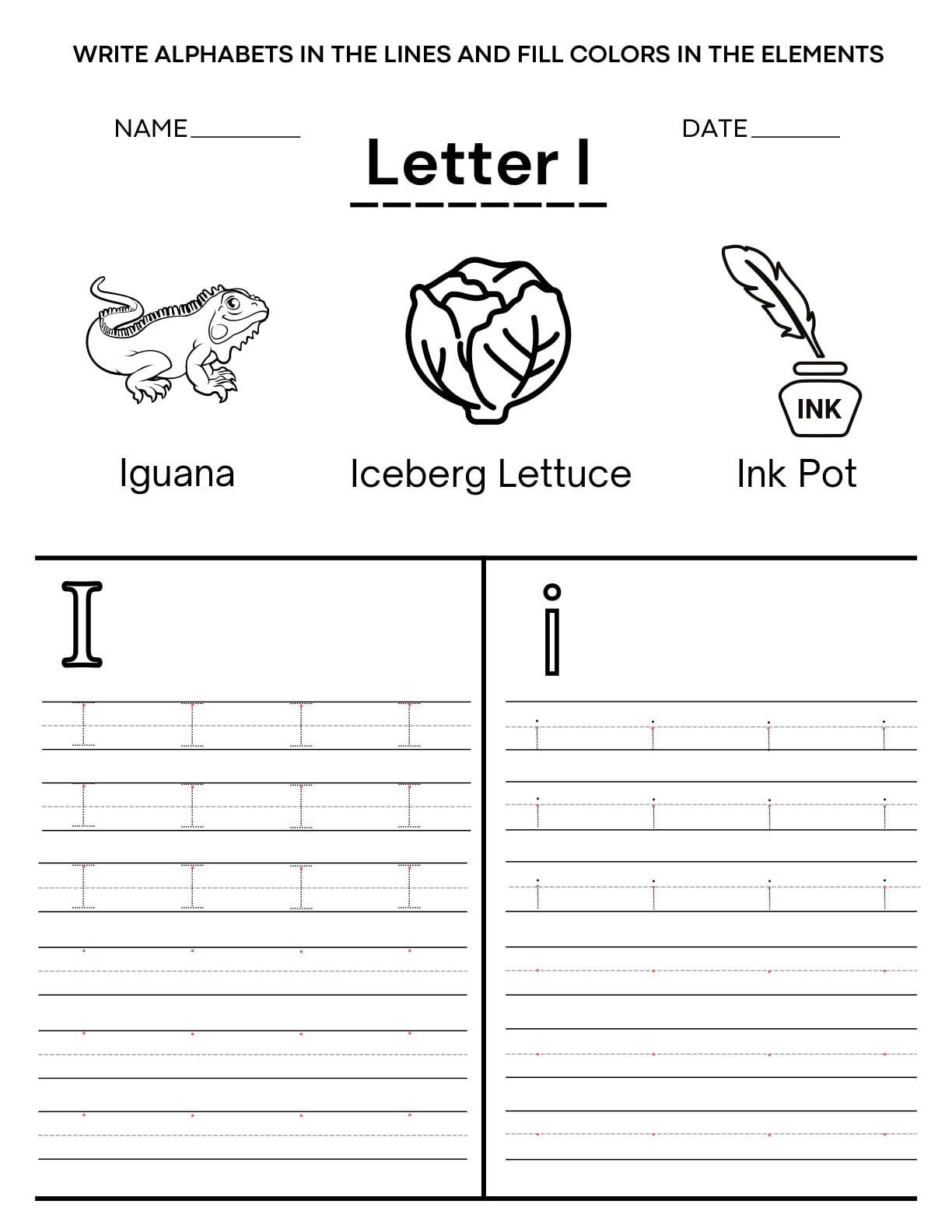
9. Letter I: Iguana, Iceberg Lettuce, and Ink Pot
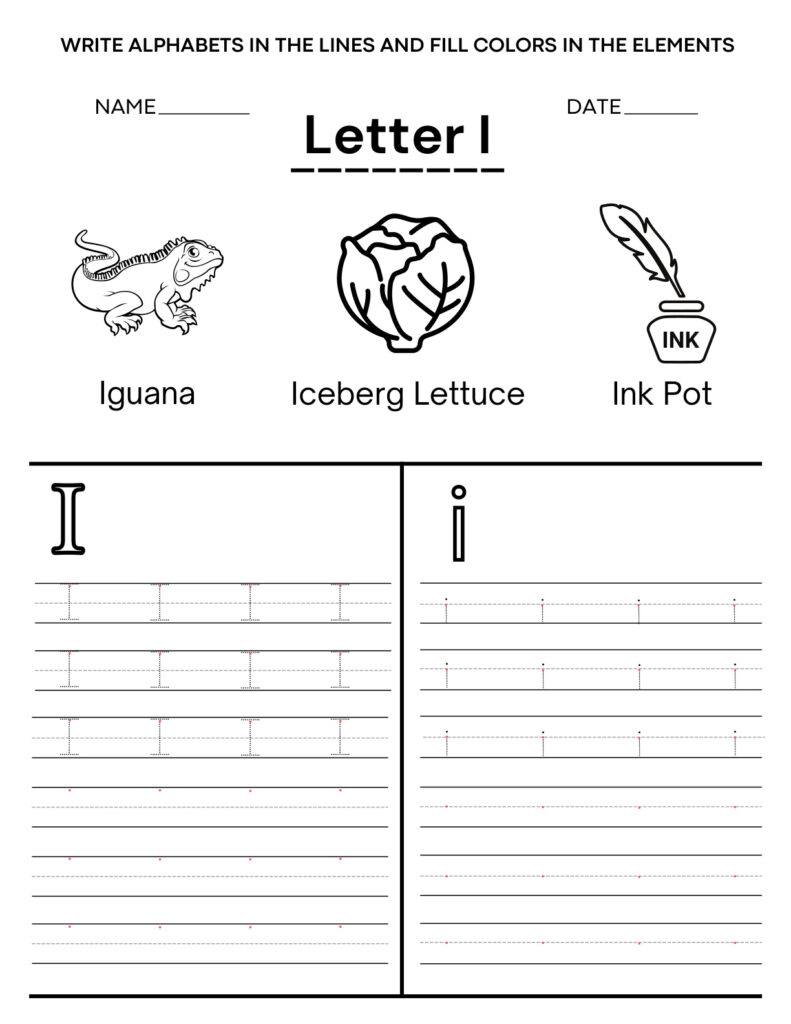
The ninth worksheet introduces the letter I. Children will find an iguana, iceberg lettuce, and an ink pot. These pictures offer a chance to introduce a few less familiar words.
Help your child pronounce each word before tracing the letters. Then, practice uppercase I and lowercase i, and color the pictures to complete the page.
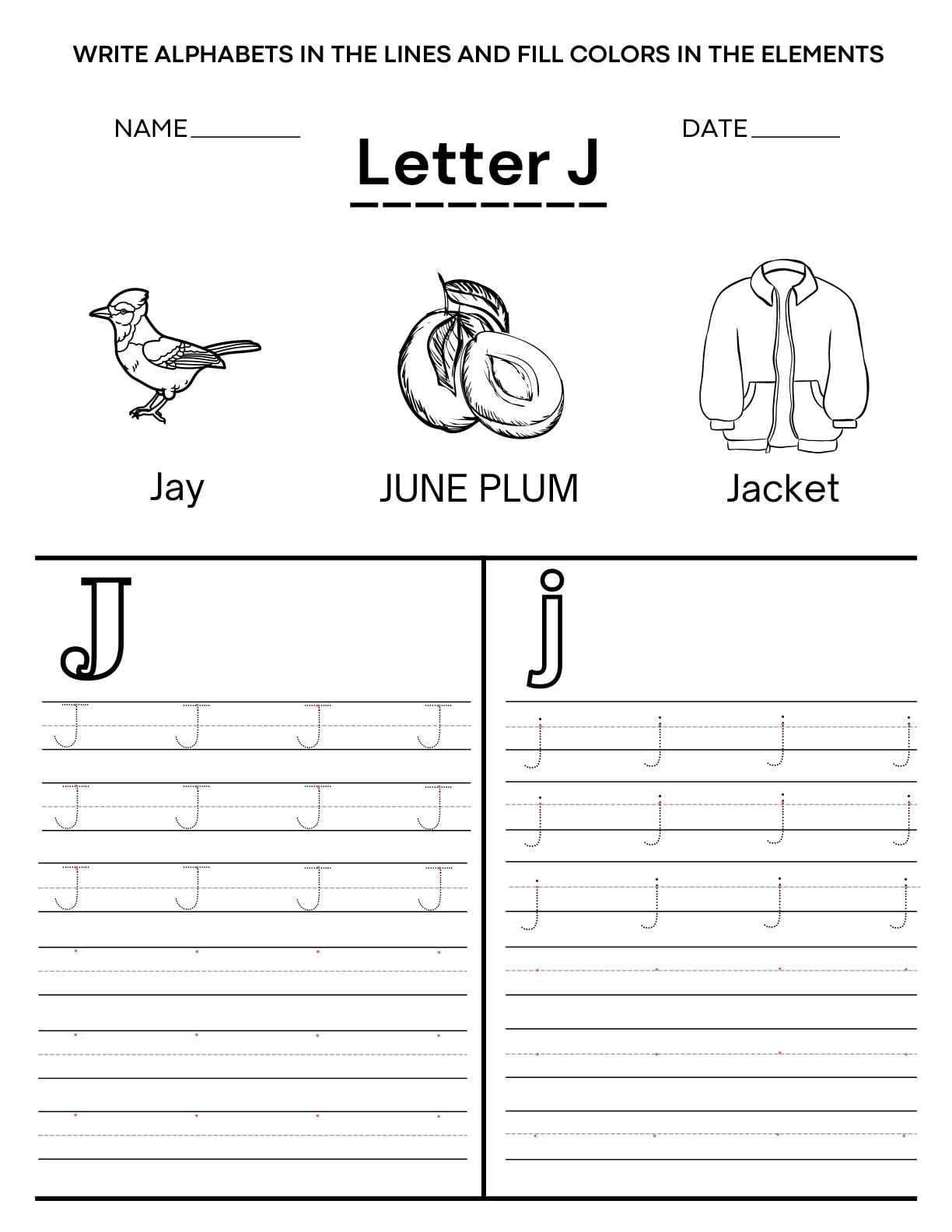
10. Letter J: Jay, June Plum, and Jacket
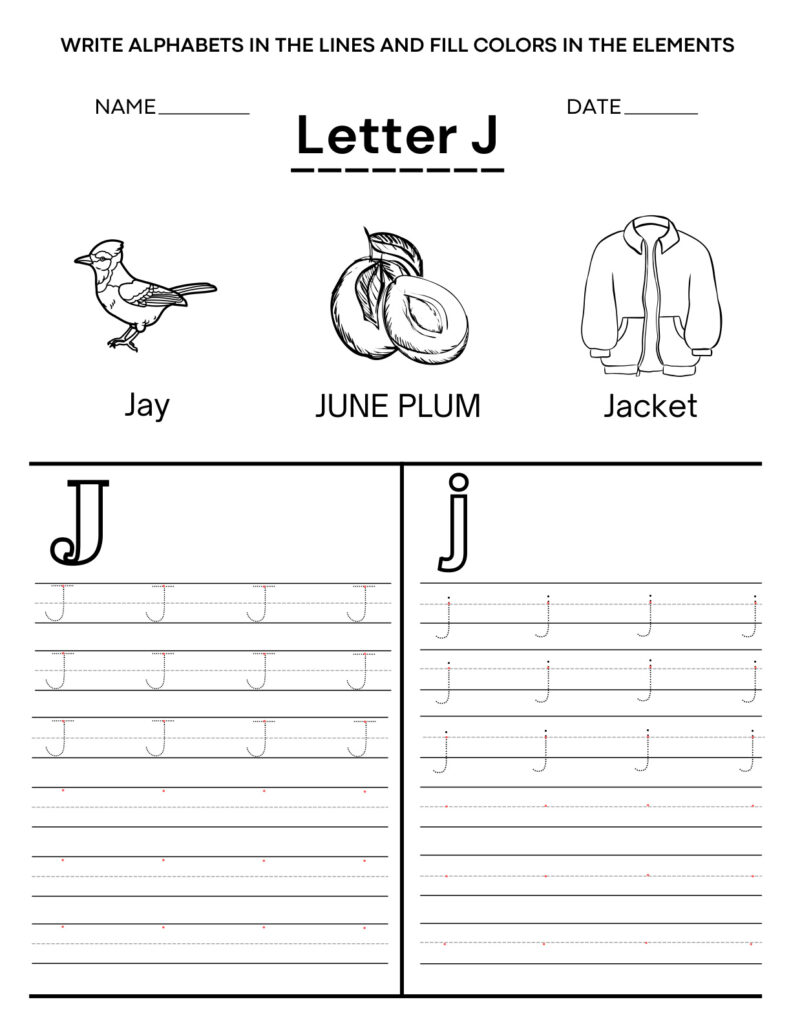
This page gives children practice with the letter J. The pictures include a jay, a June plum, and a jacket. Ask your child to name the pictures and identify their shared beginning sound.
Then, trace uppercase J and lowercase j using the examples. Finish by coloring the pictures and practicing both letter forms on the blank lines.
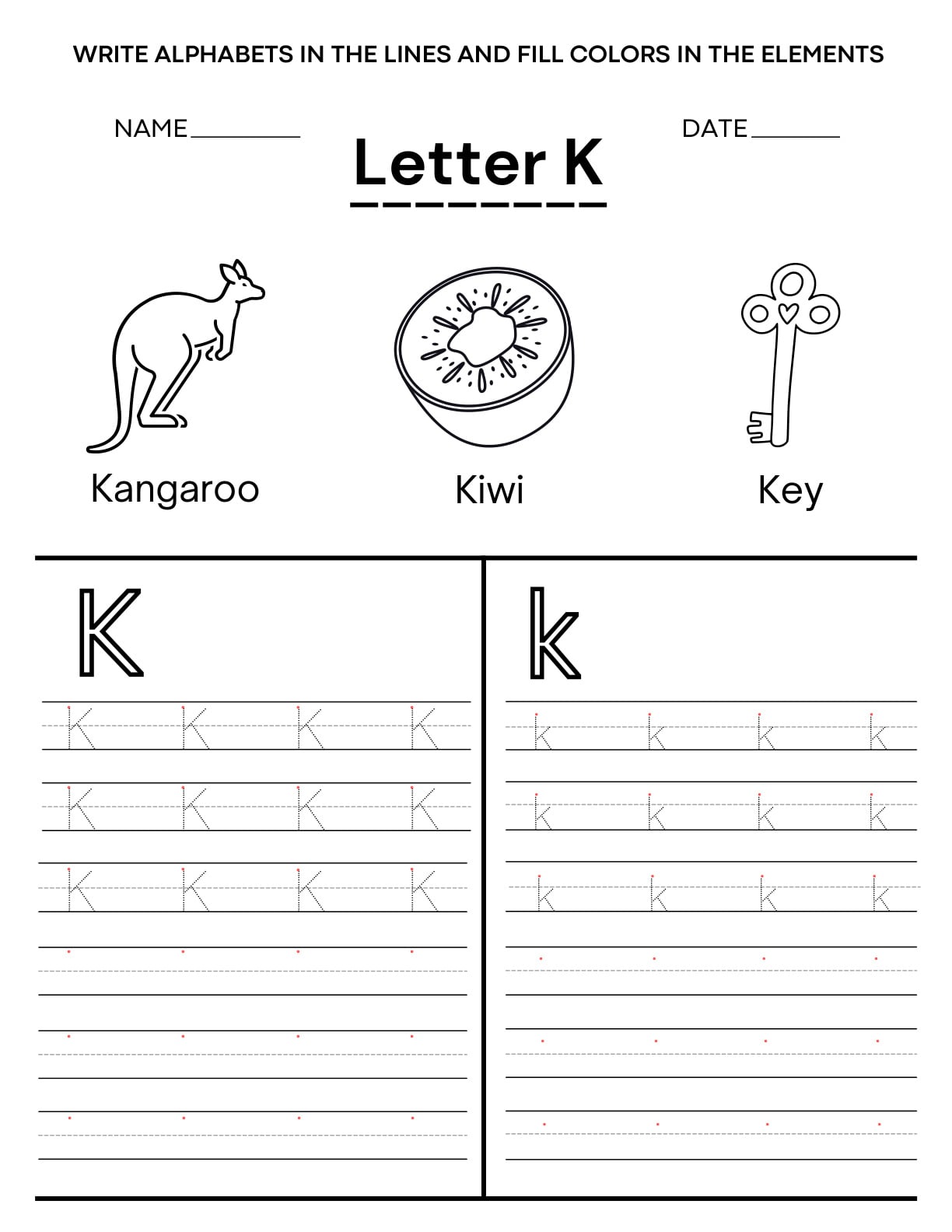
11. Letter K: Kangaroo, Kiwi, and Key
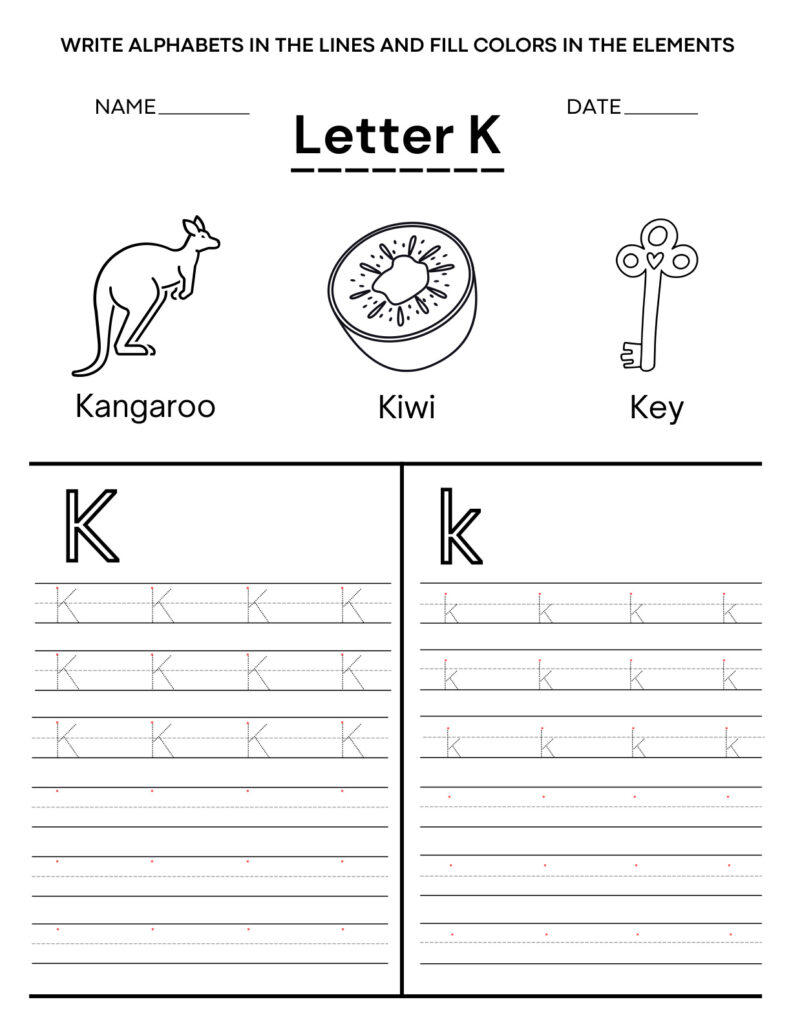
The eleventh worksheet focuses on the letter K. It features a kangaroo, a kiwi, and a key. Encourage your child to say each word and notice its first sound.
Next, trace uppercase K and lowercase k along the writing guides. Afterward, color the pictures and try writing the letters without tracing.
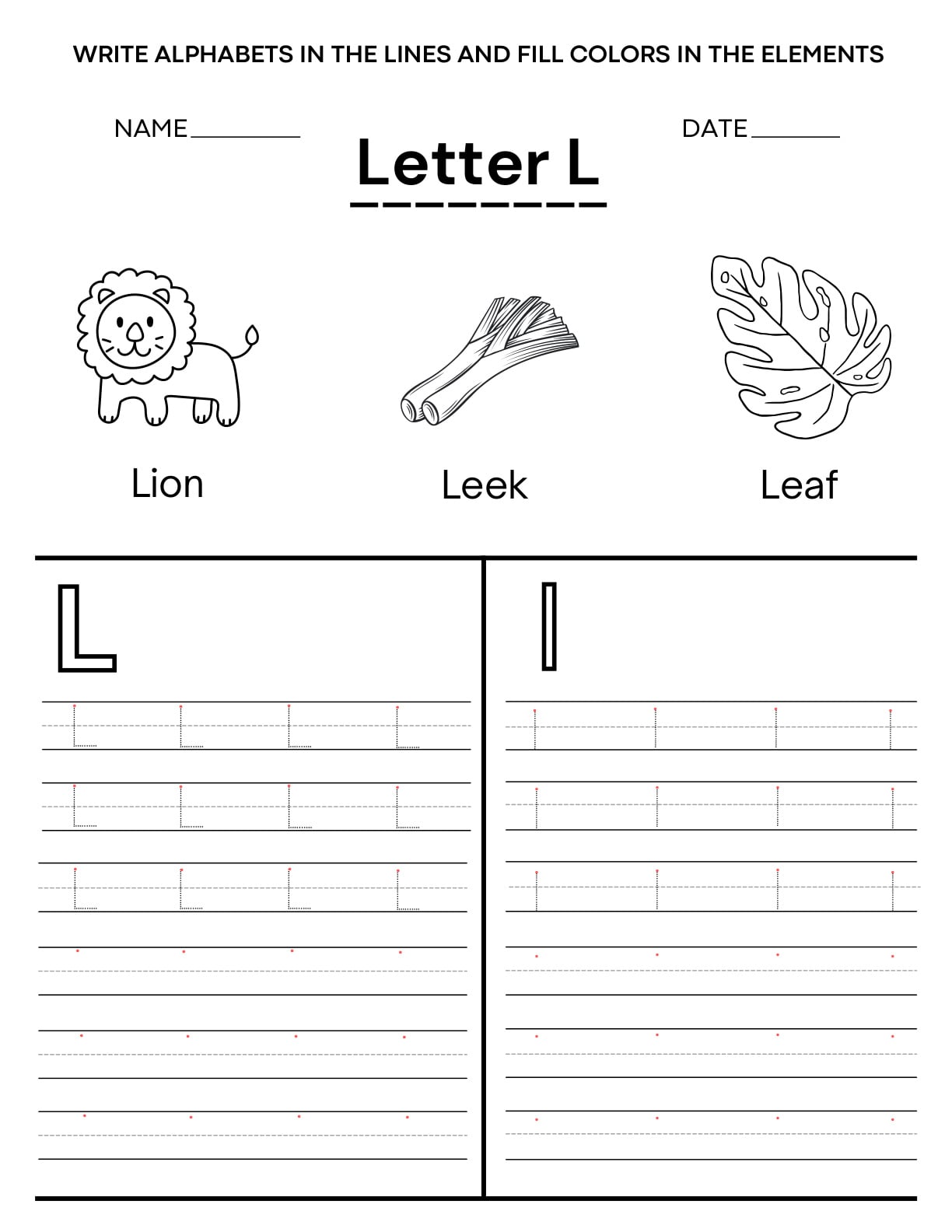
12. Letter L: Lion, Leek, and Leaf
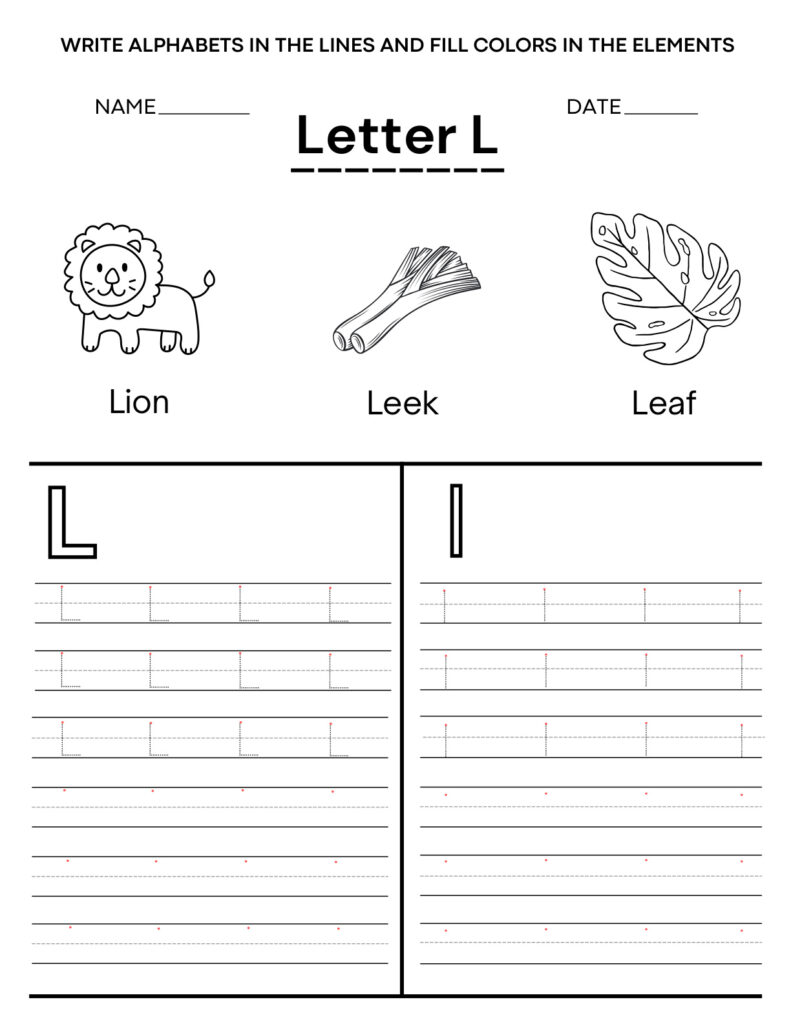
This worksheet introduces the letter L through three pictures. Children will see a lion, a leek, and a leaf. Explain that a leek is a vegetable if your child has not seen one before.
Then, guide them through tracing uppercase L and lowercase l. Let them color the pictures and repeat the letter names during practice.
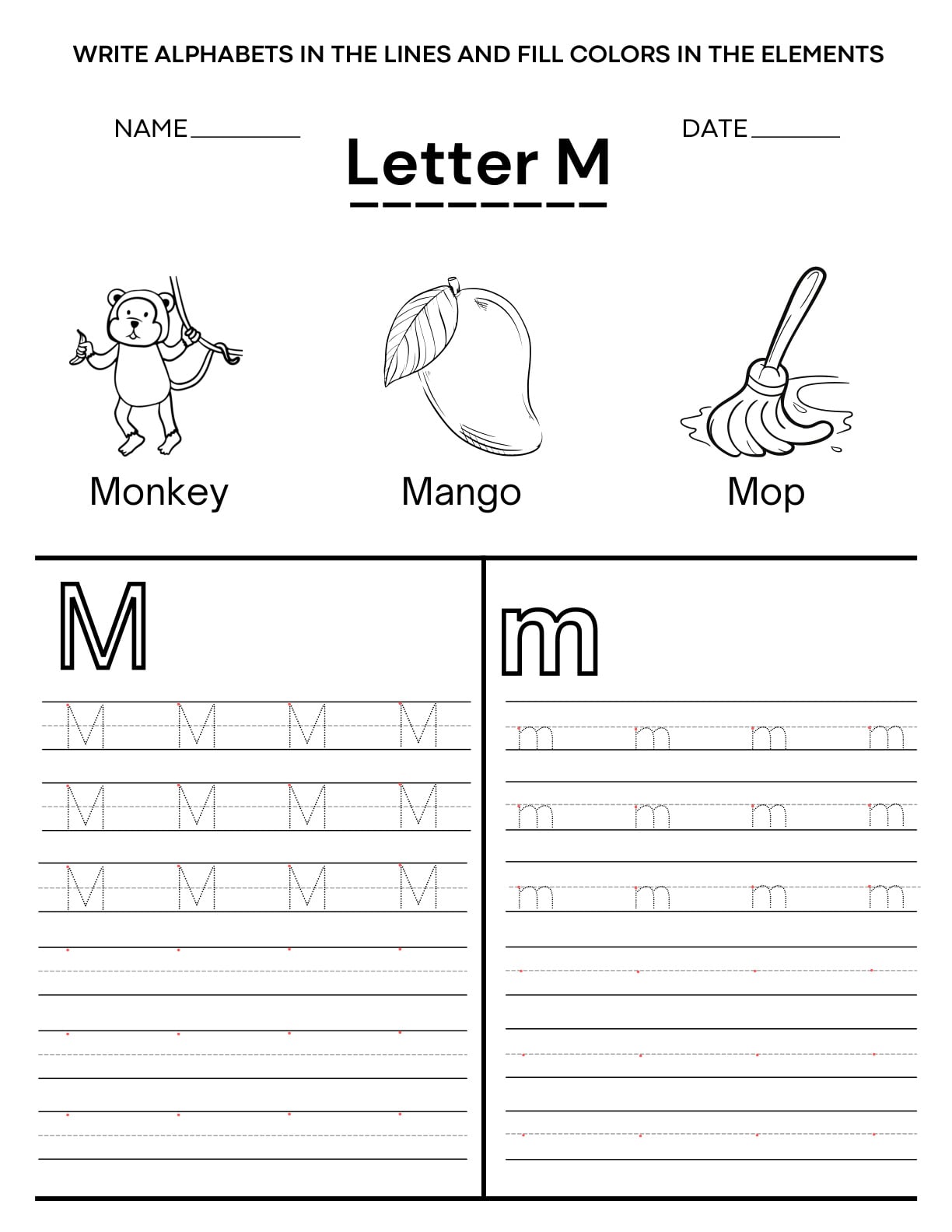
13. Letter M: Monkey, Mango, and Mop
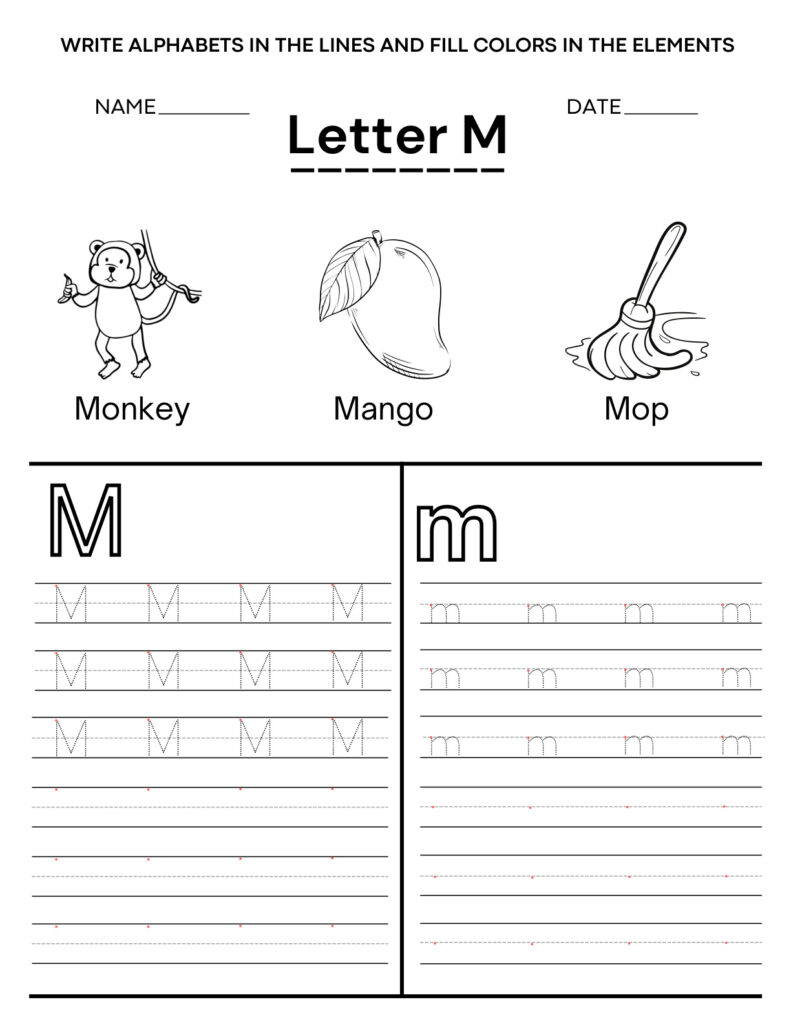
The thirteenth page focuses on the letter M. Its pictures show a monkey, a mango, and a mop. Ask your child to name each picture before beginning the writing task.
Then, trace uppercase M and lowercase m along the dotted examples. Finally, color the pictures and use the empty lines for extra handwriting practice.
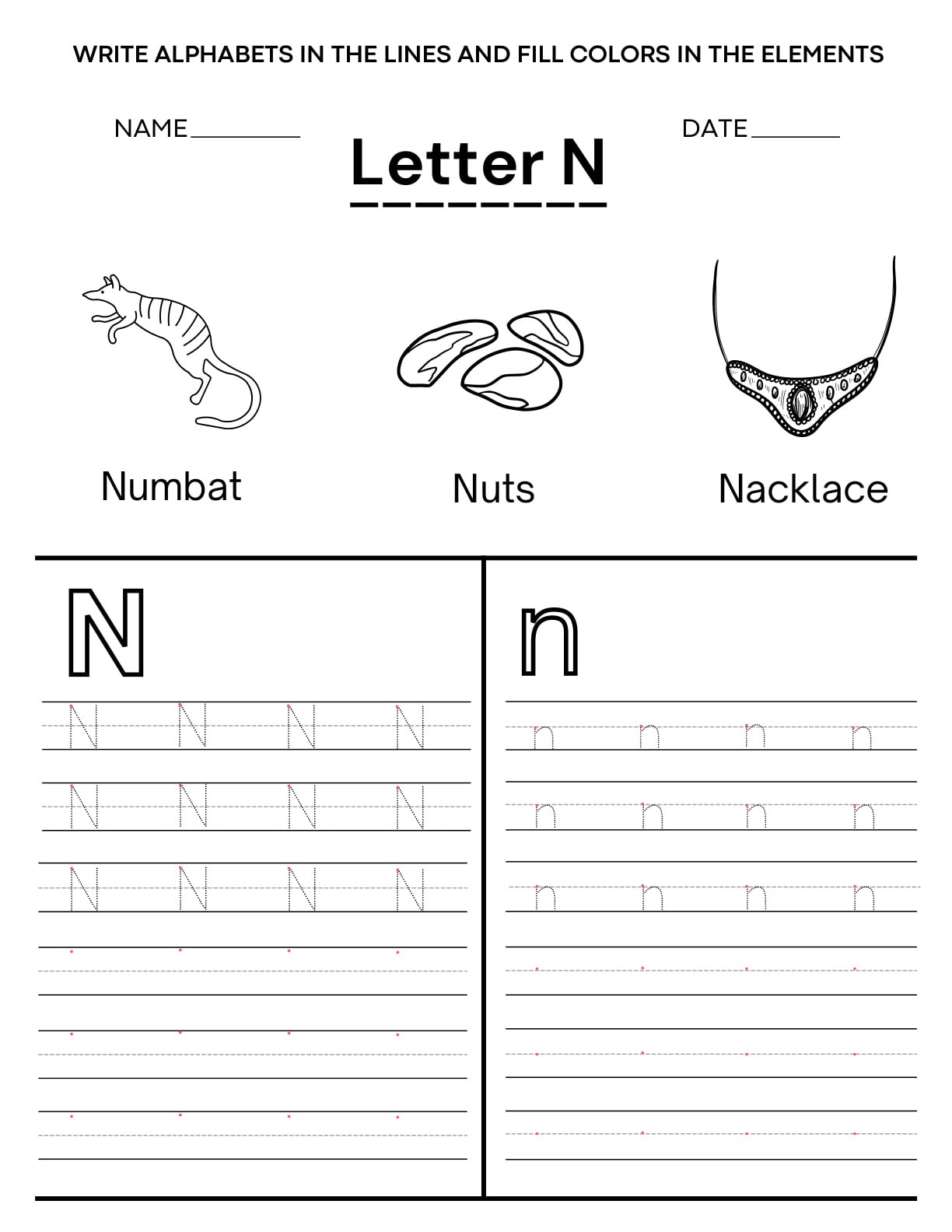
14. Letter N: Numbat, Nuts, and Necklace
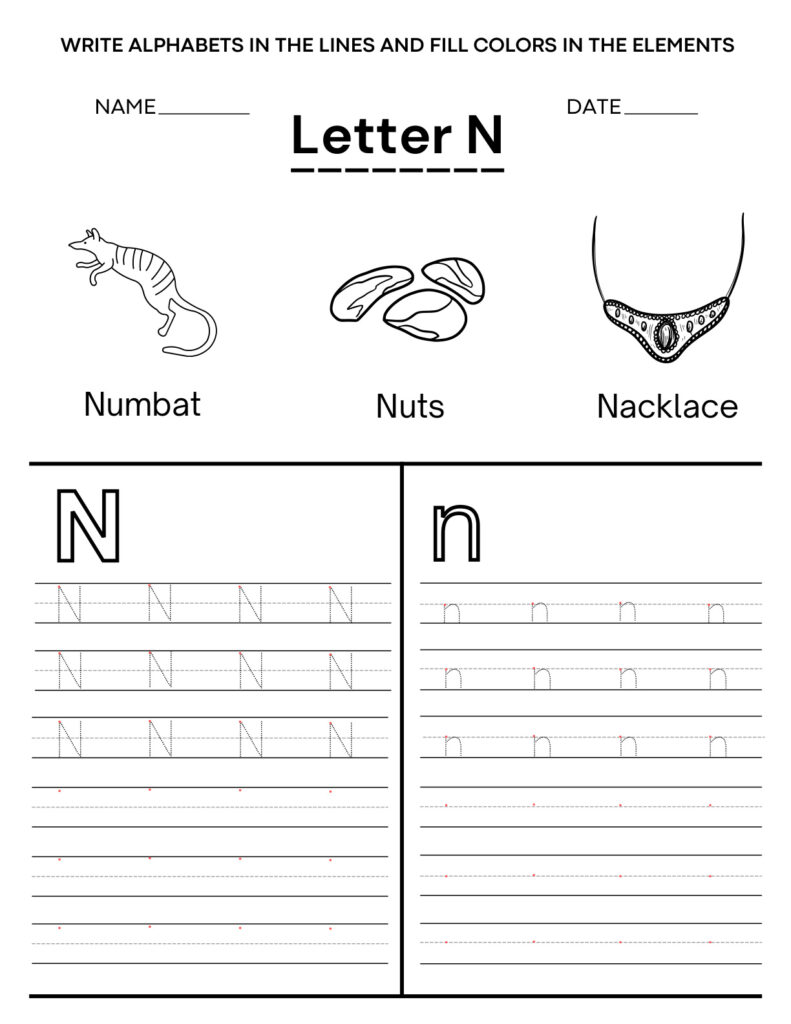
This worksheet introduces children to the letter N. It features a numbat, nuts, and a necklace. The numbat may be unfamiliar, so explain that it is a small animal.
Next, help your child pronounce each word and trace uppercase N and lowercase n. Coloring the pictures gives children a fun way to finish the activity.
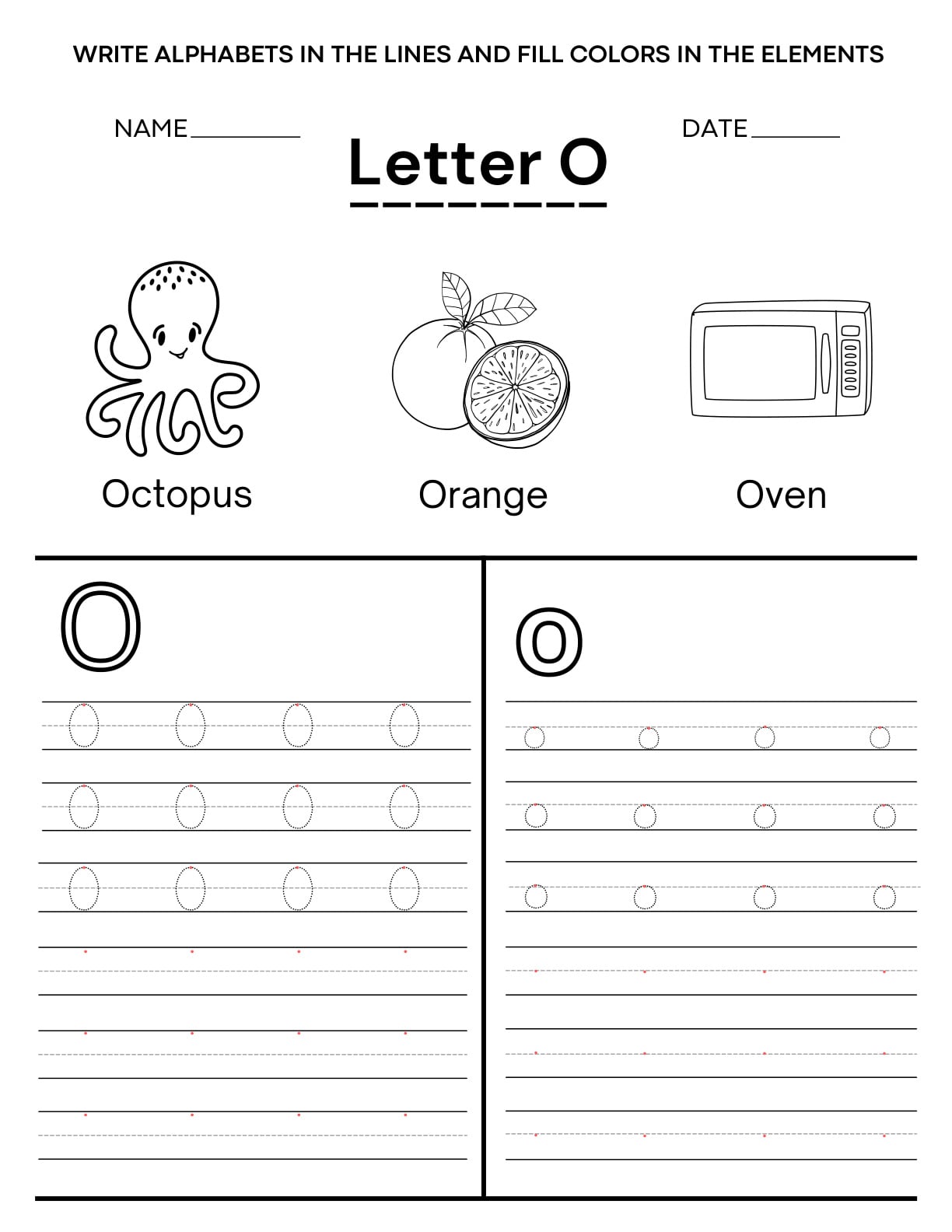
15. Letter O: Octopus, Orange, and Oven
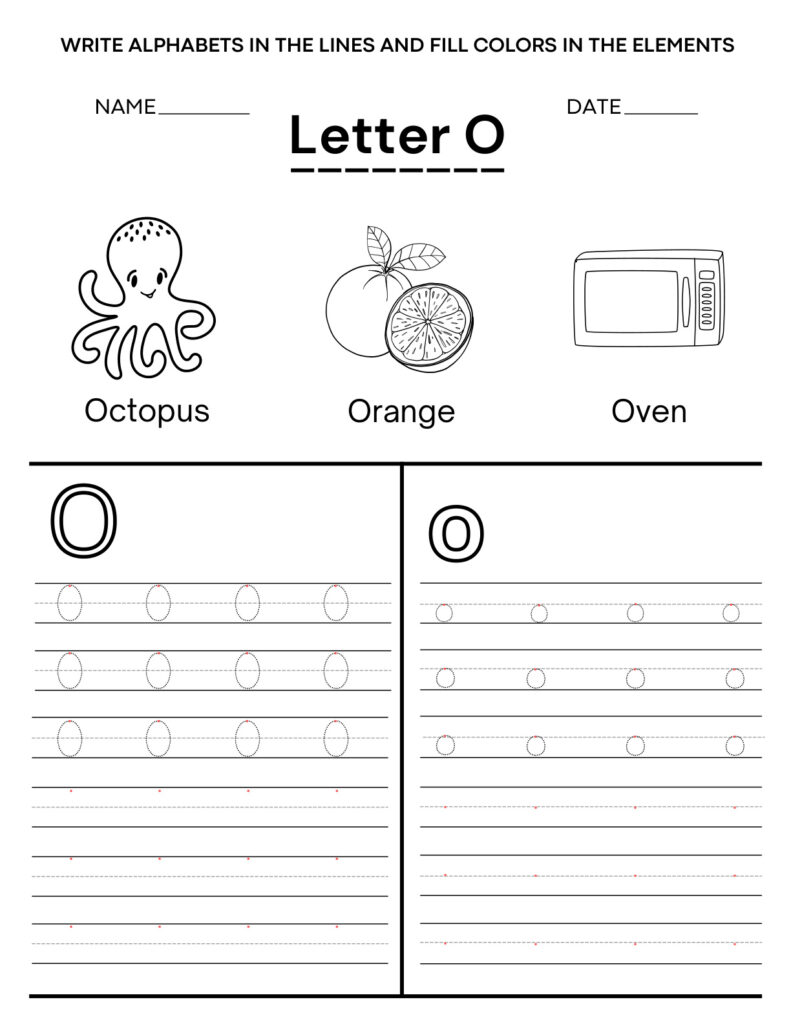
The fifteenth worksheet focuses on the letter O. Children will find an octopus, an orange, and an oven. Ask your child to identify the pictures and repeat their names.
Then, practice tracing uppercase O and lowercase o along the writing lines. The rounded letter shapes also give children useful practice with pencil control.
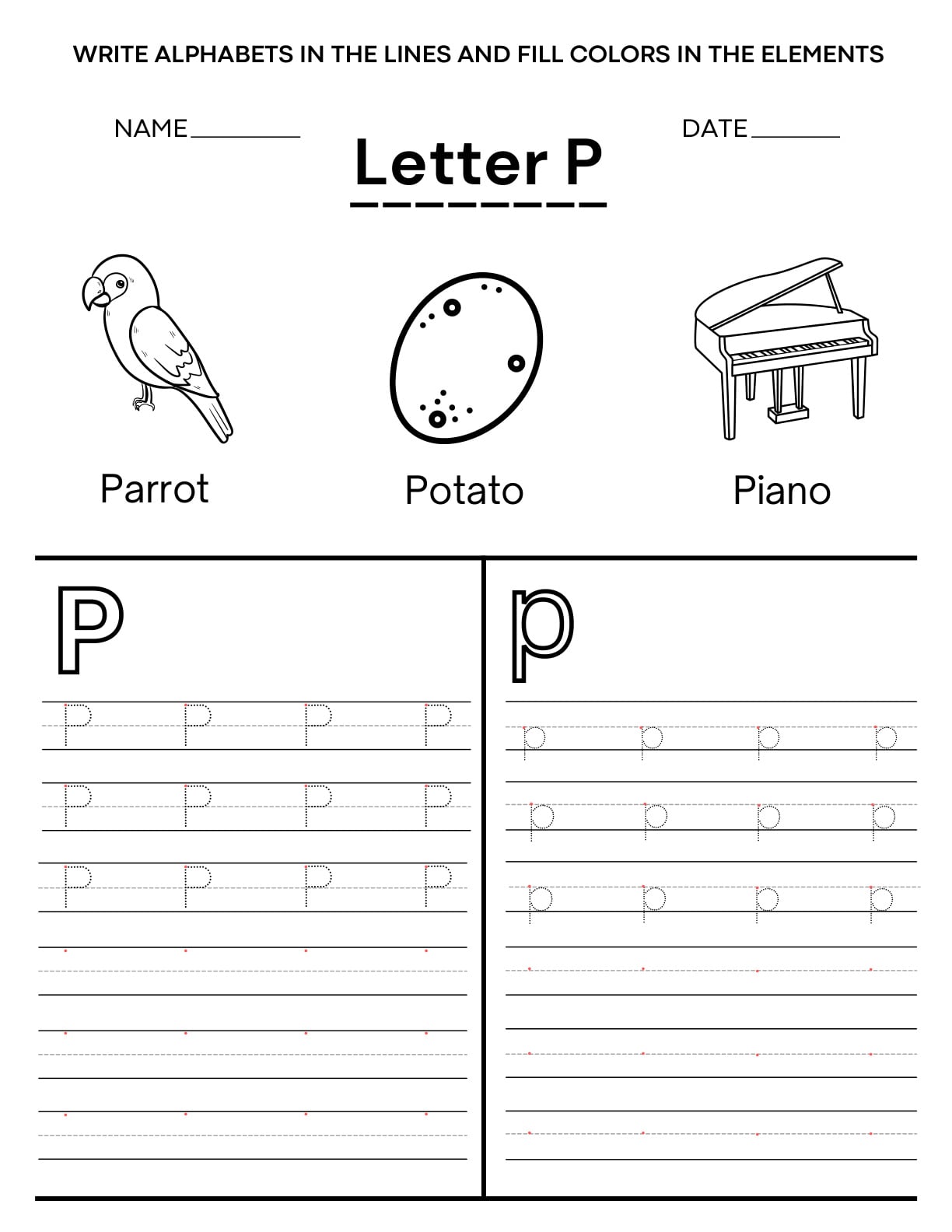
16. Letter P: Parrot, Potato, and Piano
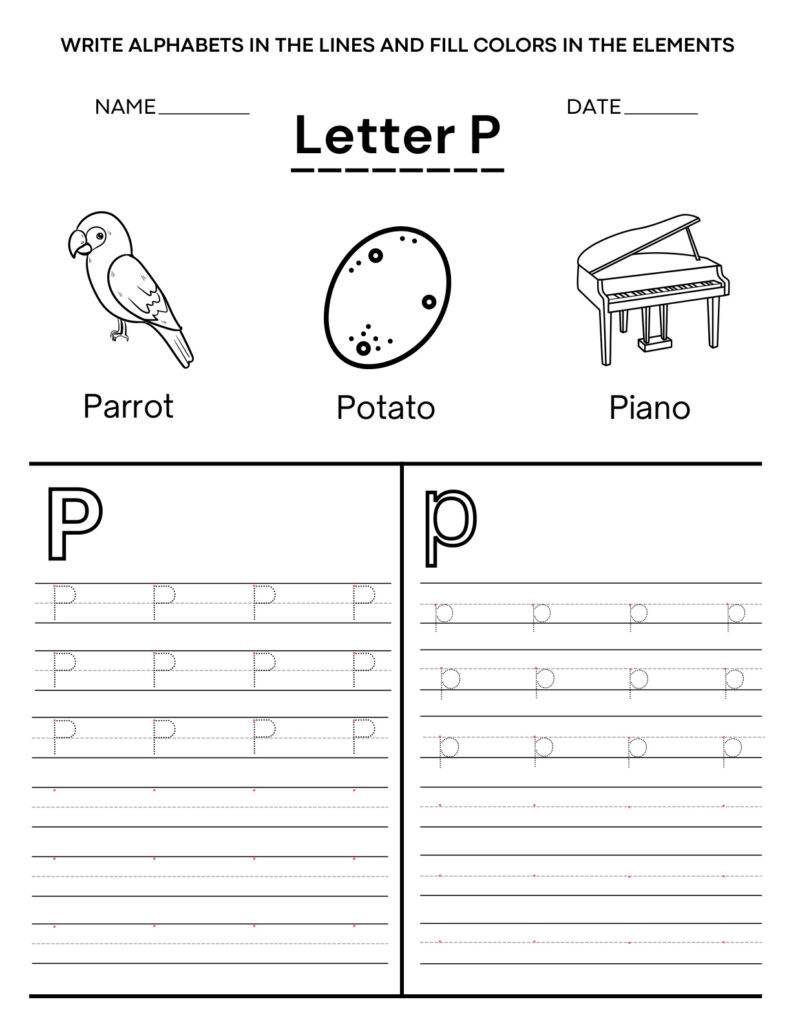
This page introduces the letter P through three familiar pictures. Children can identify a parrot, a potato, and a piano. Ask your child to say each word and listen for its first sound.
Next, trace uppercase P and lowercase p using the worksheet’s examples. Finish by coloring the pictures and writing the letters independently.
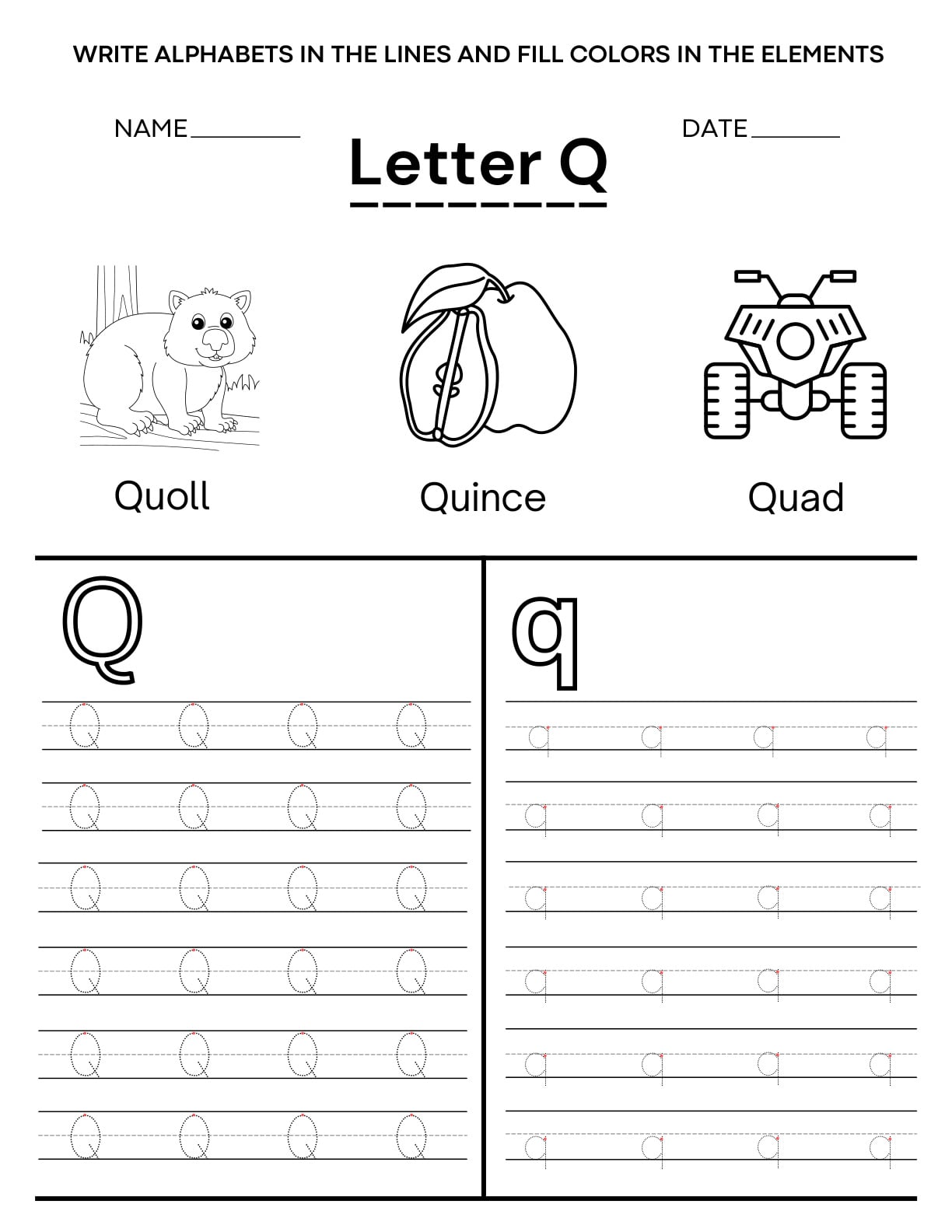
17. Letter Q: Quoll, Quince, and Quad
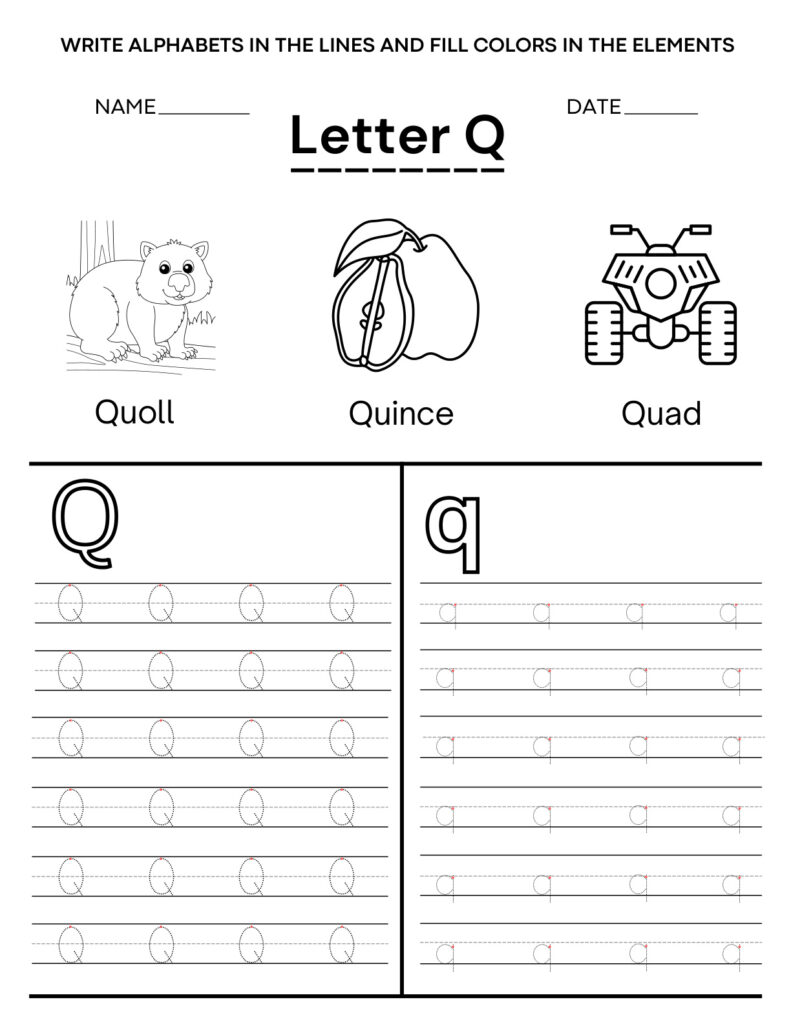
The seventeenth worksheet focuses on the letter Q. Its pictures include a quoll, a quince, and a quad. These words may be new to some children, so explain each picture before beginning.
Then, practice saying the words and tracing uppercase Q and lowercase q. Let your child color the pictures and repeat the letter names during the activity.
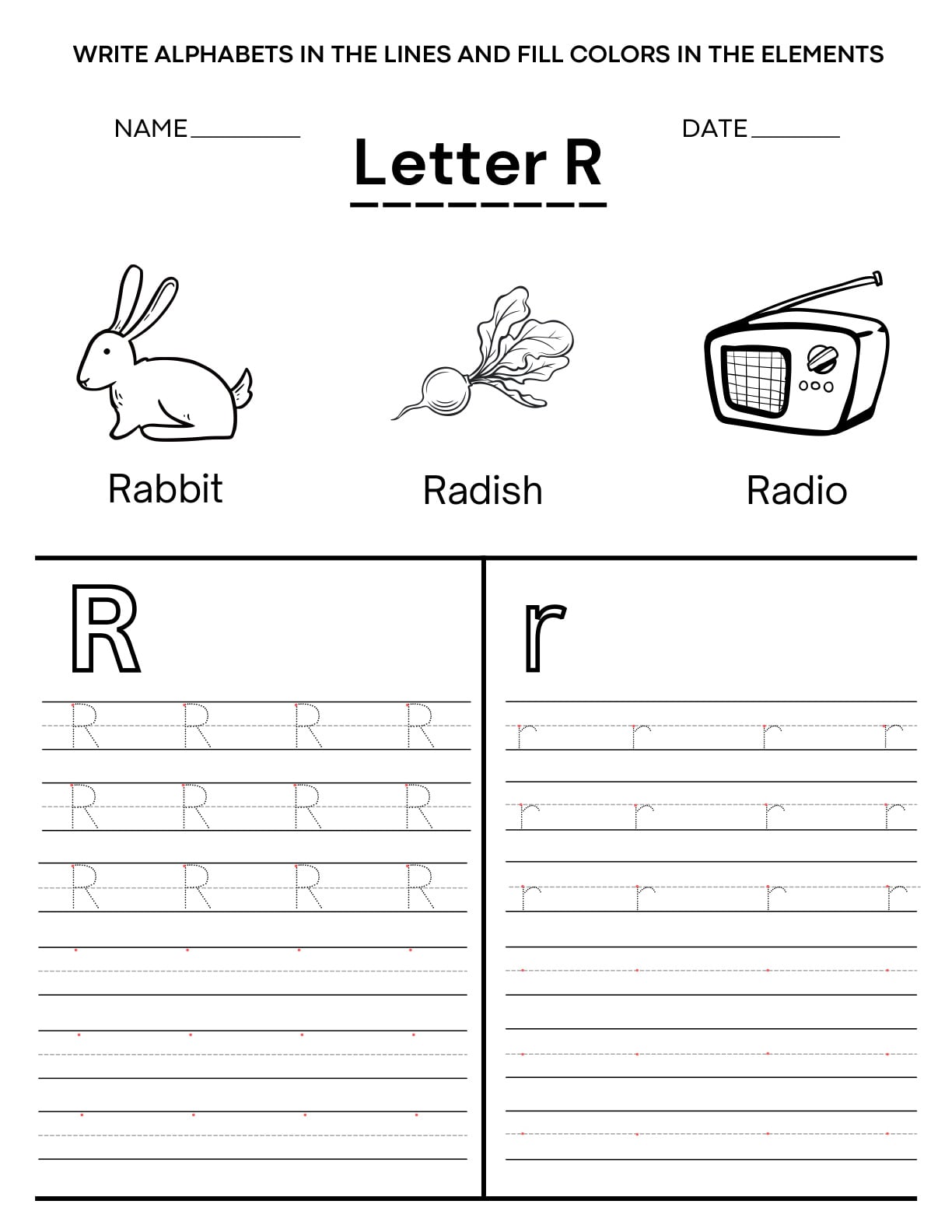
18. Letter R: Rabbit, Radish, and Radio
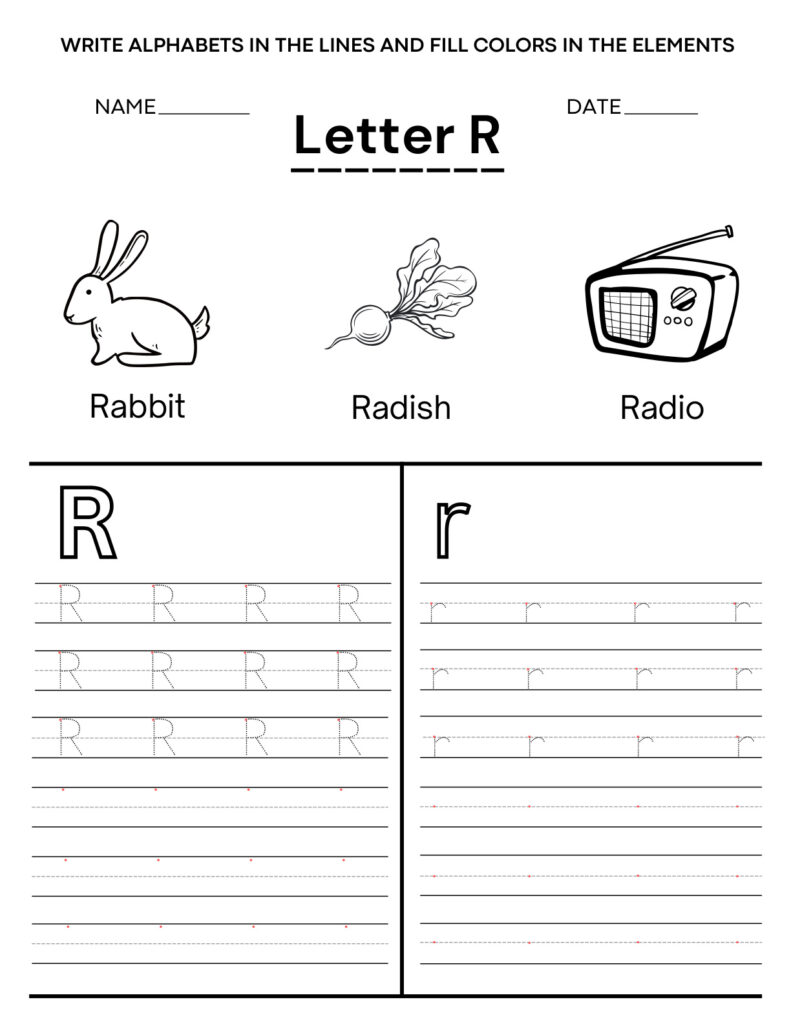
This worksheet introduces the letter R. Children will see a rabbit, a radish, and a radio. Ask your child to name each picture and identify the beginning sound.
Then, trace uppercase R and lowercase r along the guided lines. Afterward, color the pictures and encourage your child to write both letters independently.
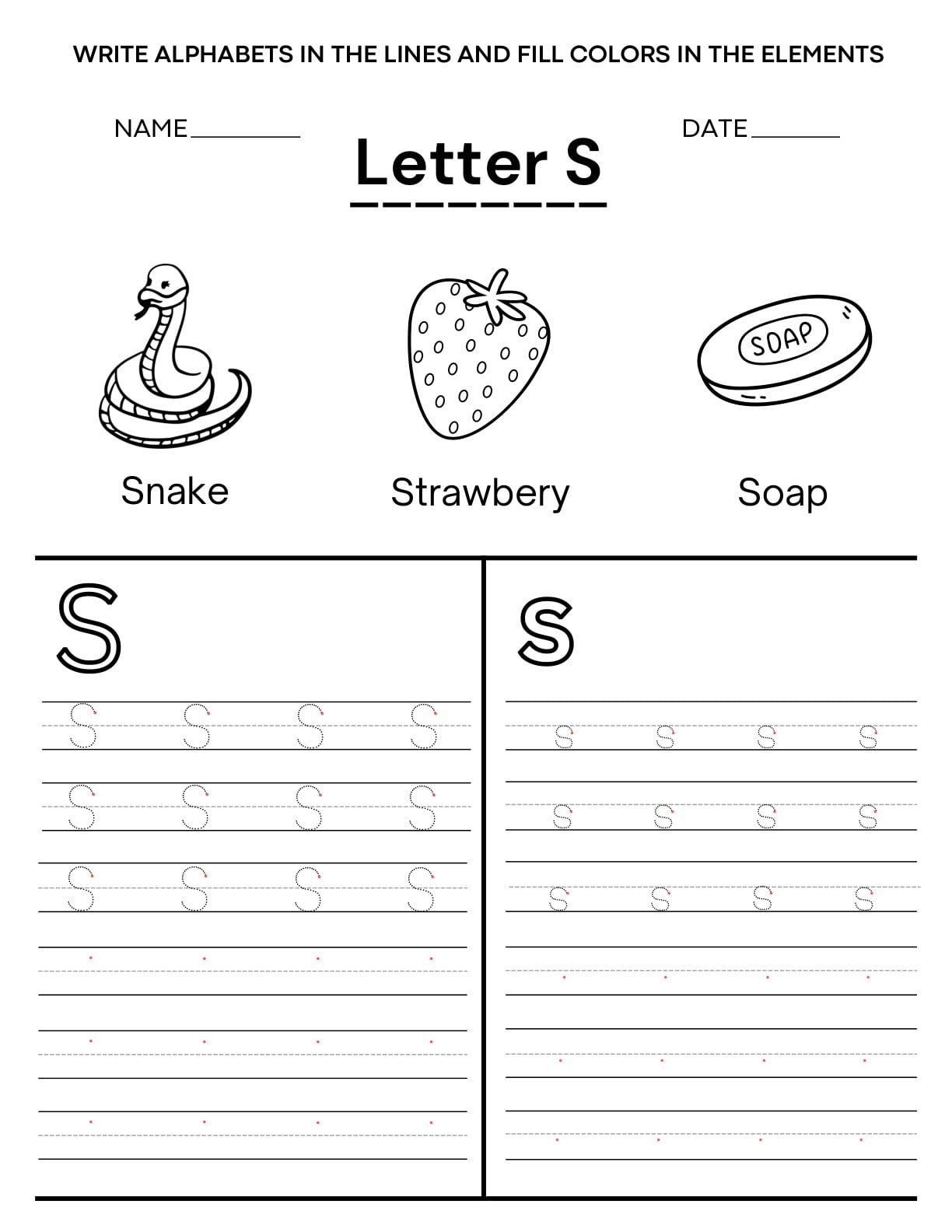
19. Letter S: Snake, Strawberry, and Soap
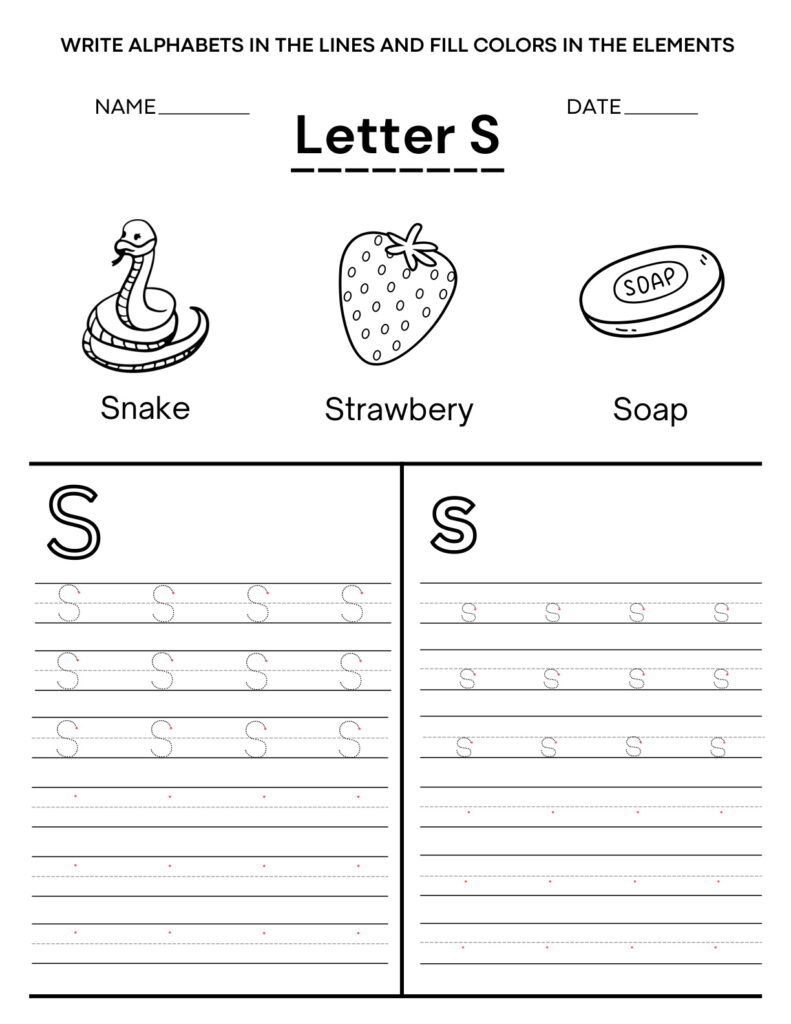
The nineteenth page gives children practice with the letter S. It features a snake, a strawberry, and soap. These familiar pictures make it easy to discuss words that begin with S.
Next, guide your child through tracing uppercase S and lowercase s. Finish by coloring the pictures and completing the remaining writing lines.
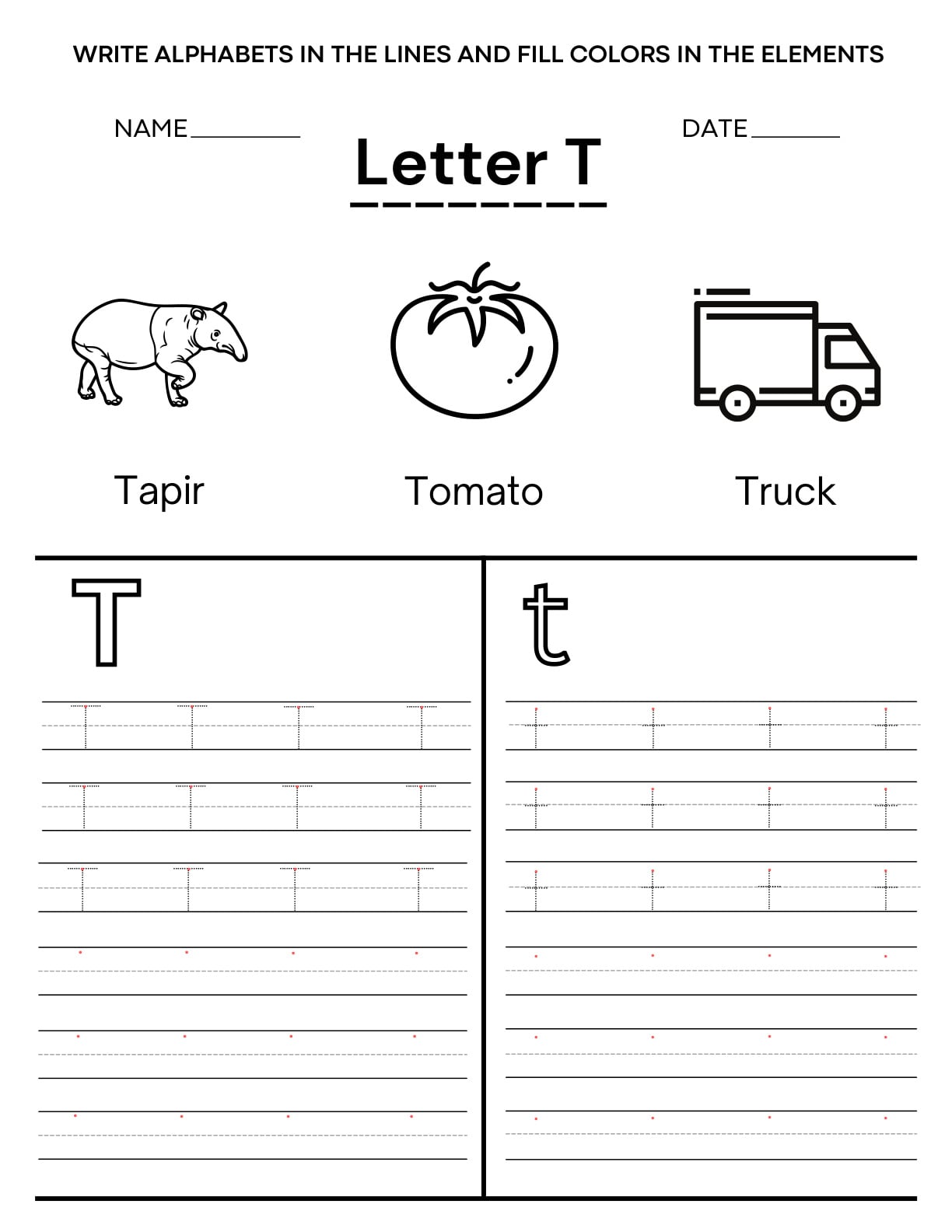
20. Letter T: Tapir, Tomato, and Truck
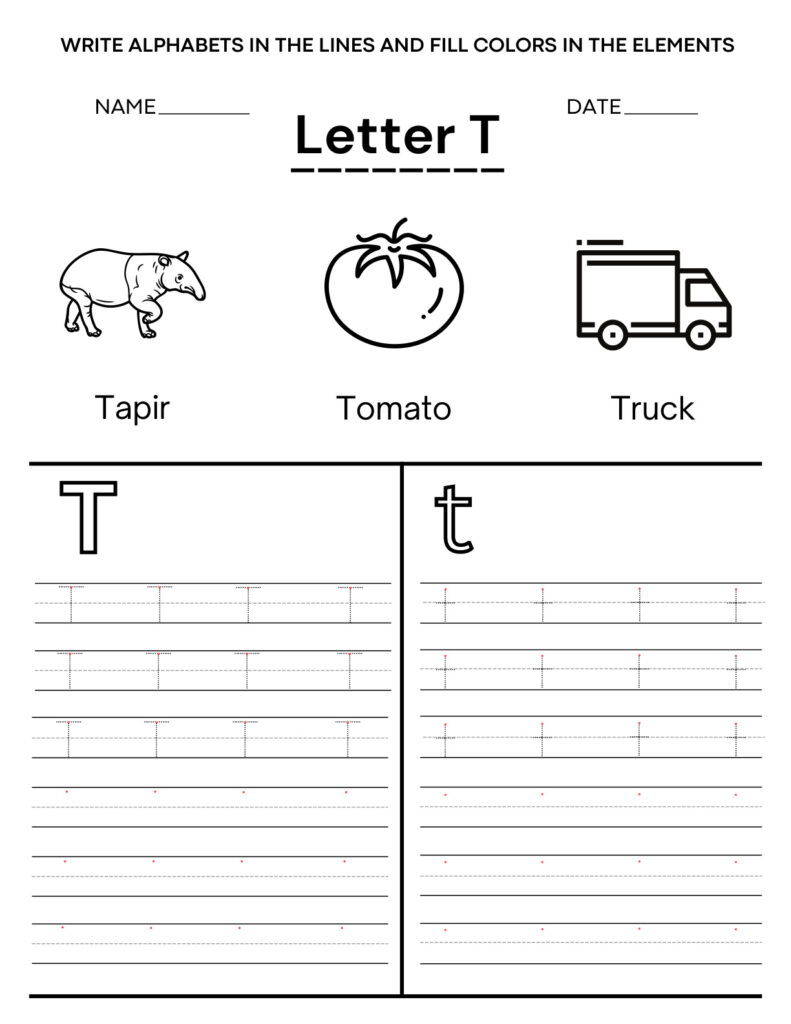
This worksheet focuses on the letter T. Children can explore pictures of a tapir, a tomato, and a truck. Explain what a tapir looks like if your child has not seen one before.
Then, practice tracing uppercase T and lowercase t. Let your child color each picture and try writing the letters without following the dotted examples.
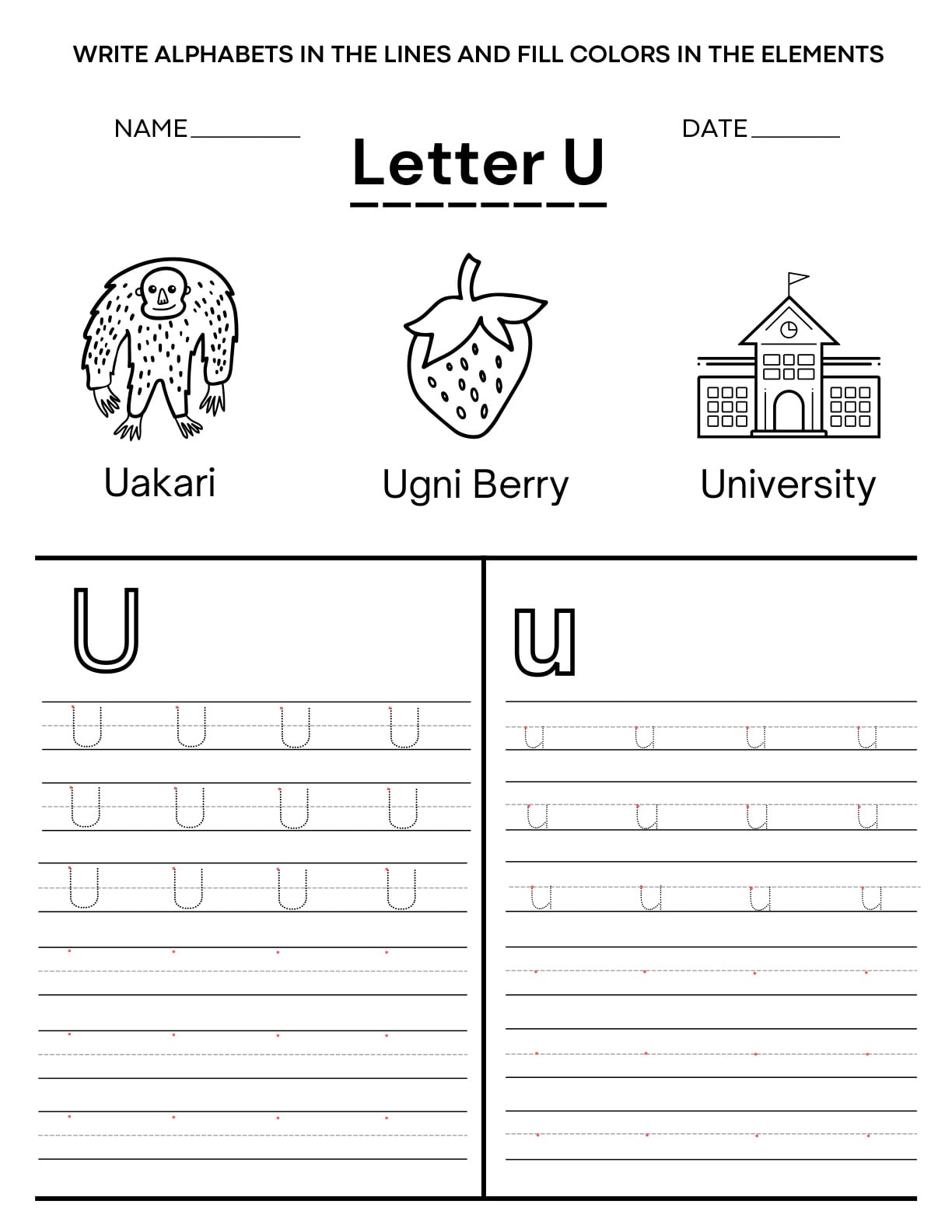
21. Letter U: Uakari, Ugni Berry, and University
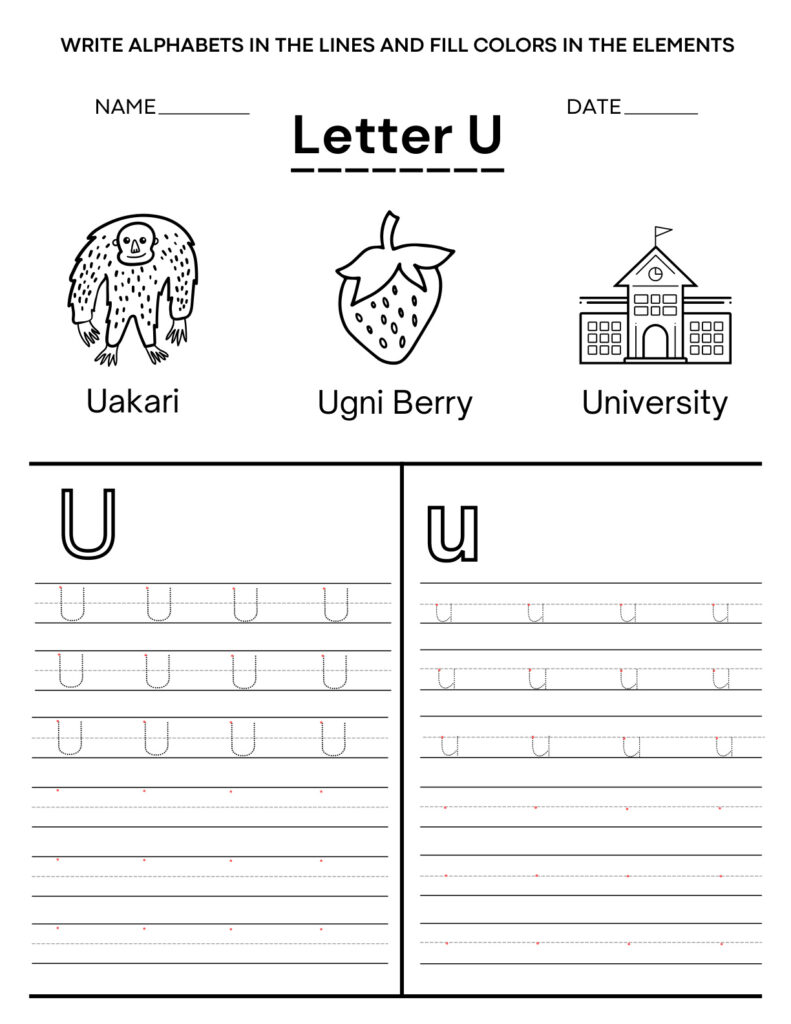
The twenty-first worksheet introduces the letter U. Its pictures show a uakari, an ugni berry, and a university. These are less familiar words, so take time to explain each picture.
Then, help your child say the words and trace uppercase U and lowercase u. Coloring the pictures adds a relaxed finish to the handwriting activity.
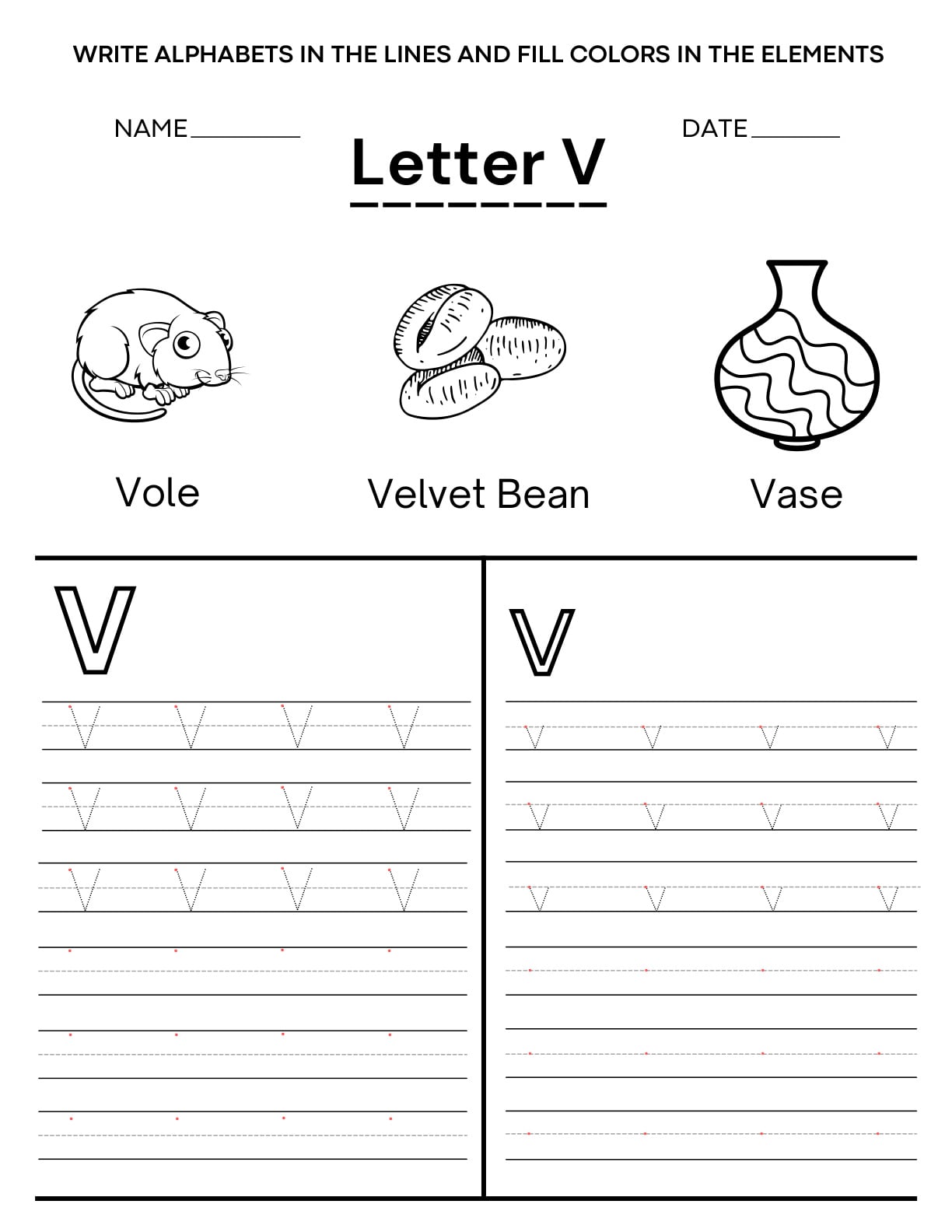
22. Letter V: Vole, Velvet Bean, and Vase
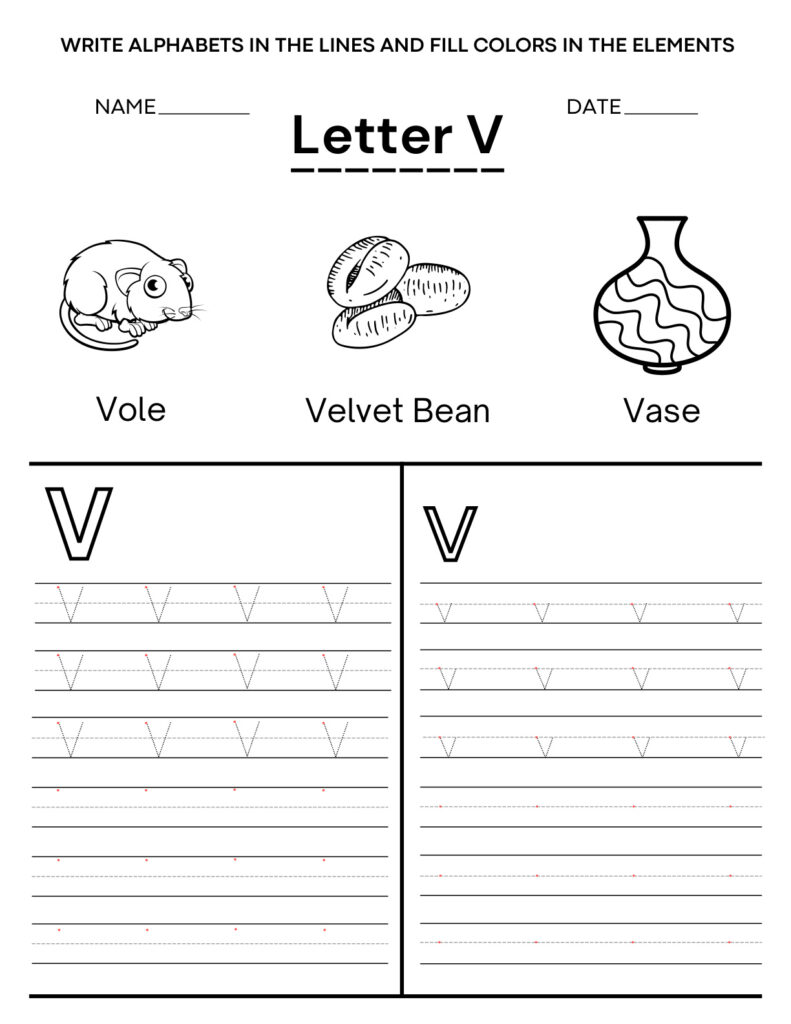
This page focuses on the letter V. Children will find a vole, a velvet bean, and a vase. Ask your child to identify each picture and repeat its name.
You can explain that a vole is a small animal that looks similar to a mouse. Next, trace uppercase V and lowercase v before coloring the pictures.
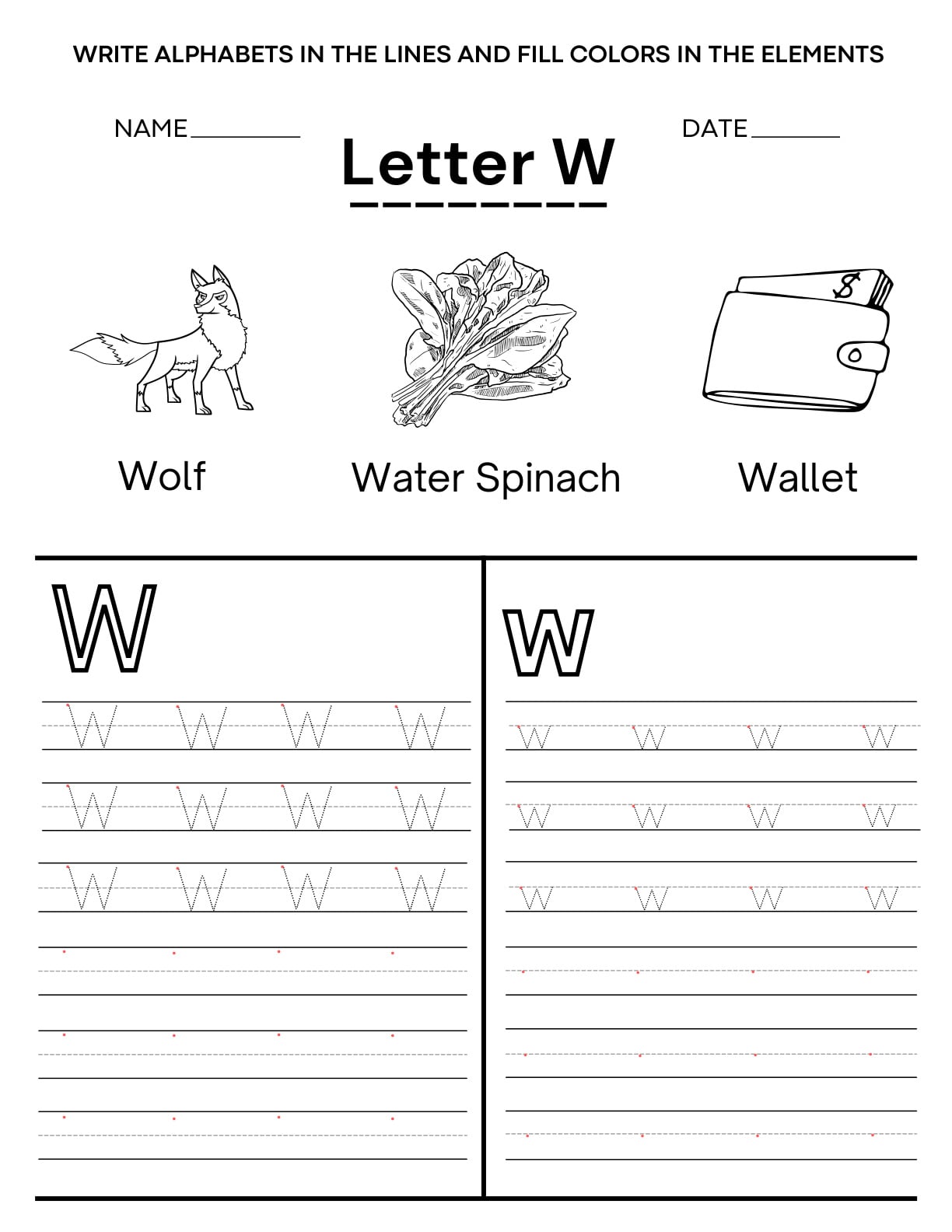
23. Letter W: Wolf, Water Spinach, and Wallet
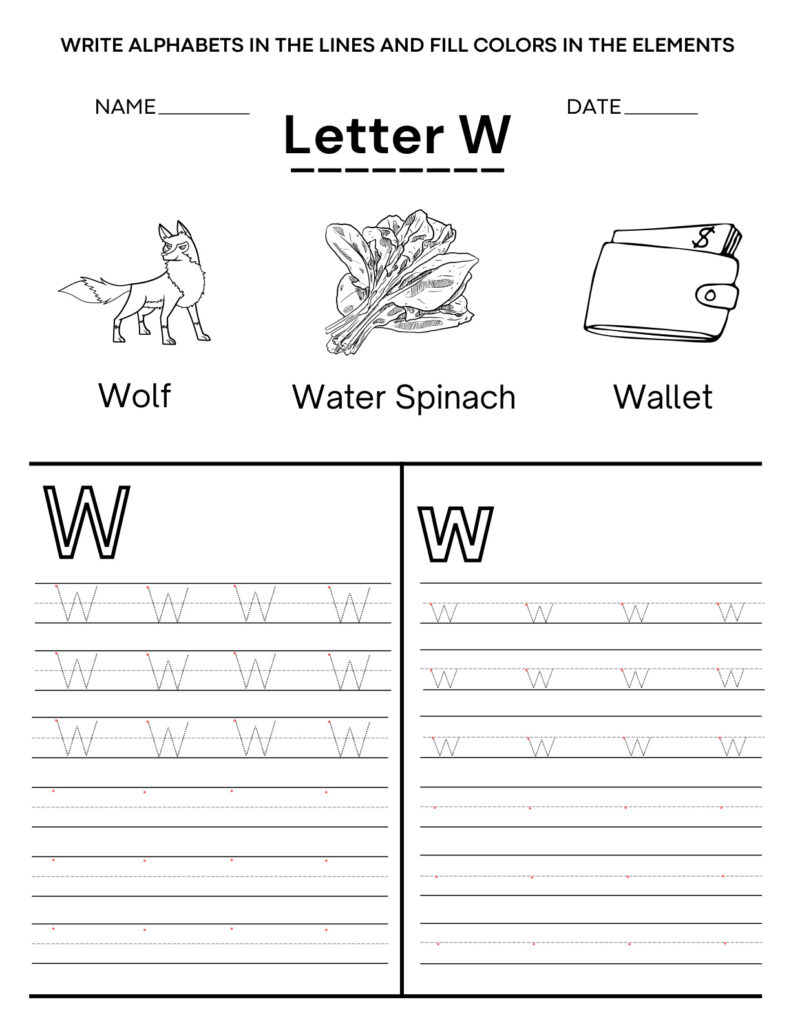
The twenty-third worksheet introduces the letter W. Its pictures include a wolf, water spinach, and a wallet. These examples combine an animal, a vegetable, and an everyday item.
Ask your child to name each picture before beginning the tracing activity. Then, practice uppercase W and lowercase w, and color the pictures.
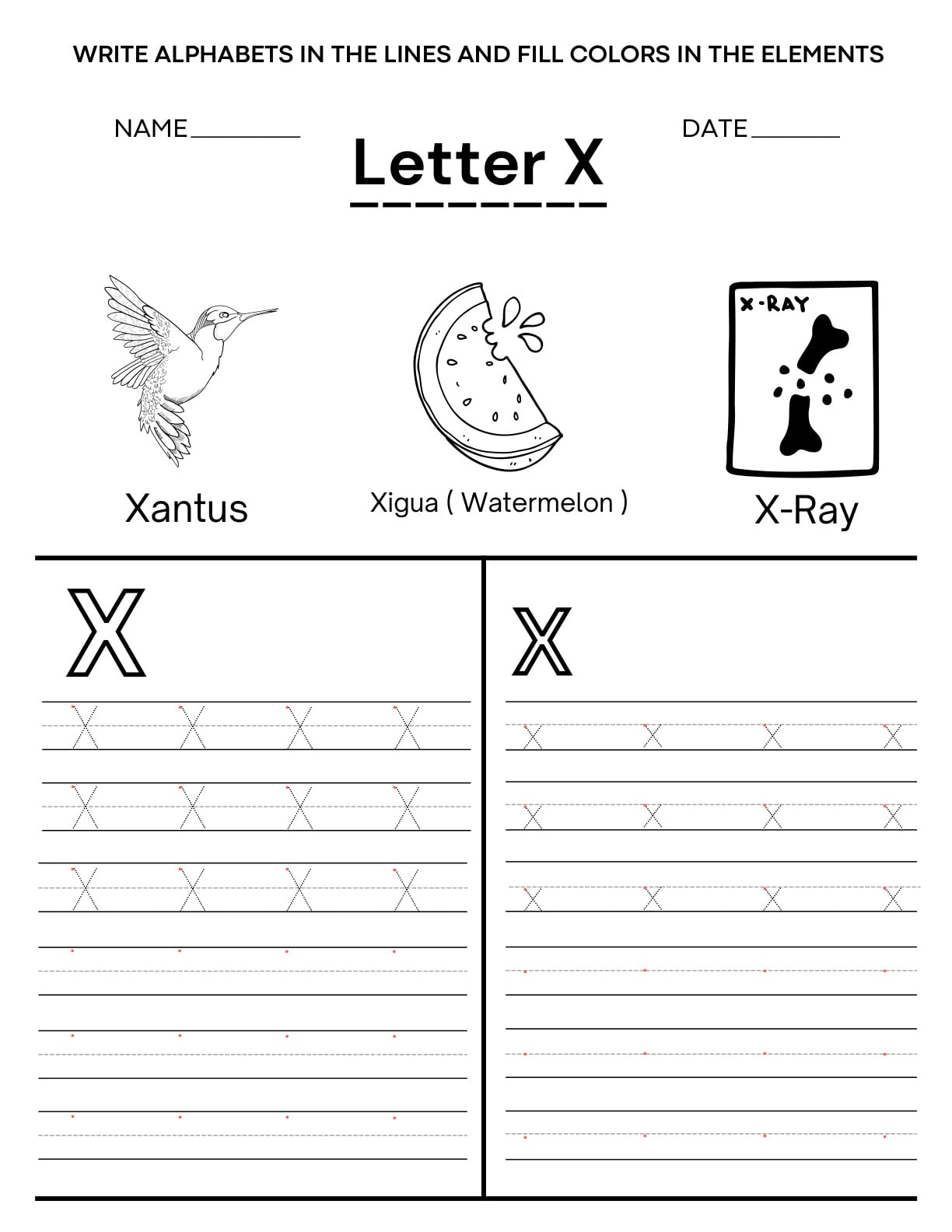
24. Letter X: Xantus, Xigua, and X-Ray
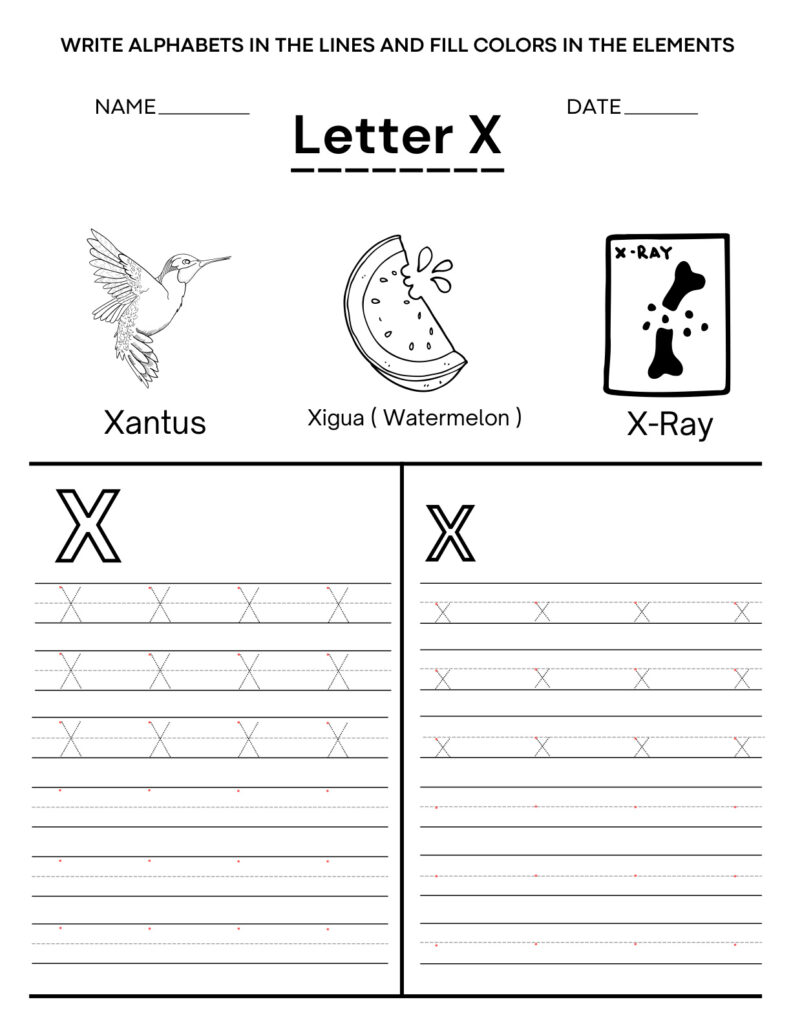
This worksheet focuses on the letter X. Children will see a Xantus bird, xigua, and an X-ray. Explain that xigua is another name for watermelon, as the worksheet indicates.
Then, help your child identify each picture and trace uppercase X and lowercase x. Finish by coloring the pictures and practicing the letter on the empty lines.
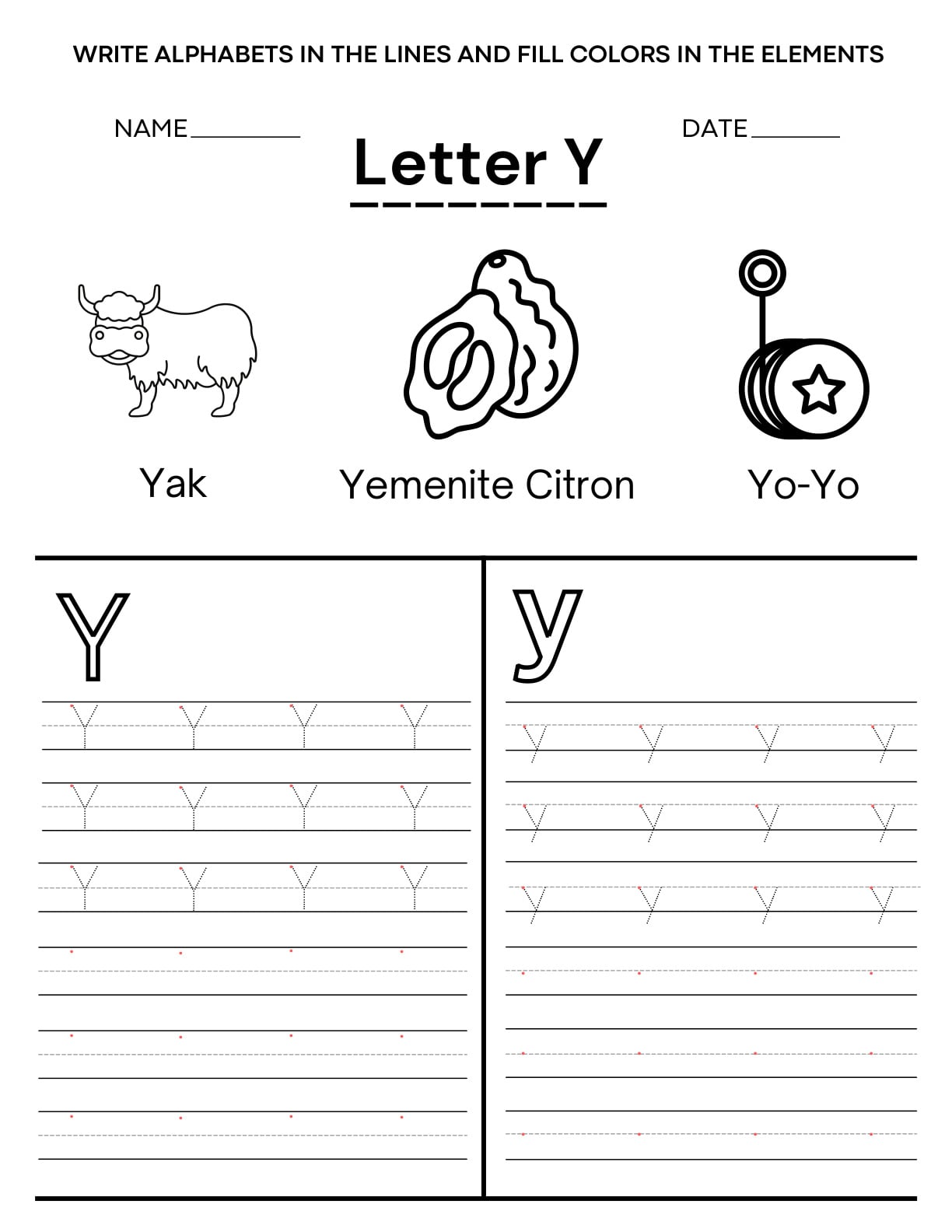
25. Letter Y: Yak, Yemenite Citron, and Yo-Yo
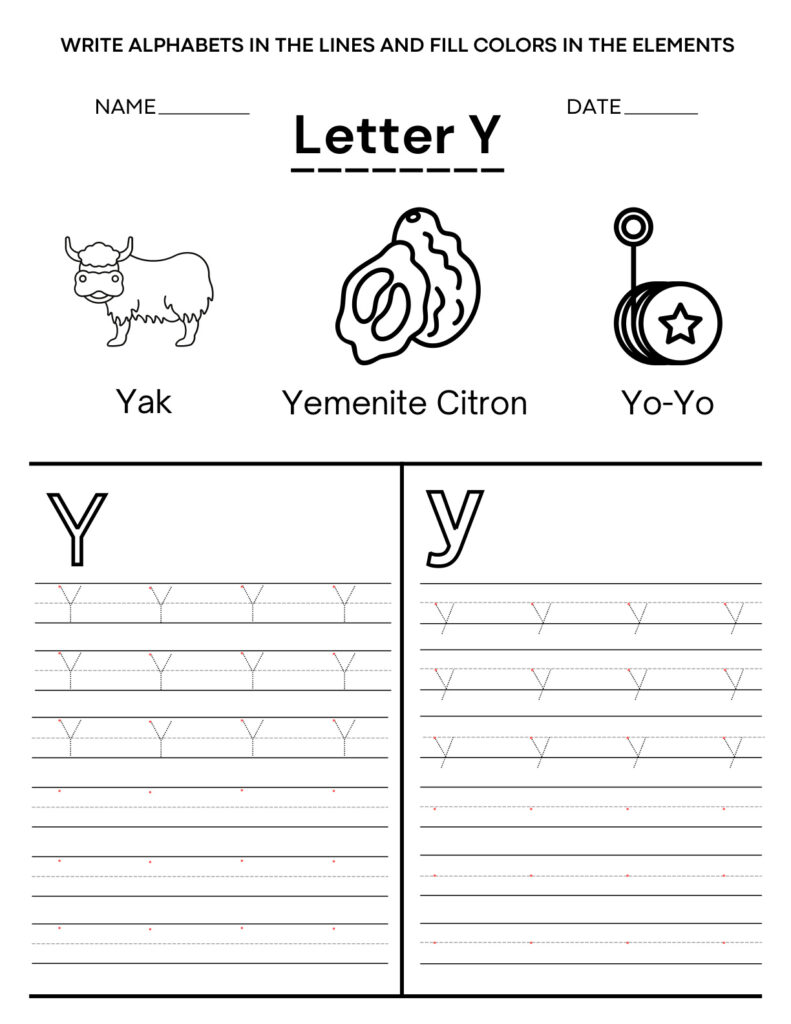
The twenty-fifth page introduces the letter Y. Its pictures show a yak, a Yemenite citron, and a yo-yo. Some children may need help pronouncing Yemenite citron, so say the word together.
Next, trace uppercase Y and lowercase y using the writing guides. Let your child color the pictures and practice writing both letters independently.
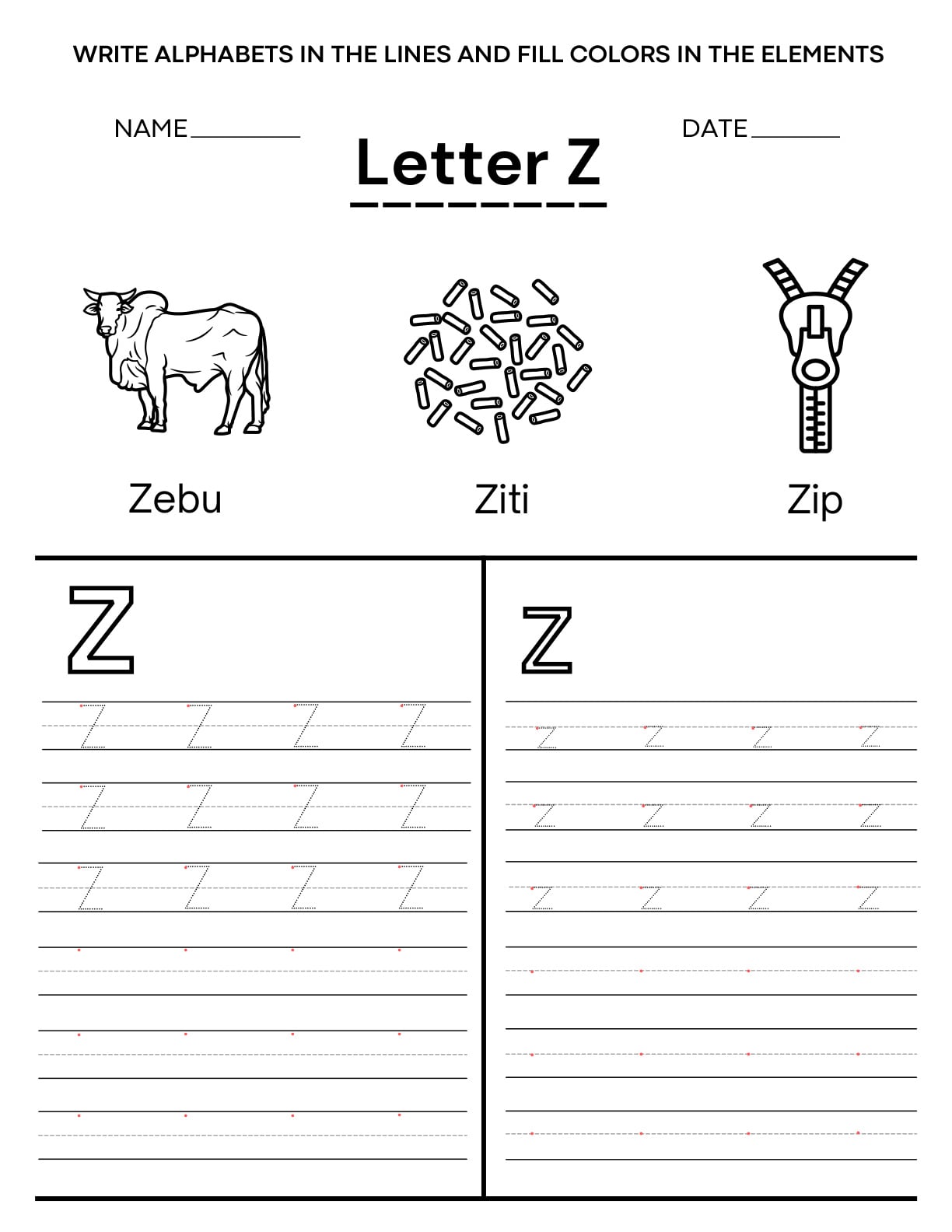
26. Letter Z: Zebu, Ziti, and Zip
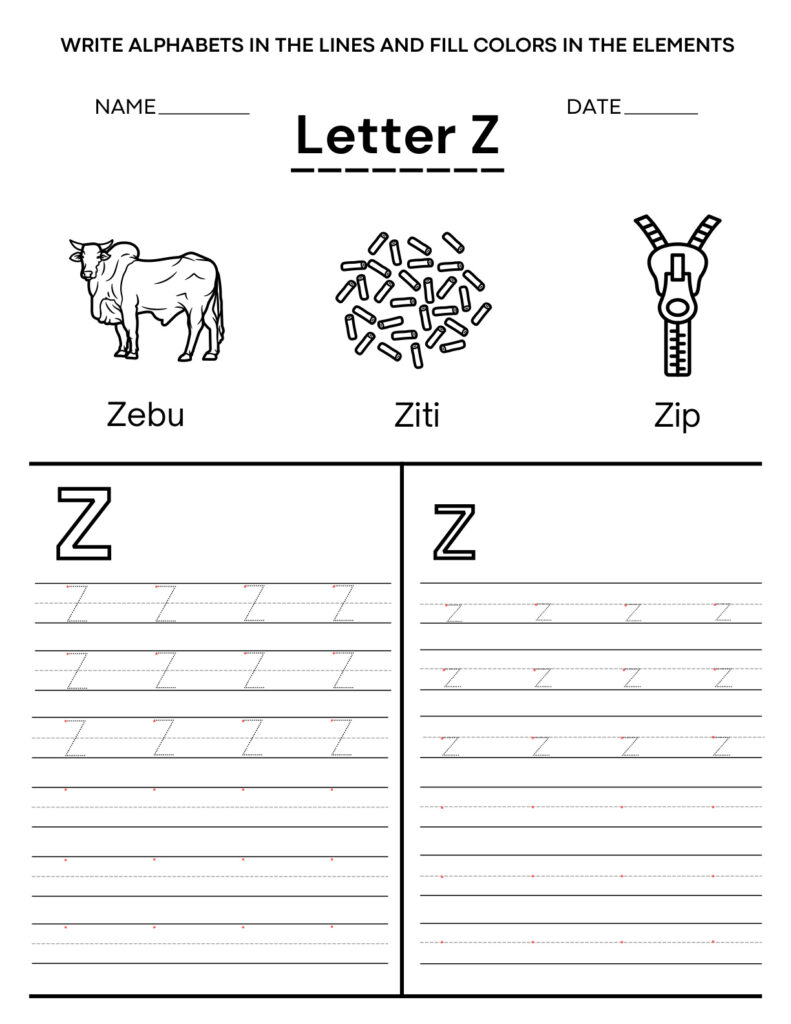
The final worksheet focuses on the letter Z. Children will find a zebu, ziti, and a zip. Explain that a zebu is a type of cattle and ziti is a kind of pasta.
Then, encourage your child to name each picture and trace uppercase Z and lowercase z. Finish by coloring the pictures and celebrating the completion of all 26 alphabet worksheets.
Final Thoughts
Learning to write letters becomes easier with regular practice and simple activities. These Alphabet Writing Worksheets cover all 26 letters, from A to Z.
Each page combines picture recognition, letter tracing, independent writing, and coloring. This gives children several ways to explore the alphabet.
Parents and teachers can make each lesson more useful by discussing the pictures together. Encourage children to pronounce each word before tracing its beginning letter.
Give them enough time to follow the writing lines without rushing. Also, celebrate their progress as they become more comfortable forming letters.
You can introduce one worksheet each day or choose letters your child needs to practice. Keep crayons and pencils nearby for a complete learning activity.
With patience and encouragement, children can build stronger handwriting habits. These printable pages also make a helpful addition to preschool and kindergarten learning routines.