
25 Simple Alphabet Matching Activities for Kids
Disclosure: Some of the links in this post are affiliate links. This means if you click on the link and purchase an item, I will receive an affiliate commission at no extra cost to you.
Learning the alphabet becomes easier when children can actively work with letters. Matching activities give them a simple task while helping them notice how letters look and connect.
Instead of only memorizing letters, children can compare shapes, find pairs, and make connections as they work.
These Alphabet Matching Activities are designed to give young learners plenty of that hands-on practice.
This collection combines three different alphabet matching printables. Begins with activities where children draw lines between uppercase and lowercase letters.
The pages use small groups of letters, so children can focus on a few matches at a time.
The second set adds another format, asking children to circle the lowercase letter that matches each uppercase letter.
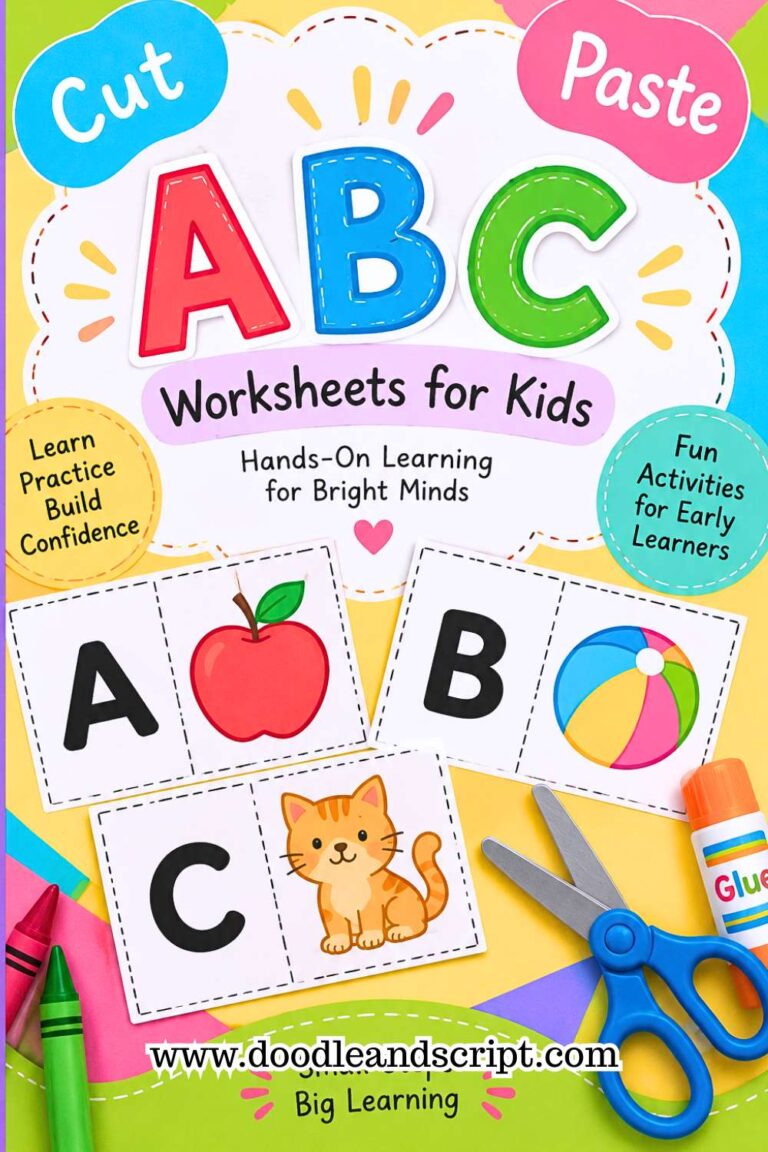
It also includes a cut-and-paste alphabet matching page and picture matching activities.
The third set returns to line-matching activities with uppercase and lowercase letters before moving into letter-and-picture matching.
This variety can keep alphabet practice from feeling like the same worksheet repeated again and again.
You can use the pages during preschool lessons, quiet learning time, or short practice sessions at home.
Let your child name the letters aloud, look closely at each choice, and draw or paste the matches at their own pace.
25 Simple Alphabet Matching Activities for Kids
1. H, E, A, R, and T
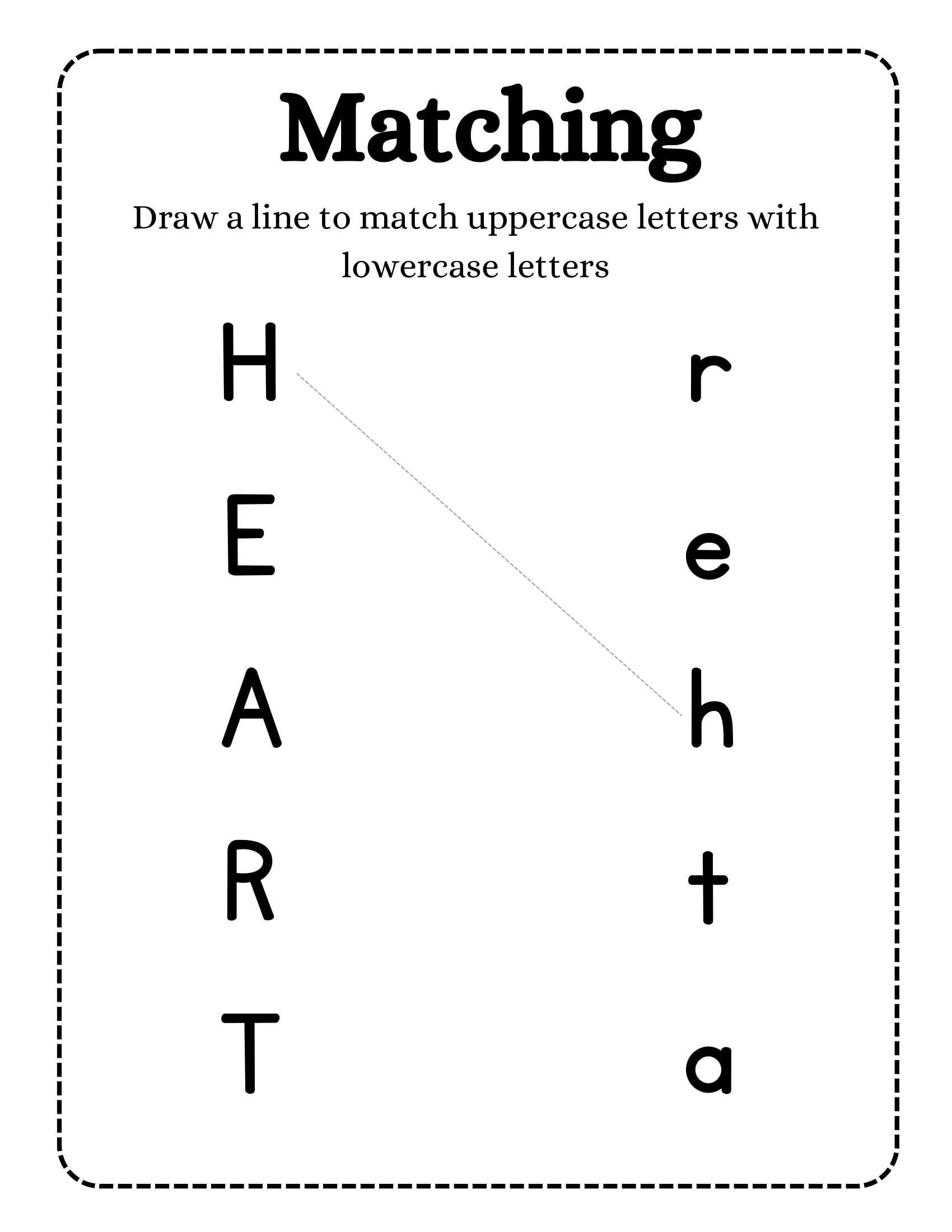
The first Alphabet Matching Activities page introduces five uppercase letters. Children must connect H, E, A, R, and T with their matching lowercase forms.
The lowercase choices are mixed on the opposite side, so children need to look carefully.
Encourage your child to name each uppercase letter before drawing a line. This simple step can help them become more familiar with both letter forms.
2. D, W, S, Q, and Y
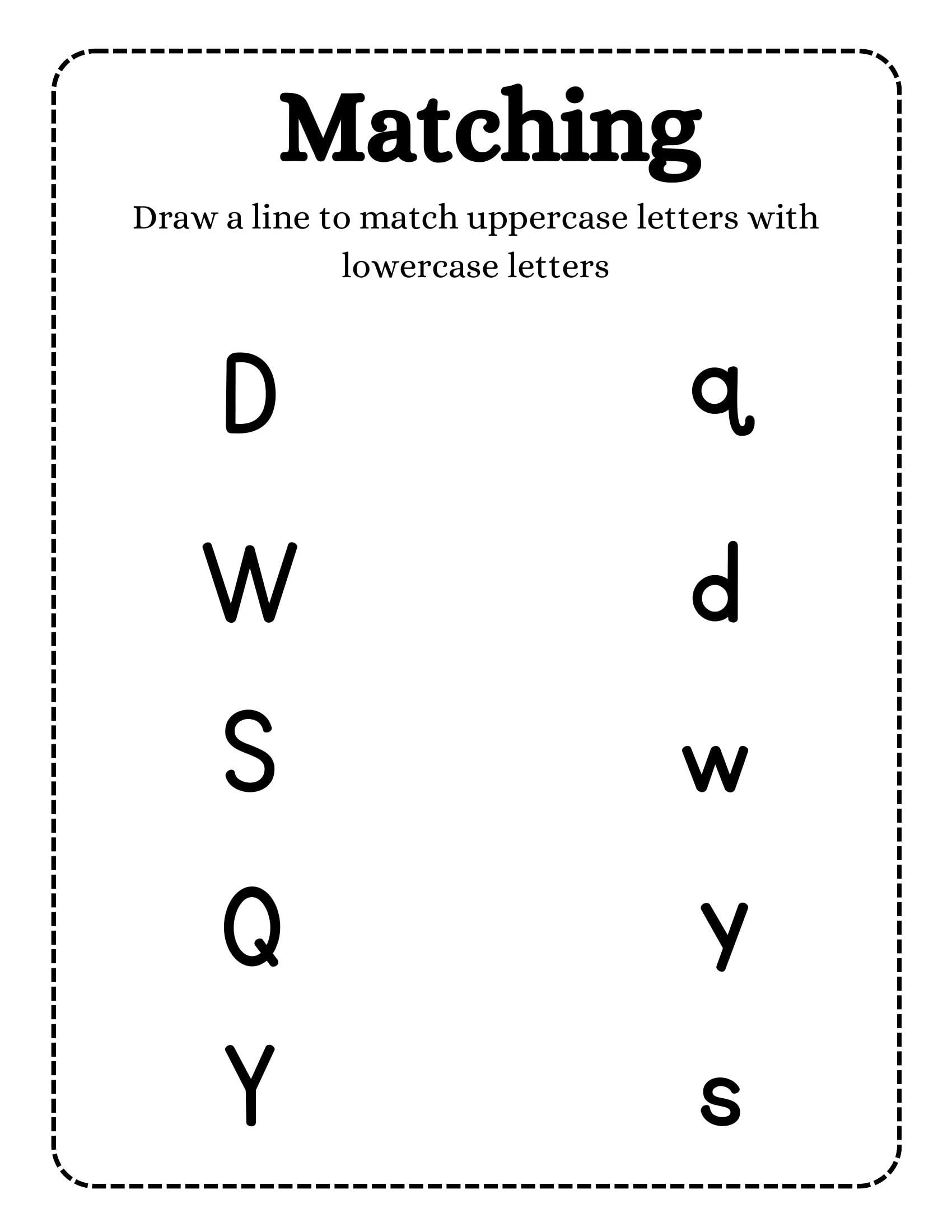
The second page continues with five new uppercase letters. Children match D, W, S, Q, and Y with their lowercase partners.
Since the answers are not arranged in the same order, careful observation is needed. Ask your child to find one familiar pair before moving to the next. Drawing the lines can also make the activity feel more like a little puzzle.
3. F, P, G, I, and B
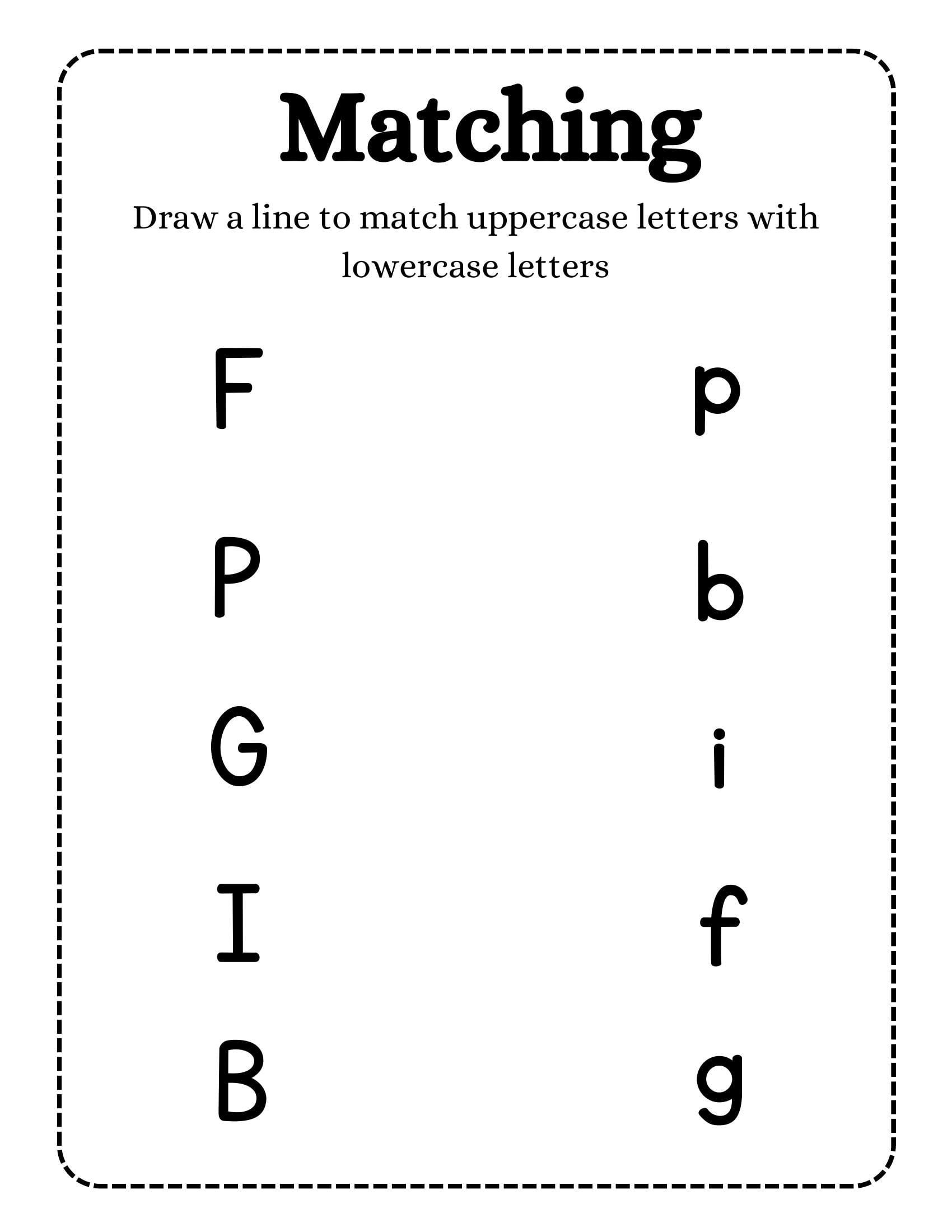
This worksheet brings together F, P, G, I, and B. Children look between both sides and find the lowercase version of each uppercase letter.
Some choices may look similar, so encourage children to slow down. Have them say the letter name before making each match. A little verbal practice can make the worksheet more interactive.
4. C, J, M, O, and N
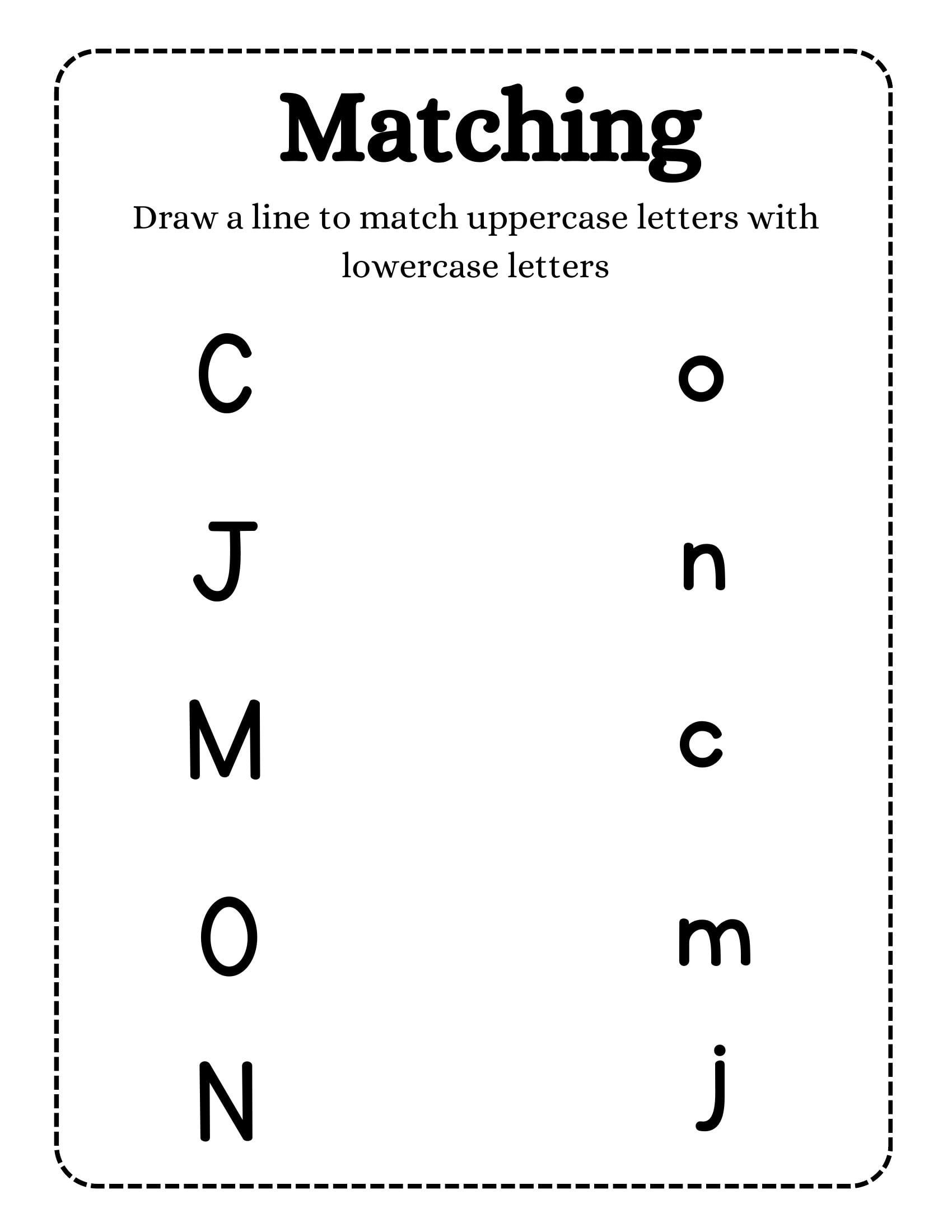
The fourth page features C, J, M, O, and N. Children connect each uppercase letter with its matching lowercase form.
The letters are presented in a mixed order, which encourages children to recognize the forms rather than follow a pattern.
Let your child point to each letter while saying its name. This can turn a short worksheet into useful alphabet review.
5. U, X, V, Y, and N
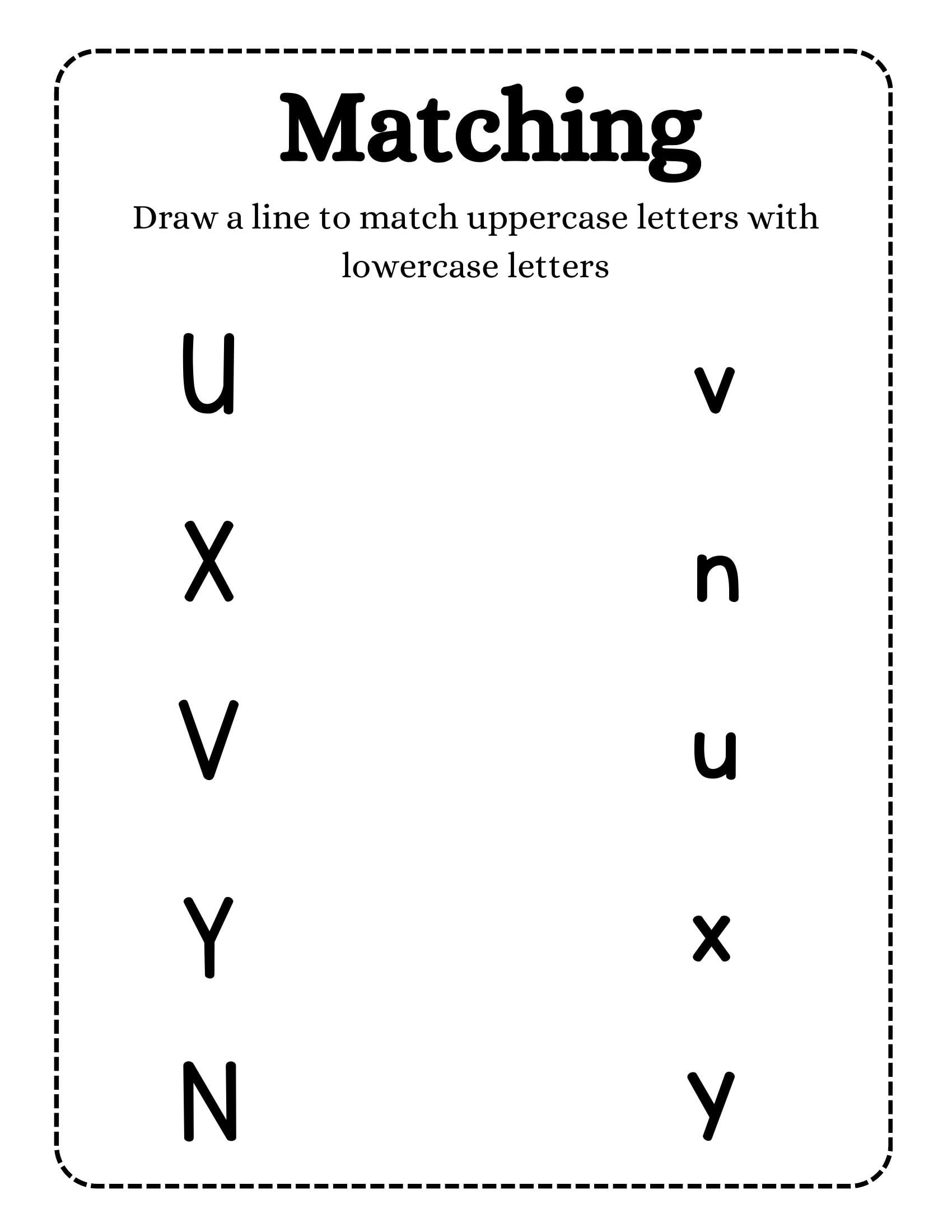
The fifth page completes the first group of uppercase-to-lowercase matching activities. Children work with U, X, V, Y, and N.
They need to compare the uppercase letters with the lowercase choices on the opposite side.
Encourage them to check each match before drawing a line. This page gives them another chance to strengthen letter recognition.
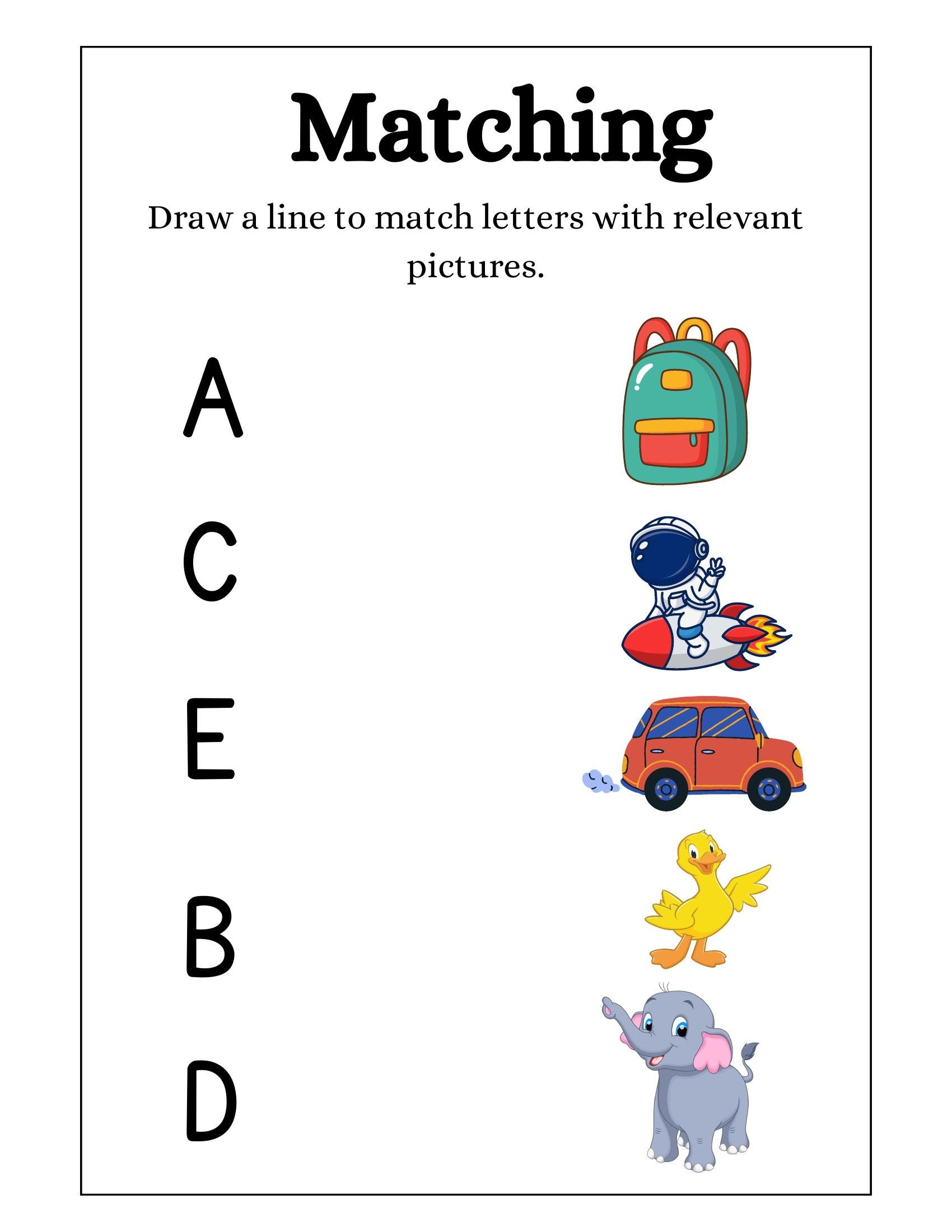
6. A, C, E, B, and D With Pictures
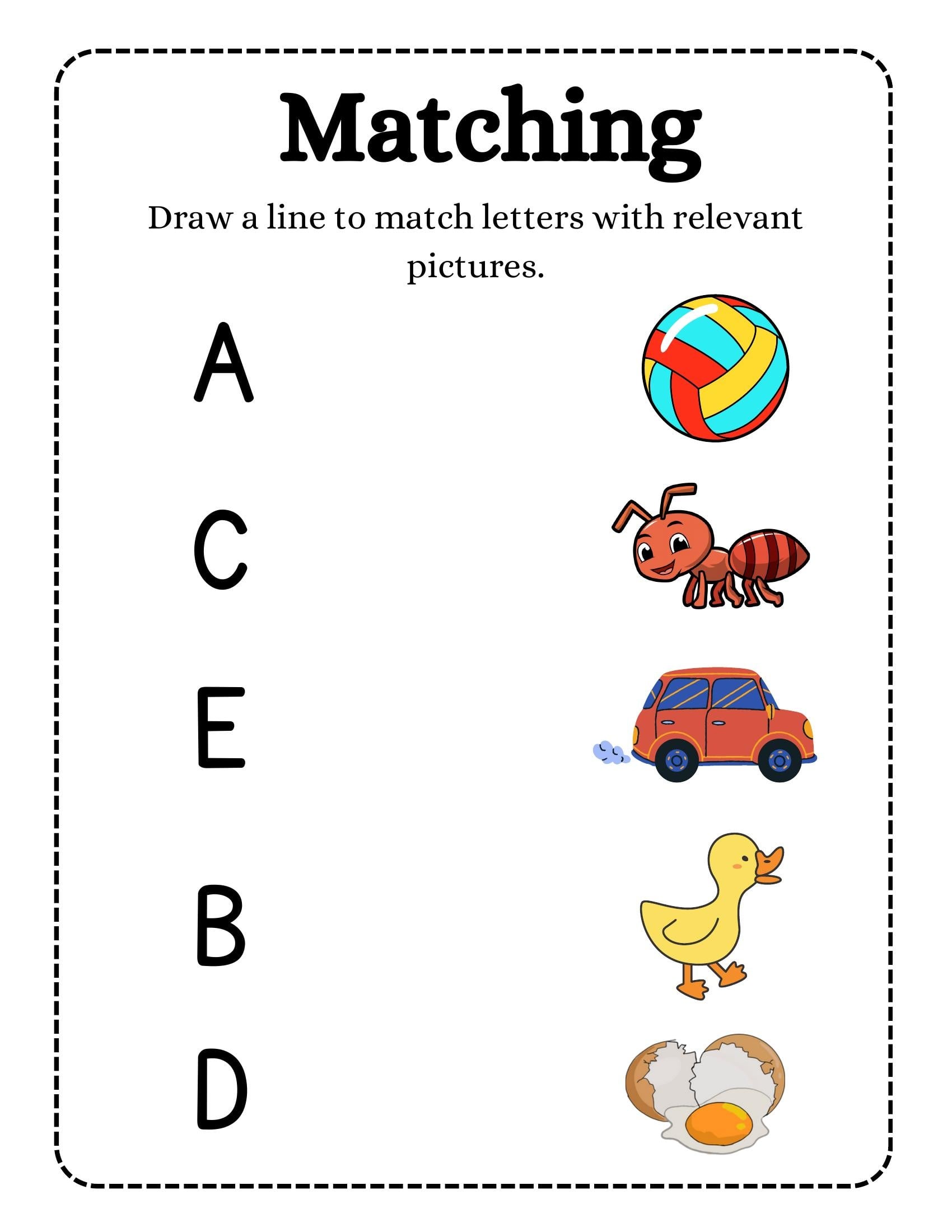
The activity changes on the sixth page by connecting letters with relevant pictures. Children match A, C, E, B, and D with colorful images.
The pictures include a backpack, astronaut, car, duck, and elephant. Ask your child to name each picture before choosing its letter. This creates a simple connection between the letter and a familiar word.
7. F, I, G, J, and H With Pictures
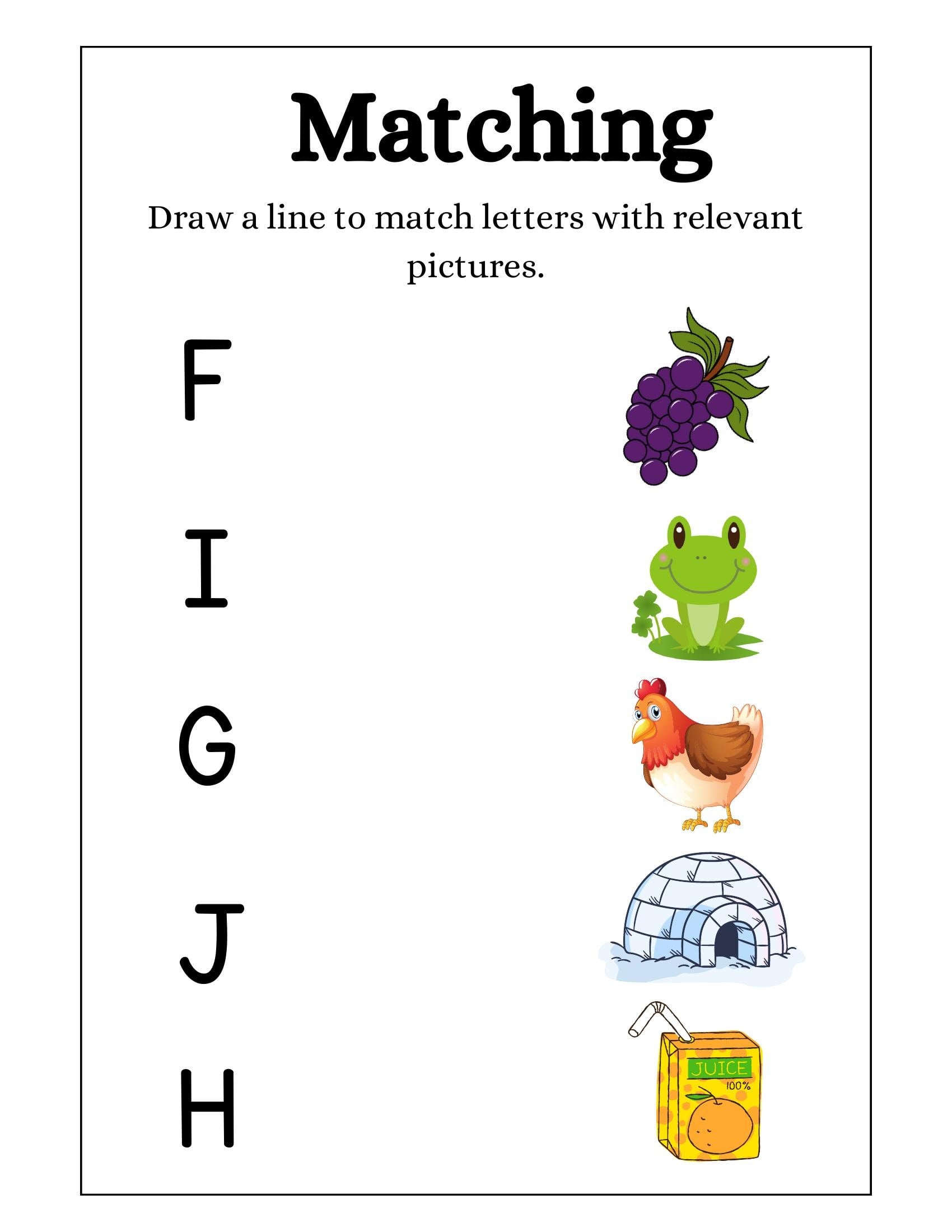
The seventh worksheet continues the letter-and-picture matching activity. Children work with F, I, G, J, and H.
The pictures include grapes, a fish, a hat, an igloo, and a juice carton. Encourage your child to say each picture name slowly. Then, they can decide which letter belongs with each image.
8. M, K, N, L, and O With Pictures
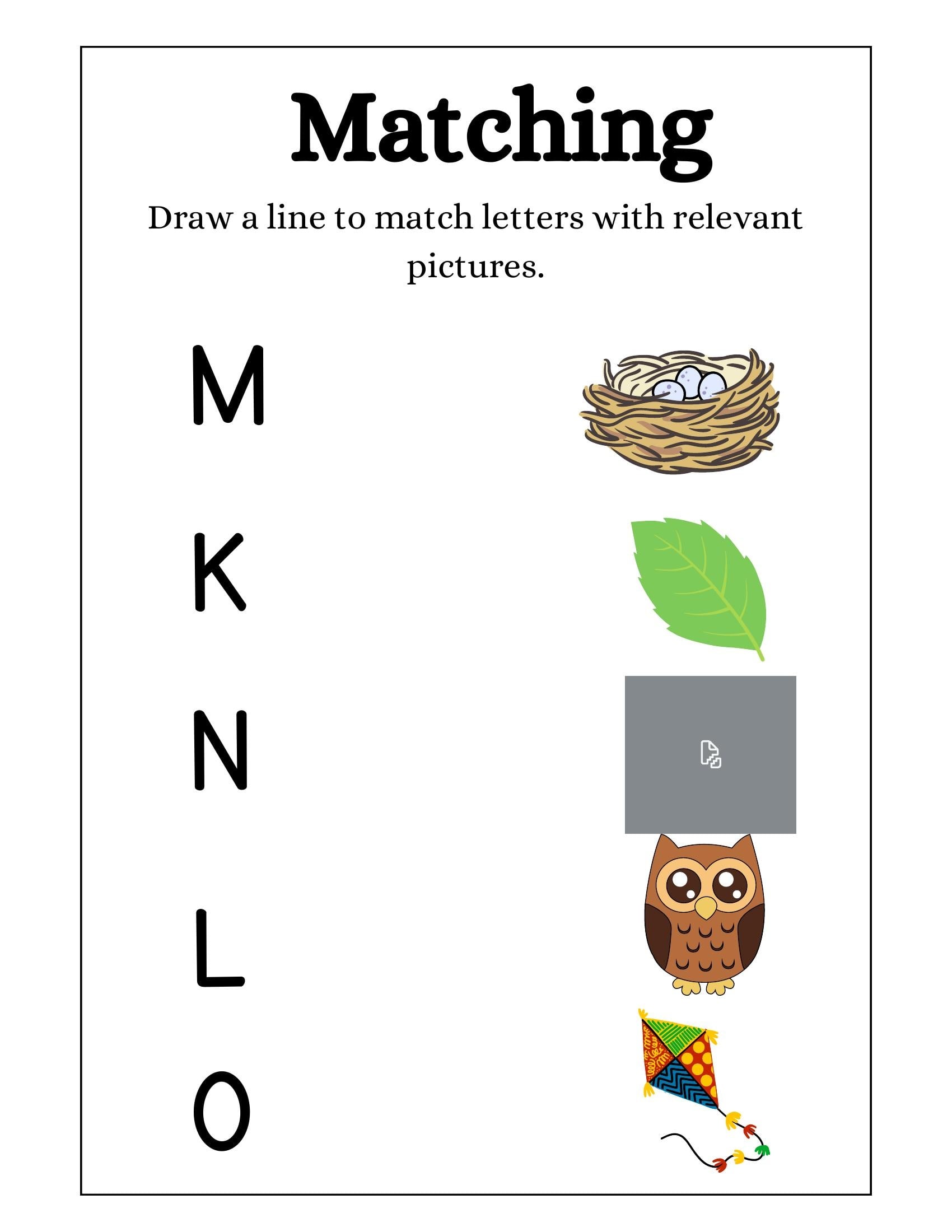
This page introduces another group of five letters. Children match M, K, N, L, and O with their relevant pictures.
The visible pictures include a nest, leaf, owl, and kite, with the remaining image requiring careful identification.
Ask your child to focus on the first sound in each picture name. This adds a little phonics practice to the matching task.
9. R, Q, S, P, and T With Pictures
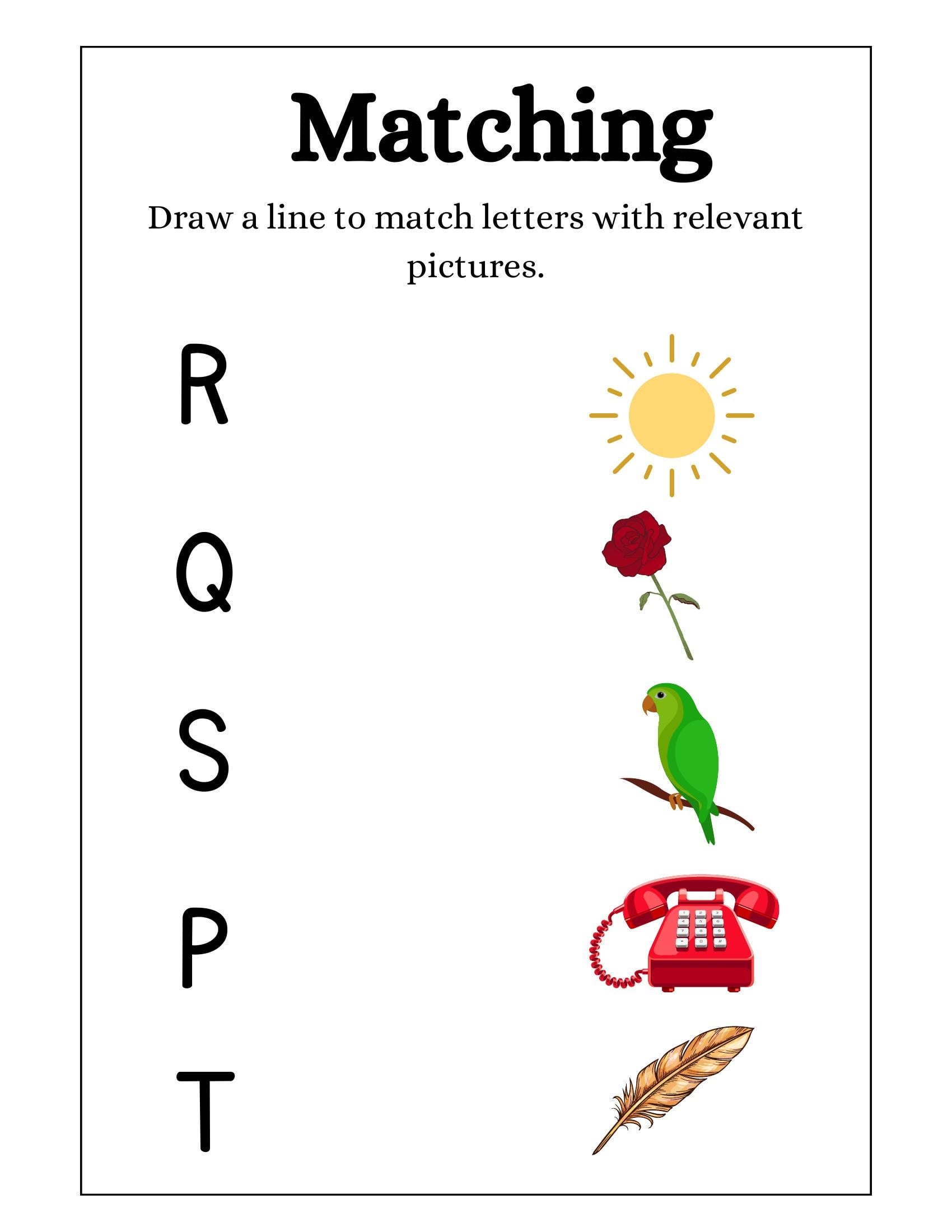
The ninth page keeps the picture-matching format going with five more uppercase letters. Children work with R, Q, S, P, and T and connect them with the appropriate images.
The mixed arrangement encourages children to think about each letter instead of simply following the alphabet.
Let your child name the pictures aloud as they work. This can make the matching process more engaging and conversational.
10. Z, V, W, U, and X With Pictures
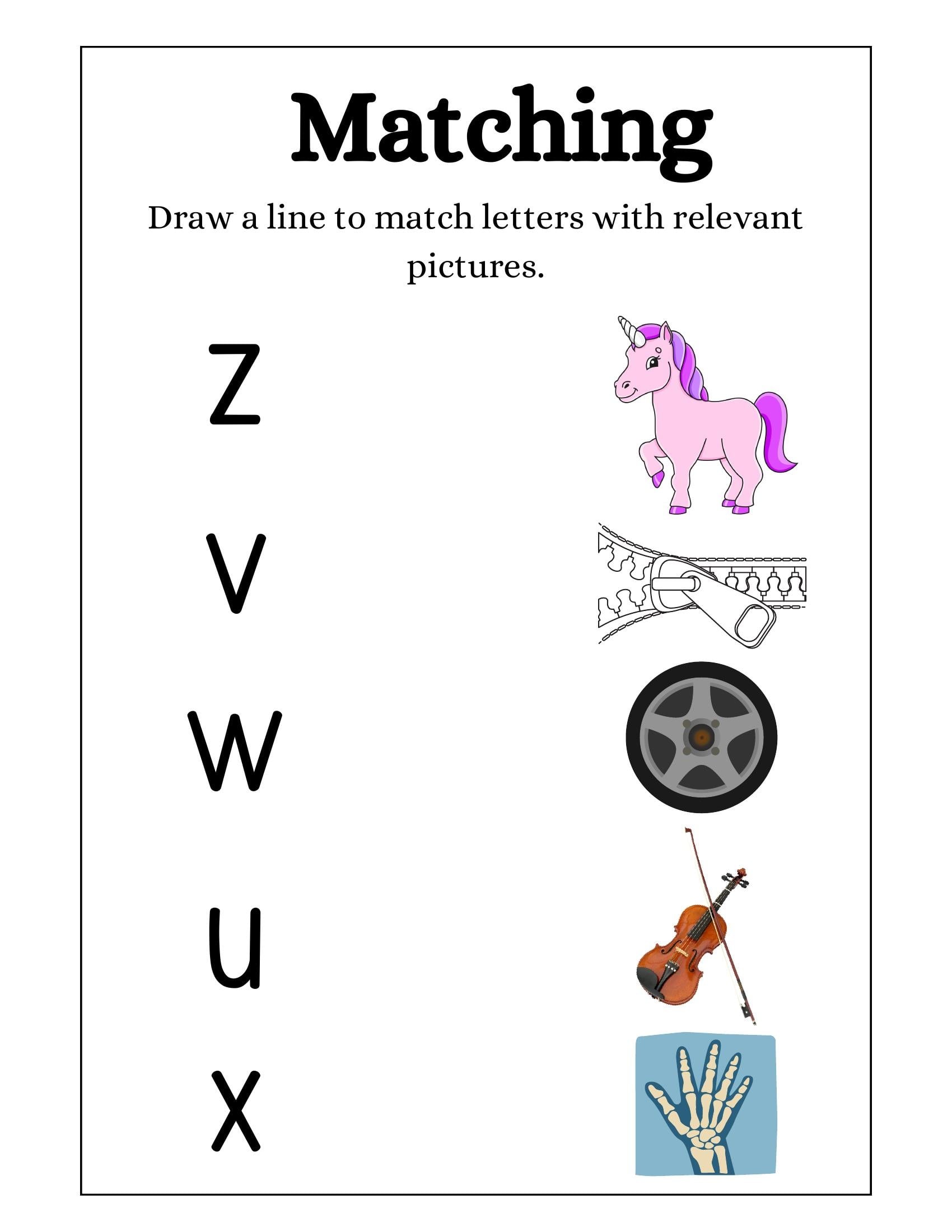
This completes this first collection of matching activities. Children match Z, V, W, U, and X with their relevant pictures.
The letters are presented in a mixed order, giving children another opportunity to recognize them independently.
Encourage your child to check each letter carefully before drawing a line. Completing this page gives them a nice transition into the next set of Alphabet Matching Activities.
11. A, B, C, D, E, and F
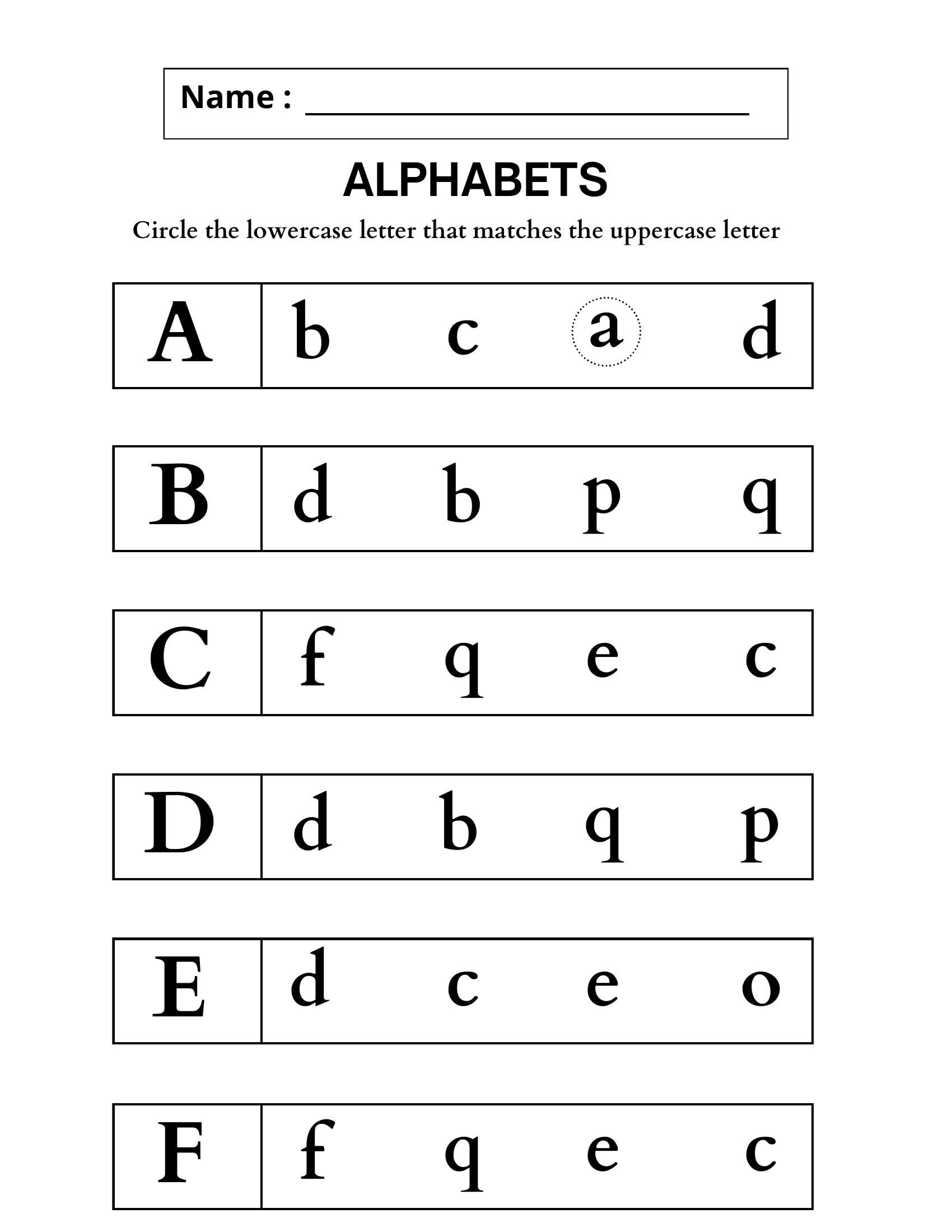
This children another way to practice uppercase and lowercase letters. Each row shows an uppercase letter with four lowercase choices.
Children need to find the lowercase form that matches the uppercase letter. The page covers A through F, giving children six letters to review at once.
12. A, B, C, D, E, and F Review
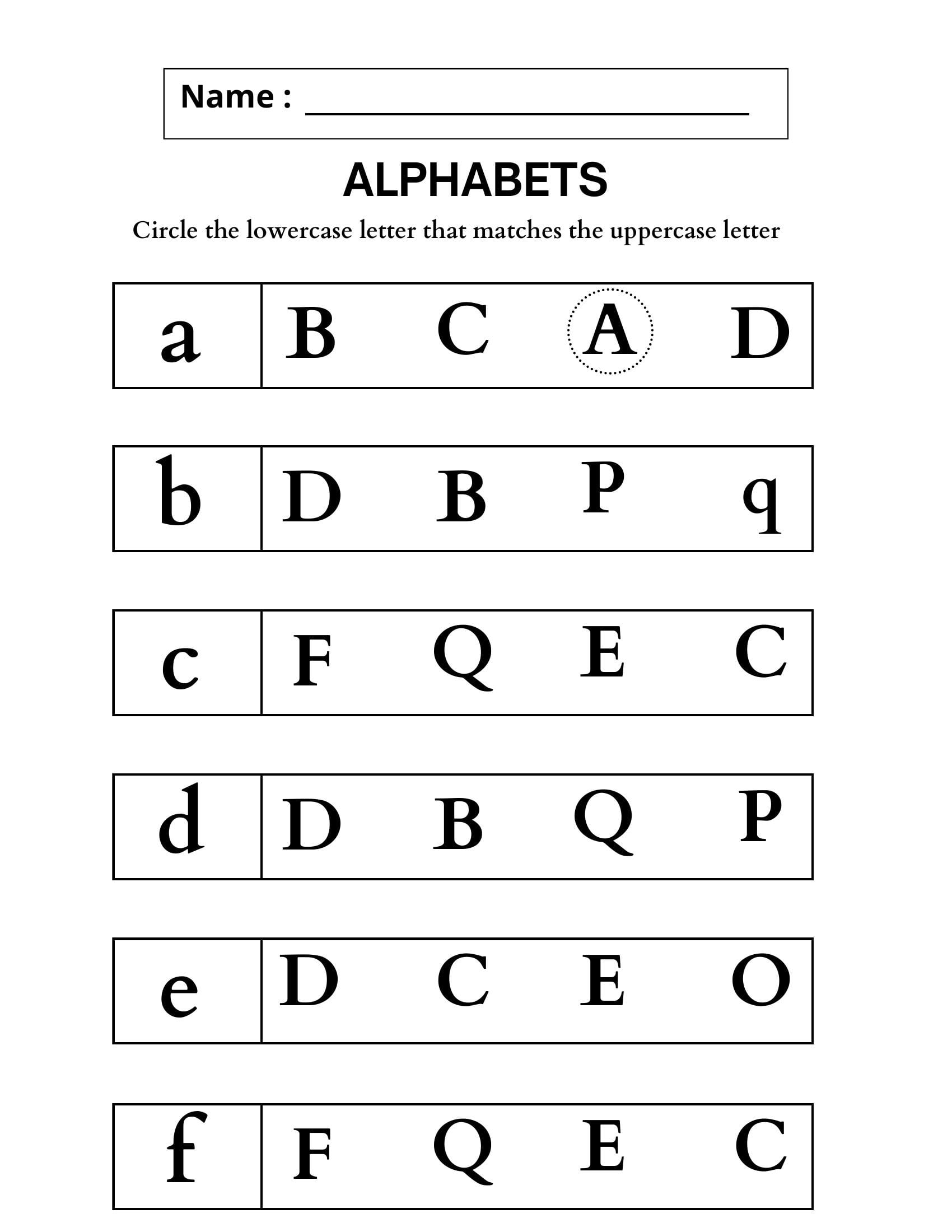
The next page changes the arrangement while keeping the same matching skill. Children see lowercase letters followed by several uppercase choices.
They must circle the uppercase letter that matches the lowercase letter shown first. This gives children practice recognizing letters in both directions.
13. Cut and Paste Alphabet Match
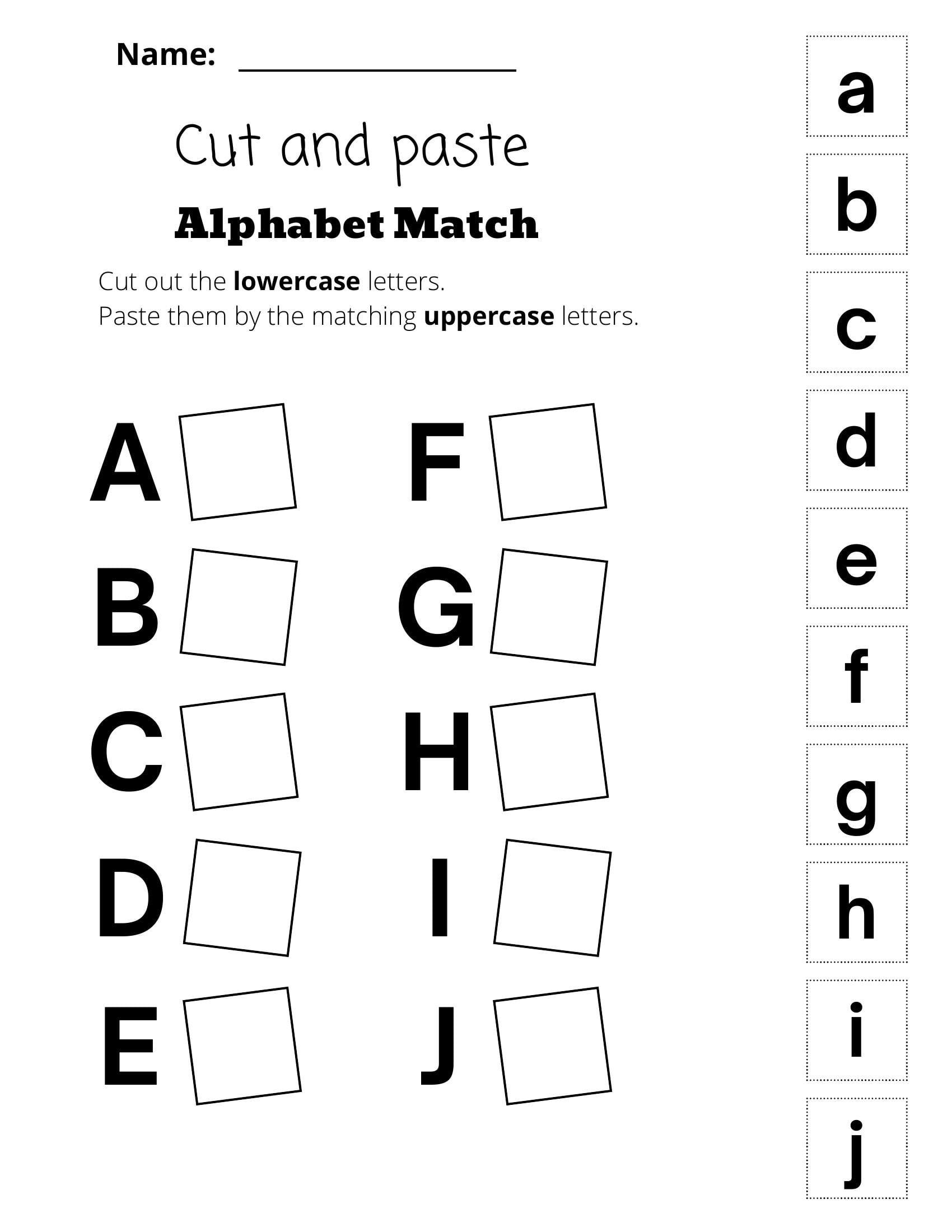
This page adds a hands-on activity to the collection. Children cut out lowercase letters from the side of the worksheet.
They then paste each letter beside its matching uppercase letter. The page covers A through J, so children get to practice ten letter pairs.
14. Match the Alphabet
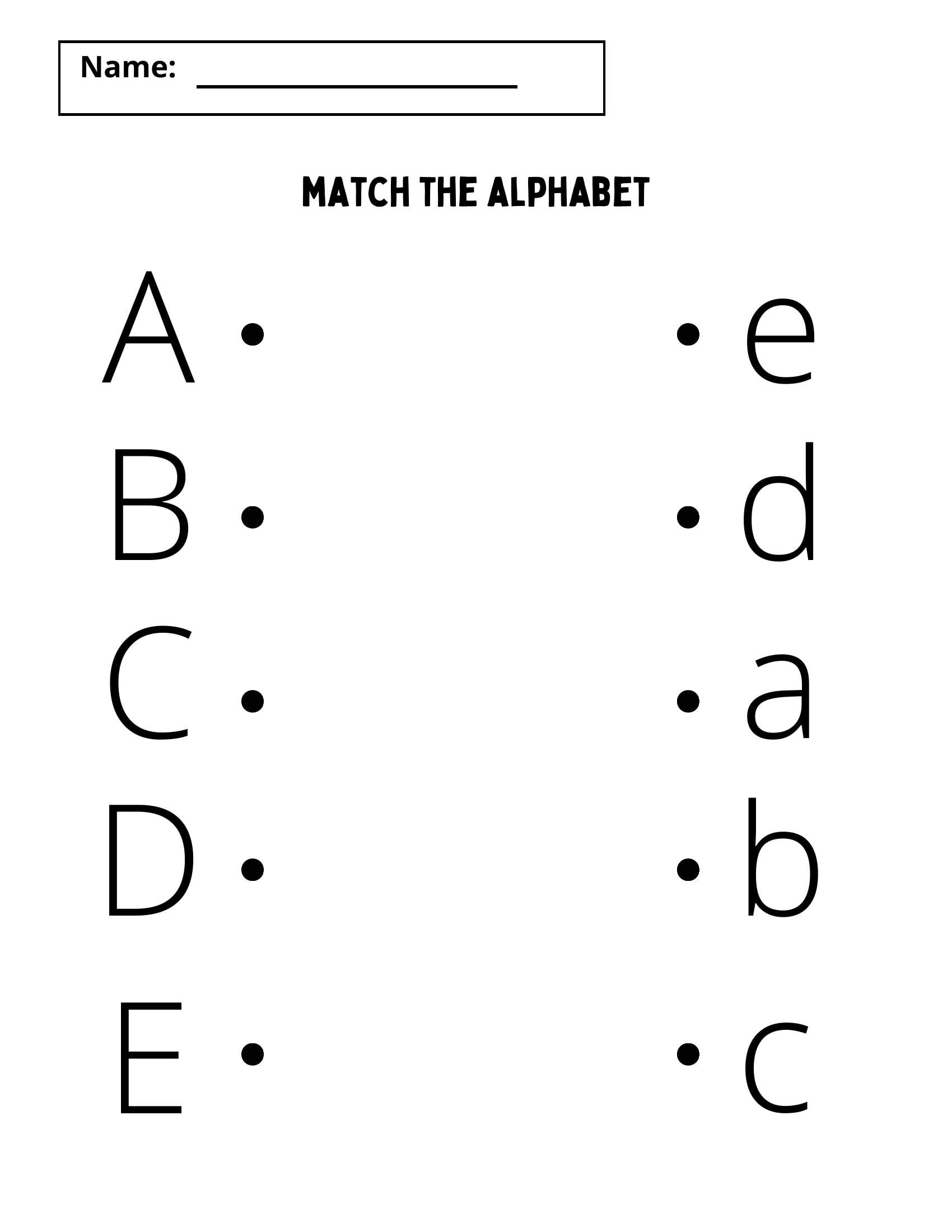
The fourteenth activity returns to line matching with a simple layout. Children see uppercase A, B, C, D, and E on one side.
Lowercase e, d, a, b, and c appear on the other side. They draw lines between each matching pair.
15. Learn the Alphabet With Pictures
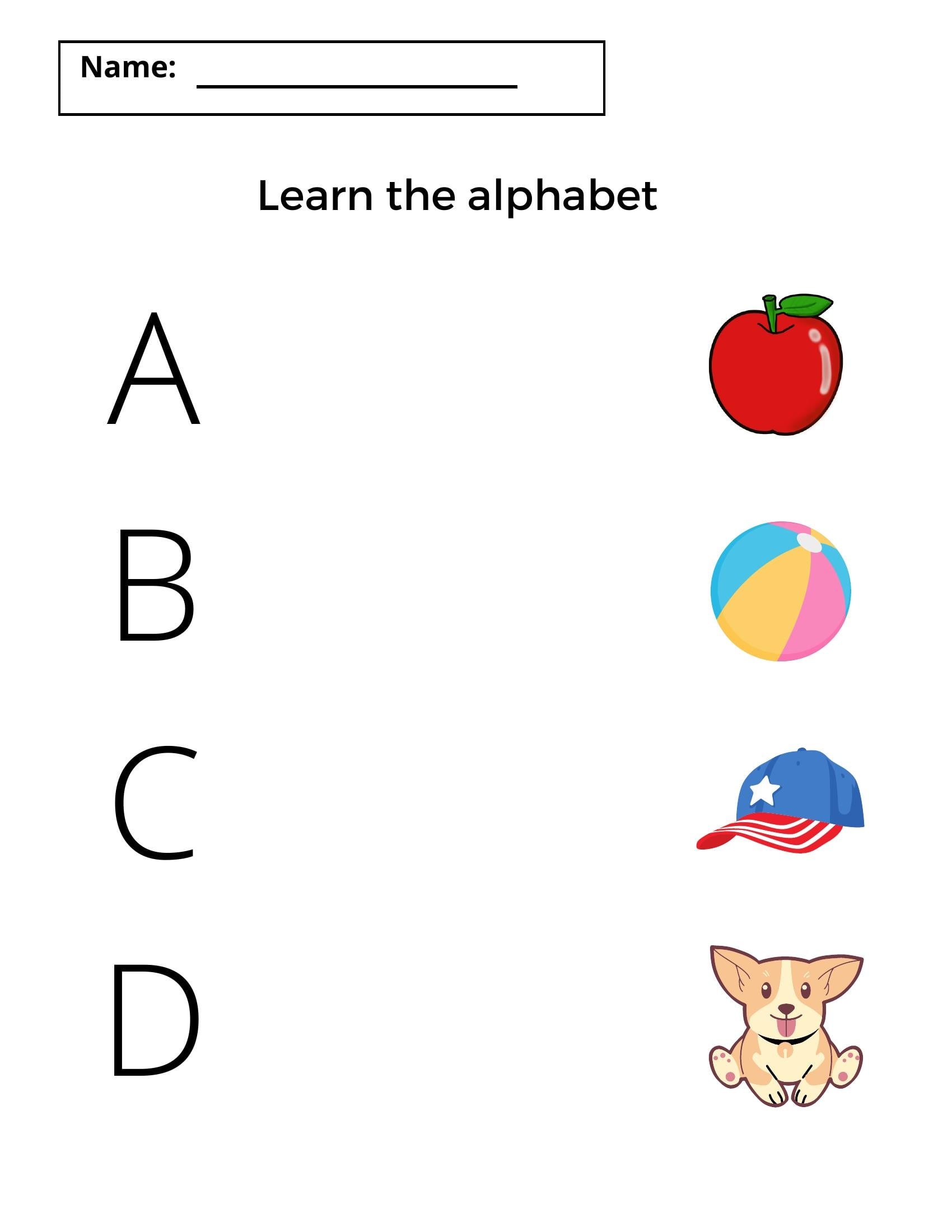
This introduces letter-and-picture matching. Children see A, B, C, and D alongside pictures of an apple, beach ball, cap, and cat.
They can connect each uppercase letter with the picture that represents it. This gives children a chance to combine letter recognition with familiar vocabulary.
16. H, E, A, R, and T
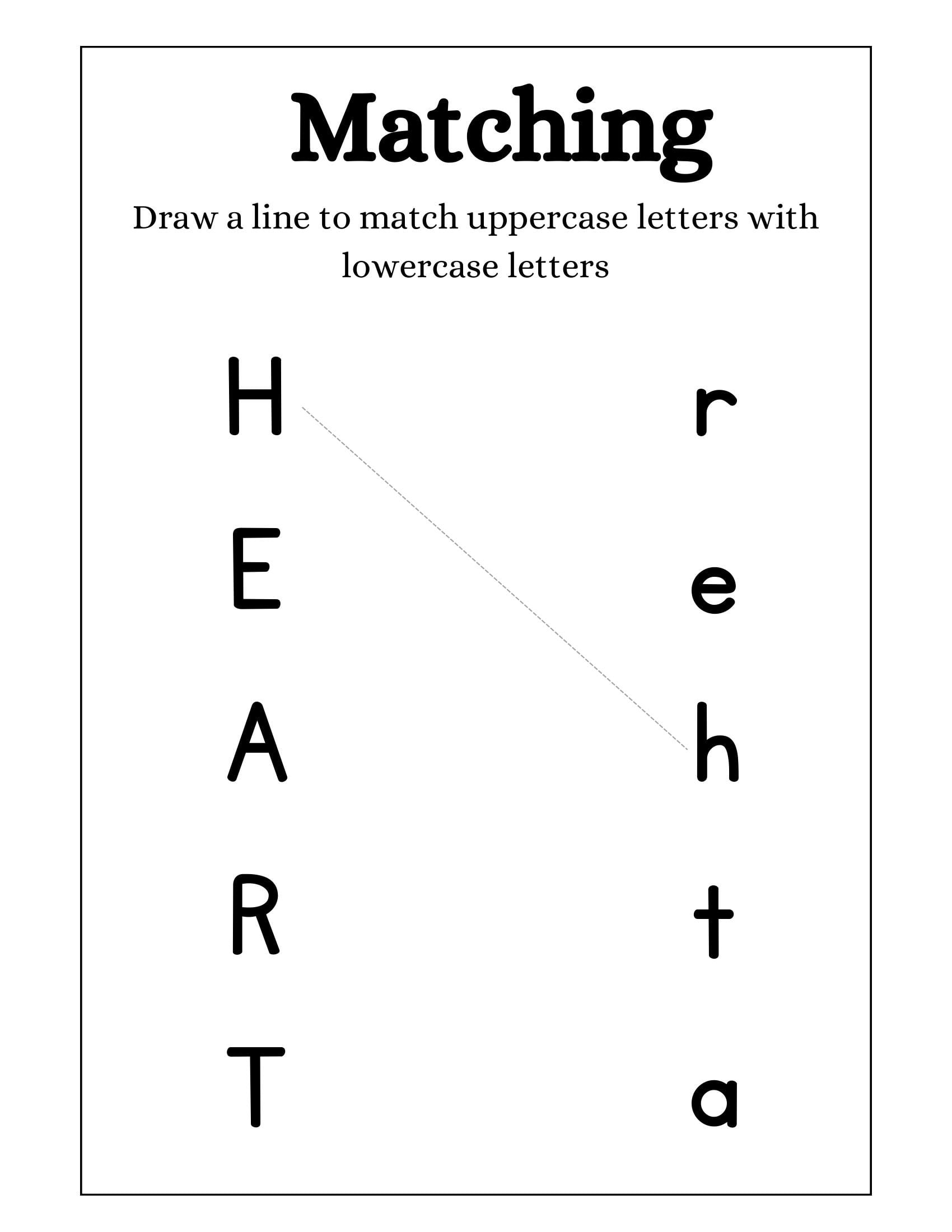
This begins with another uppercase-to-lowercase matching activity. Children connect H, E, A, R, and T with their lowercase partners.
The letters are mixed across both sides, so children must identify each pair carefully. Encourage your child to say the uppercase and lowercase forms together.
17. D, W, S, Q, and Y
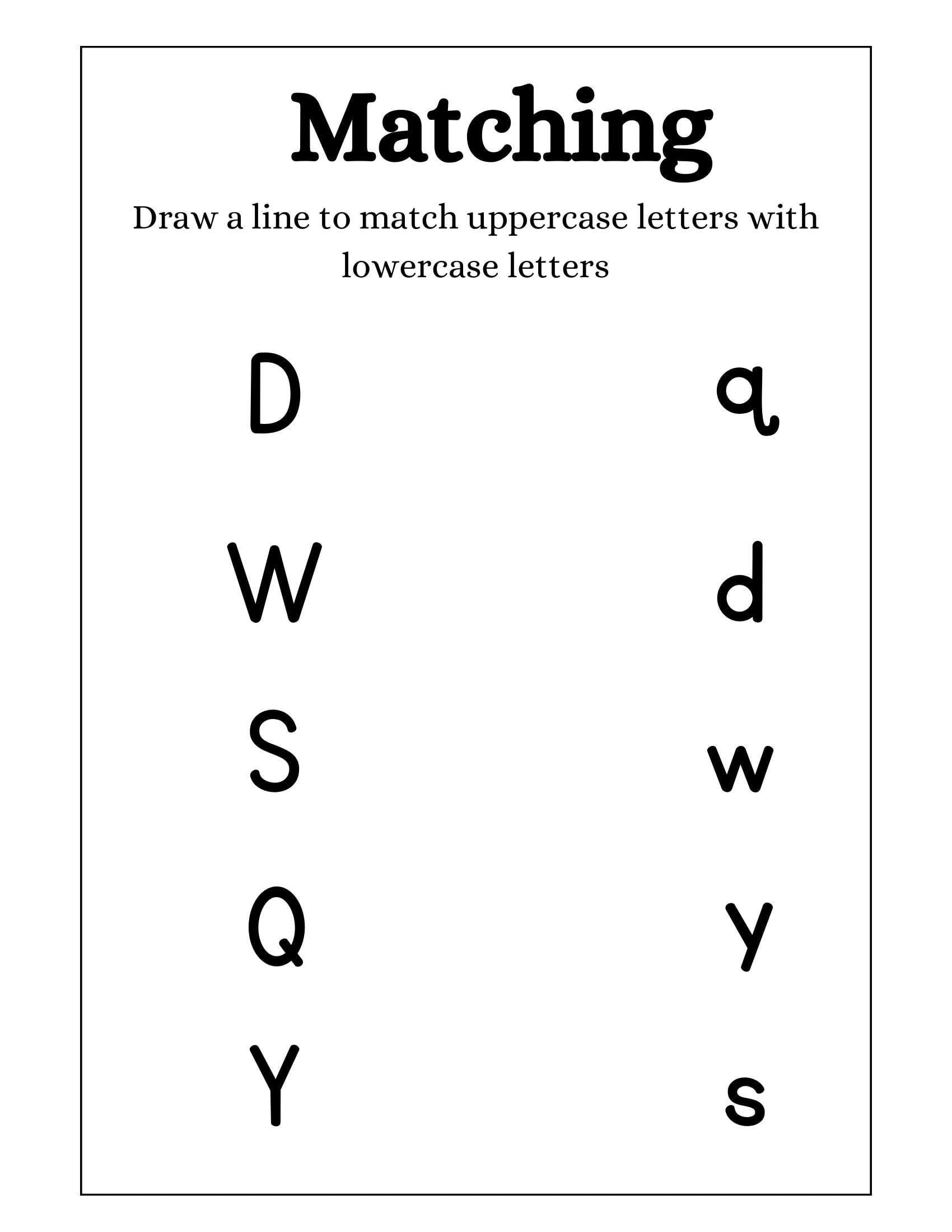
This page continues the same matching format with D, W, S, Q, and Y. The lowercase choices are placed in a different order from the uppercase letters.
Children need to compare the forms before drawing their lines. Ask them to find one pair at a time instead of rushing through the page.
18. F, P, G, I, and B
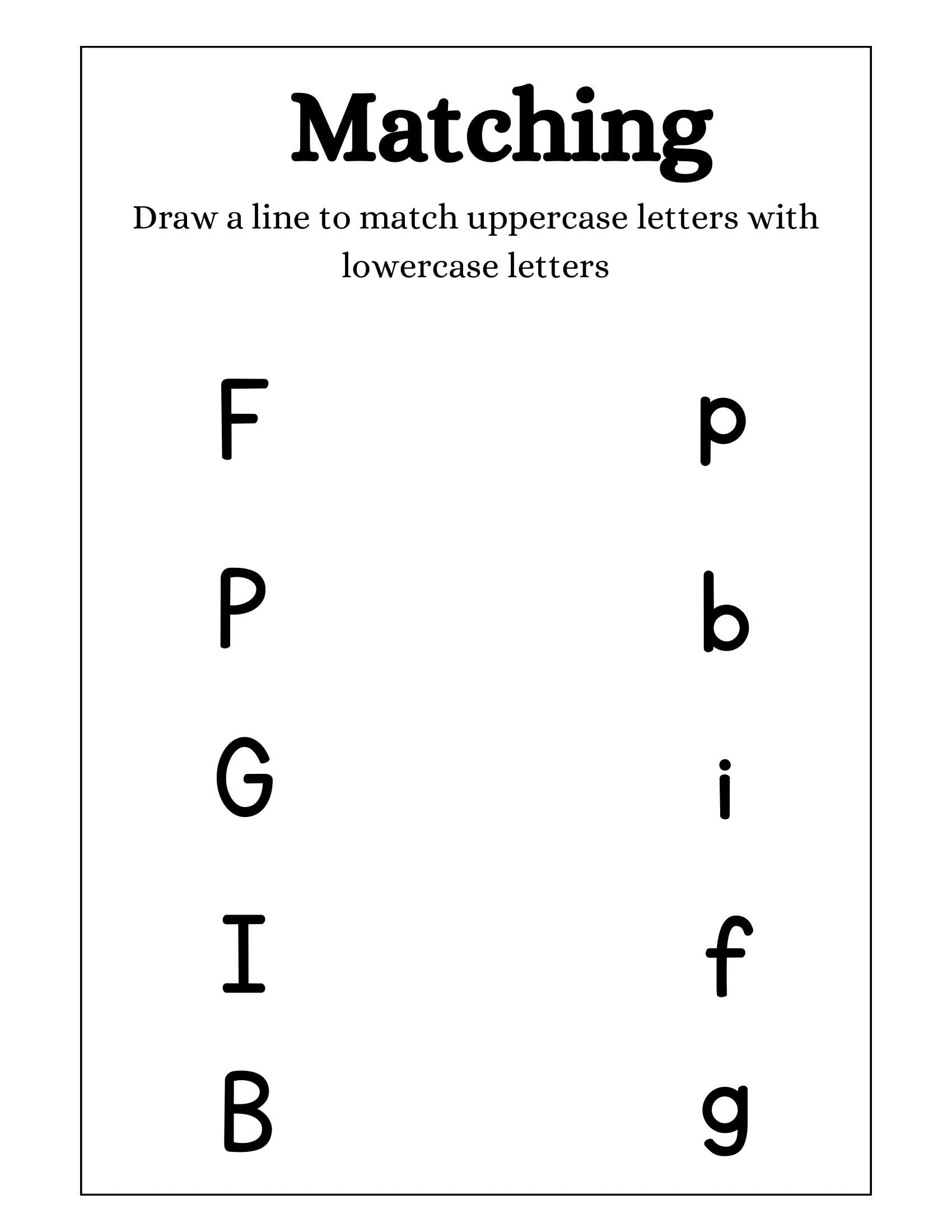
The eighteenth activity features F, P, G, I, and B. Children match each uppercase letter with the correct lowercase form.
The mixed choices encourage them to focus on the appearance of each letter. Let your child point to both forms before connecting them.
19. C, J, M, O, and N
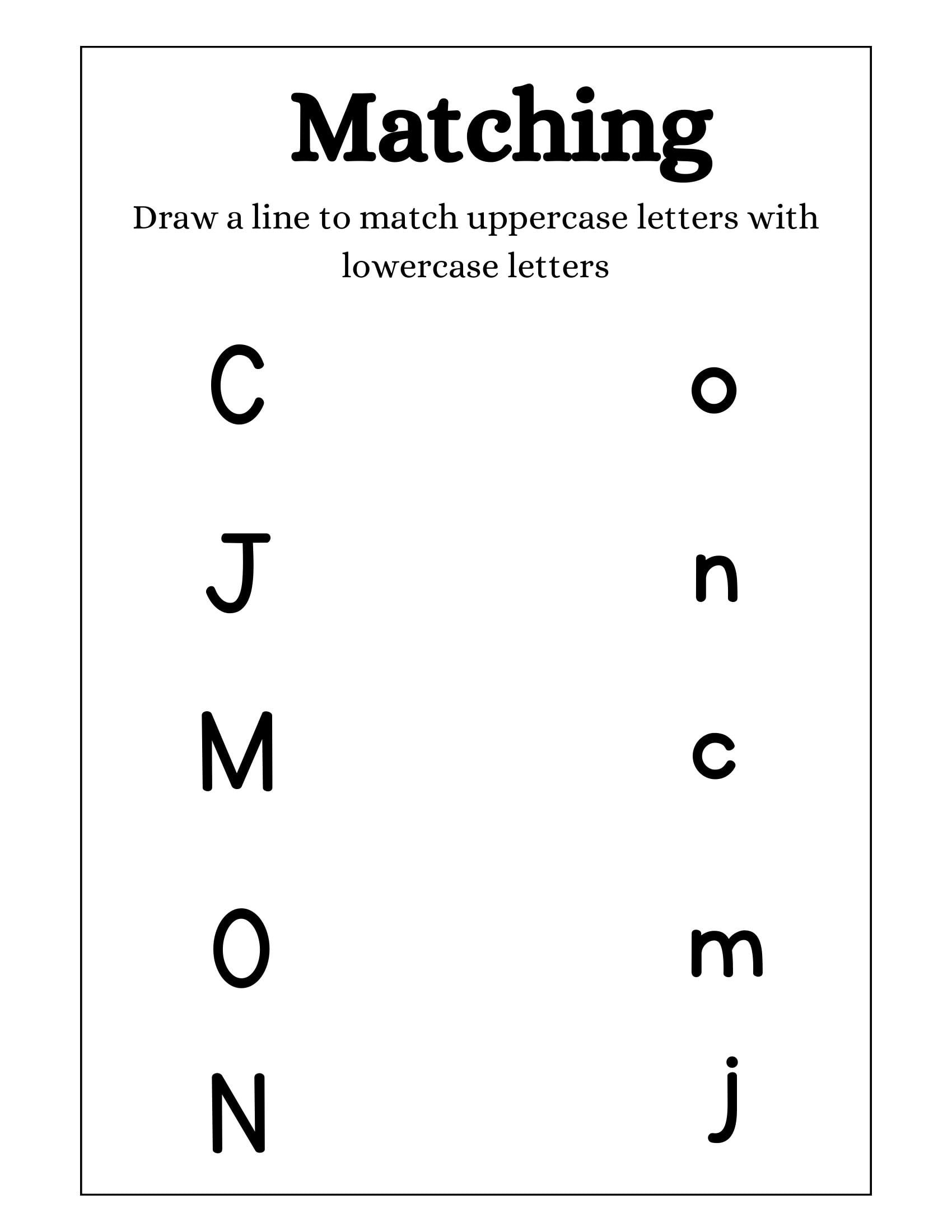
Children continue practicing letter pairs with C, J, M, O, and N. Each uppercase letter needs to be connected with its matching lowercase form.
The activity gives children another chance to compare different letter shapes. Encourage them to name each pair after drawing the line.
20. U, X, V, Y, and N
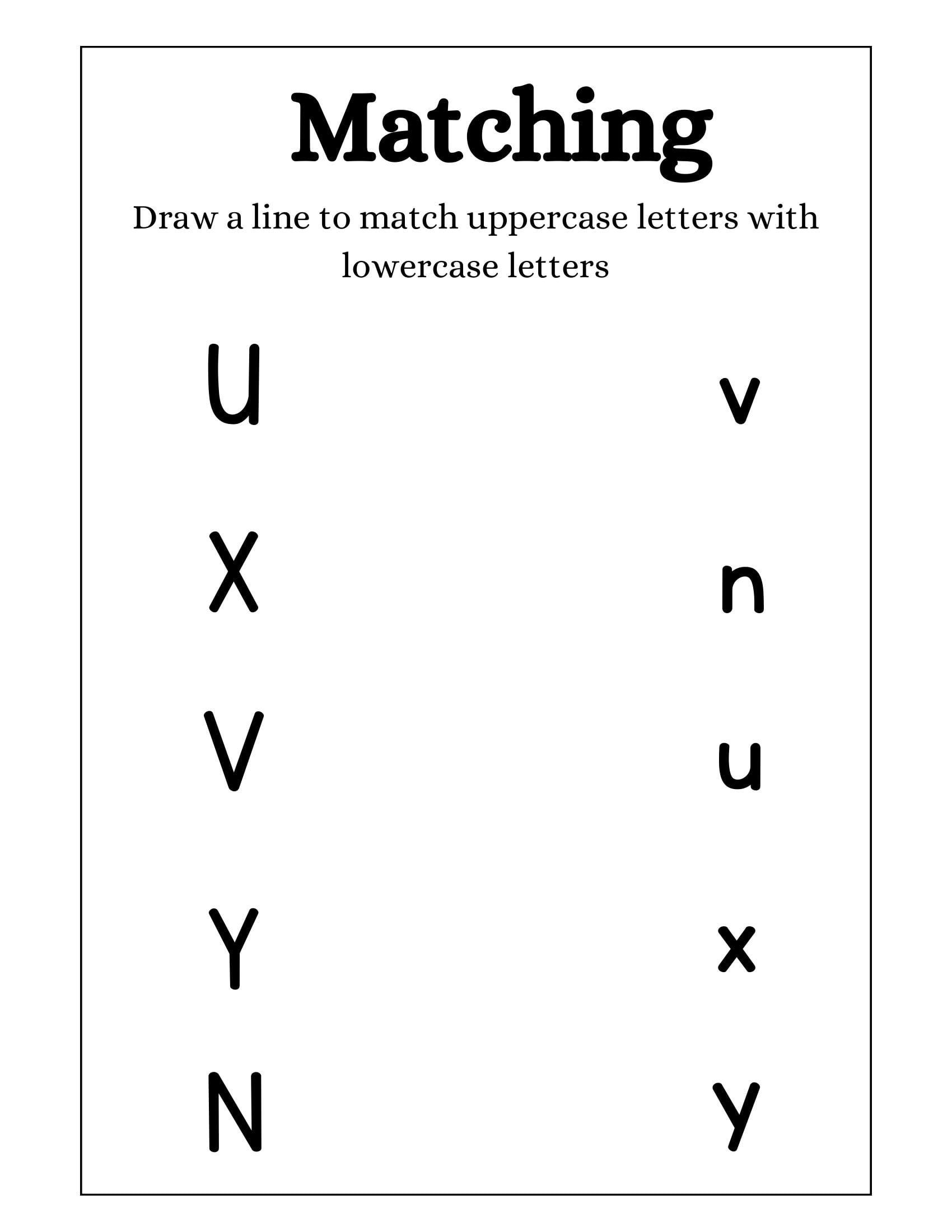
This focuses on U, X, V, Y, and N. Children draw lines between the uppercase letters and their lowercase matches.
The letters are mixed, which keeps the task focused on recognition. This page completes the uppercase-to-lowercase matching section of the printable.
21. A, C, E, B, and D With Pictures
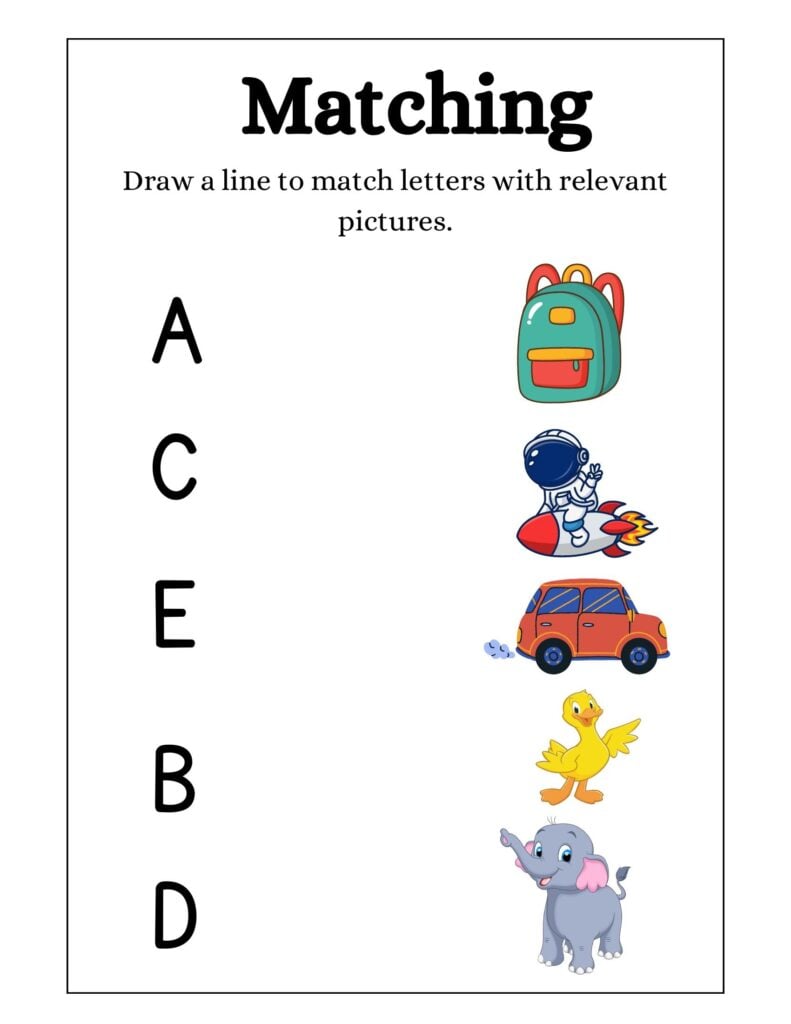
The activity changes again as children begin matching letters with pictures. The page features A, C, E, B, and D.
The pictures include a colorful ball, an ant, a car, a duck, and an egg. Children can name each picture before connecting it to the correct letter.
22. F, I, G, J, and H With Pictures
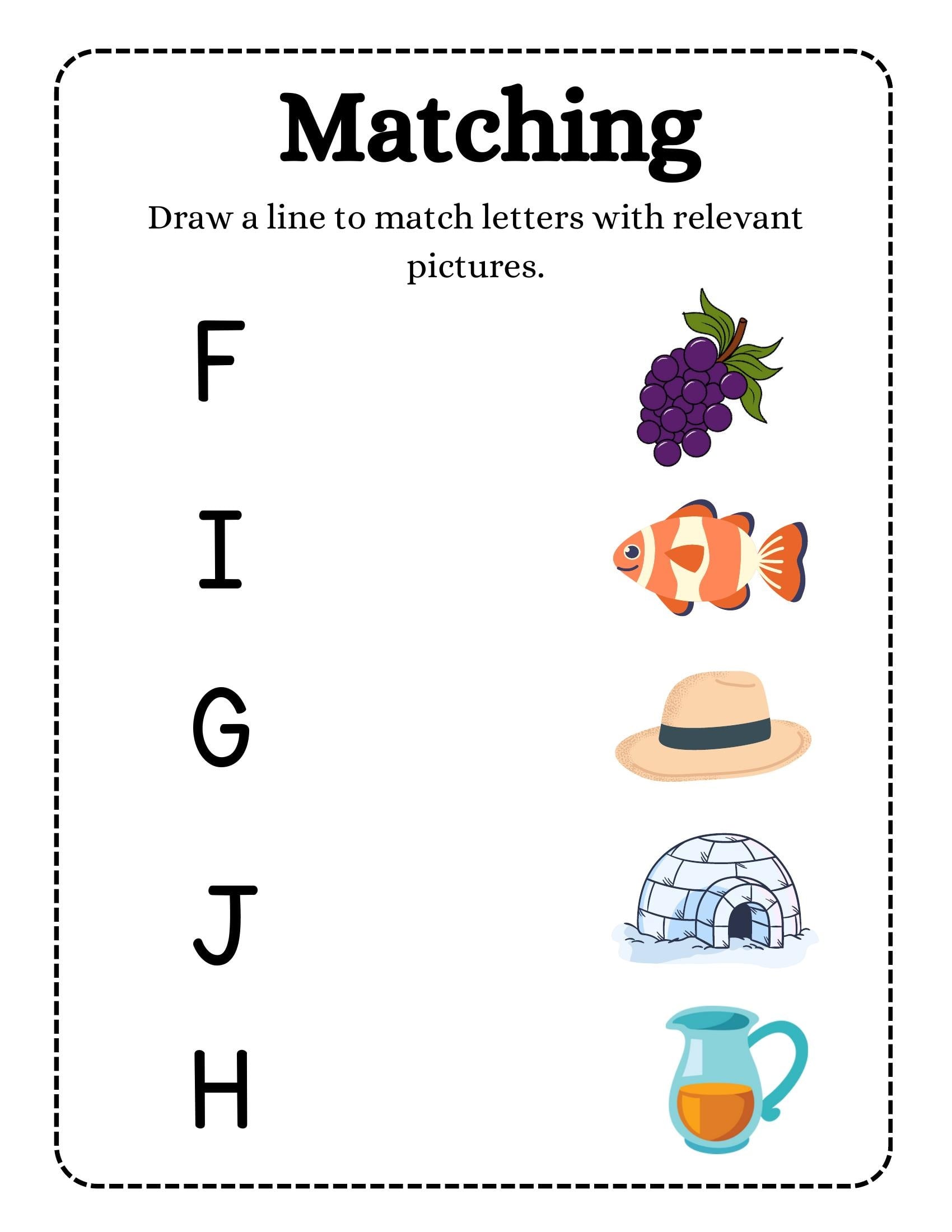
This worksheet gives children five more letters to connect with pictures. The images include grapes, a fish, a hat, an igloo, and a juice pitcher.
Children can use the first sound of each picture name as a helpful clue. Encourage them to say the picture name before drawing each line.
23. M, K, N, L, and O With Pictures
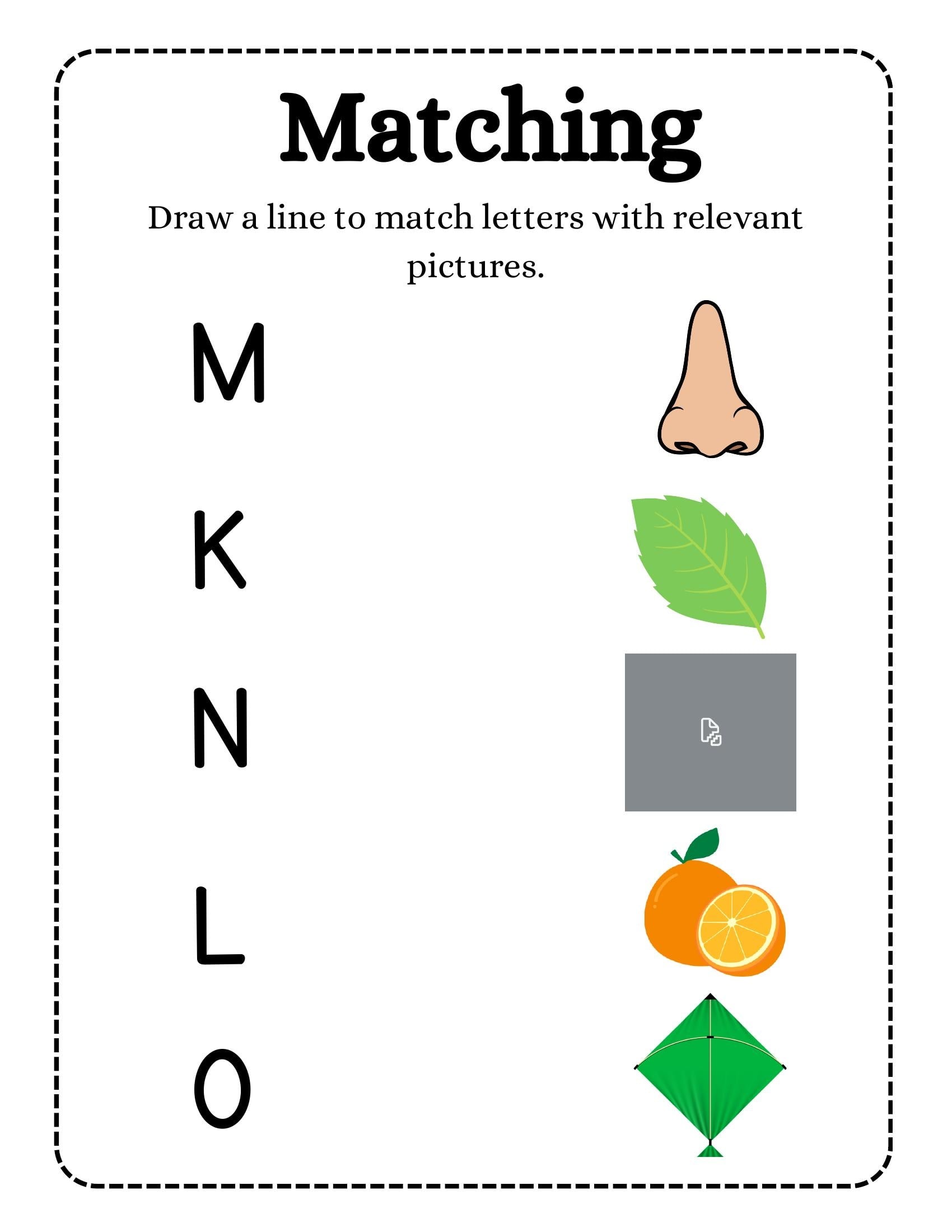
The next activity features M, K, N, L, and O. Children match the letters with pictures such as a nose, leaf, owl, orange, and kite.
The pictures give children familiar visual clues while they practice letter recognition. Ask your child to name each picture and listen for its beginning sound.
24. R, Q, S, P, and T With Pictures
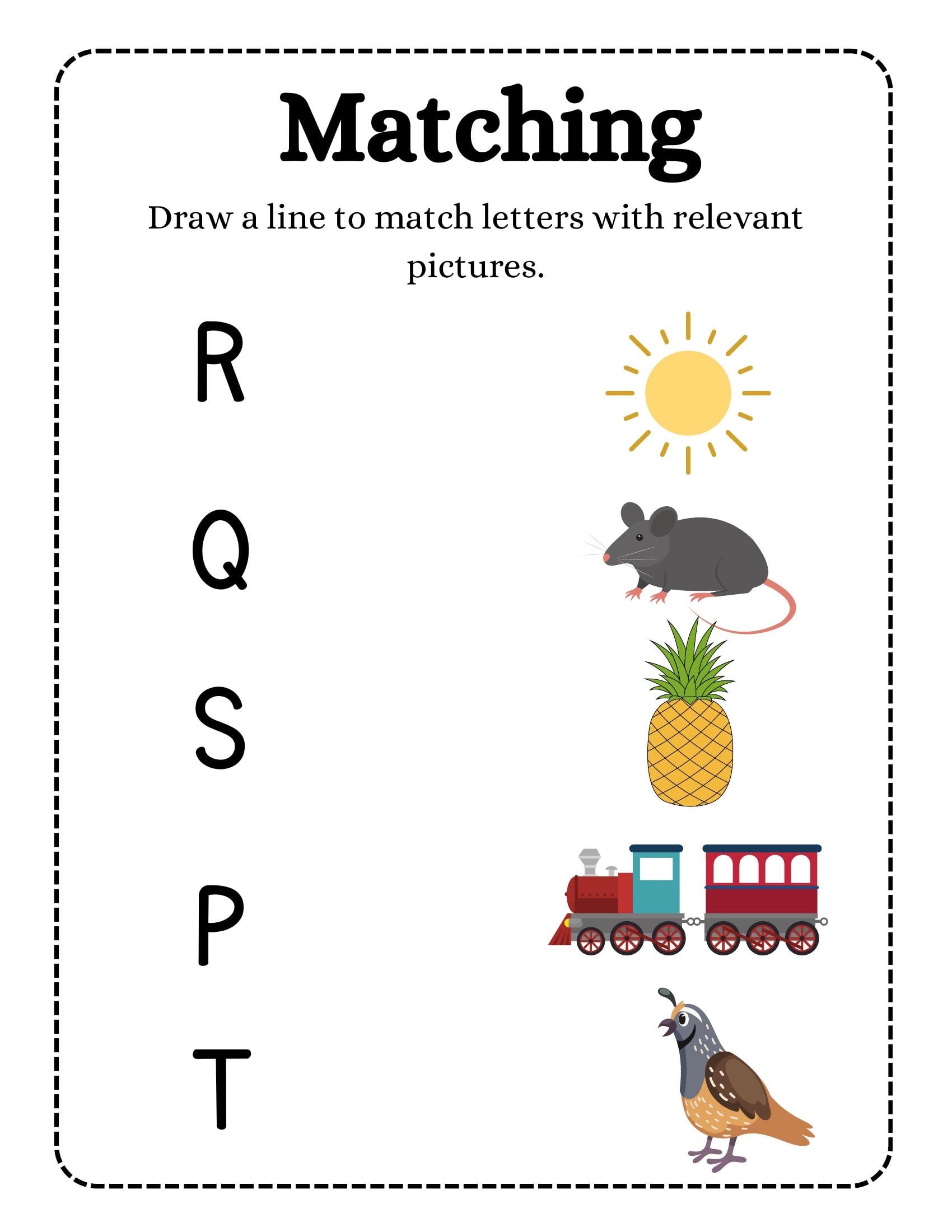
The twenty-fourth page continues the picture matching section with R, Q, S, P, and T. Children look at each letter and connect it with the relevant picture.
This makes the activity more interactive than simply memorizing letter shapes. Let your child identify the pictures aloud as they work.
25. Z, V, W, U, and X With Pictures
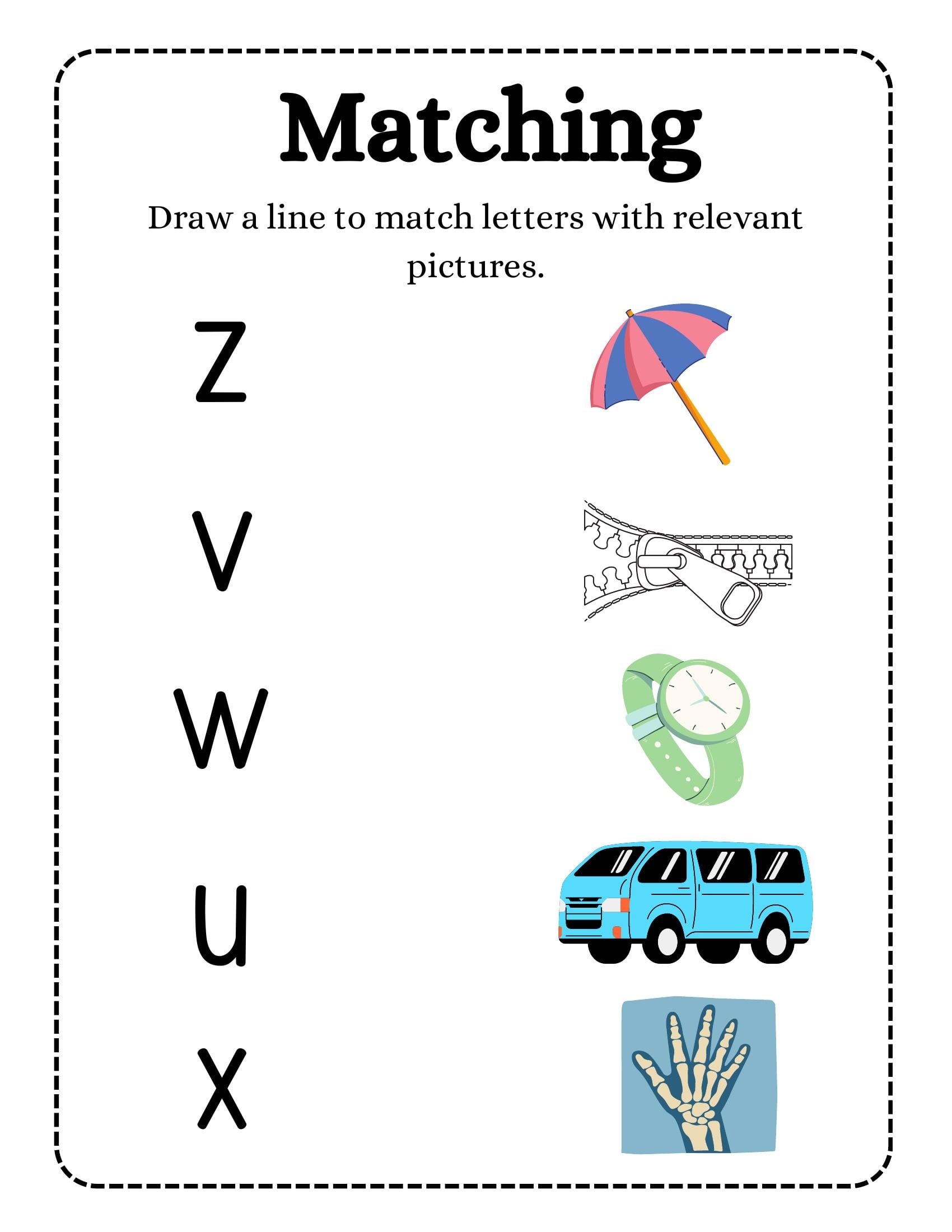
The final worksheet completes the third PDF with Z, V, W, U, and X. Children match each letter with its relevant picture by drawing a line.
This gives them one final opportunity to use picture clues and letter recognition together. Completing the page also gives children a satisfying way to finish the full set of Alphabet Matching Activities.
Final Thoughts
These Alphabet Matching Activities give kids several ways to practice recognizing letters.
Across the three PDFs, children match uppercase letters with lowercase forms, connect letters with pictures, and complete a cut-and-paste task.
This variety can make alphabet practice feel more active and enjoyable.
For parents and teachers, the activities can work well during short learning sessions. You can introduce a few pages at a time and give children plenty of time to study each choice.
Encourage them to say letters and picture names aloud as they work. If a match feels difficult, guide them toward the correct choice without taking over the activity.
The worksheets can also be revisited after the first round. Children may recognize more letter pairs each time they practice.
Keep completed pages in a folder and use them for quick alphabet reviews later.
With regular practice, these simple activities can support growing confidence with uppercase letters, lowercase letters, and familiar pictures.