
29 Simple Grammar Worksheets for Kids
Disclosure: Some of the links in this post are affiliate links. This means if you click on the link and purchase an item, I will receive an affiliate commission at no extra cost to you.
Learning grammar becomes easier when children can practice one skill at a time. Young learners need simple examples that show how words work inside everyday sentences.
These Grammar Worksheets for Kids bring several important language skills together in one printable collection.
The activities give children opportunities to identify nouns, recognize subjects, work with verbs, and practice vowels.
The collection begins with NOUN, which contains ten worksheets. Children highlight nouns in sentences and then rewrite each sentence on the provided lines.
The next file, VERBS, focuses on identifying subjects and separating subjects from predicates. It also includes pages where children identify subjects and verbs in complete sentences.
After that comes another set of VERBS, which gives children eight pages of verb practice. They circle the correct verb in each sentence and work with different verb forms.
The final file, VOWELS, focuses on recognizing vowels and finding specific vowels among other letters.
Together, these pages create a varied set of activities for children who are building their grammar and language skills.
29 Simple Grammar Worksheets for Kids
NOUN: Noun Identification Worksheets
1. Finding Nouns in Everyday Sentences
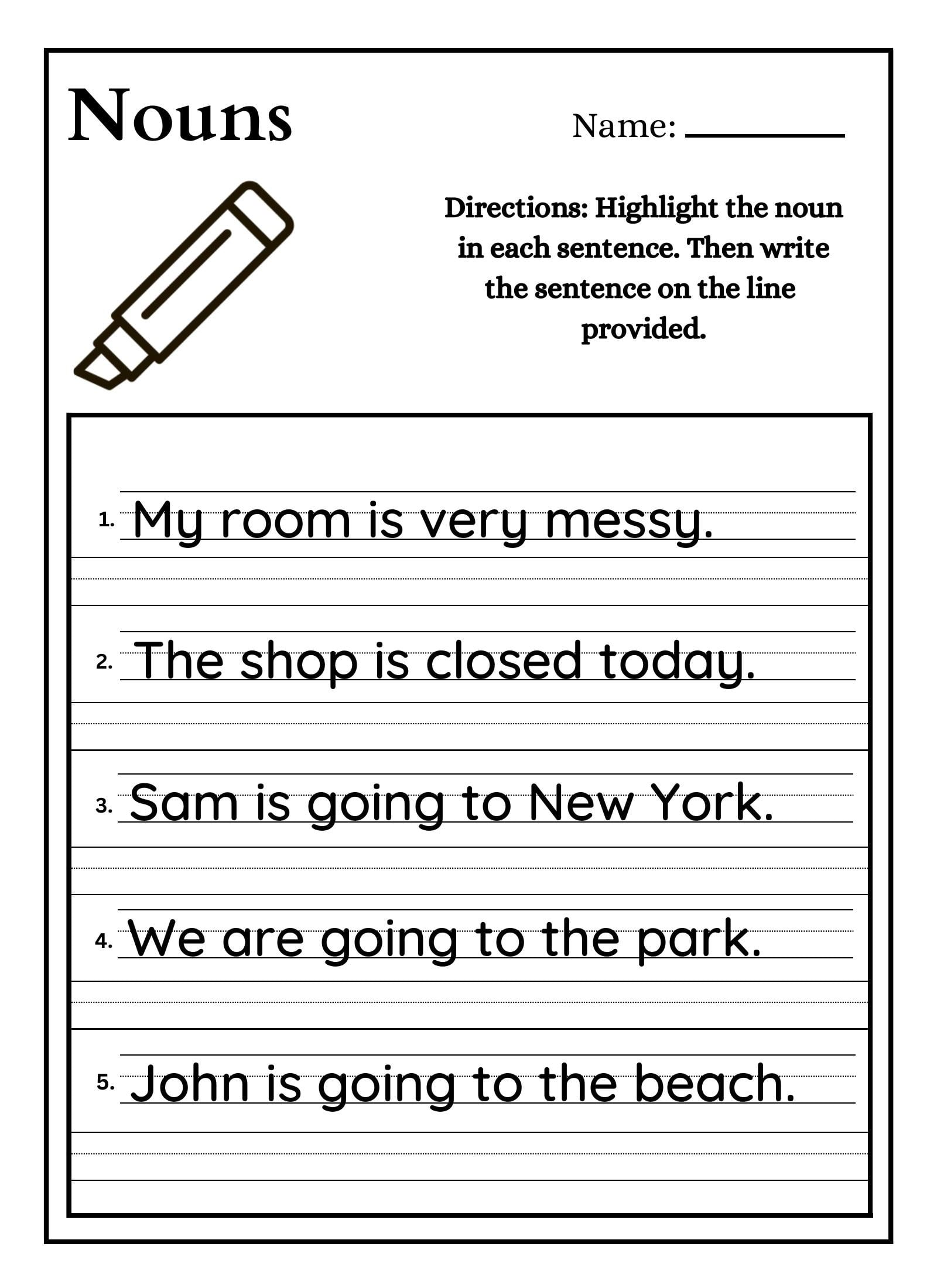
The first worksheet introduces children to nouns through five simple sentences. Examples include a messy room, a closed shop, New York, a park, and a beach.
Children must highlight the noun in each sentence. They then rewrite each sentence on the lines provided.
2. Nouns in Simple Sentences
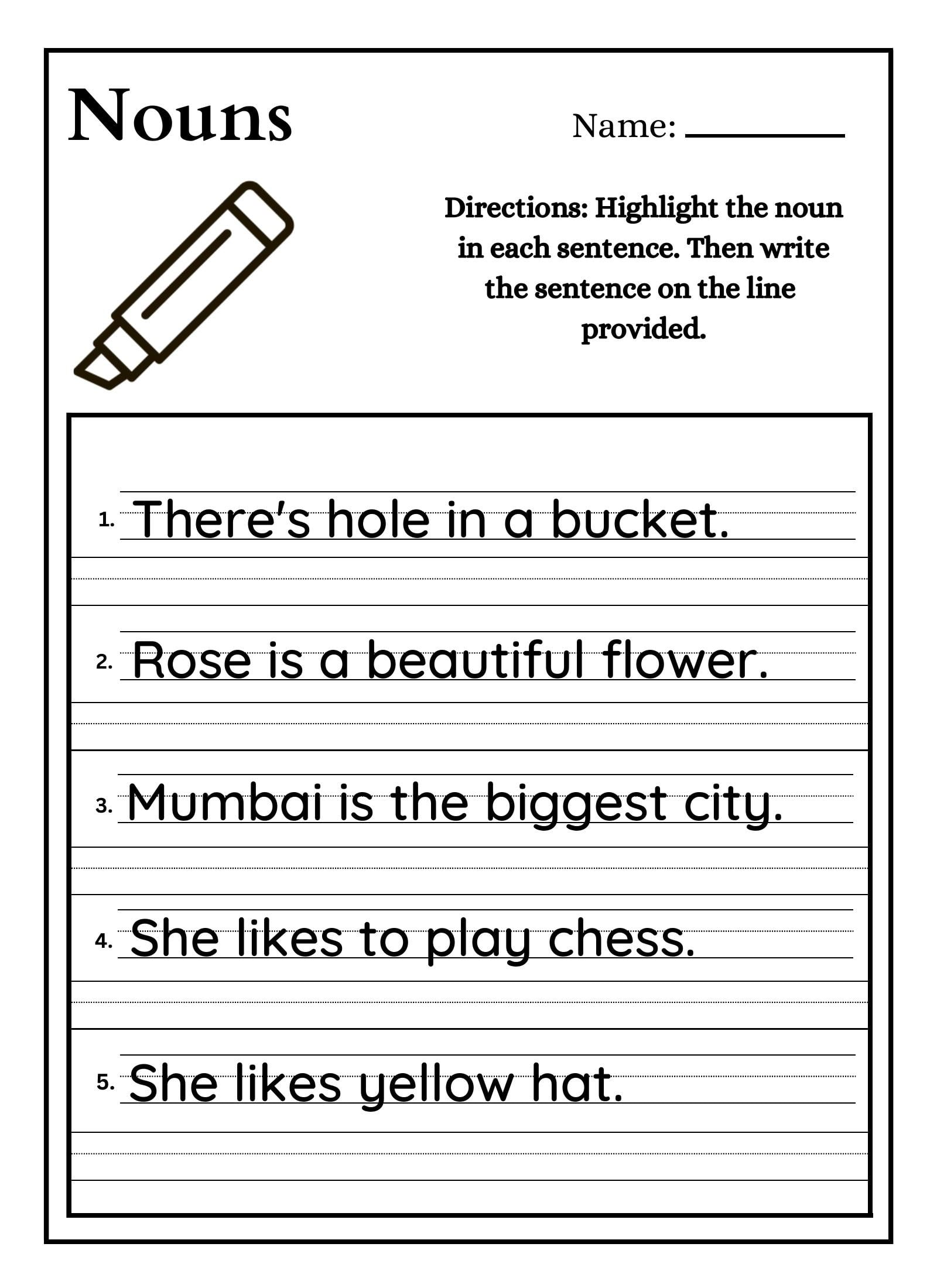
The second page continues with sentences about a bucket, flower, city, chess, and hat. Children need to look beyond the action words and find the naming words.
This helps them notice how nouns appear in regular sentences. After highlighting, they practice writing each sentence again.
3. People, Places, and Things
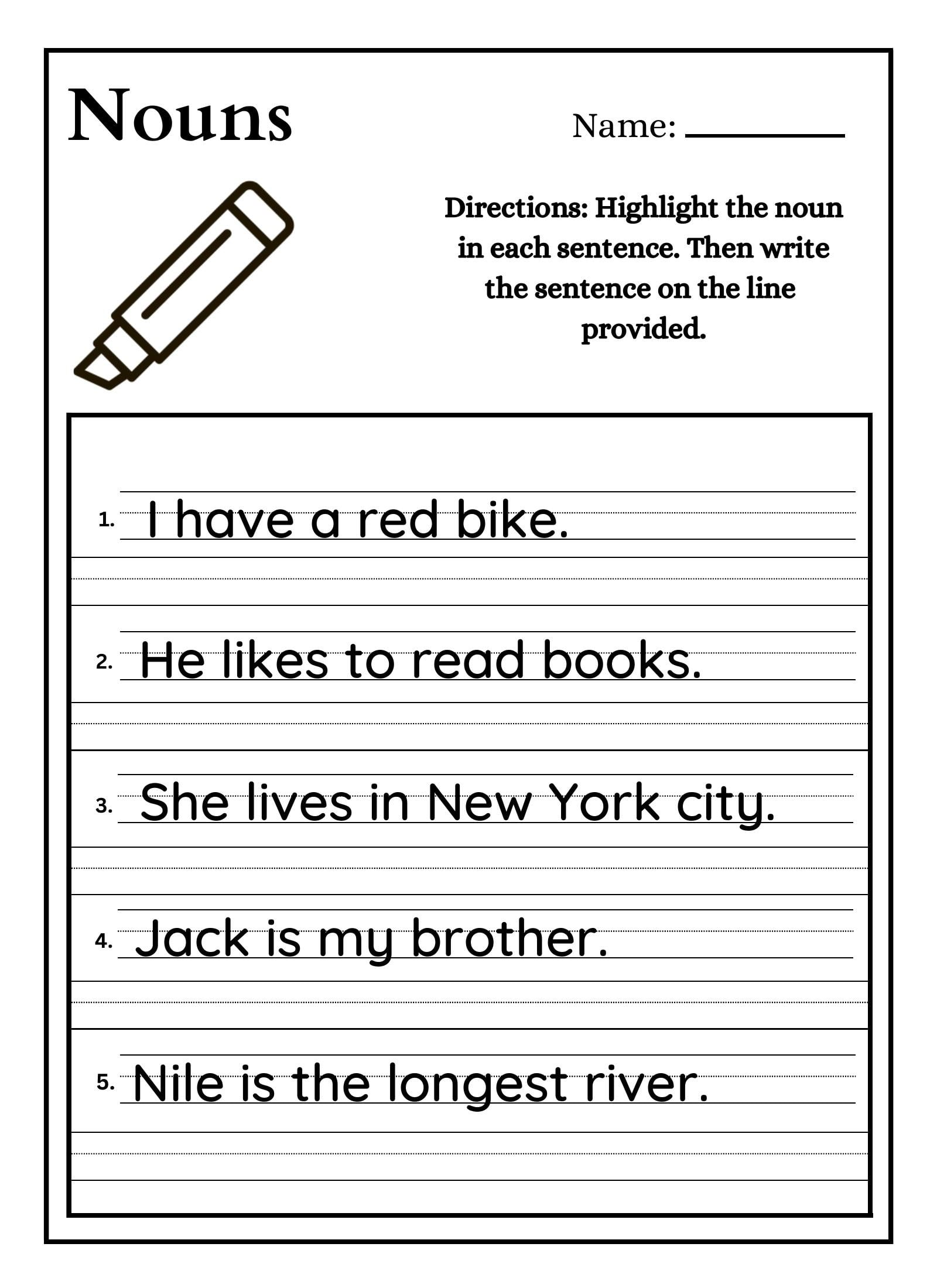
This worksheet gives children another five sentences to examine. The examples mention a bike, books, New York City, a brother, and the Nile River.
Children highlight the nouns before copying the sentences. The mix of people, places, and things gives them different examples to consider.
4. Nouns With Animals and Objects
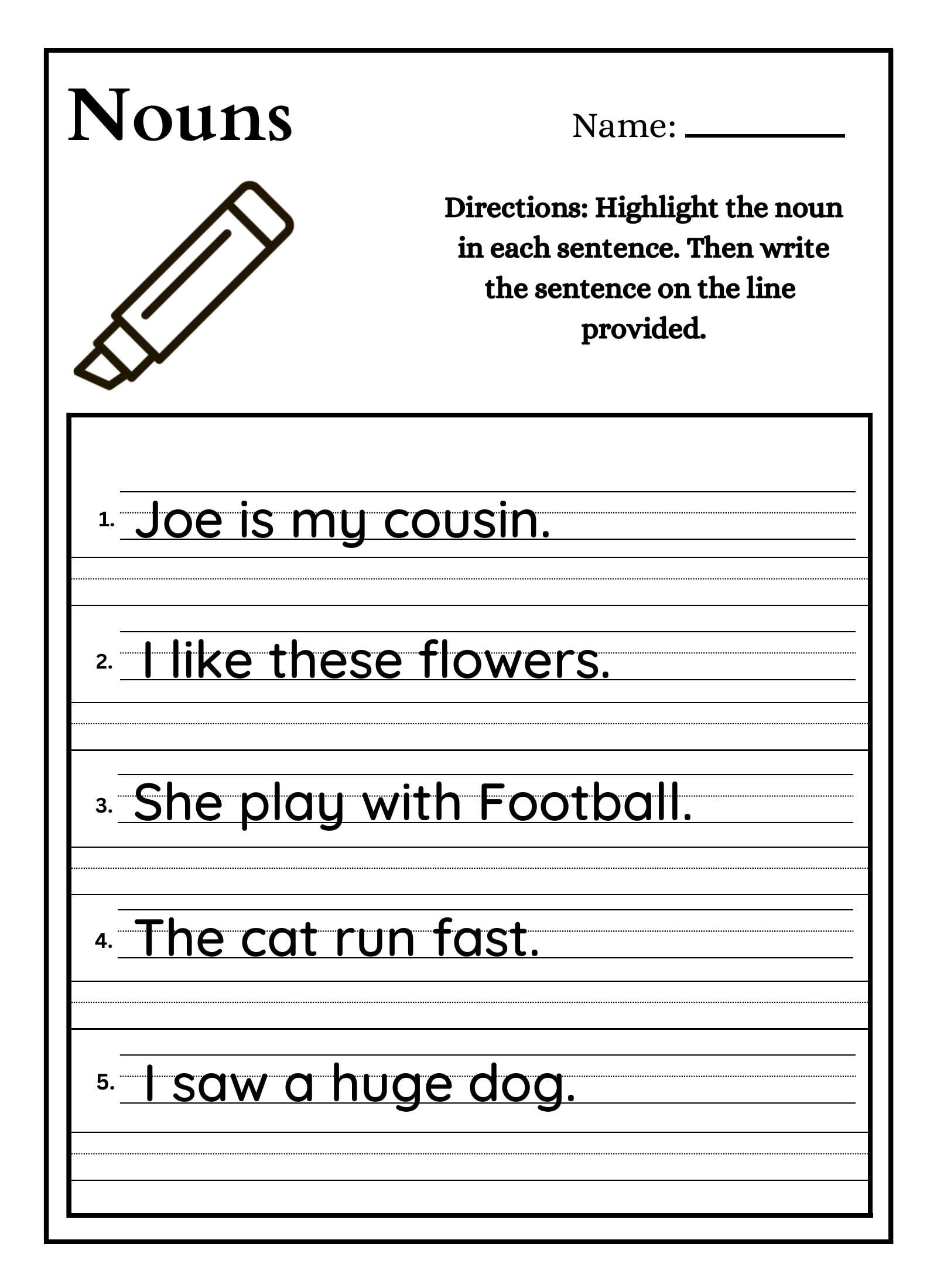
The fourth page includes a cousin, flowers, football, cat, and dog. Children identify the noun within each sentence and then rewrite it.
Some sentences contain several words that may attract attention. Encourage your child to focus on the person, animal, place, or thing being named.
5. Clothes, Phones, Dishes, and Nature
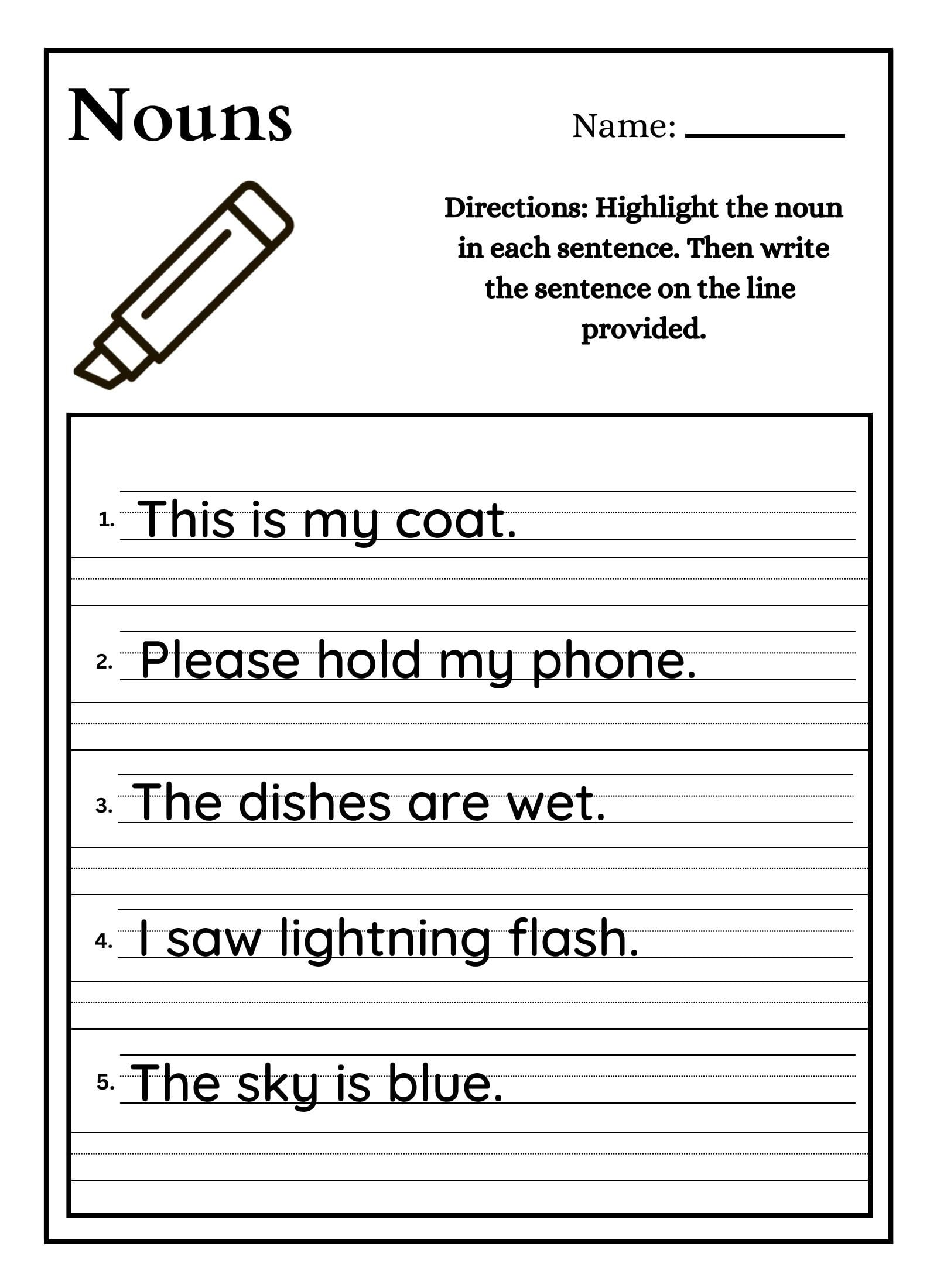
Children continue their noun practice with sentences about a coat, phone, dishes, lightning, and sky. The examples introduce both everyday objects and things found in nature.
Ask your child to read each sentence slowly before highlighting. Rewriting the sentences also gives them extra writing practice.
6. Nouns in Questions and Statements
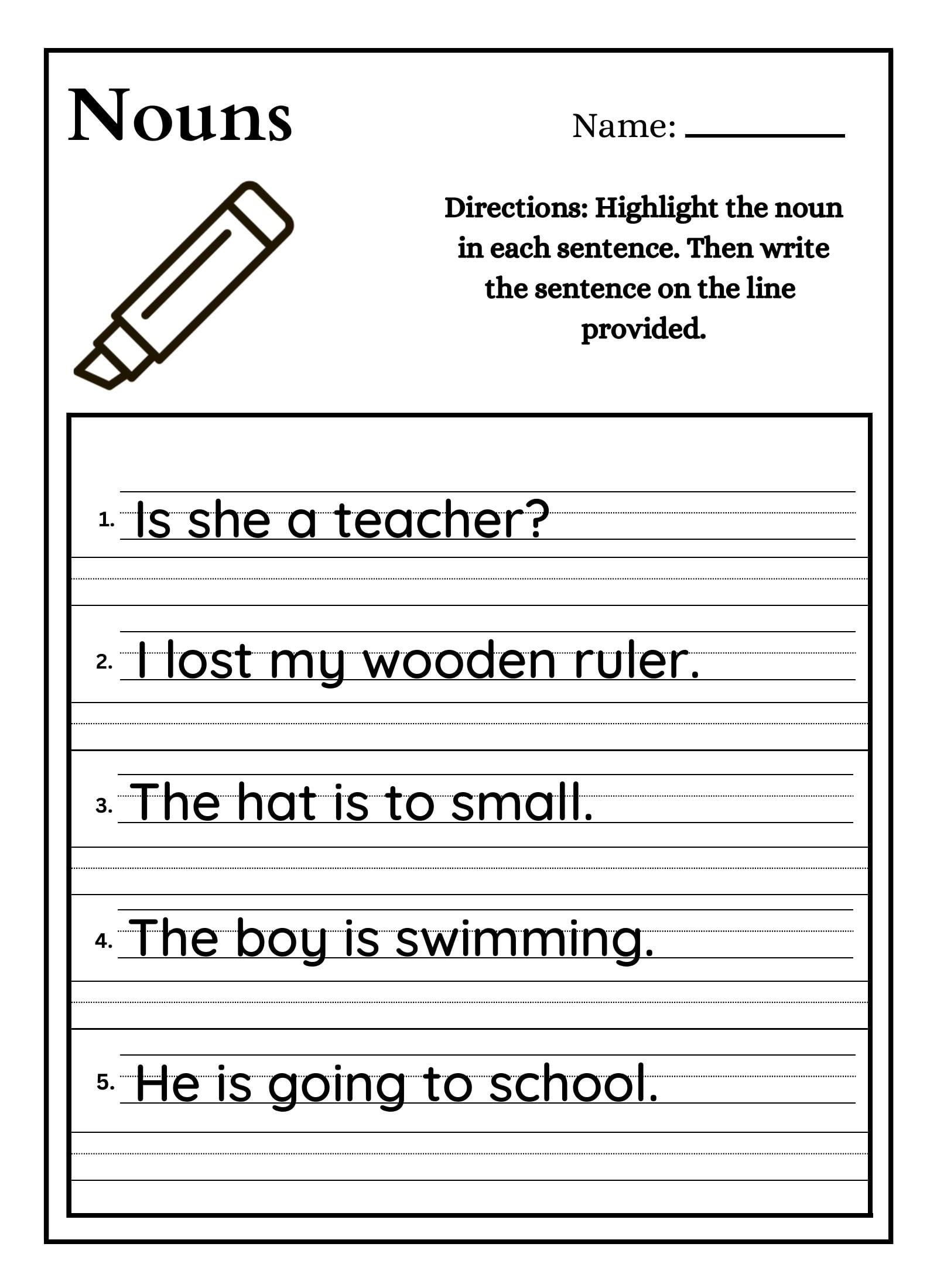
This page gives children five more sentences to explore. They include a teacher, ruler, hat, boy, and school.
One sentence is written as a question, giving children a different sentence style to read. The main task remains finding and highlighting the noun.
7. More Everyday Noun Practice
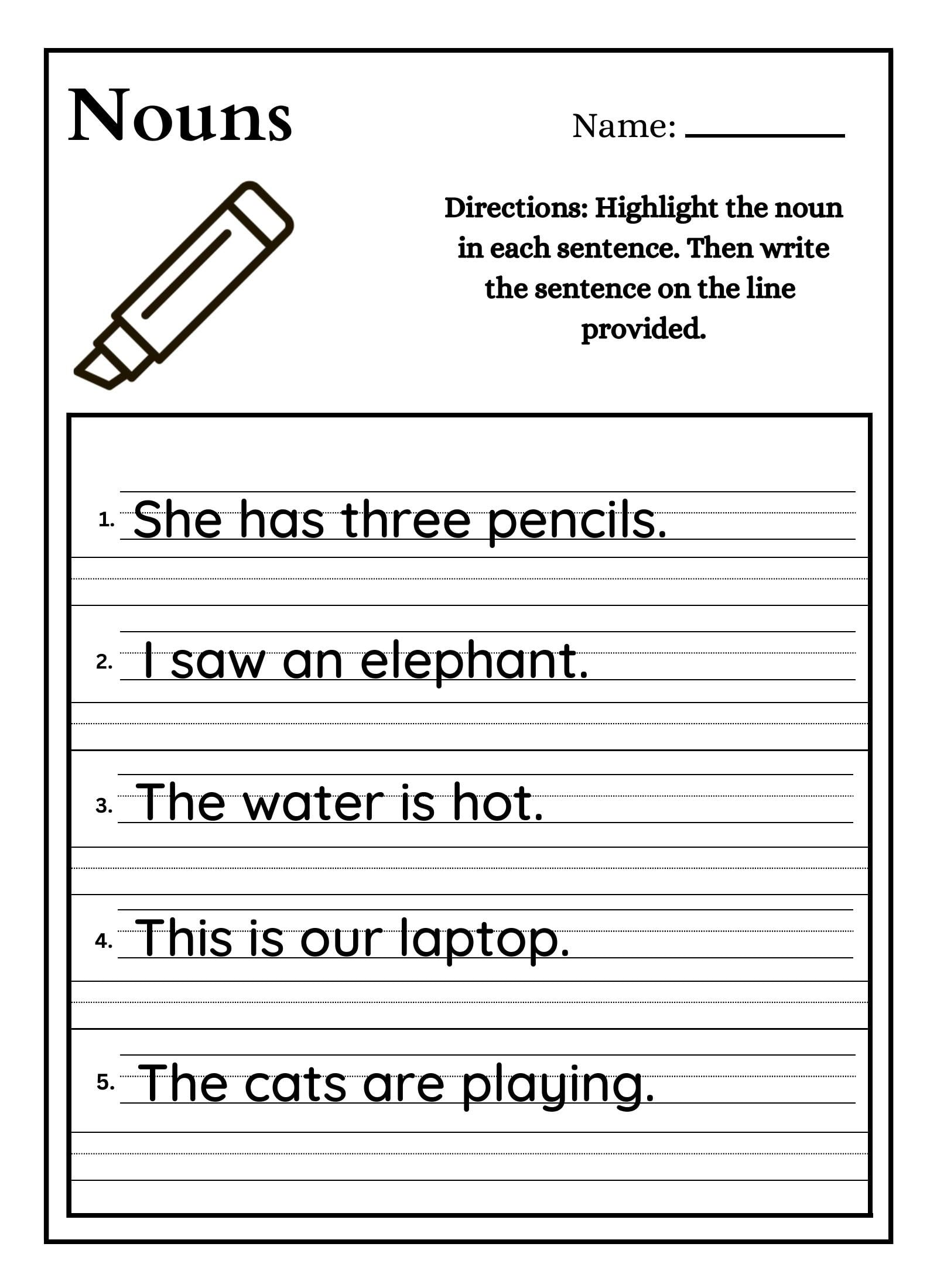
The seventh worksheet uses examples involving pencils, an elephant, water, a laptop, and cats. Children highlight the noun in each sentence before rewriting it.
These familiar subjects can make the task easier to understand. Let your child name the noun aloud before writing the sentence.
8. Animals, Places, and Objects
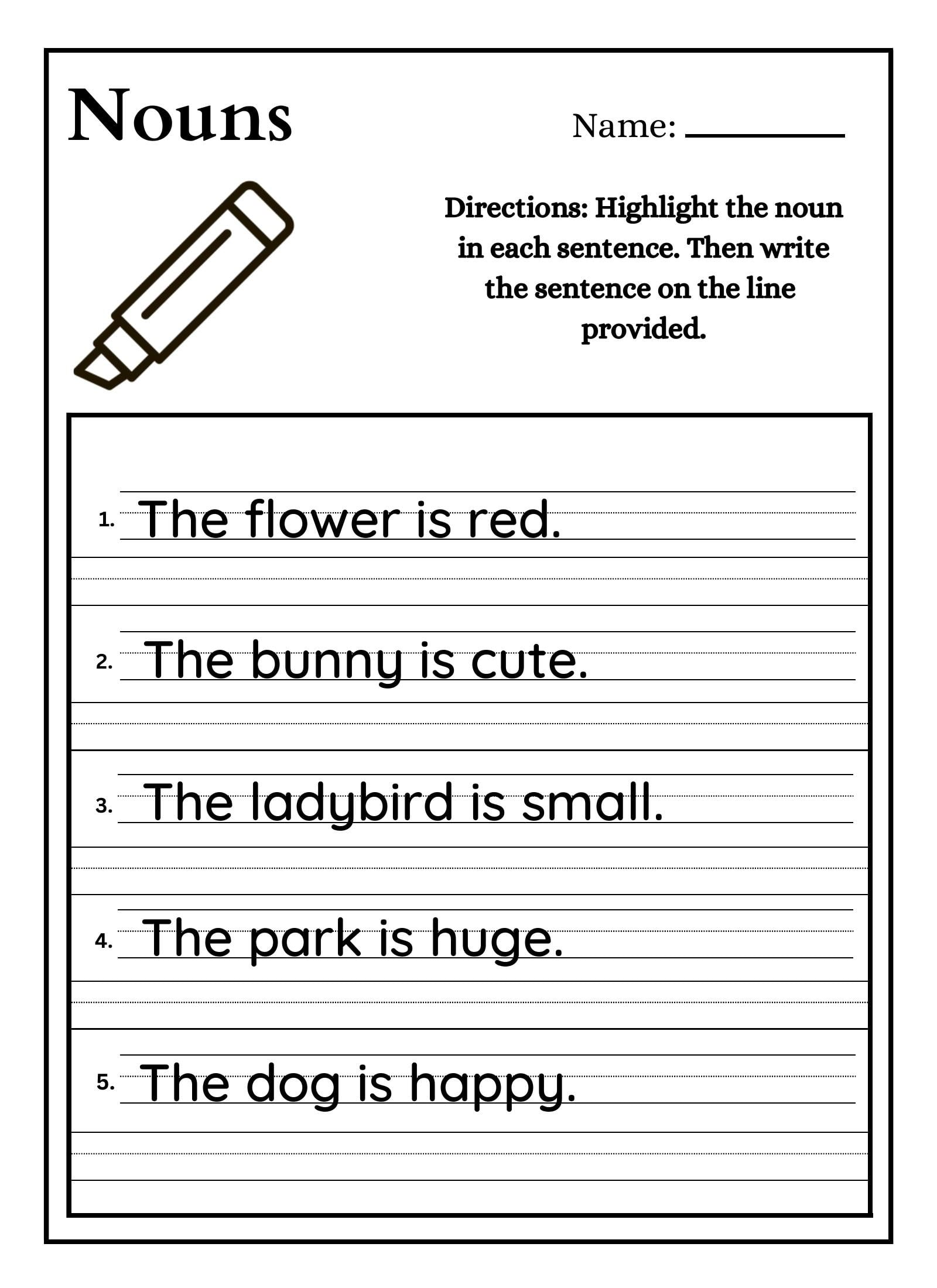
This page features a flower, bunny, ladybird, park, and dog. Children identify the noun in each short sentence.
The simple sentence structure keeps attention on the target word. After highlighting, they copy each sentence onto the writing lines.
9. Nouns in Longer Sentences
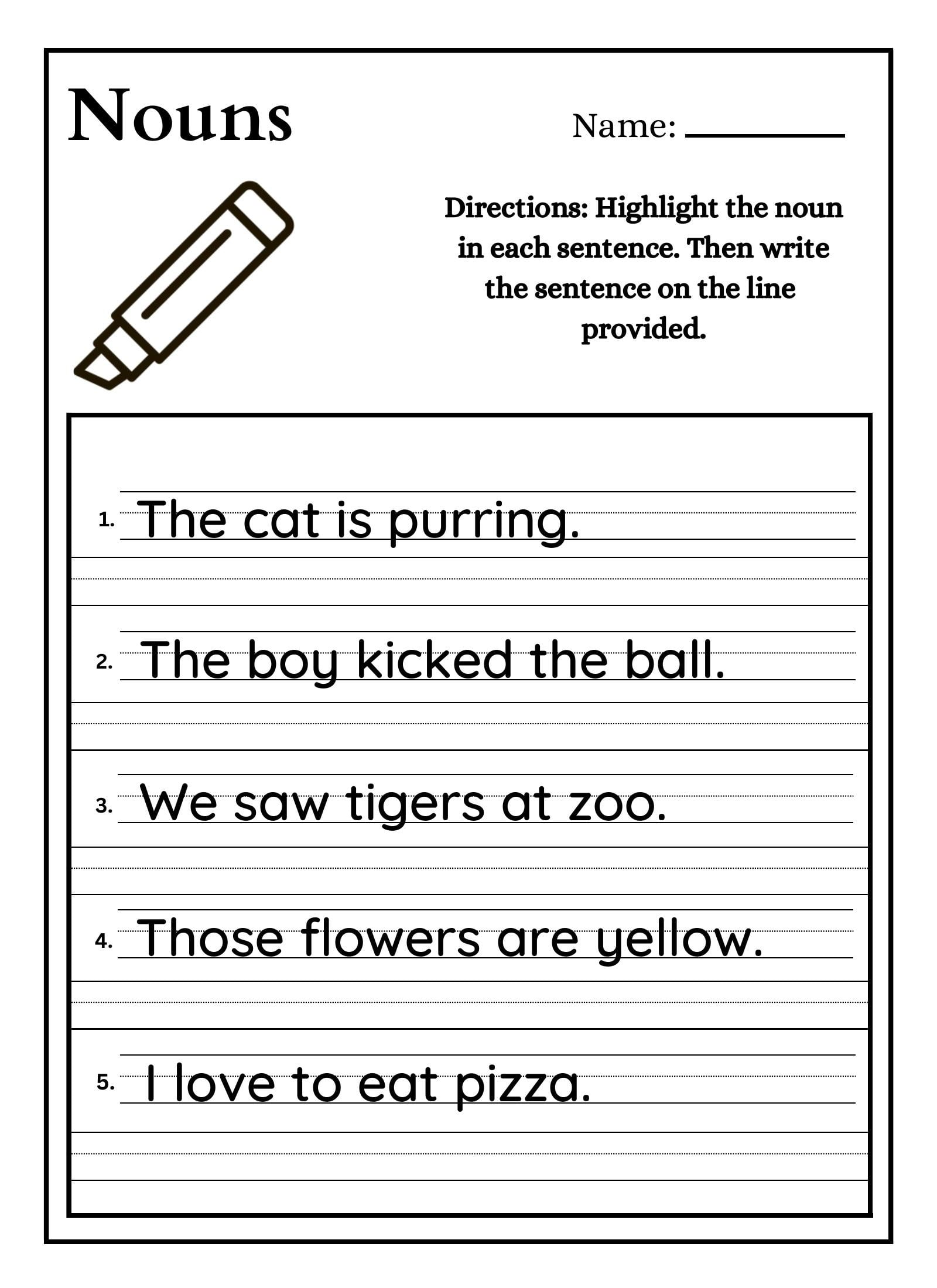
The ninth worksheet includes a cat, boy, ball, tigers, zoo, flowers, and pizza. Some sentences contain more than one possible noun.
This gives children a chance to look carefully at the complete sentence. Encourage them to identify the word that functions as the noun before rewriting.
10. Final Noun Review
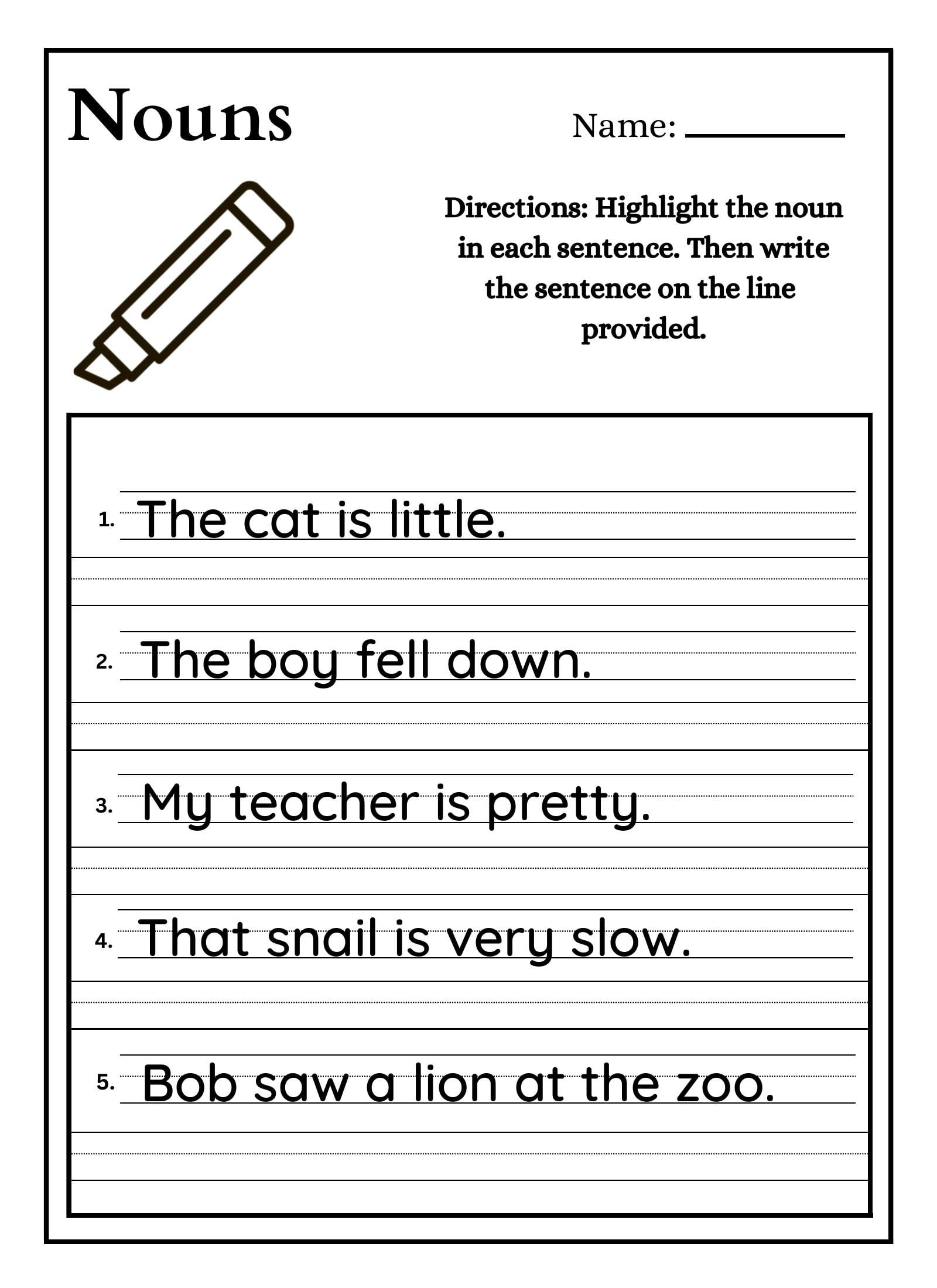
The last noun worksheet includes a cat, boy, teacher, snail, lion, and zoo. Children highlight the nouns before copying the sentences.
The familiar examples make this a comfortable way to finish the section. It also gives children one more opportunity to practice identifying nouns independently.
VERBS: Subjects, Predicates, and Sentence Parts
11. Identifying Subjects
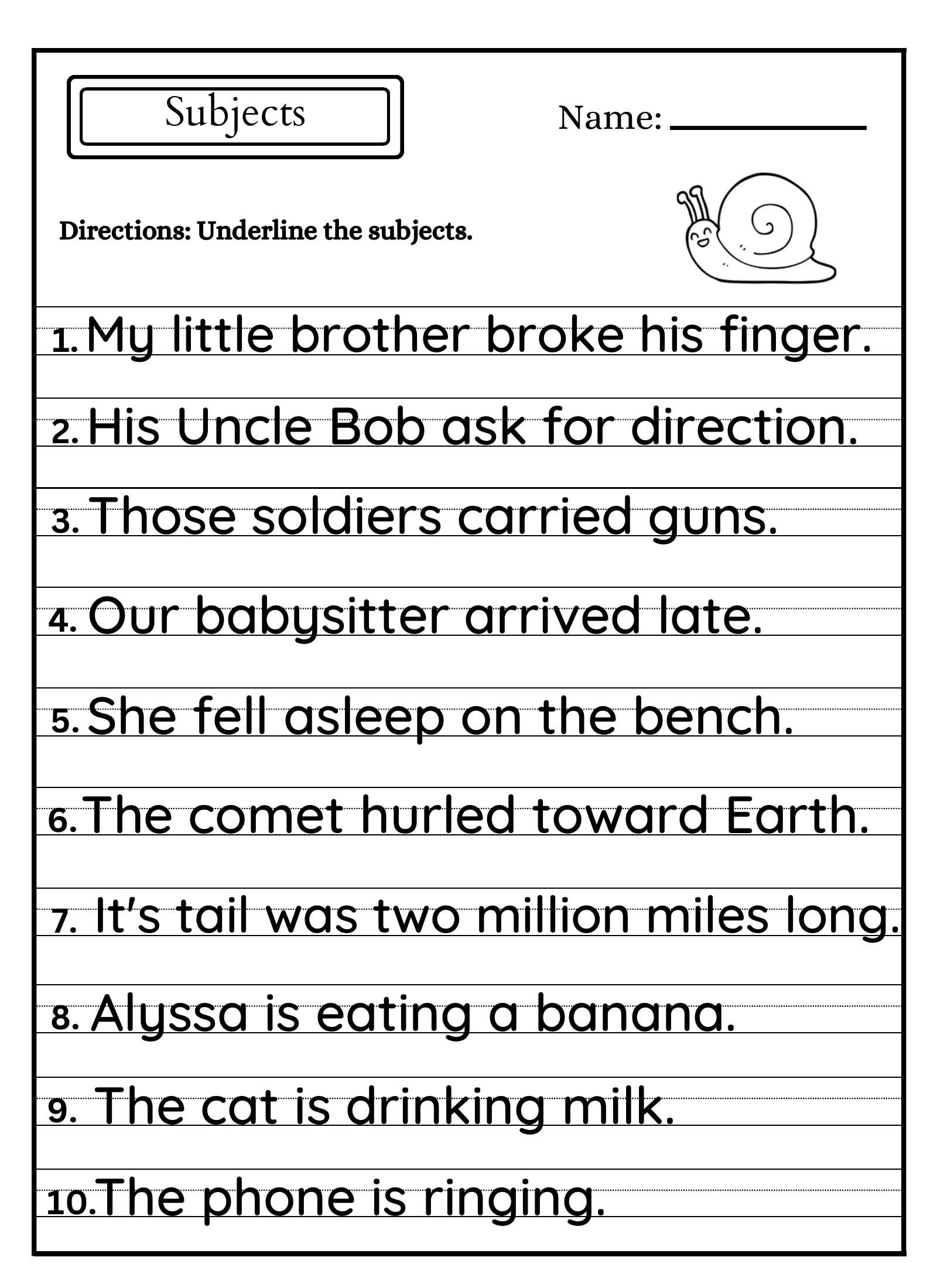
The first worksheet asks children to underline the subjects in ten sentences. Examples include a little brother, Uncle Bob, soldiers, a babysitter, a comet, Alyssa, a cat, and a phone.
Children read each sentence and decide who or what the sentence is about. This gives them useful practice before moving into more detailed sentence work.
12. Finding Subjects in Sentences
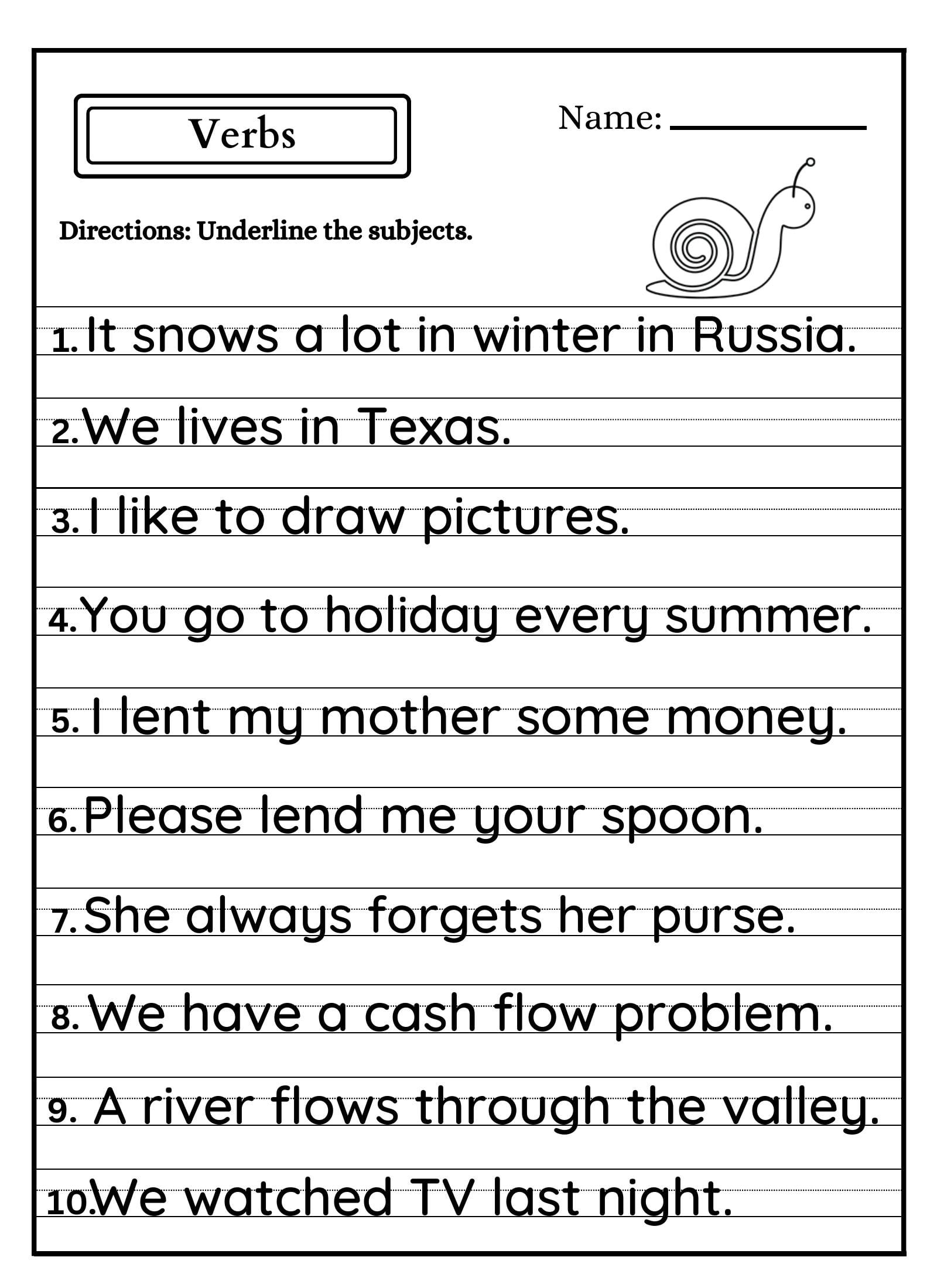
The second page continues subject identification with sentences about snow, Texas, drawing, holidays, money, a spoon, a purse, a river, and television.
Children underline the subject in each sentence. The examples include different pronouns and nouns. This helps children see that a subject can appear in several forms.
13. Matching Subjects and Predicates
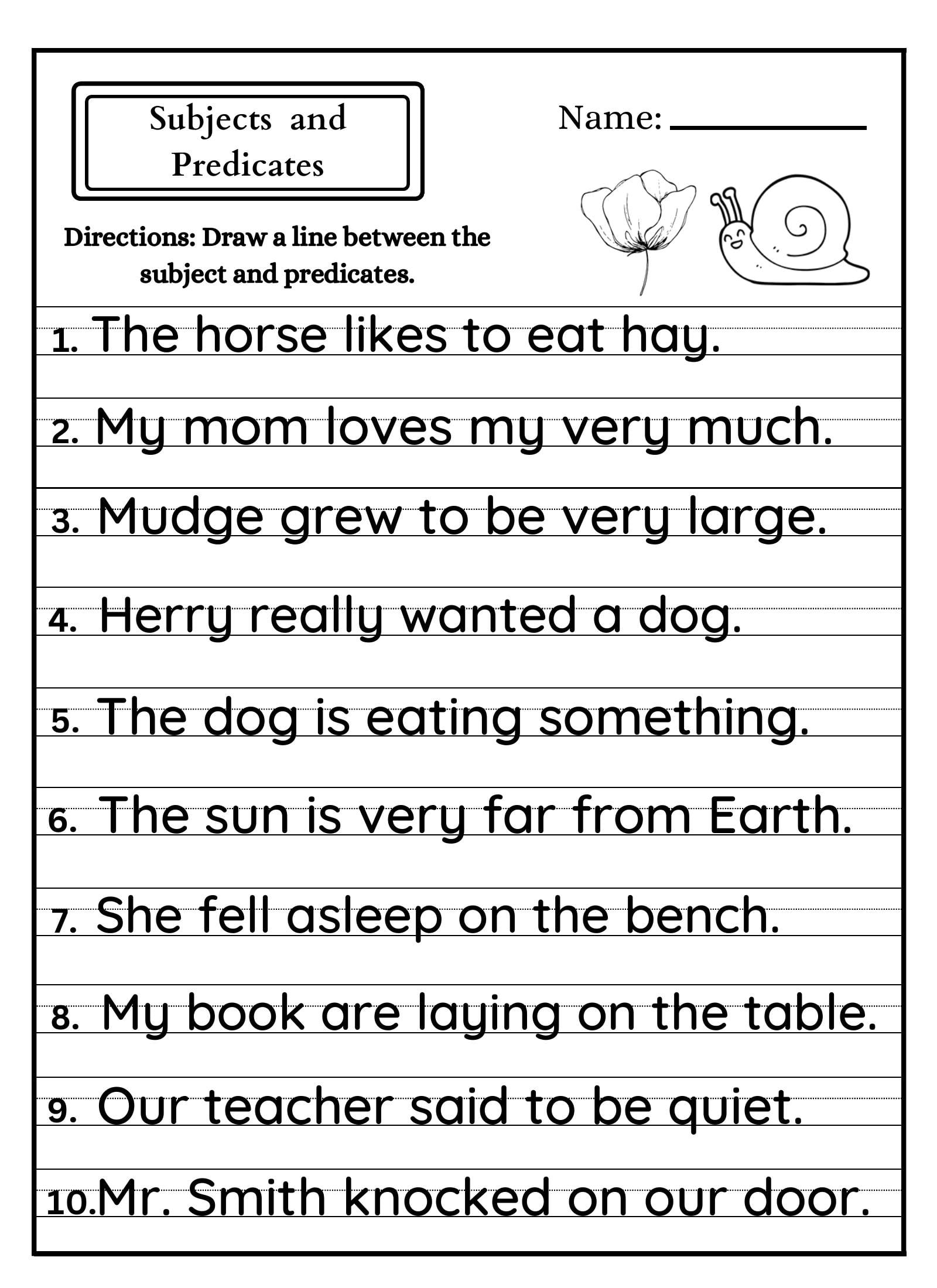
The third worksheet introduces subjects and predicates together. Children draw a line between the subject and predicate in each sentence.
The examples include a horse, mom, Mudge, Herry, a dog, the sun, a teacher, and Mr. Smith. This activity encourages children to see how different parts work together to form a sentence.
14. More Subject and Predicate Practice
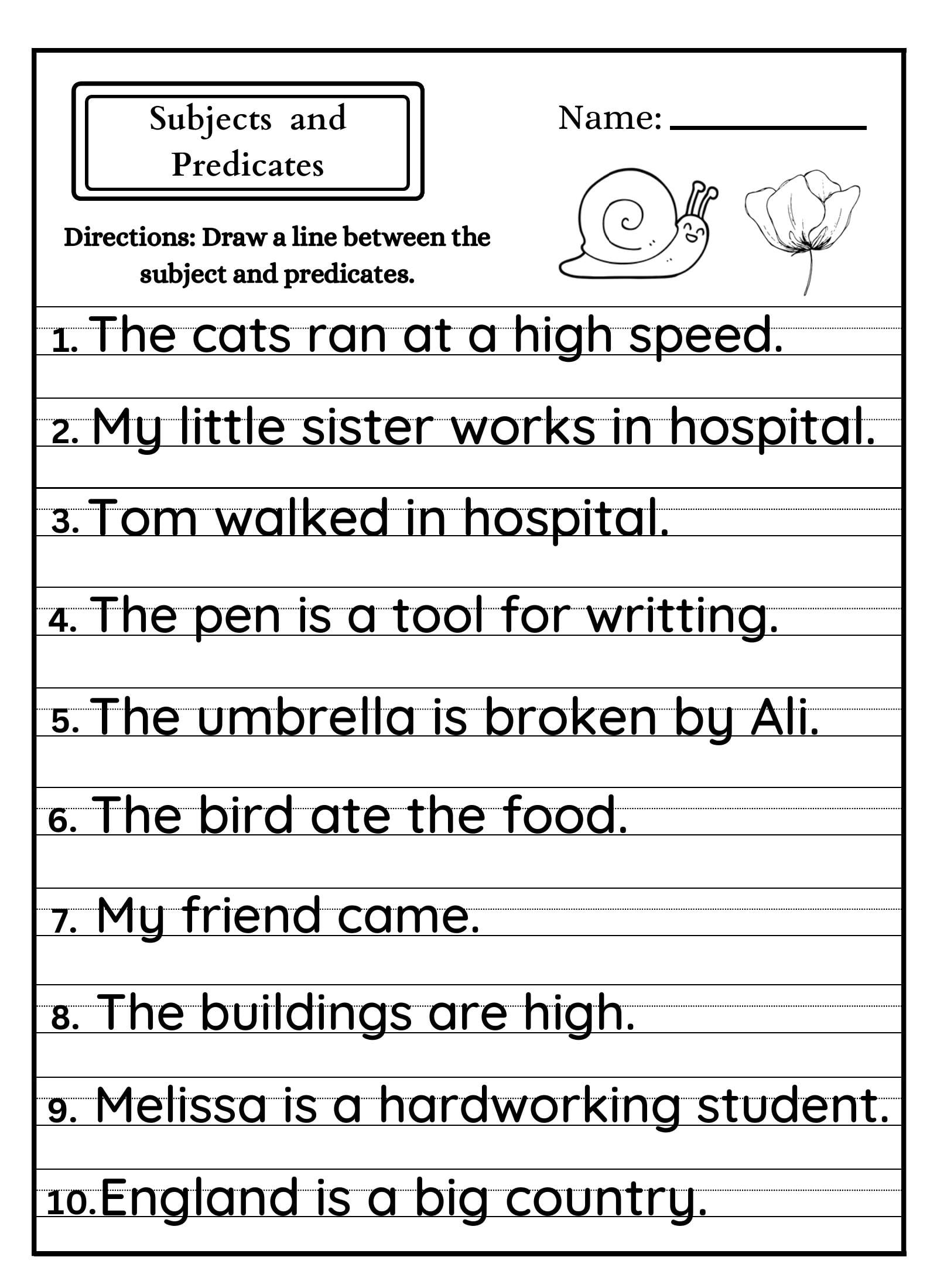
The fourth page continues the same activity with ten new sentences. Examples mention cats, a little sister, Tom, a pen, an umbrella, a bird, buildings, Melissa, and England.
Children separate the subject from the predicate by drawing a line. This gives them more practice spotting the two main sentence parts.
15. Subjects and Verbs Together
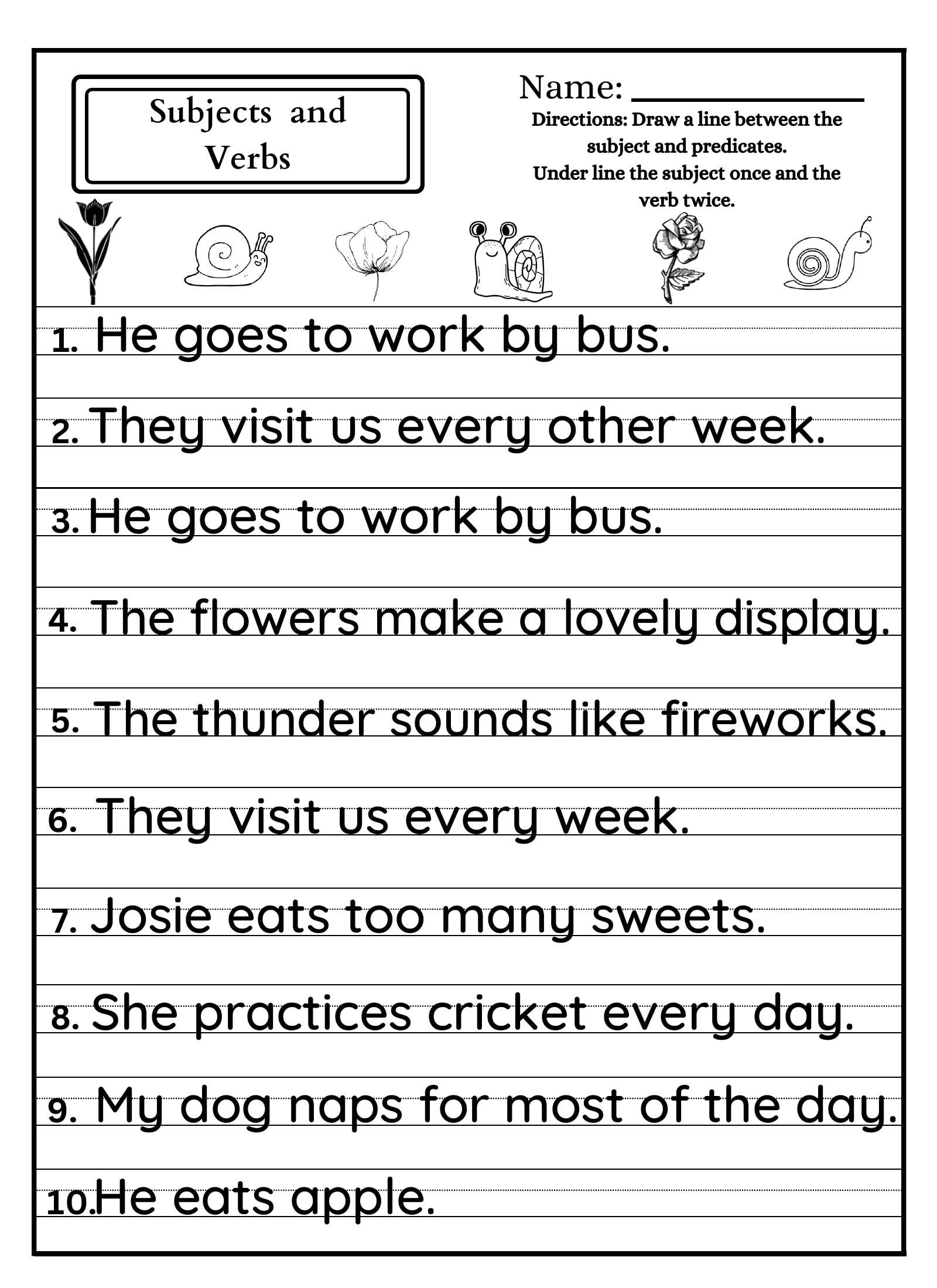
The fifth worksheet combines subject and verb practice. Children draw a line between the subject and predicate.
They also underline the subject once and the verb twice. The sentences include people, flowers, thunder, Josie, a dog, and other familiar examples.
16. Final Subjects and Verbs Review
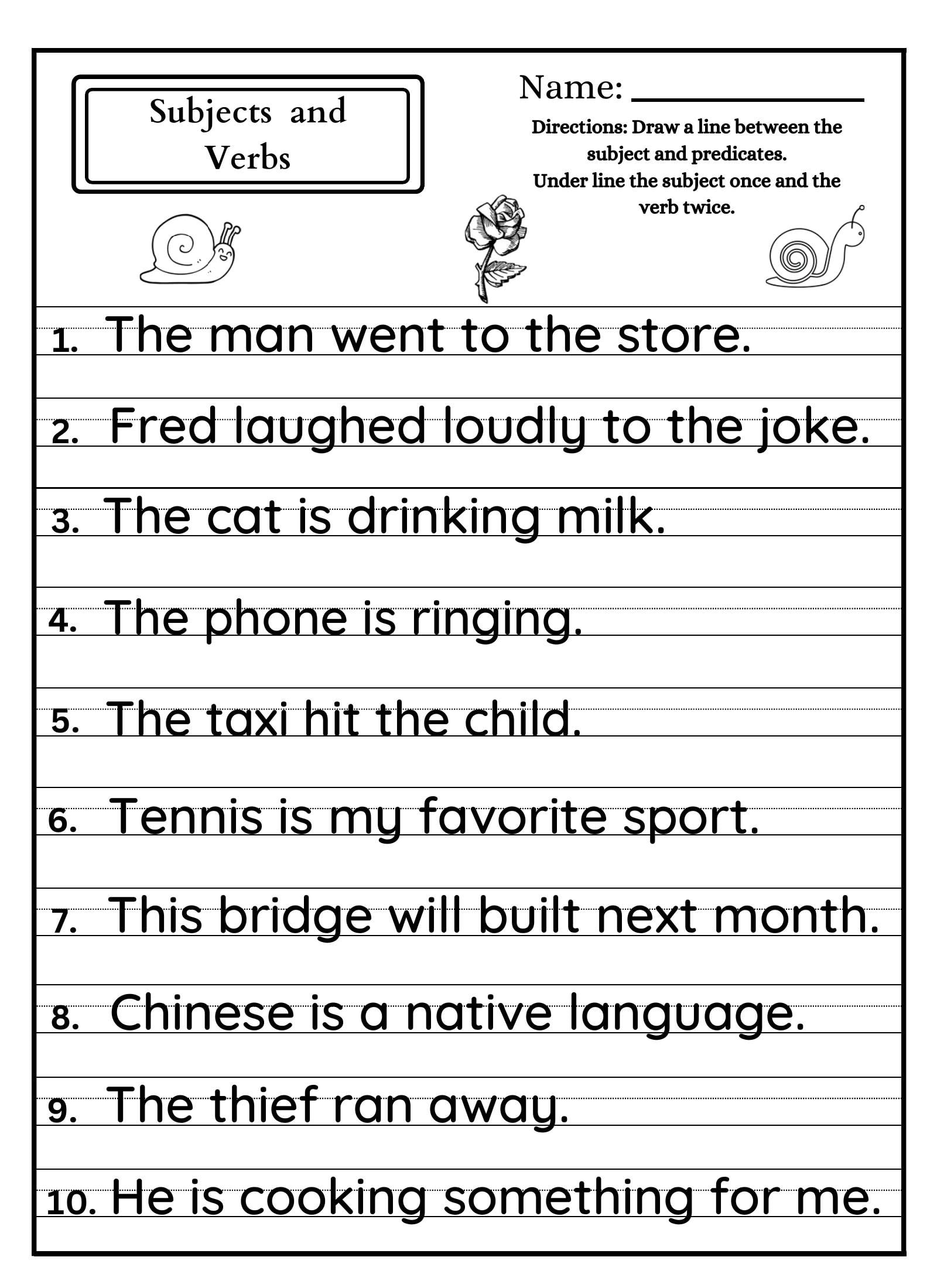
The last page of this PDF continues the same format. Children identify subjects and verbs in sentences about a man, Fred, a cat, a phone, a taxi, tennis, a bridge, Chinese, a thief, and a person cooking.
They draw the subject and predicate separation line first. Then, they underline the subject once and the verb twice.
VERBS: Choosing the Correct Verb
17. Basic Verb Choices
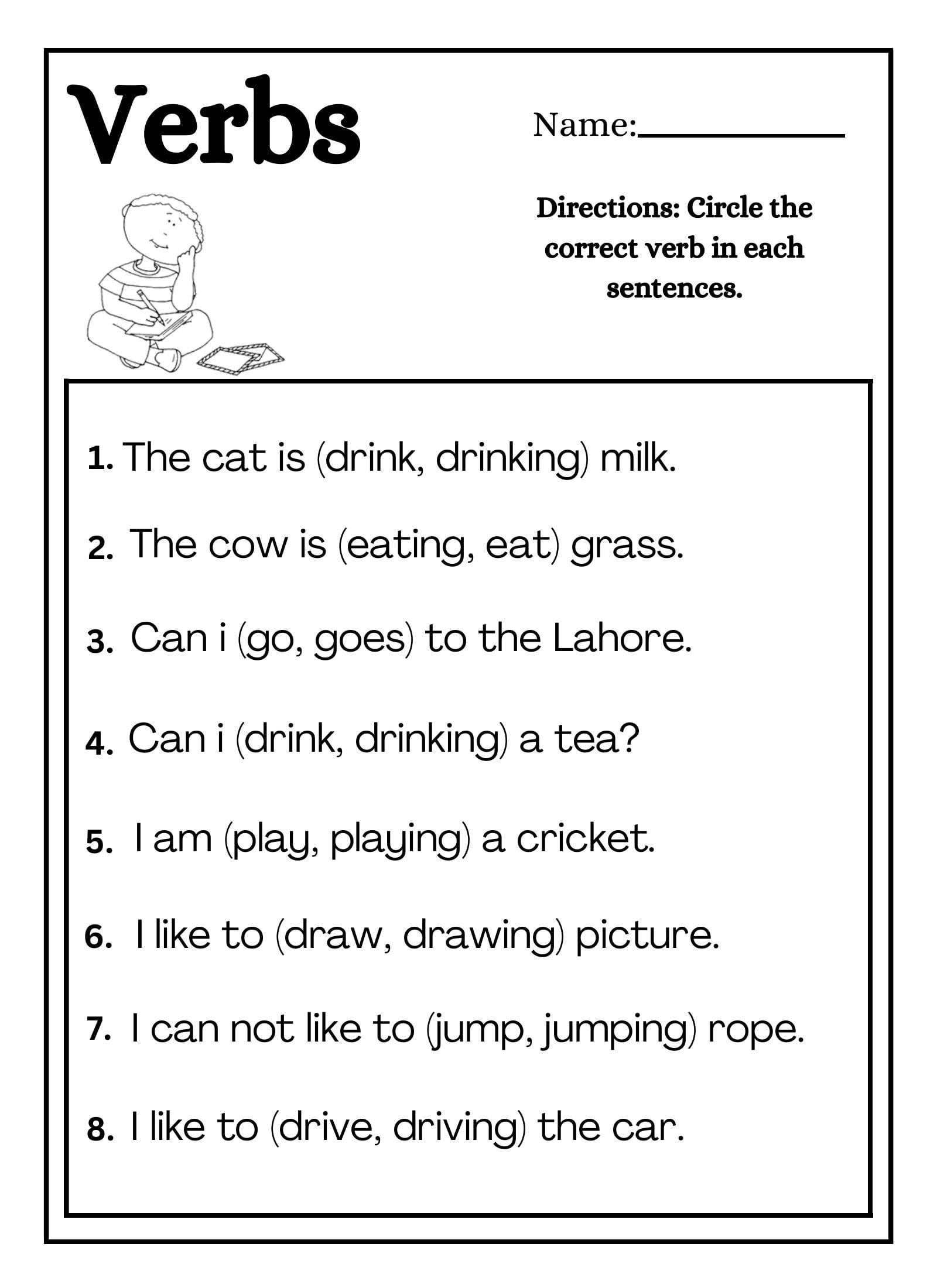
The verb worksheet asks children to circle the correct verb in each sentence. The examples include a cat drinking milk, a cow eating grass, and someone going somewhere.
Children also choose between verb forms such as play and playing. This makes the page useful for practicing common verb forms.
18. Subject and Verb Agreement
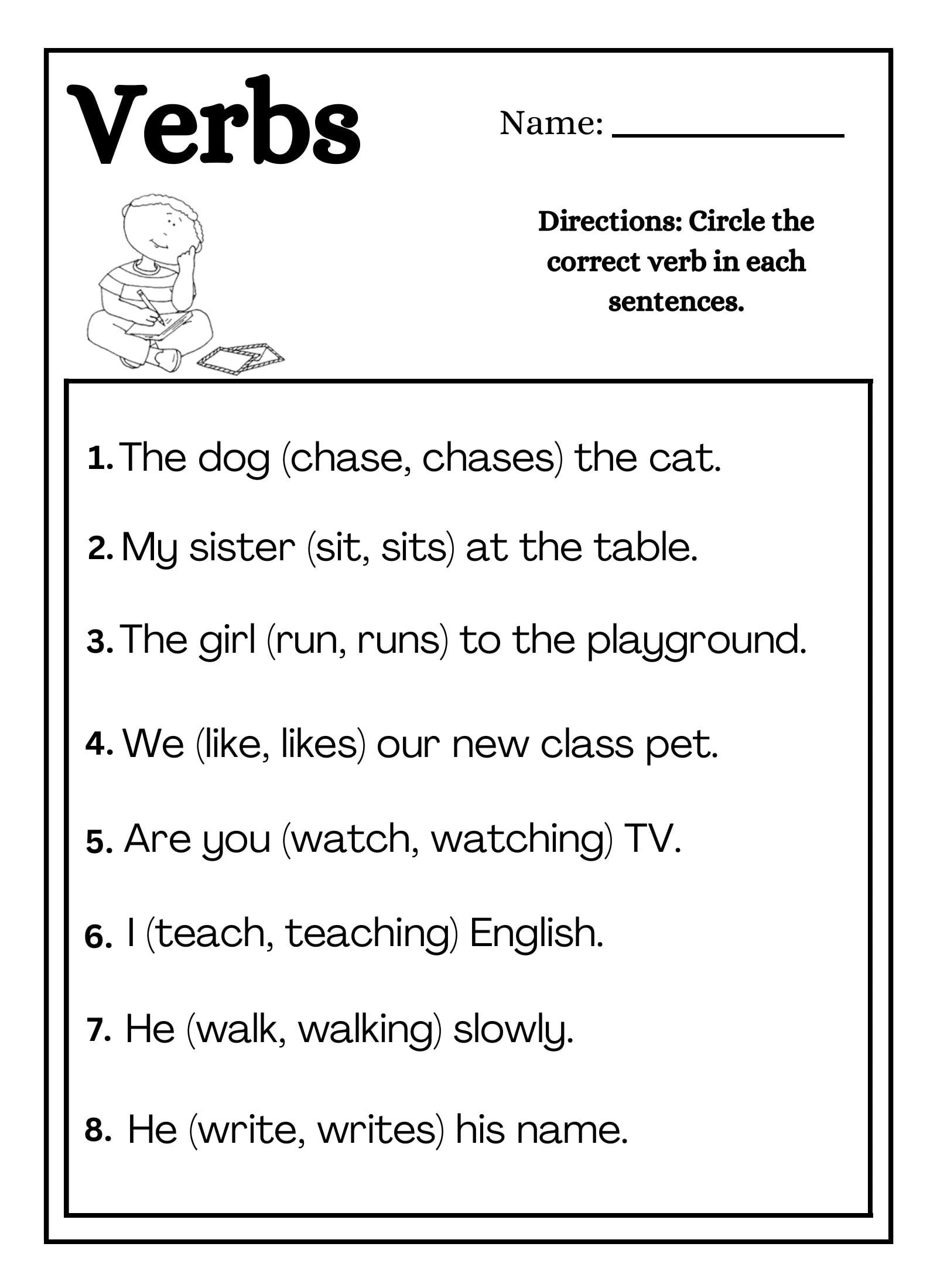
The second worksheet gives children choices such as chase or chases, sit or sits, and run or runs. They also work with verbs like teach, walk, and write.
Encourage your child to read the entire sentence before choosing. Hearing the sentence aloud can sometimes make the correct form easier to notice.
19. More Everyday Verb Forms
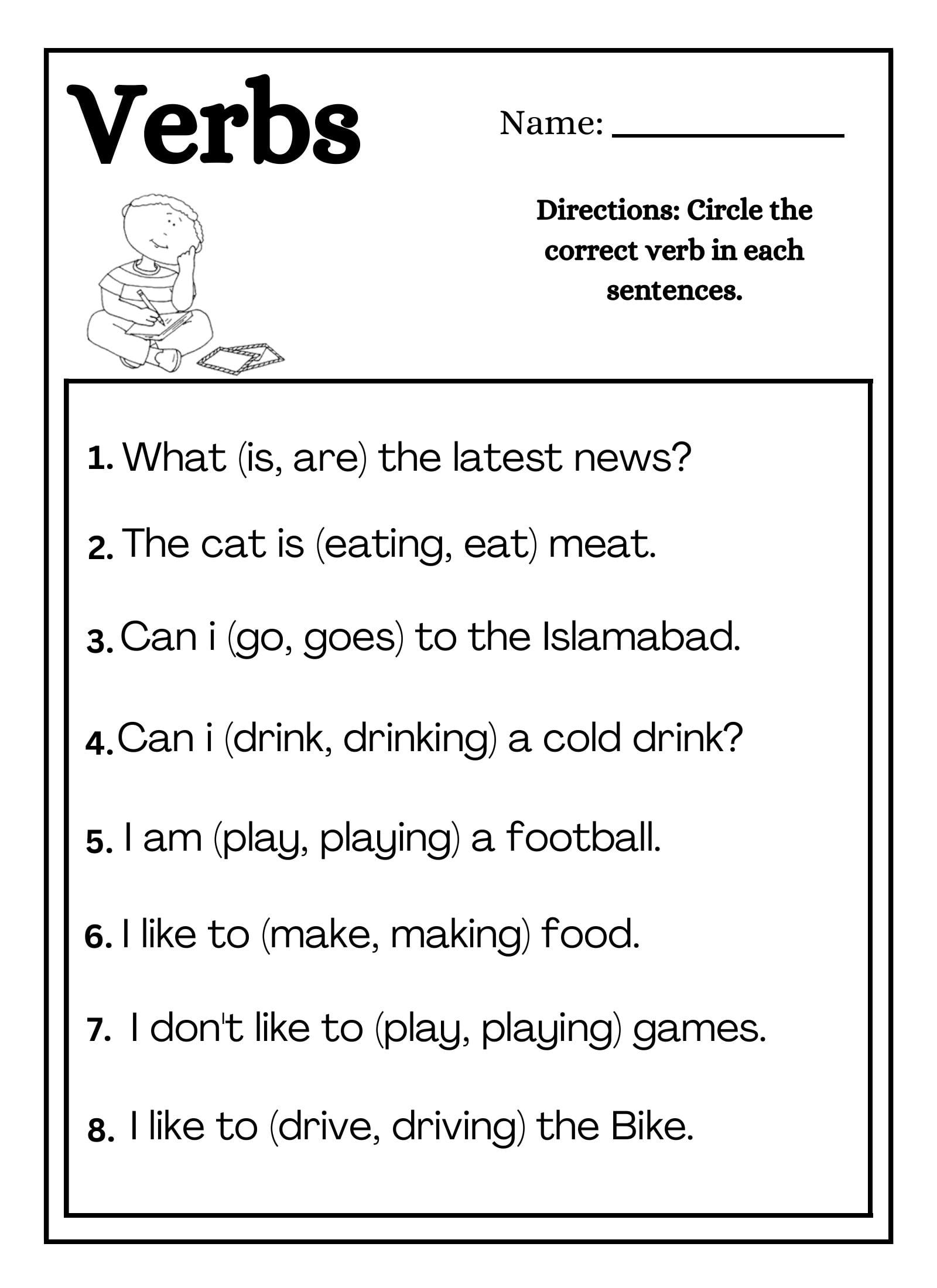
This page includes sentences about news, cats, going places, drinking, playing football, making food, and driving.
Children circle the verb that fits each sentence. The activity gives them repeated practice with simple verb patterns.
20. Present and Past Verb Choices
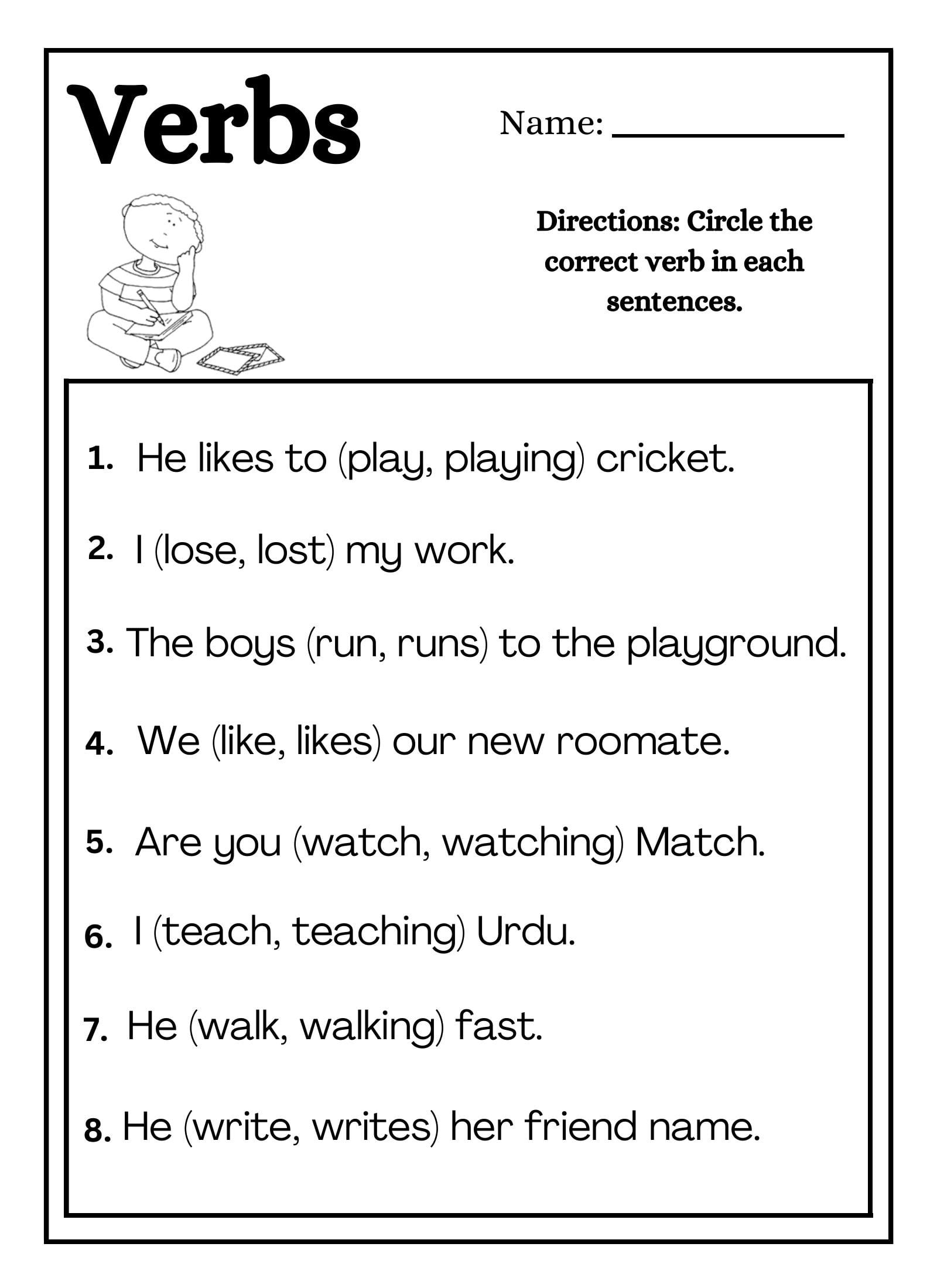
The fourth worksheet includes choices such as play or playing, lose or lost, run or runs, and like or likes.
Children also choose forms of teach, walk, write, and watch. This gives them practice noticing how verbs change within different sentences.
21. More Verb Forms
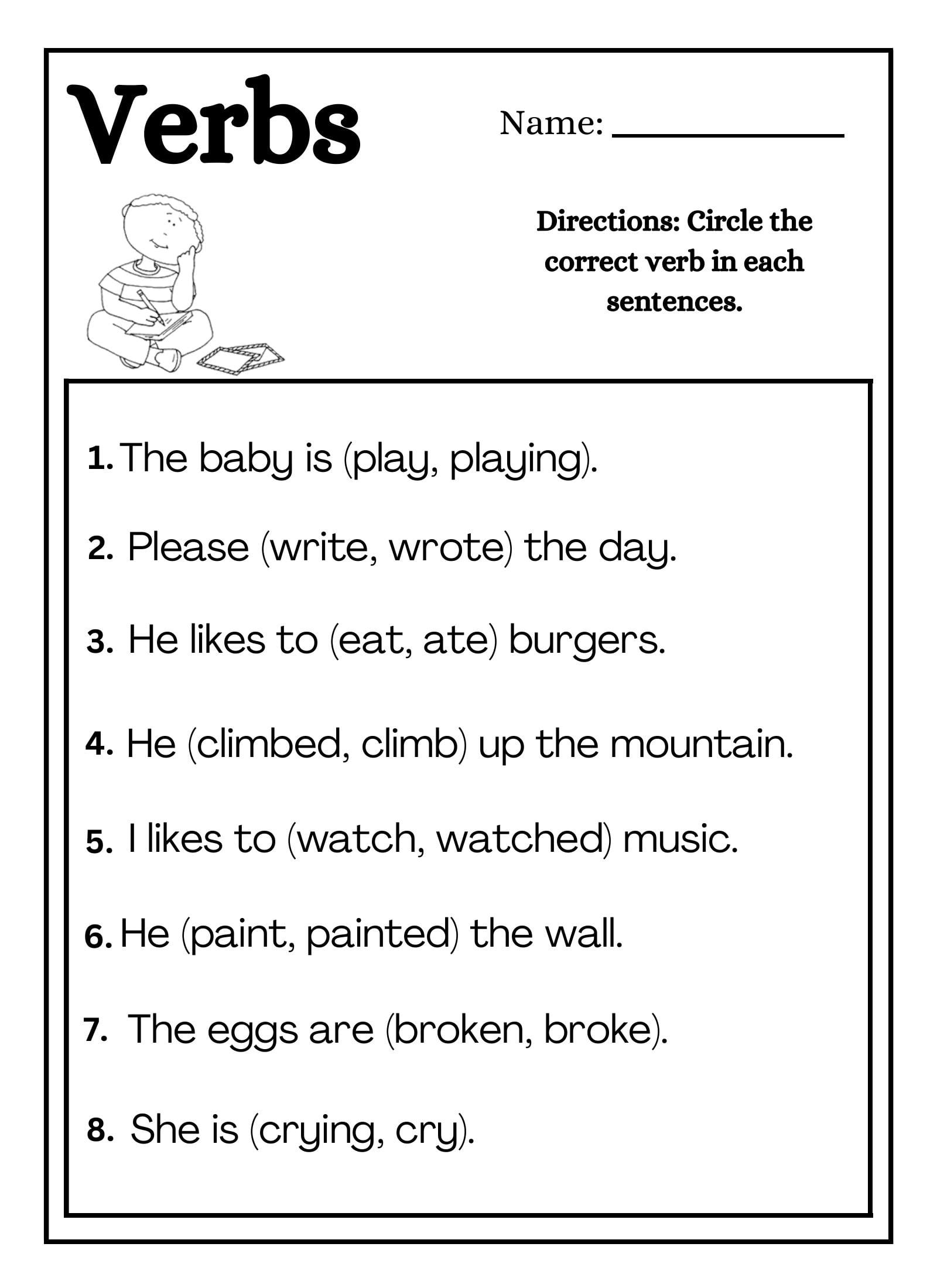
Children now work with verbs such as play, write, eat, climb, watch, paint, break, and cry. The worksheet asks them to circle the form that fits each sentence.
Let your child read each option aloud when they are unsure. This can make the difference between the choices easier to hear.
22. Past, Present, and Future Choices
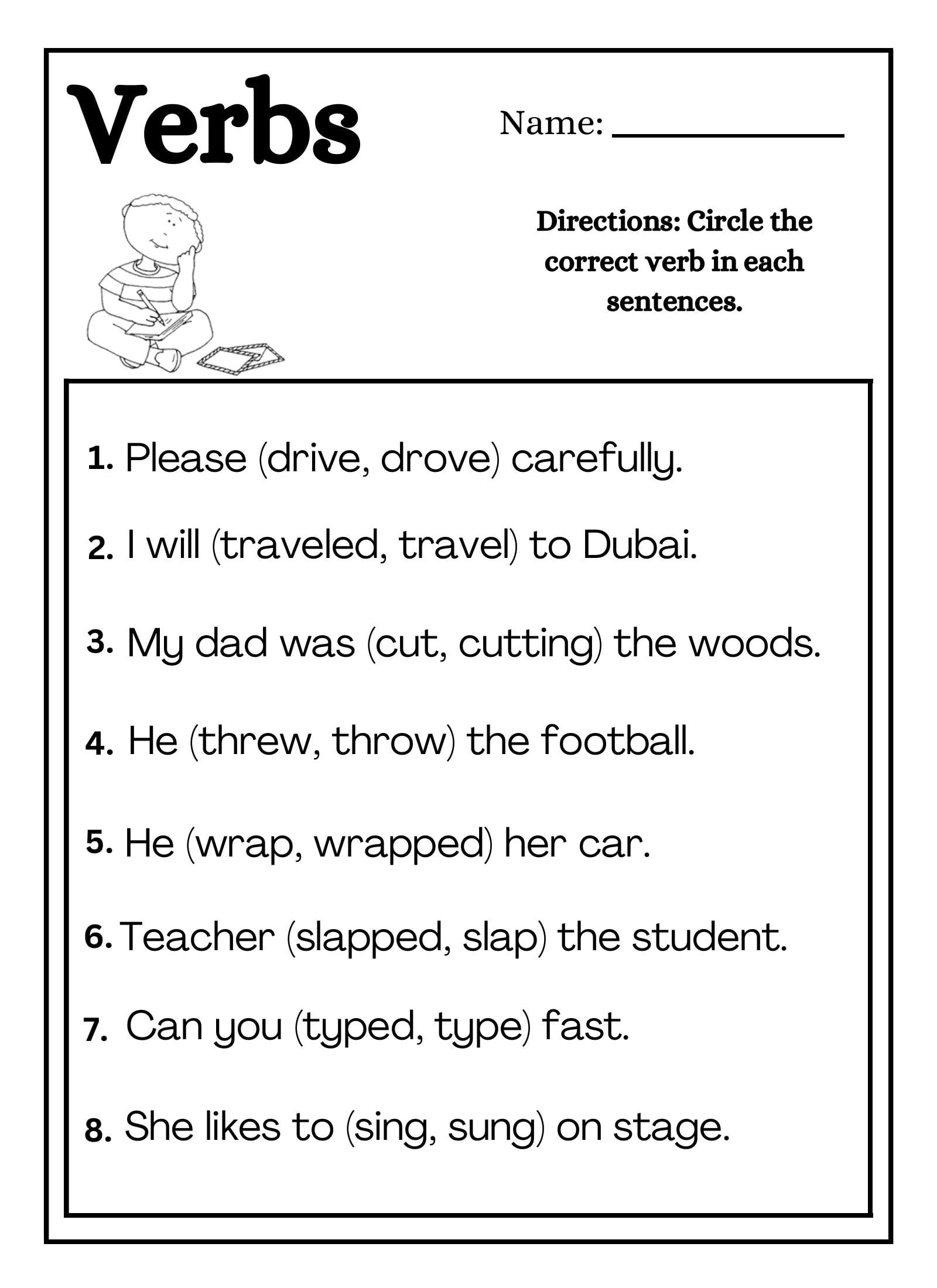
The sixth page includes choices such as drive or drove, traveled or travel, cut or cutting, and threw or throw.
Children also work with typed or type and sing or sung. The different forms encourage children to pay attention to the sentence around each verb.
23. Choosing Verbs in More Complex Sentences
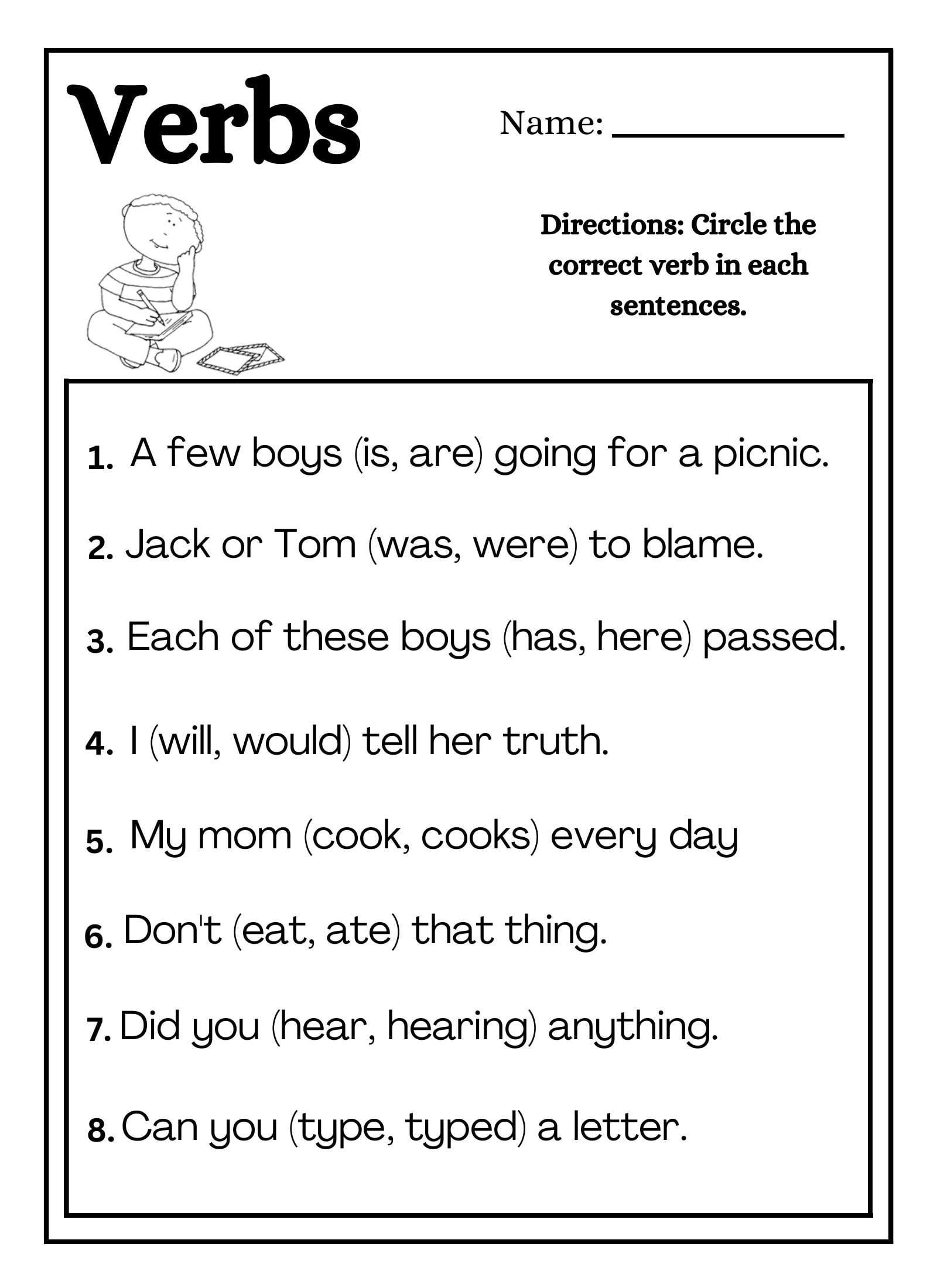
The seventh worksheet gives children choices involving is and are, was and were, has, will, eat, hear, type, and cooks.
These examples give children practice with agreement and verb forms. Encourage them to read the full sentence before circling an answer.
24. Final Verb Practice
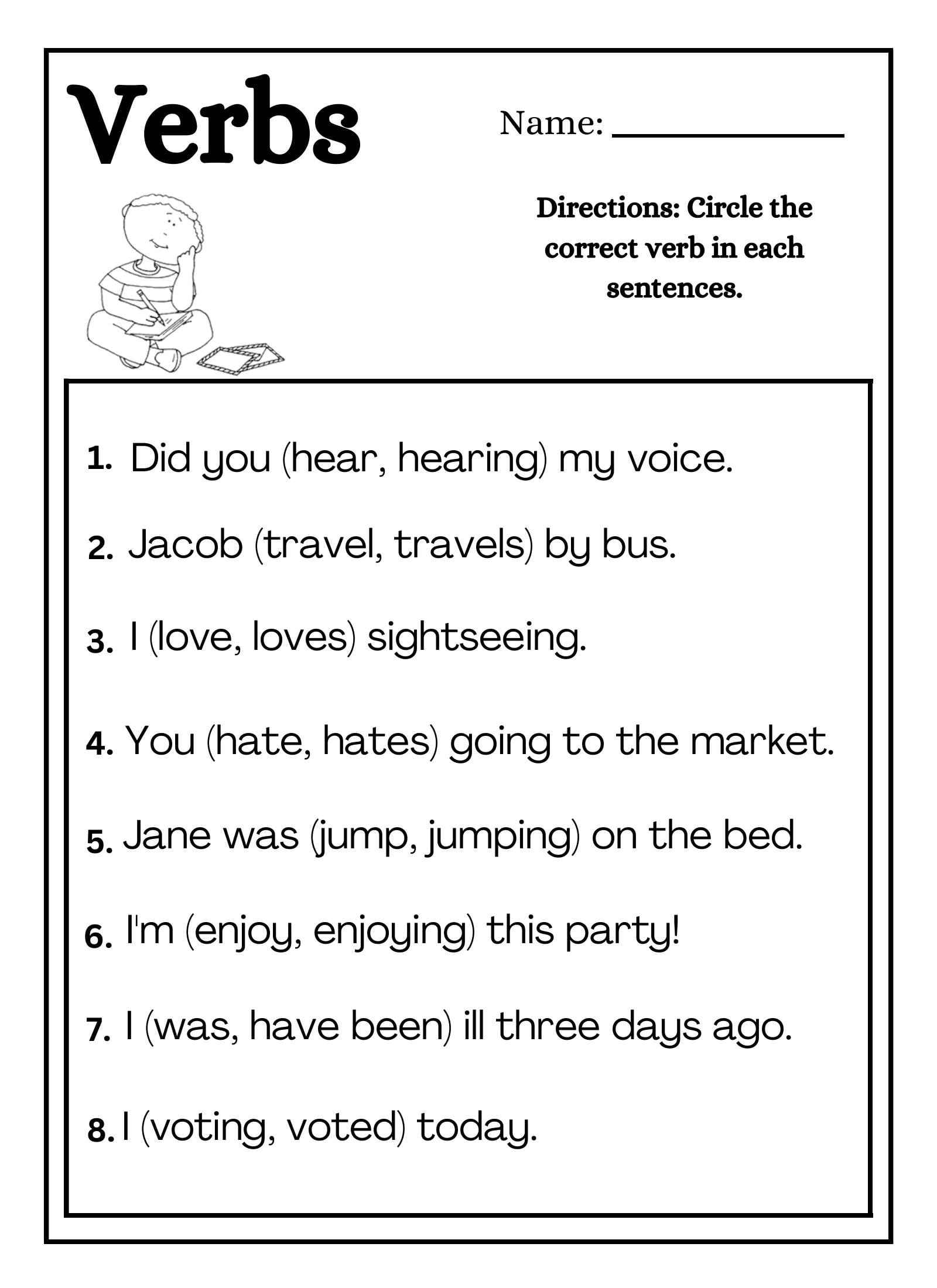
The final worksheet includes choices involving hear, travel, love, hate, jump, enjoy, was, have been, and vote.
Children can work through each sentence slowly and choose the verb that fits. This page provides a useful final review of the verb activities.
VOWELS: Circle the Vowels
25. Finding the Letter A
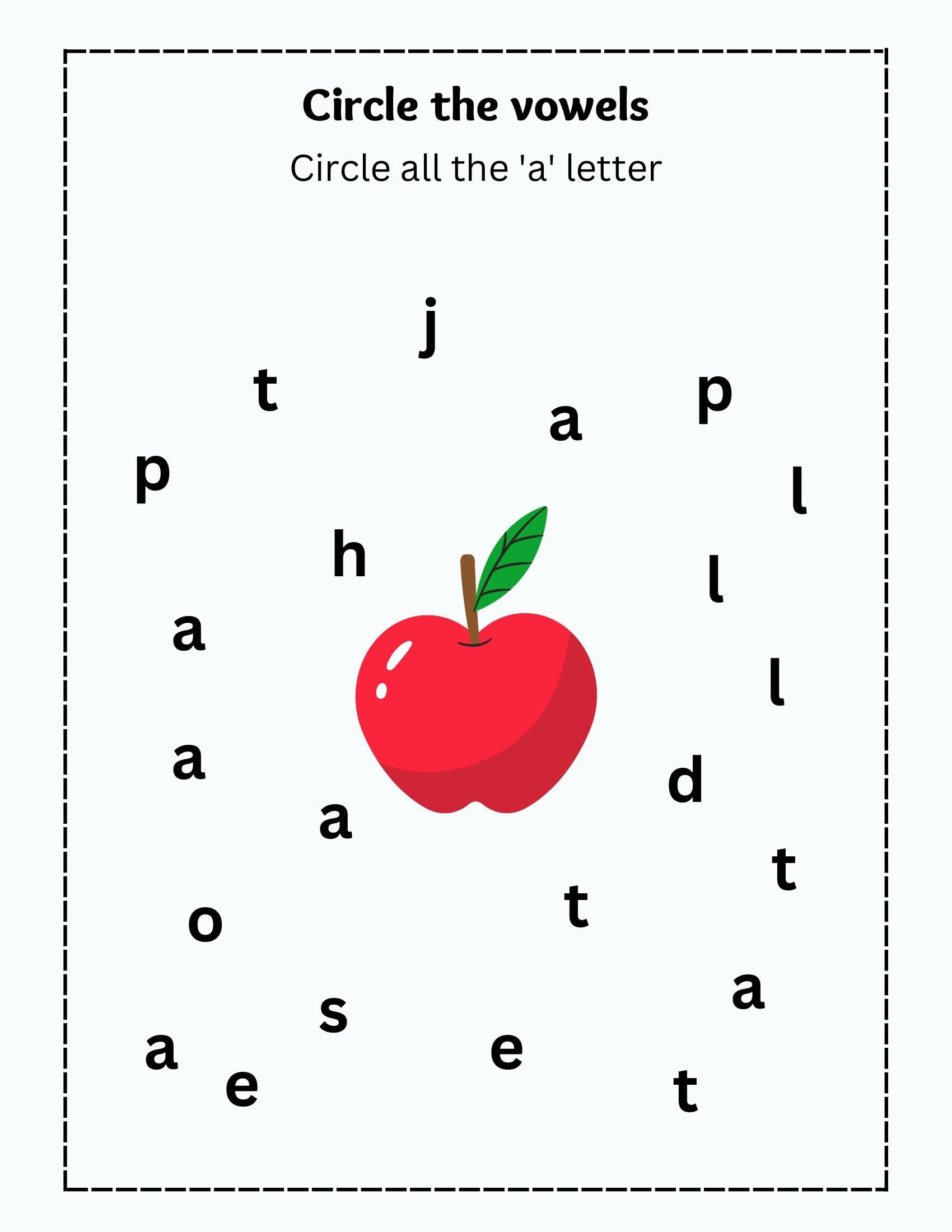
The first vowel worksheet asks children to circle vowels and then find all the lowercase a letters. The page places different letters around an apple illustration.
Children need to look carefully because several other letters appear among the target letters. This makes the activity a simple visual recognition exercise.
26. Finding the Letter E
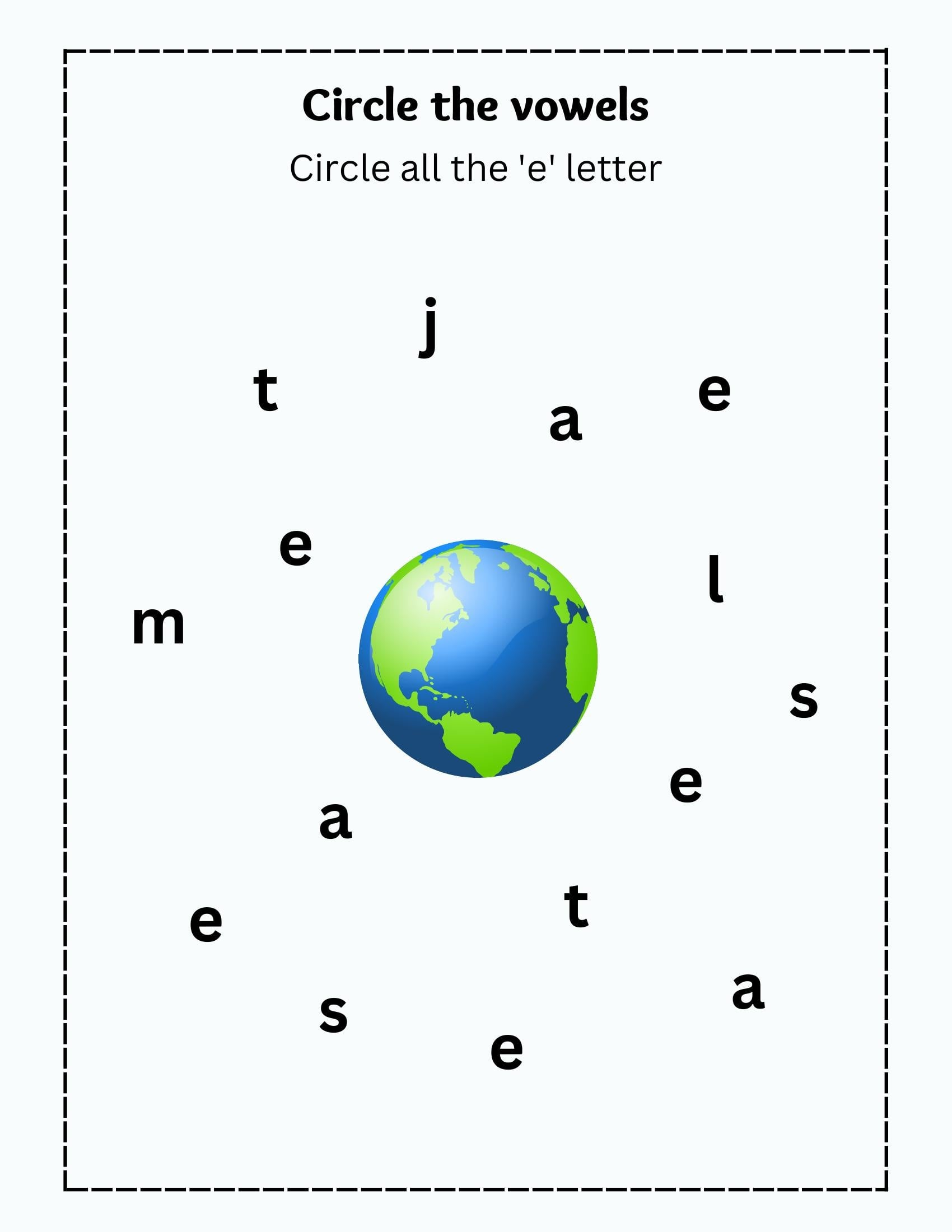
The second page focuses on the lowercase e. Children first work with a group of letters and then find all the e letters.
Encourage your child to say the target letter before beginning. Repeating the letter name can help them stay focused on the correct shape.
27. Finding the Letter I
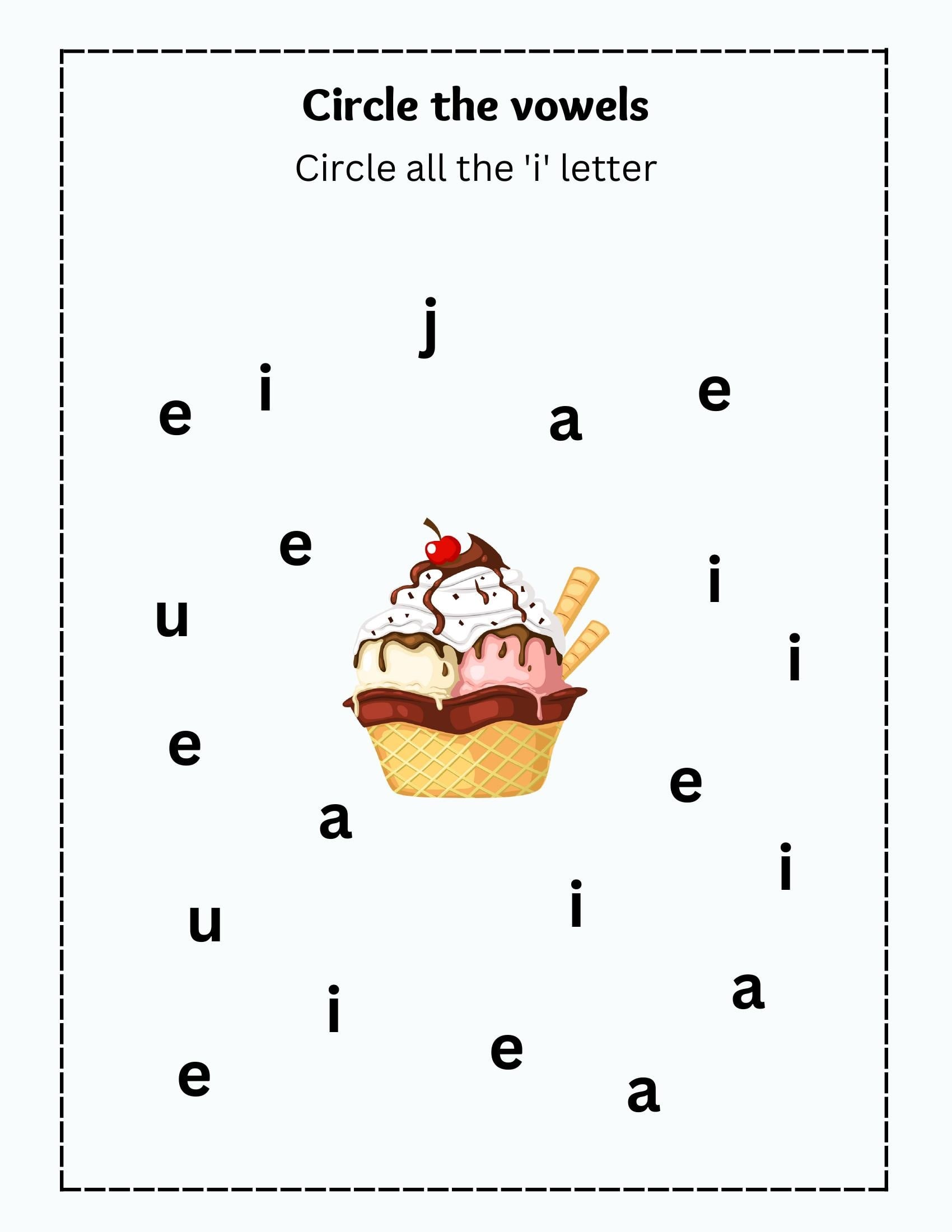
The third vowel worksheet focuses on i. Children circle vowels before finding the lowercase i among other letters.
The mixed letters encourage careful visual scanning. Let your child work from one side of the page to the other if that feels easier.
28. Finding the Letter O
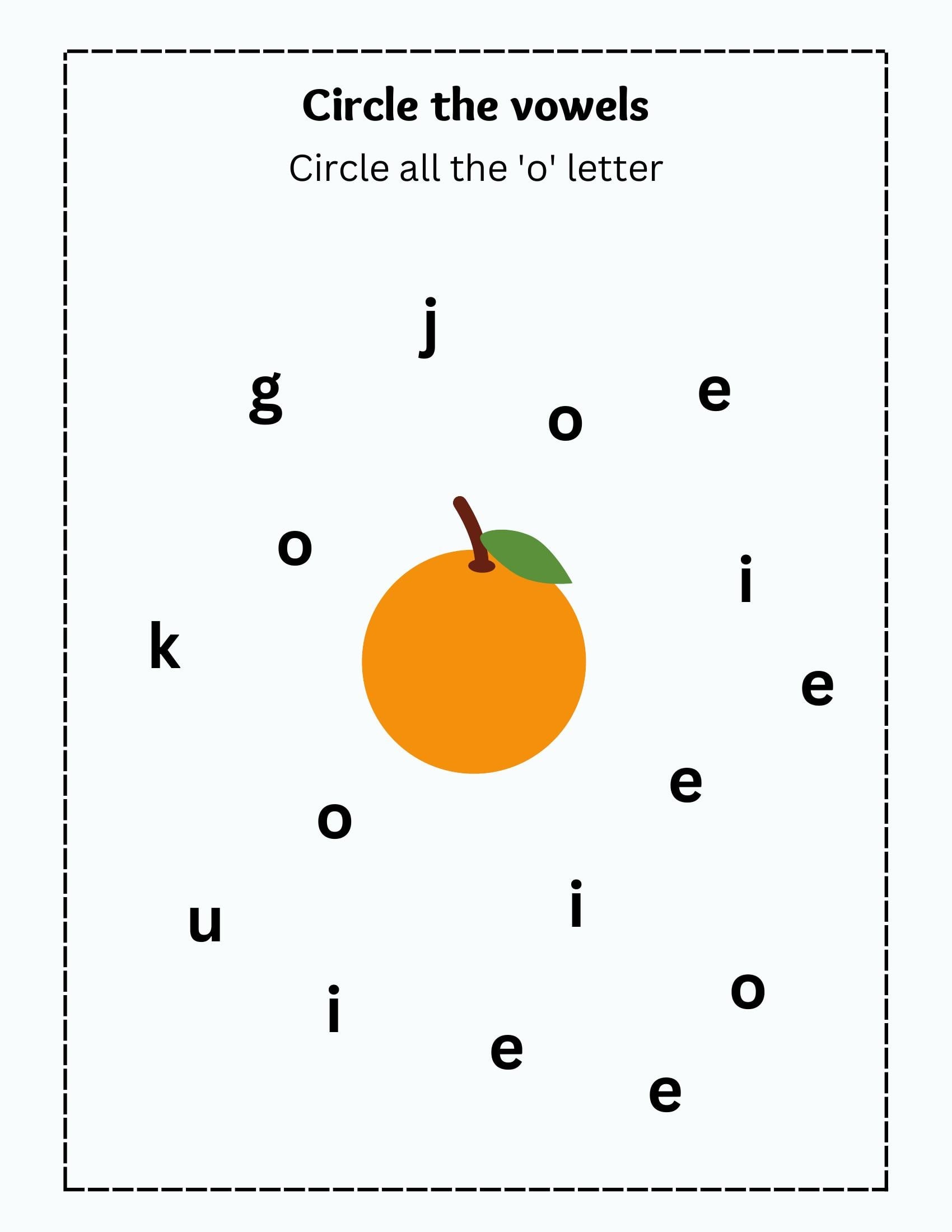
This worksheet introduces o as the target letter. Children look through a mixture of vowels and other letters before circling the correct o letters.
The activity keeps the task simple while giving children repeated visual practice. Ask them to name the target letter before they begin.
29. Finding the Letter U
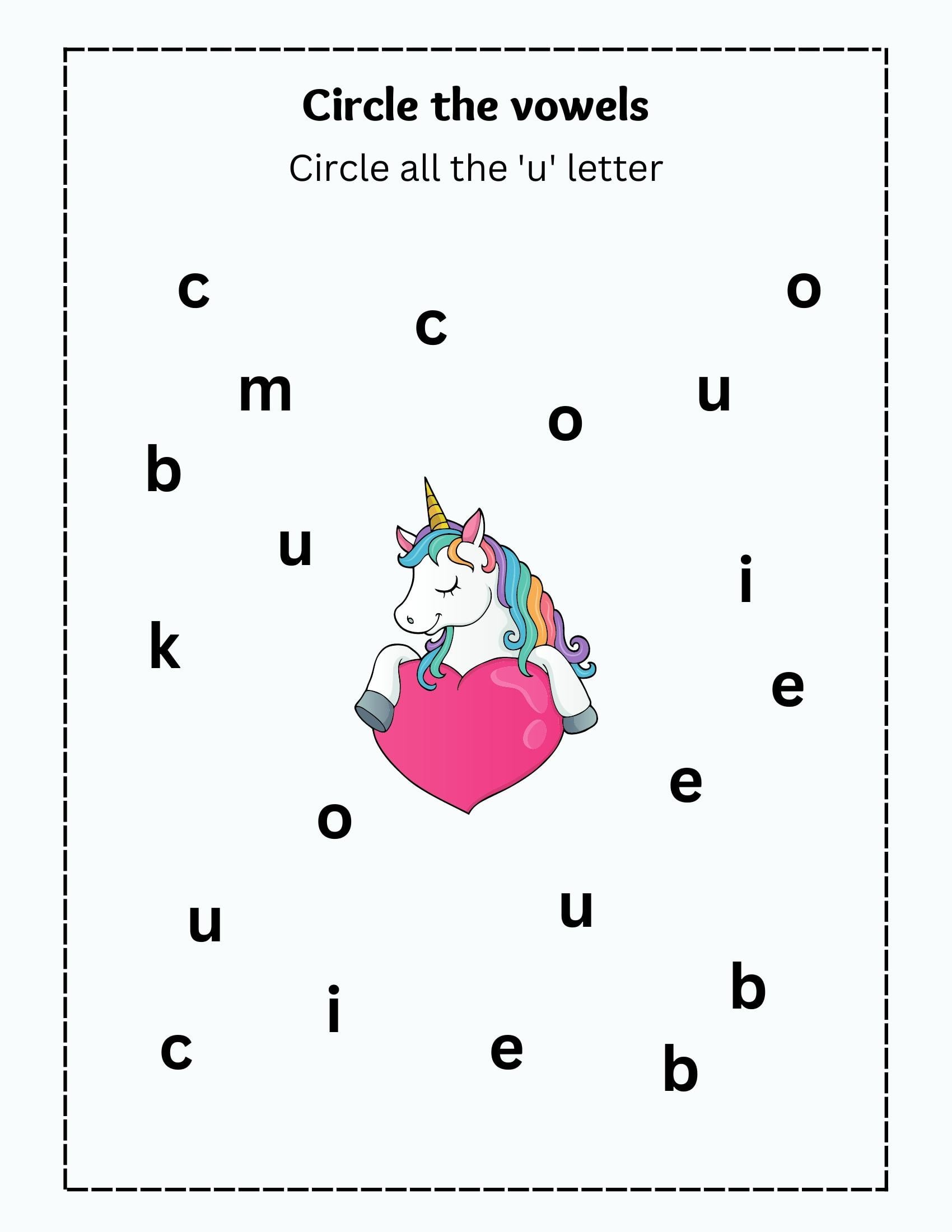
The final page focuses on u. Children circle the vowels and then find all the lowercase u letters among other choices.
The colorful unicorn illustration adds a playful touch to the final activity. Completing this page gives children a simple review of the vowel recognition exercises.
Final Thoughts
These Grammar Worksheets for Kids bring several useful language activities into one collection.
Children practice identifying nouns, finding subjects, separating subjects from predicates, choosing correct verbs, and recognizing vowels.
The different worksheet formats also give them a chance to practice without doing the exact same task repeatedly.
For parents and tutors, you can introduce the pages gradually. Start with nouns before moving into subjects and predicates.
After that, introduce the verb activities and finish with vowel recognition. Give children time to read each sentence and think before making their answers.
You can also revisit completed worksheets during later lessons. Ask children to explain why they chose a particular noun, subject, or verb.
For vowel pages, let them name the target letter before searching for it.
With regular practice, these Grammar Worksheets for Kids can become a helpful part of a child’s early language routine.