30 Easy Tracing Worksheets for Kids
Disclosure: Some of the links in this post are affiliate links. This means if you click on the link and purchase an item, I will receive an affiliate commission at no extra cost to you.
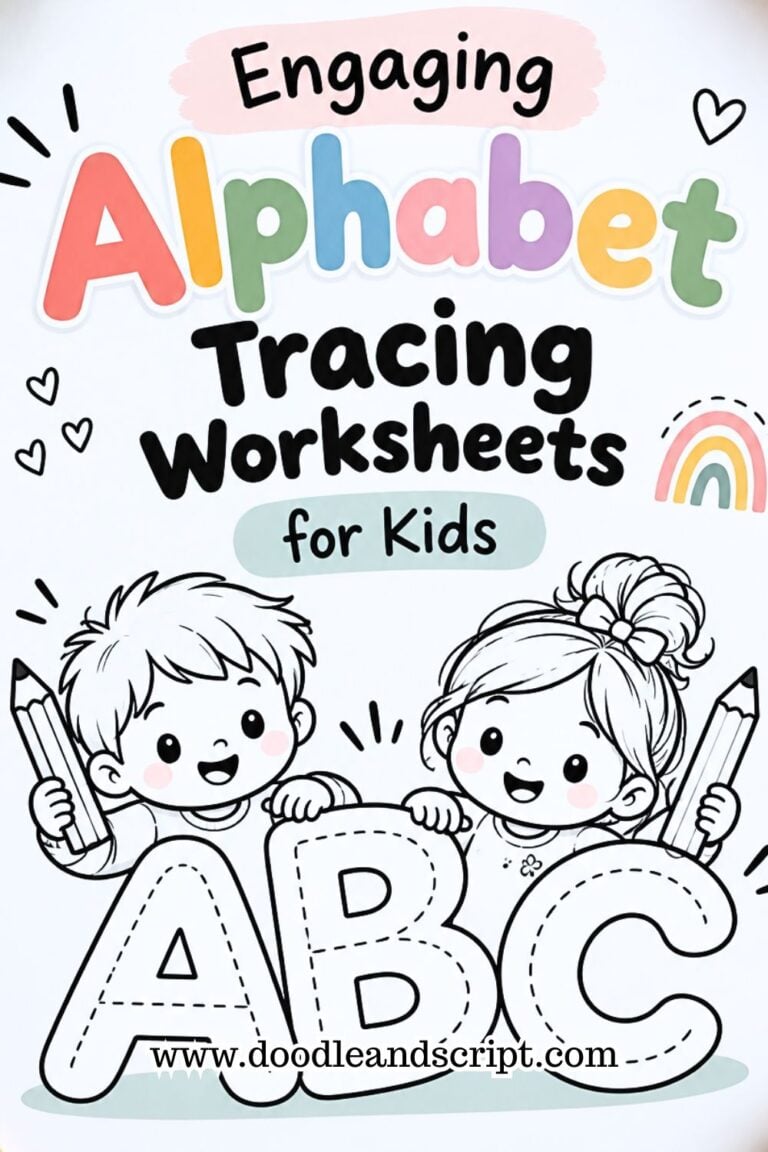
Writing practice becomes easier when children have clear letters and words to follow. Tracing helps young learners build pencil control while becoming familiar with letter shapes.
It also gives them a chance to practice before writing independently. These Tracing Worksheets for Kids combine letter tracing, word tracing, and name tracing in one collection.
The first set of printables, gives children several ways to practice writing. It begins with a full alphabet tracing page and a blank letter-writing page.
The remaining pages focus on tracing and independently writing familiar words. Children practice words such as ant, apple, mango, table, rocket, orange, and many others.
Next comes the second set of tracing sheets, which focuses on letter sounds. Each page features one letter with several related pictures.
Children trace the featured letter and then color the pictures. Finally, the last set of tracing printables gives children personal name-writing practice.
It includes pages for Sam Jones, Sara Smith, Masha Cutie, and Maximillian. Together, these 30 pages offer a varied writing practice collection for young learners.
Alphabet and Word Writing Practice
1. Trace the Complete Alphabet
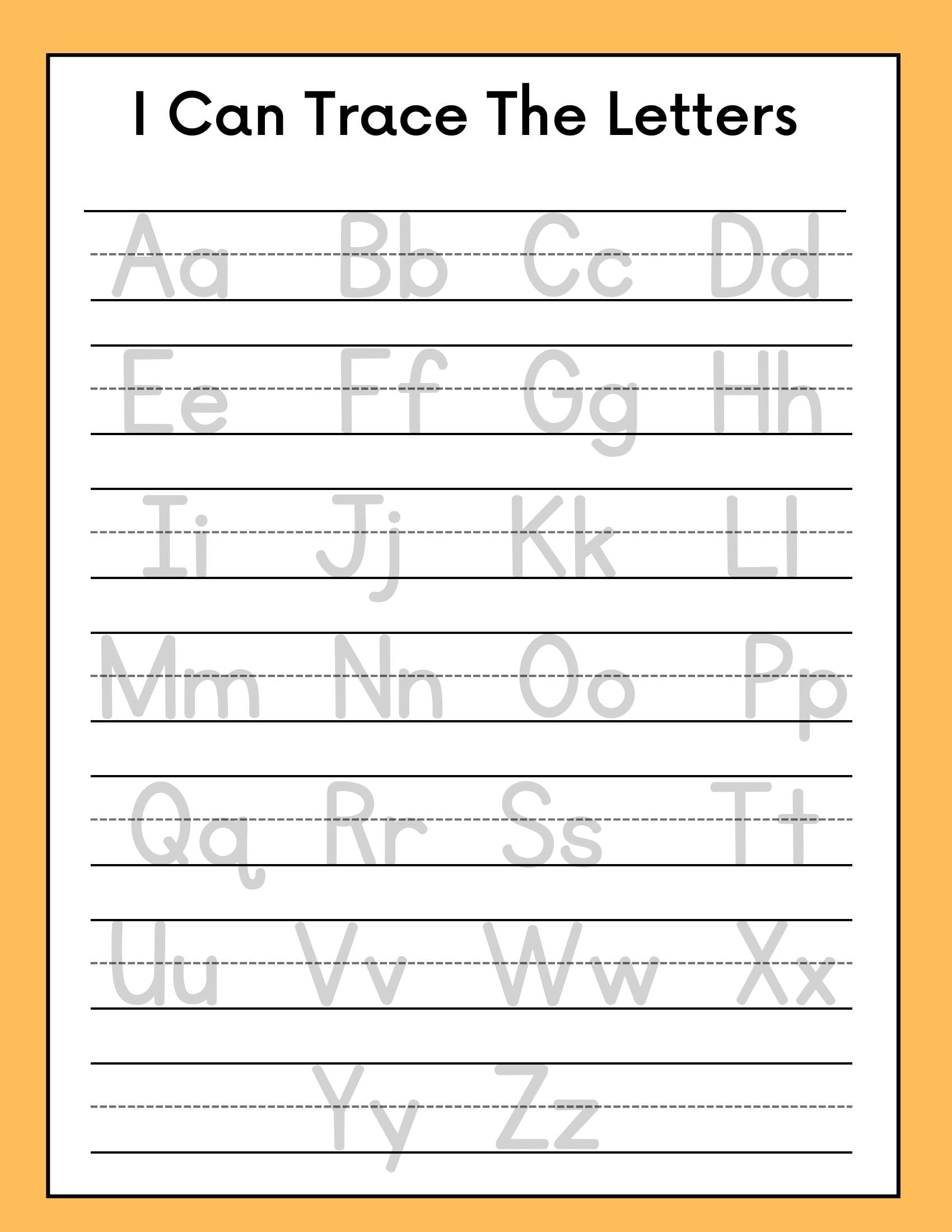
The first worksheet introduces children to the complete alphabet. It shows uppercase and lowercase letters from A to Z.
Children trace each pair using the guided writing lines. This gives them a simple warm-up before moving into word practice.
2. Practice Writing the Letters
The second page gives children lined spaces for independent letter writing. Unlike the first page, there are no printed words to trace.
Children can use the page to practice letters they already know. It can also be useful after completing the alphabet tracing activity.
3. Ant, Axe, Apple, Alligator, Ball, Banana, Astronaut, and Butterfly
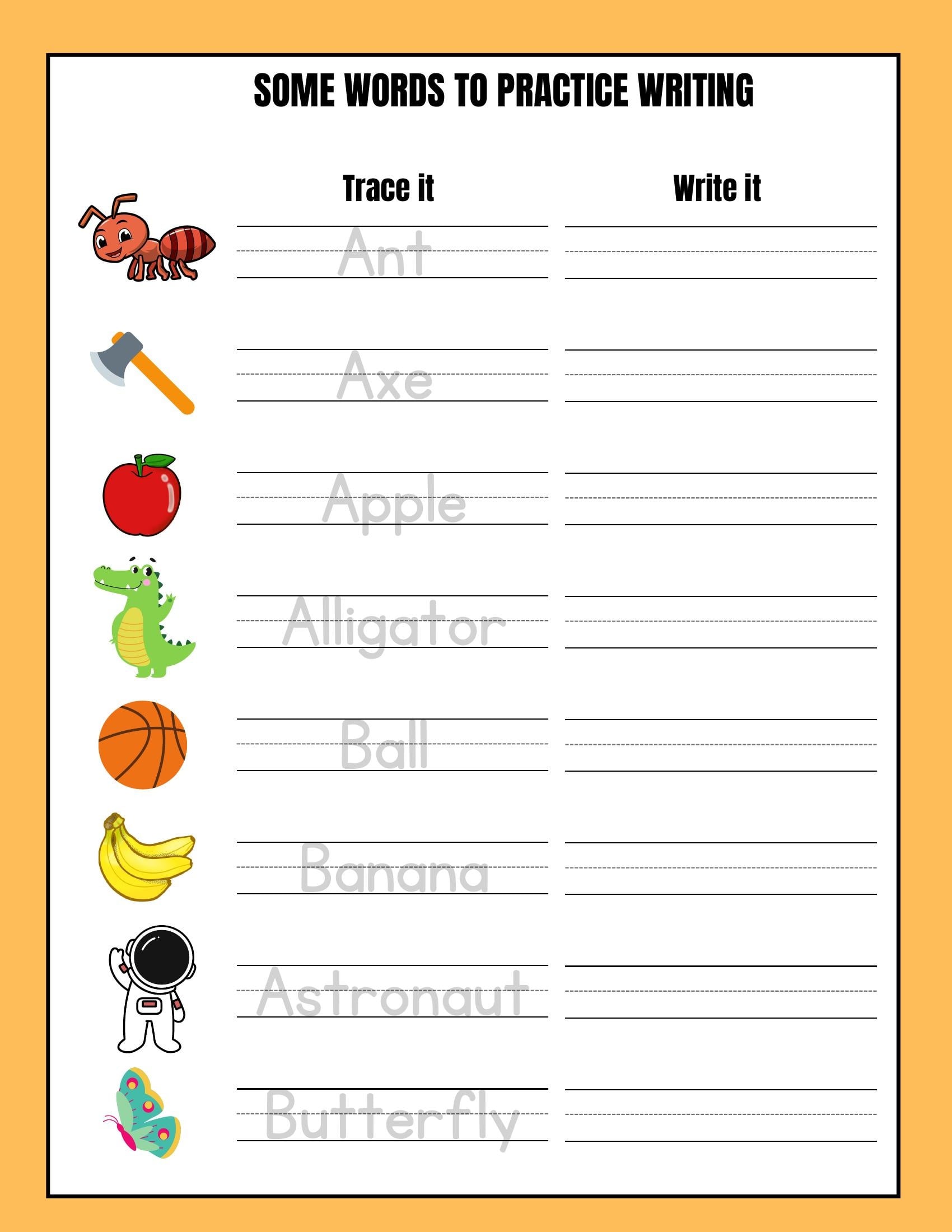
The third worksheet introduces word tracing with pictures. Children trace words such as ant, axe, apple, alligator, ball, banana, astronaut, and butterfly.
Each word has a tracing line and a separate space for independent writing. This gives children a chance to copy the word after following the dotted letters.
4. Mushroom, Mango, Moon, Muffin, Medal, Vase, Vulture, and Violin
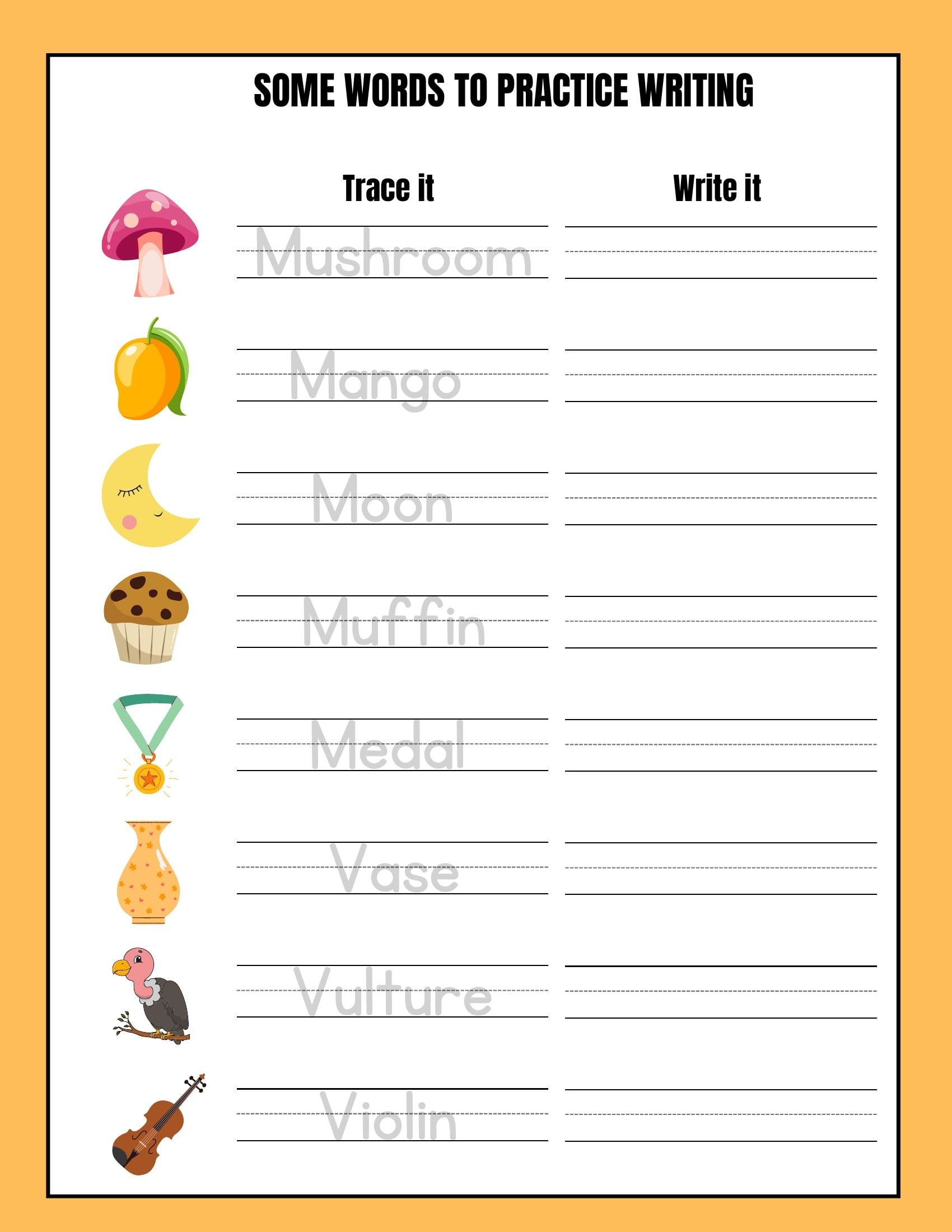
This page continues the same trace-and-write format. Children practice mushroom, mango, moon, muffin, medal, vase, vulture, and violin.
The pictures give children a visual clue for each word. Encourage your child to say each word before tracing it.
5. Table, Tiger, Teeth, Tree, Truck, Jam, Jar, and Jug
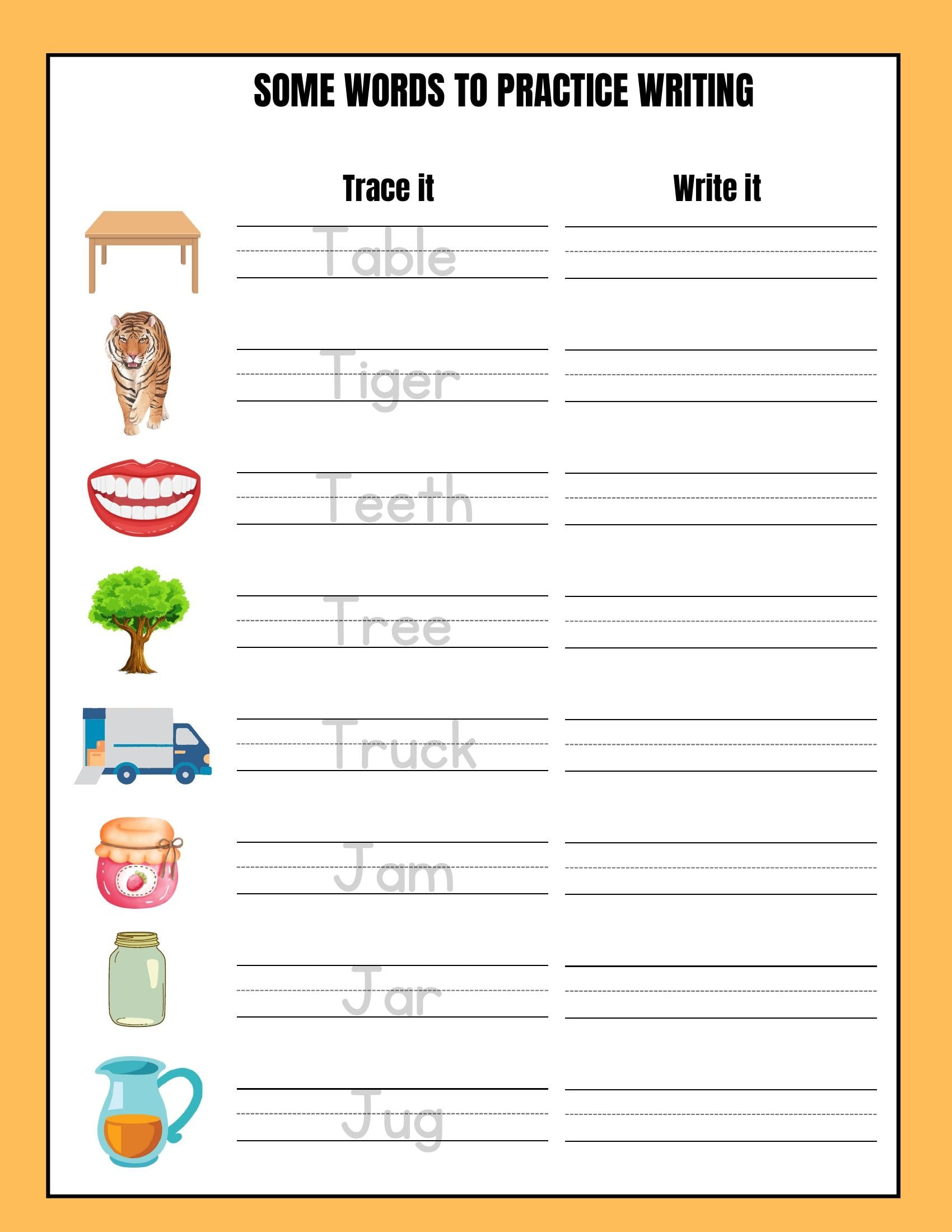
The fifth worksheet features eight familiar words. Children trace table, tiger, teeth, tree, truck, jam, jar, and jug.
They then use the blank writing area to practice each word again. This repeated motion can help children become more comfortable forming letters.
6. Net, Nails, Newspaper, Nest, Neck, Banana, Teeth, and Apple
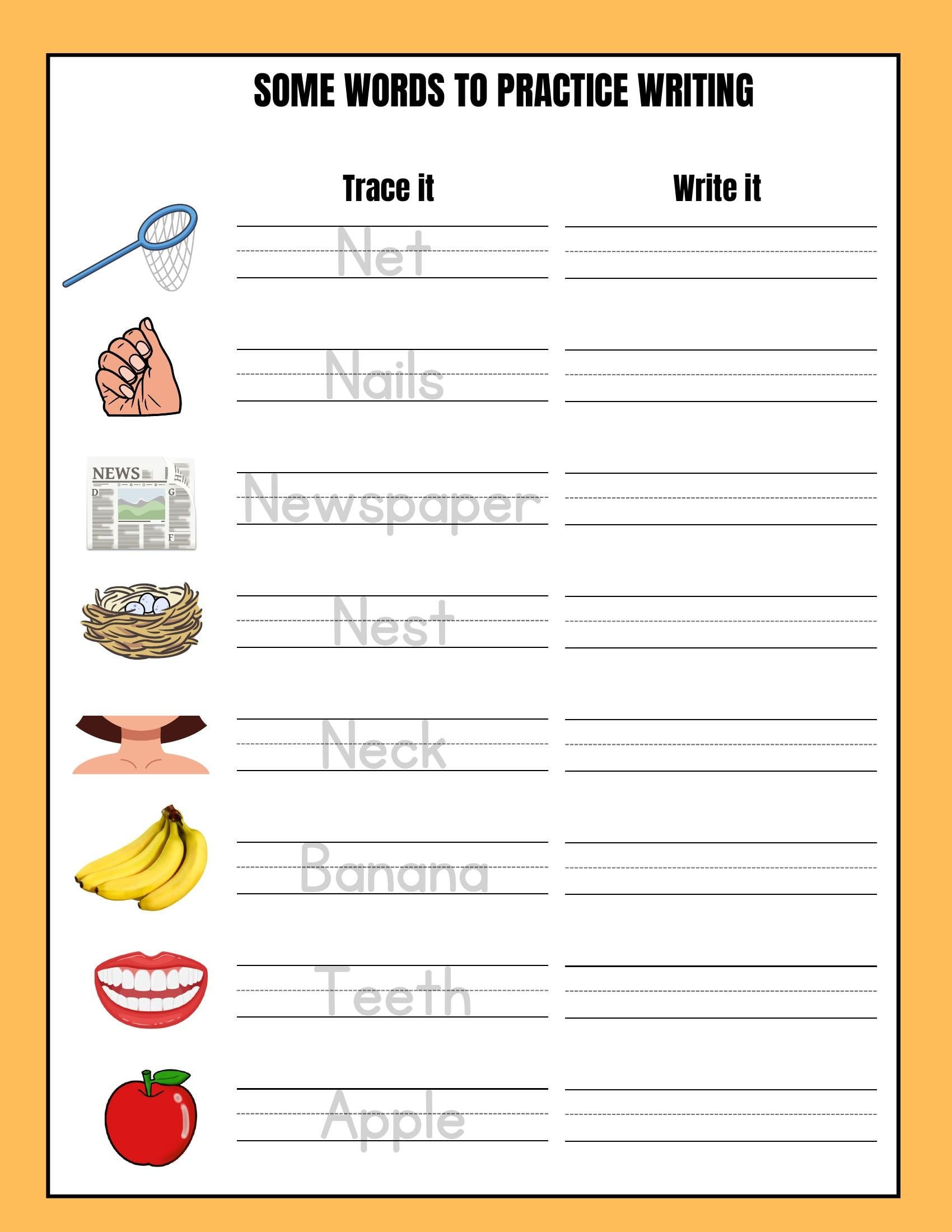
This page brings together objects, body parts, and familiar foods. Children trace net, nails, newspaper, nest, neck, banana, teeth, and apple.
Some words may be easier to recognize from their pictures. Ask your child to identify the picture before beginning each word.
7. Rose, Robot, Rainbow, Rabbit, Rocket, Kite, Kangaroo, and Kiwi
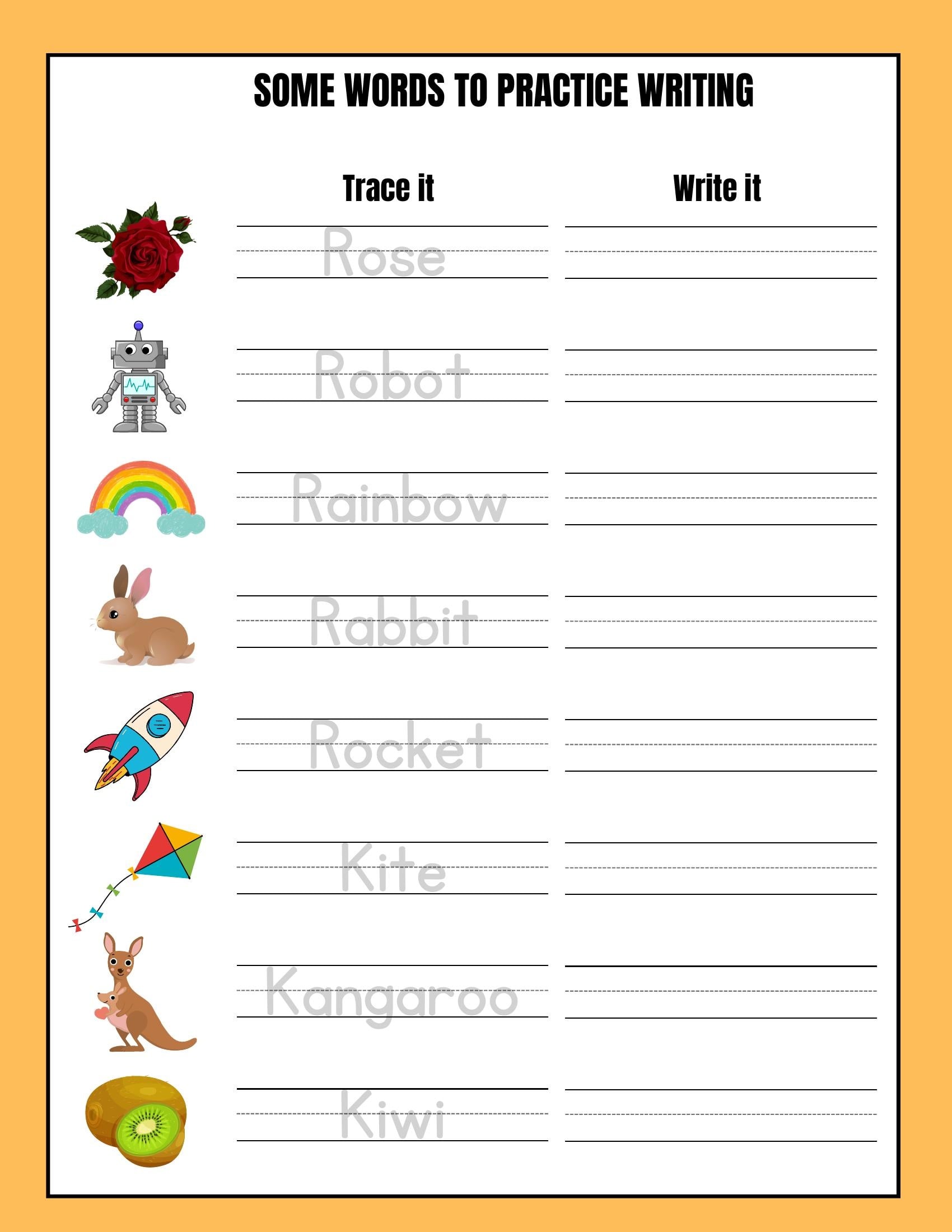
The seventh page has a playful mix of words and pictures. Children trace rose, robot, rainbow, rabbit, rocket, kite, kangaroo, and kiwi.
The words cover several different letter patterns. Let children trace slowly and then try writing each word without the guide.
8. Window, Watch, Wheel, Worm, Owl, Orange, Onion, and Olive
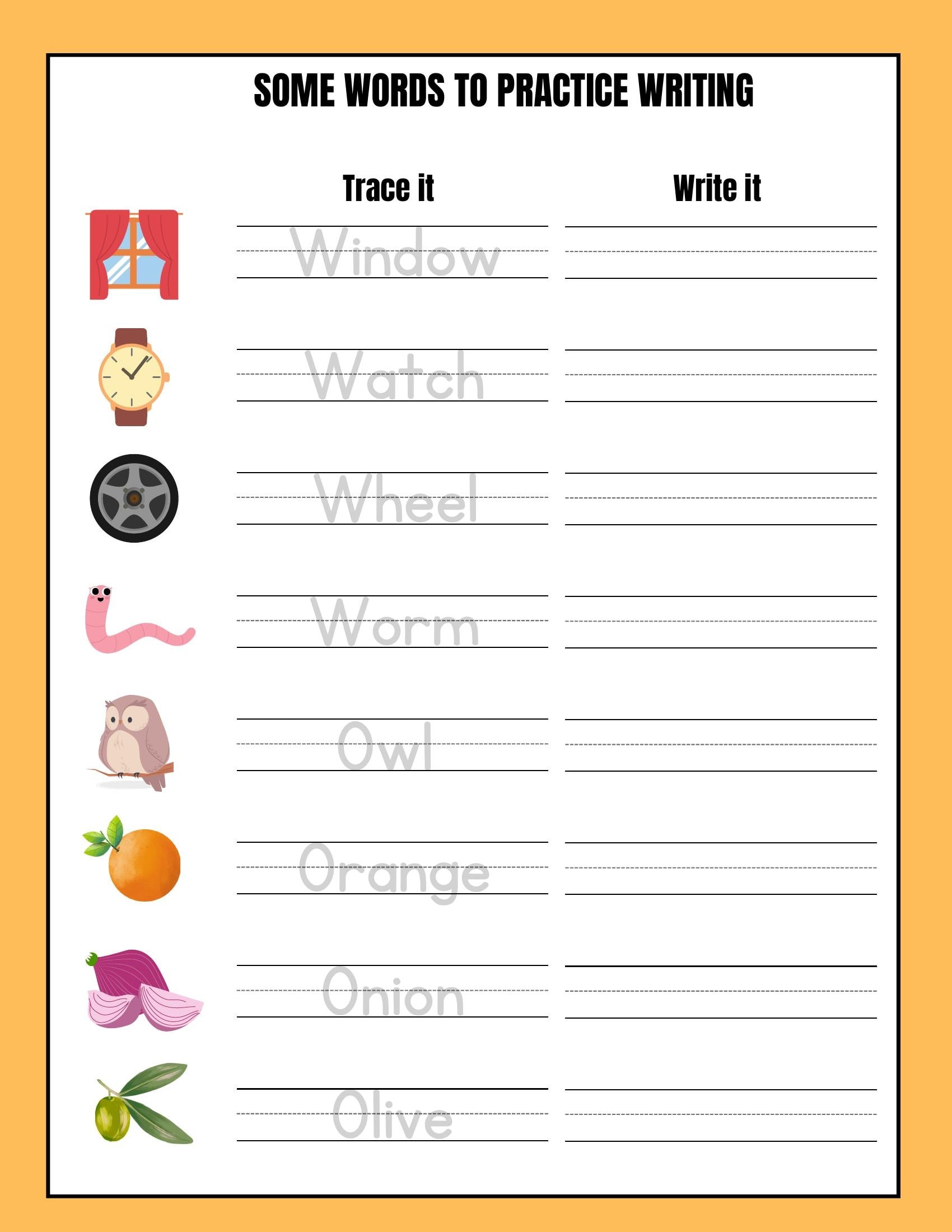
This worksheet focuses on W and O words. Children trace window, watch, wheel, worm, owl, orange, onion, and olive.
The pictures help connect each written word with its meaning. Encourage your child to pronounce each word while tracing.
9. Yak, Yarn, Yoyo, Yacht, Yogurt, Ice Cream, Island, and Ink
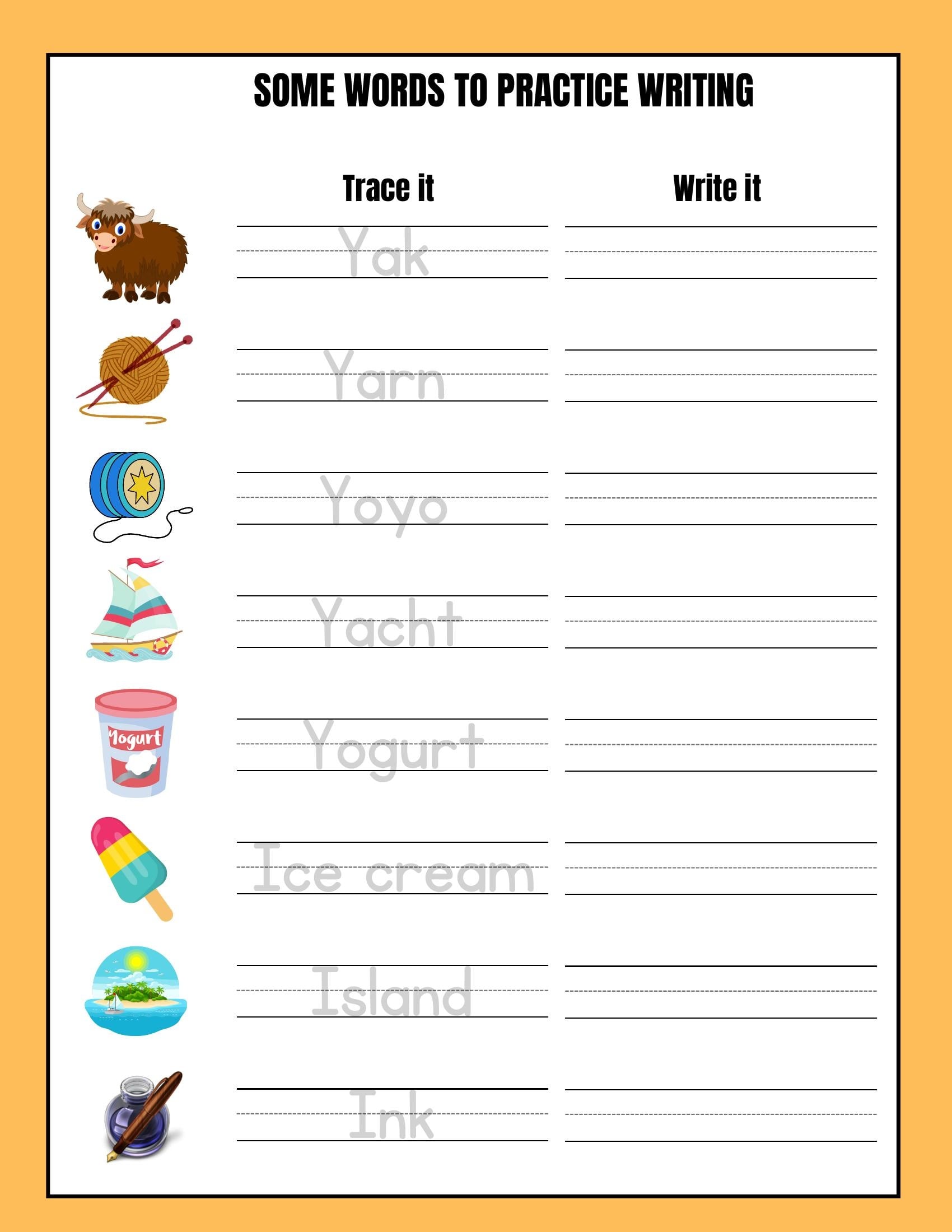
The ninth page introduces Y words alongside several I words. Children trace yak, yarn, yoyo, yacht, yogurt, ice cream, island, and ink.
Some of these words may be less familiar to young learners. Use the pictures to explain any unfamiliar word before writing.
10. Pear, Plane, Panda, Pumpkin, Pineapple, Rose, Rocket, and Robot
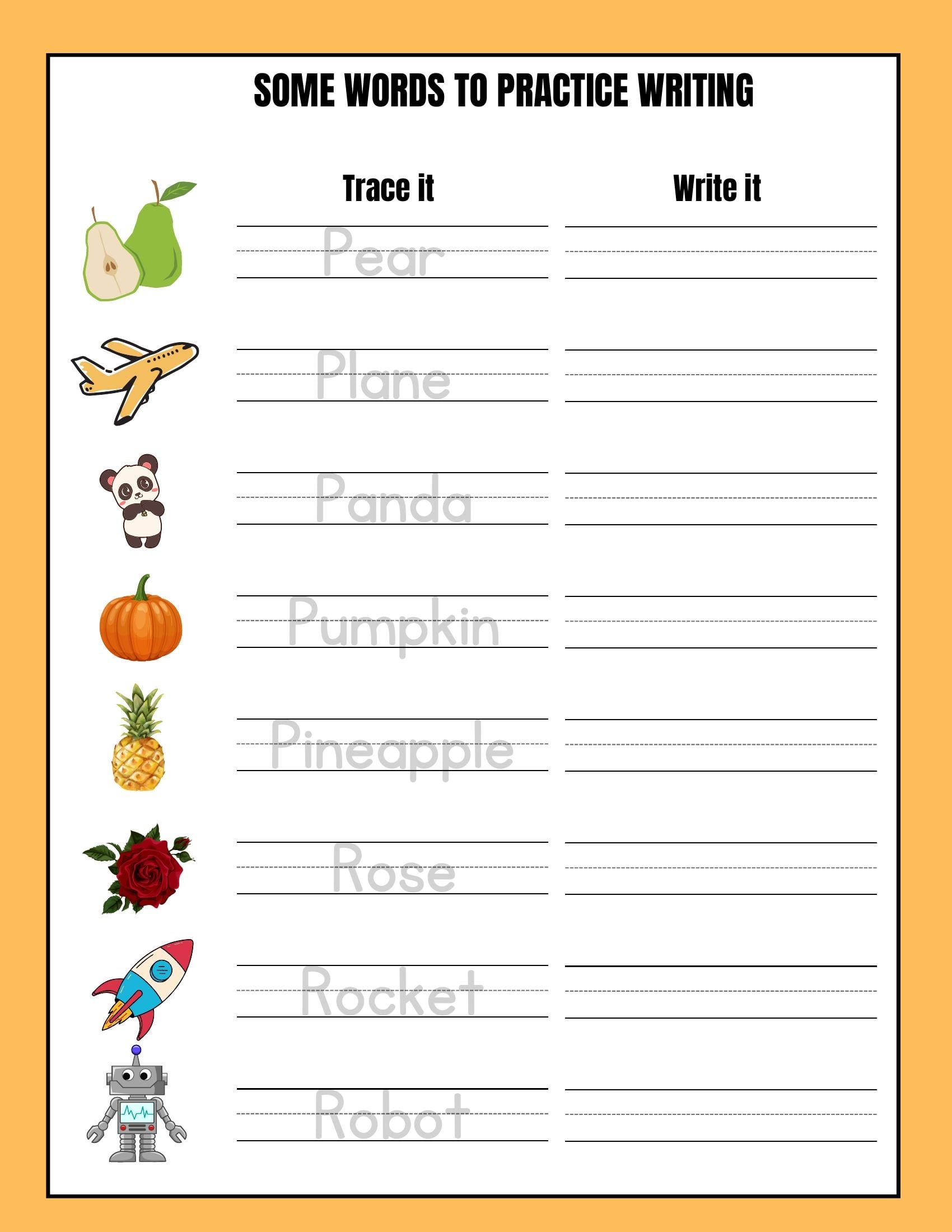
Children practice another group of eight words on this page. The worksheet includes pear, plane, panda, pumpkin, pineapple, rose, rocket, and robot.
The trace-and-write layout remains consistent. This helps children know what to expect as they work.
11. Unicycle, Uniform, Umpire, Umbrella, Unicorn, X-Ray Fish, X-Ray, and Xylophone
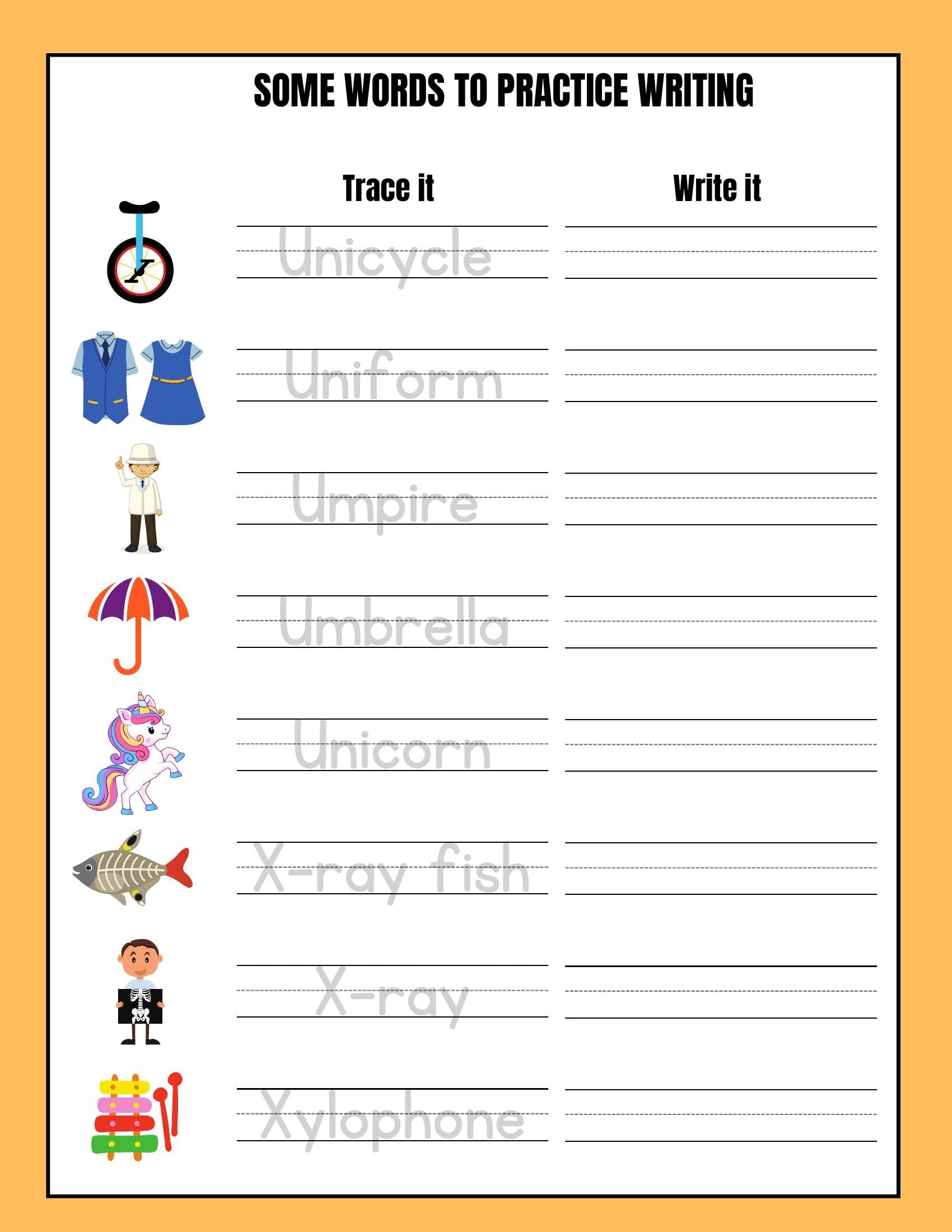
This worksheet gives children some less common vocabulary. They trace unicycle, uniform, umpire, umbrella, unicorn, X-ray fish, X-ray, and xylophone.
The pictures make these unusual words easier to introduce. Encourage your child to repeat each word while tracing.
12. Jam, Jar, Jalapeno, Jellyfish, Jug, Spider, Sun, and Snake
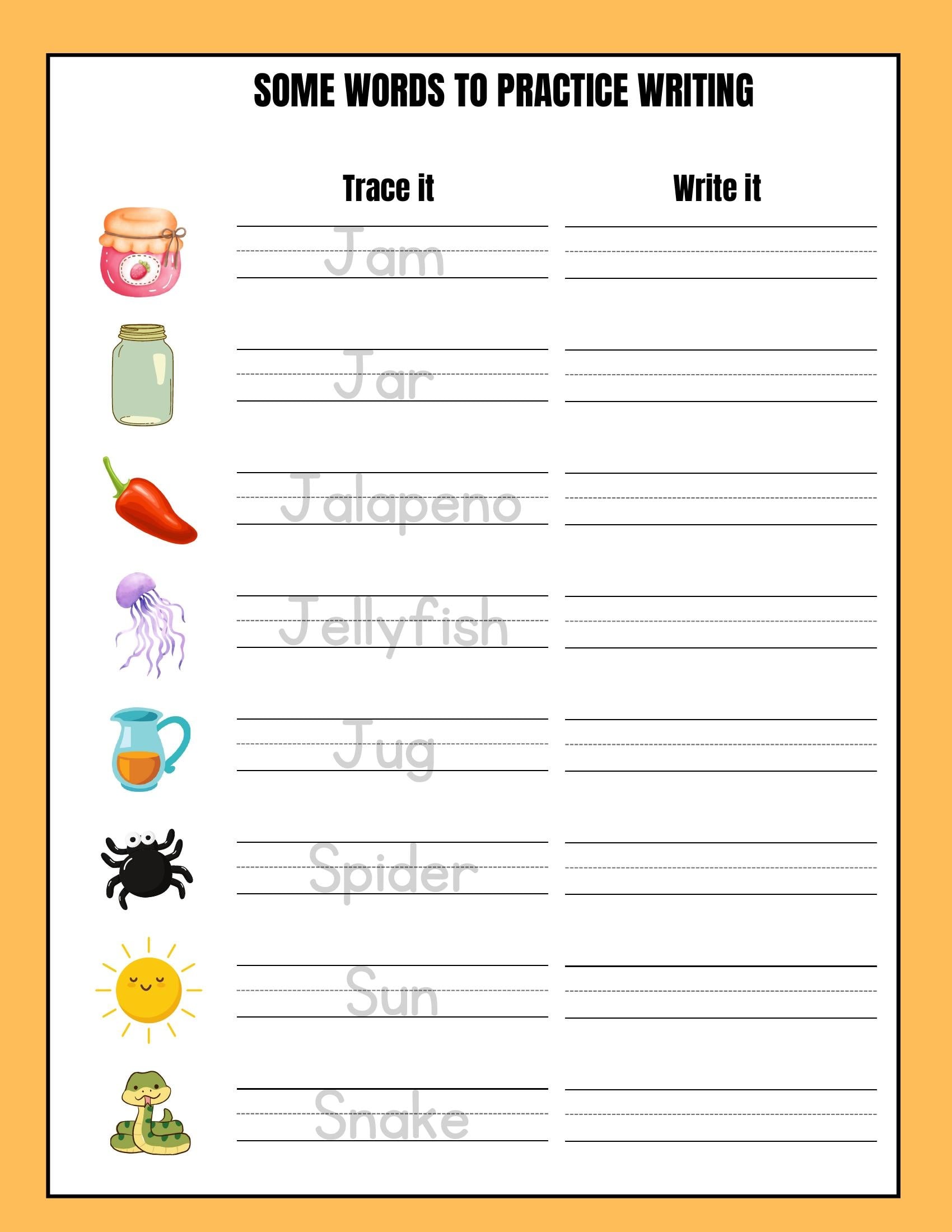
The twelfth page combines J and S words. Children trace jam, jar, jalapeno, jellyfish, jug, spider, sun, and snake.
Each word appears beside its picture and writing lines. Children can trace first and then practice writing independently.
13. Igloo, Iron, Lock, Lamp, Lollipop, Lion, Leaf, and Butterfly
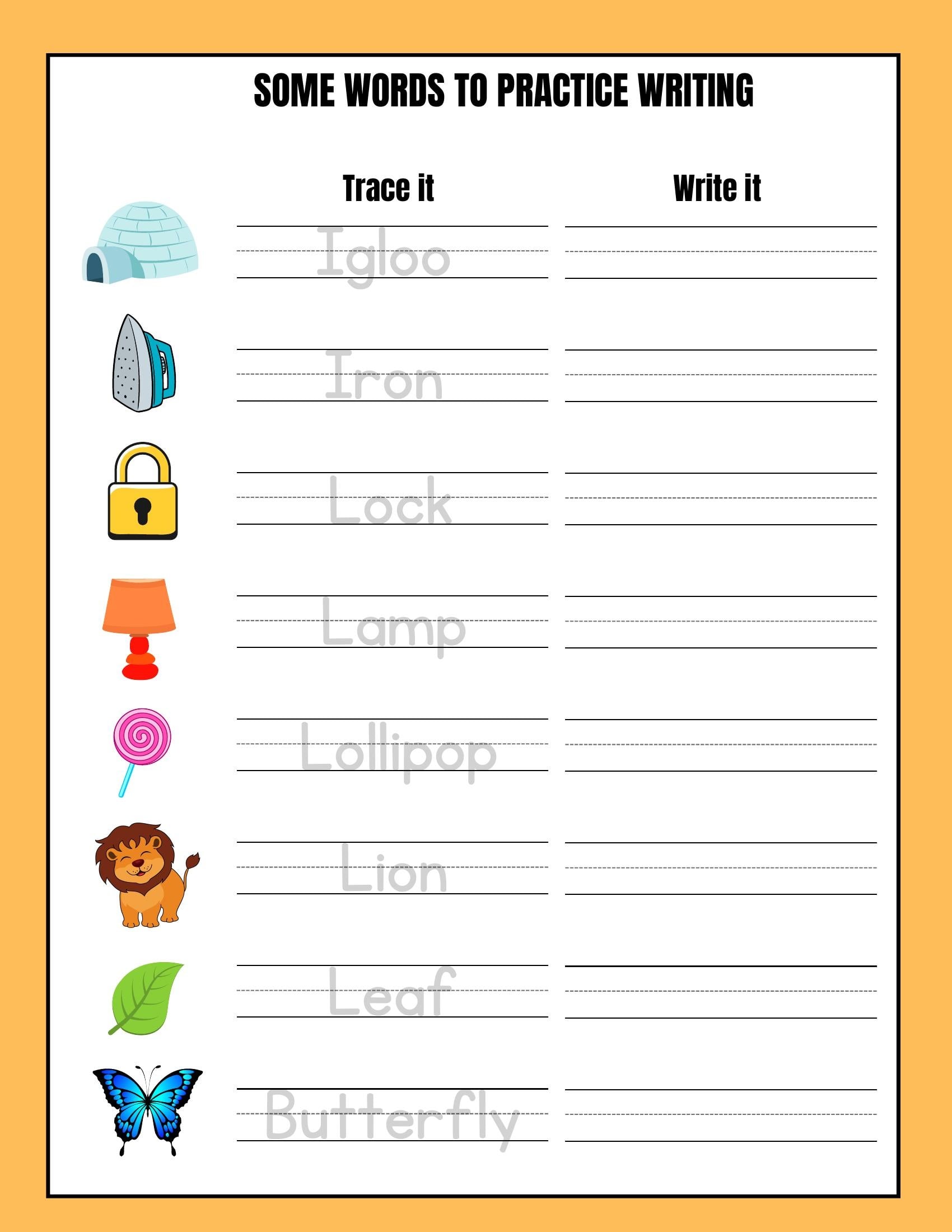
This page gives children another varied set of words. They trace igloo, iron, lock, lamp, lollipop, lion, leaf, and butterfly.
The pictures can help children connect sounds, letters, and vocabulary. Ask your child to point to each picture before writing.
14. Orange, Owl, Octopus, Olive, Onion, Zero, Zebra, and Zip
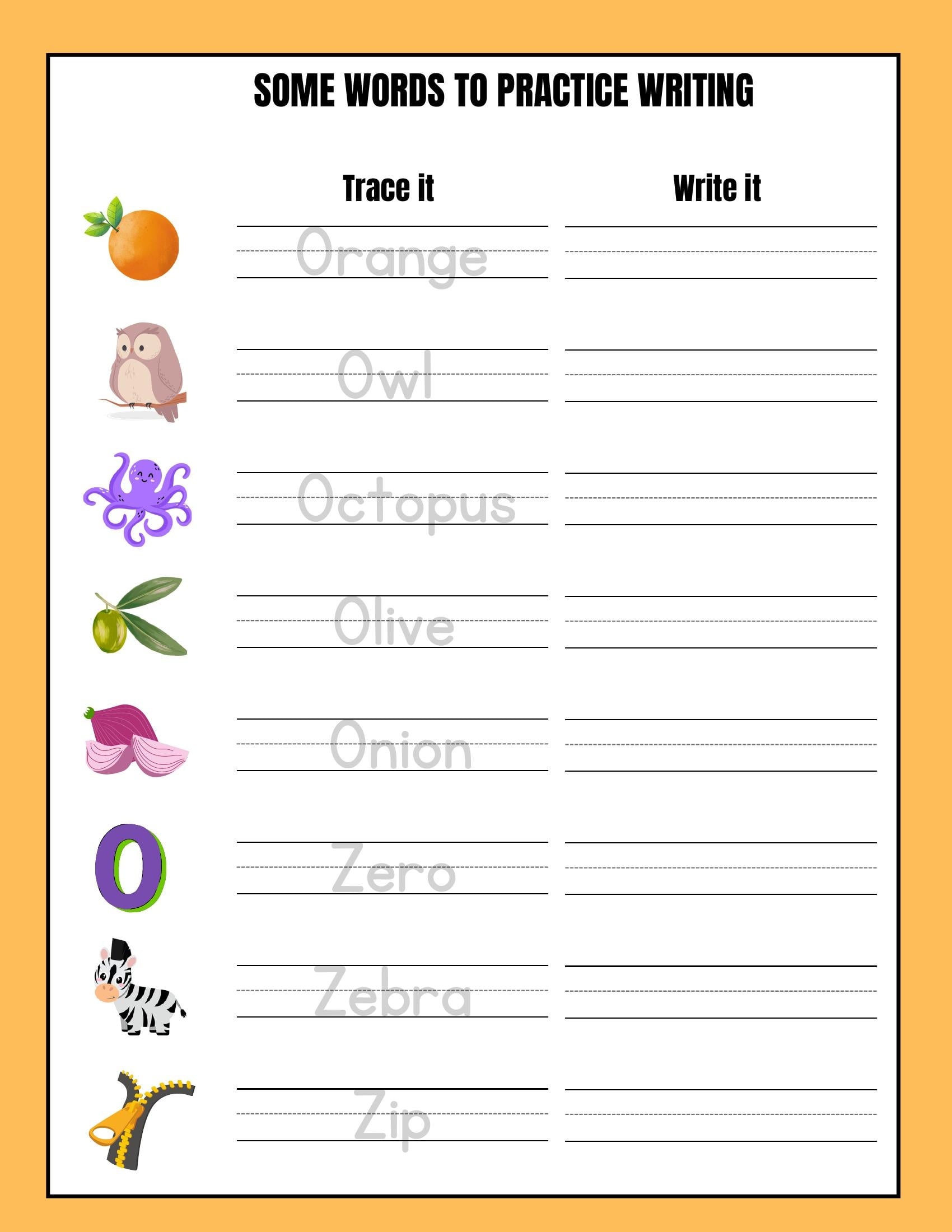
The fourteenth worksheet combines O and Z words. Children practice orange, owl, octopus, olive, onion, zero, zebra, and zip.
Some words have similar starting letters, giving children extra recognition practice. Let them trace each word before attempting the blank line.
15. Hammer, Honey, House, Hat, Hen, Zip, Zoo, and Zigzig
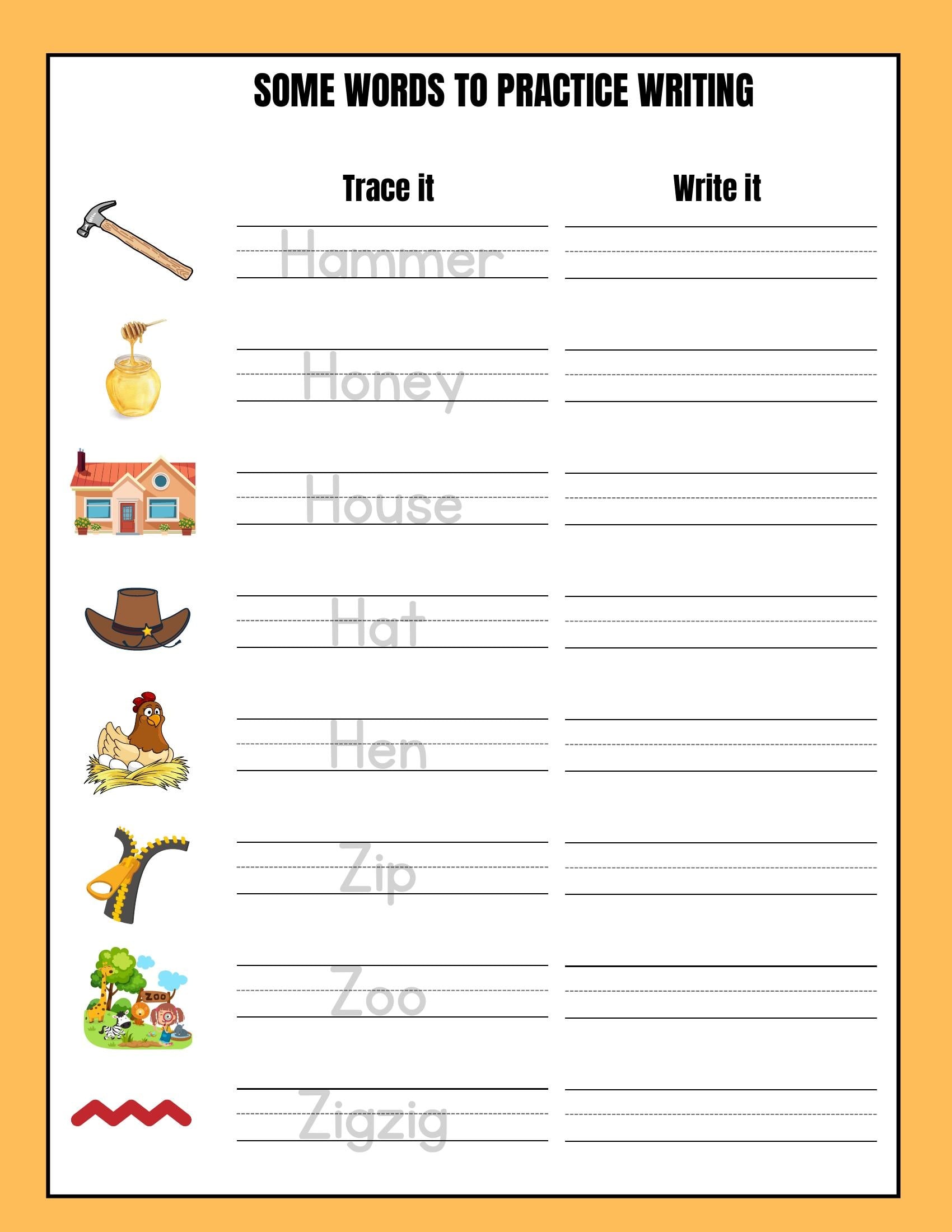
This page focuses mainly on H and Z words. Children trace hammer, honey, house, hat, hen, zip, zoo, and zigzig.
The pictures give children visual support while they practice. Encourage careful letter formation instead of speed.
16. Engine, Earth, Elephant, Eggplant, Eagle, Ice Cream, Island, and Ink
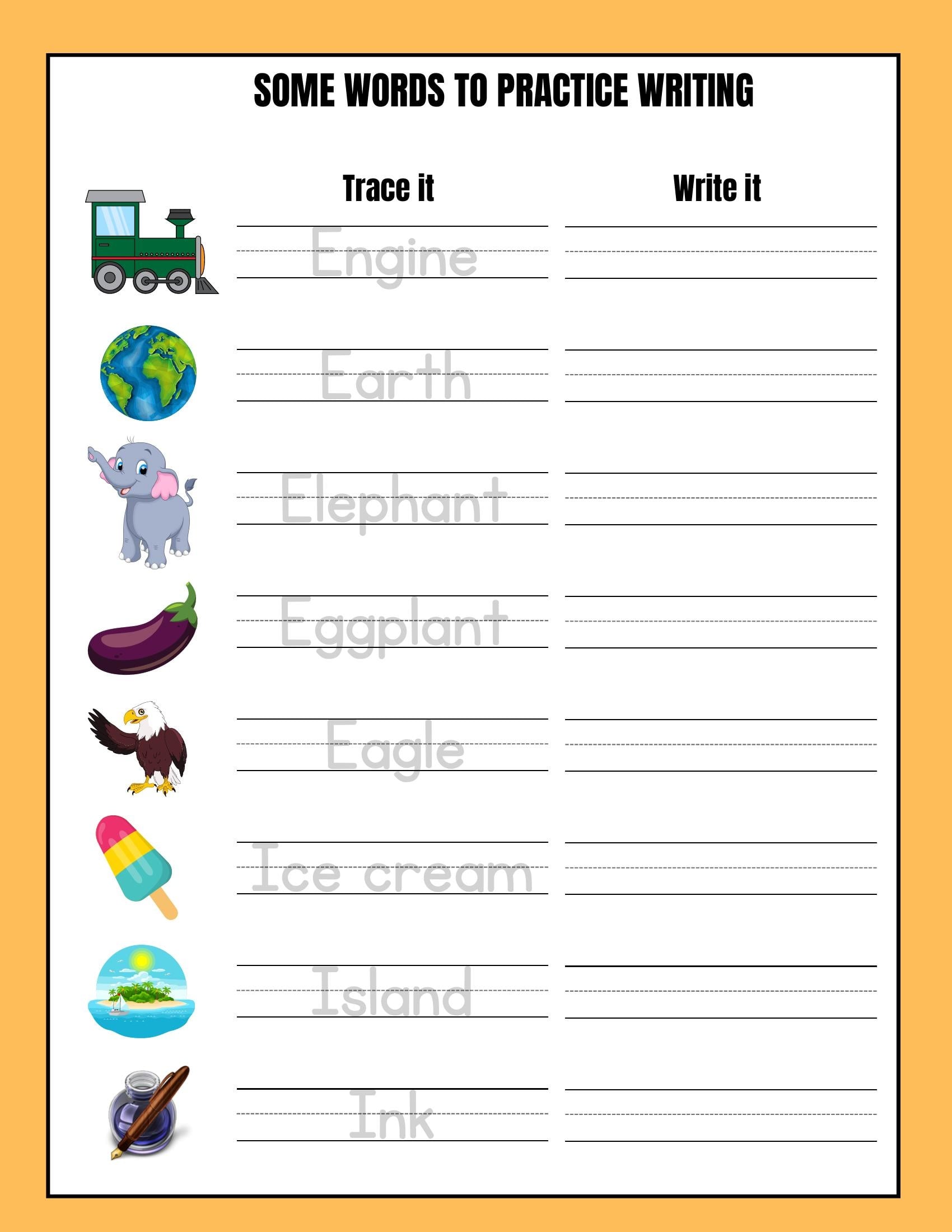
The sixteenth worksheet features E and I words. Children trace engine, Earth, elephant, eggplant, eagle, ice cream, island, and ink.
Several pictures are familiar, while others can introduce new vocabulary. Ask your child to say the first sound of each word before tracing.
17. Duck, Dress, Deer, Dolphin, Dice, Queen, Quetzal, and Quail
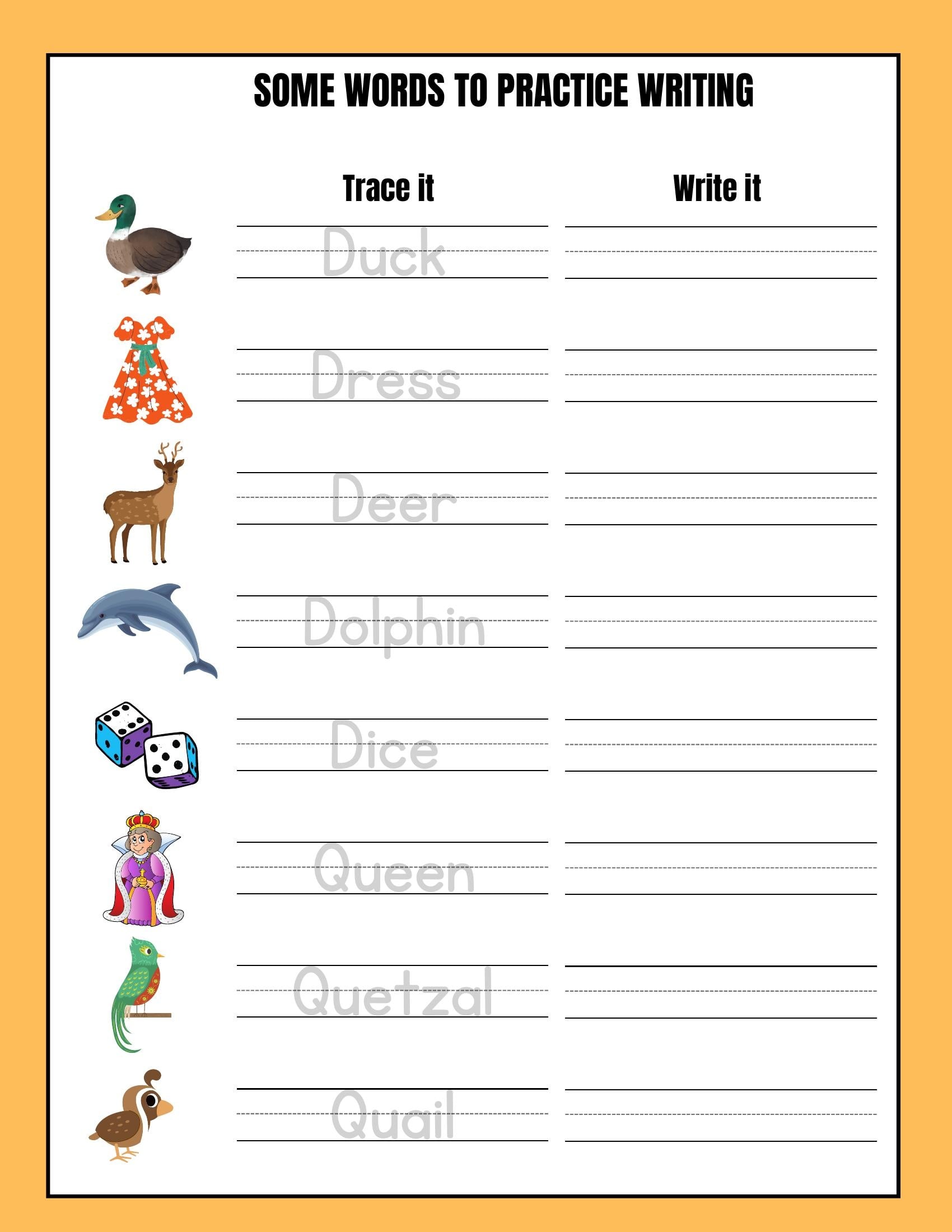
This page includes D and Q words. Children trace duck, dress, deer, dolphin, dice, queen, quetzal, and quail.
The Q words may need a little extra explanation. Take a moment to name the pictures together before starting.
18. Cherries, Cat, Cake, Camera, Coat, Sun, Star, and Snail
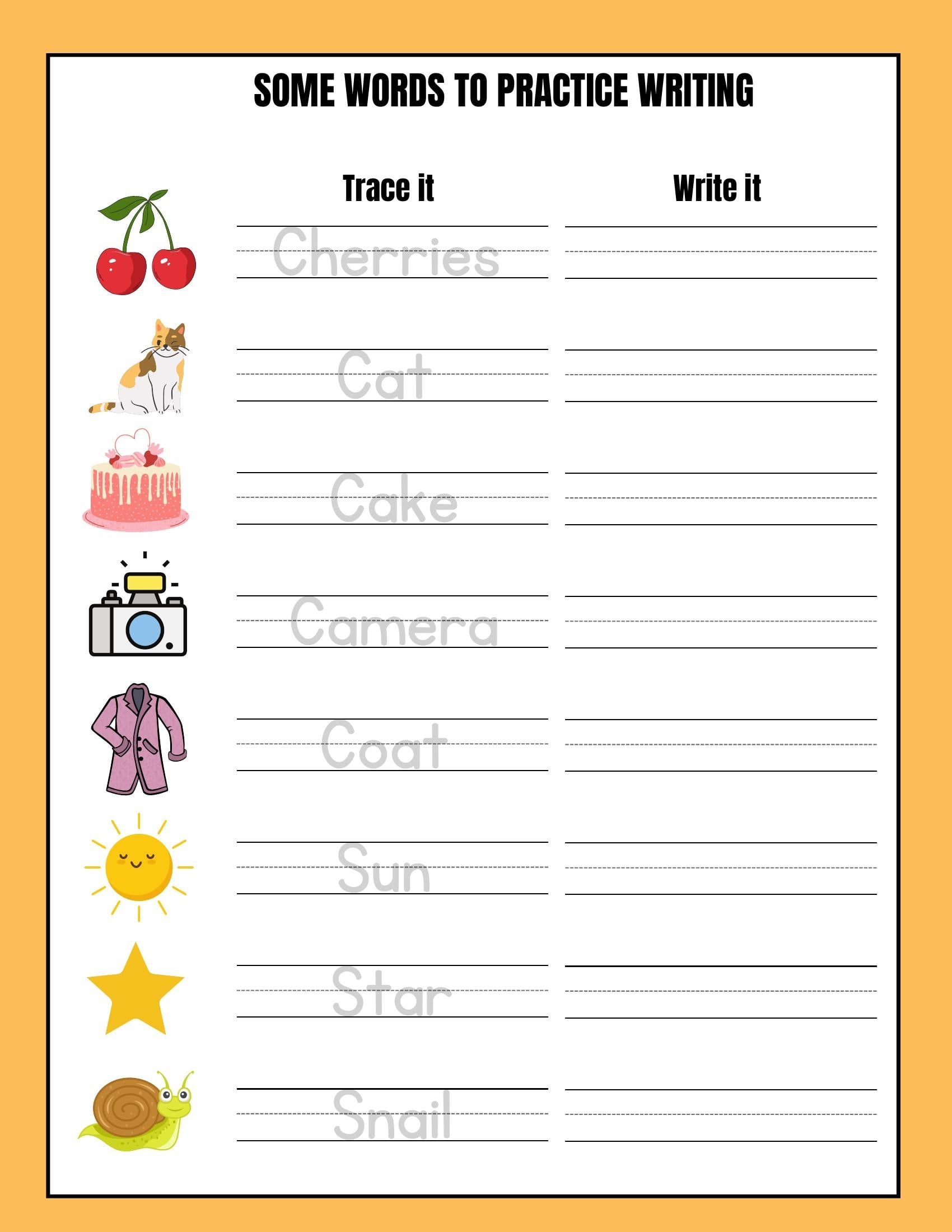
This worksheet features C and S words. Children trace cherries, cat, cake, camera, coat, sun, star, and snail.
The familiar pictures make this a comfortable final practice page. Children can finish by writing each word on the blank lines.
Letter Sounds and Picture Coloring
19. Letter A
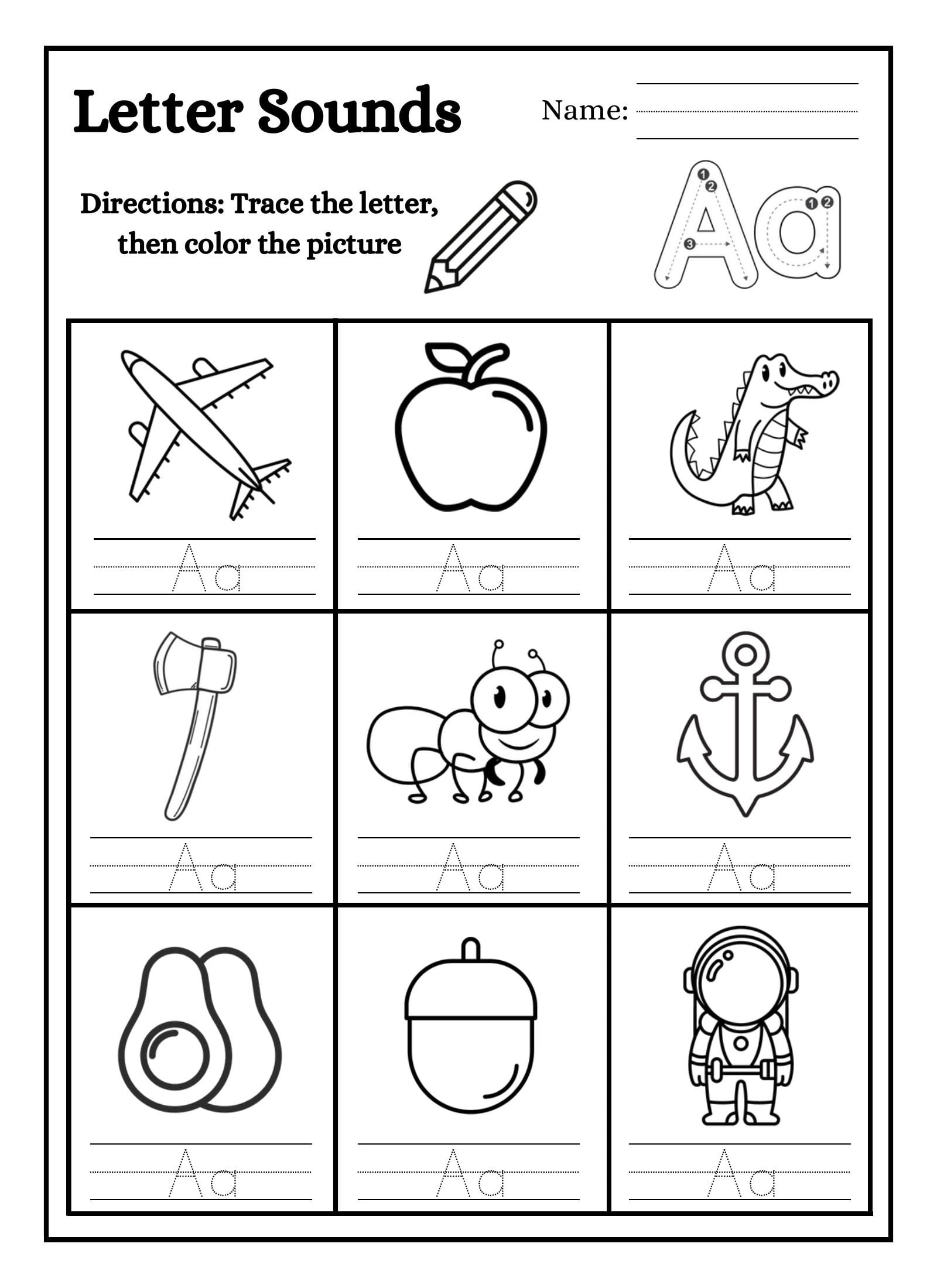
This page focuses on the letter A. Children trace uppercase and lowercase A before coloring the pictures.
The page includes an airplane, apple, alligator, axe, ant, anchor, avocado, acorn, and astronaut. This creates a connection between the letter and familiar A words.
20. Letter B
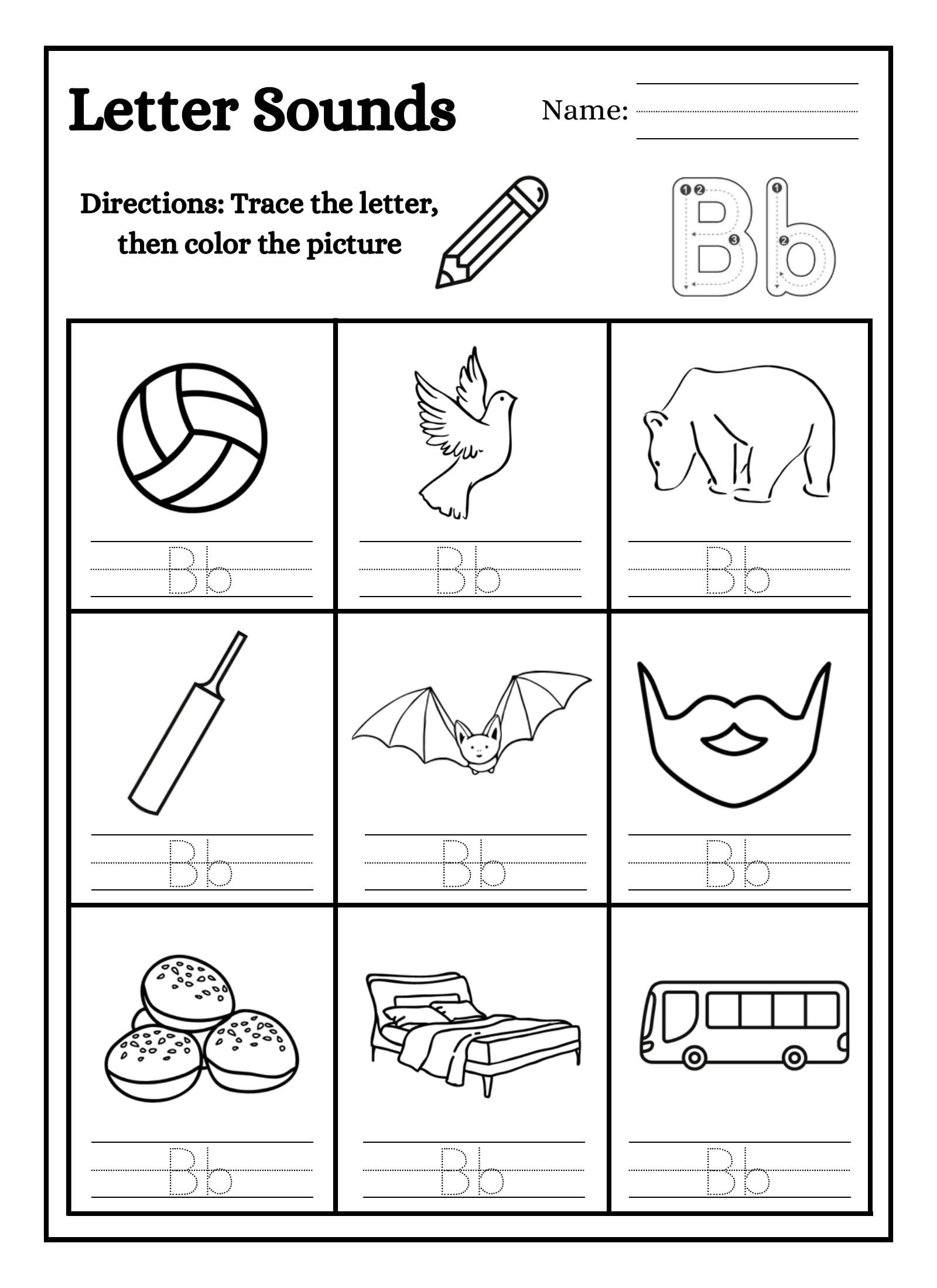
The second letter-sound page focuses on B. Children trace B and then color the pictures shown below.
The pictures include a ball, bird, bear, bat, beard, bagels, bed, and bus. Ask your child to name each picture while practicing the letter.
21. Letter C
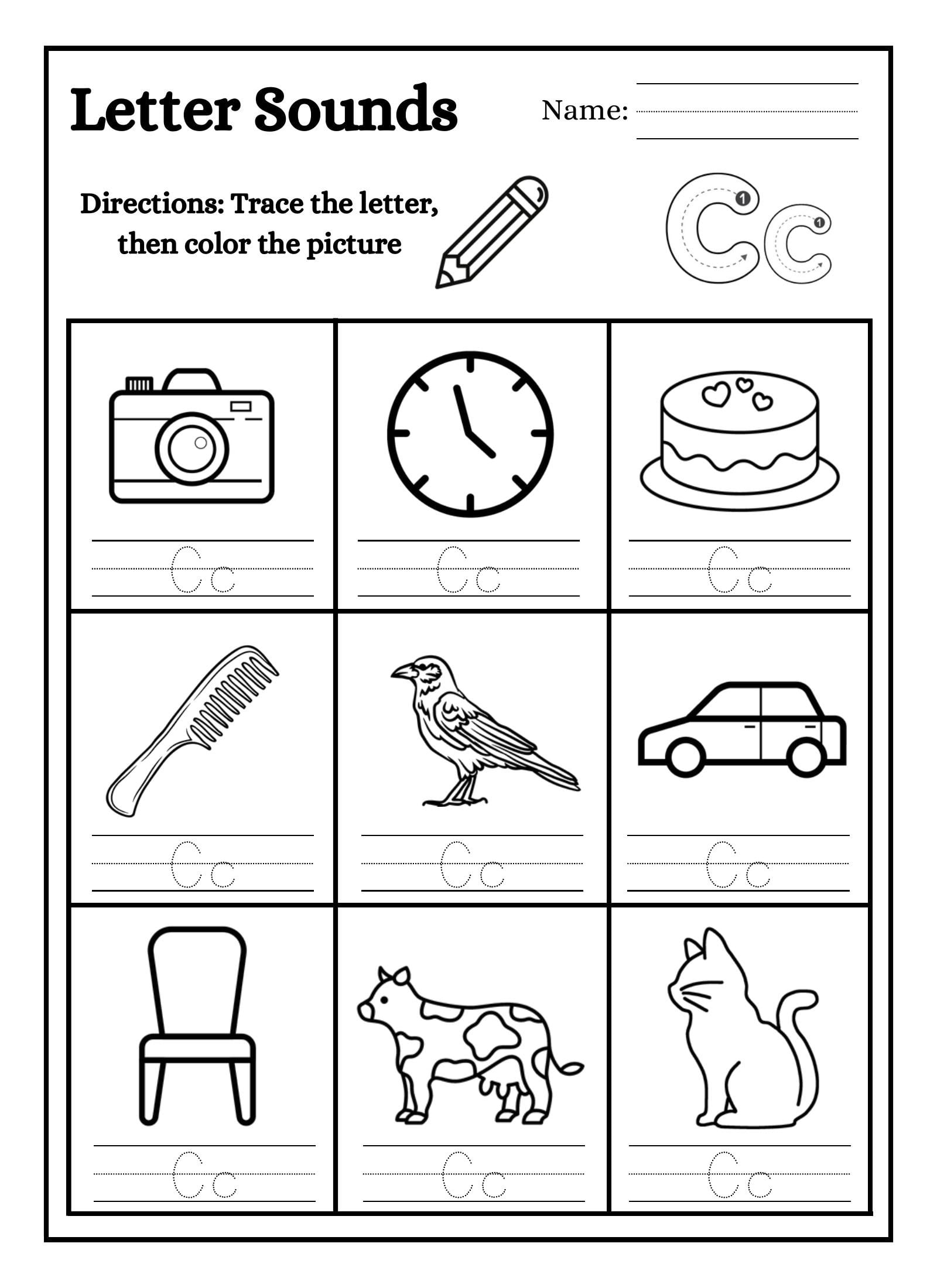
This worksheet introduces C through tracing and coloring. Children practice C while working with a camera, clock, cake, comb, crow, car, chair, cow, and cat.
The picture variety gives children plenty of C words to discuss. Encourage them to repeat the letter sound as they color.
22. Letter D
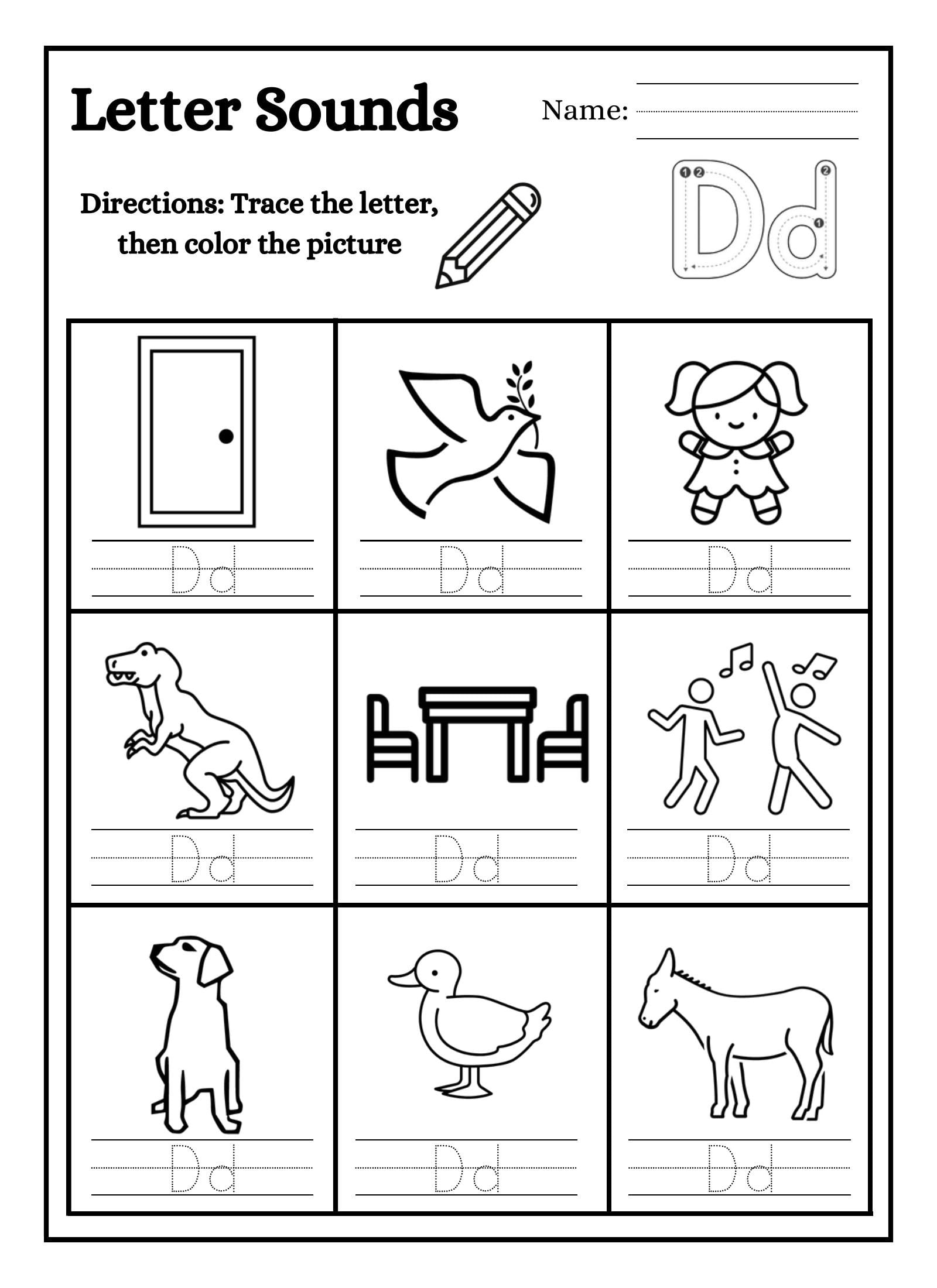
The fourth letter-sound worksheet focuses on D. Children trace D and color pictures including a door, dove, doll, dinosaur, table, dancers, dog, duck, and donkey.
The activity combines handwriting with picture recognition. Let your child name each image before coloring.
23. Letter E
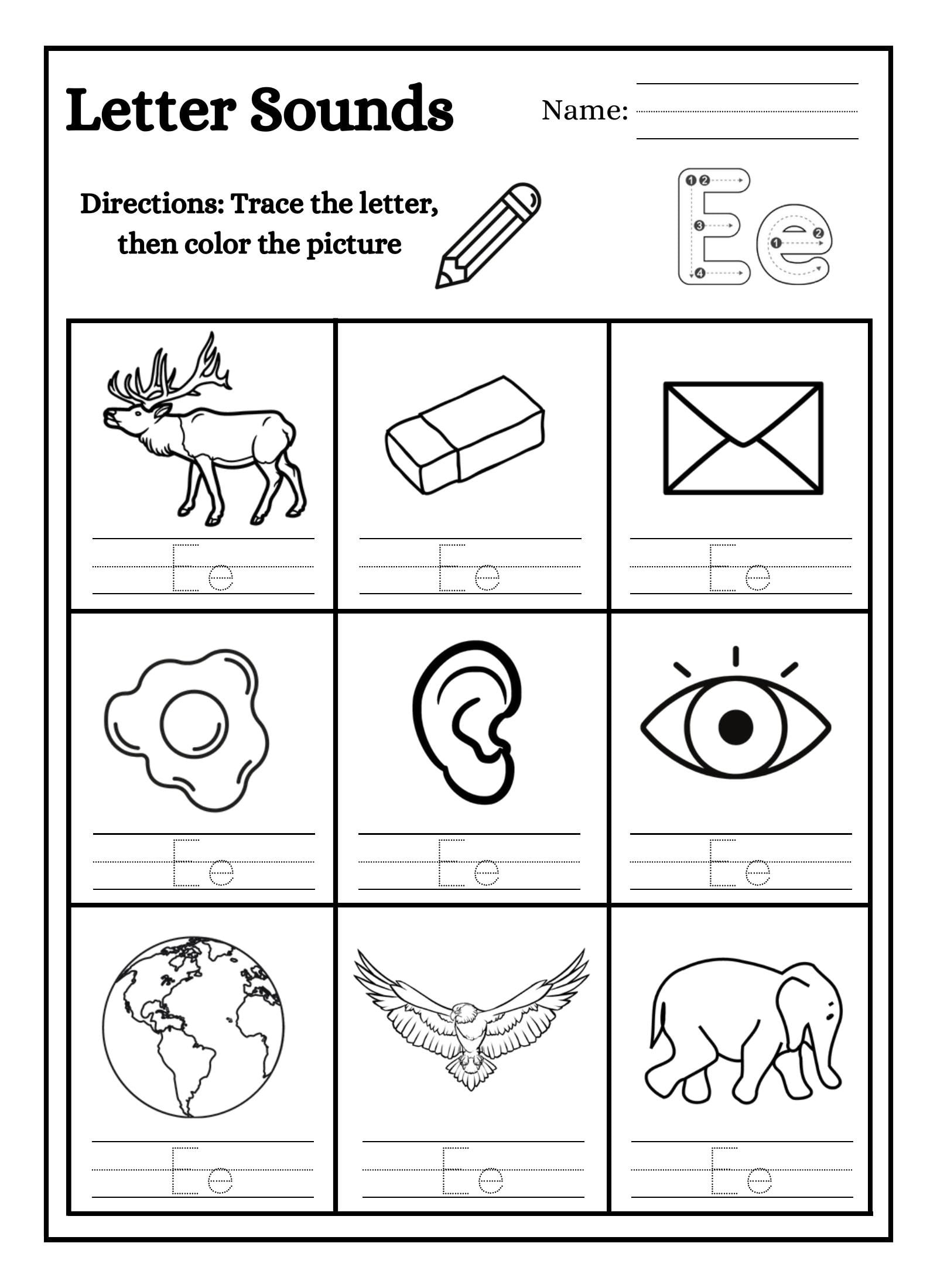
The E worksheet gives children another letter to trace and explore. The pictures include an elk, eraser, envelope, egg, ear, eye, Earth, eagle, and elephant.
These pictures offer several clear examples of E words. Children can trace the letter before coloring each image.
24. Letter F
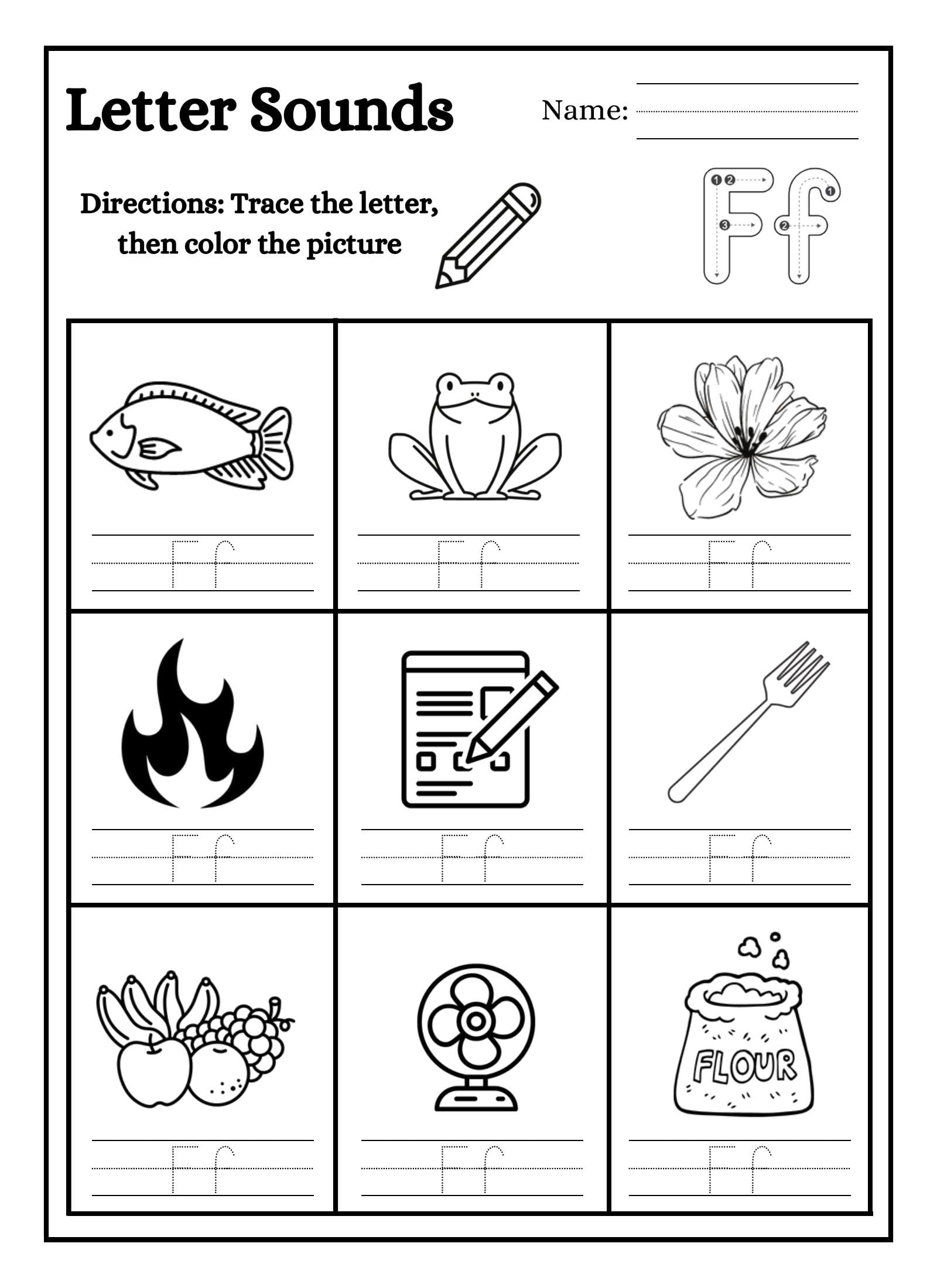
This page focuses on F and includes several familiar pictures. Children color a fish, frog, flower, fire, form, fork, fruit, fan, and flour bag.
The activity gives them repeated exposure to F words. Encourage your child to say the words as they color.
25. Letter G
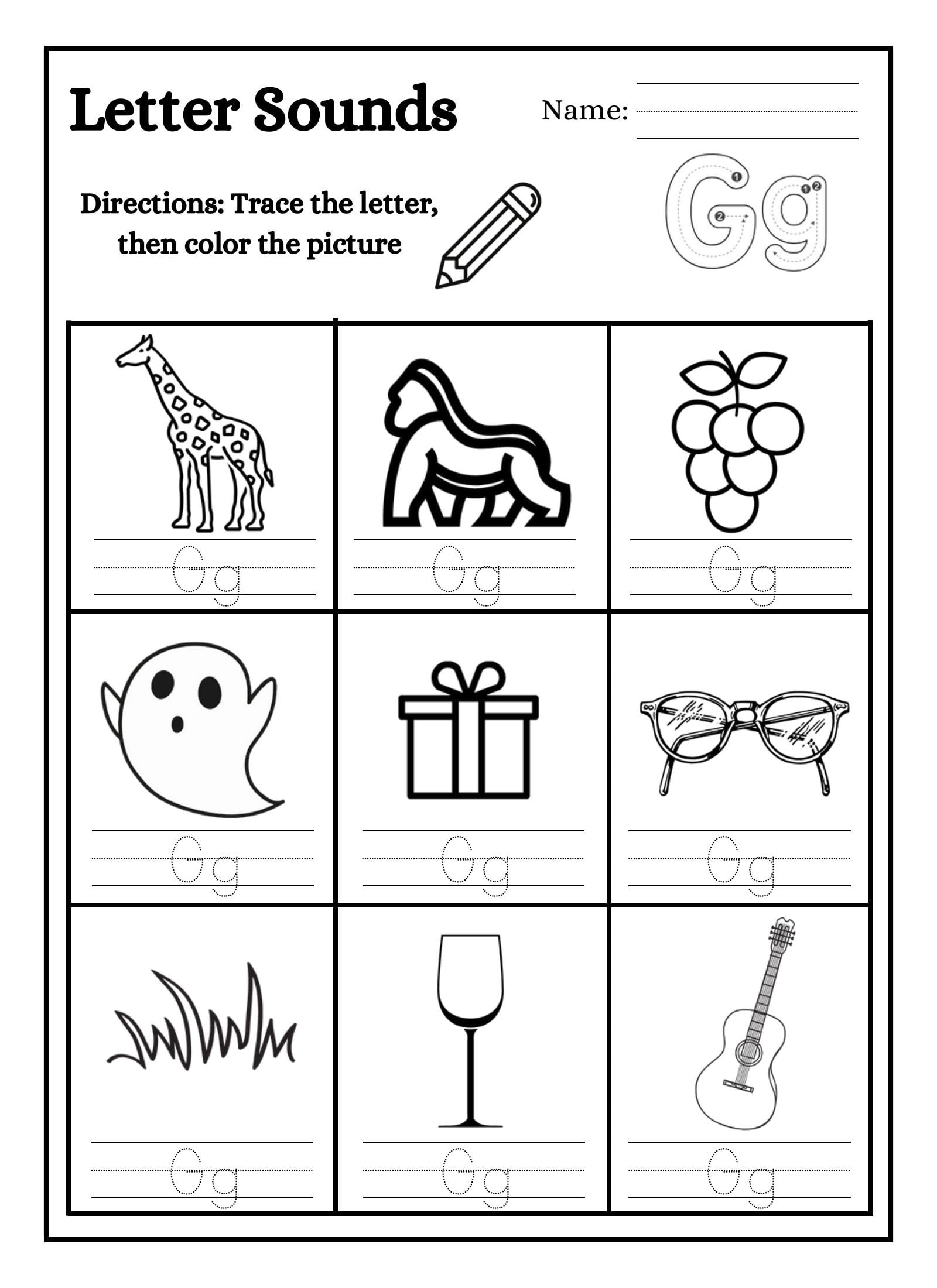
The seventh page introduces the letter G. Children trace G and color pictures including a giraffe, goat, grapes, ghost, gift, glasses, grass, glass, and guitar.
The pictures create many opportunities to practice the letter sound. Let children identify each picture before reaching for their crayons.
26. Letter H
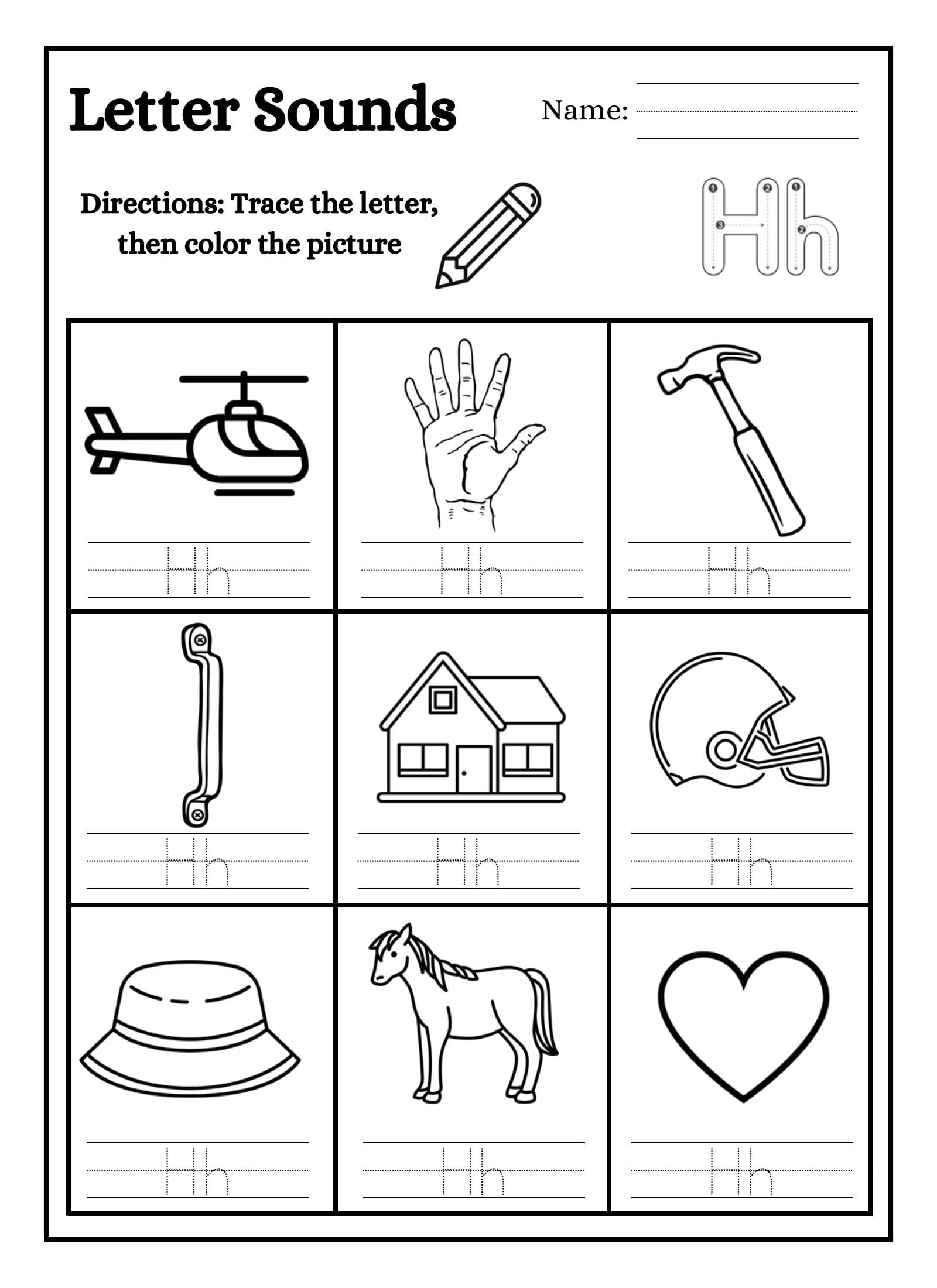
The final page focuses on H. Children trace H and color pictures including a helicopter, hand, hammer, handle, house, helmet, hat, horse, and heart.
This page gives children one more chance to connect a letter with picture vocabulary. It also provides a colorful way to finish the letter-sound section.
Name Tracing Practice
27. Sam Jones
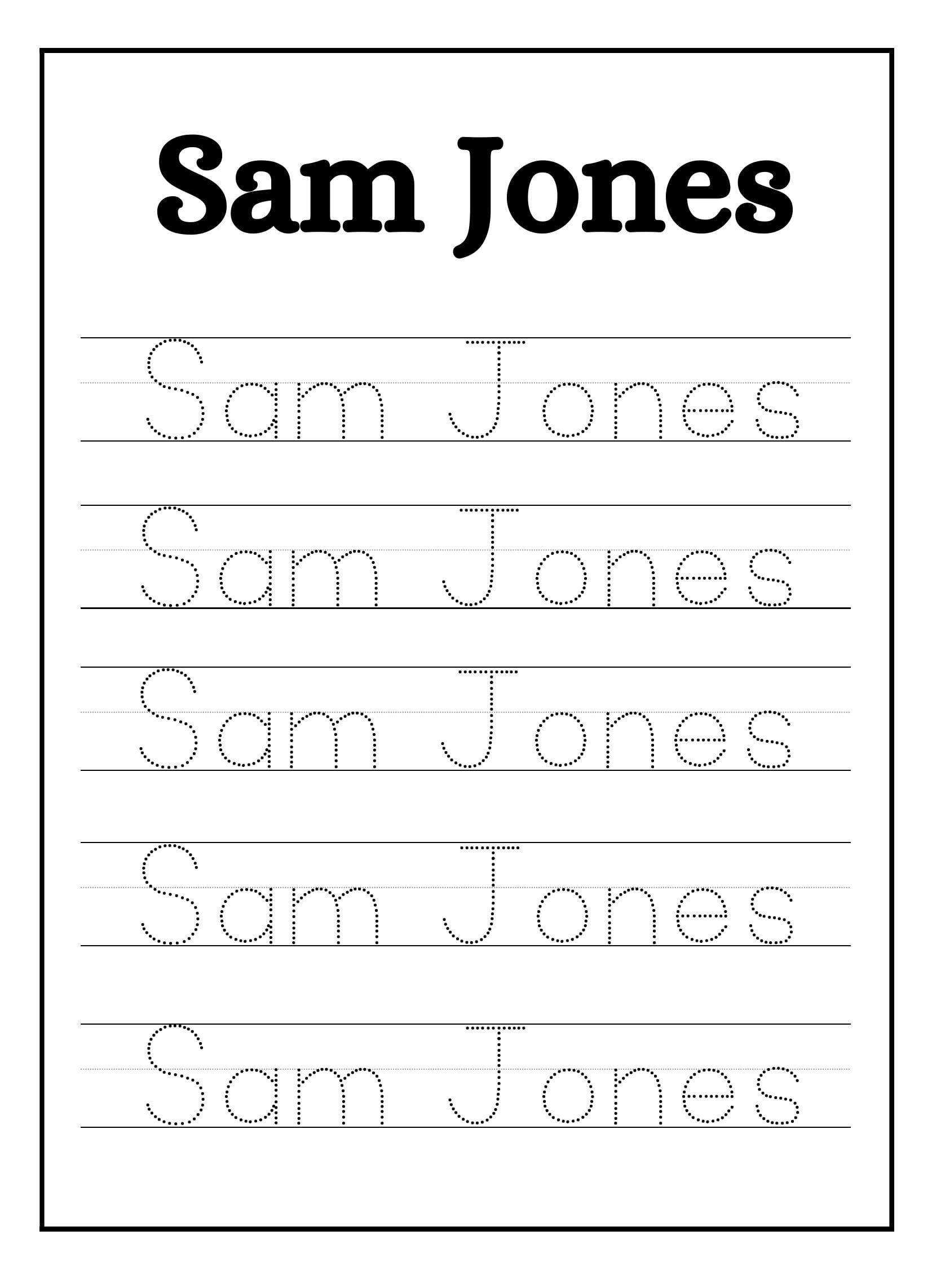
The first name-writing worksheet is designed for practicing the name Sam Jones. Children trace the dotted name across several handwriting lines.
Repeating the name gives them practice with both the first and last name. This can also help them become more comfortable writing capital letters.
28. Sara Smith
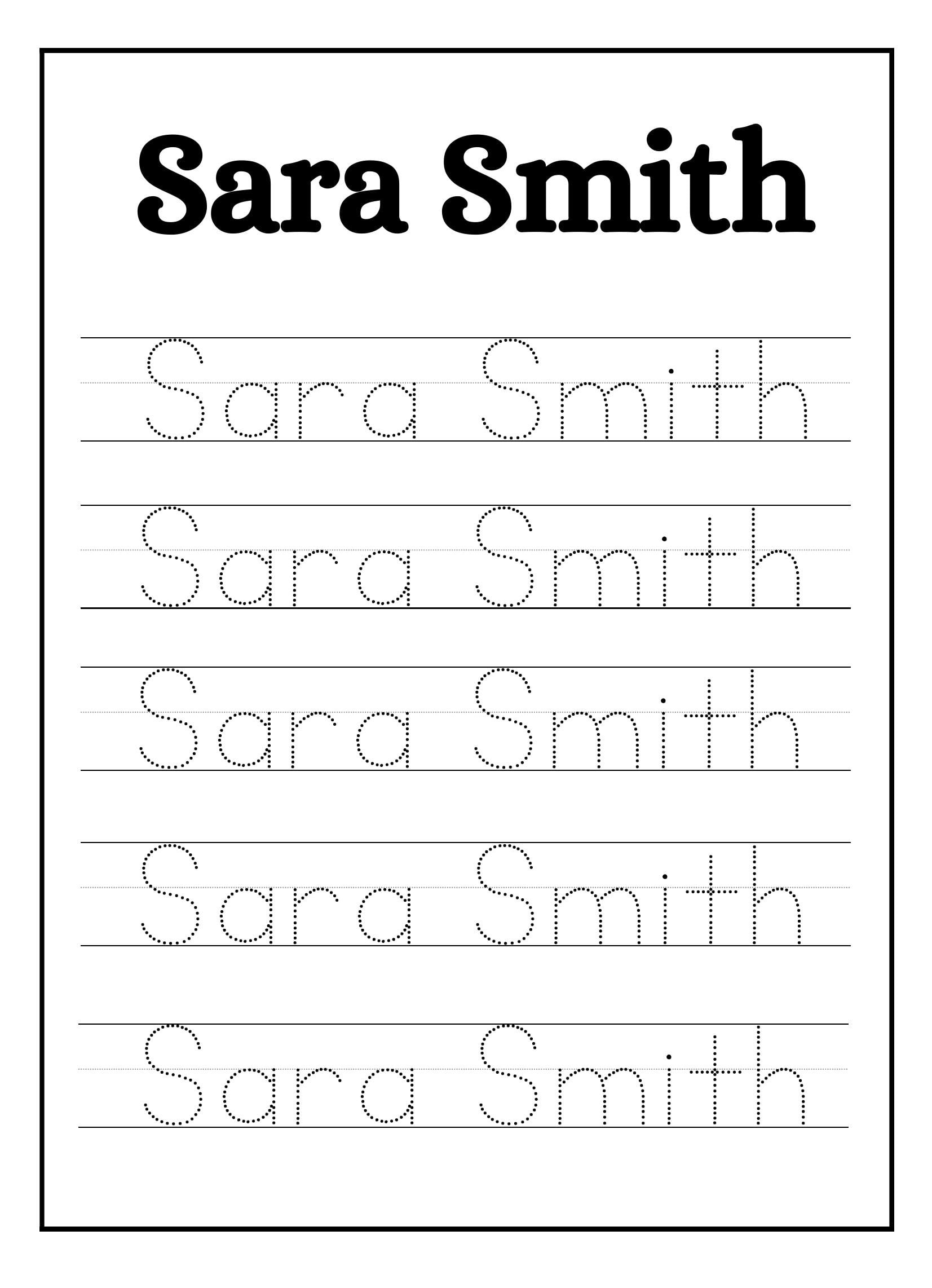
The next page features Sara Smith. Children trace the name several times using the dotted letter guides.
The repeated lines give them room to practice the same letter patterns. Encourage your child to focus on keeping each letter between the writing lines.
29. Masha Cutie
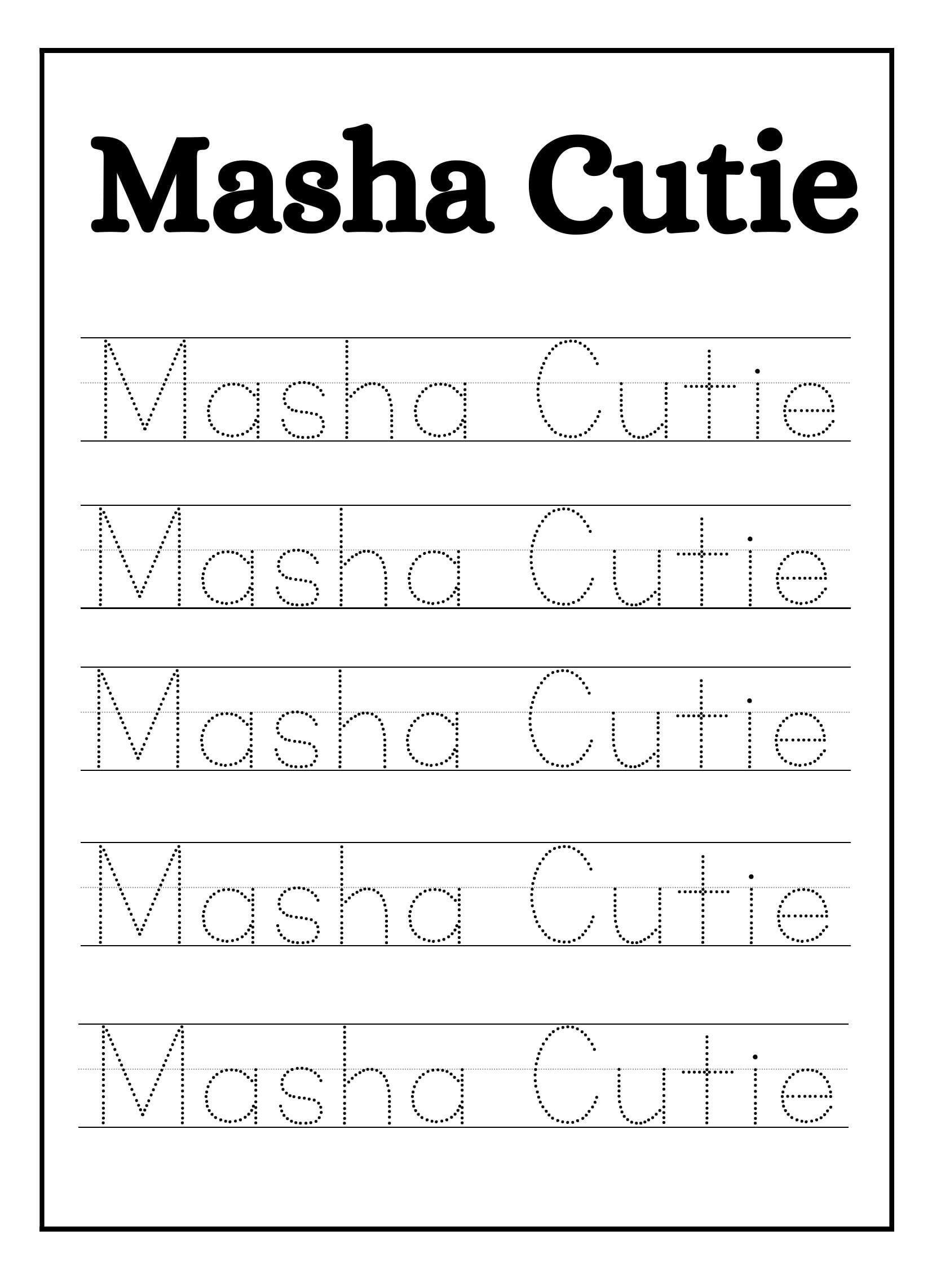
This worksheet focuses on Masha Cutie. The name contains a mix of uppercase and lowercase letters for children to trace.
The repeated practice can help children notice how capital letters begin a name. Let them trace slowly and follow each dotted letter carefully.
30. Maximillian
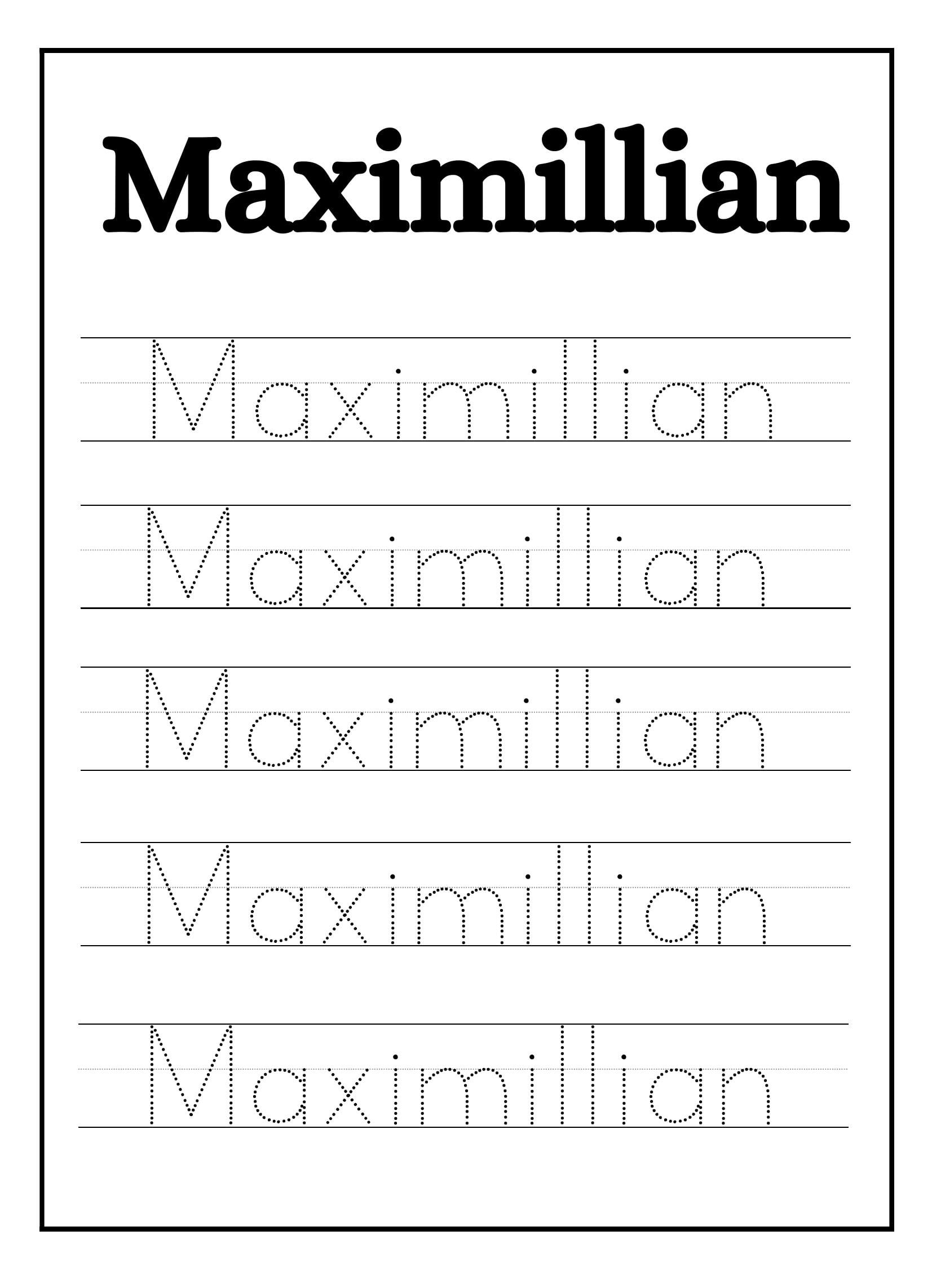
The final worksheet features the name Maximillian. Children trace the name across several lines using the dotted guides.
The longer name gives children extra writing practice. Completing this page provides a satisfying finish to the full tracing collection.
Final Thoughts
These Tracing Worksheets for Kids bring together alphabet, word, letter-sound, and name-writing practice.
Children can trace letters, copy words, color pictures, and practice complete names. The different activities help keep writing practice varied across the 30 pages.
For parents and teachers, the collection can be used in small sections. Start with alphabet tracing before introducing the word pages.
Then move into letter sounds and picture coloring. Name tracing can be added when children are ready for more personal writing practice.
Let children work at a comfortable pace and praise their effort. Encourage them to hold their pencils correctly and follow the tracing guides carefully.
After tracing, give them chances to write without the guide. With regular practice, these simple activities can help children feel more confident with early writing.