
26 Simple Globe Alphabet Handwriting Worksheets for A-Z Letter Practice
Disclosure: Some of the links in this post are affiliate links. This means if you click on the link and purchase an item, I will receive an affiliate commission at no extra cost to you.
A child can recognize a letter on one page and struggle to write it on the next. I have seen how quickly handwriting practice can become tiring when children feel unsure about the letter shape.
That is why I like giving them several small ways to work with the same letter.
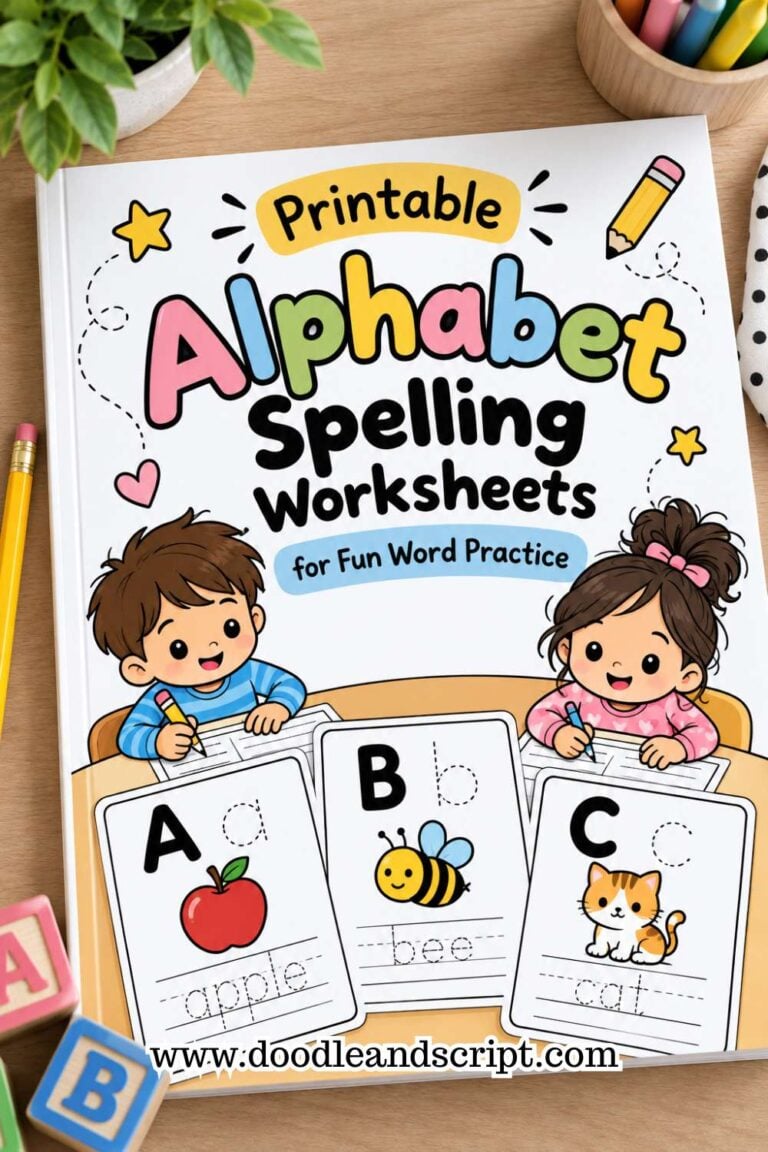
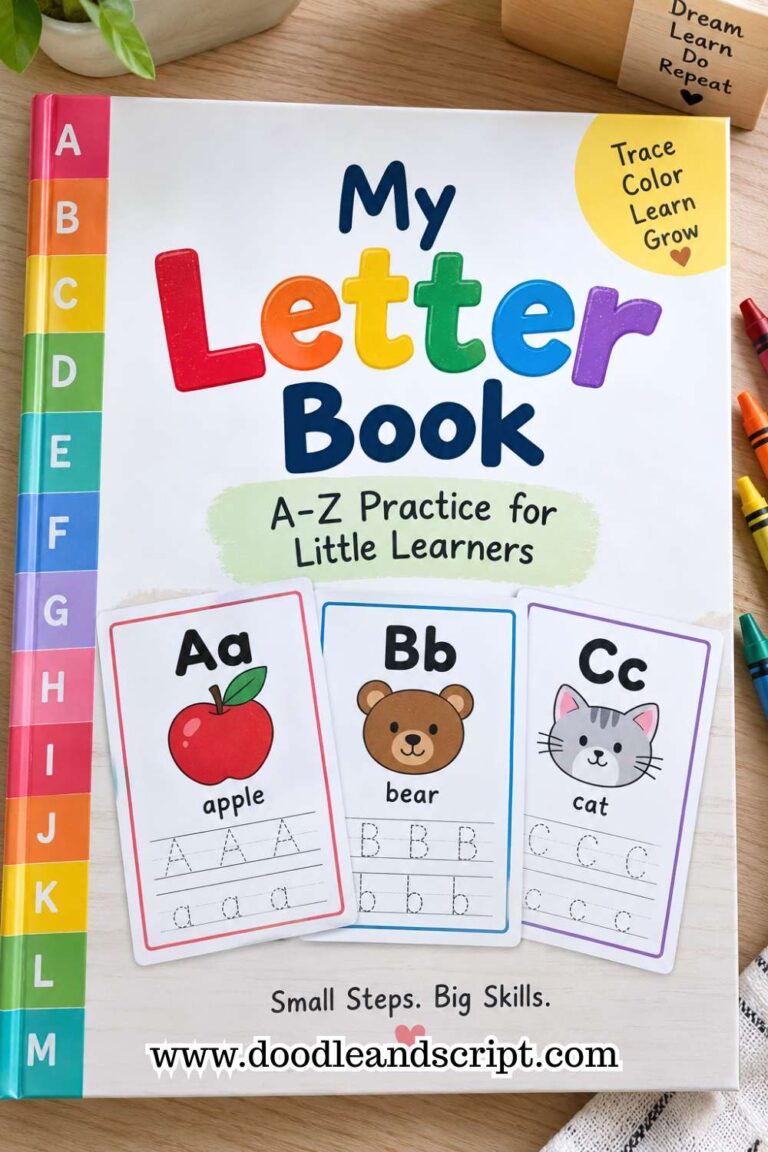
This 26-page collection takes children through A to Z, with a dedicated page for every letter. Each page combines letter recognition, counting, tracing, and coloring activities.
Children work with uppercase and lowercase forms while also seeing picture words connected to the featured letter.
The variety also gives you room to adjust each activity to the child’s level. A child who struggles with recognition can start by circling the correct letters.
Another child may be ready to spend more time tracing uppercase and lowercase forms.
With Globe Alphabet Handwriting, you can move through these activities at a comfortable pace while giving each letter the attention it deserves.
26 Simple Globe Alphabet Handwriting Worksheets for A-Z Letter Practice
1. Letter A Handwriting Worksheet
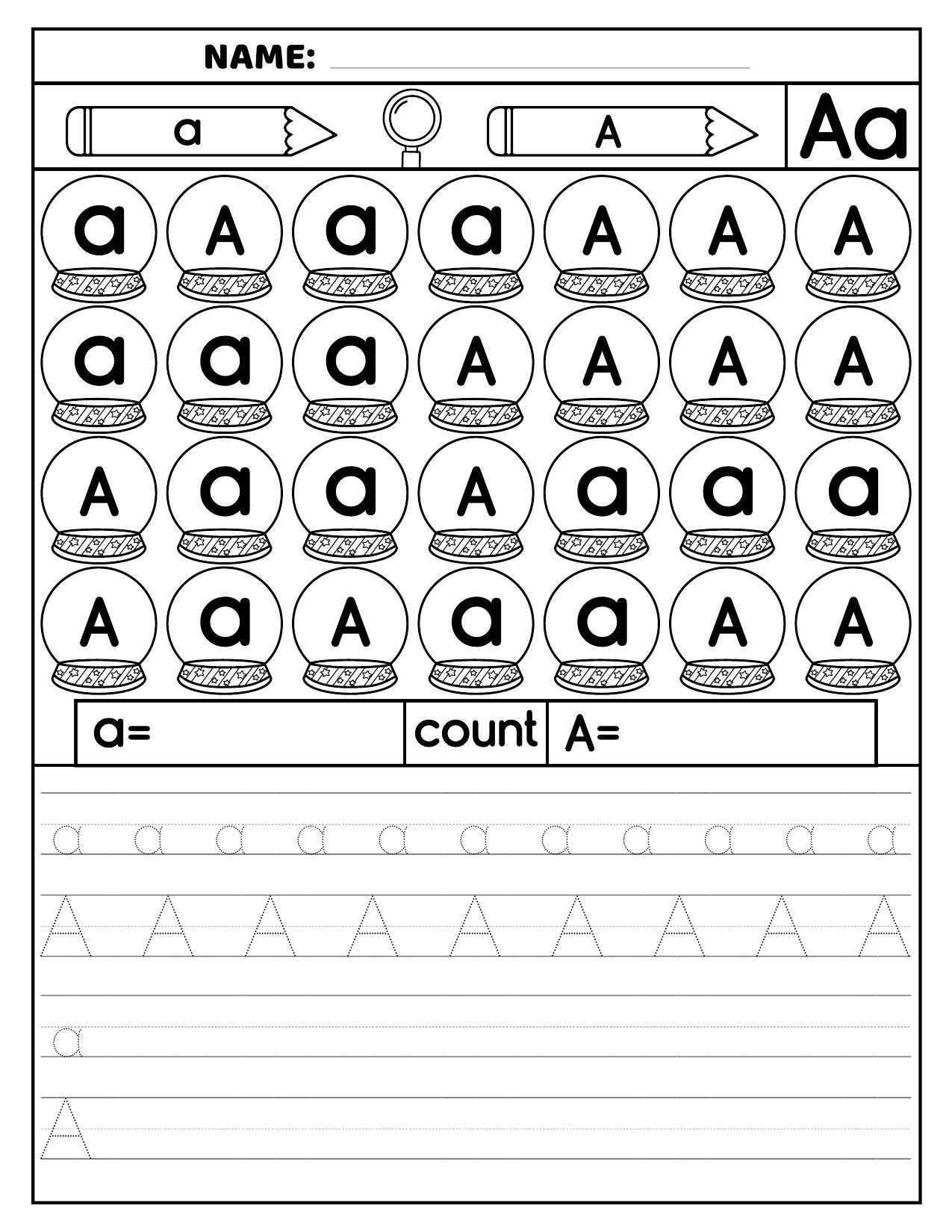
The A page introduces uppercase A and lowercase a through several short activities. Children first identify the target letter among other letters on the page.
They also count the featured letters before tracing A and a. The page includes picture examples that connect the letter with familiar words. This gives children more than one way to focus on the same letter.
2. Letter B Handwriting Worksheet
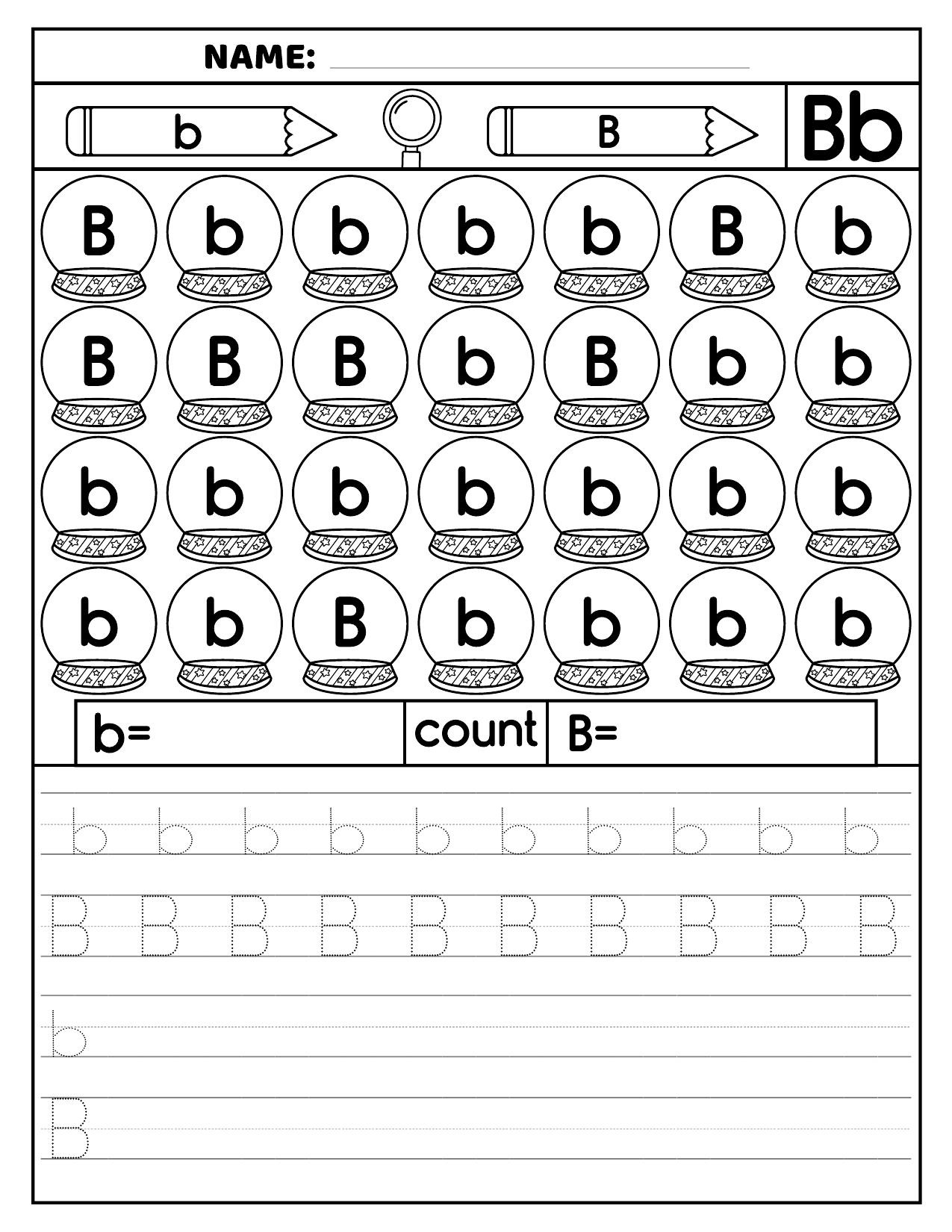
The B worksheet moves to uppercase B and lowercase b. Children identify the letter before practicing its written forms.
The page also includes counting, tracing, and picture activities. Let the child work through each section without rushing. Repeated practice can help the shape of B and b become more familiar.
3. Letter C Handwriting Worksheet
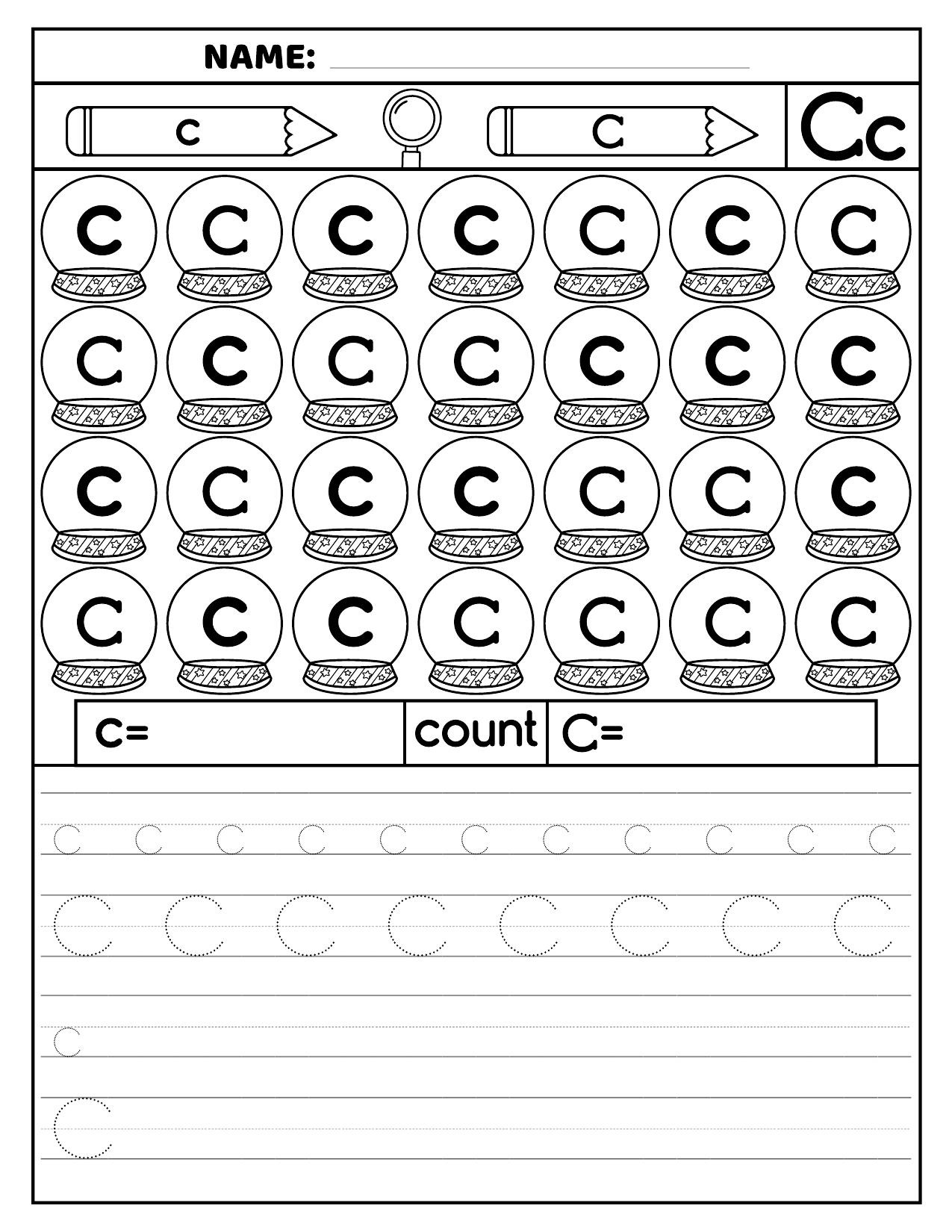
The C page gives children another opportunity to recognize and write a new letter. It features uppercase C and lowercase c throughout the activities.
Children can identify the letter, trace it, and work with the related pictures. I would let them complete each section in order. That keeps the activity organized while giving C and c plenty of attention.
4. Letter D Handwriting Worksheet
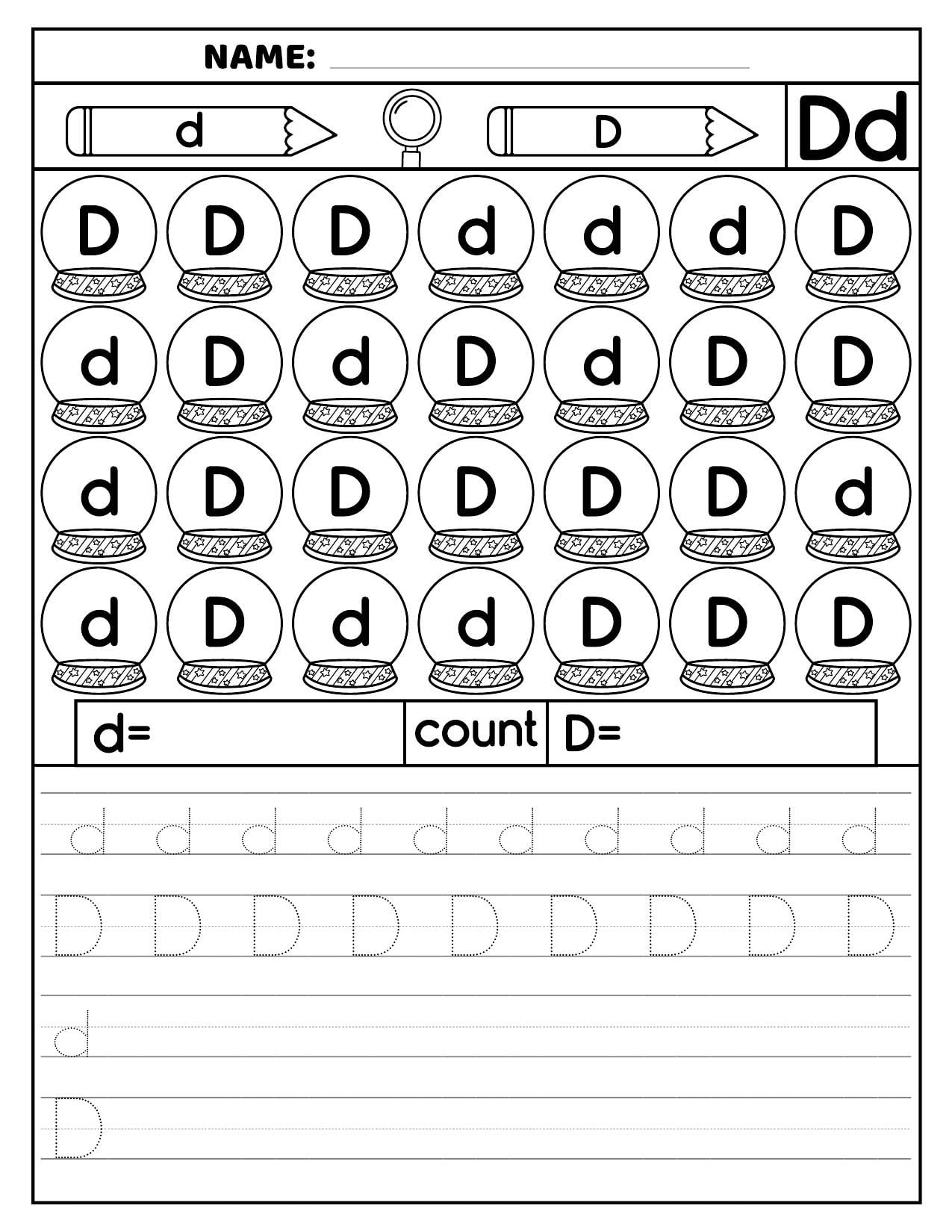
The D worksheet focuses on uppercase D and lowercase d. Children identify the letter, work with picture examples, and practice tracing both forms.
The repeated tracing lines give children space to practice the letter shape. They can also count and recognize D among other letters. This makes the page useful for several short practice tasks.
5. Letter E Handwriting Worksheet
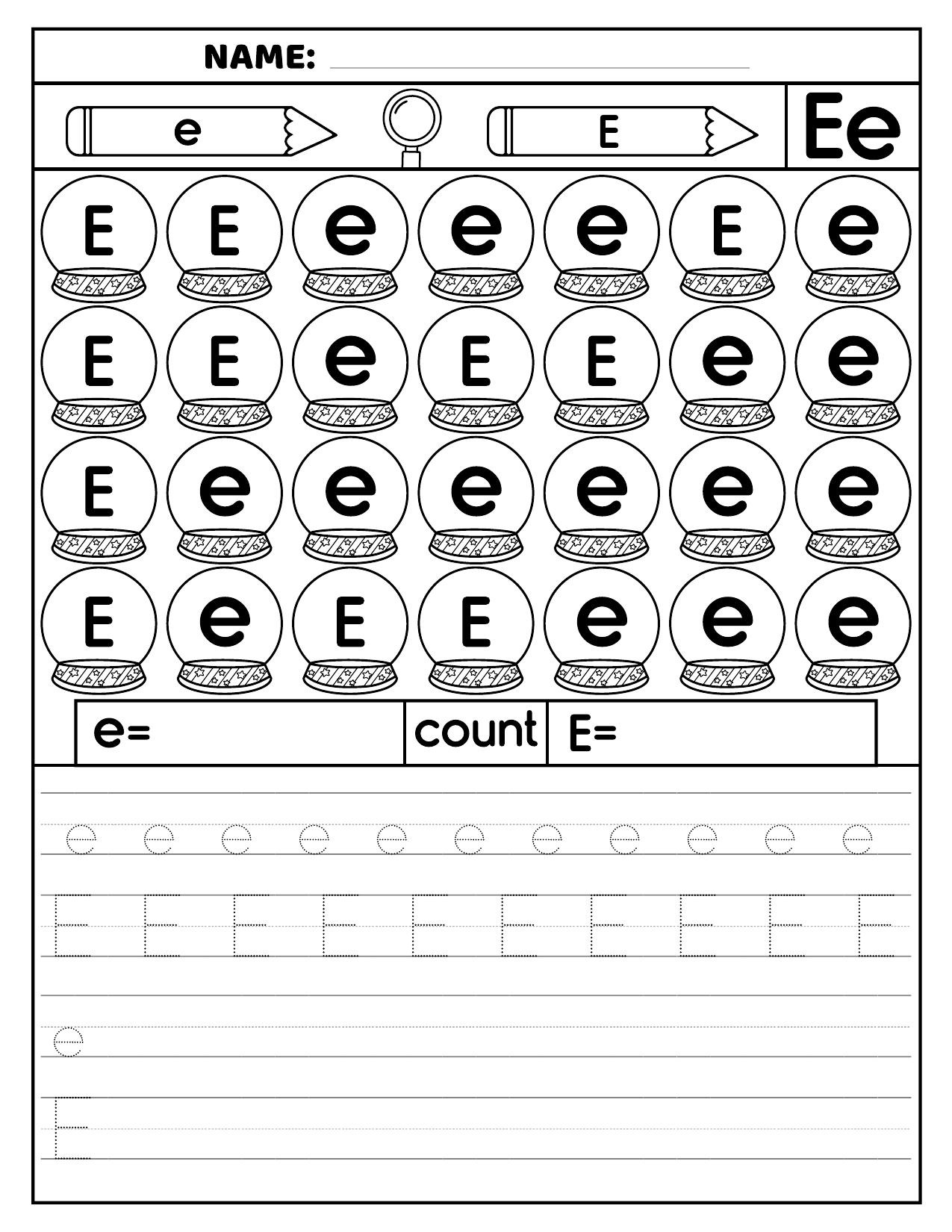
The E page introduces uppercase E and lowercase e. Children recognize the target letter before moving into tracing and coloring.
The picture examples give children something familiar to connect with the letter. Let them circle E and e first. Then, move into the tracing section and finish with the picture activity.
6. Letter F Handwriting Worksheet
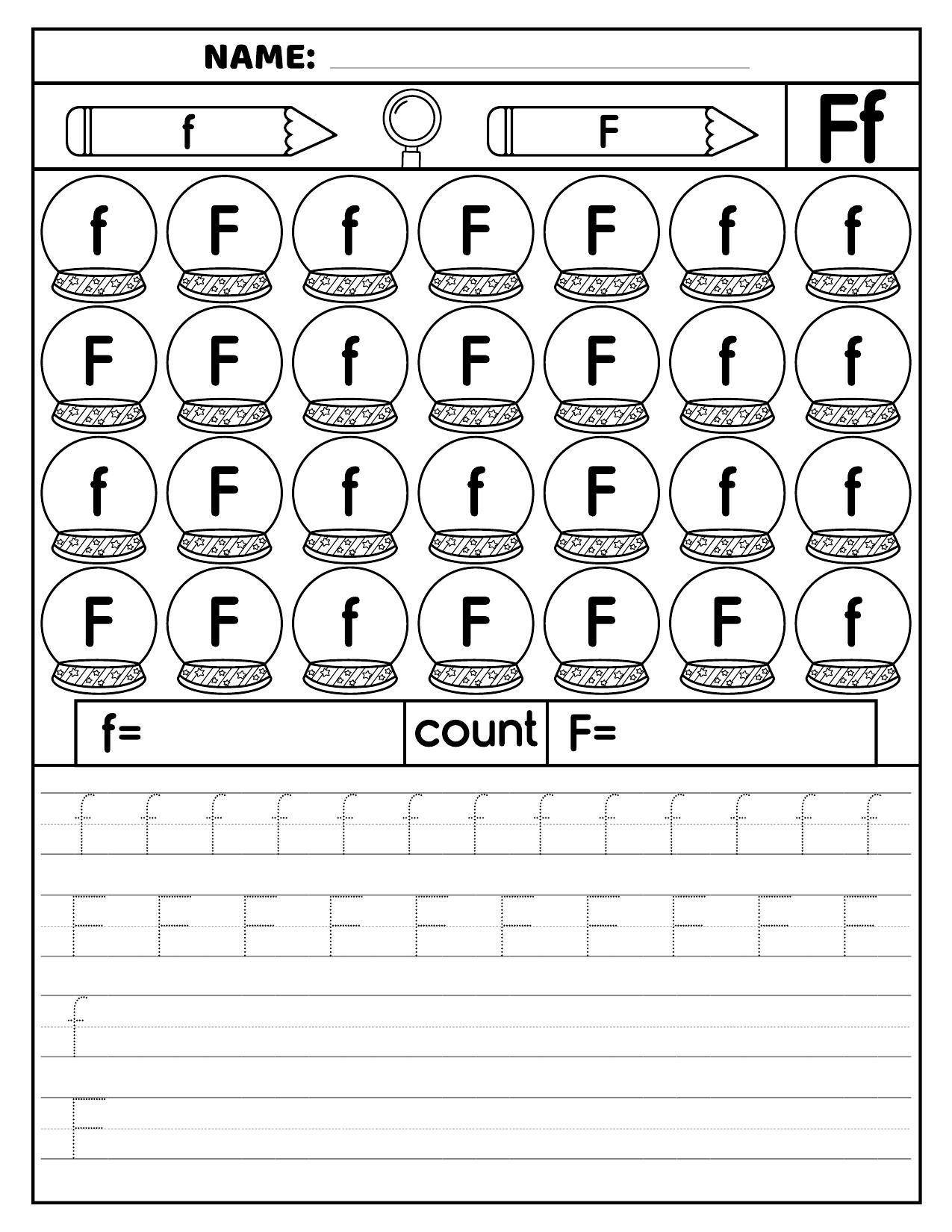
The F worksheet focuses on uppercase F and lowercase f. Children practice identifying the letter before tracing its different forms.
The page also includes fish and flower picture examples. Ask the child to name the pictures before moving on. Then, let them trace F and f several times.
7. Letter G Handwriting Worksheet
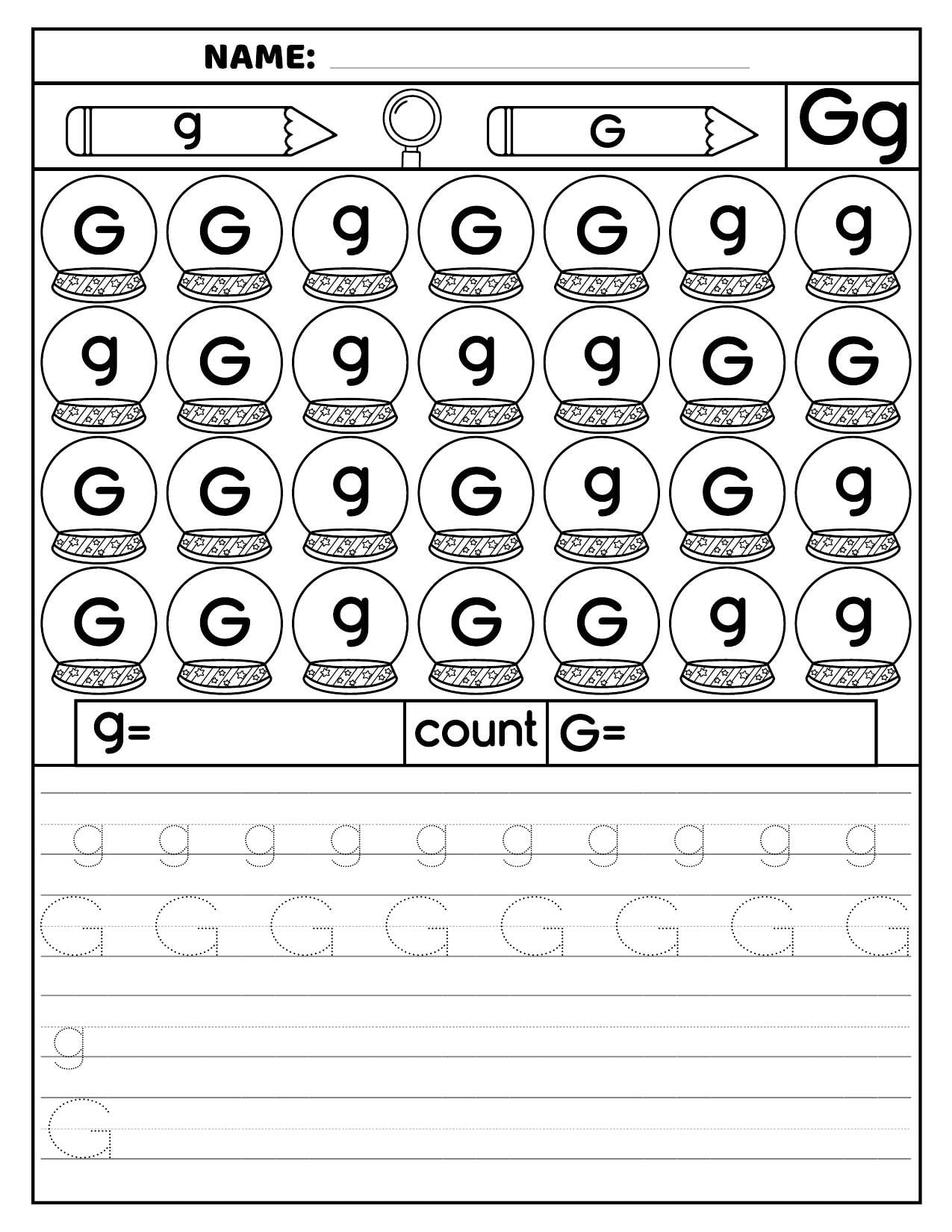
The G page gives children practice with uppercase G and lowercase g. It includes letter recognition, counting, tracing, and picture activities.
The grape and gingerbread pictures add a simple visual connection. Start with letter recognition before moving to handwriting. After tracing, let the child complete the coloring section.
8. Letter H Handwriting Worksheet
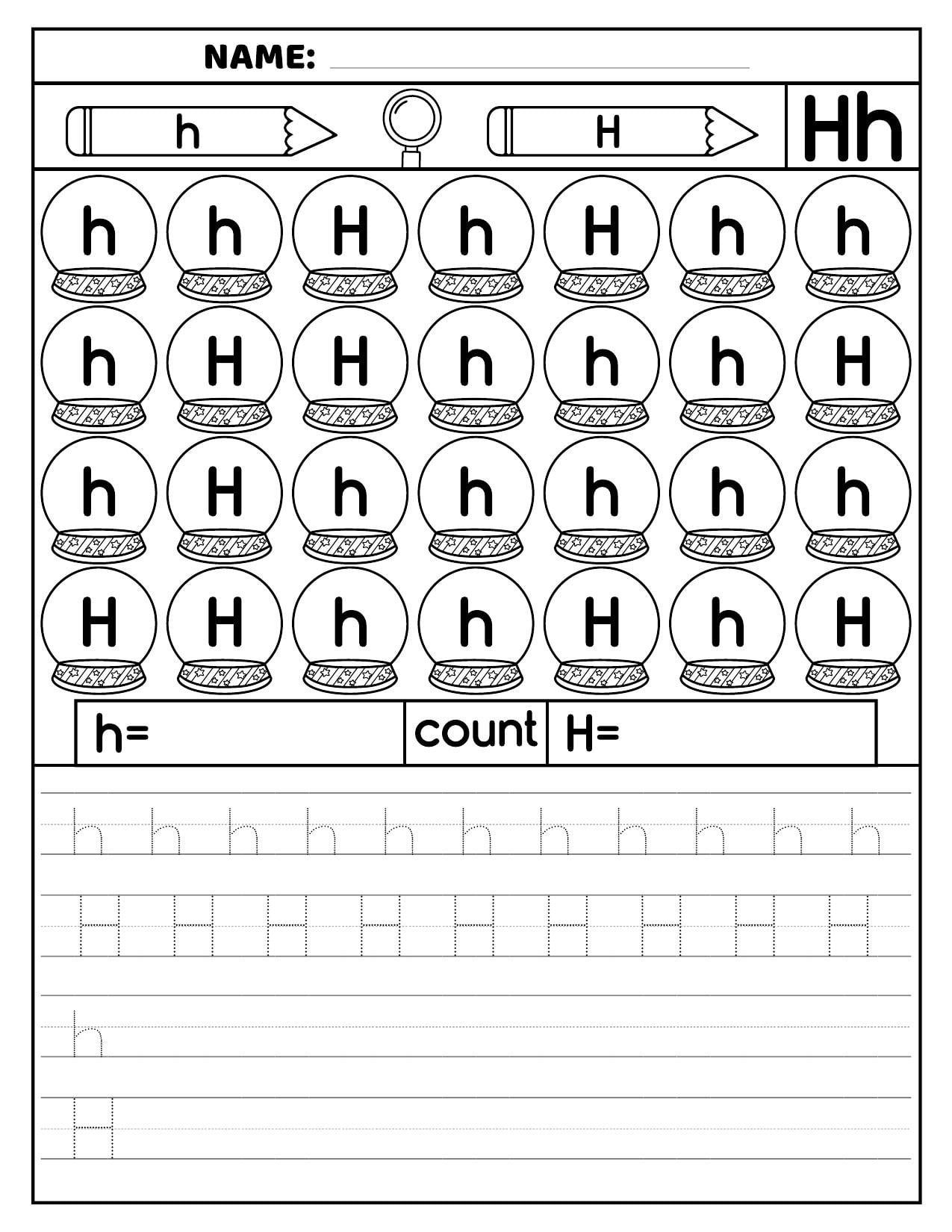
The H worksheet introduces uppercase H and lowercase h. Children can identify the target letters and practice writing both forms.
The page uses a heart and hen as picture examples. Let the child name the pictures and identify H first. Then, give them time to trace the letters carefully.
9. Letter I Handwriting Worksheet
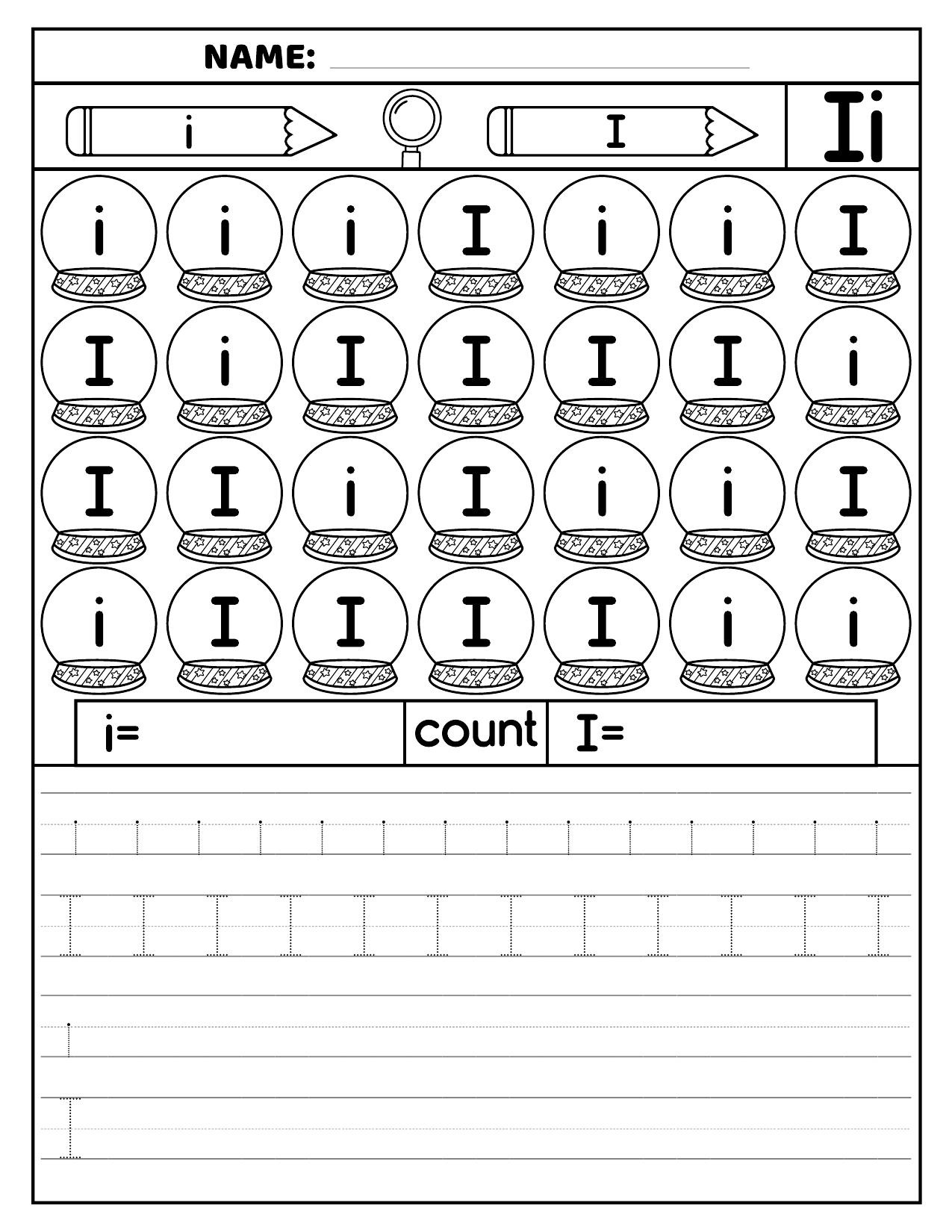
The I page focuses on uppercase I and lowercase i. Children work through letter recognition and tracing activities while using picture examples.
The ice cream and iguana pictures make the page more visual. You can ask the child to identify each picture before tracing. Afterward, let them practice both I and i.
10. Letter J Handwriting Worksheet
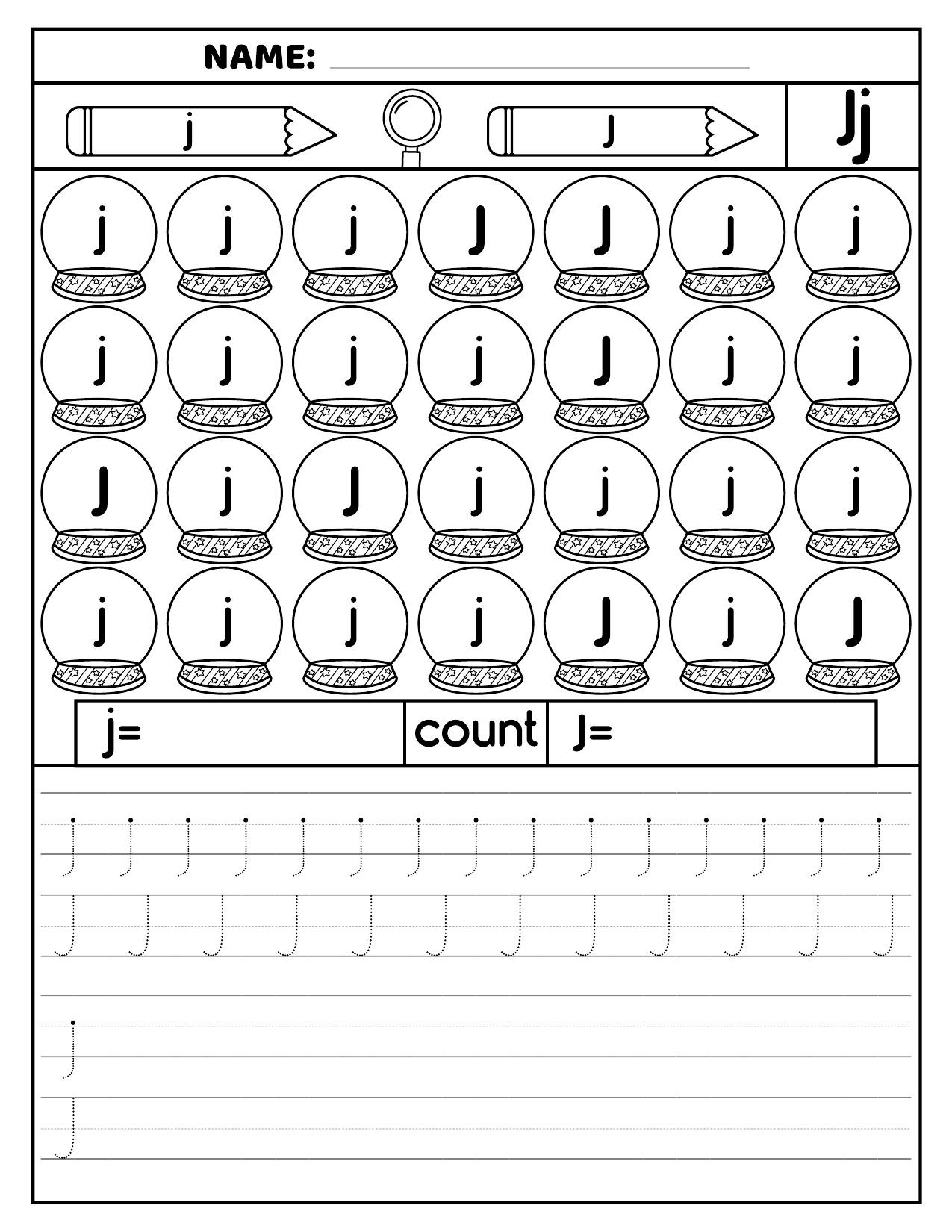
The J worksheet introduces uppercase J and lowercase j. Children recognize the letter, work with picture examples, and practice tracing.
The page uses jelly and juice as its picture examples. Let the child find J and j before starting the handwriting section. Then, encourage slow and steady tracing.
11. Letter K Handwriting Worksheet
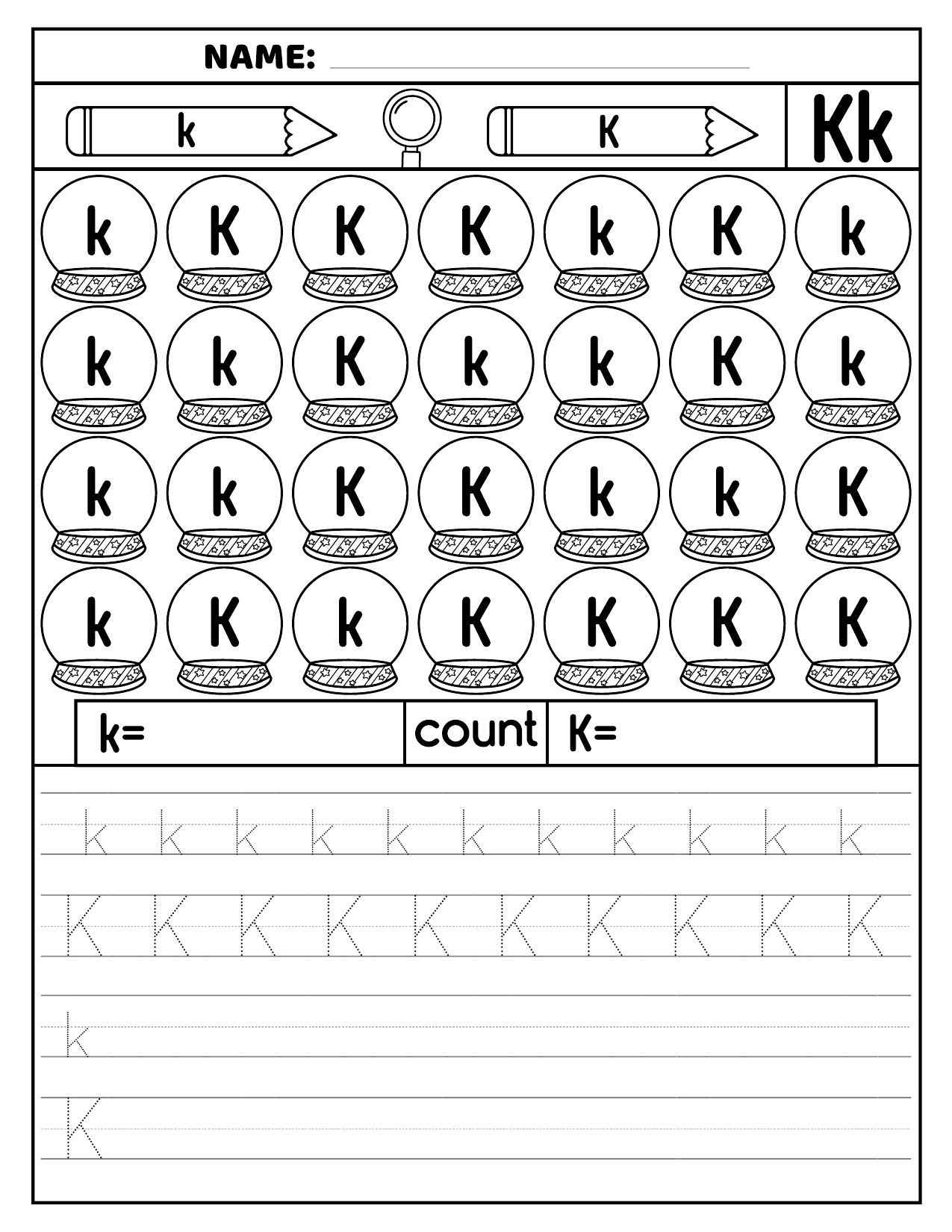
The K page gives children practice with uppercase K and lowercase k. It includes recognition, counting, tracing, and picture activities.
Kangaroo and kite provide the picture connection for this letter. Ask the child to name them before tracing. Then, let them practice K and k several times.
12. Letter L Handwriting Worksheet
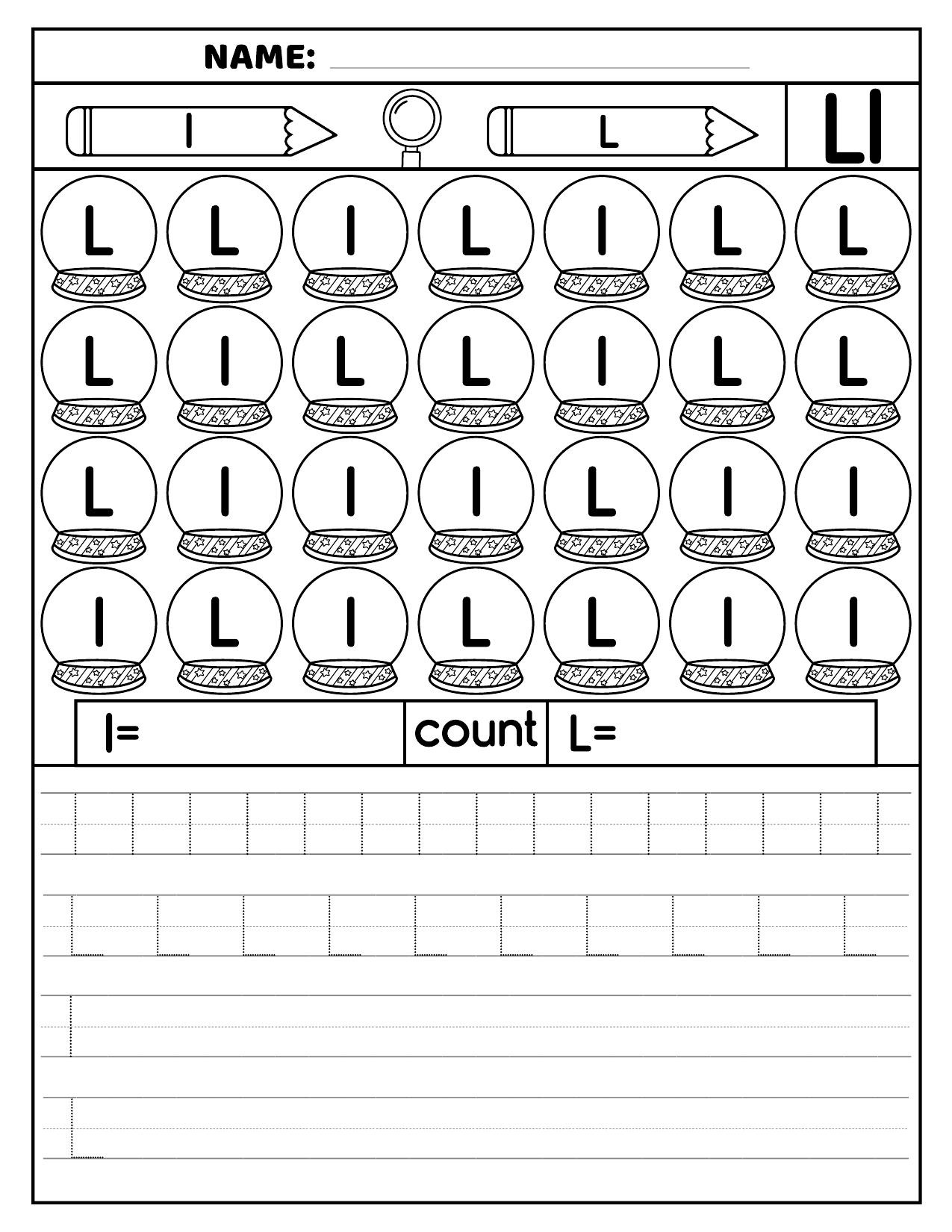
The L worksheet focuses on uppercase L and lowercase l. Children recognize the letter before working through tracing and coloring activities.
The lion and lamb pictures give children familiar examples to discuss. Start with the letter hunt, then move to tracing. Give your child time to practice both forms without rushing.
13. Letter M Handwriting Worksheet
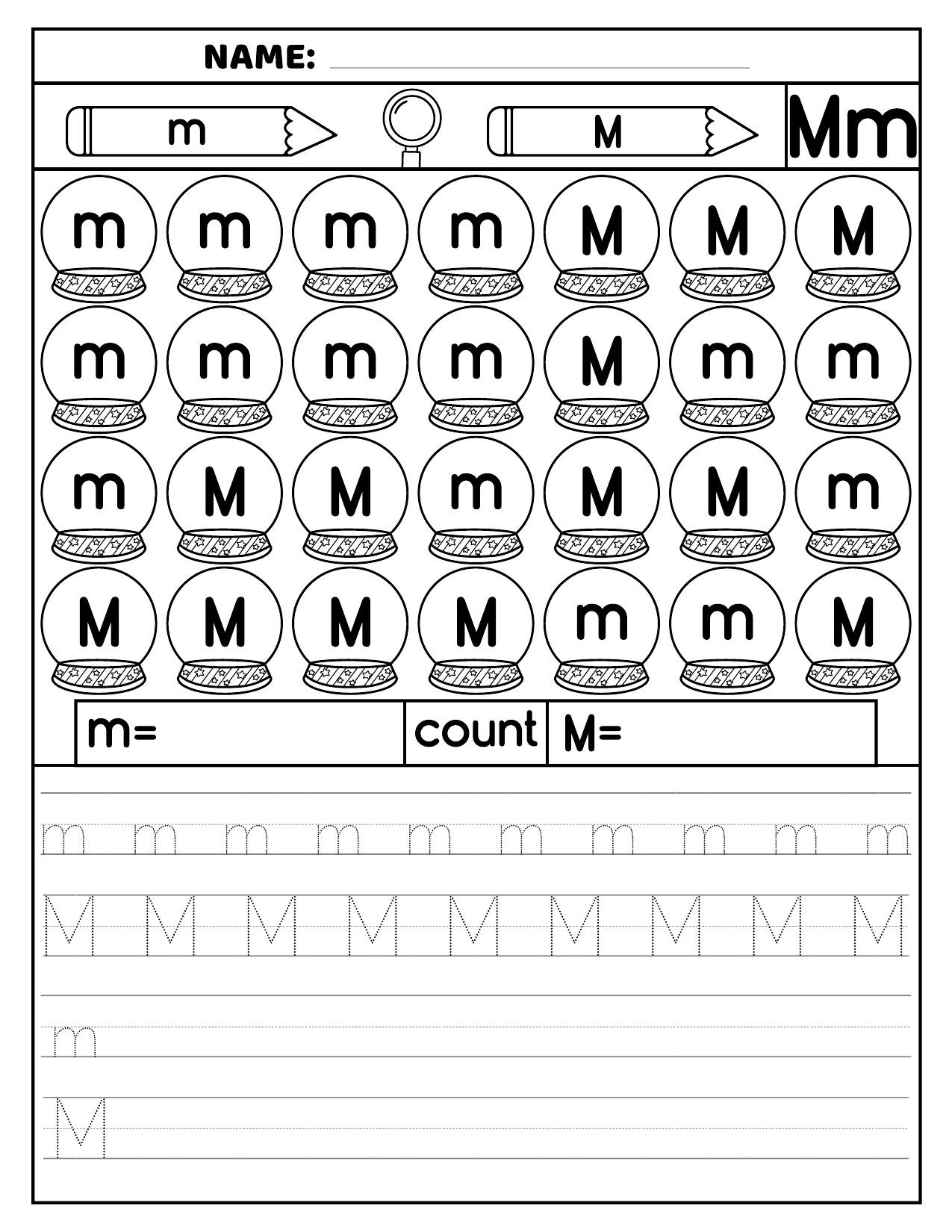
The M page introduces uppercase M and lowercase m. Children identify the letter, count examples, trace both forms, and work with picture examples.
The monkey and mouse pictures add an easy visual element. Ask your child to name them before beginning the tracing. Then, let them practice M and m across the provided lines.
14. Letter N Handwriting Worksheet
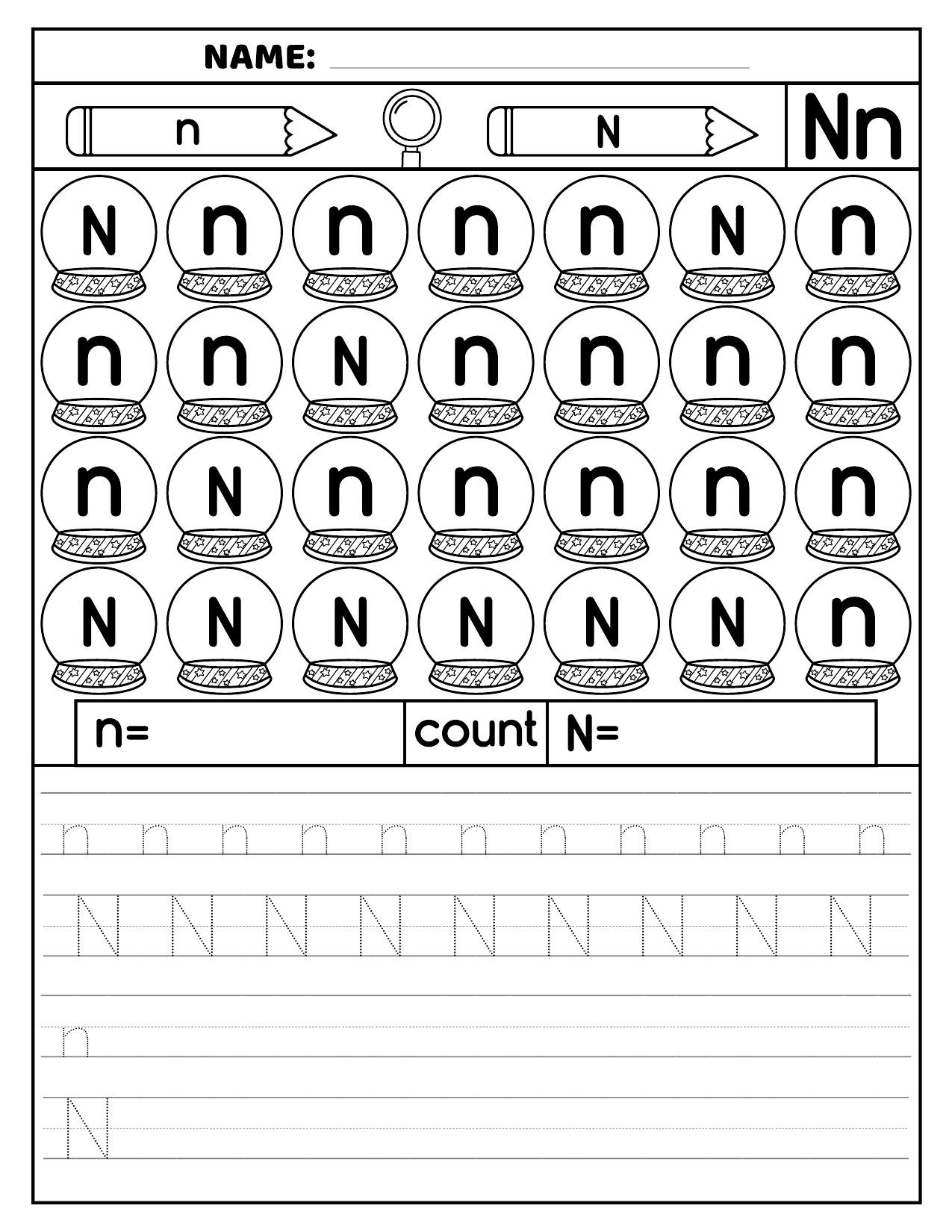
The N worksheet focuses on uppercase N and lowercase n. Children can recognize the letter, count it, and practice tracing its two forms.
The page includes a narwhal and the number nine as examples. Talk about both before starting the writing section. Then, let your child trace N and n at their own pace.
15. Letter O Handwriting Worksheet
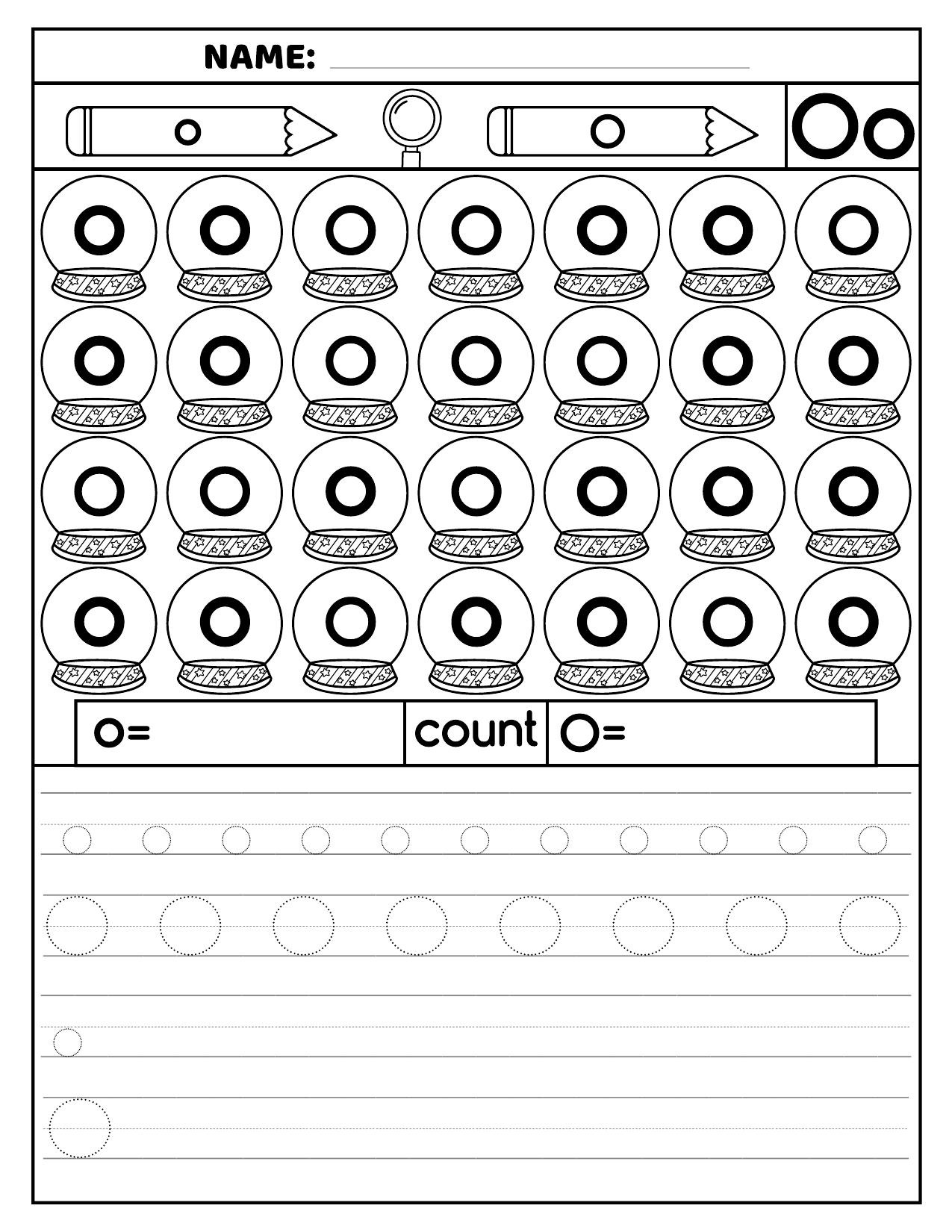
The O page gives children practice with uppercase O and lowercase o. It combines letter recognition, counting, tracing, and picture work.
The octopus and owl pictures help make the page more familiar. Let your child identify O and o first. Then, move through the tracing lines before finishing the coloring activity.
16. Letter P Handwriting Worksheet
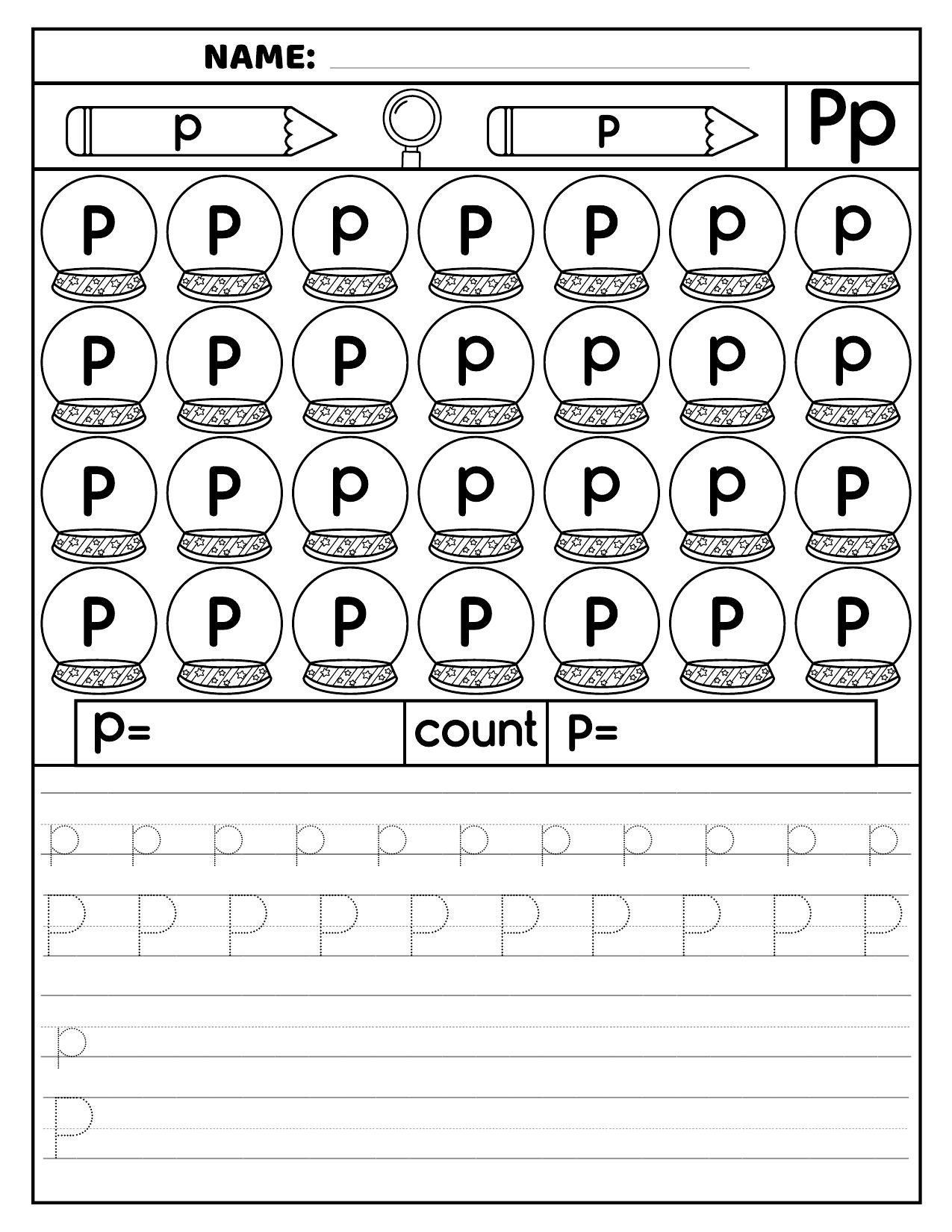
The P worksheet introduces uppercase P and lowercase p. Children recognize the letter, practice tracing, and work with picture examples.
The panda and penguin pictures give the child simple examples to identify. Start with the letter recognition section. Afterward, let them trace P and p and complete the coloring.
17. Letter Q Handwriting Worksheet
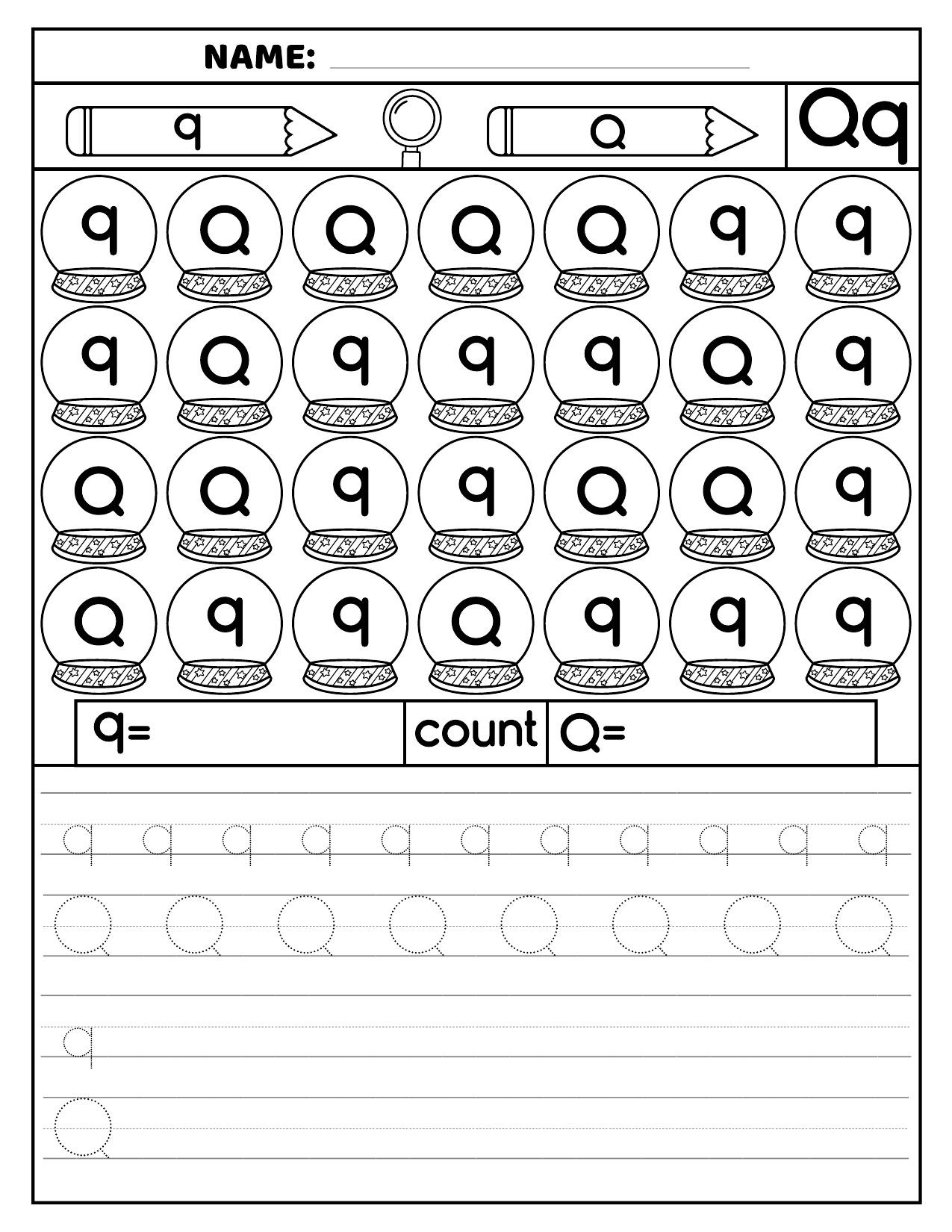
The Q page focuses on uppercase Q and lowercase q. Children practice recognizing and tracing both forms of this less common letter.
The page includes a quill and queen as picture examples. Take a little extra time with the letter shape if needed. Then, let your child trace Q and q repeatedly.
18. Letter R Handwriting Worksheet
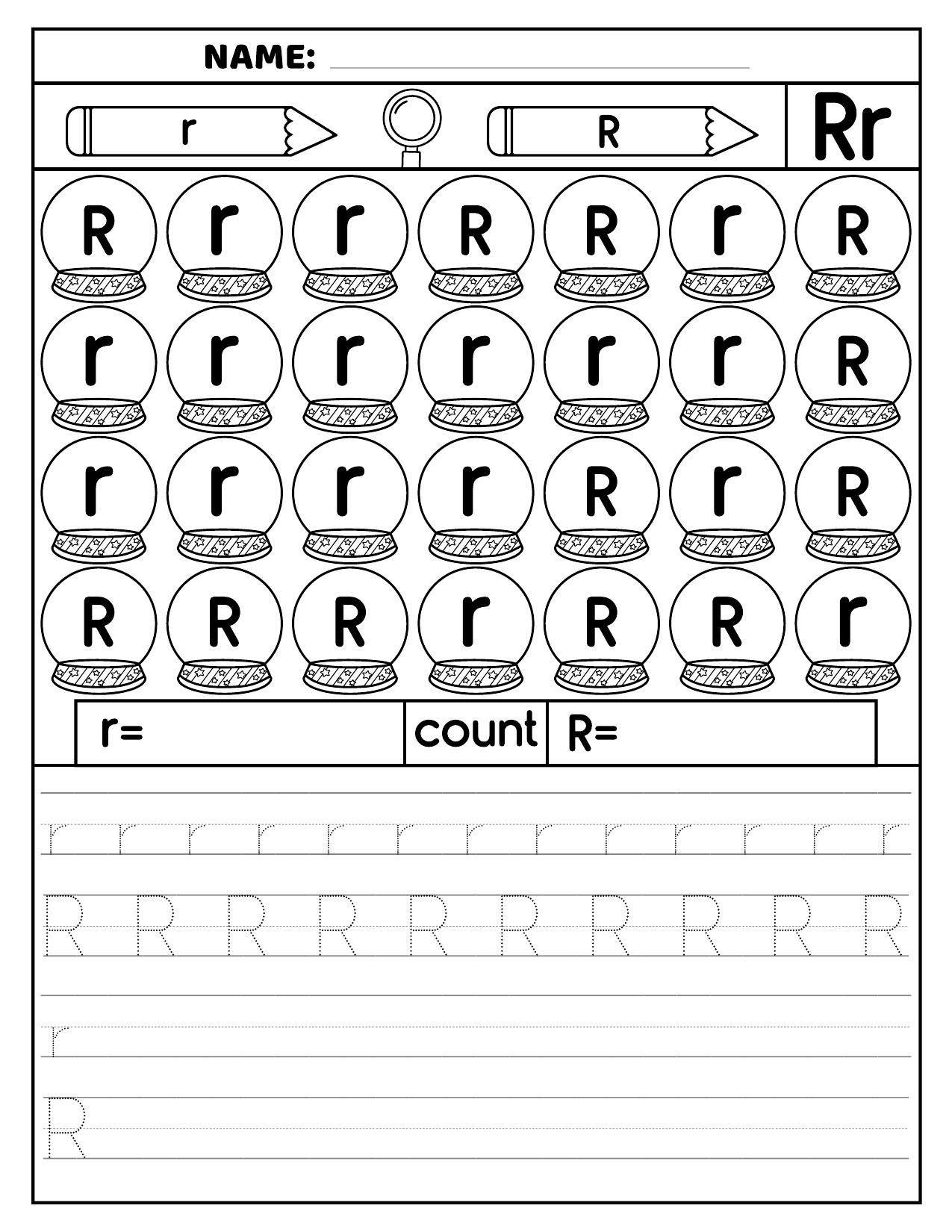
The R worksheet gives children practice with uppercase R and lowercase r. It combines recognition, counting, tracing, and picture activities.
The robot and rabbit pictures provide familiar words to discuss. Ask your child to find R and r first. Then, let them work through the tracing lines before coloring.
19. Letter S Handwriting Worksheet
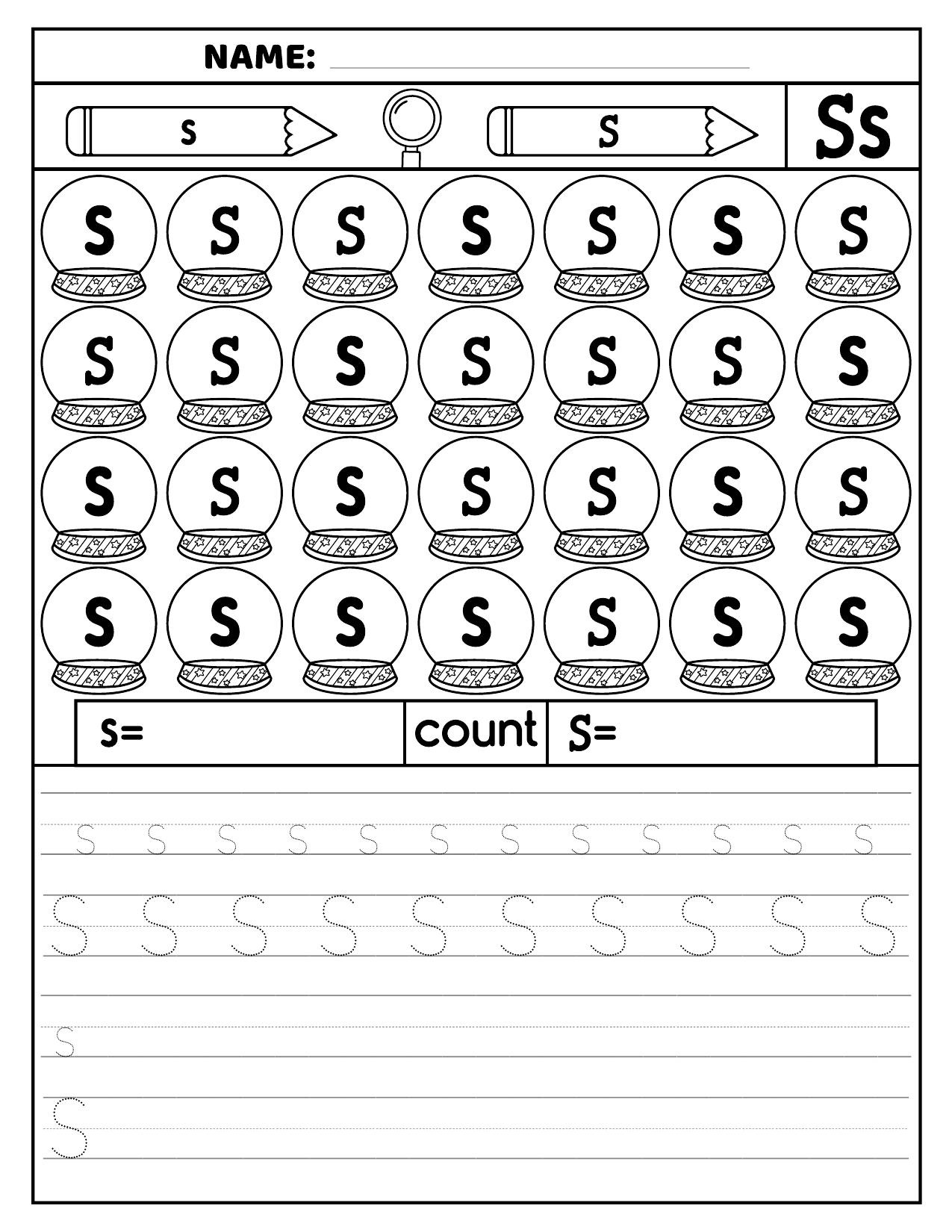
The S page introduces uppercase S and lowercase s. Children recognize the target letter and practice writing both forms.
A star and snowman appear as the picture examples. Let your child name both pictures before beginning. Then, guide them through the recognition and tracing sections.
20. Letter T Handwriting Worksheet
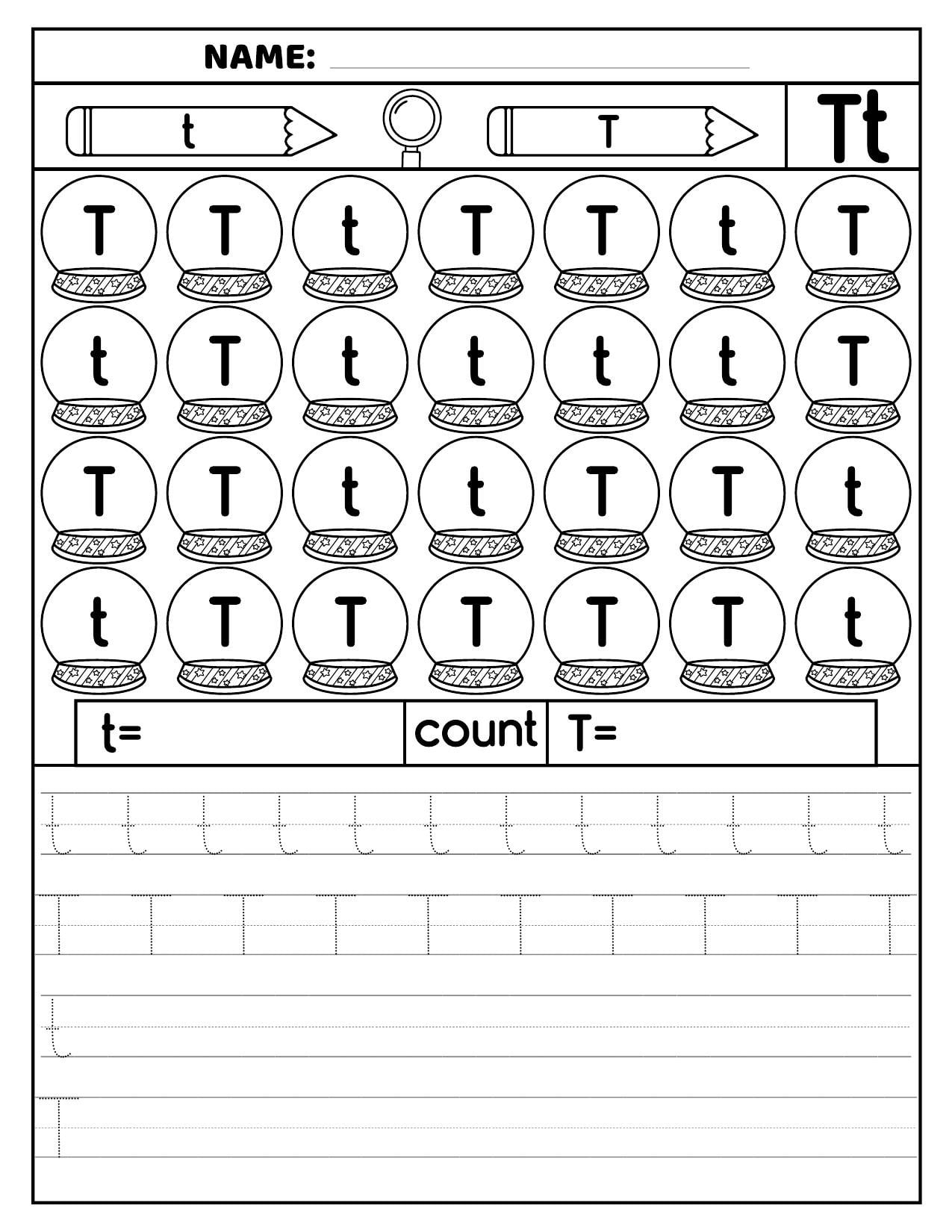
The T worksheet focuses on uppercase T and lowercase t. Children identify the letter, count it, trace both forms, and color the picture examples.
The page uses a turtle and tiger as its visual examples. Start by asking your child to locate T and t. After that, let them practice tracing each form.
21. Letter U Handwriting Worksheet
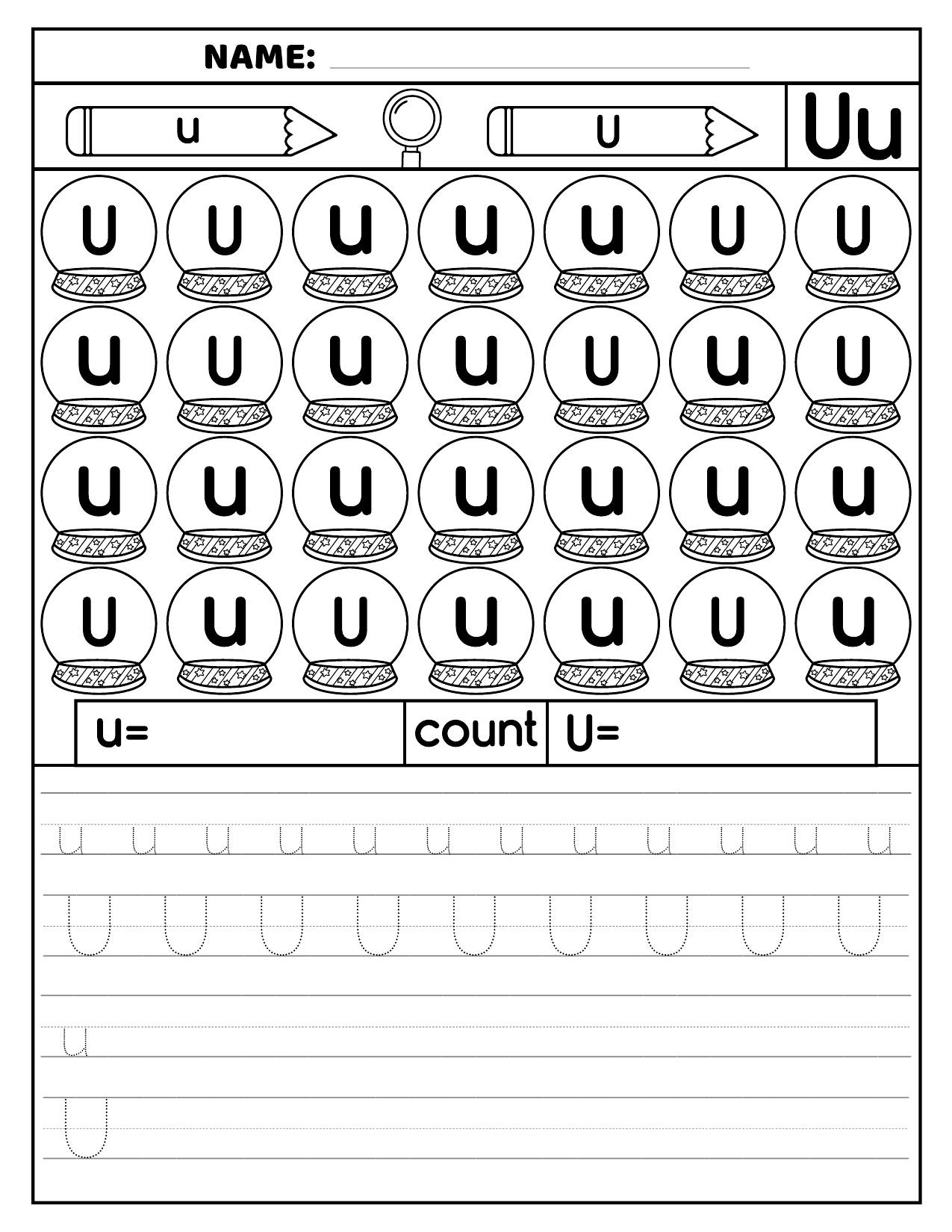
The U page gives children practice with uppercase U and lowercase u. It includes letter recognition, counting, tracing, and picture activities.
The umbrella and unicorn pictures give children two recognizable examples. Let them identify the letter before tracing. Then, allow enough time for repeated handwriting practice.
22. Letter V Handwriting Worksheet
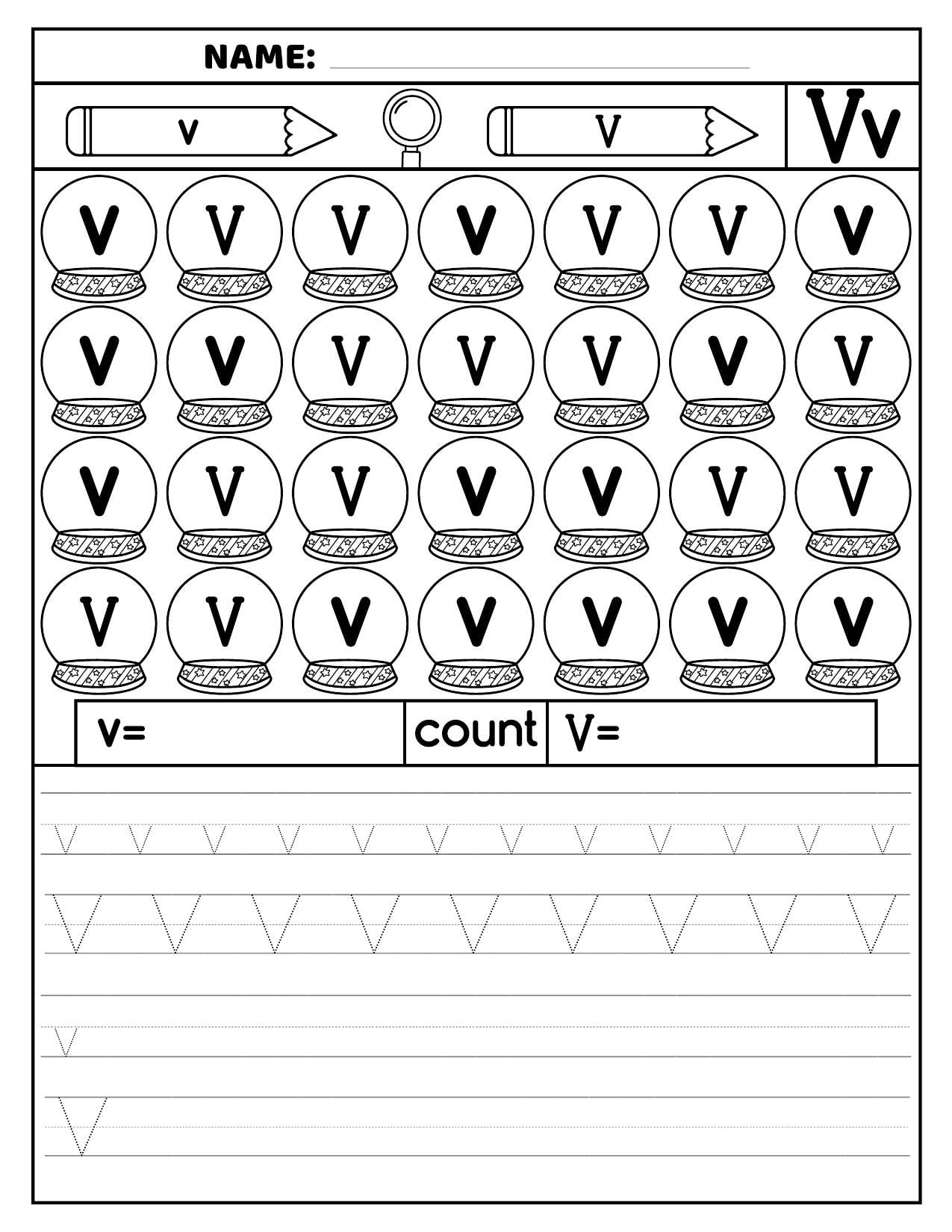
The V worksheet introduces uppercase V and lowercase v. Children identify the letter, trace both forms, and work with picture examples.
The vase and violin pictures provide the visual connection. Ask your child to name them first. Then, let them complete the tracing and coloring activities.
23. Letter W Handwriting Worksheet
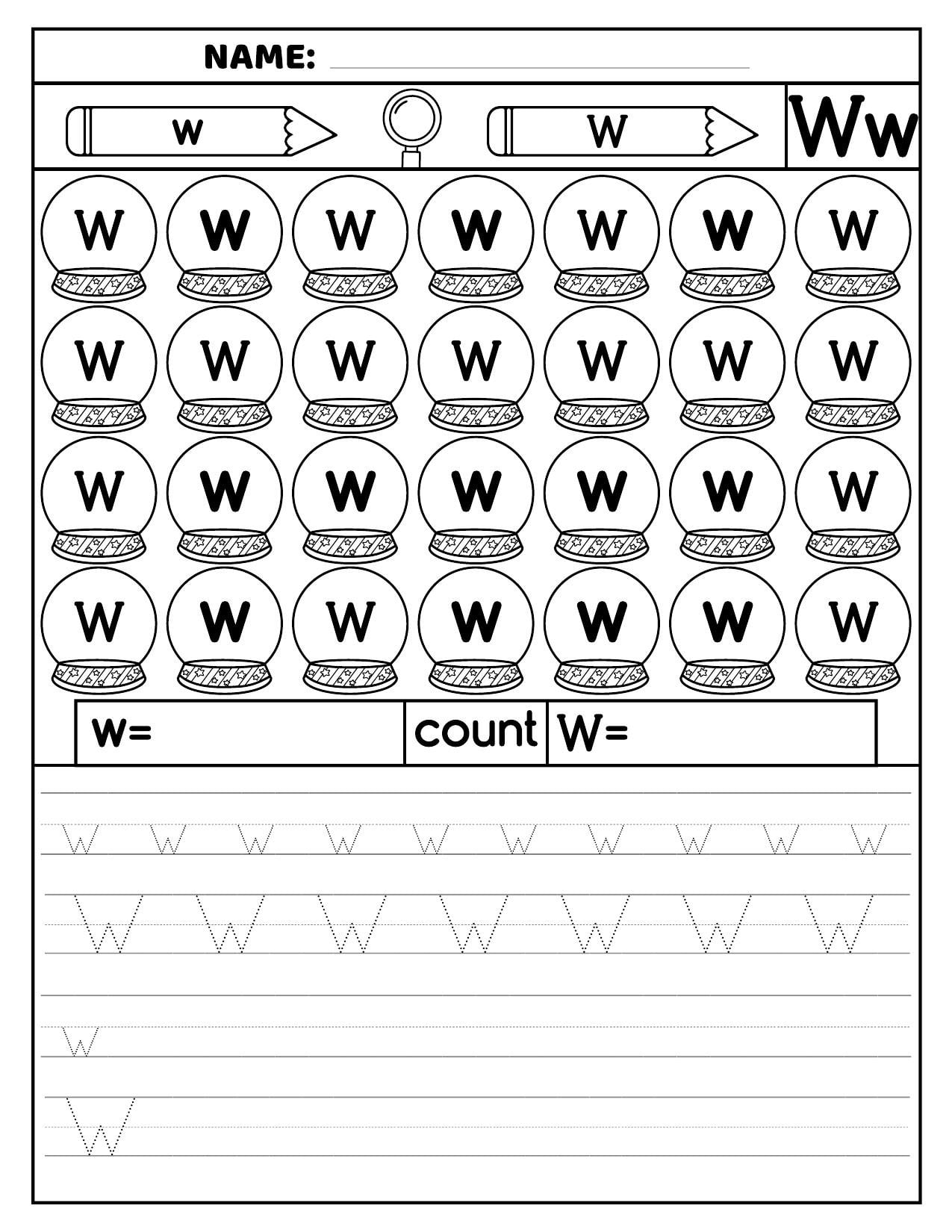
The W page focuses on uppercase W and lowercase w. Children practice recognizing the letter before tracing and coloring.
The whale and watermelon pictures make the page easy to discuss. Let your child find W and w first. Then, move through the tracing lines together.
24. Letter X Handwriting Worksheet
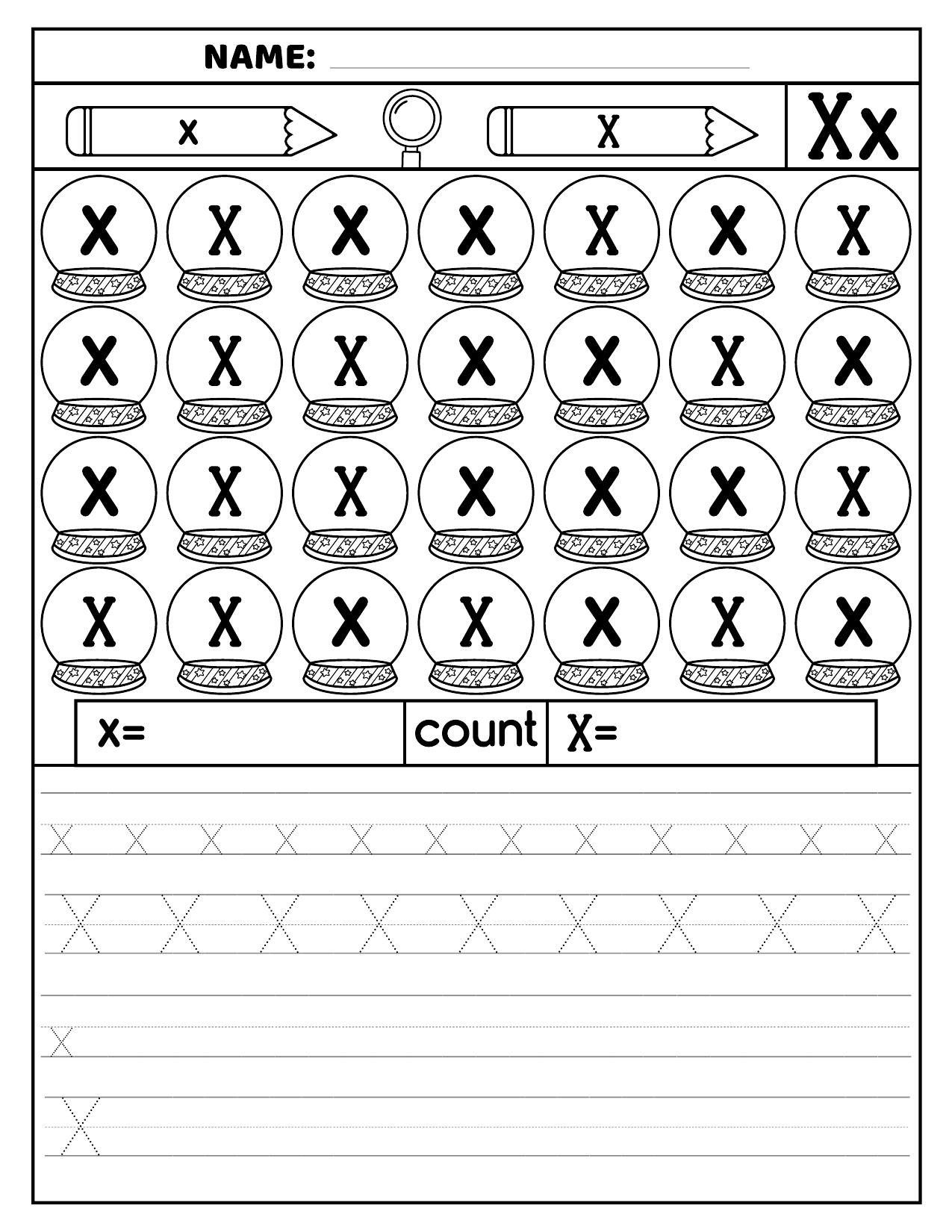
The X worksheet introduces uppercase X and lowercase x. Children practice recognizing the letter, tracing it, and working with picture examples.
The page includes a xylophone and Christmas tree. X can require extra attention, so take your time with recognition. Then, let your child practice both letter forms.
25. Letter Y Handwriting Worksheet
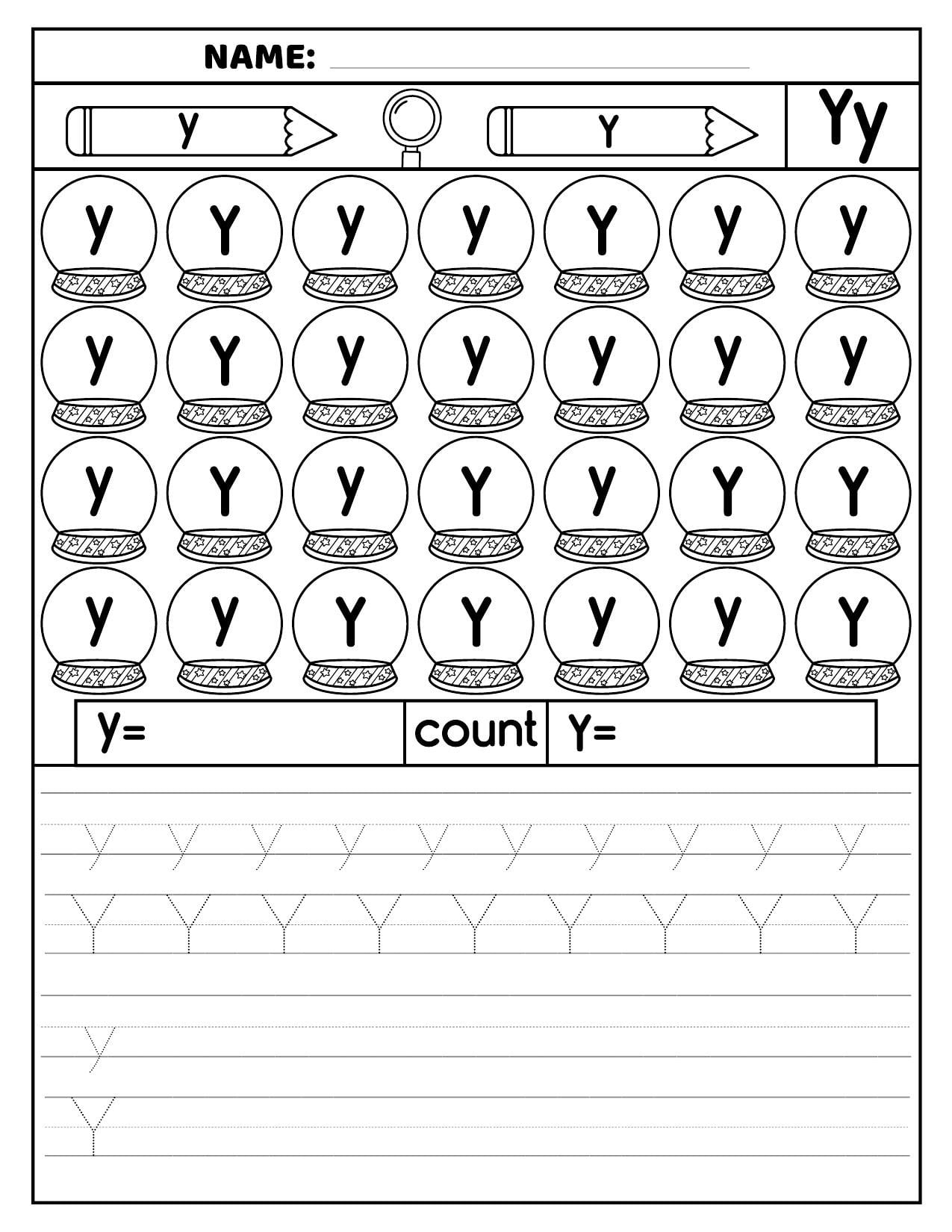
The Y page gives children practice with uppercase Y and lowercase y. It includes recognition, counting, tracing, and picture activities.
The yak and yacht pictures add familiar visual examples. Ask your child to identify Y and y first. Afterward, move through the tracing section and finish with coloring.
26. Letter Z Handwriting Worksheet
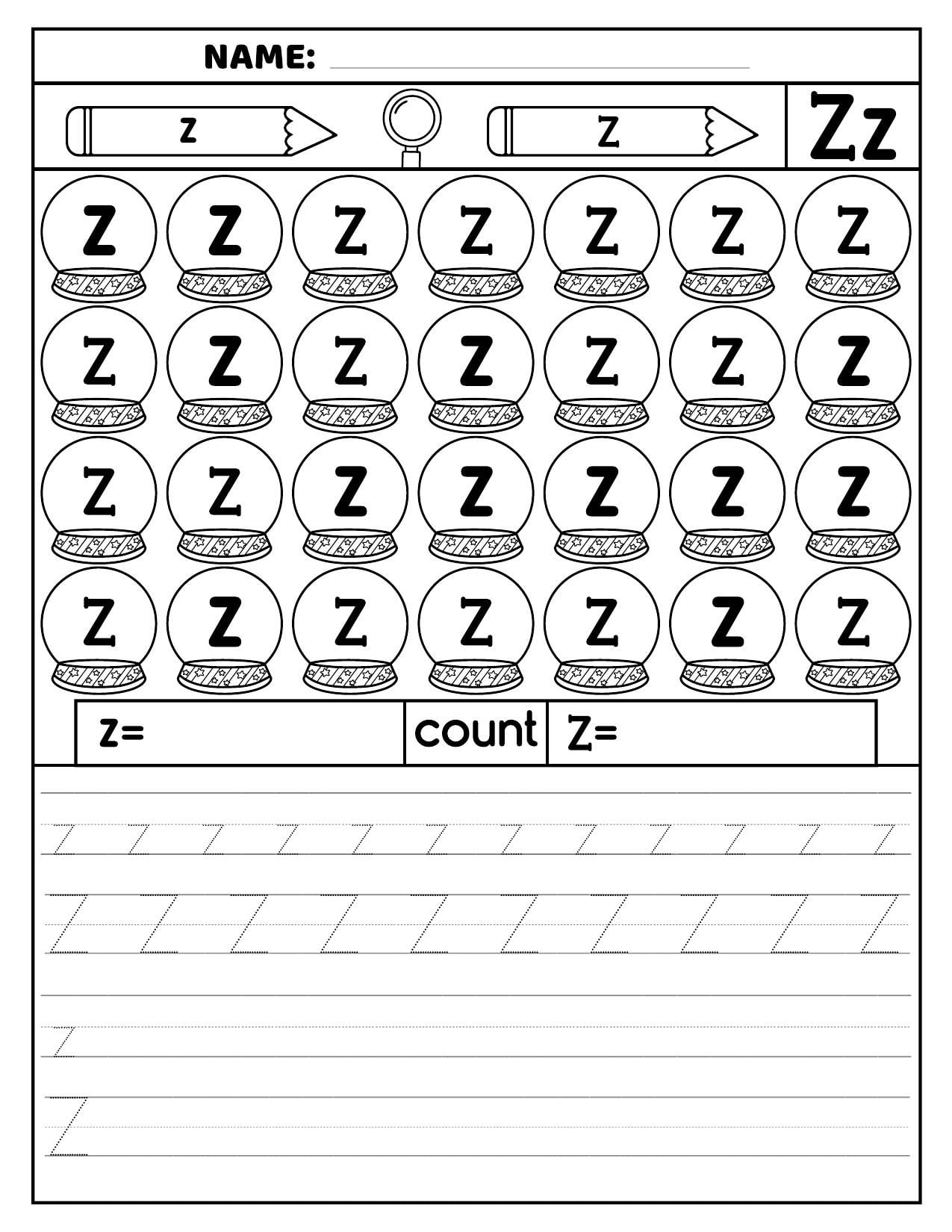
The final worksheet completes the alphabet with uppercase Z and lowercase z. Children recognize the letter, practice tracing, and work with zebra and zip picture examples.
I would save this page for the end of the A-Z sequence. Let your child complete each section without rushing. Finishing Z gives them a chance to look back at how much alphabet practice they have completed.
Final Thoughts
Alphabet practice becomes more useful when children get several chances to interact with the same letter.
These worksheets bring recognition, counting, tracing, and coloring into one simple activity. The full A-Z collection also makes it easier to keep letter practice organized from one page to the next.
You do not have to finish the entire collection quickly. Pick a letter that needs attention, complete the page, and return to it later if necessary.
Some children may need more tracing time, while others may need extra help recognizing uppercase and lowercase forms.
Globe Alphabet Handwriting gives you a flexible resource that can fit different learning speeds.
Most importantly, give children room to make mistakes and try again. Handwriting improves through regular practice, not through getting every letter perfect immediately.
Keep the activities relaxed, celebrate their progress, and let them enjoy the coloring along the way. With consistent practice, each page can become another small step toward more confident letter writing.