
80 Exciting Cut and Paste Alphabet Worksheets for Kids
Disclosure: Some of the links in this post are affiliate links. This means if you click on the link and purchase an item, I will receive an affiliate commission at no extra cost to you.
Sometimes, children need more than another page of tracing or coloring to stay interested in letter practice.
Cutting, matching, and pasting give their hands something active to do while they explore familiar words and pictures.
This can make alphabet time feel more like a little project than a regular worksheet.
These Cut and Paste Alphabet Worksheets bring together a wide variety of pictures and words from A to Z.
The collection includes familiar choices like apples, cats, balls, flowers, and frogs, along with less common words such as quetzal, xerus, ximenia, and xylophone.
The pages also include different kinds of cut-out pieces, giving children plenty to sort, arrange, and paste.
Some activities can introduce new vocabulary, while others may feel instantly familiar.
With 80 pages in the printable, you can spread the activities across several days instead of completing everything at once.
80 Exciting Cut and Paste Alphabet Worksheets for Kids
These Cut and Paste Alphabet Worksheets give children a hands-on way to explore letters through familiar pictures and words.
The first pages introduce several objects for each letter, making the activities easy to follow. The repeated page format also gives children a chance to practice the same vocabulary in a simple visual way.
1. A Is for Ant, Apple, Axe, Alligator, and Astronaut
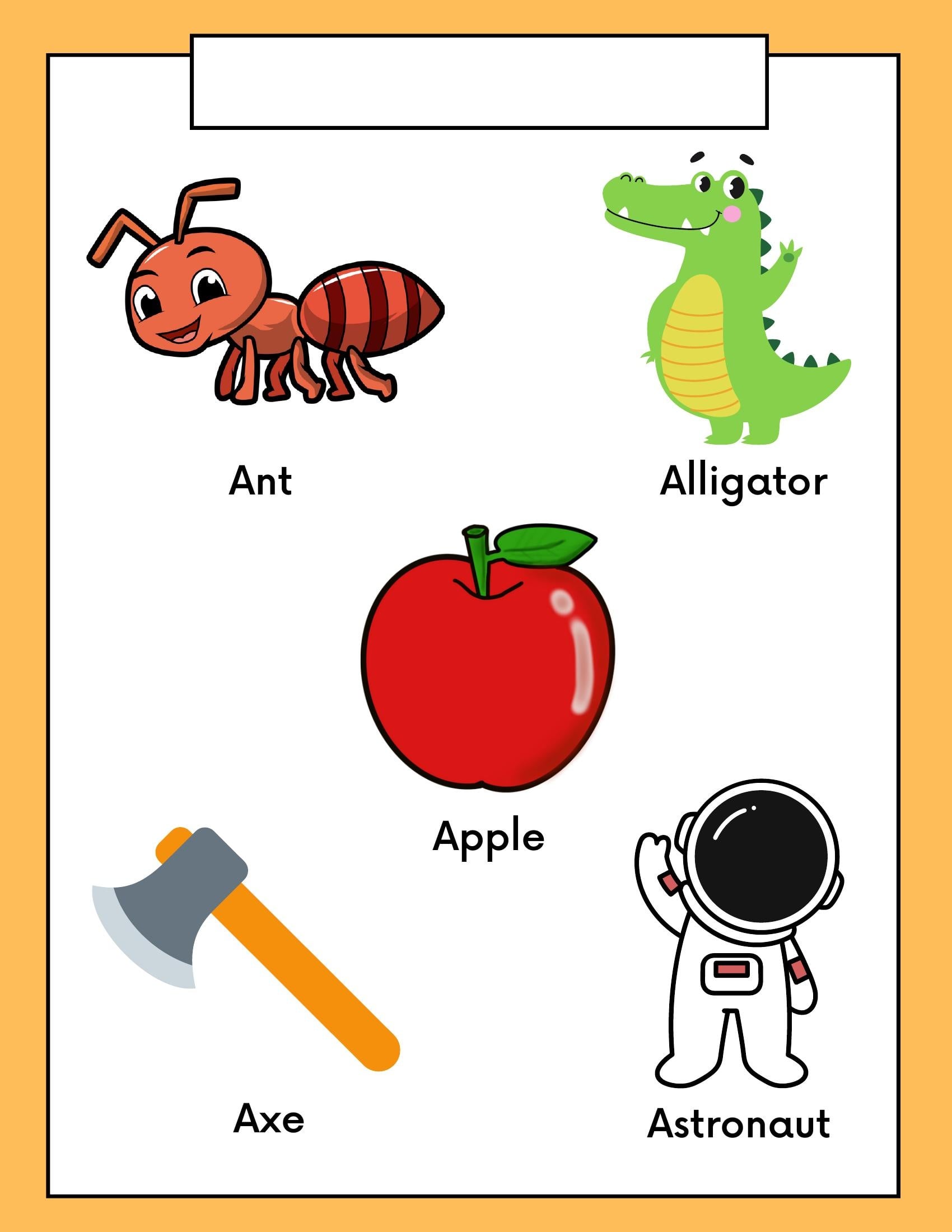
The first worksheet introduces five fun words that begin with A. Children can recognize an ant, apple, axe, alligator, and astronaut from the colorful pictures.
These familiar images make the letter A easier to connect with everyday objects and animals.
Kids can look closely at each picture before cutting and arranging the pieces. This page is a cheerful way to begin the alphabet activity.
2. A Picture Practice
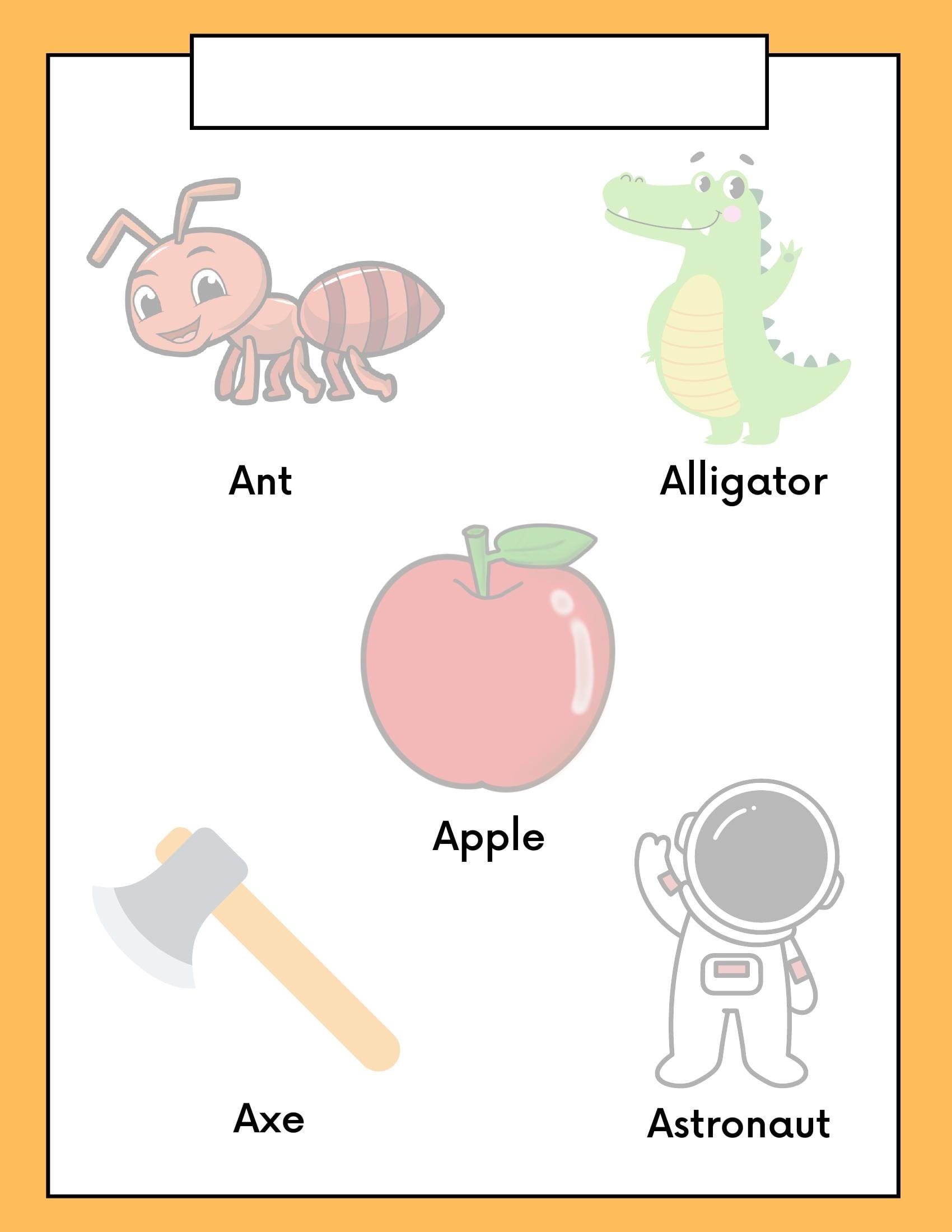
The second A worksheet repeats the same five pictures and words in a lighter format. Children can revisit ant, apple, axe, alligator, and astronaut without learning a completely new set of words.
This gives them another opportunity to match each picture with its correct word. The lighter images also create a different look from the colorful page before it. A quick review like this can help children remember the letter A words.
3. B Is for Ball, Banana, Balloon, Butterfly, and Bird
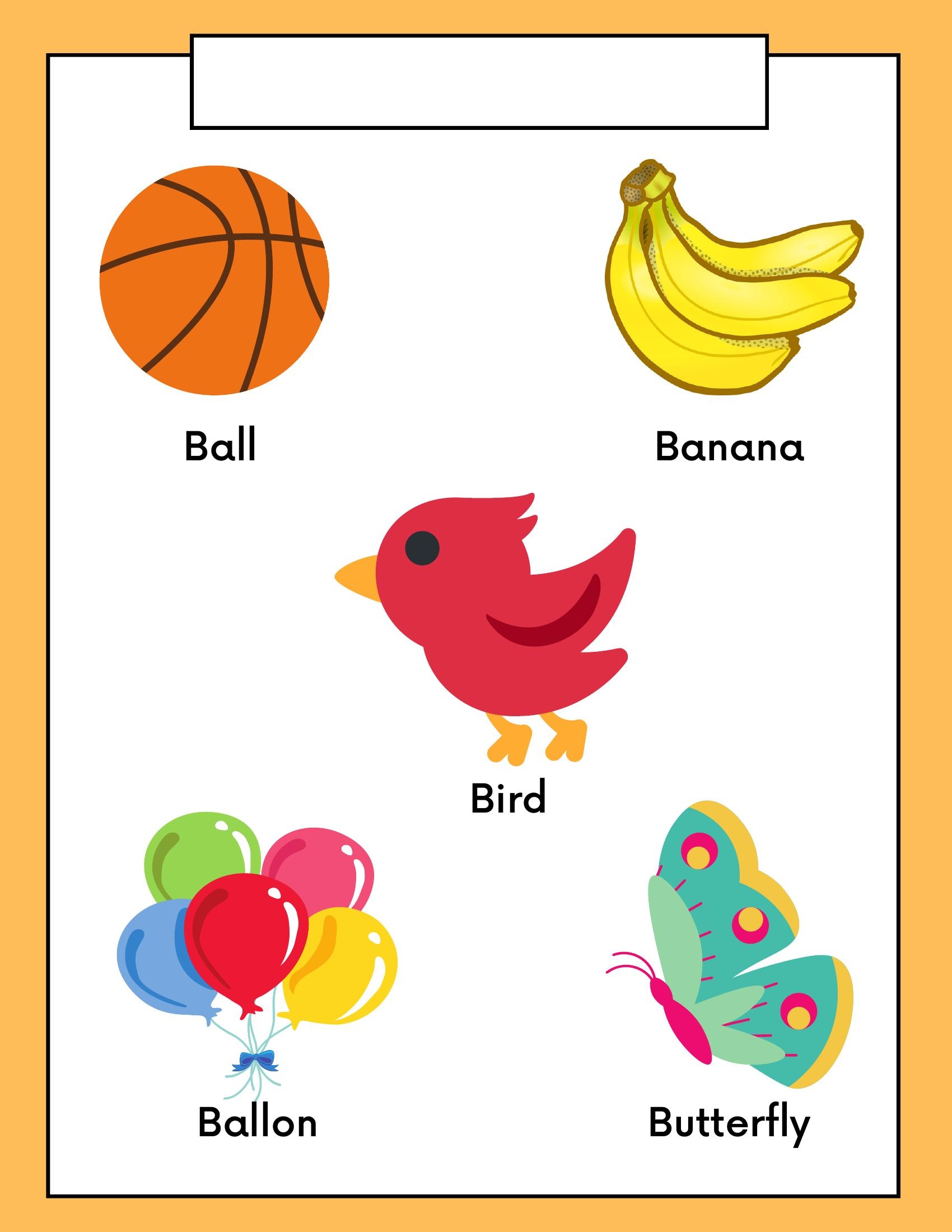
Next comes a playful collection of B words. Children will find a ball, banana, balloon, butterfly, and bird on this worksheet.
The colorful pictures give each word a clear visual clue. Kids can say each word aloud while identifying its beginning sound. Cutting and placing the pictures can also make this letter practice feel more like play.
4. A Second Look at B Words
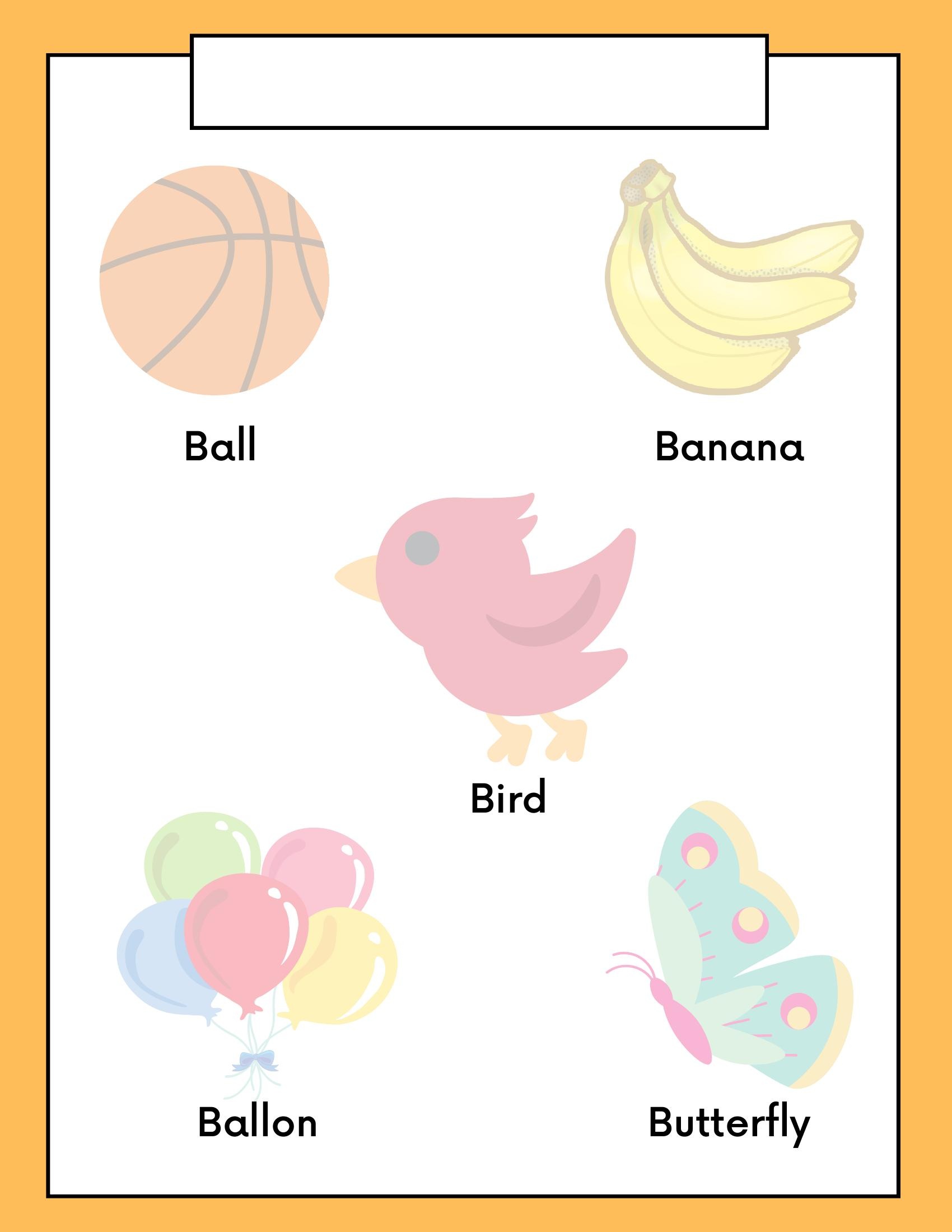
This page brings back the same B vocabulary in a lighter picture format. Children can practice recognizing the ball, banana, balloon, butterfly, and bird again.
Repetition can be useful when a child is still becoming comfortable with beginning sounds. Ask your child to point to each picture and name it before starting the activity. That small step can turn the worksheet into a simple vocabulary review.
5. C Is for Cherries, Cat, Camera, Coat, and Cake
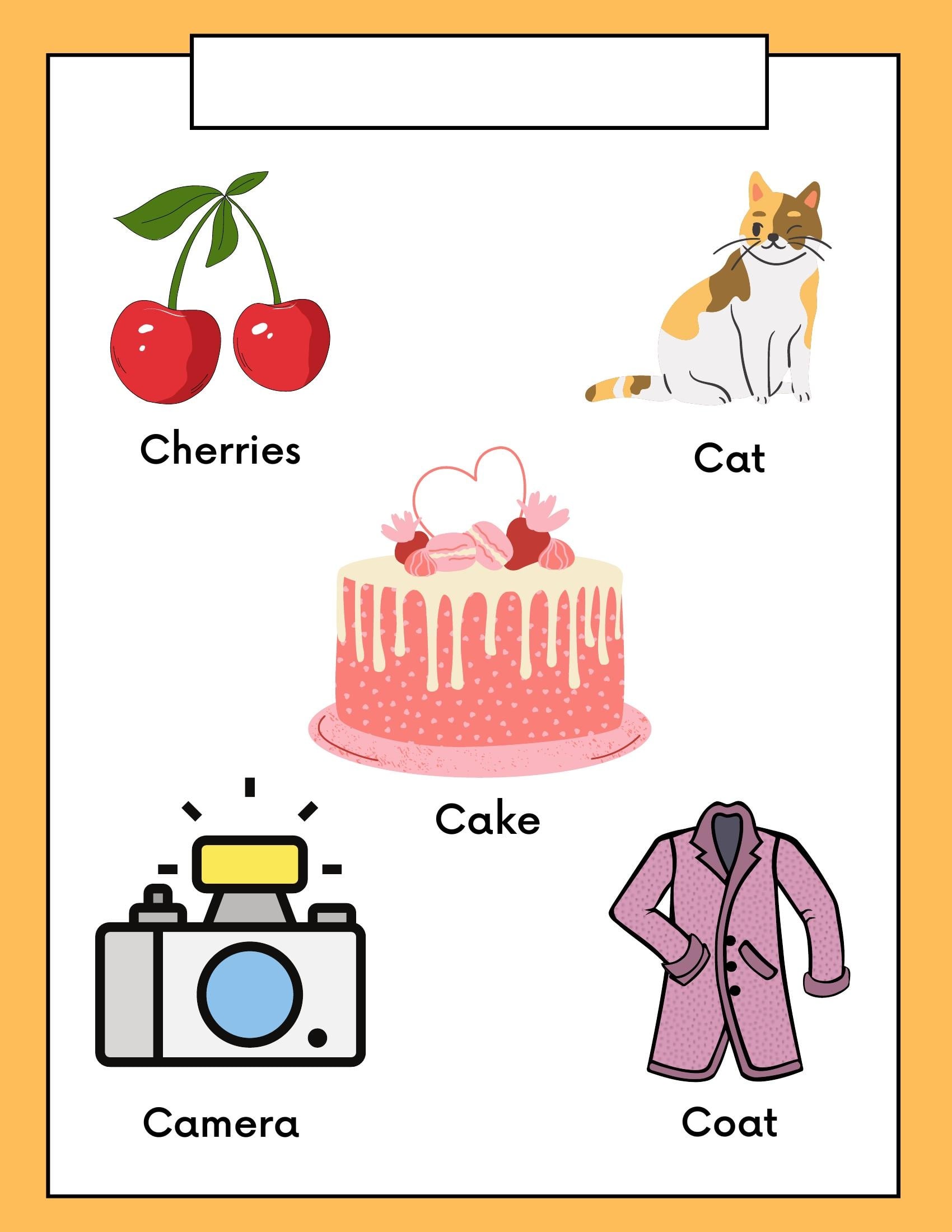
The C worksheet introduces five colorful words beginning with C. Children can explore cherries, a cat, a camera, a coat, and a cake.
The variety gives them animals, food, clothing, and everyday objects to identify. As they work, encourage them to listen for the /k/ sound at the start of each word. This page combines letter learning with familiar vocabulary in an engaging way.
6. A Second Look at C Words
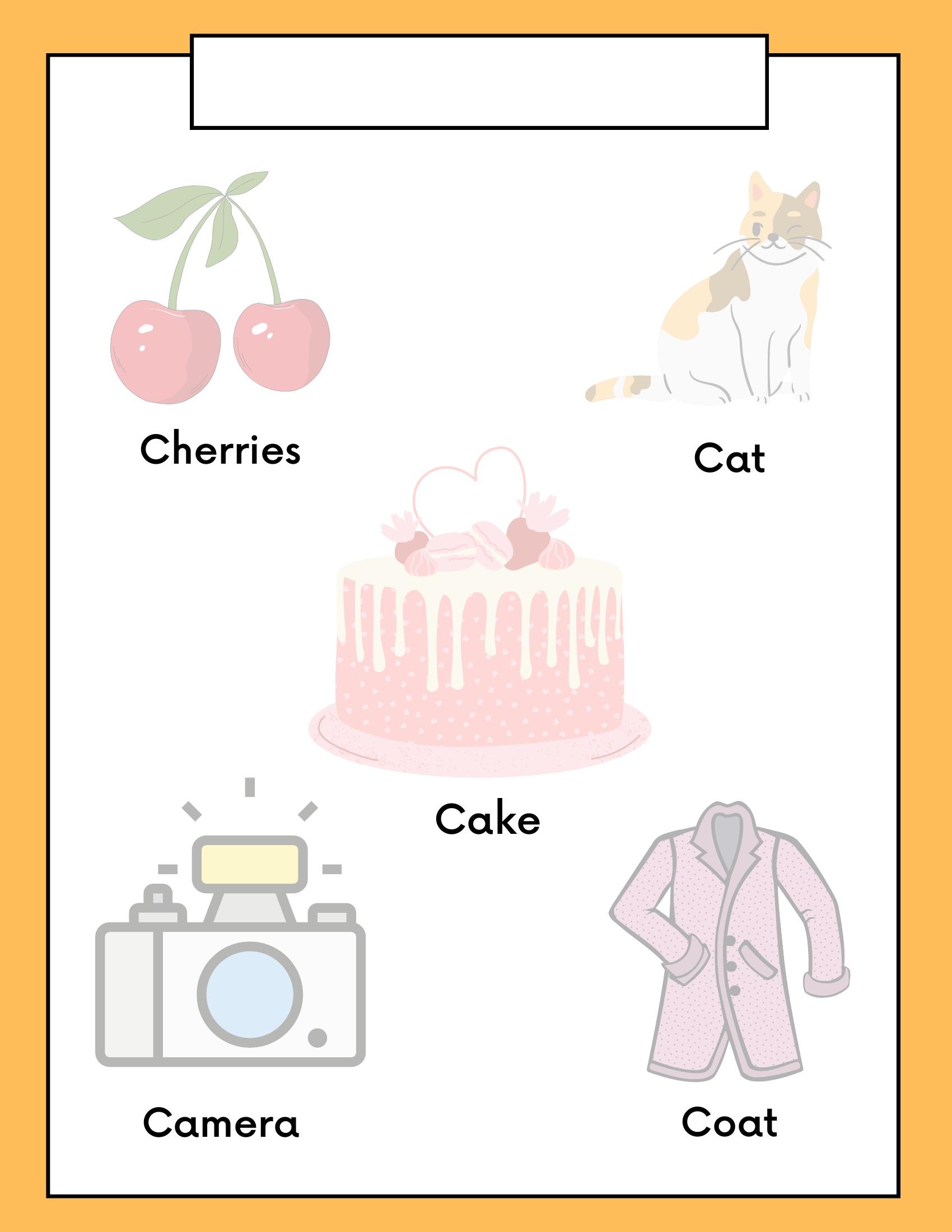
The next page repeats the same C pictures using a lighter version. Children can revisit cherries, cat, camera, coat, and cake without moving on too quickly.
This repeated practice may help reinforce both the pictures and their beginning sound. You can also ask children to name their favorite picture before they continue. A simple conversation can make the activity more interactive.
7. D Is for Duck, Dice, Deer, Dolphin, and Dress
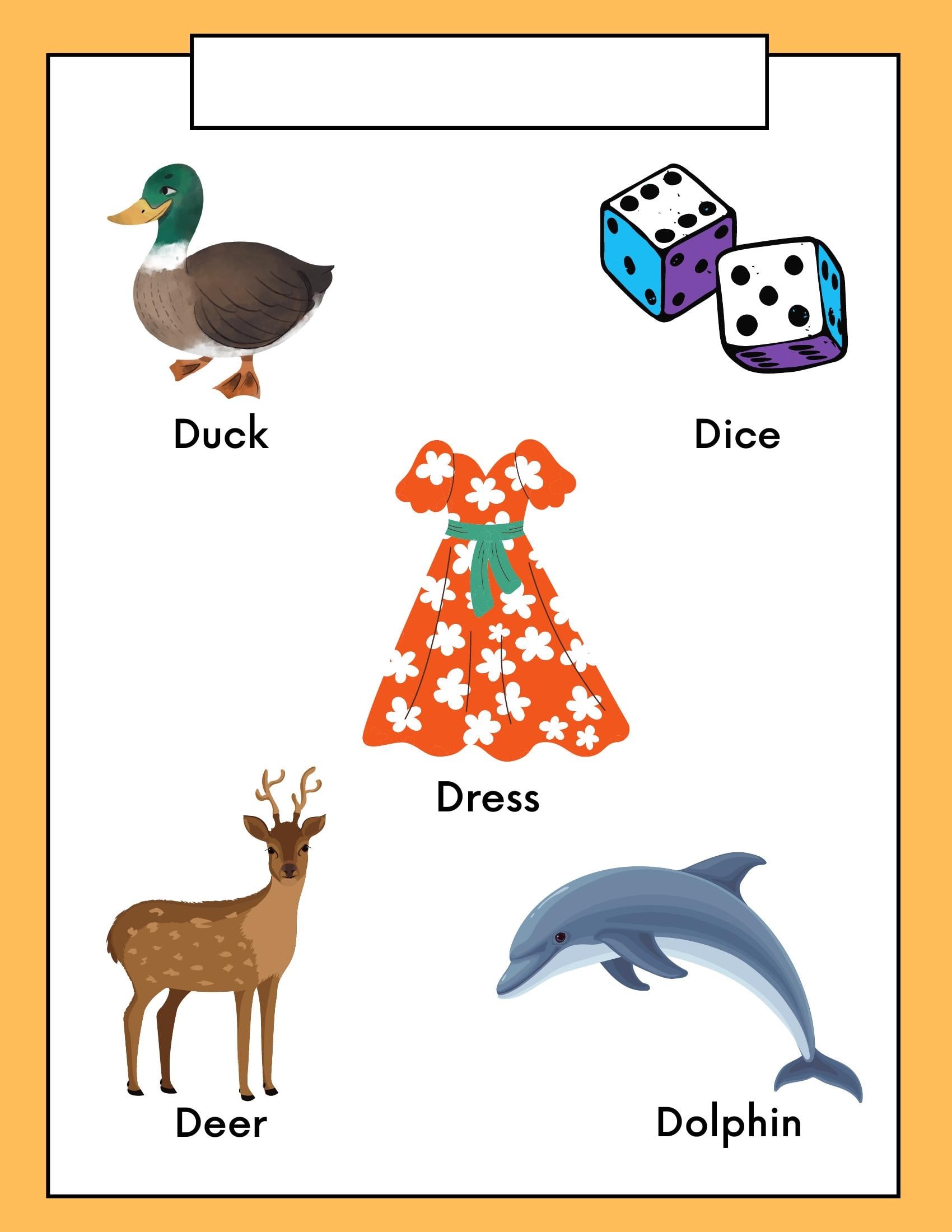
The D worksheet features five words with bright and recognizable pictures. Children will see a duck, dice, deer, dolphin, and dress.
The page includes animals and everyday objects, giving children several different images to identify. Let them say each word slowly and listen for the D sound. Then, they can enjoy the hands-on part of the worksheet.
8. A Second Look at D Words
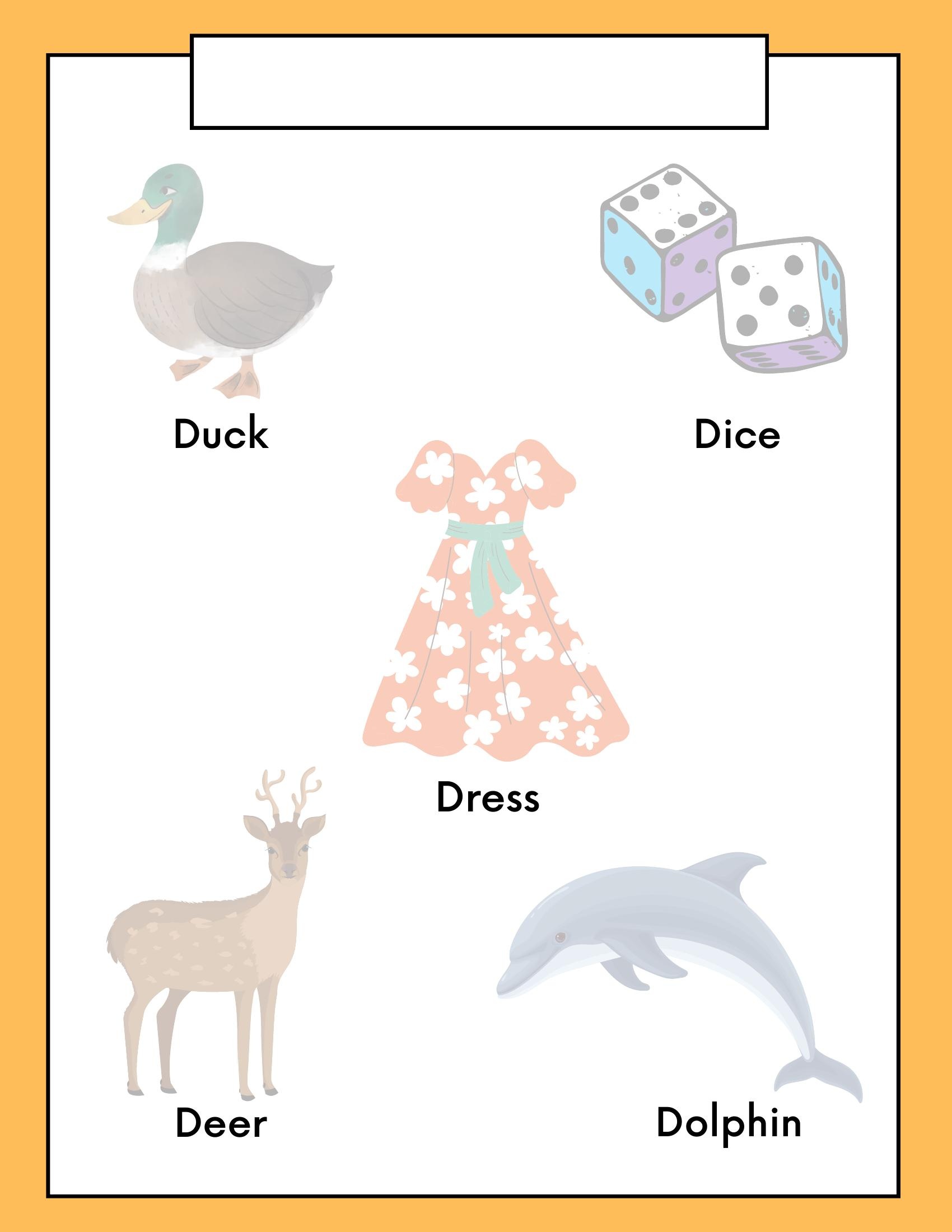
This lighter D worksheet gives children another chance to review the same vocabulary. They can identify the duck, dice, deer, dolphin, and dress once again.
Repeating the pictures helps keep the words fresh without introducing too much at once. For younger learners, you can name each picture together before they begin. This makes the page feel less like a test and more like guided practice.
9. E Is for Earth, Engine, Eggplant, Eagle, and Elephant
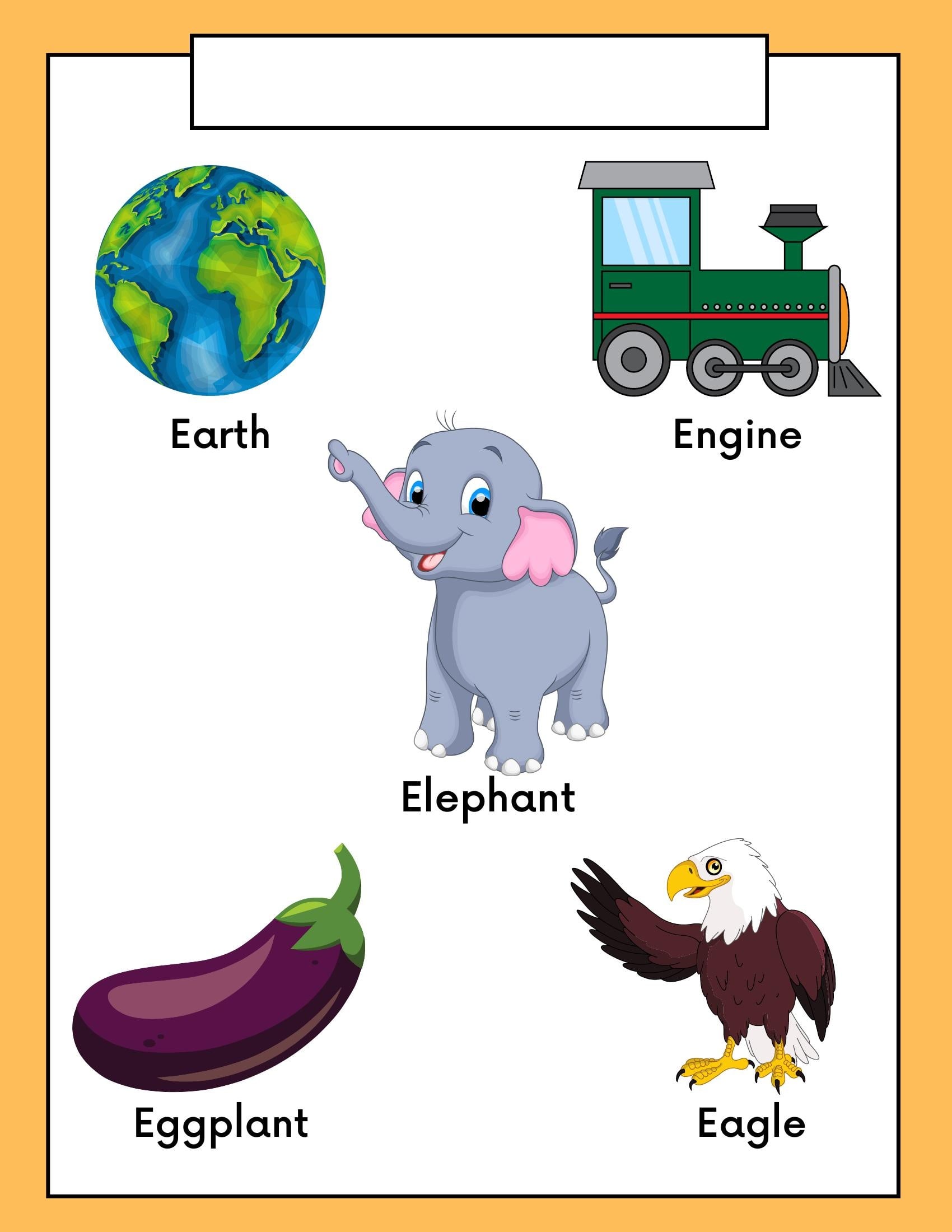
The E worksheet brings together five interesting words beginning with E. Children can identify Earth, an engine, eggplant, an eagle, and an elephant.
The pictures cover nature, food, animals, and transportation. That variety gives children different visual clues as they connect each word with the letter E. It can also introduce vocabulary that may not appear in everyday conversations.
10. A Second Look at E Words
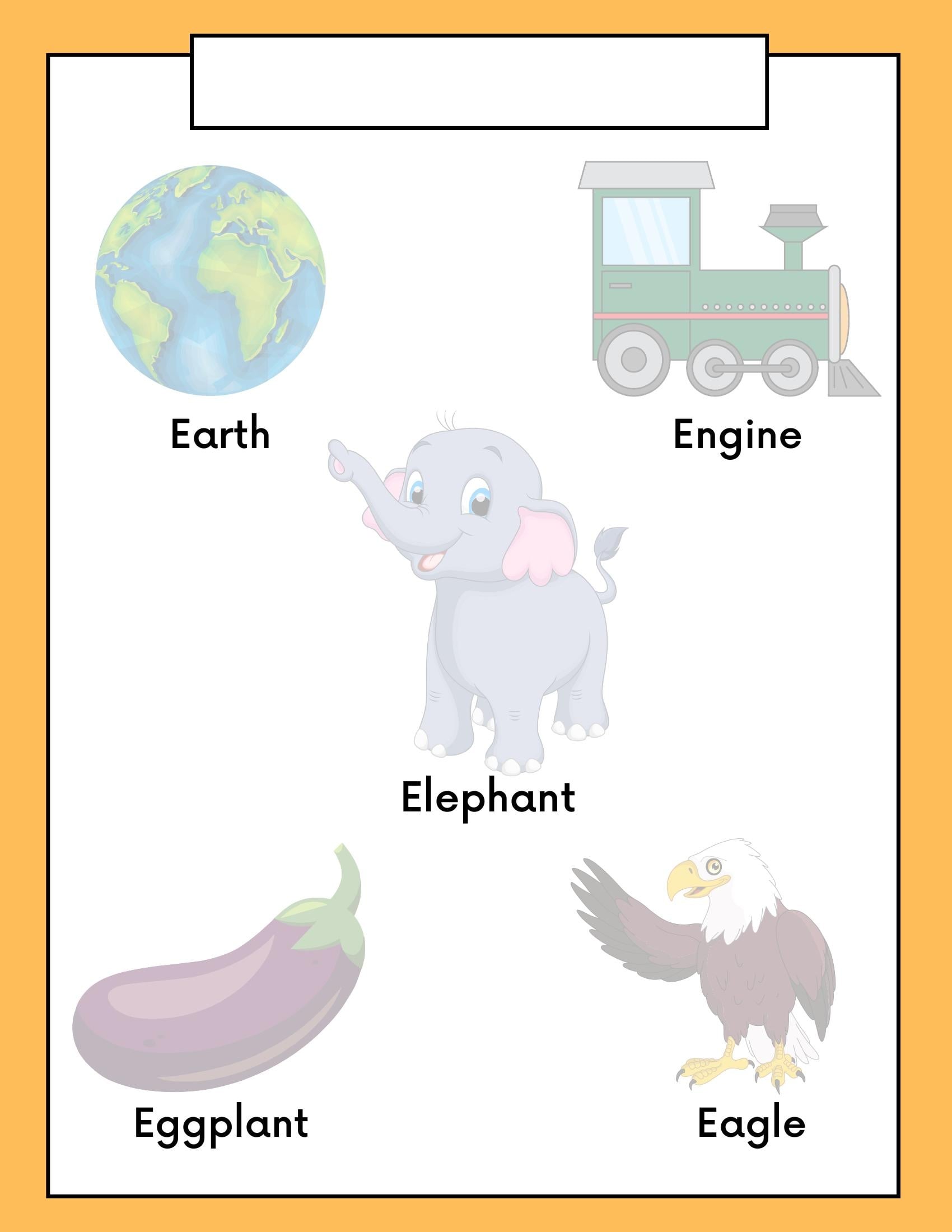
The lighter E worksheet repeats Earth, engine, eggplant, eagle, and elephant. Children can use this page to strengthen their recognition of the same words.
Ask them to point to each picture while saying the word aloud. They can then move into the cutting and pasting activity with a better idea of what each picture represents. This extra practice keeps the learning simple and manageable.
11. F Is for Fish, Flower, Fox, Frog, and Fire
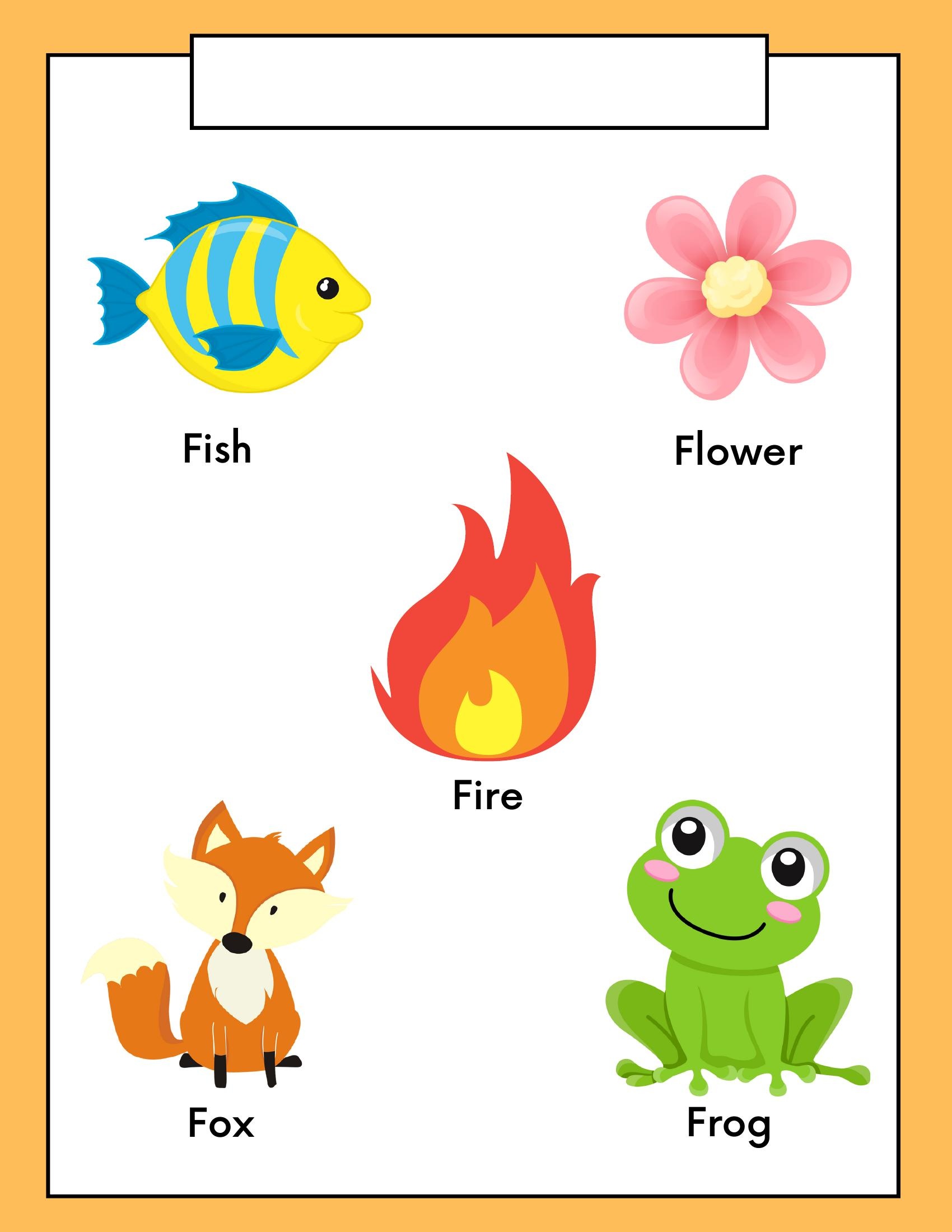
The F worksheet introduces five words that begin with F. Children will find a fish, flower, fox, frog, and fire among the pictures.
These choices include animals, nature, and a familiar word connected to warmth and safety. Encourage children to repeat each word as they identify its picture. The activity can help them notice how different words share the same beginning sound.
12. A Second Look at F Words
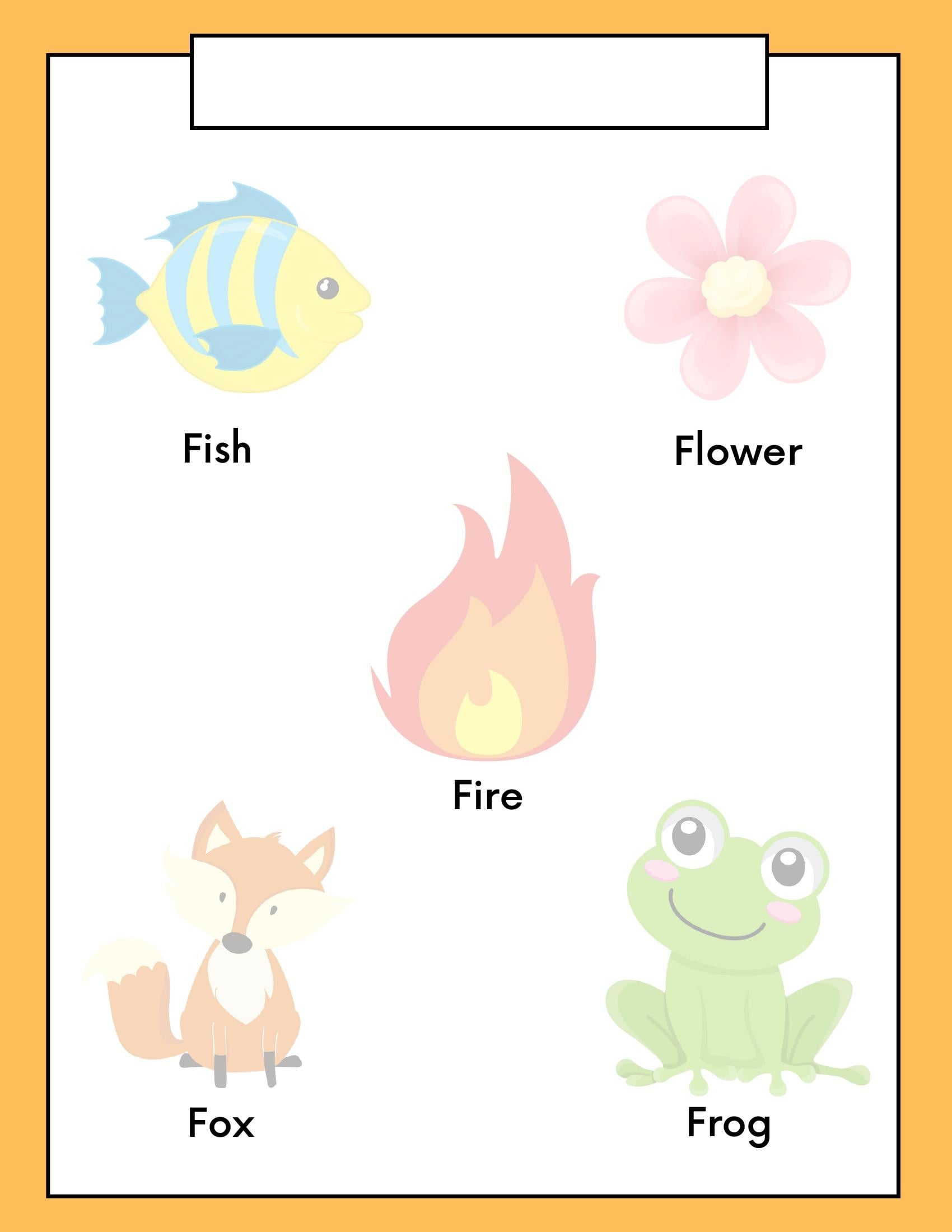
This page gives children another opportunity to practice the F vocabulary. Fish, flower, fox, frog, and fire appear again in the lighter format.
Repeating the same words can help children build confidence before moving to another letter. You can make it more engaging by asking which F picture they like best. Then let them continue with the worksheet at their own pace.
13. G Is for Guitar, Grasshopper, Grapes, Gift, and Gun
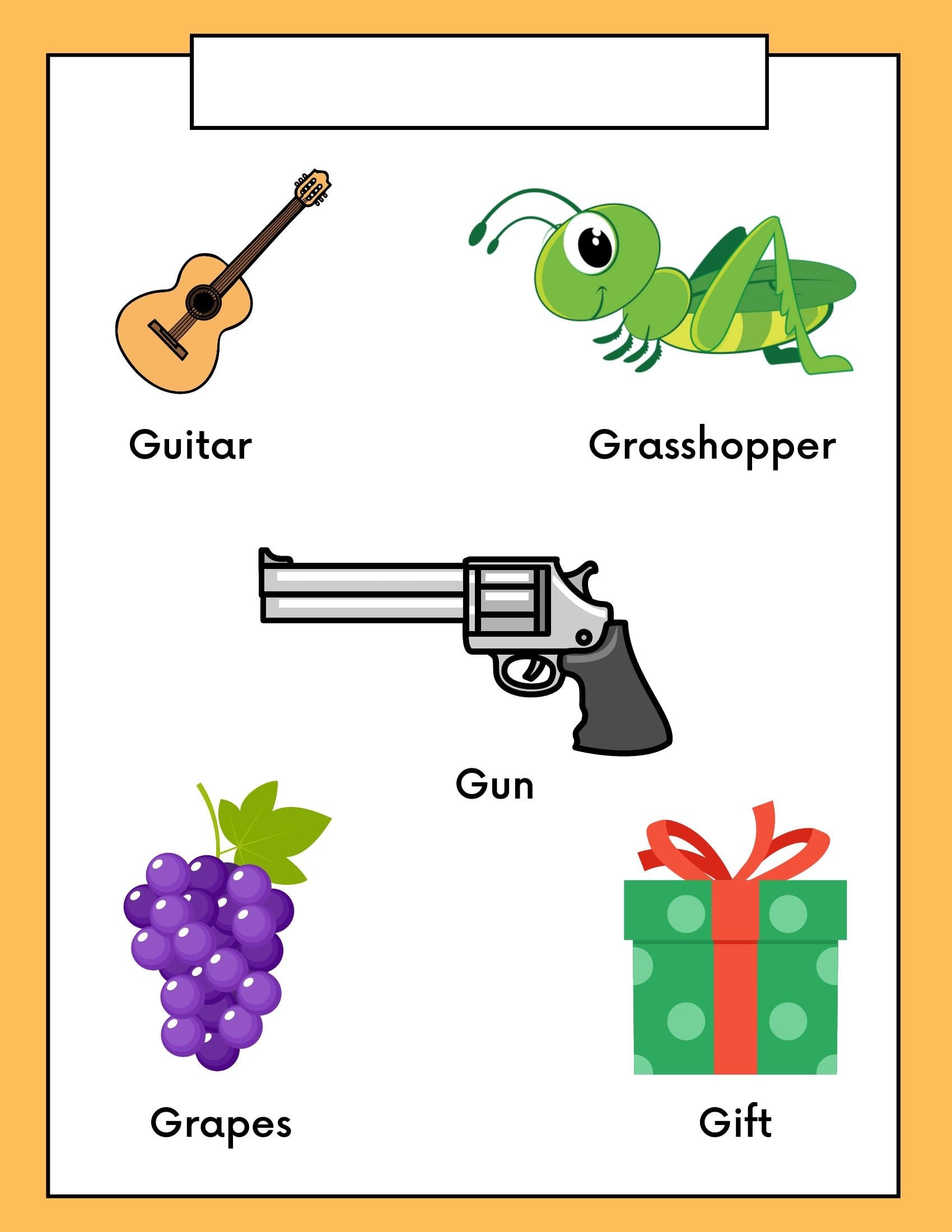
The G worksheet features five different words beginning with G. Children can identify a guitar, grasshopper, grapes, gift, and gun from the pictures.
The mix gives them several types of objects and living things to recognize. Talk through the pictures together before children begin cutting and arranging. This can help unfamiliar vocabulary feel easier to understand.
14. A Second Look at G Words
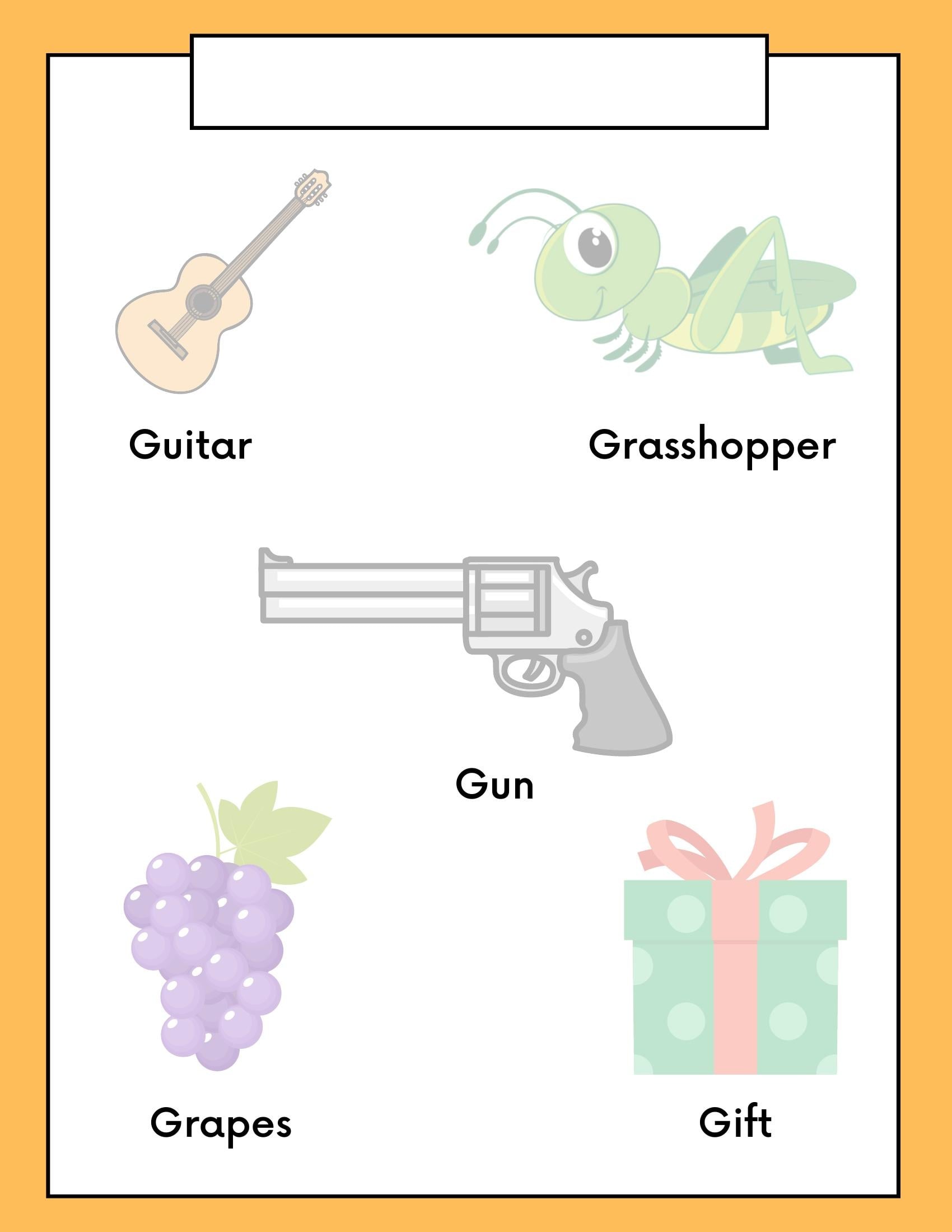
The second G page repeats the same five vocabulary choices in a lighter format. Children can review guitar, grasshopper, grapes, gift, and gun once more.
Repetition gives them another chance to connect each picture with the letter G.
You can also turn this into a quick naming game before they start. Keep the pace relaxed so the activity remains enjoyable.
15. H Is for Hat, Hammer, Hen, Honey, and House
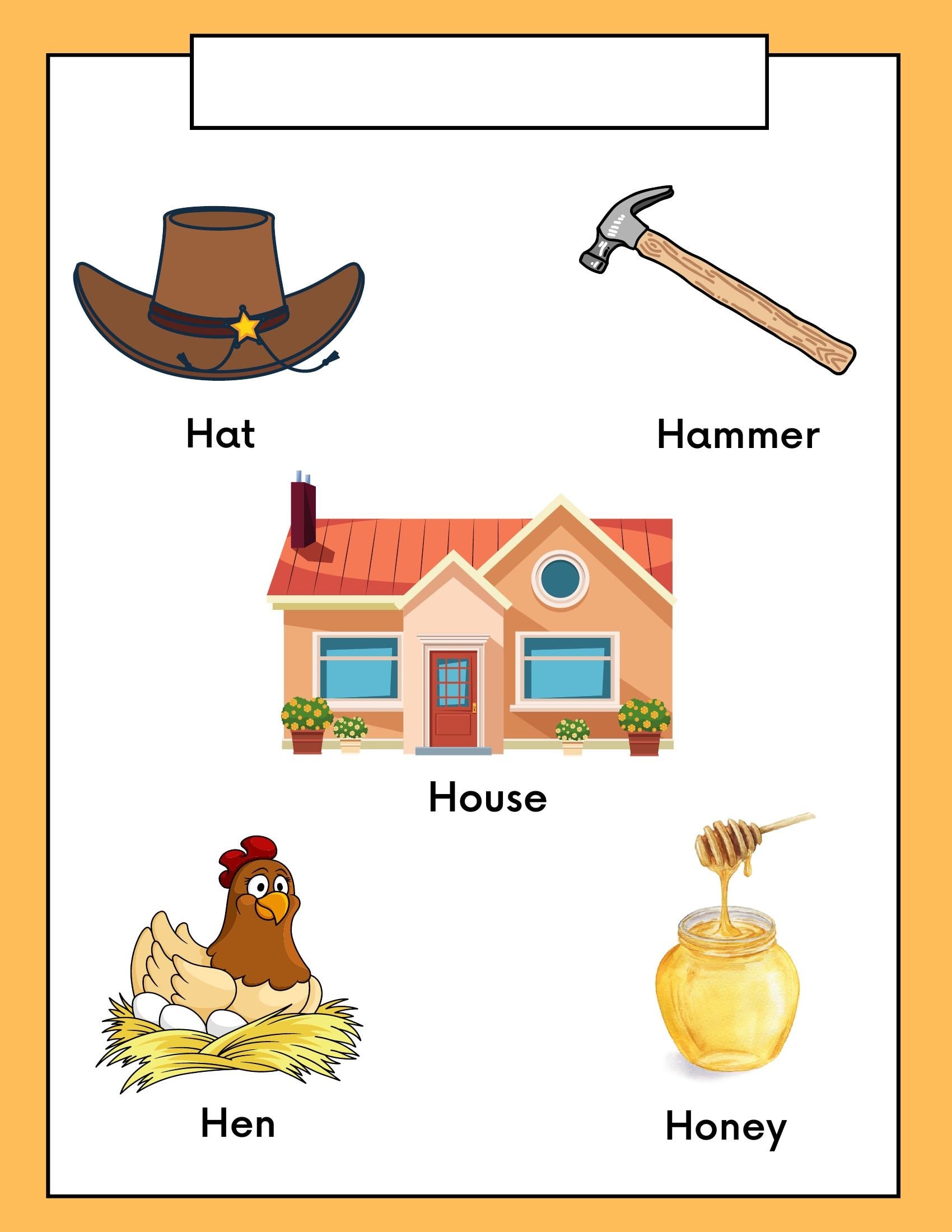
The H worksheet introduces five simple words that begin with H. Children will see a hat, hammer, hen, honey, and house.
These pictures include familiar items, animals, food, and places children may already recognize.
Ask them to name each picture while paying attention to its first sound. The combination of pictures and words makes this page easy to use during alphabet practice.
16. A Second Look at H Words
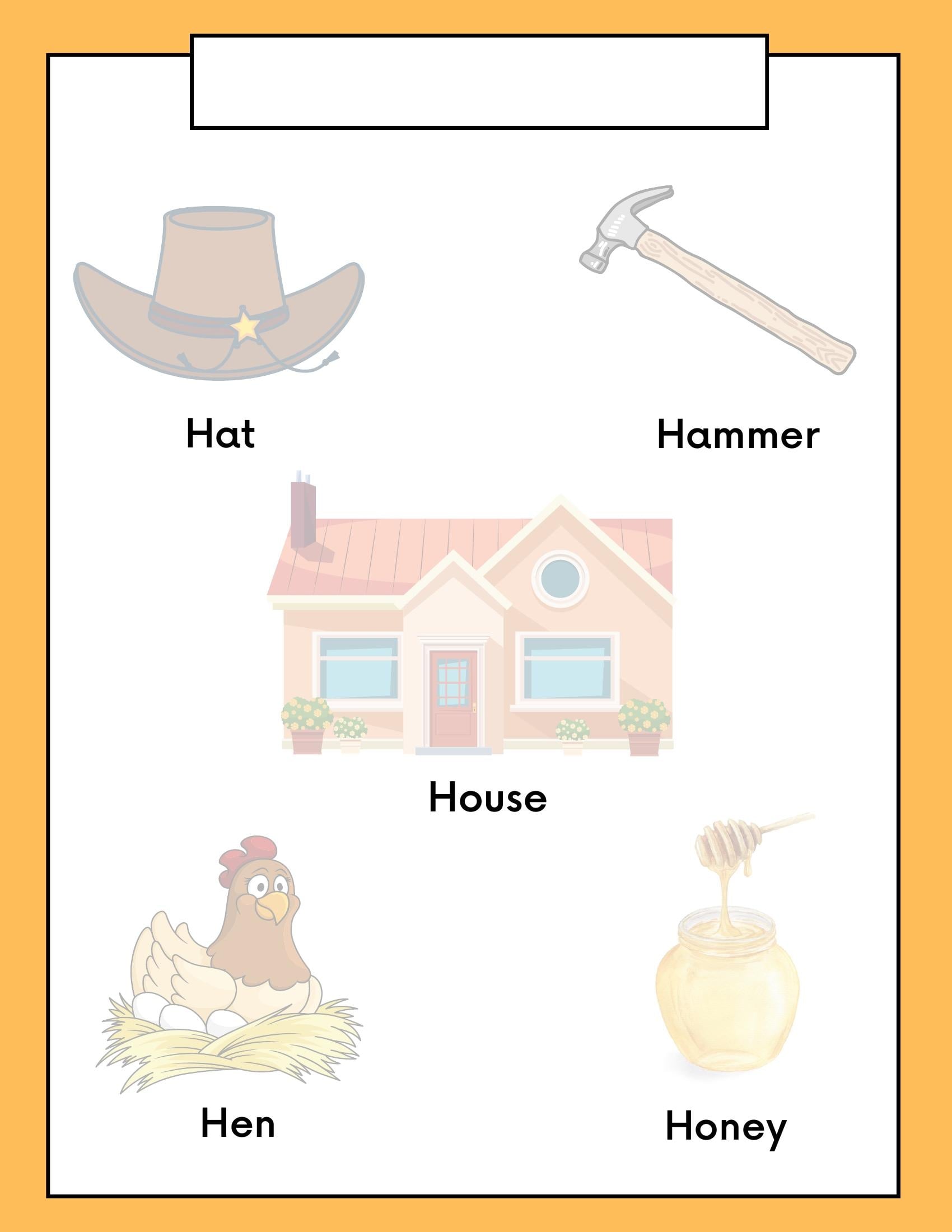
This lighter H worksheet repeats hat, hammer, hen, honey, and house. Children can review the same vocabulary before progressing to the next letter.
If a word is unfamiliar, take a moment to explain what the picture shows.
That little conversation can turn a worksheet into a useful vocabulary lesson. Afterward, children can return to the cutting and pasting task with more confidence.
17. I Is for Iron, Igloo, Island, Ink, and Ice Cream
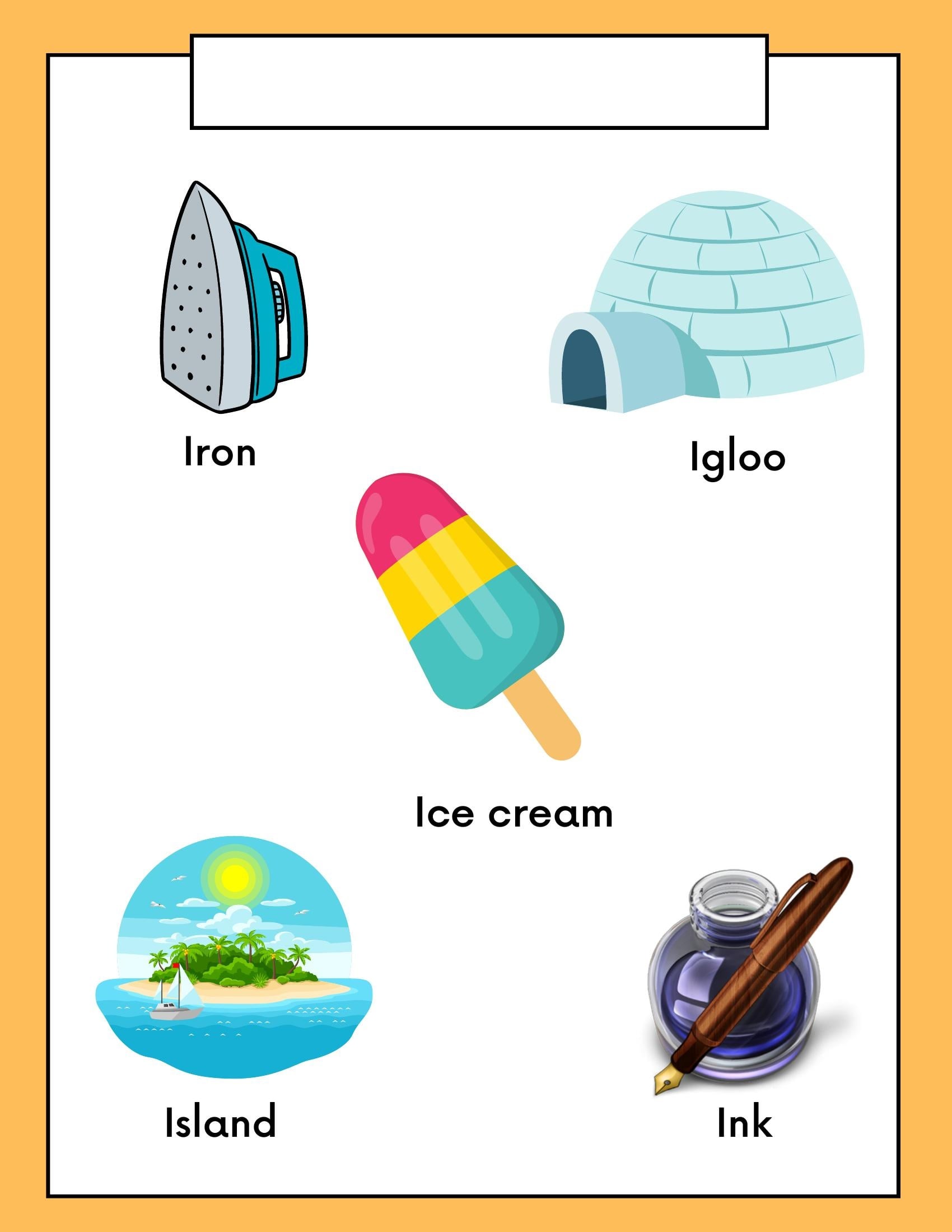
The I worksheet brings together five interesting words beginning with I. Children can identify an iron, igloo, island, ink, and ice cream.
Some of these words may be especially useful for expanding a child’s vocabulary.
Invite children to say each word clearly as they point to its picture. The activity then becomes both letter practice and a chance to discover new words.
18. A Second Look at I Words
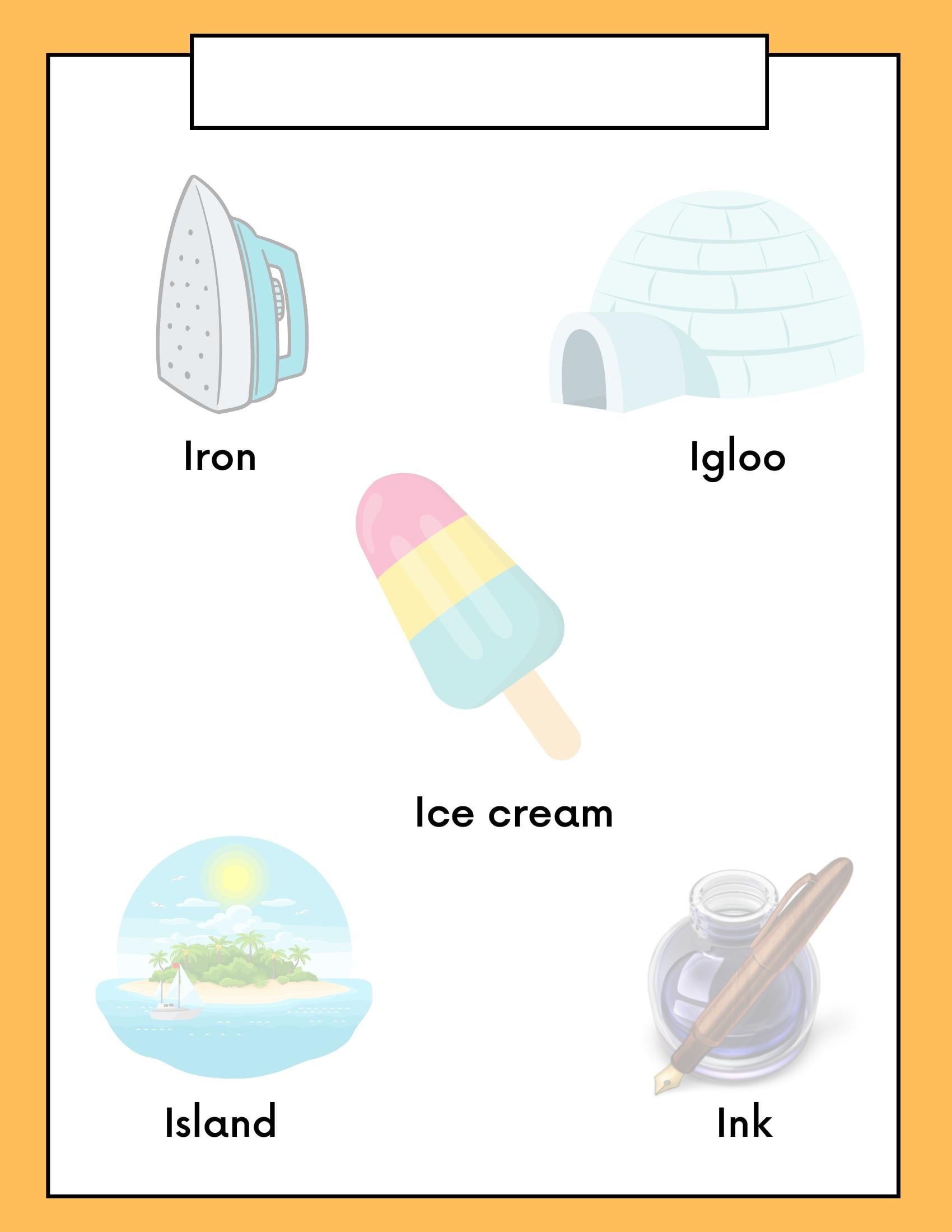
This page repeats the I vocabulary using the lighter version of the pictures. Children can review iron, igloo, island, ink, and ice cream at a comfortable pace.
Repeated exposure can make less familiar words easier to remember. Ask simple questions about the pictures to keep your child involved. Then, let them continue with the worksheet without rushing through the page.
19. J Is for Jam, Jar, Jalapeno, Jellyfish, and Jug
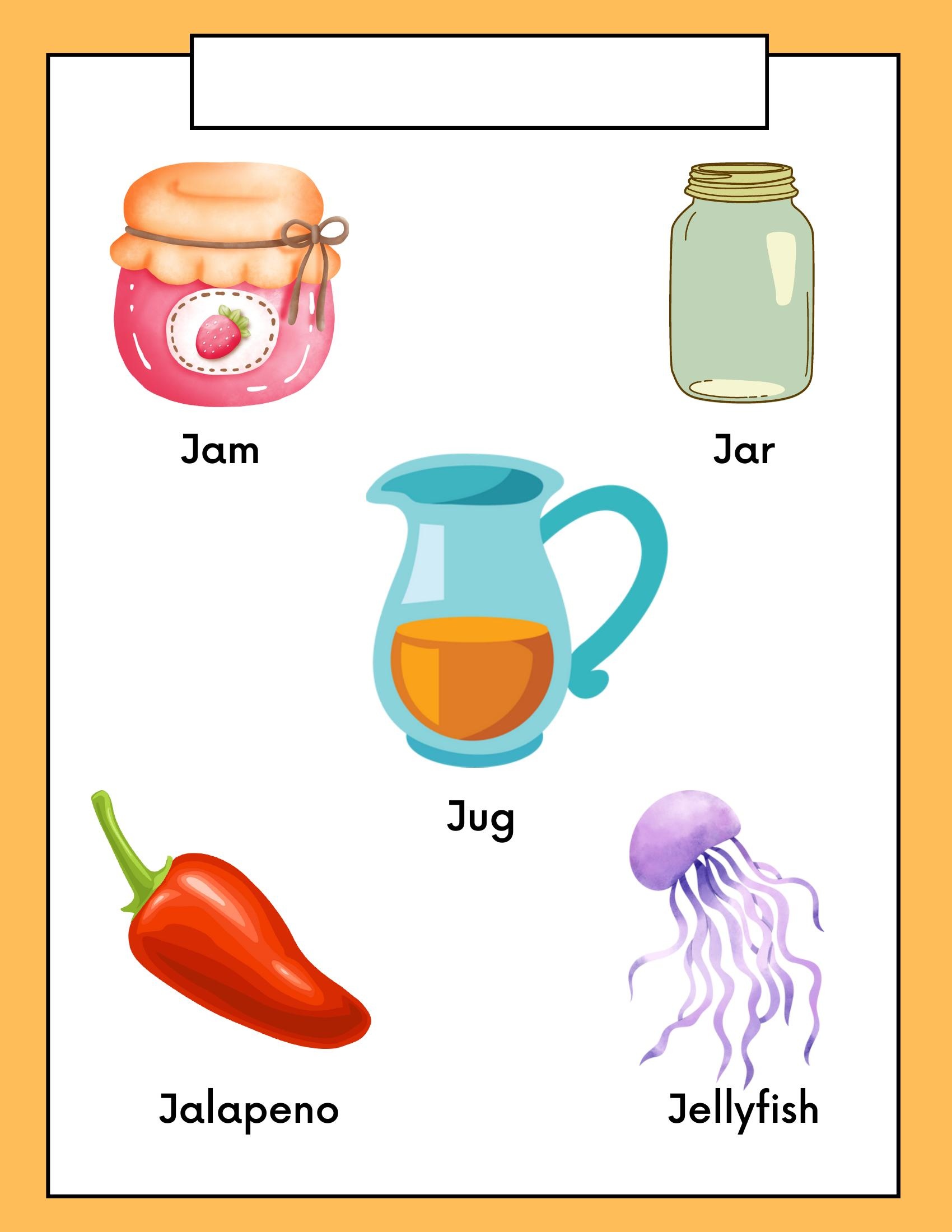
The J worksheet introduces five colorful words beginning with J. Children will find jam, jar, jalapeno, jellyfish, and jug on the page.
The pictures offer a nice mix of food, objects, and an ocean animal. Children can say each word while noticing the common beginning sound.
Cutting and arranging the pictures adds a hands-on element to their alphabet practice.
20. A Second Look at J Words
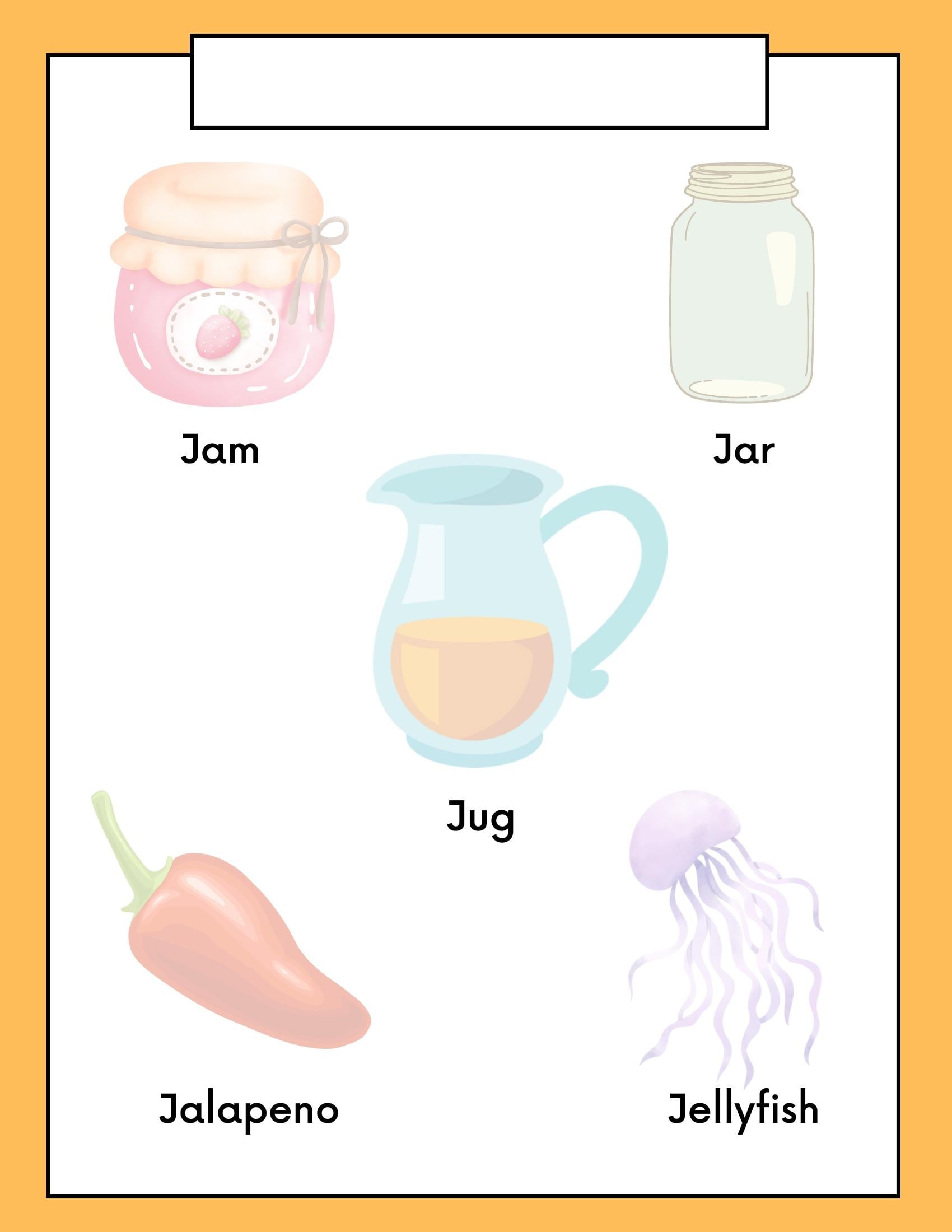
The final page in this section repeats jam, jar, jalapeno, jellyfish, and jug. The lighter pictures allow children to revisit the same words before moving ahead.
You can ask your child to name each picture without giving the answer first.
If they forget one, simply give a gentle clue and try again. This keeps the practice positive while building familiarity with the letter J.
21. K Is for Key, Kettle, Kiwi, Kangaroo, and Kite
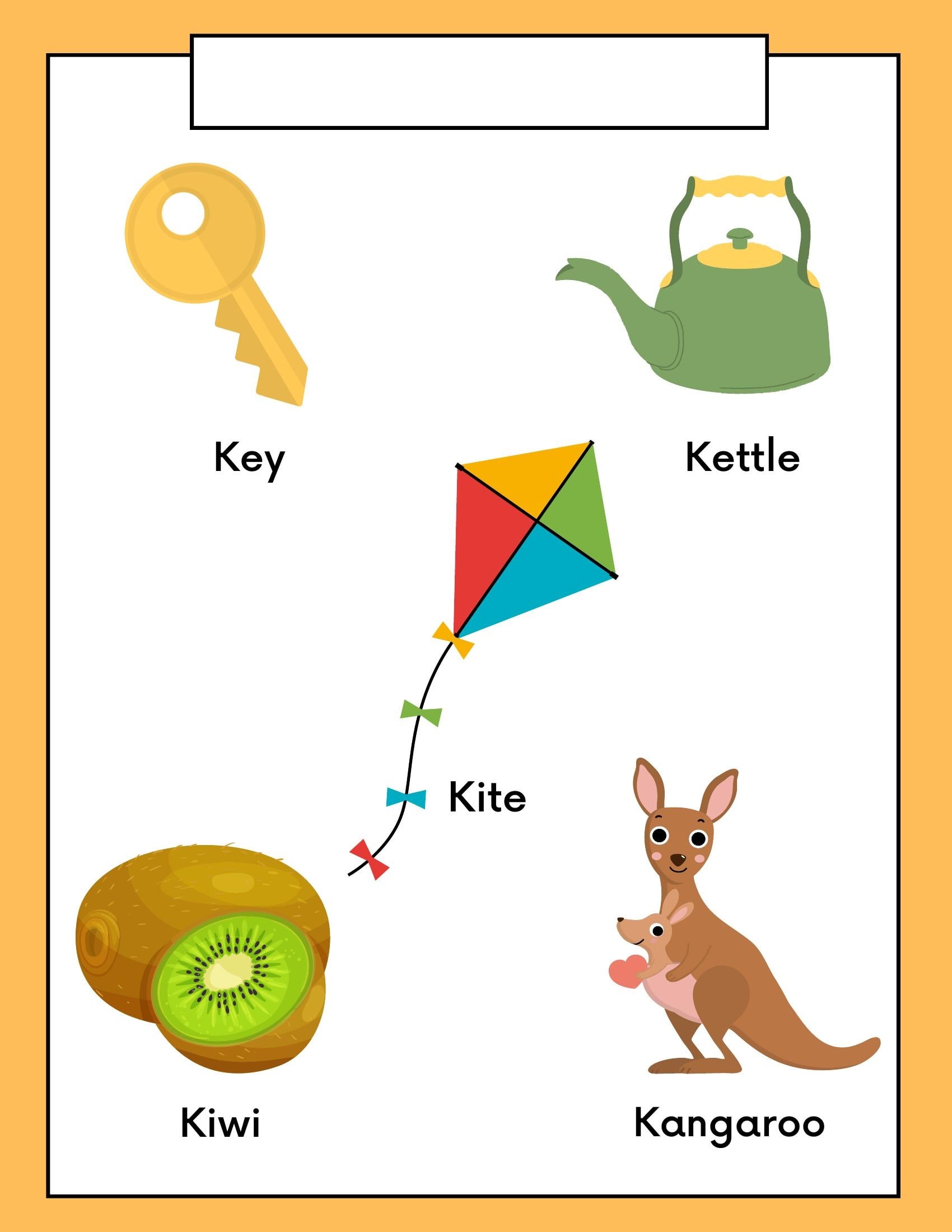
The K worksheet introduces five lively words beginning with K. Children can identify a key, kettle, kiwi, kangaroo, and kite.
These pictures give them a mix of objects, food, animals, and something fun to fly.
Encourage your child to say each word before starting the cutting activity. This helps connect the picture, spoken word, and beginning letter.
22. A Second Look at K Words
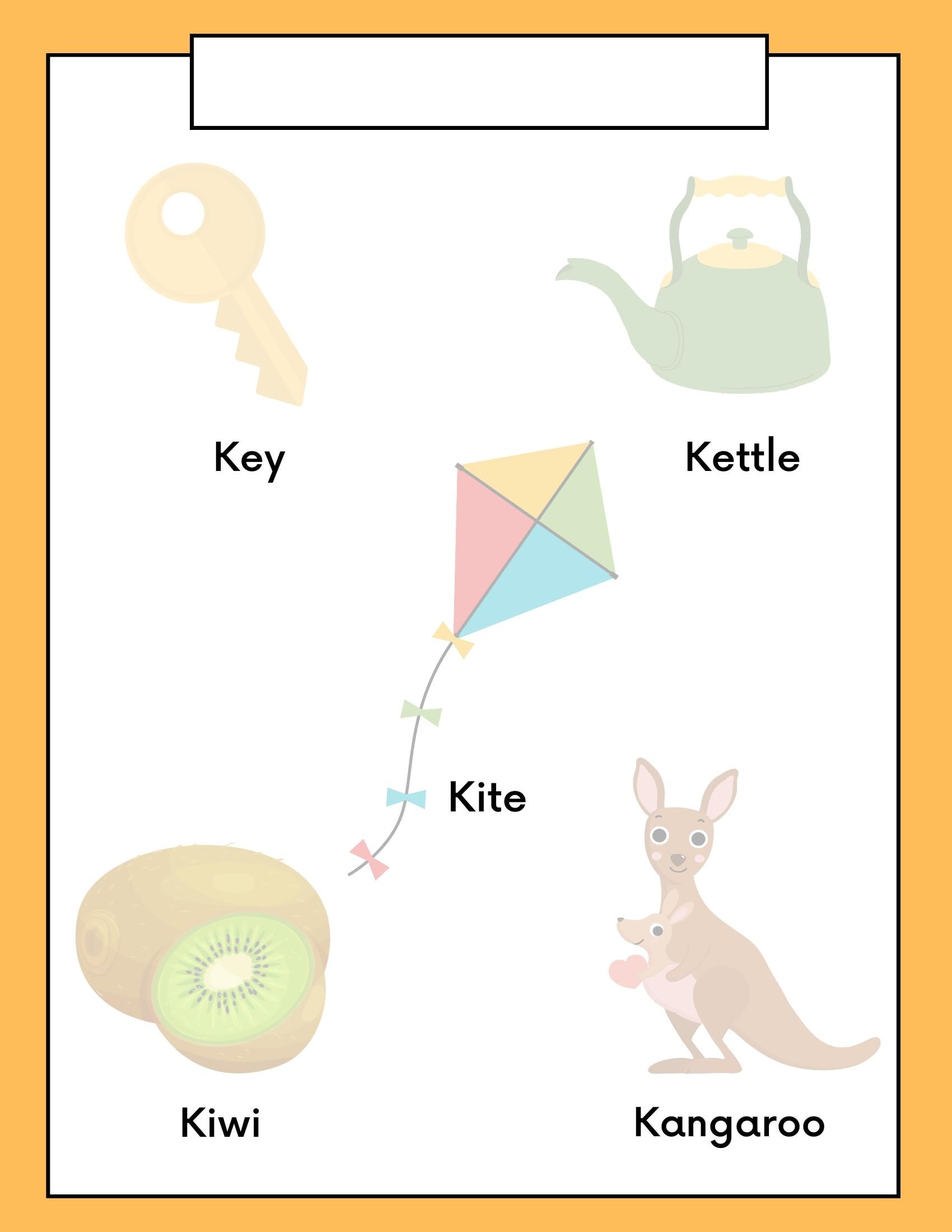
This page repeats the K vocabulary in a lighter format. Children can review key, kettle, kiwi, kangaroo, and kite once more.
Repeating familiar pictures can help children remember new words more easily.
Ask them to point to each picture as they name it. After that, they can complete the cut-and-paste task with greater confidence.
23. L Is for Leaf, Lock, Lollipop, Lamp, and Lion
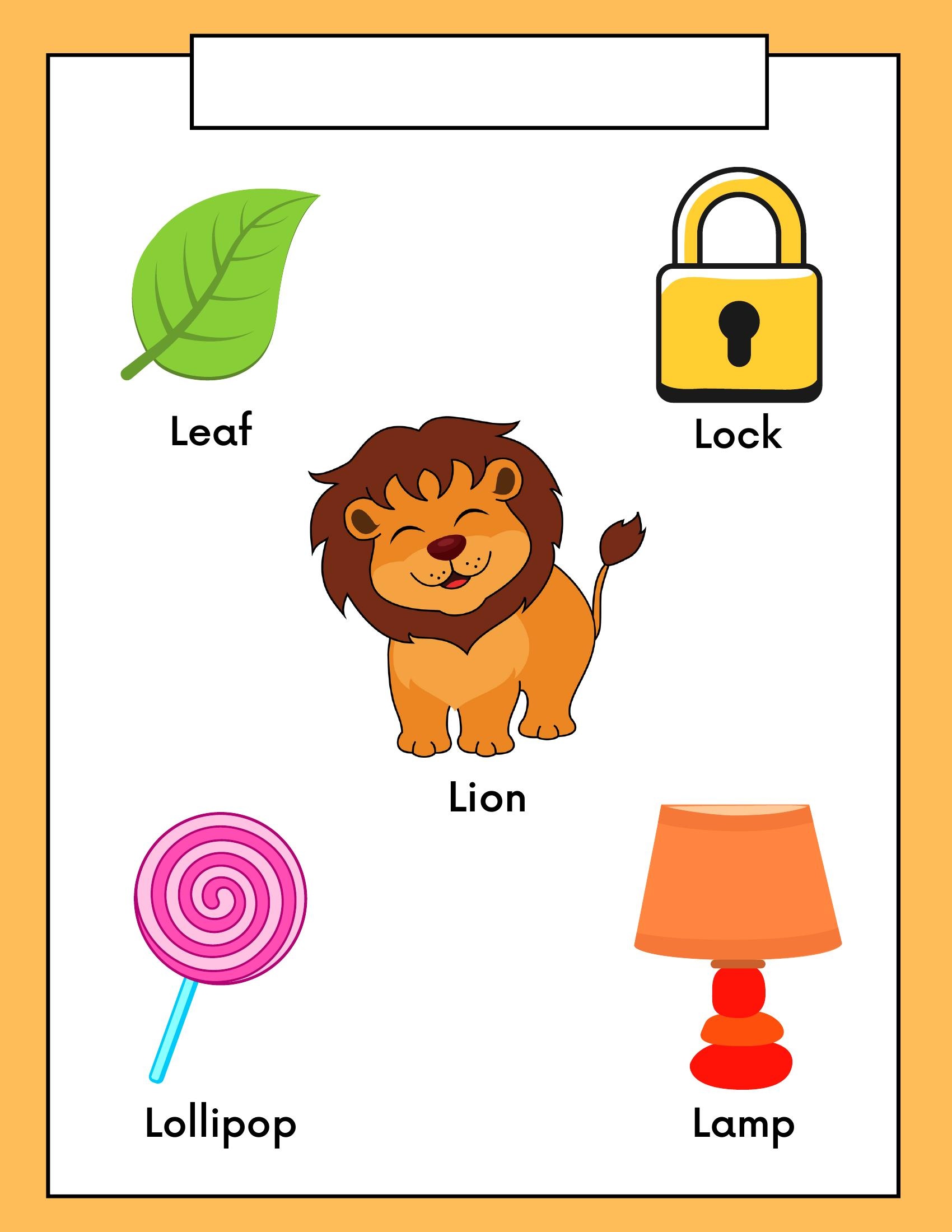
The L worksheet features five words with different meanings and pictures. Children will see a leaf, lock, lollipop, lamp, and lion.
This gives them an easy mix of nature, household items, food, and animals.
Let your child name each picture while listening for the L sound. The activity can make letter recognition feel active and enjoyable.
24. A Second Look at L Words
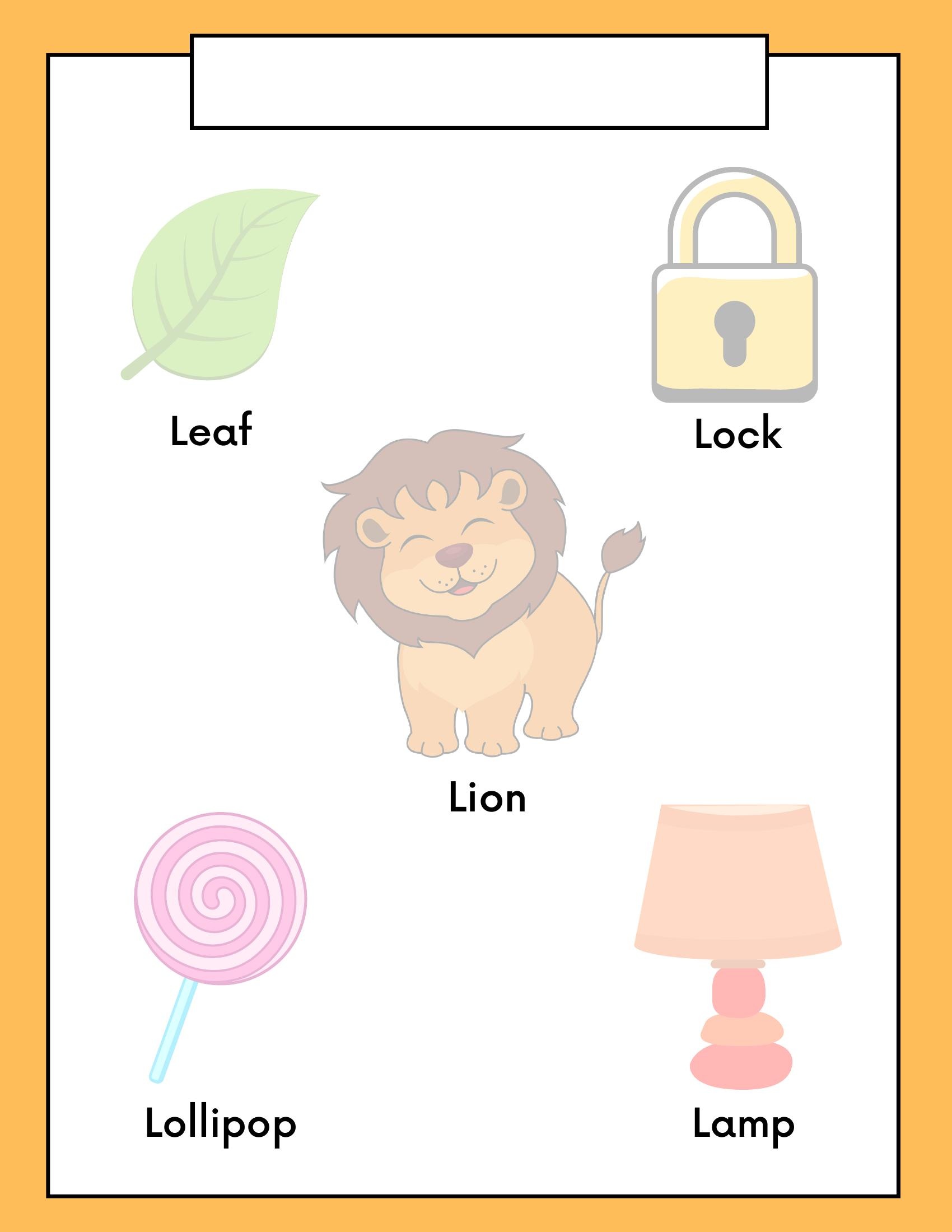
The next worksheet revisits the same L words in a lighter style. Children can practice identifying the leaf, lock, lollipop, lamp, and lion again.
This extra repetition is helpful for children who need more time with new vocabulary.
You can turn the page into a quick naming game before cutting begins. A little encouragement can make the practice feel much easier.
25. M Is for Medal, Mushroom, Muffin, Mango, and Moon
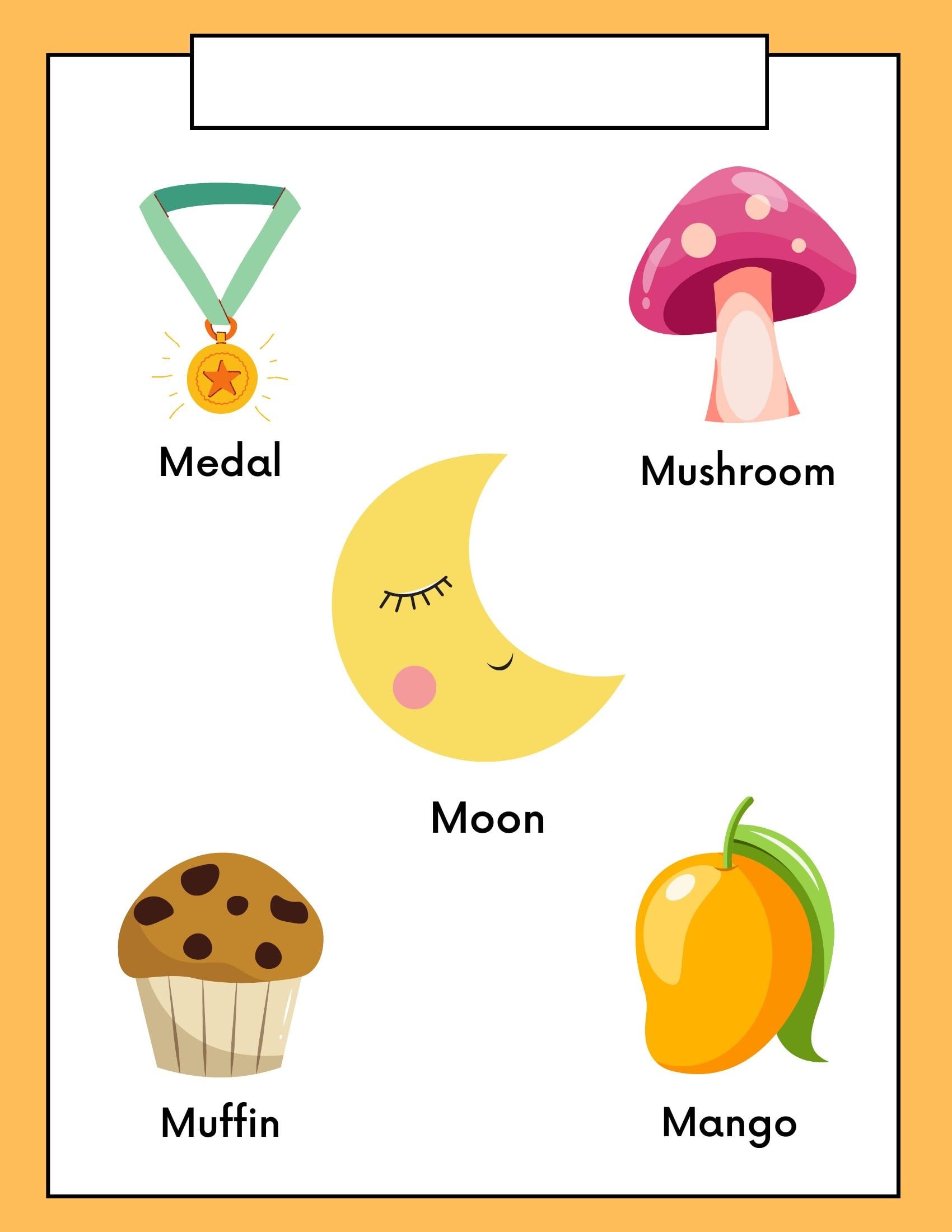
The M worksheet brings together five interesting words beginning with M. Children can identify a medal, mushroom, muffin, mango, and moon.
The pictures include food, nature, and familiar objects for children to explore.
Ask your child to say each word clearly before handling the pieces. This simple routine can help strengthen their connection with the letter M.
26. A Second Look at M Words
This lighter page gives children another chance to review the M vocabulary. They can revisit medal, mushroom, muffin, mango, and moon.
Repetition makes the activity useful for children who are still learning these words.
Ask which picture they recognize first, then work through the others together. Soon, the five M words may become much easier to remember.
27. N Is for Nails, Net, Neck, Nest, and Newspaper
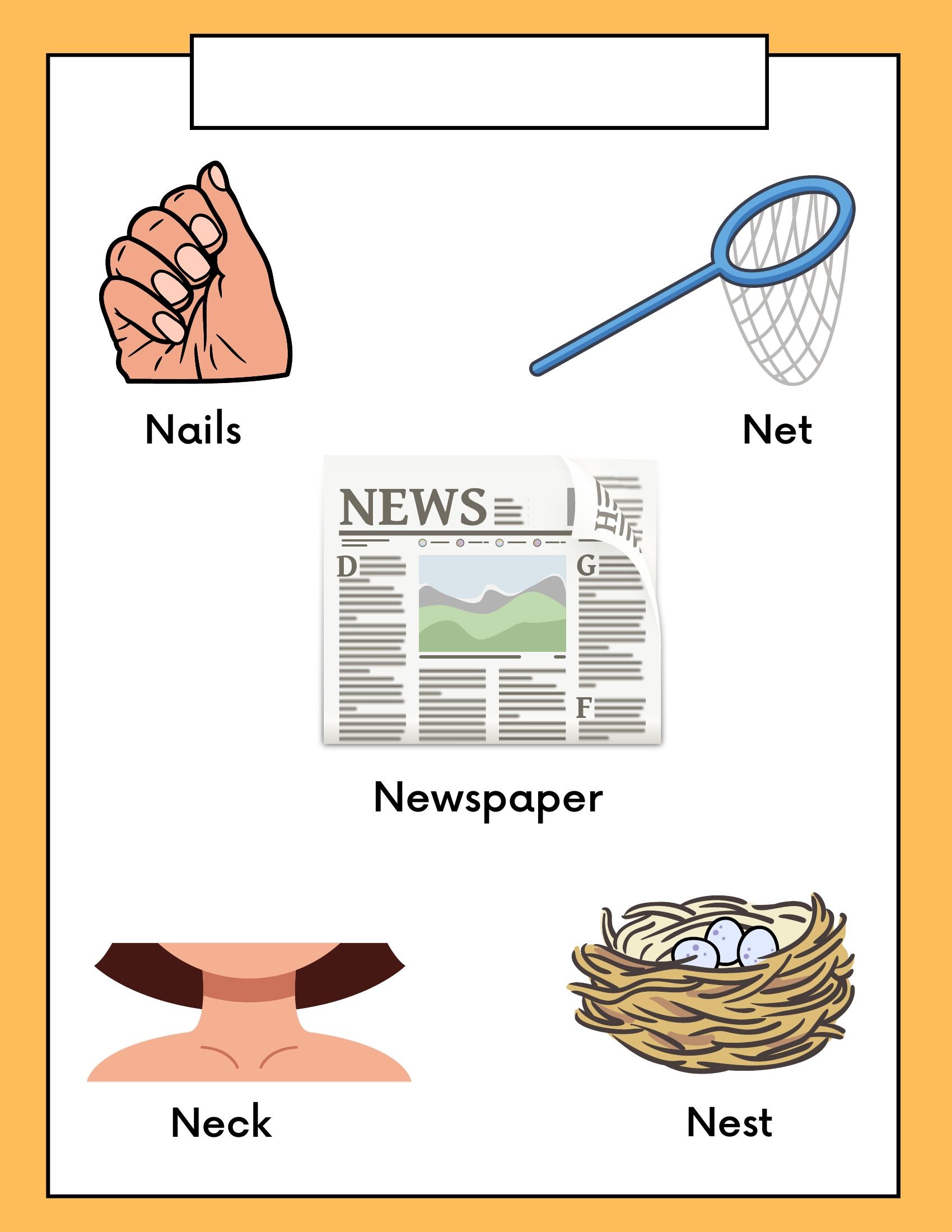
The N worksheet introduces five words beginning with N. Children will find nails, a net, a neck, a nest, and a newspaper.
Some words may need a short explanation, especially for younger children.
Take a moment to talk about each picture before beginning the activity. This gives children a chance to learn vocabulary while practicing the letter N.
28. A Second Look at N Words
This page repeats the N vocabulary in the lighter version. Children can review nails, net, neck, nest, and newspaper again.
Repeated exposure can help unfamiliar words become easier to recognize. Encourage your child to name each picture without rushing. Then, let them continue with the hands-on cut-and-paste work.
29. O Is for Orange, Olive, Octopus, Onion, and Owl
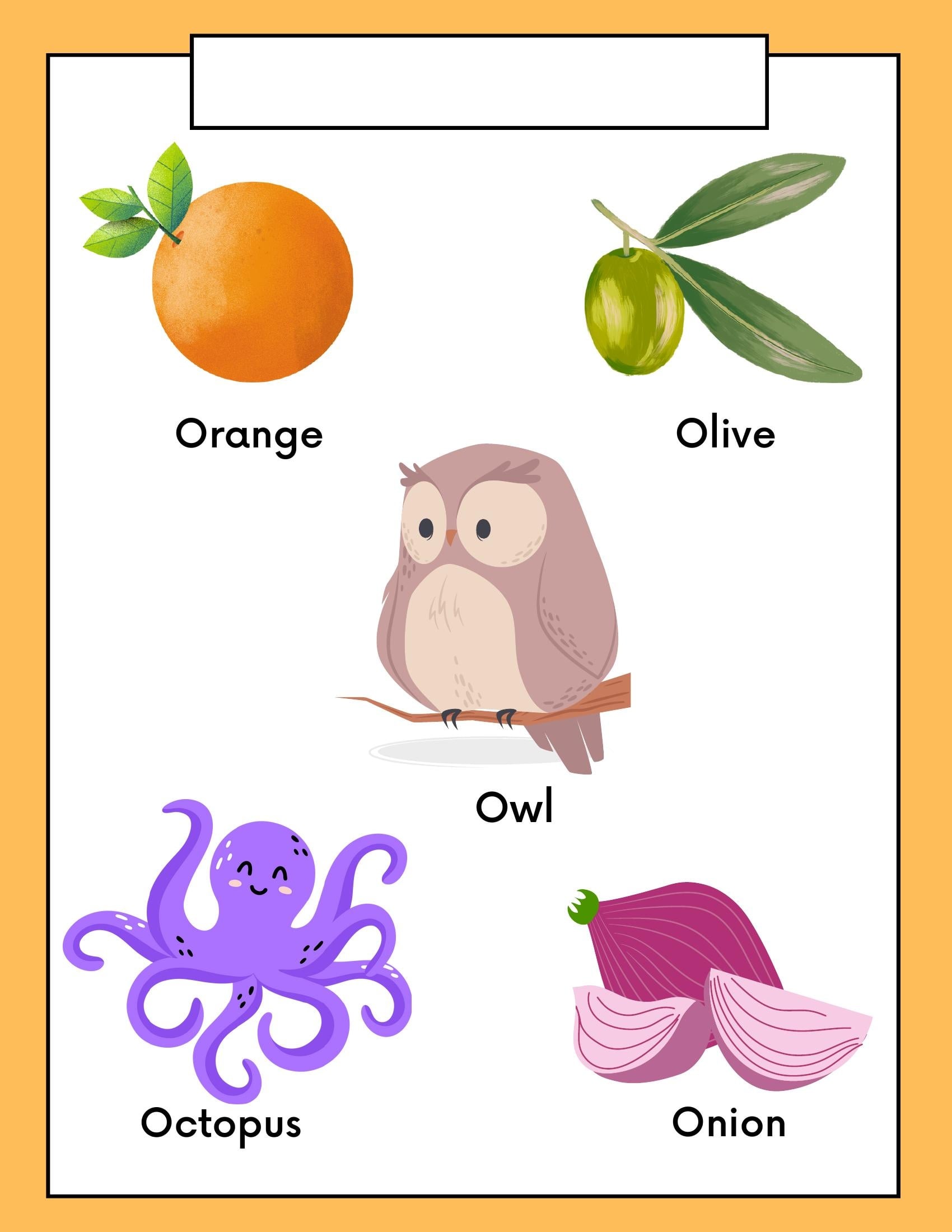
The O worksheet offers five colorful words that begin with O. Children can identify an orange, olive, octopus, onion, and owl.
The collection includes food and animals, giving children plenty of visual variety. Invite them to repeat each word as they point to its picture. This makes the worksheet useful for both letter sounds and vocabulary practice.
30. A Second Look at O Words
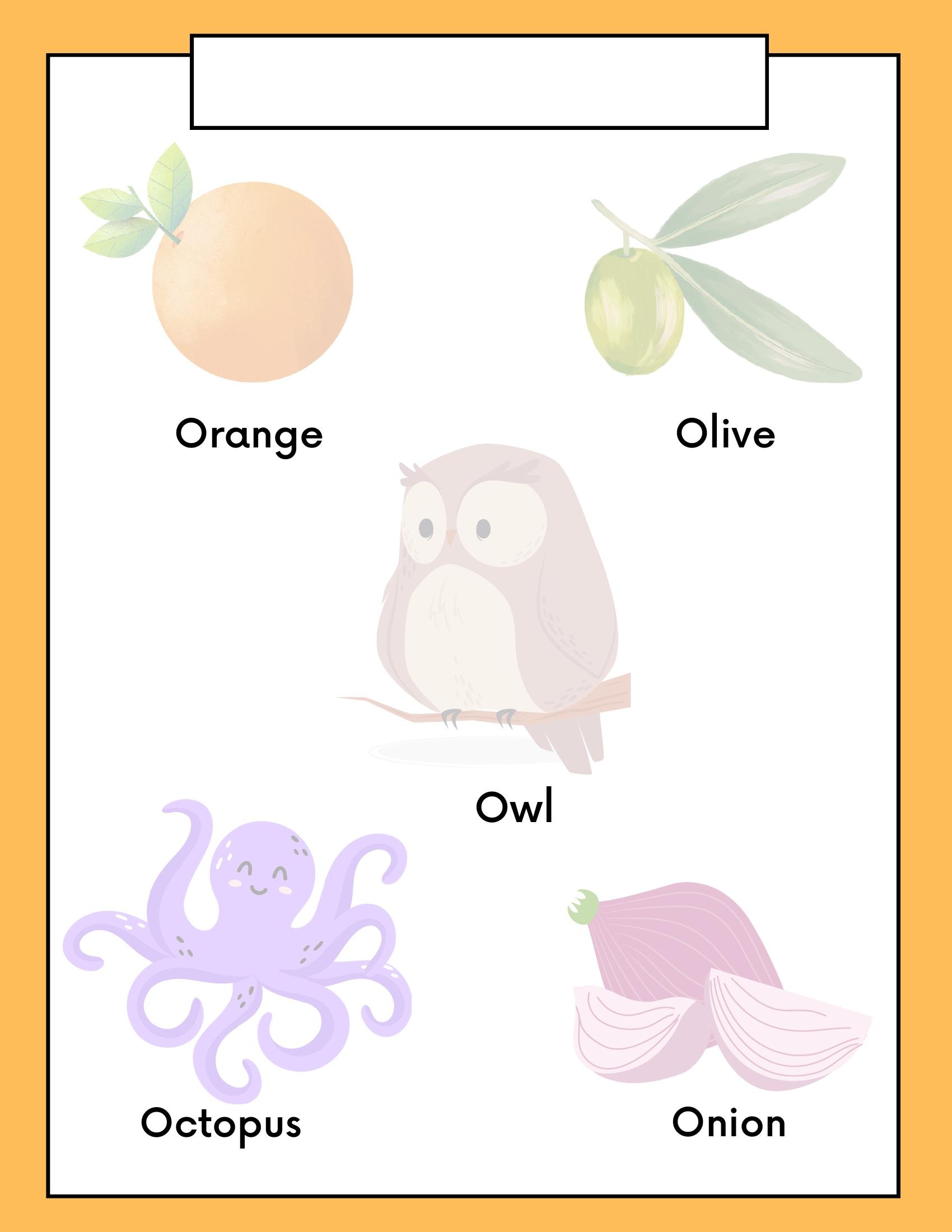
The second O worksheet brings back the same five pictures. Children can practice orange, olive, octopus, onion, and owl one more time.
This repetition gives them a comfortable way to review before moving ahead. Ask your child to find each O picture and say its name aloud. A quick review like this can make the next activity feel more familiar.
31. P Is for Pear, Plane, Panda, Pumpkin, and Pineapple
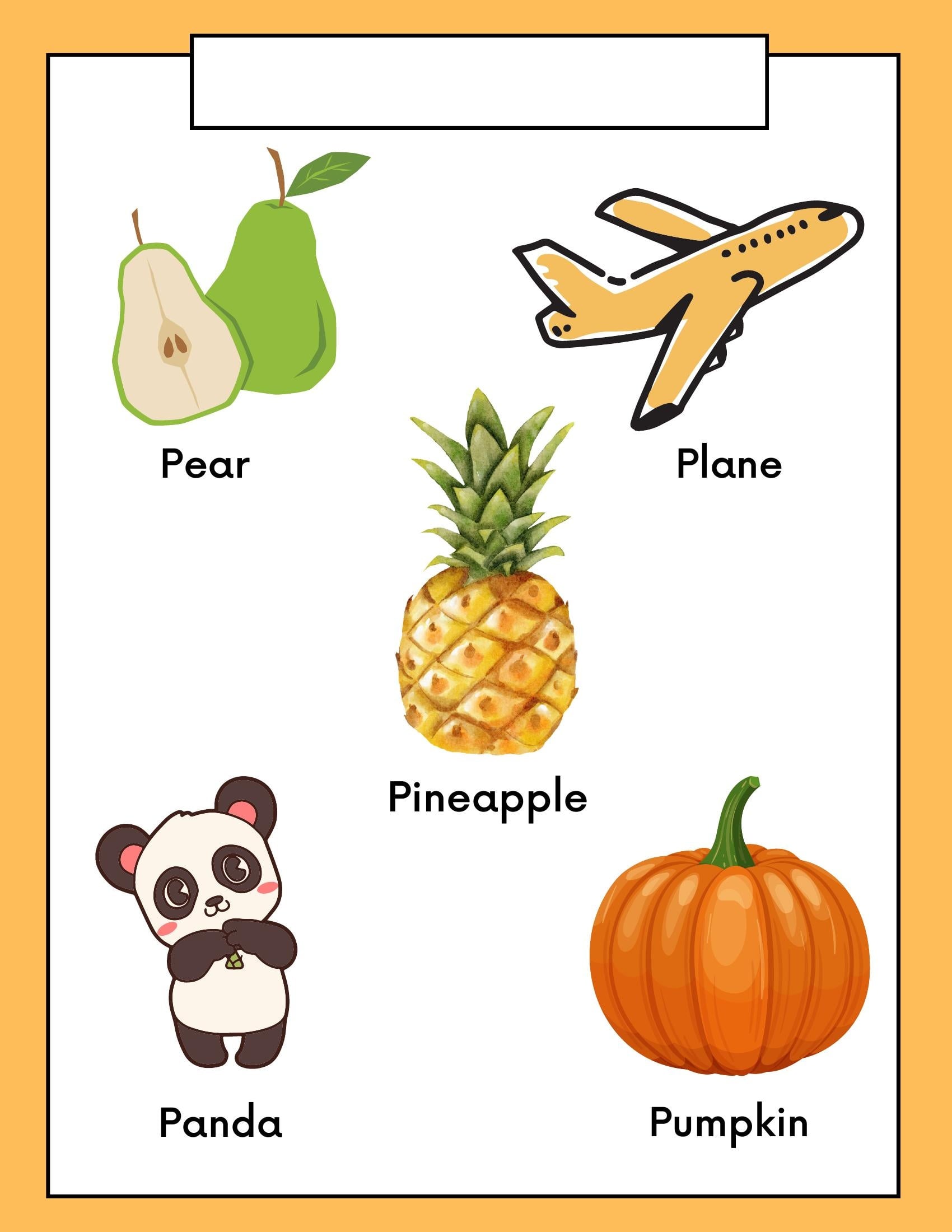
The P worksheet introduces five fun words beginning with P. Children will see a pear, plane, panda, pumpkin, and pineapple.
These pictures cover food, transportation, animals, and seasonal produce. Encourage children to name each picture before they begin cutting. The mix of familiar images can keep alphabet practice interesting.
32. A Second Look at P Words
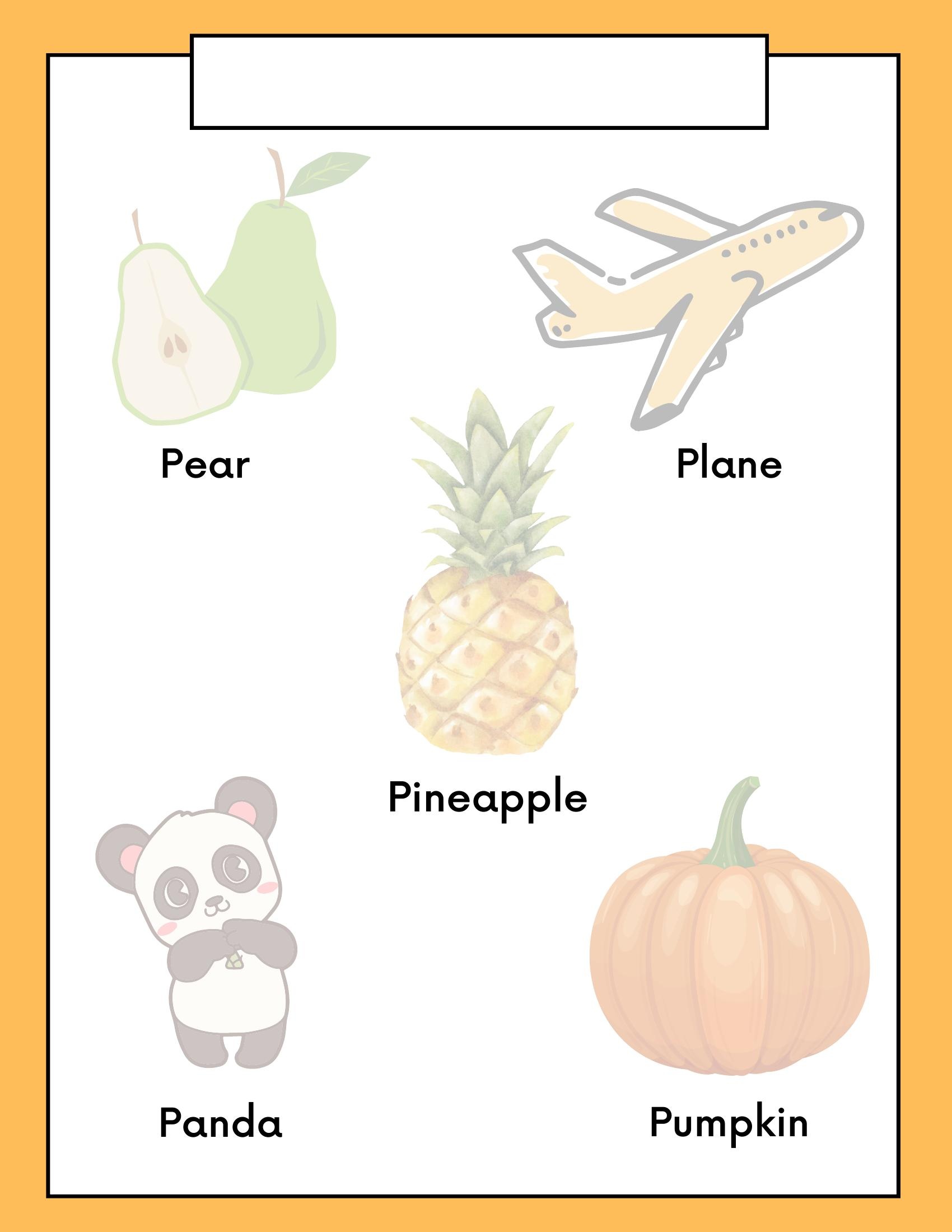
This lighter worksheet repeats pear, plane, panda, pumpkin, and pineapple. Children can use it as a simple review of their P vocabulary.
Let them point to each picture while saying the word slowly. If they miss one, give them a gentle clue instead of the answer. This keeps the practice relaxed while building confidence.
33. Q Is for Quarter, Quilt, Quail, Quetzal, and Queen
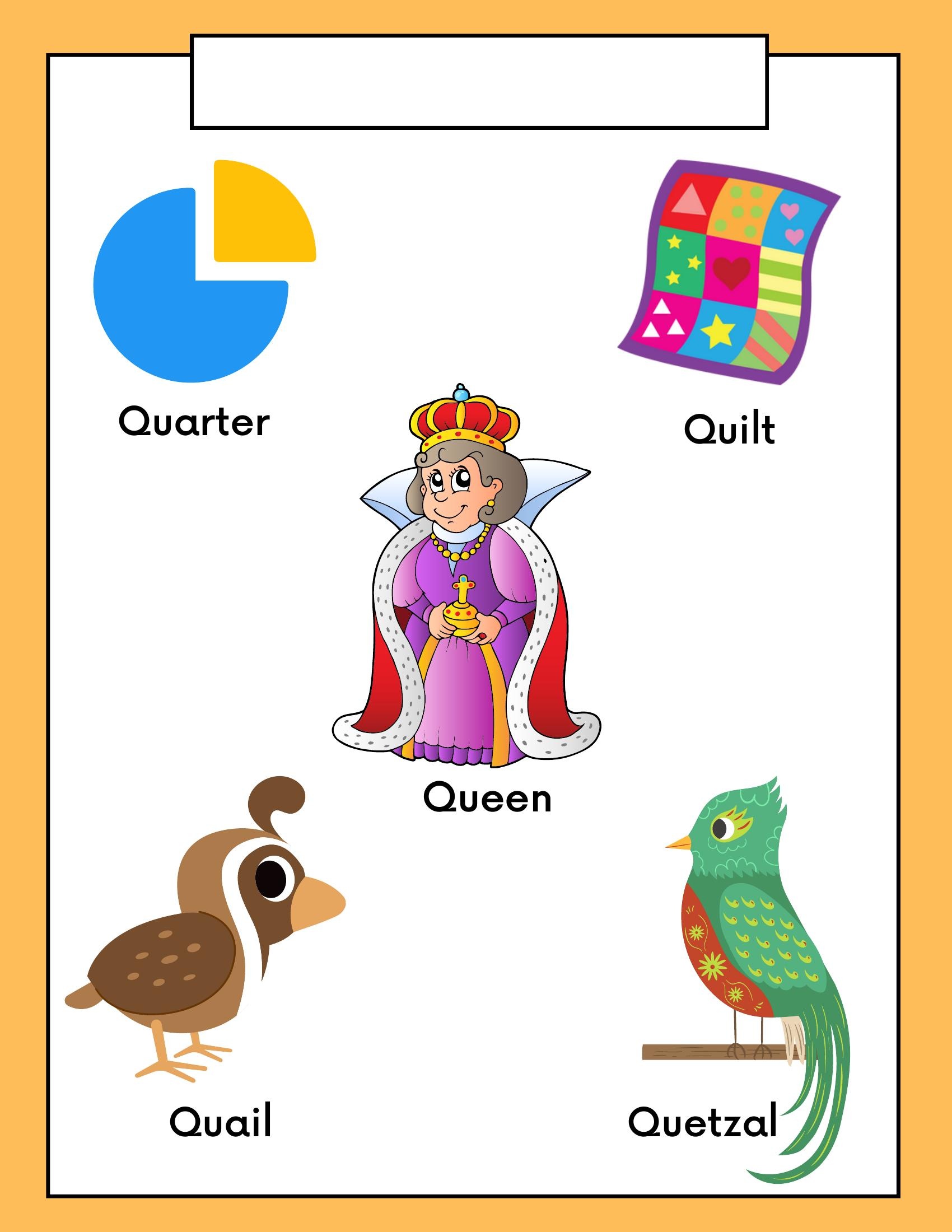
The Q worksheet introduces some less common words for children to discover. It includes quarter, quilt, quail, quetzal, and queen.
A few of these words may be new, so take time to explain unfamiliar pictures.
Children can repeat each word while noticing the beginning Q sound. This page offers a nice chance to combine alphabet learning with vocabulary building.
34. A Second Look at Q Words
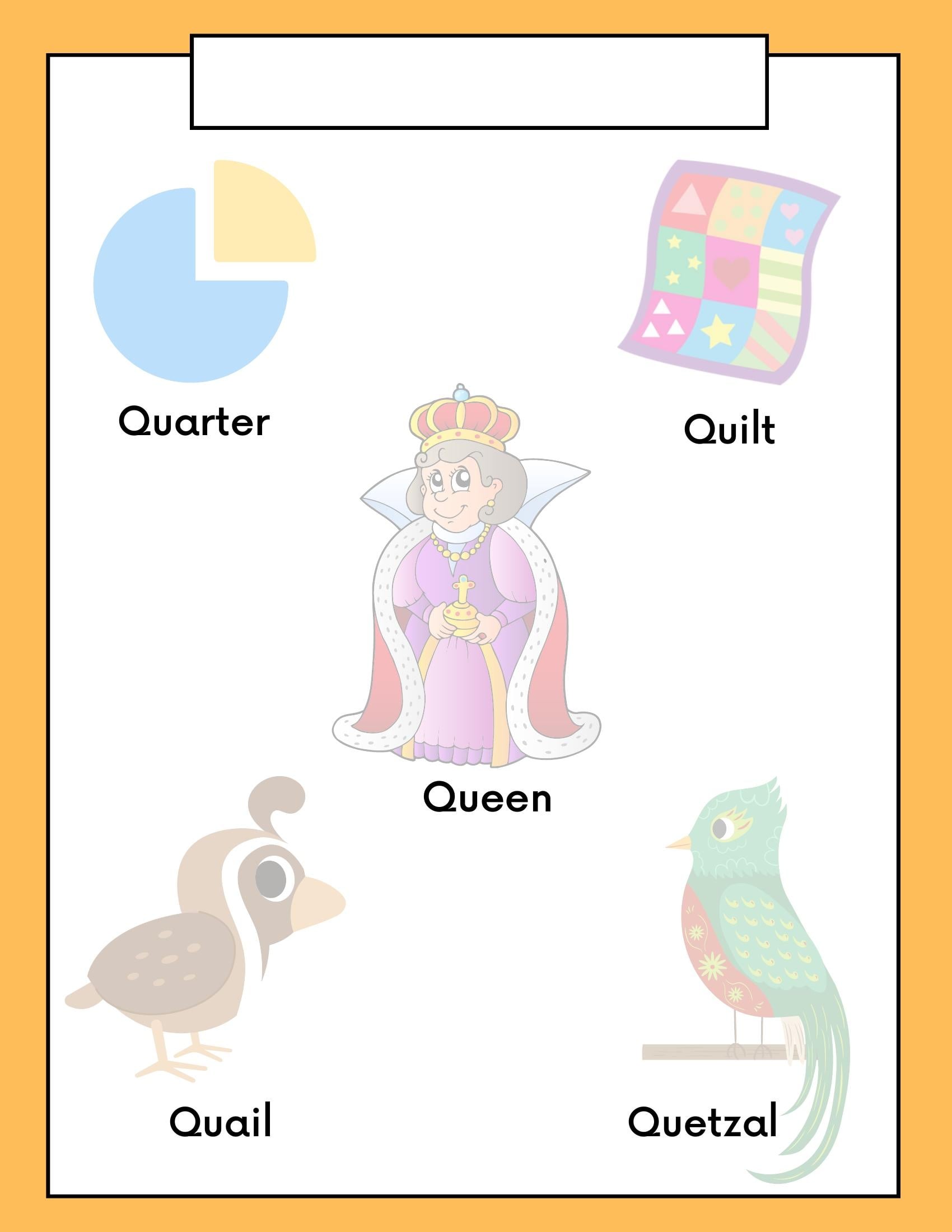
This page repeats the five Q words in a lighter format. Children can review quarter, quilt, quail, quetzal, and queen at a comfortable pace.
Since some words may be unfamiliar, talking about the pictures can be helpful.
Ask your child to remember one word they learned from the page. That small challenge can make the Q activity more memorable.
35. R Is for Rainbow, Rabbit, Robot, Rose, and Rocket
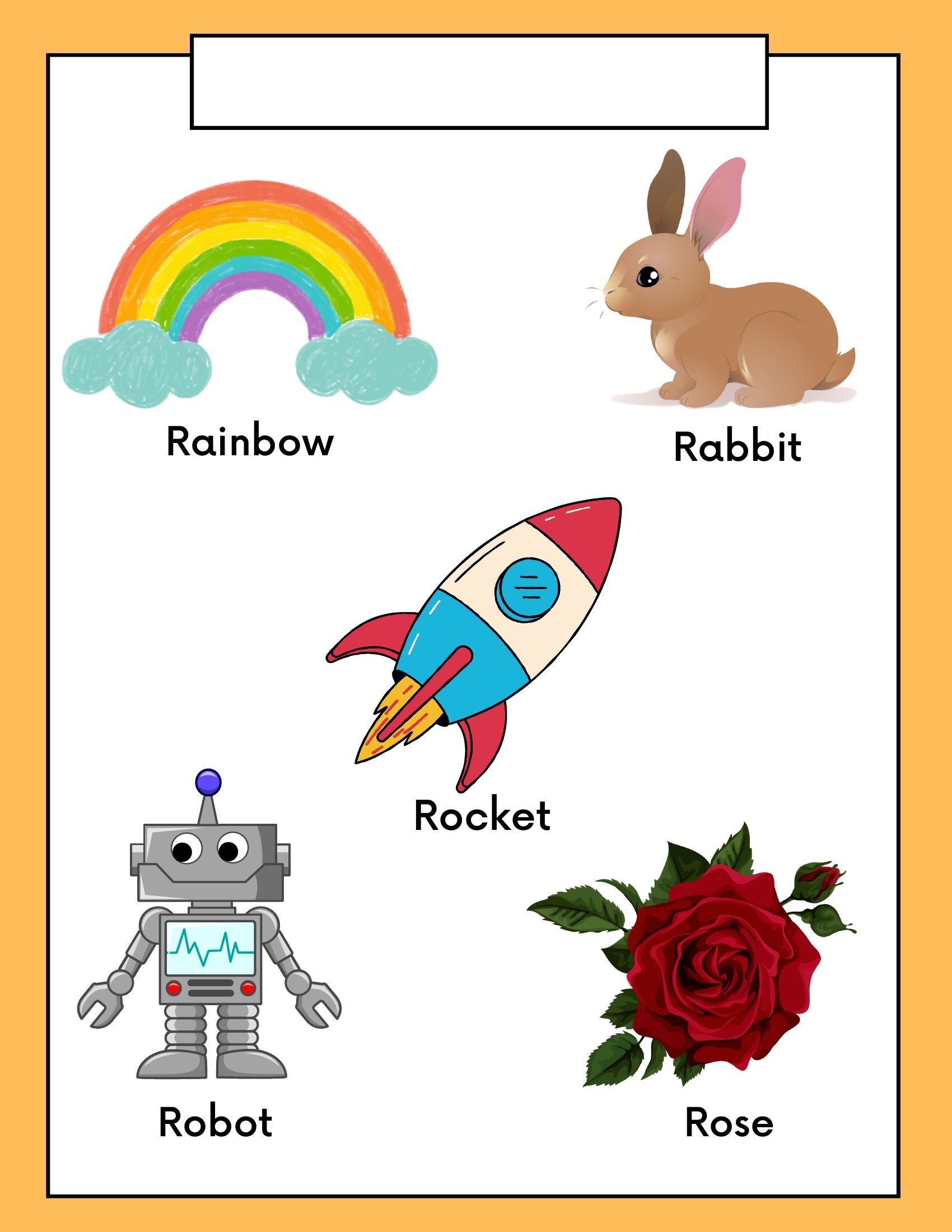
The R worksheet brings together five colorful and playful words. Children can identify a rainbow, rabbit, robot, rose, and rocket.
The pictures give them animals, flowers, imaginary characters, and objects to explore. Have children say each word while listening for the R sound.
Then they can move into the cutting and pasting portion of the activity.
36. A Second Look at R Words
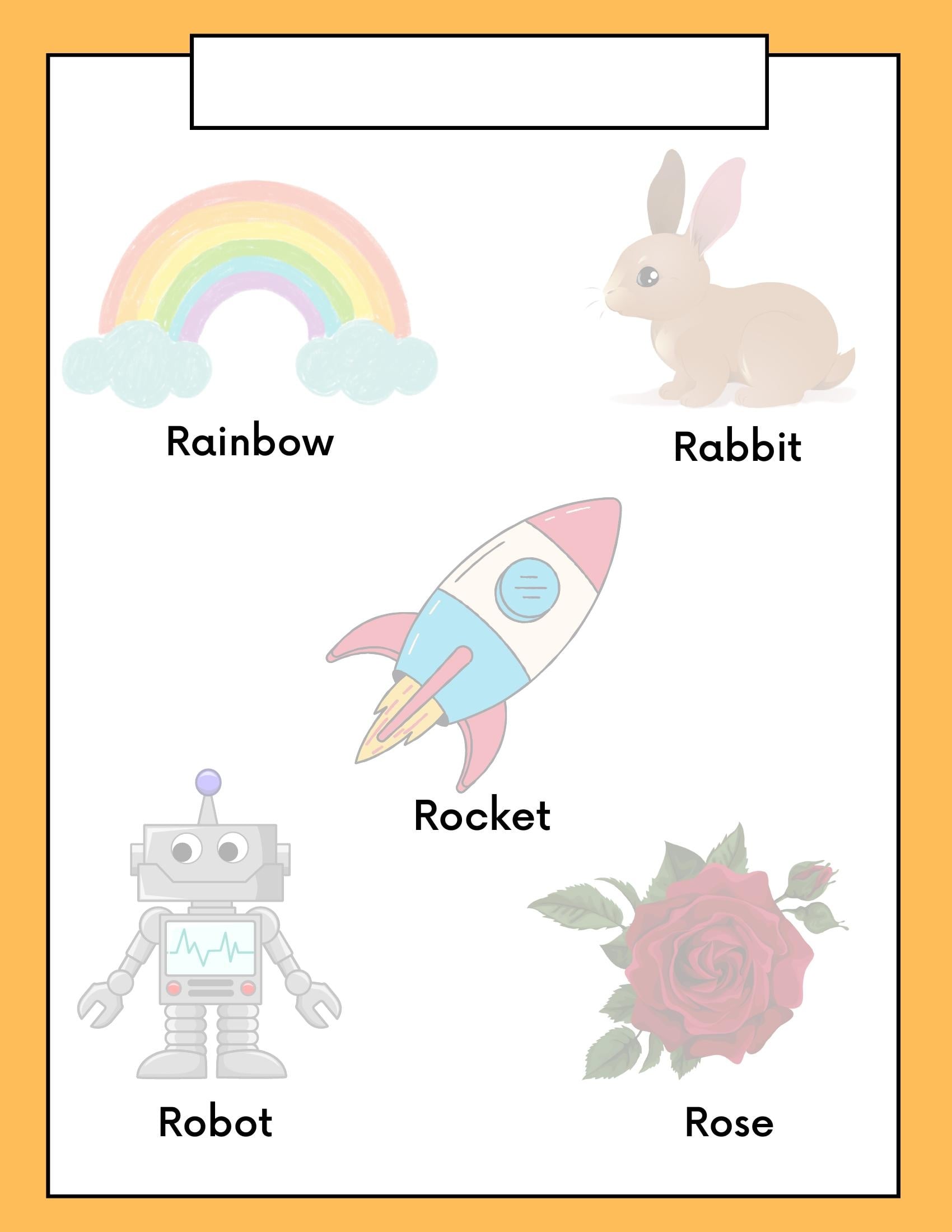
This lighter R worksheet provides another review opportunity. Children can revisit rainbow, rabbit, robot, rose, and rocket.
Repeating these words helps children become more comfortable with the letter R.
Ask them to name the pictures before beginning their worksheet task. With a little practice, they may start recognizing the words without help.
37. S Is for Spider, Snake, Star, Snail, and Sun
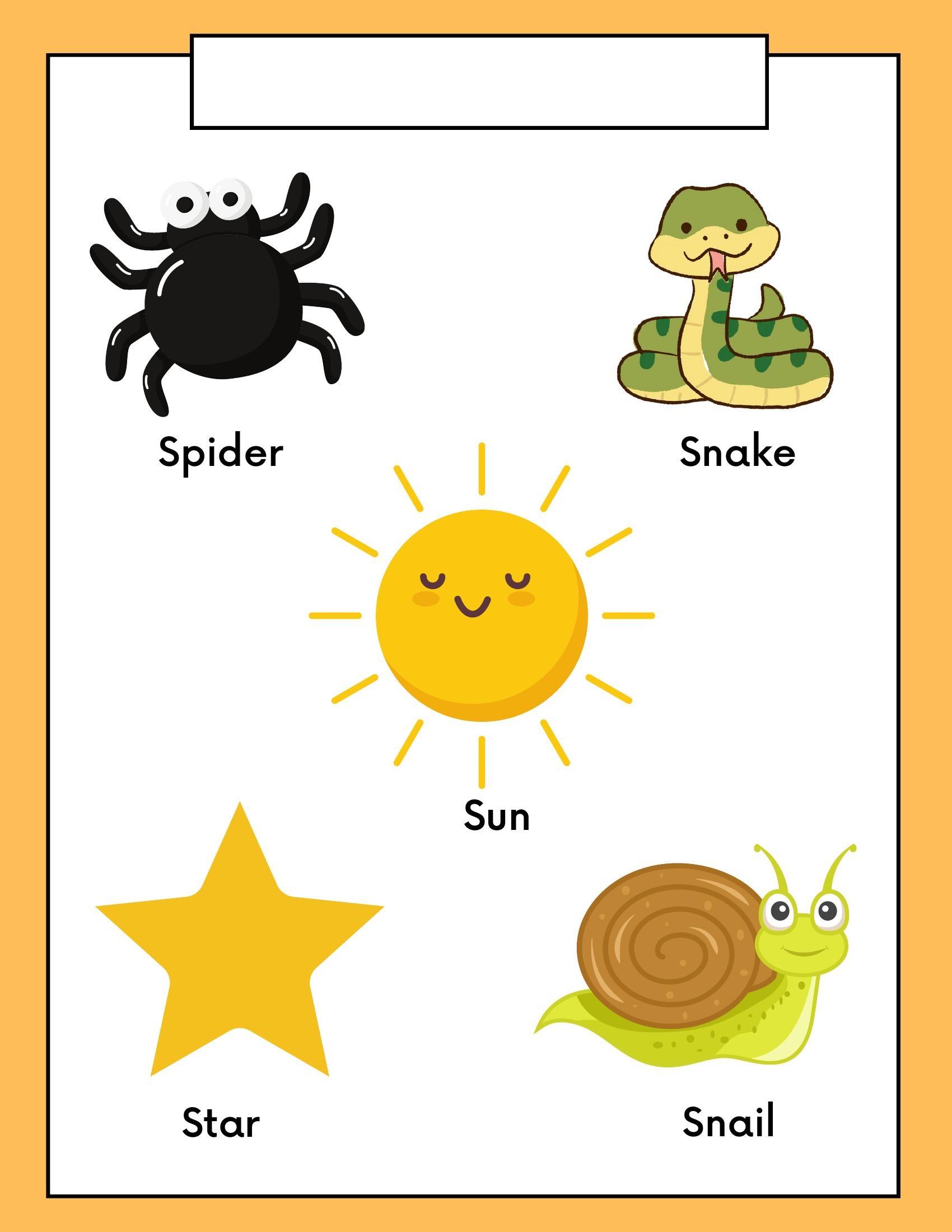
The S worksheet features five recognizable words beginning with S. Children can identify a spider, snake, star, snail, and sun.
The collection gives them several animals alongside a familiar object in the sky. Encourage children to say each word and listen carefully to the first sound. The colorful images can make this alphabet practice especially inviting.
38. A Second Look at S Words
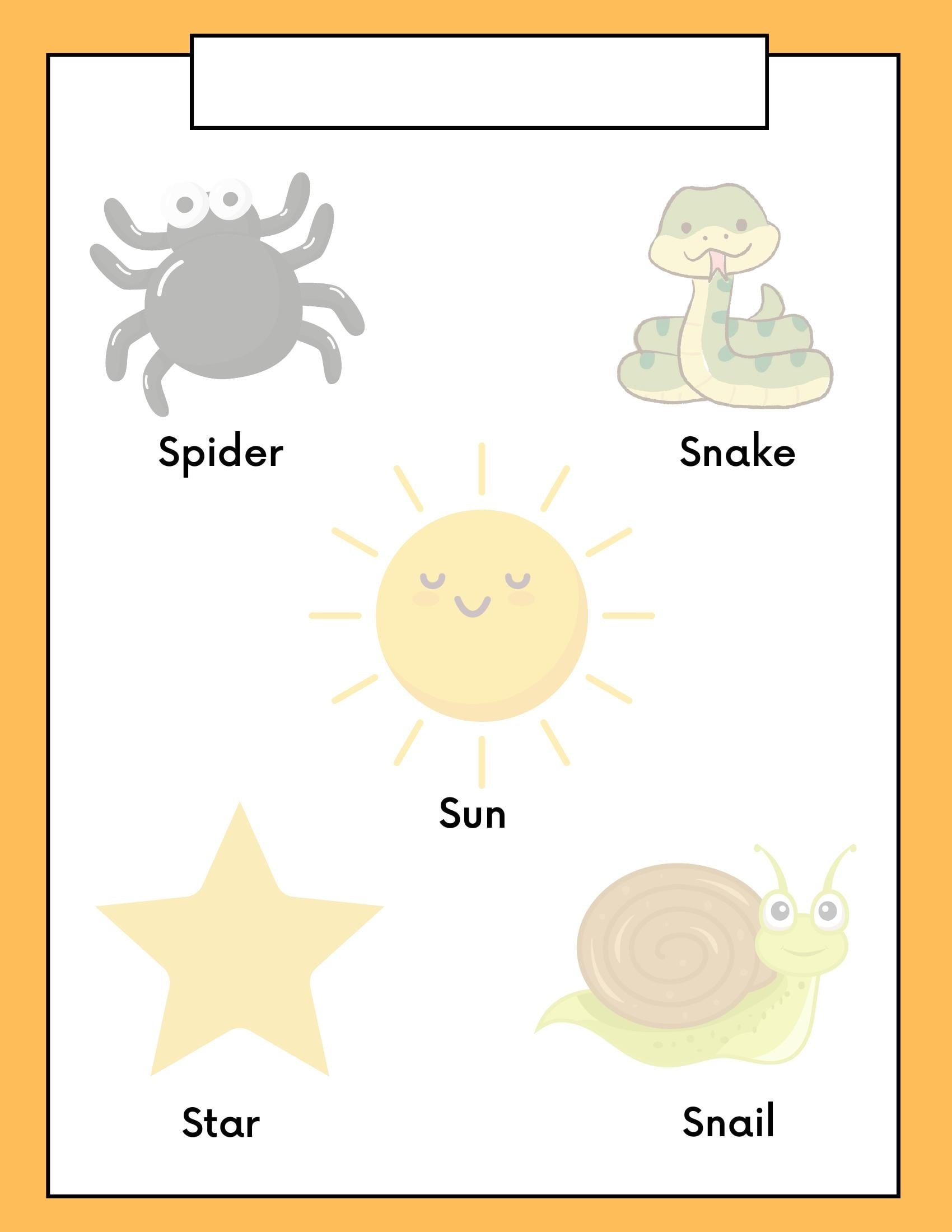
This page repeats the S vocabulary using lighter pictures. Children can practice spider, snake, star, snail, and sun again.
The repeated format gives them extra time to remember each word. Ask your child to point out their favorite S picture first. Then work through the remaining pictures together before cutting and pasting.
39. T Is for Truck, Table, Tree, Teeth, and Tiger
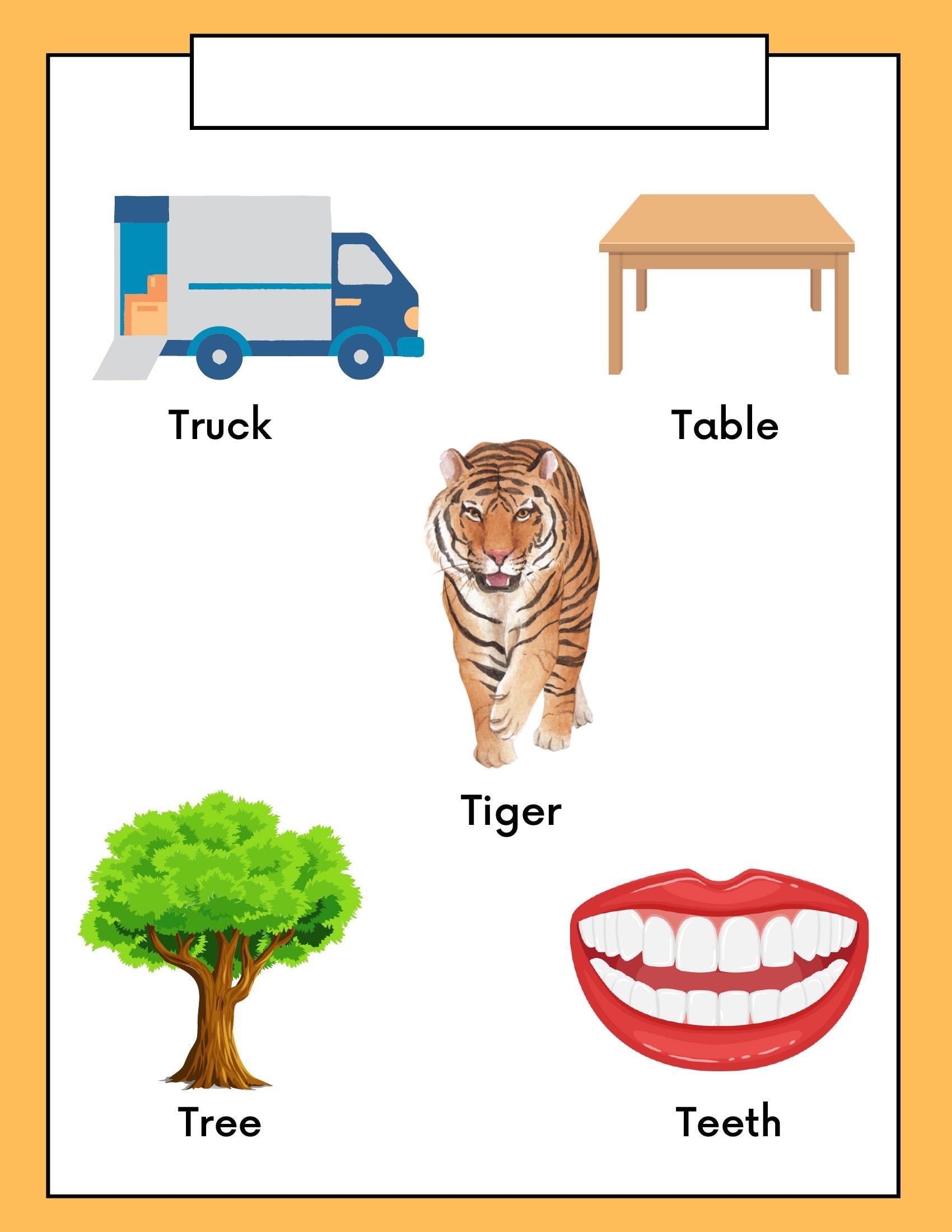
The T worksheet introduces five words beginning with T. Children will find a truck, table, tree, teeth, and tiger.
These choices include familiar objects, nature, body parts, and animals. Ask your child to name each picture and repeat the T sound. That quick practice can prepare them for the hands-on activity that follows.
40. A Second Look at T Words
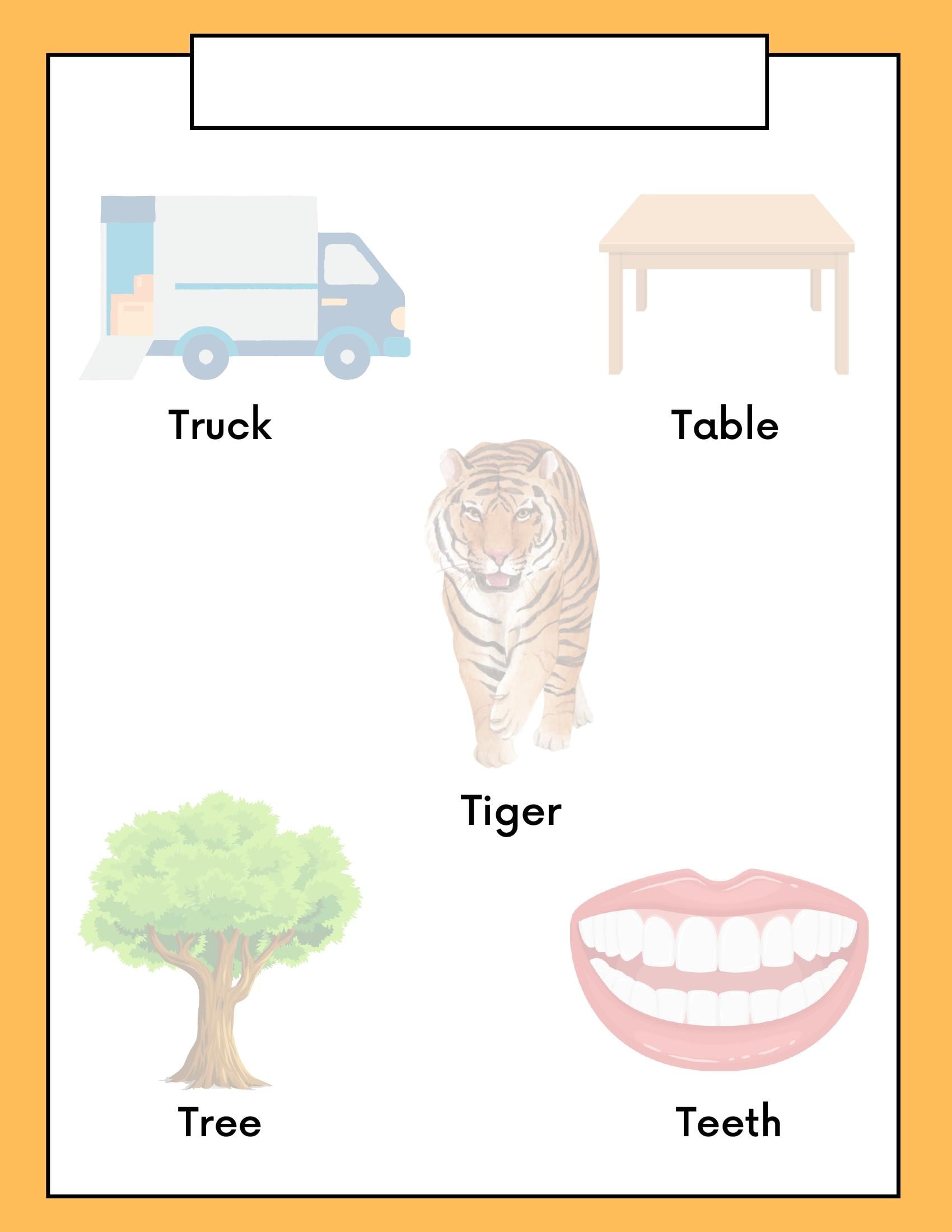
The lighter T worksheet repeats truck, table, tree, teeth, and tiger. Children can use this page to strengthen their recognition of the letter T vocabulary.
Let them point to each picture and say the word independently. Offer help only when they need it. This makes the review feel like a small success before moving to the next letter.
41. U Is for Uniform, Umpire, Unicycle, Umbrella, and Unicorn
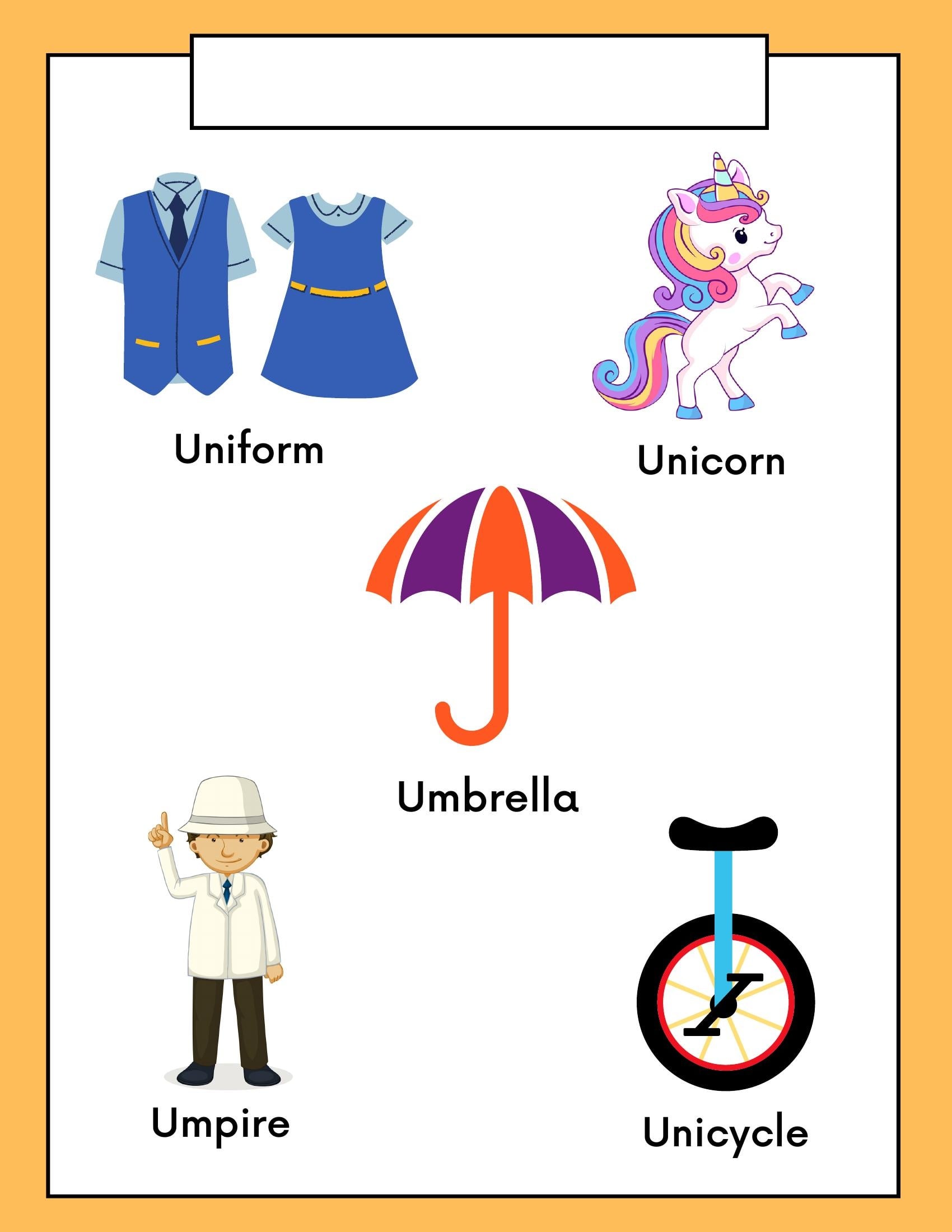
The U worksheet introduces five words beginning with U. Children can identify a uniform, umpire, unicycle, umbrella, and unicorn.
The mix includes people, clothing, transportation, and a playful fantasy character. Ask your child to name each picture while listening for the U sound. This makes the activity useful for vocabulary practice too.
42. A Second Look at U Words
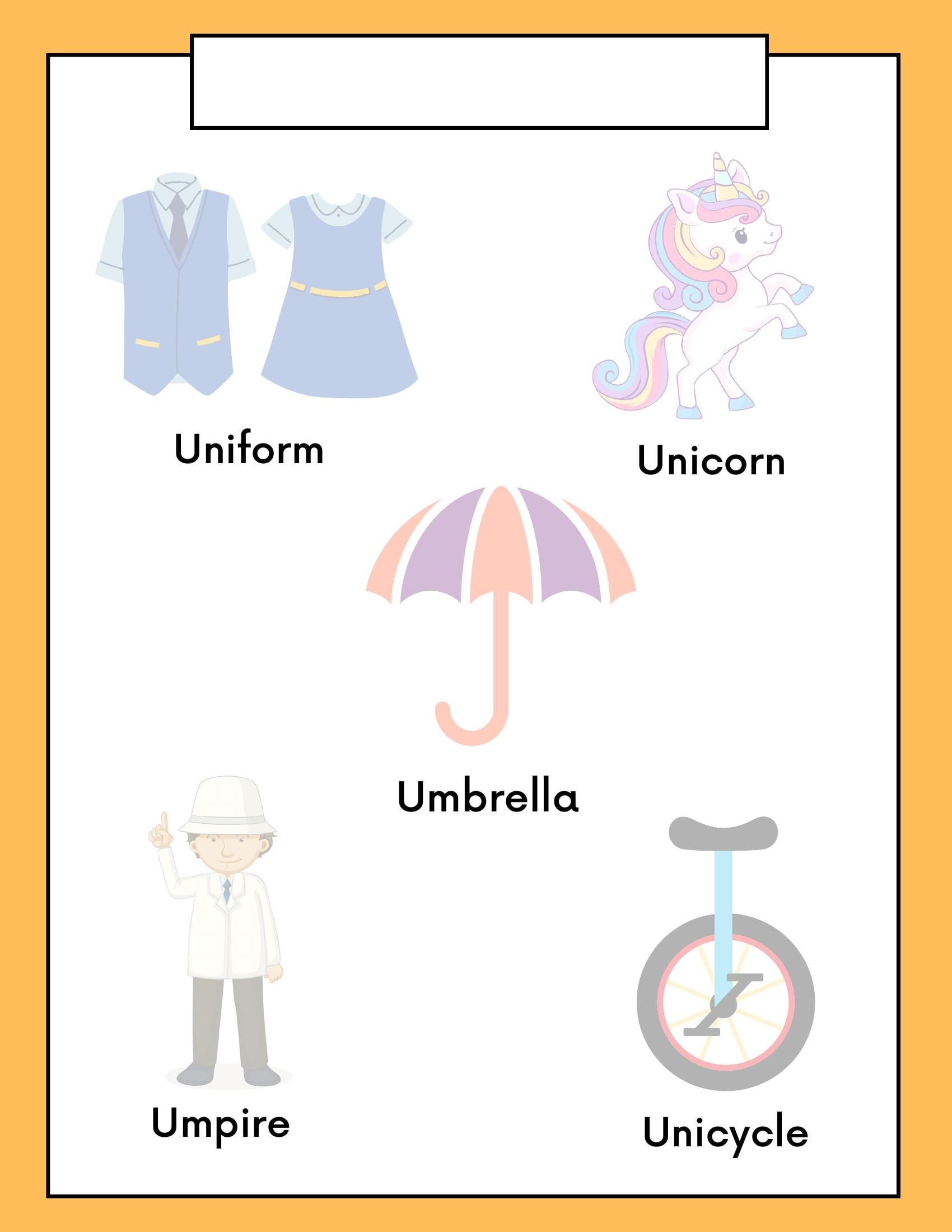
This page repeats the U vocabulary with the same five picture choices. Children can review uniform, umpire, unicycle, umbrella, and unicorn again.
Repeating the words gives them more time to recognize the letter and its sound. Let your child point to each picture before cutting. A short review can make the next activity feel easier.
43. V Is for Vegetables, Van, Vulture, Violin, and Vase
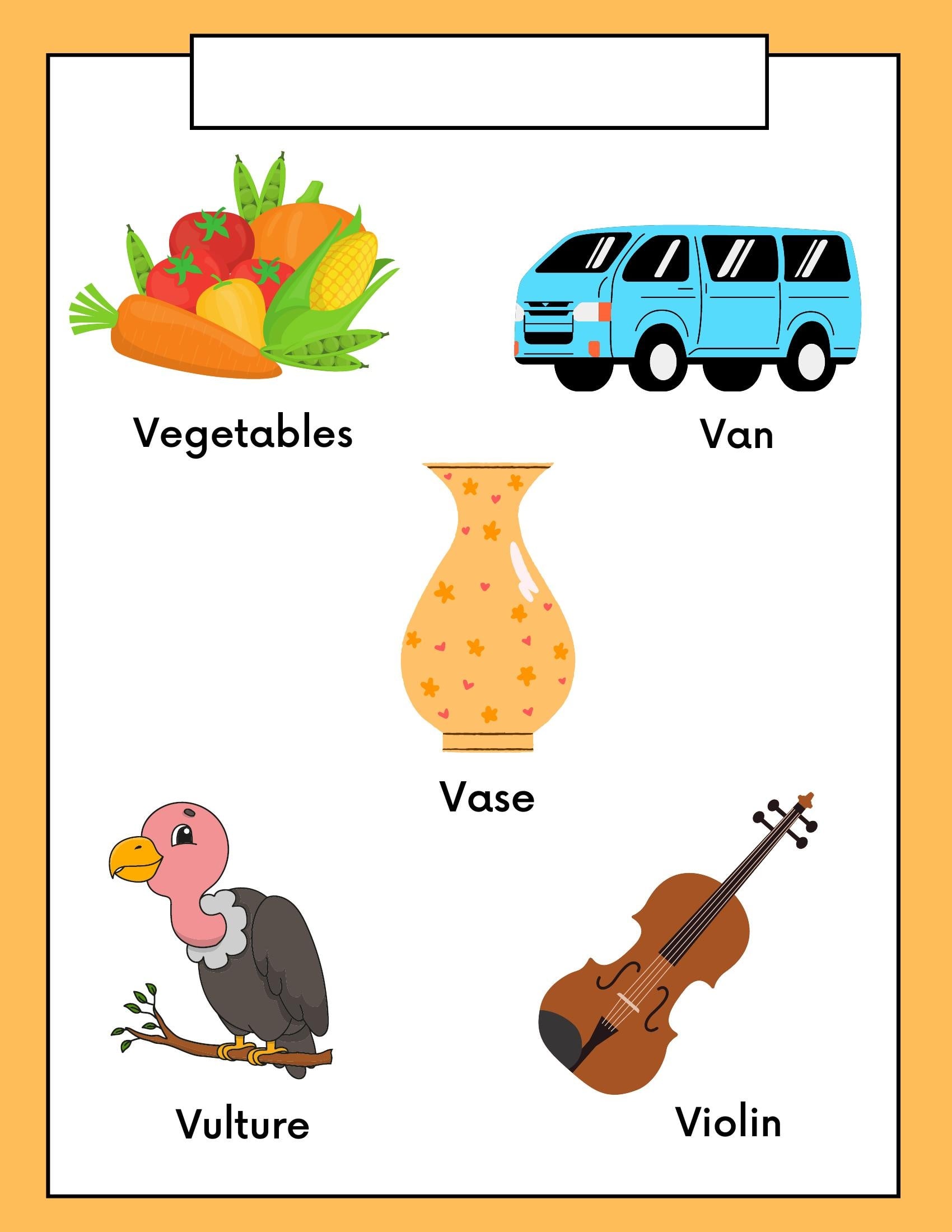
The V worksheet brings together five different words beginning with V. Children will see vegetables, a van, vulture, violin, and vase.
These pictures cover food, transportation, animals, music, and household items. Encourage your child to say each word slowly before starting. This helps them hear the beginning V sound clearly.
44. A Second Look at V Words
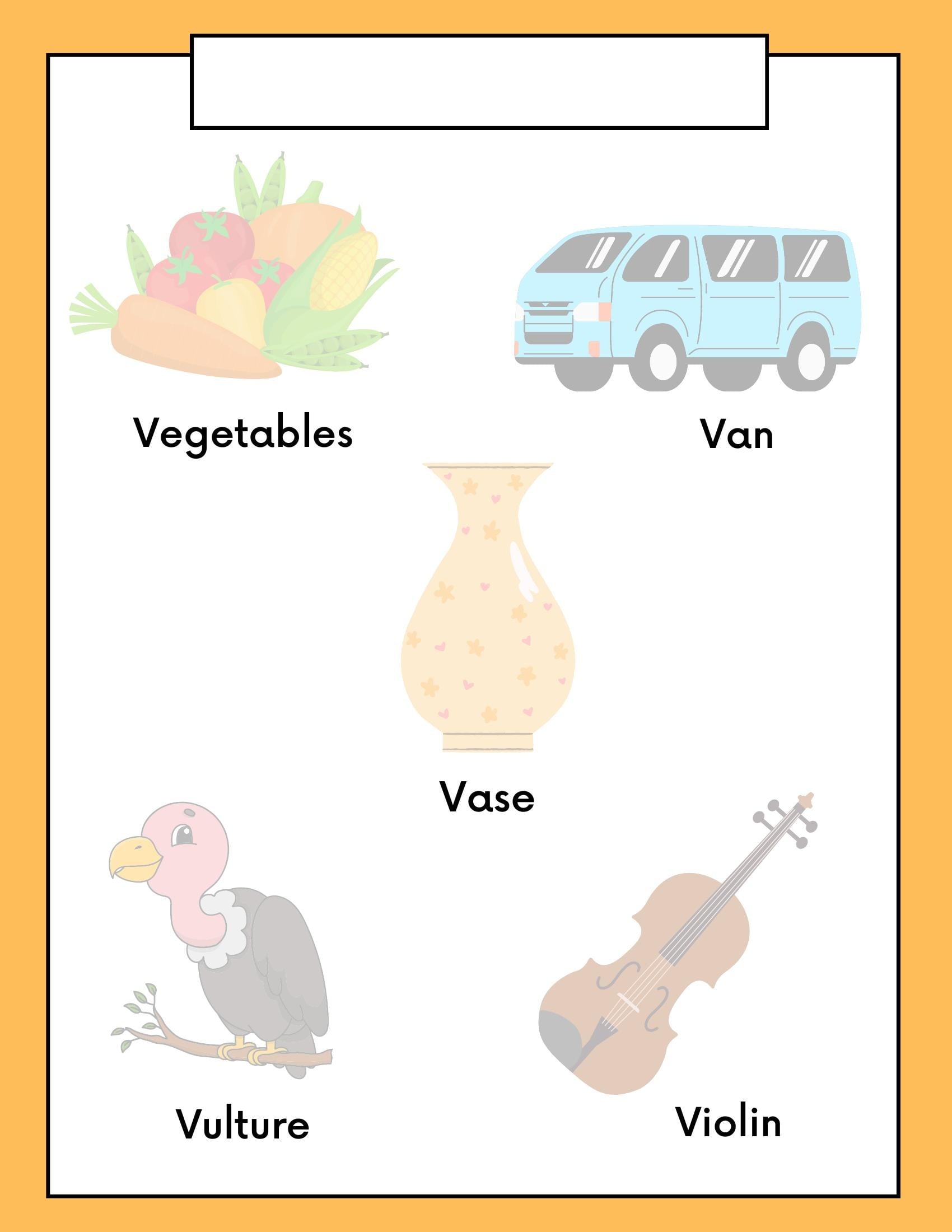
The second V worksheet gives children another opportunity to review the same vocabulary. They can revisit vegetables, van, vulture, violin, and vase.
Some children may need repeated practice before the words become familiar. Ask them to identify each picture without rushing. Then, they can continue with the cut-and-paste activity.
45. W Is for Watermelon, Window, Worm, Wheel, and Watch
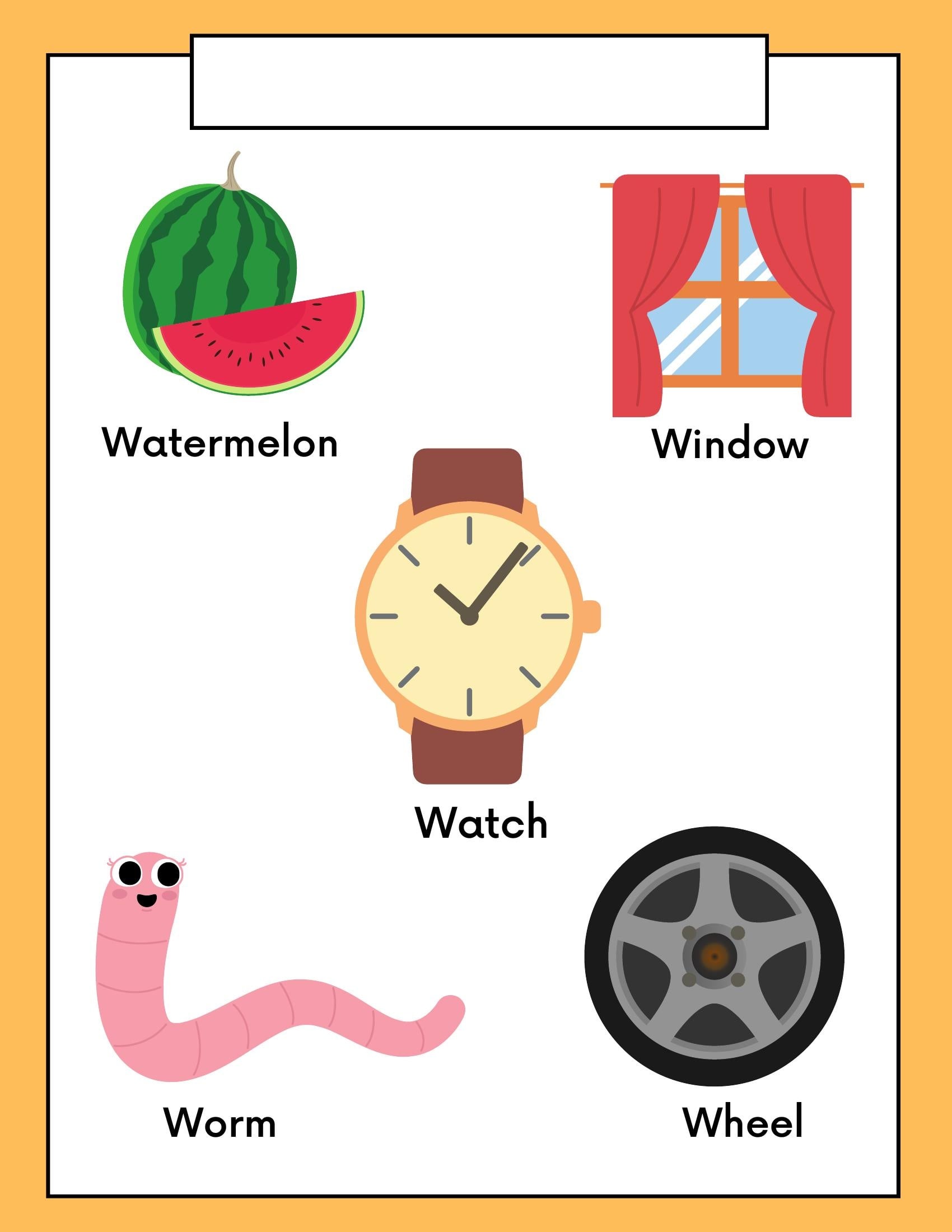
The W worksheet features five recognizable words beginning with W. Children can identify watermelon, window, worm, wheel, and watch.
The pictures include food, animals, household features, and everyday objects. Let children name the pictures before they begin cutting. This simple step reinforces both vocabulary and letter sounds.
46. A Second Look at W Words
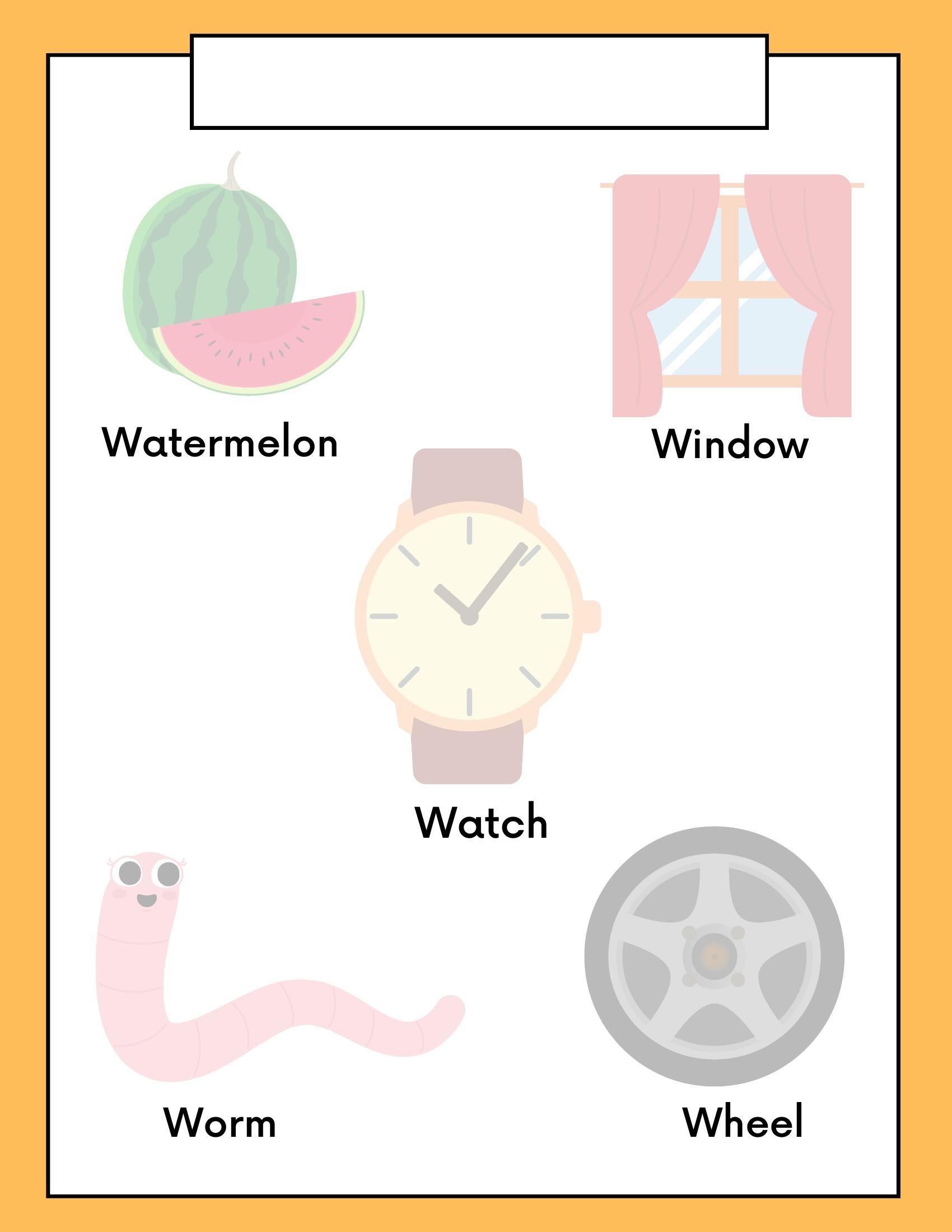
This lighter page repeats the five W words for extra practice. Children can review watermelon, window, worm, wheel, and watch again.
Repetition can be especially helpful when children are still learning beginning sounds. Ask your child to find each picture and name it aloud. After that, the hands-on portion can begin.
47. X Is for X-ray, X-ray Fish, Xerus, Ximenia, and Xylophone
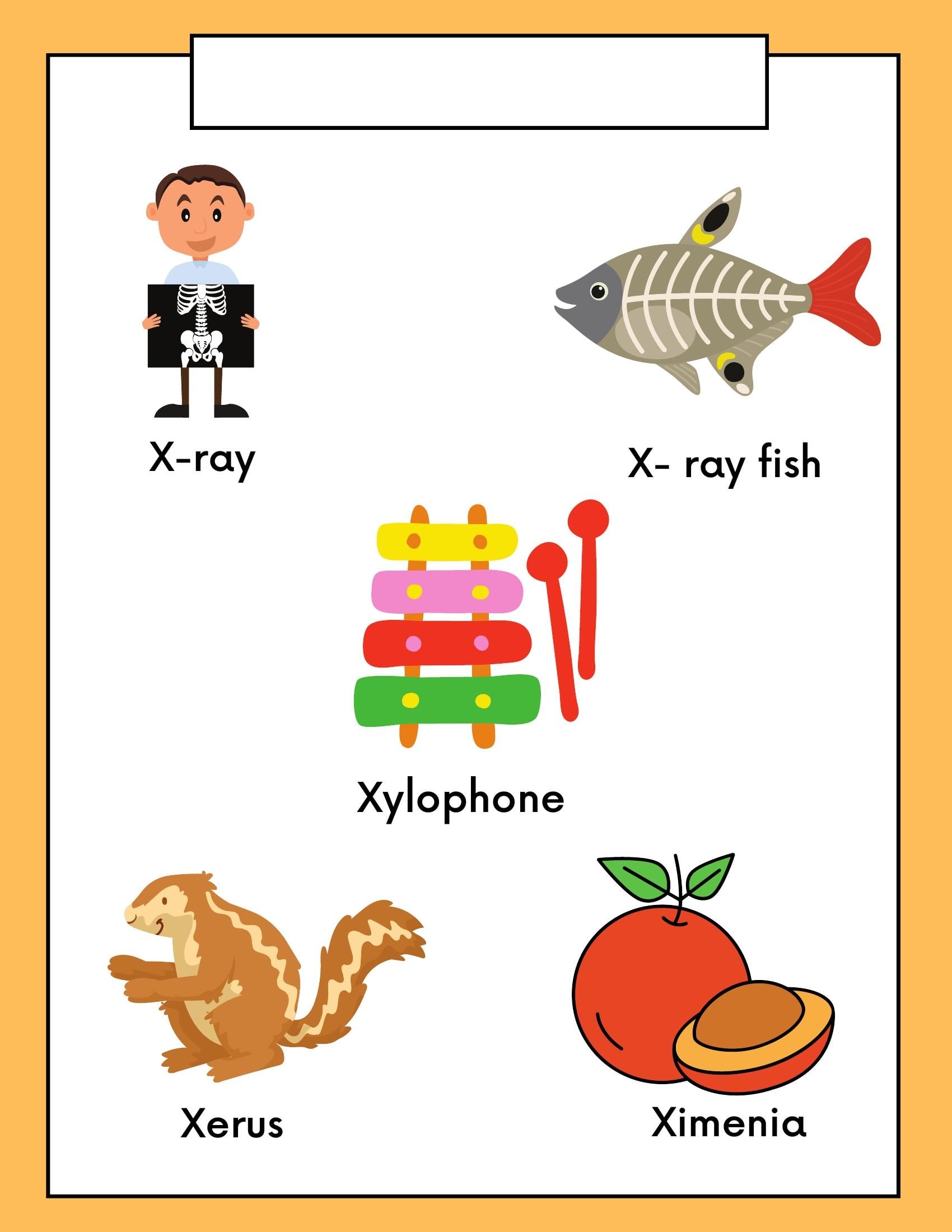
The X worksheet introduces some less familiar vocabulary. Children can explore X-ray, X-ray fish, xerus, ximenia, and xylophone.
Several of these words may need a simple explanation before children begin. Take a moment to talk about each picture and repeat its name together.
This makes the page a useful opportunity for discovering unusual X words.
48. A Second Look at X Words
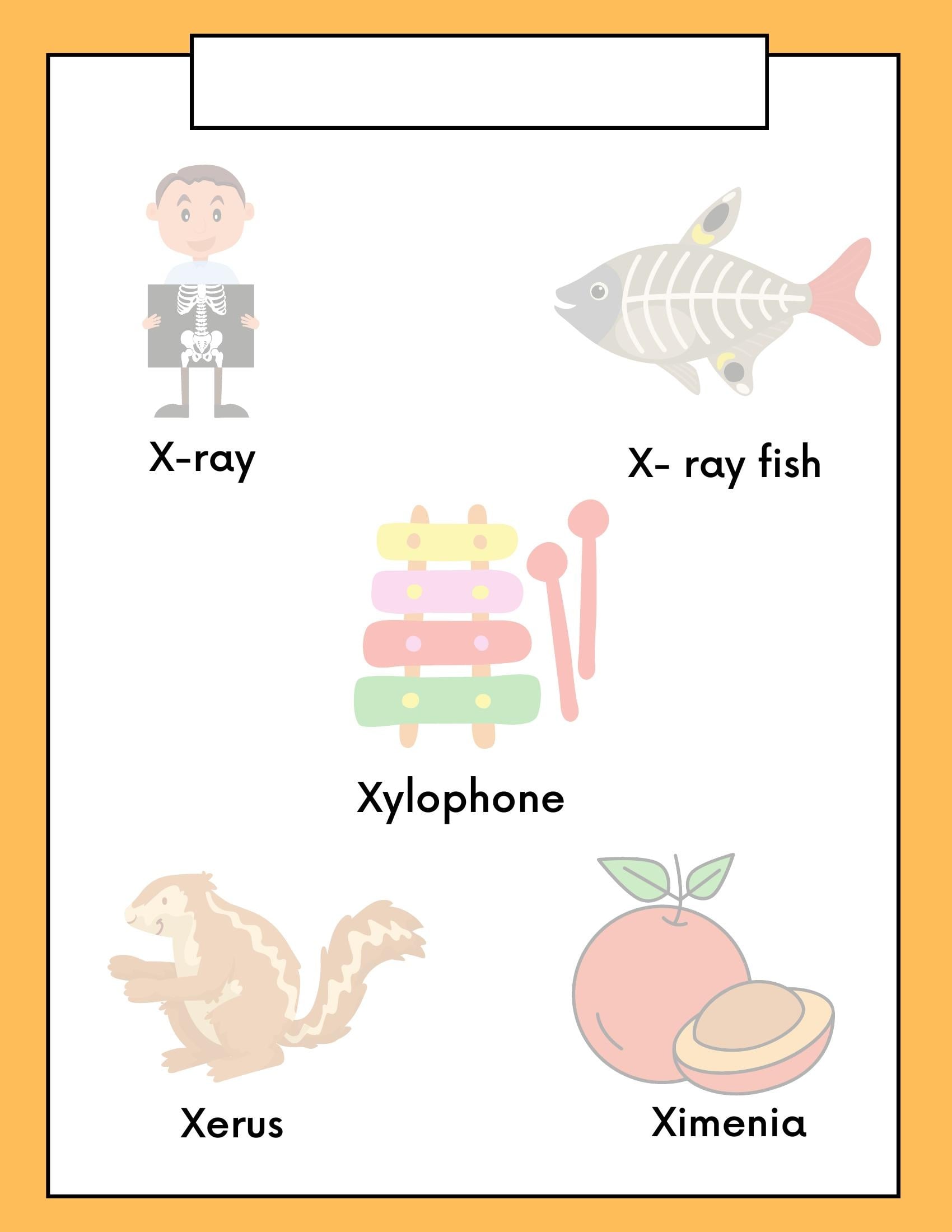
This page repeats the X vocabulary in the lighter format. Children can revisit X-ray, X-ray fish, xerus, ximenia, and xylophone.
Since some words may be new, repetition can help them stick. Encourage your child to point to each picture while saying its name. Keep the practice playful instead of expecting perfect recall.
49. Y Is for Yoyo, Yacht, Yak, Yarn, and Yogurt
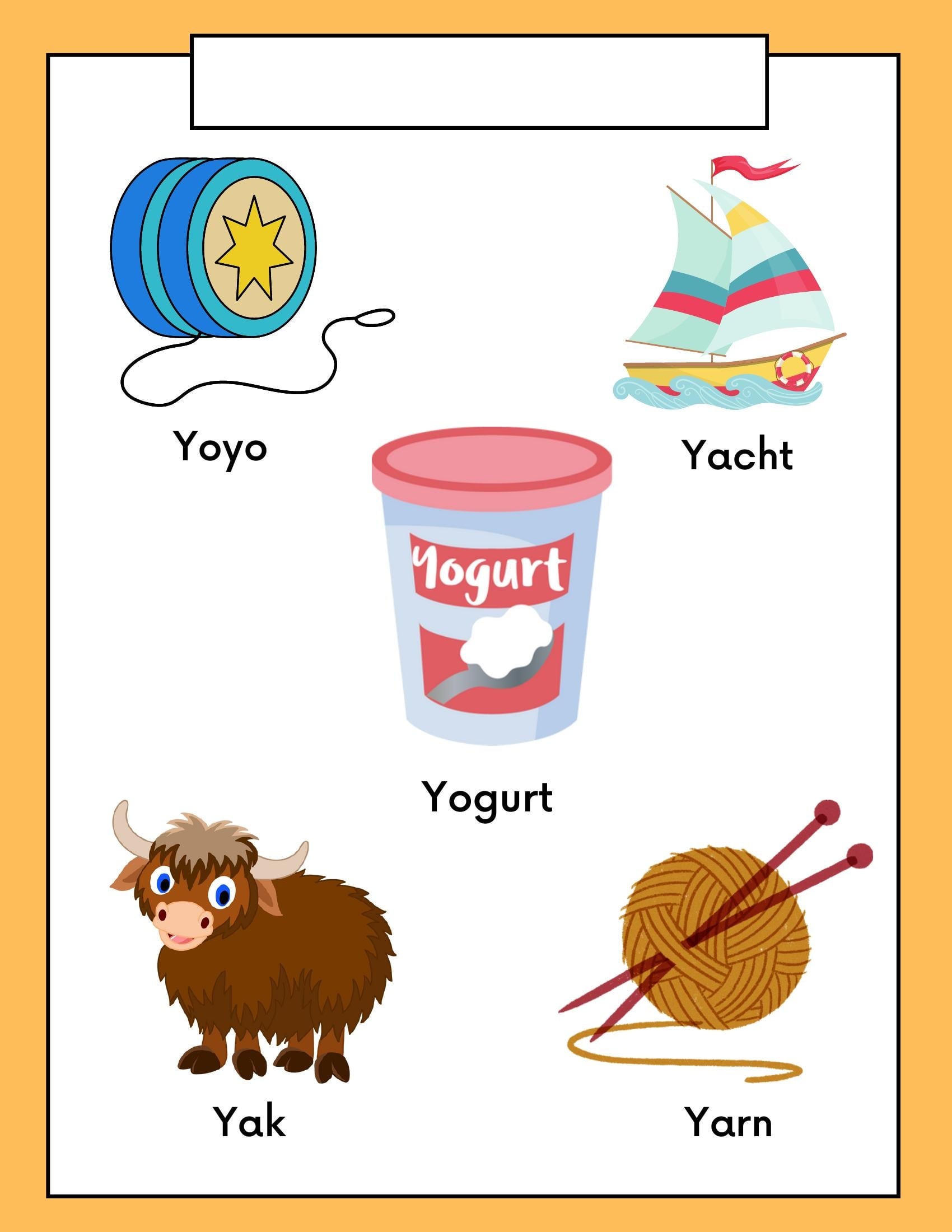
The Y worksheet introduces five words beginning with Y. Children will find a yoyo, yacht, yak, yarn, and yogurt.
These choices include an activity, transportation, animals, craft material, and food.
Ask children to name each picture before starting the cutting task. The variety keeps the vocabulary practice interesting and easy to discuss.
50. A Second Look at Y Words
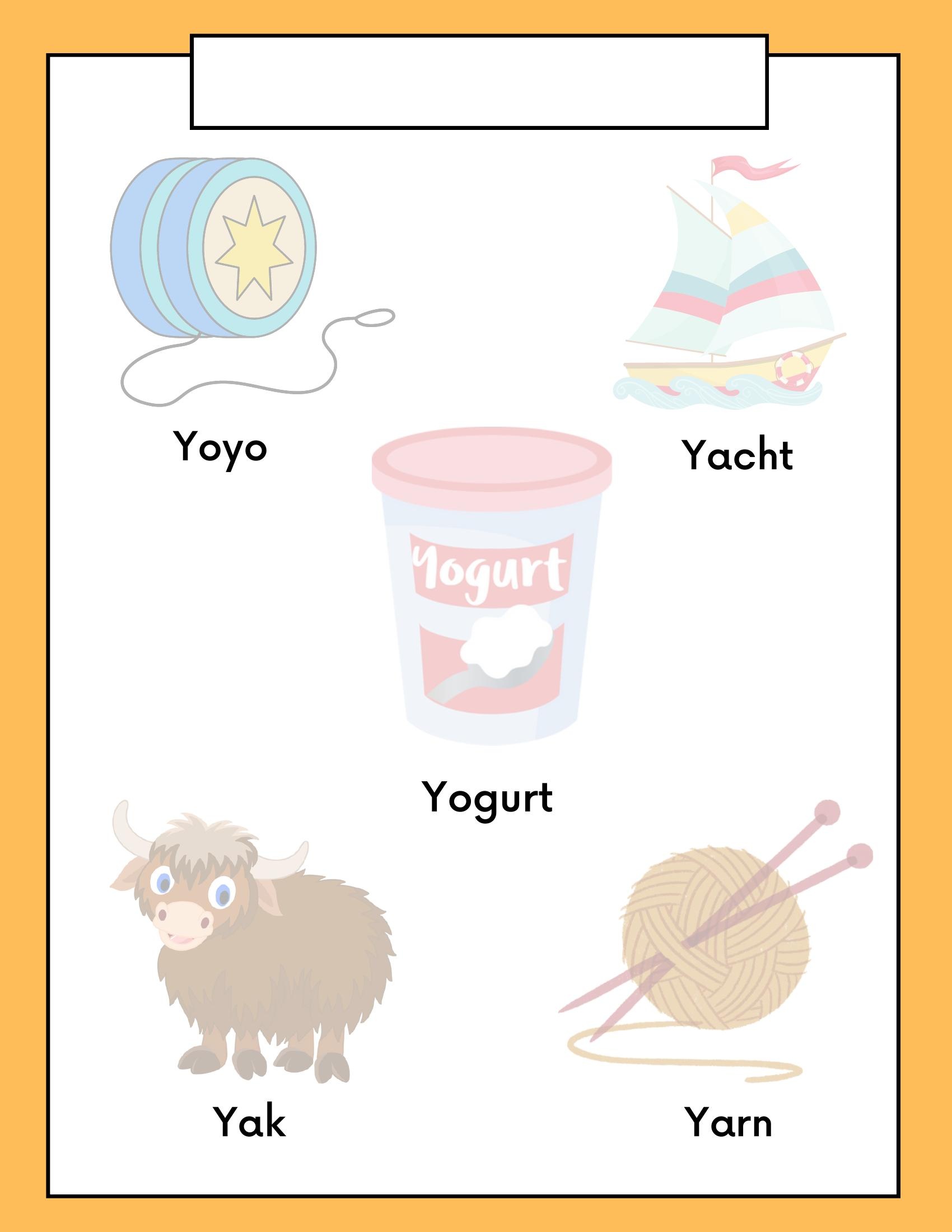
The next Y worksheet repeats yoyo, yacht, yak, yarn, and yogurt. Children can use the page to reinforce the words they just learned.
Let them identify the pictures at their own pace. You can also ask which Y word they already knew. That quick conversation can make the review more engaging.
51. Z Is for Zebra, Zero, Zoo, Zigzag, and Zip
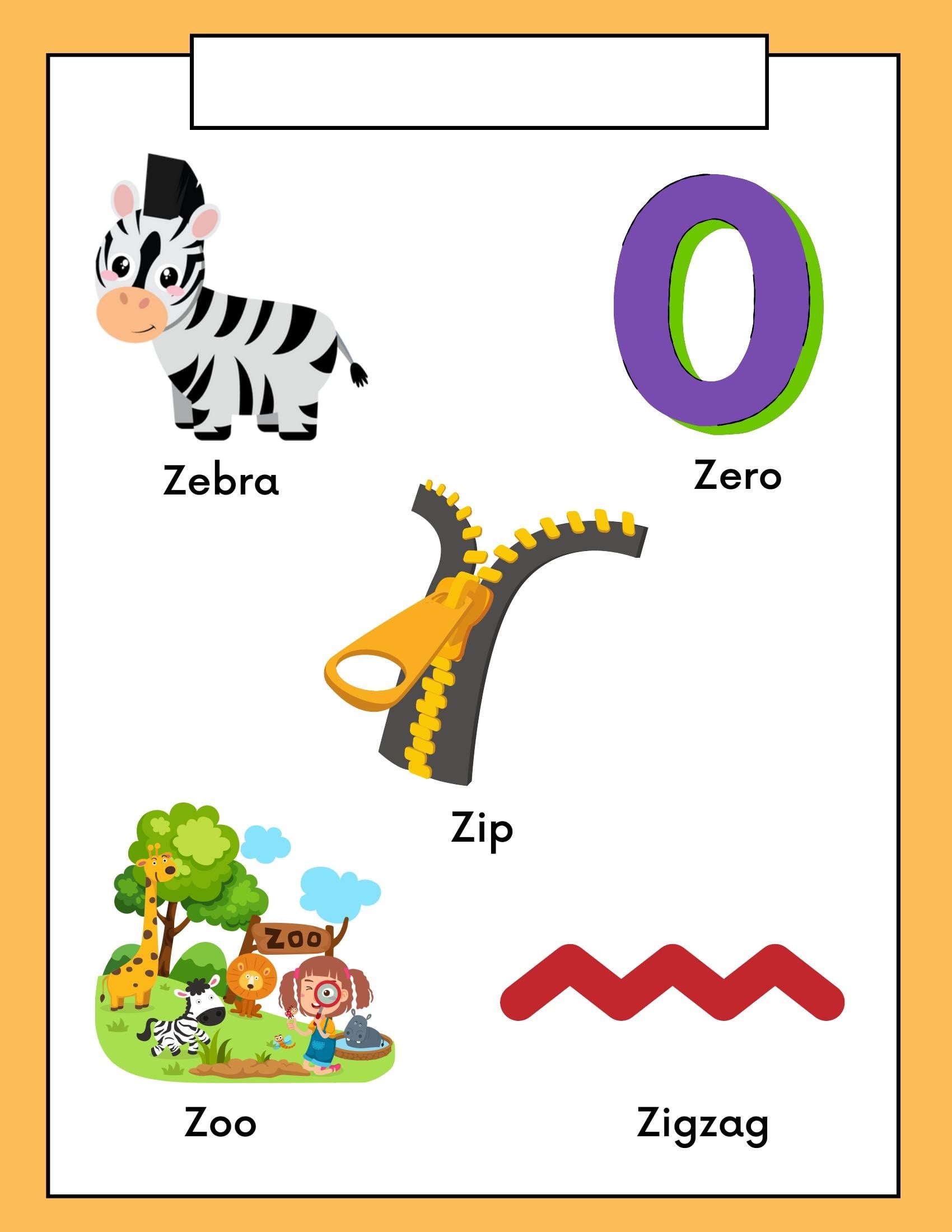
The Z worksheet finishes the main alphabet word section with five Z words. Children can identify a zebra, zero, zoo, zigzag, and zip.
The pictures provide a mixture of animals, numbers, places, patterns, and everyday objects.
Encourage your child to repeat each word while focusing on its first sound. This gives them a fun way to finish the letter-word activities.
52. A Second Look at Z Words
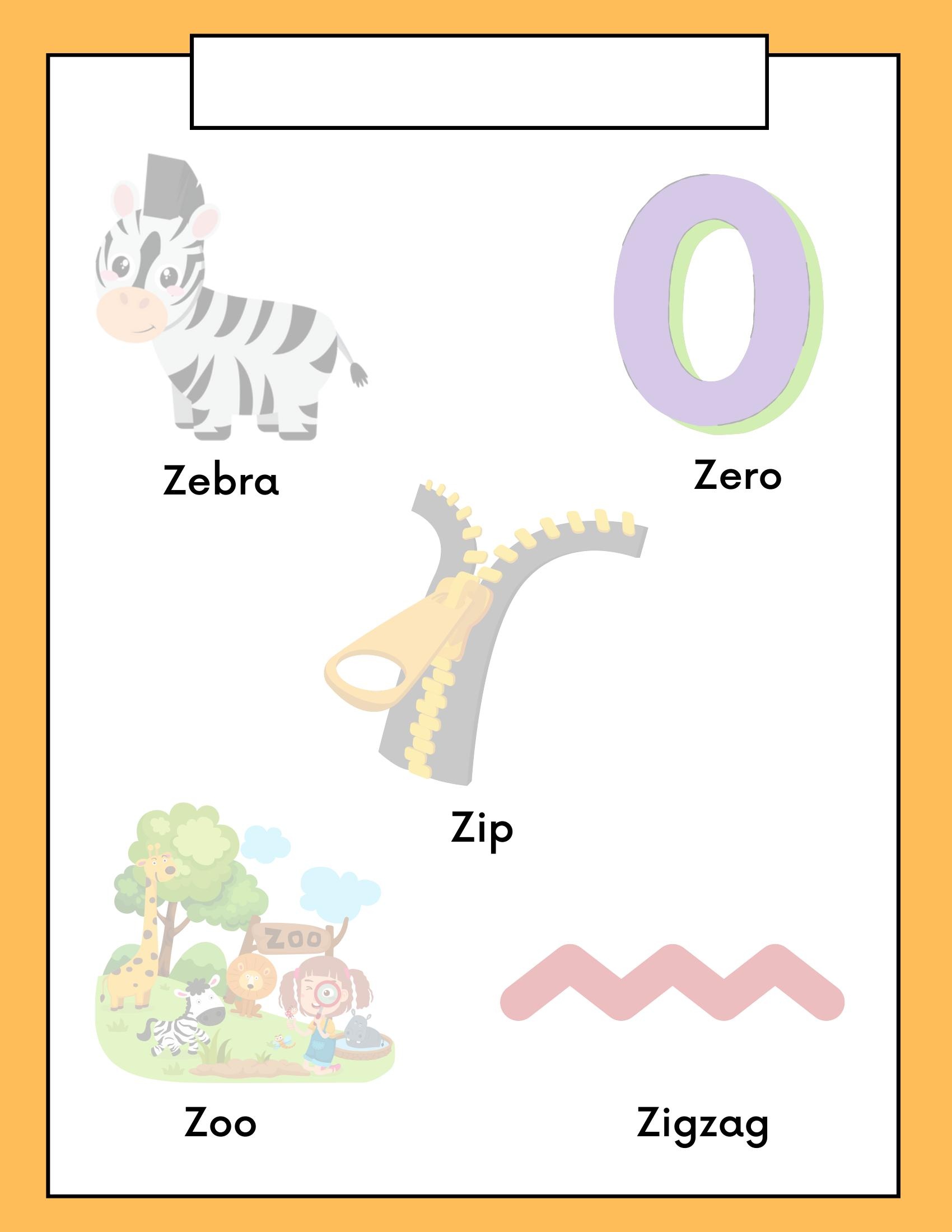
This lighter worksheet gives children another chance to practice the Z vocabulary. They can review zebra, zero, zoo, zigzag, and zip once again.
Repeating these words can help children feel more comfortable with the final letter.
Ask them to point out each picture before moving forward. A quick review also prepares them for the activities that follow.
53. Matching Uppercase Letters A Through I
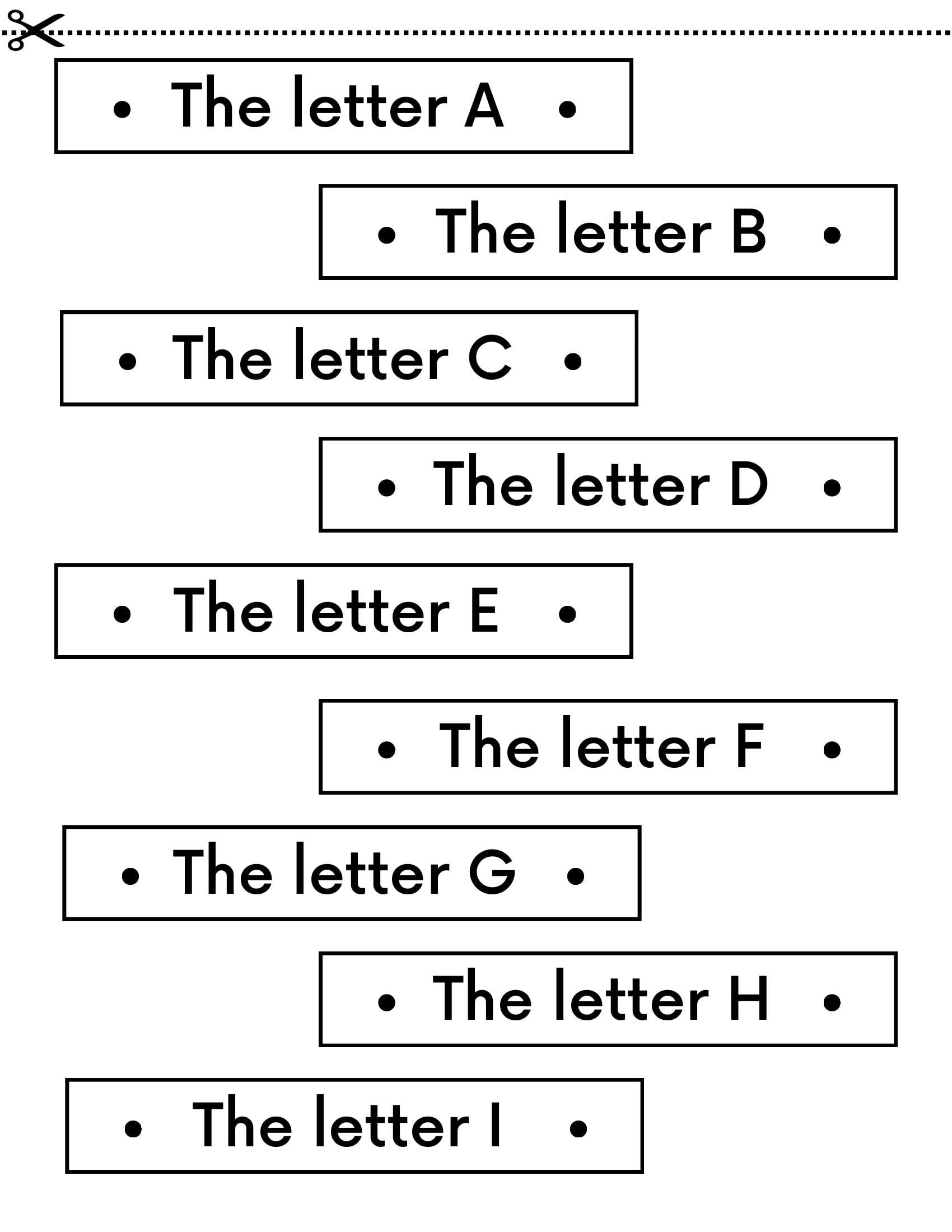
The next worksheet changes from picture words to uppercase letter practice. It presents the letters A, B, C, D, E, F, G, H, and I.
Children can focus on recognizing each capital letter without the distraction of longer words.
This makes the page useful after the earlier picture activities. Encourage your child to name each letter as they work through the page.
54. Matching Uppercase Letters J Through R
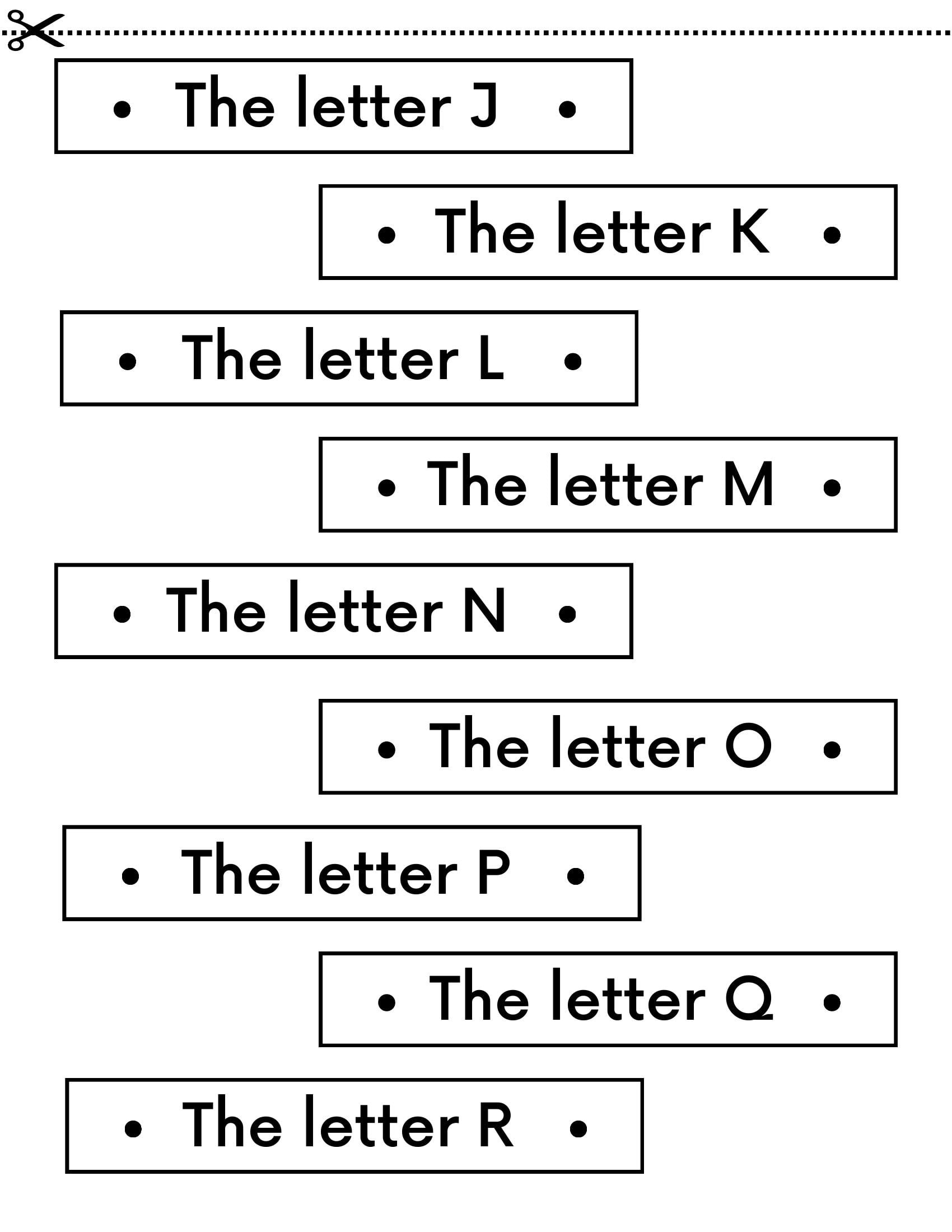
This worksheet continues the uppercase letter practice from J through R. Children can identify J, K, L, M, N, O, P, Q, and R. The simpler format gives them a chance to focus directly on letter recognition.
Ask your child to say each letter aloud before moving to the next one. That repeated naming can help strengthen their alphabet recall.
55. Matching Uppercase Letters S Through Z
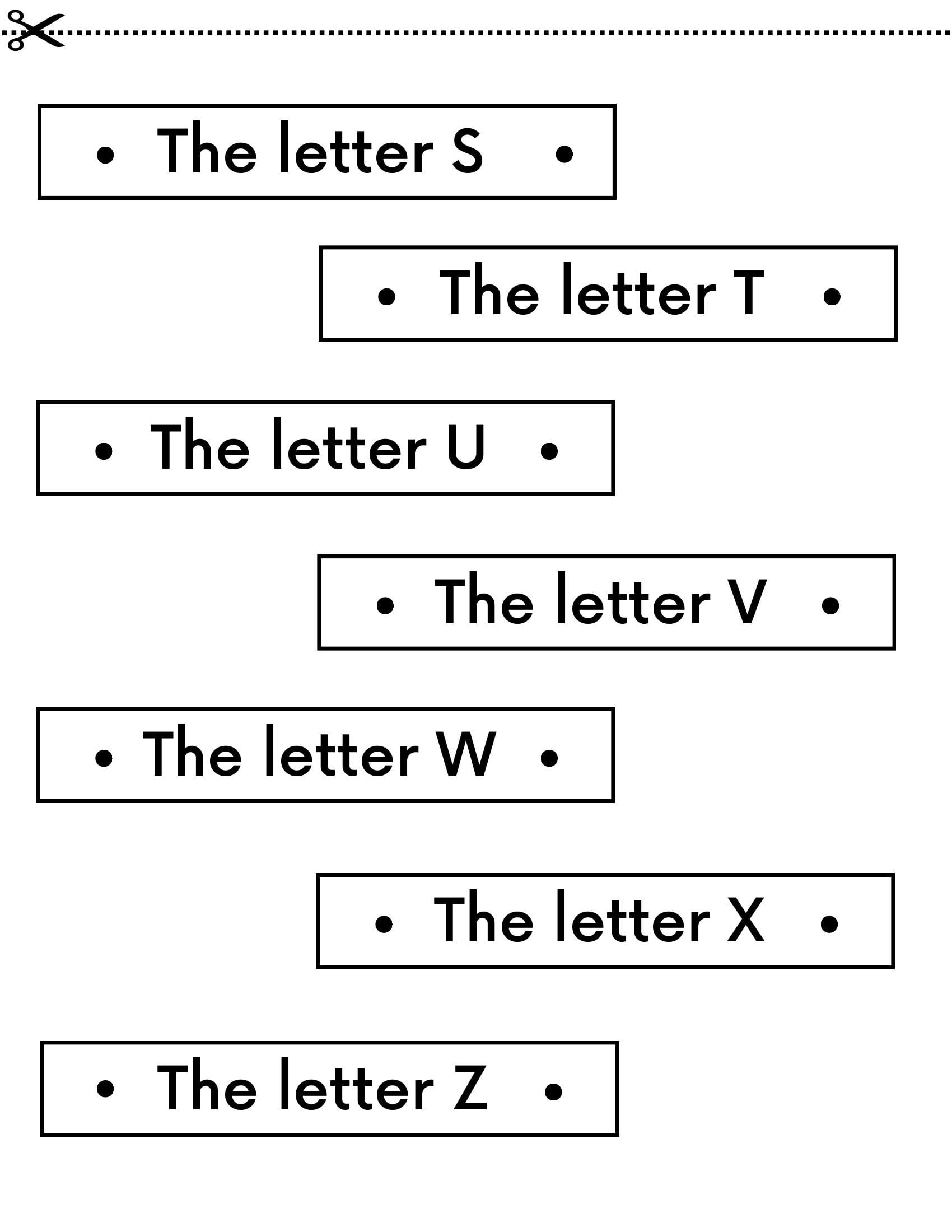
The next page continues with the remaining uppercase letters from S through Z. Children can practice recognizing the final group of capital letters in the alphabet.
This gives them a break from the picture-based activities while keeping the learning hands-on. Ask them to name each letter as they point to it.
A calm review can help children feel more confident with uppercase letters.
56. Matching Lowercase Letters A Through I
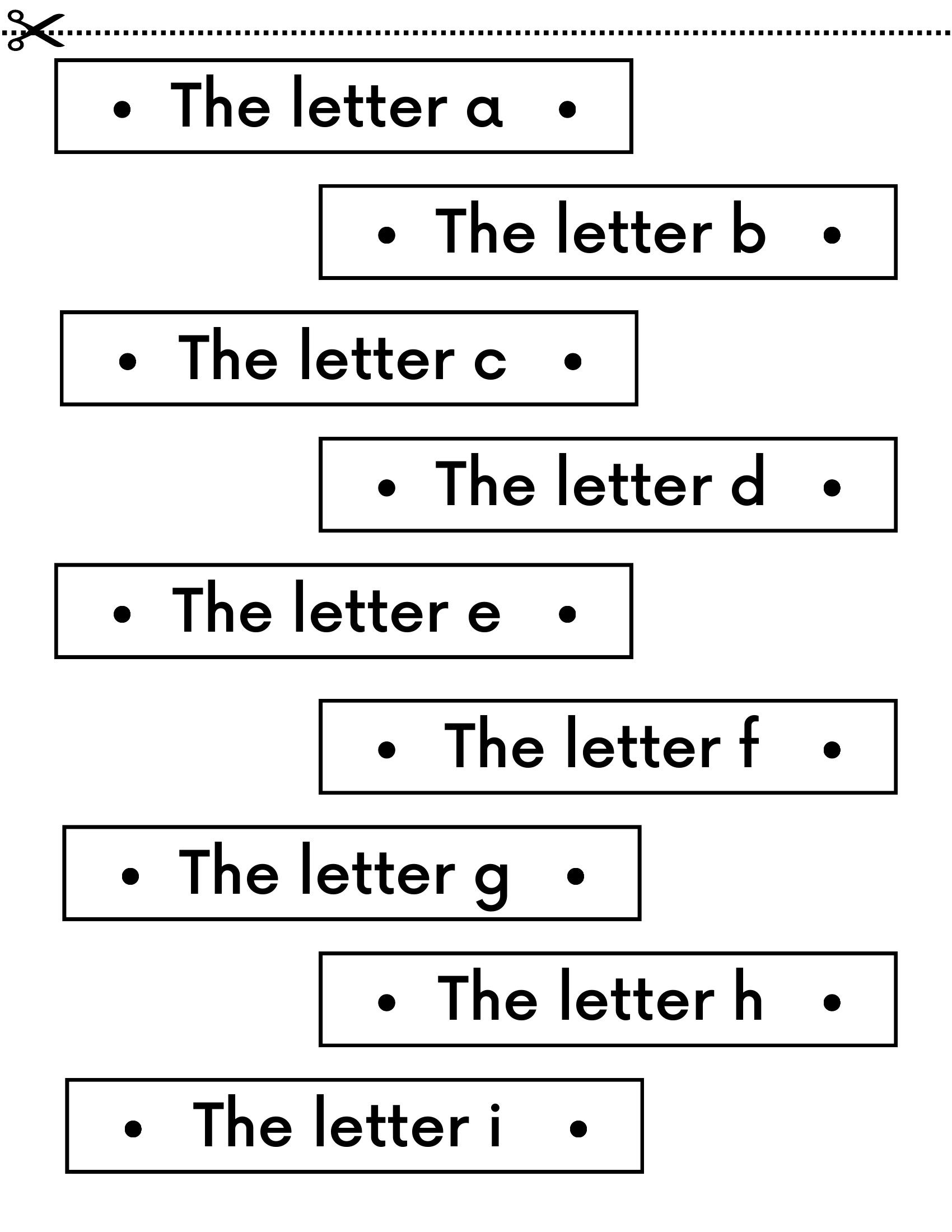
The worksheet now moves into lowercase letter recognition. Children can practice the letters a, b, c, d, e, f, g, h, and i. This is useful because children need to recognize letters in more than one form.
Let them compare these lowercase shapes with the uppercase letters they practiced earlier. A little side-by-side discussion can make the differences easier to notice.
57. Matching Lowercase Letters J Through R
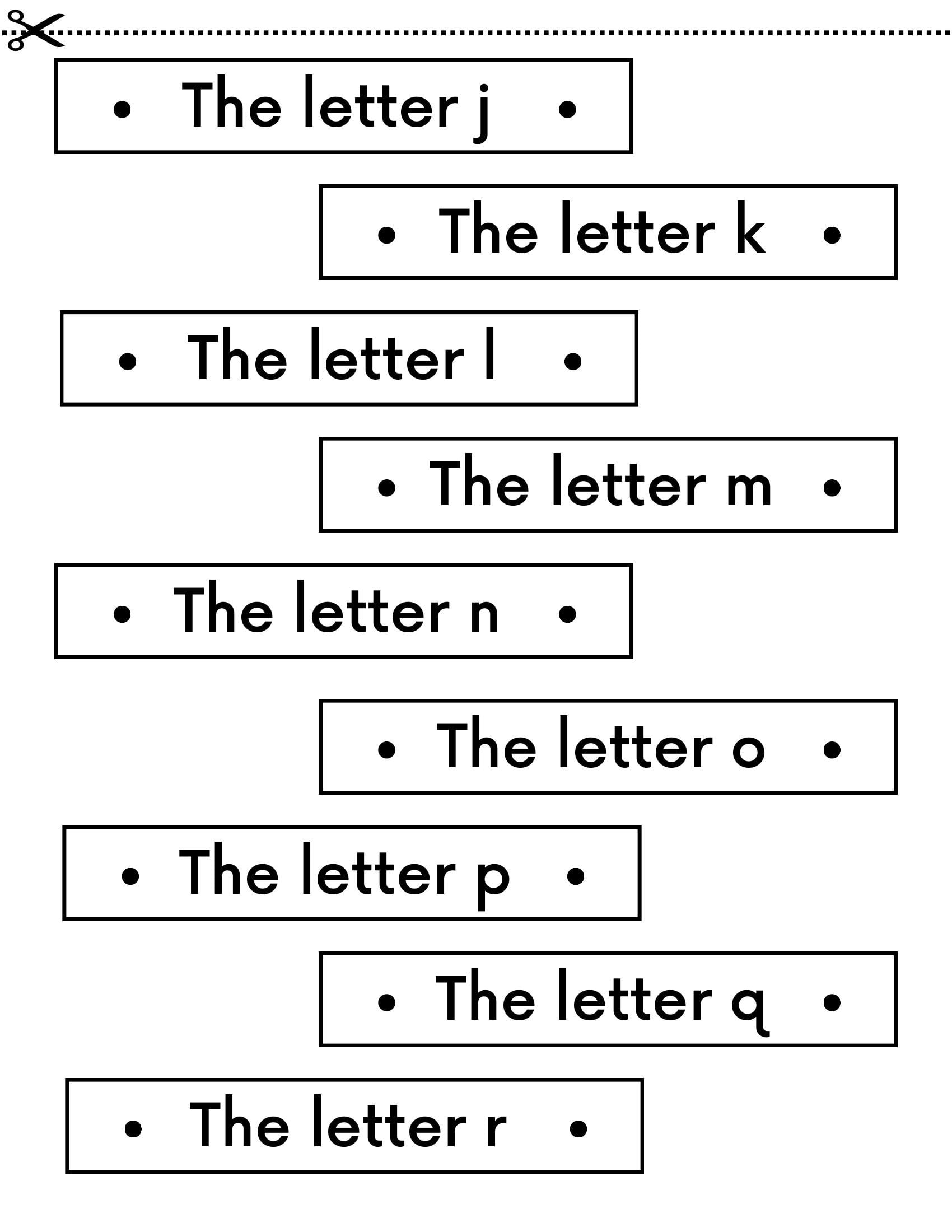
This page continues lowercase practice with j through r. Children can identify j, k, l, m, n, o, p, q, and r. The repeated format gives them a straightforward way to work on letter recognition.
Encourage your child to name each lowercase letter before moving along. Keep the activity relaxed so they can focus on the different letter shapes.
58. Matching Lowercase Letters S Through Z
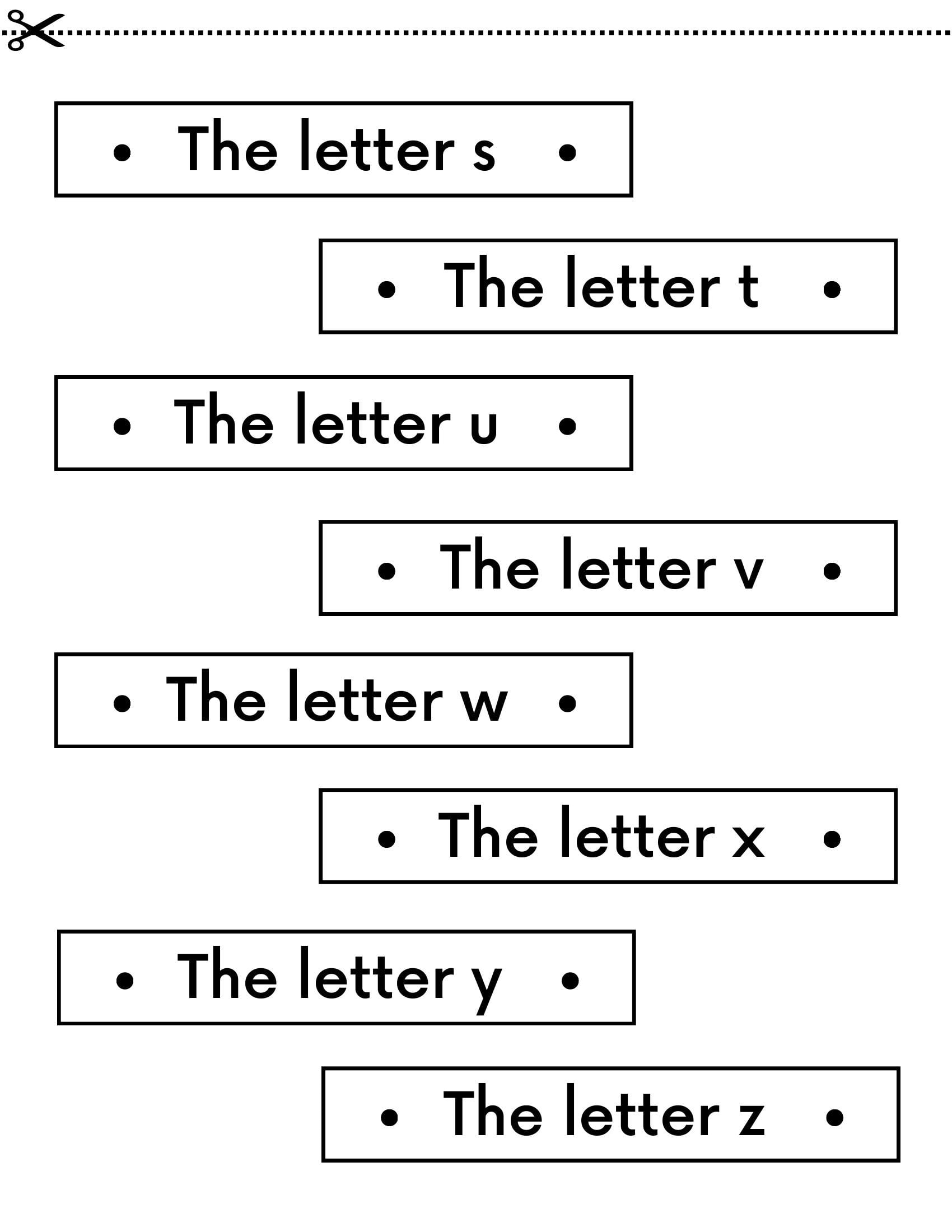
The final lowercase letter worksheet covers s through z. Children can practice recognizing the remaining lowercase letters in the alphabet.
This page rounds out the uppercase and lowercase letter activities. Ask your child to point to each letter and say its name. Once they finish, they are ready for the picture cut-outs that come next.
59. Cut-Out Pictures for C and D Words
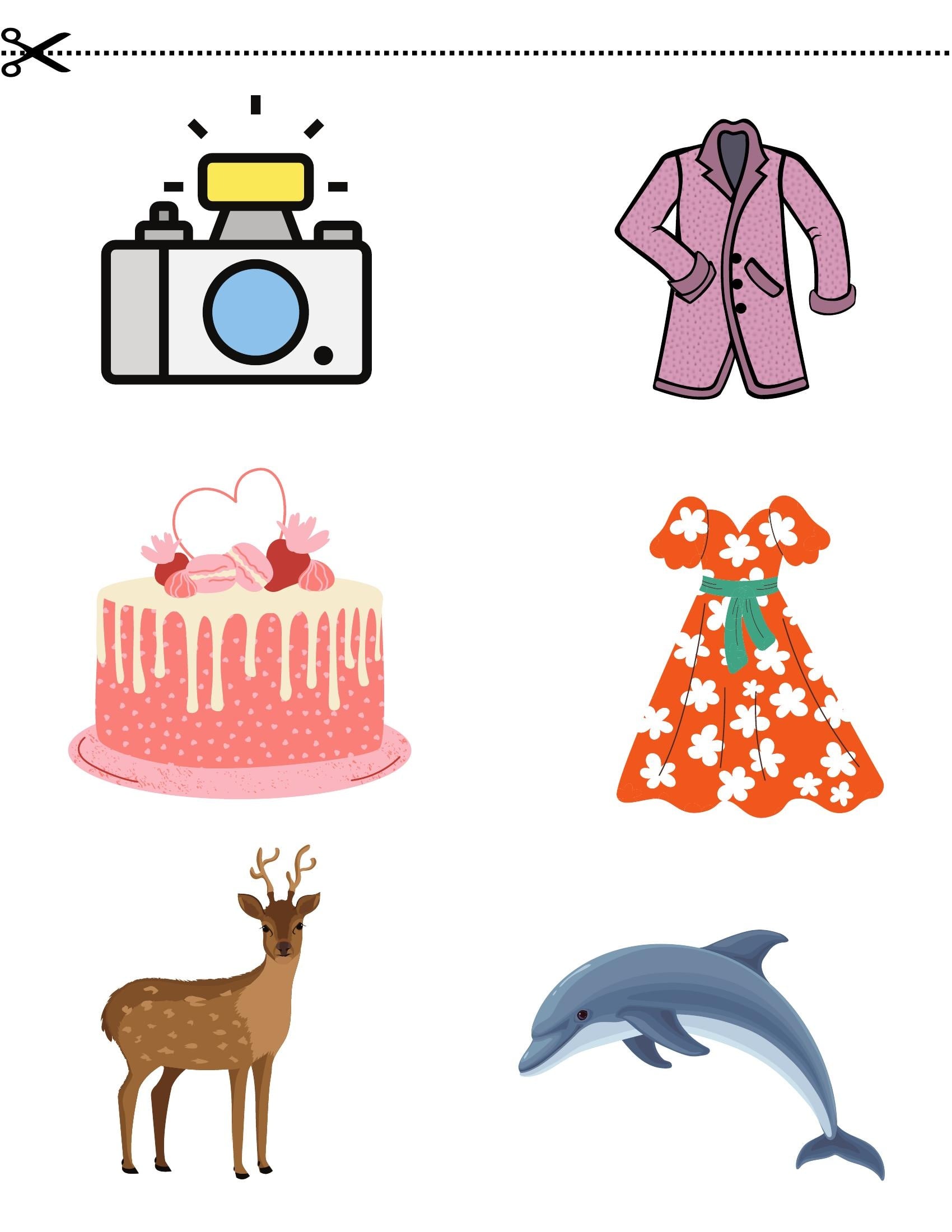
This cut-out sheet provides pictures that match words used earlier in the activities. It includes a camera, coat, cake, dress, deer, and dolphin.
Children can carefully cut around the pictures before matching them with the appropriate activities. The dotted cutting line at the top gives a clear place to begin. This page turns the earlier picture recognition into a more active matching task.
60. Cut-Out Pictures for B and C Words
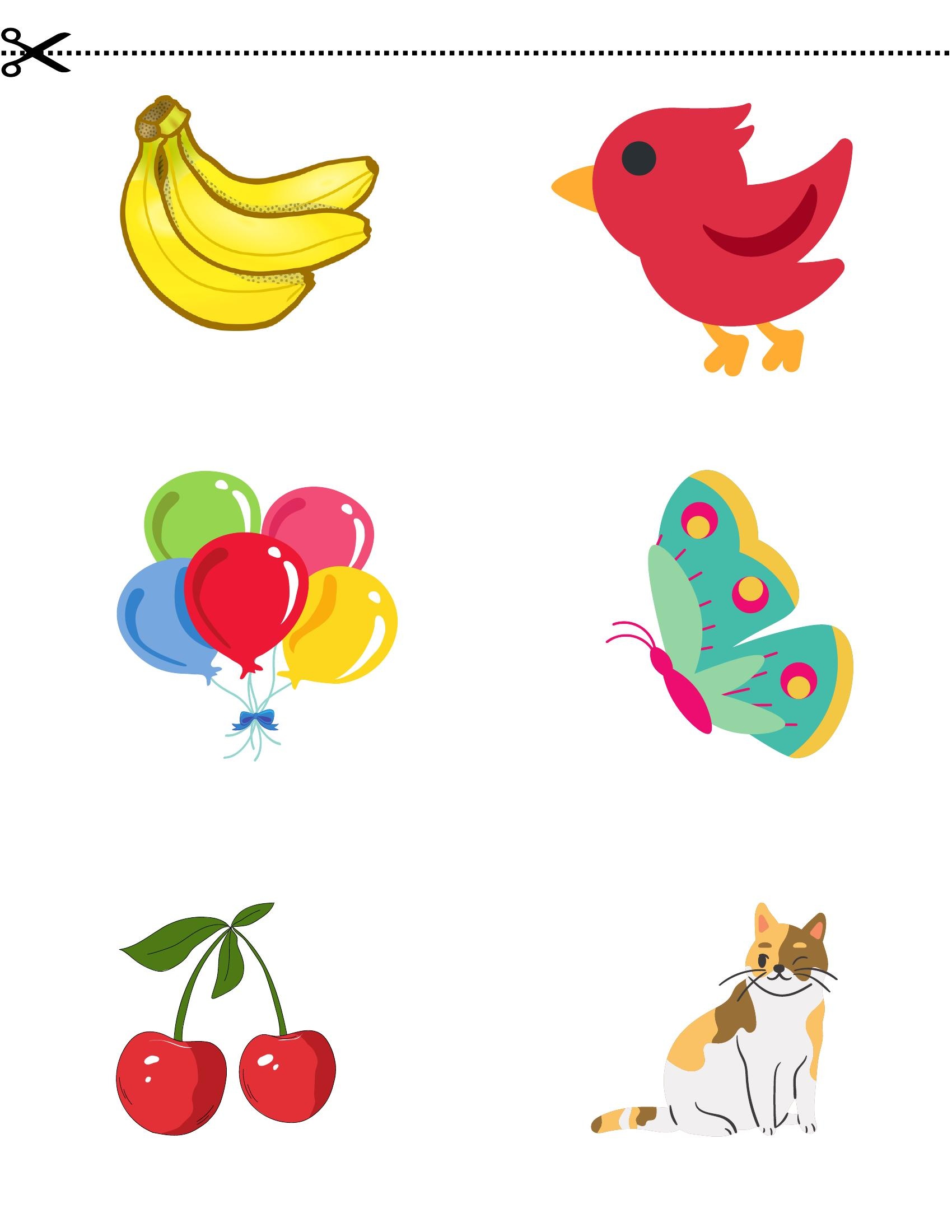
The next cut-out page includes a banana, bird, balloons, butterfly, cherries, and cat. These pictures connect with vocabulary introduced in the B and C activities.
Children can cut them out and use them for the matching and pasting work. Encourage them to name each picture before reaching for the scissors. That quick review can reinforce the words while they work with their hands.
61. Cut-Out Pictures for D and E Words
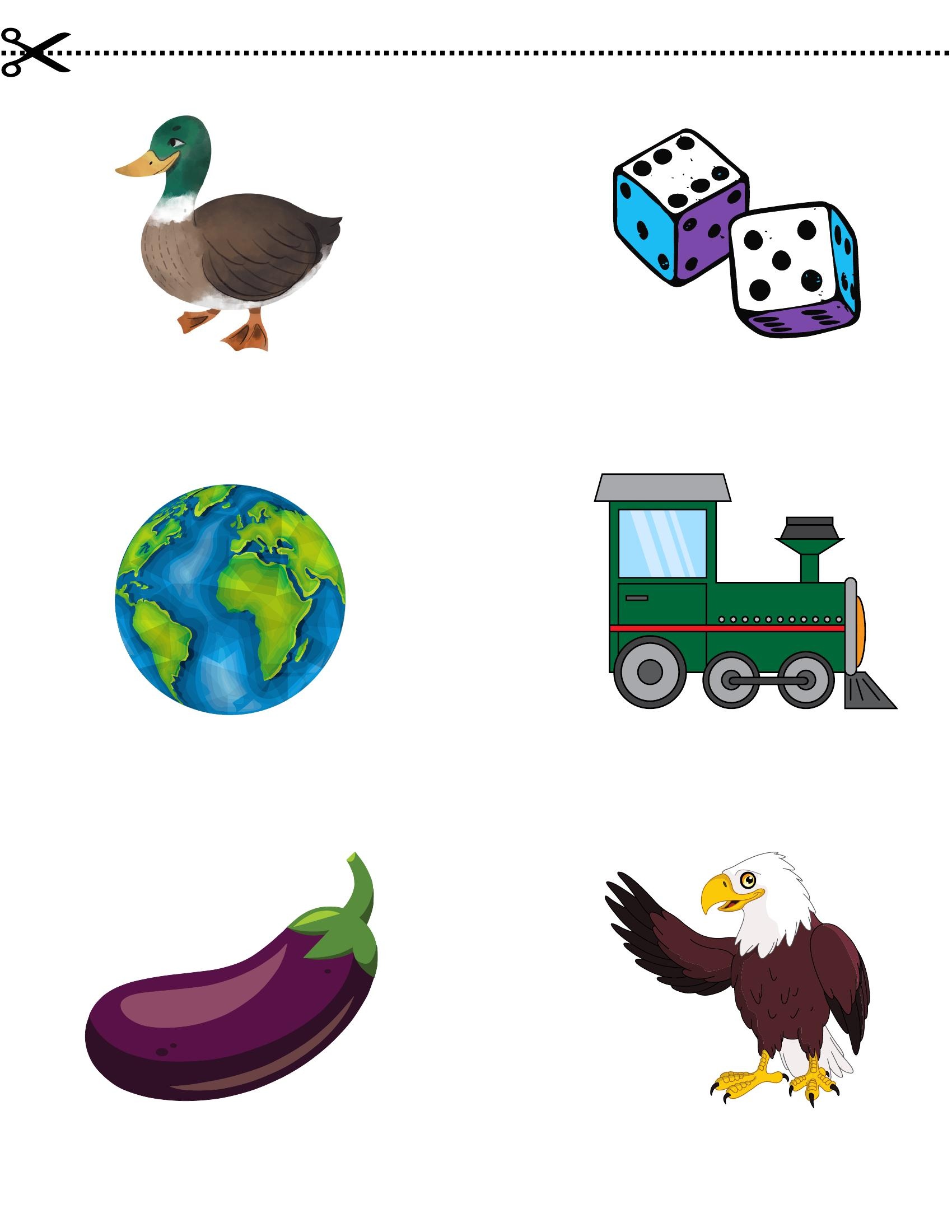
This cut-out sheet brings together several pictures from the D and E activities. Children can work with a duck, dice, Earth, engine, eggplant, and eagle.
These images give them familiar animals, objects, food, and places to recognize. Before cutting, ask your child to name each picture aloud. Then, they can match the pieces with the correct letter activity.
62. Cut-Out Pictures for E and F Words
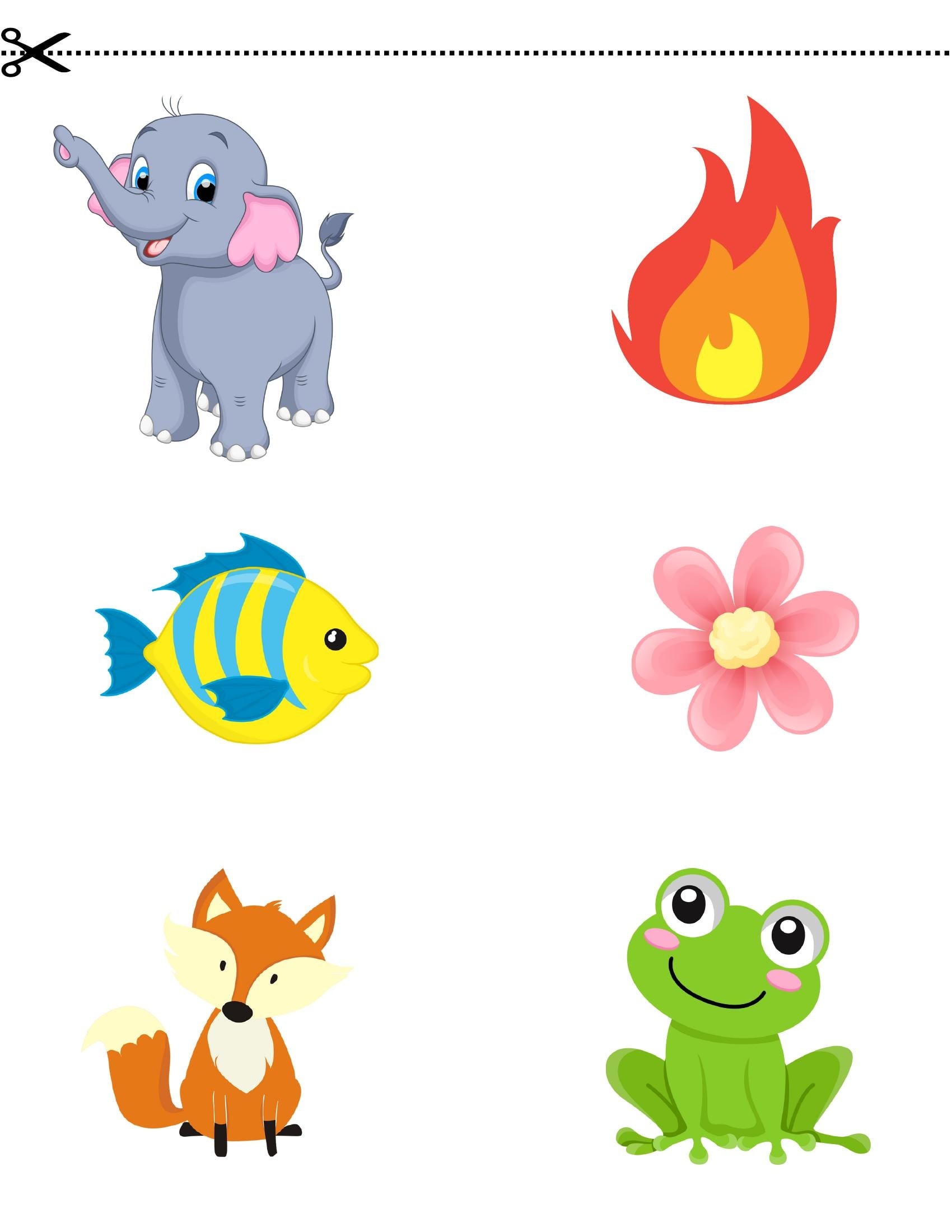
The next sheet includes an elephant, fire, fish, flower, fox, and frog. These pictures connect with vocabulary from the E and F worksheets.
Children can practice saying each word before cutting the pieces apart. Some pictures are especially easy for young learners to recognize. This makes the sheet a fun way to review two letters at once.
63. Cut-Out Pictures for I and J Words
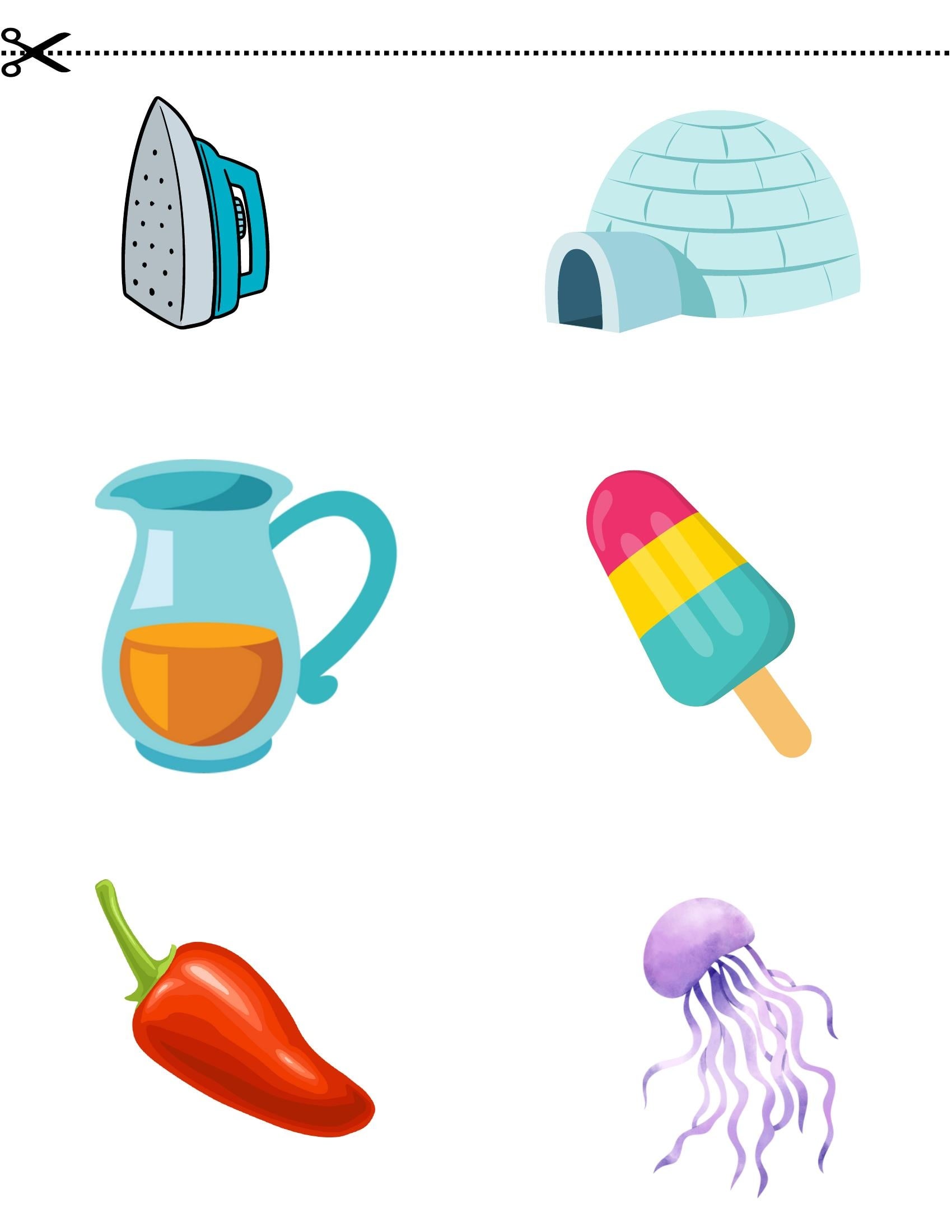
This page provides several colorful pieces for the I and J activities. Children can find an iron, igloo, a pitcher, a popsicle, jalapeno, and jellyfish.
The pictures give children a chance to revisit words they may have just practiced. Talk about any unfamiliar picture before handing over the scissors. That quick discussion can make the cutting and matching task more meaningful.
64. Cut-Out Pictures for H and I Words
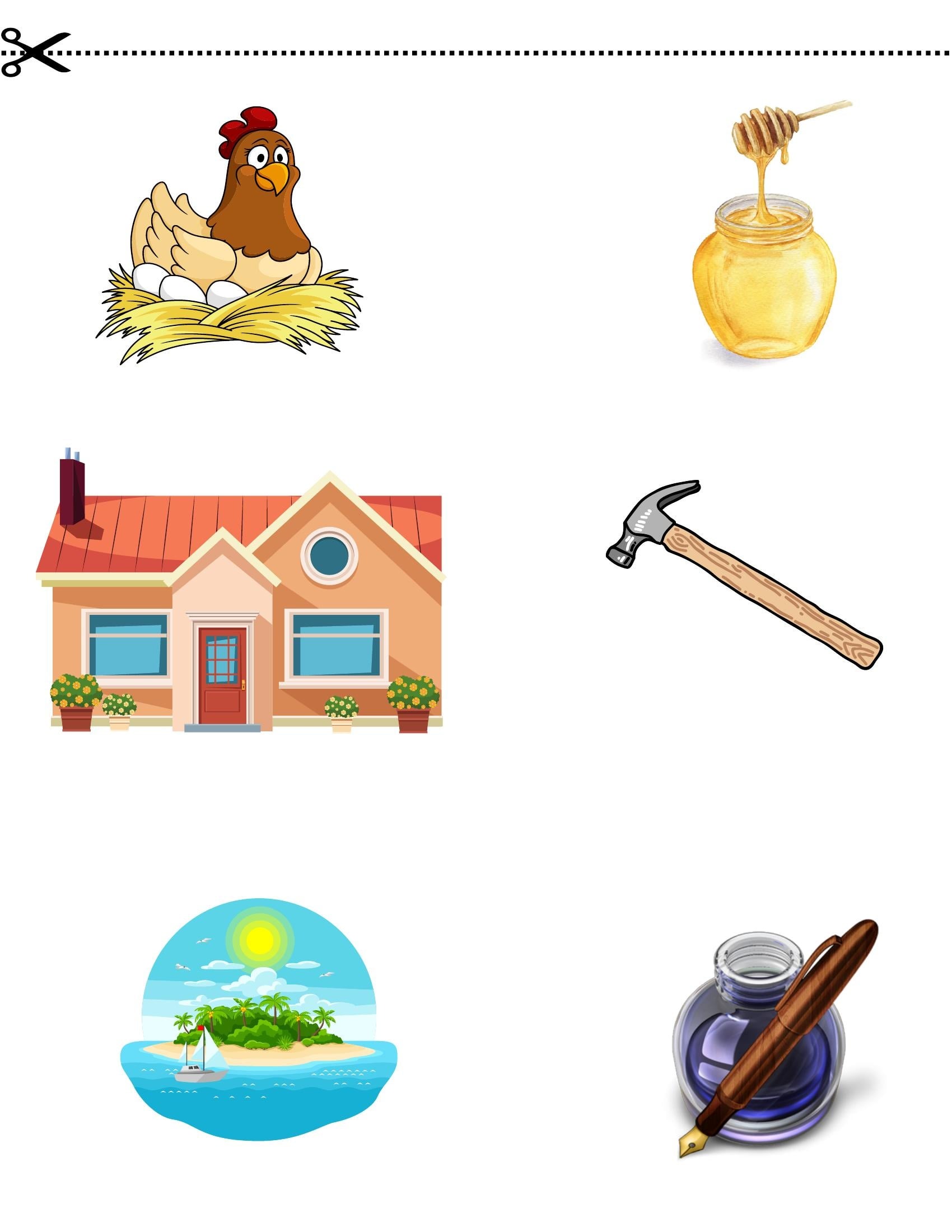
The fourth cut-out sheet in this group features a hen, honey, house, hammer, island, and ink. Children can connect these pictures with the H and I vocabulary from earlier pages.
The variety keeps the activity from feeling too repetitive. Encourage your child to say each word as they identify the picture. After cutting, they can sort the pieces by their beginning letters.
65. Cut-Out Pictures for A and B Words
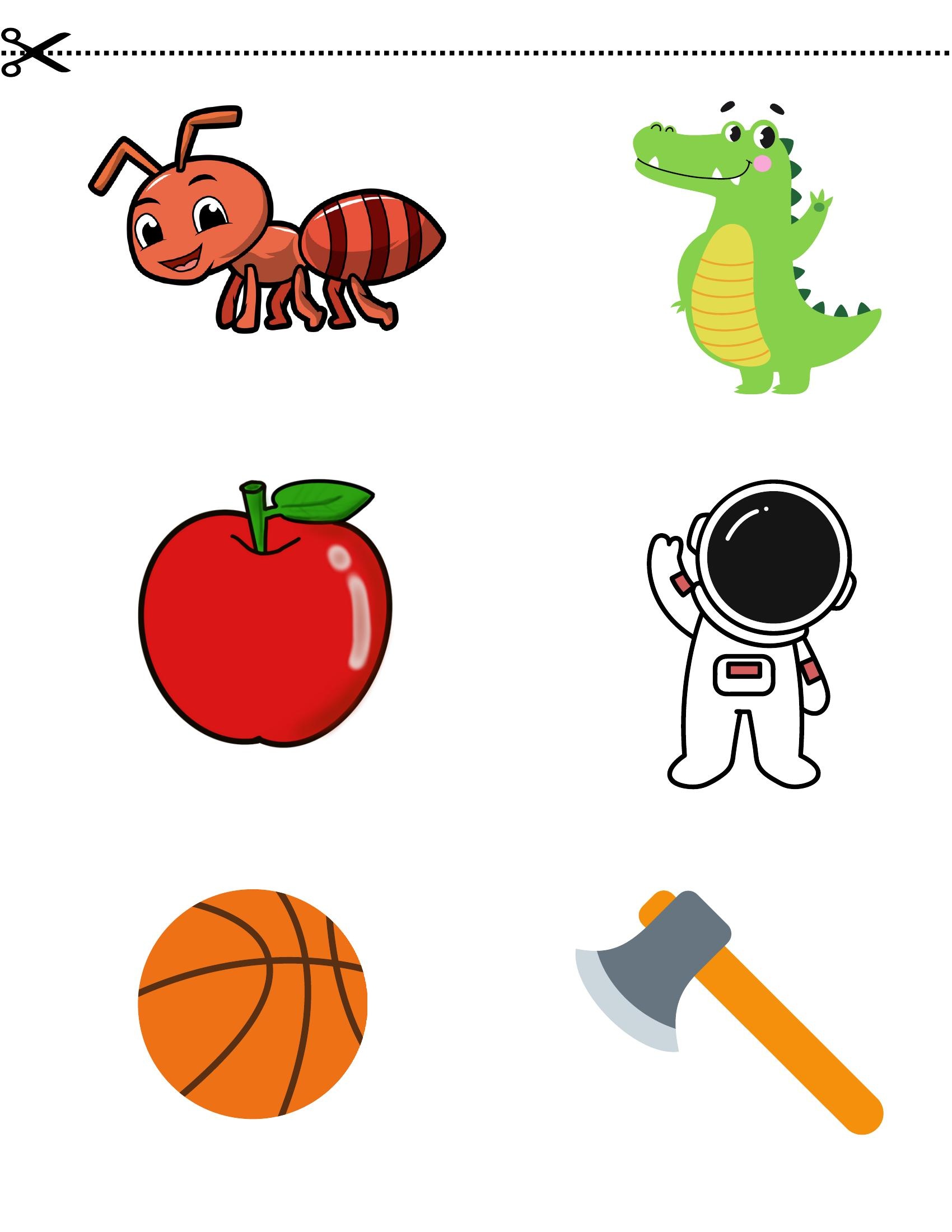
This sheet returns to some of the earliest alphabet vocabulary. It includes an ant, alligator, apple, astronaut, ball, and axe.
Children can use these familiar pictures to review the A and B activities. Let them name each image before cutting around the pieces. A simple sorting game can make this page even more engaging.
66. Cut-Out Pictures for J and K Words
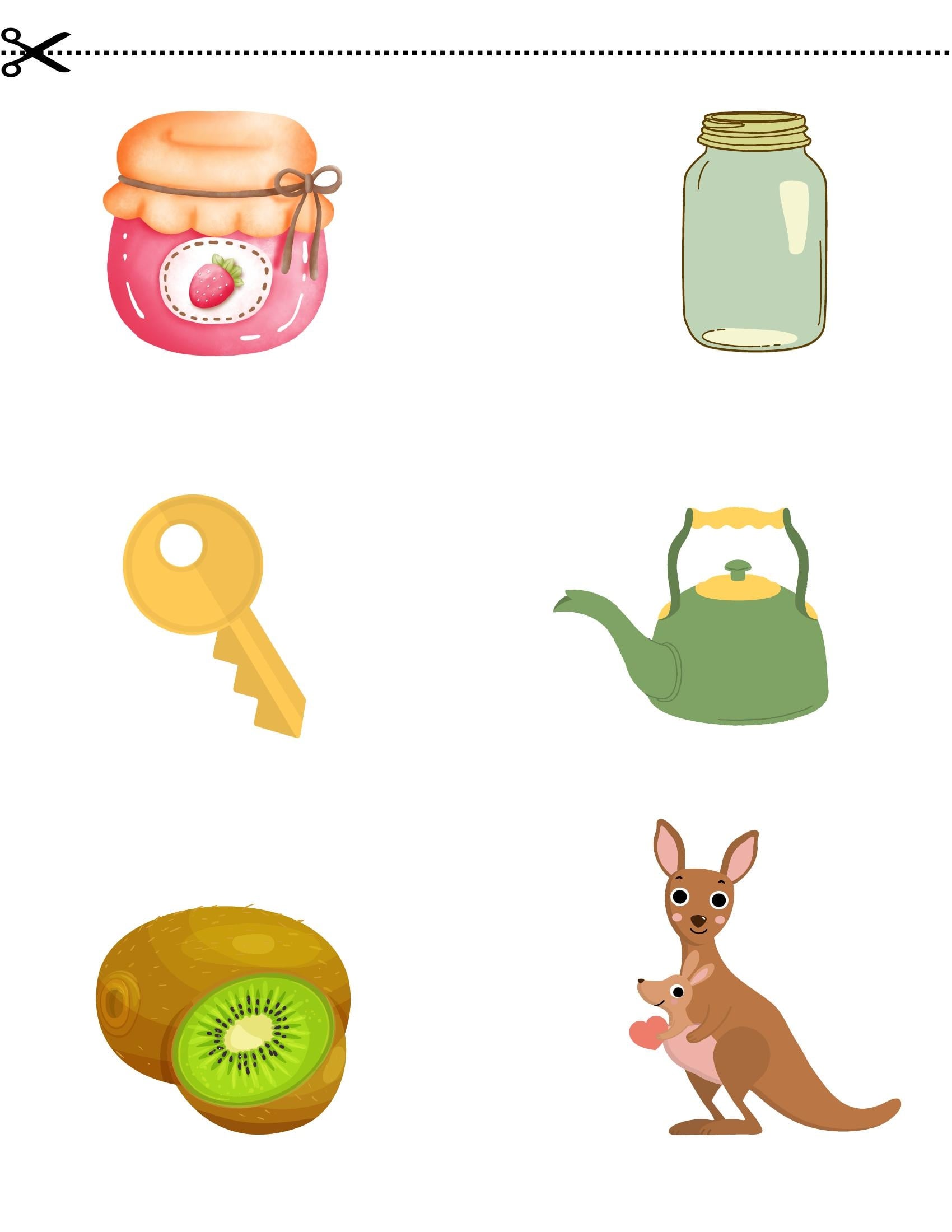
The next sheet includes jam, jar, key, kettle, kiwi, and kangaroo. These pictures give children a hands-on review of J and K words.
They can cut each piece carefully and then sort the pictures by letter. Ask them to say the beginning sound as they place each piece. This turns a simple craft activity into useful alphabet practice.
67. Cut-Out Pictures for M and N Words
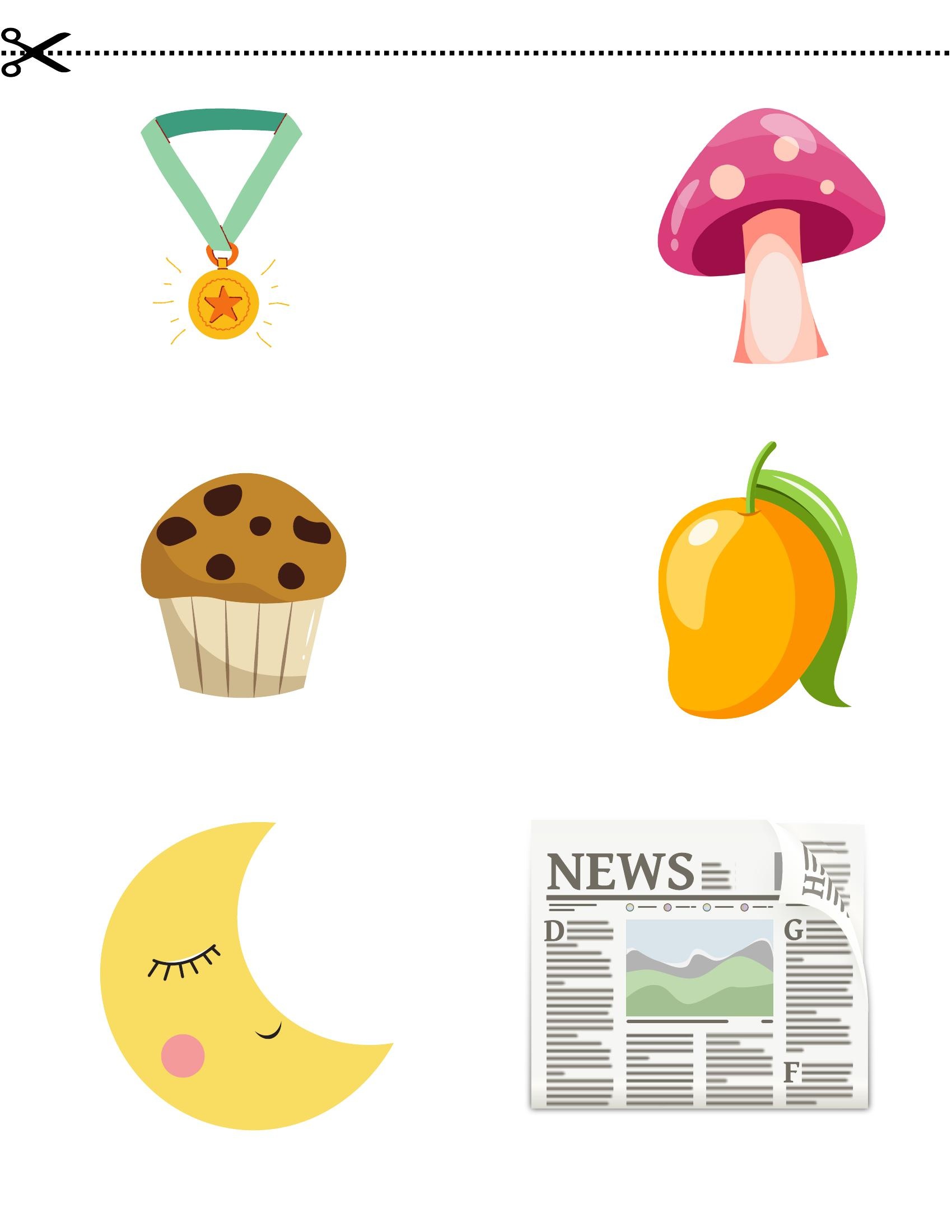
This sheet features a medal, mushroom, muffin, mango, moon, and newspaper. Children can revisit several M words while also recognizing a word from the N group.
The different pictures give them plenty to talk about as they work. Ask your child to identify each picture before cutting. Then, they can sort the pieces according to their beginning letters.
68. Cut-Out Pictures for N and O Words
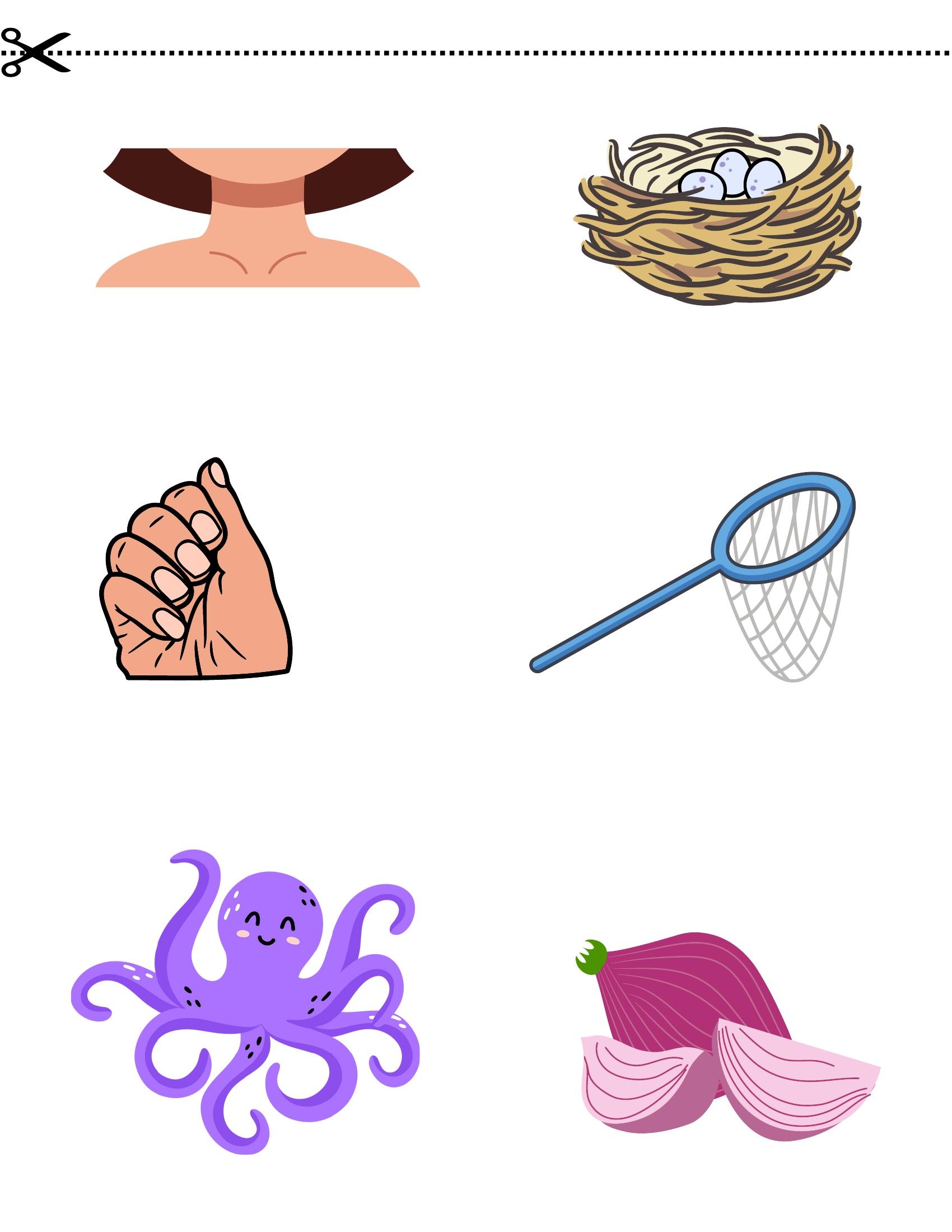
The next page offers pictures that support the N and O vocabulary. Children can work with a neck, nest, hand, net, octopus, and a piece of yarn.
These images encourage children to think about the words they have already seen. Take a moment to name each picture together before cutting. The sorting step can then help reinforce their letter recognition.
69. Cut-Out Pictures for Q and R Words
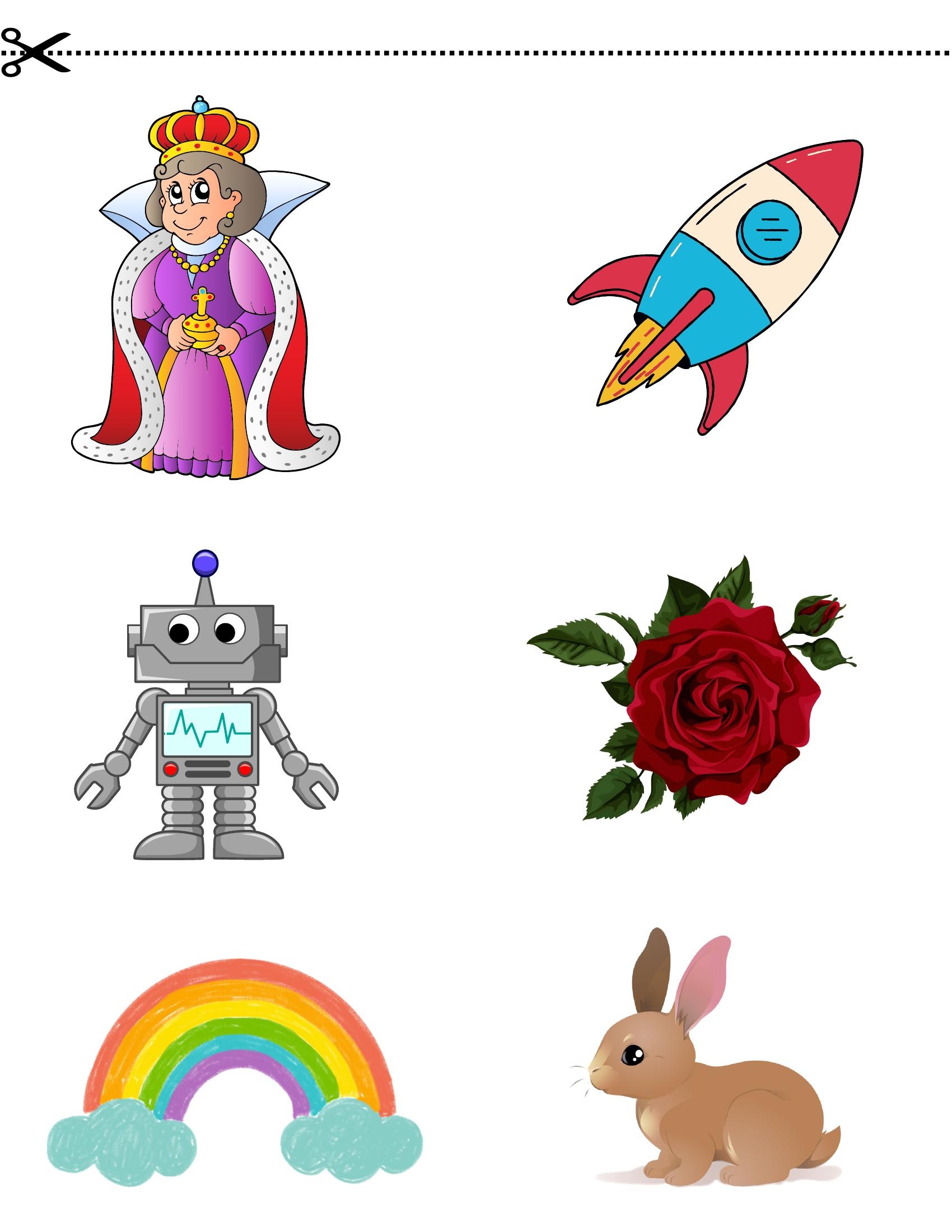
This colorful sheet brings together a queen, rocket, robot, rose, rainbow, and rabbit. Children can recognize several playful images from the Q and R activities.
The pictures offer a nice mix of fantasy, nature, animals, and objects. Encourage your child to name each one before reaching for the scissors. After cutting, they can group the pieces by their beginning letter.
70. Cut-Out Pictures for P and Q Words
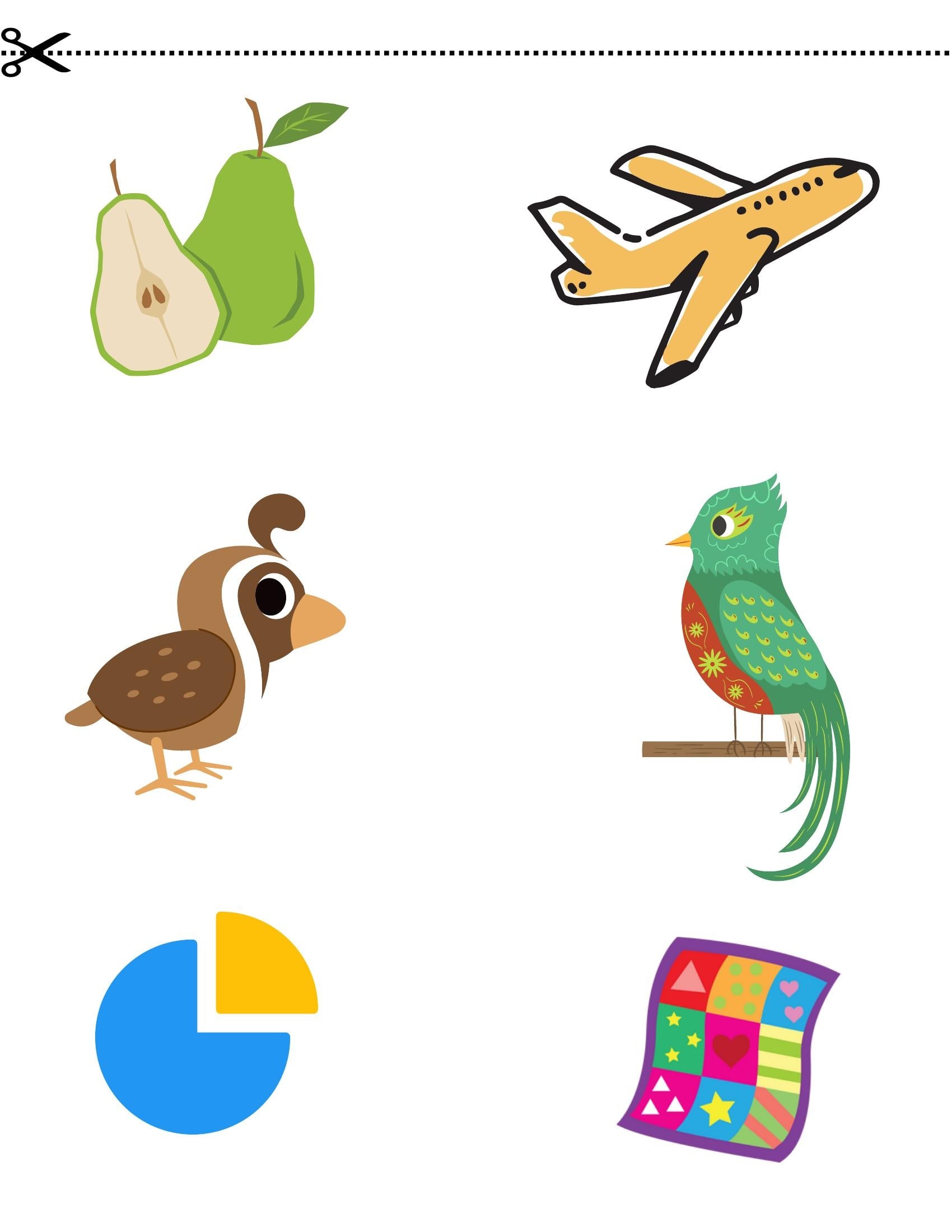
The next sheet combines pictures connected with P and Q words. Children can see pears, a plane, a quail, a colorful bird, a quarter, and a quilt.
Some Q vocabulary may be new, so this page can also support vocabulary development.
Ask your child to describe anything they do not recognize. Then, let them cut and sort the pictures into simple letter groups.
71. Cut-Out Pictures for K and L Words
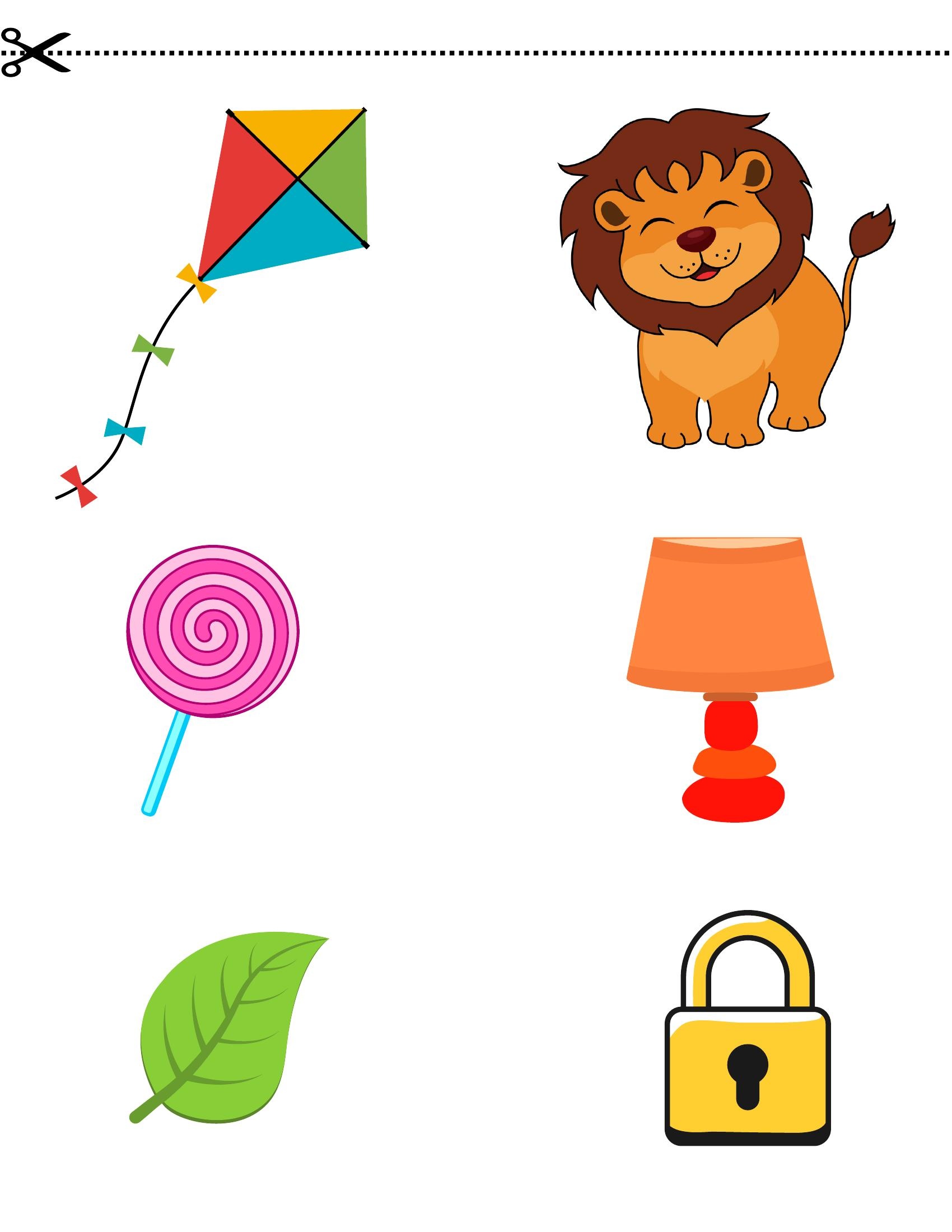
This page features a kite, lion, lollipop, lamp, leaf, and lock. Children can easily connect these pictures with the K and L vocabulary.
The mix includes an animal, food, household objects, and something from nature. Let your child name each image before cutting.
Sorting the pieces afterward gives them another quick letter-recognition exercise.
72. Cut-Out Pictures for G Words
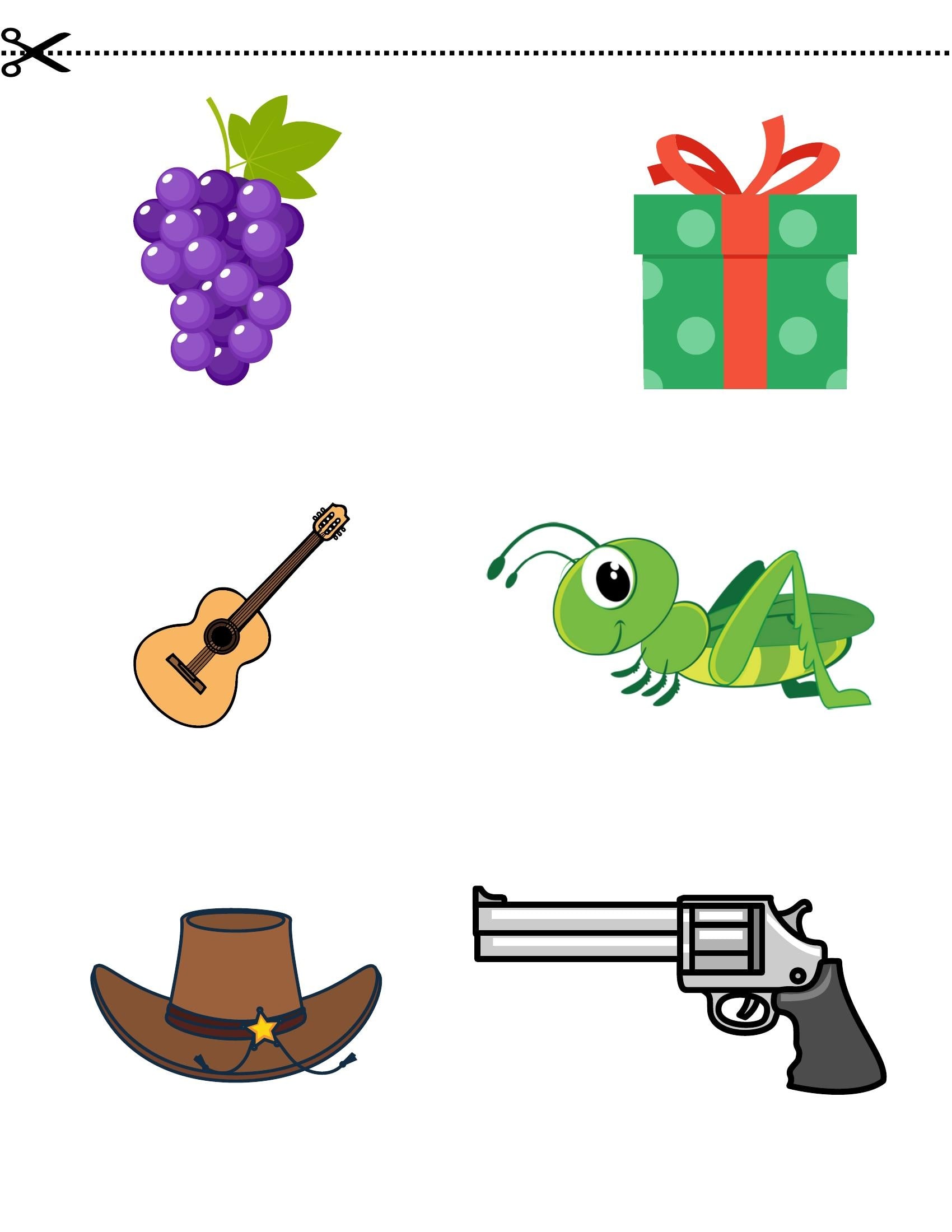
The G cut-out sheet includes grapes, a gift, guitar, grasshopper, and a gun. Children can revisit the same vocabulary from the earlier G activities.
The pictures provide different categories, which can encourage simple conversations while working.
Ask your child to identify each picture before cutting. Once the pieces are ready, they can practice arranging them together.
73. Cut-Out Pictures for S and T Words
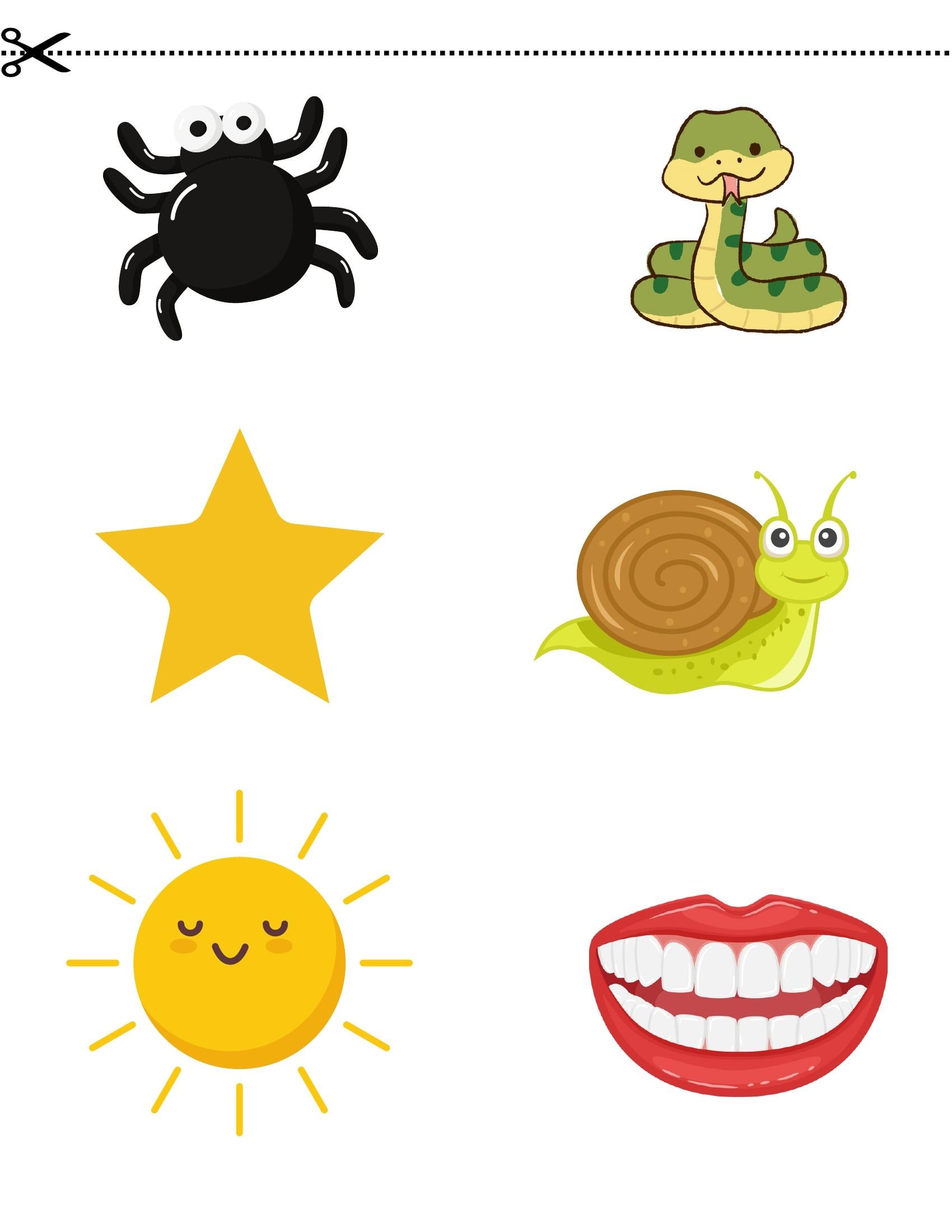
This sheet features a spider, snake, star, snail, sun, and teeth. Most of the pictures connect with the S activity, while teeth gives children another T word to recognize.
The familiar images make this page approachable for younger learners. Encourage your child to say each word and listen for its beginning sound. Then, they can cut, sort, and paste the pieces as directed.
74. Cut-Out Pictures for Y Words
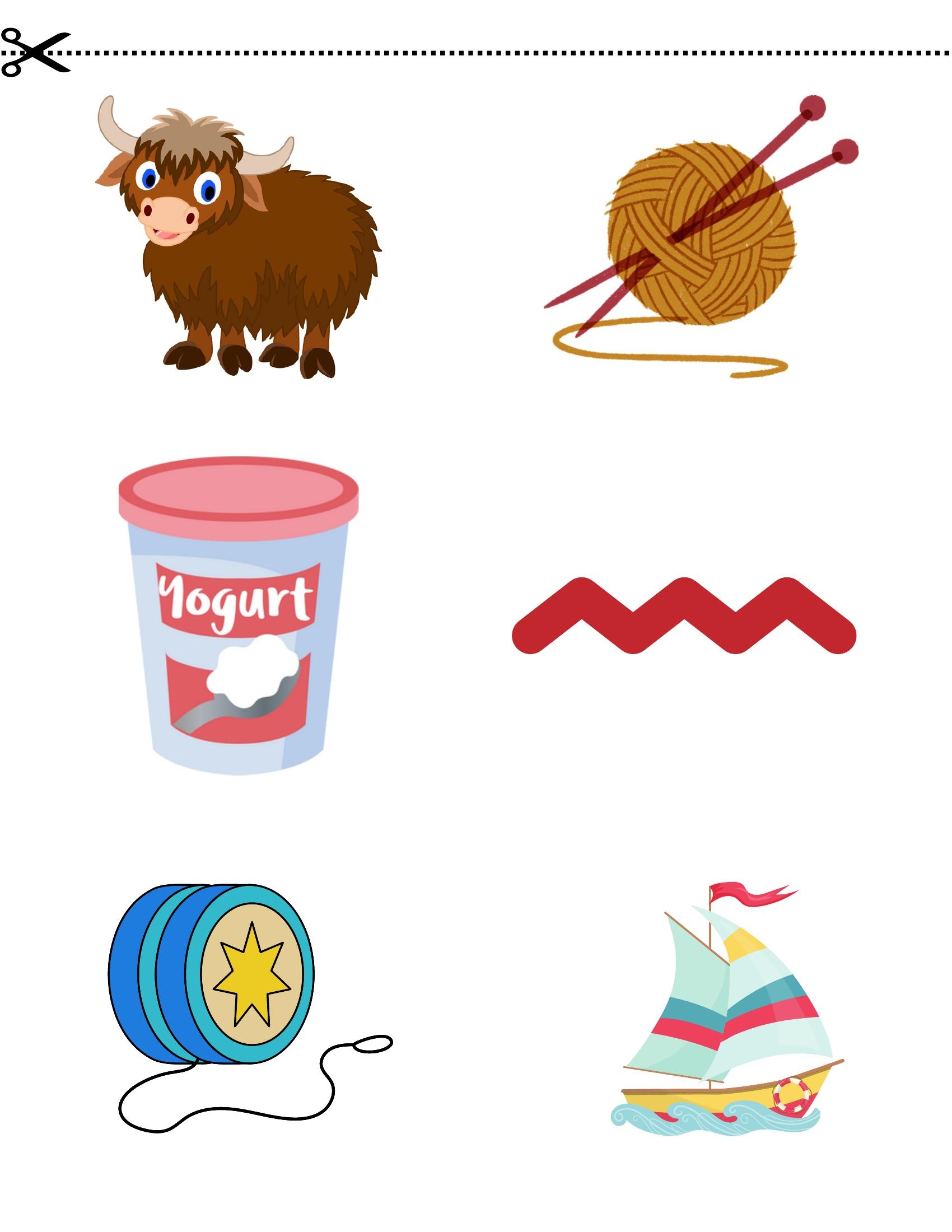
The next sheet includes a yak, yarn, yogurt, zigzag, yoyo, and yacht. Children can review several Y words while also seeing the zigzag picture.
This gives them another chance to connect pictures with beginning letters. Ask your child to name the pictures slowly before cutting. They can then separate the pieces by the letters they represent.
75. Cut-Out Pictures for O and P Words
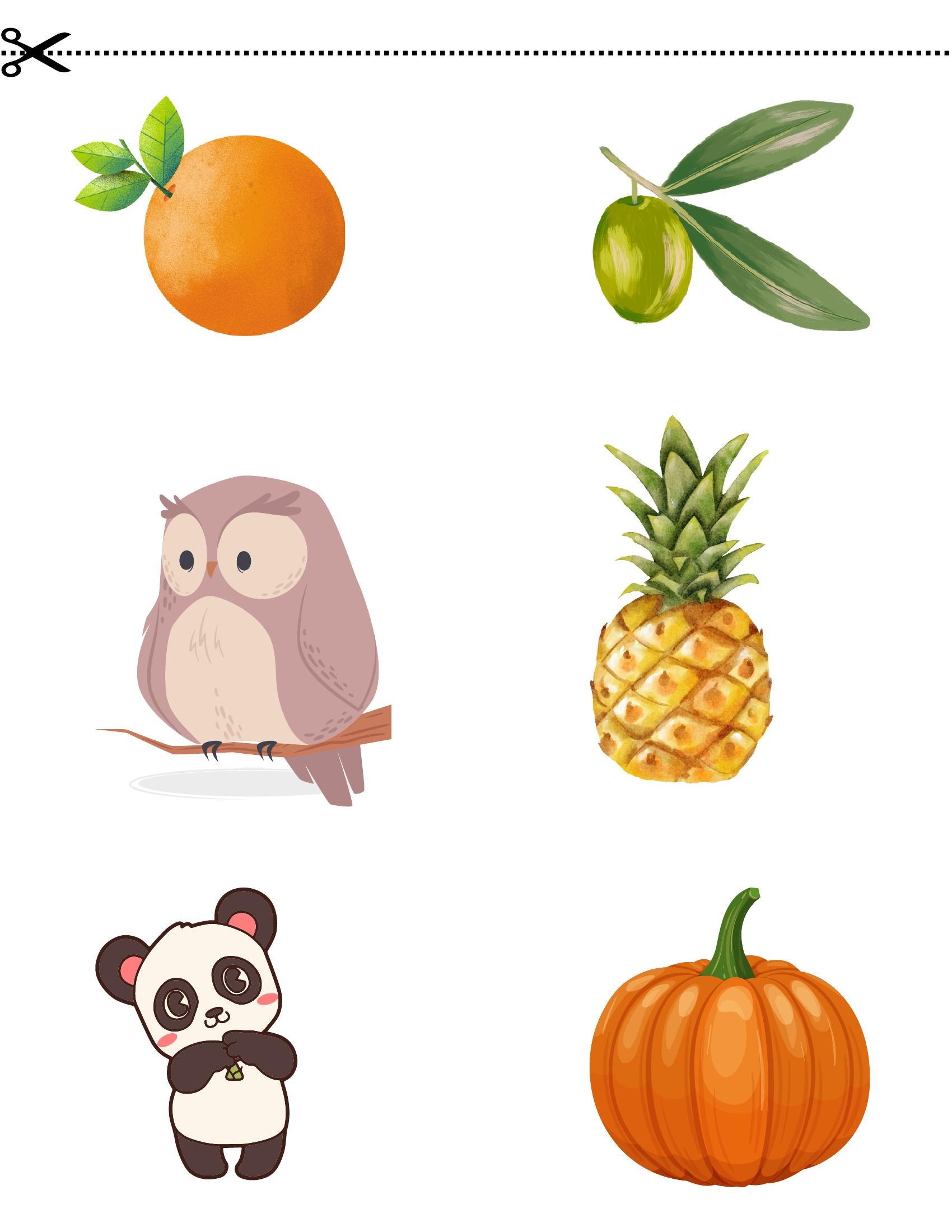
This sheet contains an orange, olive, owl, pineapple, panda, and pumpkin. These colorful pictures give children an easy way to revisit O and P vocabulary.
Food and animal pictures can also encourage children to talk about what they see. Let them name each picture before beginning the cutting activity.
Then, they can organize the pieces according to their beginning letters.
76. Cut-Out Pictures for W and X Words
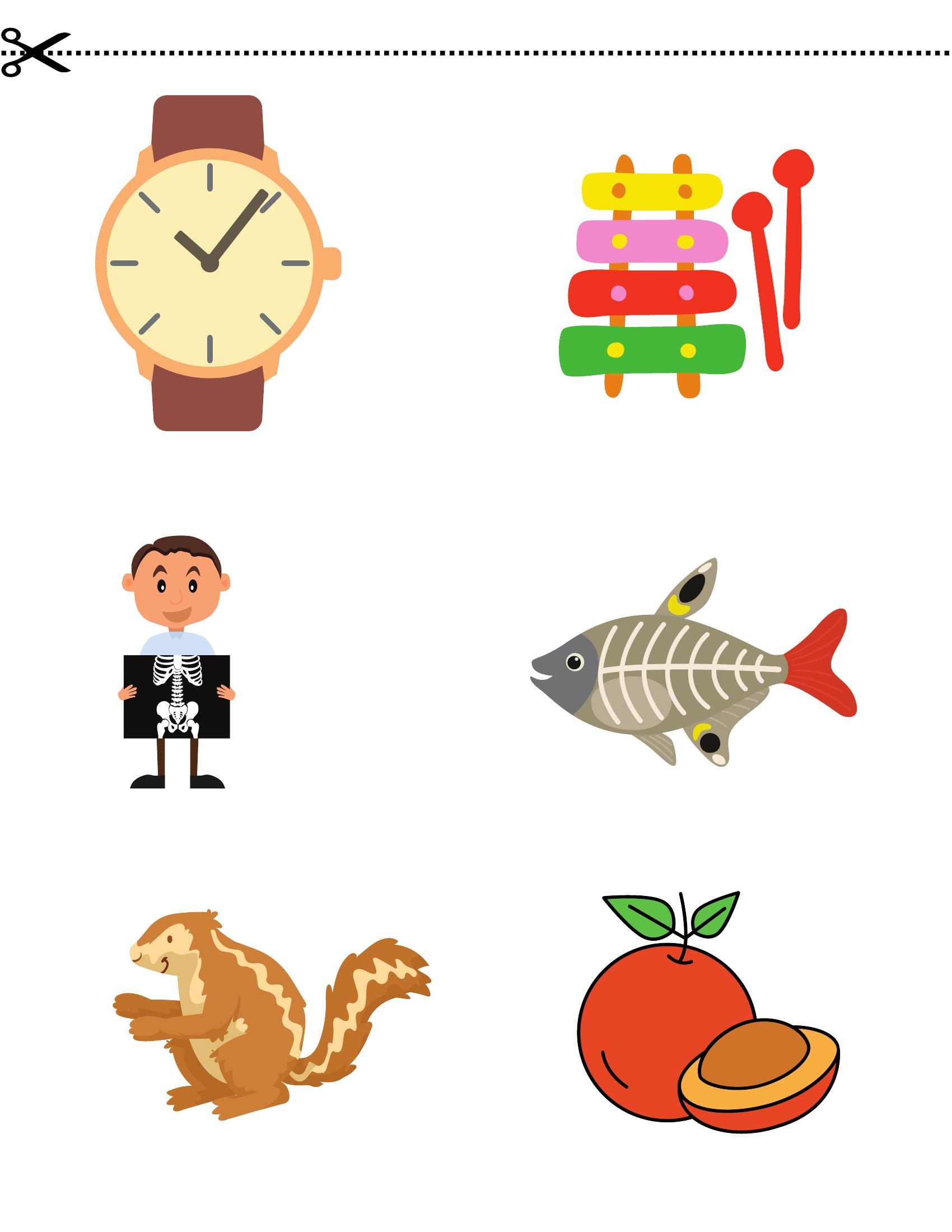
The next sheet includes a watch, xylophone, an X-ray image, xerus, and other picture pieces.
Children can use these images to review some of the less familiar alphabet vocabulary. The X pictures may need a little explanation for younger children.
Take your time naming each image before cutting. This makes the worksheet a useful blend of vocabulary discovery and letter practice.
77. Cut-Out Pictures for V and W Words
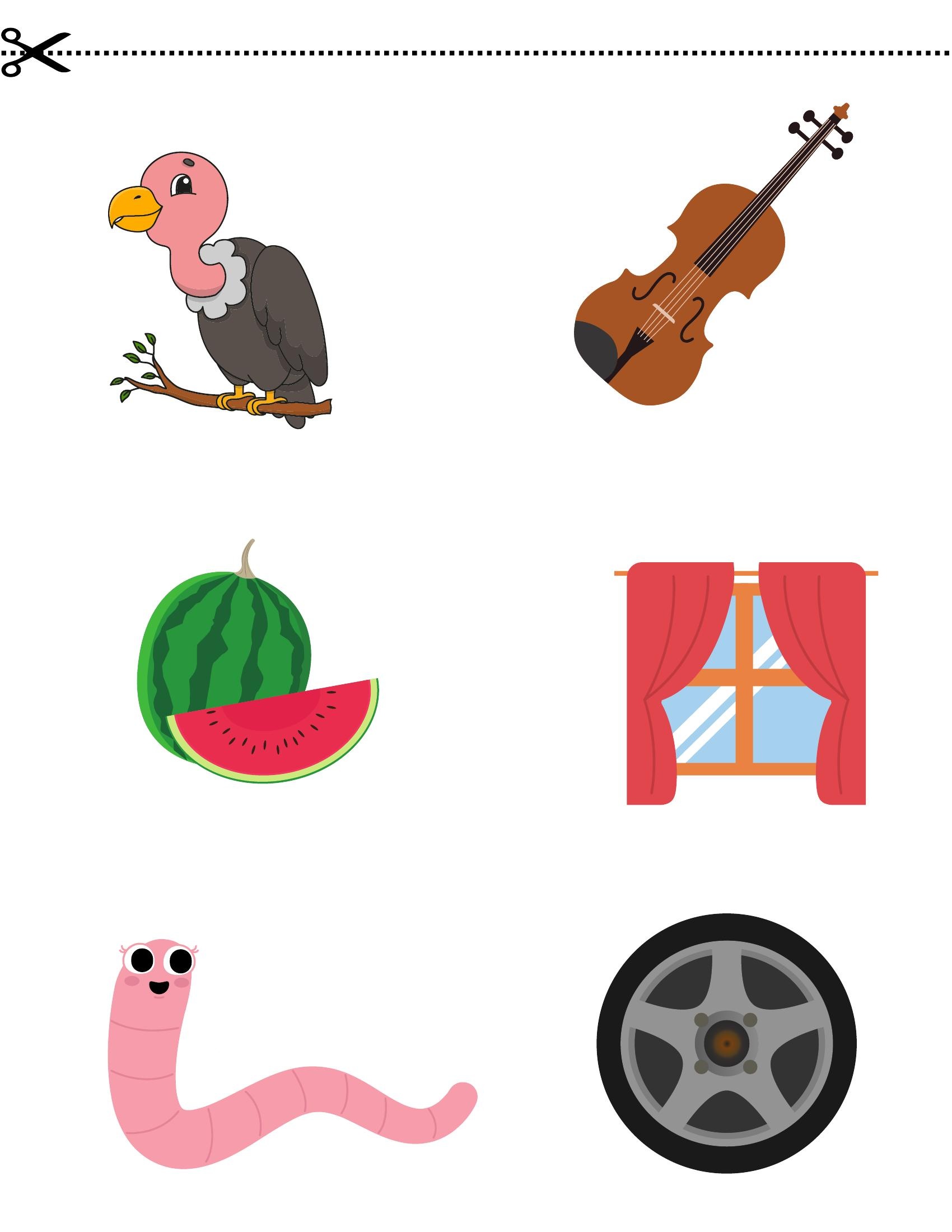
This page includes a vulture, violin, watermelon, window, worm, and wheel. Children can connect these pictures with the V and W activities.
The images cover animals, music, food, household features, and everyday objects. Ask your child to name each picture while listening for the first sound.
Afterward, they can cut and arrange the pieces for more hands-on practice.
78. Cut-Out Pictures for U and V Words
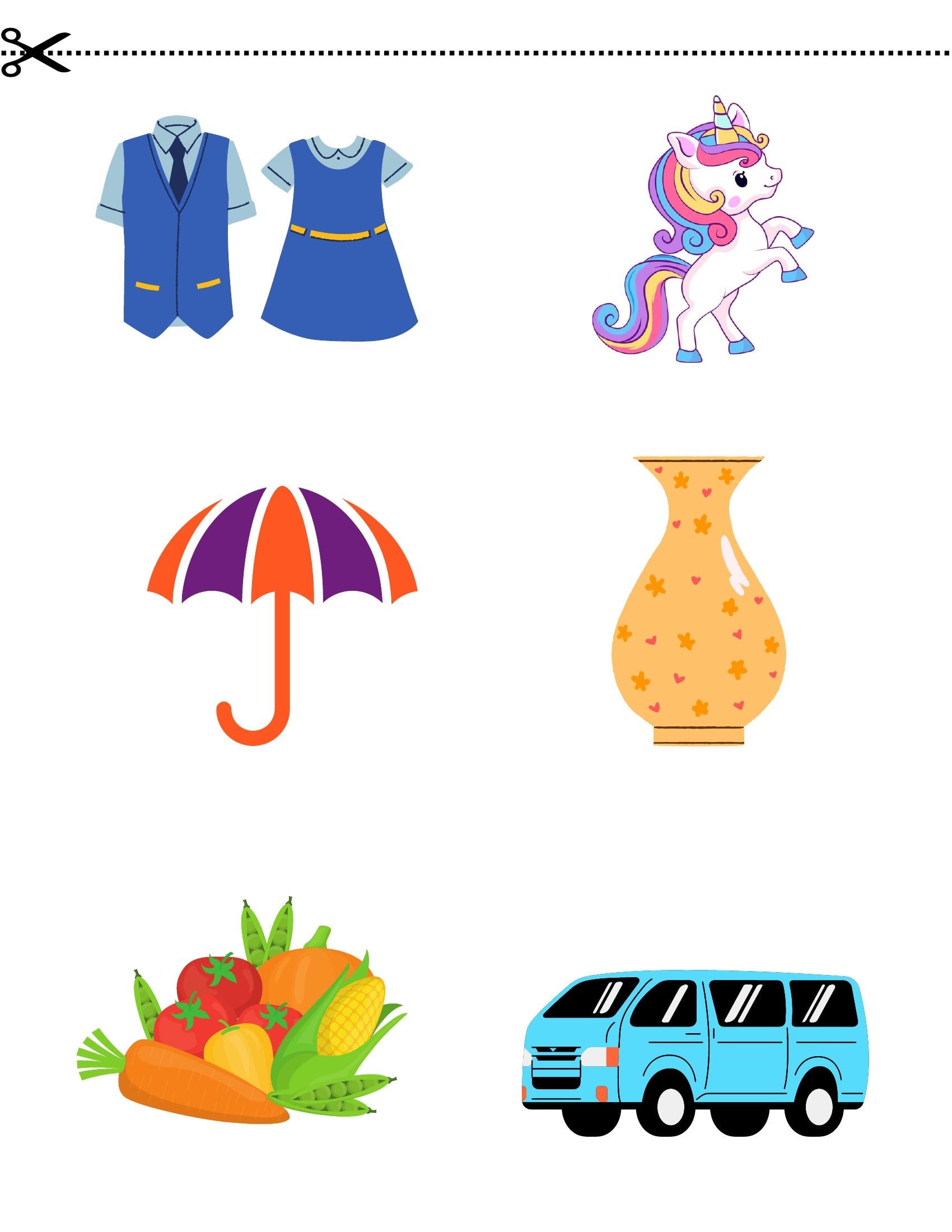
The U and V cut-out sheet includes a uniform, unicorn, umbrella, vase, vegetables, and van. These pictures give children several familiar words to recognize.
The unicorn adds a playful element that may grab younger children’s attention. Encourage your child to sort the pictures after cutting them out. This creates another simple way to practice beginning-letter recognition.
79. Cut-Out Pictures for T and U Words
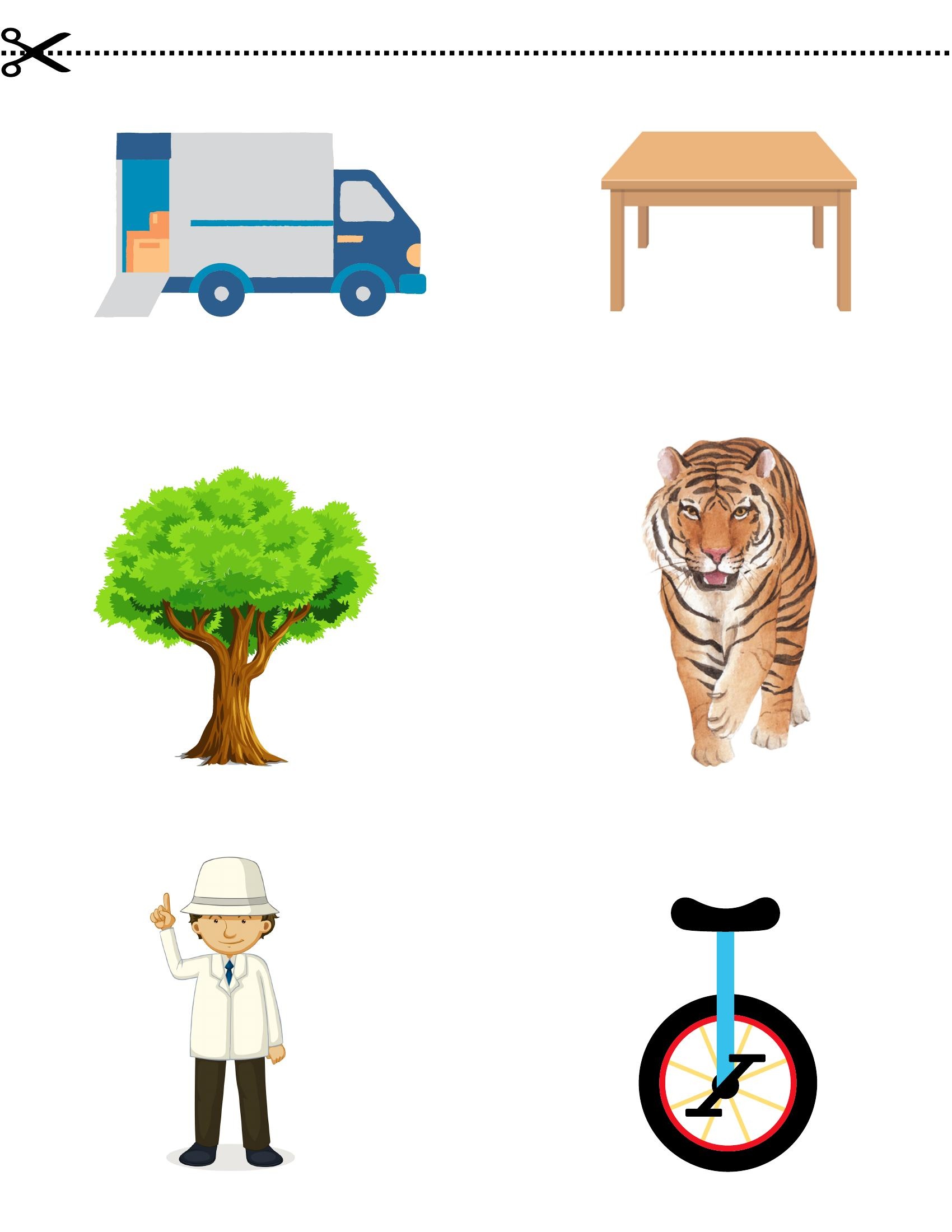
The next page brings together a truck, table, tree, tiger, umpire, and unicycle. Children can review T and U words through a mixture of objects, animals, and people.
The pictures are easy to discuss before starting the craft portion. Ask your child to name each one and identify its first letter. Then, they can cut and sort the pieces into matching groups.
80. Cut-Out Pictures for Z Words
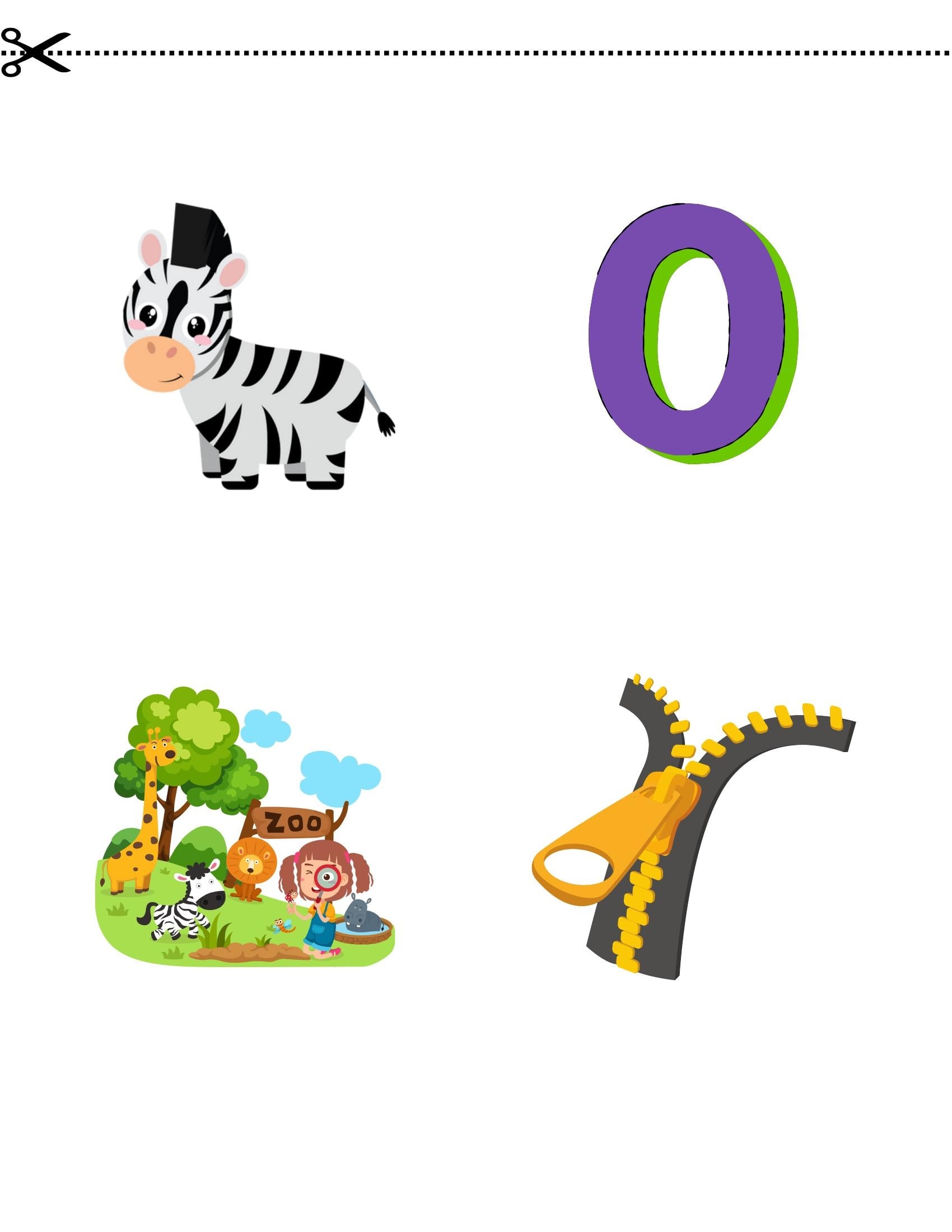
The final worksheet brings the collection to a close with four Z-related pictures. Children can find a zebra, zero, zoo, and zip.
These familiar images give them a simple way to finish their alphabet practice. Encourage your child to name each picture and repeat the Z sound.
After cutting and pasting, they will have completed the final page of this 80-page collection.
Final Thoughts
These Cut and Paste Alphabet Worksheets give children a fun way to practice letters, beginning sounds, and vocabulary.
The mix of picture activities, uppercase letters, lowercase letters, and cut-outs keeps the learning varied. Kids can learn while cutting, sorting, matching, and pasting familiar images.
For parents and tutors, the 80-page collection also makes planning easier. You can choose a few pages for each session instead of completing everything at once.
Let children name the pictures, talk about unfamiliar words, and enjoy the hands-on process. A relaxed approach can make alphabet practice feel more like creative play.
If your child enjoys learning with scissors, pictures, and simple matching tasks, this collection is worth adding to your activity folder.
Print a few pages, gather some child-safe scissors and glue, and let the learning begin. With regular practice, these simple activities can become a cheerful part of your child’s alphabet routine.