
78 Easy Uppercase and Lowercase Letter Tracing Worksheets
Disclosure: Some of the links in this post are affiliate links. This means if you click on the link and purchase an item, I will receive an affiliate commission at no extra cost to you.
Learning to write letters takes practice, especially when children are still getting used to holding a pencil.
Some children can recognize letters but struggle to form them correctly. Simple tracing activities give them a chance to follow letter shapes and build confidence.
These Letter Tracing Worksheets offer a straightforward way to practice writing the alphabet.
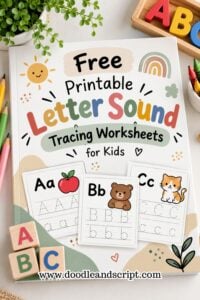
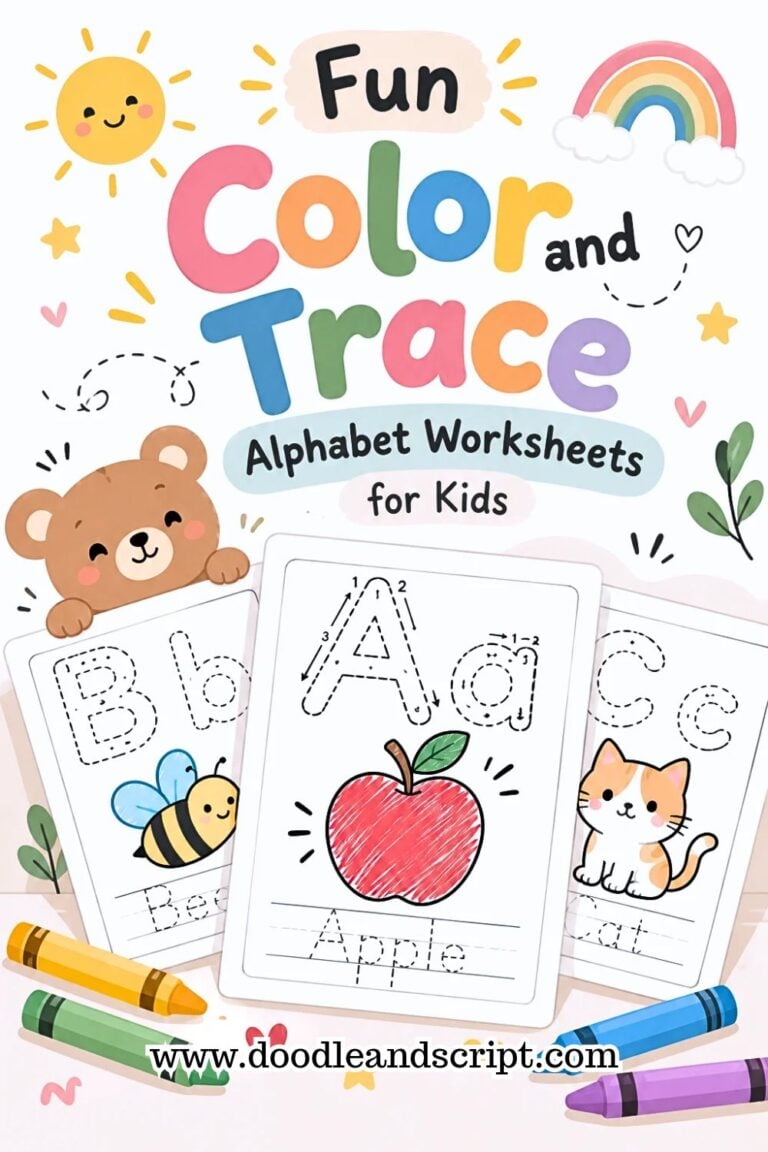
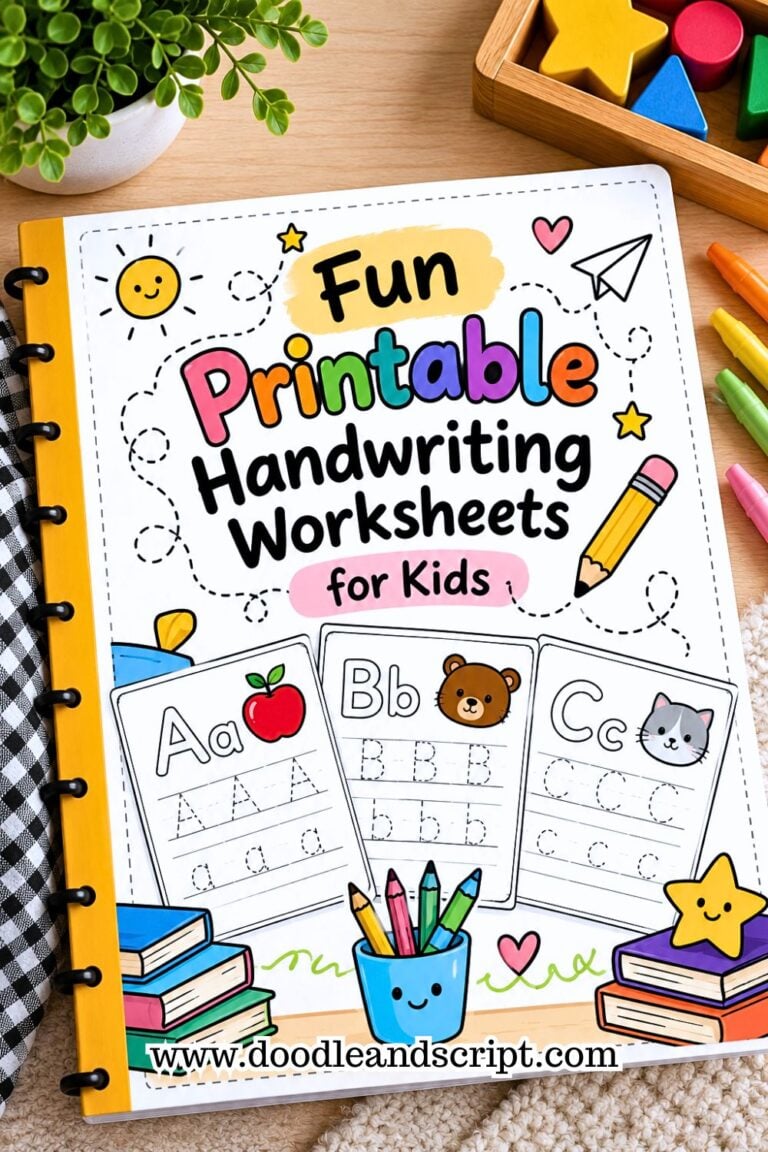
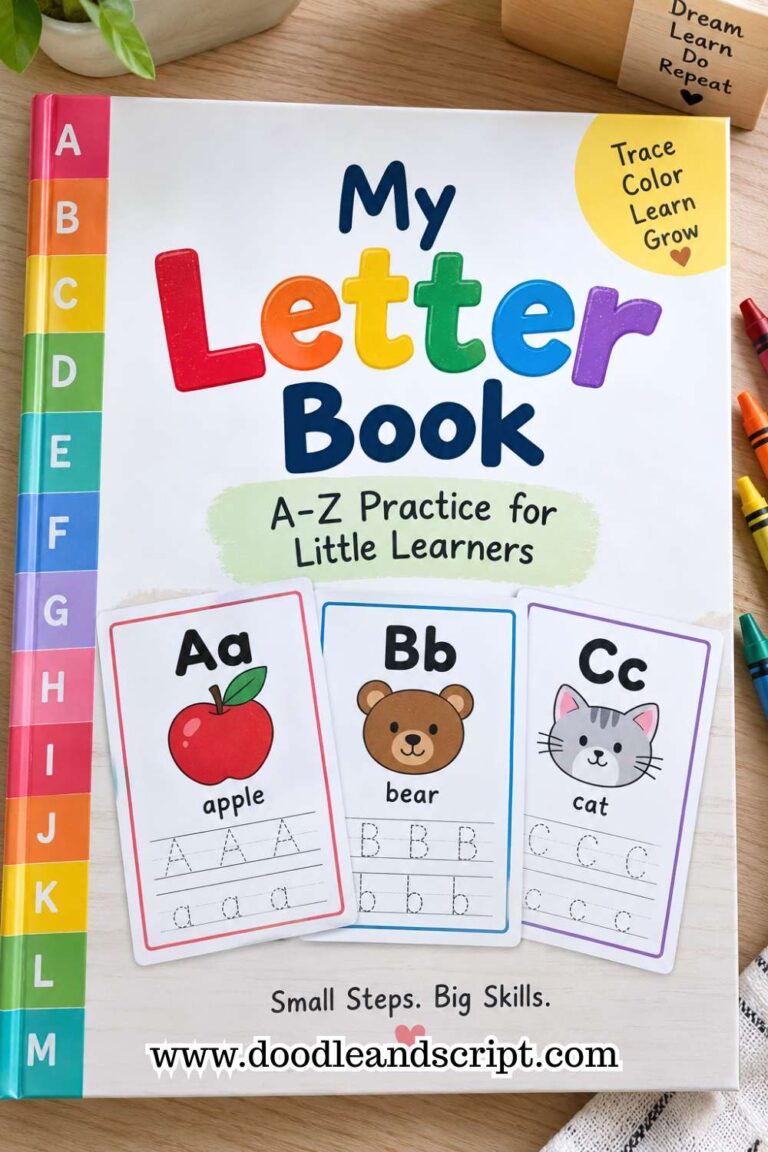
This printable collection contains 78 pages covering uppercase letters, lowercase letters, and uppercase and lowercase pairs.
Each worksheet focuses on tracing a particular letter or letter combination. The pages also show numbered stroke directions to help children understand how to form each letter.
With repeated practice, kids can become more familiar with letter shapes and writing patterns.
Parents and teachers can use these worksheets during short handwriting sessions at home or in the classroom.
Start with a letter your child already recognizes, then introduce less familiar ones. Encourage your child to follow the tracing lines slowly instead of rushing through the page.
You can also say each letter aloud while your child practices. This makes handwriting time a useful opportunity to review the alphabet together.
Uppercase and Lowercase Letter Tracing Worksheets
1. Uppercase Letter A Tracing Worksheet
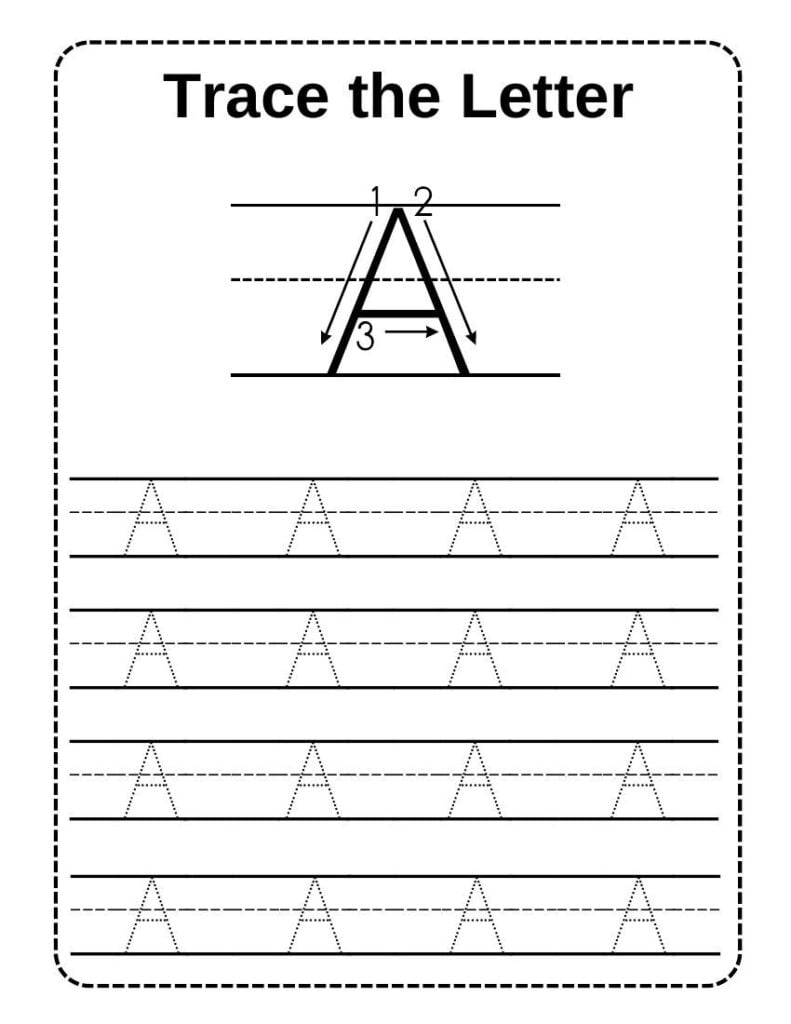
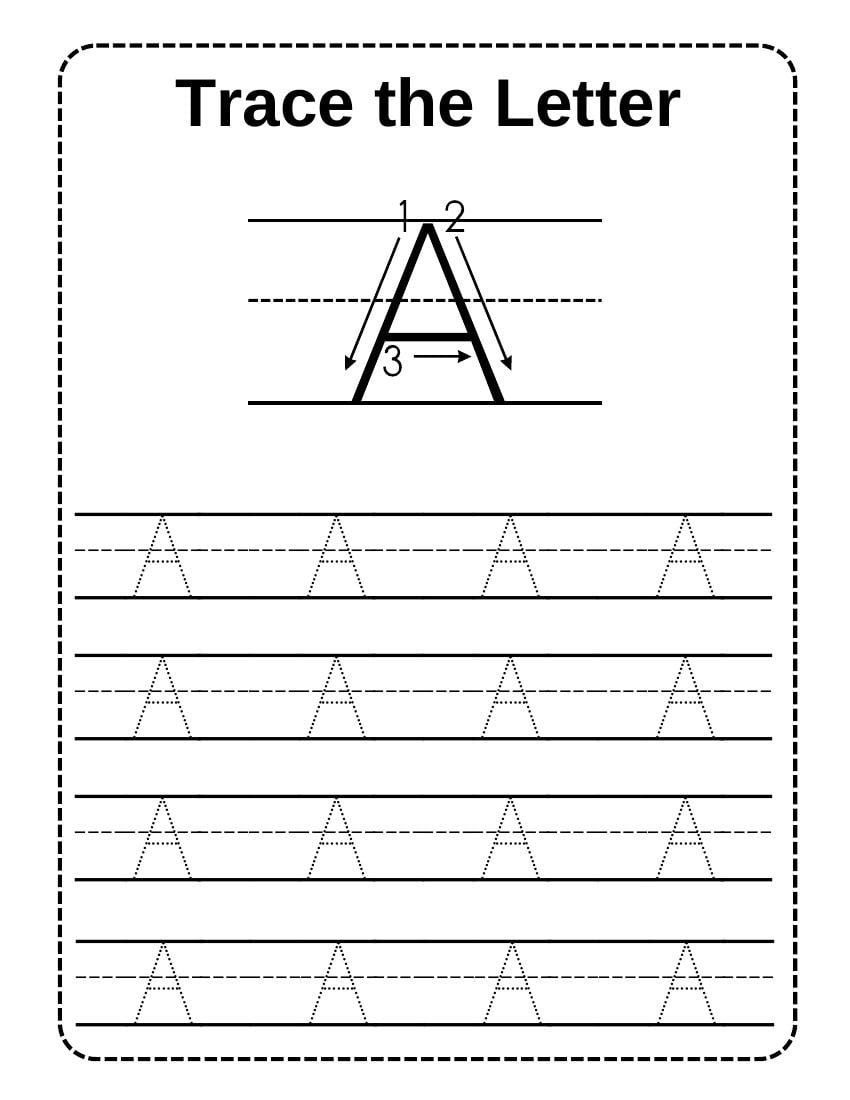
The first worksheet introduces children to the uppercase letter A. It includes a large example with numbered directions showing how to form the letter.
Below, children can trace several rows of dotted A letters. Encourage your child to follow the slanting lines carefully. This page offers a simple starting point for uppercase handwriting practice.
2. Lowercase Letter a Tracing Worksheet
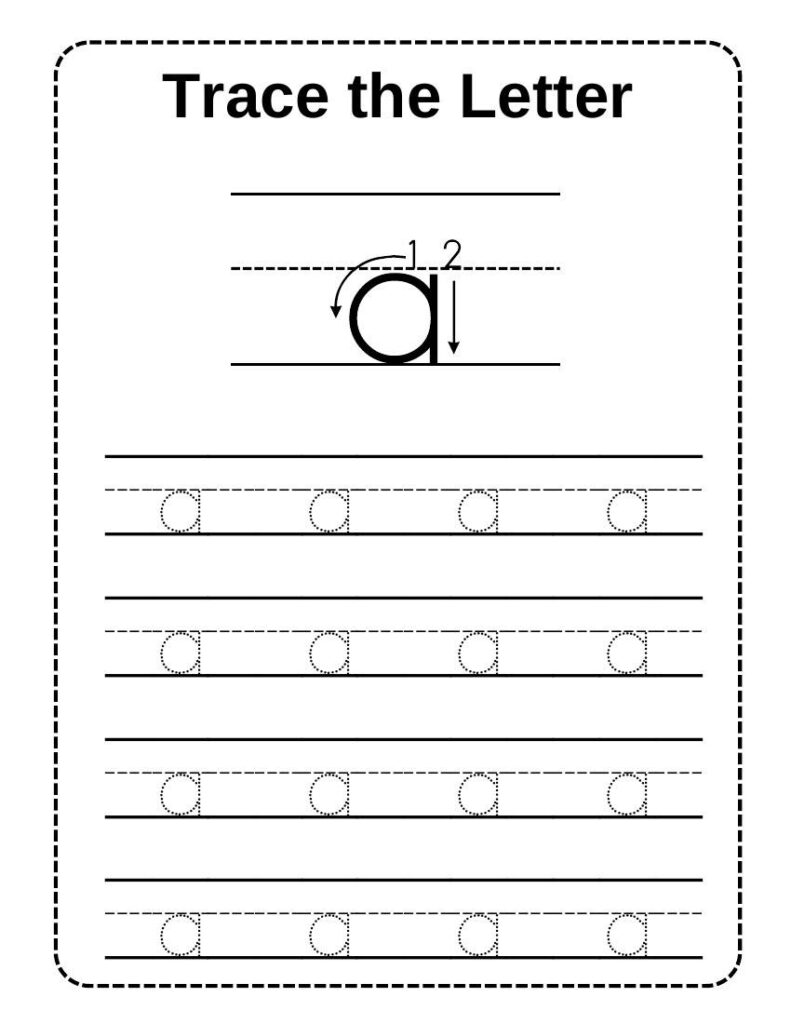
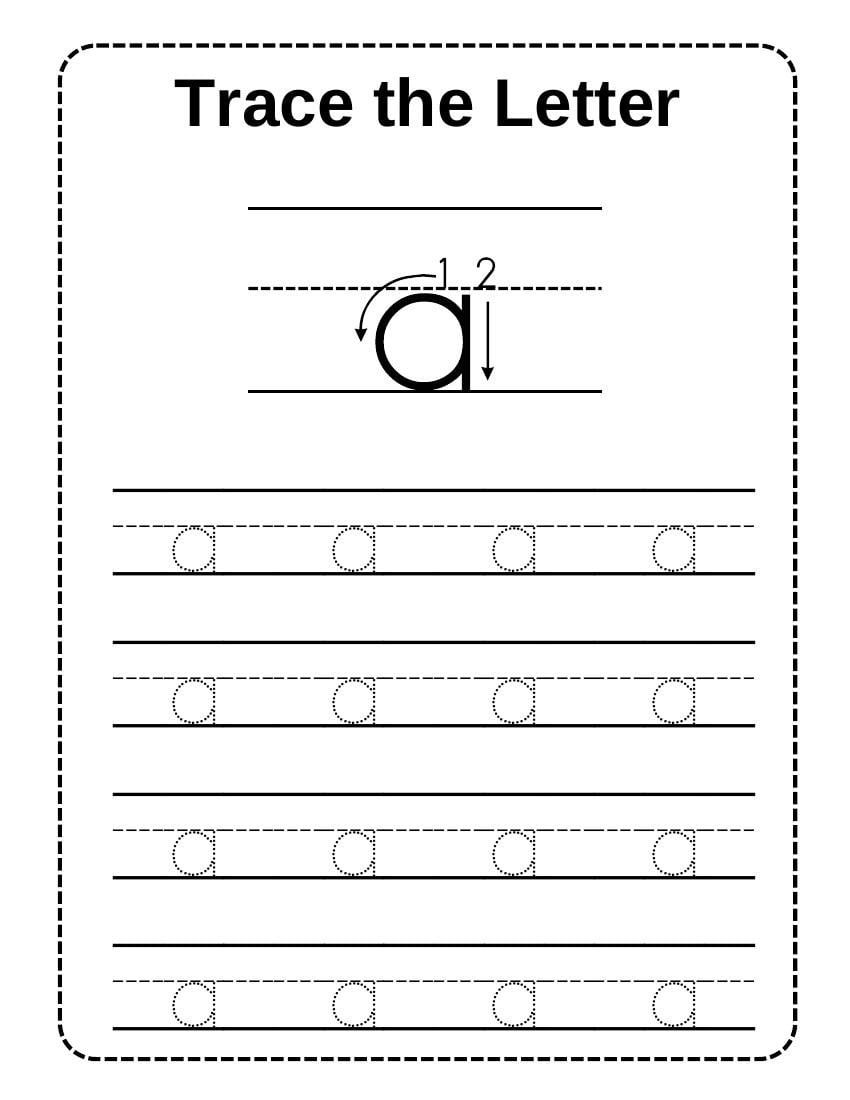
Next, children practice writing the lowercase letter a. The example shows the shape and direction of the strokes. Several rows provide space to trace the letter repeatedly.
You can remind your child to follow the curved shape before completing the straight line. Regular practice helps make lowercase letters more familiar.
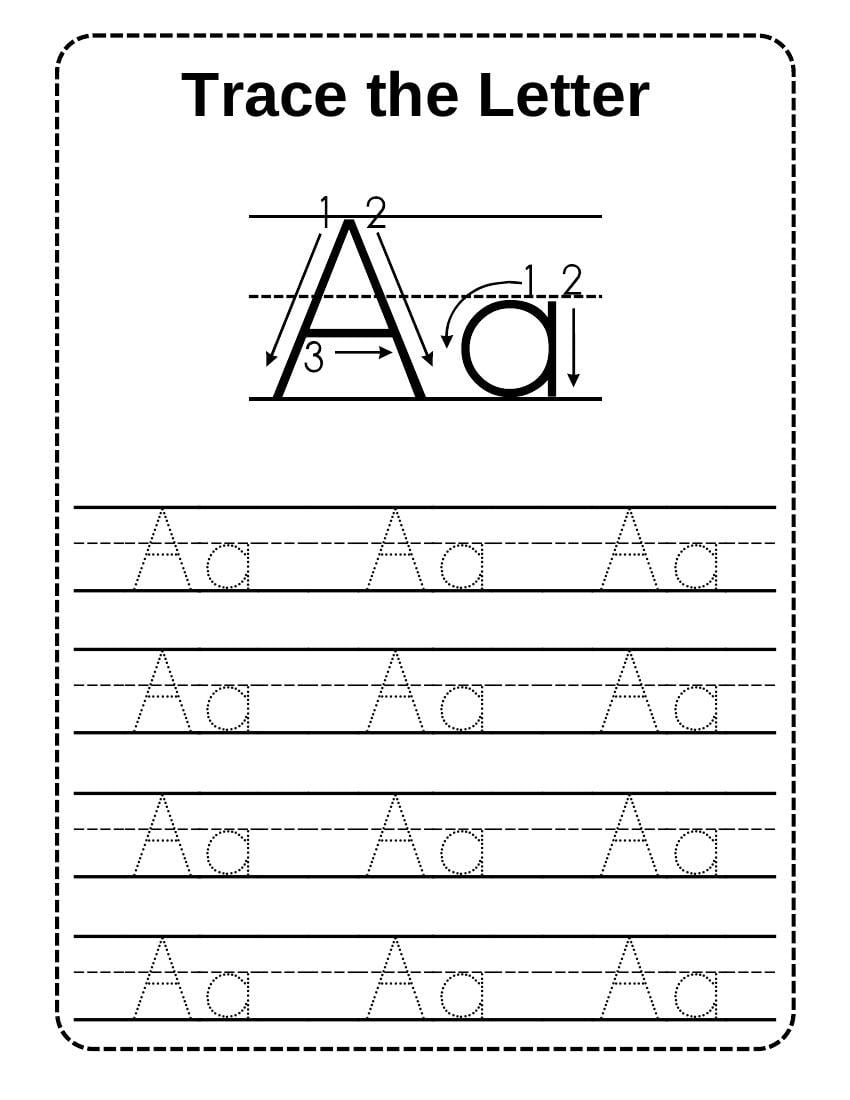
3. Uppercase and Lowercase Aa Tracing Worksheet
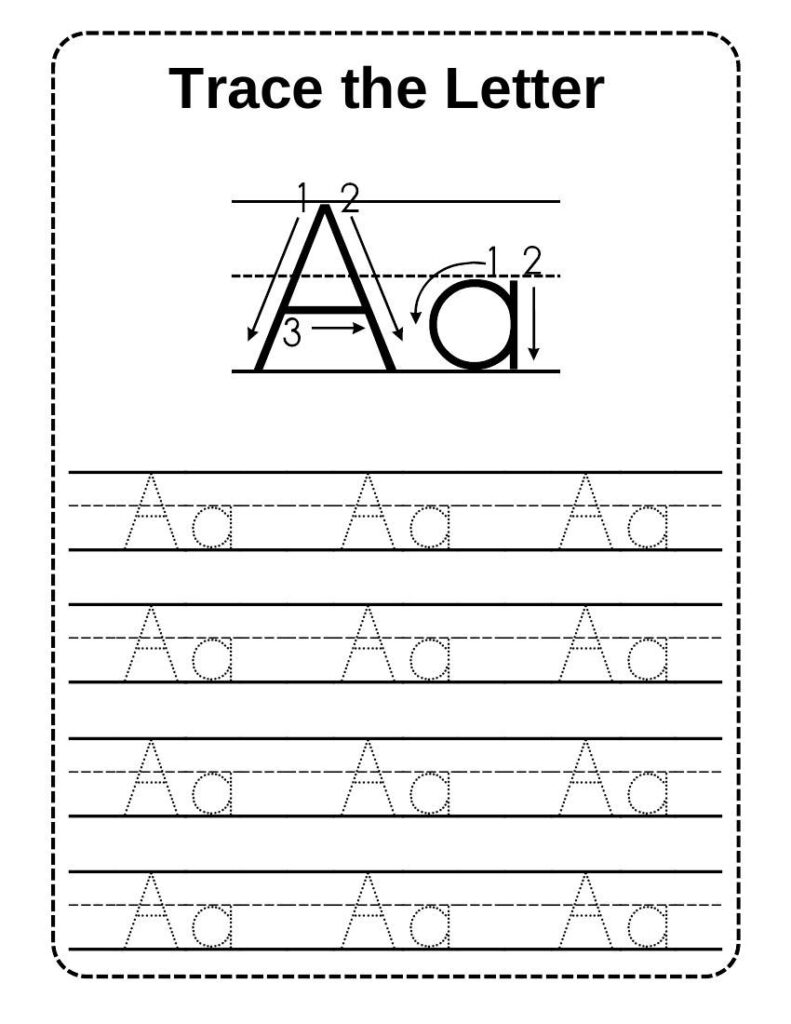
This worksheet brings uppercase A and lowercase a together. Children can compare the two letter shapes before tracing each pair.
The dotted examples provide repeated handwriting practice across the page. Ask your child to name both letters while working. This activity helps reinforce the difference between uppercase and lowercase forms.
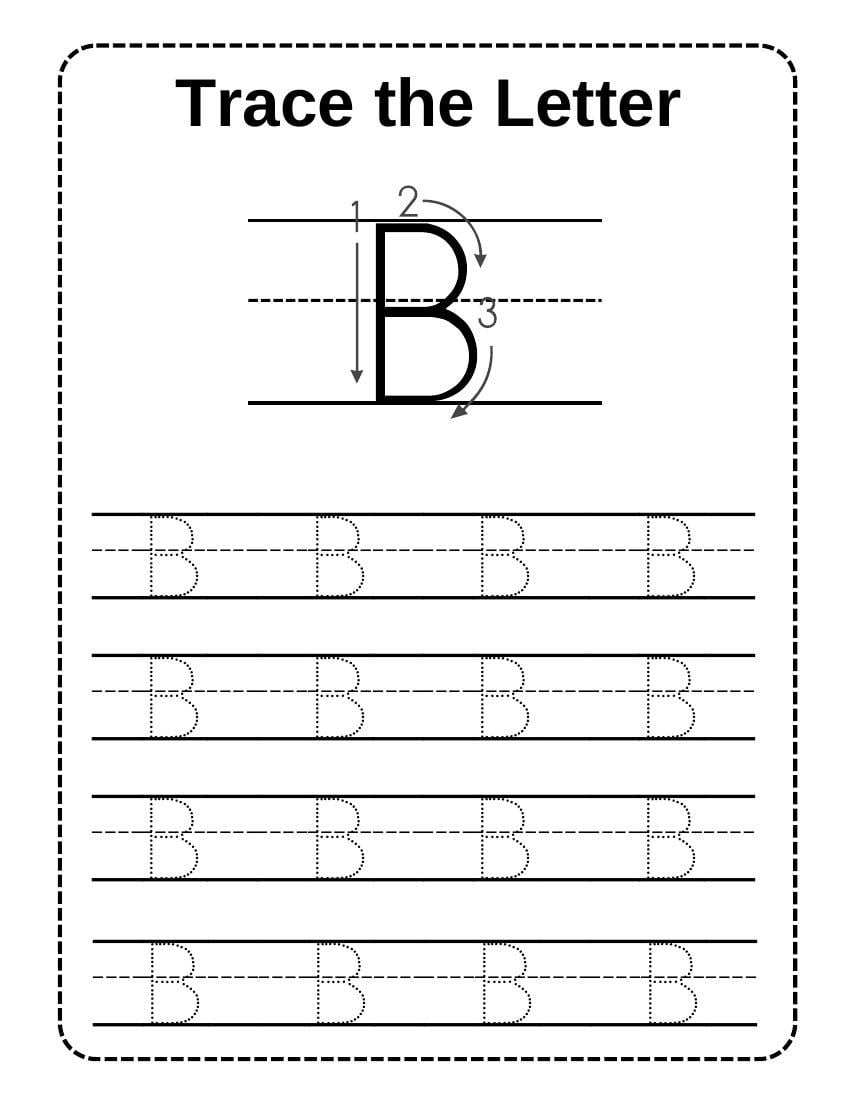
4. Uppercase Letter B Tracing Worksheet
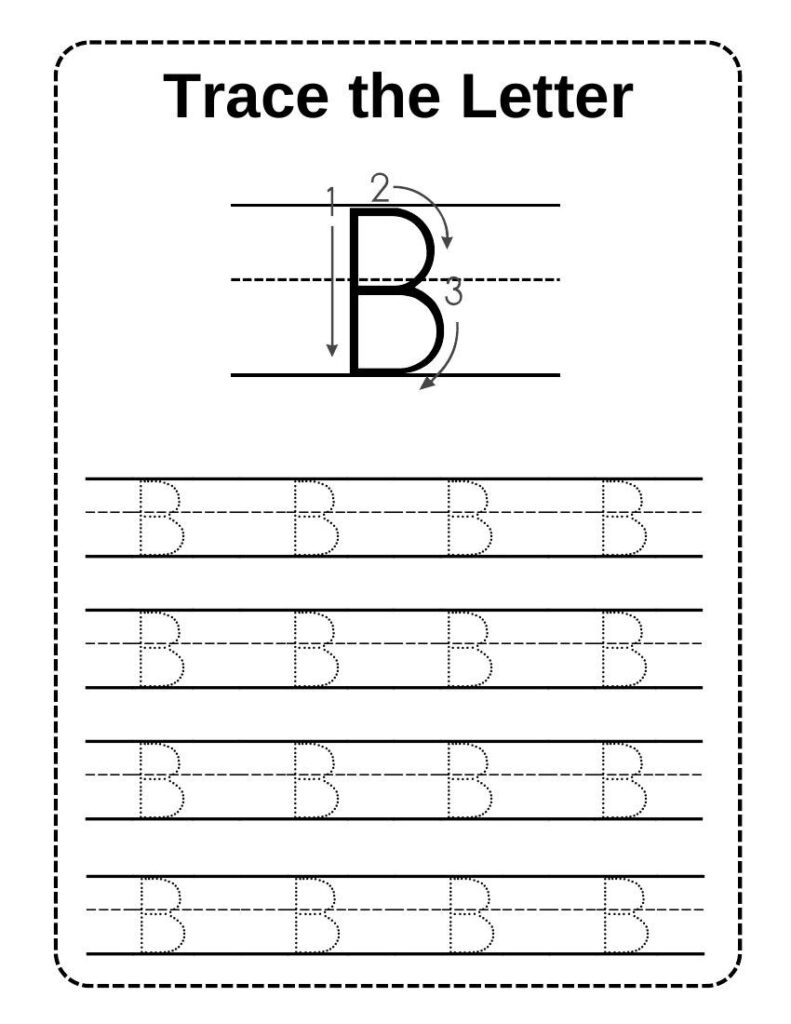
The fourth page focuses on the uppercase letter B. A large example shows the stroke order, followed by rows of dotted letters.
Children can practice the straight line and curved sections step by step. Encourage them to start each letter at the indicated point. This helps make the writing process easier to follow.
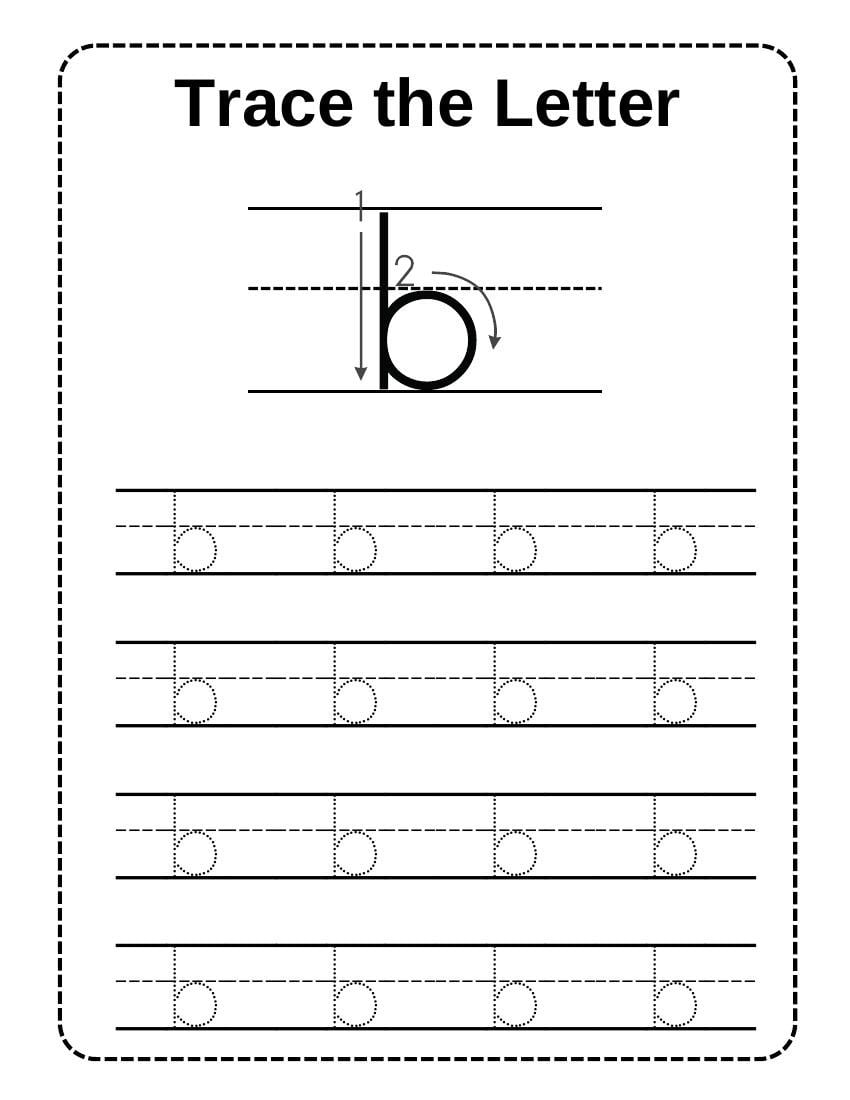
5. Lowercase Letter b Tracing Worksheet
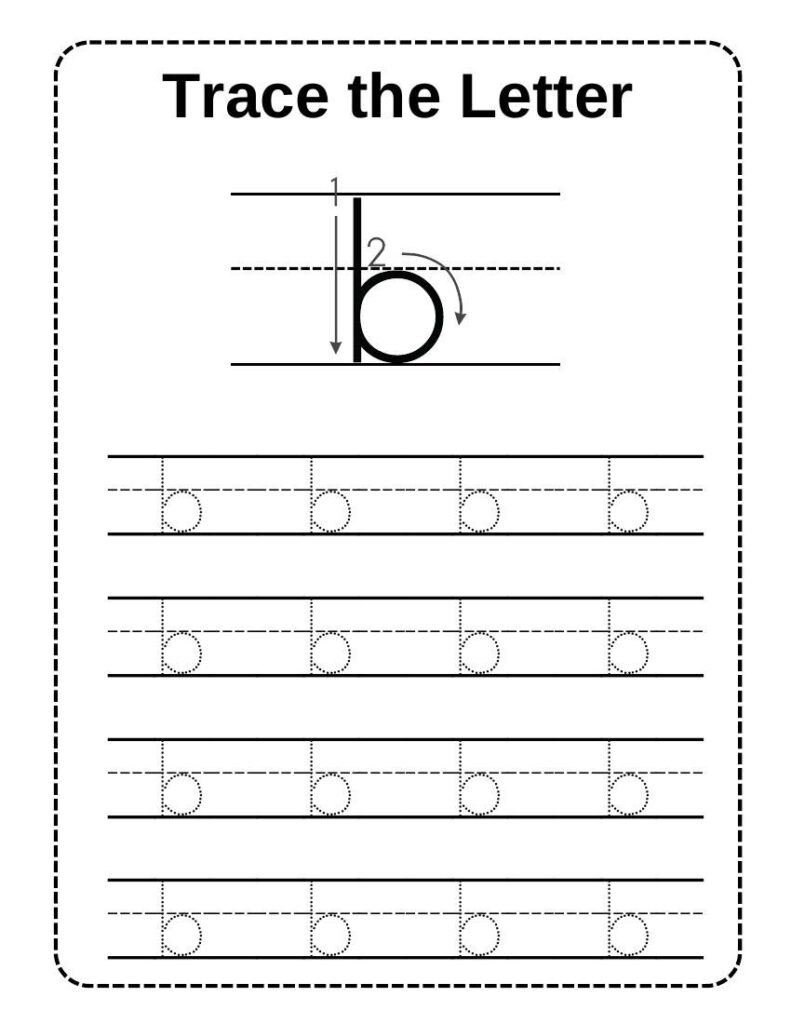
On this page, children practice the lowercase letter b. The worksheet shows how the tall line connects with the rounded part. Several dotted rows allow children to repeat the movement.
You can demonstrate the letter once before your child begins. This extra guidance may help prevent confusion with other similar-looking letters.
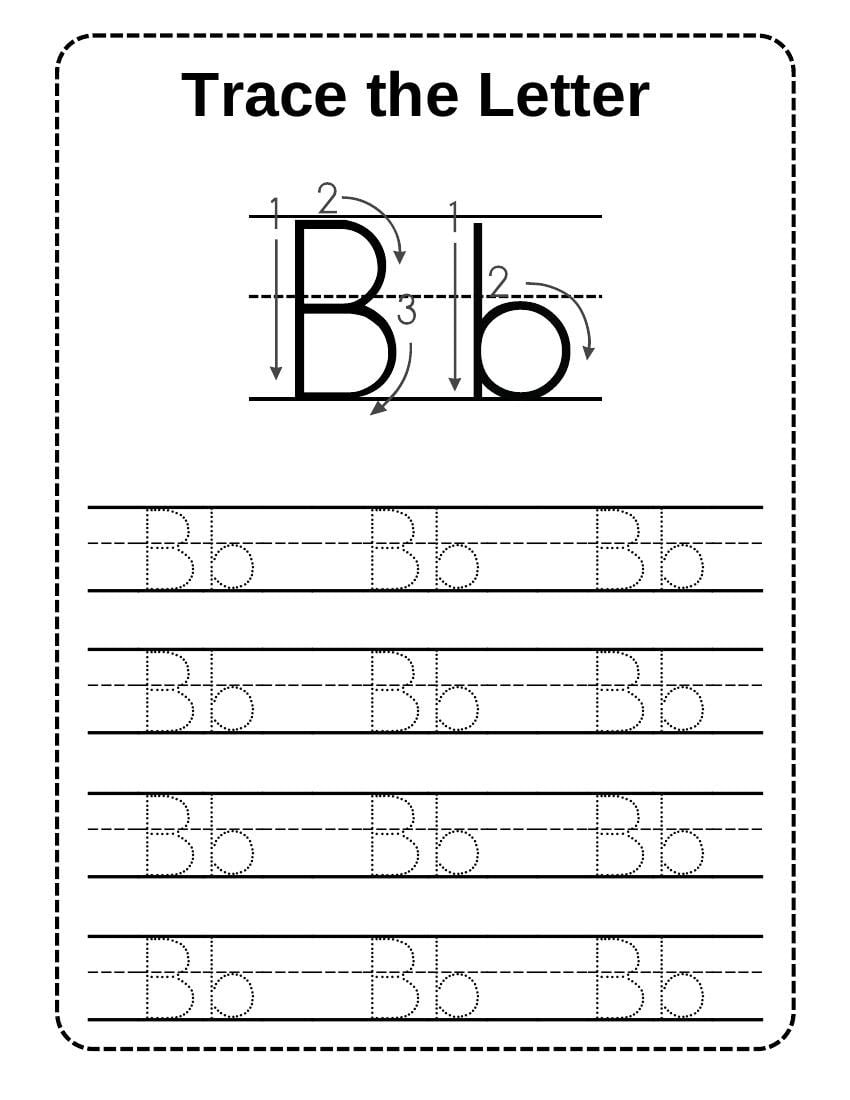
6. Uppercase and Lowercase Bb Tracing Worksheet
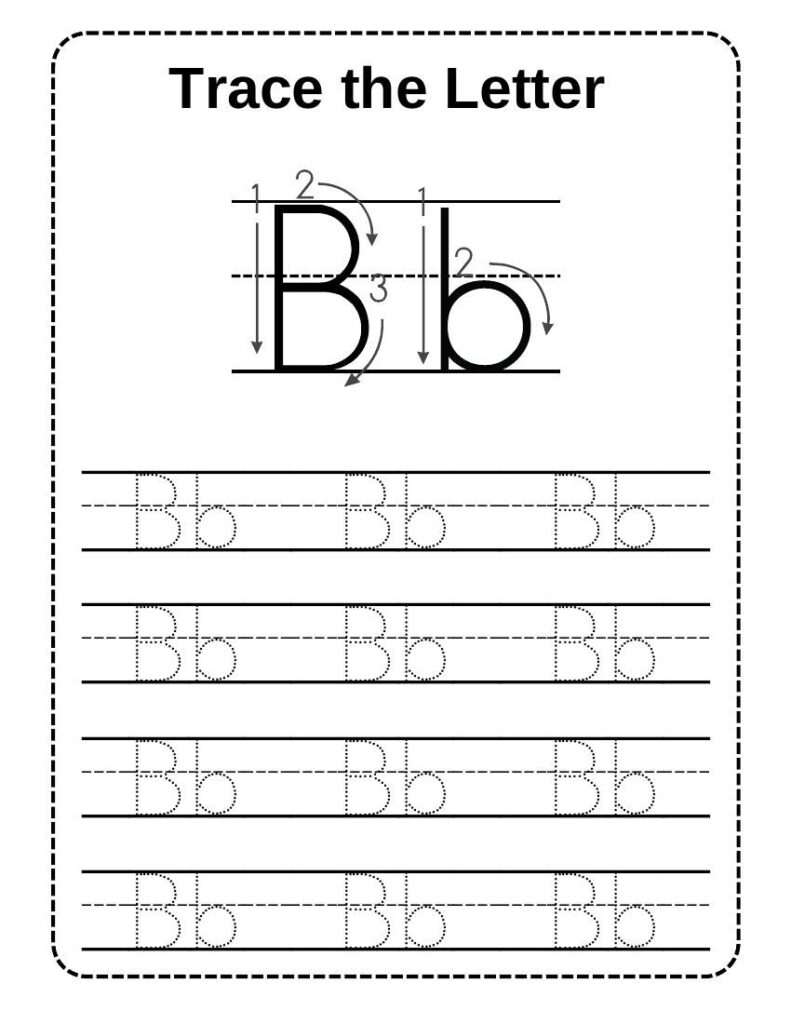
This page combines uppercase B and lowercase b for comparison. Children trace both forms across multiple rows. The examples help them notice how the letters differ in size and shape.
Ask your child to point out the straight line in each letter. Repeating the pair can support letter recognition and handwriting practice.
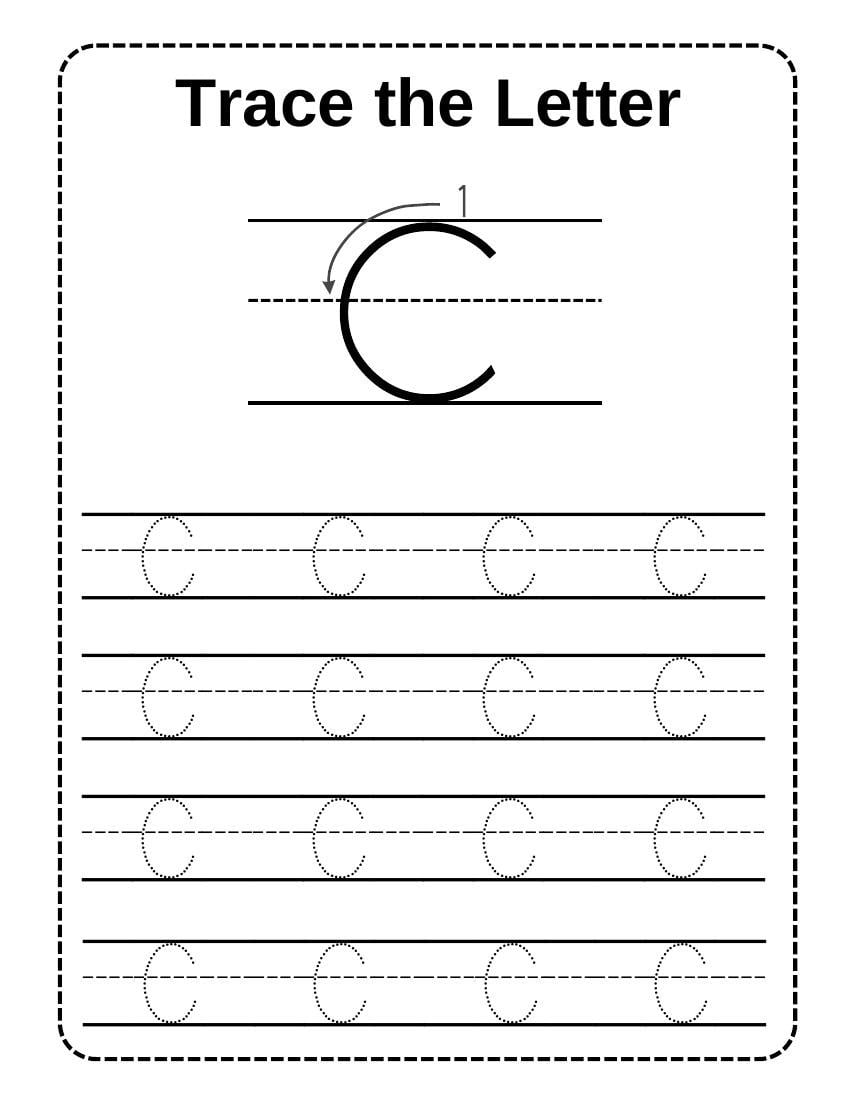
7. Uppercase Letter C Tracing Worksheet
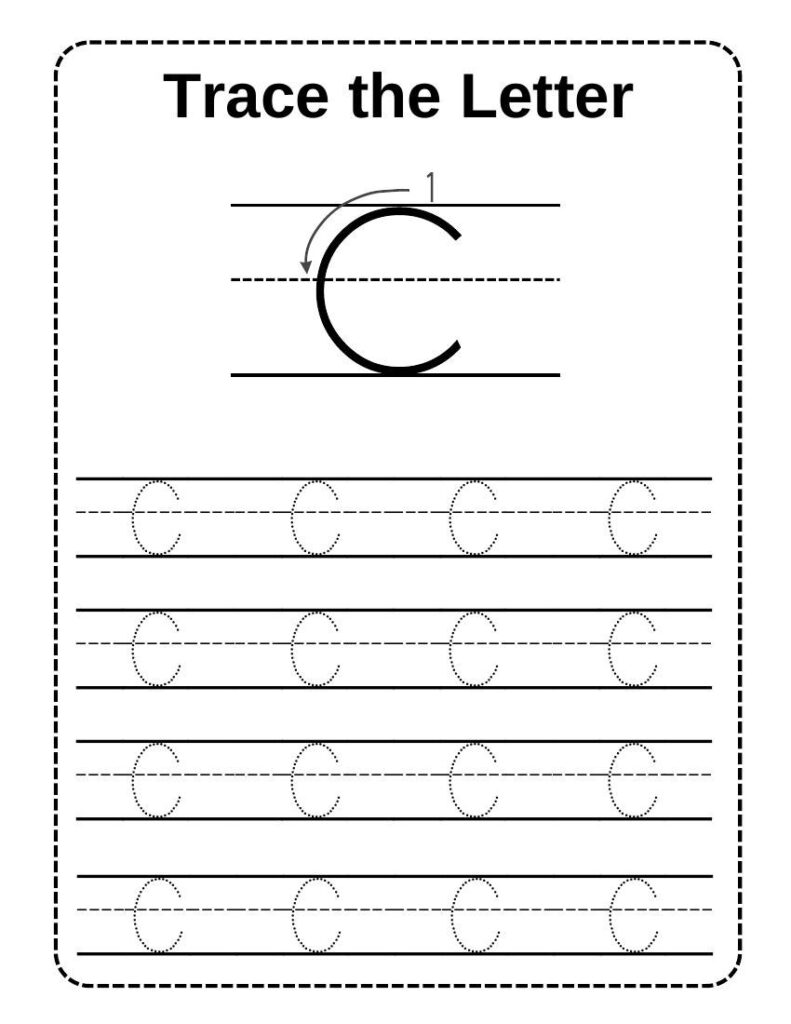
The seventh worksheet introduces uppercase C. Its large example demonstrates the curved movement needed to form the letter.
Children then trace dotted C shapes across several lines. Encourage smooth movements rather than sharp corners. This page gives children practice with a simple curved letter.
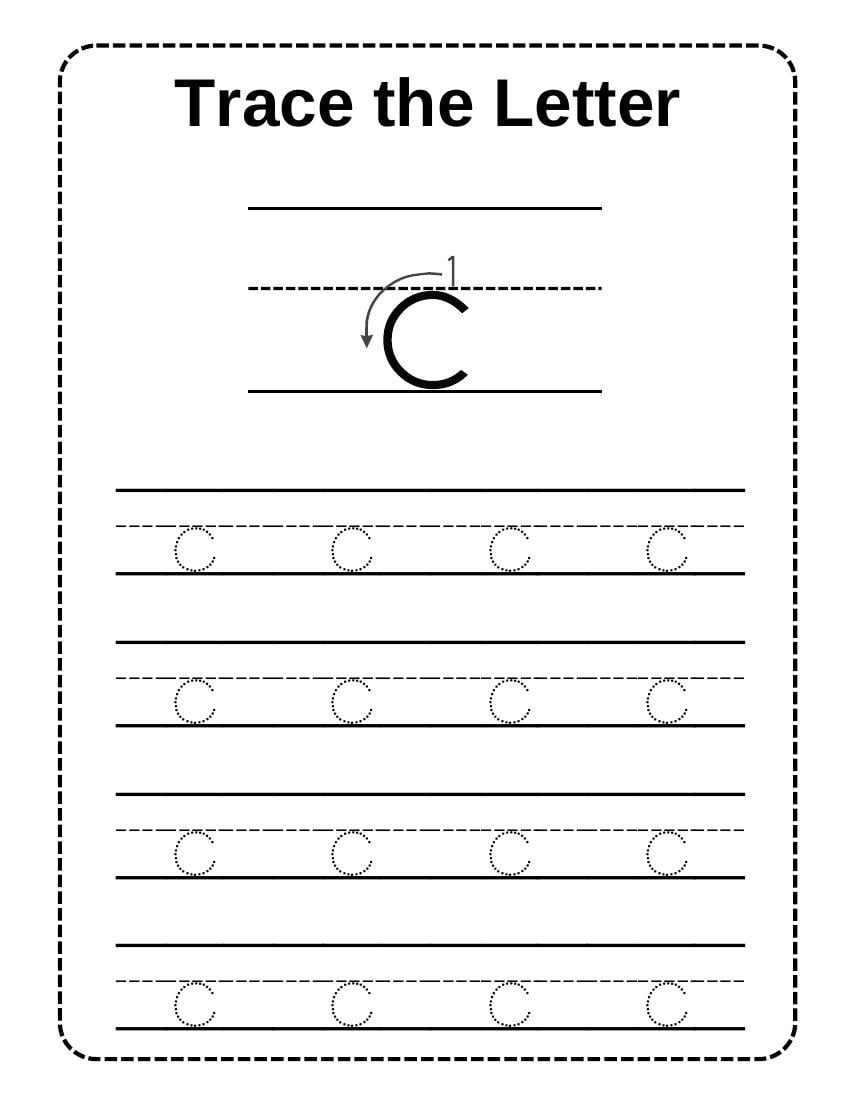
8. Lowercase Letter c Tracing Worksheet
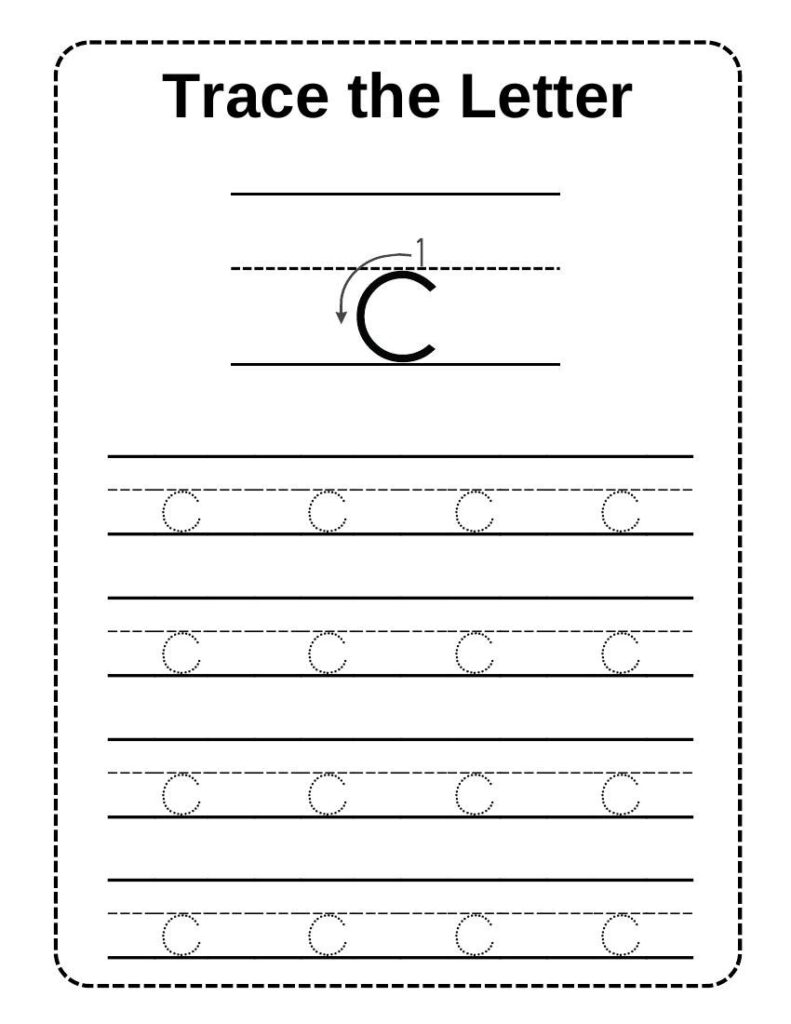
Here, children work on the lowercase letter c. The worksheet provides a large model and several rows of dotted examples. Kids can follow the open curve while practicing pencil control.
Remind your child not to close the shape into a circle. This small detail helps them form the letter correctly.
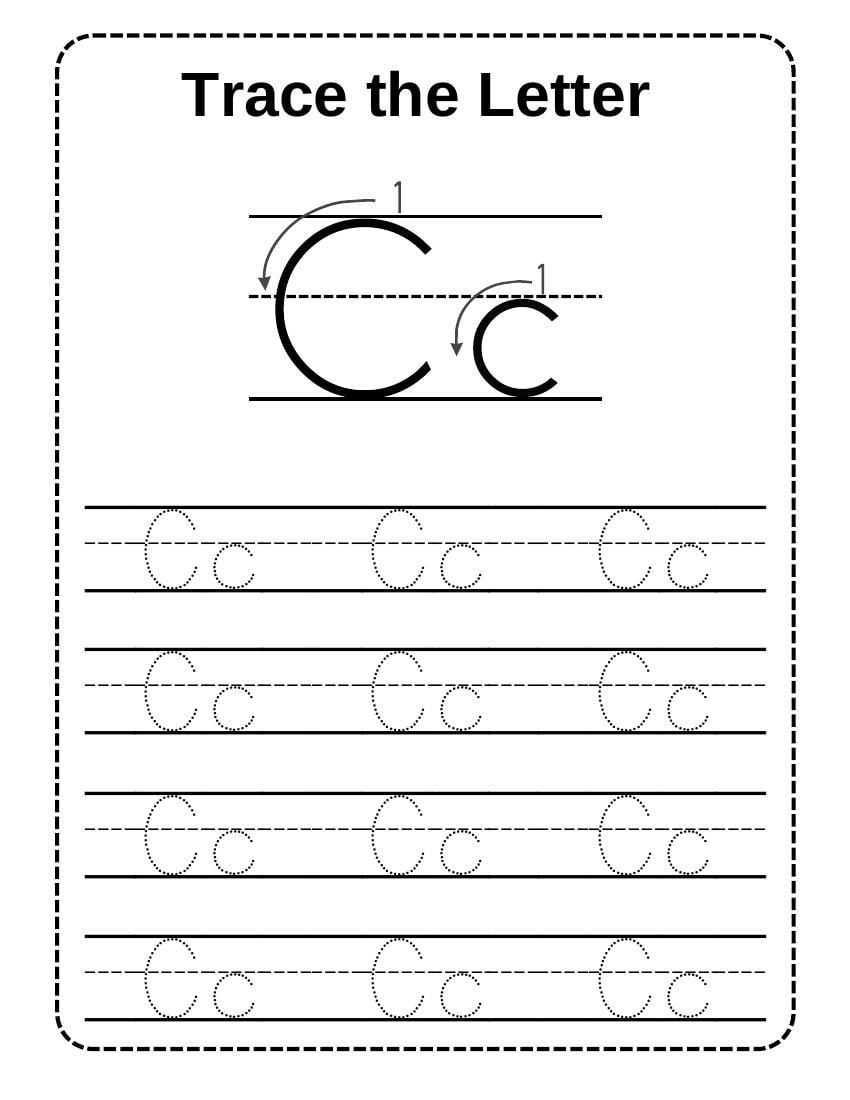
9. Uppercase and Lowercase Cc Tracing Worksheet
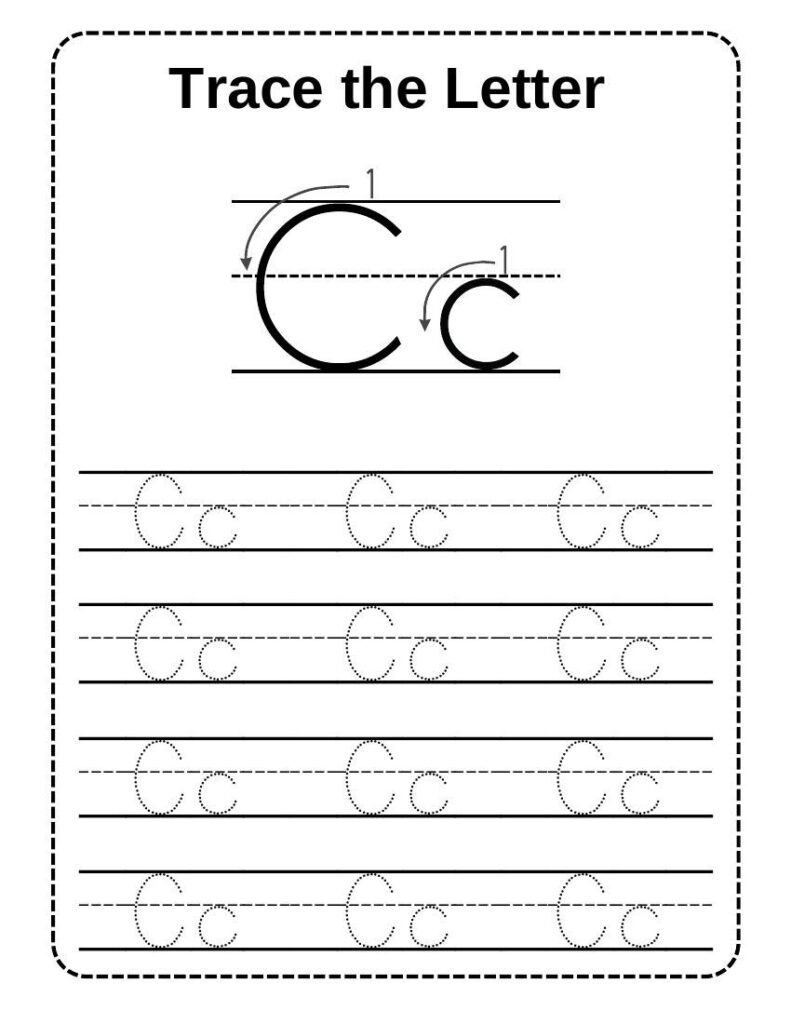
This worksheet pairs uppercase C with lowercase c. Children can see both shapes before tracing them repeatedly. The rows provide opportunities to practice keeping the letters recognizable.
Ask your child to say the letter name as they trace. This makes the activity useful for both handwriting and alphabet review.
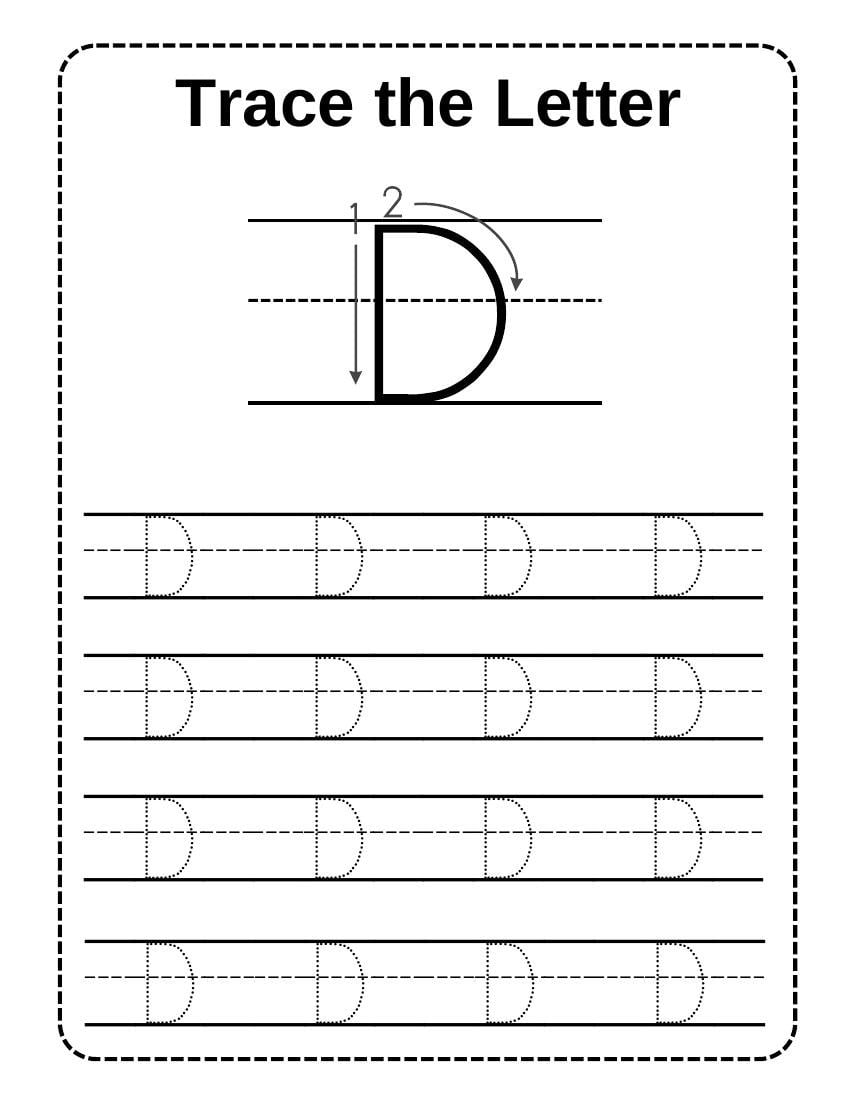
10. Uppercase Letter D Tracing Worksheet
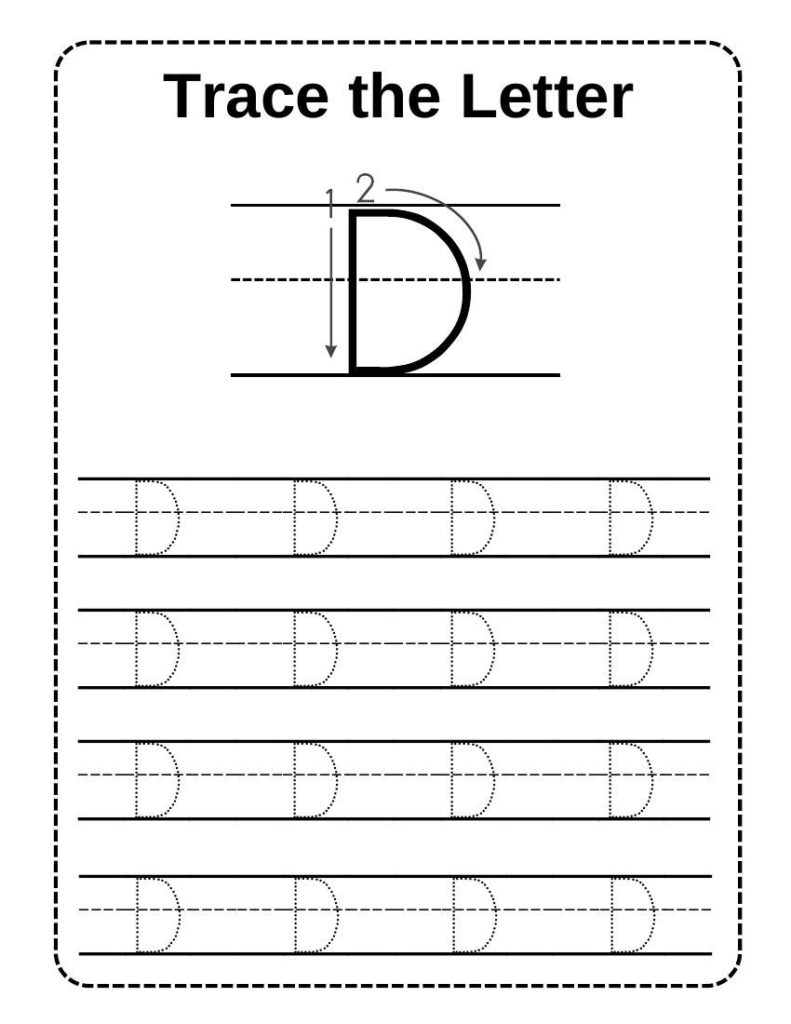
The tenth page focuses on uppercase D. The example shows a straight line followed by a rounded outer shape. Children can trace the dotted letters across the worksheet.
Encourage them to follow the stroke directions carefully. This activity helps build familiarity with a letter that combines straight and curved lines.
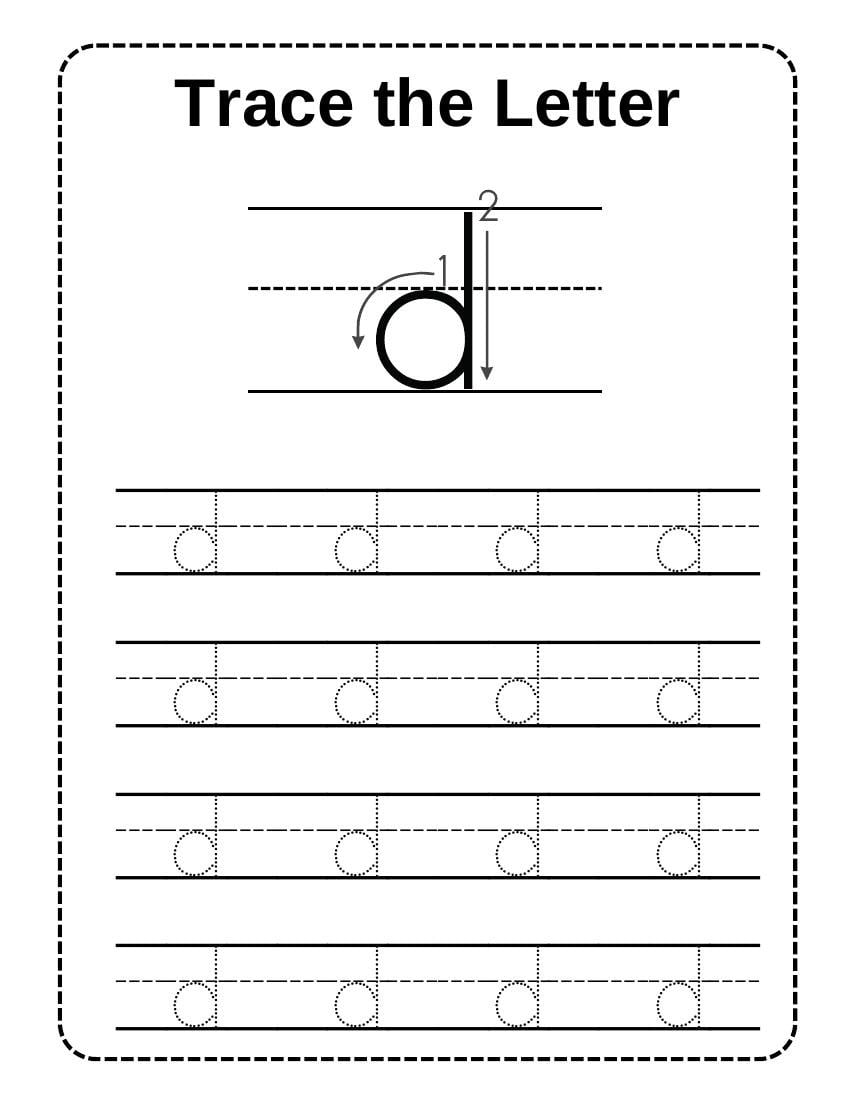
11. Lowercase Letter d Tracing Worksheet
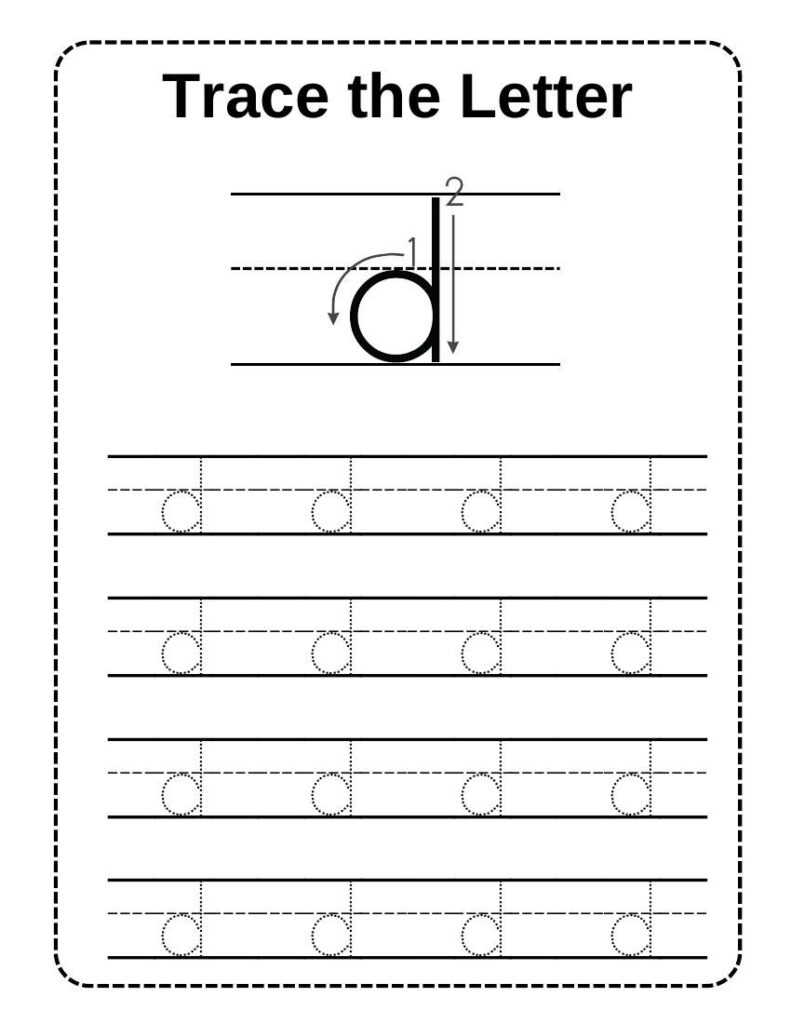
This page introduces the lowercase letter d. Children can study the example before tracing the dotted shapes. The worksheet offers repeated practice with its rounded body and tall line.
You can point out how lowercase d differs from lowercase b. Comparing these letters may help children avoid mixing them up.
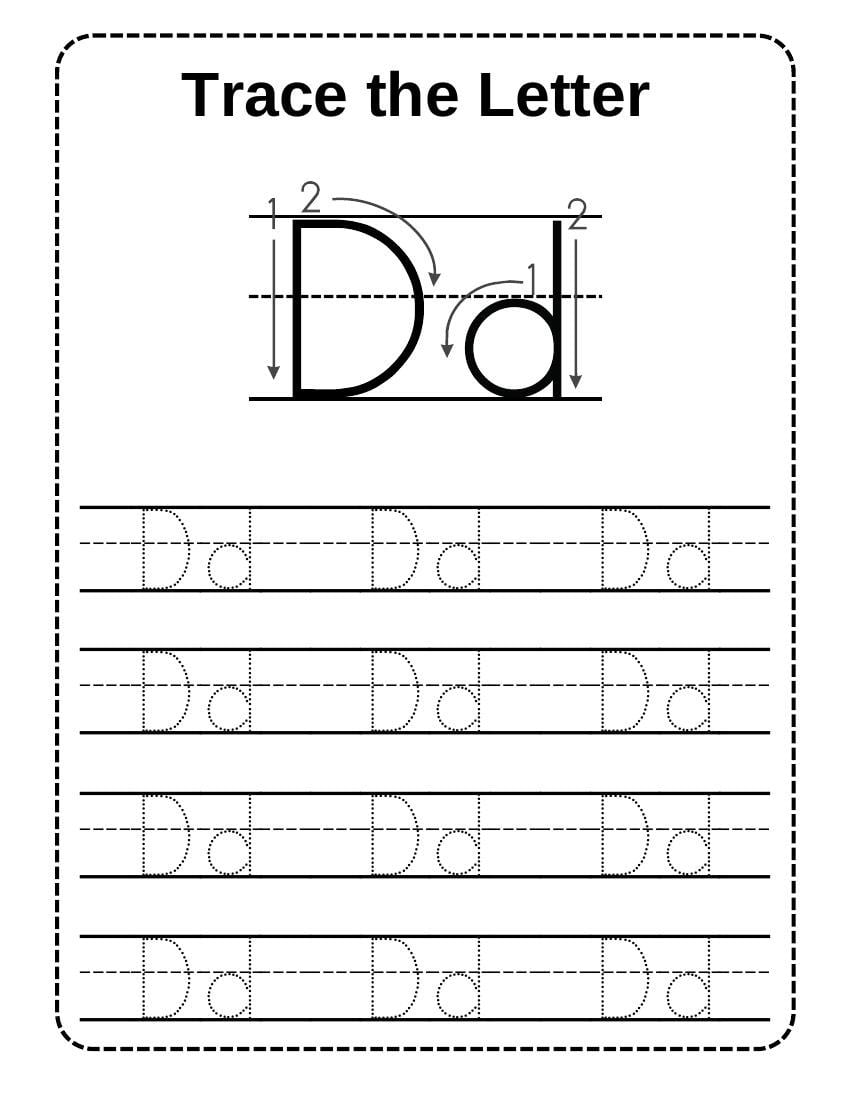
12. Uppercase and Lowercase Dd Tracing Worksheet
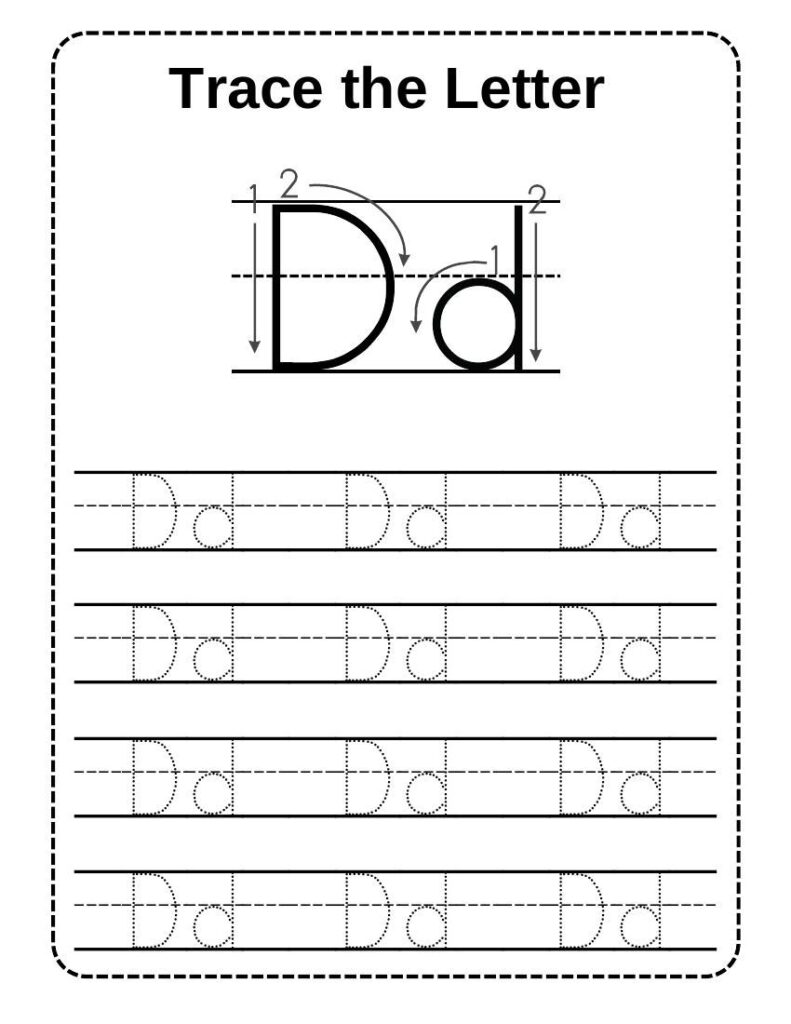
Children practice uppercase D and lowercase d together on this page. The worksheet provides paired examples and repeated tracing lines. Invite your child to compare the two shapes before starting.
Then, encourage careful tracing from one pair to the next. This activity reinforces the relationship between uppercase and lowercase letters.
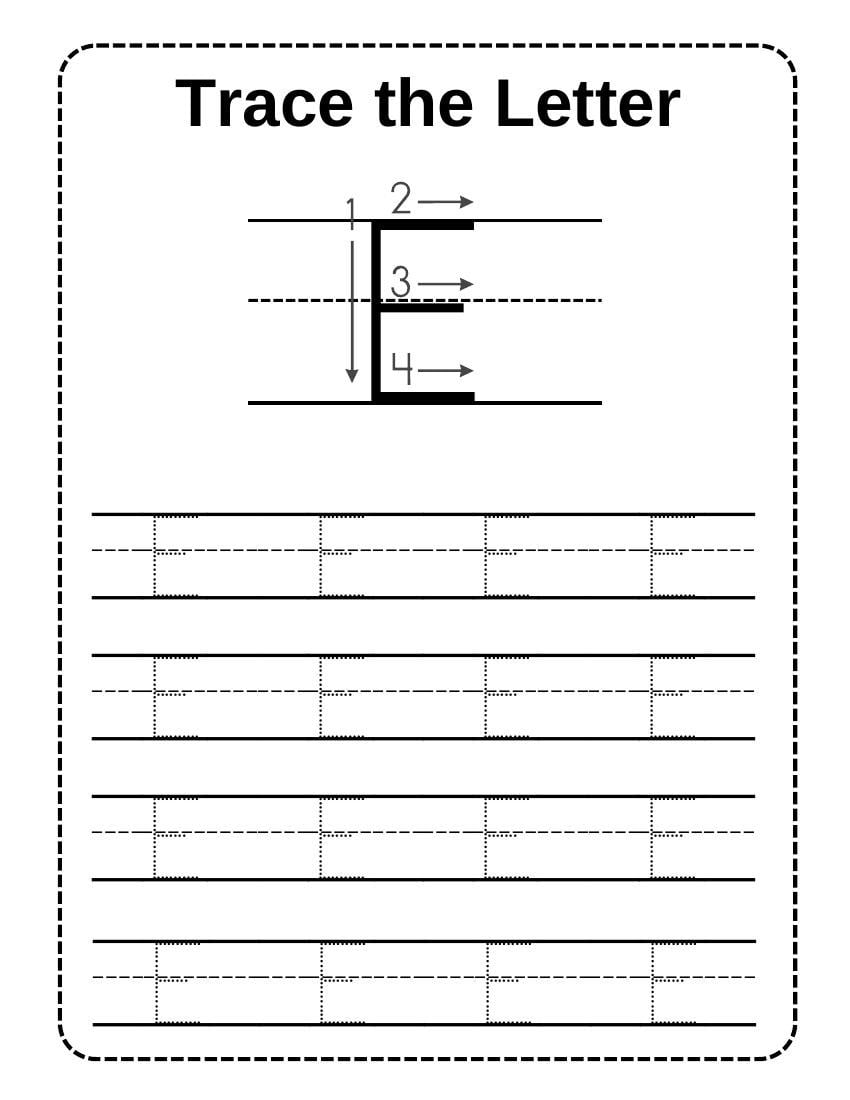
13. Uppercase Letter E Tracing Worksheet
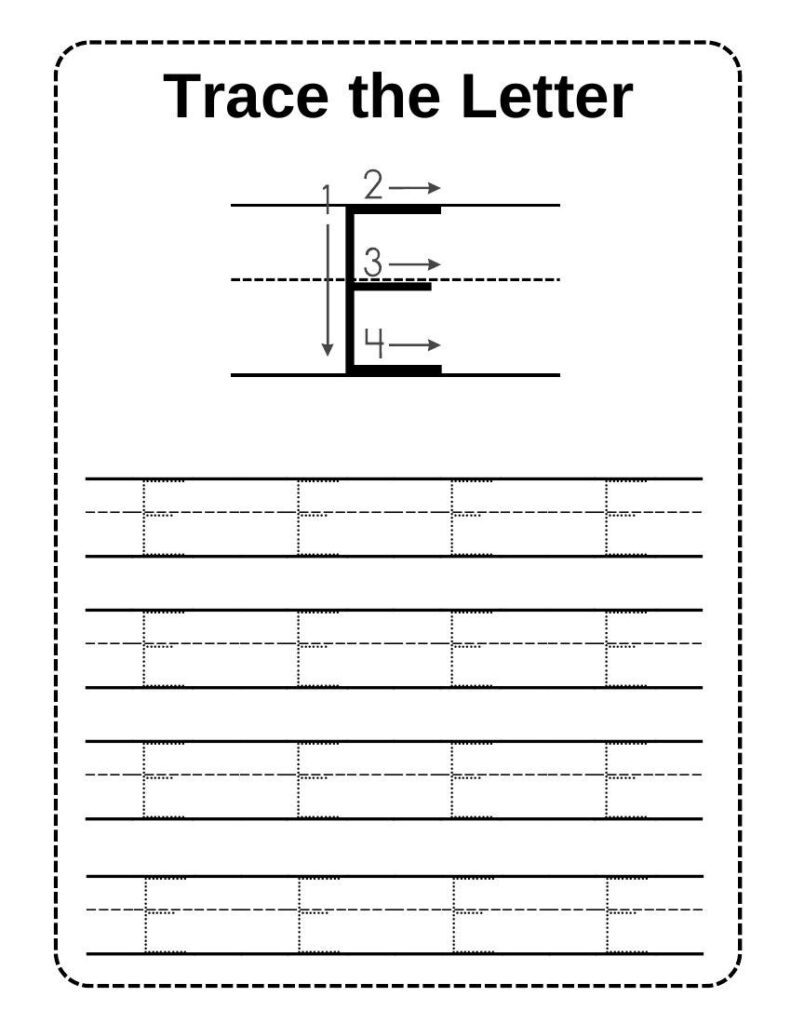
The thirteenth worksheet covers uppercase E. Its example demonstrates the long vertical line and three shorter horizontal strokes.
Children can trace the letter several times on the practice lines. Remind them to follow the numbered directions in order. This page helps develop control when writing letters with straight lines.
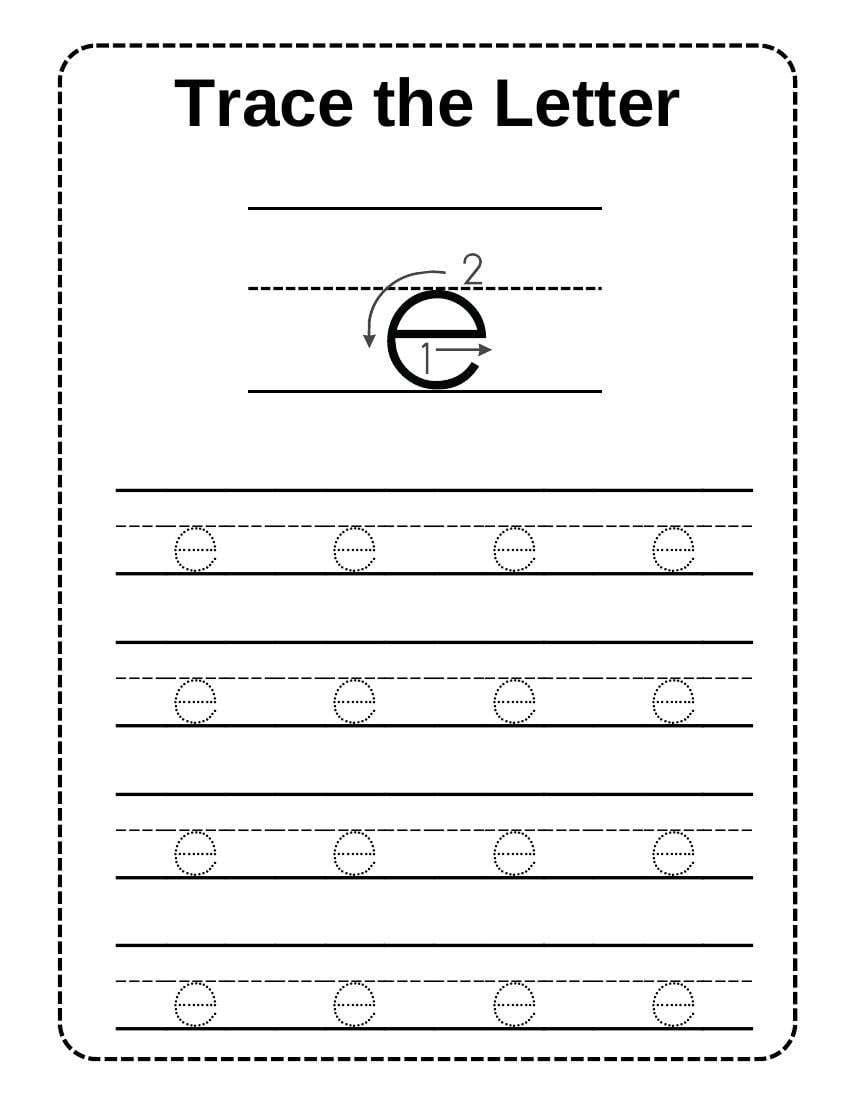
14. Lowercase Letter e Tracing Worksheet
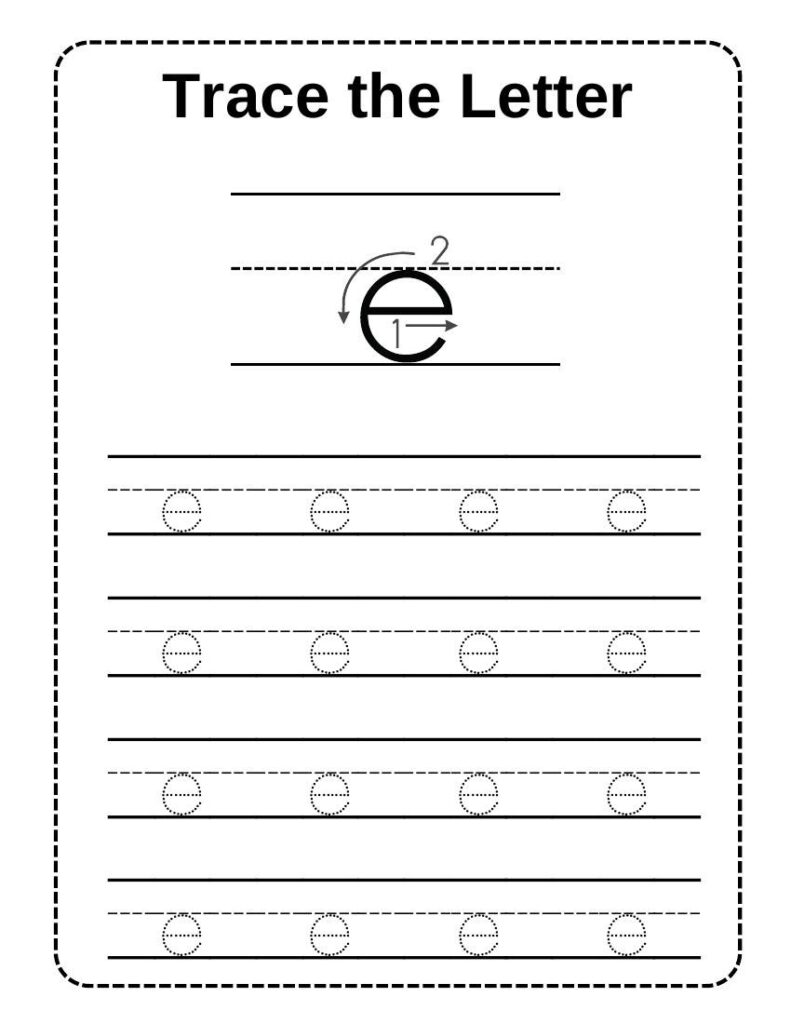
Next, children practice the lowercase letter e. The large model shows the curved shape and its connecting stroke. Dotted examples provide room for repeated practice.
Encourage your child to move slowly around the curve. With practice, the letter may become easier to recognize and write independently.
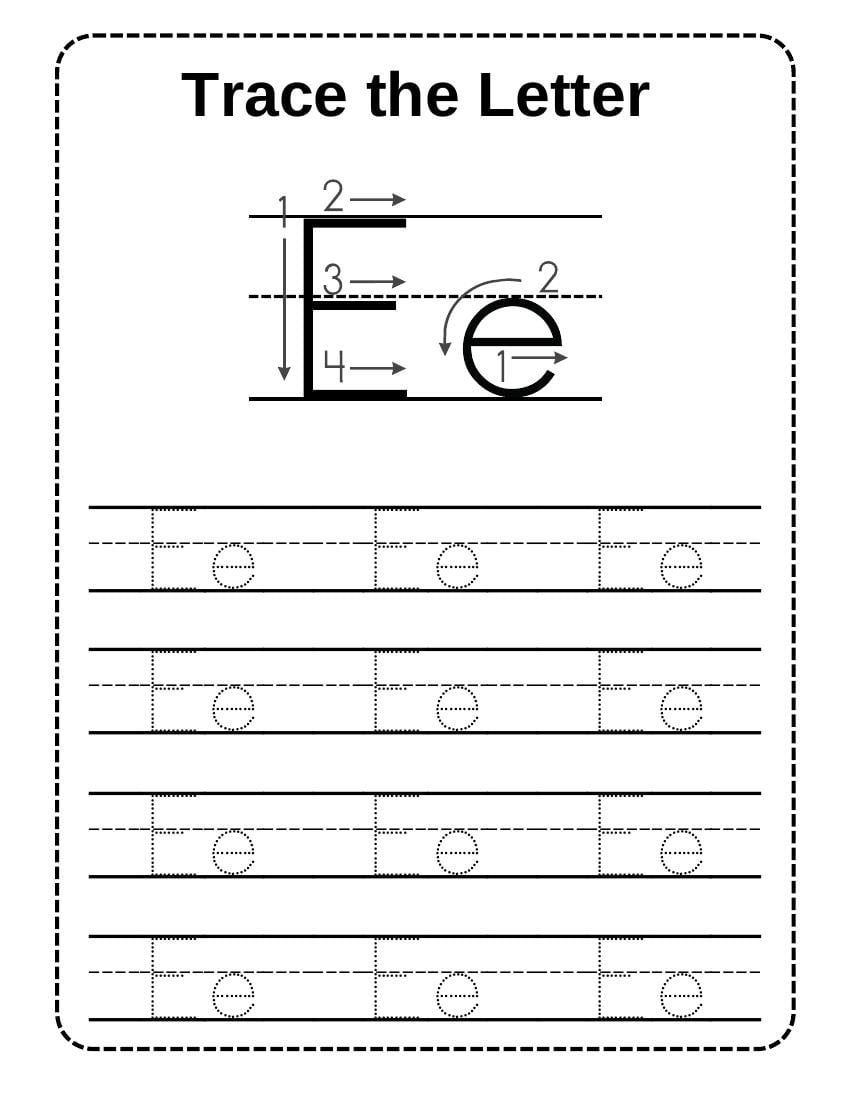
15. Uppercase and Lowercase Ee Tracing Worksheet
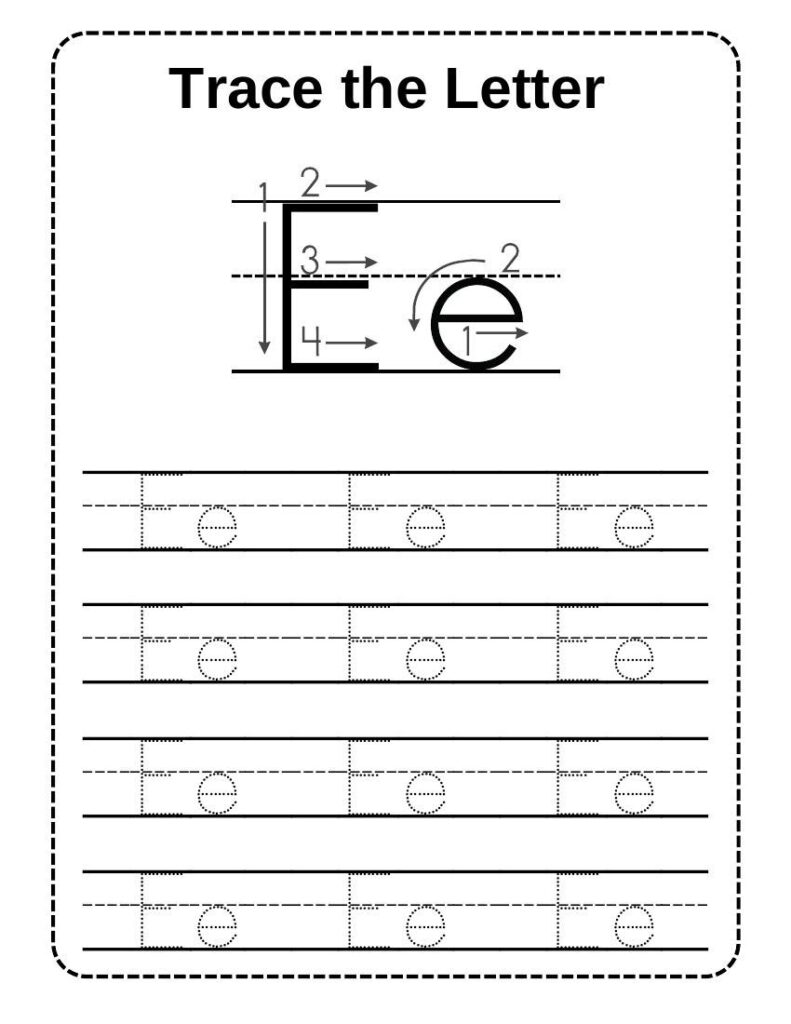
This worksheet combines uppercase E and lowercase e. Children can trace the pair across several rows. The two forms give them a chance to compare straight and curved strokes.
Ask your child to identify which letter has three horizontal lines. This simple question adds a little recognition practice to the tracing activity.
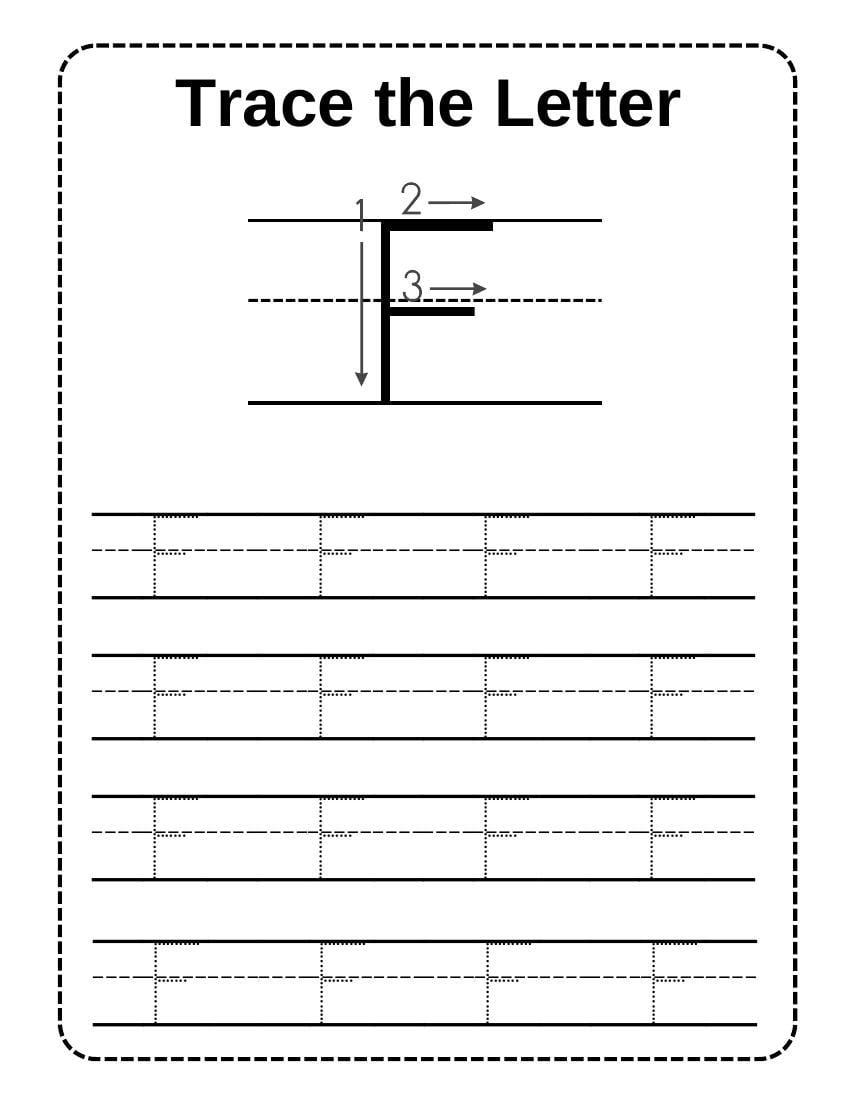
16. Uppercase Letter F Tracing Worksheet
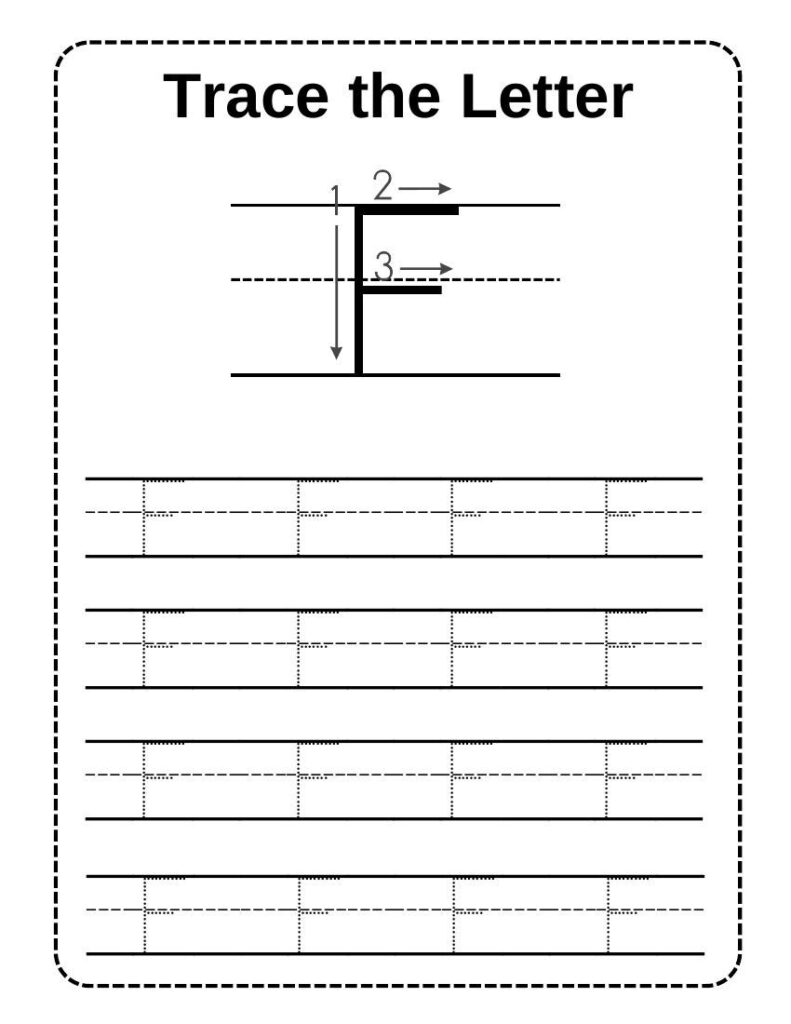
The sixteenth page introduces uppercase F. Children can follow the large example before tracing the dotted letters. The worksheet focuses on a vertical line and two horizontal strokes.
Encourage your child to begin at the top and follow the numbered directions. Repeated practice helps make this letter’s structure more familiar.
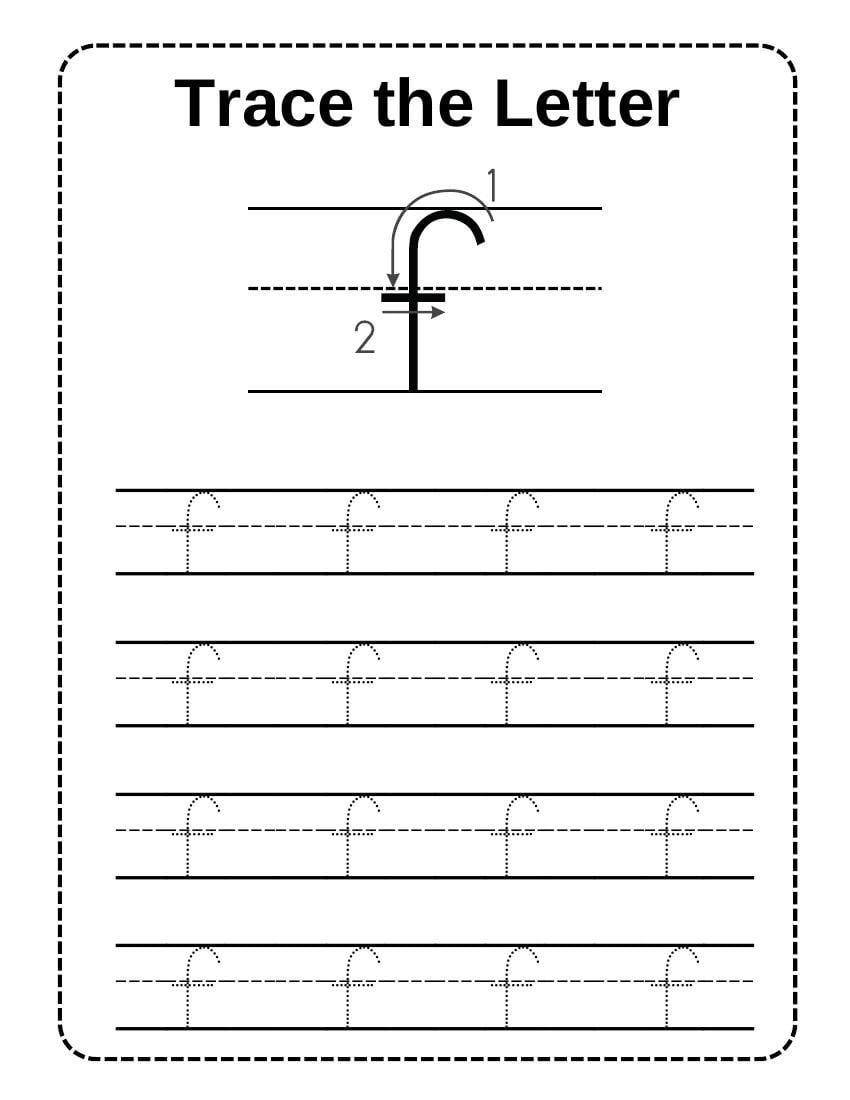
17. Lowercase Letter f Tracing Worksheet
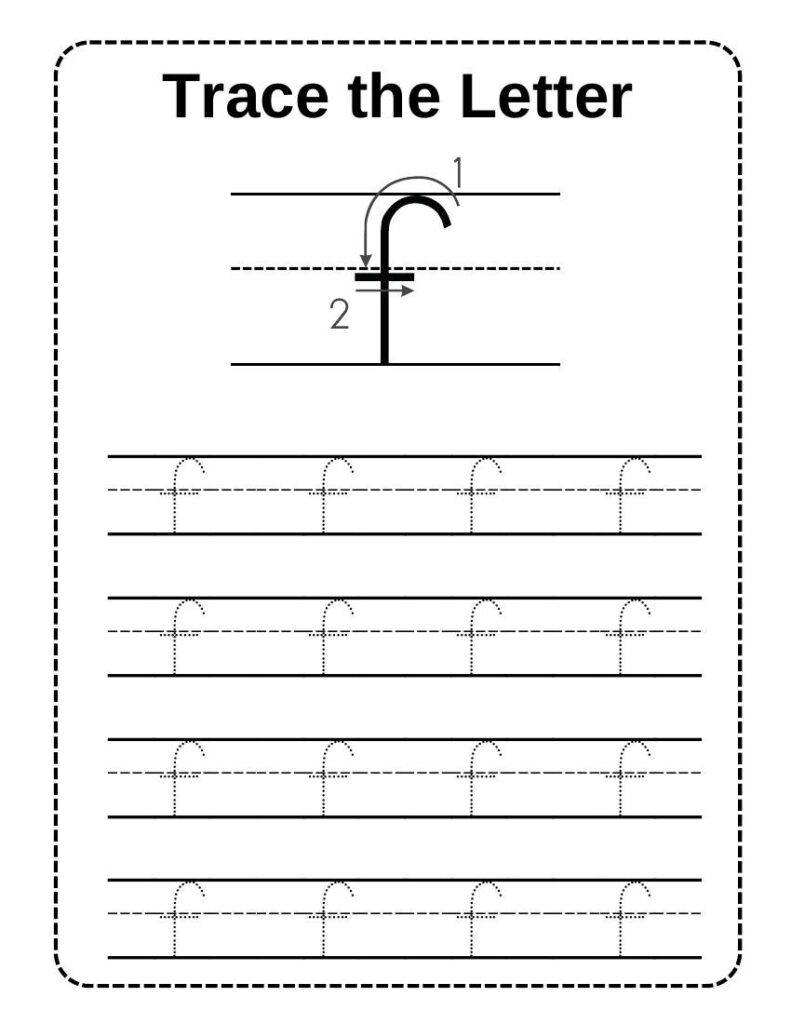
This page focuses on lowercase f. The example demonstrates its tall line, curved top, and short crossbar.
Children can practice tracing the letter across several rows. Stay nearby if your child finds the shape challenging. A slow demonstration can make the different strokes easier to understand.
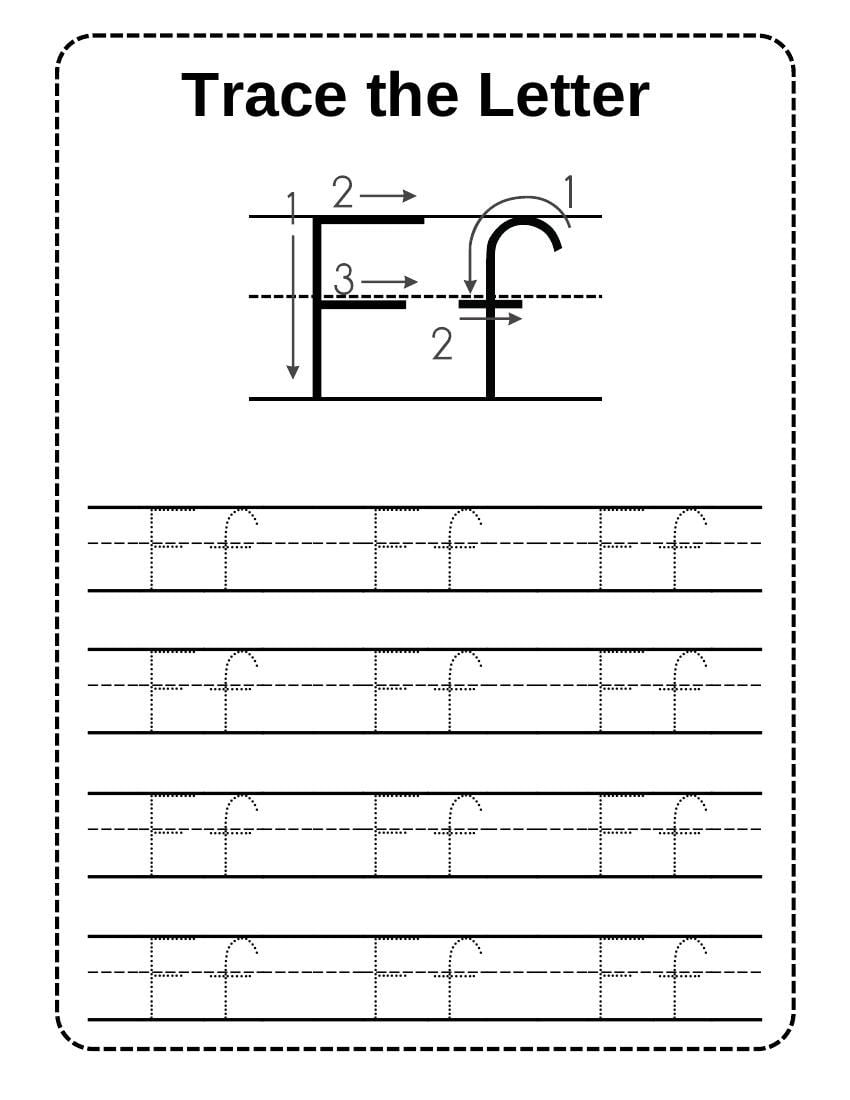
18. Uppercase and Lowercase Ff Tracing Worksheet
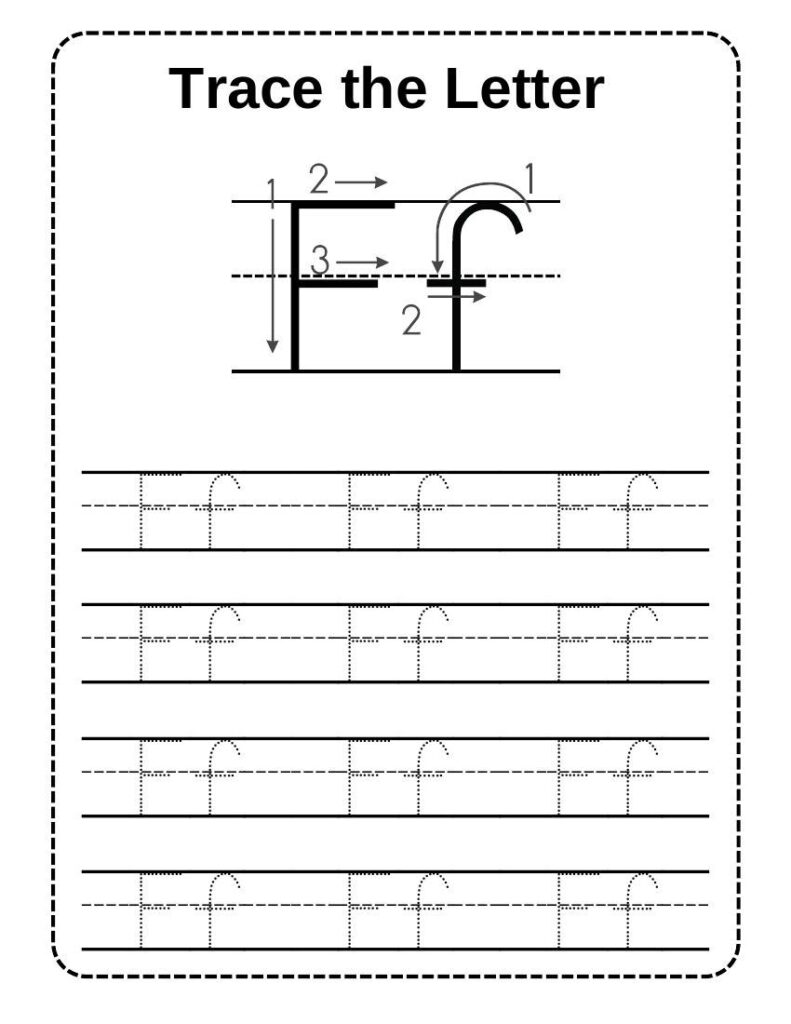
Here, uppercase F and lowercase f appear together. Children can compare the shapes and trace each pair. The repeated lines offer more practice with their different stroke patterns.
Ask your child to point out the crossbar on each letter. This helps reinforce the details that make the letters distinct.
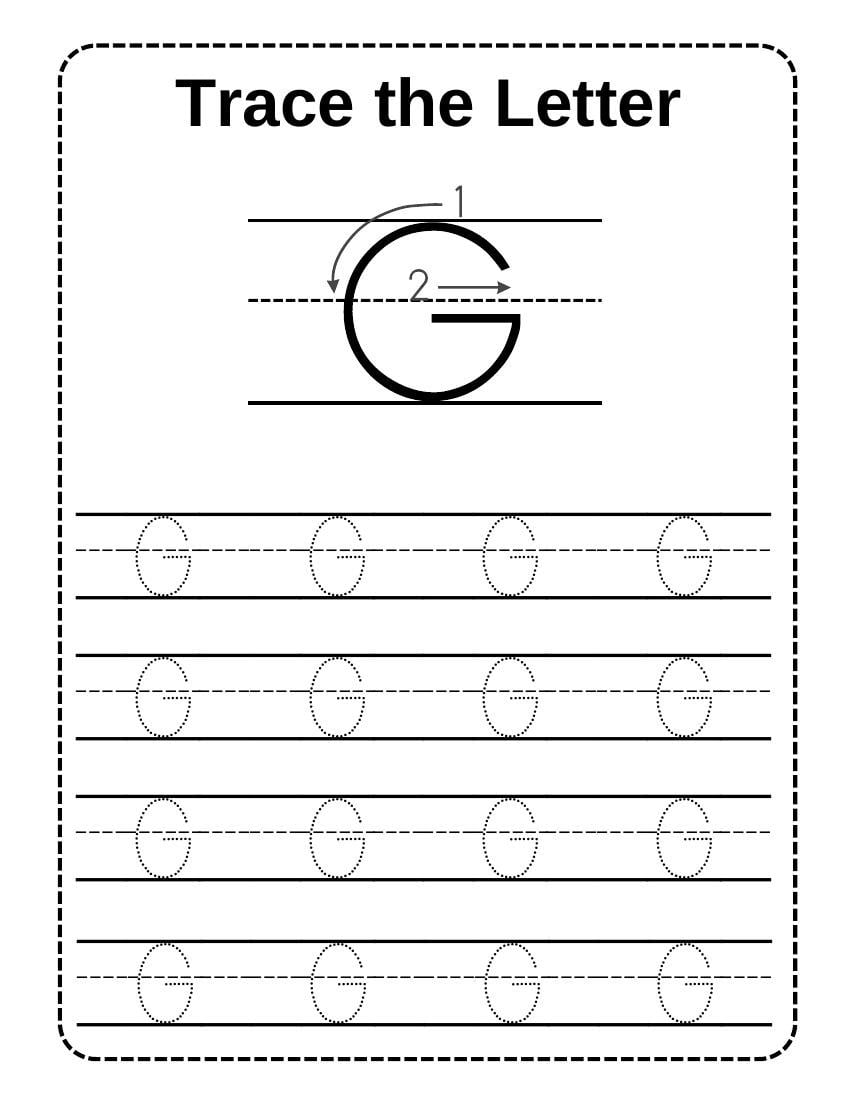
19. Uppercase Letter G Tracing Worksheet
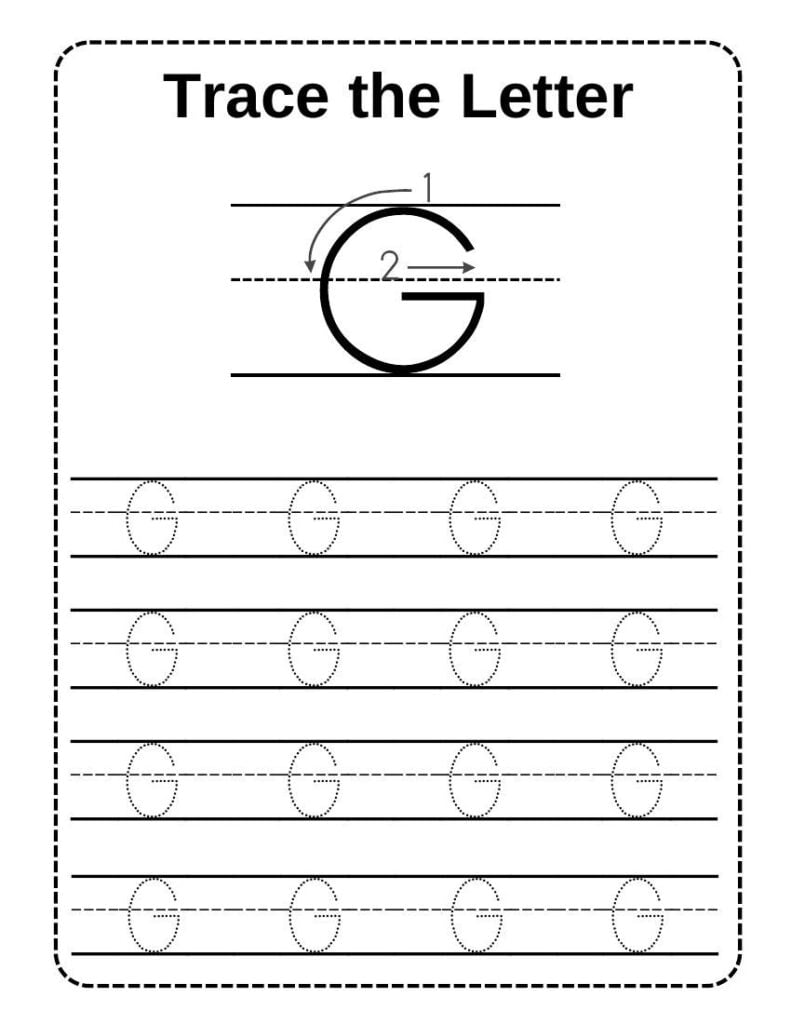
The nineteenth worksheet introduces uppercase G. Its large example shows the curved shape and short inward stroke.
Children can trace the dotted letters across the page. Encourage them to follow the curve carefully before completing the final stroke. This activity provides practice with a letter that combines rounded and straight movements.
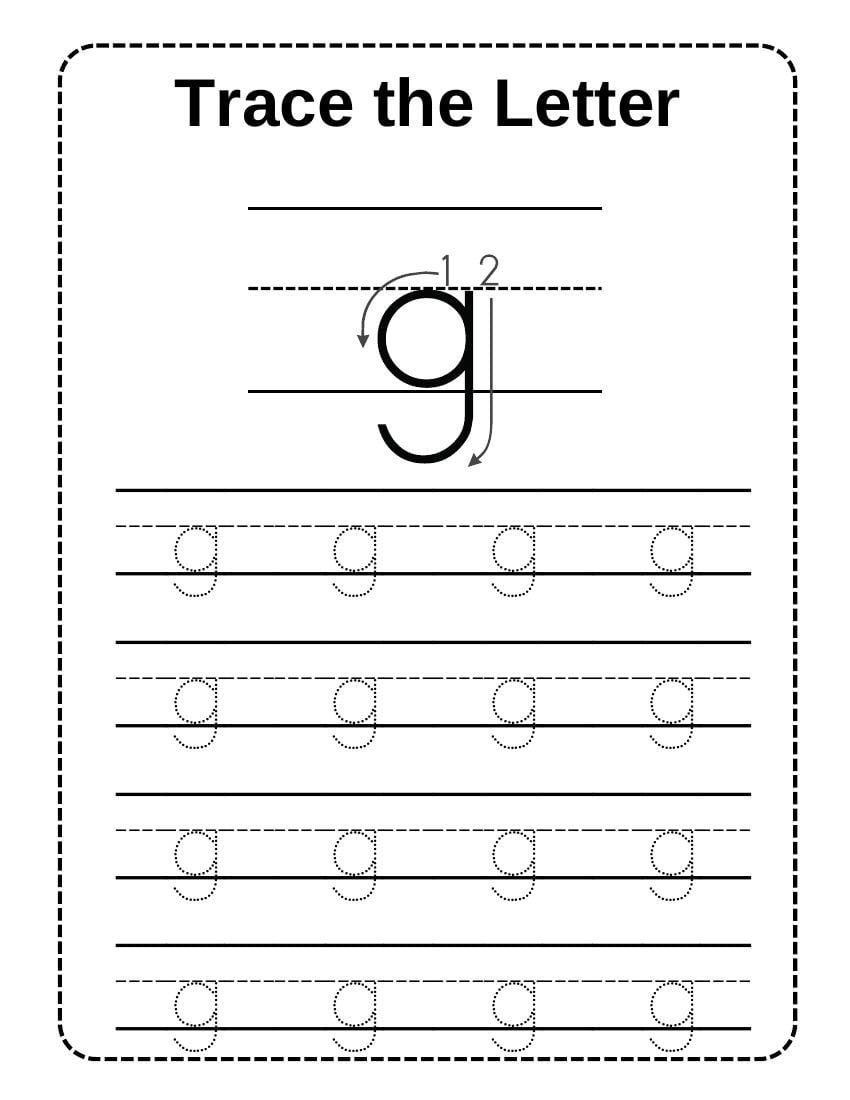
20. Lowercase Letter g Tracing Worksheet
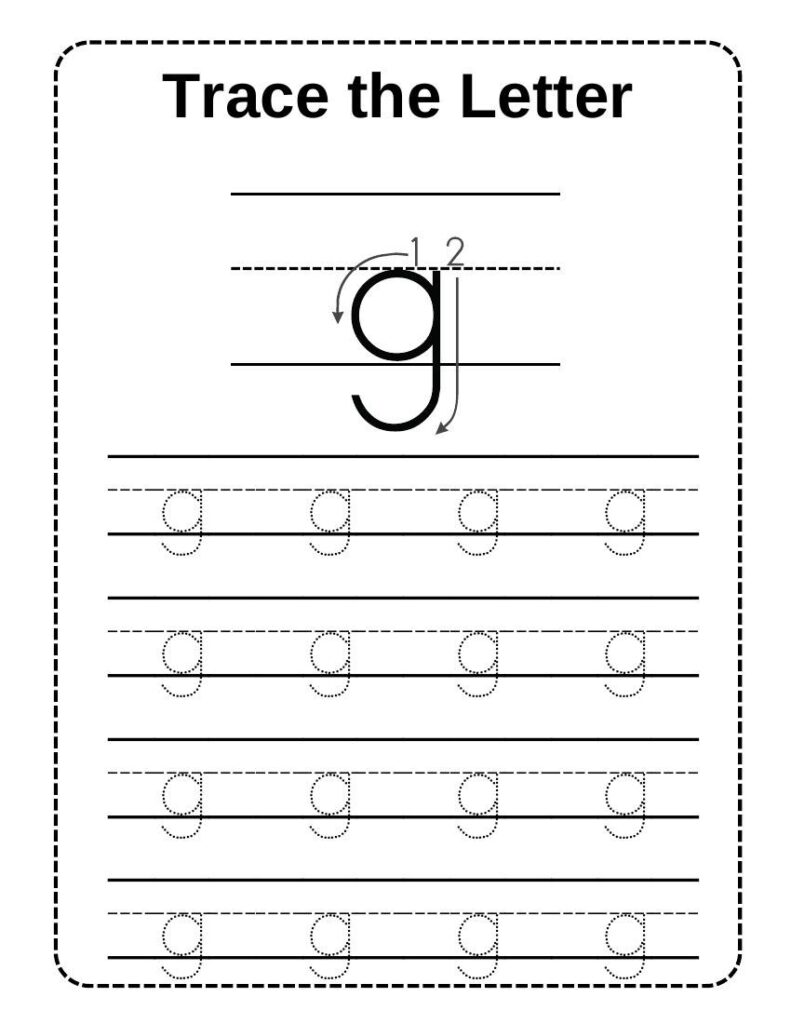
On this page, children practice lowercase g. The example shows the rounded upper section and the stroke that extends below the line.
Several rows provide space to trace the letter repeatedly. You can point out the part that drops below the writing line. This helps children notice an important feature of lowercase g.
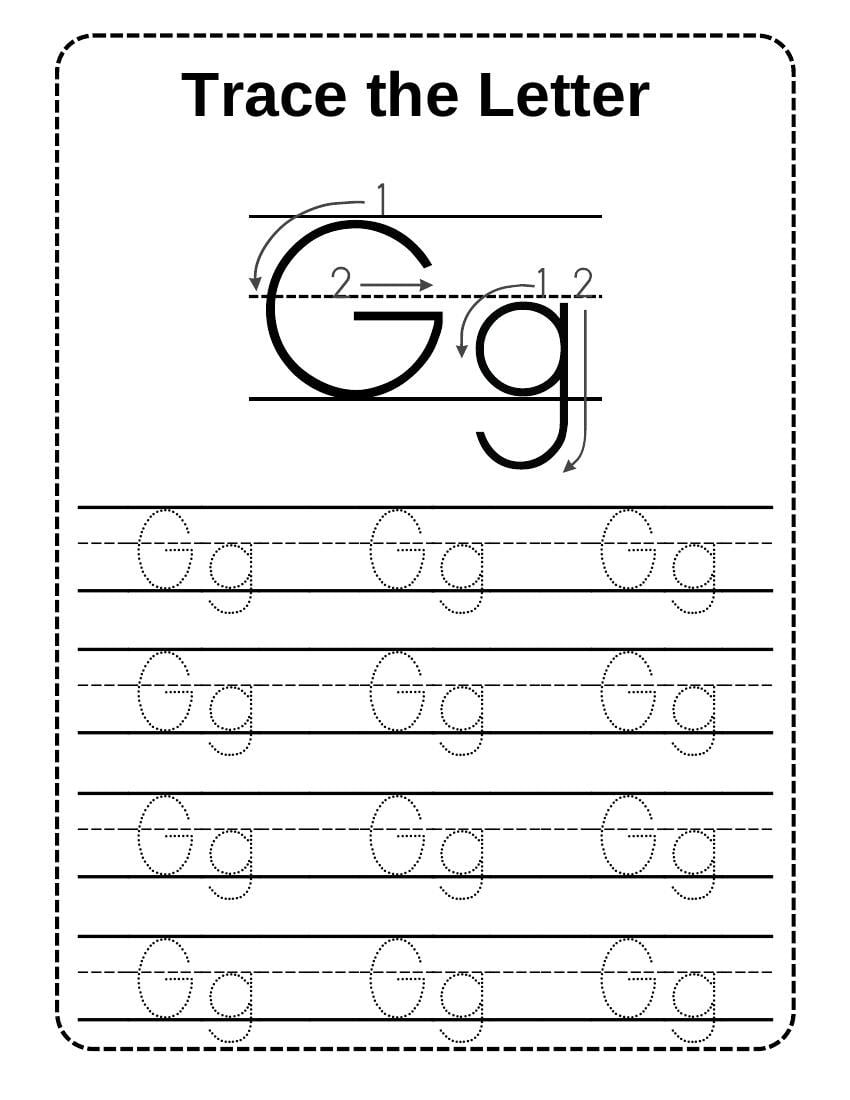
21. Uppercase and Lowercase Gg Tracing Worksheet
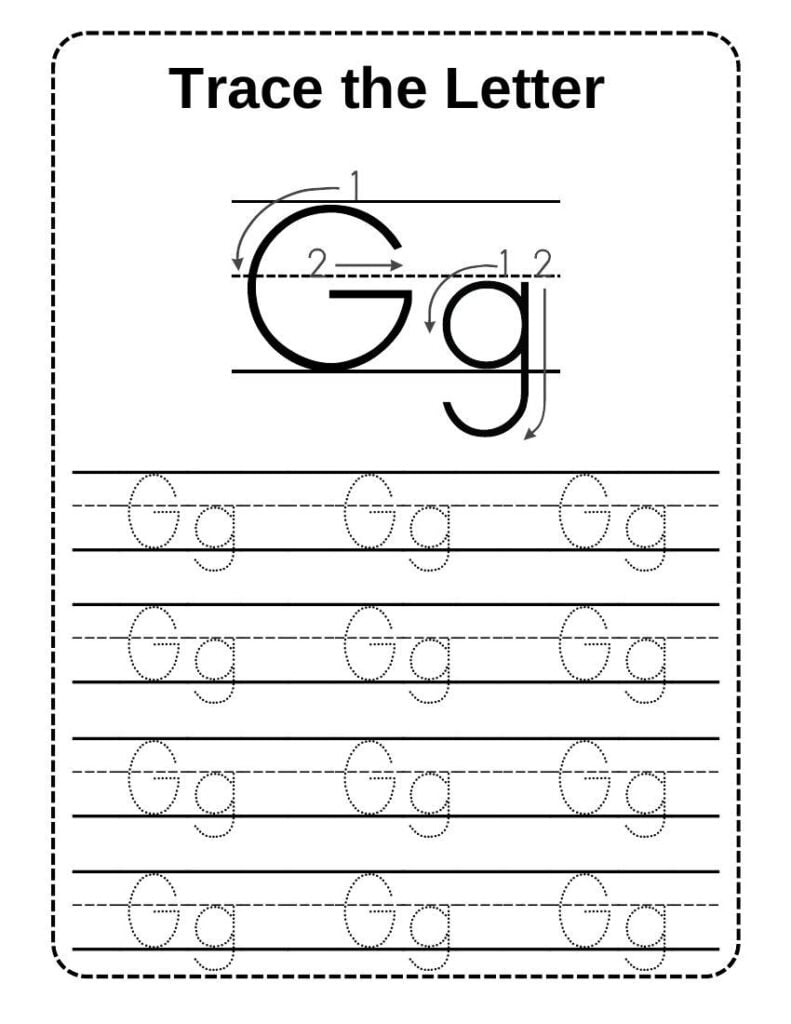
This worksheet pairs uppercase G with lowercase g. Children can study the differences before tracing the dotted examples.
The practice lines allow them to repeat both forms several times. Ask your child to notice how the lowercase letter extends below the line. This comparison supports letter recognition and handwriting development.
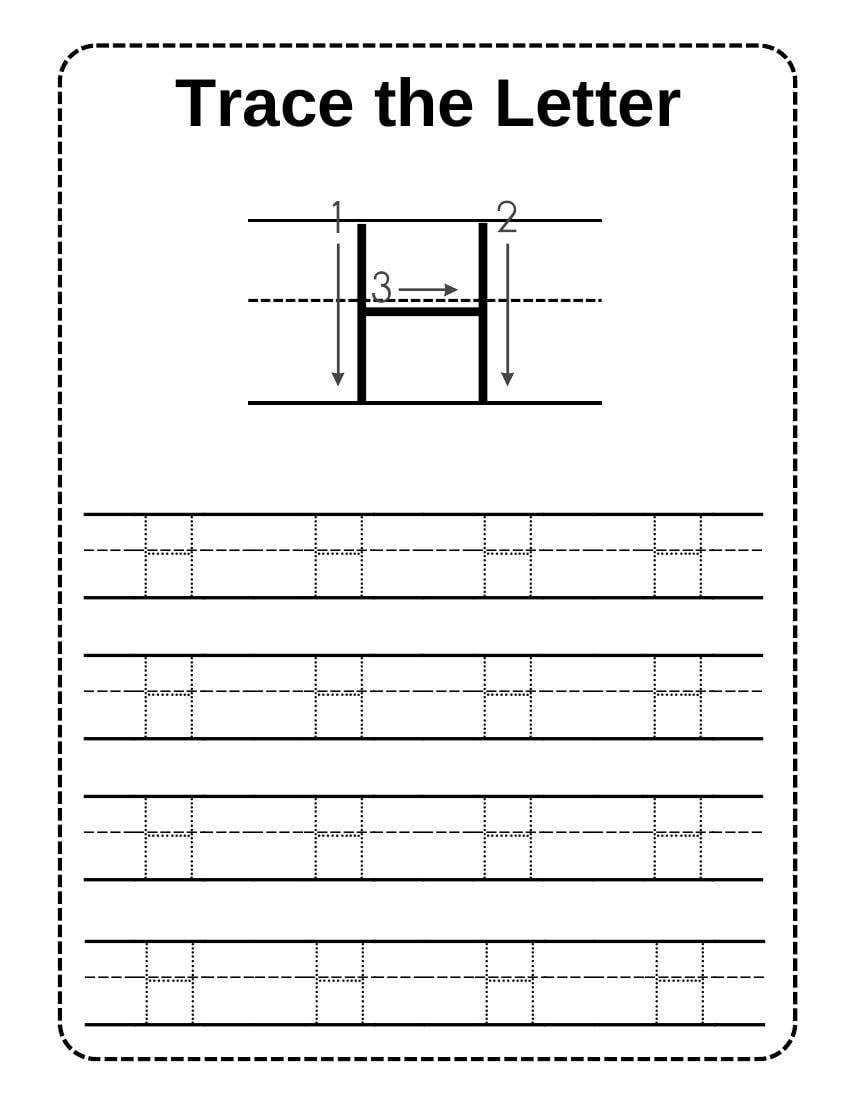
22. Uppercase Letter H Tracing Worksheet
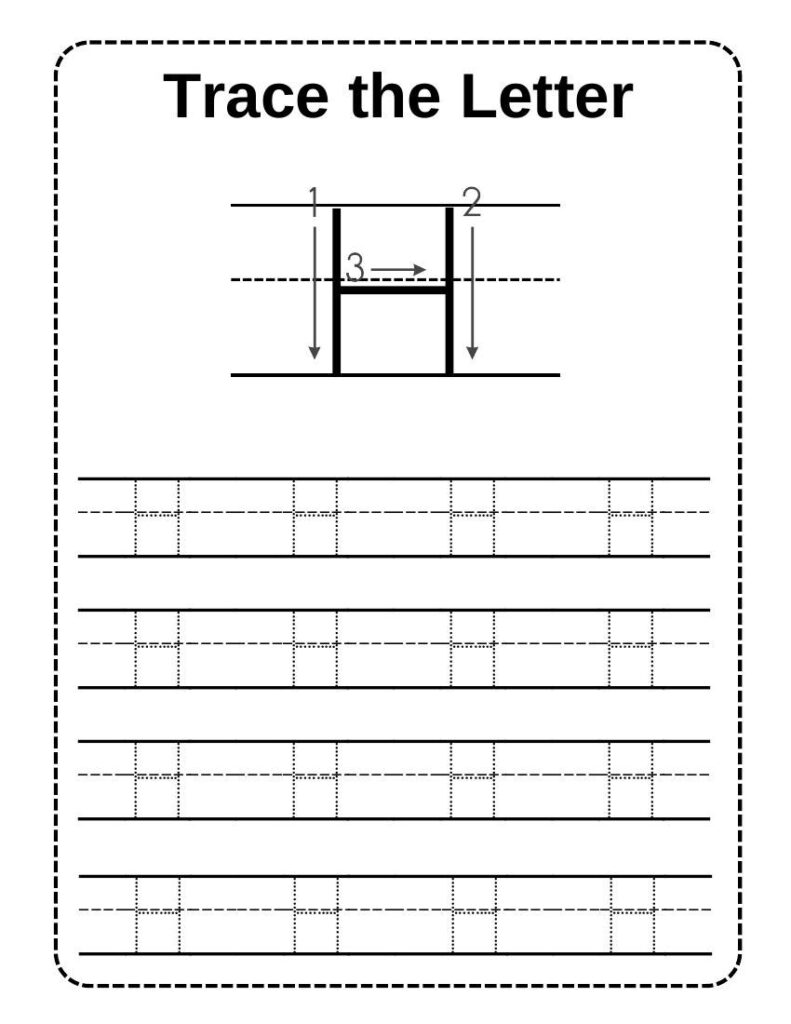
The twenty-second page focuses on uppercase H. The large model shows two vertical lines connected by a horizontal stroke.
Children can trace the letter repeatedly using the dotted guides. Encourage them to keep the vertical lines straight. This worksheet offers useful practice with a simple, structured letter.
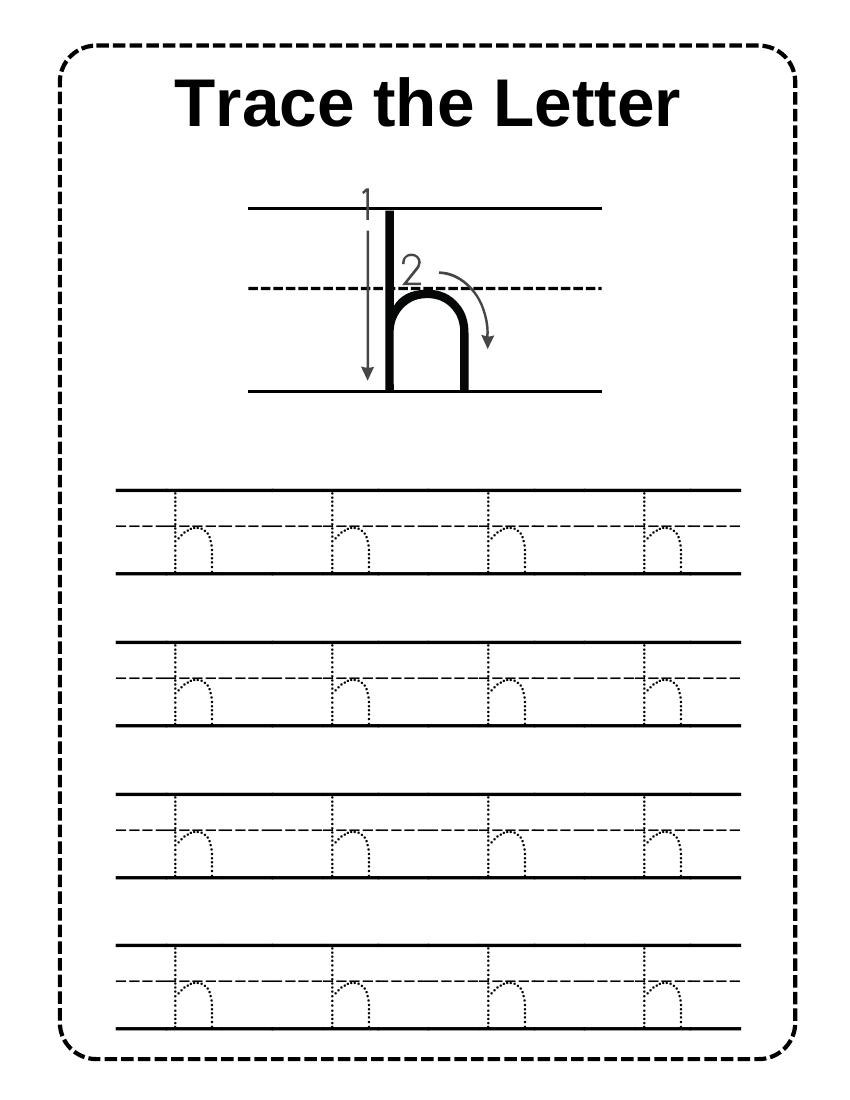
23. Lowercase Letter h Tracing Worksheet
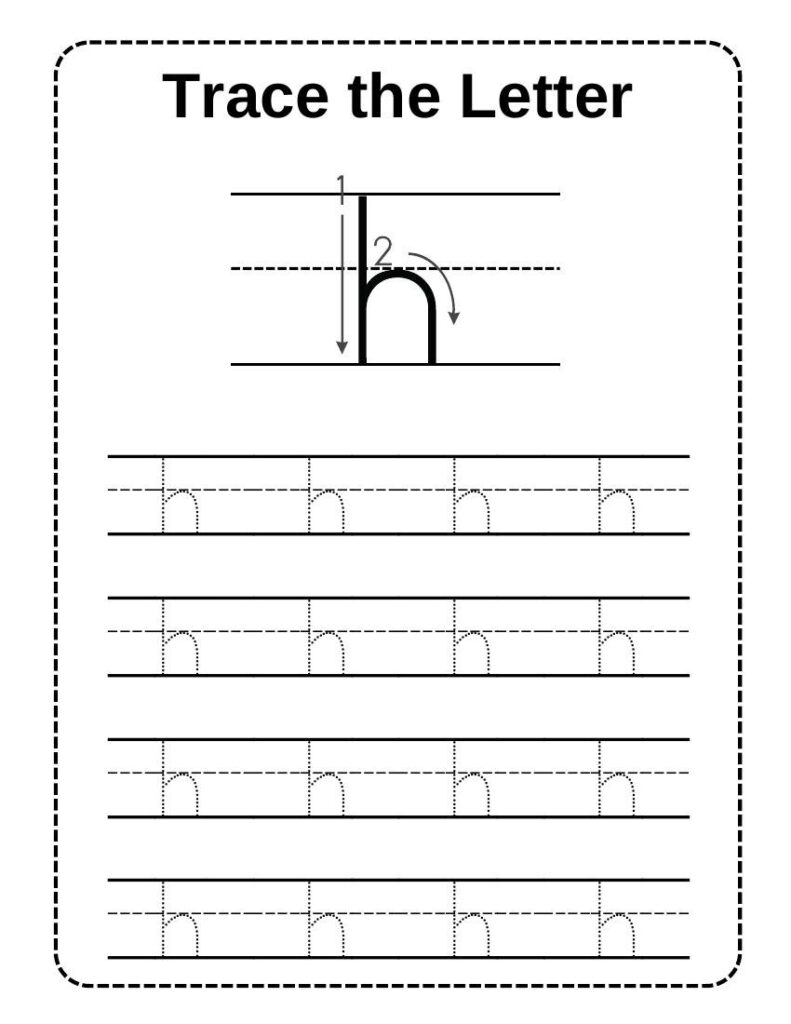
This page introduces lowercase h. Children can follow the tall line and curved section shown in the example.
The dotted letters provide repeated tracing practice. Remind your child to keep the rounded part connected to the vertical line. This can help make the letter easier to form neatly.
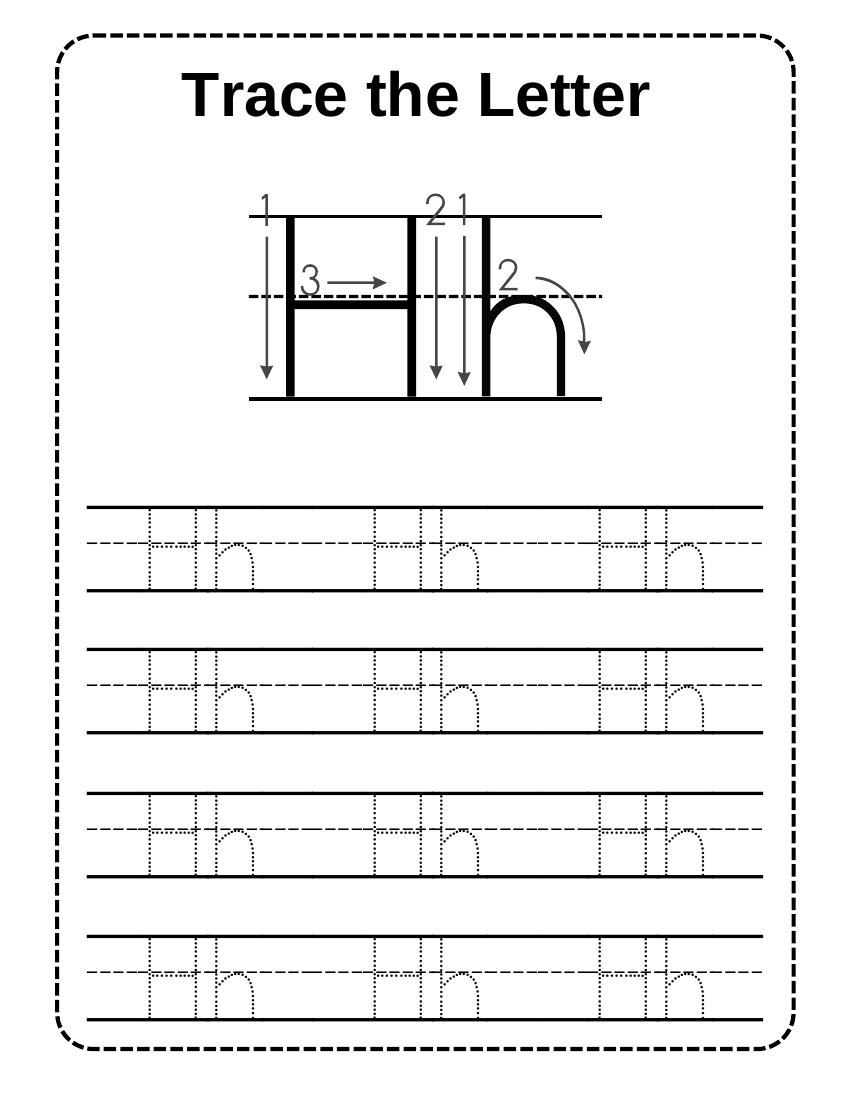
24. Uppercase and Lowercase Hh Tracing Worksheet
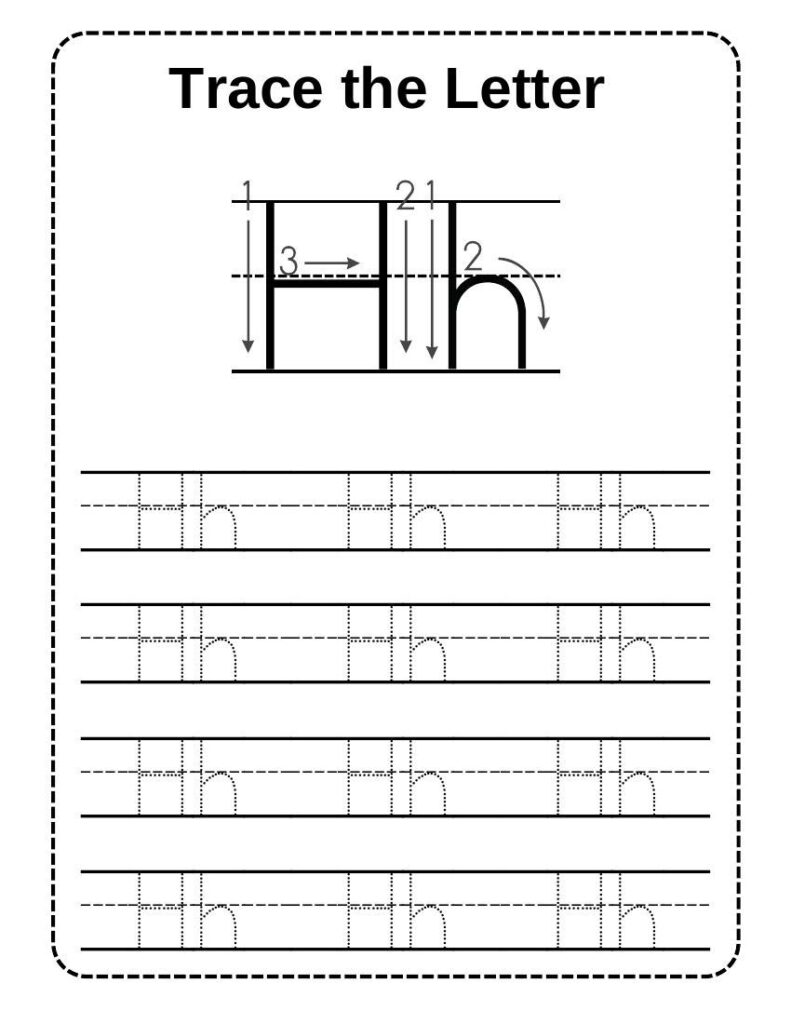
Children practice uppercase H and lowercase h together on this page. The worksheet includes paired letters and multiple tracing rows.
Invite your child to compare their heights and shapes. Then, encourage them to trace each pair without rushing. This activity helps reinforce both forms of the letter H.
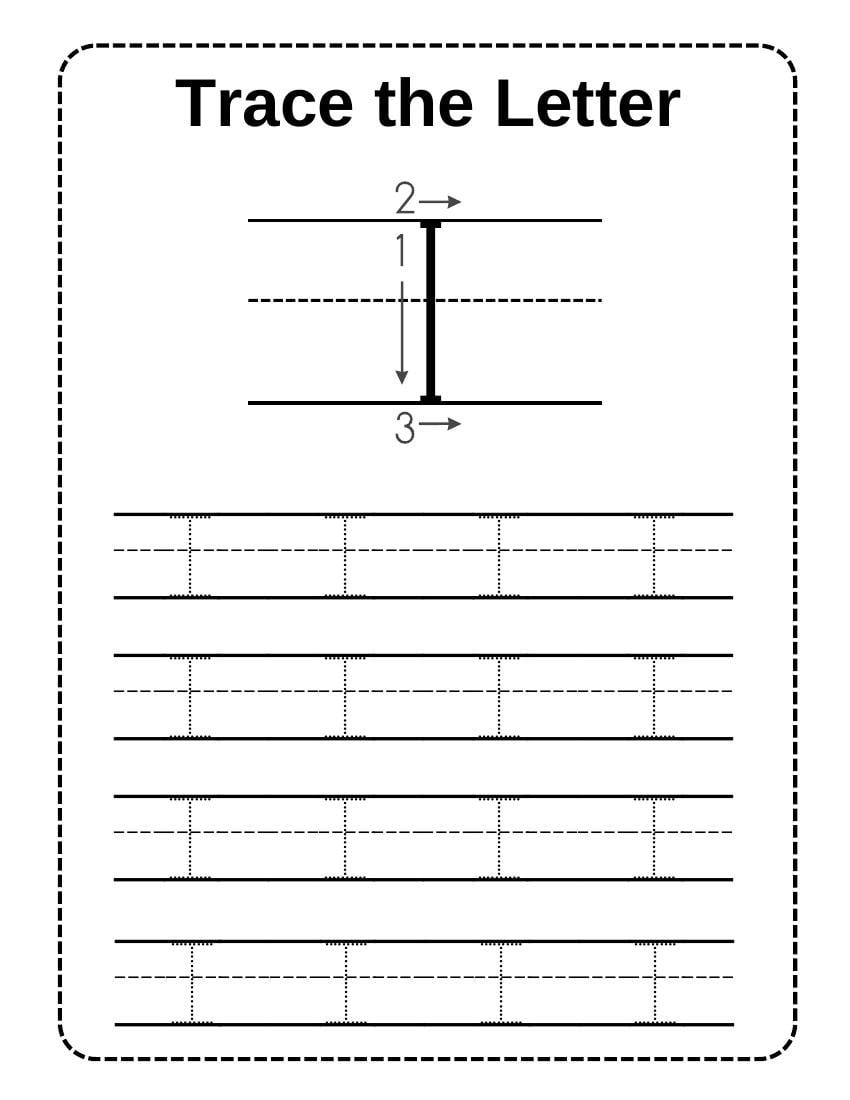
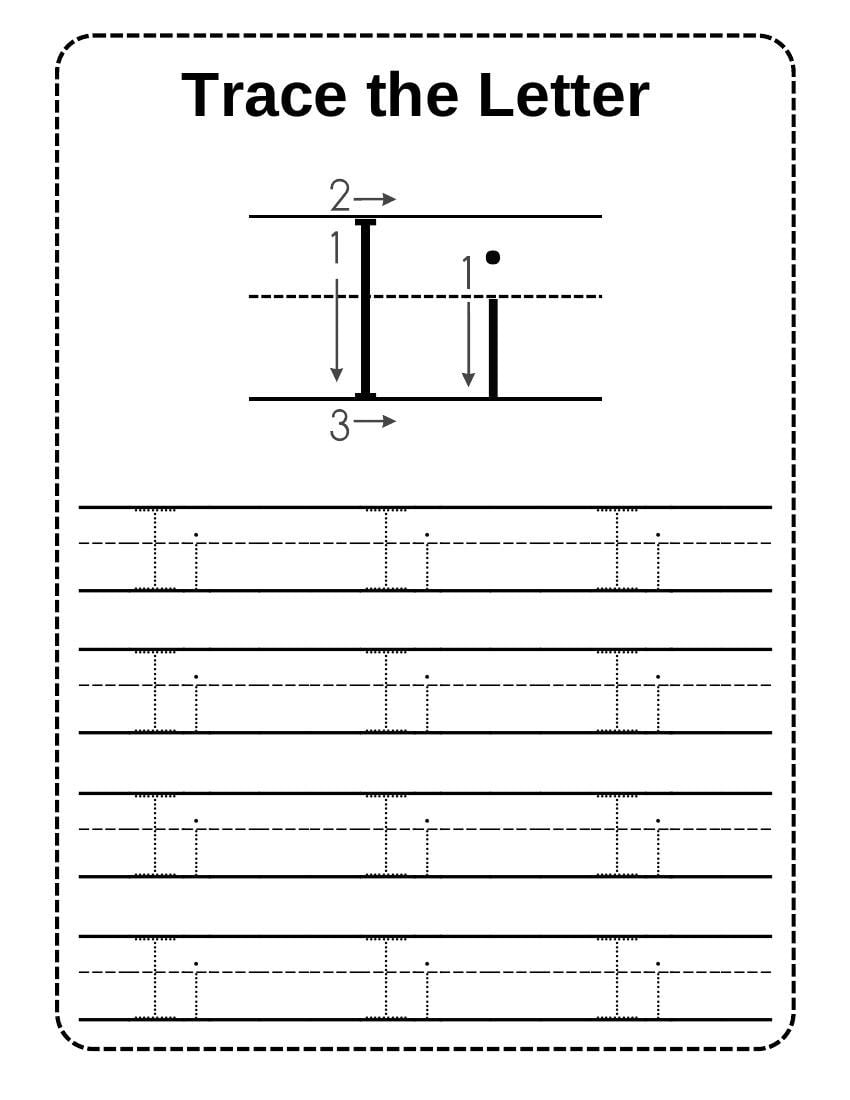
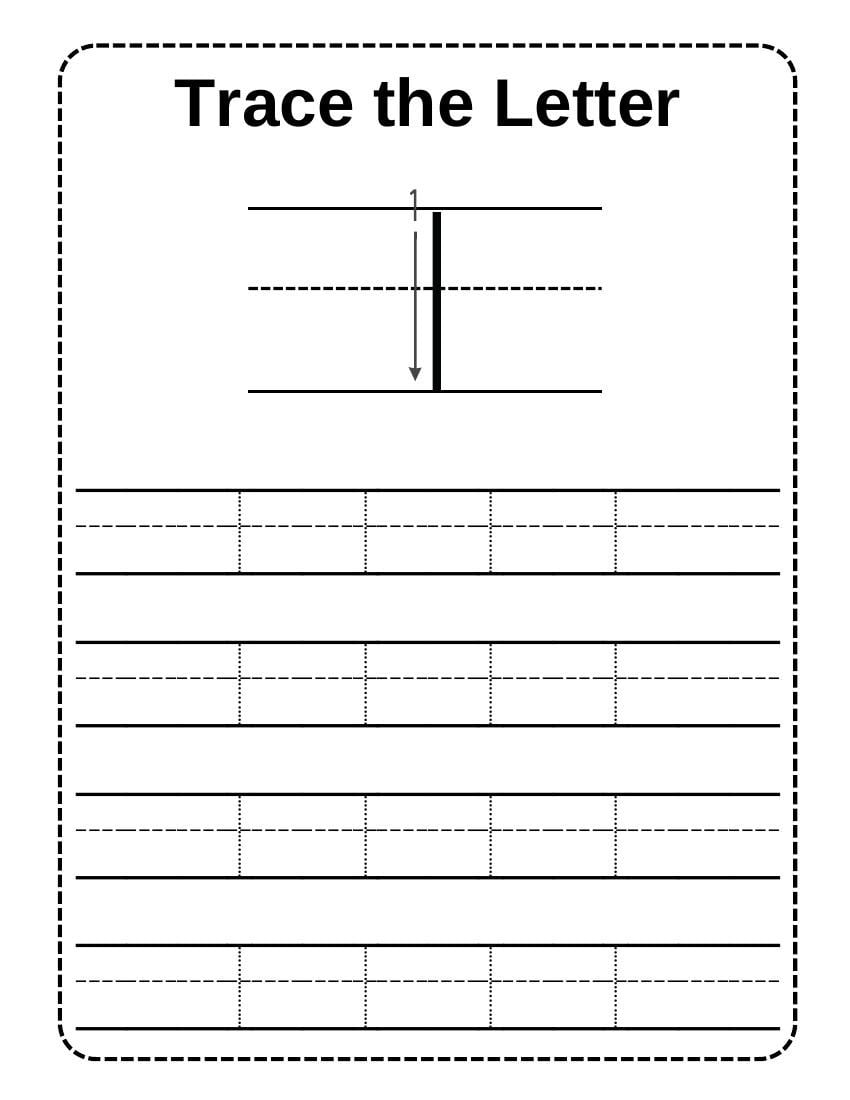
25. Uppercase Letter I Tracing Worksheet
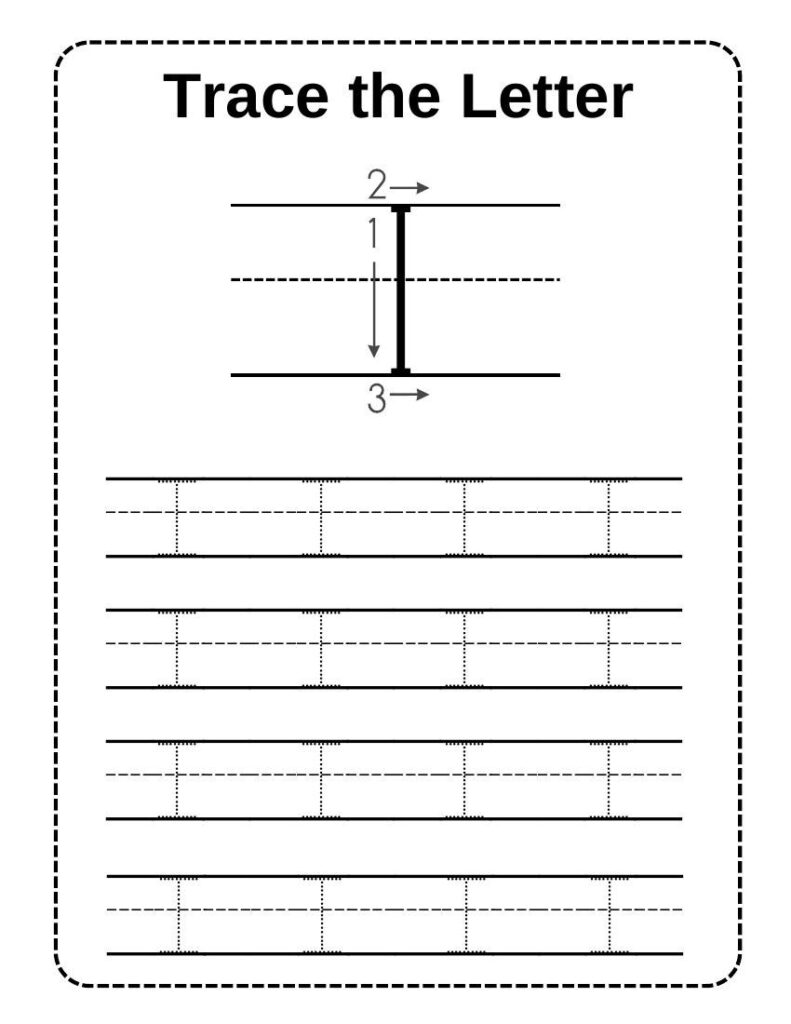
The twenty-fifth worksheet focuses on uppercase I. The example uses a vertical line with short horizontal strokes at the top and bottom.
Children can trace the letter across the practice lines. Encourage them to follow the numbered directions in order. This page helps children practice forming a letter with straight strokes.
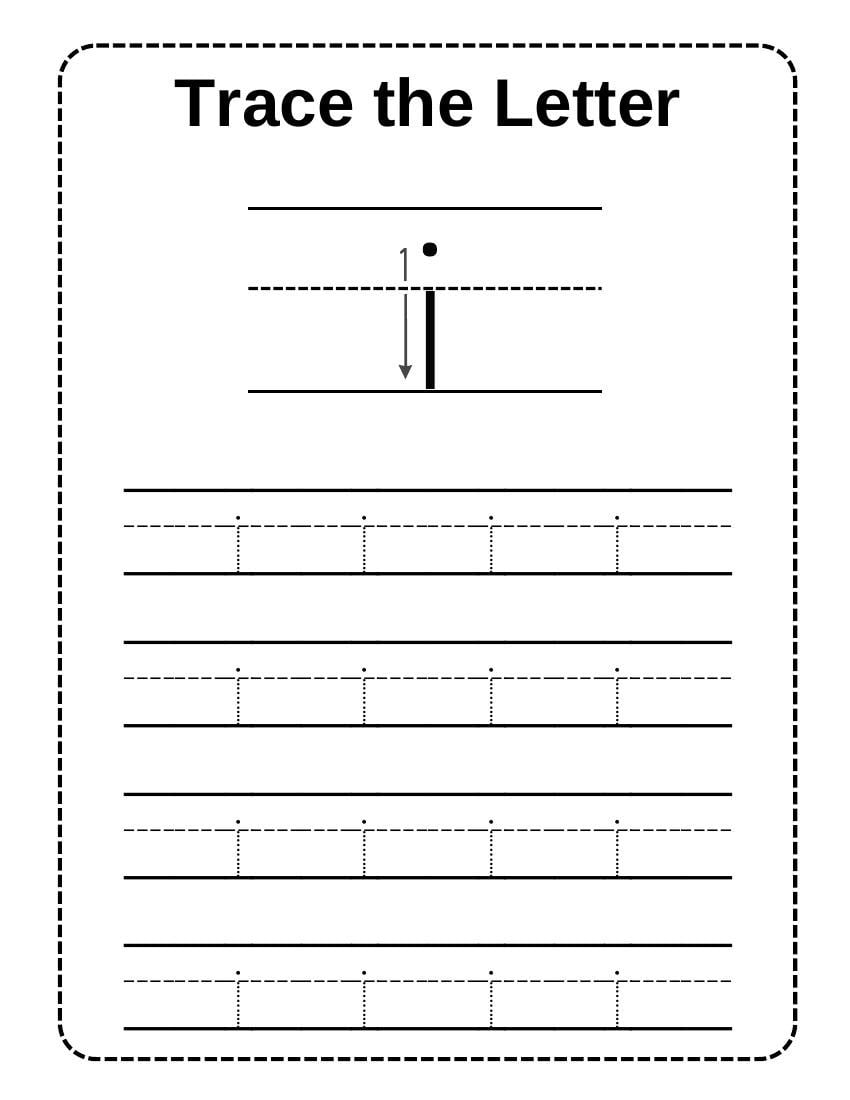
26. Lowercase Letter i Tracing Worksheet
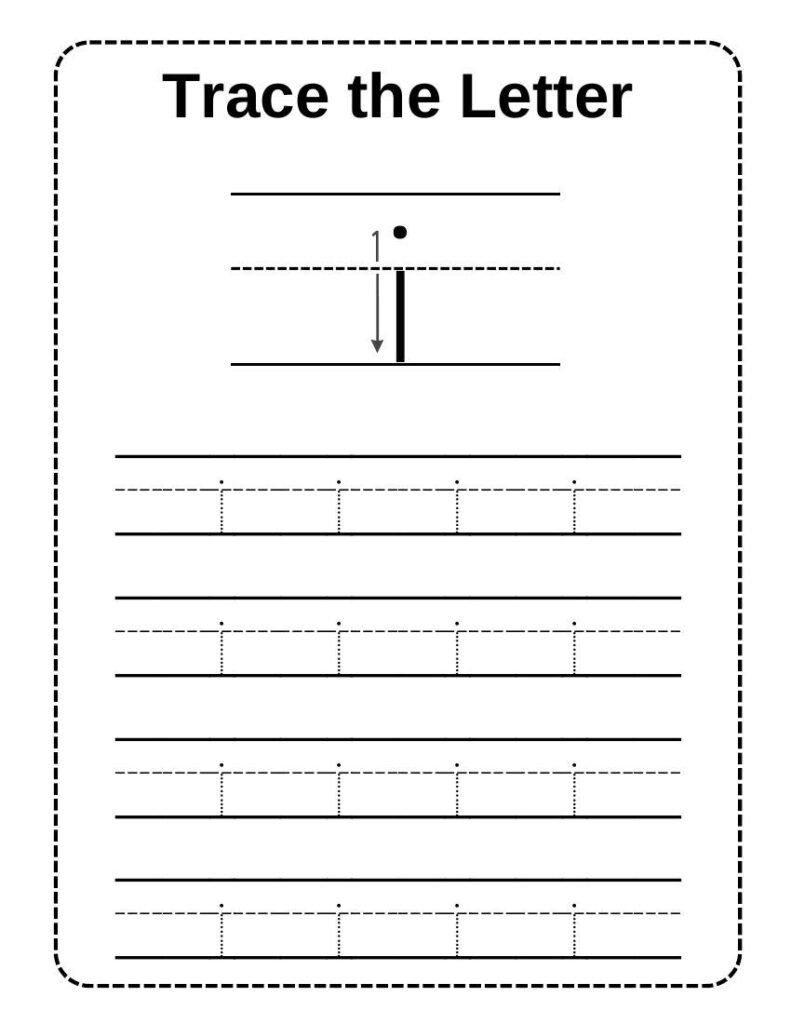
The final page in this section introduces lowercase i. Children can trace the main vertical stroke and practice placing the dot above it.
The worksheet provides several rows of dotted examples. Remind your child that the dot is part of the letter. This simple activity helps reinforce the shape and details of lowercase i.
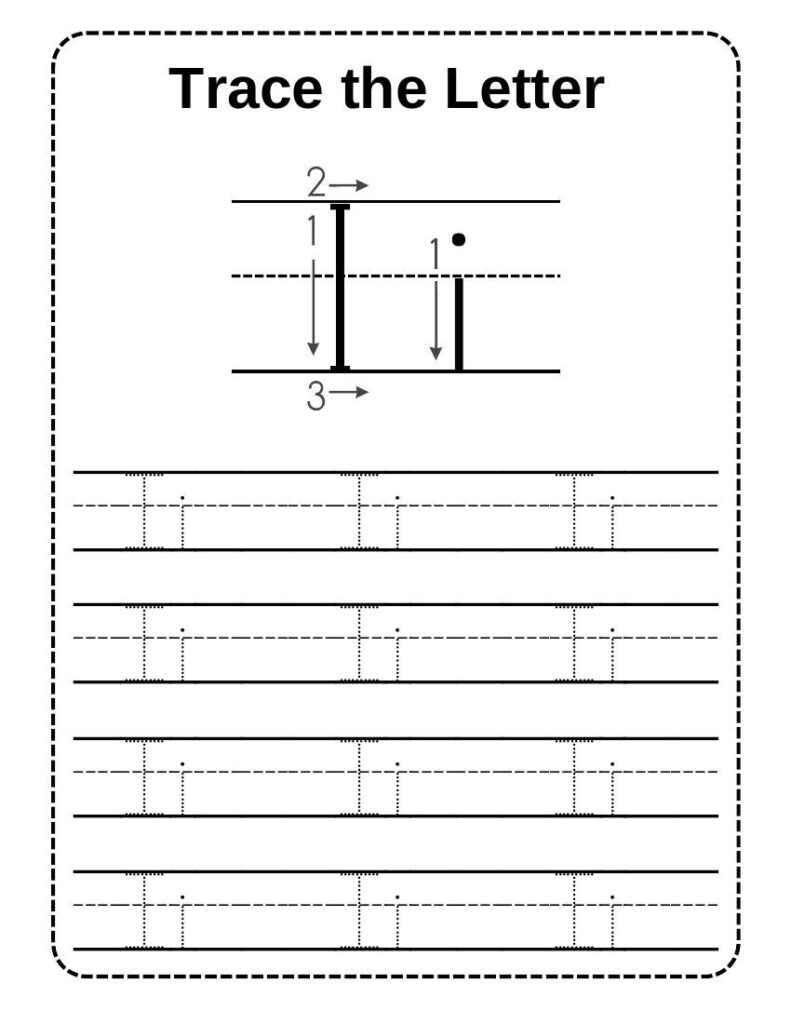
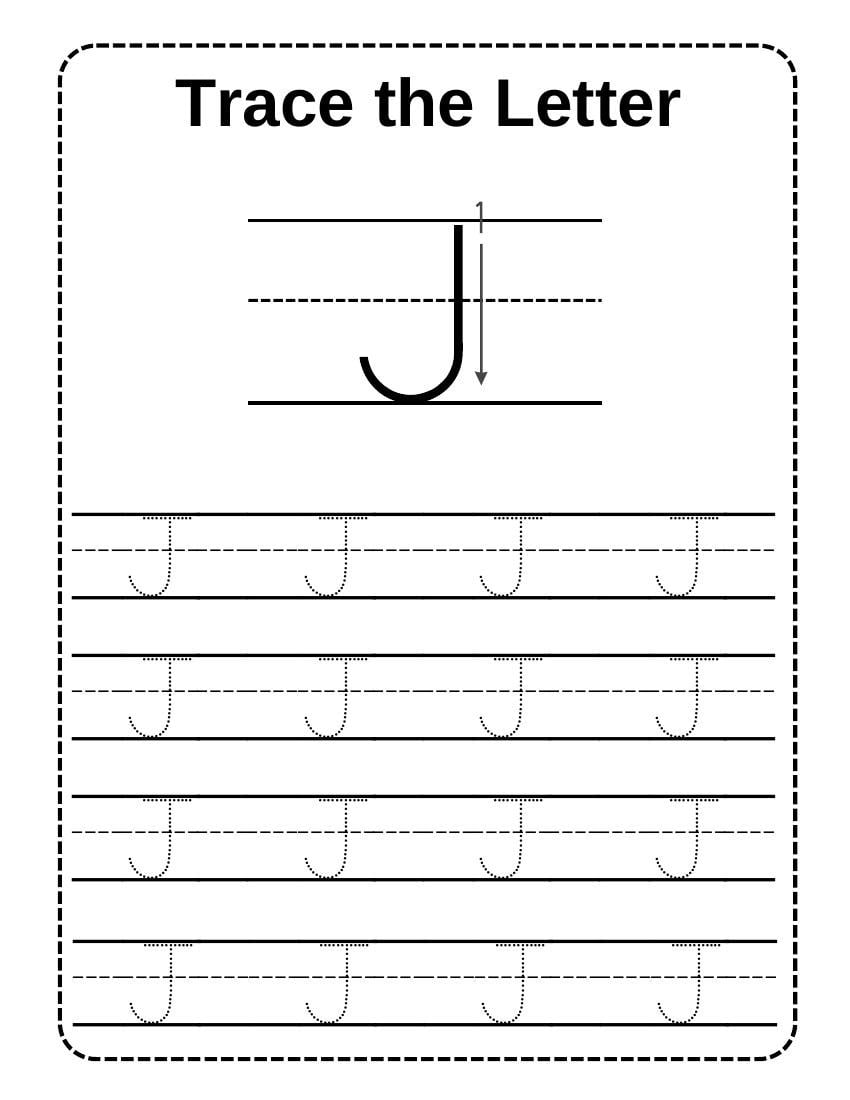
27. Uppercase Letter J Tracing Worksheet
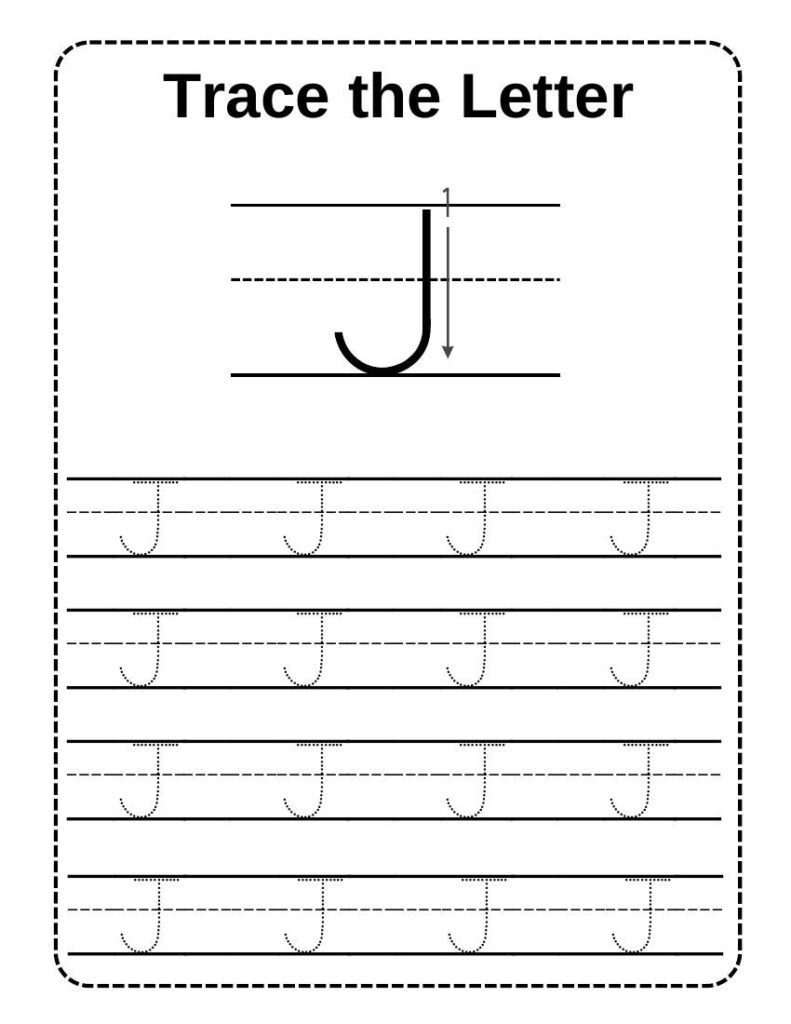
This worksheet introduces children to the uppercase letter J. The large example shows how to form its straight line and curved bottom.
Children can trace the dotted letters across several rows. Encourage your child to follow the stroke direction carefully. This activity helps build control when writing letters with curved endings.
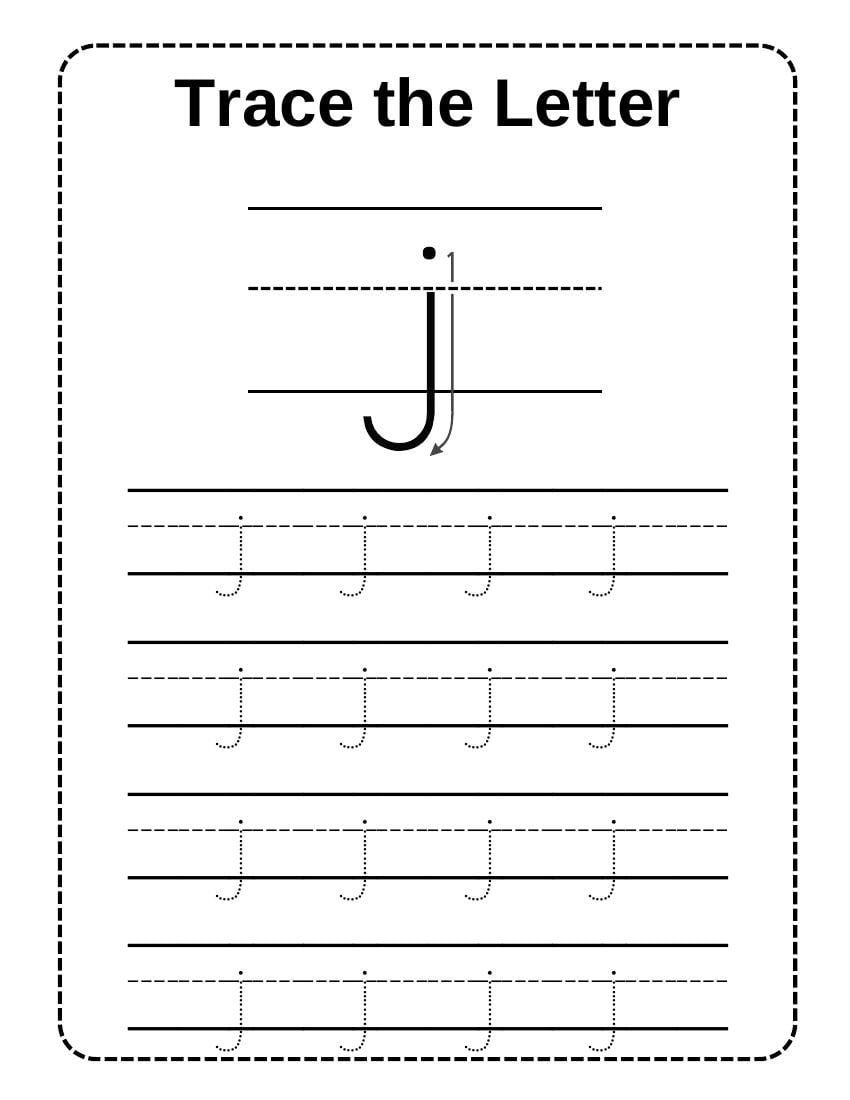
28. Lowercase Letter j Tracing Worksheet
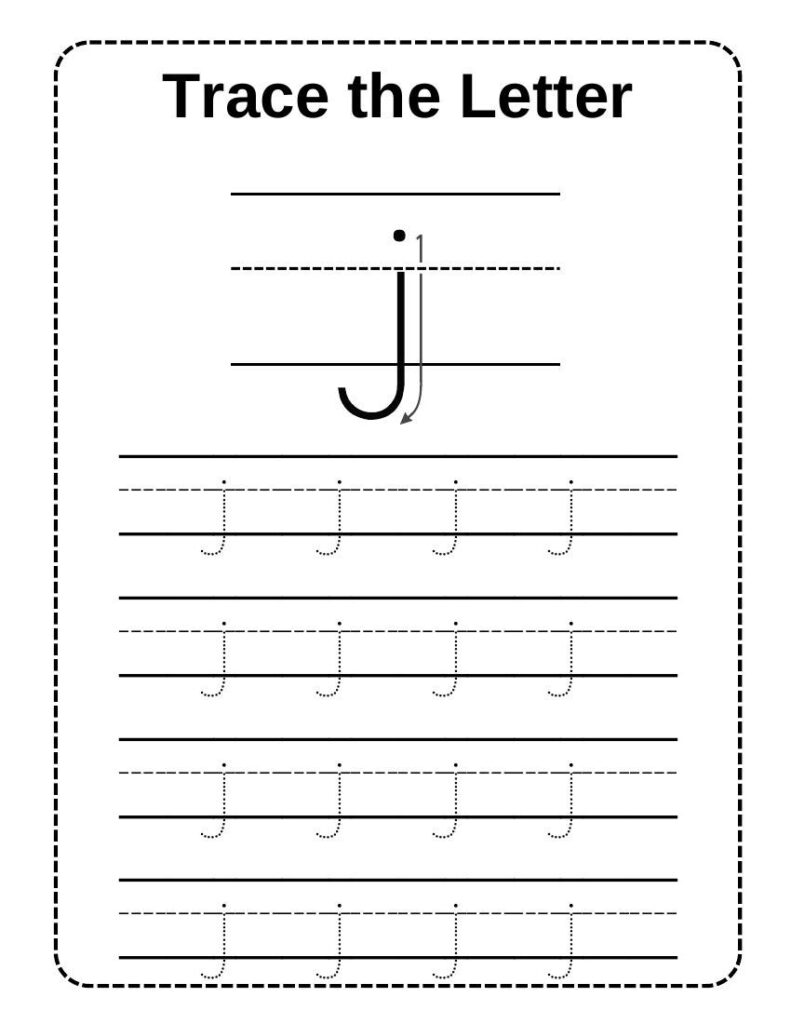
Next, children practice the lowercase letter j. The example shows its long stroke, curved bottom, and dot.
Several rows provide repeated tracing opportunities. Remind your child to place the dot above the letter. This helps them remember an important detail when writing lowercase j.
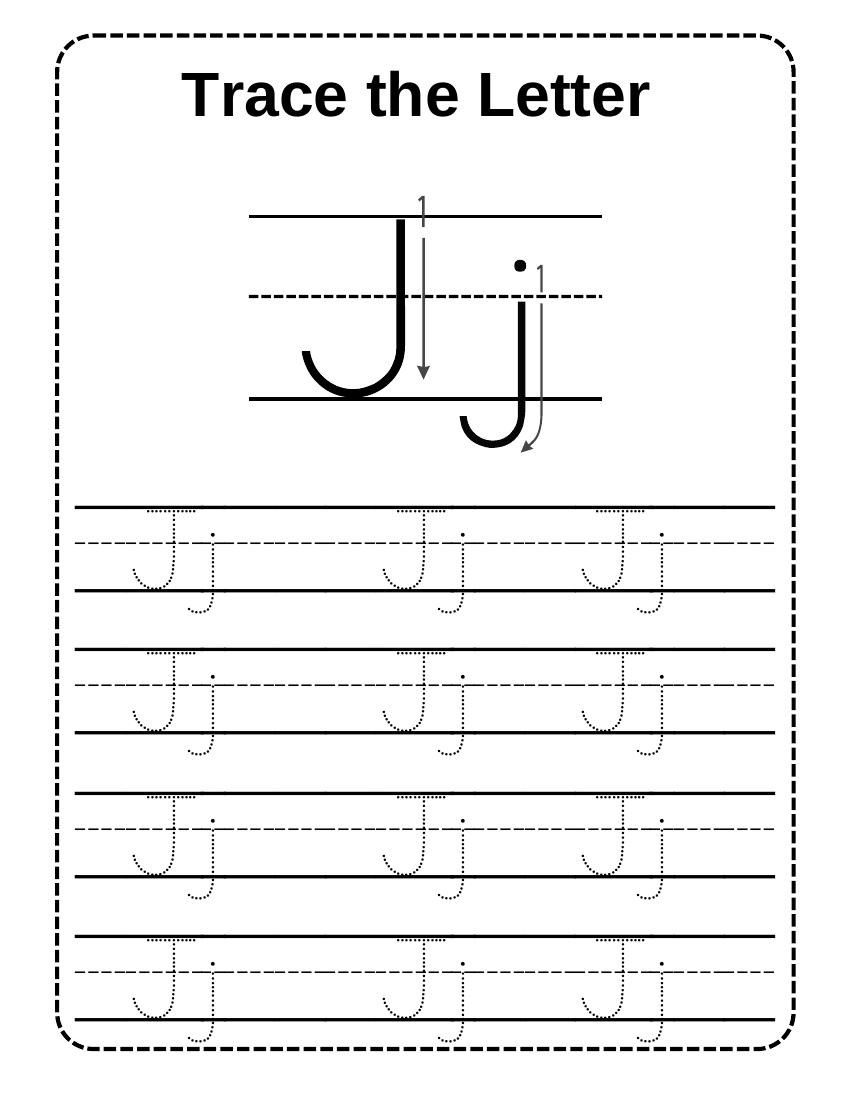
29. Uppercase and Lowercase Jj Tracing Worksheet
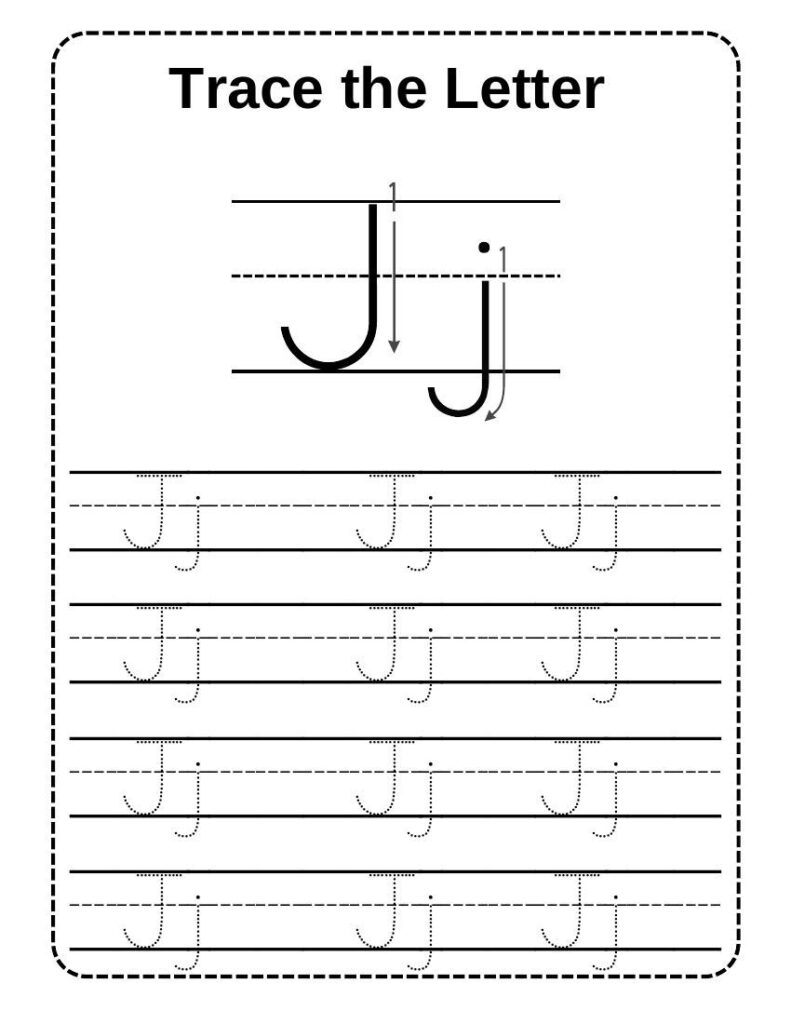
This page combines uppercase J and lowercase j. Children can compare both shapes before tracing the pairs.
The repeated rows give them time to practice each form. Ask your child to identify the letter with a dot. This quick activity adds letter recognition to handwriting practice.
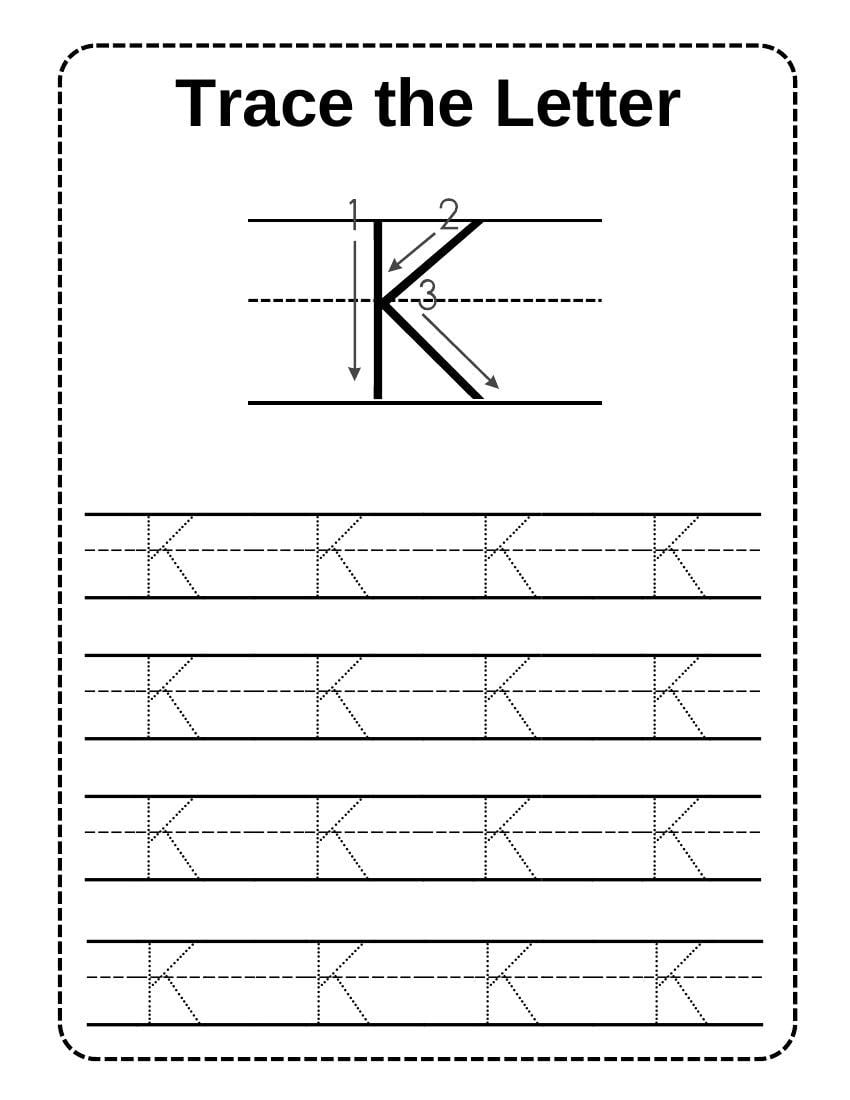
30. Uppercase Letter K Tracing Worksheet
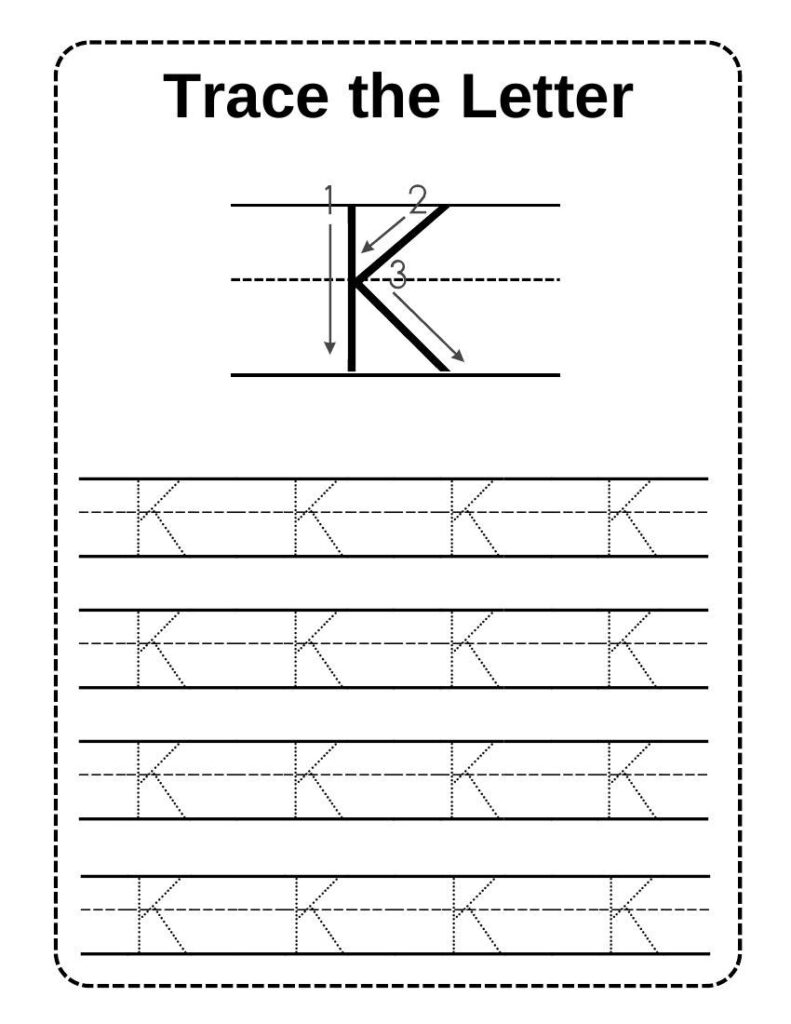
The thirtieth worksheet focuses on uppercase K. Its large example shows a vertical line and two diagonal strokes. Children can follow the numbered directions before tracing the dotted letters.
Encourage them to begin with the straight line. Then, they can add the diagonal strokes to complete the letter.
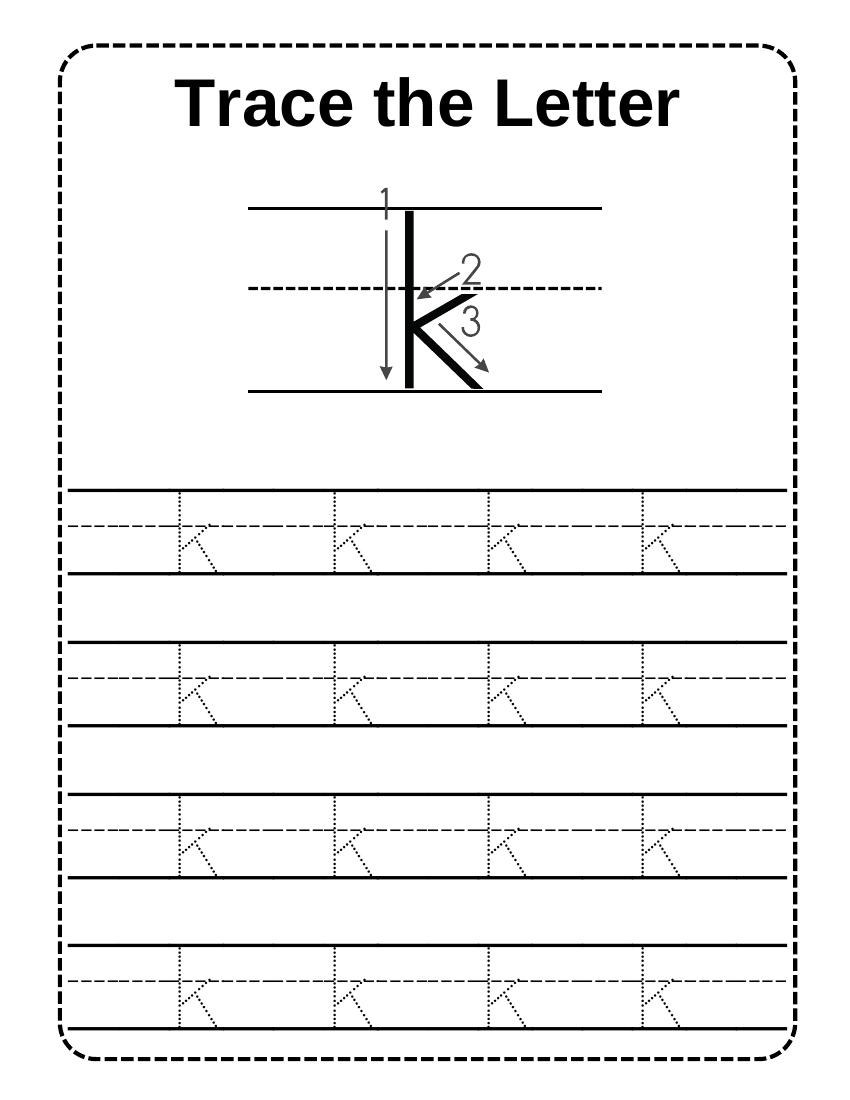
31. Lowercase Letter k Tracing Worksheet
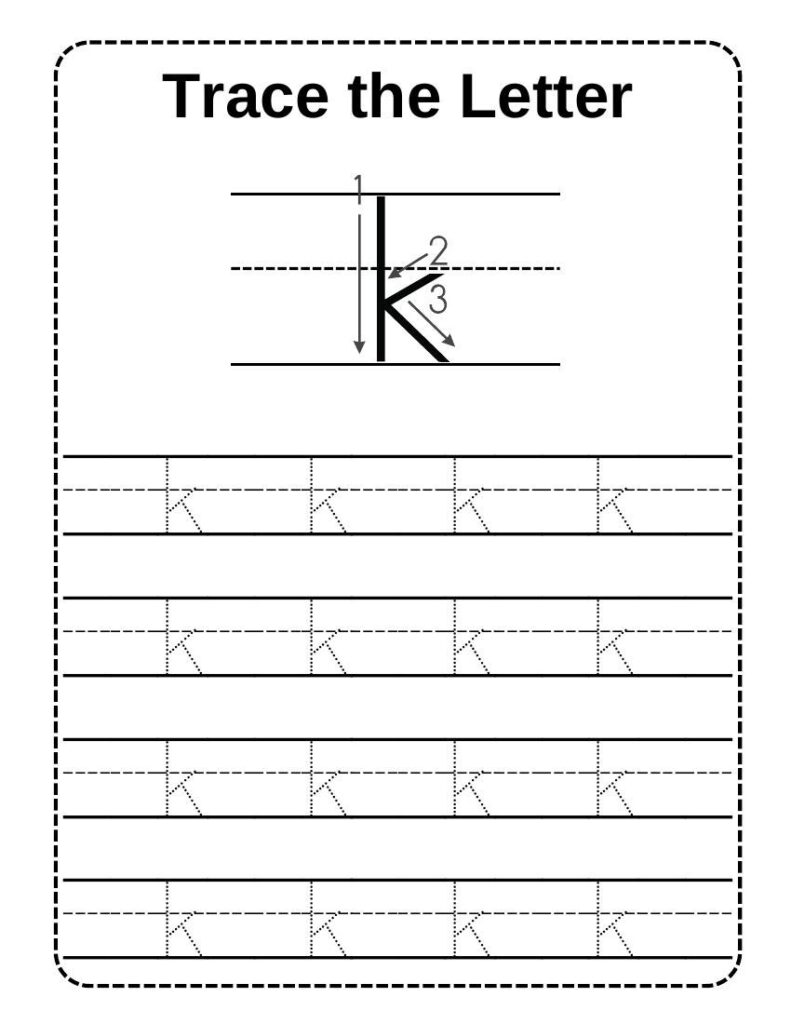
This worksheet introduces lowercase k. Children can practice the tall line and the two smaller diagonal strokes.
The dotted examples provide several opportunities to repeat the shape. You can demonstrate the letter before your child starts. This may help them understand where the diagonal lines meet.
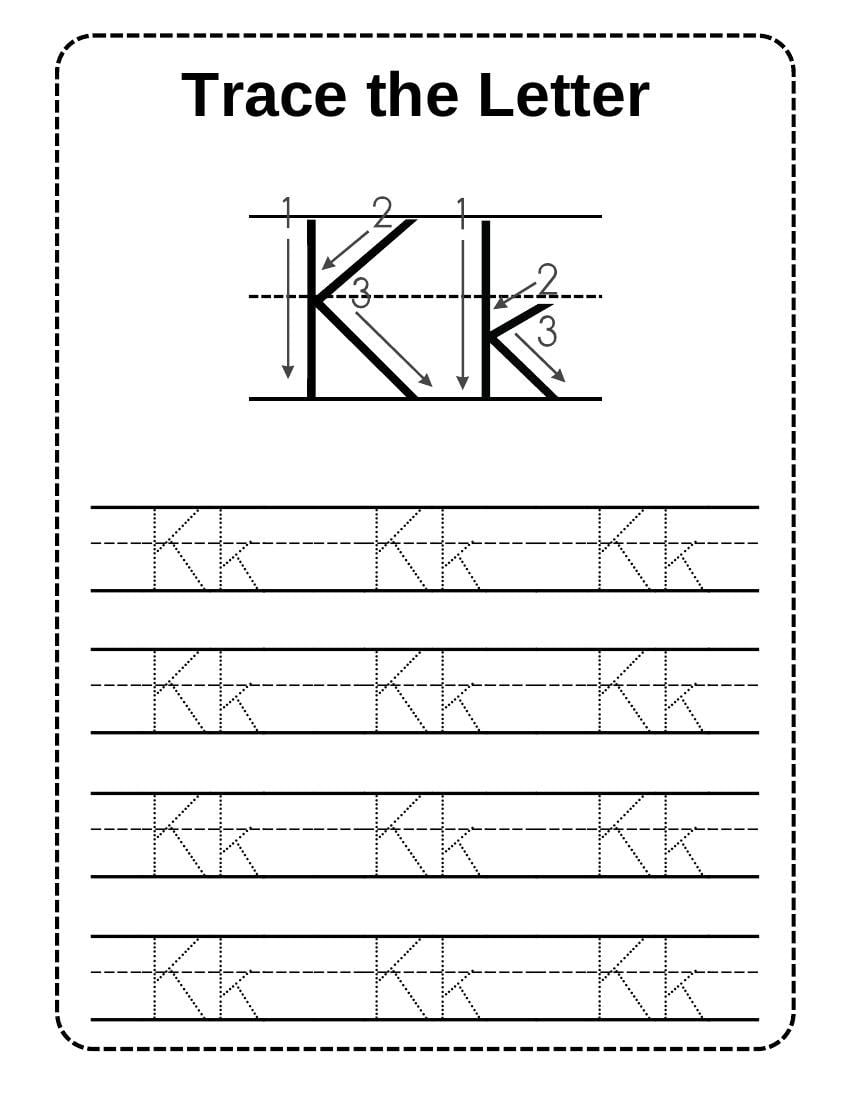
32. Uppercase and Lowercase Kk Tracing Worksheet
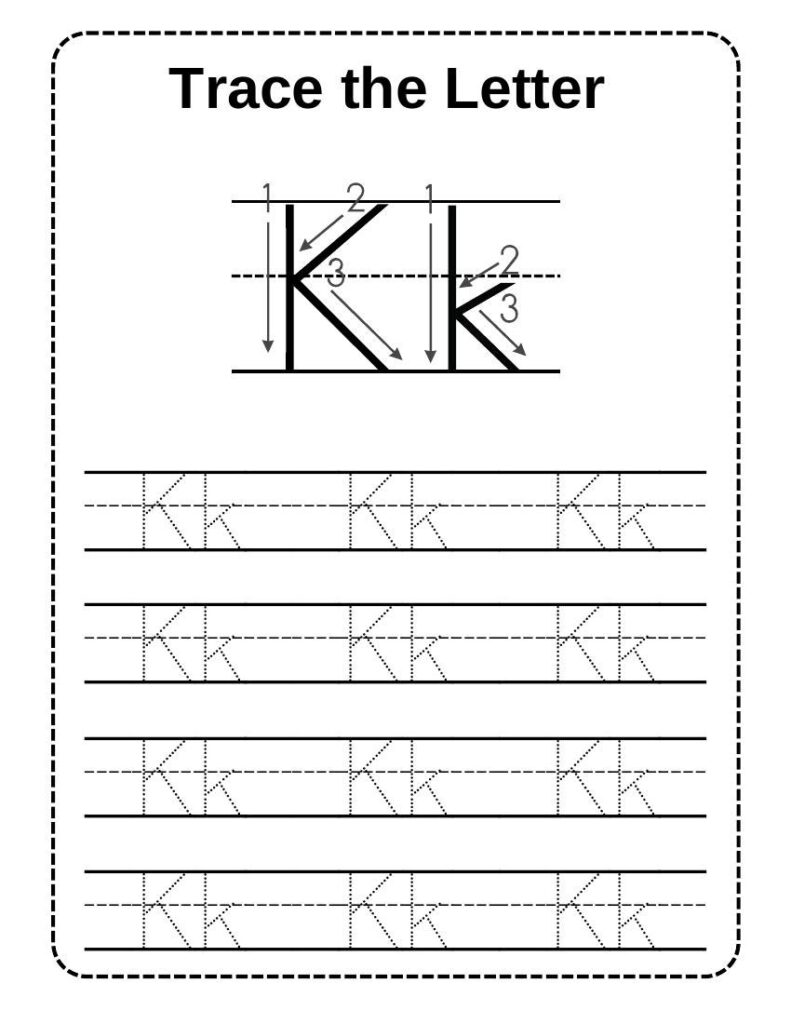
Here, children practice uppercase K and lowercase k together. The worksheet shows both forms and provides repeated tracing lines.
Ask your child to compare their sizes and shapes. Then, encourage them to trace each pair slowly. This helps reinforce the differences between uppercase and lowercase K.
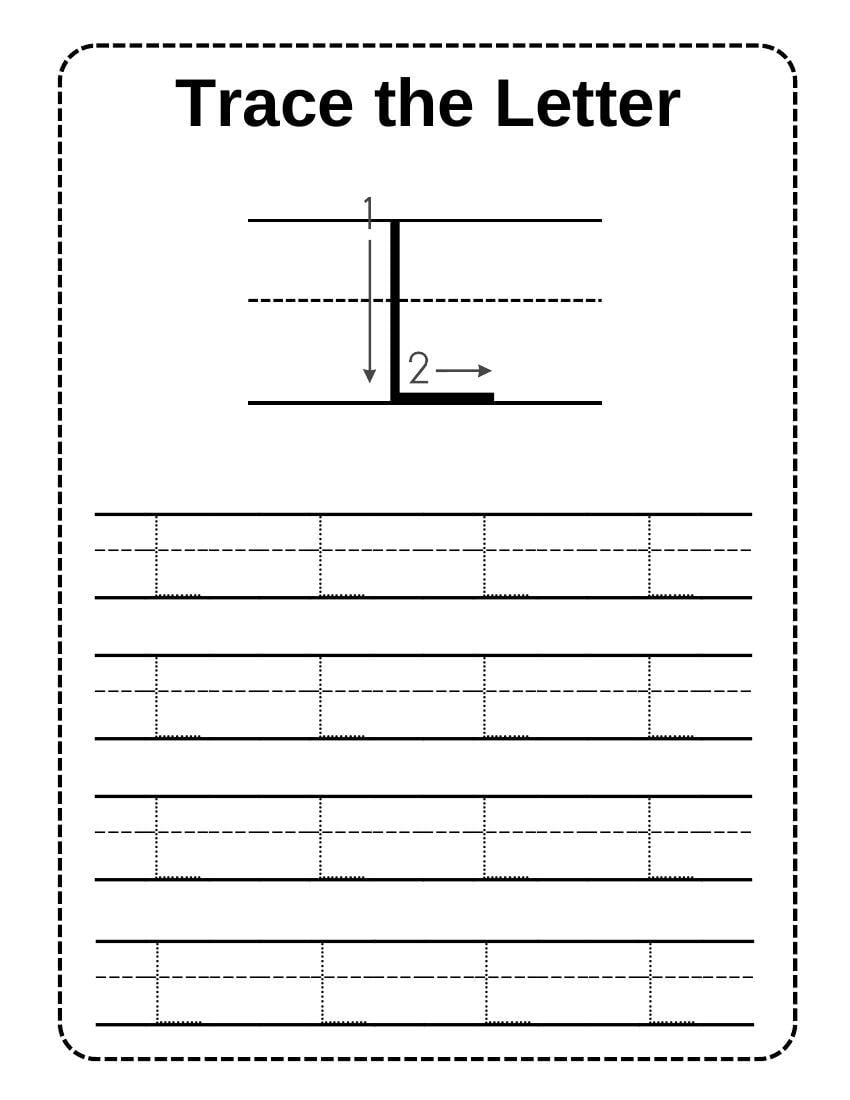
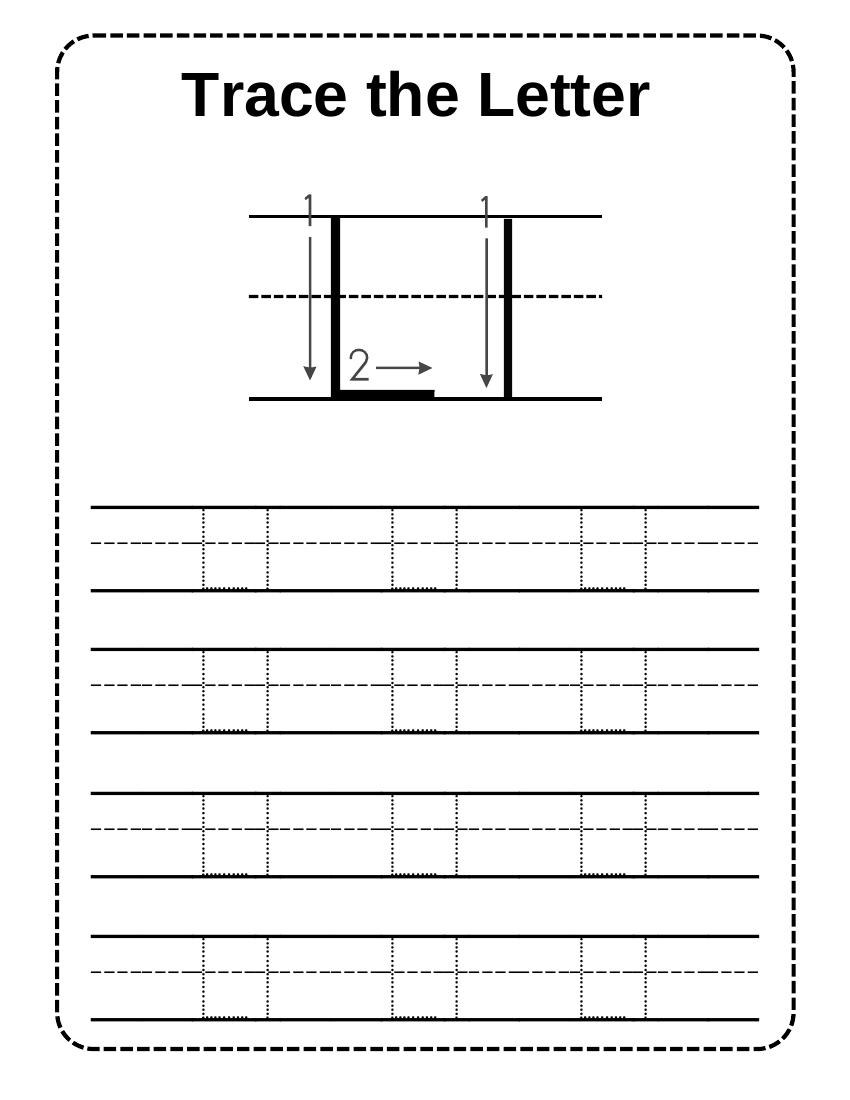
33. Uppercase Letter L Tracing Worksheet
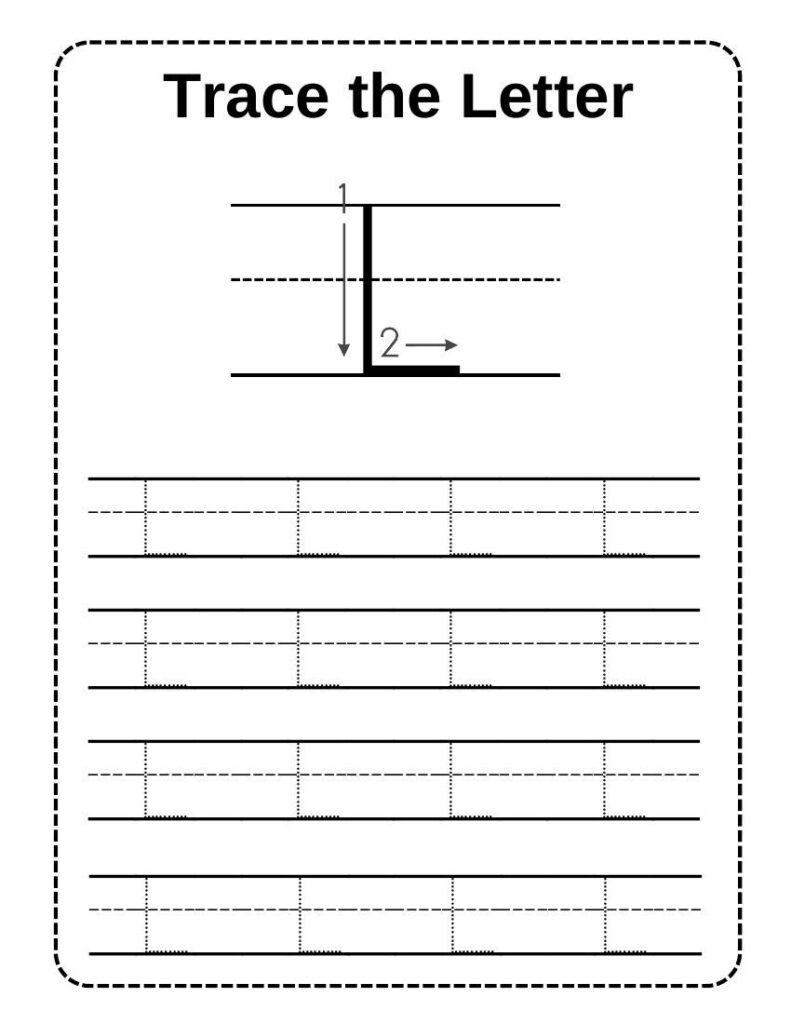
The thirty-third page introduces uppercase L. The large example shows a long vertical line and a short horizontal base.
Children can trace the letter across the dotted rows. Encourage them to keep the vertical stroke straight. This simple worksheet helps children practice forming letters with clear, connected lines.
34. Lowercase Letter l Tracing Worksheet
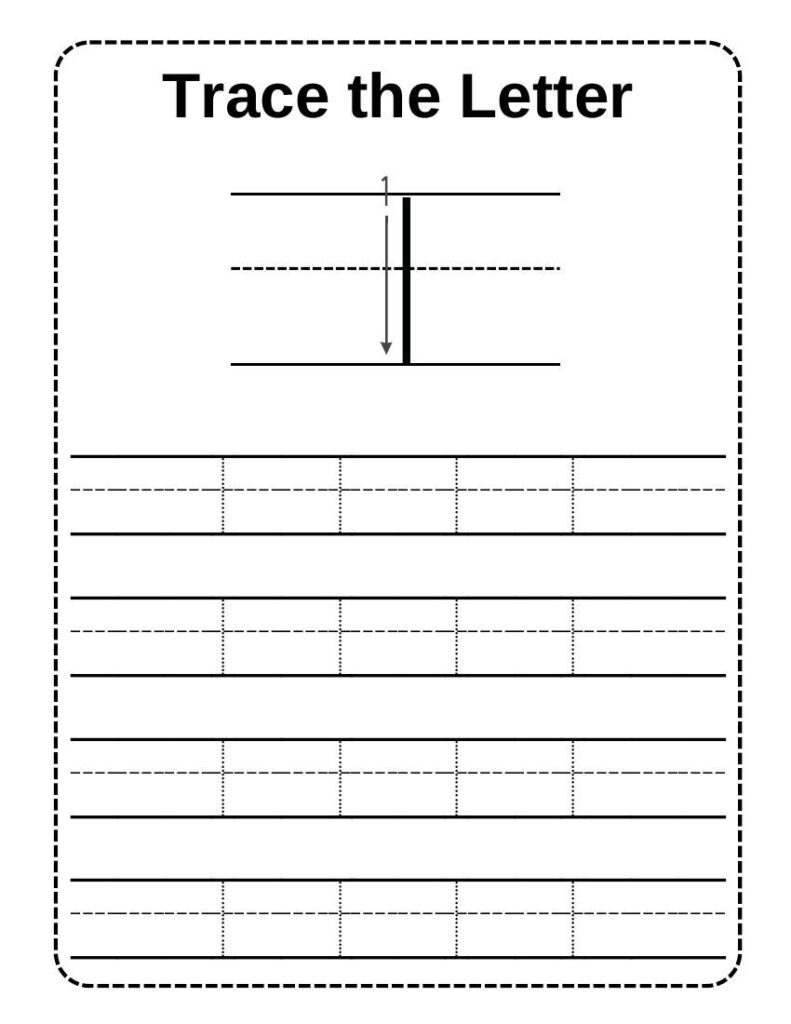
This page focuses on lowercase l. Children can trace the tall, straight letter using the dotted examples. Several rows allow them to practice keeping the stroke steady.
You can ask your child to compare lowercase l with uppercase L. This helps them notice the similarities between the two forms.
35. Uppercase and Lowercase Ll Tracing Worksheet
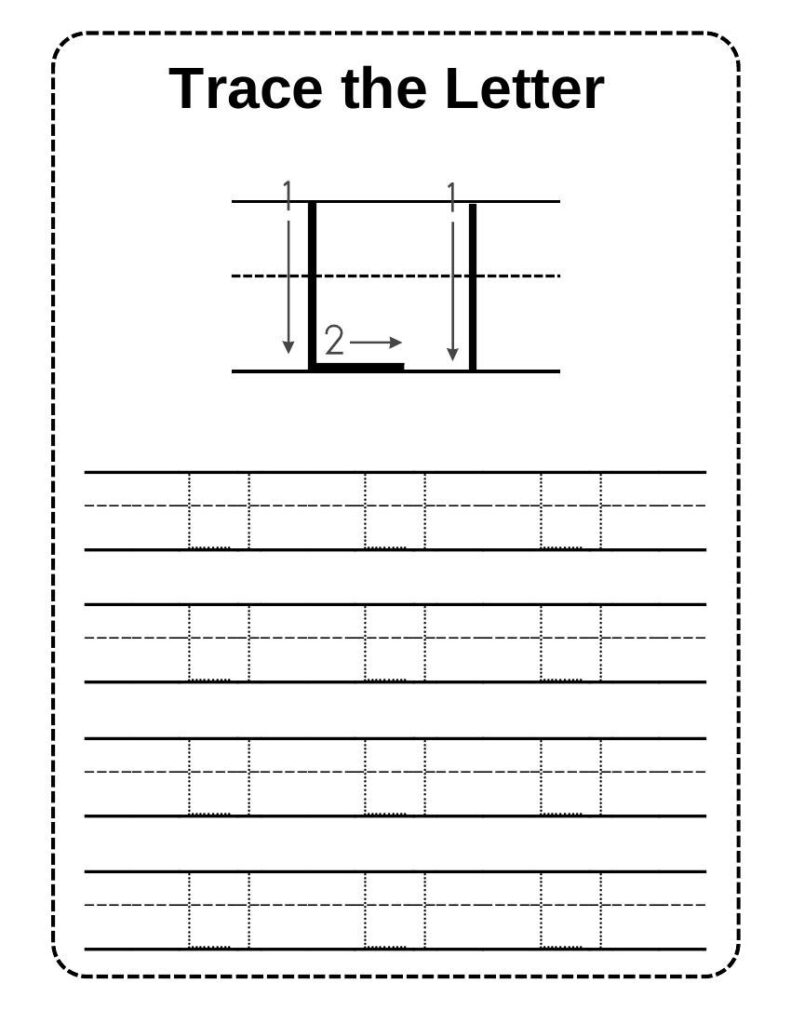
Children practice uppercase L and lowercase l together on this page. The worksheet provides paired examples across several lines.
Invite your child to notice how both letters use a straight vertical stroke. Then, have them trace the pairs carefully. Repetition can help improve letter formation and pencil control.
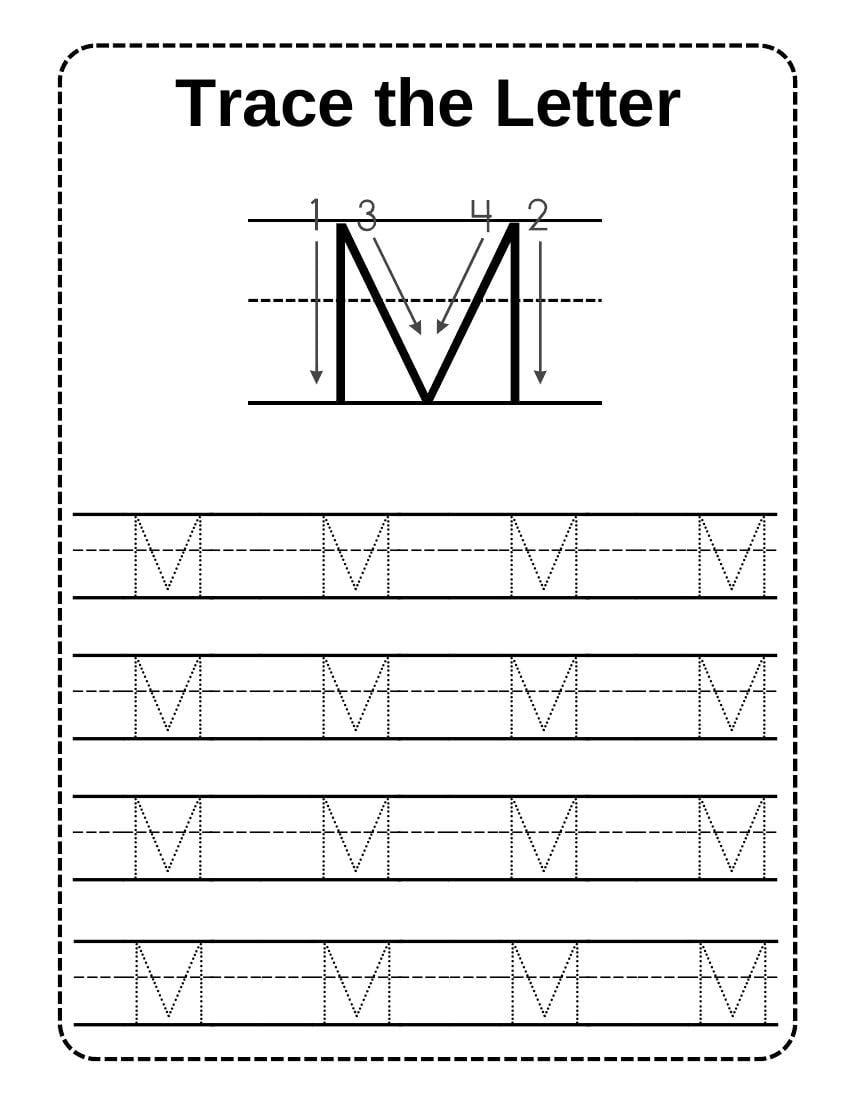
36. Uppercase Letter M Tracing Worksheet
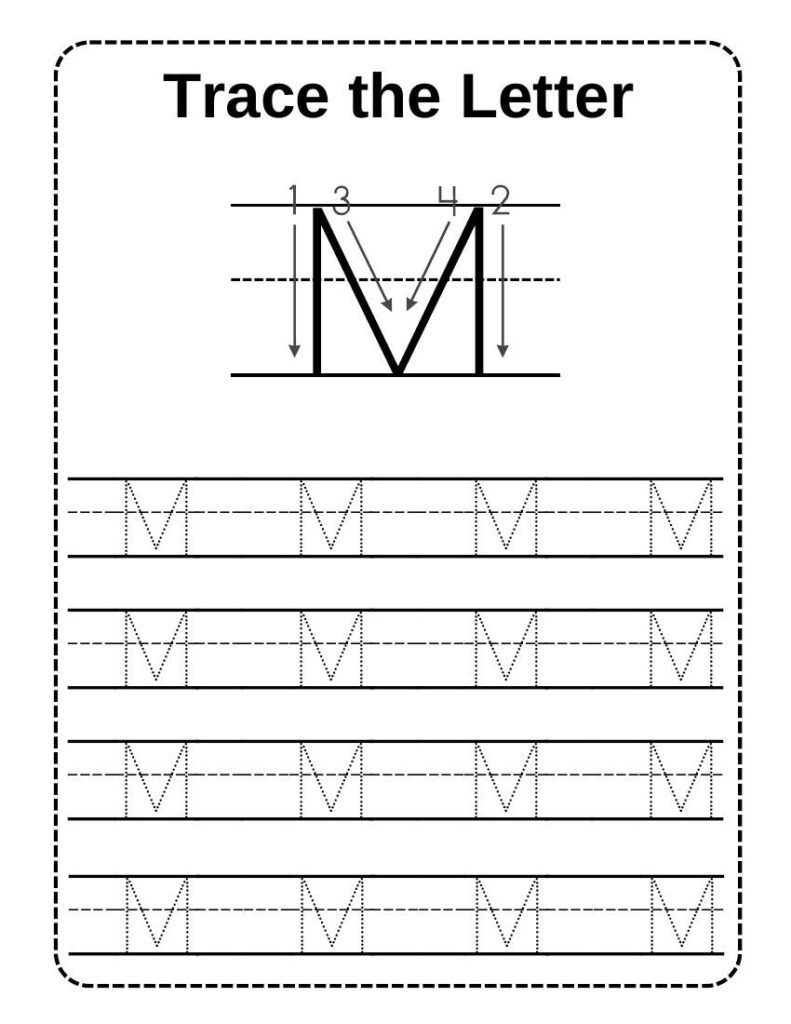
The thirty-sixth worksheet introduces uppercase M. Its example shows the tall lines and diagonal strokes that form the letter.
Children can follow the numbered directions before tracing the dotted shapes. Encourage them to take their time with the middle strokes. This helps make the letter’s shape easier to remember.
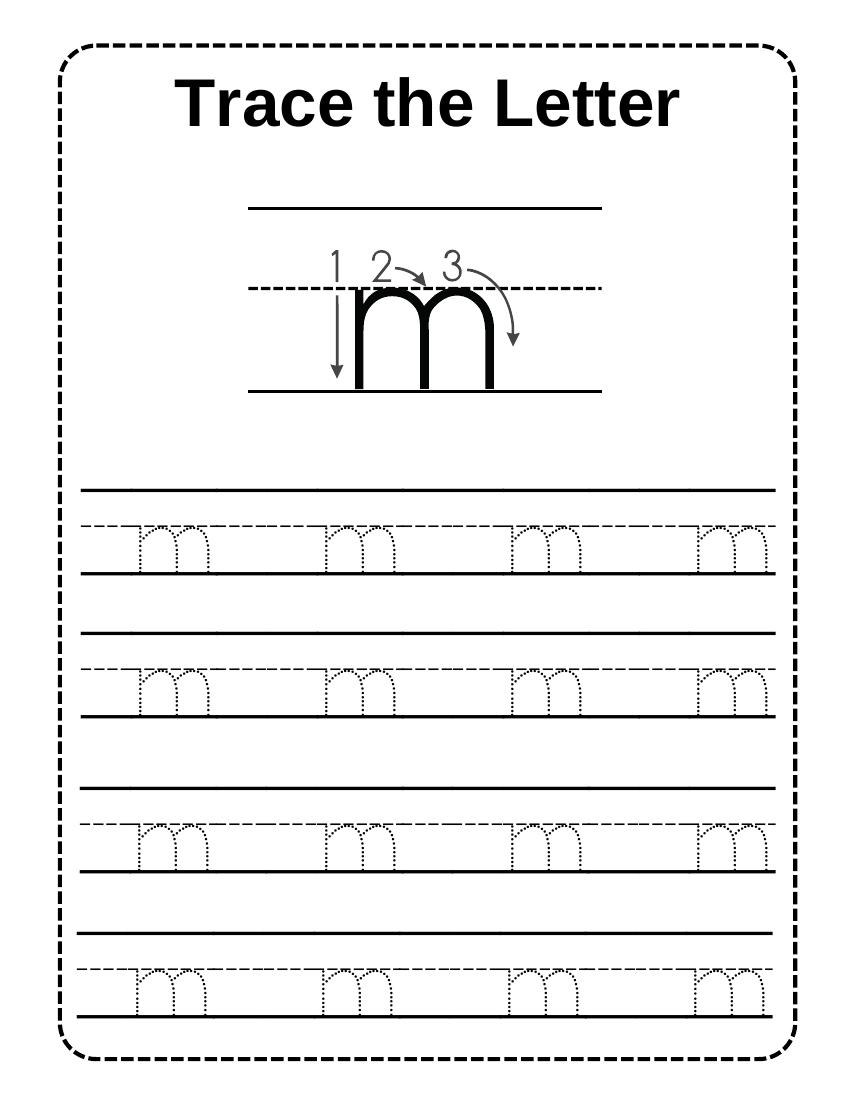
37. Lowercase Letter m Tracing Worksheet
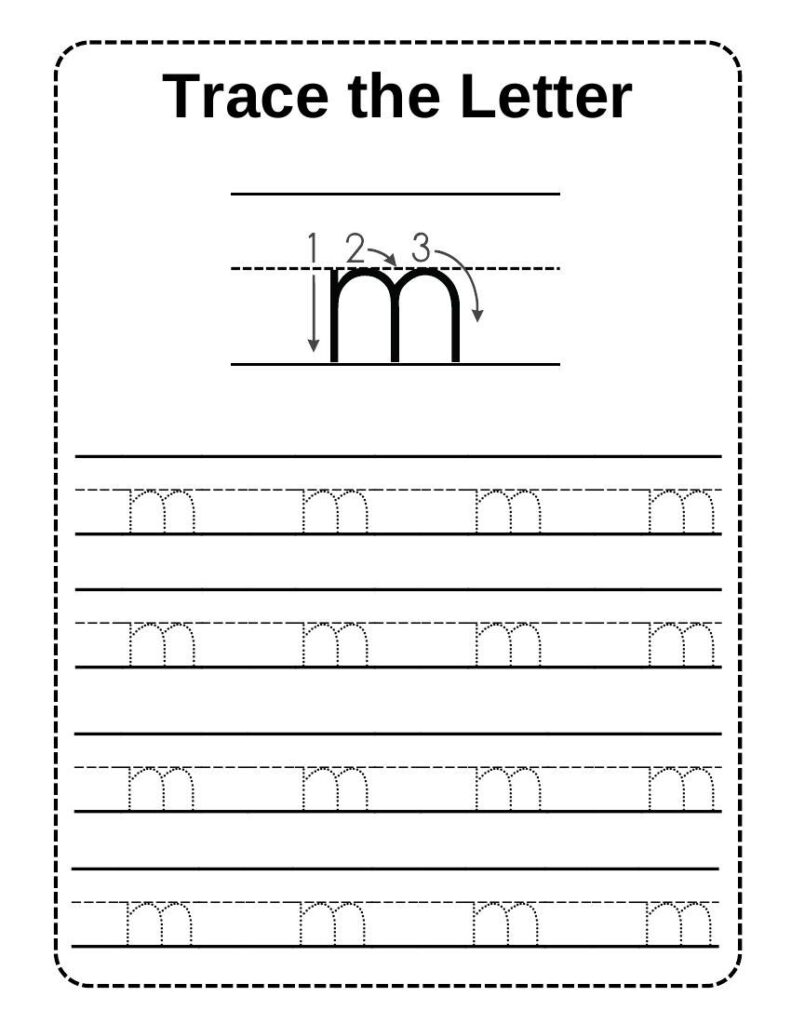
Next, children practice lowercase m. The example shows a straight starting stroke followed by two rounded humps. Several rows provide space for repeated tracing.
Remind your child to keep each hump visible. This practice helps them form lowercase m without confusing it with other letters.
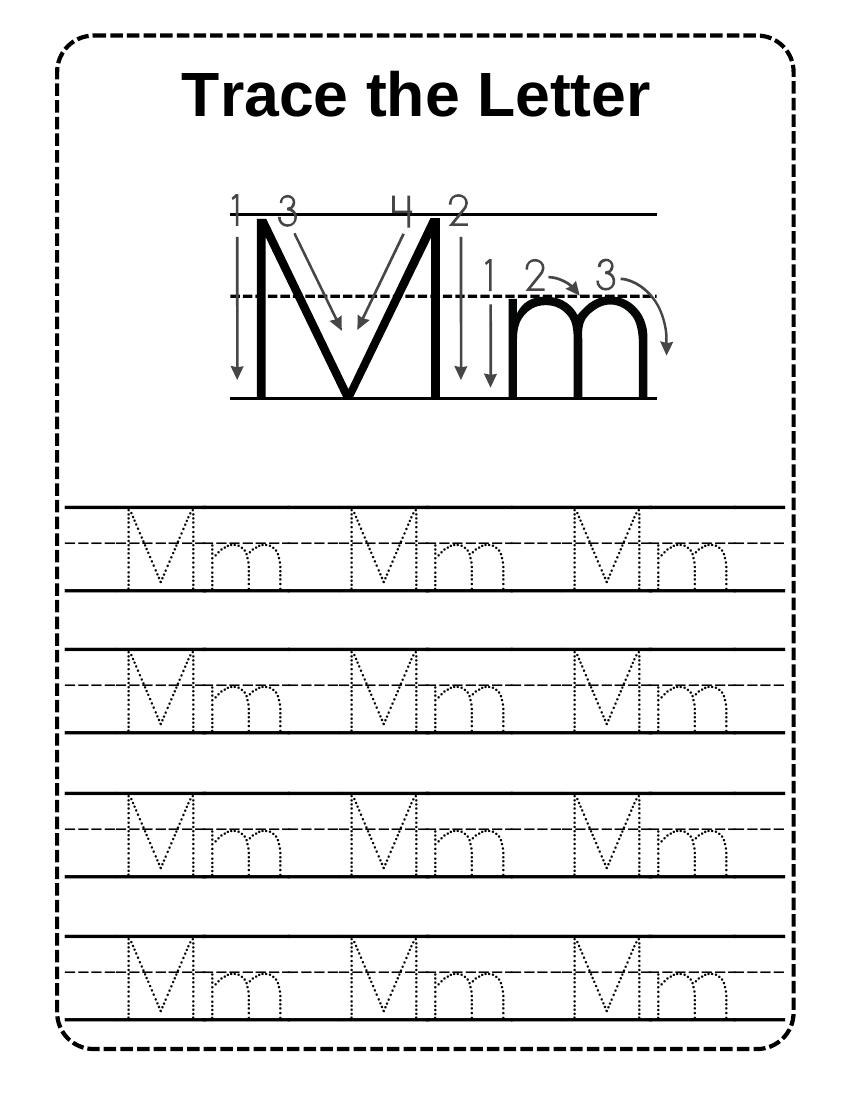
38. Uppercase and Lowercase Mm Tracing Worksheet
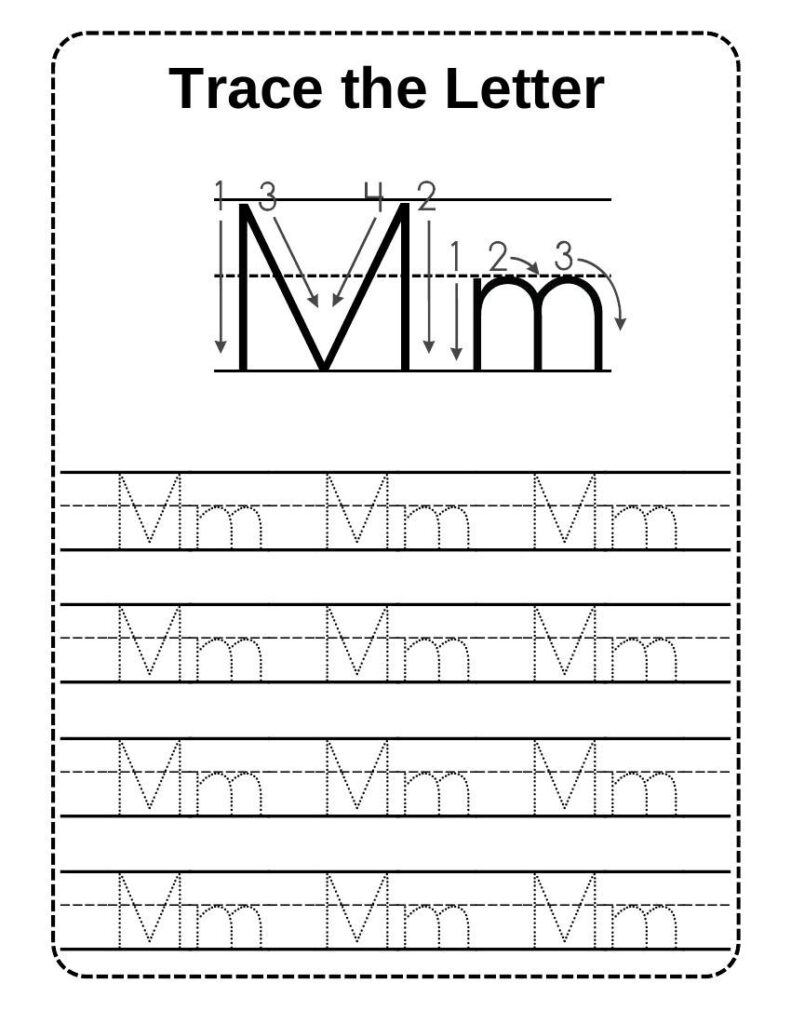
This worksheet pairs uppercase M with lowercase m. Children can compare the tall, angled uppercase letter with the rounded lowercase form.
The dotted rows offer repeated writing practice. Ask your child to identify which letter has two humps. This simple comparison encourages careful observation while practicing handwriting.
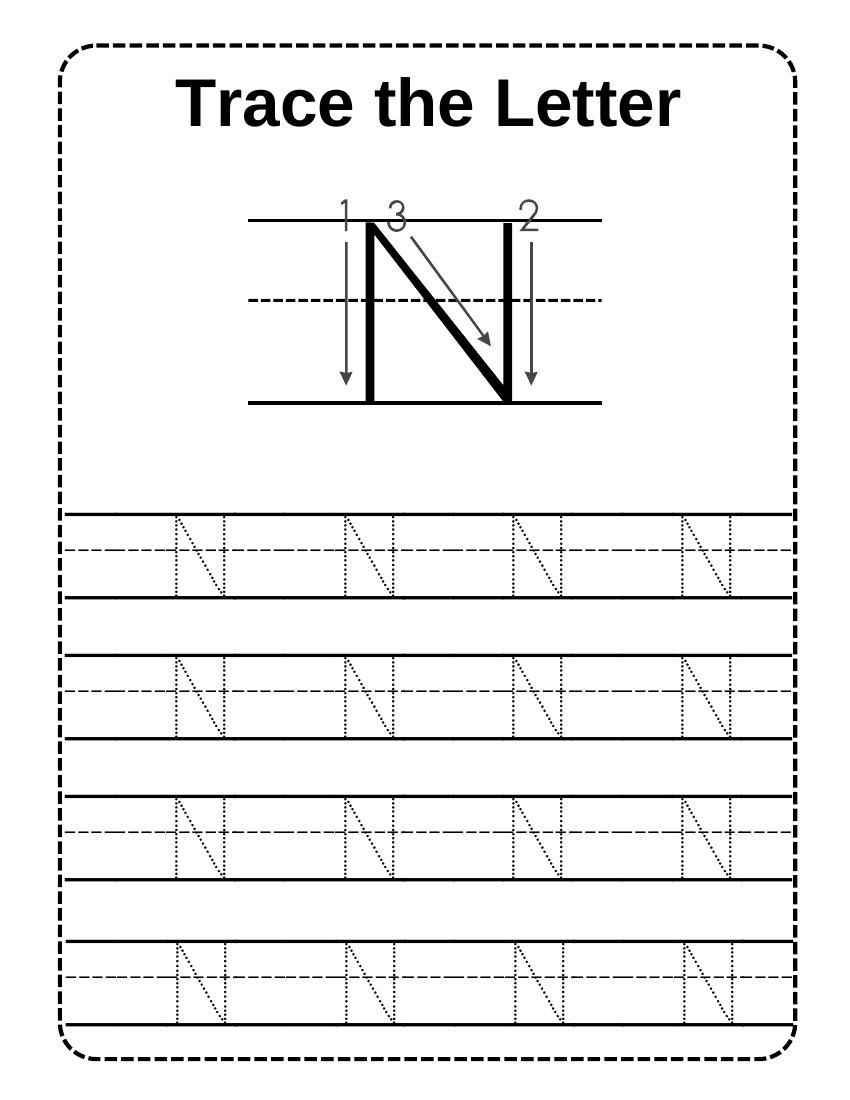
39. Uppercase Letter N Tracing Worksheet
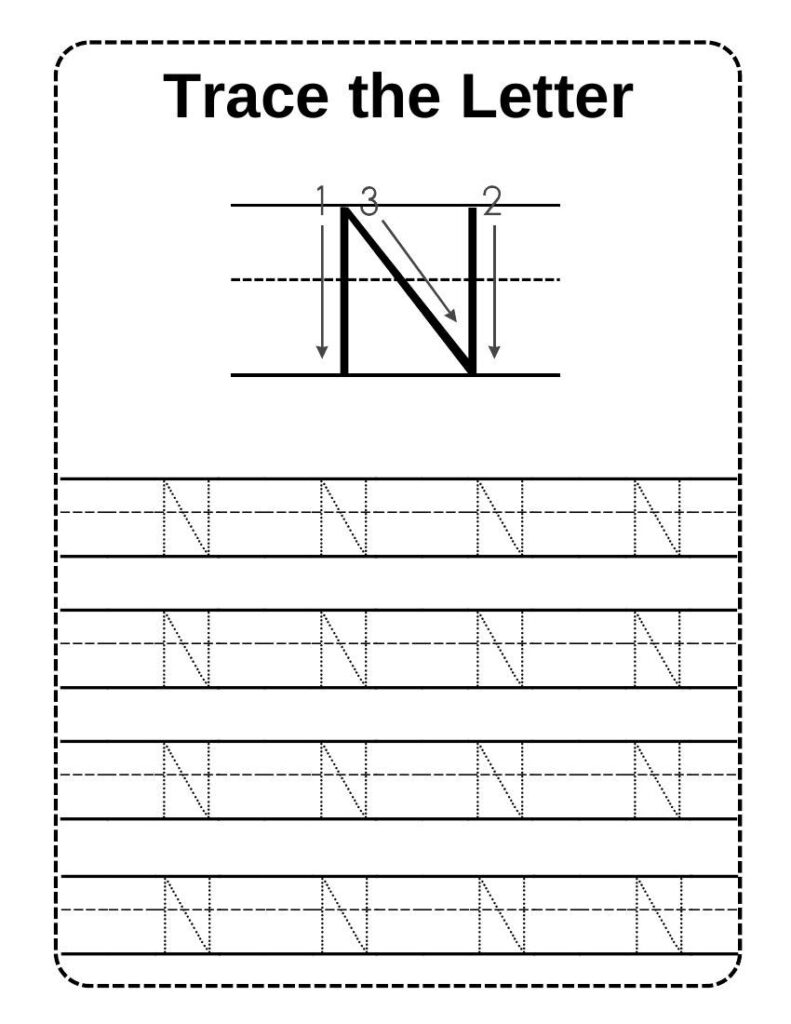
The thirty-ninth page focuses on uppercase N. The example shows two vertical strokes connected by a diagonal line. Children can trace the dotted letters across several rows.
Encourage them to follow the stroke order shown above. This activity supports more controlled writing of letters with diagonal lines.
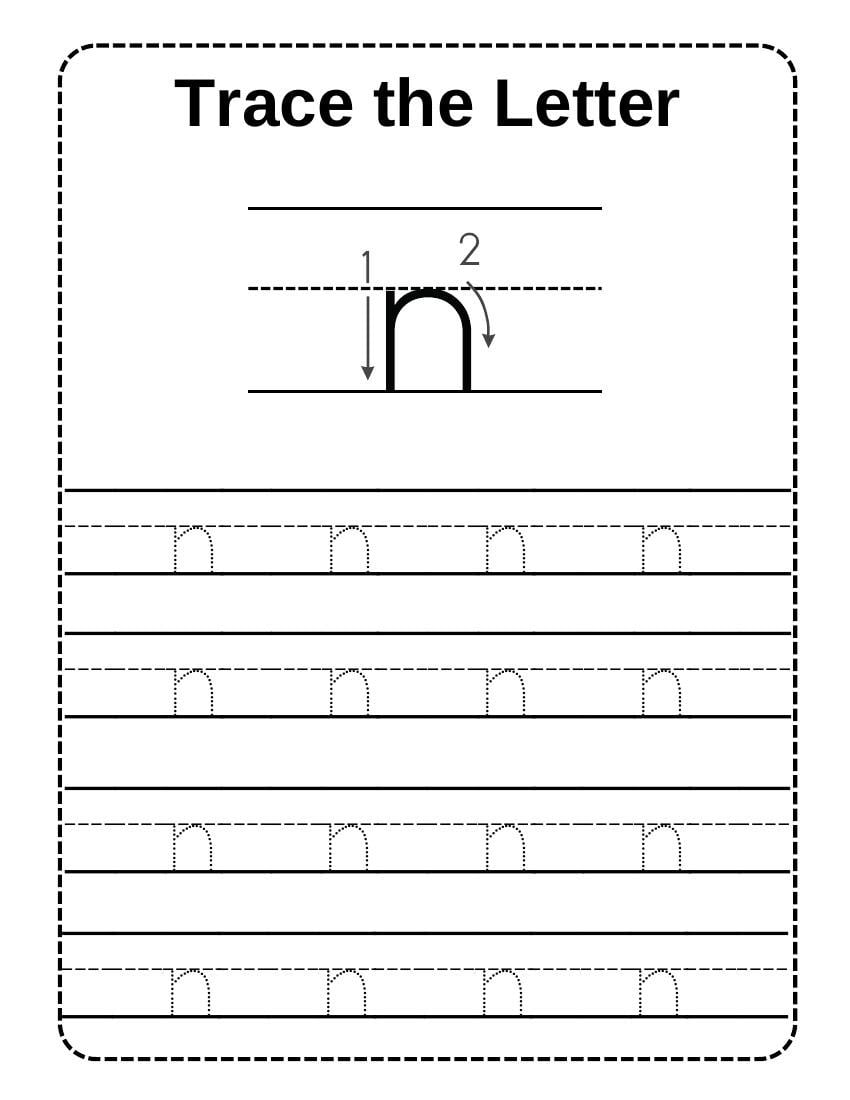
40. Lowercase Letter n Tracing Worksheet
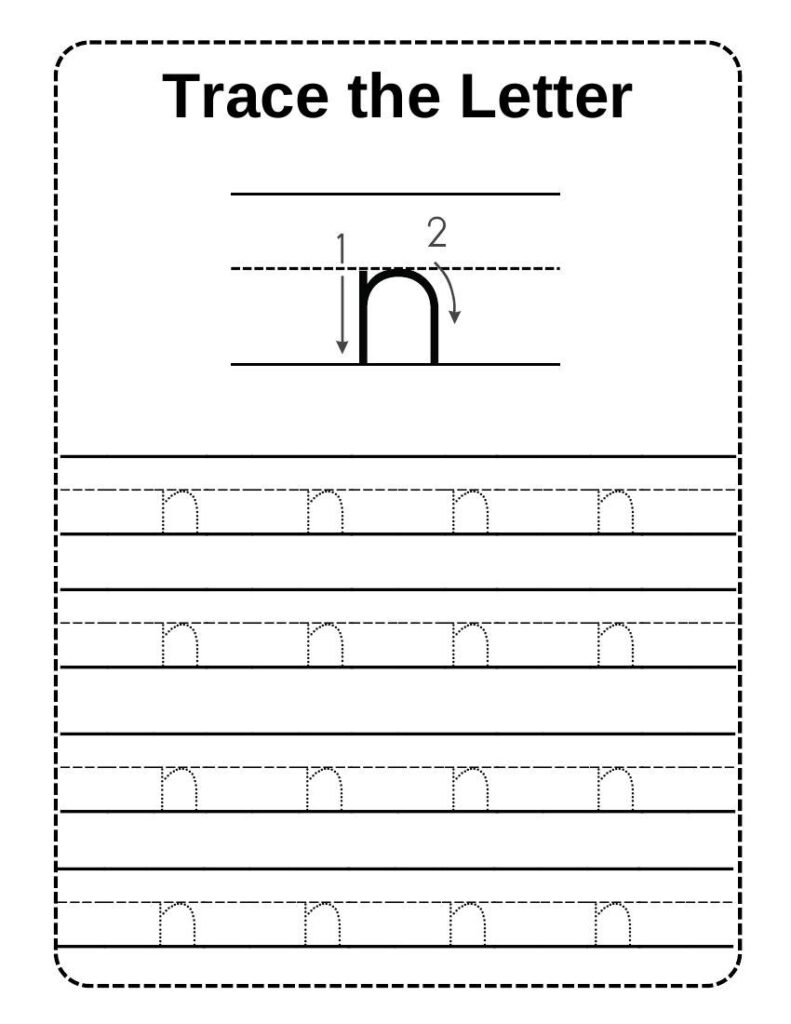
This page introduces lowercase n. Children can trace the straight line and rounded hump shown in the example.
The worksheet includes several rows for extra practice. Remind your child to keep the hump connected to the starting stroke. This helps make the lowercase letter clear and recognizable.
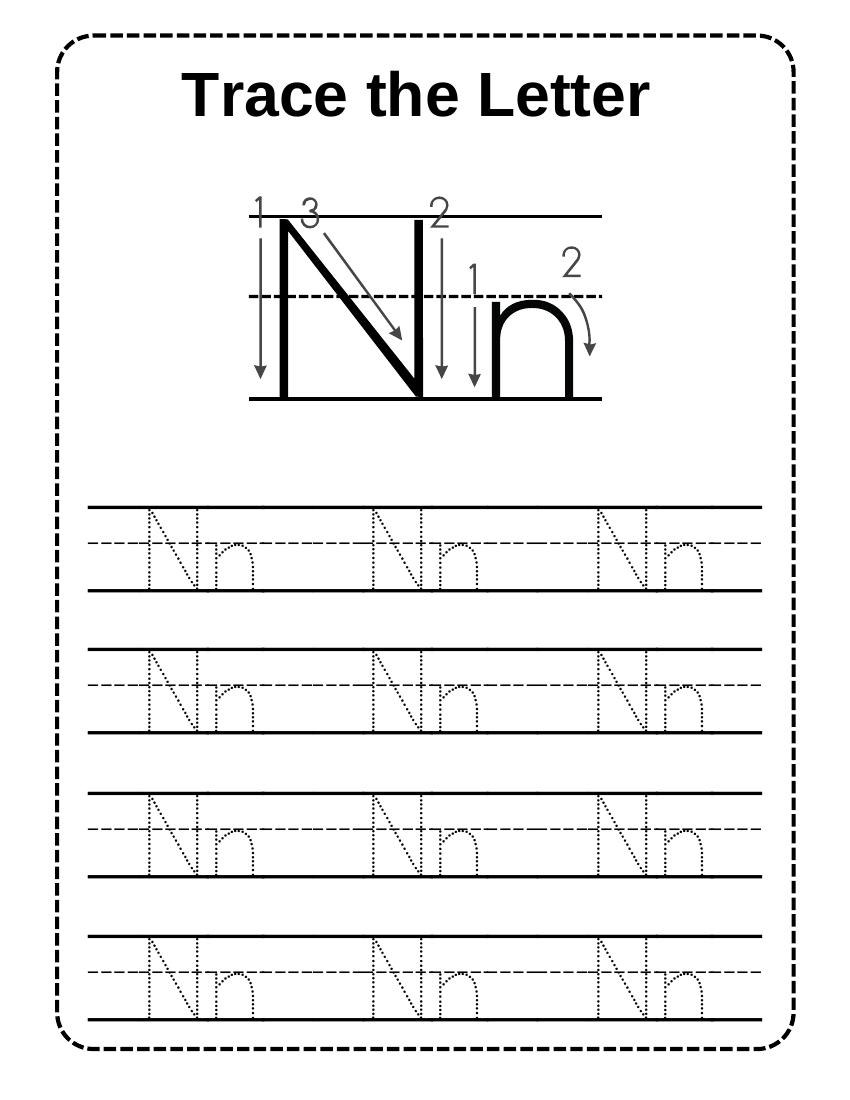
41. Uppercase and Lowercase Nn Tracing Worksheet
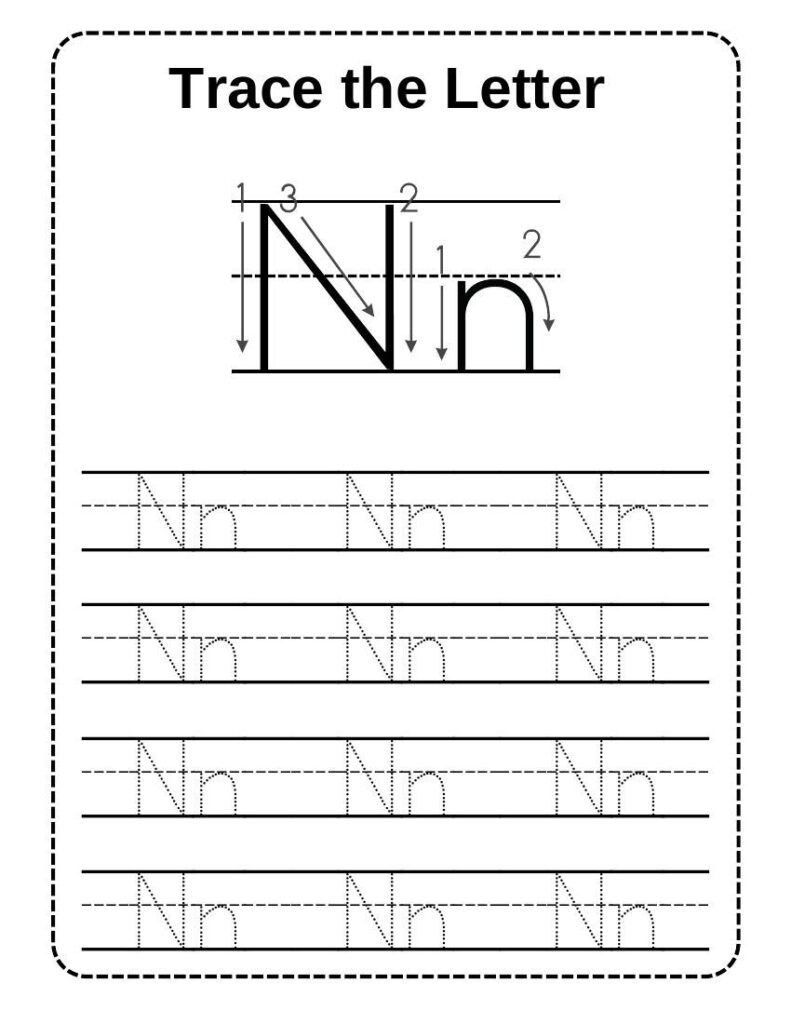
Here, children practice uppercase N and lowercase n together. The worksheet offers paired letters and repeated tracing lines.
Encourage your child to compare their shapes before starting. Then, let them trace each pair at a comfortable pace. This supports letter recognition and more consistent handwriting.
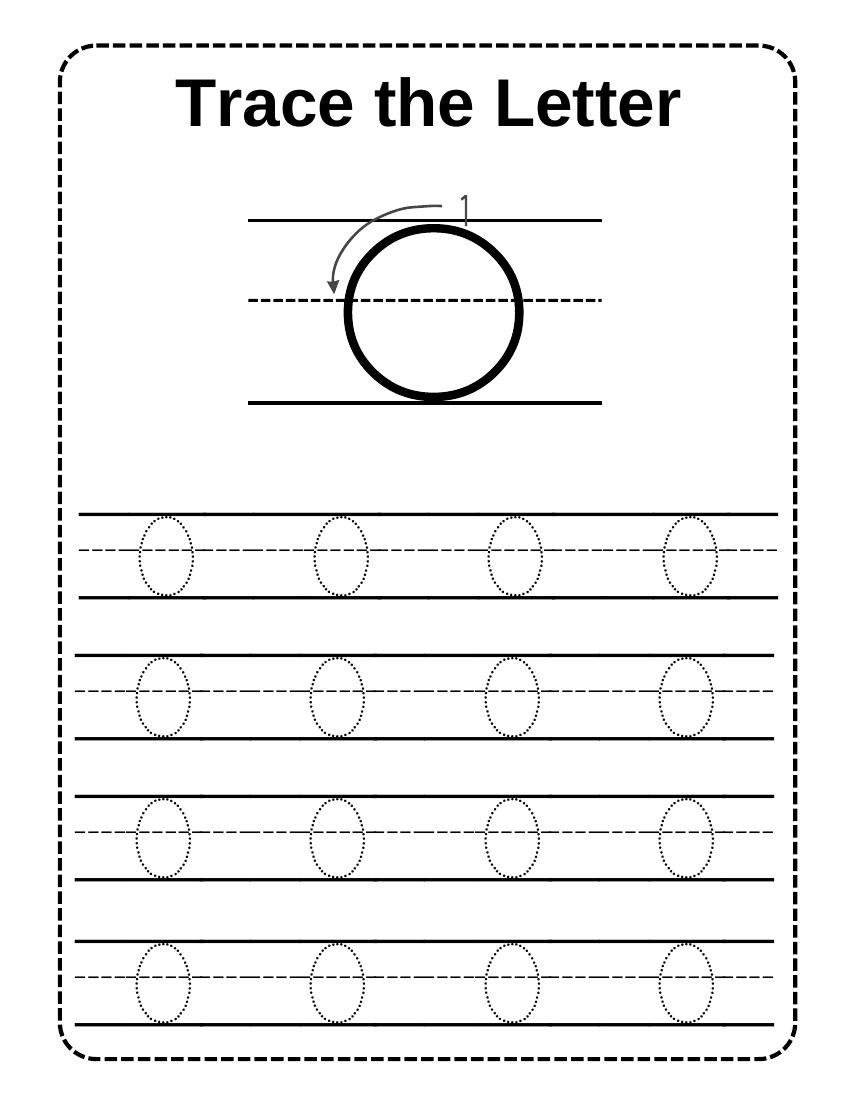
42. Uppercase Letter O Tracing Worksheet
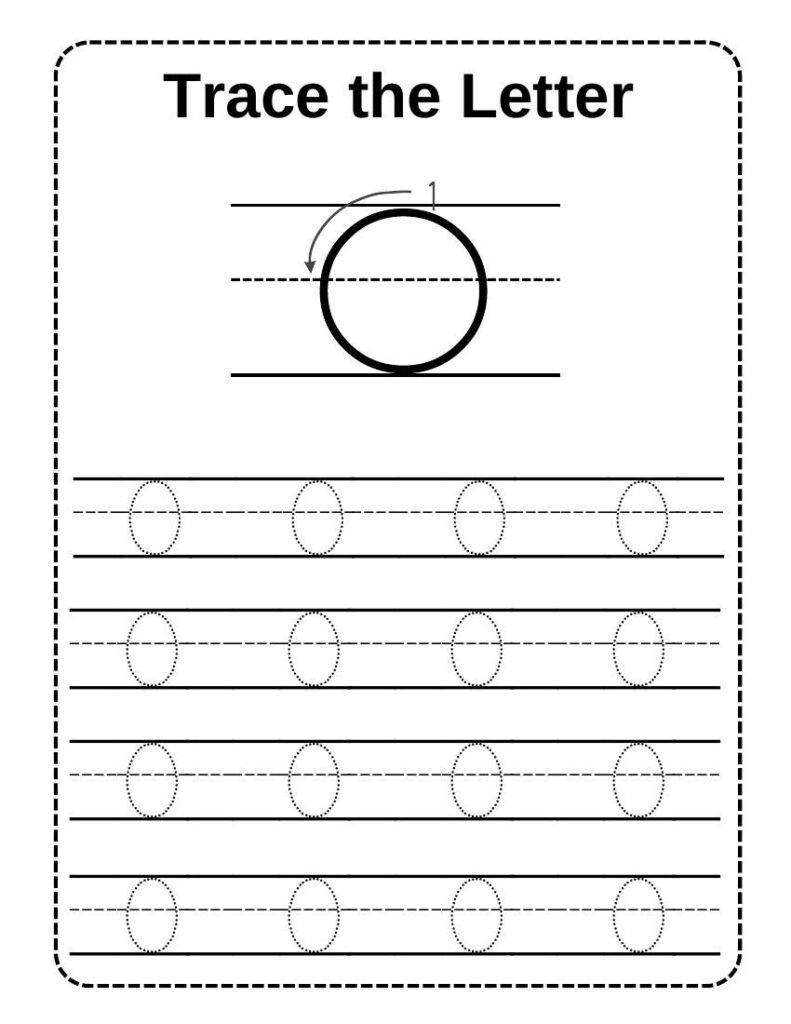
The forty-second worksheet introduces uppercase O. Its large example shows a rounded shape that children can follow.
The dotted rows provide plenty of tracing practice. Encourage smooth movements as your child traces each letter. This activity helps build control when writing curved letters.
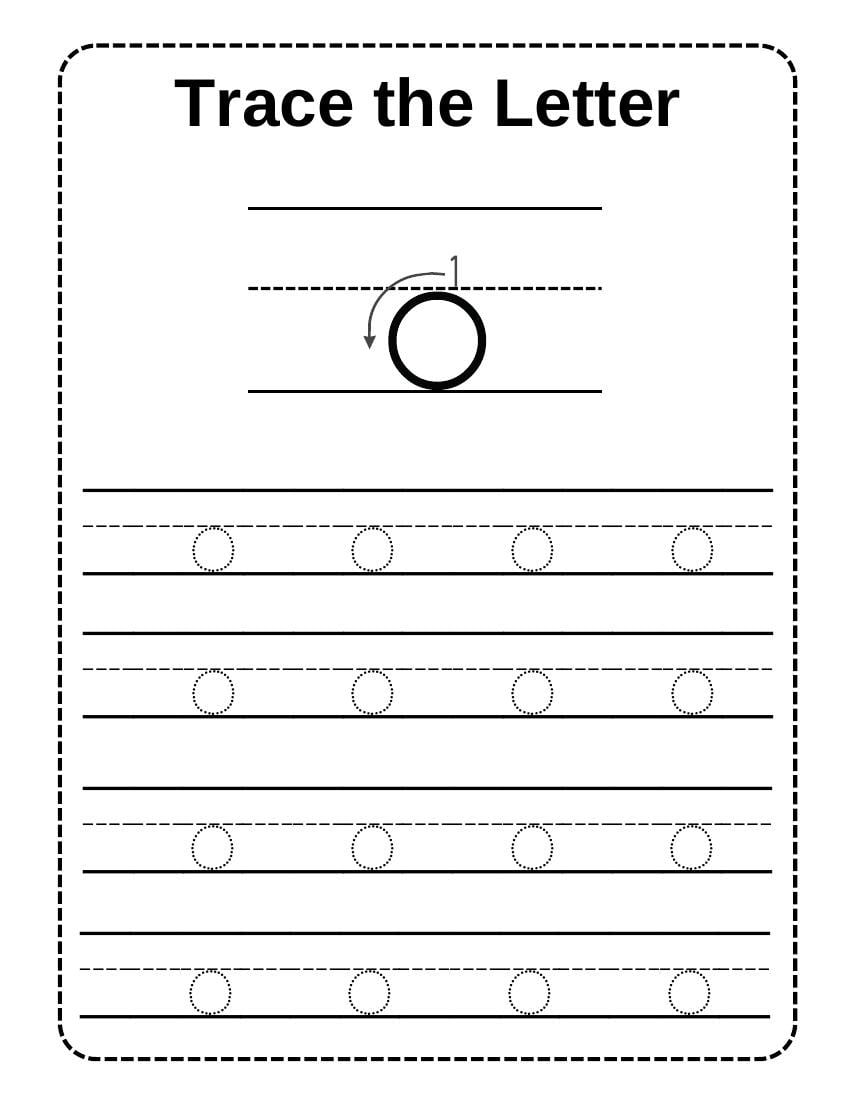
43. Lowercase Letter o Tracing Worksheet
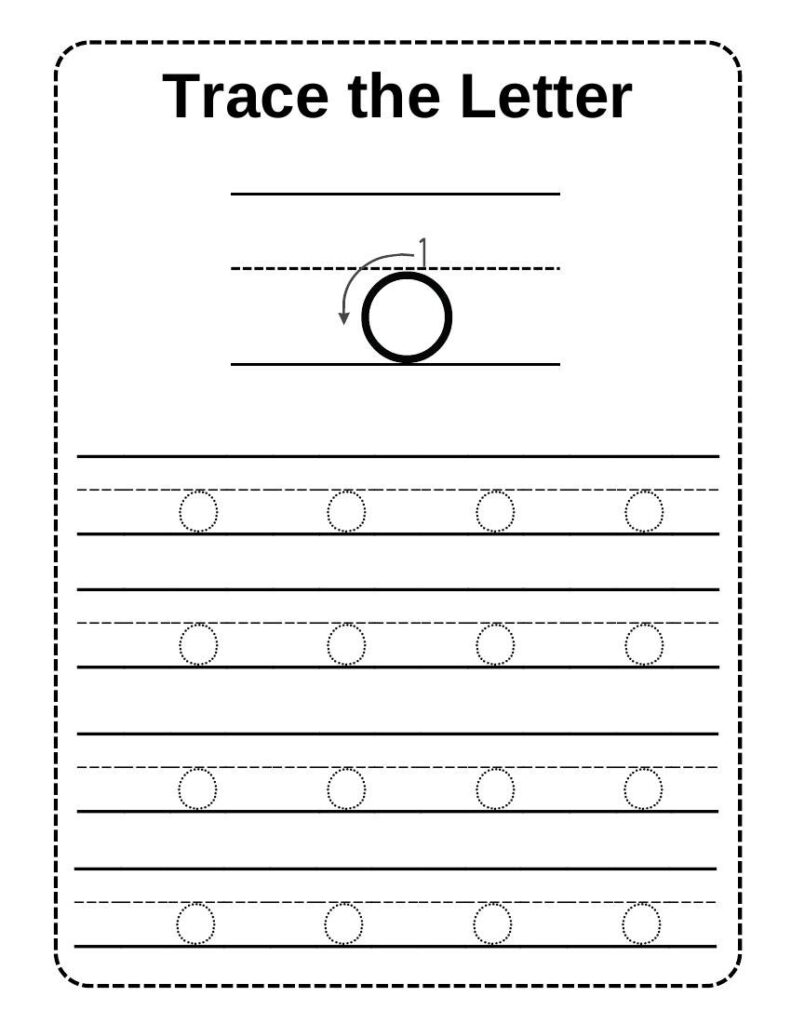
This page focuses on lowercase o. Children can follow the rounded example and trace the dotted letters below.
Several rows allow them to practice making smooth, closed shapes. Ask your child to keep the letter rounded instead of making sharp corners. This helps reinforce the correct form.
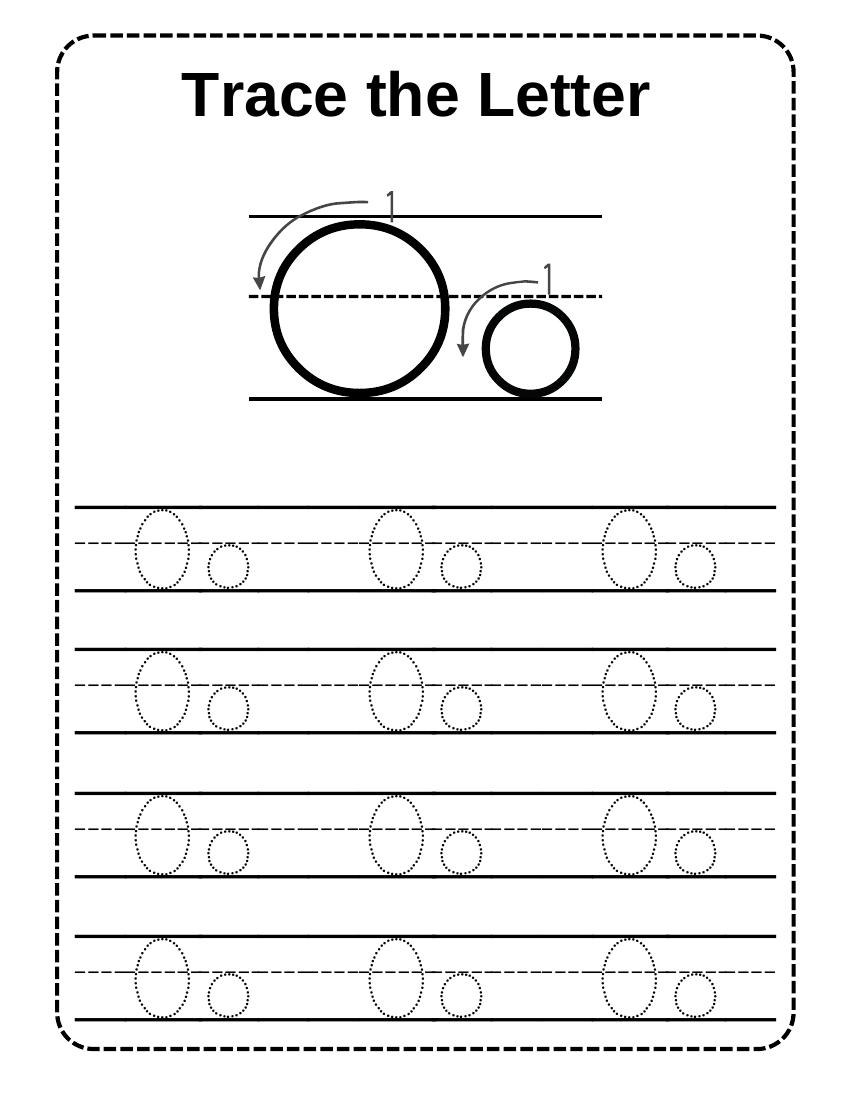
44. Uppercase and Lowercase Oo Tracing Worksheet
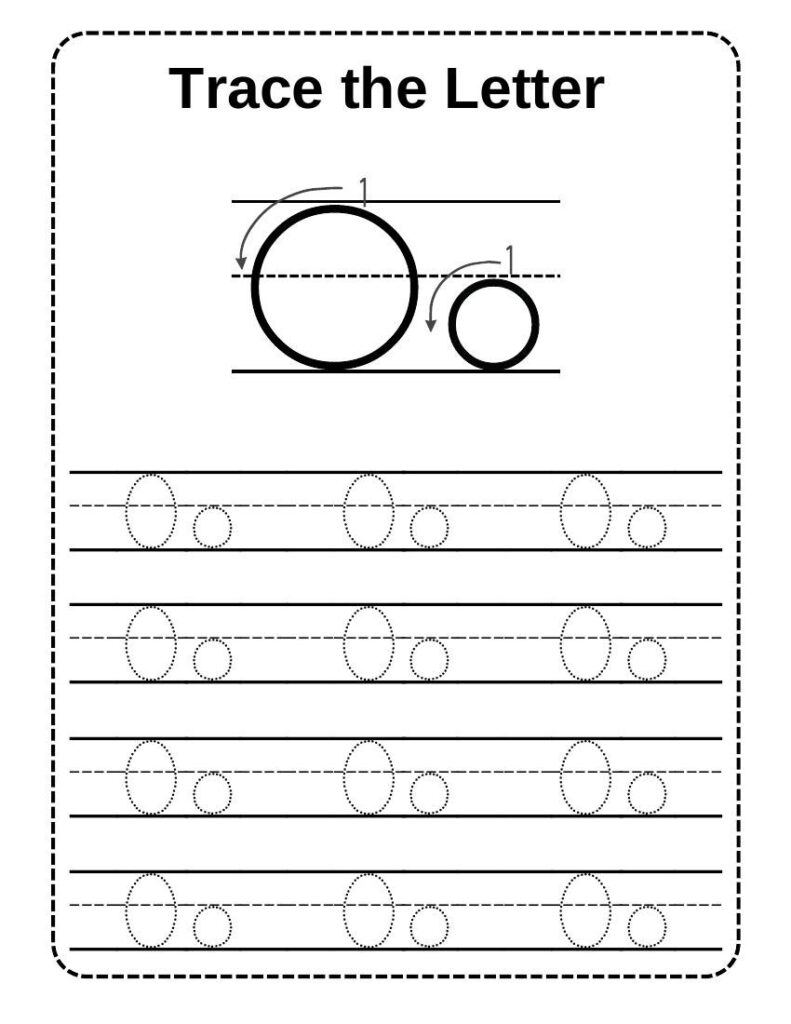
Children practice uppercase O and lowercase o together on this page. The examples show both rounded letter forms.
Repeated tracing gives children time to become comfortable with each size. Ask your child to point out which letter is larger. This activity combines handwriting practice with simple letter comparison.
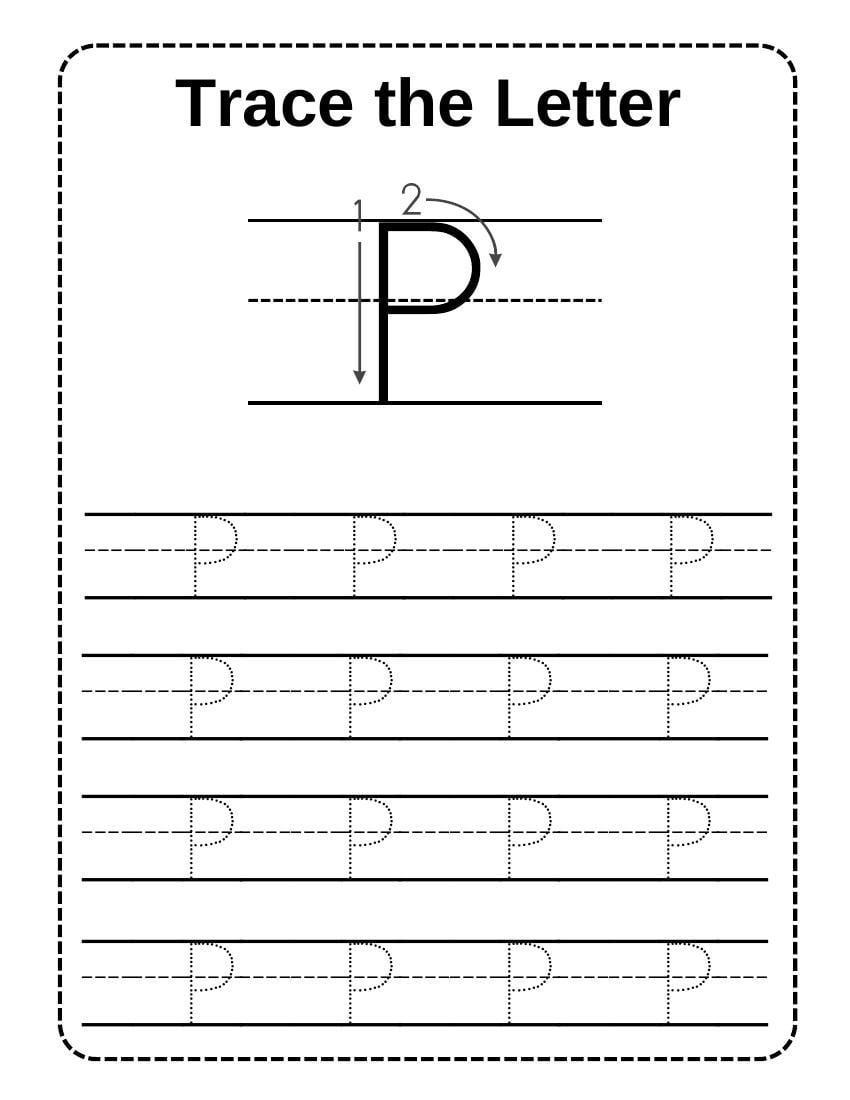
45. Uppercase Letter P Tracing Worksheet
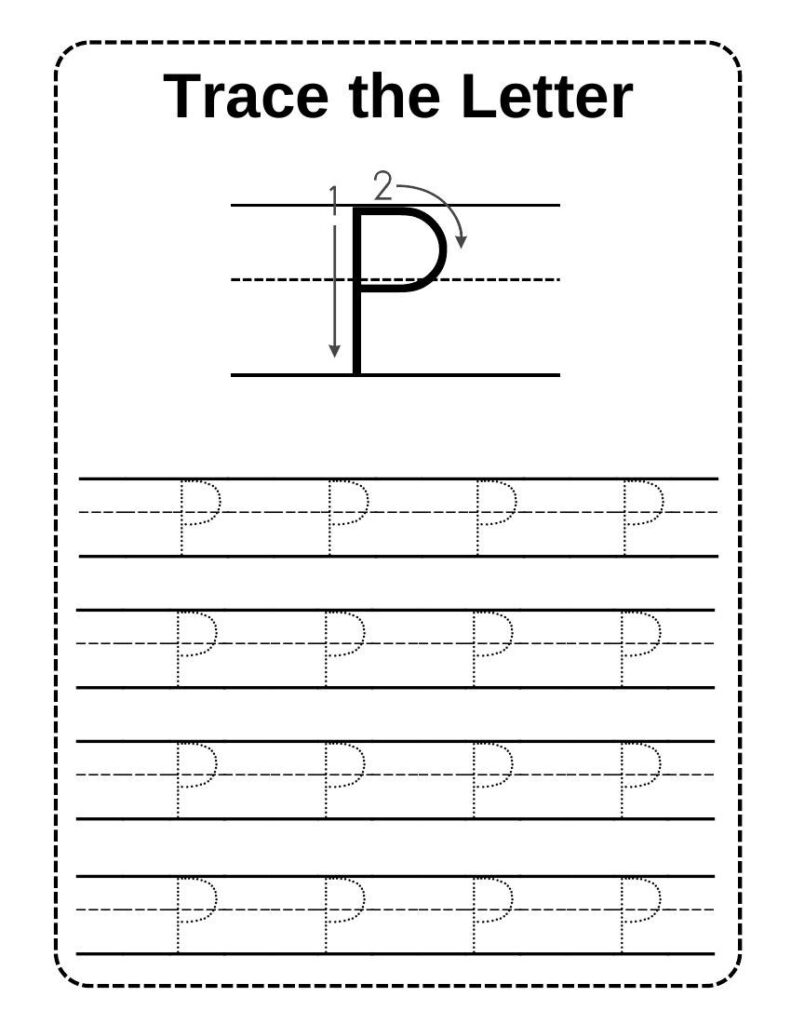
The forty-fifth worksheet introduces uppercase P. The large example shows a straight vertical line and a rounded top section.
Children can trace the dotted letters across the practice rows. Encourage them to complete the straight stroke before the curved part. This helps them follow the letter’s structure.
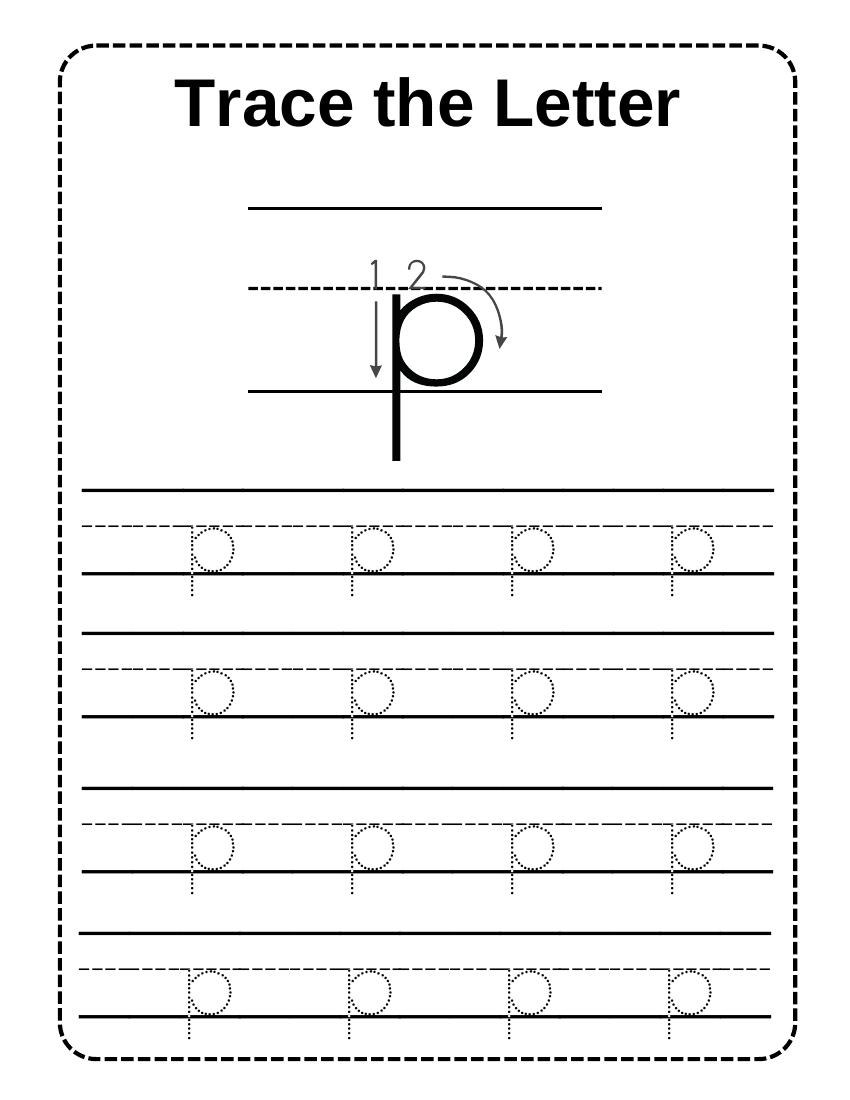
46. Lowercase Letter p Tracing Worksheet
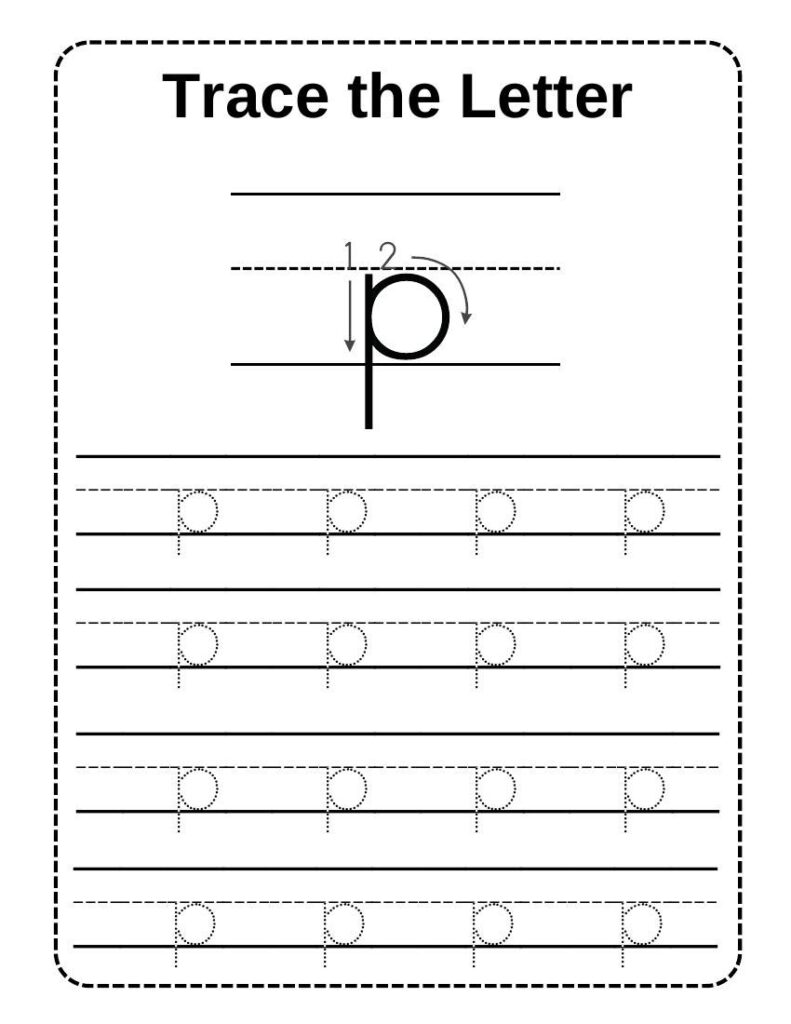
Next, children practice lowercase p. The example shows a long downward stroke and a rounded section.
Children can trace the letter repeatedly using the dotted guides. Remind your child that part of the letter extends below the writing line. This detail helps distinguish lowercase p from similar letters.
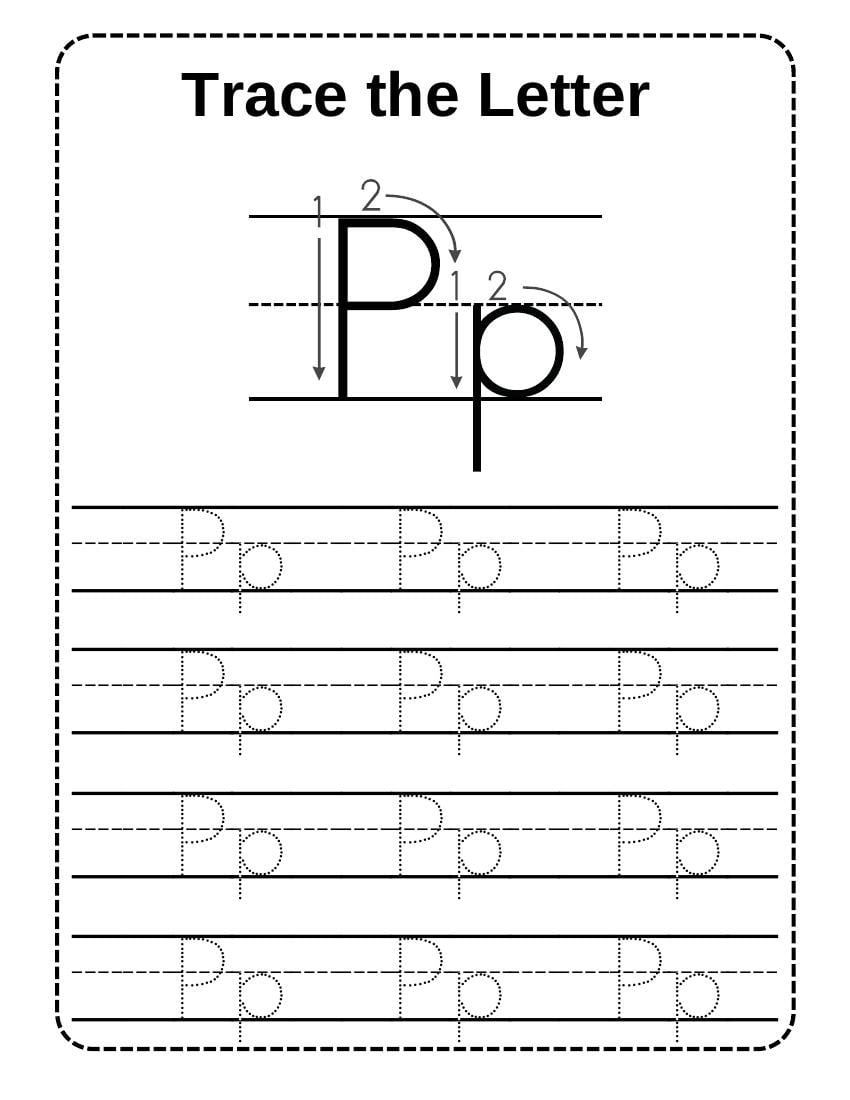
47. Uppercase and Lowercase Pp Tracing Worksheet
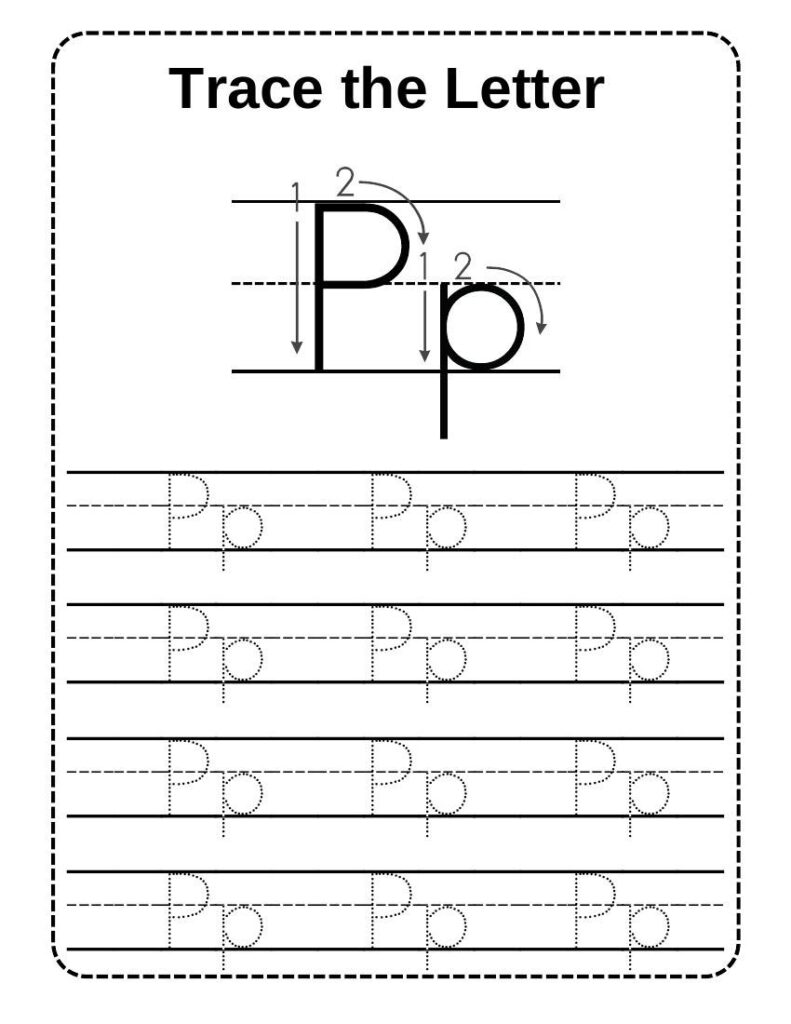
This worksheet brings uppercase P and lowercase p together. Children can compare their shapes and trace each pair.
The repeated rows provide extra opportunities to practice. Ask your child to notice which letter extends below the line. This comparison helps reinforce the different forms of P and p.
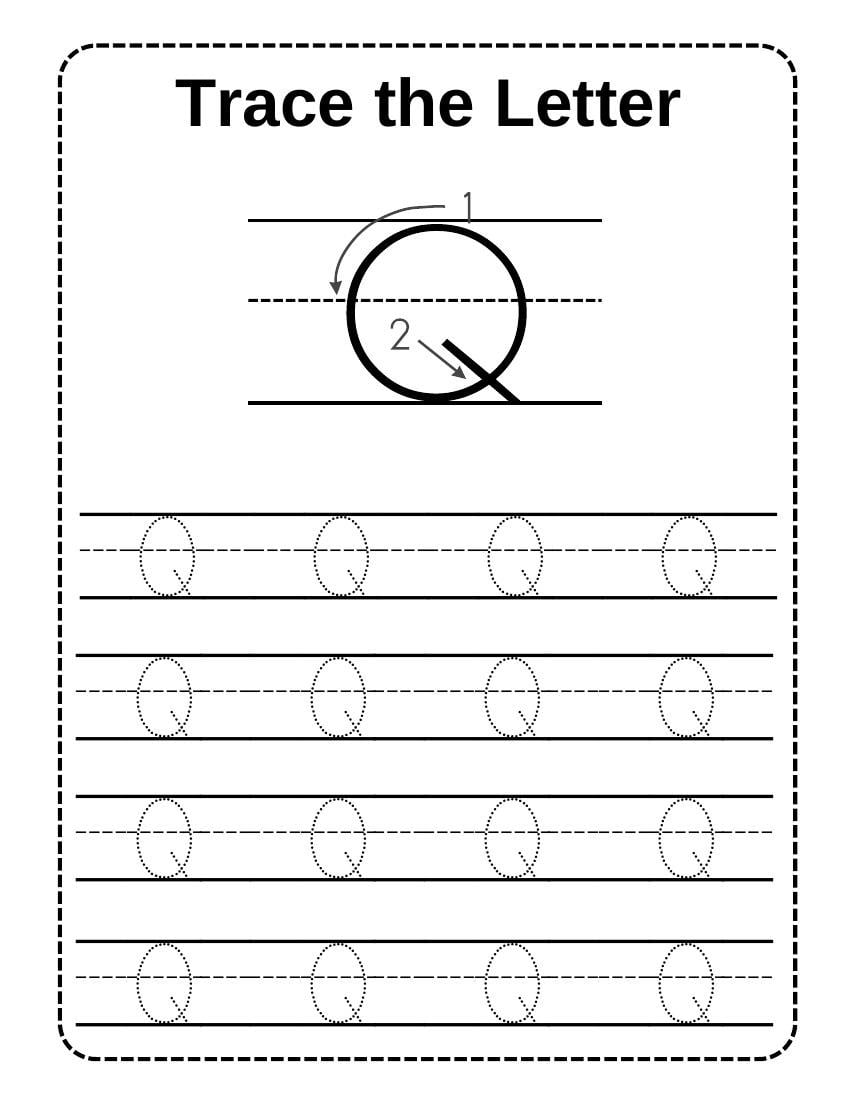
48. Uppercase Letter Q Tracing Worksheet
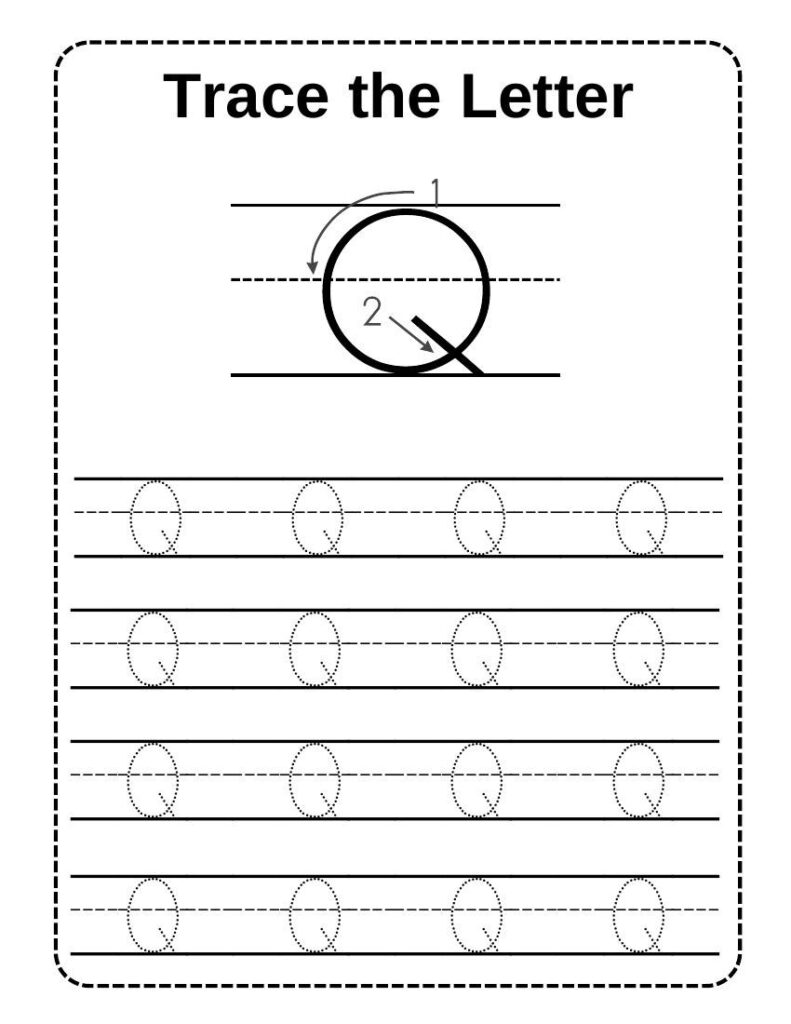
The forty-eighth page focuses on uppercase Q. Its example shows a rounded shape with a short diagonal tail.
Children can trace the dotted letters across several rows. Encourage them to complete the rounded part before adding the tail. This helps children remember the small detail that distinguishes Q from O.
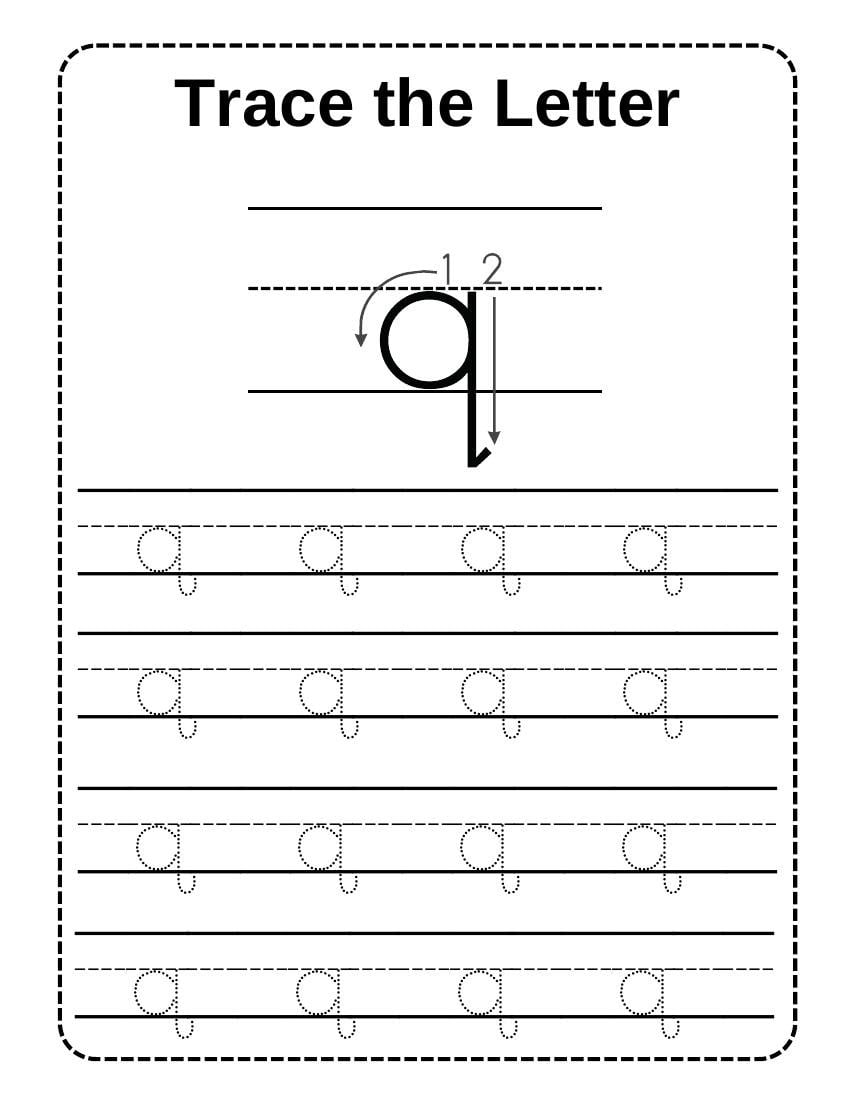
49. Lowercase Letter q Tracing Worksheet
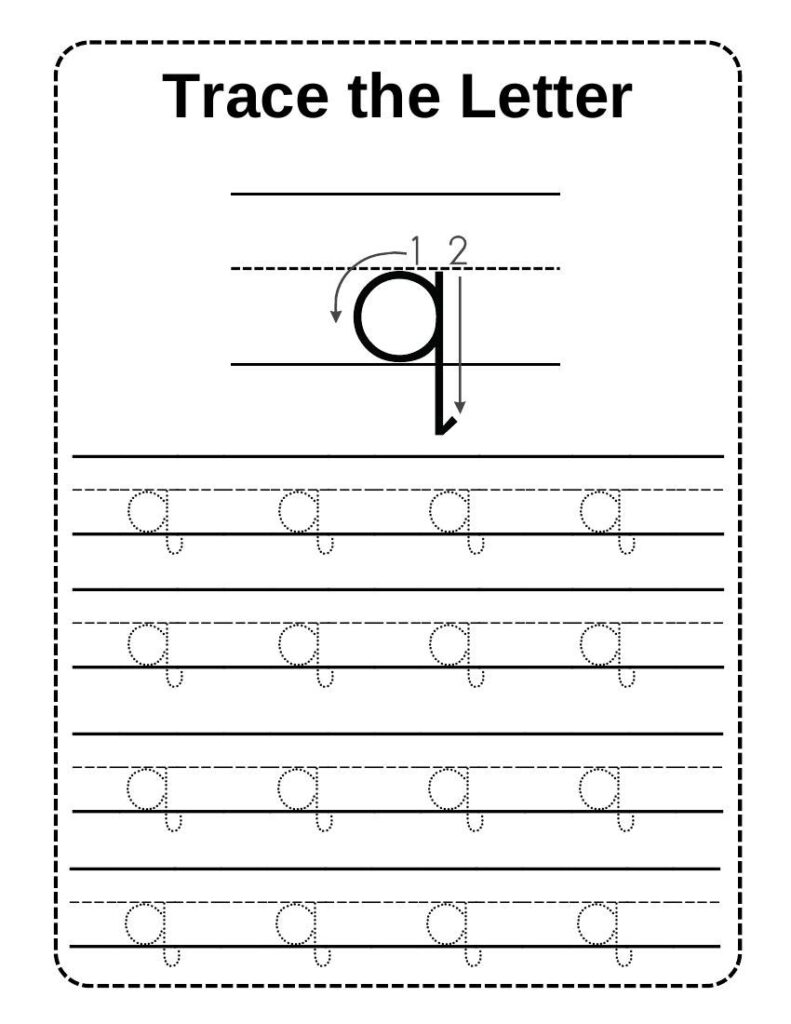
This page introduces lowercase q. Children can follow the rounded section and the downward stroke shown in the example.
Several dotted rows offer repeated practice. You can compare lowercase q with lowercase p to highlight their differences. This may help your child avoid reversing or mixing up similar letters.
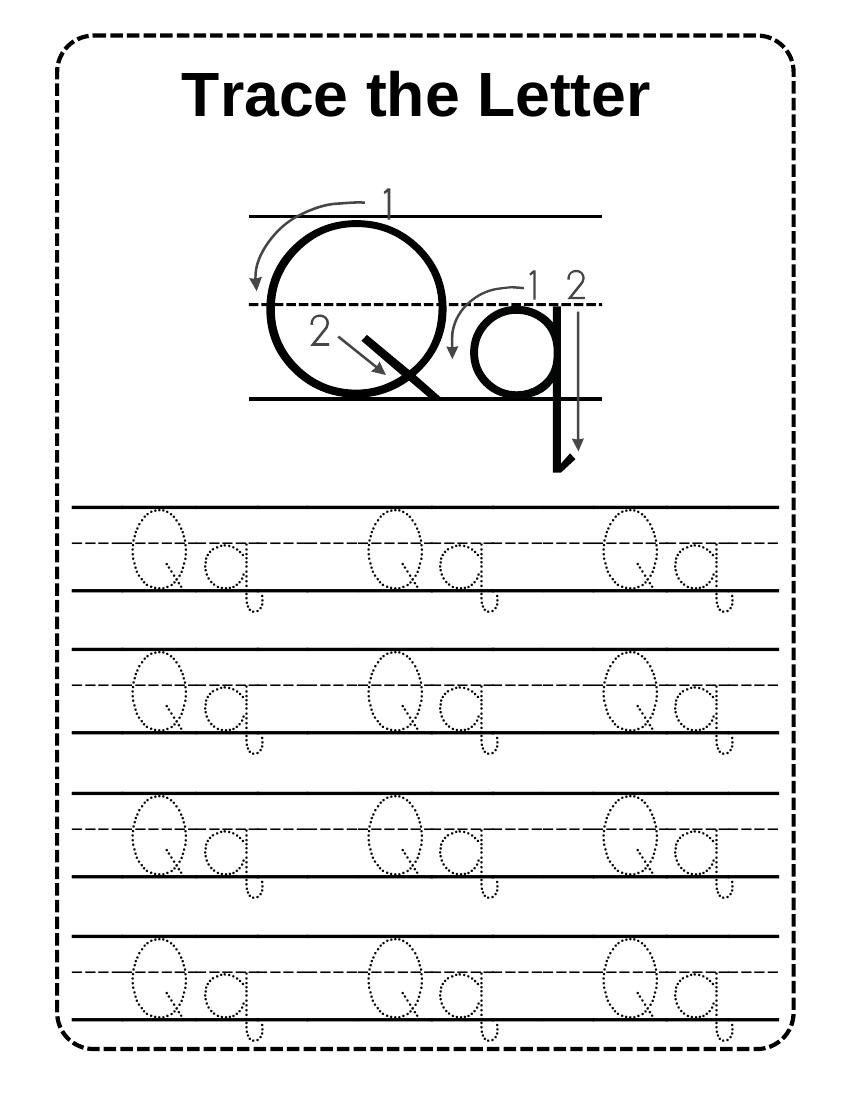
50. Uppercase and Lowercase Qq Tracing Worksheet
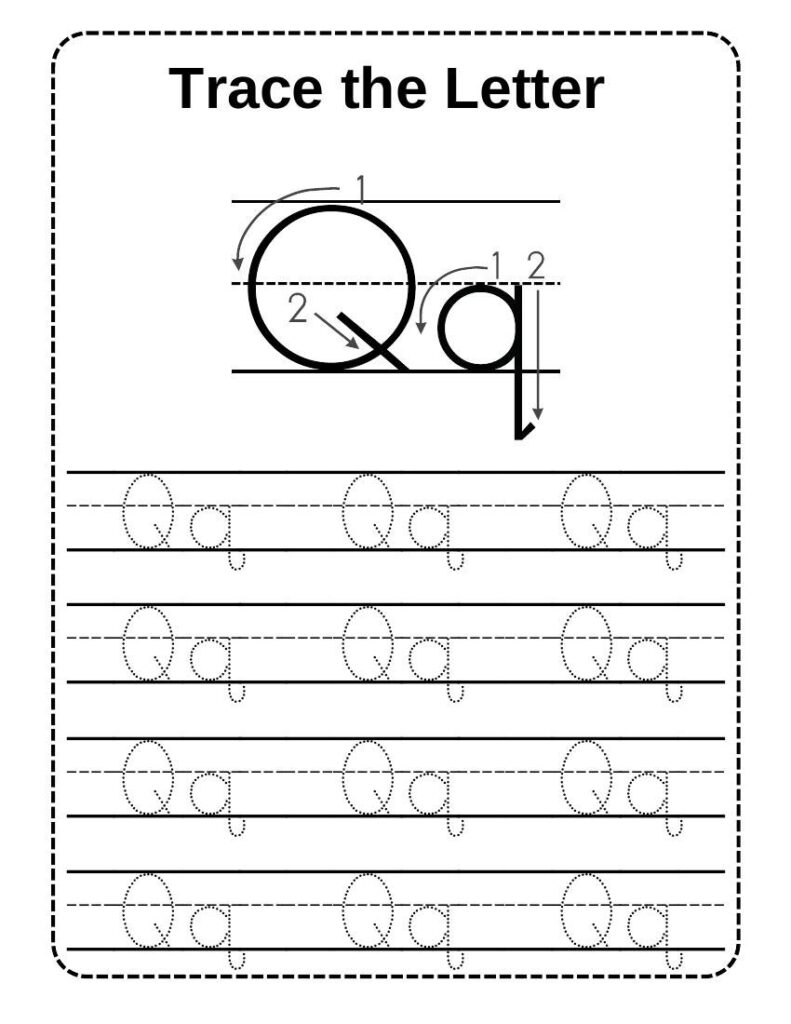
Children practice uppercase Q and lowercase q together. The worksheet provides paired examples and repeated tracing lines.
Encourage your child to notice the tail on both letters. Then, let them trace each pair carefully. This activity reinforces letter recognition while developing handwriting control.
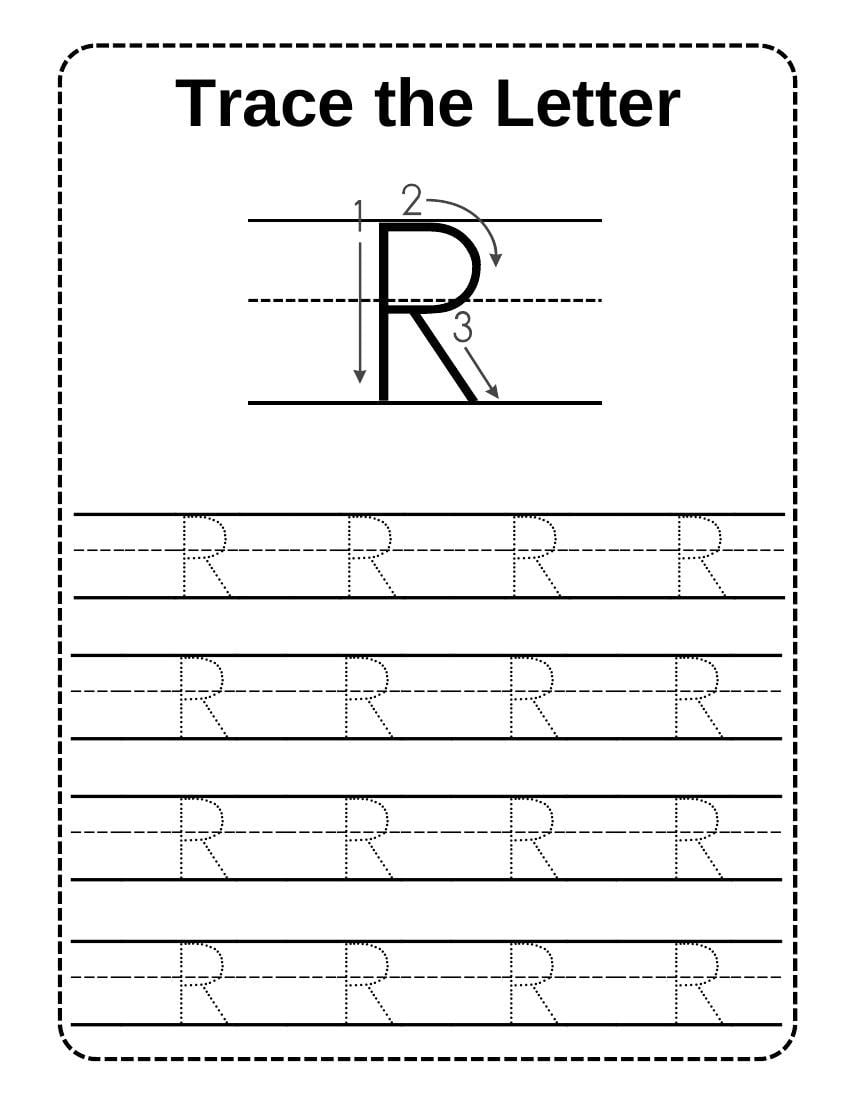
51. Uppercase Letter R Tracing Worksheet
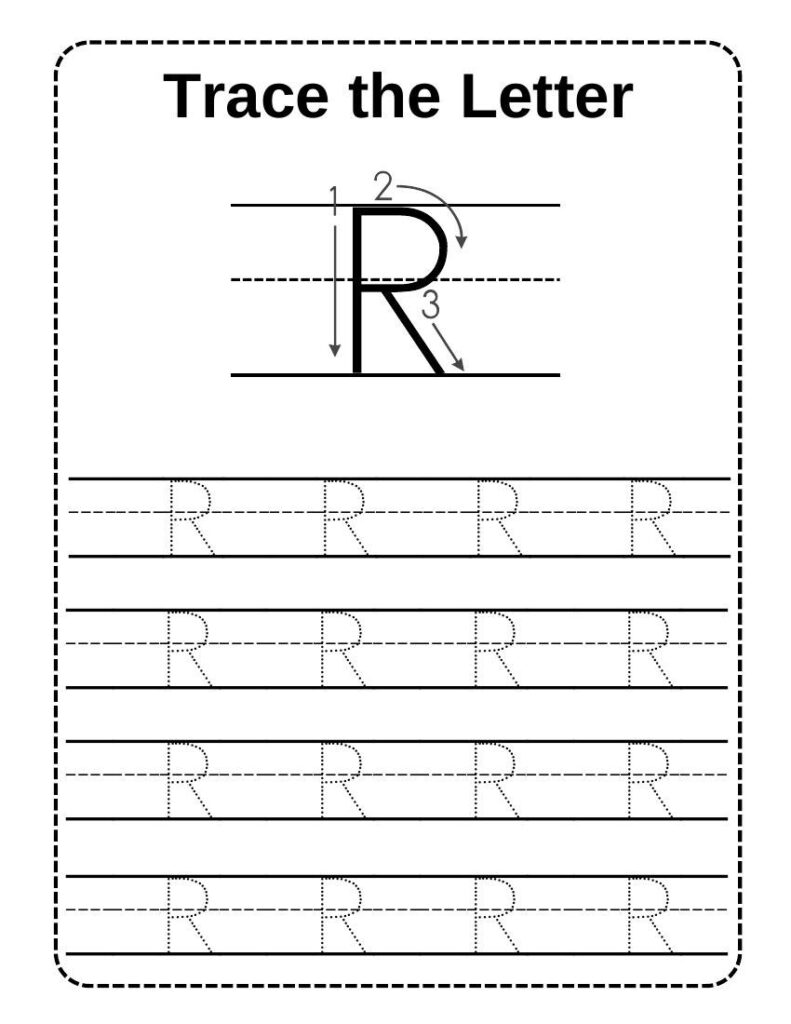
The fifty-first worksheet introduces uppercase R. The large example shows a straight line, a rounded upper section, and a diagonal leg. Children can trace the dotted letters below.
Encourage them to follow each stroke in order. This helps them practice a letter that combines several different movements.
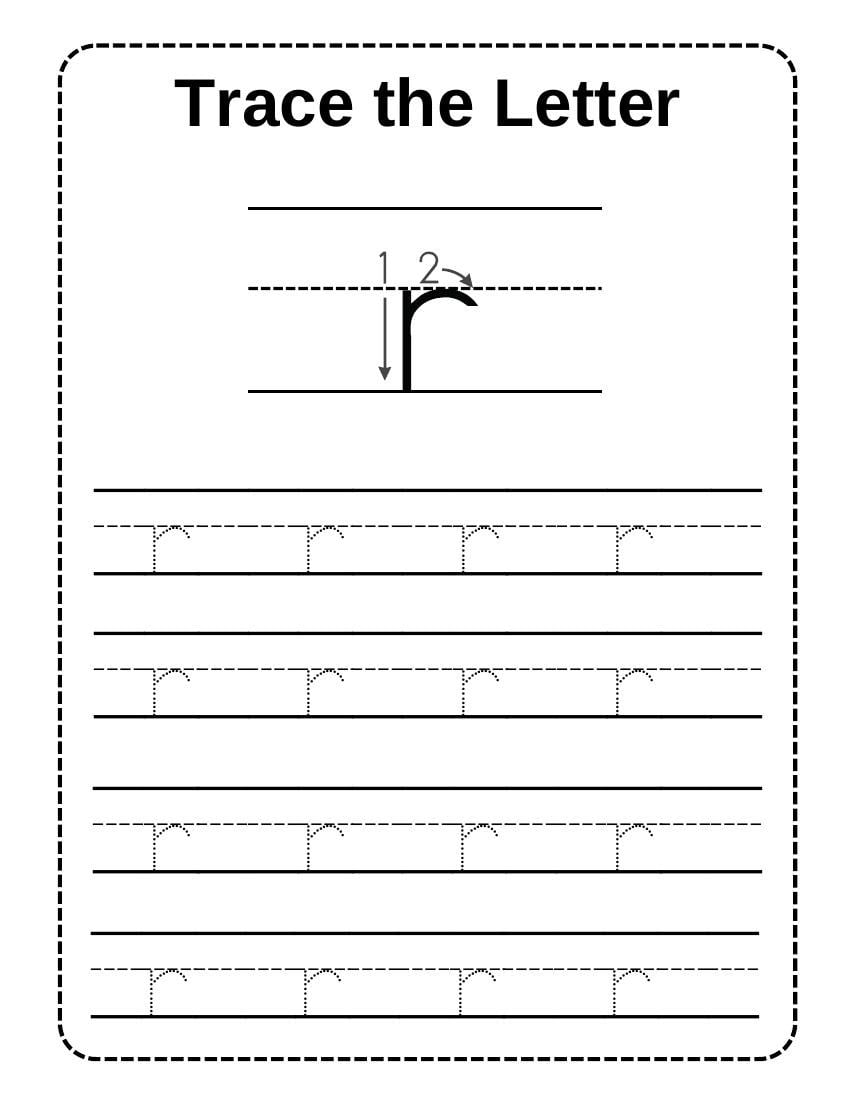
52. Lowercase Letter r Tracing Worksheet
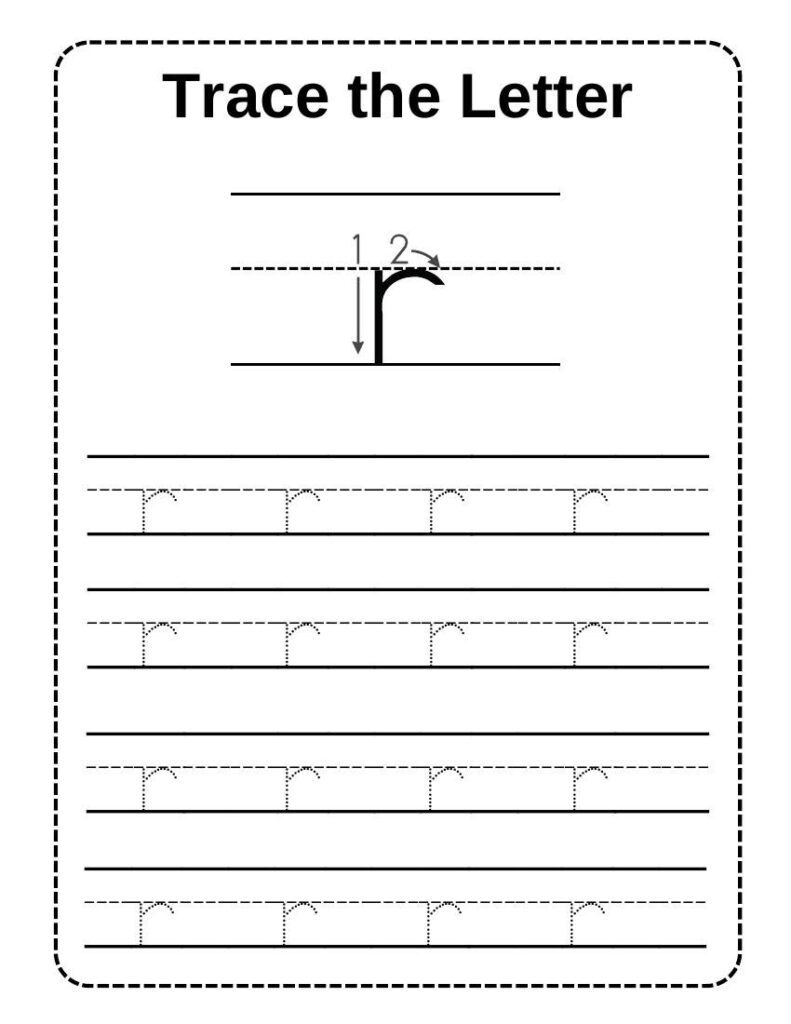
This page focuses on lowercase r. Children can trace the short vertical stroke and small curved section. Several rows provide repeated practice with the letter’s shape.
Remind your child to keep the top curve small. This helps distinguish lowercase r from letters with taller or wider curves.
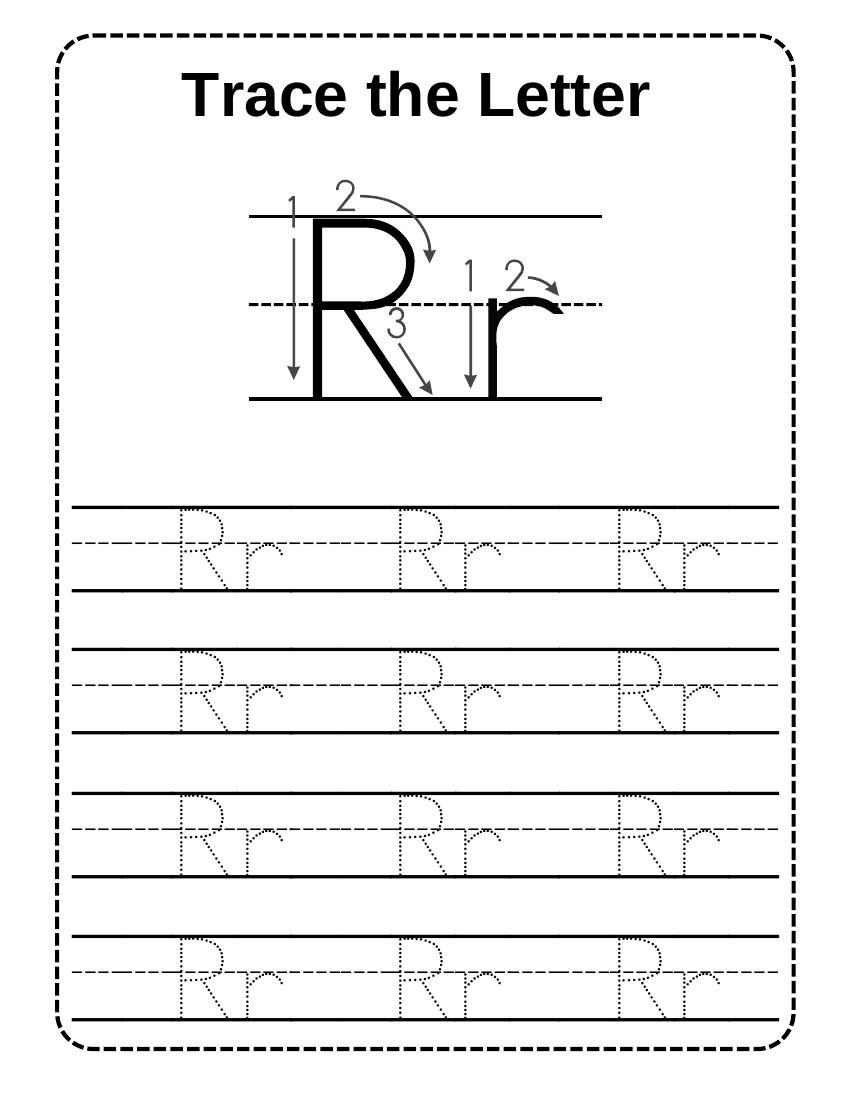
53. Uppercase and Lowercase Rr Tracing Worksheet
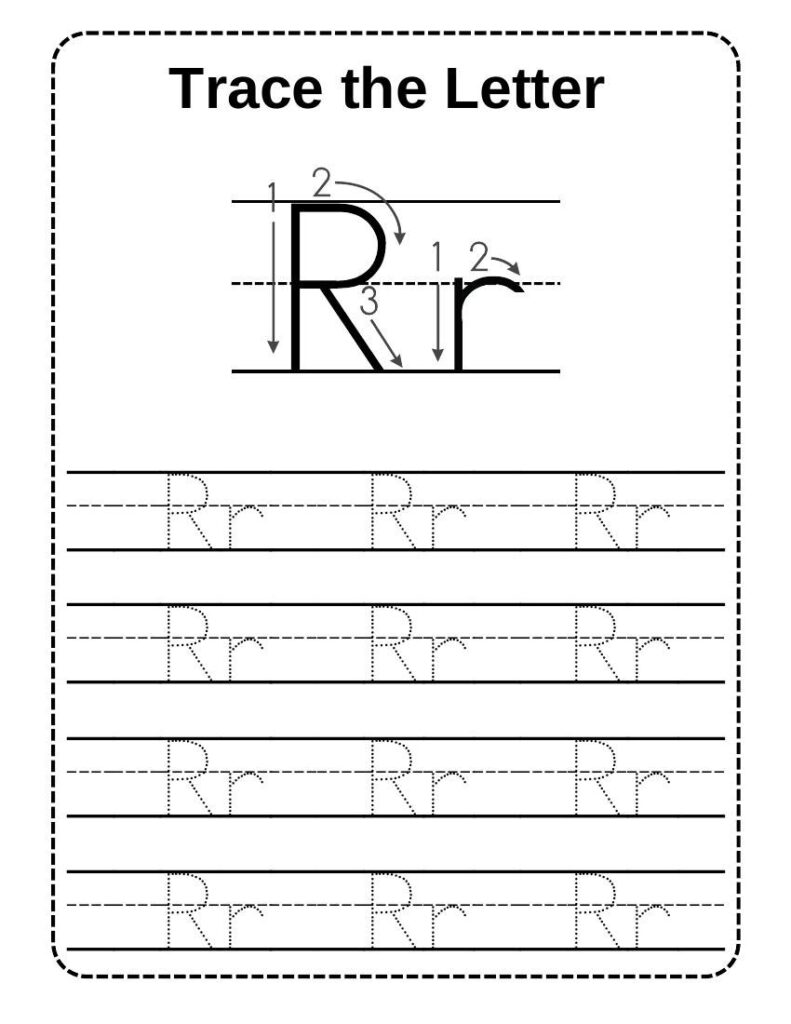
Here, children practice uppercase R and lowercase r together. The worksheet includes paired examples and multiple tracing rows.
Ask your child to compare the diagonal leg of uppercase R with lowercase r. Then, encourage them to trace both forms slowly. This supports better letter recognition and handwriting practice.
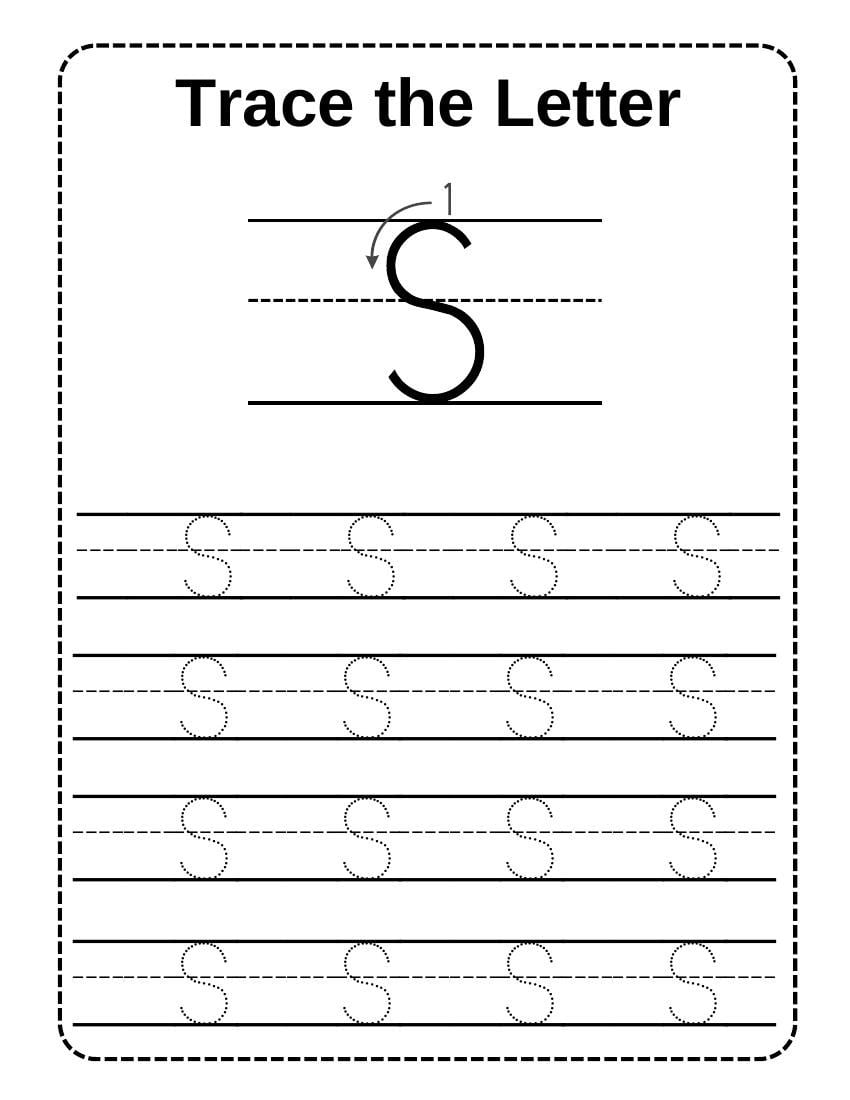
54. Uppercase Letter S Tracing Worksheet
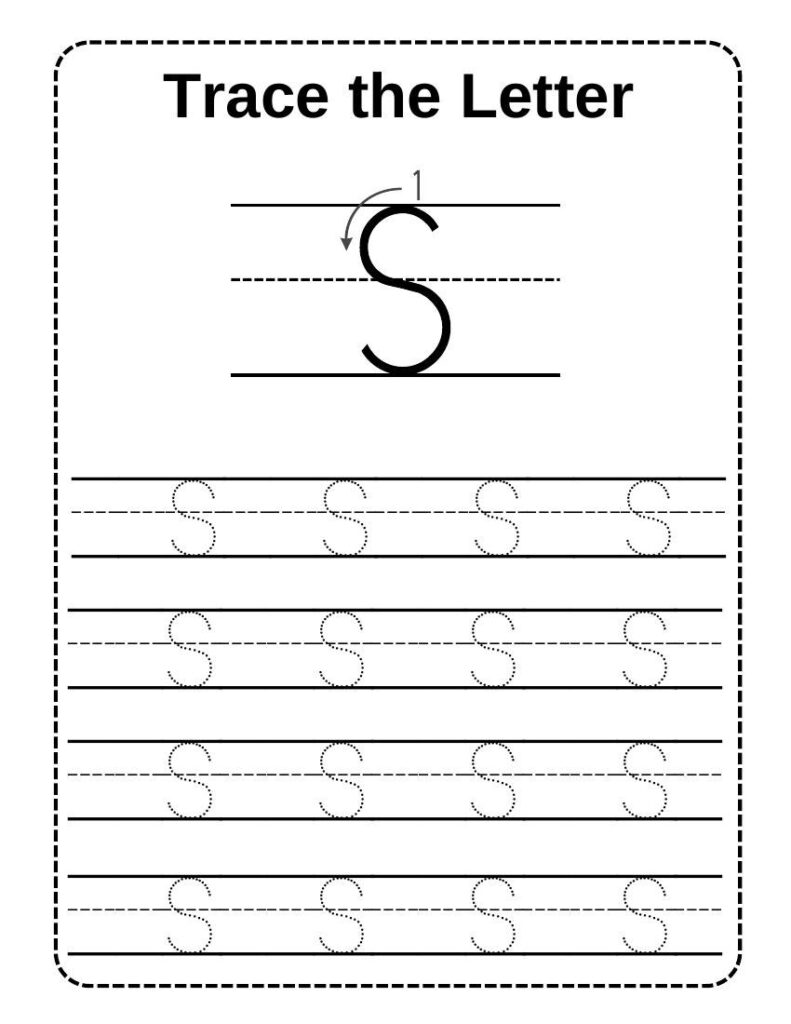
The fifty-fourth worksheet introduces uppercase S. Children can trace the dotted letters across several rows. The curved shape gives them practice moving the pencil in different directions.
Encourage smooth, steady movements rather than sharp corners. This activity helps children become more comfortable writing curved letters.
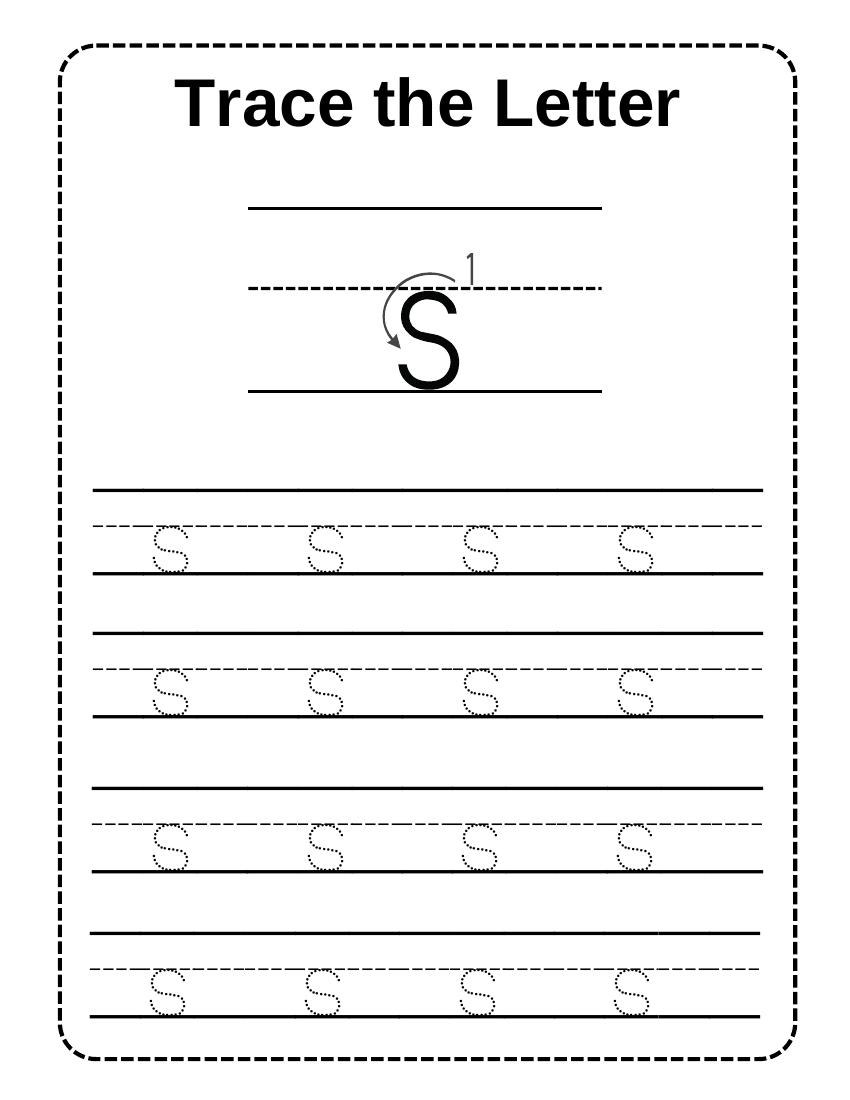
55. Lowercase Letter s Tracing Worksheet
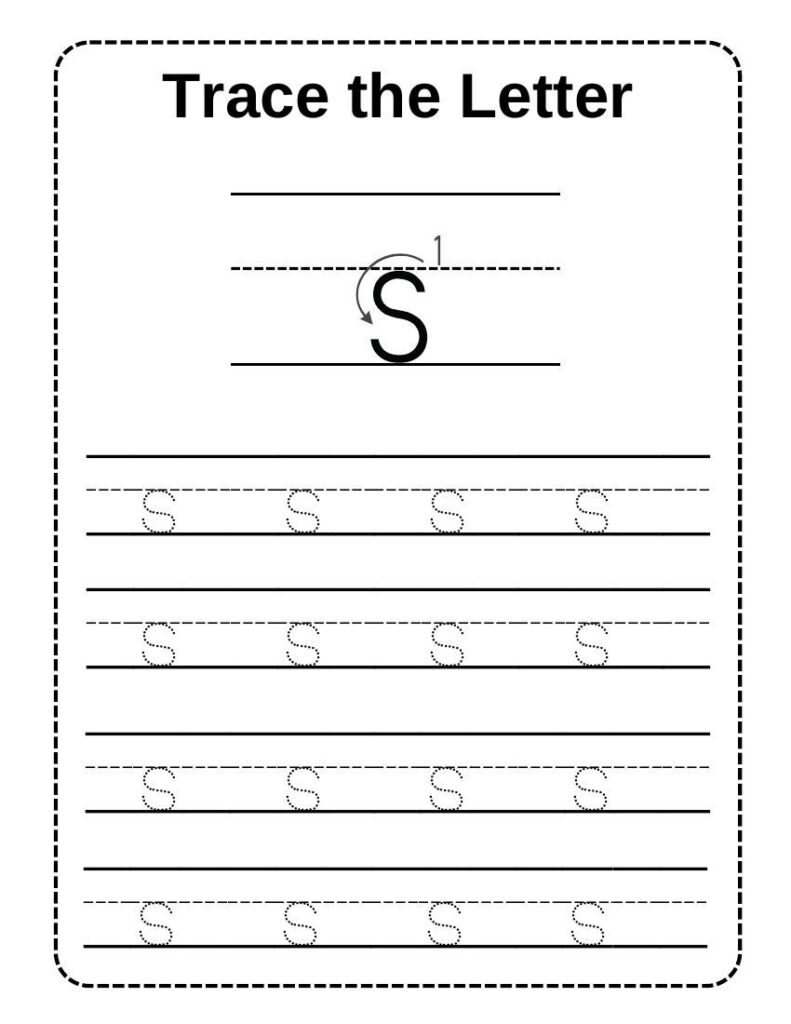
This page focuses on lowercase s. The repeated dotted examples let children practice the small curved shape several times.
You can show your child how the curve changes direction as the letter forms. Encourage them to trace slowly and stay within the guides. This supports smoother letter formation.
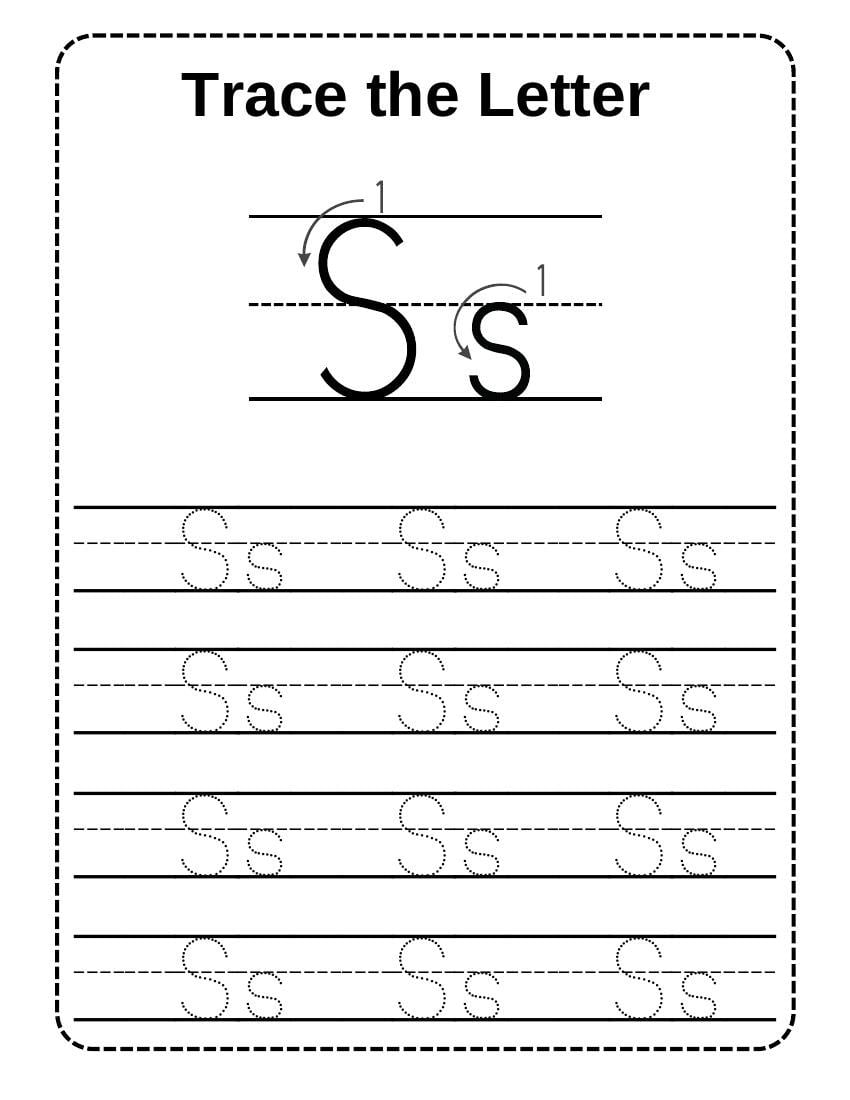
56. Uppercase and Lowercase Ss Tracing Worksheet
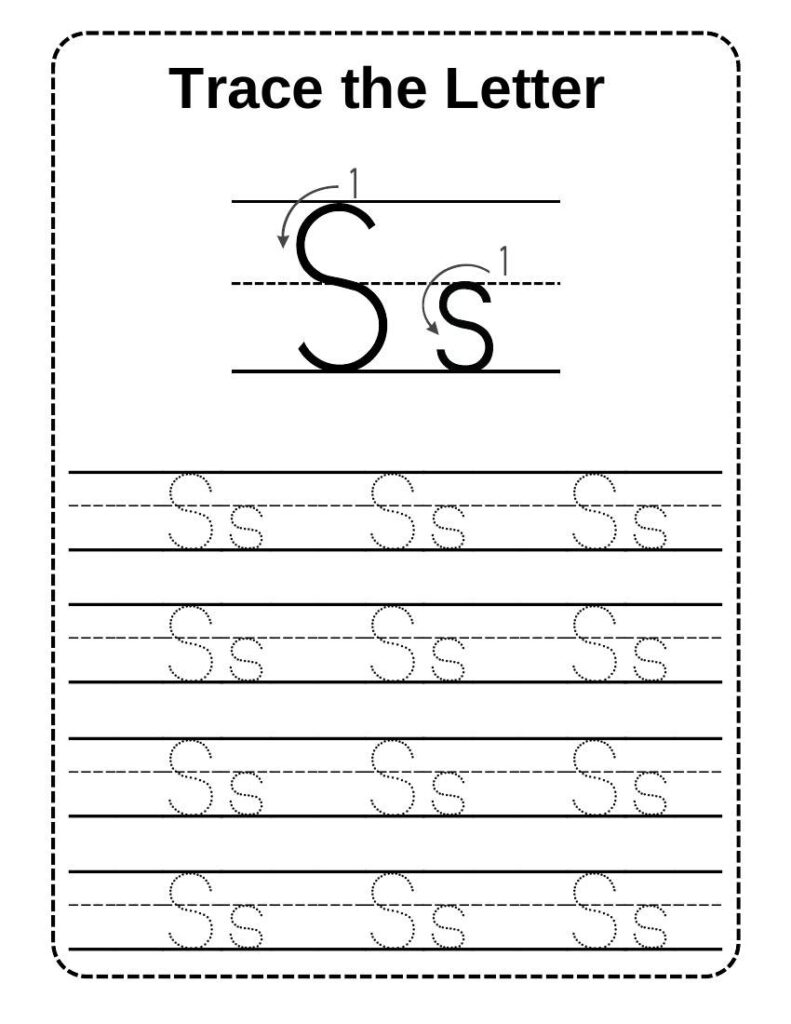
Children practice uppercase S and lowercase s together. The worksheet provides paired examples and several tracing rows.
Invite your child to compare the size of each letter. Then, let them trace each pair without rushing. This activity gives them extra practice recognizing and writing both forms.
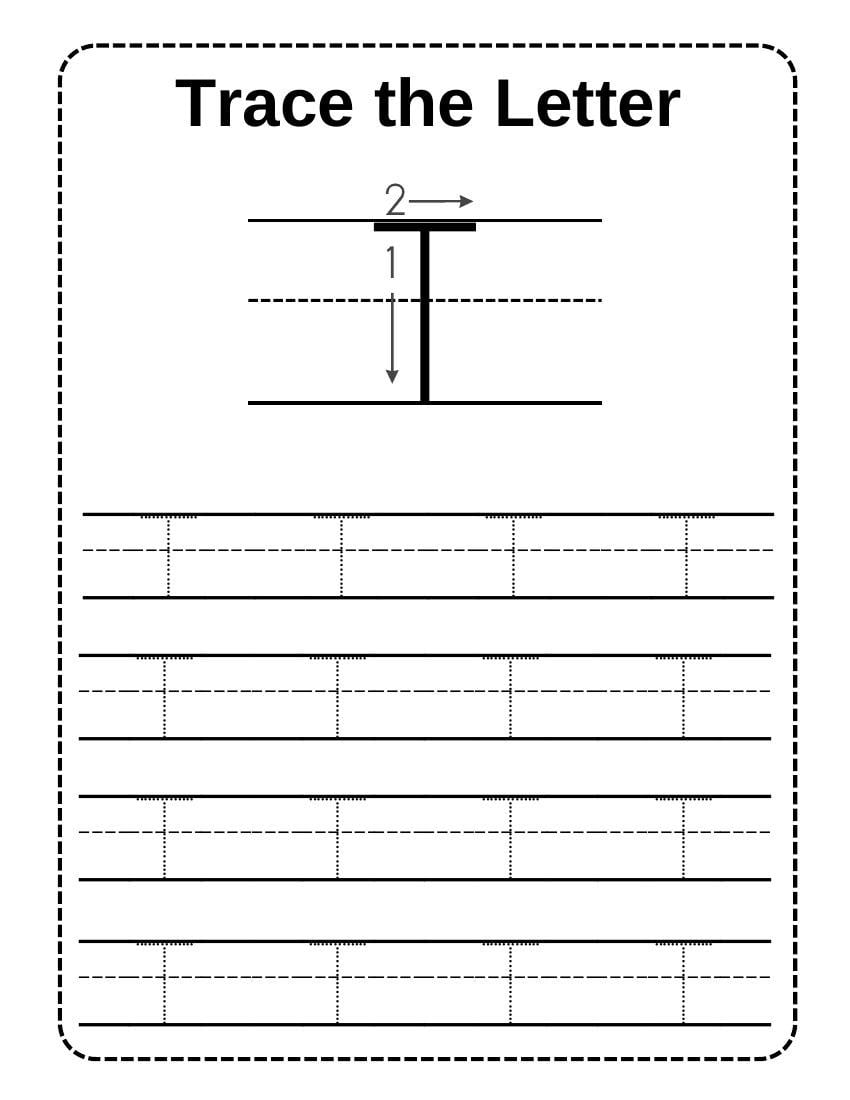
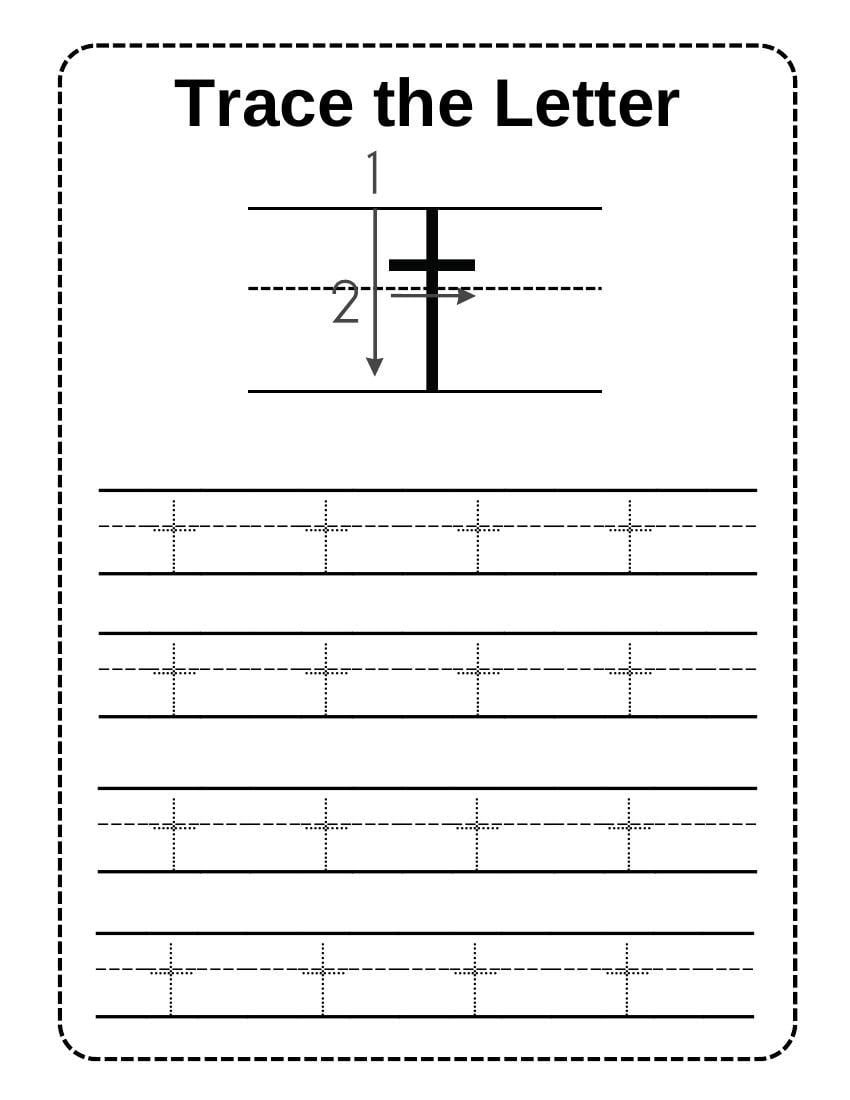
57. Uppercase Letter T Tracing Worksheet
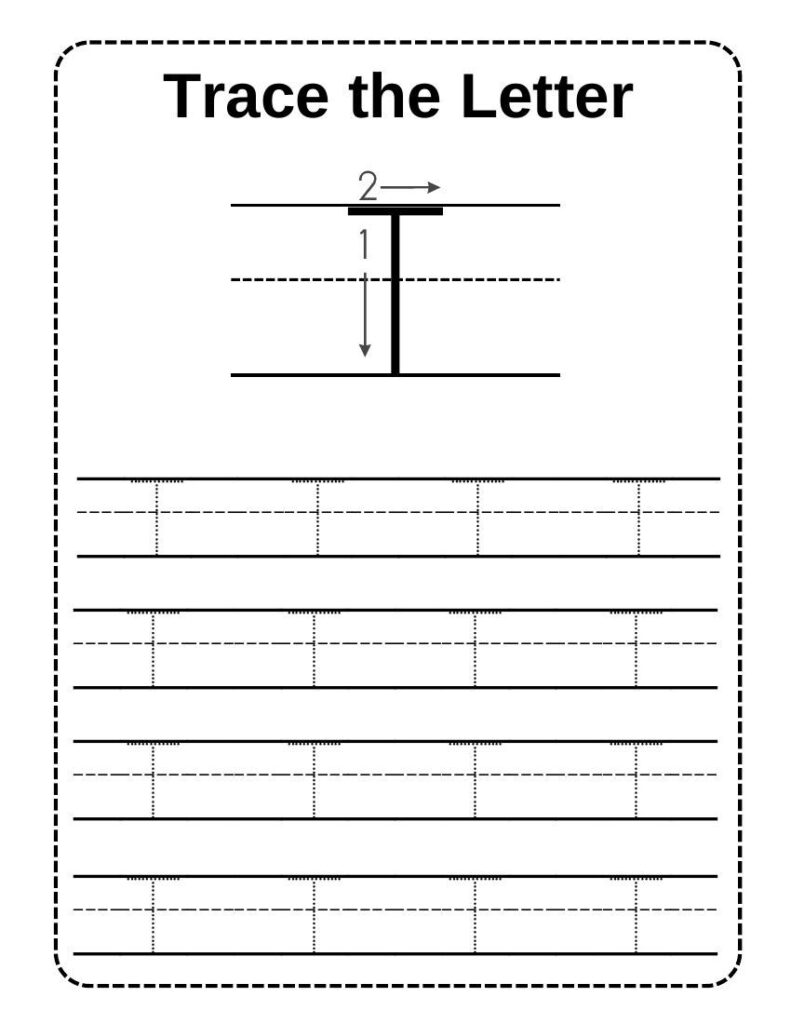
The fifty-seventh page introduces uppercase T. Its example shows a long vertical stroke and a horizontal top line.
Children can trace the dotted letters across the worksheet. Encourage them to begin with the stroke direction shown. This helps build a clear and consistent letter shape.
58. Lowercase Letter t Tracing Worksheet
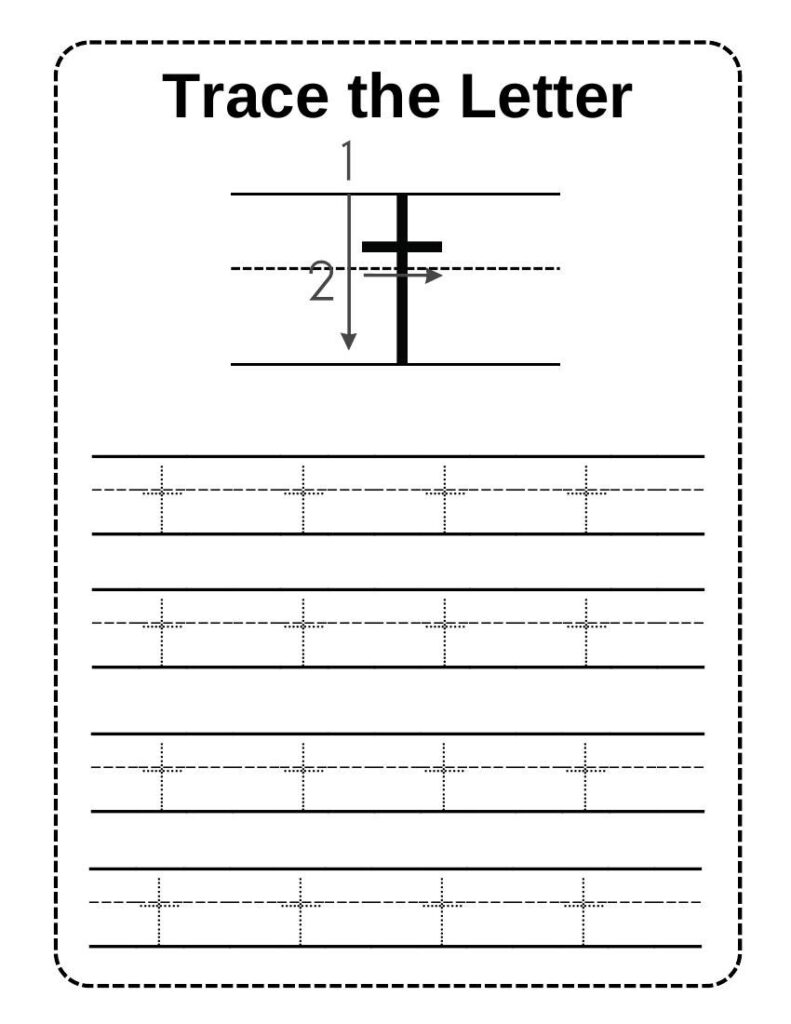
This worksheet focuses on lowercase t. Children can practice the tall vertical stroke and short crossbar.
The dotted rows provide repeated tracing opportunities. Remind your child to add the crossbar in the correct position. This helps make lowercase t easy to recognize.
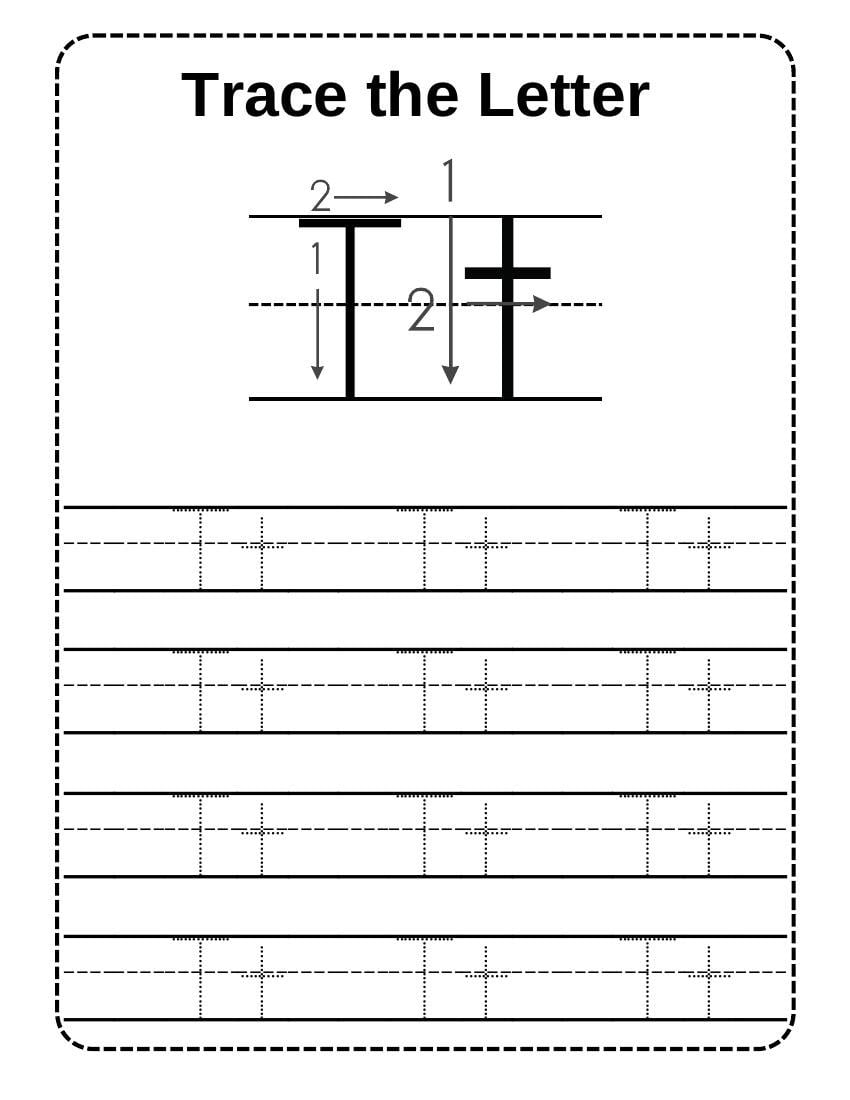
59. Uppercase and Lowercase Tt Tracing Worksheet
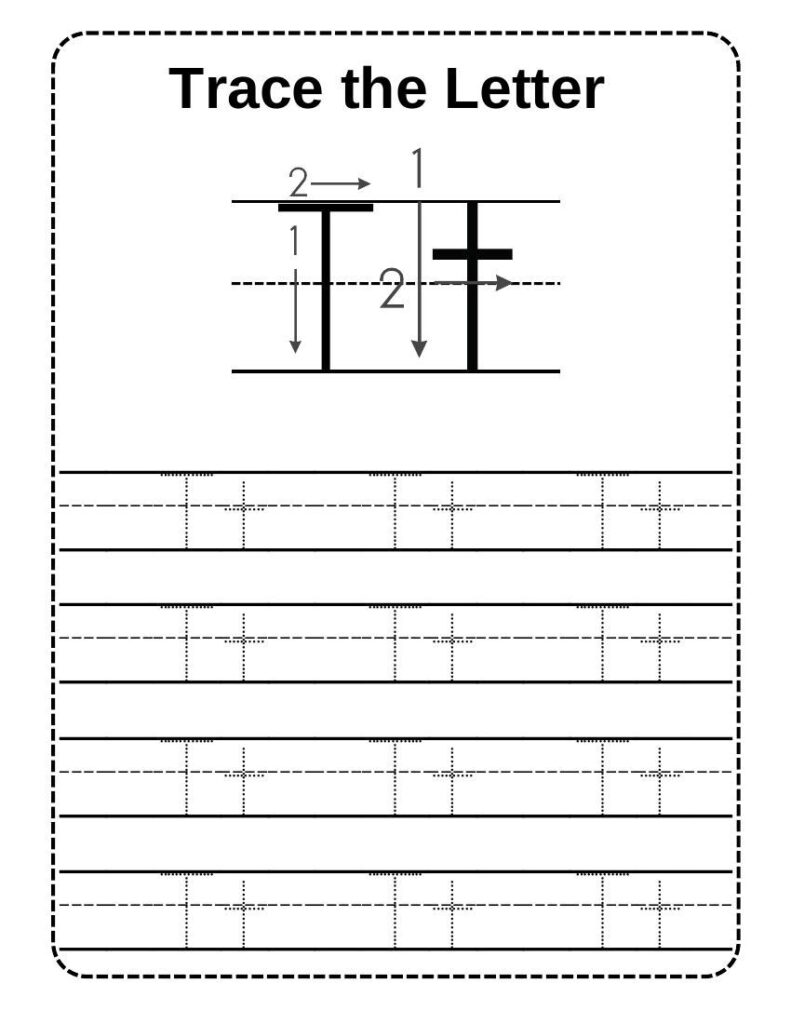
Here, children trace uppercase T and lowercase t together. The worksheet shows both letter forms across several rows.
Ask your child to compare their heights and crossbars. Then, encourage careful tracing of each pair. This reinforces the connection between uppercase and lowercase T.
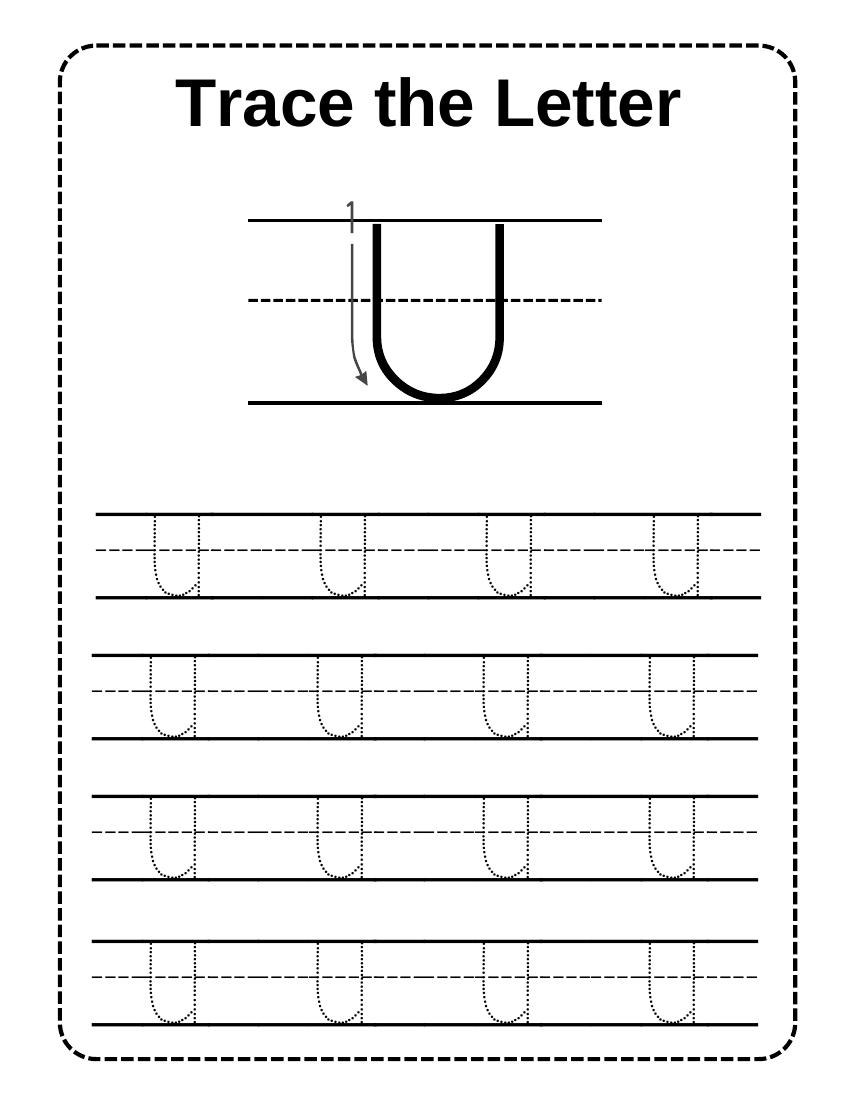
60. Uppercase Letter U Tracing Worksheet
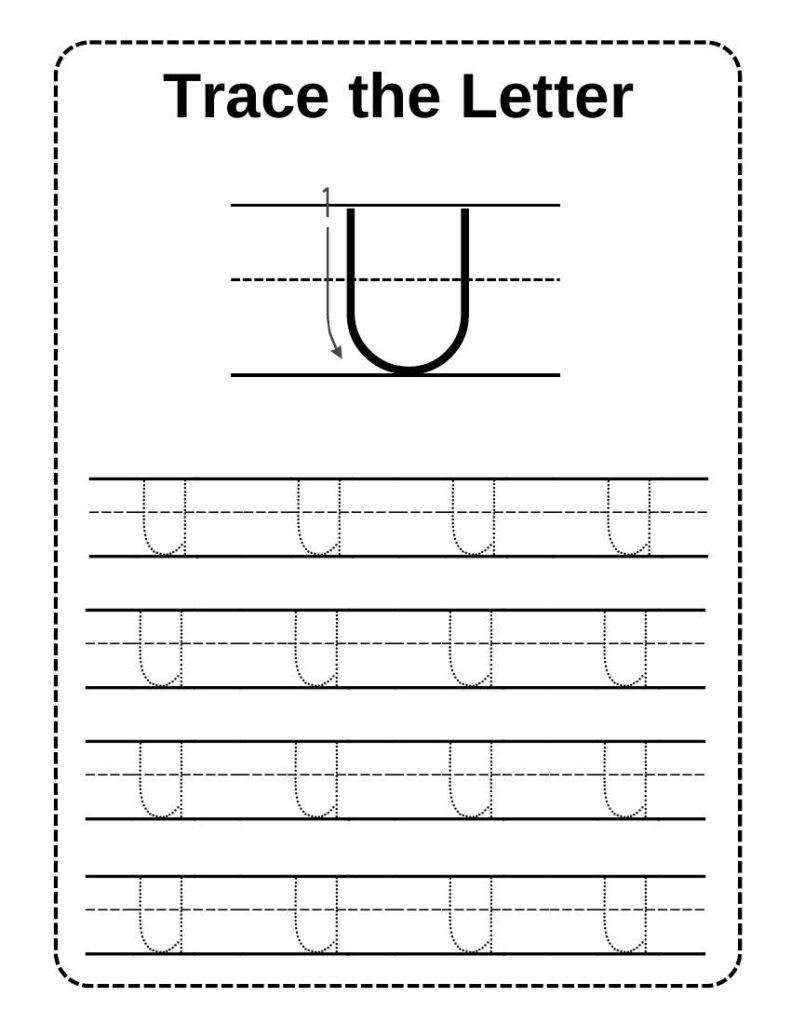
The sixtieth page introduces uppercase U. The large example shows two vertical sides joined by a rounded bottom.
Children can trace the dotted letters on the practice lines. Encourage them to follow the curve smoothly.
This activity helps develop control when writing letters with rounded bottoms.
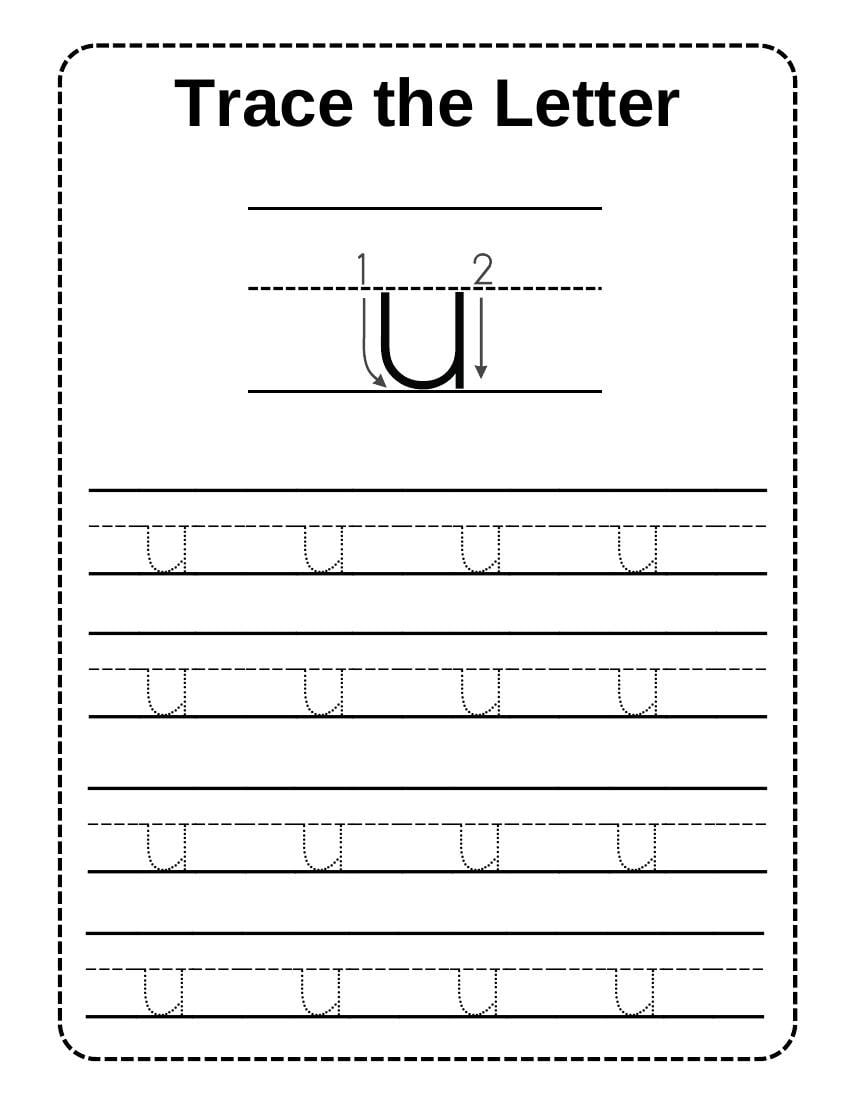
61. Lowercase Letter u Tracing Worksheet
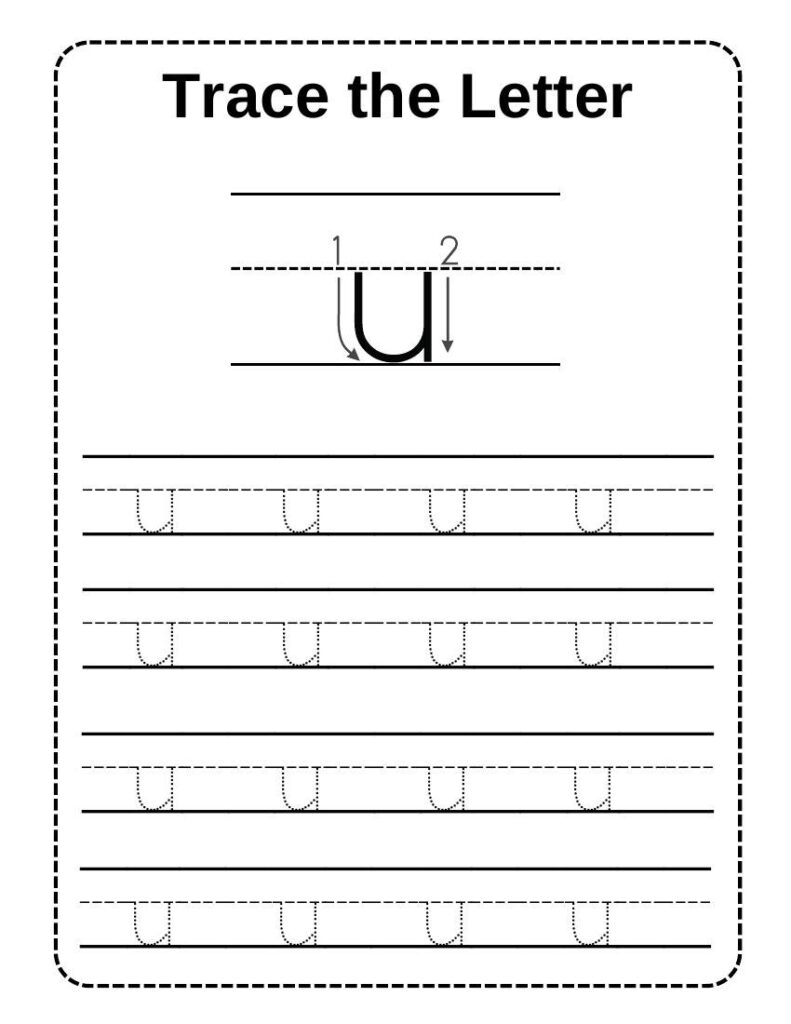
This page focuses on lowercase u. Children can trace the short vertical strokes and rounded bottom.
Several rows allow them to repeat the letter. You can remind your child to keep the shape open at the top.
This helps distinguish lowercase u from other rounded letters.
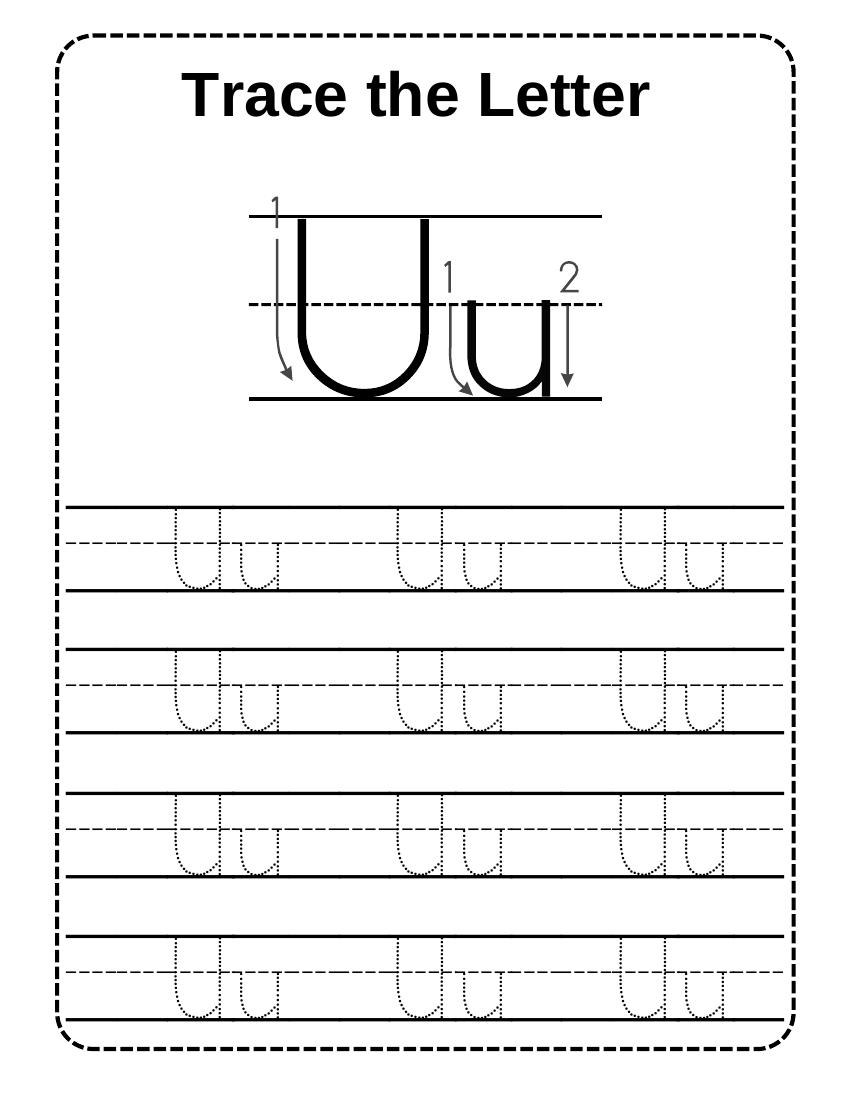
62. Uppercase and Lowercase Uu Tracing Worksheet
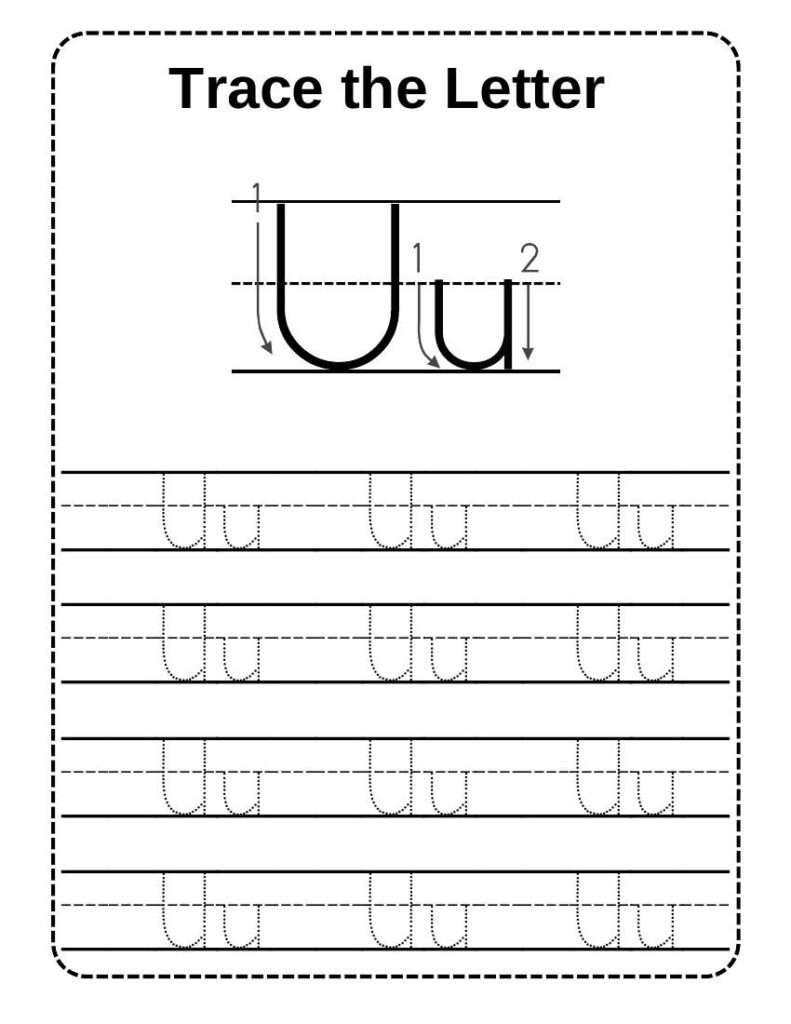
Children practice uppercase U and lowercase u together. The paired examples show how the same basic shape changes in size. The tracing rows provide time to practice both forms.
Ask your child to notice their rounded bottoms. This activity supports letter recognition and steady pencil movements.
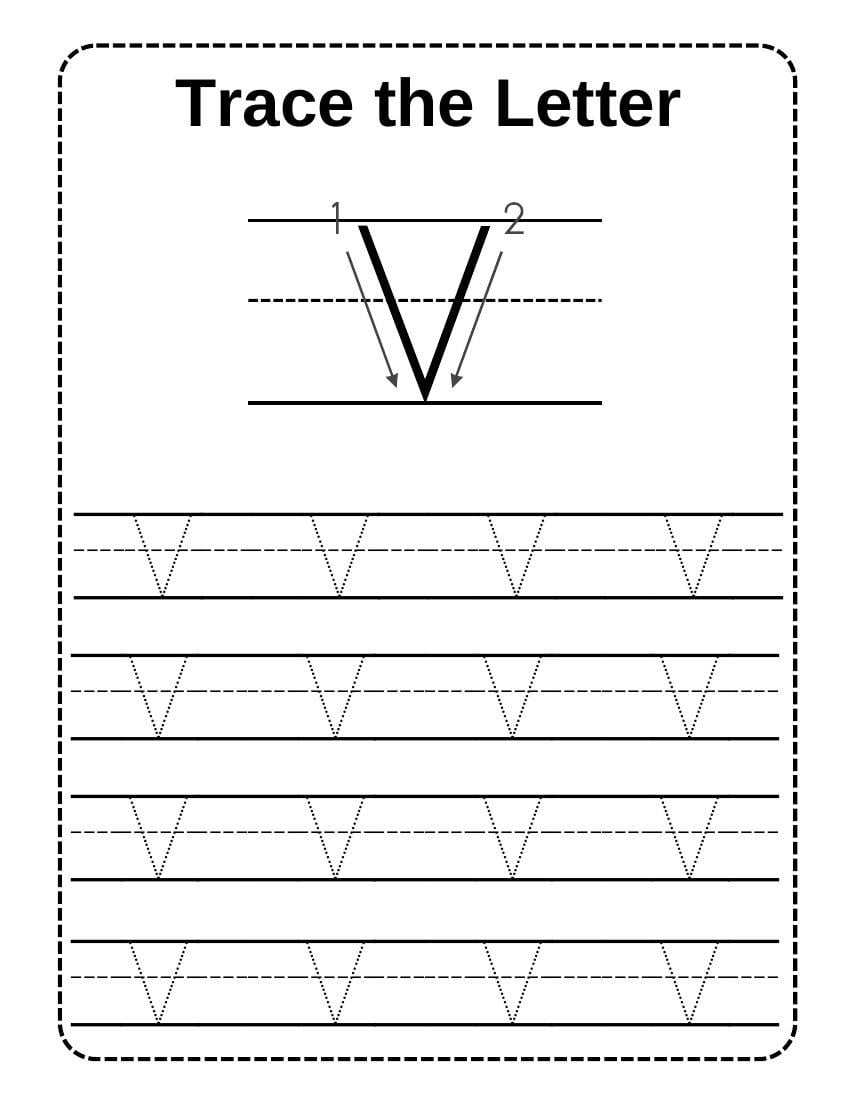
63. Uppercase Letter V Tracing Worksheet
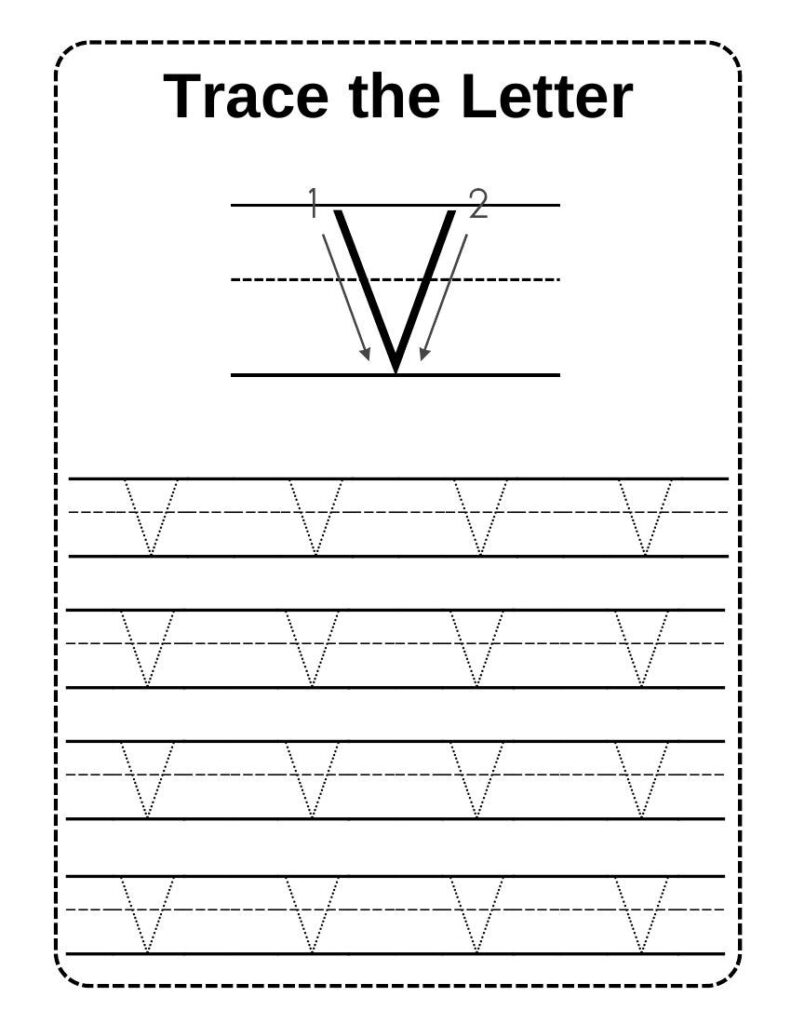
The sixty-third worksheet introduces uppercase V. Its large example shows two diagonal strokes meeting at the bottom. Children can trace the dotted letters across several rows.
Encourage them to follow the lines toward the bottom point. This helps them practice making clear angles instead of rounded shapes.
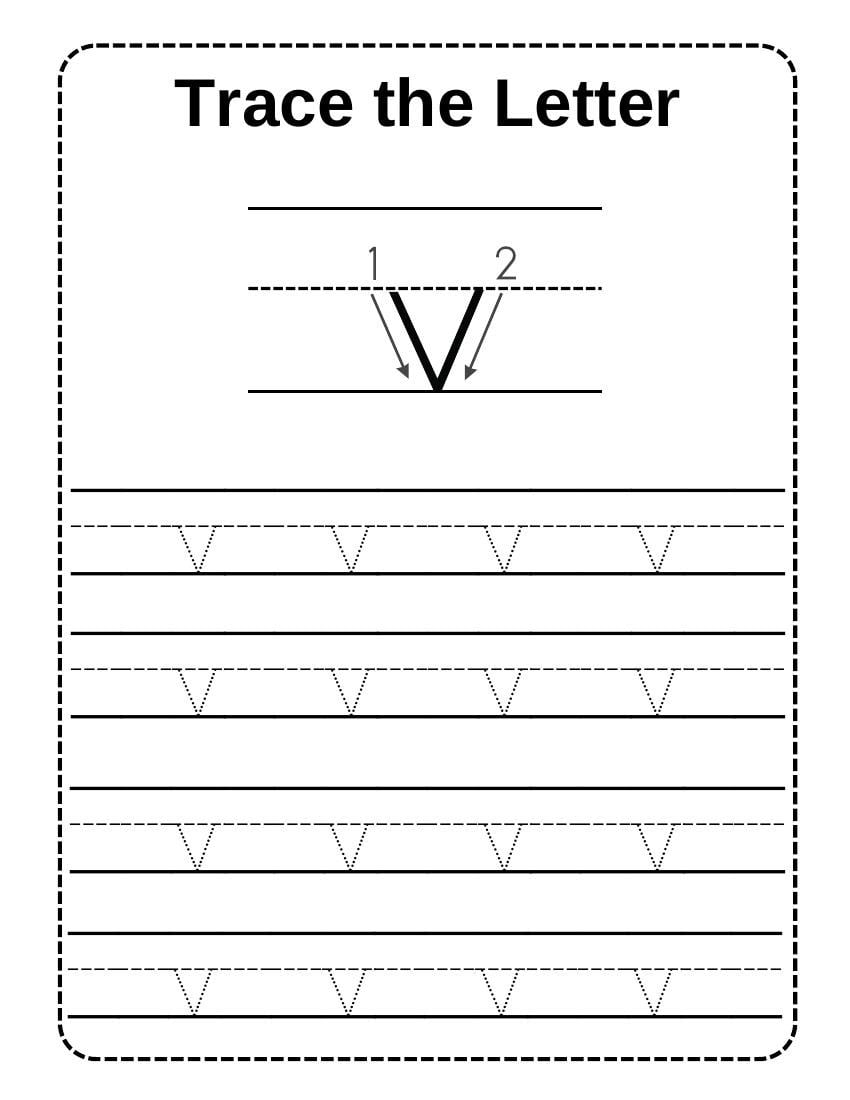
64. Lowercase Letter v Tracing Worksheet
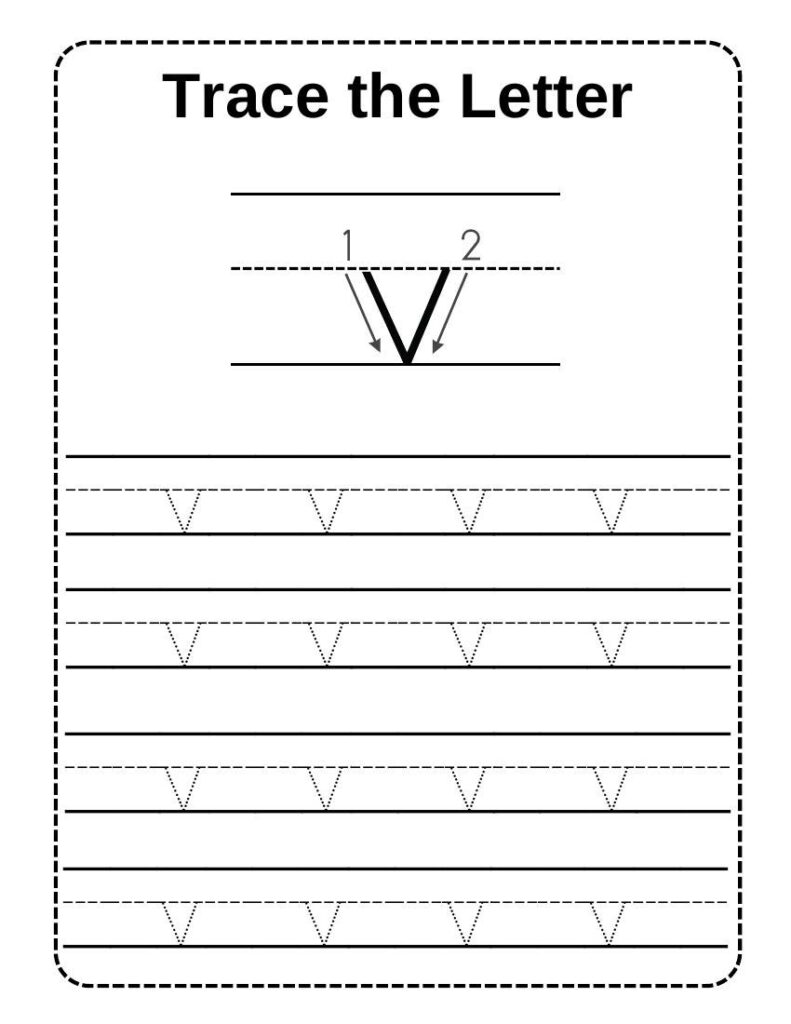
Next, children practice lowercase v. The worksheet offers dotted letters for repeated tracing. Encourage your child to make two slanting strokes that meet neatly.
You can demonstrate the movement before they begin. This helps them become more comfortable with angled letter forms.
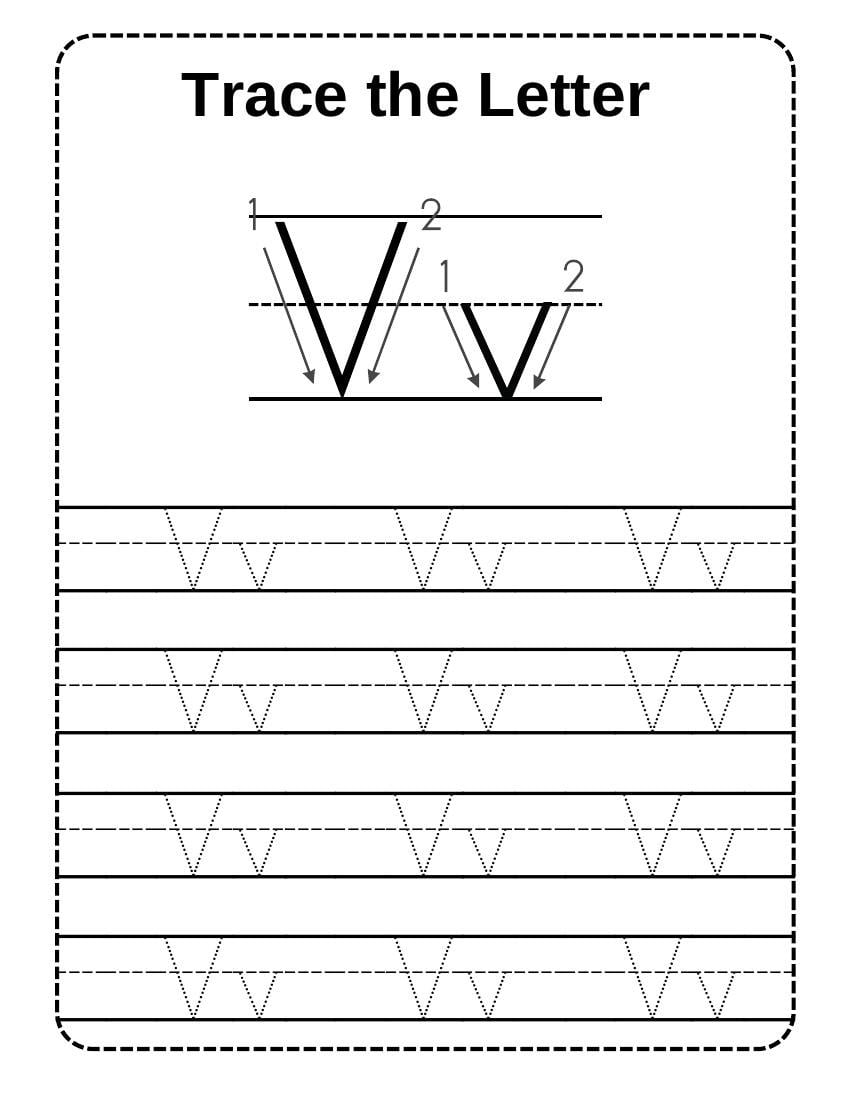
65. Uppercase and Lowercase Vv Tracing Worksheet
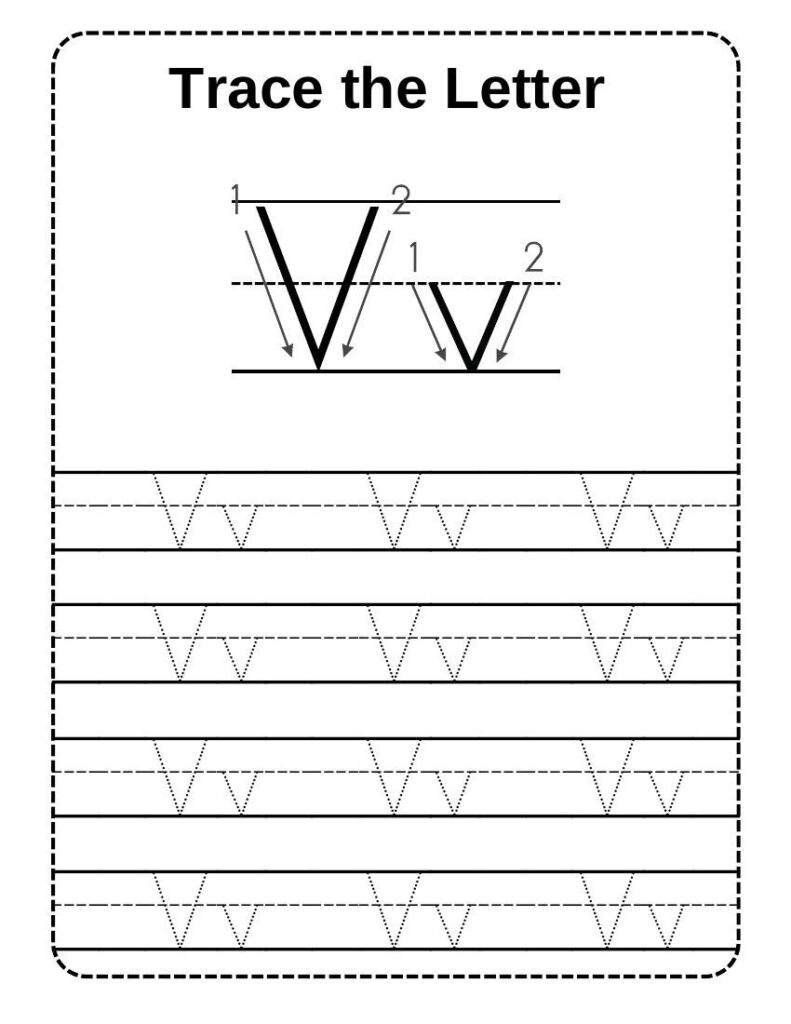
This worksheet pairs uppercase V with lowercase v. Children can compare both forms and trace the repeated examples.
The practice lines encourage steady pencil movements. Ask your child to identify where the two diagonal strokes meet.
This adds a simple observation task to the handwriting activity.
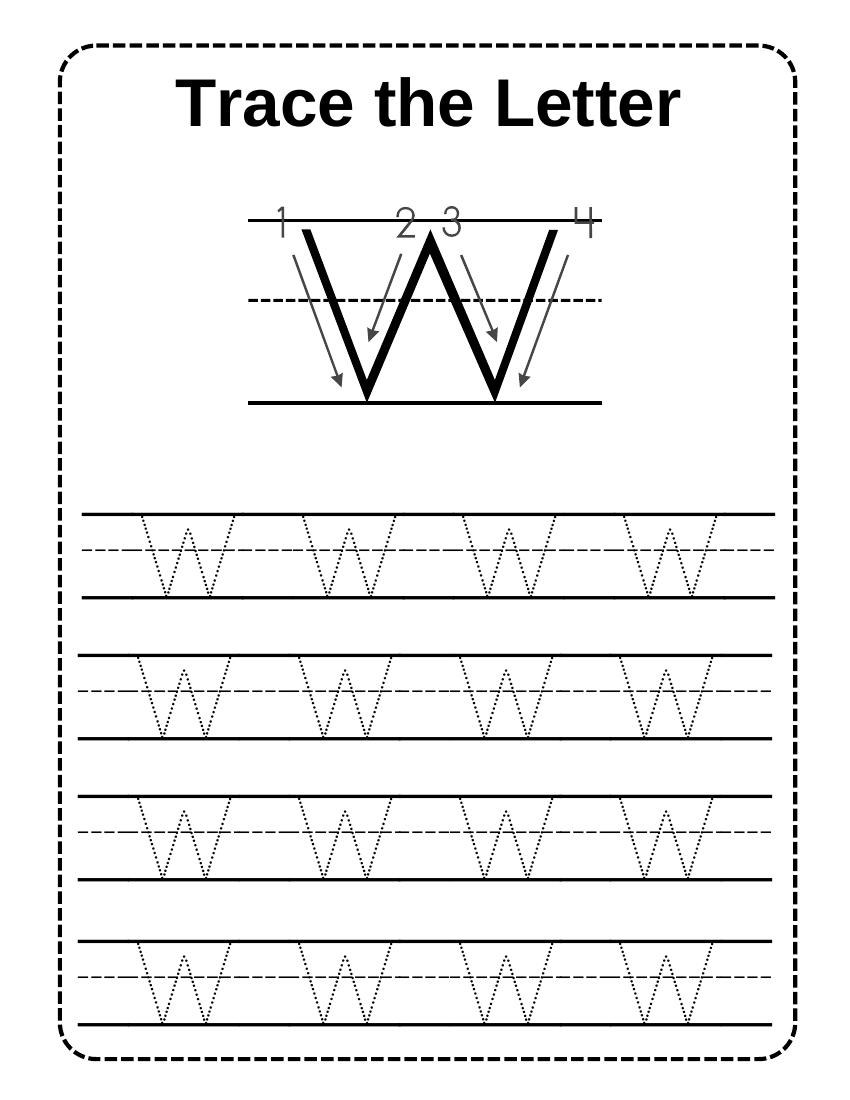
66. Uppercase Letter W Tracing Worksheet
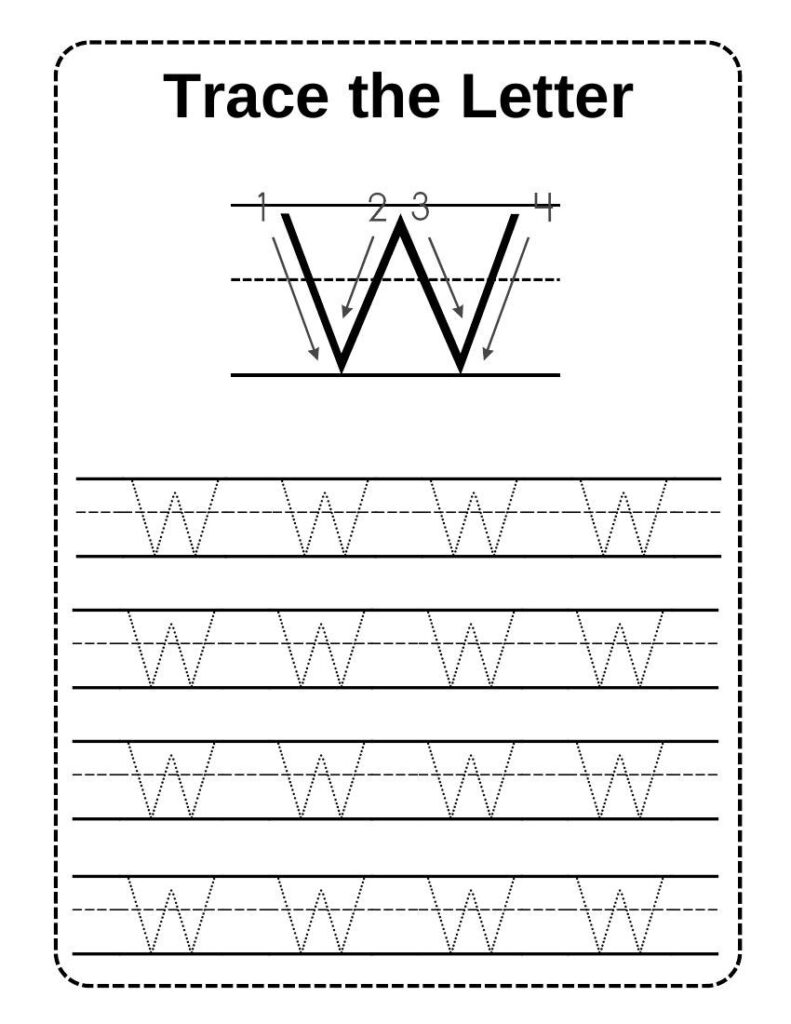
The sixty-sixth page focuses on uppercase W. Children can trace the dotted letter across several rows. The shape uses a series of diagonal strokes, creating several points.
Encourage your child to follow each movement carefully. This activity provides practice with a letter that requires more direction changes.
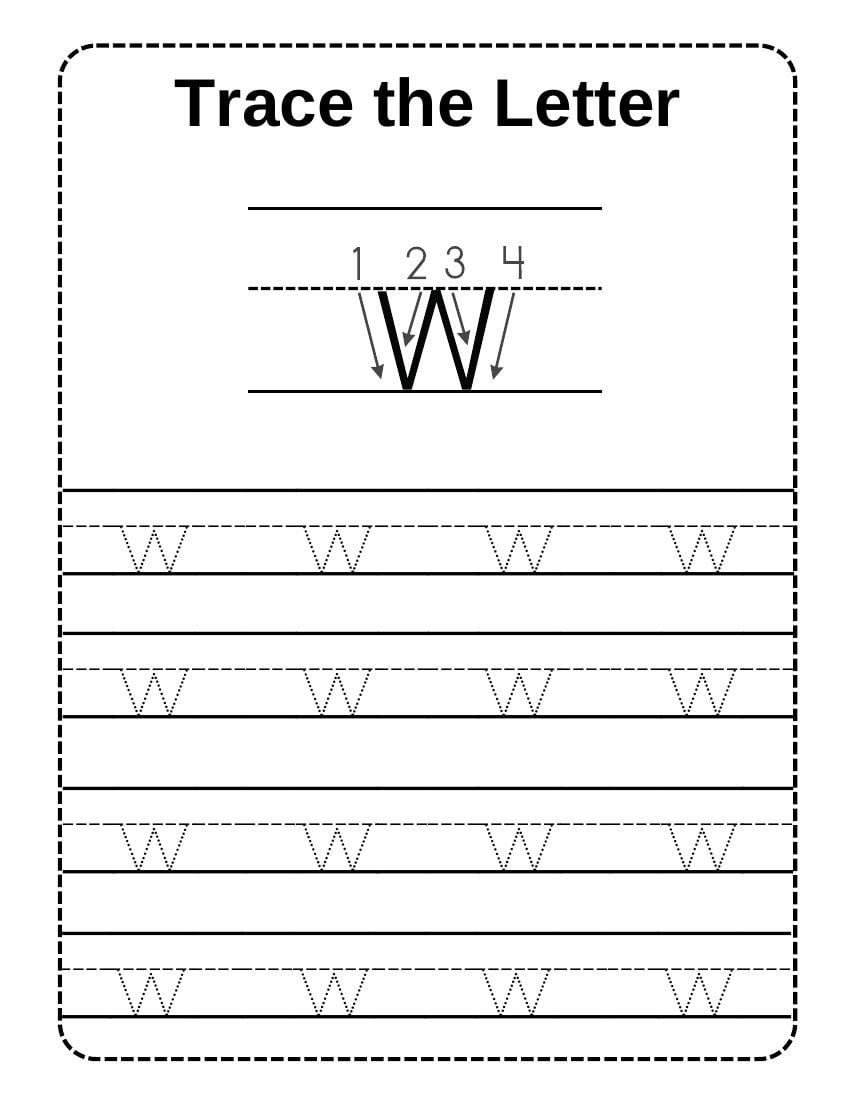
67. Lowercase Letter w Tracing Worksheet
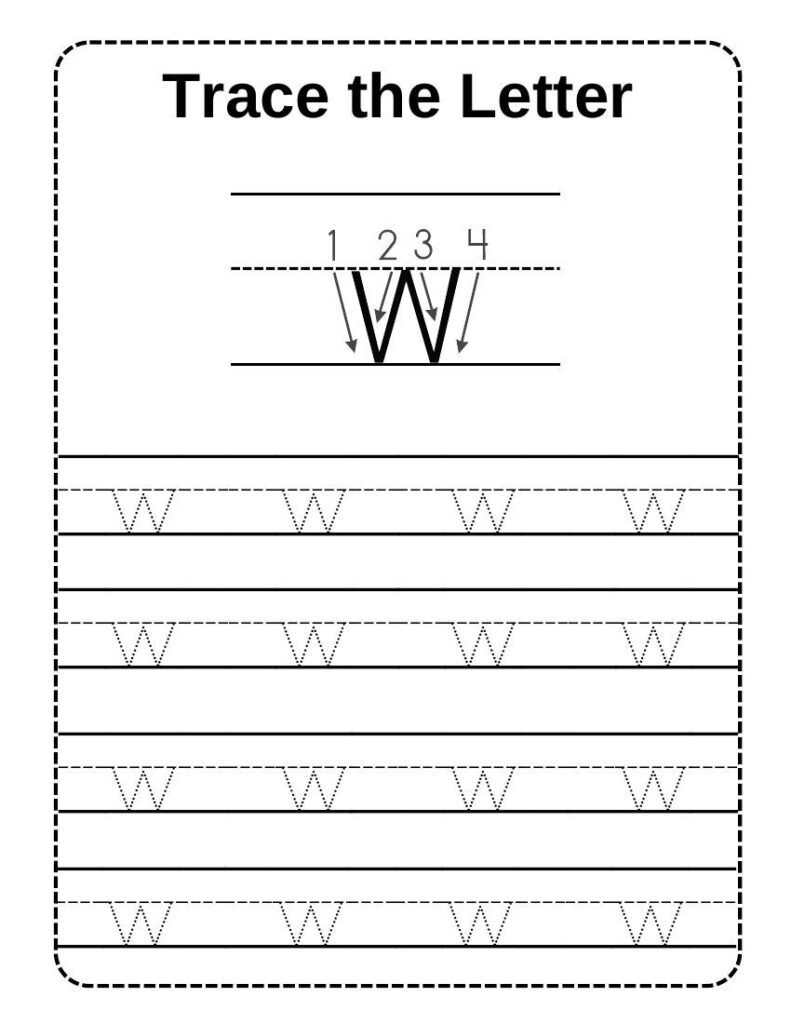
This page introduces lowercase w. The repeated examples let children practice the series of diagonal strokes.
Remind your child to keep the points clear and avoid rounding the shape. You can model one letter before they begin. With practice, the movement may become more familiar.
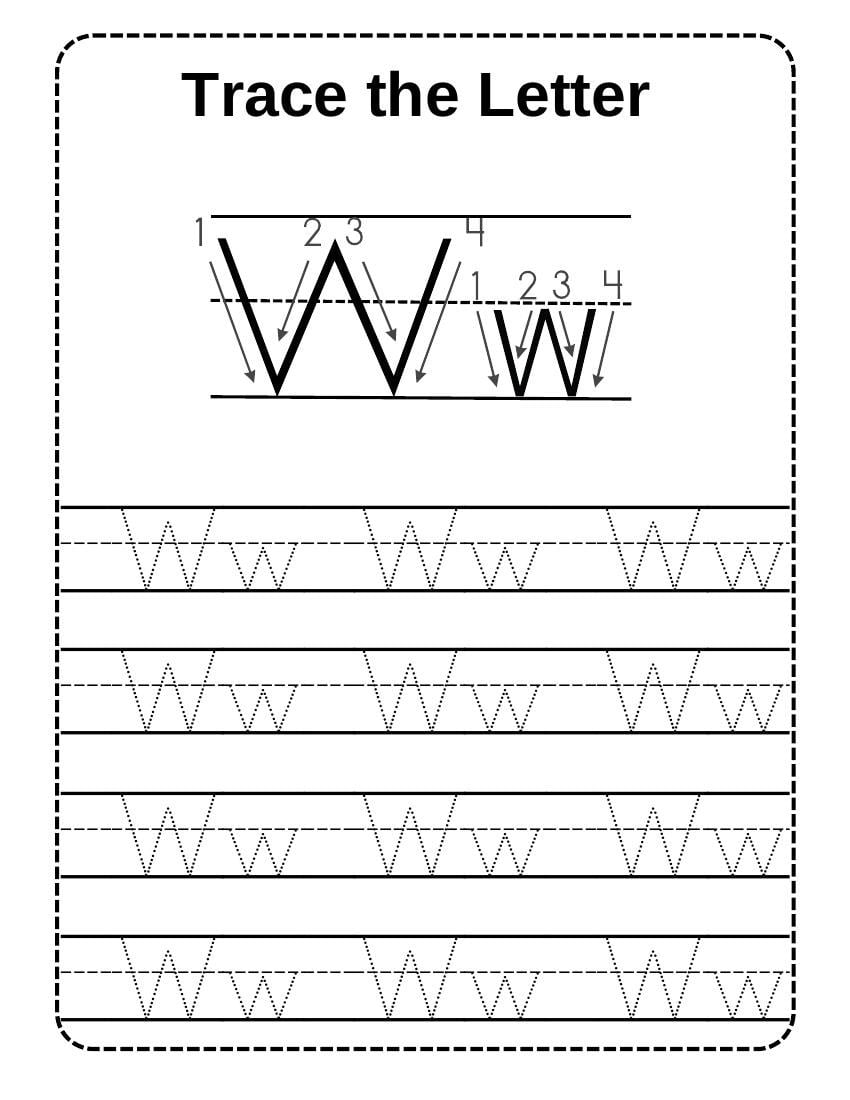
68. Uppercase and Lowercase Ww Tracing Worksheet
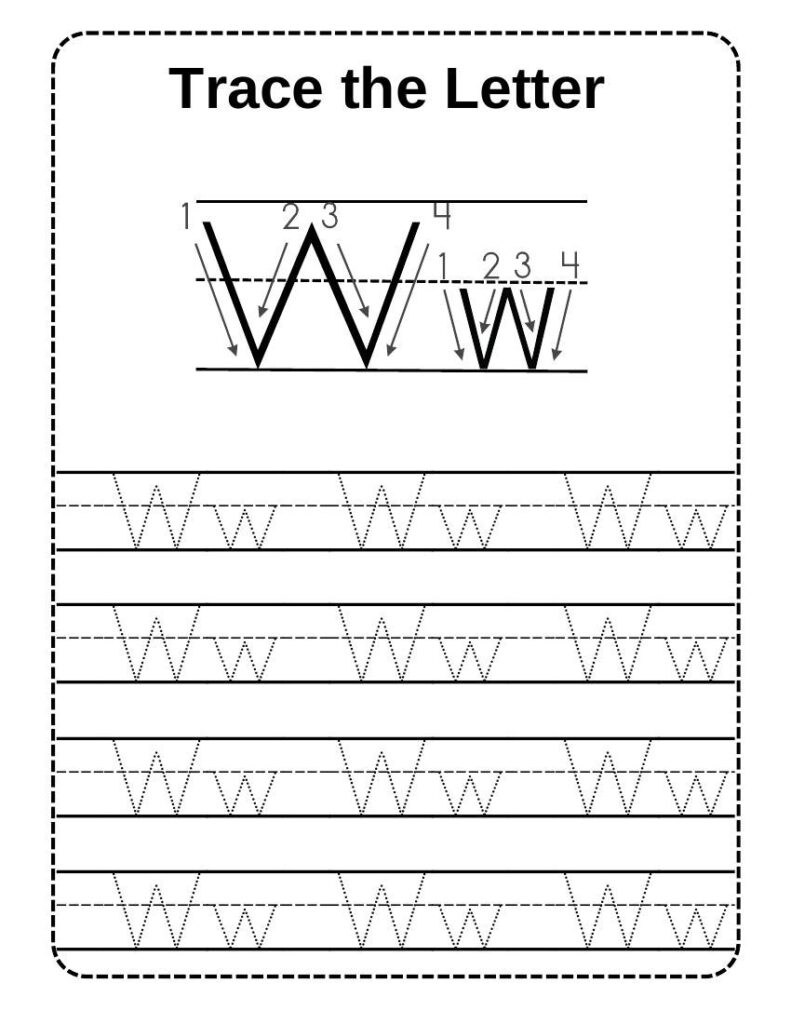
Here, children trace uppercase W and lowercase w together. The worksheet provides paired letters across several rows.
Encourage your child to compare their sizes and trace each pair slowly. Point out the repeated diagonal movements in both forms. This helps reinforce the structure of the letter W.
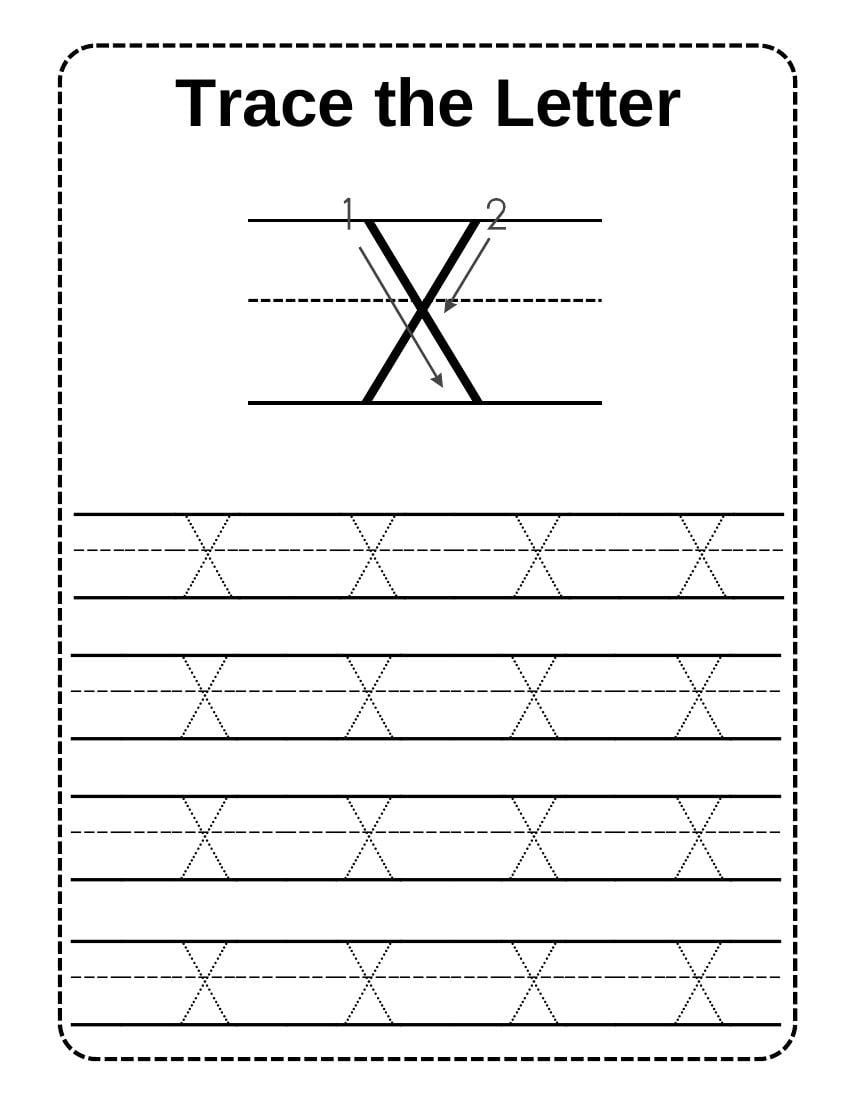
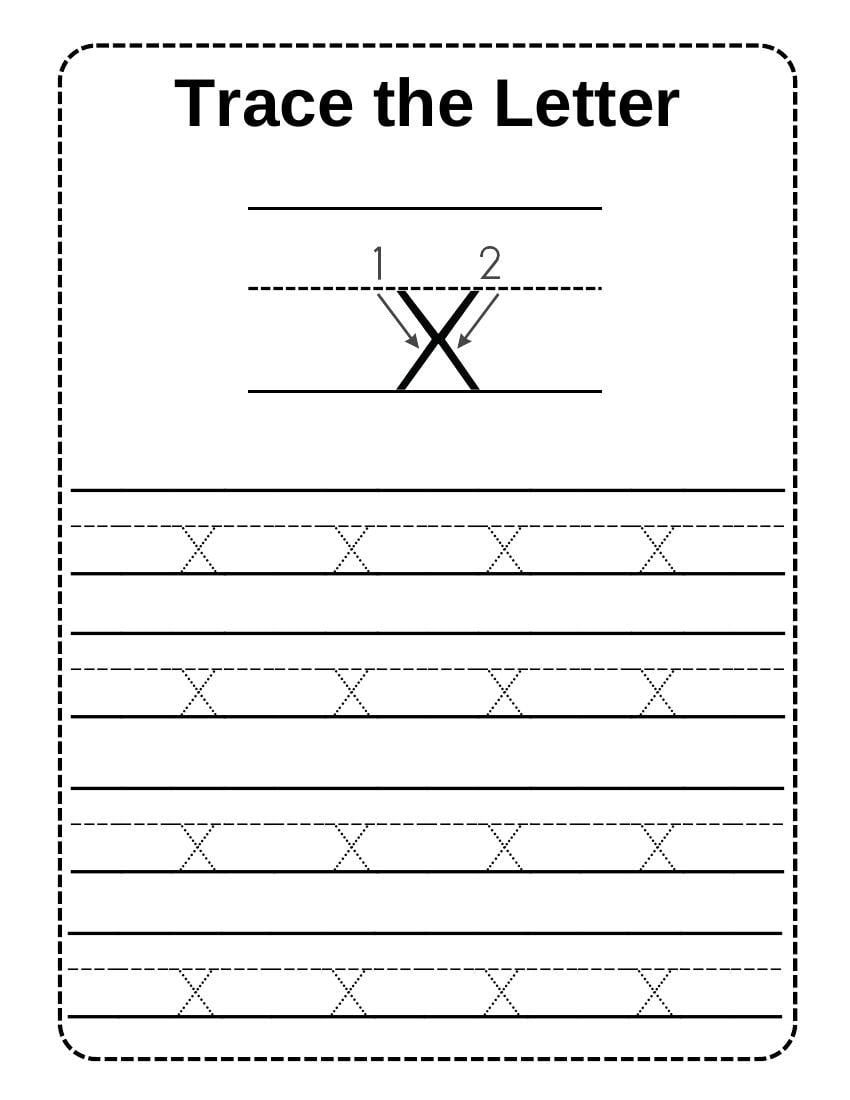
69. Uppercase Letter X Tracing Worksheet
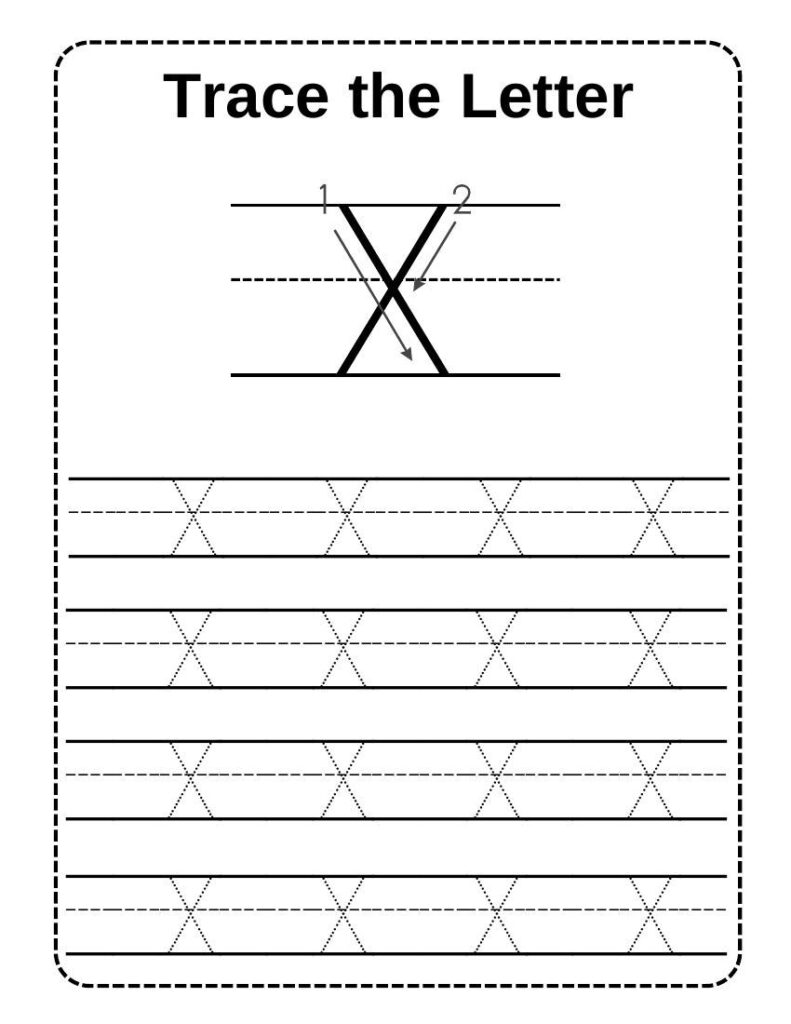
The sixty-ninth worksheet introduces uppercase X. The large letter uses two diagonal strokes that cross in the middle.
Children can trace the dotted examples repeatedly. Encourage them to begin each stroke at the indicated point. This helps children practice crossing lines neatly.
70. Lowercase Letter x Tracing Worksheet
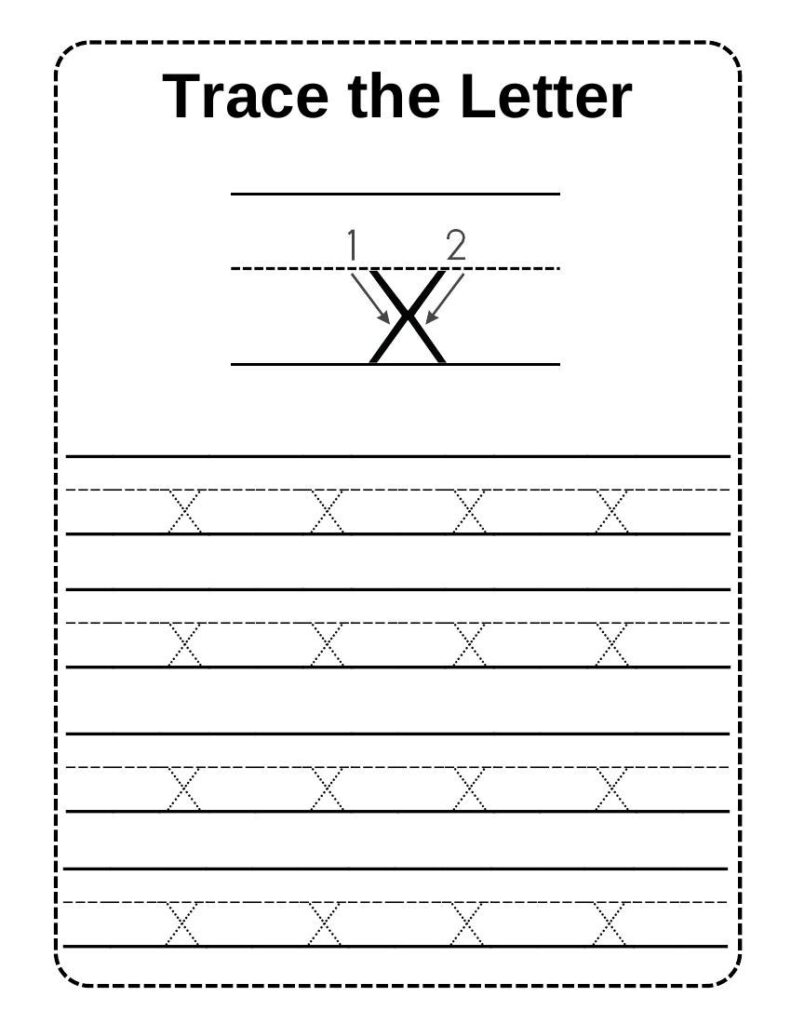
This page focuses on lowercase x. Children can trace the letter across the dotted practice rows. The shape uses two crossing diagonal strokes.
Remind your child to make the strokes meet clearly in the middle. This supports more controlled writing of lowercase x.
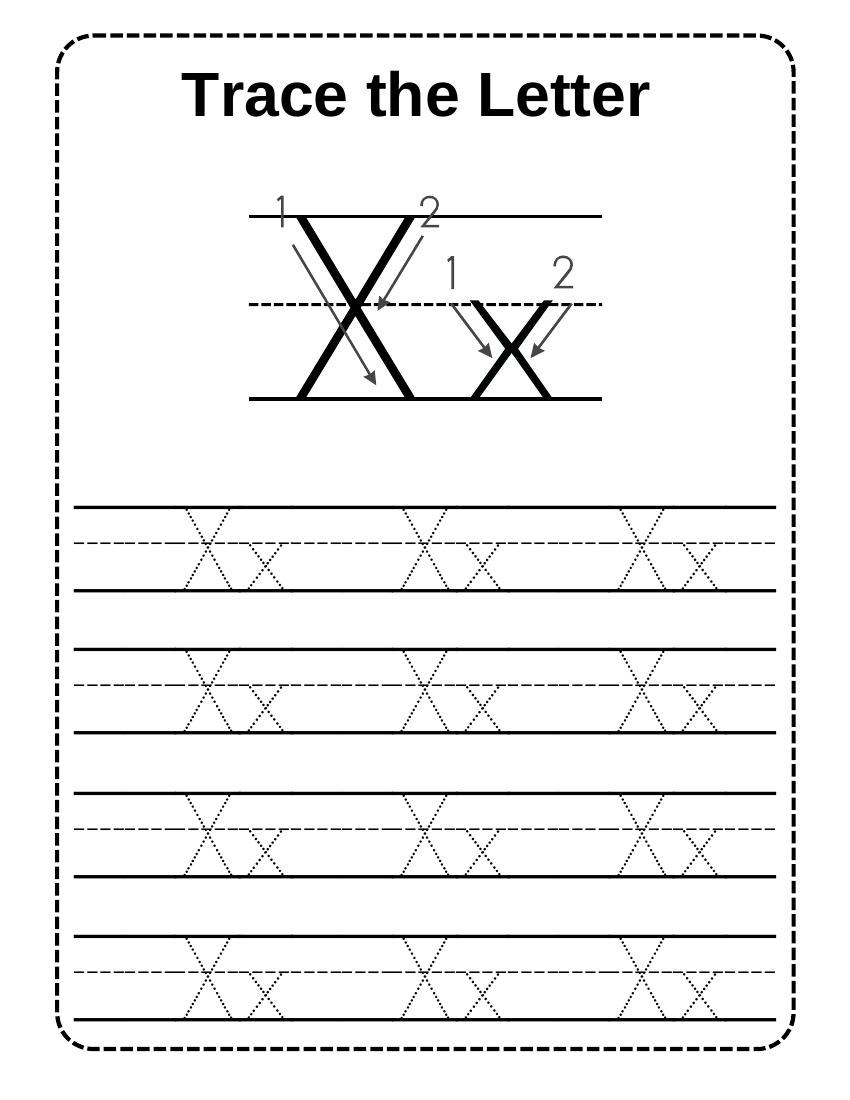
71. Uppercase and Lowercase Xx Tracing Worksheet
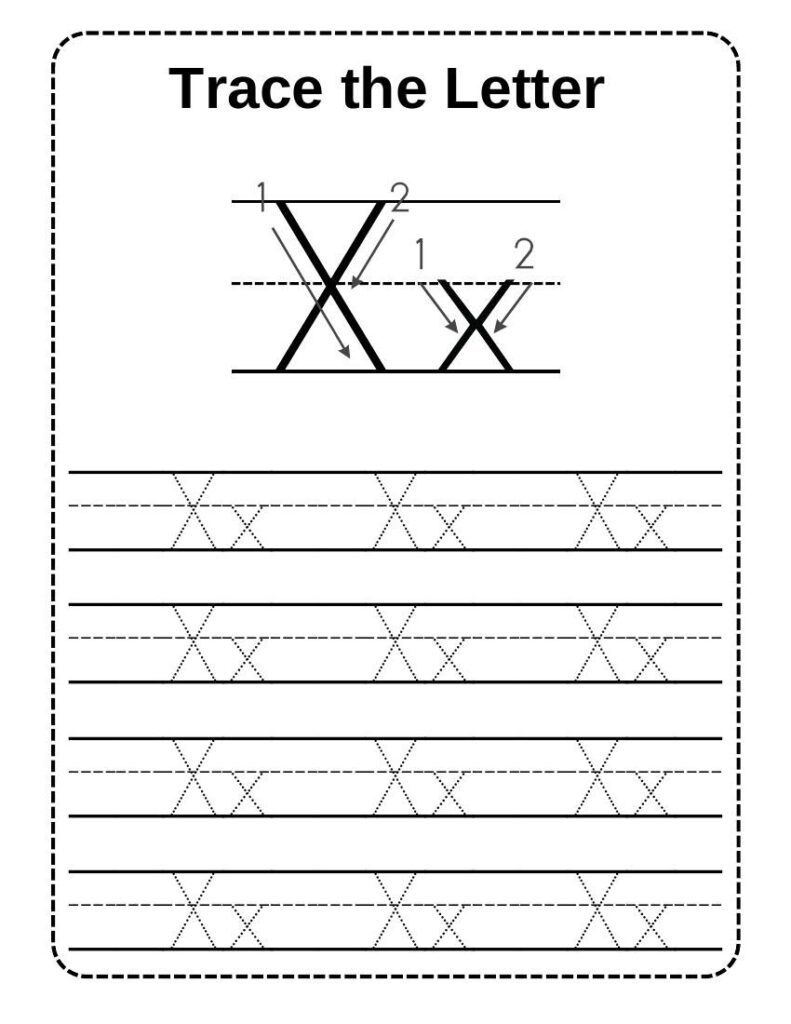
Children practice uppercase X and lowercase x together on this page. The worksheet shows paired examples and repeated tracing rows.
Ask your child to compare the sizes of both letters. Then, encourage them to trace each pair carefully. This activity reinforces the shared shape of uppercase and lowercase X.
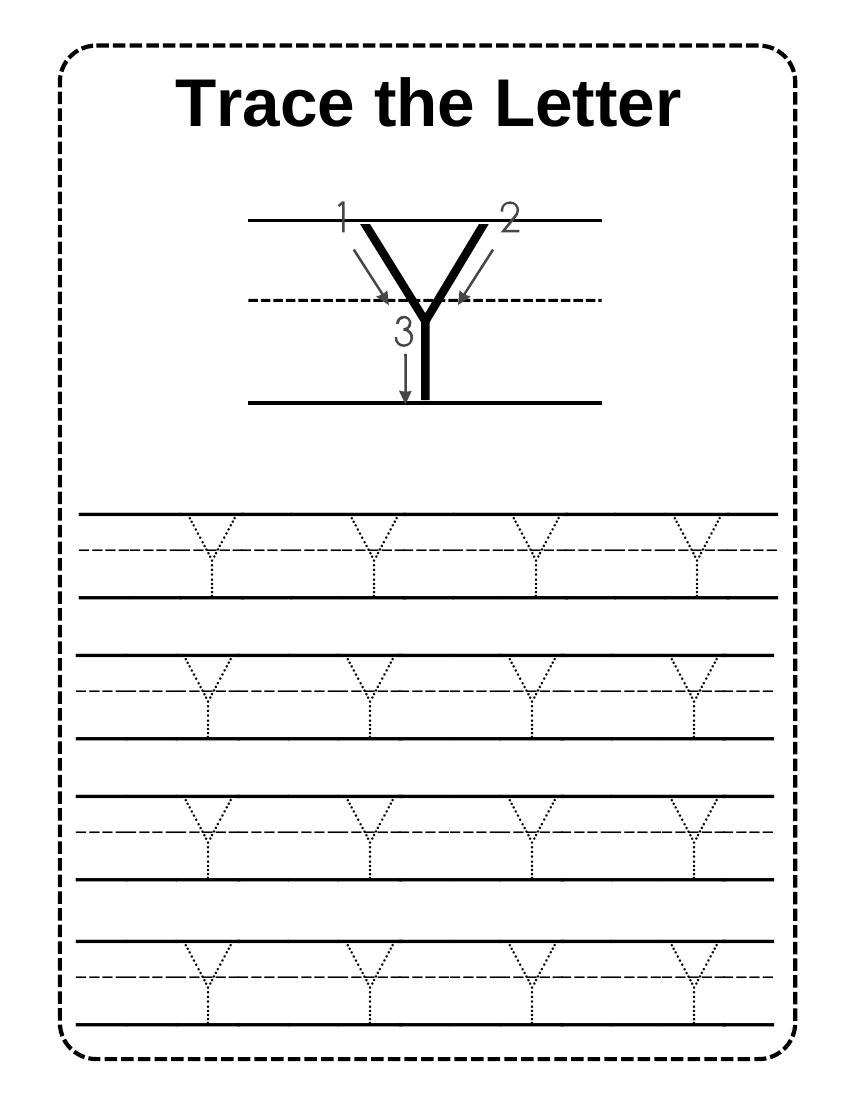
72. Uppercase Letter Y Tracing Worksheet
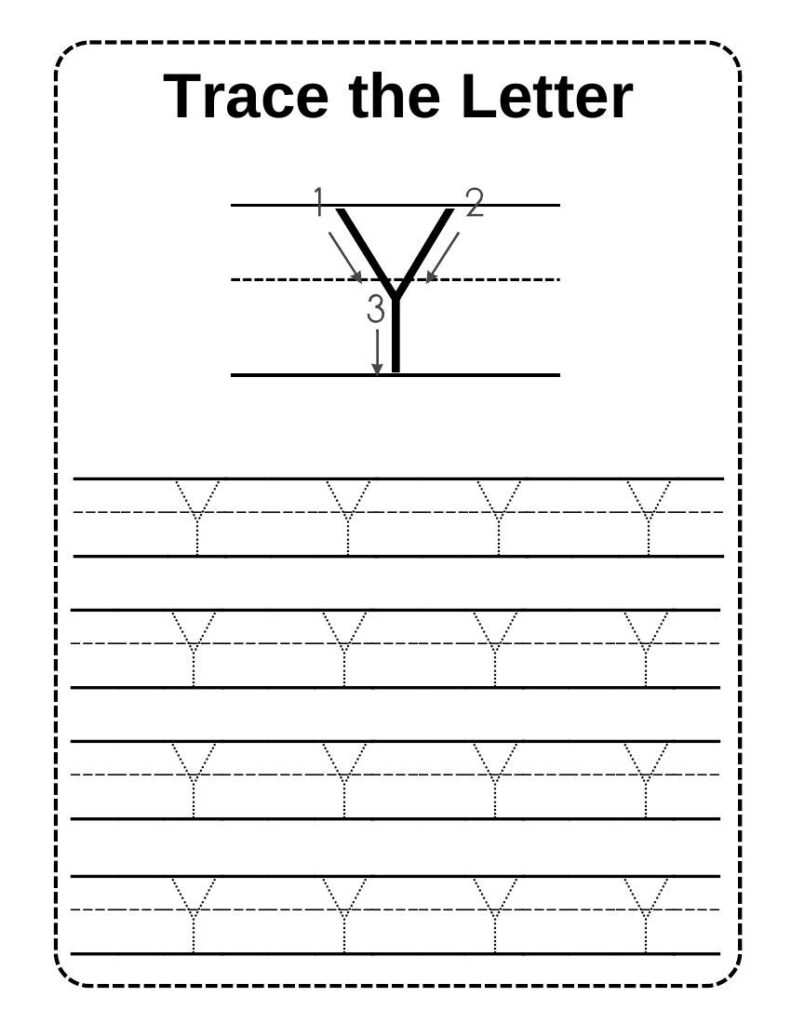
The seventy-second page introduces uppercase Y. Children can trace the dotted examples across several lines.
The letter begins with two diagonal strokes that join into one downward line.
Encourage your child to follow the stroke directions. This helps them practice connecting angled lines neatly.
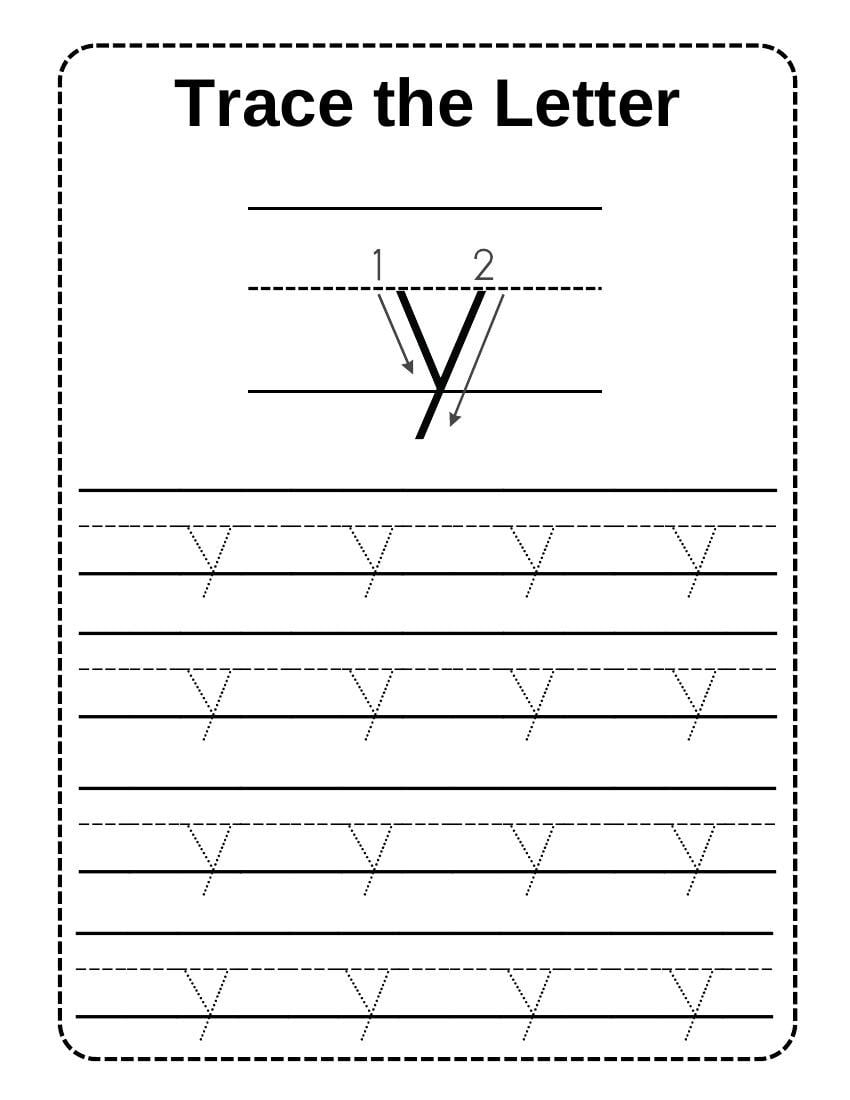
73. Lowercase Letter y Tracing Worksheet
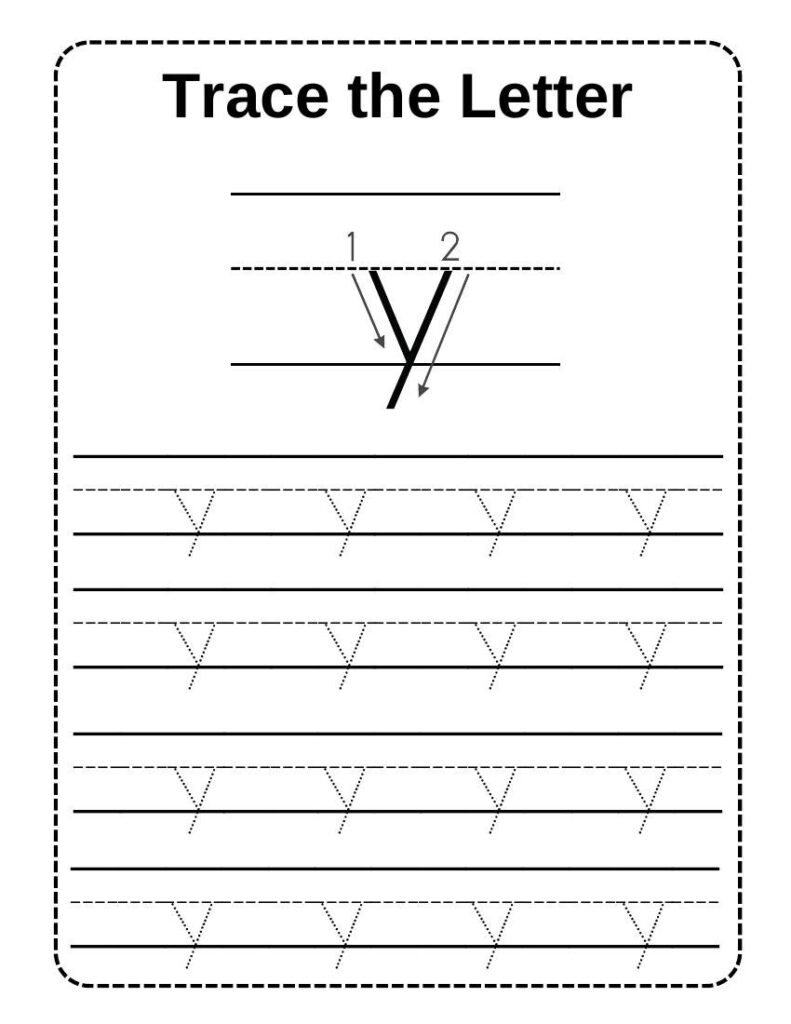
This worksheet focuses on lowercase y. Children can trace the letter repeatedly using the dotted guides.
Its shape includes two upper strokes and a line that extends below the writing line.
Point out the lower extension before your child starts. This helps them remember an important feature of lowercase y.
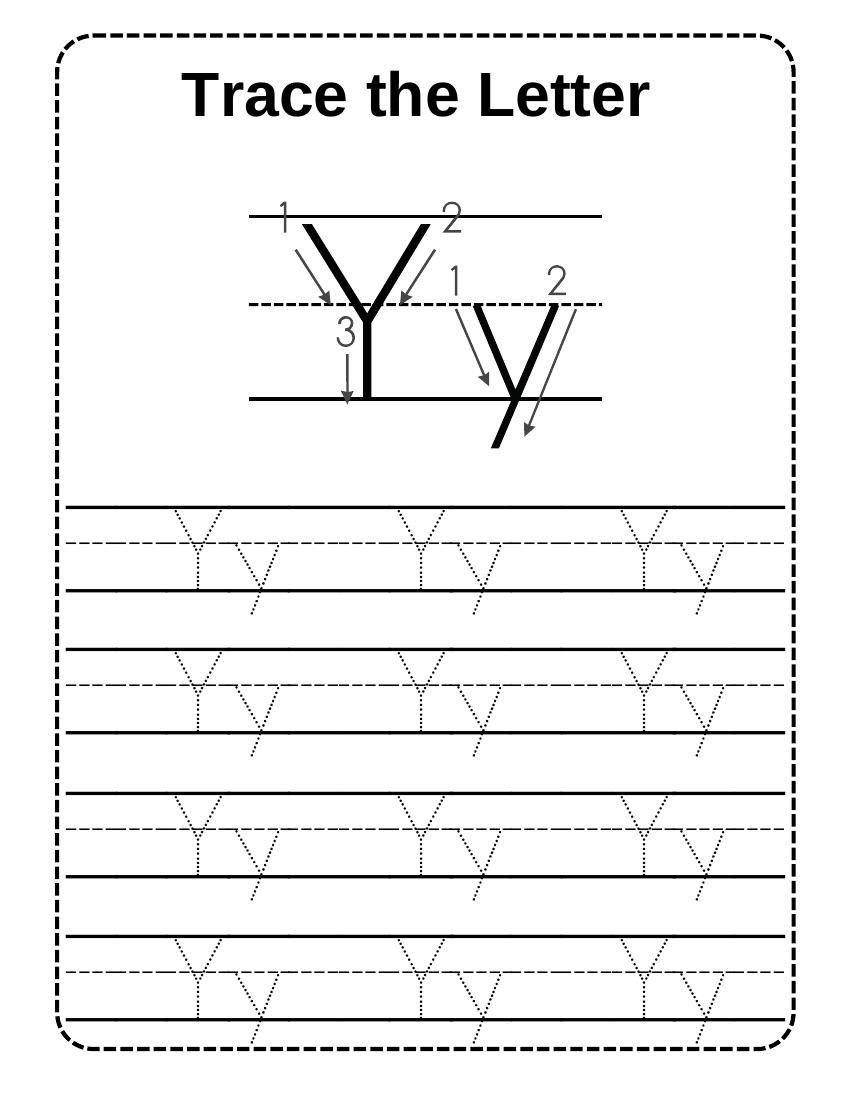
74. Uppercase and Lowercase Yy Tracing Worksheet
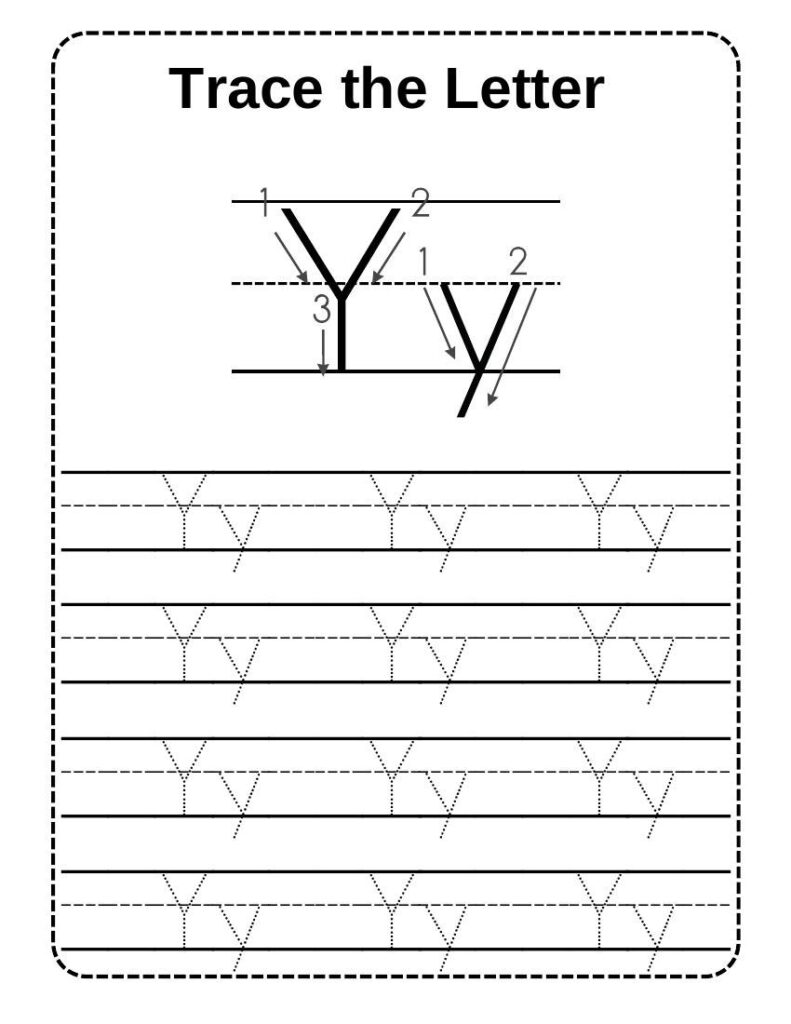
Here, children practice uppercase Y and lowercase y together. The paired examples let them compare both letter forms.
Several rows provide room for repeated tracing. Ask your child to identify which letter extends below the line. This supports letter recognition and careful handwriting practice.
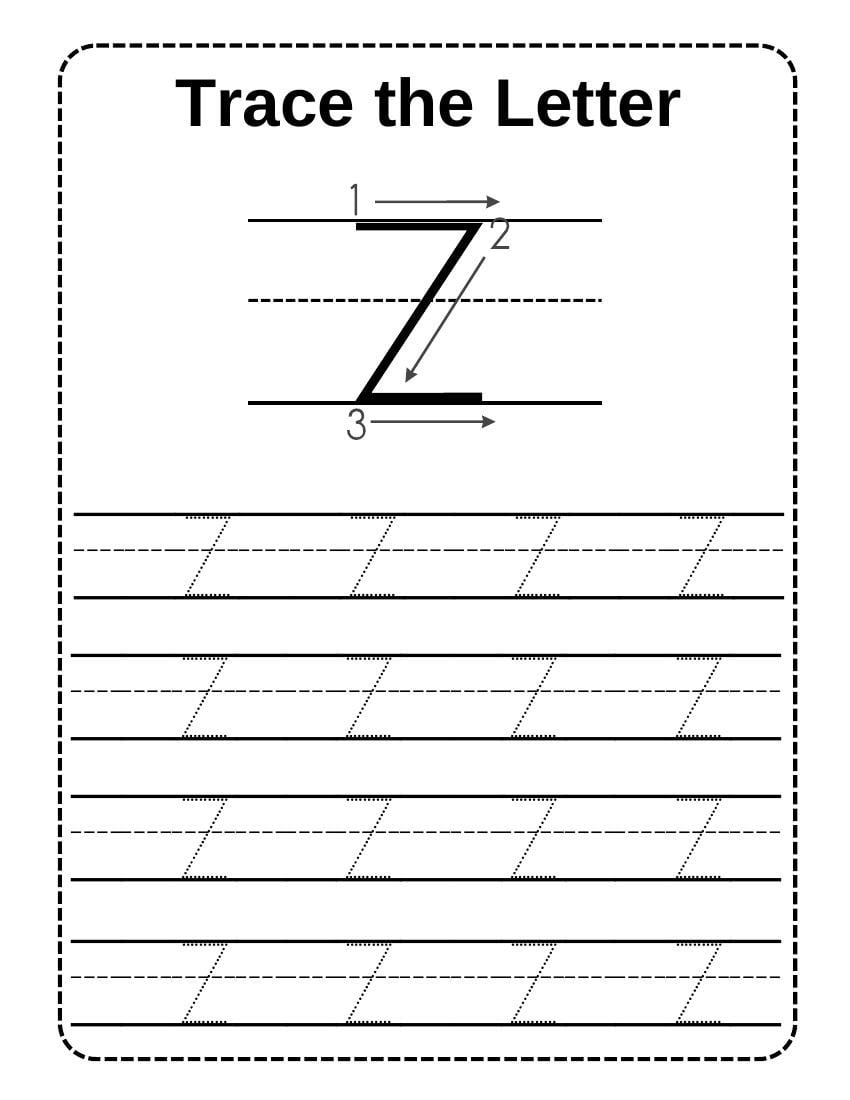
75. Uppercase Letter Z Tracing Worksheet
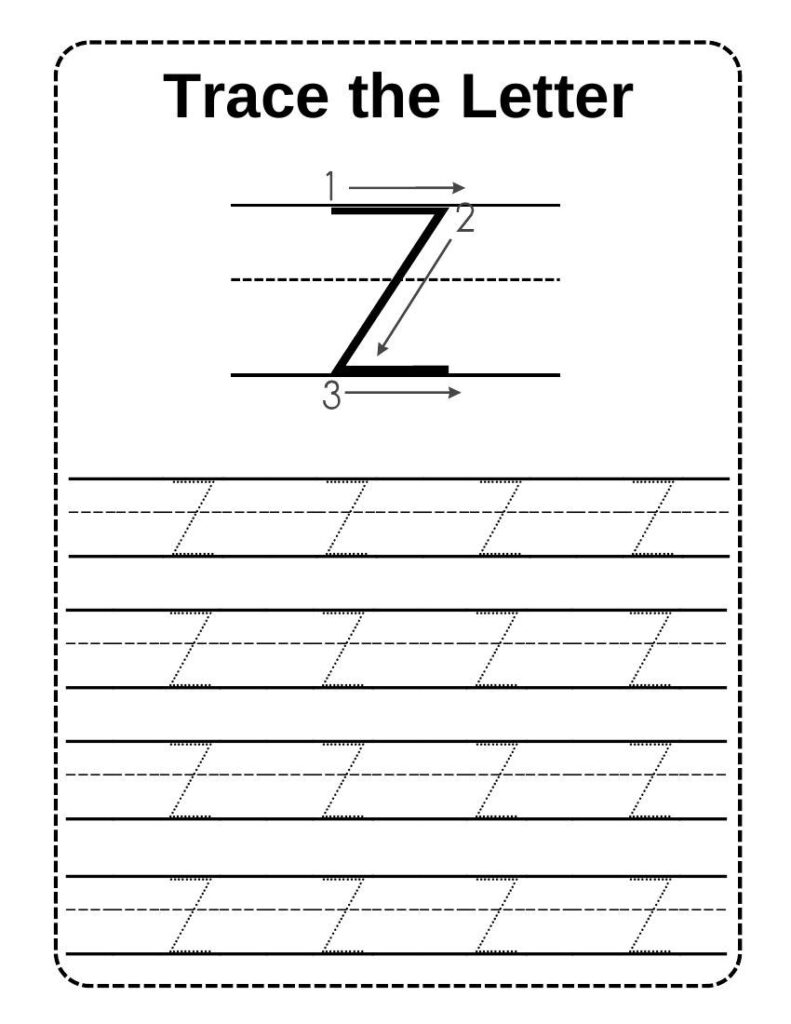
The seventy-fifth page introduces uppercase Z. Its shape uses a top line, a diagonal stroke, and a bottom line.
Children can trace the dotted examples across several rows. Encourage them to follow the strokes in order. This helps them form the letter with clear, straight lines.
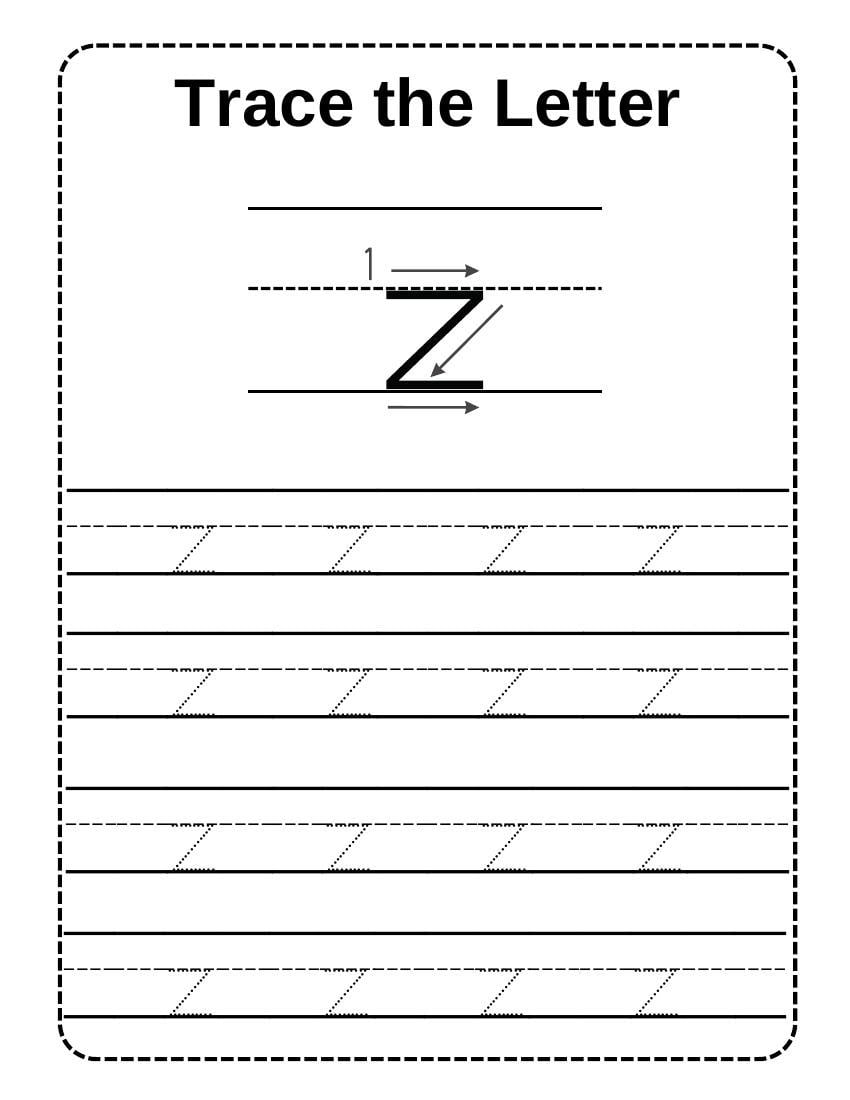
76. Lowercase Letter z Tracing Worksheet
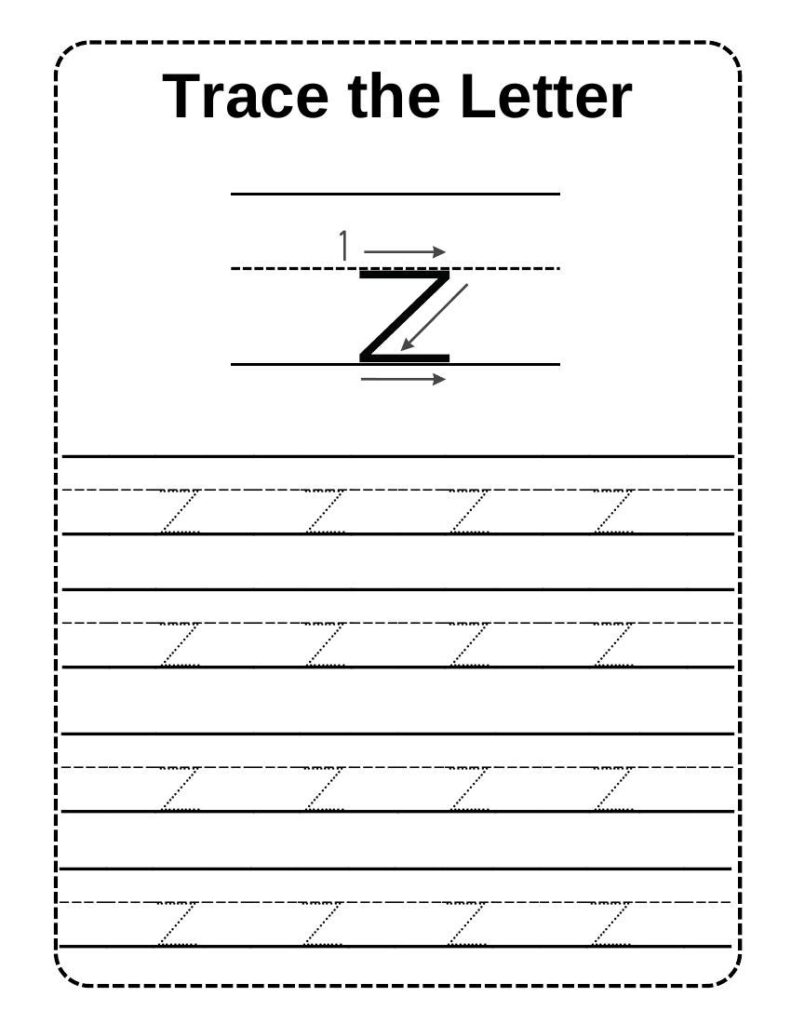
This page focuses on lowercase z. Children can trace the letter across the dotted practice lines. The shape follows the same basic pattern as uppercase Z but appears smaller.
Encourage your child to keep the diagonal stroke clear. This gives them another chance to practice straight and angled lines.
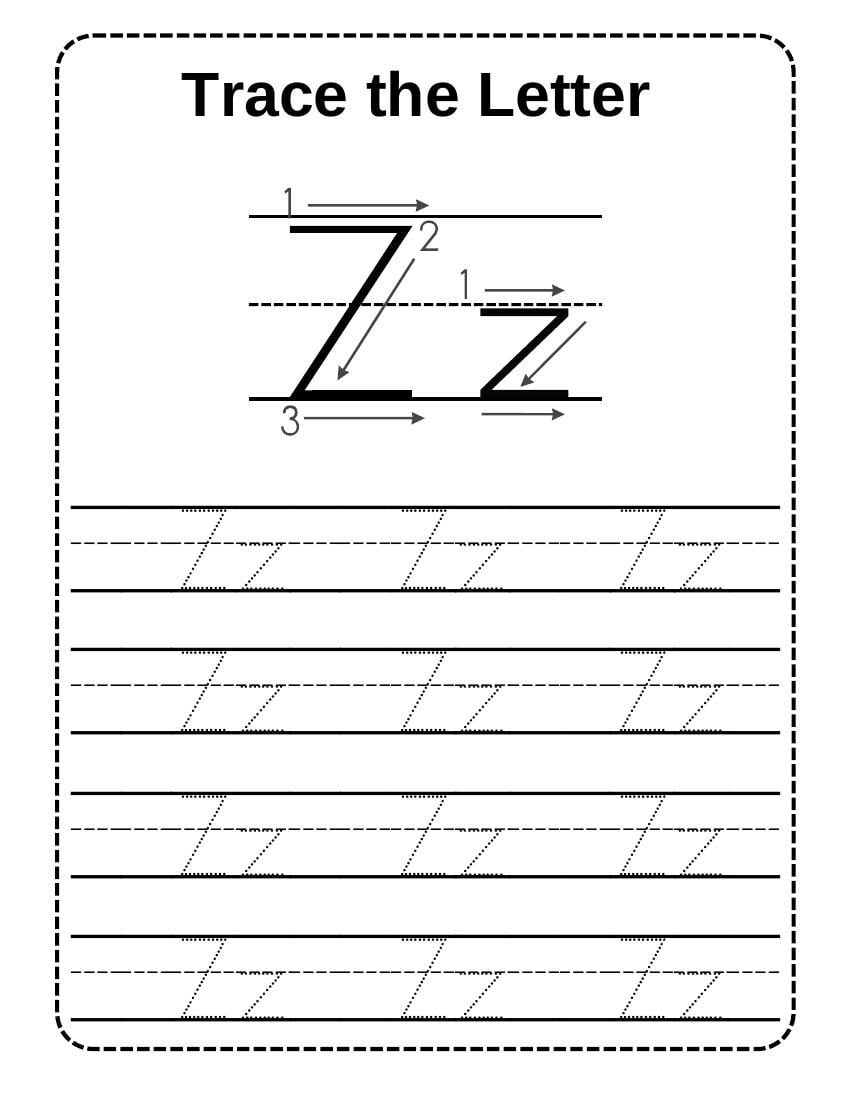
77. Uppercase and Lowercase Zz Tracing Worksheet
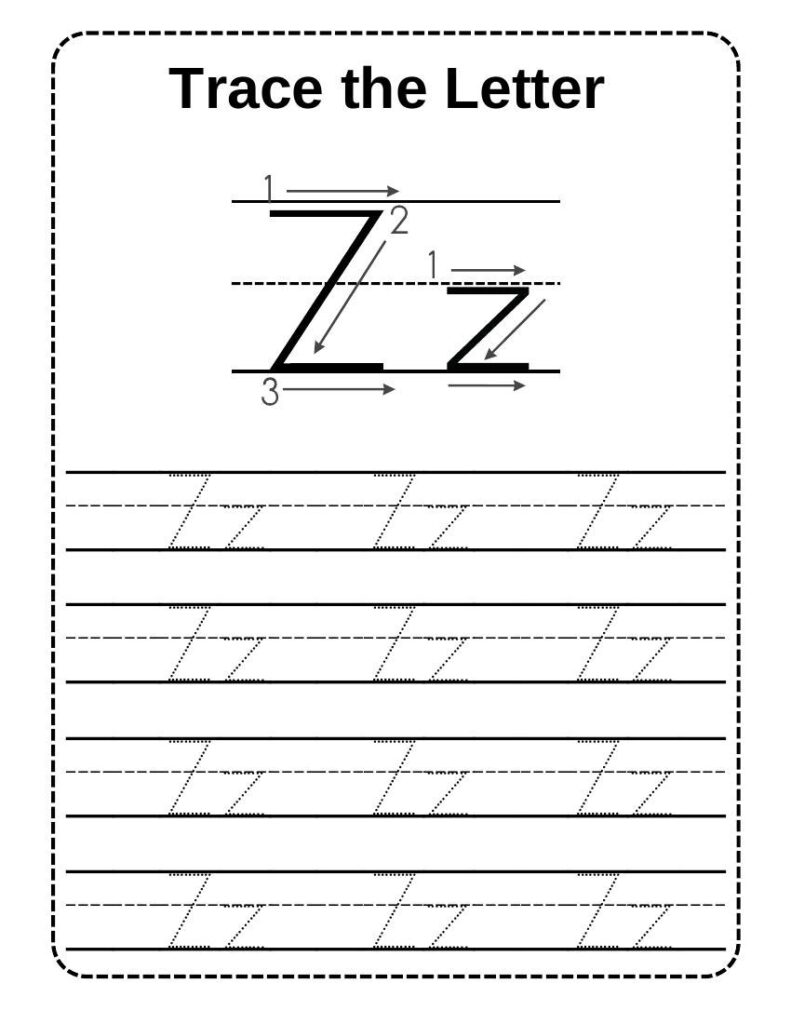
Children practice uppercase Z and lowercase z together. The worksheet provides paired examples and repeated tracing rows.
Invite your child to compare both shapes before starting. Then, encourage them to trace each pair carefully. This activity helps reinforce the final letter of the alphabet.
Final Thoughts
These 78 Letter Tracing Worksheets offer children repeated practice with uppercase letters, lowercase letters, and letter pairs.
Each page focuses on a specific letter shape and includes tracing guides. The numbered examples can help children understand the order of each stroke.
Parents and teachers can introduce a few pages at a time instead of completing the entire collection in one sitting.
Start with familiar letters, then move toward the ones your child finds more difficult.
Also, praise careful effort rather than expecting every letter to look perfect right away. Short, regular practice sessions can make handwriting feel more manageable.
Keep the worksheets available for extra practice whenever your child needs them. You can ask children to name each letter before tracing it, then find the same letter in a book or on a sign.
These small activities make alphabet practice more meaningful. With patience and repetition, children can grow more comfortable forming letters and preparing for independent writing.