How to Start Calligraphy with No Experience
Disclosure: Some of the links in this post are affiliate links. This means if you click on the link and purchase an item, I will receive an affiliate commission at no extra cost to you.
If you’ve at some point admired wedding invitation cards, beautiful quote prints or even stylish Pinterest handwritten notes and you wonder how they make it happen, learning calligraphy is a great place to start.
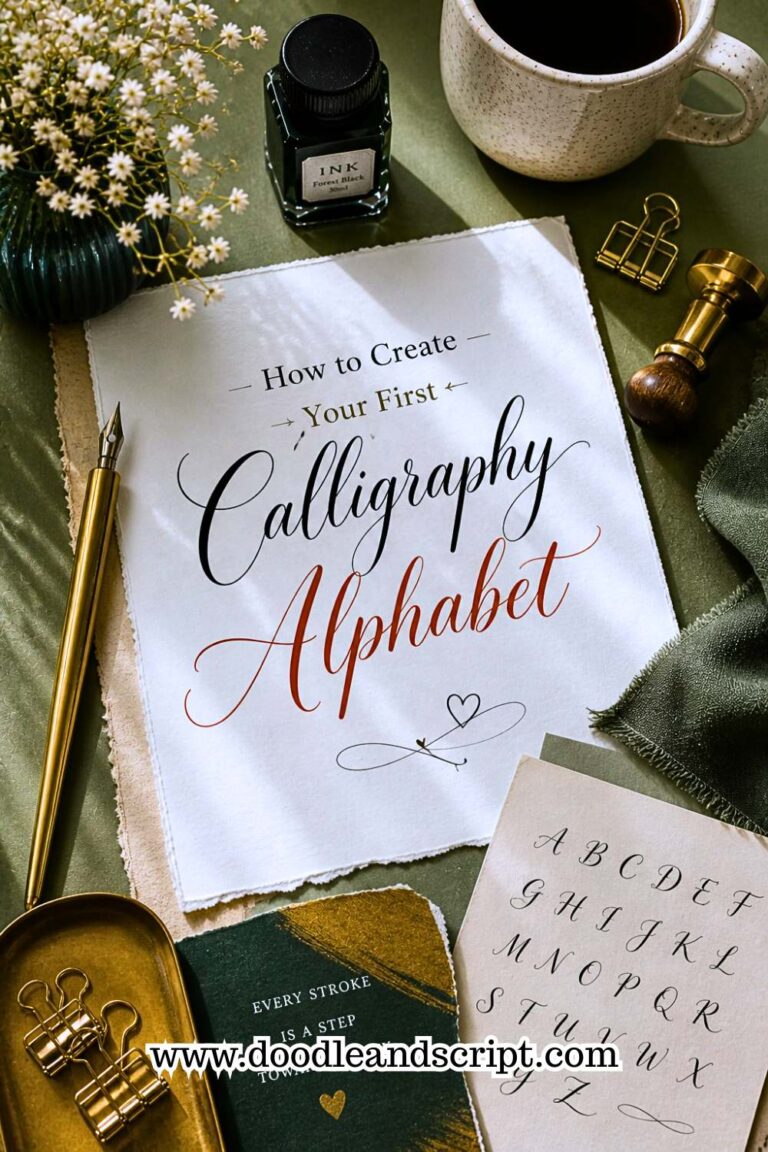
As you progress, working on how to create your first calligraphy alphabet is an exciting milestone that brings everything together. And to make sure your letters are looking uniform and polished, this guide on how to create consistent calligraphy letters covers all the key habits that separate messy lettering from professional-looking work.
And if you’ve been curious about trying calligraphy but doesn’t know where to start, you’re in the right place. I’ll walk you through everything you need to know. From understanding the basics and choosing the right tools to practicing simple strokes and forming your first calligraphy letters.
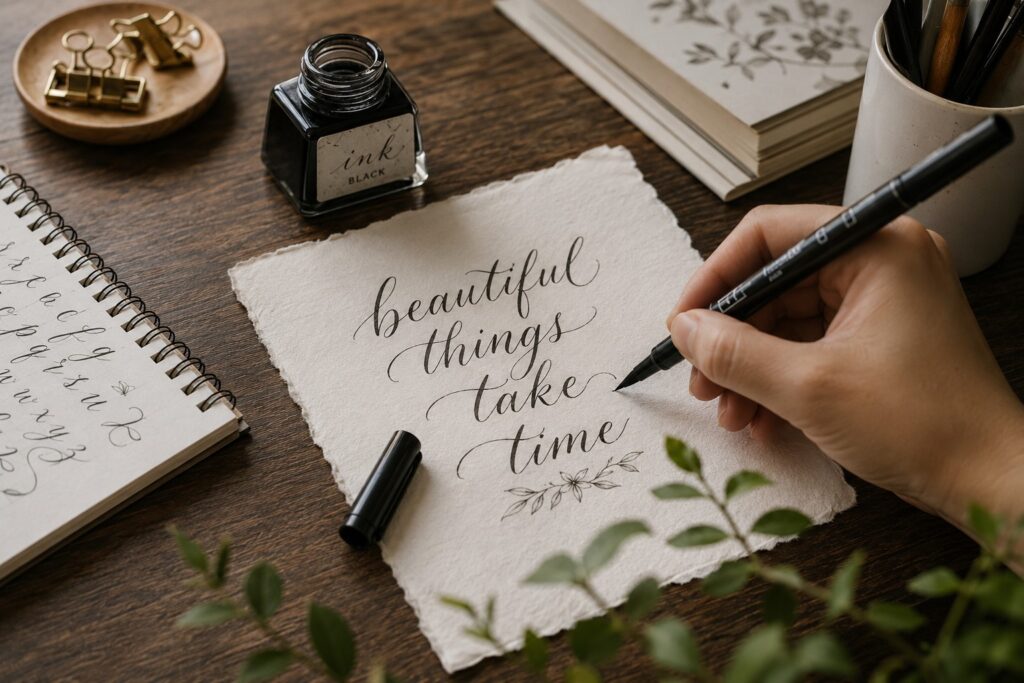
By the end, you’ll have the confidence to start your own calligraphy journey. And you’ll also enjoy the creative process along the way.
Introduction to Calligraphy for Absolute Beginners
In simple words, calligraphy is the art of decorative handwriting. But I see it as a means of transforming normal letters into beautiful strokes and flowing designs to captivate the eye and as well express a feeling.
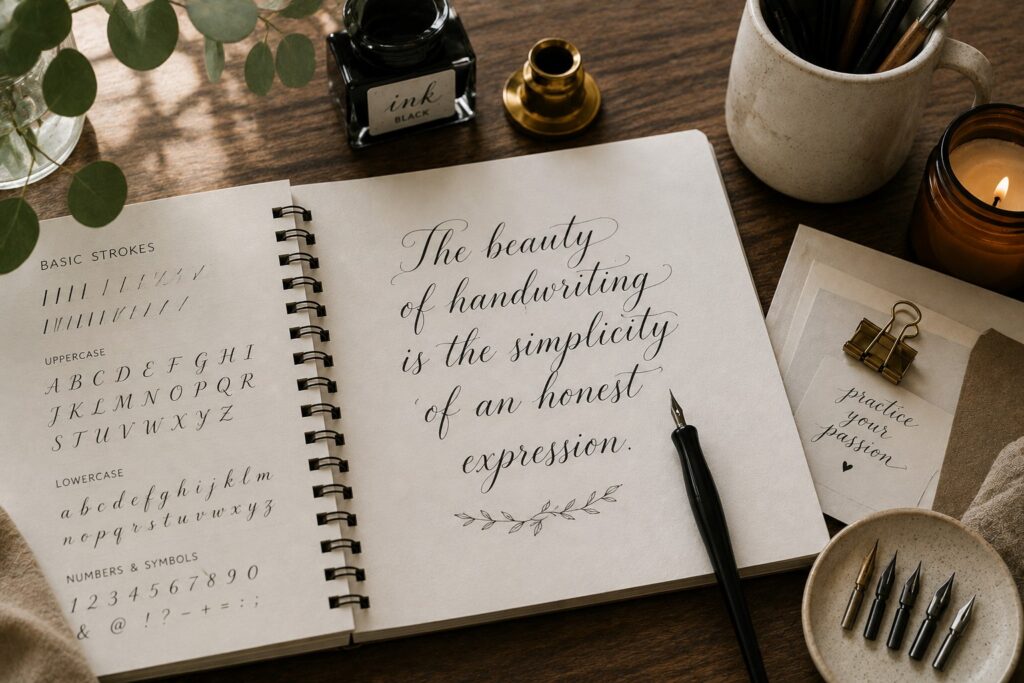
When I started, I thought it would be difficult to succeed because I have awful handwriting. I later realized that my bad writing doesn’t matter. The normal handwriting is when you are writing with speed for everyday communication. While calligraphy is all about intention with each letter formed using specific strokes. As well as careful spacing to create a balance, making it look appealing while enjoying the flow. If you’re wondering how to start calligraphy with no experience, know that your handwriting right now has absolutely nothing to do with how good you can become.
Why is calligraphy the perfect hobby?
Calligraphy is a great way to relieve stress, after a long day, a slow and deliberate writing can serve as a form of meditation that helps calm the mind and reduce anxiety. It helps me to focus, be detail oriented and enhance fine motor skills.
Real World Uses of Calligraphy that can Fetch you Money
1. Event signage
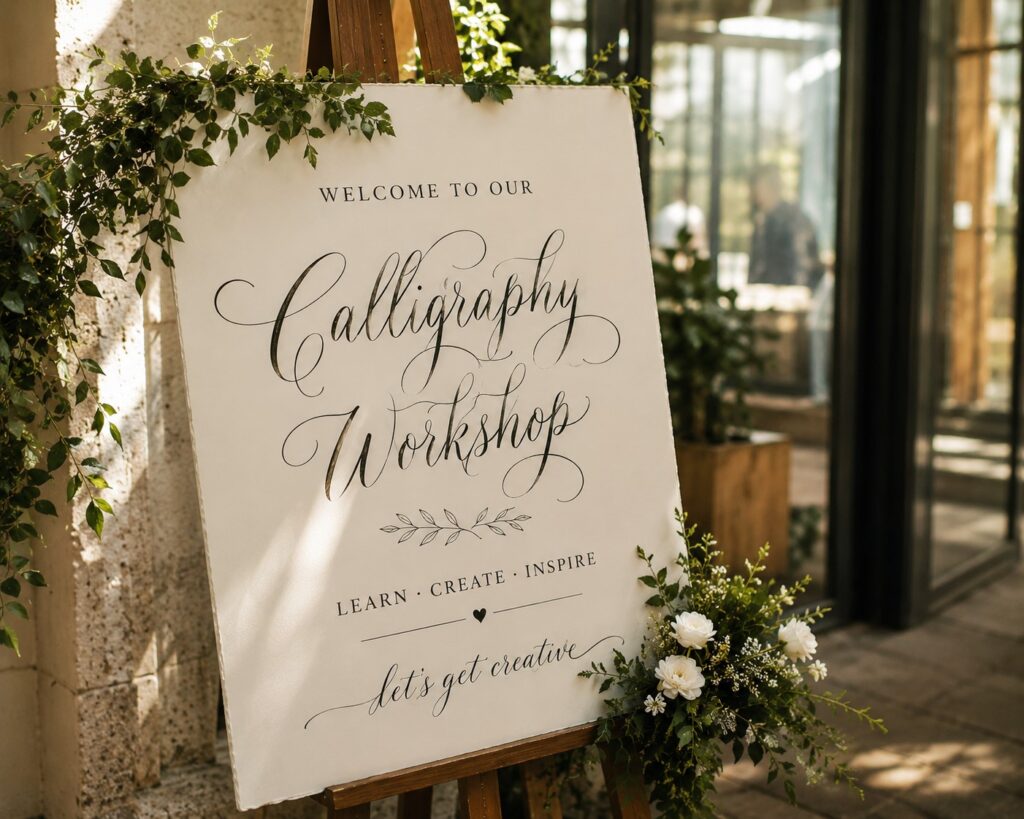
If you’ve been seeing directional markers and welcoming signs with beautiful letterings, that’s calligraphy. It is also used to design wedding cards, baby showers and even conference invitation letters.
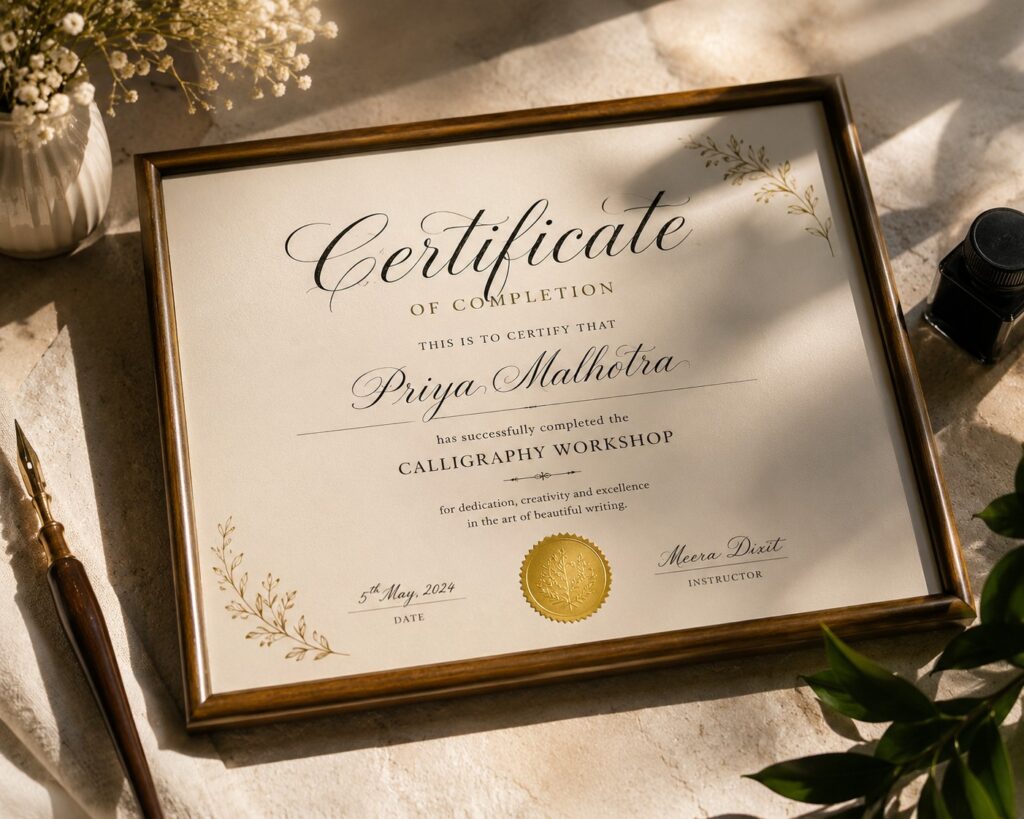
2. Awards and Certificates
Ever wonder why almost all honours and recognition documents use the elegant lettering? I think it’s because it adds a sense of commendation, making them look more prestigious and memorable.
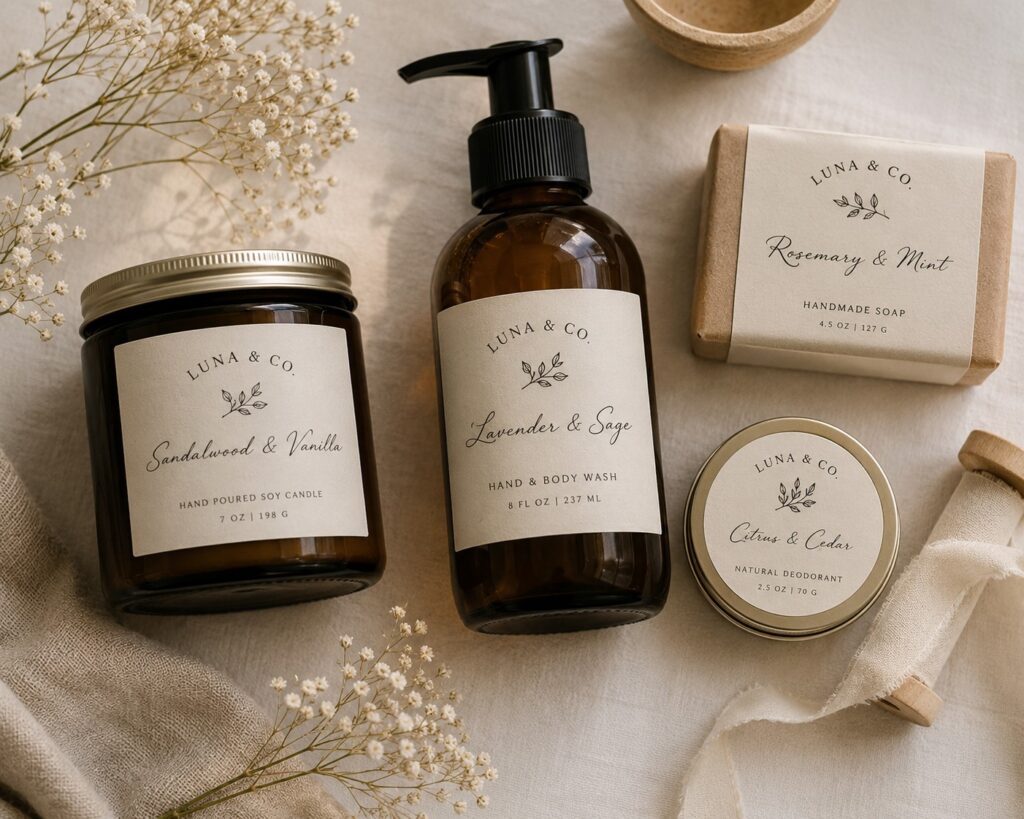
3. Custom labels
Labels with elegantly written text can make your brand look unique and also attract customers. If you produce homemade products like candles, skincare or jam, calligraphy labels can make your product stand out on the store shelf.
4. Logo Designs
Famous brands like Coca-Cola, Ford, Disney and Virgin use calligraphic logos to make them exceptional and leave a lasting impression.

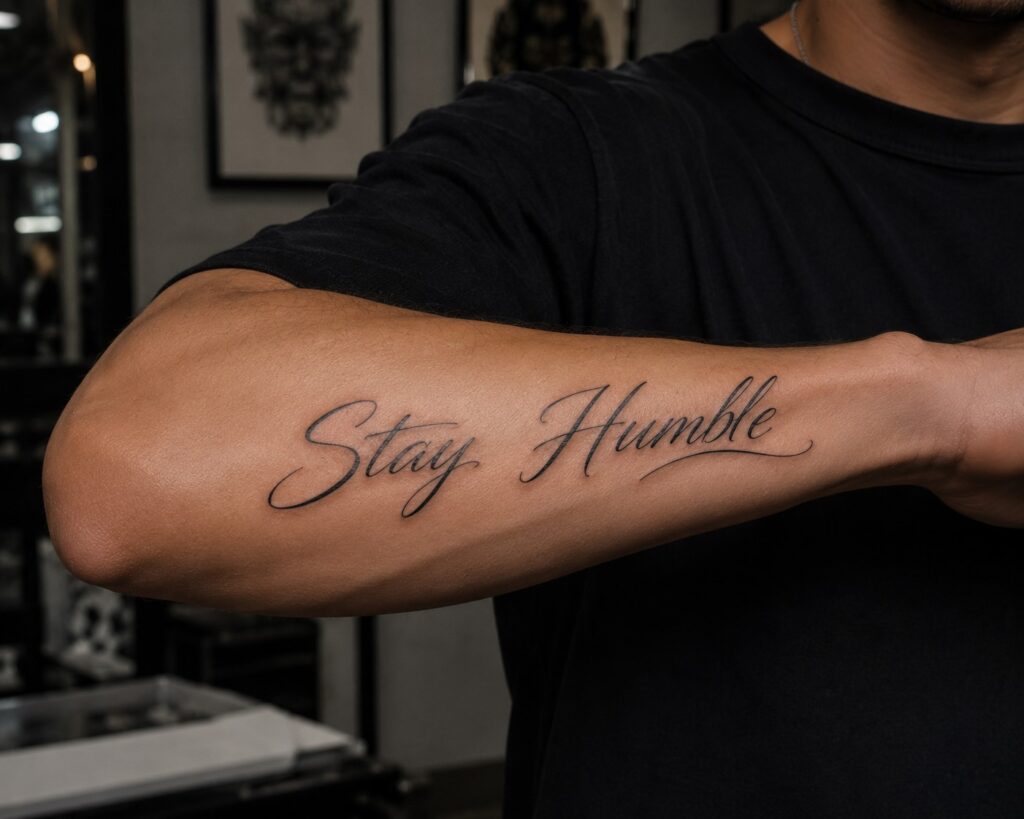
5. Tattoo design
Though it may not be 100% hygienic. There are people that use calligraphy to express personal significance that also combines beauty.
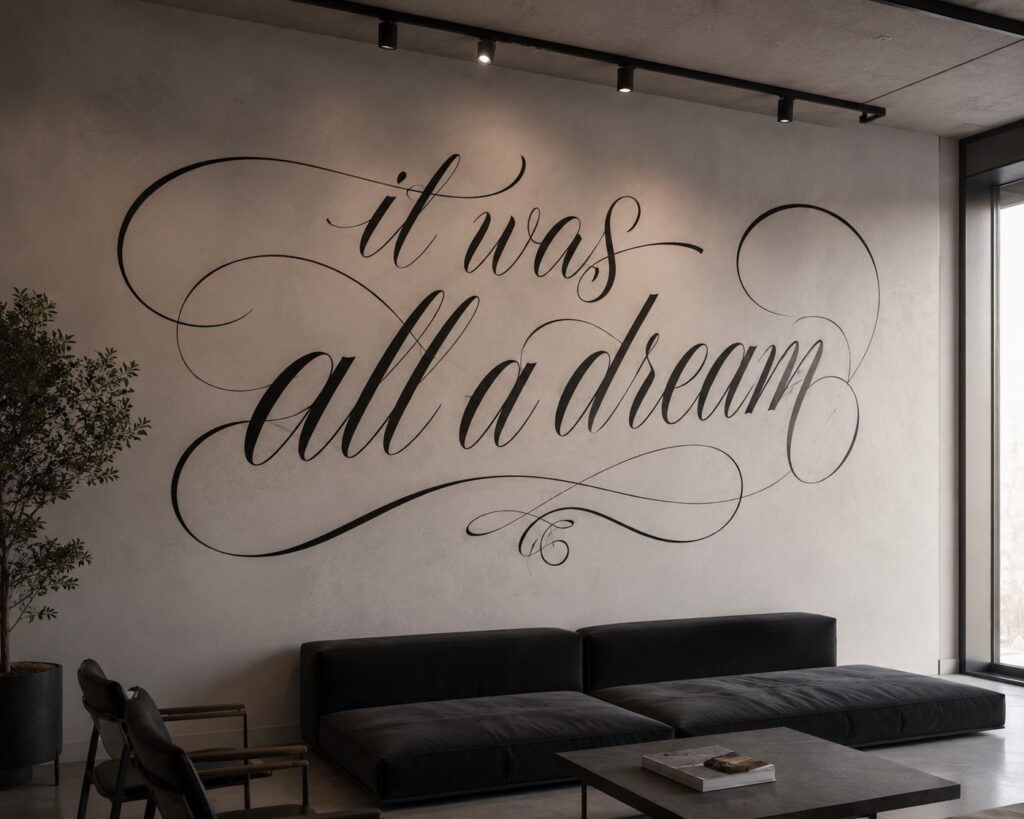
6. Wall art and murals
You can decorate a vacant wall in your apartment with a calligraphic mural, especially when newly painted to bring out the shine. It gives a touch of personality vibe to your room.
You can now see that the skill of calligraphy isn’t only for art but can bring in money by the side if you master it.
Basic Calligraphy Tools You Need to Start
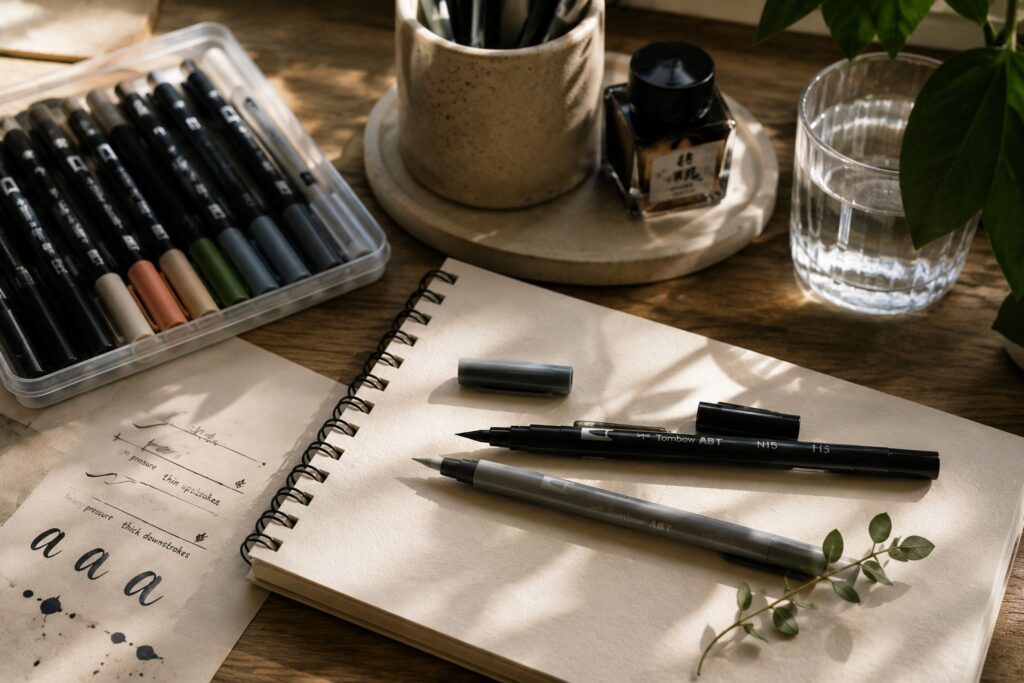
Brush pens
A brush pen is a specialized pen with a flexible tip used for calligraphy. It allows artists to create both thin strokes and thick strokes by adjusting pressure. It is mostly used in modern calligraphy and most popular for beginners. This is because they are easier to manage and are pre-filled, portable than traditional dip pens. To get the most out of your brush pens from day one, this guide on how to use brush pens properly covers everything from angle to maintenance.
Although you can start with a common, everyday HB pencil. But if you want to go in depth into practicing calligraphy, you need to know the various types of pens that are beginner friendly in order to choose the ones that best suit your personality.
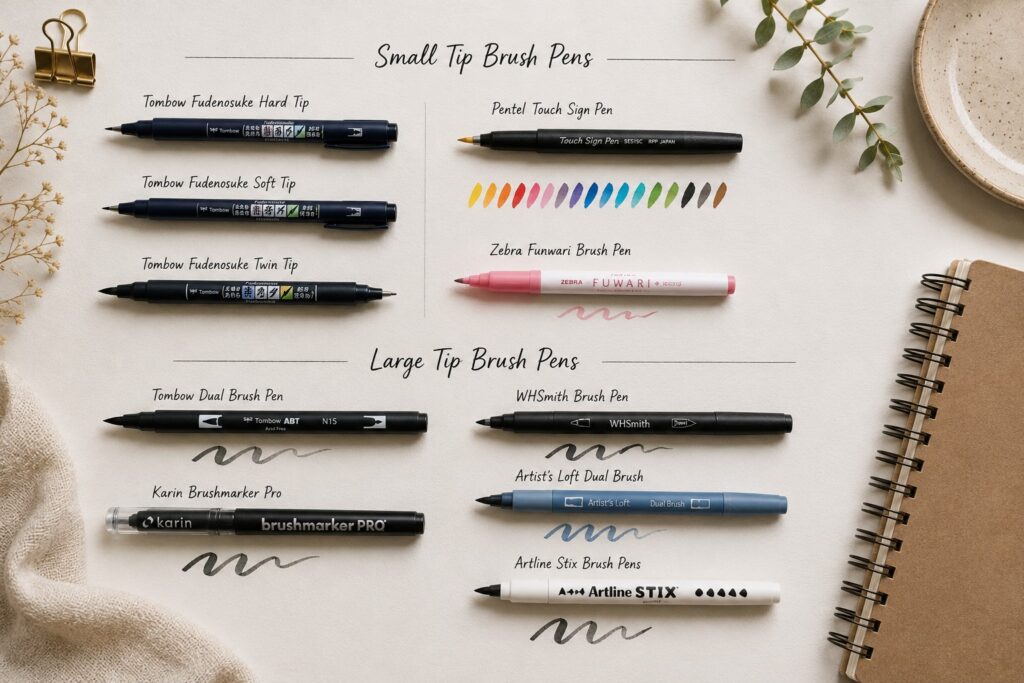
Types of brush pens
Here are my top 3 most recommended brush pens that any calligraphy beginner can use;
- My favorite and the most popular one is the small sized Tombow Fudenosule hard tip brush pen. They have small, firm tips which make it easy to control. They are readily available world wide, dries quickly, does not leave a lot of mess on your palms. Its ink is also waterproof.
- Zebra Funwari Fude brush pens: They are similar to Tombow, with felt tips. They are all water-based ink with reliable ink flow and a comfortable grip.
- When it comes to large brush pens, the Tombow dual brush pen does it all. It’s like a big sister to Tombow fudenosule. They have large tips and are high quality. Why I love them is because they come in varieties of colours.
- Other brush pens loved by some pro artists that you can try out includes; pentel aquash water brush, Stabilo Pens 68 brush pens, Sharpie brush pens and Crayola super tip markers.
Calligraphy pens and nibs
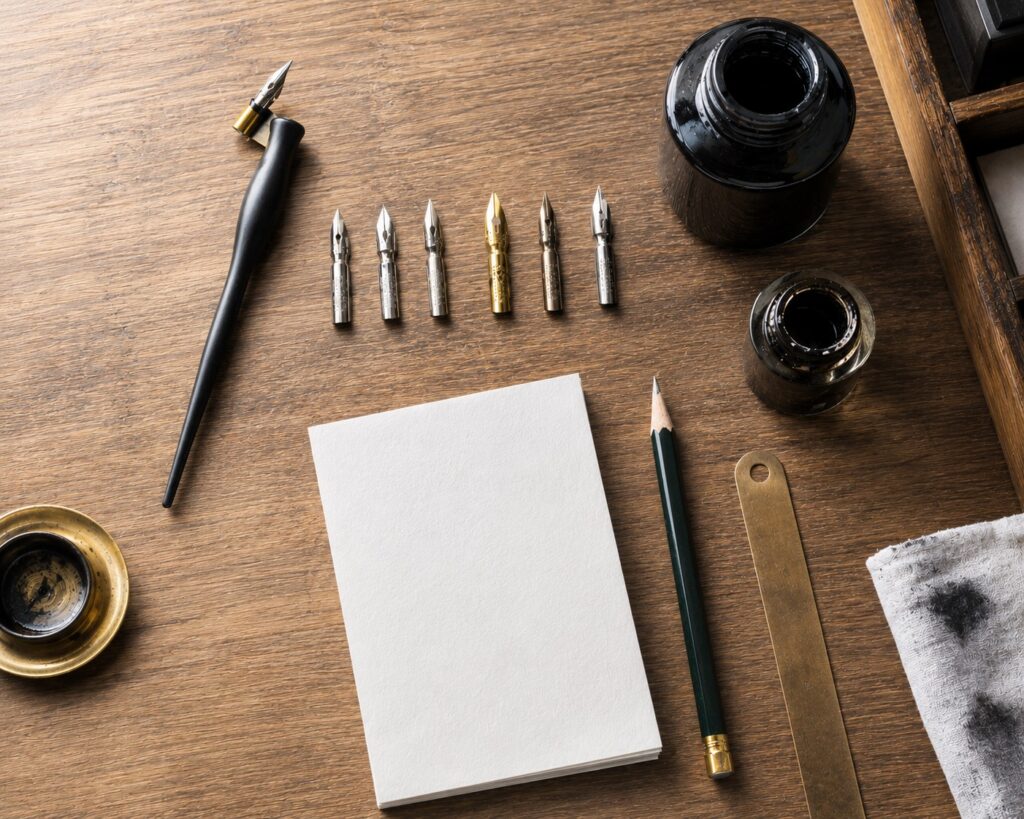
It is an ancient traditional calligraphy writing tool that was used for producing beautiful lettering like italics or copperplate and has also been used in recent times. It has metallic writing tips that are removable called Nibs. Nibs are used to produce the ink, a handle that holds the nib and dip pens that requires you to dip the pen into an ink bottle every few words.
Types of Calligraphy nibs and pen holders
There are two types of nibs; the pointed and the broad edge and here are some of the best you can choose from;
- Nikko G: This nib is stiff and its best for beginners. It won’t kind of bounce back when you’re using it. Doesn’t break or wrap under heavy pressure. It’s not too sharp, has a nice hairline and doesn’t require lots of re-dipping the pen because it holds a lot of ink.
- Bruce 361 Steno: It is affectionately called blue pumpkin because of its radiant blue body, so I thought, though. You can use it if you are looking for something that has a little bit more spring than a Nikko G but still stiff enough to handle.
- You can also try out broad edge nibs and the most popular ones are called tapes. They are good, super stiff and some even come in left-handed sizes for my lefty friends.
Pen holder
It is the staff that holds the nib and they come in two forms;
- Straight pen: Is just straight and the good thing about them is that, you can use it to hold both a broad edge nib and pointed nib.
- Oblique holder: It has a metal part that hangs by the side called flange which is used to hold only a pointed nib pen.

For a full breakdown of how to position and grip your pen holder correctly, check out this detailed guide on how to hold a calligraphy pen correctly.
Ink
The choice of material to use for your calligraphy project even as a beginner is very important and when it comes to ink all you need to look for are those that produce a smooth writing experience, bright colour, and lasting results. The different types of ink include;
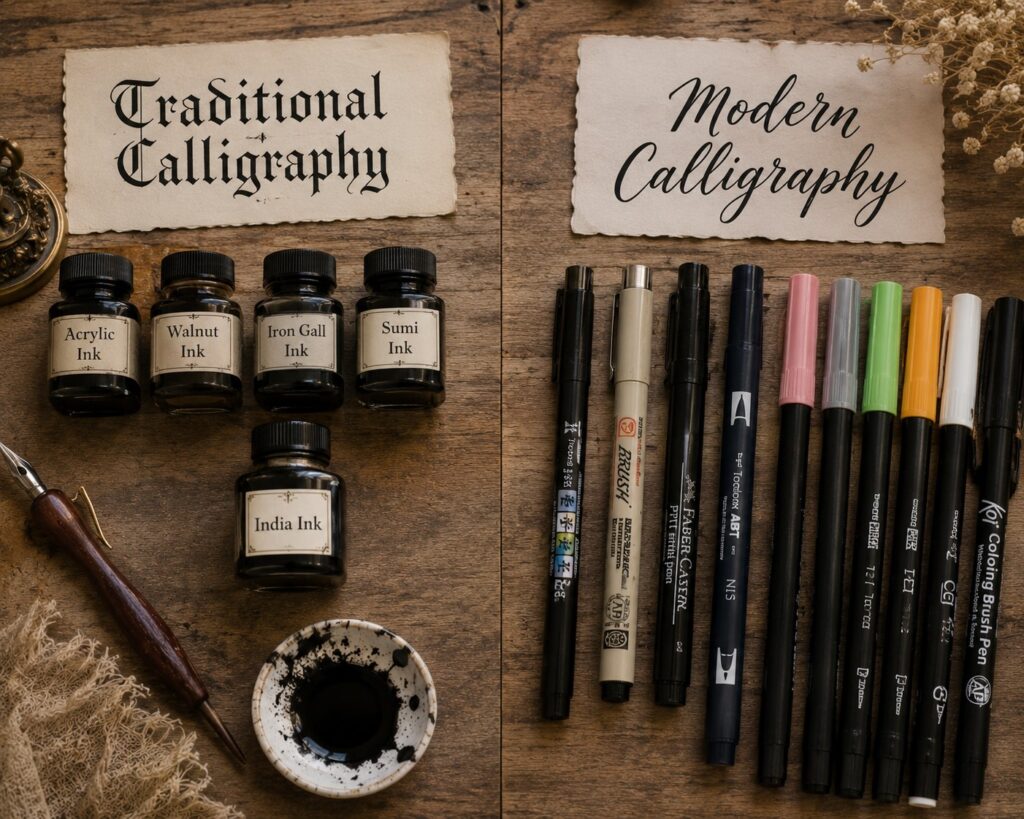
- India Ink: This is the oldest, dated far back 3000 BC and its commonly used ink for traditional calligraphy, made from carbon black (soot). Once it’s dry, it becomes waterproof and gives this matte finishing. It works very well with brushes and dip pens.
- Sumi Ink: It flows evenly on paper and is popular for their deep black colour and shiny finish, making them best for traditional calligraphic arts.
- Acrylic Ink: Pigment based and they are water resistant when dry. Comes in varieties of vibrant colours. I love it because of its strong colour that lasts long.
- Metallic ink: It’s somewhat expensive depending on the brand and it contains some tiny reflective metal-like particles that give a gold, silver or shimmering effect. They are mostly used when you want the lettering to stand out like on invitation cards, special greeting cards like birthdays, women’s day greetings etc.
- Iron gall ink: This ink feels light when you apply it on paper but darkens as air gently dries it. It has been used for centuries in manuscripts and official documents.
- Other great inks include the fountain pen ink, walnut ink and coloured calligraphy ink. All of these inks mentioned above are produced by different brands so you just try out and choose the brand you resonate with more.
Practice paper
When practicing calligraphy, the main things that should come to your mind in terms of paper selection are the smoothness of the paper and whether it has guidelines or its bleed-proof. This helps you ensure that you are consistent on the line without ruining your pen tips as you practice.
Pro tip: Avoid rough papers, photo paper, shiny, enamel and slick papers at all cost and choose smooth papers to get a clean stroke.
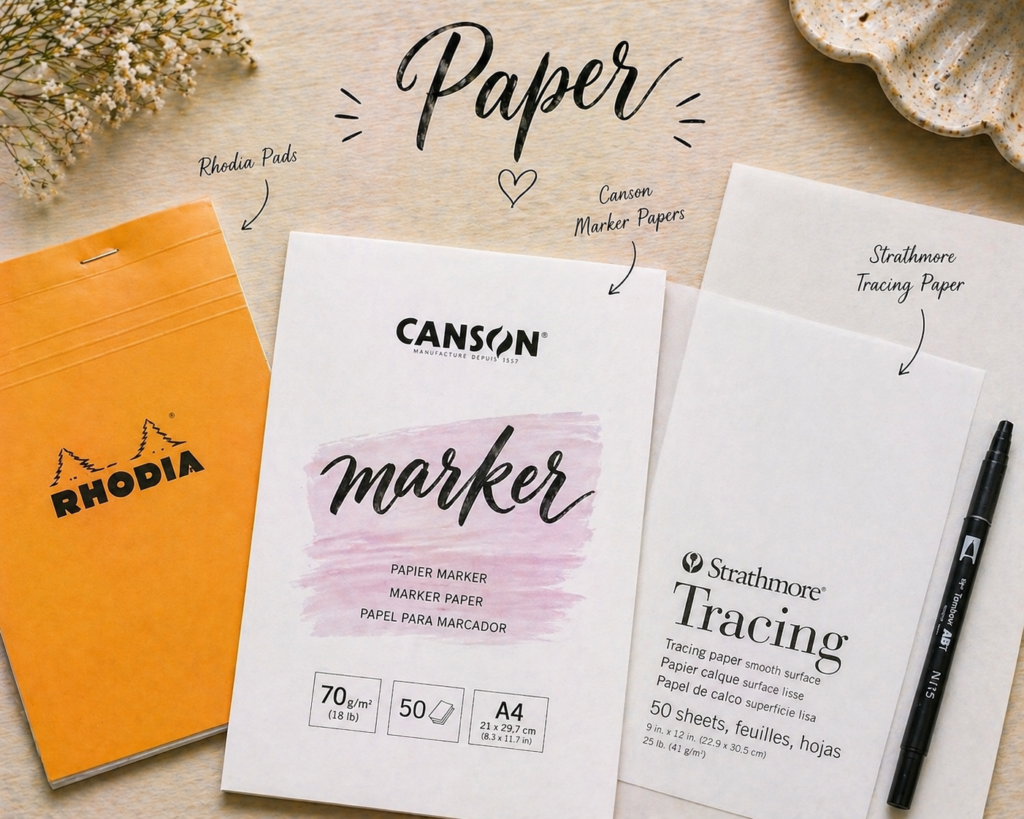
Here are the highly recommended calligraphy papers that are beginner-friendly;
- Rhodia Pads: It is the best practice paper that any beginner can use. I used it a lot when I started out and I am still using them now. It has a smooth surface and comes with guidelines built right in. Helps you keep your letter straight and does not bleed. You can put it on top of your worksheet to trace.
- Canson Marker Paper: It’s basically made for brush pens, it’s smooth and very budget friendly. It is transparent, so you can use it to practice or trace designs. All of my work books are mostly used with trace paper on the top.
- Trace paper: It is super thin, can be seen through for tracing but not as smooth and not that nice as marker papers. It’s very cost effective, you can use it to practice as a beginner.
- HP Premium 32lb Paper: This is safe for pointed pens; it absorbs ink very well and smooth for the nib of your pen to glide without tearing the paper.
Choosing the Right Calligraphy Style as a Beginner
- Modern calligraphy: Many people say they feel relaxed with modern calligraphy because they don’t have to follow any set of rules. All you do is create upward light strokes and downward heavy strokes that feels more personal and expressive. If you’re looking for something to boost your creativity, this is a great way to experiment. To understand how modern calligraphy compares to its roots, this breakdown of modern calligraphy vs traditional calligraphy will give you a clearer picture of both worlds.
- Brush lettering: Just like a paint brush but here, it is a pen brush with a flexible tip to learn the tricks of applying pressure to write properly. A brush calligraphy beginner tutorial is a great place to start if this style speaks to you.
- Faux calligraphy: If you don’t have calligraphy tools or just trying to test water, you can use the regular pencil that children use to write in school, yes that nursery 1 pencil. Faux calligraphy is using any writing tool to mimic traditional calligraphy, and this faux calligraphy tutorial for absolute beginners will walk you through it step by step.
- Traditional calligraphy: This is the oldest form that has been practiced for centuries and its mostly pro artist that uses it. You need a dip pen, nib and ink to create that precise and structured lettering that everybody admires.
This requires time to practice and master, that’s why I usually recommend faux or modern calligraphy to beginners, so that the passion keeps burning till you are confident enough to scale to traditional calligraphy.
How to start practicing
If you are just starting out as a complete beginner at calligraphy, I recommend you do these exercises.
Just grab a smooth paper. I always emphasize the smoothness of the paper because it’s very important. Then grab your pen, whether a pen brush or nib pen.
Start with writing wavy lines, making heavy pressure on the downstroke and light pressure on the upward stroke. Ensure your downstroke looks thicker while the upstrokes look thin or light. To go deeper into this, check out this full post on calligraphy basics: understanding upstrokes and downstrokes; it breaks down exactly how pressure works for each stroke direction.
Hold the pen in such a way that the tip is diagonal not perpendicular to the paper to have more control. Doing this exercise will help you know the proper grip you should be using whether you are right-handed or left-handed.
Once you’re comfortable with basic strokes, the natural next step is to work through calligraphy basics: strokes every beginner must learn. These are the building blocks of every letter you’ll ever write. From there, incorporating calligraphy drills every beginner should practice into your routine will train your hand to produce cleaner, more consistent results with every session. Pairing your drills with beginner calligraphy exercises to improve control will further sharpen your pressure control and stroke consistency.
Final Thoughts
To avoid falling into bad habits early, reading up on beginner mistakes in calligraphy and how to fix them and how to avoid common beginner calligraphy mistakes will keep your progress clean and frustration-free. Staying consistent is easier with a plan, so a structured 30-day calligraphy practice plan will keep you on track every single day. And whenever you feel like your progress has slowed, tips on how to improve calligraphy fast will help you break through plateaus quickly. If you’re doing all of this from home, how to learn calligraphy at home gives you a complete self-teaching roadmap. And how long it takes to learn calligraphy will help you set realistic expectations so you stay motivated for the long haul.
The thought of starting calligraphy might be a little bit overwhelming but it’s not difficult when practiced consistently with passion. Now that you’ve learned the basics, go grab a smooth paper and a pen brush or pencil and start. If you want to learn how to hold a calligraphy pen correctly, click here to see.