Modern Calligraphy vs Traditional Calligraphy (Explained)
Disclosure: Some of the links in this post are affiliate links. This means if you click on the link and purchase an item, I will receive an affiliate commission at no extra cost to you.
Calligraphy comes from two Greek words: kallos, meaning “beauty,” and graphein, meaning “to write.” Together, they give us the art of “beautiful writing.” This makes calligraphy far more than just putting words on paper; it is a visual art form that blends creativity, skill, and cultural heritage.
If you’re new to calligraphy, you’ve probably been hearing about these two terms: modern calligraphy and traditional calligraphy. They both look elegant with flowing strokes and are written expressively, and this may sometimes confuse beginners. But once you look a little closer, you’ll notice that they follow completely different approaches.
In this guide, I’ll break down modern calligraphy vs traditional calligraphy in a clear and beginner-friendly way. You’ll learn how the two styles differ in terms of rules, tools, techniques, and learning. By the end, you’ll have a better understanding of which style suits your interests and how both forms can help you develop beautiful lettering skills. Put on your seat belt; let’s take a ride and explore the beautiful world of calligraphy.

What Is Traditional Calligraphy?
Traditional calligraphy is an ancient form of writing that follows a strict set of rules, structures, consistent spacing and precise angles to form beautiful letters.
History of Traditional Calligraphy
The Chinese Scrolls
Calligraphy is widely believed to have originated independently in different cultures. In ancient China, it is one of the oldest forms of writing; one that has survived through centuries, dating back nearly 3,000 years. The Oracle Bone Script (jiaguwen), as the name implies, was carved onto turtle shells and animal bones during the reign of the Shang dynasty.
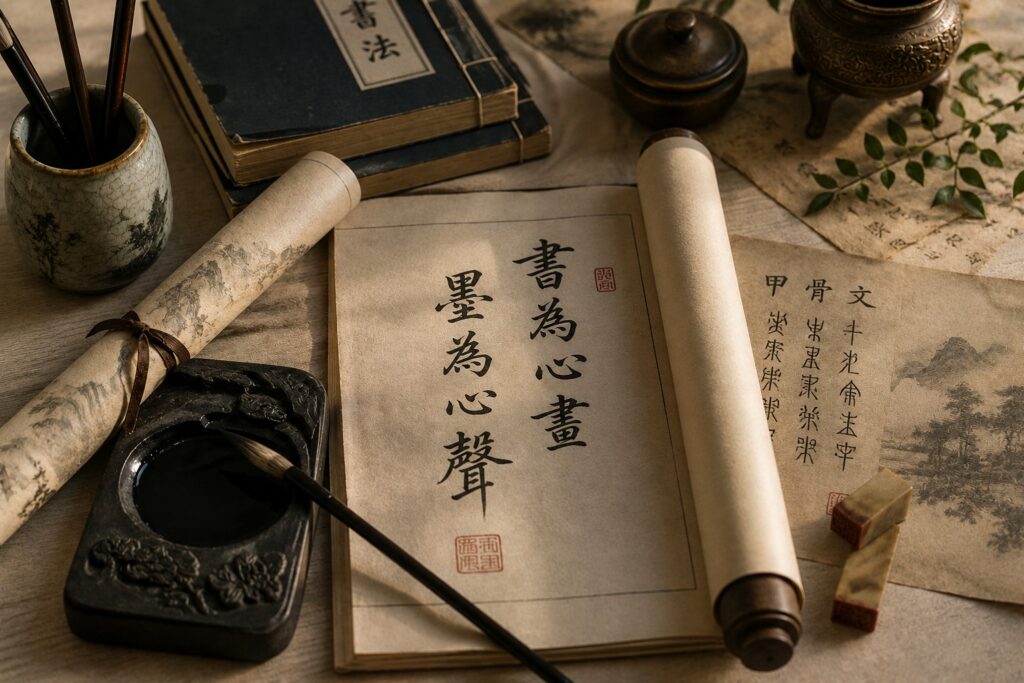
Over time, Chinese scrolls evolved into Bronze Inscriptions (Jinwen); characters engraved on musical instruments, bronze ritual vessels, and weapons. Between 200 BCE and 220 CE, the small seal and clerical scripts emerged alongside the brush, ink, and paper we now use as the foundational tools of present-day calligraphy.
Seal, regular, clerical, running, and cursive scripts eventually became the primary styles developed over time. Japan and Korea later adopted these Chinese writing traditions; specifically the brush and ink style of calligraphy.
Ancient Egypt
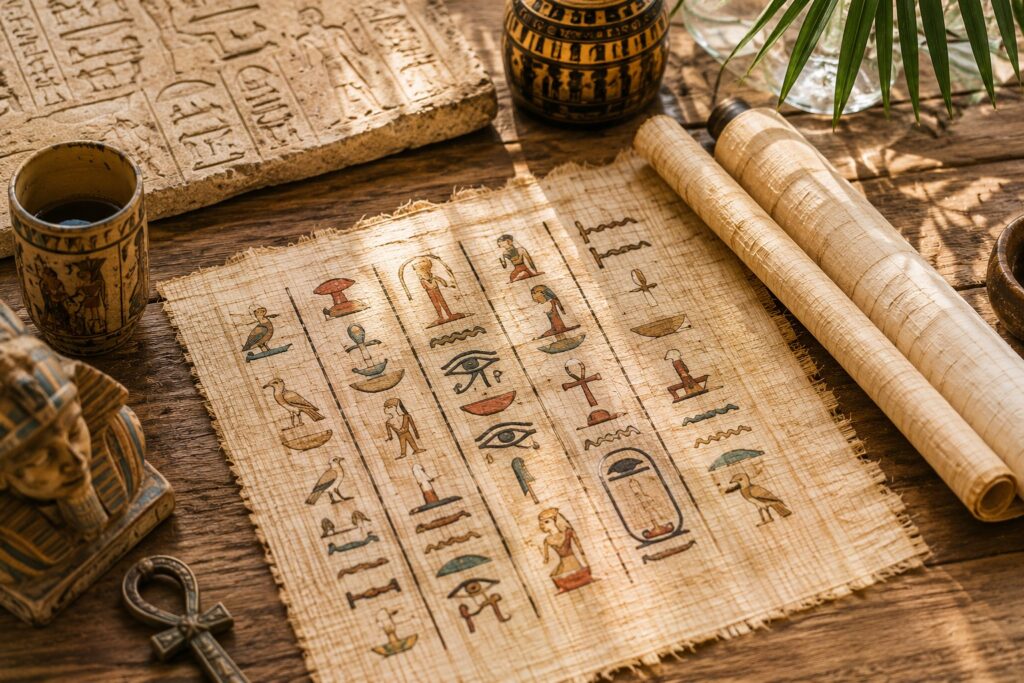
In Ancient Egypt, it was called hieroglyphs on papyrus. Papyrus is a paper-like material made from plants; so we can confidently trace the history of modern paper back to Egypt, how about that? Hieroglyphs were carved on stones, tombs, and temple walls using characters in the form of pictographs.
Islamic Calligraphy
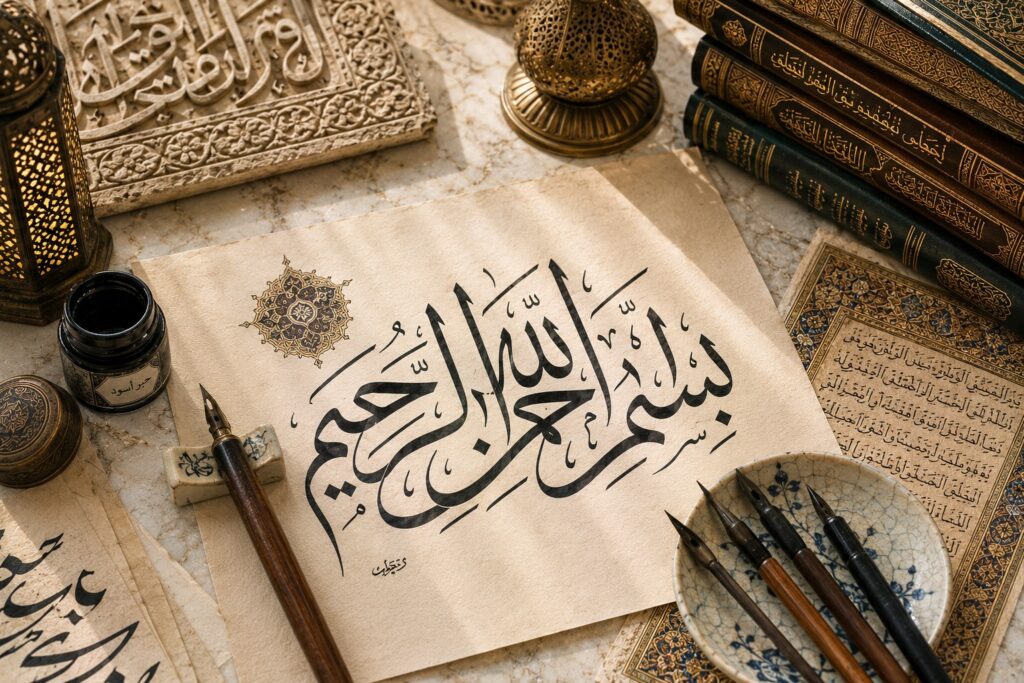
The Arabs developed a deeply respected art form out of necessity. Since the Islamic religion forbids portraying living creatures in artwork, calligraphy became one of the main creative outlets during the 7th century. Artists used it to decorate manuscripts, architecture, and religious texts in expressive and elaborate ways.
Medieval Europe
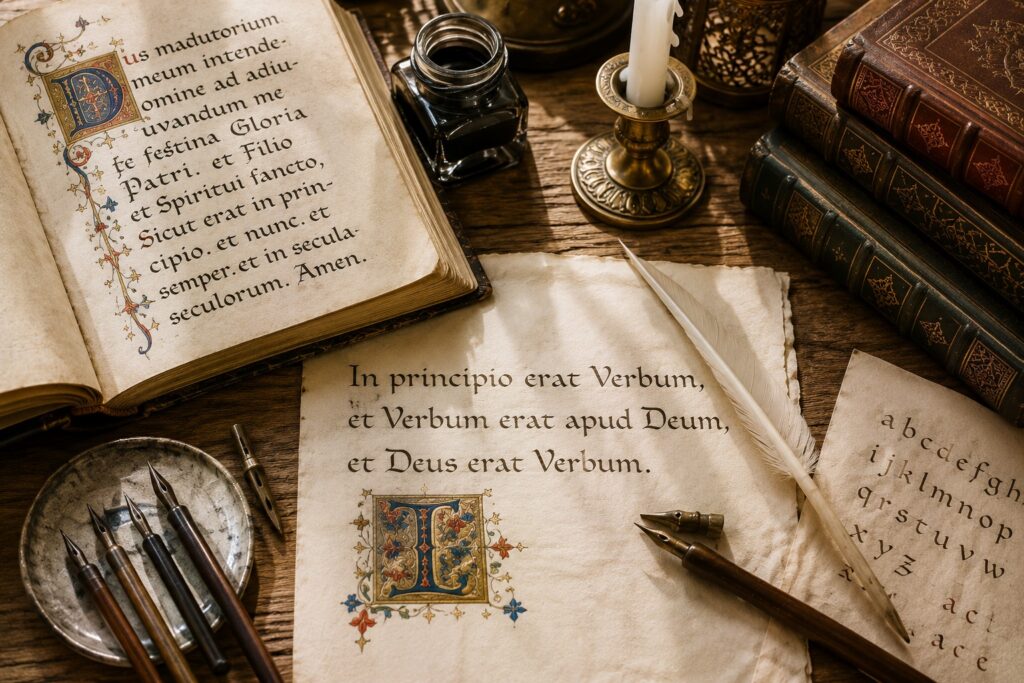
After the fall of the Roman Empire, monasteries kept calligraphic traditions alive. Monks used the uncial and half-uncial scripts to copy religious manuscripts. Later, the Carolingian minuscule was introduced, and this laid the foundation for modern Latin writing styles.
Famous Traditional Calligraphy Scripts
There are three most famous traditional scripts currently in use: Copperplate, Gothic, and Spencerian.
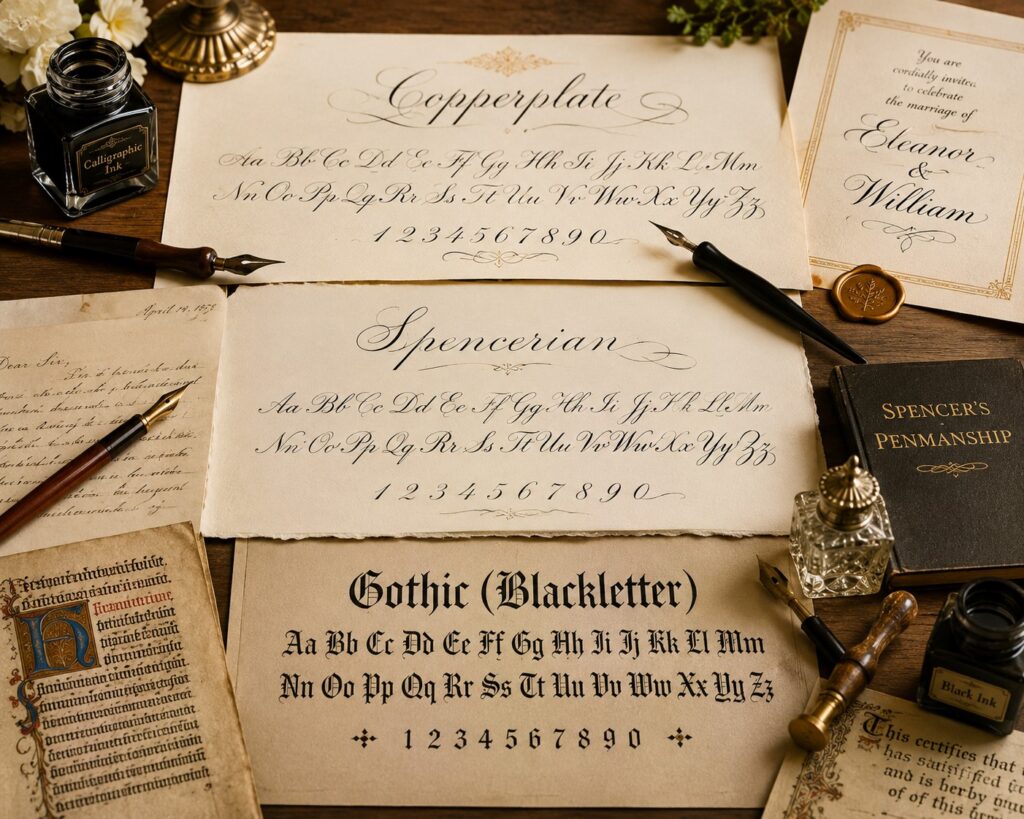
Copperplate is an elegant, flowing script written with fine hairlines and thick downstrokes. You’ll commonly find it on wedding invitations and stationery, certificates, formal event programs, high-end product packaging, and personal letters. If you’re just starting out, the Calligraphy for Beginners: Complete Starter Guide is a great place to explore these formal scripts more deeply.
Spencerian is a graceful looped script traditionally used in business correspondence; think ledgers and letters; as well as invitations, formal announcements, personal journals, and decorative art projects that require ornamental text.
Gothic, also known as Blackletter, is written in angular, dense strokes with dramatically strong vertical lines. It appears in medieval manuscripts and religious texts, traditional or ceremonial certificates and awards, historical legal documents, and signage.
Why Traditional Calligraphy Follows Strict Lettering Rules
1. Consistency and legibility
Guides like Calligraphy Drills Every Beginner Should Practice and 55-degree slant lettering were made for consistency. Creativity wasn’t the priority then; it’s now, especially in modern calligraphy. This is why schools were set up to train 18th-century penmen to write in business-style calligraphy. Business cursive, as you may know, falls squarely under the Spencerian umbrella. If you want to avoid common beginner calligraphy mistakes, understanding these foundational rules first is a big help.
2. Aesthetic Harmony
The rules about spacing, stroke thickness, and proportion ensured a smooth flow and consistent line weight. They prevented crowded or uneven text, making each piece both readable and visually appealing.
3. Tradition and standardization
Calligraphy was mostly used in religious texts, manuscripts, and official documents. If scribes or Qur’anic calligraphers had been free to write however they pleased, the result would have been chaotic and confusing for readers and worshippers alike.
4. Formal and ceremonial purpose
Official documents needed to signal authority and credibility. Following strict rules gave the writing a sense of importance and legitimacy that freeform lettering simply couldn’t provide.
What Is Modern Calligraphy?
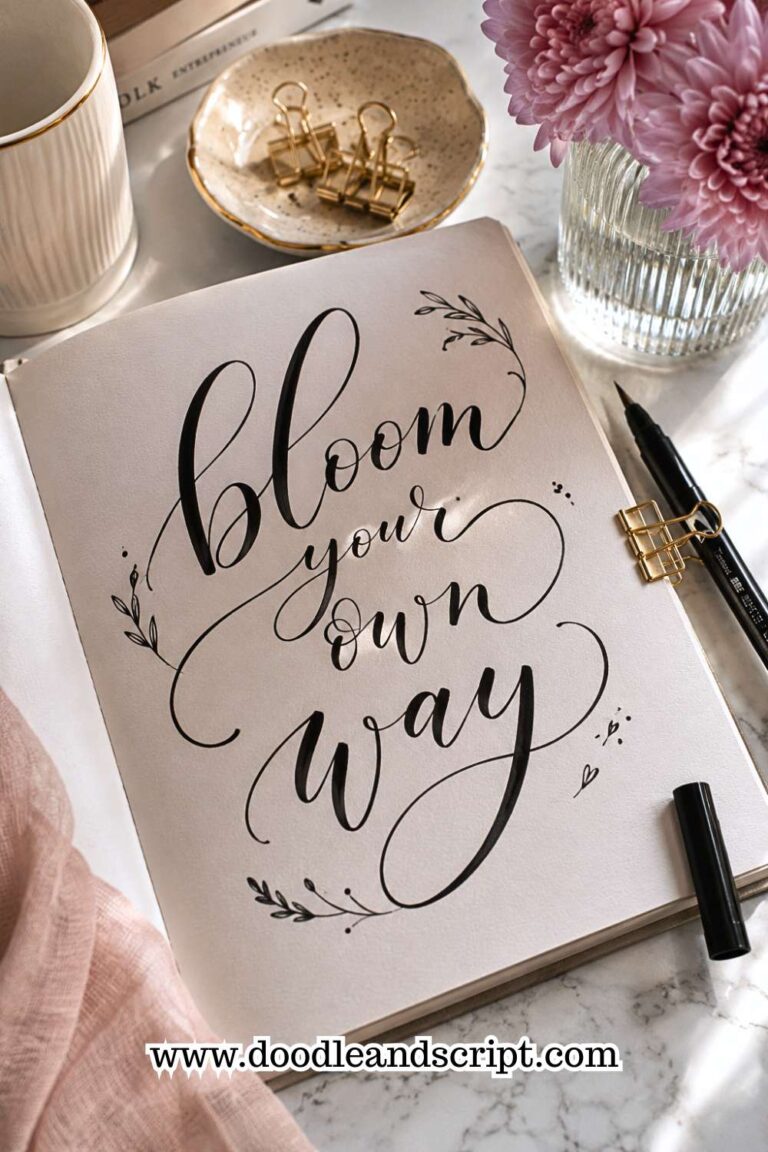
In simple terms, modern calligraphy is beautiful writing done without following strict rules. It’s all about allowing your creativity to flow freely; but with focus and intentionality. While it relieves me of stress, my feelings are expressed through my upstrokes and downstrokes, enhancing my creativity. I love it so much.
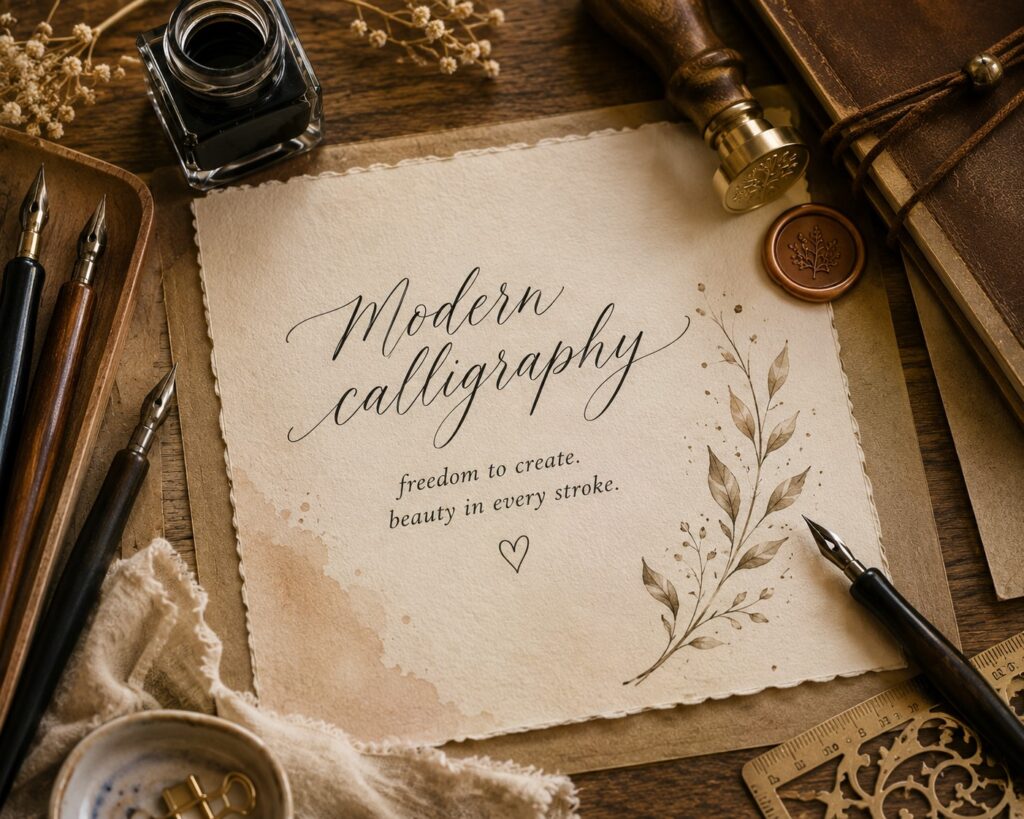
Although the lettering must still be balanced, the way I choose to write my own letter “a” may be entirely different from the way you write yours. They don’t have to be strictly identical. That’s modern calligraphy for you; it gives freedom of personality.
How Modern Calligraphy Evolved from Traditional Scripts
Modern calligraphy didn’t appear out of thin air. It slowly grew out of traditional calligraphy over time.
Back then, calligraphy wasn’t just art; it was a profession. Just like medical doctors, lawyers, or accountants, scribes used it to write religious texts, official documents, and manuscripts. There wasn’t much room for personal expression. Years of training were required to make lettering neat, readable, and consistent.
Then the printing press changed everything. Books and documents no longer needed to be handwritten, and the typewriter took over.
When it seemed as though calligraphy was fading out, Edward Johnston; known as the father of modern calligraphy; stepped forward in the 20th century and single-handedly revived it. He developed a deep interest in medieval manuscripts and scribal arts. Johnston re-introduced the broad-edged pen and a new writing style called the Foundational Hand. The clean sans-serif typeface you see on the London Underground today is his. He encouraged people to study historical scripts and taught handwritten lettering in schools.
This period bridged the gap between old-school calligraphy and modern creativity.
The “Rule-Breaking” Era
This is where modern calligraphy truly began; when artists started asking, “What if letters don’t have to look perfect, yet still look stylish?” They started writing letters that were more relaxed, bouncier, and infused with personality. Perfection was no longer the goal. Expression was.
That’s why no two modern calligraphy pieces look exactly the same.
New Tools Made It Easier for Everyone:
Traditional calligraphy tools (like dip pens and ink) required practice and patience.
Today, there are brush pens, markers, and digital stylus pens. Calligraphy has even gone digital with apps like Procreate, allowing artists to create beautiful lettering without ink or paper. Learning how to use brush pens properly is a great starting point for beginners in the modern style.
This opened the door for beginners, content creators, and even turned people like me into small business owners. Anyone can learn calligraphy at home now; something that simply wasn’t possible years ago. And if you’re wondering where to even begin, check out how to start calligraphy for a clear path forward.
Then social media took it global:
Platforms like Instagram and TikTok played a huge role in shaping modern calligraphy.
You can share your work or discover other artists’ lettering instantly. Trends spread quickly. Beginners learn faster through short video tutorials; like this faux calligraphy tutorial for absolute beginners; than they ever could from textbooks alone.
Calligraphy is no longer hidden in books or practiced only by a certain lineage of scribes. It’s now part of everyday visual content, and anyone can make it a hobby.
Key Differences Between Modern and Traditional Calligraphy
Traditional calligraphy taught me discipline. You need to see how seriously I took following the rules and standards to write Copperplate and Spencerian correctly. But then modern calligraphy allowed me to enjoy the fun of it all.
1. Structure and rules

Traditional calligraphy is all about rules; a lot of them. Every letter must follow a specific shape, angle, and spacing, like you’re dancing ballet. To start building that structure correctly, learning how to hold a calligraphy pen correctly is essential.
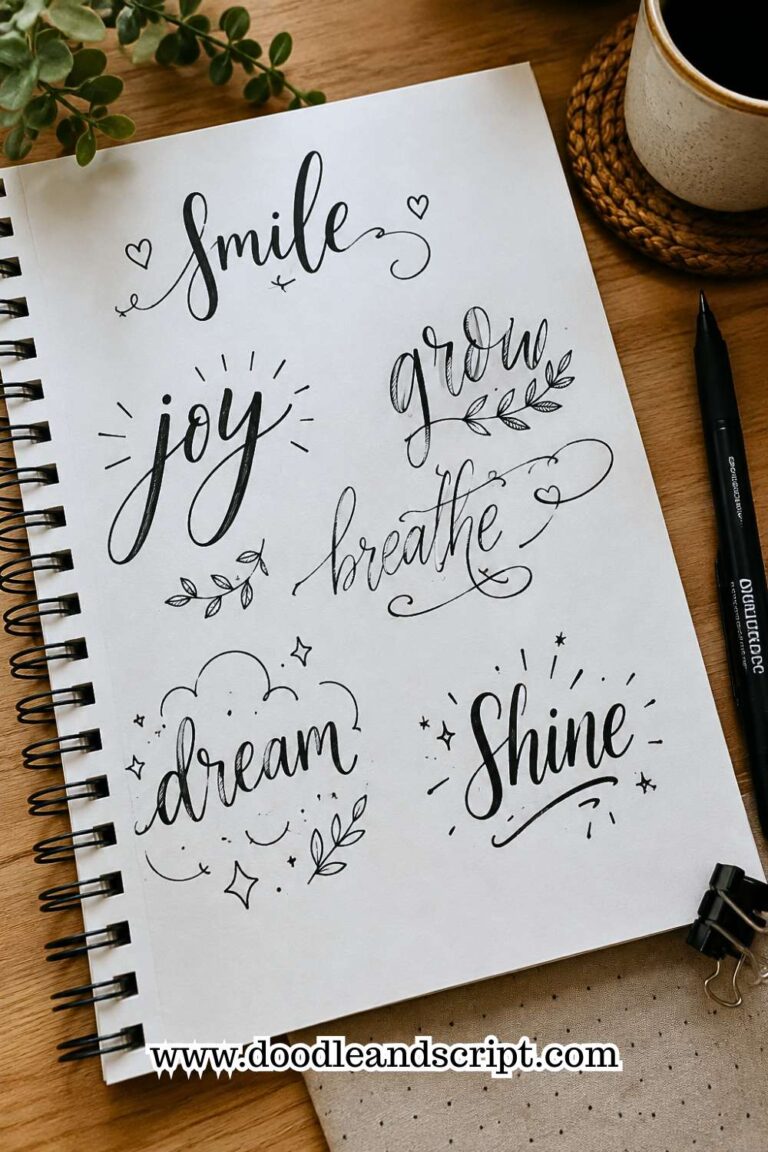
Modern calligraphy is more like freestyle. You still use the same basic upstrokes and downstrokes, but you’re not boxed in. You can bend the rules, stretch letters however you like, or break them entirely if it looks good. The goal is to bring out your creativity while keeping it visually appealing.
2. Artistic freedom and flexibility
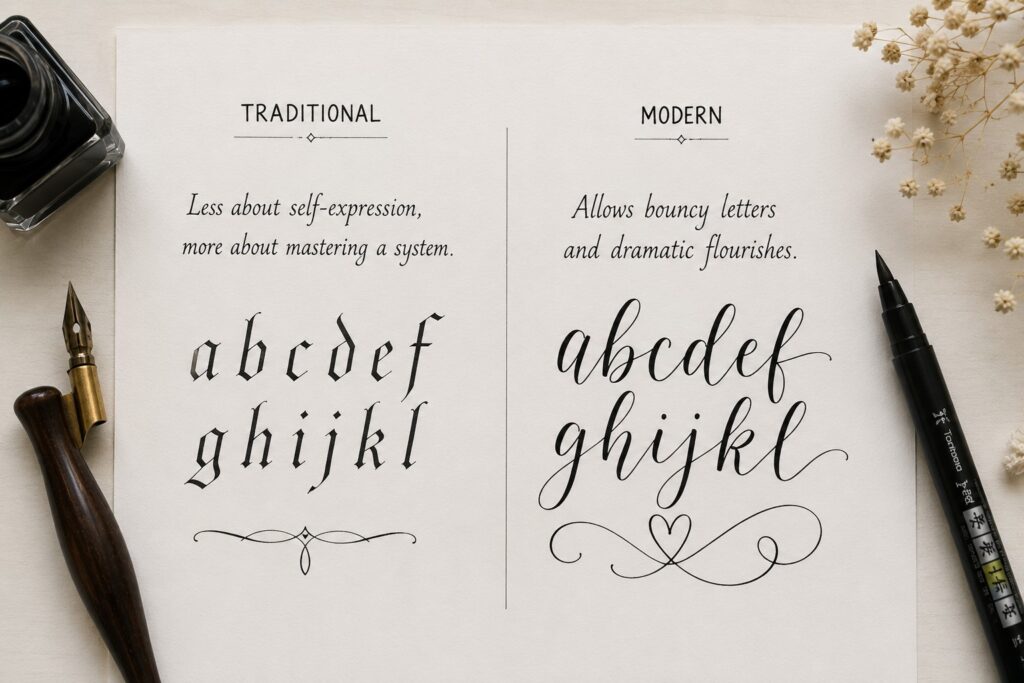
Traditional calligraphy is less about self-expression and more about mastering a system. Modern calligraphy, on the other hand, allows bouncy letters and dramatic flourishes. That’s one reason beginners; even children; find it approachable. To build the control that makes those flourishes look intentional, try some beginner calligraphy exercises to improve control.
3. Letter consistency
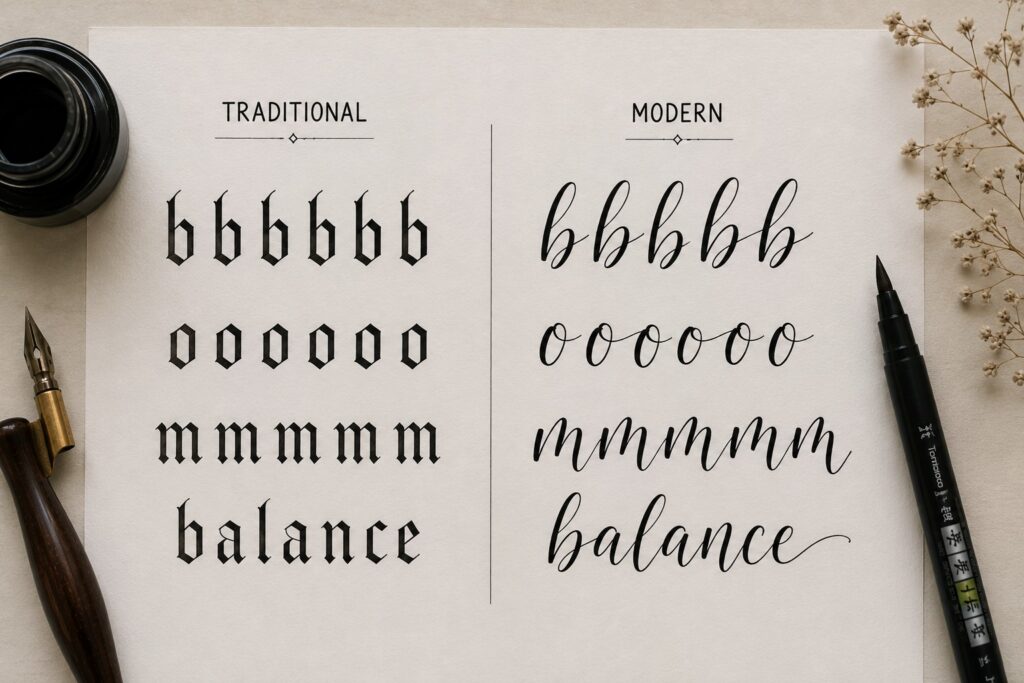
In traditional scripts, every letter must be super consistent. My letter “b” and yours must look not just similar; but identical. That consistency is what gives traditional calligraphy its polished, timeless quality. If you want to master this skill, check out how to create consistent calligraphy letters.
With modern calligraphy, you don’t need to stress about whether every letter looks the same. They can vary in size, shape, and spacing; even within the same word. This is what lets your personality shine through. Less perfection, more creativity.
4. Stroke style and rhythm
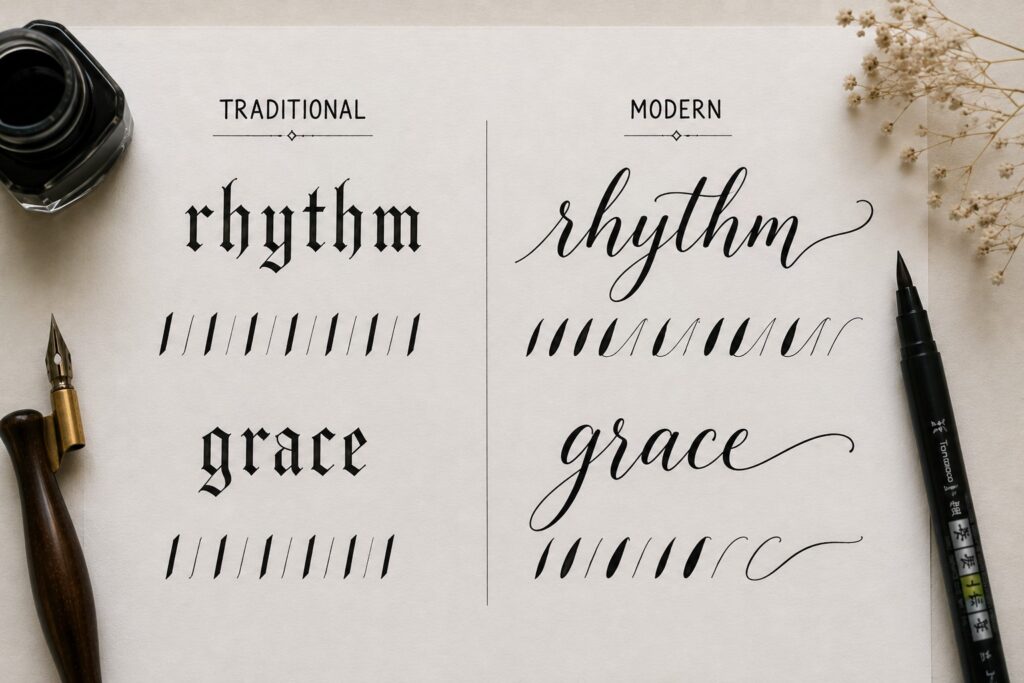
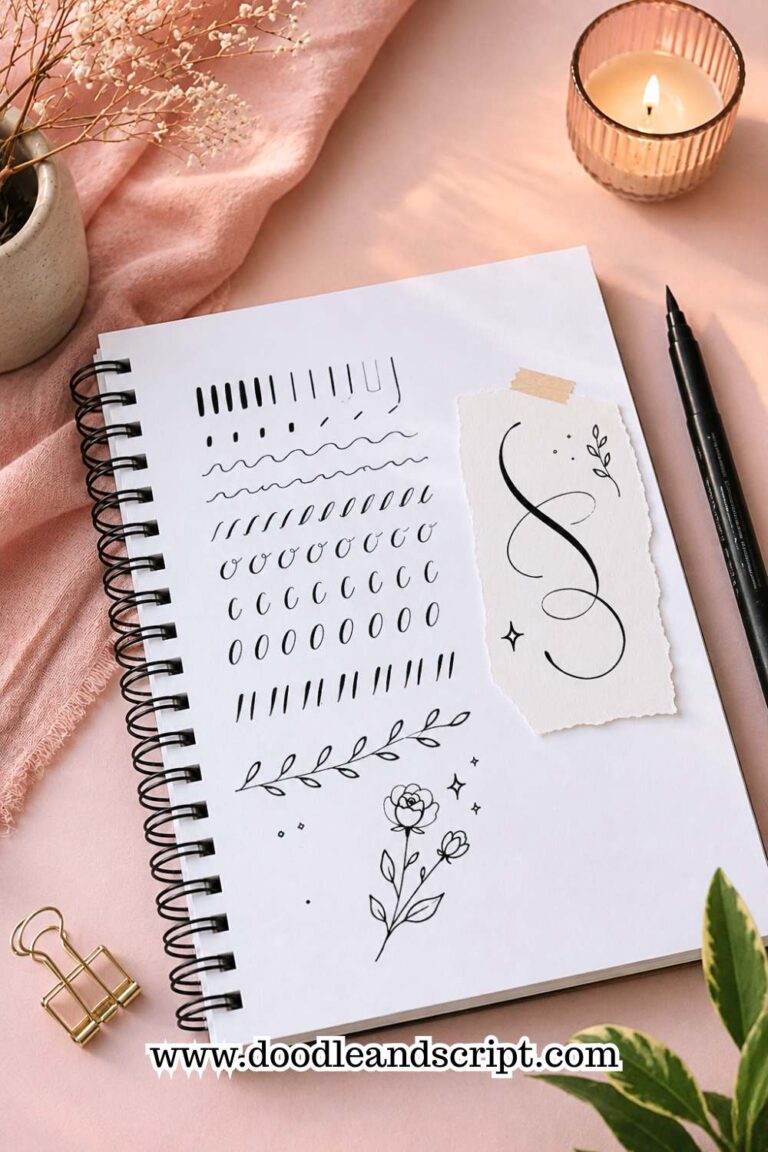
In traditional calligraphy, the rhythm is predictable and steady. Each thick and thin stroke follows strict patterns and controlled flow. Mastering this starts with understanding calligraphy basics: strokes every beginner must learn.
Modern strokes can be exaggerated, soft, bold, or anywhere in between. It feels like listening to music; sometimes slow and elegant, sometimes energetic and dramatic; except you can see it on paper.
5. Overall visual appearance
If you’ve seen historical manuscripts or classic wedding invitations, you already know the traditional calligraphy vibe: clean, elegant, and formal.
Modern calligraphy feels trendy and relaxed. It shows up on cute packaging, brand logos, Pinterest boards, and Instagram feeds. It’s flashy, eye-catching, and immediately recognizable.
Tools Used in Traditional Calligraphy Vs Modern calligraphy
Pens

Traditional calligraphy uses dip pens and nibs; a pen holder with a metal nib that you dip into ink repeatedly. It tested my patience at first. Once you get used to it, though, it becomes second nature.
Modern calligraphy tools are far more beginner-friendly. Brush pens, markers, and digital stylus pens are all fair game. My personal go-to is the Tombow brush pen. If you’re just getting started, learning how to use brush pens properly will save you a lot of frustration.
Inks
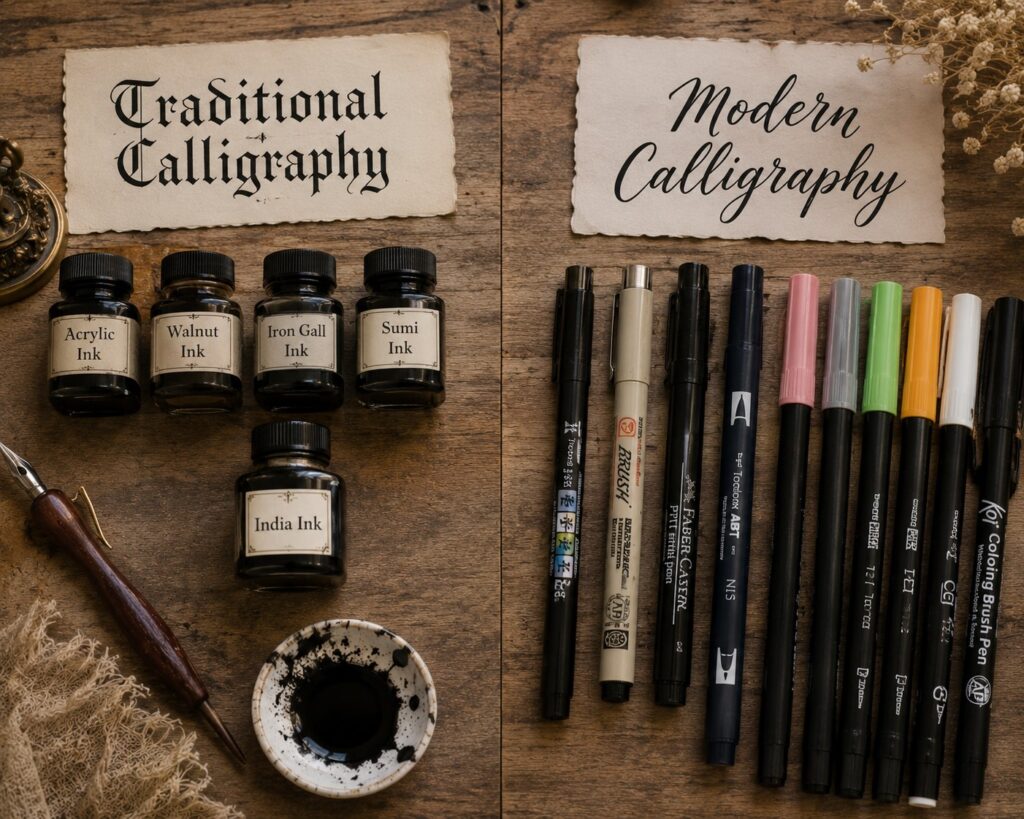
Traditional inks are rich and deep, but thickness matters; too thick or too watery and your letters will suffer. Some inks worth trying: acrylic ink, walnut ink, iron gall ink, and sumi ink. My favorite is India ink; it’s very beginner-friendly.
With modern calligraphy, you don’t need a separate ink jar at all. Just pick up your brush pen and start writing; no drips, no mess on the table.
Paper
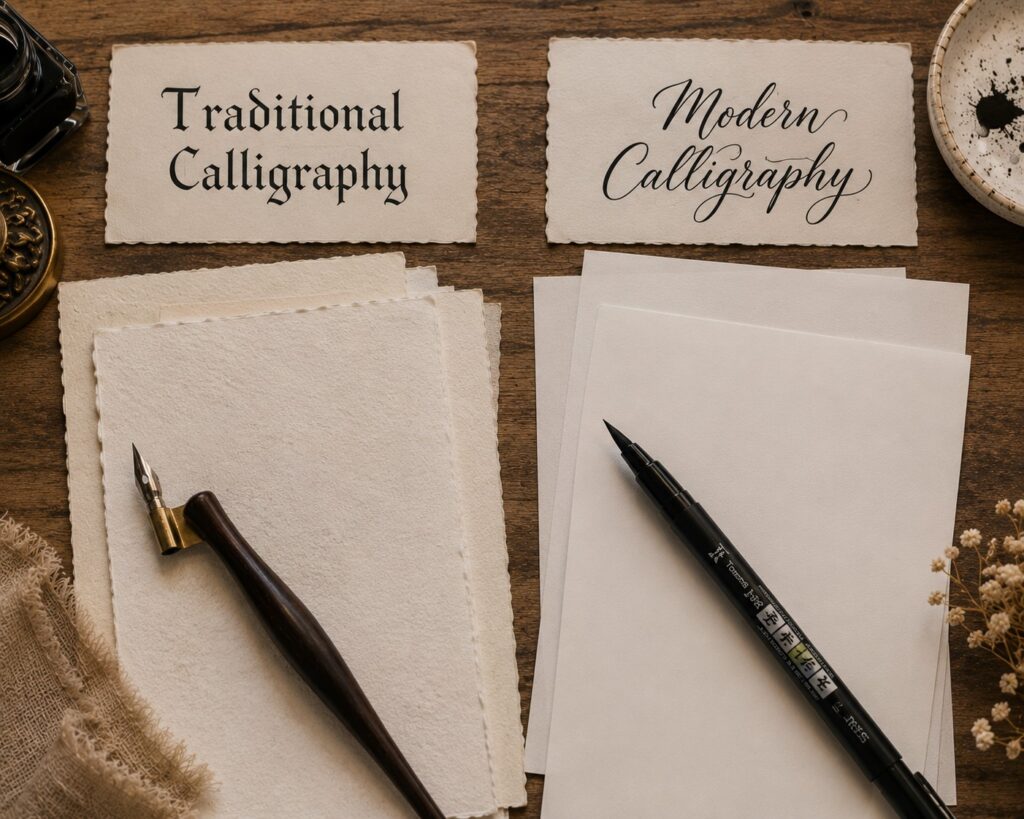
Using a pointed nib pen on regular A4 paper is something I regret trying. Rough paper will snag your nib, and ink will bleed. Always use smooth, high-quality paper; whether you’re doing traditional or modern calligraphy.
Digital tools
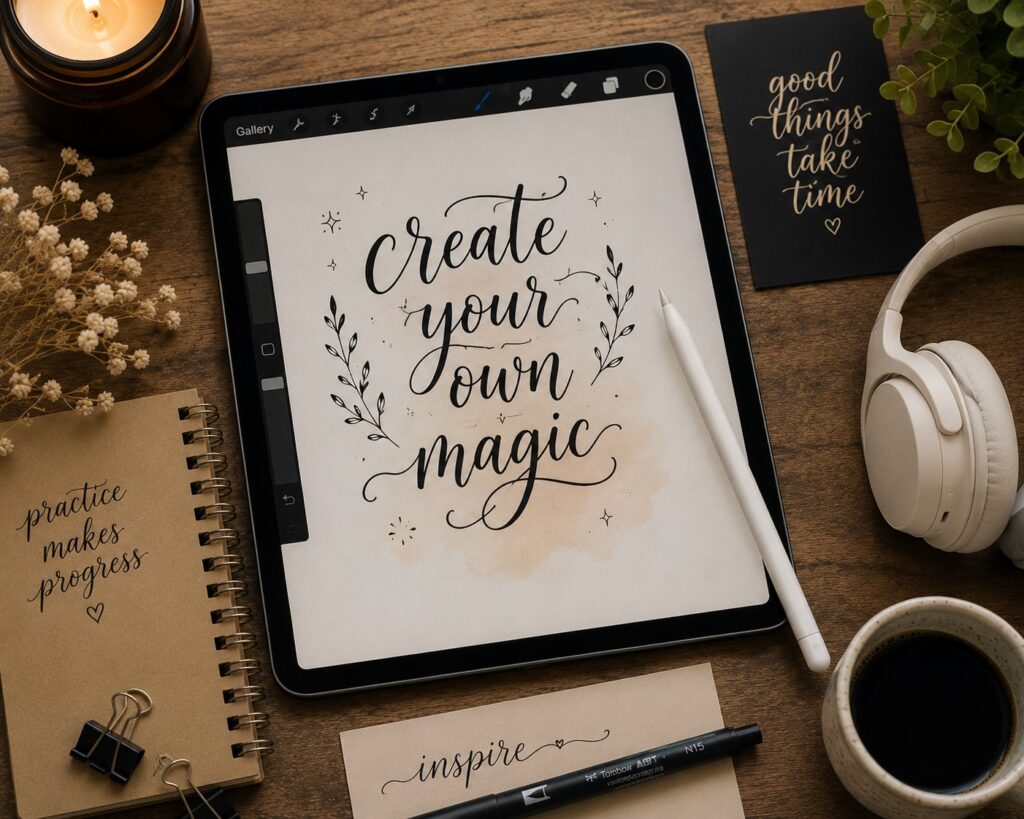
Tablets and apps have completely changed the game. You can undo mistakes instantly, experiment with endless styles, and turn your lettering into designs, logos, or even a business; all without wasting paper.
Can You Learn Both Styles?
Most beginners wonder whether learning both is a good idea. The answer is yes; absolutely.
Traditional calligraphy will teach you control, patience, and proper stroke mechanics. Learning feels strict at first, but once your hand understands pressure, spacing, and consistency, everything else clicks. It pairs well with studying calligraphy basics: strokes every beginner must learn.
Factors to Consider when Choosing Between the Two Styles
If you enjoy structure and precision, traditional calligraphy might feel right for you. If you love freedom and self-expression, modern calligraphy is your lane. Your purpose; whether designing for events, branding, or pure enjoyment; can also influence your choice.
I practice both, because I design for work, fun, events, and branding alike. If you want to improve your calligraphy fast, starting with one and gradually incorporating the other is a solid strategy.
Wondering how long it will realistically take to develop skill? Check out how long it takes to learn calligraphy for an honest breakdown. And once you’re ready to build a real routine, the 30-day daily practice plan is a great way to stay consistent.
If you hit roadblocks along the way, don’t panic; many others have too. The guide on beginner mistakes in calligraphy and how to fix them covers the most common issues and exactly what to do about them.
Final Thoughts
Out of all the things that have faded over centuries up to the modern civilization era, calligraphy has stood its ground, by maintaining its popularity over time because of how meditative it is; that deliberate slow-paced movement of creating letters can reduce anxiety, stress and can make one’s brain feel relaxed and calm. Apart from its cultural significance, calligraphy has evolved constantly as modern calligraphers have now combined traditional techniques with contemporary styles, ensuring that its relevance is still intact in today’s art world.
Traditional calligraphy has its roots far back ancient civilizations, 3000 to 3500 BCE. Right from the period of the Roman Empire that carved it on stone called the Capitalis Monumentalis, in Ancient Egypt, it was called Hieroglyphics, Medieval Europe used styles like Carolingian and Gothic. While modern calligraphy took inspiration from this foundation and added a touch of creativity, flexibility and personal style.
You may not be able to figure out everything at the go, just take it one step at a time and it will click.