
How to Use Brush Pens Properly
Disclosure: Some of the links in this post are affiliate links. This means if you click on the link and purchase an item, I will receive an affiliate commission at no extra cost to you.
The day I tried out brush pens for the first time was a mess. I had just bought a new set of brush pens from Amazon; I won’t mention the brand though. I was so excited; I wanted to add modern calligraphy skills to my lettering skill set.
Unlike myself, I skipped my usual warm-up and went straight into a big, important piece I wanted to post online. In my head, it was going to look clean, just like my traditional calligraphy, so I thought.
But the moment I started, something went wrong. My downstrokes were way too heavy, the upstrokes weren’t light enough, and instead of that nice contrast, everything just looked funny. Then the ink started pooling at the ends of my letters, creating those annoying dark blobs that ruin the whole look.
And the worst part? Halfway through, I noticed the tip of my brush pen had frayed. I started asking myself where I went wrong, and that’s when it clicked: I had been pressing too hard on almost every stroke without even noticing. Brush pens, I realized, require a completely different technique to really get the best out of them.
If you’ve ever had a similar experience of frayed brush pen tips, uneven strokes, or encountered bleeding when using brush pens, you are not alone. These are actually some of the most common beginner mistakes in calligraphy and how to fix them that most new learners go through before they finally figure out what they were doing wrong.
So, let’s slow it down and start from the beginning.

What are brush pens?
They are basically markers with flexible, brush-like tips. Unlike normal regular markers, the way brush pens respond to pressure is what makes them special. When you press lightly, you get thin, delicate lines. And when you press harder, you get bold, thick strokes. This contrast gives modern calligraphy its signature elegant look, and everything clicks the moment you understand how to control it.
If you’ve been wondering about the difference between modern calligraphy vs traditional calligraphy, brush pens are actually one of the key tools that separate the two styles. Learning it the hard way after ruining my new pen, so how you use your brush pens really matters.
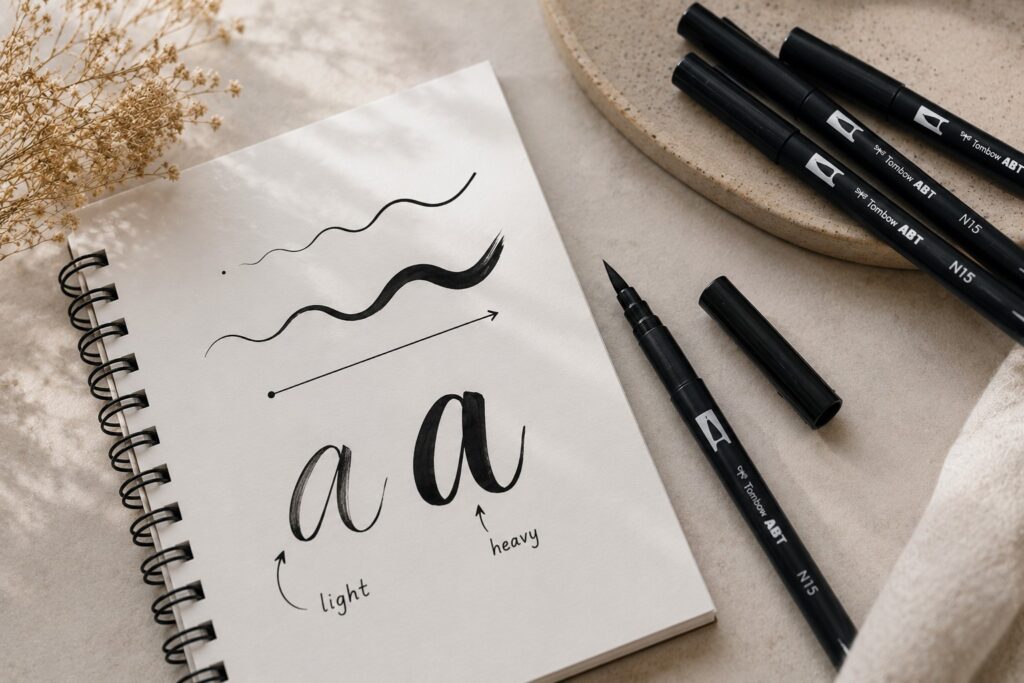
Brush pens aren’t only used for calligraphy, you can use them for so many creative things, from hand lettering to bullet journaling, doodling, and even simple illustrations. They are widely used in the creative world too.
In this guide, I’m going to walk you through practical and easy-to-follow tips that will help you use your brush pens the right way and simple troubleshooting techniques to make your pens last longer.
How to Use Brush Pens Properly
1. Choosing and Preparing Your Brush Pens
After experimenting with a lot of brush pens, I have come to the conclusion that most brush pen problems don’t actually start when you’re writing; they start before you even make your first stroke.
Getting set up properly, I realized after a while, makes your writing easier and further reduces the chances of your ink bleeding, rough lines, and damaged pen tip.
So, if you’re just starting or even if you’ve been struggling a bit, this section is going to save you a lot of frustration. And if you haven’t already gone through a calligraphy for beginners: complete starter guide, I’d recommend doing that alongside this post so you have a full picture of everything you need before you begin.
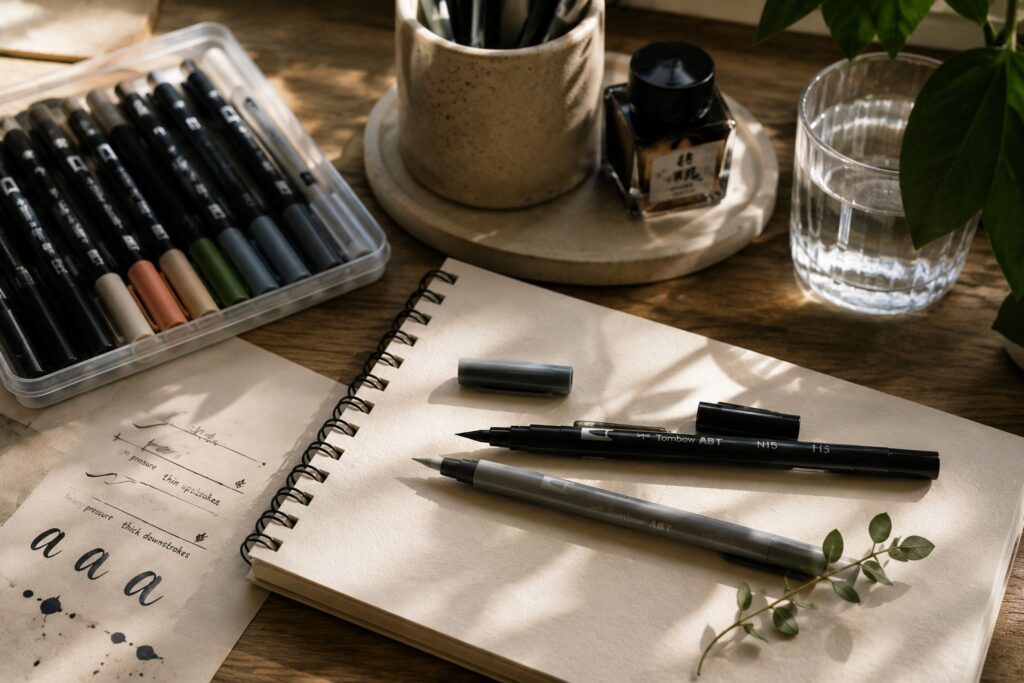
1. Choose the Right Brush Pen for Your Project
Not all brush pens are created the same and you need to take note of this.
Water-based brush pens are great for calligraphy, blending, and beginners, while alcohol-based markers are better for illustrations but not ideal for calligraphy practice.
You’ll also notice some pens have a soft, flexible tip, while others are firm. If you’re just starting, I’d recommend a slightly firmer tip; it’ll give you more control than softer tips. Although soft tips create beautiful strokes, they can be harder to manage at first and easily get damaged.
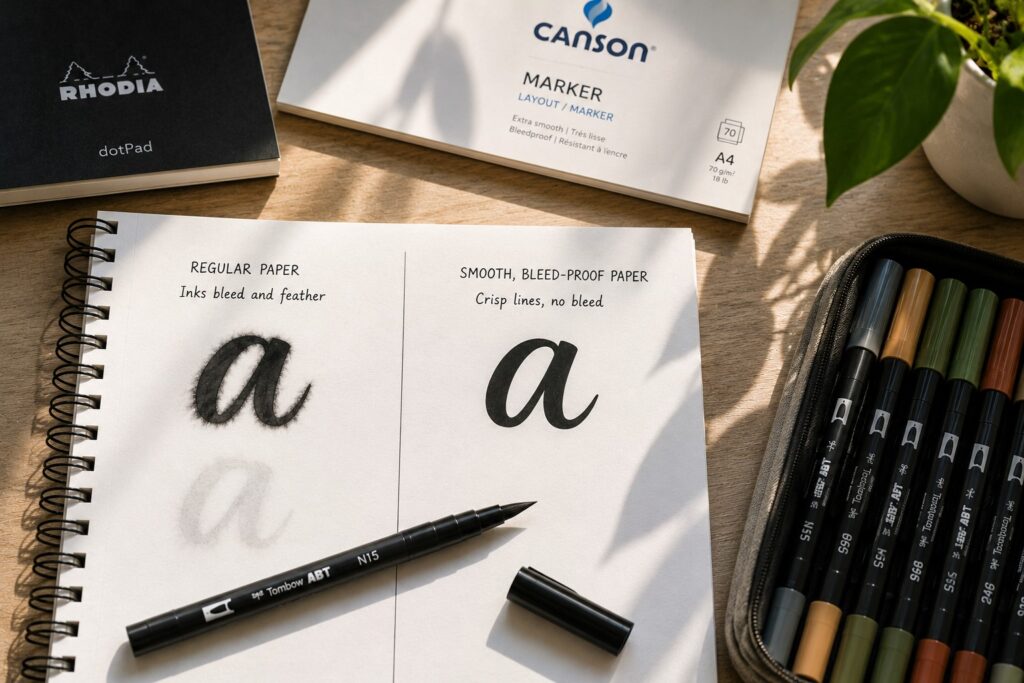
2. Use Smooth, Bleed-Proof Paper
If the edges of your letters do appear fuzz (it is called feathering) while the ink will jus bleed through the other side, it’s a sign that the paper you are using isn’t smooth and you are few inches away from damaging your pen. Switching to smooth paper like Rhodia pads, Canson marker paper, and your lines will instantly look cleaner while your pen will last longer.
3. Always Test Your Pen First
The first time I tried to write with a brush pen, I skipped this step and it didn’t end well. Before you start your main piece, just take a few seconds to test your pen on scrap paper. Check;
- If the ink is flowing smoothly.
- Whether the color is consistent.
- How the tip feels, is it okay or not?
Checking for minute details can save you from ruining a whole piece.
4. Gently Shake or Tap Water-Based Pens
The very first instinct whenever your pen feels dry is to press harder, but don’t. Instead, gently shake or tap the pen to help the ink flow back to the tip. It’s just a simple troubleshooting that can save your pen from damage.
5. Prime the Tip Before You Start
If you have a lot of pens and there are some colors that you use once in a blue moon, all you need to do is scribble it lightly on a scrap paper for a few seconds until the ink starts flowing evenly again. This will prevent your strokes from looking patchy at the beginning.
6. Start with Larger Tip Brush Pens
Most beginners usually rush off to smaller tips thinking it’s the best, but my view is on the flip side because I have experimented with it and saw the difference.
For me, larger tips force you to slow down and really feel the pressure changes, which helps you improve faster, while smaller tips can make your lines look shaky. Bigger brush pens are actually easier to control when you’re learning; and that might surprise you.
7. Warm Up Your Hands First
Don’t just jump straight into lettering; your hands might feel stiff, causing your lines to look awkward, and you’ll get frustrated quickly. Starting with simple scribbles, loops, and lines for at least 10 minutes helps loosen your hands and gets you into the flow before you start anything serious. If you want structured warm-up ideas, calligraphy drills every beginner should practice has some great ones that work perfectly as a brush pen warm-up routine.
2. Mastering the Grip and Posture
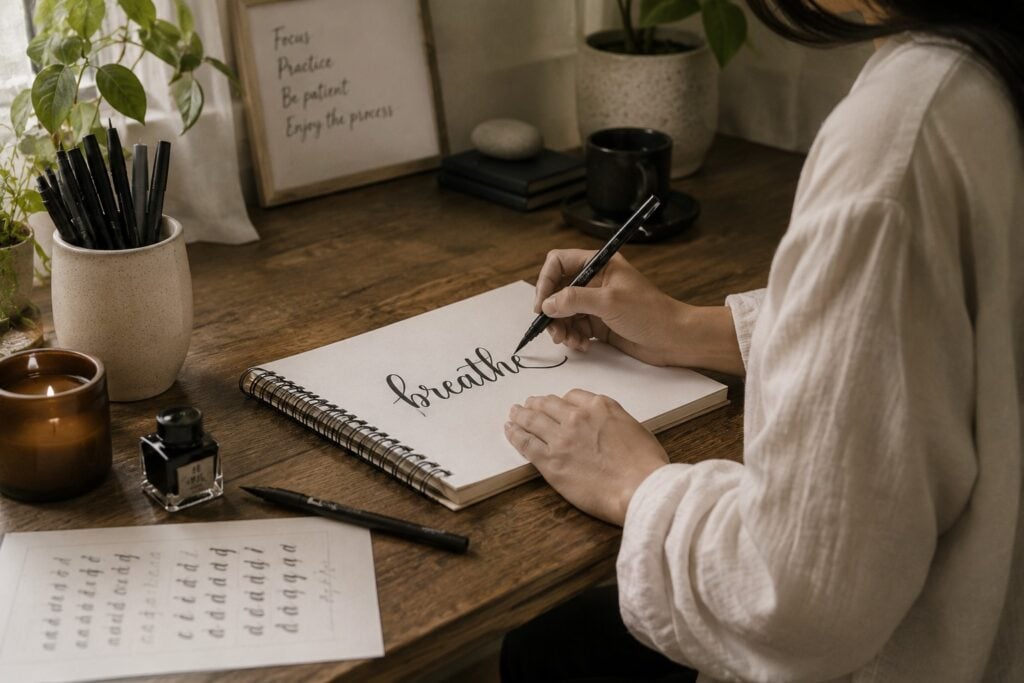
1. Hold Your Brush Pen at a 45-Degree Angle
Your brush pen is not a regular biro, so holding it at about a 45-degree angle will help the tip to flex properly to give you smooth thick and thin strokes. If you are still unsure about your grip, checking out a detailed guide on how to hold a calligraphy pen correctly will clear up a lot of confusion and set you on the right path from the start.
2. Grip position
Hold the pen perpendicular; you don’t want your pen leaning too far forward or backward. Slide your fingers slightly closer to the tip than you would with a normal pen and keep it balanced and upright to help you apply pressure evenly.
3. Relax Your Hand
If you’re the kind of person that holds things with a death grip, you need to specially practice drills on how to grip your pen lightly.
This was something i struggled with myself because I naturally grips things tightly. And this isn’t good in calligraphy because it leads to stiff, shaky lines and hand pain.
What I did was, whenever I caught myself unconsciously squeezing the pen, I just paused, loosened up, and tried again.
4. Adjust Your Paper Angle
There’s no rule that you must keep your paper perfectly straight. Tilt it slightly until your hand feels comfortable, especially for downstrokes to flow properly. Trying different positions to see what angle works best for you.
5. Sit Properly and Free Your Arm Movement
Avoid hunching over your work; sit up with your feet flat on the floor and allow your arm to move freely. Try not to anchor your elbow too tightly to the table; lift it slightly and use more of your arm instead of just your fingers. This is actually something I always emphasize whenever I talk about how to learn calligraphy at home; your posture and workspace setup play a much bigger role in your results than most beginners realize.
6. Take Breaks When You Feel Tension
I understand that in the process of trying to get your lettering right, tension begins to set in but calligraphy was supposed to make you feel relaxed and release some stress, not tension. Calligraphy was supposed to make you feel relaxed…so whenever your hand starts to feel tired, don’t push through it. It will only make your work look worse. Take a short break, stretch your fingers, and come back relaxed.
3. Pressure Control
1. Apply Heavy Pressure on Downstrokes
Whenever your pen moves downward, remember to press firmly, and it will create those bold, thick lines that make calligraphy stand out. Understanding the relationship between pressure and stroke direction is the core of calligraphy basics: understanding upstrokes and downstrokes; and once that clicks, your brush pen results will improve dramatically.
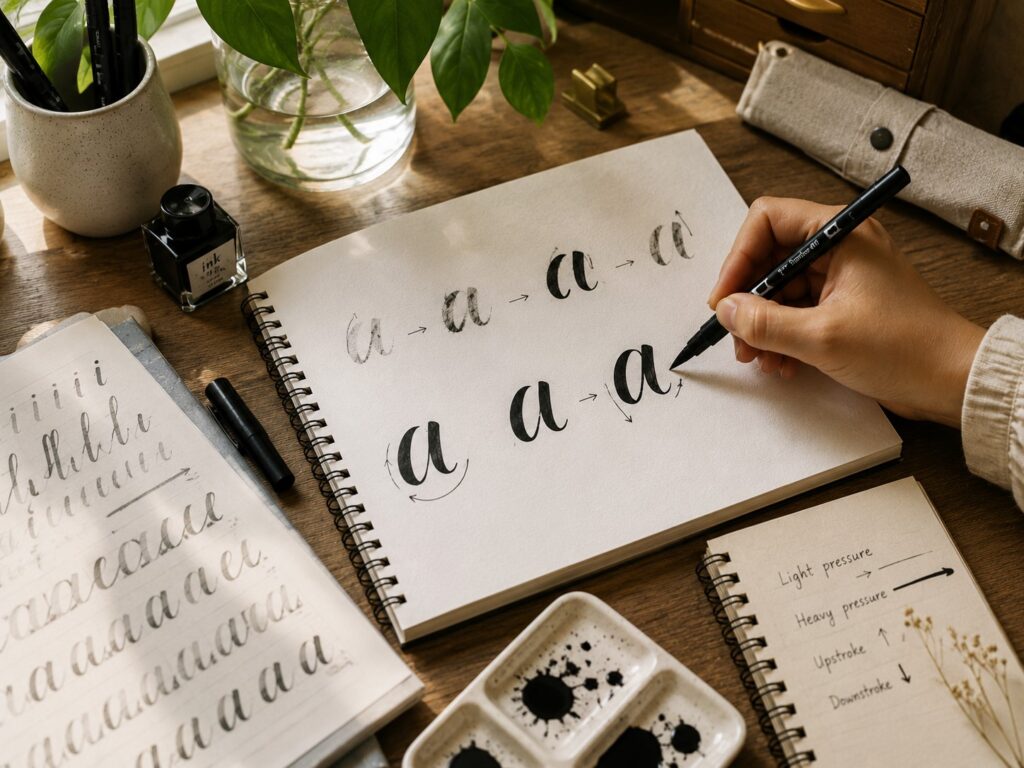
2. Use Light Pressure on Upstrokes
Go very light as your pen moves upwards, almost like you’re barely touching the paper, like you’re gliding instead of writing, and it will give you a thin, delicate line.
3. Smooth Out Your Pressure Transitions
Starting with light pressure, then slowly increasing it in the middle of the curve, and finally easing off again. This creates a smooth, natural-looking stroke instead of something stiff. Practicing beginner calligraphy exercises to improve control regularly will train your hand to make these pressure transitions feel natural and effortless over time.
4. Make your lettering big
This one is for the novice, I understand you would want to write small, neat letters, but bigger writing will enable you to see pressure mistakes and fix them faster. Bigger letters give your hand more space to move and learn.
5. Slow Down Your Writing
Writing slowly gives you time to think about when to press and when to release. This is one of the simplest but most effective tips for anyone trying to figure out how to improve calligraphy fast. Slowing down is counterintuitively one of the fastest ways to get better.
6. Practice Simple Up-and-Down Strokes
Personally, I do go back to this most of the time during drills, and it has helped me a lot with pressure control. Repeating a series of straight lines downward while applying pressure and a thin upward line with light pressure for a few minutes helps in building muscle memory faster than anything else. If you want to take this further, learning the calligraphy basics: strokes every beginner must learn will give you a complete set of foundational drills that complement your brush pen practice perfectly.
4. Maintenance, Common Mistakes, and Troubleshooting
How you take care of your brush pens will either save you money or quietly ruin your tools.
Sometime ago, I had a brush pen, I loved so much because of how the ink used to flow perfectly. It was my go-to pen; for drills, practice sessions and even paid projects The tip felt great and then one day; the strokes started looking rough. I ignored it at first, kept pressing harder, thinking it would reset itself, and before I knew it, the tip was completely frayed. I was pained.
Since then, I’ve learned that a lot of brush pen problems are actually preventable and even fixable if you know what to look out for. Knowing how to avoid common beginner calligraphy mistakes goes hand in hand with proper pen maintenance; because sometimes what looks like a technique problem is actually a tool care problem in disguise.
So, let’s walk through some real, practical ways to maintain your brush pens and troubleshoot common issues.
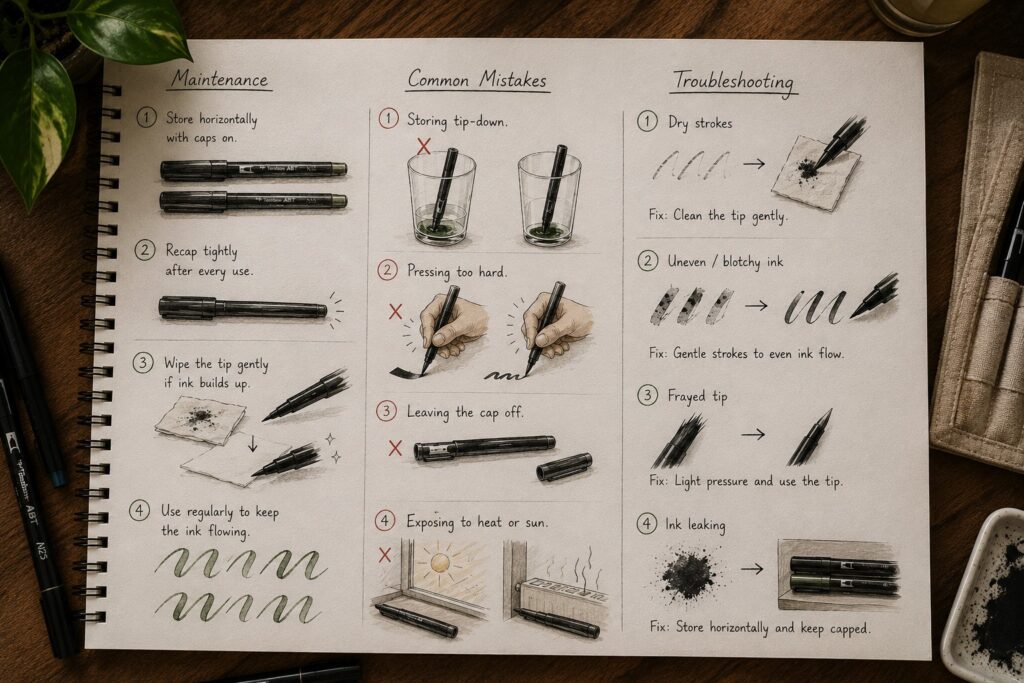
i. Avoid Pressing Too Hard or Holding the Pen Vertically
This is one of the fastest ways to destroy your pen tip. Once you press too hard all the time or hold your pen straight up instead of angled, the delicate brush tip splits or fray.
How to hold your brush pen:
Hold your pen at a slight slanted angle, around 45-55 degrees.
Apply pressure only on downstrokes, not constantly or too hard.
Don’t force the pen on your paper; keep your movements.
Always check your tip regularly for signs of wear.
ii. Clean the tip if ink builds up
As you continue to write often, there’ll come a time that ink will build up at the tip and if you don’t clean it, it will cause your strokes to look uneven.
How to clean your brush pen:
Take a soft, slightly damp cloth or tissue
Gently wipe the brush tip, but don’t scrub.
After cleaning, test the pen on scrap paper
If the ink isn’t flowing smoothly, repeat the process until it flows properly.
I do this occasionally, and it honestly brings my pens back to life.
iii. Don’t Store Your Pens Tip-Down
Brush pens are not the regular ballpoint pens you can toss around or store the way you like. It may seem harmless, but it can cause a lot of issues, like the ink flooding the tip and causing blobs.

The best way to store your brush pen is flat, horizontally on a surface. I store mine in a small, square-shaped woven basket, and it keeps the ink flowing evenly without surprises. Assuming you store your pens upright all the time, the ink can settle unevenly and that’s when you start getting dry strokes or overly wet ones.
iv. Fix “Tip Flip”
If you’ve ever noticed a sudden inconsistent stroke halfway in your lettering, like one side is thinner than the other, that’s called tip flip. It’s usually caused by your pen angle. So whenever you notice this, pause and check how you’re holding your pen and adjust back to a 45-degree angle or you can rotate the pen slightly in your fingers if needed and then test strokes slowly until lines even out.
v. Revive a Dry Brush Pen Tip
A few pens have been saved this way, and it honestly feels like a little win every time, but it only works for water-based pens. So, before you throw away a “dead” brush pen, try this.
Step-by-step:
Dip just the tip briefly in clean water (1–2 seconds)
Remove it quickly without soaking it
Blot out excess water on a tis
Scribble it on scrap paper until ink flow returns.
As you get more consistent with your brush pen practice, you’ll naturally want to move toward more structured goals; like working on how to create consistent calligraphy letters, building a daily routine using a 30-day calligraphy practice plan, or even attempting a Brush Calligraphy Beginner Tutorial to bring everything you’ve learned together into a full lettering style. And if you’re ever curious about trying a completely tool-free approach to calligraphy alongside your brush pen journey, faux calligraphy for absolute beginners is a brilliant way to reinforce your letterforms using just a regular pen.
Many beginners also find it helpful to revisit how to start calligraphy from time to time; just to make sure their foundation is still solid as they grow. And whenever you hit a plateau, tips on how to create your first calligraphy alphabet and how long it takes to learn calligraphy can give you both a fresh challenge and a realistic perspective on your progress.
My last word for you on this topic is that you get to enjoy your brush pen only when you care for it.